Episode Transcript
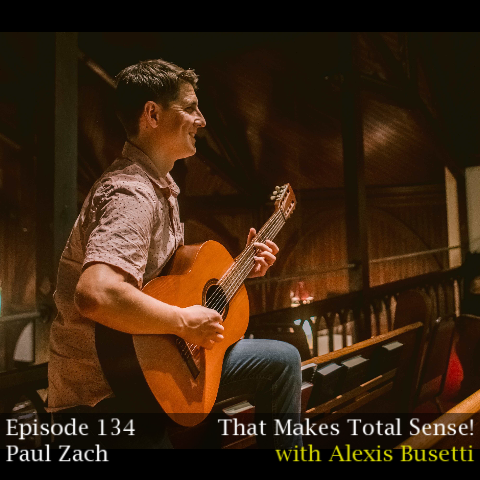
Speaker 1 00:00:07 Welcome to that. Makes total sense. A podcast dedicated to exploring God's generosity and justice. I'm Alexis. We setting the Christian aiming to ask good questions and encouraging you to do the same. Every one of us is wired by God to live out generosity and justice, but the house sometimes alludes us. That makes total sense is a way for us to get together, posture ourselves as learners and challenge one another to practice generosity and justice in a tangible way. Every day, everybody, you got it. You got the recording in progress. I love her. I, when she came, she felt like a, like a friend, like a long lost friend. Um, and I will say my guests today, Paul feels like a long lost friend. Um, I have connected with Paul's Zach's music through Instagram first, actually. And then, um, through the work that he's done with the Porter skate, and I'm so glad to be sitting across from him. He's in Charlottesville, Virginia, and I'm here in Houston and I'm just so thankful Paul, that you said yes to the invitation to come onto the podcast.
Speaker 1 00:01:15 Yeah. I'm excited to talk to you. I want to say first, um, because I think people probably maybe familiar with you through your work, through the Porter skate, but before we go there, I just kind of would like for you to tell us a little bit about like your everyday life, cause you've been married for a few years and have kids for, you know, a few kids and stuff like that, but you also have a job of ministering inside a church. So that's really kind of where I want to start because that's where we all live and breathe in this Christian community is, is inside of a church. So if you'll introduce this to yourself a little bit, and then we can start maybe with your role then. Yeah.
Speaker 2 00:02:00 Okay. I am Paul's doc. I am 37, been married 16 years, have four kids. Um, I work at Christ Episcopal church in Charlottesville, Virginia. It's a really beautiful old church about, I think it's 150 years old, maybe. Um, I've only been here a year and a half. Um, but I've been working at different churches for the last 10 years or so. Um, and I love just writing church songs. I love writing songs that are meant to be sung together in a room. Um, and yeah, I, I re I enjoy it.
Speaker 1 00:02:40 So talk about the together in a room part. I think I'll start by saying there was, it was only maybe in the last five or, or so years that that kind of context where Paul talks about getting together to sing spiritual songs, to encourage one another, right. To sing to the Lord and to encourage one another. And it was only in the last, like I said, maybe five or six years where that kind of really started taking root in, in my spirit. You know, I grew up in, um, really it kind of a white evangelical context, um, where we sang, we sang hymns, but it was just kind of wrote at first and then kind of more in the Pentecostal tradition where it was very much like singing to the Lord, which I think is great. Um, but what's, what's the, what's the big deal about singing them in a room together?
Speaker 2 00:03:35 Yeah. I mean, the pandemic has really, uh, been tough on that, but I mean, there's something there's something special that we all miss, um, that hopefully some of us are I've been starting again, but just the, the joy of, um, speaking the same language together, or, you know, uh, singing the same song with each other. It unites us in a way and we can, we can see God in a unique way. We can see each other in a, in a unique way when we're singing together. So, um, yeah, I it's, it's easy to forget that the joy and magic of it, um, of music, you know, and I think, and of, of, of church music also has is, is beautiful, but I'm just saying music in general. Um, especially cause I, I just do it all the time. I was just in Nashville last week and we were recording some more songs and, um, I just like told myself, cause I was right in the middle of this, of the studio and there's like all these amazing musicians around me.
Speaker 2 00:04:40 And I, like, I had to remind myself, soak this in. Like I'm here in the middle of a room with beautiful, amazing people around you and singing. And so it's, I think sometimes it's easy to forget, but I I'm glad that I remembered in that moment. This is amazing what's happening right now. So, but I think every, every Sunday you can hope hopefully there was some sort of experience, um, of, of whether it's gratitude or wonder or, or joy or lament or whatever it is. I think music helps us get to those places. Um, so I don't know if that's a meandering answer to your question.
Speaker 1 00:05:18 No, it's, it's a good answer. I think, you know, I think it helps. I think part of what I'm getting at is yes, the mystery of the, you know, what's kind of happening there in the spiritual sense. Um, but also like the, the kind of the mental move to community, um, inside of the spaces, right where worship, isn't just something that happens between me and God. And I happened to be around other people, but that worship is something that is happening communally between me and the people that I happen to be around. And
Speaker 2 00:05:50 I think, I think, um, like a lot of the, the liturgies in the Anglican church or Episcopal or Lutheran or Catholic church or so many of the prayers are so, oh, help, help, help with that. Um, we language where much of like the broad evangelical world is like the me and Jesus type, you know, speak to me, you know, but I I'm, I'm grateful for some, for a lot of the language that I've learned from, from the Catholics and Lutherans and et cetera, that that is, you know, when we, when we confess our sins, we are bringing, we are bringing our sins before God, when, when we receive communion, we, we, you know, it's just a different mindset and I'm grateful. I hope, I hope songs that I write, um, come from that mindset as well. So
Speaker 1 00:06:40 Yeah, I th I think that they do, and I think that's one of the things that was, um, really powerful for me when I first, um, was introduced to your music. And I, I was trying to think of the very, maybe the very first song, um, that I heard, but I think it was, you may have to help me with the, with the title. Um, we don't, we don't make peace with oppression, right? What's the, what's the actual, uh, something like that. Right.
Speaker 2 00:07:11 And we will make no peace with depression that comes directly from a, uh, from the book of common prayer. It's a prayer in the common prayer. I just, we thought it would be cool to put it to music and add our own twist on it. Um, yeah, I love the songwriting. One of the things I used to really look down on church songs when I was younger, I was more arrogant and, you know, I still probably have some of that, but also, I didn't know, a lot of the rich history of, um, of the thinkers and be beautiful thinkers and, um, and beautiful music that's come from the church. I only knew that the small slice of white American Christianity that I knew, um, but I look at church music more now, like, um, you know, I like, uh, songs that reference other songs in the way that like a rap song we'll, we'll sample an old beat or that the blues song will like reference a guitar part, you know? So I hope, I hope that, um, the songs that write can like always be referencing previous, previous people of faith, whether it's mother Theresa or Martin Luther king Jr, et cetera, you know, or, or the book of common prayer or, or, uh, you know, king David it's, you know, it's, it's, I think it's an E it's, I'm grateful for all the beautiful art that's come before us that that hopefully inspires me to, to continue making art. So,
Speaker 1 00:08:40 So let's talk about that book of common prayer for a moment because we're, so I, um, actually attended an Episcopal church in college, and that was kind of my first experience can with mainline American, um, uh, Christianity. And, and I was, that was one of the beautiful things that I, that I took note of is right. We're reciting these things together. There is a lot of we language, um, but I still didn't notice. So, so that's that we will make no peace with depression. This is not normally put to music like this kind of rich theological truth about who Jesus is in his, in his personhood, right? Like how did he live? He was not trying to make peace with oppression. Like Jesus was, Jesus was, uh, you know, uh, marginalized, you know, on, on the side of people who were weak and, and suffering and things like this. And we know this about Jesus from the gospels, and we maybe even have this in, in some of our liturgies, but for some reason, and what, at least from the traditions that I'm from in your tradition may be different. I want to hear about that if that's the case, but the traditions that I'm from, doesn't put those things to music and call it worship that maybe is for a different space.
Speaker 2 00:10:02 It's a bummer it's it's um, it just seems to be about some sort of personal experience like we were talking about that's, that's what, um, quote unquote worship is for so many people, but, um, yeah, I'm grateful to be, to be learning from a, from a church tradition, like many church traditions, Catholics, and the, like I said, I'll, you know, Anglicans and Lutherans, et cetera, but not a lot of other ones that, that look at worship a lot more broadly in the sense of, we bring all of ourselves into worship. We were just weirdest, uh, in Nashville last week, right. In, uh, for another Porter skate album. But the chorus was funny. It's um, what's the chorus go reading it to the, uh, to lay it on the stone was Adam, he saw a role in him and rejoin, uh, bring it to the alter don't you leave it at the door, whatever you can bring it to the Lord. But the idea of like, don't bring all of your, bring your anger to the Lord, bring it to the alter, bring your sorrow, bring your joy, you know, all those things. That is what worship is. It's not just, it's not just this feeling of, um, singing, um, holy, holy, holy, which that is a part of it. And that's a perfect song. I love that song, but it's, it's, it's all those things, you know?
Speaker 1 00:11:21 Yeah. And the Porter skate has, um, the musicians involved in the, in the Porter's gate, you guys have a, quite a diverse group of musicians. And one of the things, when you were mentioning the traditions, I'm like the American black church tradition, that this is a place that we can learn from of how to bring all of those things to the Lord in worship. So what, what is it, or what was it for you when you started writing music that made you gravitate toward things like that, that we don't, you know, haven't normally seen in that, in the songwriting part of, you know, set to music worship. Why, why are you bringing things like injustice and lament and peacemaking? Like what, what gravitated, what got you to gravitate toward the,
Speaker 2 00:12:16 Um, I think a lot of it has to, to just the people I'm around. I I'm grateful for my friend, Isaac and my friend, Greg, and many others that have taught me in Orlando and all, a lot of people that I'm around that I've, I've learned from them. Um, but then also just church music can be so boring. It's just, it's just so like, if, if all we're doing is coming in and like forgetting what the world's out outside of the, of the church doors and then singing, um, we love you God, that's, that's important, I guess, I guess, but I hope we're bringing, um, our whole lives into the songs that we sing. Um, so for me, I love the challenge of, you know, we just, we just finished a, an album, um, on climate justice and like creation care and church songs about that are just like so hard to write.
Speaker 2 00:13:15 They're either like super preachy or they're super depressing, or they're just about, oh, the world's so pretty, you know, those are basically the three options. So I love the challenge of trying to like think outside of those three boxes and like have songs that are meaningful and beautiful and also, um, can, can be a way that we worship. Um, I don't know, or, or the ju the justice stuff I'm in Charlottesville, Virginia, the white supremacists came here. If you can see out my window, that park is right across the street where they, where they had their big deal. I'm a foster parent, I've four kids that are biracial or African-American. So I want to write songs for the church that, that sing about the things that I care about. And so those are, um, those obviously are important to me. Um, but I think, I think the main part just to be Frank is I love songwriting and I want to be interested, um, in, in songwriting, I want, I want to write songs that interests me. And, um, I think, I think the church has plenty of perfect, wonderful songs of adoration. Um, and I'm not very good at writing those songs anyway. So I would rather focus on some of the other, if you look at a hymnal and there's a bunch of songs about iteration, there's not many songs about racial justice. There's not many songs, lament, there's not many songs about, um, you know, there's plenty of other areas that we need to tackle, but I'm, I'm interested in those topics. So,
Speaker 1 00:15:02 So let's for a second. Um, let's talk about justice songs. Um, so I already mentioned, um, we'll make no peace with oppression, but I think one of the things that kind of comes up in various places and it's, it's a fine critique. I just don't think it's necessarily grounded. Is that when Christians enjoy, like you said, we're interested in these kinds of things, right. I'm, I'm interested in talking about, um, justice, you know, I have a habit, I have a graduate degree, social justice, like that interests me. So it's, so it's, you know, sometimes I think kind of been accused of, or have, you know, in some circles, like, well, we're interested in this. And so we just talk about justice and kind of throw Jesus. We just iced him on the cake of our own longings for justice. But, um, but justice is really biblical and beautiful and it's the way that Jesus lived. And one of the songs that I don't know if I've listened to it and not cried is the Zakiya song. Oh, well, On the justice songs album on the porters gate, justice songs, album, um, in part, because we all know the story, if you've ever been to Sunday school or VBS or something, when you're a kid, you, you don't, you know, the story of Zacchaeus where you sung the other Zachias song. Um, but this Zakiya song is, is about love and justice and focuses on his heart change and the reparations that came out of it. Can you talk about that particular song and I'll, I'll link it in those,
Speaker 2 00:16:42 Let me, uh, let me also say all these, especially whenever we talk about a Porter's gate song, there there's like 20 people that, that are involved in, in writing, recording all those things. And I'm like so grateful. So I'm definitely not S I don't want to be the spokesperson for the Porter's gate, cause there's so many wonderful people, but I, I will talk about like that one. Um, we, it's fun when you write songs for a certain theme, um, you really can like look at it from all angles. And instead of, you know, it's fun to like, whatever are we missing. And my friend Wendell Kimberly, I don't know if you've chatted with him, he's such an amazing songwriter. Um, but he had the idea of writing a song of rep a joyful song of reparations from the, from the point of view for , which I think that's a game changer to think of it as a joyful thing, instead of like, all right, well let's, so we have to make everything right. But to think of as key, it's like so happy that he has the chance to, um, to fix the things that he, to, to you to repair the things that he has broken or, and to, um, so that's, that was the starting point of that one. And I think it Wendell wrote a lot of those lyrics and then he wasn't even there in the studio when we started writing it. So we wrote it with a bunch of us and, um, I think it came out great.
Speaker 1 00:18:08 It came out great. It's, it's beautiful. I mean, it is, it is a joyful song about, um, about repairing, about reparations. Um,
Speaker 2 00:18:19 Um, you hope to like, let's see like, you know, take my life and let it be perfect. I love the old him. I wish I could. Those are lyrics that I, I hope to believe fully, you know, you know, it's like some, some songs that we sing, I used to feel like, um, guilt guilty is too strong of a word, but I used to feel a little weird about singing, singing words to God that I'm like, I wish, I believe wish. I believe that you can T you can have my whole life, do whatever you want with me. I, you know, I'm still holding on, but I, I think, I think, um, some songs they are, they're a prayer, even in the sense of like, help me believe when I'm singing right now. God, you know, I think there's a slight difference. Sometimes there's plenty of songs out there that I'm just like, I don't want to sing that. I don't really mean it. And then there, hopefully there's other songs that are like, these are prayers that we're trying to believe. Lord help my unbelief, you know?
Speaker 1 00:19:18 Gosh, I love, I love that perspective. Um, yeah. Of singing them like, uh, as a prayer. Um, gosh, that's really, yeah. That's really beautiful
Speaker 2 00:19:29 Prayers that we sing.
Speaker 1 00:19:31 Yeah, yeah, yeah. But that, that perspective of I had the same as you. And in fact, it was quoted to me when I was probably in college and some of the kind of formative times of my life, some person who had a cynical viewpoint in that perspective said, uh, Christians don't say lies. They sing them. Yeah. Um, and, uh, and, and that, that was, you know, I already have it, I already have a guilt, uh, you know, like I'm already prone to that. I don't need that extra thing on me, but to, to view it from your perspective and say, I may not be able to fully say this in honesty right now, but I sincerely want to, right. I sincerely want this to be my prayer or what I, you know, what I'm aiming for. And in my relationship with the Lord, um, I want to hit on the reparations thing for just a second, just because I, I told you before we started recording, I think it's so cool.
Speaker 1 00:20:22 A cup. It had to be a couple of years ago though. Now right after around Martin Luther king day, you, again, as you alluded to at the beginning, as you talked about at the beginning of the, of the conversation, took someone else's words and put them to music. And that was Martin Luther King's Jr's words, um, his own words and wrote a song with Gregory Thompson, um, called disarm us. And the reason I bring that up now is because Gregory Thompson of course, is the coauthor to the book called reparations where I'll link it in, in, in mind, we don't have to rehash that whole conversation. I interviewed his coauthor duke Kwon about that, but the book essentially is not about logistically. What would this look like? It is saying, it's making the argument that, um, as Christians in America, we have witnessed a theft. And what should our response be as believers when we have witnessed a theft when we've witnessed something being taken, um, from, from someone else. And so you said, he's your friend, and he's been kind of one of your teachers in this area.
Speaker 2 00:21:29 I really look up to him. He's very wise. I love, I love their book. I only listen to audio books because I have four kids and I'm always, you know, driving and walking, but I love to listen to that audio book. And, um, yeah, I'm, I'm glad, I'm glad that they wrote that book.
Speaker 1 00:21:46 Yeah. And it's a, it's a beautiful message. This dis this disarming disarm
Speaker 2 00:21:54 A song. I forgot.
Speaker 1 00:21:56 Sorry. I meant I'd mix. I mixed them up because I mentioned Gregory. Yeah.
Speaker 2 00:22:01 Uh, yeah, we wrote that. I wrote, I, there was this beautiful book at the library that I checked out. It was all the prayer. I mean, a lot, a lot of the prayers of Martin Luther king Jr. Um, that he had that he prayed during the sermons or was that they're all written out. They're all just, I mean, most of the prayers were just straight up quoting scripture, but he would always like add, it was like, it was, he would, he would always like riff on the idea and then just go, go somewhere else. It was always so beautiful prayers. But, um, so I wrote a bunch of songs from those. I haven't released a lot of them yet, but, um, I wrote one with Greg who he's studied a lot of Martin Luther king King's work. Um, and, uh, we, we will release it hopefully in the next few months, disarm us.
Speaker 2 00:22:46 It's called, but I love those simple songs that, um, I think music, one of the beautiful things about music is, is, um, it's kind of a funny metaphor, but I hope a lot of my, a lot of the songs that I, I try to, you know, how you make a good, a good, uh, tomato sauce for spaghetti, and you just have to cook it down, keep on cooking it down to all the waters out, all the liquids out. I hoped, I hope songs. I write just you cook them down until it's just the bare minimum of what you want to say. Um, you know, disarm us, let, let us lay our weapons down. You know, that's, that's, that's the basis of that song. And I hope, I hope it's clear and I hope you can use it as a prayer.
Speaker 1 00:23:31 It is an and I, and I have, and I did, um, use that as a prayer. One of the lines in that song from, from the, from Kings prayer is, um, let, um, that unarmed love would have the final word. And, um,
Speaker 2 00:23:48 Yeah, how'd you, uh, this, you might not know this quote. I w I don't, I'd have to fight a, saw a beautiful quote the other day, um, by one of the church fathers way back in the it's like when, when Peter disarmed, when Jesus disarmed Peter, he disarmed all, all believers, something like that, which I thought was so great, you know, in the garden, when, when Peter was, I think he had a sword or something, or cut the guy's ear off. Right. Do you know the quote I'm talking about?
Speaker 1 00:24:17 No, I love the sentiment. Yeah. Send it to me. That'd be, that'd be great. Um, so these, these projects, I understand that you, you guys write them, and again, we could go back to that community piece, I think, over and over and over again. Um, but we don't think about justice in general and we don't sing songs of the lament anymore. Um, and I say any more because it's a very biblical thing to sing songs of lament. Right. I can't remember my old Testament professor would be upset with me, but if I, you know, when you go through the songs, um, it's, it's not a small ratio right. Of the number of actual songs, which was the hymnal, um, for Israel to be songs of lament, because of just what you're saying earlier, we can bring everything to the Lord, our sorrow or anger, um, and our joy, but what, and it may just, personality may be the answer, but what draws you to say? Yeah. Singing songs of lament is actually really important to our faith.
Speaker 2 00:25:21 Um, well, especially right now, I mean, I'm all, I'm all, I'm doing all sorts of projects right now, but I just finished an album of songs of sorrow and, and, and, uh, grief. Um, I think for me, it's, it's been a tough as we all have had a very tough season the last two years, but, um, I'm definitely in that season right now. Um, and I hope that I think that's the artist's job is to, to write and to make art from where they're at. And that's definitely where I'm at right now. Um, but it's also a whole in, in, in the, in the church are the modern churches song, song book. We don't have enough songs that, um, speak on that topic. I just, I, this is weird, but let me just, I have my lyrics right here. Let me find this song. I just, I just love these, I just recording it today, but I wanted to show you the lyrics. Um, I was print out all my lyrics. Let me find it.
Speaker 2 00:26:28 Yeah. I wrote this song, my friend, Kate, she's a Catholic hymn writer that she is just so amazing, but we wrote this one together. Um, the lyrics Lord, we bring you all our sorrows, all the words it hurts to say in your hands or grief is hallowed. Take it as a gift. We pray, lay our tears upon your altar, like the bread you bless and break, work your mercy in our heartache. Come, transfigure all our pain. I love that line come. Transfigure all our pain is so great. So I, um, I hope that, um, you know, when, when I'm in, when I'm in a time of sorrow or pain, I go to music or I go to movies or some way to connect with me. I mean, I was watching a movie last night that was so moving that, um, art can be a friend to you in those times and help you, um, process what you're going through. Um, so yeah, I mean, that's another meandering answer, but
Speaker 1 00:27:27 No, talk to me about the, the artist perspective. Um, you know, I think that sometimes we, it was years ago, I think, um, I was listening to an album that was really ministering to me and I just broke down after I had listened to the whole thing and I had sung along with it and I just broke down and I just, I took a moment. I don't always do this, but this was kind of an epiphany moment for me. I took a moment to pray and just thank God AE for the work that he had done in this artist's life and B for her generosity and courage to share it through her album. Right. Because I realized very deeply in that moment that whatever she had gone through, which was, which was not public, but it was obvious kind of through the work of this album that she'd gone through something deep, very deep with the Lord, um, that she made a choice to share it, um, you know, with the community at large.
Speaker 1 00:28:32 And that I was a beneficiary of that. Um, and I do not count myself as an artist by any stretch of the imagination. Um, but I'm thankful for, for artists and what you do and how you share. So, um, just, can you just talk about that perspective a little bit, you know, um, there's, there's, you know, th th there are musicians in the church that are wonderful and beautiful, and that's kind of what I grew up with was the model of someone who was a very gifted musician, singing classic Kim's, um, right in leading us in classic Kimson, beautiful and needed. Um, but how are you coming at this a little differently from your, from your place as an artist and from your giftings as an artist?
Speaker 2 00:29:24 Uh, well, I'm really lucky and grateful to, to be at a church that is really, um, encouraging me to, to pursue that. I, we, for the offertory every week at a time where we like pass the offering, I that every week I, I share a new song that I've written usually that week. So I love the pressure of having the song to write every week for, for that time, or, you know, go back and find an old one that would fit with the, the sermon text and, you know, going through the lectionary, the, the weekly readings that a lot of churches use, it's nice to like have, um, you know, no general theme of what the service will be like. That's, that's great. And I mean, I just think it's, that's the, the job of an artist. I'm, I'm, I'm glad that my church, um, values art, um, enough to pay me a salary to do it for a church, you know? Um, but I mean, yeah, all the best songs that I've listened to, all the, all the, um, you know, the paintings and, and movies, that's the, the job of the artist is to bring, bring themselves, bring their joy, bring their sorrows, and bring whatever experiences they're having, and somehow, um, make art from those, from those places. Um, so that's what I'm trying to do.
Speaker 1 00:30:52 Do you think you're kind of prophetic in that way?
Speaker 2 00:30:57 Um, I think, I think all artists are, I guess. Yeah. I think that's, that's what we're going. That's our goal. Sometimes if I write a good one, I am, I think the key is just, um, it's so much, um, for me, it's, it's a numbers game of, uh, just writing every day. You know, I've written so many songs over zoom the last two years, and I'm really grateful for presume I've met so many wonderful, uh, artists online that I've just, just met in person last week, actually for this Porter escape thing. Uh, my friend Kate in person for the first time, we probably written 75 songs together in the last two years. So it was fun meeting her in person, but no, I would just say, I mean, you can probably already tell, but I'm just like so grateful that, um, that I can do this for a living.
Speaker 2 00:31:51 Um, it's, it's so meaningful for me, um, to be able to the, the, the higher that the high that I get from finally writing a good song, because, you know, I write 10, 15, 20 songs and that are S that are basically no one will ever hear. And when I write one, that's like, oh my gosh, that's so good. It's so such a wonderful feeling and the feeling of connecting, um, with someone else I hardly ever write a song by myself. Um, I think church songs, like we talked about earlier are our best sung together. Um, so I'm, I'm of the opinion that they're best written together. If we want them to be sung together, we should write them together. Um, so it's, it's, it's such a joyful experience to write with someone else. So,
Speaker 1 00:32:41 Um, I think, I think the, um, the profit, the profit aspect, I keep thinking about that, like this kind of community, um, profit, because I, I would say this, one of the jobs that profits do is they tell people things they didn't know, they needed to hear. Um, you know, it's not always futuristic or something, you know, crazy like that. I was, I was talking about this the other day with my son. He was asking and talking about Bruno in, uh, in Canto.
Speaker 2 00:33:19 Oh,
Speaker 1 00:33:19 No, I won't spoil it for you did. Um, but you know, he was, but that led us to this discussion on, on, um, on profits. And I said, you know, I'm, I'm convinced that in every profit, there is, um, a certain amount that is this spiritual discernment, you know, straight from the Lord, you know, able to see things maybe that other people can't see. And I'm also convinced that in every prophet, there's just this uncanny ability to, to perceive what's already there, that maybe not everyone else can see. Um, and I think that's part of what your music has done for me is it's, it's witnessed to me in this prophetic way and helped me to say things that I didn't even really know I needed to see at times. Right.
Speaker 2 00:34:12 Yeah. The same that's happened with me with other music and other movies, music books before. So I'm grateful that you've had the experience with my, my art.
Speaker 1 00:34:22 Yeah. It's, it's been amazing. Um, I didn't think that I was going to ask you to do this, but I will say, be thinking on it. What, I mean, would you be willing at some point before we close this out to just like sing a song, I
Speaker 2 00:34:41 Can play a song at some point, if you want me to.
Speaker 1 00:34:44 Yeah. Um, yeah. And I won't even, yeah. We, um, I won't even, I won't even try and dictate which one I would be honored if you would just,
Speaker 2 00:34:56 I play this. I mean, I'm excited about that. You know, the most recent song that I write is always the best one that I've ever written. So I'll probably just play that, that one I was quoting to you.
Speaker 1 00:35:06 Yeah. That's great. Before we do that, one thing that I liked too, and my, uh, so pause, I will say all of that stuff in the middle, uh, my husband does all the editing and producing and everything. And so Seth, all of this gets cut out. Obviously we're going to start back in just a second. Um, It's Paul, he's a dad too. Um, yeah. So, um, anyway, but okay, Seth, but the part that we were just talking about the song was good. So you can keep that in. There's no telling he loves real life podcasts. So who knows what all he'll keep in?
Speaker 2 00:35:43 Here's a question for, or, I mean, what, what's your favorite podcast? Because I, I haven't Q
Speaker 1 00:35:48 Good night. My favorite podcast. It
Speaker 2 00:35:51 Varies. Yeah, me too.
Speaker 1 00:35:54 It just depends on the day. I would say the one I listened to the most is boring. It's the, it's the, it's the times the daily. I listen to that.
Speaker 2 00:36:03 I just can't even handle the news. I don't even, I don't, I don't. I just, yeah, I can't do it. It looks Ms. Smartlist is my number one podcast. Smartlist yeah. It's um, it's, uh, Jason Bateman will our net Sean Hayes, and I just interview George Clooney, different random, random people. It's just 60 minutes of joy. Every
Speaker 1 00:36:29 I was going to say, I would tune in just to, for the will Arnett portion, just for the voice Smartlist I'm going to have to subscribe. Uh, what else do you like?
Speaker 2 00:36:40 Uh, I like, uh, WTF, just the mark Marin's podcast. Whenever it's like a, a great guests. I don't listen to every episode. Um, like song Exploder is a great one, um, for it's just, they dissect a song every week and the artists talks about all the different tracks. Uh, Rick Rubin and Malcolm Gladwell have an amazing podcast. Rick Rubin's like, he's a great producer produced Johnny Cash and a bunch of different people. They have a cool podcast, a lot of music ones, I guess. Uh, what else do I like? I mean, this American life is the overall my favorite, but I haven't listened to in a while, so
Speaker 1 00:37:26 No, those are all good. I listened to all like heavy, heavy stuff.
Speaker 2 00:37:31 I do it. Like, I don't do many heavy ones.
Speaker 1 00:37:35 I wish I had more light ones, but I just, I just, don't
Speaker 2 00:37:40 Trying to see what else I used to listen to code or actually, um, Mike Birbiglia, he's a comedian has a wonderful podcast where they, like, they try it. He hasn't, um, comedians on where they try new bits out on each other, but it's great because I mean, it's just like songwriting. They're just, they're just dissecting. I love, I love love when smart people dissect, whatever they're into. Um, it's always so interesting and, and maybe I've taken some songwriting tips from them.
Speaker 1 00:38:14 Oh, that's really cool. I D I was saying a similar thing. Do you want to my daughters this week that I love one of my favorite things in life is to watch people do what they're really, really good at doing, right? Like, it's just such a joy. And I was in, so our whole family of six just started taking TaeKwonDo classes. So my girls are doing kind of a little bit more like acrobatic kind of stuff, but the, the boys and my, and my husband and I all started taking TaeKwonDo classes together. And part of it is, it feels a little bit like home for me, cause my dad, um, has a black belt. So when I was growing up, he had a, he had a school and stuff. And so it, it feels a little bit kind of like going home, but it's also a super freeing to I'm 40.
Speaker 1 00:39:00 So just to be able to be a beginner at something and just kind of to walk in, I always think of the Seinfeld quote when Kramer is like Jerry, we're all at the same level, you know, except for my boys are above level than me, but that's fine. Um, but then I, we were, I was there this week and there's a woman who, um, is a little bit older than I am. She may be 10 years older than me or so. And she has a black belt and we were partnered together to do some drills. Right. And so I'm doing kind of the real basic, you know, moves and kicks on these drills and she's doing the really advanced ones. And I had to stop myself from like laughing out loud because I was just so tickled. I just had so much joy watching her do this thing that she was really, really good at.
Speaker 1 00:39:49 Right. I mean, the instructor just says, you know, Hey, we're gonna, we're going to do this. And he shows the move. And then he calls on my partner and he says, can you demonstrate it? And just by watching him, of course, she's had the training and the experience and the talent. And so she's able to just immediately do it. And then she practices while I'm holding her pad. Right. And, and I'm like, you know, having to brace myself because I'm going to get knocked on the floor. If I don't and it's just tickling me, it's just the best thing ever. It's just, there's just so much joy coming from someone who's really good at their craft doing their craft. You know,
Speaker 2 00:40:21 You can see their joy. I mean, that's people that are really into something they're so joyful doing it. Um, and that's always infectious. Yeah,
Speaker 1 00:40:31 Yeah, yeah. But I also like what you like to listen to really smart people dissect something like that. Right. So I'm a seminary student. And so I just get to do that all day. I get to listen to these ridiculously smart professors who have done this and my classmates, right. Some of these guys have been pastoring for 20, 30 years and to hear them dissect that and kind of bring it, boil it down in some ways,
Speaker 2 00:40:58 Um, as long as they keep, I think the P the people that do it best are still joyful. They're still interested. The more they know, the more joyful and the more interested they are. That's, that's what I love, because there's the other, it's not, it seems like the less people know the more, the less, you know, sometimes like, um, I've, I've found that the better the songwriter, the less they hold hold onto their ideas. So like yeah, whatever you think, just do, you know, and I think that goes for most things, just like the more confident someone is, the more like the better they at like welcoming other people in. And I that's, that's what I try to do because it's better for everybody, you know? Yeah.
Speaker 1 00:41:41 Yeah. Yeah. And, and I also kind of in, in that vein, I also realized watching, watching my TaeKwonDo instructor, um, it's, it's, it's interesting for someone to be really, really good at something and be really patient with beginners or be a really good teacher. Right. And so like, to watch his face light up when a student gets something that he's trying to explain to them, or show them is like also one of the coolest things, right? Like, he's, it's not like he's too good or too far gone, or, you know, there's probably people in that way in every craft. Right. Her just kind of like I'm, you know, but, but that goes along with what you're saying of like, the more they know, the more joy it brings to include other people. Right. And to bring them along, um, you know, on that journey. But yeah. Um, I want to, before you play something, um, what do you wish that I had asked you? I kind of hammered you with questions, but what do you wish? Like, what did I not give you the chance to talk about? And I want you to have the chance to talk about,
Speaker 2 00:42:53 I don't know. I, I think you covered it. I just, I enjoy writing songs. So as we talked about that a long time, I work at a church and I write church. So I feel like what I do is pretty straightforward, right. Church songs that people can hopefully sing together and hopefully write about more topics than, than are currently in our hymnal. Uh, so that's, if I had to narrow it down, that's my, that's my goal.
Speaker 1 00:43:20 So, all right. Well, would you bless us with the best, last song that you wrote most recent? Not last.
Speaker 2 00:43:29 Okay. I'd love, I, my friend, Kate, and I wrote this, um, which I quoted you some of the lyrics earlier, but, um, I think this will be meaningful for a lot of, let me bring my thing over here. A lot of people, as it's been such a terrible couple of years for so many of us, um, so this one is called. We bring you all our sorrows,
Speaker 0 00:44:02 Uh,
Speaker 3 00:44:09 say pray. bread. grieve, transform
Speaker 3 00:46:01 . And so stay with Jesus while and share news.
Speaker 0 00:46:42 Yeah.
Speaker 1 00:46:54 Okay. Thank you. That was my goodness. Um, Paul, where can people connect with you and your music? What's the easiest place for us to find you?
Speaker 2 00:47:05 Uh, you can, I'm on Instagram to sender Paul's doc music, or you can shoot me an email. Paul M Zaka Gmail, um, or, you know, wherever you listen to music and email me, if you want chord charts. I was people always ask me, um, if they can sing my songs at church, that's the whole reason I ride them. So please, please sing my songs at your church.
Speaker 1 00:47:27 Oh, that's so generous. Paul, thank you so much. I'll put all of that. Um, all of those links in the show notes, along with a link to, um, the, uh, Porter skate as well, since that's where, um, I've connected with your music too, and, um, and your hymns album. So some songs you didn't write, uh, but you've saying thank you so much, Paul. Thanks for having me. The links for all the resources mentioned in today's episode can be found in the show notes, music and podcast production by Seth B city. Be sure to give us a review on iTunes and subscribe at your favorite podcast listening app, you can also visit us at that. Makes total sense.com