Episode Transcript
[00:00:05] Speaker A: Welcome to that Makes Total Sense, a podcast dedicated to exploring God's generosity and justice. I'm Alexis Busetti, a Christian aiming to ask good questions and encouraging you to do the same.
Every one of us is wired by God to live out generosity and justice, but the how sometimes eludes us. That makes Total Sense is a way for us to get together, posture ourselves as learners, and challenge one another to practice practice generosity and justice in a tangible way every day.
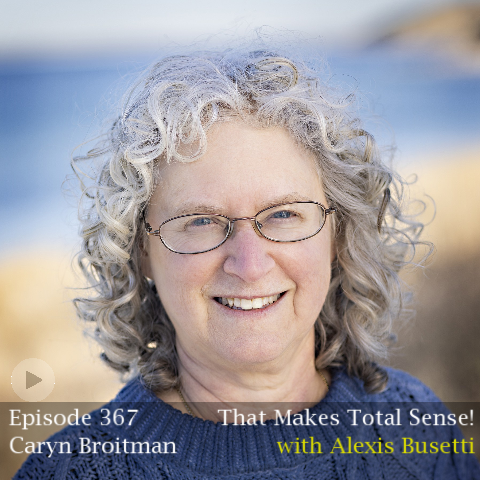
All right, so I'm super stoked today to have Rabbi Karen Breitman on the show.
She's written an amazing book that will be out by the time this podcast release. So releases. So grab a copy. There'll be a link in the show notes where you can grab this, but it's called the Torah is an open book, Radical readings for the seeker and the skeptic. Karen, thank you so much for coming on today.
[00:01:13] Speaker B: It's a pleasure. Thank you.
[00:01:16] Speaker A: So I almost don't know where to start with the book. And so I'm not going to say I'm stalling because that's not entirely true. But I would like while I gather my thoughts, I think this will help me if you could give our listeners a little bit about your background, specifically as a clergy person, how are you approaching the text?
Both, I know this book is specifically focuses on the Torah, but how are you approaching the Bible as a sacred text? And I would say maybe not maybe personally, but as a clergy person. And, you know, I'm thinking about the people who you serve, you know, because how we approach the text when we're in positions like yours really matters for the people that we love and serve. And so I think that might help us get a little bit of a grounding as we go into actually the meat of your text.
[00:02:24] Speaker B: Yeah, great.
So that's a really great question. It gives me an opportunity to really think about that. I think the first thing I would say is that I love the Bible.
And because I'm Jewish, when I say Bible, I'm talking about what some Christians might call the Old Testament or the Hebrew Bible in academic circles, I just love it. And I find myself living through it, almost going back to it or thinking verses come up or stories come up. When leading my life or when I see things happening in the world, it's really a text that I feel like I'm living. And as a rabbi, part of our Sabbath morning service. Sabbath Shabbat in Hebrew, our Shabbat morning service. Part of it is you read a section of the Torah, you start the year with the very beginning, and then you go chronologically each week. So by the end of the Jewish year, you'll have read out loud, chanted out loud, the whole thing. And my congregation, like many other liberal congregations, will have a Torah discussion, you might call it a Bible study,
[00:03:46] Speaker A: as
[00:03:46] Speaker B: part of the service.
So I feel like that sense of living through the social context or personal things is a shared thing.
So in terms of my background, I grew up in the Boston area, kind of very liberal and also somewhat secular place.
And the first time I really looked at a Torah text as a text was in my high school English class.
And so that was taught kind of as literature, and I really loved that. And then I went to college and studied comparative religion with an emphasis on Judaism and Christianity.
So I was introduced to historical criticism, which I found interesting, but didn't capture my soul, really.
But there was something about my study in comparative religion that did really impact me. And that's the idea of myth, in terms of Eliade's sense of myth, that there are some stories that sometimes they're called myths, that they're just so deep, you know, they get at our human condition. They're able to be passed on from generation to generation, thousands of years. And historical criticism doesn't really get at that.
As William James says, it kind of. It looks at origins but not meaning.
So I went to the Reconstructionist Rabbinical school in Philadelphia.
And for those who are familiar with kind of streams in Judaism, there's Reform, which is liberal in terms of theology and in text study, all the way to Orthodox. So Reconstructionism is kind of in between Reform and Conservative Judaism. So we do interpret both theology and text and authority liberally. Reconstructionism is a little more traditional in terms of ritual than Reform.
But that's my rabbinical school background and the congregation. I serve as a Reformed congregation.
[00:06:07] Speaker A: Okay. Okay, thank you for that. That's really helpful.
When you said that, you kind of feel like you're living through the text, especially the Torah persons, as you go throughout the year.
I don't always start from back to front in a book, but that it brought out. I wrote down a quote that you had in the last chapter.
The Bible includes within it all our emotions and instincts.
And I just thought that that was so powerful the first time that I. I think it was in a Hebrew class, and I was looking at the Psalms, and I was very new to seminary, and I.
I said out loud, because of the. My. My background, I had come from Conservative Christianity. I had been asking a lot of questions, though, before I had started seminary questions that I didn't feel were necessarily welcome in a lot of the communities that I had had been a part of. It was more about, in my perspective, the communities that I was a part of were really focused on having kind of the right end quote answers and not necessarily exploring or curiosity or questions. And so I know you mentioned some folks who, Christians who might be deconstructing in your book. And I would say I didn't use that word at the time, but that's certainly what was, you know, what, what I was going through. Anyway, I'm in this class and we're looking, doing some translations in the Psalms and I just go out loud. I was like, the Psalms are not theologically correct. Like, you know, just kept saying that, you know, out loud. And it's like, well, no, because they, they. I mean, yes and no, because they contain our emotions and our instincts and when we're furious and indignant and horribly sad and grieving and ecstatic beyond what we thought we could feel and, you know, enthusiastic and happy and even just in the Psalms, which I know this book doesn't really touch, but it's like, it's in there, though. Like, the Hebrew Bible contains all of those things. It is very, I would say it is a very human.
[00:08:31] Speaker B: Yes.
[00:08:31] Speaker A: Text. It's a very human text. It's not that it's not sacred or divine, but it is very.
[00:08:36] Speaker B: I totally agree. Very totally agree. That's why I love it. I mean, if it were so abstract that it would be hard for me to plug in, or if it just presented this perfection that I, you know, I couldn't, I couldn't even approach, I think it would have less of a hold on me. And there are things in there that are so human.
There are things I think are unjust and I reject. And there are things that, oh my God, that's what I'm struggling with.
You know, when you think of the book of Lamentations and the rawness of that grief and fury and guilt and everything all mixed all together, how could this happen? How could you do this?
I. There's a truth telling, you know, and, and yeah, that's. I love that about it. I. And I love what you said. I, I think that's really true for me.
[00:09:36] Speaker A: I want to talk about what you just brought up.
There are things in it that are unjust and that you reject.
[00:09:43] Speaker B: Right?
[00:09:44] Speaker A: Gosh, that is, that is a hard thing to say, to say out loud for me, but it is also true for me.
And one of the Things that was so helpful about your book.
For me, as someone who is engaging this sacred text in a very real way, you know, it's like, I feel it's. It's not like as if my life depends on it. It's like my life does depend on it. Like this, this is.
This is my text. And so when things are recorded that are, as you say, unjust, or I think. I think you put it another way, maybe that. That contradict our values.
Like how.
What are some ways that we can. That we can read that, that we can deal with that personally, but also socially.
How do you as a rabbi, help kind of guide your community both through the text, but also through the implications, the potential implications of that text and how it's read? Because I think that's another thing you get at, is that it really matters.
It has real world implications for how we read these texts. And when we see something as unjust, or when we read it and see it as either literal or just or justified, that it really matters.
[00:11:21] Speaker B: Yeah, yeah.
So I. I see the text as often a mirror, and it mirrors human kindness and seeking God, and it also mirrors the dark side of humanity. And Judaism has this idea of we have two human beings, have two inclinations, the good inclination and the bad or evil inclination, and they're at war within us. Right. So. And you see that in the text at large. You know, you see, if you take in Deuteronomy, the thing about wiping out the people of Amalek. And it's a complicated thing because Amalek is presented as the group of people that when the slaves came out of Egypt, it just so devastated by everything.
They felt so hungry, barely alive.
Amalek, according to the Torah, attacked the people from the rear. So they took the most vulnerable of the people and killed them.
And so the Torah is remembering that, but it's also feeling vengeful about it. The fury is vengeful. So it's not just a hatred for its own sake, but it's still wrong.
And we have that, you know, in our.
That's a thing we wrestle with today.
Even if there's good reason to feel vengeful, you don't carry that out.
And that story gave interpreters and commentators over the century a way to wrestle with that issue.
And so mainstream Jewish traditions, the easy way around it is it says Amalek hasn't been around for thousands and thousands of years. So we just. That doesn't apply to anybody. We just don't do that.
That's an easy way. But it's still, it still conveys the value of, no, you don't do that. That's wrong. And that's within older Jewish tradition. That's not a modern thing, but I think it gives us a way today. Well, there's another midrash about Amalek trying to explain, where did Amalek come from anyway? And according to Jewish tradition, Haman, in the book of Esther, who wants to wipe out all the Jews, it came generations later from the line of Amalek.
And there's this great midrash. And a midrash is an interpretive story that reads between the lines in Judaism.
So there's this great story of midrash that imagines it looks at a woman who married Esau's grandson or was along Esau's line.
And they ask, why is that even in the Torah, we don't come from Esau, we're in Jacob's line. Why does it bother to spell out the generations?
And then they weave this story around this woman who went to Abraham and Isaac and Jacob and wanted to be a part of that people, what became the Israelite people. And she was rejected. And so she said, well, okay, I'll try Esau. But the rabbis are saying because she was not welcomed in. This is what happens when, essentially when you diss people, when you don't welcome people in, then it creates a. It creates hate through the generations.
So that was a way for them to grapple with kind of our own responsibility. Not that we're responsible for everything bad that happens to us, but still, that's a teaching story. And so it uses what could be just a, a difficult verse that we don't even want to deal with. It makes it a teaching story.
[00:15:45] Speaker A: You share a story in the book that I loved, probably partially because I have teenagers and teenagers and a 12 year old. I can't wait until he turns 13 that I can just include him in the crew. But I've got teenagers, three teenagers and one 12 year old.
And so you tell this, you tell this story of a bar mitzvah and she's got a can't, and then comment on this portion that made you feel nervous, right? And uncomfortable. And, and I, I mean, there are places where I'm like, I do some occasional, like, guest preaching and stuff like that. And there are some that I'm like, it is going to make me sweat. Please don't assign me that text, you know, please. Or I look at the lectionary, I'm like, no, there's no I've got one of those coming up. I won't say which one it is, but I'm a little nervous. Maybe, maybe afterwards I'll get all your tips on the, on the, on the lecture that I've got to preach from Genesis coming up. But I'm just like, there are these places where I'm like, no, like that makes me feel uncomfortable. And, and I don't want to say that the mitzvahs are not trained. They are definitely trained, but they're still kids. I mean, you know, they're, they're, they're young teenagers. And so you know the story that I'm talking about. But again, it's the values thing. It's like, how do we read this, these texts and, and comment on or interpret or preach these texts when they don't line up with our values or they feel unjust in and how they're recorded?
[00:17:35] Speaker B: Right.
Well, I think that the context of having texts like that is that in the same Torah portion that she was reading that had so many just really hard, horrible verses, including things about slavery and things like that, it also had teachings that we have not achieved that level of morality.
And the mix is important because if we were dealing with the texts that were all like it, why read it? But it's so far from that.
So we, we want our kids, when they're doing their own commentary or speech about the Torah portion, to read and think critically. That's, that's our goal. Because I think that that's the way they engage with it with their whole self.
So she, she referred to one verse which is about the so called rebellious son, that they should, if the rebellious son who is not listening at all should be. I mean, this is just, it's even hard to say. It's so, it's so ridiculous really to bring the son in front of a Tribune tribunal where he'll get stoned. Right. I mean, it is just so outrageous.
The first thing to say is that the entire Jewish interpretive tradition thinks it is so outrageous.
I don't know how it got in there, except that the Bible is very inclusive of different schools and different voices. We have people in the United States who think along those lines. They're so authoritarian, so punitive to kids in some ways. I think I'd rather have it in there as a mirror so we could reject it.
And the book of Deuteronomy does have a lot of that as well as just soaring, inspiring verses. But she, the Jewish interpretive tradition from very early on said, you don't do that there's such a window of the age, it's like a week that it just makes.
Just makes it. So it would be impossible to do. And there was one rabbi in the Talmud who said this never happened and it never will. It's really interesting to have a Traditional text, right. 1500 years old, say about the Torah. No, that command. No, it actually isn't a commandment. It's really a kind of a story about the way that particular society thought. Thought they should do it, or at least one person.
And they say, yeah, it's in the Torah. But we don't do that. We've never done it and we never will do it. And she was chanting that line from the Torah and then she added her own chant.
And the Talmud says, it's never been done and never will.
Yes, it was just brilliant.
13 year old. And it just felt so good that she could handle that.
[00:20:55] Speaker A: Yeah, I think that you bring up something here. This concept that is threaded throughout the entire book, which is like just the idea of not reading the text literally.
So kind of this, like, yes, it's in the Torah, but so again, there's implications for how we determine what to read and how to read it.
And this that we've been talking about is one of those places.
But also whether, you know, leads me to this never happened and it never will.
And then that goes into.
And then, and then what else? And then what else about the Torah? What else about the Bible is actually not kind of quote, true, as we would say. It's true.
This is a conversation that I have been privy to and engaged in more times than I can count in evangelical and evangelical adjacent spaces, which I've been in, you know, my whole life.
And that is a kind of a default of engaging with the text as if it were a documentary like this. This is true. So we're talking about Job, we're talking about, you know, Jonah. You bring up both of them. But even, you know, I've said this on the, on the podcast before.
My husband is a professional geologist. He is a research geologist.
We met when he was in grad school.
And I have had people and he has had people ask him in, in conservative Christian, you know, spaces, folks who are conservative Christians ask him how his faith lines up.
How could, how could he be a Christian if he is also a research geologist? Because even down to literal creation and creationism stories that they're very confused as to how he can, you know, be involved in a career that says the Earth is this certain age. And he basically Says that's what the science says.
To do otherwise would be bad science. You know, we, we're not doing that. And. And now he has different answers as he's gone throughout kind of his faith life too.
But it's in there and I understand the pull to say. We want to say everything that's written is true in the ways that we think of truth in that it's what really happened. That's how I used to explain it when I used to work with kids. I need be in interviews with kids. Can you tell me the truth? And by the truth, what I mean is what really happened? You know, so this is a concept that I think I understand the draw, but I think more than that I have really come to understand.
I'll just, I mean I'll just say sometimes the harm that can come in really saying these things, this is the truth as in this really happened. And the beauty in exploring them to say there is a different kind, there is a deeper truth that happens when you let go of did this actually happen in the way that it was written? Literally.
So I've probably said too much. Correct anything you want to correct, edit anything you want to edit and please take it from here.
[00:25:00] Speaker B: Yeah, there's certainly places where did it happen? Is really, is really critical. You talked about the kids. You know, we want to teach our kids honesty and we also want to, it's important for our social policy, for example, for politicians to tell what they really see, that what do they know that's true. So we could all figure out next steps. There's so many examples of that kind of truth being absolutely critical.
But at the same time, that kind of truth is not passed down thousands of years to people all over the world who are in different situations. And they would think it relevant. You know, I mean, whether our child ate the cookie from the cookie jar or not, we want to know the truth. But I don't know a person thousand years ago would really care.
I mean the truth might be the importance of being honest. And we could create all kinds of stories that don't have to do with our own children that would really grab people and make them open up to how important important honesty is. So, so that's the kind of different, the different kind of truths. We want a truth that can is, that is so true. It, it goes beyond the kind of quotidian truth that we need and deal with in our day to day lives. So what's an example? First in the Torah, there's in Genesis, it starts out with two creation Stories that are different, they're just different. And so I think historical, critical method that I was taught, and this we're talking about 40 years ago, they kind of pointed to that as, oh, it takes it down a notch in terms of its authority.
That's not the way I feel about it. I feel like they are both.
They have. They teach us aspects of creation, about creation's meaning, about our responsibility to each other, to the earth and all created beings. That's so powerful. And those two different stories get at two different ways of thinking about it.
So if you think about Ezekiel and the dry bones, which is a story I absolutely love, and there is a conversation in the Talmud. Now, the Talmud is a text that was put together from centuries of oral tradition. It was put together in the 500s of the common era.
So the Talmud has this conversation where people are disagreeing about whether the dry bones story actually happened.
And there's one rabbi that says, it's a parable. Another rabbi says, no, it's truth. Another rabbi says, well, in truth, it was a parable.
So they're trying to bring everyone together. And then another rabbi says, no, it's true. And I am the descendant of those folks.
Which is meant to be kind of funny because they're talking a thousand years after Ezekiel. Right. So he probably can't really make that claim, but it's great to have that discussion there. I'll tell you what I think is absolutely true about Ezekiel's vision is this idea that. Not to despair, that even when we're at the lowest point and it feels like there's no way back to life, there can be life again.
It's not even that those.
The dry bones story, the people whose bones, it's not even that they just died.
They're bones.
And this. It's just such a powerful image to me.
And I think that image is true. I really. That's. That is read in the liturgy every passover, which, like Easter, is about rebirth, for me, that's where the truth lies. And you know who it was, whose bones they were.
If we could ever name such a person. To me, that brings it down a notch.
[00:29:37] Speaker A: I feel like I want to have you back and just let you riff on Ezekiel.
I used to have a real.
I won't even say a love hate relationship with Ezekiel. It was more the latter. And then I.
I have a professor who became a dear friend. You know who you are if you're listening, but she teaches a course on Ezekiel, and that book is her area of expertise. She often Talks about the years that she spent just her and Ezekiel and.
And I came to really love and just.
Even the. Even the really tough places in Ezekiel's book and story, because I. As you say, I think there's so much like real truth to not just the bones, but so many other places that he. You know, again, it's a very human book. You know, it's a very human book that just speaks to.
Yeah. Anyway, it just speaks to so much of the human condition, suffering, you know, all of these. All of these things. So anyway, so maybe that's a. That's part two. You can come back and I'll shut up. I'll turn my mute on, and you can just. You can just.
[00:30:52] Speaker B: I love the conversation.
[00:30:54] Speaker A: I love it.
I.
I want to talk about some of.
Gosh. Okay. There's a couple of places where I want to go, but I think the. The place where I want to go next is along the same lines. We're thinking about the text and how we're reading it.
I will say there are a lot of hard places in the text about God, just God's self.
I jotted down. As I dropped my pen, I jotted down a quote that I think I can get here.
So the challenge is to see the narrative's power to express and evoke ideas about God without deifying the character of God as God itself.
Right.
And I'd like for you to kind of explain a bit what you mean by that. Um, and.
Yeah, because I think that all over. And I'm. I'm. As a Christian, I'm going to include New Testament texts as. As well, because I think a lot of times, you know, and we. You've seen it from. From ancient interpretations, there were heretics who rejected the Hebrew Bible's version of God in favor of the New Testament's version of God. But I would say, as a Christian, there are New Testament texts that are just as difficult about how they describe God's actions in the New Testament. They're just as difficult to grapple with as what we see in the Hebrew Bible. And what I'm trying to say is it's inclusive. This God character has actions that are really difficult kind of everywhere.
And you have probably seen it where it's hard for individuals to say, I hear what you're saying about God being. You introduce God as goodness. You know, it's difficult to see God as goodness, and God is love and God as someone who would.
And then you kind of fill in the blank, you know, as a God who would commit Genocide, you know, as a God who would murder, you know, these kinds of things, these, like we talked about earlier, that these texts that don't line up with our values that we see as being unjust. But what do we do with that when we see the character of God is the one who is acting in those ways?
[00:33:48] Speaker B: Right.
So I think wherever we are theologically, we could probably agree that God is bigger and greater than really what we could ever know. And we only have our language to express it. Even if we're not feeling the presence of God in a way that words can do justice. If we want to communicate something, we are using human language, and our human emotions are a part of it.
Jewish tradition, again in the midrash, and that's a midrash is a Hebrew word that the root is to seek or to search.
Jewish tradition understands, for example, God in the Exodus story as having. There are different metaphors of God. God has different Personas depending on who is experiencing or reaching out to God. And is it a young person? And then God is seen as a lover, if it's a younger person, and God is seen as a father, or God as a wise person, or God as a warrior? These are all metaphors to help us express what we're feeling in terms of God at that time. And in the course of our lives, we're going to have different metaphors that work or don't work for us. And God is greater than them all. And that's actually in our liturgy itself. There's a liturgical poem that we sing on a Shabbat service at the end of the service every week.
And it's called Shira Kavo, the Song of Glory. And it has this beautiful line in it that God we.
All of our metaphors and words for God, they're like garments. They're not the thing itself. God transcends all of that.
So I see those depictions of God as a character.
And first of all, in the same story, in the story of the beginning of Exodus, where you have God intervening in history and doing this miracle or that miracle in a very grand way.
At the same time, you have this burning bush, which is just beyond really any experience. It's really a quiet.
Moses is by himself, and another person there might not even see see it. You also have Elijah just hearing the still, small voice.
But I imagine for the Israelites, enslaved, not feeling God's presence in terms of changing their enslavement for generations and generations, they needed to see something.
And so it makes sense in the story that God's actions are just really so present, so grand, comes in and intervenes in their lives because something has to intervene in a very concrete way. For a person impressed so much to say, okay, I'll follow you, Moses, because this is the real thing. Moses himself says, they're not going to trust what I say. What am I going to say to them if they ask, who is this God?
So we need different things at different times. And the Hebrew Bible really has this different character of God that answers that. But you know, someone who has, I want my God to be an avenger.
If we're lucky enough not to be living in a war that we're feeling so torn, grieved, so much loss, if we're lucky enough not to have that, we can say, no, that's not what we want.
In the middle of it, it's harder to say. But if you can, if you are in a position to say no, that's wrong. And going forward, we want to set that in international law and moral law and religious law so we have something to fall back on when we're in the middle of it. And to say no, that's wrong.
And we're seeing things in society a kind of cruelty, you know, especially to people who have immigrated or people who are refugees that it's just, it just never had. I mean, that's cruelty from the position, not of revenge, but just using power that you don't see in the character of God.
God is always, even in that difficult characterization of God, it's always based on, okay, the people who were here, they're not going to be on this land anymore because they have been so cruel.
Now I, I don't like that kind of punishment. And I think it has been, I think it has led to difficult, difficult things, as all ancient text does. But you don't see the kind of cruelty we're seeing just for the, just, just for cruelty's sake.
And I think that there's so much in the Bible that we need in our discussion to say this is so wrong. And how dare you take our sacred text to defend that or justify it.
[00:39:37] Speaker A: I think that that's, I think that's a really important point, especially as we're talking about the character of God, but also as we examine ourselves and the character of the people around us, the people who are leading us, as you say, there is so much cruelty now. And even though the end result, honestly might be similar of a people being harmed or injured or displaced or destroyed, the motivation behind that, the reason behind that in, in real Life is important, but also in that we don't see that cruelty for the sake of cruelty in the characterization of God's actions. Even in those really difficult places in the Torah or in other parts of the, of the Hebrew Bible or the
[00:40:31] Speaker B: New Testament and in the Genesis stories, you see forgiveness of characters toward each other. You know, Jacob and Esau and Joseph and his brothers. You, you, you see people going through difficult times and coming together and, and that's what, that's the, the, the family that God is kind of introducing us to, that they're just like us and they have those voices, those feelings, but they work, they struggle through them and have forgiveness and grace.
[00:41:10] Speaker A: I'm.
Gosh, I, I'm continuing to think about the societal parts and I have, we might have time if we briefly touch on both of them or I may say, choose your own adventure. Sometimes I, sometimes I do that.
A couple of the places I'll say, I think it's, I think it's chapter five and chapter six.
They're so rich. Oh my gosh, they're, they're both so, so incredibly good.
And I think that I might want to move toward the Sodom and Gomorrah chapter.
You mentioned immigrants and refugees.
And we have a real problem in our country right now.
And I was introduced to the idea of the sin of Sodom being a hospitality issue.
However, I think that the way that you explained it and expressed it took it to a level for me that was, gosh, not just helpful, but it really brought in.
Yeah, this isn't, this isn't just like, you know, you, you came in, you know, or someone, someone knocked on your door and you said, I don't have time for tea, but here's a cookie, go ahead and leave. This is not the kind of hospitality I wrote in my notes. It was an anti hospitality.
[00:42:48] Speaker B: Right.
[00:42:49] Speaker A: And a, and a systemic anti hospitality.
I will say, I think what we're seeing in our country right now is a systemic anti hospitality.
And so can you talk about that portion from that perspective and maybe, and maybe even a little bit of like how this has been reading, but like how that doesn't make any sense. And then, you know, but really what, what is this systemic, the legal, you know, kind of anti. Hospitality that was actually taking place in the story.
[00:43:35] Speaker B: So there's a story that comes right before the Sodom and Gomorrah story, and that's Abraham welcoming in these men who turn out to be divine messengers into his tent. And he and Sarah really welcome them. People, they don't know, not part of their family or people.
That's the thing that directly leads into the Sodom, because it's in that. It's within that story that God is saying the sin of Sodom and Gomorrah is so great. And kind of asking what he thinks about it and why does he ask Abraham? Because Abraham, he chose Abraham because he's a just man. That's what the Torah says. So then we're led into the Sodom and Gomorrah story where these same men, two of them, the same men who came to Abraham, are now in the city again as. Not as strangers. And. And Lot, like Abraham is saying, come to my house because he's also scared for them. The thing is, Lot is also a stranger in the city. So there's so many levels and stranger. It's not a very good translation, by the way, because we kind of grow up with be wary of strangers.
The Hebrew is more kind of a. A sojourner, so, or. Or somebody who lives there that's not part of the dominant people, maybe a minority, an immigrant or a migrant.
Those are kind of better words. It comes from the Hebrew word meaning to live. So it's someone who lives among you who's not the same, whether it's religion, ethnicity of the dominant group.
So.
[00:45:31] Speaker A: So.
[00:45:35] Speaker B: Being just or loving the stranger or being just to the stranger is often in the Bible, paired with take care of the orphan, the widow, the stranger. That line is repeated over and over again. What does one have to do with the other? Because in the social system, those categories are the most vulnerable, the widow and the orphan, economically the most vulnerable and the stranger, for that reason. And also. So really, it's looking at welcoming the stranger is more than inviting them for tea. It's also they're vulnerable to violence, discrimination, and so forth. And so we need to protect the most vulnerable.
So the midrash on Sodom and Gomorrah, and by the way, it was Augustine who talked about it as an issue of homosexuality. The Jewish tradition almost never did.
Almost all of it saw it as an issue of hospitality. Ezekiel himself. We just talked about Ezekiel. Ezekiel asks, what's the sin of Sodom and Gomorrah?
The sin was the poverty that they encoded into their laws.
And that's what the midrash later on says, that not only were they not welcoming to the stranger, but they made it against the law to feed not just the stranger, to feed the poor. They made those acts of compassion illegal.
That's chilling because that is what has happened in our society, people helping refugees and migrants have been arrested.
I mean, we are enacting Sodom and Gomorrah right here. And it's not individual cruelty, it's systemic from the leaders, from the most powerful people.
So this story feels just very important story to us at this time in our history.
[00:47:42] Speaker A: Yeah, I appreciate you bringing that out.
I think that was, it's kind of difficult to get lost in the weeds there and see just the characters and not really understand the greater context of what was happening in that society and in that community and just how violent and cruel it was.
But I say that not to even like demonize it from a distance, but to agree with you and say we are seeing the same types of violence and cruelty here. Even things I don't want to speak of that are so similar to acts that were happening in that story here that is sanctioned, state sanctioned violence and illegal or acts of compassion that have been deemed illegal. It's heartbreaking.
Okay, I'm looking at the time. I think we're good.
One more subject and then I'm going to let you finish it off really, however you want to. So just, just to throw that out there to you so you can be thinking about it.
You brought up some history, not real, not real long ago history in chapter six on economic justice.
That was, I've read enough that it wasn't surprising to me. But, but I will tell you, I, I appreciated the receipts.
And that is when you bring up how the Torah recognizes that economic justice is a religious issue.
And when I look at, again from, from my context and I look at how economics are taught, talked about that kind of thing in some, I won't say in all, in some Christian circles today, there's not a lot of justice talk, first of all.
And the talk praising capitalism is, it's just baked in.
But when I say, oh, it's just baked in, you bring out kind of an almost an origin story of how that became the way it is in the US But I bring it up in part because it's been pretty successful and really impactful in politics and policies and the public's perception of those things, therefore impacting how we vote, you know, how those policies are implemented and embraced.
So I'm going to shut up now. But I would love if you would bring those threads together of economic justice really being a religious issue. The places where that is mentioned in the Torah and then how we kind of got, you know, what led to some of the places where we are today.
[00:51:10] Speaker B: Yeah.
You know, if you, if you do read the Torah literally, you will come out with a social democratic son.
[00:51:21] Speaker A: Absolutely.
[00:51:21] Speaker B: I mean, not them. I mean it's theological, but certainly the economic, the, you know, certainly the economics are very social. What do I mean?
Everybody got an equal portion when they came over to the land.
It's understood that things will get unequal. Every seventh year is the sabbatical year. The Torah says just forgive all debts.
Every 50th year, let's go back to the beginning and redistribute the wealth. There's tithing in the Torah. There's tithing both for the government in terms of the priests and so forth, and also so that everyone could go on pilgrimages. So everyone has a kind of rich life. You could compare it to art. It's not just for food, it's for well being and there's a tithe for the poor.
So taxes are an important part of the Torah.
Regulation is an important part of the Torah. Deuteronomy says if you build like a rooftop kind of hangout, you have to put a parapet around because it's your responsibility that someone doesn't get hurt.
So there's, there's so much in the Torah about economic justice. I imagine that's true of the teachings of Jesus as well, what I've read in the Sermon on the Mount, etc. And you really have to be quick, creative to think that the Bible is capitalistic.
[00:53:03] Speaker A: I kind of want you to say that again because I think that you do. I think, yeah, it's making me smile when you're talking about the social parts of that that makes me so happy. You have to be creative to think that the Bible is capitalistic. Absolutely.
[00:53:20] Speaker B: So I'm not a historian, but Kevin Cruz wrote a book about this. That's Cruz K R U Z E, who is a historian who wrote a book about when that changed in America's American cultures or American Christianity's ideas of what the Bible says about economic justice. Because of course the social Gospel movement was very much biblically anchored, right. And William Jennings Bryant was an evangelical hero who was very much an economic progressive.
And the New Deal really drew on preaching and ideas of clergy drawing from the Bible to say that we're all responsible if some of us are important impoverished in our society, we're all responsible for that.
And in response to the New Deal and, and their drawing on religious tradition to bolster that, Cruz talks about a movement of a joint kind of corporate plus actually mainstream congregationalist preachers.
One from California who had a, who had a congregation with the, you know, with a lot of wealthy movie production people and, and it was that kind of marriage that made, I'll give you an example of this creative interpretation, which really may be me laugh that the do not steal and the Ten Commandments that means we shouldn't have taxes because that's stealing from the wealthy. Now that's pretty creative.
[00:55:19] Speaker A: Very creative. That's very creative.
[00:55:23] Speaker B: So, you know, I, I, look, I, I, I, I like interpretation, so I can't blame them for being interpretive. But you also have to be prepared, persuasive. And I, I don't see that when you see the whole text and all the other things it says I, it's not persuasive to me. So I think in this way we have to get back down to the text and look at what it says.
[00:55:48] Speaker A: That's right. I mean, I, I appreciate that so much. And, and you know, you, you bring some of Cruz's work into it a little bit and, and give your, some commentary as well about, you know, kind of the progression of what, you know, of what that looked like. And it was, I was like, oh yeah, I can see that. Especially the parts that I've, you know, lived through. And then I'm like, oh yeah, that's exactly, you know, we can see exactly where that happened.
Karen, this has been a real delight and I want to ask you because I knew we wouldn't get through all of my notes and I, and, and it's great because people can just grab a copy of the book. It's a, it's an, it's an easy, fun read.
I had probably a look of consternation on my face part of the time.
I chuckled in a few places and smiled reading it. It was wonderful. But I want to ask you, where did I not go that you want to go? What question did I not ask? What concept or idea did I leave out that you think would be helpful in these last few minutes as we wrap up? That would be helpful for our listeners to, to know before we sign off and before they grab the book for themselves.
[00:57:08] Speaker B: So I guess I'd like to end with the power of interfaith relationships and movements.
I had talked about that time with Bernie Sanders visiting Liberty University, which I thought, wow, that is so great to talk. And I was so moved by the response of the auditorium to him. And he talked about things that they all shared. You know, here he is, he's Jewish, he's also secular. I don't think he would describe himself as a person of faith. And yet he has values that come from our shared text, the golden rule and love your neighbor. And they actually have a lot in common. And there's so much we could work on together and not leave our theology behind. We can bring our full selves, our full faith with us and work together to make a difference in the things. So many things we have in common. And I think our text to textual tradition is something we share, that we can also bring to the table because there's so much work to be done, and we need our faith and we need each other to do the work has to be done collectively.
[00:58:30] Speaker A: When you shared that story of Bernie Sanders, I thought, do I remember that? Do I remember him going. And it was one of those places where I probably did chuckle because I just thought it feels almost cartoonish, like if you could think of kind of two parties that could be on more. More opposite ends of the spectrum, but as you bring up, in so many ways, they're not right. And. Yeah, can we focus on that? That's amazing.
Thank you so much for being with me today again.
[00:58:58] Speaker B: Pleasure.
[00:58:59] Speaker A: My guest for today has been Rabbi Karen Boytman, and her new book is called the Torah is an open book, Radical Readings for the seeker and the skeptic. And it was wonderful. And this conversation was wonderful. Thank you so much.
[00:59:14] Speaker B: Thank you.
[00:59:18] Speaker A: The links for all the resources mentioned in today's episode can be found in the show notes, music and podcast production by Seth Buscetti. Be sure to give us a review on itunes and subscribe at your favorite podcast listening app. You can also Visit us at thatmakestotalsense.
[00:59:39] Speaker B: Com ram.