[00:00:05] Speaker A: Welcome to that Makes Total Sense, a podcast dedicated to exploring God's generosity and justice. I'm Alexis Busetti, a Christian, aiming to ask good questions and encouraging you to do the same.
Every one of us is wired by God to live out generosity and justice, but the how sometimes eludes us. That makes total sense is a way for us to get together, posture ourselves as learners, and challenge one another to practice. Practice generosity and justice in a tangible way. Every day, Wes. Every time. I don't consider myself to be a Texan.
We've only been here 16 years.
But when I had Zach Lambert on the show, who was one of your endorsers for the book, he was kind of like, oh, I get that. When he realized I was from Oklahoma, he's like, yeah, I think if I lived in Oklahoma for that long, I probably still wouldn't consider myself in Oklahoman. But I say that to say. But still, whenever I interview folks from Texas, I just feel like we're neighbors. So I just feel like I want to say, welcome, neighbor. Thanks for coming on the podcast.
[00:01:24] Speaker B: Absolutely. Thanks for having me. Been looking forward to it.
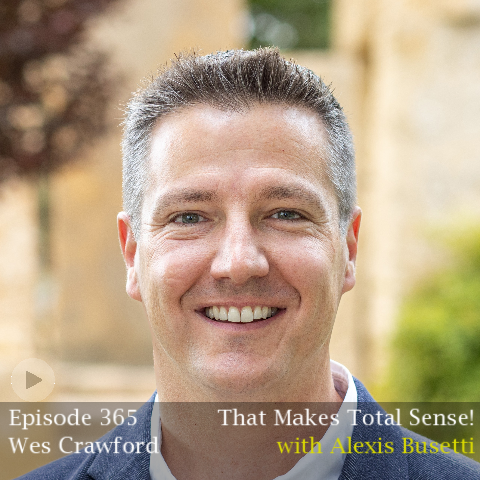
[00:01:28] Speaker A: We're not really neighbors because Texas is huge and you're out in Abilene, but this is Wes Crawford. He's written a book called One Nation Over God, which we're going to talk about today, which was really, really a helpful book for me. Wes, I know you teach undergrads, and that was part of. Probably what felt helpful for me is I was like, oh, my goodness, this feels like a 101 or a 201 in some ways. And that's kind of what I needed.
The things that we're gonna talk about today, specifically American civil religion, are very entangled in our lives. And so to have a text like this come in and help me see where the strings are, you know, like, I've got to. I can follow the string and kind of untangle and disentangle and say, oh, now I can see this a little bit more clearly. Because truthfully, especially as someone who grew up in the Bible Belt, this just is like American civil religion just is and has been my way of life since before I was born. Right.
This was what I was born into.
And so it feels very hard for me to describe or to define. I just kind of know that it is.
And so this book was really helpful in kind of naming these, really, if I'm just being honest, naming the emotions that I often experience, especially right now. We're recording this in June.
Everyone's getting ready for Independence Day.
There are Already signs in our little neighborhood about not doing fireworks and things like that because people are prepping and buying all of these weeks ahead of time for one of these sacred holidays that we'll talk about.
So I know you didn't write the book for me, although I'm grateful for it.
I do want to ask you, where did this book come from for you? Because one more thing I'll say before I let you into that is that as I was reading, I felt like, oh, we are. We're cut from similar cloths as far as our cultural experiences. There were a lot of things that you wrote in the book that I imagine for some people would feel very foreign, and for me, they felt very familiar. And so I'm saying that to say I have a feeling you also were experiencing American civil religion from a very, very young age.
And so I'm curious why kind of write this to help us understand it.
[00:04:12] Speaker B: Yeah.
Yeah. Again, thanks for having me. I guess to answer your question, I guess I would say that I've been writing this book, in a sense, my whole life. I've been experiencing aspects of American civil religion since I was a child growing up in a conservative Christian home, living predominantly throughout the American South.
So I've experienced all of these things personally as I became an adult. I've. I've lived my adult life really, in two different worlds. I've been a pastor in. In two different churches for about 10 years apiece, so about 20 years preaching. And then I've also been a professor teaching American religion.
And I guess it was really when I was in grad school at Vanderbilt University years ago, sitting in a class and. And it was a class about religion in America. And we.
On one specific day, we're talking about American civil religion.
And there was a sociologist named Robert Bella who wrote this essay back in the 60s called American Civil Religion.
And I read that essay, and I remember distinctly sitting in our home, and I was preparing for class the next day, and it was like a light bulb just went off. And I began to understand some of the things that I've been experiencing throughout my life. And I was connecting the dots on why we are so passionate about our love for our country.
I knew that I've experienced it. My family, my friends, all of my peers that I've grown up with and have done life with. I've seen it very vividly.
But in that moment, I began to understand why that was the case.
And then as I continued in my adult life, I saw this as I was a minister at a church. And I saw the passion that our congregation had around the 4th of July or Veterans Day or Memorial Day or why people were so emotional about these moments and why, for them, it seemed like these were religious moments.
And I remember very distinctly one of the.
The vivid images of my ministry was the. The era in which Colin Kaepernick decided to kneel during the national anthem. And I remember how upset people were by that. And it wasn't just they were bothered.
They felt as if, you know, blasphemy had occurred. And in reality, in their minds, it really did.
And so I think understanding some of the.
Some of the academic pieces of this. Some of the aspects from American civil religion helped me understand why that happened. So I've been thinking about these ideas for years and years and years.
I've bored my children and my wife to death about these topics for decades. And I've always known I wanted to write this book, but finally I did.
That's why I written it, and that's what I'm hoping that it addresses.
[00:07:22] Speaker A: So in the book, you tell a story at the beginning that felt, again, very familiar to me, and I still felt a little bit like an outsider. Before we pressed record, I told you I was one of the grandkids who never quite made it to Branson with my grandparents.
And I'll just be real here. I wasn't terribly upset about it because one of the traditions that my parents have passed to me, that I have proudly passed to my children is that we kind of despise country music.
And so I just thought, if there's going to be a lot of country there, I'm not terribly upset that I'm missing it. I mean, I think roller coasters would be fun and, you know, all of that. But. But I'm not. I'm not terribly, terribly upset.
But you tell a story about the audience's response. So I'll let you. The one who has actually been to Branson multiple times, kind of share for people who. Who haven't experienced Branson, Missouri, and all the things that. That it. That it. That it brings.
But there is live music in. In Branson, and you talk about the audience response to a, like, Christian religious number coming from the stage next to the audience response from, like, patriotic music coming from the stage.
And that really is. It was a great place to start the book. But I'd love to start the conversation, our conversation there as well, because even though I've never been to Branson, I have felt what I like even reading it. I'm like Oh, I feel like I can be there because those emotions that stir when those patriotic hymns are being sung are.
I mean, they're almost universal. And we'll get there. They're almost universal in the US So we'll get there. But can you talk about kind of those questions also that led to the. That. That contributed, I guess, to some of the questions you were trying to answer in this book?
[00:09:44] Speaker B: Sure. You know, wow. Branson, Branson is an experience.
We've been going there since I was in elementary school. Yeah, I was born in Rogers, Arkansas, not far from Branson, just over the border. My grandparents had a place there, and we would go up in the summers and stay with them, and they would take us to Branson and. And I've seen it evolve over. Over the decades. When we were children, it really was just a group of these variety show theaters, mostly country music, but it's evolved over the years. Now they're, you know, outlet shopping and roller coasters and amusement parks. I mean, it's. It's an experience.
But the. The thing that you're talking about is. Is really important in this book. And the reason I decided to start the book there is because, in all honesty, this is one of the first places that I begin to have these questions as a teenager.
And so all of these shows are filled with country music, gospel music, and, you know, oldies, rock and roll, those kinds of things that my grandparents used to love these shows and they would bring us, and it was kind of in their wheelhouse.
But I remember, and it's still the case today, that all of the shows end the same way.
And so it's a pretty religious crowd.
It's a very religious crowd. In fact, a lot of Christian people, a lot of older people in these theaters then and now.
But all the shows end the same way. And the second to last song is always a gospel song. And so they will sing the old Rugged across Amazing Grace. And the audience there is very appreciative, they're respectful, and you can sense that in the room.
Everybody's very quiet and attentive during those moments.
But the last song, without exception, no matter what show you're at, no matter if it's a country music show or a Broadway type show or whatever it is, they always end with a patriotic song, either the national anthem or God Bless the USA or, you know, Lee Greenwood's classic, they always end with that song. And what I noticed, even as a child, and it began to cause me to ask questions, I guess, when I was a teenager, is that in that moment, the audience stands and we've. So many of us have been in those moments, we. I don't have to explain that to the listeners here, but it, it began to cause me to ask questions as to why we were standing in the last song and not the second to last song.
And it didn't, it didn't take, you know, rocket scientists to, to understand that there was something different in those last two songs. Yes, they were appreciative of the gospel song, but there was something elevated, something different about the last one.
And I began to question why that was the case.
And I remember having conversations with my parents about it, and they didn't have a good answer for me.
I remember talking to my brothers and sisters about it. They didn't have a good answer for me. But then as I grew older, I began to wonder, so what would happen if I, if I didn't stand up, you know, during the last song? What. What would be the response? And honestly, I never had the courage to do that as a teenager.
But, but I know that it would have been blasphemous to not stand up in that moment because the reverence which, which that that moment brought was so evident in the room.
And that was a pivotal moment for me, that those are probably some of the first moments that I began to think about this idea about why we're so passionate about America, why we're so passionate about our love for our country. And even the phrase God and country that we hear so often throughout the American south, those two go hand in hand. But why.
Why are they so connected?
And so that, that's why I talk about Branson. It's a good place for me to begin the book because it's really where my story began and thinking about this topic.
[00:14:08] Speaker A: Yeah, thanks so much for sharing that, Wes. It's. It's helpful.
Even though I've never. Even though I've never been to Branson, it's helpful because we've experienced those.
We've experienced those moments. I mean, we, many Americans experience those moments multiple times a year, even if we're not at an event like that, because we've got holidays coming up, you know, summer holidays, Thanksgiving, you know, all of these things. And, or we're in situations where, you know, ball games, where national anthem is played. You mentioned Colin Kaepernick, but where we feel those feels and we can't always explain why, it just is.
I'd love to get into these five aspects of civil religion that you bring out in the book, but I think before we do that, it is important to briefly. But, but.
But really emphasize still what you point out in the book, which is that the US Was founded without a state religion.
And I want to say that in the context of what your.
What.
How you talk about civil religion, meaning we did not have a faith, an official faith, an official church, an official religion to bind us as a people.
[00:15:53] Speaker B: Right.
[00:15:54] Speaker A: Which was very different than where many folks had come from in England and other places in Europe.
And it, and it makes for some difficulties. You know, I mean, we look at some. If you, if you, if you only take European countries as an example, they have a much, much, much longer history than we do, and they've managed to kind of stay united. But part of that is because there really was a founding that was stronger than the. This is just a piece of land, or we're just a bunch of people who happen to be in the same place, or I remember who your uncle was. There was a religion that binded them together.
And in the US that was part of the point of the founding was we didn't want that. The founders didn't want that for us. And so I'd love for you to emphasize the parts of that that you find that you think will be meaningful as we move in specifically to the conversation on what is civil religion.
Because I think that that's a. That's a really important foundational point to bring in before we go there.
[00:17:10] Speaker B: Yeah, it's hard to overemphasize this, and we take it for granted because we are Americans and we live in. In a world where we've known nothing but the separation of church and state.
That's. That's the air that we breathe. And we've heard about it in school since we were. Since we were children, but it was revolutionary. I mean, this idea that we would not have an established religion had never been done before.
Even if you look in ancient civilizations, if you look at things that archaeologists uncover from these ancient civilizations, it's fascinating that when they go into place, they begin to unearth these.
These relics from ages past that the religious center was always in the middle of the community.
It was a temple, it was a church, it was some sort of religious house that was always in the middle. And then typically they would build kind of what we would call residential areas on the far outside. Some marketplace was there, but the religious center was always in the middle. And that's symbolically important. It indicates that it has always been the case that religion is the thing that unites us. It's the thing, it's the thing that we hold in common. Though we may disagree and have diversity on all these other things. We have different jobs, our families look different, but we had religion in common. That's what bounds civilizations together from the very beginning.
And you see that consistent throughout history, even into Europe, into the 16th century, even after the Protestant Reformation.
You know, certainly you had the splintering of the church, the Catholic Church, and then the, the birth of the Protestant church in the 16th century with Martin Luther and John Calvin and Ulrich Zingli and all these others. And they're starting these new expressions of Christianity in Europe. But still, in those individual countries, one did not have the right to choose how to practice religion.
So if you happen to live in what is now Germany in that time, well, you were a Lutheran because that's where Martin Luther was. And that's the expression of Christianity that grew in that time in that place. If you were living in England around this time, would you be Catholic or Protestant? Well, it would depend on the monarch because if the monarch happened to be Catholic, then so were you. But if the monarch happened to be Protestant, well, then so were you.
You really didn't have a choice in the matter because the religious identity of the nation was tied to the state. It was the established state sponsored religion. And that has always been true. That has been the one thing that united people together in each civilization throughout history.
America was different.
And so in these colonies that began to be settled long before we became a nation in, in 1776, there was always, there's already growing diversity.
So you had Congregationalists, Protestants that were settling up in what is now New England.
You had Catholics coming in from what is today the American Southwest and from Florida. You had Evangelicals settling down in Georgia. You had incredible religious diversity in places like Pennsylvania, where you had Quakers and you had, then you had Evangelicals and you had Muslims and Jews and atheists. And it was just a smorgasbord of different religious options all over the place in these American colonies.
So by the time 1776 rolls around and they begin to think about establishing a new nation, there were efforts even in that moment to establish Christianity as the religion of the United States.
But it was impossible by that time. You know, we've heard the metaphor, it's too late to put the toothpaste back in the tube. There was already so much religious diversity at the time. There's no way that they could have established a religion at that point. Though some tried. There were some of the founding leaders in America that wanted to make, for example, just a generic Christianity. So not Baptist or Catholic or Methodism or anything else, but let's just make Christianity the established religion of the United States.
But they couldn't even do that. There was already so much diversity. So what that means is when America was established and they wrote the Declaration of Independence, the Constitution, the Bill of Rights, for the first time in civilization as we know it, there was a new nation without an established religion. We didn't. We did not have religion to unite us.
And that is an incredible historical moment.
And in the whole scheme of things, we're really only, you know, right at 250 years into this experiment. And as one who studies American religion, we can attest to the fact that jury's still out on how this is going to go.
We've had some ups and downs, but one thing is clear. We do not have that one religion to unite us, though some would say that we do. Right. We hear this language. We're a Christian nation, but really not. And the founders of America were adamant about that, that they did not want there to be an established religion, that there was religious diversity in this place. Were most of those founding leaders Christian people? Absolutely. But within their. Their Christianity was very diverse.
It was incredibly diverse. Most of them, for example, would not be comfortable in the congregations that you and I grew up in in the American south and evangelical world that we. They would not have fit there. But there was incredible diversity, and there always has been in America.
[00:23:09] Speaker A: Yeah, I'm glad that you. That you ended with that point, because that was going to be. My next question is just say it for the record, like, for folks who say we were founded as a Christian nation. Like, no.
[00:23:21] Speaker B: Like, no, not at all.
[00:23:23] Speaker A: Not at all.
And.
And I would say that that. That becomes an important. That has become an important talking point because there's a lot of.
That phrasing is. Is used in defense of a lot of things that we're seeing going on now and that have been going on for like the last 10 years specifically, but. But even longer, of course, than that. And so I just want to leave that hanging as we continue the conversation because it is really important. And for. And for. And for me, I mean, I would say one phrase that or one term.
I forget who used it. When I was in my m. Div, someone said Christianities with the. That are plural. And that's very help. That's been very helpful for me to have that lens. But I also thought this feels like a very wonderful. And. And this is, you know, for some this is a controversial statement. But, but what you just said, like a lot of the founders were Christians, but they were adamant and not to found the nation with an established religion.
And the controversy, the controversial statement that I'll say is for me that feels like a very Christianly thing to do, actually to allow humans to have the freedom to choose to worship, right to choose to worship in the ways that feel meaningful to them. That feels like a very Christianly thing for, for the founders, for some of the founders to do who, who did, who, who were Christians. But anyway, I just want to kind of let that hang over our conversation because I think it's important to keep that in mind, especially as we move on to talking about civil religion. Again. I, I told you this pre record, this is one of the best explanations of civil religion that I have found.
I read and studied this some in Sacrifice Seminary. I also have just done a lot of reading for the podcast and just because this topic interests me as well. And so I've done some reading and this felt just very, very clear. So if it's okay with you, I'll name these five aspects, how I understood them, just kind of give the, give the, give the category titles, and then we can talk through them. Because one of the things that you point out is that this is not just, these are not just buckets for American civil religion. These are religious buckets. And so as, as listeners and we think about our own religious experiences, we will check off these boxes in our heads and say, oh yeah, of course, I have this. I have this in my, in my religious practice. All of these things are meaningful and important to me.
And they are, they all, are all sacred. So, so we have, and you tell me if my notes are wrong, please correct me.
I hope you'll do that the whole conversation. So we have sacred texts, sacred rituals, sacred symbols, sacred days, and also sacred people.
And so if we're Christians, we can go through those real quick, right? We can say, oh, we got, I mean, as examples, right? We got the Bible, we got baptism or Eucharist, we've got, you know, the cross as a symbol. We've got Christmas and Easter, we've got Moses and Jesus, right? Okay, like, so we're. Okay, yeah, we've got all of these things.
Okay, Wes, American civil religion has them too, right? Let's talk about it.
[00:27:00] Speaker B: Yeah, I think it's important, those categories are important to help us understand why America, our love for America, functions as a religion. Because some would say, well, sure, I love my country, but that doesn't mean, I'm, I don't love it religiously. It's not a religion to me. But I think these categories are helpful. And let me back up and say this. These five things are consistent. These are, these are commonalities among all enduring religions.
So those who study world religions as far back as we can go, all the enduring religions have these things.
There are some religions that, that have, that come and go. They're here today, gone tomorrow, and they may not have them. They. But these things work together to create an enduring faith.
And so, for example, I mentioned in the book, they're one of the, one of the most interesting religions I think of is studying American religion is, are the Shakers that lives in early America. It's a fascinating group to study. In fact, there was a, there was a movie that came out just a couple of years ago about Ann Lee, mother Ann Lee, and it's her story, but it's about the Shakers.
Very interesting religious group. They were here today and, but they were gone tomorrow.
They had a lot of followers for a while, very charismatic group, but they didn't last very long, long. And they didn't have these five things. But if you look at Christianity or Judaism or Islam or Buddhism, these lasting, enduring religions that have stayed the test of time for, you know, for thousands of years, they have these five things.
And what happened in America is that I believe just as people, we need something to hold us together.
We need something to bind us into a community.
And I mentioned that a little bit in the book.
But for Americans, if, if our religion wasn't going to do that, what was going to be the glue that held us together? What was going to keep us united as a people, as a civilization?
You have to have something to cohere the group together.
And so we began to attach religious significance to these issues, to aspects of our, of our love for our country.
And so if you look at these categories, the sacred book, you know, as you mentioned, Christianity, we have the Bible or, you know, in, in Judaism we have the Hebrew scriptures or the Quran. In Islam, but within America, we have the Constitution.
And some would say, well, you know, that's, that's an important document, but I don't know that I'd call it religious. And I would disagree because I would just have some, someone pay attention to the way that our politicians and congressmen and women exegete this text every day from the halls of the Capitol.
And the debates, some would call them almost religious kinds of debates that happen over parsing this word or that Word, or what this meant way back then and what it means now. I mean, these are the same kinds of conversations that we have about scripture, almost exactly the same. We're passionate about this in the same way that we are about the Bible or about rituals.
This is a big one. I mentioned Colin Kaepernick just a few moments ago, and this really came to a head a few years ago, very vividly, with his decision to kneel during the playing at the national anthem before the 49ers football game.
And I remember thinking, why are people so angry about this? I mean, you know, maybe you disagree with it, but why the passion emotion?
People are boycotting the NFL. They're saying, I'll never watch football again.
[00:30:47] Speaker A: Again.
[00:30:47] Speaker B: I mean, it was. It was a firestorm. And I remember going to church with people and talking, having this conversation with people in the hallway on Sundays, and they were furious.
It's because this, to them was a.
It was a religious offense because he had pushed against this sacred ritual that we have a standing during the singing of the national anthem or the Pledge of Allegiance.
If you think about religious days, I tell the story in the book of a very vivid moment I had when I was preaching years ago. I just started preaching.
It was on better. It was on the Sunday closest to Veterans Day, and it had been the habit in that congregation. I don't know if it was for you too, Alexis, and your congregations, but on the Sunday closest to Veterans Day, there was a habit in our congregation where you would ask the veterans to stand.
[00:31:41] Speaker A: Oh, yeah.
[00:31:41] Speaker B: And then we would. We would clap for them and thank them for their service and all the things. Now, let me just say I'm not against thanking veterans for their service.
Fantastic.
But I remember I was a young minister, I was studying these kinds of things still when I was in seminary. And I thought, you know what? I'm not going to do that this Sunday. I'm going to educate these people that this. We should separate these two things, church and state. They don't belong in the same room. And so I remember I preached my sermon, and I made sure that even the people that were leading prayers that Sunday or giving the announcements were not talking about it. I was. I was. I was very explicit.
And so we go through the Sunday sermon ends, service ends.
And there was a gentleman that came up to me, an elderly gentleman in our. In our congregation, and he made a beeline to me right after the service was over. And I remember he was six inches from my face, finger was, you know, right at my nose. And I will never forget. I mean, he. His words.
He just said, how dare you?
I was early 20s, you know, and here's this man that's in. In his 80s.
I felt very, very small at that moment. But he went on. He just said. He said, were you a veteran? And of course I wasn't. I was like 23, 24 years old.
And I said, no, no, sir, I wasn't. He said, well, that was very obvious this morning. And he just stormed off.
And I could tell that he was choked up when he was talking to this. To him, this was a. This is an important moment. And I had.
I had treaded on something sacred that morning by not acknowledging Veterans Day inside the church building, because for him, it was a sacred day.
And it wasn't just. We weren't just celebrating America.
This was a sacred moment. And I'll never forget that moment in ministry.
So there are sacred rituals, there are sacred books, there are sacred days, there are sacred people.
If you think about the ways in which we revere people from our past, Abraham Lincoln, George Washington, in more recent history, people like Ronald Reagan, and we hold them up as these American almost religious icons, and we hold them up as exemplars from the past. If we could only do things like they did back then, then everything would be okay, right? And we just hold them up that way, and we. We laud them as if they're.
They're sacred people.
And I think it's important to acknowledge it that way.
We also have sacred symbols in our. In our American religion. If you think about the ways in which we view the. The American flag or the bald eagle, think of the. You know, there were several motions over the last few years, efforts by Congress to pass laws making it illegal to desecrate the flag.
And I think even this past year, there's been another one that's been. That's been suggested or put up for a vote. And so these are sacred things.
And it's not just that we love our country.
We love our country as if it is a religion. And I think the reason we do this is because we have to have something to bring us together. And because we don't have an established religion, we've attached these. We've attached religious significance to these aspects of our love for our country.
And so I'm not the first one to talk about this. This is a topic that's been written about extensively over the last century.
As I mentioned, Robert Bella wrote about this back in the 1960s in this essay called American Civil Religion. And it's books have been written, articles have been written. But what I noticed is that I'd studied this in the academic world and I learned about it in seminary, talked about it in graduate school, have written about this and, and taught classes on this. But it's a topic that you just don't hear mentioned much in the church or on the street.
And I think it's so incredibly helpful for us to understand why we are the way we are.
I think there are people in our churches, I think many of us fall into that category as well. We are so emotional about these issues, but we just don't understand why.
And I think this topic of American civil religion helps us understand why we're so emotional and so passionate about these things. There's a reason for it.
Some of the most rewarding times of my ministry beyond preaching is I will teach classes in the churches where I preached, like a Wednesday night class or Sunday night class, a little more laid back. And you have conversation with people there. And I love teaching this in the church. And I, I just see people, it's like the light bulb goes off for them and they just understand, oh, now, now I understand this. And it's so, it's, it's like in some sense a weight is lifted off your shoulders. It doesn't mean that we're any less passionate oftentimes about America. It's just we understand why and we're able to put this in context.
And the reason I think that's important is because, and we know this, if we just let this go and we, we don't check this and we don't understand what we're doing.
This love for country can easily slip into idolatry.
And I think it does. In, in many, many cases it slips into idolatry. And as we know as people of faith, that's important.
It's important for us to recognize that, to understand it. And I think understanding this concept of American civil religion can help disarm the conversation. Conversation a little bit. It gives us some context, gives us some knowledge about why this is happening so that we can, I think, more easily separate the two.
Our faith and our patriotism.
As I've said in the book, I'm not asking anybody to stay home on the 4th of July and not shoot fireworks. I'm asking us to put these things in perspective.
You can, you can love the fact that you are an American citizen and celebrate on the 4th of July and do all these things, but we cannot let this slip into, into a space that should be for people of faith reserved for God.
Bible has some things to say about that, and I think it's very clear and I think we need to be careful about it.
[00:38:23] Speaker A: This wasn't in my notes, but, but I'm going to ask it anyway because the thing that keeps coming to my mind, and I don't know exactly the way to phrase this question, so, so I'd say let's, let's start maybe with you as a professor and also as a pastor.
A lot of my seminary professors kind of, we use the language of like one foot in the church, one foot in the academy kind of thing. And, and that is a line that I see many straddle that is super intriguing to me. And, and I, and I particularly feel like it is necessary to have many folks straddling that line.
But because that's where you've lived, my curiosity is because we've, we look at civil religion, you say, yes, this can go into idolatry, but I think my question is surrounding the connection side specifically between American civil religion and Christianity.
So I don't have experiences except for like, being a visitor in other, like, religious spaces, you know, not on a regular basis at least, but many, especially when I was growing up, and especially, I mean, Bible belt is what my experience is. Like there's a US Flag inside church buildings, not like outside on a flagpole. There might be that too, but like inside, you know, you, you talked about in your book, like when I was in VBS growing up, like, we're pledging allegiance, you know, to the US Flag, to the Christian flag. I mean, that's a real if you know, you know, kind of thing. We also did to the Bible. Again, a real if you know, you know, kind of thing. You're probably sbc, you probably did gas if you know that. But, but I'm curious about the connection between US Civil religion and Christianity specifically, because that, that intertwining.
And you talk about in the very last chapter of the book, like you couldn't help but notice as an example, if you're watching footage of the insurrection on January 6, 2020, which many of us were, there's this civil religion happening that seems real obvious once you kind of know what you're looking for.
And the Christian religious aspects are there as well.
The symbols, the language, the sacred people, the Trump 2020, Jesus 2020, you know, signs side by side. And so I'm curious about that connection and I wish I had a really specific question, but I don't necessarily. It's just like an observation to say this is very intertwined for many folks. Tell me about it.
[00:41:28] Speaker B: Yeah, yeah, that's a great question.
I think one way to answer that is to say that if we're not careful, and let me say it this way, Robert Bella had some positive things and some negative things to say about American civil religion. As I talk about in the book, there are some positive kinds of things about American civil religion. It does give us common language as people in America. It does give us something to hold in common, to unite us. There's wonderful thing about standing shoulder to shoulder, people you don't really know on the 4th of July in a parade and having that in common. That's a good thing.
It moves into unhealthy places for people of faith when we allowed to become this religious thing for us. And also, I would say a term that's thrown around a lot right now is Christian nationalism.
And I'm very careful in the book to stay away from that term most of the time because that means something very specific.
But I think that if American civil religion remains unchecked, it can move into Christian nationalism, which is a very unhealthy idea. It is where we blend our Christianity with our love of country. They become one and the same. And that we begin to have the idea that America as a nation should be a Christian nation with Christian law. Laws that this nation is superior, that. That God has specially gifted America to do things in the world that God has not gifted other nations to do. And we have this special mission in the world. And that has led to some very dark places in our history, not the least of which was slavery and Jim Crow laws. But all of that was intertwined. I remember years ago. I don't know if you watched the show. Western West Wing.
[00:43:25] Speaker A: Oh, yeah.
[00:43:25] Speaker B: There was a great episode that I. I've used this in class many times. And it's an episode where they're trying to depict 9 11.
And so they don't necessarily say 9 11, but the. The context of the show is they're giving a White House tour and something happens and they're all in lockdown. And so they're in this basement and they had these school children with them.
[00:43:51] Speaker A: Yes, I remember the episode. Yes, yes.
[00:43:53] Speaker B: So they gave this great episode where they're. They're using the old SAT analogy, you know, and so these two things equal these two things.
And so what they. What they show is.
It's like, I'm trying to remember exactly the. The way that they do it at the end of the day, what they're they're showing is that Christianity has been co opted by horrible things in the past, one of which was the kkk.
Yeah, so, so what the, the analogy they give if you think about the, the two lines in the SAT where I think it's like the KKK and Islamic extremists, you know, are equal to Christianity and Islam, you know, so that doesn't mean, that doesn't mean that every Christian is a member of the kkk and it doesn't mean that every person is a Islamic faith, is a terrorist. Right. These are extreme extremist groups within these, within these two factions.
And we kind of see that with this play out within Christian nationalism. There's this element where people that are radical in their love of country and their, and they blended this with their faith in a very unhealthy way. It's the way that they supported again, racism throughout the South.
It has a sinister history throughout, for a very long time. And so yes, there are ways that we have blended these in very unhealthy ways. And I think the reason that, that our specific context lends itself to Christianity and the reason we see crosses and Confederate flags flying together at the American capital is because we, for the most part, we've lived in a Christian context.
You know, as I said from the very beginning though, this is not a Christian nation and never has been.
The founding leaders were Christian people.
And so that's been in the water that we drink, that's in the air that we breathe. It's all around us. And so some people have, have very easily conflated the two.
And as they look back in the past in this nostalgic way and they think about the wonderful faith of people like Abraham Lincoln and you know, Benjamin Franklin and George Washington, all of whom were criticized for the ways in which they did not practice their faith. They were very irreligious in their time.
But we had these visions of the past and we've conflated it with our, with our faith. We blended the two in a very unique way here at America America. And I think Christian nationalism is a very dangerous thing. I think it's one of the most significant threats we have in our time.
And I, I think some of that is because we lack an understanding of history.
And that's one of the reasons I think history is so important is to understand that, you know, the founding leaders did some wonderful things, but they, they're not who we make them out to be. You know, they did, they did not set out to create a Christian theocracy.
[00:47:03] Speaker A: Yeah, I agree with you. I think it's. We don't understand history. And the other thing that came to my head just now is also, and this is just me kind of talking to things, so we take it or leave it. But I think when we talk about American civil religion, we experience. I've talked a lot about emotions, but like, we experience a lot of the same emotions with. When we are inside of American civil religion that we do when we're in Christianity or other religious spaces, you know, so, like, we experience, you know, we see the fireworks and we experience awe. You know, we hear the Star Spangled Banner and we experience this reverent, you know, moment. And, you know, and all of those things are good. And I think. But I also think that it lends itself to the conflation that you're talking about, in part because those things have been tied together in God We Trust is on our money. The American flag is inside of our church space, inside. So it doesn't necessarily feel separate. But I would say last night the kids and I watched Remember the Titans, which is one of my favorite old school Disney movies.
But I was having these feelings during football. I grew up in Southern Oklahoma, so high school football was big. College football was big. I went to OU back when when it was. Was kind of a thing. I mean, it is a thing. People don't get mad at me. It is a thing. But I'm saying I was there in the early 2000s and we were playing some games and doing some stuff. But we experienced, you know, kind of the same kinds of feelings. There's awe and, and. And reverence and there's excitement and there's joy and there's, you know, all of these things. But I don't as easily conflate my football watching experience with my football faith experience. You know, I can kind of see that there are a lot of things in life that can bring me similar emotions or similar experiences as I might experience inside a church or in a spiritual setting. And I don't conflate them. You know, I love live music when I'm at a rock concert. I don't necessarily conflate that and say, oh, this is like, you know, do I think you can experience God in all those places? Yes, but that's a different conversation. I'm just saying, like, the conflation and so.
And so that's part of what I'm thinking of is like, maybe that's one reason why the conflation is easy, is because the experiences are so similar and they're so close together. Like you said, we're upset if we're not mentioning veteran state inside of the church.
Not that we wouldn't mention or revere veterans, period. But that that wouldn't happen inside of a church. Service inside of a church building in the context of that community feels like blasphemy, because those things, you know, are connected, right? So I don't know just about there.
[00:50:02] Speaker B: No, I think that's right. And I think one of the real dangers of this is not only kind of moves into idolatry, but as we treat it as its own religion. And I think the reason religion is different, even. Even different from a rock concert or football game or anything else, is because we have attached these five things to our love of country, and that has elevated it into something else.
And we have all of these factors that we've treated. We've treated it like a religion, and it has functioned like a religion for us, binding us together as a whole community, as religions have always done in the past.
And when we allow it to do that, and here's one of the real dangers we become.
We refuse to be critical of it.
I don't know if you've ever been in conversation like this about your religion, about Christianity as one that's from, you know, a conservative religious movement in the American South.
You know, you better not criticize the Bible, right? You better, better not criticize a historic or traditional interpretation of scripture because that's holy ground.
And we refuse to be critical. We refuse sometimes to be critical of the church. We refuse to be critical of scripture. We refuse to be critical of saints of the past.
That's holy ground.
And I think because we treated America this way, if you criticize America right, you can be cast as an enemy of the state, but also as a heretic.
And we've seen that in recent years.
Anyone that wants to be critical of a policy, of something from our past, I'm thinking specifically of slavery right now. That's been in the news the last several years.
Suddenly, to be critical of slavery in America's past is to say that you don't love your country and that we've all heard the rhetoric in recent years. That's a dangerous place to be, is to be un. To be unwilling to be critical of our country.
Because some of the. I think the greatest Americans in our past, I would call them, though we use the misuse this word now, patriot. I think some of the greatest patriots of our past have been those that loved the country so much that they were critical of it, and they wanted it to be something better. Martin Luther King Jr. For example, love this country, but refused to allow it to be, to stay in the racist place that it was and battled it was very critical of it and of its leaders.
And I think we need that and we've always needed that. And I think we have to, have to acknowledge that in our own time.
[00:52:47] Speaker A: Yeah.
Gosh, in the time we have left. I want to, I want to do, I want to bring up one other, one other thing. There's, there's so much here that we could talk about and then I'll, I'll let you be thinking about kind of the last word. Usually what I say to professors is what's the question? I didn't ask. So maybe you can be thinking about that at the end.
But, but a couple of things that stood out to me that, that are along the lines of what you were just talking about is that included in this American civil religion, the five things that you just named, you also named something really important, which is that America is also seen to have a sacred mission.
And you say this, it even has a sacred mission to bring liberty, democracy and justice to the world. And then so I want to talk about that.
And then just a page or two later you talk about, well, goodness, democracy versus communism, which is, which has been a thing for as long, you know, longer than I've been alive. But talk about the US having a, and needing a moral edge.
And that phrase was particularly helpful for me, as was the mission. I will say this is where my brain went when I read the America as a mission mission. Like a, like a sacred mission. I don't know if you said that, but a sacred mission.
You mentioned West Wing, so I'm going to mention Madam Secretary, which was one of my just all time favorite. Netflix, bring it back please. Anyway, just one of my all time favorite shows.
But one of the things that I, that had me start asking some questions when I was watching MSEC was there's these conversations that the secretary has with Russell and I think particularly Russell. And this is kind of ongoing conversation because for folks who haven't seen the show, hey, find a place to watch it, it's fantastic. But there's usually some sort of like domestic something that's going on. But of course, because she's Secretary of State, there's always some sort of international situation that she's dealing with and you kind of go through and you're like, what is going on? Like what is the underlying kind of thing that we're doing? Here. And often Russell will explicitly answer that question and say, we are protecting and spreading. I don't know the exact words he uses, but basically, like protecting and spreading the American way of life.
And he often basically says, this is what we're doing when we're going into these other countries and doing xyz. Whether it's providing aid or participating in some sort of, you know, war or other crisis or crisis.
We are protecting, serving, spreading the American way of life.
And that felt very uncomfortable to me, as. Even though I love Madam Secretary, that felt very, very uncomfortable to me because then he started to ask the question, what's so special about the American way of life? You know, like, why would the American way of life. And I think. I think the answer is partially here because we believe that we promote justice and democracy and freedom, right? And all of these things. If we look at our receipts, have we really done that? Are we really doing that? You know, we. We've got different answers, probably.
But even if it was, you know, if it was a different context, if you were having this conversation, you know, I can imagine, like, I don't know, you're. You. I'm making up a conversation for you. But you have a conversation with one of your. One of your undergraduate students, and they say, you know, they're. They're the Taylor family, and they say, well, we're promoting the Taylor way of life. And then you go, that feels pretty. I mean, like, what's so special about the Taylor way of life that you feel like all of Abilene, Texas, has to, you know, has to live in this kind of Taylor way of life, you know, and that's kind of how it felt to me is kind of like, what. What's so special about the American way of life? But it's that moral edge. You know, I think we.
We've been accused of trying to be the world's police officers, right? And, you know, all of this kind of thing. Not the peace officers, police officer, but, you know, but.
But there's. We've kind of created ourselves to be that in the world.
And. And there's part of me that feels like that's one of the connections and the conflations, too, between Christianity and. And American civil religion. You. You tell me your perspective. But it's like kind of like we know better or we have this moral authority, you know, to do this or that. Where does it come from? I don't really know. But, you know, there's. There's something out there that.
That the U.S. can provide to the world that, that we believe kind of other places are maybe deficient in.
Can you talk about that mission that was so interesting to me?
[00:58:08] Speaker B: Yeah. This is why I love history.
I really. The reason I study history is because I think it's so incredibly practical and applicable to right now. And this is one of those places.
For years and years and years, when I would give a final exam for American Church history, I would ask my students to trace the trajectory of the metaphor city on a hill from the beginning of our American context until today. And I think that metaphor helps us jump into this question.
So in their earliest days, when some of the first settlers were arriving in what is now the United States, man named John Winthrop was early Puritan leader and political leader at that time, while they were still on the boat, delivered a sermon to the people that were about to come ashore.
And in that time he used the metaphor that we are a city on a hill.
And what he was talking about was the church.
So you had this group of Anglicans that was, they were separatists coming out of the Anglican Church and they were coming to settle in these colonies because they wanted to practice their faith the way they believed faith should be practiced. They believed the church in Europe had become corrupt and they wanted to go to a new place and without any hindrances, without any oversight from government, like these established religions we've been talking about. And they wanted to practice the faith and become the church as the church should always be.
And their idea was that we will do this in such a perfect way that the rest of the world will see that, oh, this is what the church is supposed to be like. And then they'll change their ways, you know, and they'll repent and they'll become, you know, more like we are here in the, in the true church.
And so that was, that was their mission early on. We are a city on a hill. And obviously they borrowed this language from Jesus, who used this language in his sermons. But John Wither abuses it, he attaches it to the church and it becomes this defining metaphor, or for the church in early America, that we're sitting on a hill and everyone will see us. We're a light shining in the world, an example for everyone around us.
What's interesting, what I had the students do, is trace how that metaphor has slowly been co opted by American politicians throughout time.
So you see this in the language of JFK most prominently. You see it in the language of Ronald Reagan in one of his speeches where he was known to multiple times talk about the city on a hill.
But when these politicians use it, they've shifted the metaphor and they're no longer talking about the church, they're talking about America.
And they, you know, Reagan famously says, we want to be a shining city on a hill. And he's talking, you know, toward the end of the Cold War about democracy and America and, and the rest of the world will be attracted to this thing that we, this freedom and liberty and democracy that we have. And it will spread into places like the old former Soviet Union and it'll change the world.
And you know, again, using this language, the beacon of hope that's been used by other more recent presidents. And this language is all consistent, but it is tied to this idea and this belief, as you suggested, that we've had this belief that among Americans that there's something special.
And in the field of American civil religion, we've attached the word exceptionalism to that. And people write a lot about American exceptionalism. And that's what we're talking about, is this belief that we have that there's something special about America that we must and perhaps by divine mandate share with the rest of the world. And I think you're right. I think that's dangerous territory.
I think that that does a lot of things. Potentially. One, it sets us up to believe that we are a chosen people by God more than anyone else.
And that means that we are somehow morally superior to other people and other nations and other, other people groups. This kind of language has been used dangerously throughout time. Again, I've written, the reason I keep bringing up people like Martin Luther King and slavery is because I've run extensively in that area, Civil rights movement and racism in the history of America. But I, but I'm drawn back to those images of the ways in which we defended slavery in many ways for the same reasons.
So there were professors from Harvard and Princeton in that era, in the slavery era that developed a theory called the Great Chain of Being. And, and basically what they said is that white people are superior intellectually and innately from other people groups in the world and that God created us that way. And they, they created kind of a racial hierarchy. And they said, you know, white, European, Western, those are, they're on the top. They're the smartest and wisest and most capable people in the world. And as you might expect in that time, they're moving down slowly through the gradations of their totem pole. And at the very bottom were black skinned people.
And they used that idea to justify slavery even more than that to create a Christian spin on it. They said, and it's our moral duty. God has put us here as these morally superior beings to help the people that are on the lower end of this totem pole.
And so we have to educate these slaves, and we have to give them our religion, and we have to give them sophistication, and we have to civilize them.
That's a. That's a just a dangerous place to be. And I think you see the same thing at work when we talk about American exceptionalism, as if we are somehow superior or God's chosen right arm to do these special things in the world.
That's just not true. You know, God is the God of the world, and God created the world and all of the peoples.
And I think when you recognize that, and this is one of those places, I think that civil religion moving into Christian nationalism and American exceptionalism can move us into some very dangerous spaces.
[01:04:32] Speaker A: Yeah, thanks for that, Wes.
Okay, what's the question? I didn't ask.
[01:04:41] Speaker B: You know, one of the questions I get a lot about this book is people that I know that know that it's about to come out. It'll be released later this year. And they said, you know, what. What exactly are you talking about and what do you want to accomplish and what aren't you angry about the way the world is right now?
And what I share with them is, yeah, there are moments when I'm angry with the way the world is right now. But more than anything, the overwhelming emotion that I feel. I don't know if you feel this. It's sadness. This.
I. I feel great sadness at times in the world. As a Christian in America right now, there are some horrific things happening in. In our country right now.
I. I would go so far as to say just ungodly things happening in our world right now.
And that should come as no surprise. There have always been evil people in the world.
There have always been heinous things that happen around us.
There have always been people that are racist, and there have always been people that lie and cheat to get ahead. There's always been a thirst for power. All those things have been consistent.
What worries me now, what frustrates me and saddens me is the degree to which Christian people in America are endorsing that.
And I think that's so very sad.
And I think one of the reasons we do that has a lot to do with the topic of this book. I think we become so wed to our certain way of practicing our love of country, our political parties, however you want to fill in those gaps. That we become so uncritical of the world in which we live and the country of which we are a part that I think we are, we're turning a blind eye to some things that really, I think, demand a prophetic voice.
And so one of my hopes for this book is that it'll help reorient us and help us to separate, you know, love of country, love of God.
Those are two very different things and they are on different levels.
And I think if we are able to prioritize that better and understand our love for God and let that take precedence in our life, that'll reorient our actions and allow us to recognize and to name some very ungodly things that are happening. Because I think our world needs Christian prophets right now.
[01:07:13] Speaker A: Wow. That's great. Thank you so much, Wes. I appreciate it.
Again, the book that will be released later this year, but I'll put a link where folks can pre order it.
It's called One Nation Over God by my guest today, Dr. Wes Crawford. Thank you so much for writing this and for sharing your time with me today. I really appreciate it.
[01:07:36] Speaker B: Thank you. I'm enjoying being here.
[01:07:40] Speaker A: The links for all the resources mentioned in today's episode can be found in the show Notes, music and pont production by Seth Buscetti. Be sure to give us a review on itunes and subscribe at your favorite podcast listening app. You can also Visit
[email protected].
[01:08:11] Speaker B: Sam.