Episode Transcript
Speaker 1 00:00:06 Welcome to That Makes Total Sense, a podcast dedicated to exploring God's generosity and justice. I'm Alexis bti, a Christian aiming to ask good questions and encouraging you to do the same. Every one of us is wired by God to live out generosity and justice. But the how sometimes eludes us that makes total sense is a way for us to get together, posture ourselves as learners, and challenge one another, to practice generosity and justice in a tangible way every day.
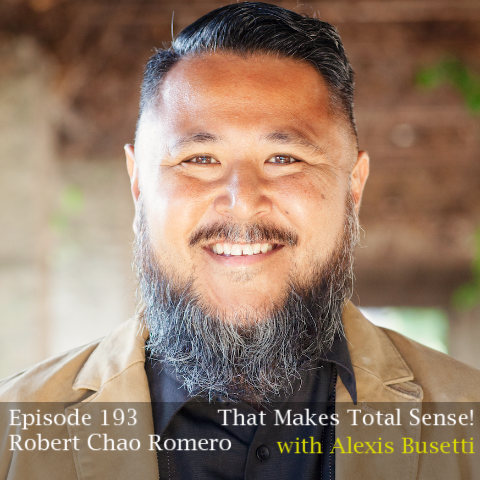
Speaker 1 00:00:42 Hey, everybody, I'm super excited because I am, I would say the few times that we have gotten to sit across from each other, Robert, I have felt super excited. So this is the second time you've been on the podcast. Um, we had a soda together in, uh, in California not too long ago, which was, which was super great. And then I just finished this book that you and Jeff Leo just wrote. It's actually as of this date, it's not even been released yet. So I was, I was reading the advanced copy, but it's called Christianity and Critical Race Theory of Faithful and Constructive Conversation. And, and that's my prayer, that this conversation, this literal conversation between you and me would be faithful and constructive too. So welcome back to the podcast.
Speaker 2 00:01:29 Me too. And it's great. It's great to reconnect Alexis.
Speaker 1 00:01:33 So the last time you were here, we discussed your book, brown Church, which I will link in the notes for this. Um, I ended up reading it twice. I don't know if you knew that. I read it for our podcast conversation, and then when I had you as a professor, I read it again because it was assigned <laugh> in class, but it was good both times. Um, and this book, and this book is great too, because one of the things that I would say personally that I value about my interactions with you, um, is a, that I know that you're super brilliant, but you, um, have present with such humility and grace to, uh, the, the, the subject matter that you, um, present. And that as any good teacher, you have this amazing ability to take topics that are very complex and feel very complicated and break them down, um, in ways that people like me can understand them a little bit better.
Speaker 1 00:02:37 And so I have felt that in all of the interactions that we've had, and really with this book, I mean, when I see critical race theory, I think I'm not the only one who kind of feels their blood pressure go up a little bit and go, oh my goodness, what's this gonna be about? And and you have just, you and Jeff have just taken this topic that even feels a little bit, not just complex and complicated, but controversial and kind of just breaking it down, helping the reader to understand, and then also seeing how we can engage with this topic in a meaningful way as Christians. And so, I just wanna start by saying thank you. And I'm, I'm really appreciative of your teacher's heart in this.
Speaker 2 00:03:15 Thank you for your kind words.
Speaker 1 00:03:18 So, so let's, let's maybe start there For people who don't know you haven't listened to our previous conversation, um, you are a theologian, but I feel like we could name all of these other things. You're also a pastor, you're also an activist. You're also a legal scholar. You are professor at a secular university in California. And this topic and topics like these are things that you've been teaching for. I mean, how long
Speaker 2 00:03:53 I've been teaching about c r T for over a decade, but I've been thinking about these issues my whole life since I was six. Yeah. <laugh>,
Speaker 1 00:04:02 Right? Because
Speaker 2 00:04:03 People maybe, maybe five years old
Speaker 1 00:04:04 <laugh> because people, people can't see you. But we've named your other, your other book. Um, so then nomenclature, can we, we people can listen to the other conversation to know about exactly what Brown Church, what you mean by that and what that looks like. But you and I are sitting here as brown people. And so yes, we've been, we've been experiencing and thinking about these kinds of things in our society as Americans because we're brown. So maybe let's start there and help us, like I know to ask you give a quick definition of c r t, that's really unfair. But if you could give us just maybe, um, a starting place, and I say that because you're, you're no stranger to this, especially in the last few years. This is a phrase Yeah. That, I mean, in our house, we've kind of said, oh my goodness, c r t is a boogieman. Like this has been kind of all over the news, especially I'm, I live in the south, I live in Texas, so kind of in this belt down here, we're seeing a lot of, um, people kind of pick this up in religious communities, in educational communities and naming it for all of these things. I think that it isn't. So can you help us understand maybe, um, what it is, and then let's just kind of start from there.
Speaker 2 00:05:17 Sure. So let me say what it is, and I'll also say what it's not. Maybe it's, I should start with the latter. C r t has become what one person has called a brand category. A brand category, um, basically like some people use it as a term to lump in everything that they don't like that's scary about the left, right? And it's sort of like anything that deals with race and wokeness or anything like that. Like let's just put it all in that category. And that, that was a very conscious, conscious, uh, move captured in a tweet by Christopher Ruo in March, 2021. He said, we have successfully frozen c r t as a brand category basic, so that, that, that's c r t is not that. On the other hand, c r t has been used even by some of well-intended colleagues who are more familiar with it, to refer generally to scholarship that talks about race.
Speaker 2 00:06:18 But it's not that either. <laugh>, um, C R t critical race theory began in the 1980s and nineties by, um, law professors and lawyers of color, African American, Latino, Asian American, who went through three years of their law school experience, never learning about the topic of race and how it played out as a legal concept in US history and in the law. So they never studied Brown v Board of Education. They never studied the way that Mexican Americans were racialized in the US law. They never studied how between 1790 and 1952, only those people who were legally categorized as white could become naturalized US citizens. And I, and I want to clarify that I'm not picking on white people, quote unquote, right? White was a legal category in operation for hundreds of years in the United States. And those who legally, um, fell under that category right, as defined by the US Supreme Court, were able to gain all the socioeconomic and political privileges that US society had to offer to be able to vote to live where you wanted to live, to join any profession, et cetera, right?
Speaker 2 00:07:37 Go to any park. So I'm gonna clarify that White was a legal category that was created at a specific moment in time just as black was a, a legal category, um, to refer to people who were viewed as slaves less than human, right? So that, that's a whole conversation. But I want to clarify. We're not talking about white people in 2023. We're talking about this legal category that existed for hundreds of years. So these, these former, um, law students and lawyers said, we need to, we need to develop a field of study that explores the, the way in which race was created as a legal category over hundreds of years of US history. We wanna understand it so that we can make things better today, right? From there, c r t spun off into education and social work and history and these different fields. But it begins again, very specifically as a legal movement.
Speaker 2 00:08:34 Now, c r t today, 40 years later, there's so many different branches. It doesn't all like, it doesn't all agree with, agree with each other. I know sometimes people say, oh, c r t is Marxist. Well, a famous Marxist from, I think, I think from Oxford actually said that c r t was inconsistent with Marxism because it focuses on race, not on capitalism. So c r t doesn't all agree with itself, it's just like any complex field, but it's a very specific, it began in the law to study the role of race. And that's what it is, right? So, and I, I've, I've, Jeff and I, long before it became a trendy topic, just, I've just been teaching about it without any controversy until it became framed as a brand category.
Speaker 1 00:09:20 Yeah. As a brand category. So as a teaching about it without any controversy in the area of law in legal studies, right? Because that's where it started. That's where you predominantly teach, if I'm not mistaken. But then
Speaker 2 00:09:34 It's one of the
Speaker 1 00:09:35 Areas, Uhhuh <affirmative>. But then somehow it got mixed in with this church culture in the US and it became something that this brand, according to some, is incompatible with Christianity. So can you, can you talk about that a little bit from your understanding, kind of like what happened and why we're kind of in sitting in that spot where we are?
Speaker 2 00:10:12 I think it has to do with the political culture war very specifically. We're all familiar. So basically, um, there became a political movement that said, um, racism does not exist anymore in the us. Maybe it existed in the past, but it doesn't actually, some even question that it really ex or they wanna water down the way it existed in the past, but doesn't exist now. Let's just not see color. Let's speak colorblind. Um, if people of color don't have enough, don't succeed in education or certain jobs, well, it's because they're not working hard enough. There's this culture of of, of, um, this binary of merit and blame. I've achieved all that I've achieved because I've earned it. And if those other people didn't, well, somehow their culture is inferior, et cetera. They're not taught to value education things, some things like that. And on the left, cause I wanna be fair again, on the left, it can be an extreme culture of blame, right?
Speaker 2 00:11:22 That where white people, quote unquote right, are bad and they should feel shame. And, and let me be very clear as possible, like I'm not a Marxist. My Chinese grandparents on my mother's side fled China as refugees because they're, they found it inter varsity in China in the 1940s, and they, they were going to be killed by the communists, right? <laugh> for their Christianity. I'm not a Marxist, right? Um, and I'm not a, I'm not a Republican or a Democrat, right? So let me put it clear. I am a pastor. At the end of the day, I'm a pastor who loves people. I want the church to grow into all that she can be, to grow into the fullest stature of Christ. And for, for that to happen, as Paul says, we need to suffer with those who suffer, give greater honor to the parts of the body of Christ that lack it, and some aspects of c r t.
Speaker 2 00:12:19 Again, I'm not gonna die in a hill for C R t, I don't care about it that much, really. But <laugh> underlying C r t is a cry, historical and contemporary cry of many people of color that says there's this painful racist past that has a legacy in, in the present moment in the church, in the school systems, in the healthcare system, in society, right? And for us to, to be who God wants us to be, we need to explore these issues, right? And that's the fundamental controversy I think around, around C r t and the church has gotten tied into the culture wars. And that's why I'm here. I want people to know Jesus. I want the church to flourish.
Speaker 1 00:13:09 Robert, I wanna go back for a second. When you said you've been teaching this for over 10 years, but you've been thinking about these kinds of things since you were five. Um, I know that you were a smart kid cuz you're a smart grownup, but <laugh>, but what does that mean when you say you've been thinking about these kinds, these kinds of things, basically from your whole upbringing? Like, illuminate that a little bit?
Speaker 2 00:13:37 Sure. So I, I remember being, I was a young kid in, in, in, uh, first grade, so I remember I was not quite six and I grew up in the suburbs of Los Angeles. Now, a lot of people don't realize this, but the suburbs of Los Angeles, the schools as well as throughout most of the United States were not desegregated until they were forced to in 19 70, 19 70, even though Brown v Board of Education was 1954. It wasn't until courts ordered desegregation, cuz schools tried to go all the way around it in the seventies, that, that 1970 that they got desegregated. So here I wander into like this recently desegregated educational system in the late 1970s, less than a decade after that. And I remember walking into first grade and being like, Hmm, who stands out here? <laugh>? I'm like this brown kid with like dark hair and brown eyes, all these blonde people, kids running around.
Speaker 2 00:14:40 And I, and, and I was there by myself. And I remember thinking to myself again, these, these are the perceptions of a young kid. That blonde girl with yellow hair is playing with him with yellow hair because they both have yellow hair <laugh>, right? <laugh>. And again, like, I don't think that those young kids were being racist, but I, I was brought into a structure of education that I was like, and sure enough, I would, I would run into those structural barriers soon enough when I would be denied entry into the gifted and talented education program, right? When I'd be accused of a teacher of, of plagiarizing my essays because my essay is too good. Those kinds of things, right? When I'd be called beaner by those same kids that I met, you know, just a few years before. Um, and so, and then being mixed race, that's another dimension of it, you know, growing up or bean of Mexican descent on my father's side and Chinese on my mother's side.
Speaker 2 00:15:36 Whole set of, of interesting re reflections there. Um, so I grew up, again in a predominantly white space being literally a minority, um, in Los Angeles. And then it's just many, I could tell so many stories of what C r t calls microaggressions. Microaggressions, but also macroaggressions <laugh>, right? And when I first came across c r t, it gave me a language to describe those experiences beyond any economic theory or anything like that. Whatever, e Marxism, I don't even care, again, I'm not a Marxist, but c r t has language like racism is ordinary community cultural wealth of the voices of color, thesis, microaggressions. And I'm like, oh my gosh, when I read about those particular theories beyond all the rhetoric, but actually read those theories, I'm like, yeah, that describes when I was 11. That describes when I was 15. That describes me last year, right? That describes me when I went to buy a house for the first time. And so, c r t, again, that's the value of it. It, it gives language. And every time I teach it, like I teach it, um, in, at the graduate level, right? Um, doctoral level, everyone in the room, we find comfort in shared experiences and the language that c r t gives us.
Speaker 1 00:17:00 Yeah, I mean, I, I wasn't anticipating going here necessarily, but as you, as you were talking about that, I was, I was thinking about, so I'm mixed Hispanic, my dad's white, my mom's Mexican American, but married a a blonde-haired, blue-eyed white kid who grew up among blonde-haired, blue-eyed white kids. And, um, realized pretty quickly after he and I, you know, started dating and getting got married, that those kinds of experiences that you're describing that, that I had as well growing up and last week, and, you know, all of those things, um, he just had never experienced them before. It was like out of sight, out of mind. Like he just, you know, and didn't, he didn't not believe me when I would tell him those things. Um, but he really just had no firsthand experience of, of any of those kinds of things that, that the theories of c r t might give us language for where we say, oh, like you go, oh, I, I know that, but I just didn't know what to call it.
Speaker 2 00:18:12 Yes.
Speaker 1 00:18:13 Before, before now. And so that is really, that's helping me, right? That's, that's like helping some of it make, make sense for me. So I wanna go through a couple of those places because I love what you and Jeff have done in the book where you take some of those theories and aspects that, that c r t helps give language to and gives clarity. And then you say, Hey, we have, we have something like this is, this is me saying this, like, we have something like this inside of theology or inside of our faith, inside of our Christian, uh, understanding that jives with us and helps us. We can understand it and look at this from a faith lens as well. And one of those is the, the first one that you named is that racism is ordinary. Mm-hmm. <affirmative>. So what is, how does that language, what is, what does C r t kind of tell us about that? And then also how does that jive with what we understand to be true as Christians? And what that tells us about ourselves?
Speaker 2 00:19:17 Let me first say that my biggest heart is as an evangelist, because I came to know Jesus as an adult, and Jesus transformed my life. That's my biggest heart. And I'm always looking for bridges between, um, Christianity and ideas and culture, because guess who my examples are? The Apostle John, the Apostle Paul, right? John chapter one, in the beginning was the word, and the word was with God, right? And the word was God. The word John there is explicitly taking a concept that was popular in his Greek world and saying, this is Jesus. He's drawing bridges, which you, or, or the, you know, tuned to, tuned to the unknown God, right? With, with Paul, which you're grasping at, let me tell you more, right, Paul, to the areopagus, you know, again, with, with, with the, with that tune to the unknown God, but also citing, um, Greek philosophers and poets, right?
Speaker 2 00:20:22 To make that bridge with his audience. That's what Jeff and I are doing here. Again, I could take c r t or not, I don't care like it, it's gonna, c r t is at the end of the day for me, it's gonna be scrutinized by the lens of scripture, not the other way around. I'm not trying to fit the Bible into an ideology. I'm really not. Um, and so that's our approach is to bring those bridges so that many people who are looking in can say, oh my gosh, what John wrote that 2000 years ago. Paul wrote that, et cetera. So, but, but to go into more specifics, so you, you said as examples of those bridges, right? Um, c r t has a concept that racism is ordinary. That racism happens in the lives of people of color on a daily basis or regular basis.
Speaker 2 00:21:14 It's in history. And it's not something that we should be surprised about, right? Because what does the Bible teach, right? We're sinners, <laugh>, original sin, right? That's why we need Jesus. And sin occurs not just on a personal level, although it does occur there, but also between groups of people in society, right? Through the types of laws that we pass that affect large groups of people or the laws we don't pass, right? Um, and so from cr c r T perspective, yeah, like when I think ab read about racism or stuff like that, or experience it, I'm like, oh, yeah, I'm not surprised, <laugh>, it's not surprising to me all the horrible things that are happening now. It's, it always stuns me for a long time, but it's not surprising. Other examples, um, great concept of, of of, um, actually, yeah. Of community cultural wealth.
Speaker 2 00:22:11 Um, revelation 21, this is like a ski thing from the book that I, um, I'm really proud of it actually. <laugh>, I just, you know, I've also been reflecting upon this concept for like a quarter of a century, right? Really, I remember the day I was in grad school many years ago being on the steel tables outside of Campbell Hall at U C L and reading Revelation 21, 26, and 27, and it was like, oh, it was like, it just hit me, the significance, it began to hit me. And I've been reflecting upon it for like two decades since, or more. But Revelation 21, 26, John is describing what happens. Jesus comes back, makes all things new. One sin for all. And and John says at that time, the glory and honor of the nations will be brought in the glory and honor of the nations will be brought into the new Jerusalem forever, right?
Speaker 2 00:23:11 That word glory dok can be translated, treasure and wealth. So there's this thing called the treasure and wealth of the different ethnic groups of the world that is of eternal value to God, of eternal value, right? Um, the next verse 27 says that to paraphrase, nothing impure, nothing impure is gonna make it in. So in the book, I'll lay out this framework that is entirely biblical, and then I'll make the parallel to c r t in a second as a further example of what we're trying to do in the book. But, uh, verse 20, verse 27 says that nothing that causes sin or impurity will, will, will make it in. So there's this cultural treasure and wealth that every ethnic group has so of eternal value to God, and there's sin that's not gonna make it in right <laugh>, that's both personal and, and particular few different ethnic groups, right?
Speaker 2 00:24:07 I can, we can give many examples of that. Um, I think that this glory and honor in my, this is my reflection, I think it consists of a couple of different dimensions, at least. Number one, the glory and honor of our different, uh, like, like the tangible aspects of our culture, the food, the music, the dance, the, this is why we love to travel and go to museums, right? And there's like the history channel, right? Um, or meet friends of different cultural backgrounds and experience one another's family because we realize that there is a rich exchange, literally a rich exchange happening there, right? Where we're partic we're partaking in those moments. It's sacred, even it's beautiful. We don't, we might not even have words for it, but we know there's something glorious about it, right? Secondly, though, that cultural, cultural treasure and wealth, I think gives us distinct lenses to see the world, right?
Speaker 2 00:25:01 The distinct cultural Andre, cultural treasure and wealth that we have gives us distinct lenses to see the world, right? So we can, we can understand God in, in unique ways, the problems of the world in distinct ways, the problems of the church. And that's why as the body of Christ, we all need each other. We all belong to each other. We can't make it o one set of cultural lenses is not enough, right? And so to say something controversial, but it's just true. That's why the Bible is not colorblind. There's distinct cultural treasure and wealth of every ethnic group and people of every tribe, language, nation, and tongue. We all will bow before the feet of Christ and every tribe, language, nation and tongue brings distinct cultural treasure and worship to Christ in Thanksgiving to Jesus, right? And so the parallel to c r t, unless you wanna kind of, you know, pause there, before we do that, you tell me.
Speaker 2 00:26:00 But c r t has this concept of community cultural wealth. It's a, it's, it's, again, and it's a wonderful concept, powerful community cultural wealth. That's a parallel to this. Uh, but in my opinion, of course, scripture makes it even much better. <laugh>. So in the, in the field of education, and I experienced this growing up and pe pe people still experience this when it came to thinking about how do we improve educational, um, achievement rates and retention of students of color, right? Latinos, African Americans, when, when we go to K through 12, traditionally for many decades, people would say students of color don't achieve at high rates because they are culturally deficient, culturally deficient.
Speaker 2 00:26:51 So to make them be able to achieve, we need to, and some people said this more directly than others, we need to make them assimilate into middle class, white, Anglo-American culture because their own culture is deficient. So they need to become like us. I even heard once someone tell me that in a Christian ministry that was for urban youth, a big donor said, yeah, we wanna make the middle class Americans. That's our goal. <laugh>, he was like, he, that that person was even well intended. Um, and that was the approach in K through 12 education before, traditionally a scholar by the name of Tara Joso, um, Chicano educational scholar, she framed this concept of community cultural wealth that's discussed in the book at length. And she says, no, students of color bring distinct community, cultural wealth and treasure. It's different from middle class kids, maybe who are of a dom, the dominant culture, but it's no less. And if we really want people to succeed in education, we need to emphasize build upon that community cultural wealth. And she describes that. Um, and so for me, again, that's like an example of that bridge. And we could talk for like 10 more, um, sessions about yeah. The application of that, of that simple concept, the glory and honor of the nations.
Speaker 1 00:28:16 Yeah, I mean, there's, gosh, there's so much there. And I, I was thinking about my, um, my, my friends, you know, we're like super blessed in our family to have a lot of friends who, um, have cultures that are different than ours. And I was thinking about even sitting around the table with our Argentine friend and our Mexican friend, and they're being, you know, different, you know, they're speaking in Spanish and getting, there's miscommunication, right? Because this means something in my culture versus what it means in your culture, but it's the same, you know, Spanish word or, you know, um, one of them, I won't say who can't handle spicy stuff, right? <laugh>, but, you know, or our friends from, uh, you know, Eastern Europe or from Africa, and how yeah. How rich our lives are because we, because we share those things together and we share them and we're enriched by them because of the difference and how I feel sad because everyone can see the difference and some allow themselves and are discipled to and help others to see the differences and appreciate them and it be a positive thing.
Speaker 1 00:29:39 And then the, the latter, you know, what you're describing is that for so many years, not just traditionally, but by, um, sanction, sometimes it's been, you see the difference and you want to either erase it or you want to change it, or there is a, there's a hierarchical, uh, you know, component to that of what is good culturally and what is bad culturally, or what we, you know, what we have to change. Um, the, the book that came to my mind that helped me kind of see this personally, I'm just gonna mention it. We don't have to talk about it, but I wanna put it in the show notes. That was, I mean, I, I probably cried through half of it was, um, Patrick Reyes's, uh mm-hmm. <affirmative>, nobody Cries When We Die. Mm-hmm. <affirmative>, and about his experiences as a Latino in those educational spaces that have been predominantly, um, white spaces.
Speaker 1 00:30:35 He talks about it Predo, he talks about mostly in secondary, I mean, um, in, uh, in, in, in college and graduate, uh, studies. Mm-hmm. <affirmative>. But I resonated with those because those were things that I, that I felt, and it, and, and it touches on the things that you're mentioning, and then also this kind of foundation of racism as, as ordinary to kind of go back to that for just a second, because, um, some of what, you know, you, when, when you talked about not being able to be accepted into the gifted and talented programs or, um, you know, teachers thinking that you've plagiarized your work, and then some of what Patrick talks about is like, just not even having the advantages to bring us into this foundational space where we can even enter into those educational spaces on a playing field that's close to what maybe our white colleagues have entered, um, have entered on. And, but before we started recording, we said, you know, that just for the, the percentage of, what is it? Help me out, cuz I'm gonna get my numbers wrong now that I'm on the spot, but tell me about Latino people who hold doctorates.
Speaker 2 00:31:48 Yeah. So as part of the Latino educational pipeline, less than one in 100 people will go to get a doctorate. It's like 0.7. So it's like 0.7% of, so if you take a hundred Latino students who begin in kindergarten, um, I think the number is eight will graduate from college, few or three will maybe get a graduate degree in less than one will of that 100 that start off in a, in, in, in a figurative classroom will get a doctorate.
Speaker 1 00:32:22 Wow. Yeah. Yeah. But this is, this is things that we, um, lament, right? Because we can see that racism is, racism is ordinary, and we lament because we recognize that as a society, we are not appreciative of the community cultural wealth that each of us brings. There's, there's, there's a, there's, I mean, I hate to say it, there's kind of a system that we, that we've, that we live in that we're a part of, that we go into. And, um, and it doesn't look the same for everyone who, um, who enters into it because of the values of that system. And as Christians, I think, I will say for myself as Christians, we should look at that and say, this is actually not okay. This is actually not how our creator designed for us to interact with one another. Um, and there's something broken about the way that we've designed these systems and the way that we've allowed them to main maintain
Speaker 2 00:33:25 Mm-hmm. <affirmative>
Speaker 1 00:33:26 Mm-hmm. <affirmative>. So, yeah. Okay. That's my little there, I'm done with that. That's my little thing. But good stuff that might lead us into this. So we've, we've talked about it a little bit cuz the Revelation 21 thing, I'm just gonna say, Robert, is like, every time I've heard you talk about it, I've taken something else away from it every single time. So it is, it is rich and I'm grateful for that. I think, I think even the last time, and I'm gonna do it again, think even the last time we spoke, I ended up putting that scripture reference in the show notes. Like, everybody just go take a look at this again, <laugh>, read it again because it's God, because it's so good. Um, but even me saying just, just what I said about the systems, and sometimes it's hard, we, we see, and we are, we're not, we understand as Christians that we are sinful.
Speaker 1 00:34:24 That this, this is, this is part of, of who we are. I would say it's a little bit more difficult when we start talking about communal sin or systemic sin. Maybe some of us wanna push away from that just a little bit and say, oh no, this is all an issue at the heart. Um, this is all an indi individual things. Um, if everybody would just get their heart right, then all of these things would be fine. And so then sometimes when we start to have these conversations, maybe the people we're speaking with can feel condemned. Maybe even we can feel mm-hmm. <affirmative> that way. So how, how do we talk about this in a way that illuminates what's true <laugh>, right? There's sin and it's affecting people negatively. How do we talk about these things in a way that illuminates what's true and maybe helps us to, helps us to confess those things that we can look at this in a hopeful way and not something that would make us shy away from what we can do about it.
Speaker 2 00:35:26 Mm-hmm. <affirmative>. And I think that that's where we need, we need many types of conversations, and those conversations will look differently depending upon the particular audience. When I teach my grad class on c r t and legal history, sometimes people have never had a space, never for 20, 30 years to describe those experiences and to have words for them. And in those spaces, we can talk unfiltered, learn from one another, study the history, even study the theology, and just like, let's talk, we might not agree on everything, and that's fine, but we need safe spaces, right? That's one type of conversation. Then there are those who have not directly been affected by the history of racism and prejudice. And I think that's a different kind of conversation. Um, and I know that the end of the day, shame is the worst motivator, right? Because we are wired to, we experience shame, the walls go up, right?
Speaker 2 00:36:44 It's lit literally like a chemical kind of dance in our brain, right? Or we go into fight or flight mode. And most of our conversations around c r t never get past that initial fight or flight mode, shame defense. So we're not a, we're not able to get to the deeper things that we're talking about. And we're just, so, like, give an example to give an example. Like, I sent a tweet out yesterday saying, oh, we're so excited 20 more days till the official kickoff, blah, blah, blah. And this one person writes me a tweet back again, the book's not even out yet, <laugh>. He says, you're just a Marxist, blah, blah, blah. And there's, and he says, stick it up your butt. <laugh> the book's not even out yet, right? <laugh>
Speaker 1 00:37:36 The book even out. And we're assuming this is a grown person, right? A
Speaker 2 00:37:44 Like, it's, and, and so I think like most of our conversations don't get past that, past that level of sticking up your butt, <laugh>, <laugh> on both sides, um, or on, right? And I think that's the whole problem. It's not a, both sides think it's like a, it's a nuanced conversation with many sides, right? But let's say this conversation, um, with say, um, like, like your husband, right? Um, he's boetti, right? Mm-hmm. <affirmative> bus, yeah. That's Italian, right? If I'm not
Speaker 1 00:38:11 Mistaken. That's right. That's right.
Speaker 2 00:38:12 Well, a hundred years ago, this would've hit close to home. That's 60 years
Speaker 1 00:38:17 Ago. Yes, that's exactly right. Yes.
Speaker 2 00:38:19 Because from 1923, roughly until 1965, all Italians were basically banned from entering the United States. Immigrating. It's a long time, right? And there were, I mean, it's, I don't say this with happiness, but there was lynchings of Italians and bands on Italians marrying, um, white, you know, people that were considered white. And so you could draw the parallel and parallel and say, yeah, like that's a personal kind of connection, right? What did it look like then? And I'm thankful now. I don't want anybody to be discriminated against. And I'm glad that perhaps there's less and probably less discrimination against the Italian American community. I don't know. That's not my experience. But, but, but there's ways to make those connections. And 50 years ago, 60 years ago, a hundred years ago, Italians were portrayed as not having glory in honor. You can see the cartoons, like, I mean, oh my gosh.
Speaker 2 00:39:20 And the things that people said very explicitly, Italians basically were this, were considered this lesser kind of class of people culturally inferior, um, with no glory and honor, right? Just the sin and, and stereotyped in the same way as Latinos today. So like, like that's a bridge, right? But l let me, let me say it this way, let me like kind of break it down. Um, one aspect of this whole c r t thing, 70 years ago you had, um, even less than that official segregation, right? In housing and schools and healthcare. We can tell stories about that, right? But if you were, if a, if a person was legally categorized as white, again, not white as an ethnic descriptor, not like, oh, I'm Scandinavian. Oh really? You're Scandinavian, I'm Mexican. Not like that. But white was a legal category. Some people fit in that category, some people didn't, right?
Speaker 2 00:40:23 Um, and our, the cities throughout the United States were structured along those lines. Those people who were legally categorized as white, guess what? At the best public schools and hospitals and parks and churches and those who were not legally categorized as white had to live on the other side of town. And if, and if, cuz if they showed up past sundown on the other side of town, trouble would happen, right? Trouble would happen. And on the other side of the tracks were where, where it was legally segregated, people couldn't even own their own homes cuz they could, couldn't get mortgages, right? They couldn't build generational wealth from their families. The schools were terribly underfunded and under-resourced. There were no hospitals. And they might go to the other, to the nice side of town looking for a doctor to develop, you know, to, to deliver a baby and get turned down. Right? One of my uncles told me the story of how, um, his family lived in Pico Rivera, the Mexican side of segregated side of town. One of his aunts was gonna be born, I think his aunts, um, his dad went to the other side of town in Whittier to try to find a doctor. The doctor looked at my uncle's dad and said, is he Mexican? He shut the door. So that do that, that, that, that, um, sibling of my uncle was born on a kitchen table.
Speaker 2 00:41:47 The umbilical cord cut with a cleaver knife, right? Because right. Not to mention that the schools were segregated, yet segregated Mexican schools and so forth, right? So most of us will agree that happened. Okay? That's some people don't want to, I mean, a few people are like, no, it didn't happen or it wasn't that bad. Well, that's, I don't think, we can't have, can't have much of a conversation there. But most people would re would say, yeah, that that terrible part of history happened. And you have like the 1964 Civil Rights Act, right? To officially end discrimination in, in many different areas, housing laws, the desegregation of public schools in 1970, which was not that long ago, right? Within my lifetime, et cetera, right? But today, the areas that were the affluent areas 50, 40 years ago, guess what? There's still the affluent areas now with the best systems and structures of structures of education, healthcare, et cetera, right?
Speaker 2 00:42:54 The areas that were segregated and poor before, like you've, your listeners have probably heard of the term redlining, the areas that were colored red in that time. Guess what? The structures are still there. The same structures, the same unequal structures. No one maybe is saying, well, we wanna keep those structures like that, but they're still there. So, so the people who are poor, who are largely still brown and black living in those areas, like they still participate, live lives in those same structures, right? So the question becomes, well, whose fault is it? Someone might say, well I didn't do that. I didn't create those cities a hundred years ago. But the fact that the matter remains, the city's those structures are still really horrible structures. I don't think shaming someone who lives on, on the rich side of town saying, see, it's your fault. I don't think that's helpful.
Speaker 2 00:43:50 But if we can bring attention, attention to those inequalities and, and then also bring attention to the way in which there are still laws and policies in place that keep those inequalities in place, um, then, then we can start having a conversation. Let me give you an example. There was a famous legal case called San Antonio v Rodriguez in Texas. I was just in San Antonio like two weeks ago, which is, and in the 1980s, late eighties, there was a lawsuit that was brought because kids who went to school on the poor side of San Antonio, which was officially segregated, you know, 20 years earlier or so, the schools, the students in those schools, the poor part of San Antonio who were, who were Hispanic and African American, those students received something like half the amount or a third of the amount of funding per student in the schools on the rich, rich side of town.
Speaker 2 00:44:59 So a case went all the way up to the US Supreme Court, San Antonio, vier Rodriguez. And this is a perfect example of C R T actually, right? And the parents from the poor side of town said, your honors, this is not right. How can these Latino and black kids from the poor side of town get funded? Like less than half as much than the rich side of town? There's a problem in the funding mechanisms and the problem in the funding mechanisms where the, um, the state allocated a base amount of money equally to the rich and poor sides of town, a base amount of money that wasn't enough. And that amount was supposed to be supplemented also by property taxes while the rich side of town had a lot more property taxes to supplements Yeah. To fund the school district. The poor side of town didn't.
Speaker 2 00:45:58 And the consequence of it was that 99%, you know, brown and, and brown and black kids received an inferior, inferior, inferior education. And were literally just given like half as amount of resource, half the amount of resources in response. This is the classic example of C R t I dare someone to try to refute me on this cuz this is what happened. The court said, well, you know, it might not be right, but it's not explicitly racial discrimination because the law doesn't explicitly talk about race. It has a race neutral way of awarding funding based upon property taxes. There's no racism there. And they said, um, education is not a fundamental federal, right? And so we can't apply the strictest legal scrutiny to what's happening here. Therefore, the unequal funding scheme that affects brown and black kids indis indisputably, there's no racism there and it's legal kid.
Speaker 2 00:47:08 You're not. And the, the, the, the key plaintiff, Mexican American plaintiff after that case said the poor people have lost. Again, that's a perfect example of C R T and of, and and, and the people on the white side of town, they didn't say, oh, let's try to come up with a way to like even this out. No, they said we're justified and see, we're not racist. We didn't explicitly any other racist words in the language of the funding policy. That's, that's a perfect example. So take that and multiply it by many different issues in healthcare, in law today, in education. And that's what, that's what c r t focuses upon. But forget, C R t I don't really care <laugh>, I mean, it's okay, it's helpful, which is my full thesis of my, my part of the book. C r t is helpful. That's all I say, right?
Speaker 2 00:48:00 What do we do as followers of Jesus and those 2000 verses of scripture that command us to give special priority of care to the poor, to immigrants, the marginalized. What do we do when we with those 2000 verses and, well, first of all, you gotta know those 2000 verses. So most people don't even know if there's those 2000 verses, if they did, many people would say that's c r t <laugh> or something. But all partisanship, all partisanship aside, as followers of Jesus, what's our, what's our God-given responsibility when we face those realities as described in San Antonio v Texas and I, I'm certain sisters and brothers that as followers of Jesus in San Antonio, it's not enough to say, well, technically it's not racism, so it's fine.
Speaker 1 00:48:52 Gosh. I mean, my head is spinning and be, before you gave that example, and I I think it still, I think it still applies. I I was thinking about the structures right, that you're talking about that are, that are in place, that one that is clearly not racist in quotes right, of the, of the case that you just described. But, but we still have to live inside of them and they still affect us. So an analogy that kept coming to my mind is the physical structure that I'm actually recording inside of, which is my house. And my house was built in 1965 or something like that. So the, there's a woman who lives across the street who actually, when my neighborhood was being built, she, she raised her kids here and she remembers my house being built <laugh>, like she remembers the construction of my house and, and she raised her kids across the street.
Speaker 1 00:49:47 But say all that to say the building codes are different in 2023 than they were in 1965. Hmm. So when we moved into this house, when we got the inspection, like everyone else gets an inspection when they move into their houses and when this was eight or nine years ago, something like that. And there were things that got kind of checked off on this inspection, and the report was, this is not up to code today. But because of the, the accommodations, because of all of the, you know, the laws and the building codes and all of this stuff, they didn't make us change them, right? They didn't make us repair certain things because, um, it was fine. We kind of got grandfathered in with, you know, some of these things, right? So, so we have neighbors, for example, who the sidewalks in front of their homes are very narrow, but if they went to replace them today, they would have to build them to the code that's up to spec today.
Speaker 1 00:50:45 But no one's coming down the street and making them tear up their sidewalks and put them to the current building code. They just leave them there until it becomes problematic and then they have to change them. So kind of similar things with, you know, some of the electrical stuff in our house now it's safe, but it wasn't up to a, you know, a certain building code. And, and I, I, I just kind of let this take my imagination for a moment, and I think, you know, some same, something is similar about these structures that we still continue to live in and the systems that we continue to live in, in the United States and in various states, we have kind of different, you know, kind of these different systems and, and like you said, with this case, well this isn't explicitly racist, yes, but it's still affecting how people live, right?
Speaker 1 00:51:32 You know, a a wheelchair cannot get in front of my neighbor's house very well because their sidewalk is bumpy because of how the tree roots have grown and it's narrow and all of these things, but there's nothing technically illegal about their sidewalk because it got grandfathered in and back in the sixties it was the way that it was supposed to be according to what was legal at the time. But since then, we've changed things and a d a act has come in and, you know, all of these things and we have different things that we now consider to be best practices, fair, safe, just, you know, all of that. But the structure and the system that was then still exists and it still affects us. Is that analogy. That's good. This, this is helping me kind of make That's good. Some of these connections as I think about, you know, yes.
Speaker 1 00:52:21 Like redlining technically is not legal now, but, but we both know that the legacy, as you mentioned before, the legacy of this still lives on, there are still public schools that are well funded and those that aren't, and they depend on property taxes, which depend on <laugh>, who buys those homes and how they can get mortgages and how their families and their parents got mortgages and, you know, all, all of those things all the way back. Um, I'm gonna put it another book in the shown us these, sometimes they come to me and sometimes they don't. But when I started reading the Color of law, which is not poolside reading, by the way, if anyone is thinking that it is, I I thought that a couple summers ago, it does not poolside reading, but they, the author starts with what redlining looked like in San Francisco, which was a wake up call to me.
Speaker 1 00:53:12 And I think he did that intentionally because you go, if this was happening in San Francisco, this was happening everywhere in the US and, and, and if it looked this bad in San Francisco a place that now we would not connect with that kind of, um, you know, racist, uh, laws and, and practices, then you better believe it was happening everywhere else. Some places it was worse, some places maybe it wasn't quite as a detrimental, but this was a consistent, you know, a consistent thing that was happening. And we're still living with those effects today. And, um, so I wanna, I wanna stop there and I'll I'll let you respond to that if you want. And if not, then I would say, this is kind of reminding me of when, when you and Jeff talk about Acts six, and we are saying they're, they're just pointing out like there's a difference.
Speaker 1 00:54:06 Like there's a difference between how the widows are being treated <laugh> in Act six, depending upon mm-hmm. <affirmative> what their heritage is, and that the response of the disciples is an example of how we can respond to this and recognize Yeah, it is different. And then what are we gonna do about it? Because as you said, the, the, the community didn't come together in San Antonio and say, you know what? You're absolutely right. Let's fix this. Let's do something about it. It was like, Nope, judge said we're good. We're good <laugh>. Right? Like, this ought not be how we respond as Christians when in, when injustice is brought to the forefront for us, even if it's not technically illegal, if it's injustice, this ought not be the way we respond as believers.
Speaker 2 00:54:48 Yeah. And with the ACT Acts six example, the solution that was devised, and for the, for the listeners who are, who are probably like thinking act six, right? The, the, the, the widows of Hebrew dissent in the early church were getting more of the social resources than the di than the, than the widows of diasporic, um, Hellenistic descents, right? So they're all living in Jerusalem, these immigrants actually, right, who are living in Jerusalem, who are from other parts of the Roman empire living in Jerusalem. Those widows who are culturally Hellenistic, you know, maybe they didn't speak, um, arama that well or something. There was a division and the, the, um, the Hebrew, um, Palestinian widows were getting more of the stuff basically. So the, the, the, the disciples were confronted with this question, what do we do? How do we make this right? And their solution was that they, they appointed leaders of the affected group, they appointed leaders to figure this out, that were from the diasporic Jewish community, right? In the San Antonio case that we just mentioned, the equivalent would've been to go to the Mexican American and African American communities in San Antonio and say, there is this unequal funding.
Speaker 2 00:56:15 What, what should we do about it? But instead what happened was like, it's as if <laugh> to, to use the Act six, it would be, it would be as if like the Palestinian Jewish leaders like John and Peter, if they said, well, we didn't technically do racism against your widows, you're fine <laugh>, we're not gonna change anything. Right? That's the equivalent. Technically, we didn't break any of the mosaic law, right? Where is this, where does it say in the mosaic law that that, that, that, that Greek widows should get as much as Hebrew widows or, but we're not even ac actually, even worse, we're not being racist at all because we're all Jews, right? So there's no racism here. Wow.
Speaker 1 00:56:59 What do we do with that?
Speaker 2 00:57:05 A lot of prayer. <laugh> a lot of, a lot of re relationship building. A lot of conversation that's messy thinking of truly like getting past the, you know, that, that that log jam of just shame and blame and merit and complicating the conversation, changing the terms of the conversation.
Speaker 1 00:57:34 Goodnight. I'm gonna be thinking about that one. Yeah. I'm gonna be thinking about that one for the rest of the day. Well, we didn't, we didn't break the law. What if that had been the response? I just can't imagine
Speaker 2 00:57:50 Church would've imploded. The church would've imploded, I imagine.
Speaker 1 00:57:53 That's right, man. We, we could, we could take that, we could take that to some places. Um, okay, before we spin off on a part two, that could be only that conversation. I'll, I'll ask you <laugh> as, um, maybe sometimes when I have professors on the podcast, I like to end it in one way, but I think I'm gonna ask you to, to, um, to keep your pastor hat on
Speaker 2 00:58:36 Mm-hmm. <affirmative>,
Speaker 1 00:58:40 Because I think, I think that your, I agree with you. I think that I think that c r t can be helpful and, and I also agree with you that, um, you know, I'm not married to it, so what, right? Like, like it's the scripture that we, um, that we turn to, but it definitely can be helpful in our culture. Um, but as a pastor, as someone who, who cares for people as an evangelist, um, you're not an evangelist for c r t <laugh>. You're an evangelist for Jesus. And so, um, for some of these concepts though, that c r t brings forward, it helps us, it gives us language for those who, who have experienced it firsthand and maybe those who don't, who've just love, you know, the people who have experienced it firsthand as a pastor. What, um, what would you tell your people who you're starting to see those light bulbs go off in their heads and in their hearts, and they're going, oh my goodness.
Speaker 1 00:59:53 They're, they're listening to this and they're going, I can, I can see this. I can, I can see what my neighbor is going through. Oh my goodness, when my, when my friend was telling me about this, I'm finally, ah, it's clicking for me. I can, I'm starting to see their experience and, and, and oh man, and maybe they're starting to see some of their own experiences or prejudices that we all have. What encouragement would you give to us as a pastor when we start to recognize those things in ourselves, in our society, in our churches? Um, yeah, what would you tell us as a pastor?
Speaker 2 01:00:33 I'd say like, we, we are all on the journey. I mean, if, if you would've talked to me 30 years ago or 40 years ago, gosh, I, I didn't think about any of this stuff in this way, right? It took a long time of like reflecting and getting mad, and it was non-linear, <laugh> and, you know, changing political parties, flipping back, all these kinds of things are like, it, it, it's a messy and non-linear process, but what, what God cares about is that God cares about us. He God cares about the church. And it's a process, right? It's a process like, as take any other topic in life, right? That God wants to speak to us about. Um, God doesn't just like God, thank God, God doesn't beat us over the head, you know, like an angry, angry dad or something. But think about parallels in your life and are my life where God has spoken gently, but clearly about a particular topic, right?
Speaker 2 01:01:29 And then I would say, um, build relationship with the Greek widows, build relationships with the Greek widows, and you hear people's stories and it's trite, but it's true. Change does happen at the speed of relationships. That's true. I, I think that's very true. Sometimes we need to advocate for policies that not everyone is on board with to create, um, guardrails. And that's, that's, that's a different conversation, right? Like, nobody wa most people did not want the 1964 Civil Rights Act to pass, but thank God it passed, right? And now all of us are like, oh, thank God, it passed. Right? So that's a structural kind of thing, but the real change happens in relationships.
Speaker 1 01:02:21 Yeah. That's good. Thank you so much, Robert. This has been, this conversation has been really helpful, um, really helpful for me and I'm really appreciative of your and Jeff's work in this space that you've been doing for years and that I anticipate you'll continue to do. And for this book that comes out, um, here in on April 25th, and I'll put a link to this in the show notes. Again, the title is Christianity and Critical Race Theory, A Faithful and Constructive Conversation. Thanks for joining me, Robert.
Speaker 2 01:02:56 Thank you everybody.
Speaker 1 01:03:00 The links for all the resources mentioned in today's episode can be found in the show notes, music and podcast production by Seth Bus. Be sure to give us a review on iTunes and subscribe at your favorite podcast listening app. You can also visit us at. That makes total sense com.