Episode Transcript
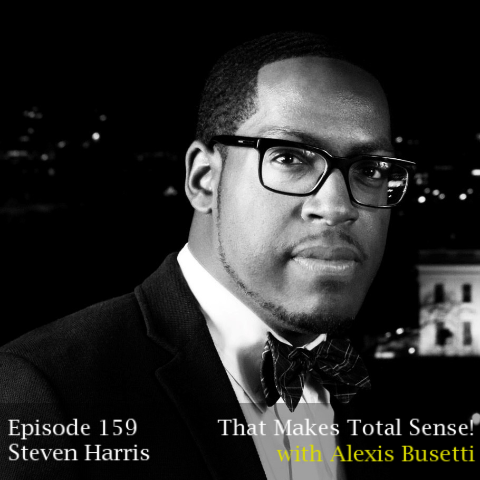
Speaker 0 00:00:07 Welcome to that makes total sense. A podcast dedicated to exploring God's generosity and justice. I'm Alexis, Boetti a Christian aiming to ask good questions and encouraging you to do the same. Every one of us is wired by God to live out generosity and justice, but the how sometimes alludes us that makes total sense is a way for us to get together, posture ourselves as learners and challenge one another to practice generosity and justice in a tangible way. Every day, I am pumped because I am, uh, sitting across zoom with a face that became like really familiar to me last week, my first trip to DC ever. And one of the first friendly faces that greeted my group at an ungodly hour was Steven Harris at Georgetown. Good to see you again, Steven.
Speaker 2 00:00:59 Good to see you, Alexis. Thank you for having me. And it was pretty late. It was,
Speaker 0 00:01:04 It was like real. It was like real late, um, and, and airports and Ubers and luggage and crazy stuff, but we made it there for, um, I, I wondered if it was, but I think it was confirmed when I got there that it was the, like in inaugural mm-hmm <affirmative> summer program for the center on faith and justice at Georgetown university. And this is like, this is your gig at the, at the center. Um, so just real quickly before we get into like all of the things, um, tell people who may not be familiar with the center in general, because it's relatively new. Um, can you give people just like the elevator speech about the center and then about that summer program, and then we'll just go off from there?
Speaker 2 00:01:49 Sure, sure. Well, again, glad to be here. And, uh, we had a good time that week and, uh, did meet, uh, you and your group really, really late at night, or we could probably say early in the morning as it was that's right. Uh, but it was our inaugural, uh, faith injustice summer academy of the center on faith injustice at Georgetown. Uh, the center as an entity, um, began almost a year ago, um, towards the end of 2021, um, led by Reverend Jim Wallace. Um, in many ways, uh, the center is a part of his presence now at Georgetown, um, as chair, uh, and faith injustice at the Macor school of public policy. So he has an academic post there and along with that academic post came the idea of having a center, uh, on faith and justice. Um, one of the many centers of Georgetown university, but in particular, the center on faith, injustice, I think, is trying to encourage students, um, graduate students, undergraduates, um, thinking about the intersection of faith in public life, thinking about the integration of religious values in the civic space, uh, in the public square, uh, what does that look like?
Speaker 2 00:03:04 What does that mean? How to do it? What's appropriate, what's inappropriate and really trying to at a place like Georgetown with its own deep religious history, Jesuit, uh, history, Catholic, social teaching, all those values in play, what would it mean at a place like Georgetown to, um, engage students at the, at that question? Um, trying to commend the positive role of faith, uh, and religious life, um, in their own kind of vocational formation and certainly their academic and intellectual, uh, formation. Uh, what does it mean to encourage students to think about, uh, living at that intersection and drawing on the resources of their faith, uh, as a motivating and informing factor in the work that they seek to do in the world. And so to do that at an academic institution, um, comes with, um, uh, some challenges, but, but many, in many ways, a lot of, uh, opportunity.
Speaker 2 00:04:00 And so my particular role as the senior director of academic programs at the center, uh, is really trying to engage that question of what kind of academic, uh, formation content, uh, can the center produce. Um, that's gonna involve a host of, I think, during the school year type, uh, content, but as you experienced it also, it's gonna include a summer component. And our first run at that was the inaugural faith injustice summer academy, which sought to draw, uh, graduate students, seminarians activist practitioners, clergy members, um, for a week of content and, uh, DC experience, uh, but all orienting around that intersection of faith and, and, uh, justice. And so I, I think it was, I mean, I, I think we had a good time. I think we,
Speaker 0 00:04:54 We a great time.
Speaker 2 00:04:56 I think it went well. Um, but, but no, it, it really was. We're trying to balance, you know, classroom time, uh, discussing some, some, some very important content. Uh, we had a number of great, uh, guests join us, uh, to share in our classroom time. But then we wanted to couple that with, um, some things that our particular DC, which looked like advocacy on the hill congressional meetings, um, some time at the white house complex. And so it was a full week. Uh, but, but my hope is that, uh, in addition to engaging, uh, instructive, informational content, uh, relationships were forged, uh, and new ideas were generated, uh, from that time, uh, that would serve, serve participants in their ongoing ministry and work.
Speaker 0 00:05:44 Yeah. Thanks for that. It was, yeah, it was an incredible week. Um, so much stuff fit in so many opportunities, you know, that I just, you know, you, I, I wouldn't go be able to get any other way. Right. Mm-hmm <affirmative>, this is some of this stuff is just not my sphere. And so for you guys, as a team, providing that for us as, as Partiv, as participants, and you mentioned, um, yeah, clergy and, and activists and practitioners were also included in our group. And so that was part of the invaluable experience that I had. There was getting to learn from my peers mm-hmm <affirmative> um, in that setting. Right. So like what you guys brought was absolutely incredible. And then it was kind of like more than the icing on the cake to be with so many people who were, who were already doing such great stuff. Right. Um, to be able to hear from hear from their experiences, learn from their own contexts, um, and, and be able to have that as part of the, as part of the experience as well was incredible. Sure. Yeah, yeah, yeah. Um, but I will say I'm not, I'm not a creeper, I'm not like an online weird creeper or something like that. But I will say when, when, when I was approached about this program and you know, you go through the staff page or whatever, and it's like, I'm like,
Speaker 2 00:07:07 You're a staff page creep. I, I do that. I do that too.
Speaker 0 00:07:09 I'm a staff page, creeper. I mean, I will at least go that far. Right. But the staff page for this one is like, not like incredibly informative, right? Like, there's like a little, there's like a little, like your bio's probably like the longest one here, but it's not like real, real, but even that staff page creeper I'm like Steven, I could not look. That was the most irritating thing to me before I met you was I could not put you in any kind of box that I wanted to put you in.
Speaker 2 00:07:37 Yeah.
Speaker 0 00:07:37 Yeah. Because I'm like, and we're going somewhere with this, but I'm like, okay. I'm like, okay, so he's here at Georgetown, right. He's with Jim Wallace. I know Jim Wallace. Right. But then I'm like, okay, Vanderbilt. That's great. And then I'm like, whoa, MD from Southern Baptist, theological and Yale and Harvard. And I'm like real confused. Yeah. Looking through your CV. Um, <laugh> so I don't know how much you wanna talk about that, but I do wanna say, how does, how does a person with your CV get to where you are at the center right now? Like, I, I can't, I'm sure that's PR I'm sure you love it. That people just can't pin you <laugh> down from your resume, but I can't pin you down from your resume. This is a, this a pretty broad spec right here.
Speaker 2 00:08:25 Um, well, I mean, there's a number of ways to take that question, right. I could, I could hear you saying, like, how did you get this job
Speaker 0 00:08:37 Need to send an email to Jim? No.
Speaker 2 00:08:40 Right. Like clearly this brother is not qualified. Um, no, but I, I, I hear what you're saying and I, and I get it a lot. I mean, I think in many ways that has become a part of my, well, it is a part of my, my journey and story. Um, I I've, for the longest, I, I have felt like the categories and the boxes and the frames that we have become accustomed to thinking within certainly putting people in that I've that I've, I've, I transgressed those in many ways. And, and I think my, my, if you're looking at kind of my CV journey, I think it kind of tells that story, um, that I, um, I was looking for an opportunity that in many ways I didn't think existed, but that, um, served potentially could serve as a kind of consolidation of the various hats that I've worn over the past several years.
Speaker 2 00:09:36 And so, you know, I grew up in a traditional black Baptist denominational space, um, national Baptist convention to be exact. And, um, I was just given a talk recently at a conference that I kind of rehearsed this narrative, but, you know, if you know anything about the black church tradition, um, it has never been only one thing. Uh, in many ways the black church as a construct is a kind of sociological shorthand. Nevertheless, I do think it's true to say that there has always been a kind of theologically conservative stream that runs through that tradition and in many ways that's part of my own story. Right. And so, um, my journey has been, um, my kind of ongoing reckoning with, and negotiation of that kind of theological conservative strand that runs through my own journey in history, uh, and trying to, or in really many ways confronting the reality that, um, the ways in which my own theology plays out in public practice and certainly intersects with the social and the political is not the same way that others of theological conservatism, uh, leverage that in these spaces.
Speaker 2 00:10:53 Right. And that confrontation, um, for many folks, um, could be, and for me, it was write a, a, a pretty painful one at, at some, some terms, right. It's like, yeah, I, I might believe certain things or have certain theological paradigms and material that I work with, but it doesn't lead me to the same kinds of conclusions and public practices that it leads others to. Right. And that's just the messy, uh, perhaps beautiful, oftentimes ugly work of trying to work all this out. Um, but to, to come back full circle, I think my, my CV reflects an attempt for me to, um, really try to be broadly conversant, to, um, pull from the best of different spaces, whether it's institutional or otherwise, um, and take what I think is useful, um, and leave the rest. Um, and that's been kind of a practice that I've had at each step of the way.
Speaker 2 00:11:54 Right. Um, what, what then I ask of others who are reading that CV, or perhaps trying to read me as you did <laugh>, um, you will certainly confront that challenge or trying to place me, but what I often try to commend and, and conversation about that is I think we need to, I think we need to allow people the freedom to situate themselves in spaces that, um, and allow people the flexibility to do that. Right. So for me, it always, you know, I think a more important question is what are you doing at certain spaces and institutions where you're at versus, um, not even versus, but it's a, it is just as important a question, uh, ask the question, why are you there? Right. Um, so what are you doing there? Well, that's an important question. I'm more so interested. Uh, why are you there? It's an important question. I'm more so interested. What are you doing there? Right. Um, and what ways is your presence influencing that space, shaping that space? Just as much as that space is of course shaping you. Um, and so, yeah, no, it's, it's, my journey has been one of me, um, kind of leaning into the kind of unfitted that I've kind of experientially felt, um, for the past several, several years. Um, and so me trying to be eclectic, um, jazz, like even, uh, as I move through these spaces
Speaker 0 00:13:25 And, you know, there's oftentimes some dissonant chords in jazz
Speaker 2 00:13:30 Look at you,
Speaker 0 00:13:31 Right?
Speaker 2 00:13:32 Yeah,
Speaker 0 00:13:33 Yeah, yeah. Um, you know, it's, I'm, I'm actually really grateful to hear you say that, um, that I relate to that a lot resonates with me quite a bit. Um, I've shared this before on the podcast, but I, so I, I grew up, um, as, as not, not an every Sunday goer, but my, my ch my family is kind, was kind of one of, you know, there there's some of these in these, in this Bible belt, small Baptist churches, for me, it was an SBC church. Um, some of these, you got like five families. Yeah. And like, that's the church. Right. You know, and there's other people, but like, so the church I grew up in, even though my immediate family wasn't necessarily an every, every week family, um, our family going back right. Was kind of one of these 5, 1, 1 of these five families in this space.
Speaker 0 00:14:29 And, um, I found myself, one of, one of these moments for me was, um, I was, gosh, I'm trying to re it was in high school. I don't know, 15, 16, somewhere along those lines, writing a position paper for an AP English class that I was in. And, um, and it was on the death penalty. Right. Mm-hmm, <affirmative> pick you're you're in high school, I'm picking something, some, one of these fiery topics. Right. It's not, you know, I don't know, everybody should love Mexican food, you know, it wasn't, it was like, okay, we're, I'm, I'm seeking a moratorium right now. Okay. At 16 or whatever it was. And, um, you know, we were encouraged to gather, um, a wide variety of sources. Right. So not just, not just a, a good number, but a good variety. And so I thought, well, this is easy. This is kinda low hanging fruit.
Speaker 0 00:15:18 I'll go interview my pastor. Right. This church he's been there for several years at that point. Um, because like, duh, he's gonna totally back me up. And, and I kind of say this spaciously, but I'm like, I know he is gonna back me up because he loves Jesus. Right. And so I'm like, of course, like this is gonna be kind of a no brainer. So we get in his office and it ends up being a conversation that I never expected to have at that point. Now, had I been aware and kind of old enough and may, and of course there wasn't social media. Okay. I'm saying how old I am that there wasn't, you know, when I was 16 or whatever, but there wasn't. And so I just wasn't like fully aware of the culture, you know, of kind of Bible belt, white evangelical evangelicalism.
Speaker 0 00:16:01 Cause it was, it was my dad's I mix was my dad's side of the family, um, that was there, but I just didn't know. Right. And we didn't, and I think like, it is now this many years later, a lot of times, those things just aren't preached about right. We don't talk about him in Sunday school. They're not from the pulpit, blah, blah, blah. Anyway. Right. Needless to say, he did not back me up. Like, <laugh> like, like even a little bit right. And ends up being this like kind of heated discussion, like in his office. And I am trying to figure out cuz this it's it's the first time I have heard this. Right. Like I have no idea mm-hmm <affirmative> it is the first time that I have heard someone using the Bible to defend this position that for me was abhorrent. Right.
Speaker 0 00:16:51 Yeah. Um, and I was a vice teenager. So anyway, mm-hmm <affirmative> I know you can't picture that, but I just thought, what, what, you know, what is this about? And it felt very lonely, right? Yeah. It felt it did, you know, I didn't have it then to ask. And, and of course I was, I was so young and I'll just name and a woman in that space, you know, mm-hmm <affirmative> um, how, how was I being formed and how was, was I able to impact I don't, I mean, probably not, I don't know, you know, what, but what did that look like in that space? But, you know, I found myself in similar, I won't say in similar spaces, but kind of maybe feeling some of the similar feelings, if you're, if you're, you're kind of vague outline, I could, I could put some of my situations in those same VIN diagrams probably.
Speaker 0 00:17:36 Right. You know? Sure. I worked, uh, state case work, uh, as a young college grad. Um, and again, I just went in kind of thinking this place is gonna be swarming with Christians because we are serving the vulnerable populations in our county mm-hmm <affirmative> and I get there and, you know, spoiler alert, it was not swarming with Christians in the Bible, but there were a few, there were a handful. Um, but it was generally, you know, uh, white progressives, you know, who were, who were kind of in that space. So, so anyway, um, I'm sharing that to say that I, I share some of those things. And so I jokingly say, I'm trying to box you in. And I was, um, but I, um, it, we do need, I think, more freedom mm-hmm <affirmative> as you say that to, for, for, for everyone to be able to kind of express their own things, but the tide and the pull maybe yeah. To not, to, to, to look at it as a binary or to group is so strong yes. In the American Christian culture.
Speaker 2 00:18:44 Yeah. And the incentives are driving that way. See, there, there, there are incentives, uh, to kind of laid out and particularly I'm in DC. I mean, I, I joke with my friends, like you can eat good if you agree to be a particular kind of person here. And those options were laid out for me. When I first came to, uh, DC and came to kind of public policy hill work, there are kind of like fillers put out conversationally where folks are trying to determine where do you fit? And more importantly kind of forget where you fit. Are you willing to fit where I want you to fit? And if so, you will eat very well. Um, and, and so yeah, the incentives are, I think, there for us to just kind of relax back into, um, these categories. Right. And I think for me, you know, it's not, it's not just being contrarian for the sake of being contrarian.
Speaker 2 00:19:49 Right. But I actually think it's probably probably my own theological anthropology emerging. Right. I just, I think that people are normally more complex than the categories and the binaries, um, allow us to be certainly when you're talking about political categories, that in many ways are, are agenda driven, right? Like they're, they're created and crafted to serve particular ends. Usually not the ends of like allowing for the flowering and the flourishing of human dignity. And that's just not the point. Right. And so for a, for a person in general and a person of faith in particular, to allow themselves to be kind of form fitted in those ways, I think does kind of stifle and, and, and potentially snuffs out, uh, the unique contributions and roles that, that God might be calling you to play, uh, in these spaces.
Speaker 0 00:20:45 Yeah. Yeah. Well said, no, that's good. And, and I, I think you, I think you implied it, but I'm just gonna, I'm, I'll straight up say it that, um, it, this is not just a, this is not just a DC thing for, for, for policy people or whomever, right? No, it's, it's, it's, it's, there's lots of ways to eat well <laugh> and all of these different, you know, kind of,
Speaker 2 00:21:09 Yeah.
Speaker 0 00:21:11 Stratosphere, what is this, like these, the I'm thinking the, you know, these layers, right? Yeah. There's all the thing, every point there is. Right. Um, there's, there's lots of, there's lots of places and ways to, to fall in and eat well. Right. Mm-hmm <affirmative>, mm-hmm <affirmative> and, um, and man it's easy sometimes. Oh yeah. To at least be tempted to do that.
Speaker 2 00:21:35 Yeah. Yeah. It, um, I mean, gosh, I mean, when I, and, and you're absolutely right, like I think the DC space, you feel it in visceral ways instead of particular DC, but certainly this, this just happens locally in your community. Right. Like, and the incentives right. Look different. Right. It could be, you, you know, largely it's, you know, you, you are invited to be a part of the group, right. You're be, you're considered one of the group or one of us, and the way that us and we kind of function, uh, in some of these conversations, as you probably know, it's just, it can be very toxic, toxic, right. Like, so, you know, one of the things that I've just been committed to is trying to commend, um, a kind of politics of refusal, right. To reject those incentives. Right. And to, to try to, uh, kind of live out, um, uh, the, the possibilities of another way, right.
Speaker 2 00:22:38 Particularly though individuals who, um, professor be, uh, people of faith. Right. Um, I find myself trying to call people back to, uh, certain principles that I think in our particular moment are very, very much so needed. Right. Um, I, I don't, there, there, there is an interventionist work that people of faith I think are called to in this moment that, um, that the acceptance of a particular kind of, you know, categorization or kind of either, or, um, precludes, right. That interventionist work suggests, um, certainly take your positions or whatever they may be, but like you're calling people, um, to not merely, you know, go left or right. But you're calling people to a kind of deeper conversation. Um, and I think the language of faith, uh, particularly for Christians, the language of the gospel, even there's there, there are resources there that, um, I think a lot of these conversations desperately need whether they realize it or not.
Speaker 2 00:23:43 Um, and, and I think we have to be willing to show up and, and, and provide that work and not merely echo, right. Not merely show up and be echo of what is already being said. Um, that one of the things that kind of annoys me is when you have faith figures, whoever they may be show up in some of these kind of tense spaces and just echo aside, well, it's like what they need you for. You just came and said exactly what this person said, but, but said it as a person of faith, right.
Speaker 0 00:24:16 You need validation from the person of faith. You
Speaker 2 00:24:18 Need validation for the purpose of, for the that's exactly right. That's exactly right. And I'm like, sure, you may agree with that particular position, but there has to be something else that you're bringing. Right. Not just a, I agree with everything that's been said in Jesus' name. Right, right. Like that's, that's, that's what you add <laugh> um, right. And I, I just think there's more to be added, I guess, is what I'm saying. Uh, often, uh, more often than we realized,
Speaker 0 00:24:47 Well, there's more to be added in the, in well, in a lot of spaces, but there's more to be added in the realm of complexity as you've already named. Right. And, um, in nuance, which good night, I just think we just need to, we just need all, everybody needs to take a class. Everybody in America needs to take a class on nuance. Maybe you can write it and host it, Steven. But, you know, it's, it's kind of crazy because a lot of those conversations, they don't even, you know, that you're, that you're referencing. I think it's like, well, you don't, you don't even really need to have this full out conversation. Cuz I already got a pamphlet in the mail, not even a pamphlet. I got a postcard that had five bullet points that told me everything that you were gonna say yeah. About this anyway. Yeah. You know, um, at least, I don't know. I get those a lot in Houston. Right. Especially during midterm season and um, yeah, yeah. An election season that I can see your, and then sometimes it even gets, well, I probably shouldn't say that sometimes it even gets crazy because then they even put the faith leader or the, or, or the org or the church on it that has endorsed them or supports them or I'm gonna be here next Saturday or Sunday or X, Y, Z. And sometimes that stuff can get crazy.
Speaker 2 00:25:58 Yeah. I mean, and we are in, in an interesting time, I mean, and particularly from this, from the seat of my role at Georgetown and, and my, you know, I'm still doing some teaching up at Harvard. Um, people are really in search of healthier paradigms and I, I think we all can point to both historically and temporarily, um, iterations of, of, of faith in public life that, that are, are less than ideal often that are abhorrent. Right. We, that, that history is ever before us, um, with that I think has come a kind of disillusionment right. Where folks are like, okay. So I, I know that ain't it. Um, and, and so, and, and so, right. Like, is, is there something else, right? Or do I just need to drop out of, uh, faith altogether? Because clearly this is what I'm looking at is what it seems to be producing.
Speaker 2 00:27:05 Um, and so I'm trying to, in many ways I find myself in conversations, uh, whether it's it's students or, um, or just people in living in public life, in their respective spheres, um, asking themselves, right. Like what role does my private individual personal faith have for these kind of public spaces and moments, right. How do those things interact in ways that aren't problematic? Um, and, and so, yeah, I'm trying to help people see that, right. Um, that for issues of justice, um, human dignity, human flourishing, equity, human rights, all of these things, right. Um, there, there are certainly resources that we draw upon in our faith that, that help the, in the public, um, uh, work of advancing these, these causes. Um, and in many ways I would even argue that, um, these, these causes, um, would be at a deficit if we didn't have that, uh, that kind of presence.
Speaker 0 00:28:16 Yeah. Yeah. Cause you've, you've named it a couple of times and it's, it's funny to me because I just, I want to have your voice echoing in my head about cuz when, when, if, if, well, if, and when I get to the points where I'm kind of like, what's the point, right? I want to hear your voice echoing in my ear of what I know is true. Right. Well, it's, we're looking for human flourishing, right? We're looking for ways to reinforce human dignity, right. Mm-hmm, <affirmative>, we're looking for ways to bring about equity. We're looking for ways for people to do well. Mm-hmm <affirmative> um, it's just that, those, those ideals, um, gosh, at least where I'm looking in the political sphere, don't show up in the talking points and then that often, and then it feels real hard as a Christian trying to engage that, that public sphere, because we're trying to fit ourselves into a mold that already exists.
Speaker 0 00:29:17 Mm-hmm <affirmative>. And so when the bullet points don't necessarily look like human dignity, human flourishing equity, human rights, they might look more like, well, everybody knows what they actually look like on those, on those postcards. Yeah. Yeah. Then we come in and we try and fit ourselves into this mold because we wanna have influence and we wanna have impact and we wanna be able to, to, um, to share Jesus in these spaces. Yeah. Um, but it's really hard when we come in and try and fit ourselves underneath one of these bullet points that already exist because oftentimes at least the bullet points, by the time they get to me, mm-hmm, <affirmative>, by the time they get to us at our, at our door stops or at the, at the, not necessarily at the ballot box, but even, you know, our little voter guides and stuff like that, they don't look like they're focused on those things absolutely. Necessarily. Right. And that can be, that can be tough.
Speaker 2 00:30:07 Absolutely. And I think additionally, a challenge and we're, we are, I think in the throes of like trying to collectively answer, uh, this challenge, I mean, you have, um, the reality of, um, religious pluralism and, and all of the diversity that exists religiously and otherwise, um, in the country, um, you have this at least ostensible secularism that some, uh, some even come in as a kind of ideal to lean into. Um, what I find us wrestling with now is of just talking to a friend about this, right? Like Christianity in America was there was this, this question right. Of is the America Christianity. Right. Which is a very weighted question. Um, but I think the country is reckoning with what has been certainly the privileged position of Christianity in general, um, Protestantism, even in particular. And, and, you know, there's the, the, the Catholic Protestant, um, relationship has been fraught, uh, from, from the word go.
Speaker 2 00:31:25 But in many ways we're kind of reckoning with a democratic experiment that in its ideals suggested that this could be a place where no religious tradition would prioritize. There would be a freedom of expression, et cetera. Um, but has in many ways the country got comfortable with the prioritization of Christianity in particular. And you see certain groups of people got comfortable with the privileged status that Christianity in particular, um, was afforded. And in many ways afforded itself, um, throughout the course of the history of this experiment, well, what do you do when that privilege status is, is, um, explicitly being challenged and the demographic shifts that the country has undergone and is undergoing and, um, the breadth and variety of religious tradition and worldview, um, being explicitly expressed in ways that I think rightly are calling into question, um, the kind of privileged status of a particular tradition over the other, right?
Speaker 2 00:32:32 You have the country wrestling with all of these things. And just as has been the case, during moments of kind of high civil and national discourse, um, the country is being called to, um, realize, or at least aspire to the realization of its own stated ideals. Right. And what I find interesting, uh, and perhaps sobering, uh, is whether or not the country seems to be allergic to the actual realization of its own stated ideals. In other words, was it always a kind of assumption, right? It's one thing to suggest you probably seen this in ministry, right? Like, you know how a person, let's say you're working within a discipling relationship, working, working with a person, right. Like there is a way in which you can kind of sink and settle into, like, I'm, I'm, that's my goal, but I'm not there. And I just can't get there.
Speaker 2 00:33:38 It's just so hard. You kind of settle into a kind of like state of like perpetual I can't, I'm, I'm working my way through. It's like the it's like, we, we are living that we've lived it at the national level. Right? Like these are ideals and you know, we're never gonna get there, but we're headed there. I guess what I'm suggesting is that the country seems to be, uh, seems to have historically, and in many ways you see this in our contemporary conversations, just kind of settled on the fact that there is always gonna be an underside to this experiment where certain folks will viscerally feel and experience the failure of us realizing our ideals. And we're okay with that.
Speaker 0 00:34:19 Go ahead. Right. I'm like,
Speaker 2 00:34:21 Yeah, we're okay with
Speaker 0 00:34:22 That. Right, right. Until we may have to, my husband may have to edit this out until the group that is finding themselves not able to they're the ones on the underside of it right. Ends up being, I don't know, American evangelicals <laugh>,
Speaker 2 00:34:44 That's it.
Speaker 0 00:34:45 And then all of a sudden we can't live with it. All of a sudden the experiment can't be the experiment anymore. Right. It has to be the ideal.
Speaker 2 00:34:53 What exactly. That's a really good way to put it.
Speaker 0 00:34:55 What,
Speaker 2 00:34:58 So, so I talk of it in terms of it being, you know, I, I used analogy of analogy, right? Like, and you, we've seen very violent allergic reactions, uh, when the country is in many ways being called to account mm-hmm <affirmative> for the ways that it's failed and it's failing to live up to its own stated ideals. Um, and you see a particular privilege class religiously and otherwise religiously and racially, I, I should say, um, really struggle with, right. Um, what it means for this experiment in, in democracy to actually try to realize it stated ideals. Um, and, and, and I think, you know, we're gonna have a hard time with that. Um, and so I find myself putting forth models and paradigms, particularly for Christians, um, who are thinking through this moment, you know, the black church tradition at its best. And I'm, I'm drawing on the work of J Cameron Carter here, um, has been at its best, has I think, reflected what it looks like for a community of faith to seek, to strive forward when they exist on the outside of political and social power. Right? Like, um, what does it mean to draw from the resources of your faith when you are not in kind of, uh, comfortable, cozy relationships with political, economic, social power, et cetera, um, you know, what does it mean to influence, um, in very substantive and powerful ways from the margins? Um, and I think it's, it's, it's, it's important to think about, you know, when you think about the history of Christianity, um, itself, um,
Speaker 2 00:37:01 It shouldn't be, it shouldn't be that much of a foreign concept to consider that, um, Christianity has, um, has no kind of fundamental need or requisite for political power in order to advance. Right. That shouldn't be a foreign concept in America. I feel like for American Christians, that, for some, that sounds like a very foreign concept where certainly like this kingdom, his kingdom does in advance without state power. It's like, where, where do you see that at? Like,
Speaker 0 00:37:40 I'm feeling real feisty today. Okay. This is my second interview of the day. And I'm feeling like real feisty, but I'm like, I'm, I'm like, okay, here's the deal I'm reading through acts right now in my devotional time. Mm-hmm <affirmative> so a lot of times I put resources or things that we do, or, you know, things, books that were mentioned. I mean, I'm putting the book of acts. Okay. I'm put, I'm put a hyperlink to the book of acts here because we can, I mean, I'm like, Peter just dang got arrested this morning. Okay. Steven <laugh> I could not, I had to stop because Steven's about to get stoned and I could not, I, I thought I, I don't have that kind of day today. I cannot start my day with the sting of Steven, even after his sermon. Yeah. I'm gonna have to do that tomorrow. Yeah. I'm sorry, what? No, we cannot be. Hmm, no, this is not our Mo to have to have that kind of political power. I'm I'm I'm gonna let you talk again a second, but I'm gonna say no, no,
Speaker 2 00:38:32 Go ahead.
Speaker 0 00:38:32 Real quick. One of 'em that I was that when you were talking about the, the American black church I had already had in my head. Okay. So what I wanted to say was this underbelly of white evangelicalism and being affected by the idealism, blah, blah, blah. Here's the deal, the, the black church in America has, has always been marginalized. Right? Mm-hmm <affirmative> the, what you just said is like legitimate. Um, but man, for white evangelicals, like there's a difference between being marginalized and being just decentered right. <laugh> right. Yeah. Um, so even, so it's not even this underbelly, right? They're not, they're not on the UN underside, right? American white evangelicalism. Hasn't experienced being on this underside as much as, um, we sometimes wanna fuss about it. Um, yep. And so that's real. Um, and then, and then finish what you were gonna say. And then if you want to, the question that's been going around in my head, um, especially with some of our pre-recording conversation was, was how much does this, that we're talking about right now with ideals and experiments and political power and all that kind of stuff.
Speaker 0 00:39:40 How much does that mix go into this identity crisis that mm-hmm <affirmative> is being experienced by the church in America right now? Right? Is it, is it, you know, cause like, you know what, the, the thing that's, that's, that's kind of going through my head is like, oh, well maybe this you're walking along and you're always used to going into this guy's office at the capital or whatever, and then somebody shuts the door or they tell you he moved or his assistant won't let you in anymore. And then you all of a sudden don't know who you are.
Speaker 2 00:40:13 Yeah. Yeah.
Speaker 0 00:40:14 I was in there Thursday. Right.
Speaker 2 00:40:16 Dunno who you are.
Speaker 0 00:40:17 Right. I've been there every Thursday. That's what I do every Thursday at 11, we go and I have lunch and I don't, and, and now she won't let me in and I can't figure out now, what am I gonna do? Right. I don't know who
Speaker 2 00:40:27 I am. I know who I am
Speaker 0 00:40:28 Anymore. I know who I am anyway, but that's probably anyway. So I'm, I'm done now, Steven I'm no,
Speaker 2 00:40:34 This is good. I mean, cuz in many ways, I mean like I'm still like as, as an academic, I'm still kind of working my way through this stuff, but I, I think those two things are, are, um, they are co they're co constituted realities, meaning they, they give definition and meaning to each other. Um, um, they are, they are, they inform the other. And so I think the identity crisis is perhaps itself because, um, or experienced it because, um, the kind of Christianity that, um, um, people have practiced in the west, particularly in the, in the American context, um, has kind of become well adjusted to, um, the, the practices and assumptions of the experiment of this democratic experiment. So here's, here's, here's a, an example of this, right? So like, um, in the 17th century, um, John Winthrop, uh, who's a Puritan who will be the first governor of the Massachusetts bay colony, uh, when, uh, so think reformation and then English reformation and the church of England, uh, certain individuals in that movement feeling like the reformation hasn't gone far enough.
Speaker 2 00:42:07 And so they want to purify, um, uh, the church even more. And they're like, we can't purify the church from within the church. So let's go and, and establish these colonies. Um, and, and what will become, uh, the, the Amer the Americas. Um, there's a conversation that has had, um, by John Winthrop and others before they, uh, embark on the colonial experiment in new England. Uh, these are documents that bear this out and they ask several questions orienting around the, the central question of what, right. Do we have to go and establish these colonies? They literally ask this question before they, they, they go. And one of the questions in particular is what right. Do we have to take the land from the natives? That's a question that they ask and answer before they come over in the 1630s. And the answer that is given is threefold three or four has three or four kind of subpoints to it.
Speaker 2 00:43:10 Um, one of them is that, um, the natives have not cultivated the land, or in other words, they have not made proper use of the land. That's where we can take it, cuz they're not, they're not doing with it, what it, what they should be doing with it. Another is that they're savages, right? So they just, they ha they, they have no inherent right to the land because they're not, you know, Christians, uh, you know, with the providential backing of the divine, like we are another reason is that, uh, literally, um, they seem to be succumbing to various plagues. And so it looks like God is kind of clearing them out anyway. Um, therefore that is proof that he is providentially giving us the land. Um, so at the, at the same time, as you have this ostensible kind of theological project, we are trying to go over and demonstrate what right.
Speaker 2 00:44:10 Church and right. Theology looks like for England, cuz they're still jacked up. So we're gonna go over here and show what Christianity looks like when it's practiced. Rightly at the same time as that train is moving, you have the kind of justification of kind of violent ex appropriation of eventually not just land, but labor of African slaves, those two trains move concurrently, right? We're all about God's work and God's work includes doing this Angoly work <laugh> but they don't think of it as UN as ungodly work. Right. They think of it as part and parcel of God's work, right. American Christianity, right. Particularly in its kind of upper side becomes well adjusted to those dual tracks, moving together. In other words, it kind of adjusts itself to, um, what is at once a kind of imagination of a kind of theological practice of purity while at the same time you're sanctioning. I was about to, I was about to cuss you're sanctioning stuff, your sanctioning stuff that is clearly not reconcilable with that, but you have like settled that like that's the part of it. I think, um, the practice of American Christianity has become well adjusted to that insanity <laugh> that's
Speaker 0 00:45:28 Where we were born.
Speaker 2 00:45:29 Yeah.
Speaker 0 00:45:31 We were, we were born into that.
Speaker 0 00:45:35 Yeah. Right. Like we didn't have to learn that we were born into that. And, and as you were talking, my, my husband and I have competing favorite quotes by Mark Charles <laugh> and his favorite quote, my husband's favorite quote is you weren't supposed to find out <laugh> right. So when you tell stories like that and somebody's like, I've never heard that before we hear Mark Charles in our ear, you weren't supposed to find out. Right? Yeah. And then my favorite mark, Charles quote, and, and it it's about the constitution, but I think American Christianity kind of, you kind, unfortunately, sometimes we're we in some of these places, right? Yeah. Um, is, is he the example that he, that I gave or I first heard him give, was he would say, um, well, why are you surprised that women make 70 cents on the dollar to men? You shouldn't be because the constitution is working.
Speaker 0 00:46:25 Right. Mm-hmm <affirmative> the constitution was written for and by white Landon men. Right? Yeah. So when you have a situation where you're wondering, why someone else doesn't have X, Y, Z writes dignity, flourishing, all the things that we have talked about in this situation. Well it's because the constitution was working. Yeah. It's, it's currently working the way that it was written for it to work. Right. So that's part of what I mean is not that we can't UN become those things or not that we can't be discipled in right into, um, closer, you know, people who look more like Jesus mm-hmm <affirmative> than what you just described. Um, it's just a recognition that that's where we were born and we have, and we have to recognize that that's where that that's where we were born. Right? Yeah. Yeah. Like we can't, like, we can't say that we weren't born there.
Speaker 2 00:47:16 Yeah, yeah, yeah.
Speaker 0 00:47:18 We, we can't say that. And so when you're describing this train that the tracks are concurrent. Yes. But I'm saying no one else can see what we're doing with our hands, but you know, under, underneath. Right. But it's, it's baggage on that train. Right. It's it is, you can look at it as two concurrent tracks. But when I saw you do this with your hands, replacing one hand on top of another, I'm like, no, this, this, this baggage about the savages, this mentality that you have to get your mind into to, in order to be able to move here. Yes. You just packed that on your train. Yes.
Speaker 2 00:47:46 It's
Speaker 0 00:47:46 It's it's with it's that close with you because when they got here, they had to do those things that they had decided ahead of time that they were going to do.
Speaker 2 00:47:55 Yes,
Speaker 0 00:47:55 Yes. They could have made a choice not to, but they didn't.
Speaker 2 00:47:58 Yes.
Speaker 0 00:47:58 Yes. So that's where we were born. Yes. American Christians
Speaker 2 00:48:01 We're born. So American Christianity is always already raced. It's already racialized. Yes. It already has these gender things inequities. It already has that baked into it. Mm-hmm <affirmative> as a kind of, and, and, and not just like, I think it, I think it's theologically baked into it now that will bear out in certain kind of theological discourse or you've probably seen them, right. Like the justifications and this like that. Right. There's always been an attempt to kind of provide theological and biblical cover for these things, but these things are, are, are baked in. Um, and so the work of right people call it a number of things. Right. I, I, I have a, I have a, I have a very generous hearing when I hear deconstructing. Cause I think I know you mean by that decolonizing. Right. I think all of these are processes by which people are in many ways to use Johan I language, trying to do their first works over again.
Speaker 2 00:49:00 Right. They're trying to like, okay, I got all this stuff, like baked into what I've been doing. What does it mean to kind of double back and try and purge or disentangle? Um, my under own understanding of my faith from these kinds of impurities. Right. And that's a, that's both that, that, that work is, it takes a lot of interior work as well. Well, right. Like I think oftentimes people who imagine themselves to be engaged in that work think that it's merely a kind of disentangling from, uh, problematic institutions or problematic spaces. That's just part of it. You, part of it is reckoning with, as we've said before in this conversation where those things have shown up and taken root in you. Right. Right. Um, those things, those that, that double work has to happen together, you know?
Speaker 0 00:49:49 Right. And I, I think, I mean, we'll say we both grew up Baptist, but we spent a little time together last month. So I'm just gonna be like a little Pentecostal. And I'm gonna say that, yes, we it's institutional a hundred percent, which is, uh, sometimes can be harder than some of the internal work. Right. Sometimes cause you gotta eat. Like I said, um, it's intellectual too. Mm-hmm <affirmative> um, but when you're talking about that Ang, that disentangling it's spiritual mm-hmm <affirmative> right. Like this, like this, this spiritual work has to be, has to be sorted out, has to be undone and redone. And because it's all, you know, meshed together. When you, you said baked in, I kind of got this picture in my mind of when you have something that really is literally baked in. It doesn't come apart easily. Right. It looks real crummy. Right. There's not a clean cut that you can, that you can get when you're trying to do that disentangling. Right. Yeah. And I think we just have to know that as American Christians, that it's gonna be messy and nasty and ugly sometimes to try and pull those threads apart, um, in our own lives, in our own minds and, and spiritually and education, but also institutionally mm-hmm <affirmative> we have to realize that that's gonna be a thing.
Speaker 2 00:51:10 Um, I love that. I love that you inserted that. Cause you know, a lot of folks don't work with, you know, they don't rock with that, that, that, you know, pneumatological experience. They just don't, that's just not a part of their, but I, I do, I certainly do. And this, cause this could probably be my own baptismal roots coming out. Right. It's it's it's spiritual warfare.
Speaker 0 00:51:29 Yep. Yeah.
Speaker 2 00:51:31 This is, this is, this is, this is about that, that life and to the degree that folks don't mess with that life, they're gonna find themselves, um, having a hard time trying to do that, that kind of purifying work. Right. Um, no, so I, I agree with that wholeheartedly and I, I often don't think that that's a part of the calculus for, for a lot of folks. That's a good word.
Speaker 0 00:51:53 Yeah. I think it, I think it's some of the believers in this space who are doing really good work and having really good conversations that I've read, um, in the last several years, um, most of them talk about that piece. Right? You wanna talk about the spiritual warfare? Um, you know, Daniel Hill just comes out right and says white supremacy is demonic. Right? Mm-hmm <affirmative> we have to just recognize that that it's it's demonic, anything that is going to say a lie about who humans are at their core, which is image bearers of God. Um, white supremacy lies to all of us about that. Yeah. It lies to some people and says they are superior. It lies to some people and says they are inferior. And it lies to us about our neighbors as well. And if we're lying about image bears, that's demonic. Right. Mm-hmm <affirmative> period.
Speaker 0 00:52:46 Yeah. Um, Christina Edmondson talks about prayer has to be a part of this work. Yeah. For believers, if you, you can do this, I mean, shit, you can do this work as a nonbeliever, right? Yeah. But if you, but if you call yourself a Christian, then prayer has to be part of this work. Um, and so, and, and, and those things are really important. Um, looking at the time, kind of bringing us back mm-hmm <affirmative> may maybe bringing us back to the center, um, and your work there, I'll just kind of say as a participant, um, I don't want it, it felt like a very unique space. I don't want the spaces like that to feel quite so unique.
Speaker 2 00:53:29 Mm mm-hmm
Speaker 0 00:53:30 <affirmative> you know, mm-hmm <affirmative> yeah. Um, this faith public life, um, kind of combo. I don't want that to feel, um, quite so unique, but that was very much a part of what we experienced that week at the center. Um, I mean it is faith and justice. Um, and, and I know why it's, why, why we would differentiate that. Yeah. Yeah. But it's like, but, but justice really can go under the fact. Right. Um, it's not, not a separate, it's not a separate thing. Um, I mean, I didn't have any notes. I showed you my full hand before we got going. Um, <laugh> so, and I know neither one of us came with an agenda, but given this, what, what, like, I wanna just, I wanna like give it to you for the last yeah. You know, several minutes and just say, what, what would you wanna, like, leave us with what, what, you know, what kind of spaces that we didn't touch do you think are, are actually like really important to this conversation right now and in this space? Um, or even what you would wanna, you know, um, even any encouragements, if you had for, for believers who are looking for, what does their faith look like as they have a public life? And I don't mean that they're a politician. I mean, they're yeah. Their work life, their public life, their, their voting life, their, um, you know, when they're talking with their neighbors at the pool about the pamphlet they got in the mail, you know? Yeah. Any of that, so
Speaker 2 00:55:06 That's good. No, I, I think, I think it's important to say since you brought it back to the center, I mean, you know, nobody occupies a kind of pristine space and that's both individually and institutionally and I, what I mean by that is right. Like, um, there would be points where, I mean, we, we took a, a tour on during the week of like the national monuments and, and all this stuff. Right. Um, and one of the things I think was a missed opportunity on my, my part. I mean, some of the conversations were going there amongst the participants, but like, you know, in many ways, like that's part of right. It's, it's the great thing to do if you're in DC to like to go see these, these very historic spaces. Right. But in many ways, these spaces are depending on what kind of narrative you have that weave them together, they're telling a particular kind of story about America.
Speaker 2 00:55:59 Right. Um, and what does it mean to, to have a kind of critical relationship with that story, um, to appreciate what can be appreciated, but then to, um, to have strong critique about, um, some of the things that need need to be critiqued, right. Um, even what you even see in not just space like Georgetown, but at many institutions, academic institutions across the country, reckoning with their own historical ties to slavery and other practices, right. As an institution. And so what does it mean for both students matriculating at these institutions who are then therefore I'm in it, right? I'm, I'm, I've tethered myself formally to this space that has its own history of complicity. Right. Um, so it's, it's a messy work, you know, and I think it is gonna, it's gonna always be a, a work of trying to, um, uh, become better at, um, acknowledging things that need to be acknowledged, having conversations that might be uncomfortable even as we engage in with and around, uh, these spaces and institutions that just like we as individuals have our own marks of, uh, of complicitness.
Speaker 2 00:57:18 Um, I may have just made up a word there, but, um, and I think that's important to acknowledge even for, um, the work of the center and, and my work in it, um, to the question of, of, of folks who are, who are wrestling and, you know, trying to get it right, messing up, not saying the right stuff, not sure if they're doing the right things. Um, one, that's just a part of it. Right? One of the things I always find myself commending and encouraging folks is to not lose sight of the importance in many ways, the necessity of communal life, um, religious community, faith community, um, community in general. Um, and for Christians in particular, I mean, sanctification is a community project, right? Um, it's, it's, it's, that's, that's just a part of the package deal. Um, and so that, that humility and vulnerability of existing and doing this work in community is important.
Speaker 2 00:58:27 Uh, I think that's where the sources of encouragement, but then also necessary critique and adjustment, and perhaps even correction comes into play. I think one of the things that our moment talk about the incentives incentives from earlier, I think we're all pushed towards modes of existence that privilege the individualization of practice. Right. And so, you know, in many ways, social media has democratized the public platform. Everyone can have a voice, have their voices heard. There's a lot of benefits that come with that, particularly when you're dealing, dealing with the situation where certain populations have been rendered invisible, certain voices have been snuffed out. So that kind of representation matters. What do we do though, when individuals are being pushed towards that kind of soul exclusive individuals, everybody wants to run their own movement. Right. Everybody, right. That, that undermines, uh, some work, someone asks me, we're just talking about the civil rights movement and that era.
Speaker 2 00:59:31 Uh, and, and I think we even reflecting over the new black Panther trailer that had everybody in tears, um, I've certainly watched at least 85 times, but one of the things that, one of the questions that emerged, right, like, you know, that kind of communal life that kind of in this together, um, the kind of humble, uh, submitting of my will towards, and for a kind of broader collective goal, right? Like, I don't know if that spirit, uh, pervades, um, in this moment. Um, and, and I get the critique of that and I get, I get, I get the, the in many ways, the kind of, um, not, not fear of that, but the, the suspicion around that, but I, I'm always finding myself, Alexis pushing people towards community and, and doing life with other individuals as they seek to work this out, um, a as being requisite for, um, uh, healthy faith practice, uh, and certainly living.
Speaker 2 01:00:37 Um, so if anything, I'd wanna encourage people to lean back into, um, communal life. Um, and, and, and I know this is a, an, an interesting moment to say that as we're still in the throes of, of, uh, a pandemic, um, but, um, don't allow yourself to, to kind of give into the incentives of kind this kind of like lone range, uh, living, um, it's, it's, it's, it's a recipe for, I think, um, trauma and challenge and sometimes in ways that that don't need to be, um, if, if we're walking with other people. Um, so that's one encouragement I would give, I think, on the practical front of the, what, what in the house? Um, there are some models that I would point to just for encouraging sources. I mean, we're beginning to put out some resources at the center on faith and justice at Georgetown.
Speaker 2 01:01:35 Uh, another group that I follow and do work with and campaign, I think have some helpful things, uh, for folks to think about. Um, uh, my friend ESA, McCauley, um, writes a lot at this intersection. Um, there are individuals doing thoughtful work, um, trying to commend helpful and healthy paradigms. And I could, I could go on, I certainly don't wanna leave anybody out. You know, truths table is having some important conversations. They even got the book out now. And so, uh, there's no, no shortage of, of, of people I think, um, helpfully thinking at this intersection, uh, but do this work, do that thinking even in community, you know, and, and let the Lord, um, allow the gifts that he's dispersed within the body to serve you, uh, as you seek to serve everybody else.
Speaker 0 01:02:28 That's good, Steven,
Speaker 2 01:02:30 Is it
Speaker 0 01:02:30 Though? It's real good. Yeah, it's real good. See, I didn't have to read the other Stevens sermon this morning. Cause I got this Stevens.
Speaker 2 01:02:38 You're gonna still read that one though.
Speaker 0 01:02:40 That's good. I am. I'm gonna read it tomorrow. Yeah. I just went in the move today. No, this is good. This is man. I don't know. Maybe, maybe you'll consider a part two. I feel like, I feel like, I feel like now my notebook is gonna be full <laugh> questions. I do a part two should have asked in places that we should anyway. So yeah, so maybe we'll we'll have Steven back. Maybe, maybe Steven will come and do a part two. So
Speaker 2 01:03:04 Love to
Speaker 0 01:03:05 Thank you so much. I'm gonna put the links. This is Steven Harris, who is the senior director of academic programs at the center on faith and justice at Georgetown university. And just a great guy. Thanks so much for being on Steven.
Speaker 2 01:03:21 Thank you for having me, Alexis been a joy and a pleasure.
Speaker 0 01:03:29 The links for all the resources mentioned in today's episode can be found in the show notes, music and podcast production by Seth BCI. Be sure to give us a review on iTunes and subscribe at your favorite podcast listening app, you can also visit us at that. Makes total sense.com.