Episode Transcript
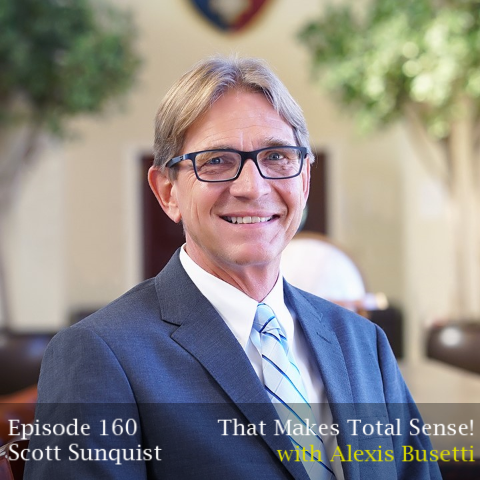
Speaker 0 00:00:06 Welcome to that makes total sense. A podcast dedicated to exploring God's generosity and justice. I'm Alexis, Boetti a Christian aiming to ask good questions and encouraging you to do the same. Every one of us is wired by God to live out generosity and justice, but the how sometimes alludes us that makes total sense is a way for us to get together posture ourselves as learners and challenge one another to practice generosity and justice in a tangible way every day. Well, I just feel like I need to make a shout out right now to the theology nerds, seminary students who, um, listen to the podcast. I am interviewing today, Dr. Scott Sunquest, who we were just discussing. We just missed each other at fuller. He is now the president of Gordon Conwell seminary, and he's written a great book that I just finished by the pool this week, the shape of Christian history, continuity and diversity in the global church. So good to have you Scott.
Speaker 2 00:01:09 Well, good to be here.
Speaker 0 00:01:12 So when I mentioned prerecording that when I saw your name come through on the IVP email, I was like, man, what Sunquest Sunquest why does that sound so familiar? And then I pulled out this giant text that I was assigned in my, one of my church history classes. And I'm like, that's it? And I showed my husband, this is where I recognize the name because you have co-written two going on three volumes of the history of the world church movement. And this is thick and dense. And I, I, I know that we're not gonna talk about this book entirely, but can you just give us the elevator pitch as to why this textbook might be different from some of the other maybe, I don't know, historically kind of more traditional history, church history textbooks that are assigned in seminaries.
Speaker 2 00:02:10 Yeah, thanks for asking. It was, um, like my third PhD dissertation working on that Dale and I got together about 35 or 40 scholars from around the world. We wanted the story of Christianity to be told as much as possible from people, most different contexts, but not isolated, cuz if it's isolated it's so in embedded that it loses its contact with the global church, there has to be an ecumenical, um, expression as well as a contextual expression. And so this committee 35 or so at, sometimes it downs low is 25. Sometimes 50 met in Chicago. We met in Quala Lumpur. We met in Pasadena, California, met in New York city. And uh, what would happen is Dale would outline four or five chapters and then I would look at it and then we would go over it together. And then we'd write eight or 10 chapters we'd gather together, we'd have a critique.
Speaker 2 00:03:01 So if we're writing Latin America, as I did Latin America in the, uh, 18th century and I, I told my Latin American colleagues I'm gonna have about 20, 25 pages. And they say, oh, you don't need 25 pages on that. I said, what do you mean it's important? Nothing happened, nothing happened the 18th century in Latin America. I said, well, something happened <laugh> but, but with their point was, if you put too much in there, it makes it seem so significant. And you're telling a story that is different from the way it's really felt today, as it affects Latin American Christians, that was this period of the same kind of domination of empire and church together. It created the foundation for independence movements and liberation theology. And so I, you know, I, I, I told it the way I was going to as in north American.
Speaker 2 00:03:51 And then we got to Africa because we had this community of scholars together. Uh, we wanted to, to include Egypt and Africa and our African south of the Sahara said, oh no, that's middle east. I said, well, no, technically it's it's in Africa and north. No, that, that shouldn't be there. And see, you have cultural divisions, topographic and geographical divisions and racial divisions. Well, how do you tell the story? And so, uh, the, the, that's why I say it was like my third PhD dissertation because it went on for about 10 years and it was amazing experience. So the product of that volumes, uh, one, two, and now I'm, I'm finishing the 20th century for volume three, um, are community experience a global experience. So we're telling the story of the world Christian movement by Christians from around the world. And so, uh, Africans would critique what we wrote about China because they didn't understand it.
Speaker 2 00:04:44 Well, we wanted this textbook to be used in Asia, as well as in Africa and Latin America. And it's translated into Portuguese and Spanish and Bahasa. And now I just found somebody translated to Chinese. And so when they read about a different area of the world, they have to understand what's going on. And so it was an amazing thing to hear, uh, you know, Latin Americans, uh, be shocked about a movement going on in China that connected with them. And so, uh, it was, uh, it was like a worshipful experience when some of those things would happen. So that is the back. My, I I'll tell you real quickly. My second PhD dissertation I didn't get credit for was the dictionary of Asian Christianity. And that's what got me into world Christianity is because I traveled around 12 countries in Asia and brought together scholars to tell their story.
Speaker 2 00:05:32 So I guess what's, what's at the bottom of all of this is helping people to tell their story in a contextual way, which is a part of the global story, not just isolated, uh, stories that, that divide people. For example, when I do the dictionary of Asian Christianity, then I'll let you ask another question, but I end to the dictionary of Asian Christianity. I would go to Japan and I'd use examples from India or from China at, at what's gonna be in the dictionary. And they said, well, who are they? They had no knowledge at all. They knew Western Christianity and they knew Japanese or Korean. They didn't know anything about their region. So doing the dictionary, brought people together to see themselves as a part of a larger hole. And it broke down Christian nationalism, cuz that's what it is. Then countries feel very proud of their own Christianity. And that's obviously something that we have to fight is Christian nationalism all over the world. And so by bringing people together, they're able to tell a more comprehensive story, but still their contextual story.
Speaker 0 00:06:38 Wow. Thank you so much. That it's incredible. And I, you know, I, I shared with you before I don't have any other, I don't have any other seminary experience. All I have is, is what I'm receiving at fuller. And I'm so grateful because as I took this course, this actually was with, um, Dr. Vince Bantu and he assigned this text along with the accompanying reader, which was also just remarkable. Um, but to get to ex, to get to read about the global Christian movement, the global church from exactly as you state, not like this purely Western lens of it's kind of all about us, right? <laugh> we have, we have done the work and we have, we have brought this and, and this really was, was telling the story of the global church history in a way that wasn't centered on as you call yourself in the book north Atlantic males, right.
Speaker 0 00:07:41 Which it's often centered around north Atlantic males. Um, I wanna, I wanna sh shift a little bit to this book, but I kind of wanna have this interim conversation maybe about history. You've touched on so many things about contextualization and perspective and nationalism already. And to be truthful, I could have spent the hours that I spent reading your book, I probably could have really spent and just done a close reading on the introduction. <laugh> that was one of the most meaningful portions of the book for me, especially. Well, there were several places that were, but especially when you talk about the study of history in general, right? Because I am one of the people who you may have called out who's like history is just kind of boring to me. <laugh> right. Like I don't love it. I don't get into it. Sometimes. It's hard for me to wrap my brain around what's happening, but I enjoyed the way that you framed a study of history by saying, yes, you do have to memorize facts.
Speaker 0 00:08:55 This is just like any other study of anything else. Right. I mean, you know, my husband's a scientist, he's gonna have to know some formulas and things like this. Right. But history and the study of history is also about narrative. And that is so important. I think about that now, even with the things that we're experiencing in America and have experienced in the us in the past couple of years, really, since the pandemic and just thought about how is this going to be told yeah. What narratives are going to be used and told when my grandkids are studying about this part of history, right? Because we are in this kind of history making portion. So I don't know, can you talk about that as it relates just in general, but also as it relates to studying church history and why that narrative portion is important and not just this, you know, this happened here on a certain date at a certain time, in a certain region,
Speaker 2 00:09:57 We, we are created, uh, to be storytellers and our identity comes out of the stories we tell and that we remember, and that's why it's really important to get history. Right. And when I say right, I mean more accurate and not less accurate, uh, more winsome and not less winsome, it should be engaging, um, more instructive and not less instructive. That's getting history. Right. Uh, we can tell a history which, uh, is a false narrative. And I think Putin is telling that kind of a narrative right now to the Russians. And I think that as I described in the book, the Japanese, as they taught about world war II, they were telling a history that was a false narrative that made them look really good. But Putin has the same narrative in his history. We're helping to save these people from the west Japan. We're trying to save the Chinese and make China a better nation to save the Koreans.
Speaker 2 00:10:55 And, um, when you drill down and find out the facts, what was really going on there, you tell a story about a people who are so deceived and tragically. It created, uh, violence and it created death. So stories can enliven and embolden or they can kill. And so we want to do, is we wanna tell a narrative that helps to connect the dots we deal with causality. Uh, but we deal with causality, not in a simplistic way, oh, Sheed this and therefore this, because we're such complex creatures, that there are all kinds of things that are moving us that are motivating us to make decisions. And sometimes we don't know why did I do that? What was, what was going on in my mind? You know? And so, um, we, we try to unpack the various forces ideas, emotions that were, um, in the, in the air at the time.
Speaker 2 00:11:47 And then point, you know, this is, this is what happened. This is, this is why, let me give you an example of this. When I was at the 200th anniversary of the arrival of Robert Morrison in Hong Kong, the first Protestant missionary in China, uh, resident, uh, missionary who translated the Bible, uh, in Hong Kong, I was, uh, I met a lot of, uh, Chinese scholars that for the first time were able to study Christianity. And a lot of 'em now had PhDs from the eighties and nineties. And here was the beginning of the, of the 21st century. And at least two of them, uh, from Wuhan and Shanghai, uh, said, we're trying to figure out, uh, why missionaries came to China and they couldn't understand it. And then later on, I went and did, uh, some lectures on how to study Christian history at, at a university in Shanghai because they didn't understand it.
Speaker 2 00:12:37 They had a narrative in their mind that everything is materialistically determined. And if that's the case, why in the world would you, uh, risk, uh, plus also family and, and, uh, and tribe is, is extremely important. And Confucianism is, is very hierarchical. And the son honors the, the father and that kind of thing. So why would you as a good son, leave abandon your parents, go halfway around the world and you have babies and two of them die. And then your wife dies of malaria and you stay there. That makes no sense at all. It only makes sense if you understand, if you get inside the story in the narrative. And so, um, narrative is extremely important, but it has to be dealing with real facts. And it has to do with the complexity of cultures and cultures are very complex and they're, we within the same culture, people make different decisions, but they're making them with some of the same materials and ideas and concepts that they've framed, but at certain points, certain ones take over versus others.
Speaker 2 00:13:35 It's a lot of the way that that's decided has to do with their spiritual formation of you're Christians. You know, how much am I really, um, motivated by Everest, even though I claim to be following Jesus Christ, I really want a better home. I really want a bigger church, you know, kind of thing. And so that's why I say when we write church history, we have to have a way of, uh, of telling the narrative and critiquing the narrative. Um, I, I, I, the concept I have is if you're writing the history of a bank, uh, you're gonna focus on different facts. If you're gonna write the history of, uh, geographic geo geologic formations in the world, you're gonna focus on different forces underneath the earth. I'm sure your husband can relate to that. But if you're writing the history of, of religion, you wanna study, what do they say they believe?
Speaker 2 00:14:29 And, and you always go back to the founder. Uh, you, you go most anywhere in the world where there's Buddhism, there's something be talked about, sit heart to Gaana because he becomes the model in some way for how they live as spiritual beings. And so that's why I say the same is true for Christianity. So it, we have to have a basic framework or understanding for what we're doing and how we're writing this. Uh, otherwise it's just, you know, you write whatever you want to. And so one final comment, then you can ask a question. Uh, I was taught church history basically as denominational history, apologetic for Protestantism, uh, Kenne Scott Ette was not a friend of the Roman Catholic church. And so he was fairly negative about Catholic, uh, work, uh, very positive about Baptists and, uh, Protestants after reformation. Um, and that was, uh, that was the time. But now we're in a global Christian history time. And, uh, we realize we write from a very different perspective. And so it's important to identify the different time to write in and how we can do something that is more globally Christian informed from all the different places and not just an apologetic for our particular stream of Christianity.
Speaker 0 00:15:46 Well, thank you. That leads me in a different direction than I was going to go because I, I went back and forth and I, wasn't going to ask this question because I just thought, I don't know if we wanna get on this rabbit trail, but here we go, we're gonna, we're gonna be on the rabbit trail if you'll, if you'll join me, um, in the intro again, I kept finding myself and now I can, I kind of keep finding myself distracted by this question of, of Christianity and Christianity as you pose in the introduction. So we're talking about global, the global Christian move movement about contexts about, uh, this is, this is not just a, a Western move movement. In fact, in the book, one of the things I really appreciate that over and over again, you point out often that kind of the imperialistic colonial nature that Western missionaries brought to much of the majority world was actually really hindering the growth of the Christian movement in those regions and in those spaces.
Speaker 0 00:17:02 And that was kind of, I, I think it was one of those things that like I could imagine, and I think I probably would've said that was true, but I needed you to spell it out for me. <laugh> I needed you to say that that was true. Um, so, so that's one thing, but the rabbit trail that I, that I keep finding myself being distracted since I started your book is yeah, but now what do we do with what we have? So we have lots of people, lots of people, groups in different cultures, in different contexts, in different regions of the world that are practicing Christianity. And then I think we have some people asking, are they practicing Christianity? And then the answer is different, right? Based on who you ask and who you're talking about. Uh, so I'm not being as clear as I wanna be, but can you <laugh> yeah. Will you help? Will you help me with that? So it's, it's this question of global Christianity, singular, uh, as in one kind of ecumenical or Christianity, like, what are we dealing with? That's a question that we, that we are having kind of as, as, I don't know, can I say that like, as the Western church, maybe that question, especially in academia is asking, is asking that
Speaker 2 00:18:15 Yeah. Uh, the, the reason I critique the concept of Christianity is because they don't people who, who talk that way, don't talk that way until they get to like the 19th and 20th century. And, and it, it seems to me that once Christianity gets not too non-Western, we don't embrace it as Christianity. Oh, that's something else. Well, that's disingenuine because, um, the Christianity history that I was taught, it started in Jerusalem and went to Antioch and then went to Rome and then it went to Canterbury and then went to Wheaton, Illinois, you know, uh, and then maybe Pasadena, but it went to Hamilton, Massachusetts, too. Cause that's where Gordon Conwell was, but it's a whole Western drift mm-hmm <affirmative>. But my dissertation was on Persian Christianity in the fifth and sixth century. And, and, and places like Odessa and SSUS were important centers of education.
Speaker 2 00:19:07 As a matter of fact, I studied a guy named NA Sai, who was the president of a seminary, if you will, he's called the interpreter. Cuz every day he interpreted the Bible for people, a thousand students in missus, a thousand students, and they walked all over Asia. They walked all the way to China by 6 35, that's a whole history of Christianity. It was very different from what was going on the west. Most, all of their sermons were, uh, in, in D sticks in parallel. It's like reading Psalms, almost all of their sermons were like that. It's unbelievable in the west, they're dealing with Aristotle and Plato, you know, in the east, they're dealing with a more of ATIC form of Christianity because the language is so there was huge diversity of, we didn't talk about Christianity. Uh, the problem is we felt like there could only, the church is won.
Speaker 2 00:20:01 The body of Christ is won. So how can we celebrate Easter on different days? How can we use different languages? So we have to find a way of making it all one and the way that we make it, all one is we have to recognize around the world what it means. What's the core of the Christian faith. What holds us together. What's the essential DNA. And we, we, we could do it different ways for some people. It's simply those who honor Jesus as Lord and the power of the holy spirit. As, as, as interpreted through scripture through all of the Bible or something like that. And then we keep coming back to, to scripture. We keep coming back to Jesus. We might go out, we might have different interpretations. We have to ask a question question, is that still centered on Jesus Christ? And so I talk about Christianity being a centered set faith, and that comes out of my study of, uh, Persian, uh, Christianity and also comes out of my study, uh, when I went to, uh, China to tell, uh, to try to help, uh, at this university, uh, they had like seven out of 12 history.
Speaker 2 00:21:09 Professors were studying Christianity. Unbelievable. It was like Pandora's box was open and everybody's interested in cuz you weren't allowed to study it for, you know, 20 or 30 years. Oh my gosh, look at this stuff. And it's fascinating. And uh, so once it's opened up, so how do you study it? And I said, well, you have to understand that Christianity is a centered set, faith it's centered on Jesus Christ. And like I talk about in the book, the thin red thread, there's a thin red thread that runs through history and it's focused on that basic story. That is a narrative that is not just as, uh, Frederick Bakner, who just passed away last week, said it is the, uh, it is the great fairytale. That's true. Uh, it's really true. It's what you wanted to see. It's a, uh, you know, ugly duckling becomes Swan, you know, it's the resurrection and it's really true.
Speaker 2 00:21:59 And so I said, when I gave that lecture in China, I said, so that's what Christians believe. And, uh, and they were all writing this down. I said, so therefore, when you study church history, you have to have that narrative in your mind to understand what's going on. And a number of 'em said, oh, that makes sense. Now we know why they would do all those things cuz they didn't think that the world was just all this materialistic stuff. So it's important for us all to become as close as we can, to an agreement on what that core is with that essential DNA is. And uh, and then allow for the, the diversity of there, but not allow for that diversity to become a new center or an alternative authority or an alternative narrative. And that's what happens in Mormonism. That's what happens in, uh, uh, Unitarian base and so forth.
Speaker 2 00:22:47 Um, are the unification church, excuse me, unification church becomes an alternate narrative and alternate authority. Um, and so I, uh, in, in my family, for example, we have, um, basically a Baptist, uh, reformed Orthodox Eastern Orthodox and uh, I'm P C USA pastor, but we, um, are happy that we're all Christians and in this world and we understand and recognize and support that. Well, the same thing is true in different cultures around and, and where, where it really stretches us to understand and embrace that is African indigenous churches, many of which, uh, struggle with the authority as being Jesus and the Bible or the, a new dream or vision from the profit. And um, and that's, that's okay just to recognize those struggles and keep the conversation going. And we need to be willing to listen to one another, but also feel free to challenge one another in those things.
Speaker 2 00:23:45 And uh, certainly American church needs to be challenged by the global church and the idolatries that we, and the nationalisms that we've set up that are really, uh, misrepresenting Christ in the same way that many missionaries and colonial empires need to be challenged in the way they were trusting in their technology and their trusting in their money, uh, to bring about God's kingdom. That was never what Jesus said. Matter of fact, didn't say, Hey, get some more cloaks, some more stabs. You're gonna need it. No, he said, strip it down. It's all about this message.
Speaker 0 00:24:19 Yeah, I think it's, I, I like how you have, how, how you have put it just now with we it's disingenuous because we didn't used to say that. Right, right. We didn't used to say Christianity, plural, and then I've, I have forgotten one of the church fathers that you name right. Who had generally Orthodox views, but ones that we might, I don't remember if you're talking about origin in this particular portion. Um, but you know, ones that we, that we, many of us wouldn't agree with today, but we don't question, you know, his, his commitment to the church, his commitment to orthodoxy his salvation, we might say in right in language today, but we're more comfortable I think maybe because we could see the end right. When it came to, to this history, but maybe, maybe we're a little bit afraid. I don't know. I'm just kind of talking to think here, as we say, in our house processing out loud, but you know, but we, maybe we can't see where these places are going. I think the way that you name it in the intro, and I won't find the exact wording, but maybe we're a little bit afraid of how non-Western these counterparts look. And, um, and that is some of our hesitancy to name them within the, the global ecumenical.
Speaker 2 00:25:41 Now what I'm say now is, is much more, you know, uh, uh, much, much higher level to talk about this, but my originally titled this book time, cross, and glory, how to understand Christianity. Um, and, and that's because in the early church, one of the most dramatic ships that took place was Mo most everybody who's, uh, worshiping nature or, uh, comes from even Greek or Latin. Uh, philosophy sees doesn't see time as progressing and moving forward. It's it's cyclical. You know, the world is started and people begin to, it's more complicated. They build buildings and empires and everything, and then it all burns down and it collapses and it starts over again. And it's the same narrative in Hindu religions and Buddhism, you recycle, you come back and rebirths and it's tedious and it's meaningless. And so you want to get off the wheel of the endless cycle of rebirths.
Speaker 2 00:26:40 And here comes God in Jesus Christ who says, no, I've started it and it's going somewhere and it's gonna end. And when it ends, it's gonna be complete and it's gonna be glorious. And so from time, uh, to glory is, is divided in the middle with the crucifixion or the incarnation in crucifixion and that's the cross. And so, um, Christians, Christians lean into suffering. I hate to say that, but, um, they do not escape suffering. They are prepared for, and they see their formation is to suffer for others. So Jesus, as our model. So the reason I say that is when we study church history, we should not be surprised to see that we should expect to see that more and more. And we see people are just looking out for themselves and patting their own nests and so forth. We can say, oh, that's sad because they're not really following, uh, the, the, the master, the leader, even the religion in which they say they are.
Speaker 2 00:27:45 And we can critique that. And we can learn from that. I also make the comment and hear that the history really all teaching needs to be, uh, ethical. It's a matter of, we're either learning to be better people or worse people. We're either helping people become more truly and fully human or less fully human. And so it is important to be able to critique, but on what basis do we critique and, uh, and that's the key. So that's why the time crossing glory for me is extremely important, uh, because it does help us in our formation and how we read history. And, uh, as I talk about later on in the book that we don't see all the glory happening in this world, that's, it's Hebrews, right? Hebrews 12 or 1112, but we see the faithful people who are still longing for that city and seeing it coming.
Speaker 2 00:28:35 And so the, the glory pulls us forward, uh, and, and gives us the ability to endure and to be courageous. Um, and so some of the great heroes of the faith are people who were courageous because their hope was not just in this world, they weren't attached to this world, but they were freed up in order to suffer for others. You know, spiritual formation is not just to lower your blood pressure and to make you a nicer person it's so that, uh, you can love others. And that means sacrifice for others. So the pen ultimate might be that you'd be healthy, but the ultimate is that you would be able, uh, to lay down your life for your friends.
Speaker 0 00:29:16 Yeah. I'm glad you mentioned that because there were just a few notes that I had, and then we can, we kind of take this where wherever it goes. Uh, so spoiler alert from the end of the book, one of the, one of the subject headings that caught my attention the most was to read history, to learn unity and love, right? And I'm like, well, if somebody would've told me that, then I, I would've, I would've filled up all those history classes. Right. But, but sometimes it's not presented in that way. Uh, but also you, you kind of take, um, suffering and glory and the way that you, you list where all, not all, but many of the places in the biblical text where these are combined in the words of Jesus and the epistles, like over and over again, where we can see these two concepts, uh, working together.
Speaker 0 00:30:12 And then where I, where I wanted to start before the rabbit trail. Thanks for joining me. There was this, this time and incarnation that you spoke of and the, the different ways that it's viewed. I think one of the things that surprised me about that concept, because as someone who grew up going to Sunday school with felt boards, right, like learning the Genesis story from, from that is that in other contexts, when people came to know Jesus, that they would become obsessed with creation <laugh> with the narrative of creation. Because as you stated, it's different than what the context, their, their religious context or social context has, has brought them up to be familiar with. So can you talk about that for a minute? That incarnation
Speaker 2 00:31:09 Creation, this is amazing when, when our, our students would go to Vietnam and to teach these converts from Buddhism about, you know, they would wanna teach about Jesus. They, they, it kept going back to creation. And then when I, I went to Cambodia and I was lecturing, this guy was teaching in history or, or teaching old Testament. He was supposed to be teaching a survey, the old Testament, he never got through Genesis <laugh>. He just kept asking quick. So now think about this. We in the west kind of assume something like that happened. And we're just trying to defend that, you know, it really happened and we, I have this understanding of time, but for them, it was absolutely beautiful. It's wonderful to think that God loved us that much, that, oh my gosh, that makes sense. God made me, my, his image is in me, as opposed to you're just expendable.
Speaker 2 00:31:55 And especially if you're a woman, you can't, you can't be enlightened unless you first re reincarnate as a man. And then, so you're always the least two incarnations away. And so here, all of a sudden, boom, his image is on you. It's fallen. It's gonna be rectified. It's gonna be corrected. It's gonna be sanctified. It's gonna be redeemed, whatever you're liberated, whatever your word for it is, but it's good. And for creation to be good and to see how it all fits together. And, and we are wired that way. I I'm here in Jacksonville, Florida right now. And every morning for a month, I get up 5:00 AM. And I have my devotions at about six o'clock. I get on my bike. I go down to the beach and I wait for that sun to rise every day. It's different. It is amazing. It is overwhelming.
Speaker 2 00:32:45 And I just thank God. I thank God for the beauty, the magnet. And that's just one little thing. That's just the sunrise. Okay. That's not looking at the, the wings of, uh, hummingbirds and that sort of thing. That's just one little thing that's important because creation from God, there's something we can see something of God in creation, as opposed to most all of the religions creation is the problem. It's bad. It's evil, it's fallen. That's where narcissism is. You gotta escape it, you know, attachment to this. Th you know, so we have this wonderful thing that it's good, but it's fallen. And so therefore we can live into that and we can see it become even more beautifully appreciated. And, and that's a part of our, our human thriving. So creation and time is very important. Also, what that means is if something, if somebody is suffering in this world, we want to help alleviate that suffering because that's God's creature.
Speaker 2 00:33:49 And so, uh, it's interesting that the SPCA was started by evangelical Christians because they didn't want animals to suffer. Okay. It's, it's obvious that Christians should be involved in creation care because it's, God's beautiful creation and we should be able to enjoy it and help other people to enjoy it. So creation is extremely important and it's time. And for people who don't have that understanding at all, they think, wow, this is great. This is wonderful. And whenever we talk about redemption or salvation, we always goes back. The, the one who can redeem is the one who created. And, uh, so it's, it's connected there, but that, that is something that was just so overwhelming to me, uh, in teaching east Asia. And it goes all the way back to, uh, Alex, um, Alexandra D Rhodes, when he did his little, uh, eight day catechism in Vietnamese, he reduced the Vietnamese language, which was the coin a language rather than Chinese cuz Chinese were imperialists. So he made the Vietnamese language, something that could be written by Westerners. And this eight day catechism, I think the first three or four days are all about creation. Now, most people doing a catechism like the first day would be creation and God, and then it would be about Jesus for like six or eight days, but you've gotta get creation. Right. Uh, and they, that was so new for them. So I, I think that in the west, we don't appreciate that much. So I, I try to recover that a little bit.
Speaker 0 00:35:14 Well, you, you did that for me. Well, in the book and, and also this concept of time and how richly, I think that the, the, that brought out the implications of the incarnation for me, mm-hmm <affirmative> so there is the creation point. I think, I think sometimes I would say, um, in kind of American evangelical culture, which is, which is where I grew up. Maybe we are, maybe we're kind of so accustomed to this story that when we, we waiver in some kind of weird ways, and one of them is I think, kind of this, uh, this idea of a, we have kind of a disembodied faith sometimes. And so I grew up understanding as much as I can, you know, like as far as the book, what incarnation meant, right. Jesus came here as a man and he was born from a Virgin and all of this stuff.
Speaker 0 00:36:18 But because my faith in general, the culture of my faith in general was kind of disembodied. Right. Um, if someone is suffering it's it's, um, you know, well, you know, or maybe when someone passed away, that's a, that's a good example when someone passes away, well, they're not suffering anymore. They're with Jesus. Like as if their physical body passing, isn't something to be seriously grieved, right. Or, you know, if someone is sick, it was difficult to kind of lean into that fully because there's kind of a disembodied, you know, way that our faith was looked like, you know, my experience was kind of like, you know, we use the excuse from Paul, like, don't worry about your physical health. It's, you know, don't, don't focus on those kinds of things. And so then when we have the miracle of the incarnation, it feels a little less dramatic because some of the rest of the faith is kind of this separated, um, you know, experience.
Speaker 0 00:37:22 And we are, and we're not fully, uh, living into that with our bodies. It's, it's either maybe very intellectual or it's very spiritual, but somehow it's separated. Um, but when we talk about the importance of creation and even time, right, like you can see it on the calendar, but to think about that for a minute, that like Jesus life literally stopped time. Like there was like, our calendars are different because of this is bizarre, right. This is a strange thing that we Christian's claim. Right? Like the entire calendar was changed because someone that we refer to as our savior came and lived in a human body, mm-hmm <affirmative>, that sounds really bizarre. Um, yeah. And when you say it out loud,
Speaker 2 00:38:12 It's not just time, but it's what happened at that place and time gives meaning to all of time. Yes.
Speaker 2 00:38:21 And, and so when we study and we write about church history constantly have to kind of go back to Jesus and go back to incarnation and remember, this is what gives all of time and history meaning. And so we enter into this story as human beings, this great story of God in scripture, it's not like, oh, we read the Bible over there and we kind of study it. No, we actually, in a sense spiritually enter into that story and we find ourselves in there. And that's why, um, I think so much, really good church history is, is biographies. Mm-hmm <affirmative>, um, you know, telling the stories of some of these people. And I tell that story of a student who, who wrote on, uh, uh, KAA Toka, uh, for great Japanese, um, amazing evangelist and social reformer, political reformer started unions in Japan. I mean, just so holistic, just embraced everything that he could of Jesus.
Speaker 2 00:39:18 And she was so excited about that. I mean, he was, he was pointing her to Jesus and discipling her, uh, vicariously in my class. And she made decisions differently after that class than before, not because of what I taught, but because of her research on this dead Japanese guy. Um, and so that, that is why it's so important to see the incarnation, uh, of God coming and putting on human flesh and actually, you know, eating real food and not just imaginary food and, and really dressing and wearing and, you know, and smelling and needing to bathe and, and, and all of that. And having friends who betrayed him, just like we do in our lives, um, I is, is quite significant. And therefore we can enter into that story. Another way of thinking about this as Christians read scripture, they, uh, they, they live into the songs for example.
Speaker 2 00:40:17 And so we see quite often we study, uh, great Christian leaders. They will just quote the Psalms and, and that's because the Psalms are, are our prayers. Also, we can, we, we have permission to make them our prayers. And they're, they're, they're so significant that, uh, the, the seminary that I studied VU in the fifth century, the entrance exam was to memorize the Psalms. That was your entrance exam. Okay. It wasn't like, why do you wanna go to seminary? What do you hope to learn? It's like, okay, Psalm won. Wow. You know? And so they thought it was that important because every Psalm was Christological for them, every Psalm points to Jesus. Uh, now that's, that's pretty powerful. Uh, so in teaching church history, we begin to look at some of these themes and see it coming through. And then I would argue that, uh, we can recover a lot of what we've lost today. I would argue that a lot of our pastors in the United States have limited theological education, fewer and fewer going to seminary. And so their, their depth of understanding is very shallow. And by studying these phenomenal, uh, figures, we're rooted and we're grounded and we're deeper, and we have, we're getting the nutrients from the soil of the history of the, the church that can be a great benefit, uh, to, to others. And we need that today.
Speaker 0 00:41:40 Yeah. I'm glad you mentioned that because that is kind of the way that I like to study history is through memoirs and biographies. Right? Like I, for a while I was on a kick where I, I was reading books about the staff at the white house and you know, how they, uh, you know, this staff because they've been there most of them for decades and decades and decades. So, so through many administrations. And I'm like, if you sat and told me to read a textbook about the early 20th century even, and what was happening and politically, I would just probably I'd last about five minutes and then fall asleep. But to get to read it through, through this story, as we talked about at the beginning of people who were in, you know, kind of for the Hamilton, for, in the room where it happened, you know, at a lot of these places, even, you know, when they were, when they were cooks and aids and, and things like this, it was it's, it was beautiful. I, I couldn't get enough of, of these. Right. And I learned so much about my own country's history through those that I was able to take in, because it was the story of other humans, uh, rather than ideas and not ideas, but right. Facts and things like that, right.
Speaker 2 00:42:53 This is the struggle at historians have is, um, 90, 95% of which you study, you have to throw away. And so, um, I read, you know, biographies and articles about individuals, and then I can only write a sentence or two about 'em and that's just not fair. And so you wanna drill down on some, like I drill down on some and hear like, um, Julia metier, uh, she was just a school teacher in, in Ohio, in Western Pennsylvania. And, uh, what she did is unbelievable. It should inspire other people, both men and women. I mean, and her husband tried to be the great roving missionary for nine and a half years, traveling around Shong province. And, you know, he was a failure and she just sits back there in this temple and sees some boys walking around and starts teaching them and learning Chinese, and then working on a glossary, cuz her husband doesn't have time to do that.
Speaker 2 00:43:53 And then next thing you know, she's got a little school and then they get older and she's got a bigger school. And then she's got the first university in China. Uh, and well, that's inspiring, but we, we can't study all of those people like that. So I think it's the job of the historian to pick up some of these examples. Good and bad. Uh, but, but more good because the good ones are focusing more on Jesus and therefore they're describing more, but Christianity is supposed to be. And, uh, like I said, all, all of what we do is a moral activity when we teach. And so we can discourage people and just point out, oh, missionaries were all imperialists missionaries, always cooperated with, you know, this and I've got some great examples of bad missionaries, but frankly, uh, most of them would not give up relations with family, the, the risk of disease because they wanted to get rich or they wanted to cooperate with the empire.
Speaker 2 00:44:50 Um, and so they struggled and found ways to survive. And sometimes they had to cooperate with the empire just in order to get a boat to China. So what's on that boat opium and missionaries. So what are you gonna do say, well, we won't go to China. If we have to go on one of those boats, well, those are decisions that we can then evaluate century two later and still disagree about. But when you enter into the story of some of these people and you read, uh, their diaries and I, I have on my computer, uh, about, um, I don't know, 20 or 30 files of the life of Samuel Austin, Moffitt, who was the pioneer missionary in Pyong yang, his father or his son was my, uh, advisor in seminary. And, uh, they collected all these letters and journal articles and everything. And that I can read through those. I can do word studies. It is unbelievable. And that's just one person. So, uh, I think it's important to see the decisions that are made the history of the church as it forms is formed by all these little decisions that individuals are making. And by drilling down a little bit on those little individual decisions people are making, we begin to understand the nature of Christianity and its failures and successes,
Speaker 0 00:46:15 As we're learning to be better students of history from excellent professors of history, how can we make the connection in our minds? So I mentioned reading history, learning about history, studying history, to learn unity and love this for some will feel like a stretch, uh, because there's, there seems to be little connection, I would say, except for potentially things that seemed really huge and dramatic events in history. Maybe we could, we could use that and say, that's an exception, or maybe fairly recent history. And we can use maybe call that an exception, but more generally, what do you mean when you, when you claim that this study of history can help us learn more about love and unity?
Speaker 2 00:47:22 Yeah. The reason for bringing that up is because, um, I take seriously a couple expressions in scripture. God is love full stop. Number two, um, Jesus high priestly prayer, right before he dies. And they, they, John didn't get that wrong. It was so powerful. He, boy, he remembered that. I mean, oh my gosh, he's crying and he's praying this, wow, he's praying for us. He's dying. He's praying for us. He's praying that we'd stay together. And so those are foundational, uh, concepts that, that drive us as we study the history of the church. God is love. God is one, he's three in one and God, uh, at, at the point of sacrificing for us, praise that we would be together for the sake of the world. So those are central concepts that should drive us. And then, um, we, we need to look for it because often, uh, it's covered over be like the news today.
Speaker 2 00:48:26 It's really a, there's a lot of good things going on in the world. I dunno if you knew that Alexis <laugh>, but we don't hear about it much. Yeah. You gotta look for, I I've seen good things. I, I was, I was walking on the beach and um, no, I was sitting on the beach. I was praying and the sun's coming up and here, this man walks down the beach, carrying a cross right in front of me. And I snap this picture, which I'll send to you later. It's unbelievable. And he was a drug I found out later on, I met him this Sunday in church. He was a drug addict. And so he's picked up my teen challenge and he spends a year he's finally clean. He's became a drug addict when he was about 13, 14 years old. So he lost 20 years of his life.
Speaker 2 00:49:07 And then he gained it back and he just can't wait to tell people about Jesus. So Jesus told him, carry a cross <laugh>. And so he carries it, you know, on the beach. I don't do it much in the beach. I don't know why he was up the morning. God just got me up. I said, so I could get your picture. Oh. And, uh, he carries it downtown. And uh, he just likes to talk to people about Jesus. So there are those individual stories that we can find, but we have to look for them. And a historian can, can look for just cynical things. That'll, that'll reinforce, uh, cynicism, but that, uh, doesn't help us understand Christianity that understands when people can't live up to Christianity. We wanna study Christian history. We wanna study, where is Christian history really there. And then where do people fall away from it?
Speaker 2 00:49:55 And, and those would be central concepts we wanna look for is where do we see love and unity. And, and I would say also sacrifice self-sacrifice for others. And we see a lot of it. And there's some great stories like that. So why in the world would you teach church history? Why do you write church history? I would say in order to make people better followers of Jesus Christ, otherwise, why do we teach church history in the seminary in college? Uh, it's just a silly activity that you can check off your list. No, I, I, I wanna do it for the formation of future pastors, missionaries, counselors, and therapists, and so forth. So you only write a, you only write when you ask a question, if you don't have a question, you don't write, you don't research. And so what, what are you looking for?
Speaker 2 00:50:45 I'm looking to see something to the image of Christ in history, and that's a, that's an image of love. It's an image of holiness. It's an image of unity. And when I see that I wanna lift it up, uh, knowing that that's not the whole story, cuz I, I talk very clearly in there about, uh, where the gospel has been perverted alluded, um, hijacked, uh, by the, the, uh, the passions by Aric and by self-esteem. Those are the three big sins of the early church. The vices self-esteem is pride and those things are always there to capture and to, to redirect, to, to dent, to warp, uh, the beauty of the gospel.
Speaker 0 00:51:30 You know, I, the didn't come to my mind until you started answering that question, but thank you. But as a, I would say as a reluctant student of history is I've already, I've already kind of named for myself. Um, one of the things that I gained in that I have gained so far in my study of church history and you referred to Hebrews earlier is that we are all a part of this community together, right? The saints who have gone before us are, as you, as you mentioned with the Japanese pastor, like your student was being discipled, vicariously by him through a research of him from your class, right? Yep. This is, this is crazy. This is, um, this is amazing for me. It was Efram <laugh>.
Speaker 2 00:52:20 Yeah.
Speaker 0 00:52:21 Efram the steering. Like I I'm like I have, I have asked for a beautiful bound copy of some of his writings and some of his songs,
Speaker 2 00:52:31 Amazon paradise get his hys on paradise.
Speaker 0 00:52:33 Yes. I, I I'm writing it down. My husband, my husband who edits this will note to sell. So <laugh> uh, but because I didn't know, he existed
Speaker 2 00:52:43 Mm-hmm <affirmative>
Speaker 0 00:52:44 Before I took this history course, but his writings were so beautiful and encouraging to me as a 21st century believer in a completely different region of the world that I just felt. So <laugh> I felt so like kind of oddly and, and mystically and incredibly blessed that we were a part of the same community mm-hmm <affirmative> and, and I was so grateful for that because what is that right? What is that, that we get to, to learn and experience, and not just in the backspace way that we can study history in general mm-hmm <affirmative> but in this mysterious way that we get to experience it together as a body of believers kind of past present and future, if that's not too weird. Uh, but yeah, but it's, but it's beautiful. Um, okay. Last thing as we wrap up, I, as I mentioned, have been a student for a few years, it's been a long time since I've been a student, but sometimes I feel like I can see.
Speaker 0 00:53:51 So I'm gonna ask you this as a professor. Sometimes I feel like I can see, and sometimes the professors will, will let us in on there's something that they wish the class would ask <laugh> there's something burning in them that they wanna say in this lecture or whatever it is. And no one, and no one thinks to ask it. Sometimes we're lucky enough and someone does, but sometimes it doesn't happen. So I'm gonna ask you professor Sunquest what, what question have I not asked? Is there something in you that you're like, man, if she would only say this, I would, I would hit her with that. Uh now's your shot.
Speaker 2 00:54:29 Yeah. You should have asked me about what about dispensationalism?
Speaker 0 00:54:33 Oh, I, I could have <laugh> cause that was a real,
Speaker 2 00:54:38 I make a very strong statement.
Speaker 0 00:54:40 Yes, you do.
Speaker 2 00:54:42 That, that view of a return to a materialistic place oriented sense of holiness is, uh, going back to the old Testament, Jesus clearly says, and Peter affirms and Paula affirms that you are the body of Christ. You are the temple of Christ. And so Christ now dwells in people, not in places, places are, are, can be sanctified and sacred for a while, but I there's a wonderful, um, brewery in, um, Pittsburgh that used to be a Roman Catholic church and they de ized it. They didn't say this has to be sacred for eternity. It just, you know, for a while. And, uh, there are church buildings that are turned into ballet studios and concert halls and everything, and Jerusalem was the place. It was the holy city of Zion. Uh, but to, uh, to say that we have to develop international relations, foreign policy, you know, elections and everything around the fact that we have to rebuild the temple in Jerusalem is, uh, not just a distraction.
Speaker 2 00:55:50 It's really tragic because as people should be spending their time doing what Jesus said at the end, which was not rebuild the temple, it was go. And so that final command of go is, is, is a, is a beautiful command of spreading is images all around in every culture and nation. And so the final image in, uh, in revelation seven is every tongue and tribe and people and nation standing before the throne and before the lamb. And it's not, you know, Jesus doesn't say, well, when you have rebuilt the temple, no, that this heavenly Jerusalem is gonna come down from heaven. Uh, and Jesus is going to be thrown there. So I've just seen so much money, so much time, so much division take place about a false understanding about eschatology. If Jesus himself said, don't really know when it's gonna be here, where <laugh>, then we shouldn't be so positive and, uh, elect government officials based on the, the Jerusalem.
Speaker 0 00:56:56 No, I, I love it. I laughed kind of out loud because as, I mean, I, I grew up in, uh, in a, like I mentioned kind of just this like wide evangelical spaces where a lot of money and time is spent on the distraction of dispensationalism. A lot of energy is spent there. And I remember having a conversation with a dear friend my first year in seminary. And of course my first year in seminary was 2020. So there was lots of political talk and all of the kind things that you just named. And I jokingly said to her, we had a really good laugh. And I said, I really hate it when first year seminarians talk like they know something, but as a first year seminarian, I'm gonna give you my professional opinion about eschatology right now. And that is, we don't have a clue <laugh> as, as you said, we, we don't really have a clue. And, and I kind of
Speaker 2 00:57:56 Said, I got a story for you, Alexis, you a lot of stories. The I'll do a lot of walking the beach and this man has a shirt on. It says, Jesus, that's a white shirt. Jesus. So I come up to him and I said, are you Jesus? He says, no, but I, I, I know him. I said, so do I? He said, he's coming back. I said, I know, do you know when he says, yeah, he told me last night, he did. I said, are you coming back soon? And Jesus says, no, I'm coming back now. So I'm here on the beach to tell everybody that he's coming back now. I said, well, I'm ready. Are you? He says, yeah, but I need to tell people. So my point is, we're not gonna know when it is. And so what we need to do is get ready every day. So every day we wake up and say, Jesus, if you're coming back today, I'm gonna be doing your work. You're gonna catch me involved in doing your work. Okay. And so, so you,
Speaker 0 00:58:45 You get yourself a t-shirt like that, Scott for your walks on the beach?
Speaker 2 00:58:49 Well, my wife says is it has Jesus or Jesus. Is he from Mexico?
Speaker 0 00:58:56 That's a whole, that's a whole other of worms. That's a whole of worms. Oh my goodness. Well, I think I just kind of feel like that's the perfect place to end Jesus is coming back.
Speaker 2 00:59:07 Right. That's right.
Speaker 0 00:59:08 Amen. That's right. That's right. Um, thank you so much. This is just, this has been a real joy and the book was really great. Um, like I said, I, it was, it was we're headed to the beach later, but it was my pool read, uh, in, in Houston, cuz it's so hot. Uh, this is the shape of Christian history, continuity and diversity in the global church by Scott, Sunquest the president of Gordon Conwell seminary. And I'm going to put the link for this book, um, in the show notes, as well as the other stuff that we talked about. Um, Scott, I'm so grateful for the time that you spent with me today and for this book and for this giant one here and the, and the second volume and the one to come and for your work in this space to help us understand church history, as more than just wrote memorization lessons, but narratives and following that red thread of Jesus. So thank you so much.
Speaker 2 01:00:07 Thank you. Good to talk with Alexis.
Speaker 3 01:00:11 The links for all the resources mentioned in today's episode can be found in the show notes, music and podcast production by Seth BCI. Be sure to give us a review on iTunes and subscribe at your favorite podcast listening app, you can also visit us at that. Makes total sense.com.