Episode Transcript
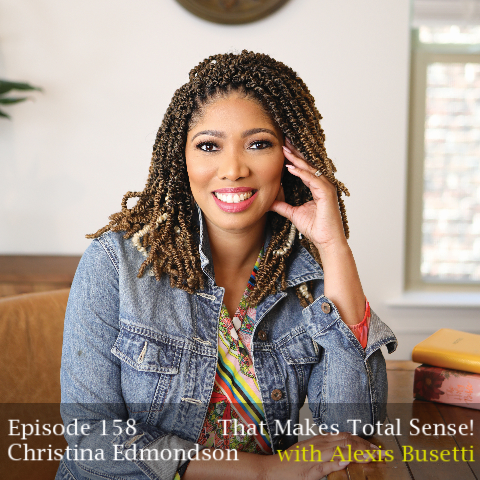
Speaker 0 00:00:07 Welcome to that makes total sense. A podcast dedicated to exploring God's generosity and justice. I'm Alexis, Boetti a Christian aiming to ask good questions and encouraging you to do the same. Every one of us is wired by God to live out generosity and justice, but the how sometimes alludes us that makes total sense is a way for us to get together posture ourselves as learners and challenge one another to practice generosity and justice in a tangible way every day. Hey everybody. I am, I'm kind of beside myself pumped, um, because I'm sitting across from Christina Edmondson. Hey Christina.
Speaker 2 00:00:48 Hello.
Speaker 0 00:00:49 <laugh> and I, I mean, I'm just, yeah, I'm I can't stop smiling, but I've just finished. Um, the book that she has co-written with Chad Brennan called faithful, anti-racism moving past talk to systemic change. And Christina, that's almost where I wanna start because this book, which by the way, is like so fun to just hold in my hand and flip through. I mean, the, the, the, the hard back cover the, you know, the shiny pages, the color inside of it. Um, but on the cover, the wor the phrase systemic change is highlighted essentially. Mm-hmm <affirmative>. And, and so even if we don't start there, I I'm just gonna go out on a limb and say, I want to make sure we get there, like, real quick. Um, <laugh> at the beginning of this conversation, because that is a huge component to what you and Chad share in this book is the systemic part of, um, of this conversation, which I just am gonna throw out there. I think it's lost a lot of times in Christian, um, circles. Um, so anyway, so thank you for the book. It's amazing. Um, and yeah, maybe we can start with, like, why
Speaker 2 00:02:08 <laugh>, why did we write this book?
Speaker 0 00:02:10 Why did you, why did you write it? Um, why did you write it? What were you, what was your goal in contributing this book in the conversation that, um, that a lot of people are having right now?
Speaker 2 00:02:23 Yeah, yeah. You know, usually if, so, if, if Chad and I are interviewed together, usually this is when I, I, I say to Chad, like, go ahead and, and tell the making of the band story. Like, tell <laugh>,
Speaker 0 00:02:34 Tell, tell, yeah.
Speaker 2 00:02:36 Tell how the garage, the, the, the garage band came together or whatever. Yeah. Um, but some years back pre pre COVID years, um, oh, uh, we were invited, I didn't, I actually didn't know Chad at all. I think I was probably aware of, of his work and I imagine he was aware of, of mine as well, but, um, we were, uh, uh, invited along with kind of a whole cohort of, of different, um, academics, activists, practitioners, uh, people, uh, people that would identify as Christian for sure. And that were engaged in, uh, racial justice work. And, um, and we were invited, uh, out by Brenda Salter McNeil, who is, um, the mentor for Chad and I knew of her work from afar. I mean, she's, um, well known in, I think, higher education, particularly Christian higher education spaces. Um, oh,
Speaker 0 00:03:30 She's brilliant. Mm-hmm
Speaker 2 00:03:31 <affirmative>, especially as you kind of her initial work around, um, racial reconciliation, racial reconciliation, mm-hmm <affirmative> um, so I, so I knew of her as well. There was an opportunity to meet her face to face along with other other people, like, you know, Dr. Bernie king and, and there were, I mean, Michael Emerson, there was a whole, it was a small group, but it was lovely, obviously Latasha Morrison all stars.
Speaker 0 00:03:52 This was an Allstar team Allstar team
Speaker 2 00:03:54 <laugh> so I just, I was, I was as always happy to be in the number
Speaker 0 00:03:59 <laugh> right, right, right, man.
Speaker 2 00:04:00 So anyway, so, so, so anyways, I went on the trip primarily, cause I thought it would be a good opportunity just for encouragement. I could, I could sense that it was not only just to be an academic thinking, but really more so an opportunity for, um, uh, spiritual enrichment for people who do work that is really grimy. Um, this type of work is we can talk about it sociologically and, um, psychologically the kind of spaces that I live in, but, um, it is definitely spiritual warfare. And so I was looking forward to just, you know, to be around people who have, we have some overlapping similarities that we can sharpen and challenge each other. And that's where I met Chad. Um, and I, and, and spent more time also talking to Michael Emerson and, um, and others. And they were working on, um, a large body of research, which is reflected in this book.
Speaker 2 00:04:46 And there's some other book projects that are coming out as well, that also spend time really mining that research, um, for, for helpful, um, yeah, helpful material so that we might be able to understand and grow and really, um, defeat this fo. Um, and so from there, we just had the whole host of conversations. I had some, some other people there, they were like, Christina, you should write a book. And I was like, Hmm, you should give me time. <laugh>. I mean, I, it's not some, I mean, there's some people who like, you know, they love to write, like, it's their thing. Any people I know who are writers kind of hate writing too, they have a weird kind of dynamic with it. Yeah. Yeah. Um, and so I was like, well, I need a sabbatical. I need, you know, these are the things that would have to happen.
Speaker 2 00:05:25 Right. Um, and, and, but then after I left, I guess a couple, few months later, um, I had stayed in contact with some different people. And Chad reached out, talked about this research project in more detail would ask me questions about how to refine questions, target audience, just that kind of stuff. And then over time, he said, well, we're gonna be having some book projects come out of this. Would you consider writing a book with me? Could we co author a book together? And I thought about it, prayed about it. And I said, wow, that would be great. We could put together kind of, um, you know, his world of a quantitative research and obviously qualitative piece. I have small background in qualitative research as well related to my, my doctoral degree. Um, but yeah, we could, we could kind of throw the whole kitchen sink at this issue. Mm-hmm <affirmative> and if you get the book, you'll be like, Hmm. They are drawing everything. They got <laugh>
Speaker 0 00:06:11 Oh, it's totally misleading. Cuz it looks like this tiny little. Yeah. It's a tough, you know, nothing of a book and you get in and you're like, oh wow. Like I, I, I am like still totally impressed with how much information is packed into this package. I'm like, I'm, I'm a graduate student. I read a lot. Right. I read a lot for school. I read a lot for the podcast. I'm like this it is, but it it's easy to read. Right. I mean, it's not like it's like some sort of like crazy academic you're having to look up every word or something. Right. Mm-hmm <affirmative> but the information is so dense. I mean, you could read it multiple times, right? Yeah,
Speaker 2 00:06:45 Yeah, yeah, yeah. And we hope people do. We hope people have discussions around it and read it also in individually, but also in community and small group, et cetera. And then think about how they can apply what's in there to their context or readjust their thinking. Right. Um, so that that's really how that came to be. And, and ultimately, I mean, this is a topic I teach on. Um, so, you know, my background is, uh, in sociology family systems and, um, and psychology. And when I got into the higher education space, initially it was to teach psychology, but also to do counseling, working with college students. And then eventually I, I found myself doing work with, um, historically underrepresented secluded populations. Um, they're underrepresented cuz they've been pushed out. Right, right. Um, um, populations. And so, um, there, I just tried to bring to bear whatever, you know, the experiences God has, has given me, afforded me, uh, to that work.
Speaker 2 00:07:39 Um, and, and, and so I had some versatility in this topic and it has grown, um, from, you know, 20 plus years ago, studying sociology, uh, race, class, and gender, um, to where I am today, putting that in conversation with, with my faith convictions. Um, so yeah, so, so I thought this would be good to do. And I thought, and I also think just philosophically, when we're talking about topics of race, I think everyone is racialized in the context that we live in <laugh> that we live in the state. So everyone has a racialized story to tell. I also think it's really important to the extent that we can is to, uh, to partner, uh, when it's not tokenism and when it's not exploitive to partner people of color, bipo people and white identifying people to do work together to resist racism. And so I actually liked the idea of what it would mean for, um, a black woman who has a pretty strong sense of racial identity insecurity, uh, to partner with a, um, a white male who, um, and I always joke with, with people when Chad and I are teaching together that Chad is like a regular white guy.
Speaker 2 00:08:47 He's not like, he's not, he's not like this new fancy progressive white guy. Like he's a regular white guy, like with evangelical background, which, um, which as somebody who actually believes in change that matters. Yeah. Oftentimes we're talking to people that are like, yeah, I get it. Or don't have any understanding of the inner workings of the cultural elements of these systems that we're talking about. And so I thought that was, I thought that was just as important. Obviously his academic and his, um, skill set are incredibly important too. And he is quite skilled as a, uh, as a researcher. Um, but I also thought that was really helpful that we were not going to make caricatures outta people. Like we could actually talk about people that we like we know, and like he knows <laugh>, uh, and I thought that would be really important, uh, in, in writing this book.
Speaker 0 00:09:34 Oh yeah. It, it comes out, it shows. Um, and, and I wanna, and I wanna kind of come off of that for a moment and just, and just tell you something that I appreciated about this book. I appreciated it over and over and over and over again. And, and you, you, you meant it when you said everybody has a racialized story to tell right. In America. Um, but often the, and, and I know that there are strong reasons for this. And so I'm not saying that this is that this is something that shouldn't happen, but often inside of race conversations, um, workshops, teachings, you know, these kinds of things that we're, we're trying to take action. It feels very, and sometimes it is intentionally set up that way as a very black, white binary conversation. Mm-hmm <affirmative> um, and, and, and I will tell you it's, it's, it's sometimes difficult as for, for me as a, as a mixed Hispanic person, first of all, as a mixed person.
Speaker 0 00:10:39 And then second that my mixed part is Hispanic, right. That there's these, we feel, I, I sometimes feel like my, my racialized story is lost, um, inside of that binary. Um, I want to learn and I want to have those conversations. Um, but sometimes it can feel like, well, Hey, what about me? <laugh>, you know, like I haven't exp I'm brown and I have an experience in this way. Um, and, and like I said, I know that there's, there's, there's a lot that is good coming out of those conversations at well, as well. This book though, I appreciated it didn't feel that way at all. Right. The research didn't lend itself toward that, right? The, the, the research, every graph has at least four race categories, um, that are included. Um, the quotes are from men and women and students. I notice some of them, even though, you know, a little, little bit younger, um, who identify not only as a regular white guy, <laugh>, mm-hmm, <affirmative>, you know, or, um, or black, but, but, or African American, but, but there's so much, so many of the kind of in between, um, included in this and in this project.
Speaker 0 00:11:50 And I just really think that that's, um, I think that's an important place to be. And I think it's kind of important to name that, um, you know, where we are, especially where we are in, um, in America today. So as, as a reader, I appreciated that
Speaker 2 00:12:05 Mm-hmm <affirmative> well, I, I really, I'm really grateful that, um, that stood out to you, um, in a way that helped you to be able to walk with the content and to see yourself in, in the, um, in the story and the analysis. We, so we have real limitations. I mean, you know, this in terms of graduate studies, right? When we, um, when we're pulling from research and, um, we're looking at, you know, kind of the findings, we can only speak to what we have. Well, we should only speak <laugh> to what I, I, I, I know, I know we live at a time in a world where we've had a freestyle thing that's
Speaker 0 00:12:42 Right.
Speaker 2 00:12:42 Technically we should only speak to what we have information, what we have data on. Right. We can certainly put, put down a, you know, something that's philosophical in it, or kind of a, you know, pontification about something. Right. But, but what we are, our voice should be strongest, uh, about things that we actually have a research base around. And so, so this, even this particular body of research, which is one of the largest projects done, uh, like it, um, still had its own limitations, which is why the book, uh, to some extent is not able to talk enough and more, um, more thoughtfully cuz of the limitations of the research about the indigenous, the indigenous American story. Yeah, yeah, yeah. As well as I would say, uh, the experiences of biracial Americans mm-hmm <affirmative> um, and so what I would say, so I, some people read that and they're like, well, where is it at?
Speaker 2 00:13:35 And what I would say to them, this is the teacher in me and the person who's been been connected with a, with a couple of institutions, I would say, this is your opportunity <laugh> to do this, that research. That is a compelling research question. Yes. Needs to be answered. Yes. Not by one person, but by many, many people and is being answered and, but needs to be amplified. And so this is the expression of the limitations of this project, but the door is open for more and more projects that help to address that. And, uh, and we, and that's what we want. We, the book also has includes lots of like shout outs. I know you've noticed that we'll, we'll, we'll reference people presently. And historically that we're like, Hey, shout out to Frederick Douglas, shout out to Daniel Hill in Chicago, shout out, you know, whoever it might be.
Speaker 2 00:14:17 And, um, and, and because we wanna remind people that we cannot do this work alone, this is not a, a project where it's just a couple of researchers that have something to say, there is a large community stemming from the, uh, pre abolitionist movement, um, in what is now the United States of people, people, Christian people specifically who have been, who have been working and pushing back against the destructive forces of, of racialization and racism. And so, um, that's my invitation to people to speak to those areas where this book is, it did not speak to, or wasn't able to speak to, or didn't do it as clearly as we would've wanted to.
Speaker 0 00:14:55 Yeah. I mean, I, I did notice that, um, uh, specifically the, it was, it's kind of funny though, as you, as you say it, um, I won't ask you to counsel me right now, Christina, but I did notice <laugh> that, that, that the indigenous, uh, yeah. We're not included in, in that group. Yeah. But what's funny is I'm like, well, I guess as a, as a mixed person, I'm kind of used to being <laugh> left out of those spaces. And so I like didn't even that, that actually didn't even occur to me as soon as you said it. I was like, yeah, even though what's funny is I did, as I was going through this and noticing, um, the surveys and then noticing, I love so many of the survey quotes that you guys included, like really specifically, you know, this was a white woman in her twenties, right.
Speaker 0 00:15:38 Said this, and I did kind of put myself, you know, just as a reader, you're just kind of being, you know, being empathetic or whatever as you're going through. And I, I thought, how would I have identified? Had I been surveyed? Right. You know, I did, I did think that to myself. Um, yeah. And so that's, that's legit, but when you mention the shoutouts, I'm gonna give the book another real quick shout out right now and say, I know I said, it's very dense and you, you know, read it multiple times might be helpful, but I will also say the resource list is worth the price of the dang.
Speaker 2 00:16:12 <laugh>
Speaker 0 00:16:15 Just the resource list that the names of people who are doing excellent work and, and the work that they have done to have that compiled in a place like this is pretty wild. I mean, this, you guys have, have done that work too, of recognizing that not only is the book good to be read in community, but that this work, the greater work is a community project. Mm-hmm <affirmative> right. This is not a Christina and Chad project, which some research, this is a community, um, project. So yeah, I mean, you know, looking at the, we tried and stuff like that tried,
Speaker 2 00:16:58 We certainly tried. And obviously that's through kind of, um, that's through kind of our, our connections in some degree of, of, of snowballing that takes place. But, um, but that's certainly not exhaustive. I mean, there are people, um, even within the context of the states and certainly if we start to pull back the lens and we look at kind of, um, the global work that is being done, there's just, there's so many more names and that people that we, we appreciate, um, and that we need to be praying for and honoring the work that they're doing and learning from each other.
Speaker 0 00:17:30 Yeah. I have one more real quick question. I don't know if you can answer this or not before we get into the meat of this book, but when you said there were gonna be maybe multiple book projects that came out of this, um, yeah. Body of research that is happening. I'm curious. Um, and I, I may put the link in the show notes here. Um, Michael Emerson gave a talk at our denomination at the, uh, covenant, uh, church. Oh yeah. Um, conference. Yes. Um, hashtag religion of whiteness. Yeah, for sure. Right. That was, that was phenomenal. Right. Got a, got it. Kind of Pete Twitter kind of blew up for a minute, um, on it, but he's, he's writing a book.
Speaker 2 00:18:06 I have, I have such a finely curated Twitter experience. I'm like really? It did
Speaker 0 00:18:10 <laugh> I wish I had mine was more finely curated to be completely truthful. Yeah. This was way back. I mean, when, when was that talk like January or something like that. Right. So, um, yeah. Uh, Twitter, Twitter had like a minor explosion on my timeline at least, um, gotcha. About it. And, and I watched it and I was like, I really don't know what the explosion is about, but I know, but I'm wondering cuz he's coming out with a new book too. And I, and I was curious as I was reading this mm-hmm <affirmative> if the research was similar, do you
Speaker 2 00:18:38 Yeah, it's, it's a part of that same law,
Speaker 0 00:18:41 But
Speaker 2 00:18:42 It was,
Speaker 0 00:18:42 I thought it probably was. Yeah.
Speaker 2 00:18:44 As, as well as Dr. Glenn Bray, who's also going to be, um, who's who asked also they both have, uh, books and projects. I would say what makes this book different? Um, theirs are gonna be written similar to you think about like divided by faith, right. Mm-hmm <affirmative>, which was, um, written very much as kind of an academic book and then people outside of that space, you know, you know, glean, whatever they gleaned from it. Right. And, and, and did the work of understanding it and walking with that particular text, our book was written for people who say they are Christians for people who say that they believe the Bible, people who say they love Jesus. People who say that, you know, we should pray. We're like, okay, it it's, it's written for people who say, I wanna do what the Lord wants me to do. Okay. Well, let's search, let's reason together. Let's search together. Let's submit ourselves to the spirit, um, and, and see what scripture has for us. And let's be honest, there's enough, uh, grace for us to be honest about historical and present sociological realities too. Right. Um, so that is that's, that's our audience and they have, they have slightly different audiences, but I still think with that being said, the projects that they're working on, what they're doing is going to have a tremendous, and I, I pray fruitful impact on, um, the, the church.
Speaker 0 00:19:59 Yeah, yeah. Yeah. All right. Let's, let's dig in because when, when, when <laugh> all, let's pray about it, cuz we gotta prayer at the end of every chapter recommended, but here we go, we do <laugh> but I wanna, I wanna talk about this systemic change because I'm just gonna, I'm just gonna name, it's not even an elephant in the room anymore. Um, but I grew up inside of white evangelicalism inside of conservative white evangelicalism inside of the Bible belt. Okay. So like you just put all of those circles together and that, and that's it. Um, and I'm so sorry that you wasted all your time writing this book because I wish that you understood <laugh> that to solve racism in America. People just need to get saved and change their hearts. <laugh>
Speaker 2 00:20:44 That's right. That's
Speaker 0 00:20:45 Right. That's
Speaker 2 00:20:46 Right. That's right.
Speaker 0 00:20:46 That's because it's a personal thing and people, we just need to share the gospel and people need to get saved and change their own hearts. And once that happens, then racism is gone.
Speaker 2 00:20:58 Mm-hmm
Speaker 0 00:20:59 <affirmative> and then Christina Edmondson and Chad Brennan, who are Christians come in and say, actually the systems are real messed up.
Speaker 2 00:21:07 <laugh> mm-hmm <affirmative> yeah.
Speaker 0 00:21:09 So I'm like, and of course I'm being a little sarcastic here, but I think that that has been, I know from my ex I would say from my experience and, and from, I've done a little bit of reading, that's a really hard hurdle for a lot of Christians to cross, um, is I think a, the mission that there are serious, serious systemic issues in the United States, um, that continue right to today. Um, they didn't end with the civil rights movement in the sixties. Um, and so I think a, it is just a recognition that there, that there are systemic issues. And then, and then B I think there's also a hurdle, right. When we talk about, um, even if you, even if someone were to say, okay, let's say I bought that. There's nothing I can do about that or, you know, whatever it is.
Speaker 0 00:22:08 And so, um, and so I'm sorry, that was a, that was kind of a little, uh, I may have taken sarcasm a little bit too far going into that, but it's like something that over and over again, I think we hear, so what, why was the systemic piece, the structural piece and you guys go into the history and even present day. Why is that for you and Chad, why is that such an important part of this conversation? Because I will say you guys do address the heart pieces and the relational pieces and the prayer pieces. It's all there. It's not saying that that stuff should go away. Um, but it is also saying that stuff is legitimate and this stuff is legitimate as well. We have to have the conversation about both. Um, if we're gonna really be, um, honest with each other
Speaker 2 00:22:57 Mm-hmm <affirmative> yeah. I mean, it's, it's so important that we do not, um, we don't, uh, take God's name in vain by using our Christian disciplines, not to do the systemic work that <laugh> is before us to be done. <laugh> in other words, we pray it. And we use prayer as a way of not being honest about, um, the very real racial disparity and injustice that are around us. And so that is using the faith to not do justice, to do good. And, um, you know, we, when people are like, you know, the real issue is that we just need to evangelize the question then becomes what, what are the, and I'm saying the sociologically and I theologically, what are the, the Christianity that are being offered to people? Uh, because certainly there are some traditions that are offered to people in which, um, faith with how it works is dead.
Speaker 2 00:23:55 <laugh> like you like, and you have to love your neighbor. And what, and what good is it to love those who already do good to you? I mean, like, this is that's, that's new Testament, <laugh> text, but then there, there are others who in some way have walked away with a faith tradition where they can, uh, without skipping a beat, um, idolized and hold up as, uh, beacons of virtue, people who, you know, a Jonathan Edwards or a George Woodfield, who would've been perfectly fine owning a Harriet Tubman in a adjourn of truth. That is egregious <laugh>. That is wild <laugh>. And then we wonder today, why things like me too and church too? Well, we wonder like, why aren't people getting this? Well, we need to start looking at the DNA. We need start looking at the root cause there's something that's in some of the, uh, traditions that are being passed along that help to create this very, uh, dysfunctional resistance to doing justice, something, something is in the water.
Speaker 2 00:24:54 Um, and so I would just encourage people to, to be thinking that way now, now when I say that, what sometimes people will do is they'll say, well, let me just throw everything out. Like we they're like, they're like, forget this. Everything's a scam it's over. Right. They like, they fall into and, and listen, I get it. Cuz I, I, I, on a personal level and in a clinical level, I get church heard, I get spiritual abuse. I get failures. Yep. Amen. All that. Um, but, but I would also, I would also challenge them a bit, particularly people who represent kind of the white majority culture who are like, oh, this is the lie. My grandmother lied to me. My Sunday school teacher lied to me. It's all a lie. And I would then challenge him to say now, why is it I haven't seen you?
Speaker 2 00:25:31 I don't know, start studying the north African church, which existed before the European church. Why is it that you have not considered, I don't know, the AME church or the progressive Baptist tradition. And again, these, these things have all have people in it who need Jesus, just like we need Jesus. Right. But, but, but, but the option of this is, um, this has failings and shortcomings and has been, has been dishonest to me. And so now the only response is to reject it all. To me, that's an affirmation that you only ever really believed in this kind of white centric Christianity to begin with, which Christianity is necessarily, um, a church that, you know, opposed the doctrine of the Catholicity of the church, people from every tribe, nation and tongue and it's, you know, Christ is not a tribal deity. He, he is the Lord of the world.
Speaker 2 00:26:17 And so there is something very wrong, something very perverse, something very dysfunctional about this made in America, Jesus, um, which again, the made in America, Jesus sets people up to ignore particular injustices that are on the, that that help to boost kind of American mythology like enslavement and genocide and the taking of lands of, of people in south Amer I mean like the it's a long list, y'all, it's a long list. And, um, and I think we could be honest about that list and not be defeated by it. We can still recognize the good that is at work. Um, we can still recognize the grace that is at work, but we still gotta tell the truth about the, the dysfunction that is there as well.
Speaker 0 00:27:02 I wasn't writing fast enough. <laugh> I'm taking notes and I wasn't writing, I wasn't writing fast enough. This happens sometimes that I end up with more notes taken during the conversation than I have prep work <laugh> before. And this is gonna be, this is gonna be one of those. So if we, if we, if I have to switch the page, I'll try and mute it before I do. Um, it's all good. Anyway, this is so good though. That's so good. Christ is not a tribal deity. Come on. I think anyway, I won't ask you to preach right now. <laugh> I mean, I might in a minute just, I might in a minute, but no, it's, it's so good. Uh, it's so good. Some of what I appreciated as I was reading, um, and I wanna let, I wanna let you speak to it, but I would say as a reader, this, the text is, is, has a lot of welcome interruptions with the, in terms of the research, right?
Speaker 0 00:27:58 The research comes in, um, into this text. So there are a million graphs, um, in this book. And especially when I got to the chapter on, um, oh goodness, I'm gonna, I'm gonna lose it right now. But it was the chapter where, where you guys use the, um, the analogy of going to the doctor and make, you know, getting your checkups and running tests and all oh, measuring progress. Right. And especially when I got there, because I thought, but this, this whole book, okay, I'm gonna say what I'm trying to say. Now this whole, this whole book throughout this whole book, it is, there is it's it's statistically showing us that the structural disparities exist. And then statistically showing us as Christians. And as non-Christians often in the research too, how we are responding to those disparities. So you're saying you're, you're lining it out and saying, this is not our imagination. This isn't something that we're making up. This is the data shows, this is the disparity. This is the injustice structurally that's happening in the United States. This bears out in the research. And then you also take the time, met mu much of the time to show, how are we responding to that? A lot of times with the question of, do we believe that?
Speaker 2 00:29:27 Yeah.
Speaker 0 00:29:28 Do we even believe that that exists as Christians? And if we, and, and then whether or not we do, what do we think could be done? Mm-hmm <affirmative> about it or should anything be done about it? Right. Um, so can you kind of talk about that dynamic? I mean, you, you guys, in this research kind of, um, do both of those things and you do both of those things really well, which is why, um, one of the reasons why I think when you talk about your audience being Christians, um, people who, who profess to be Christians, this is a place where we can sit down. And if we're honest with ourselves, when we're reading this and we go, there are probably gonna be many people reading this book, who, who say, I didn't realize, right. There're gonna be a lot of moments if we're honest with ourselves, no matter what our racial background is, no matter what our, our religious tradition is that we're gonna sit down and we're gonna go, Hmm. I thought, I knew, I knew it was this, but I didn't know it was this bad, or I didn't, I didn't realize this. So can you kind of, yeah. Just kind of share with us a little bit about that part of the research with the structural part, and then also like our mentality surrounding it.
Speaker 2 00:30:31 Yeah. Yeah. Well, I think it was, so I think it's important to, to be able to make the case. I mean, there's, there's much about, um, our, our educational system. And by that I don't mean like public education. I mean, all the ways in which we learn things that we can end up, you know, having very different experiences in different kind of textbooks of understanding put before us. And some people not have them before them at all. Right. So, which I, it's very easy to do this. And I consider myself to be a person who has some, some spiritual discernment. So, um, it's really easy for us. People like me to do that, to be like, well, they know, and they just, you know, they just don't care. They know, and they don't wanna know this is called strategic ignorance, this entire concept in psychology that we talk about.
Speaker 2 00:31:15 And, and, and that could be the case, but at the end of the day, God is the one that judges the heart. And so I'm not even sure, I'm not sure how, how helpful it would be for me to, to live in that place. Right. Um, there are people, again who just don't, who just don't know the same information. So what we do is we try to offer people the opportunity to get on the same page and just simply learn the information. Now, now, if you choose to see the information and dismiss it or justify it <laugh> or downplay it, now we're getting into kind of characterological spiritual maturity related issues, but not knowing right. In, in a culture that oppose a particular mythology about meritocracy and <laugh> and overcoming, and, you know, all as well, all as well. <laugh> um, so, you know, if you don't know, we have an opportunity to, to know these things, to look at, to look at the history, to look at, to look at the, um, to look at the present day realities.
Speaker 2 00:32:15 Right. Um, and then we also talk a little bit about the ways in which, um, different groups of Christians respond to this information, to these realities. Well, documented historically, as I would tell my students, like, look at primary sources, if you really wanna know people's motivations, why don't you read their words? Like you really wanna know what the civil war was about. Read the Confederates Confederate generals, like read their words. Um, they'll, they'll tell you, they'll tell you why they did what they did. Right. Um, and so we give people the opportunity to do that, but we have, we, we find in the research that even if we're looking at people who identify as white, that there is a difference between white non-Christians and white Christians, when it comes to acknowledging and affirming the realities of racism that, uh, and, and, and to be quite Frank it's in just about all the, the groups that we were able to get information from, uh, with the exception of black Christians, black Christians, more so than, uh, black non-Christians tend to affirm racial injustice and, and understand the, uh, intricacies of that in a way that even black non-Christian student, there's something about the, the, the black American Christian story.
Speaker 2 00:33:24 And I would say because the, the black church is kind of an embodied confessional statement against white supremacy. Like that's like, that's its roots. Um, and so it's, it's stands at a, in a unique contrast, I think with maybe some other traditions. Um, but there is something with the, and I'm, I'm saying broadly speaking, obviously you can have a, an individual tradition or experience that could be different than the broad narrative that I'm talking about. Uh, there is something about the white evangelical story, the way it has been shaped. And misshaped, uh, I would say to have a high level of comfort with racial injustice comfort with it, tolerance of it complicity as, uh, Jamar Esbe would talk about in his, his work. Um, that that I think is probably shame inducing for people. This is a psychologist in me talking that they don't necessarily want to reckon with.
Speaker 2 00:34:17 So again, that strategic ignorance of like, if I, if I sit with this, what does this mean for me? What does this cost me? And that's a question that I usually when I'm teaching, um, undergrads, but particularly when I'm teaching graduate students, seminary, students, pastors, et cetera, is that before I really teach, I'll say, um, if you know, what is it gonna cost you to learn something different than you already think, or have been socialized to think in this area wasn't gonna cost you in terms of your identity in terms of your resources, in terms of your position, in terms of maybe even some of the friendships that you have. Um, and so we are, we're talking about very weighty matters that people have all kinds of defenses to resist understanding and learning about. So we try to lay that all out in the book, right?
Speaker 2 00:34:58 So the historical piece that you just mentioned, the, uh, quantitative and qualitative analysis, the way that people identify as Christians respond to that, receive it, and also the, the next piece is what they do with that in light of an awareness. So you have people who might say, yeah, I know, but I don't think that's the church's role. Like it's not, it's not the church's place to engage culture in that way. <laugh> which then, then obviously the next question for me would be, let's talk about what are the things that you think the church ought to say something about and not say something about, because we know that, uh, these religious traditions are also entire political movements. Christian, you know, religion is, is necessarily inherently political <laugh> I don't mean partisan, although oftentimes it is, but political. Um, and so, um, that, that makes us wanna ask even more, more research questions.
Speaker 0 00:35:53 Yeah, yeah, yeah. I mean, that, that, when he said that, I thought now that's where I come in with my like, okay. Yeah. People are being strategically ignorant, you know, like that's where I, you know, if, if we're saying this is not the church's, you know, place to talk about to talk about X, Y, Z mm-hmm <affirmative>. And, and I'll just say like, emotionally, honestly, that was probably one of the, even though I knew it to be true from, from other, um, you know, ways in which I've been educated, other books I've read and things like that. I, I, I wasn't surprised, but emotionally that was the most discouraging thing is when I would look at the graphs and I would see that white non-Christian, you know, bar be either greater than, or less than the white Christian identifying bar based on these, based on these various questions. Right. Like, I, I have to say I, and, and I, I guess I'm kind of glad that I'm not numb to that, but at the same time I had this like, kind of slight sinking feeling, you know, every time I read it, because it, it just felt really discouraging, um, that, you know, because I want <laugh>, you know, I, I said, I, I, I grew up in white evangelicalism. Like, I want my people to do better, to know better. Right. Um, to embrace the information to, you know, what, whatever it is, the list
Speaker 2 00:37:16 On.
Speaker 0 00:37:16 Right. <laugh>
Speaker 2 00:37:18 I think we all would.
Speaker 0 00:37:20 Yeah. So every time I saw that, like white non-Christian graph, I'm like, oh, like, why, why is it, you know, like, what's the, what's the barrier. I mean, I don't know. That's a great question. What's the barrier.
Speaker 2 00:37:32 Mm. So I think one way to think about, and, and then now, now we're getting into like our analysis of the research, like why, you know, so the, the causational elements, and at this point we're, we're, we're, we're trying to glean from history and sociology. And I was in, in theology. Um, you know, I, I, I think the barrier is the, is the socialization, um, yeah. And, you know, the way things are, are, are shaped and misshaped over time. So, um, I was, uh, just recently learning with, with, with some other, um, teacher type people and was studying, um, the, the daughters of the Confederacy. So you mentioned like the Bible bell Alexis, so, right. And Hey, the daughters of the Confederacy had a major impact on, on modern day, the United, the United States, not just the self, the entire United States have had a, a profound impact.
Speaker 2 00:38:32 And one of the things that the daughters of the Confederacy were kind of charged with right, as after the civil war was to, um, what, what was to was to honor, uh, the thousands of, of Confederate soldiers who, who died, right. Figure out ways to do that. You can, you can look to the Confederate, the daughters of the Confederacy for these Confederate statues that, that remain in some places still in, even in the north that remain in some places in the United States, it's it's wild. Um, but another thing that they did was they deeply impacted the curriculum. And I don't mean like Christian school curriculum, I mean, public school curriculum, mm-hmm,
Speaker 0 00:39:09 <affirmative> Uhhuh
Speaker 2 00:39:10 <affirmative> that children learned. And some of the, some of their primary talking points. And again, these many, many of these women would have certainly would identified as good Christian Christian women, um, is some of the talking points included that enslaved people were treated just like family. That's why, when you talk to people who are kind of Confederate sympathizers, they, they say the same rhetoric. They don't, I don't know that they realize that they actually come from the historical talking points, um, that were, that were offered to people by the daughters of the Confederacy textbooks had to be clear. They had to have certain kind of standards the way they talked about, uh, the enslavement of Africans people and the, uh, the genocide of indigenous people and enslavement of indigenous people as well. Um, that one of the primary talking points was the, is the civil war was not about slavery. It was not about slavery. So you wonder why you hear this now it is because there is a socialization process
Speaker 0 00:39:58 And it's, it's exactly, as you say, it's the same ones, it's the same talking points. It's the same phrases. Yep. You know, I, I, I could, I can, I could probably list a hundred right now on ver on various points and well, and I'm sorry to interrupt, but I am for just a quick second, because, um, what was funny last night, I was driving to dinner with some colleagues and I'd never been to this per, like this real, just like this small part of town, um, that has a Confederate road here in Houston. Like it sh like, it, it didn't shock, like kind of shocked me. Um, cause I was like, anyway, especially in 2022, cuz I thought, I thought a lot of these things got like, you know, like they shouldn't have been around till 2020, but man, like a lot of 'em anyway, that's kinda beside the point, but, but the points, uh, the talking points that you're talking about, my dad works for one of the, um, native American tribes in Oklahoma.
Speaker 0 00:40:53 Um, so you know, they're, they're all sovereign nations. Many of them have, um, governments and um, and lots of infrastructure, um, right in inside of the tribes. And it's kind of hard to describe if you're not kind of from one of these areas where you might be familiar with that. But anyway, so my, my dad works for one of the tribes and it hit me because I, as a, as an almost 40 year old woman was, was doing some research and I called my dad and I said, dad, what do we say now? Because when I was growing up in Oklahoma, in Oklahoma, 12 years of Oklahoma history in my textbooks, we said, and I'm not that old. We said the five Christina civilized tribes.
Speaker 0 00:41:39 This is how we identified Chickasaw, chalk talk Creek, um, Sequoia, I'm gonna I'm, I'm missing one. Um, anyway, five civilized tribes. And, and as a grown up, my, my dad's been working for them for a hundred years. And as a grown up, I don't think it was recently, but I know at some point I had said, oh, he works for so and so one of the civilized tribes, right. And it really was in the last couple of years that I called him. I was like, dad, what do we say now? Like, oh, I can't believe we used that language at all. Right. But we did. And then it was just so ingrained in me that I didn't even think about that word as an individual word. It was just a label. Does that make sense? Right. So I'm not thinking about the definition of civilized when I'm saying civilized mm-hmm <affirmative> and then it hit me like, whoa, what in the world?
Speaker 0 00:42:35 And then I'm like, oh, what is civiliz? Well, uh, willingness to be a, not willingness, not, not actual willingness ability for someone to bring them into assimilation, right. Ability to get swept away and victims of genocide. Right. All, all of, you know, moving territories. Right. All of these things. And then what do you get an exchange for that? Um, the label of being a civilized group of people, like what, but my point in interrupting with this is saying that this is not where I want my mind to be, but I know I've said it. Right, right. Like I know I've said it. I know I've said it in the last 10 years. I know I've probably said it in the last five years. Right. Just without skipping a beat without thinking about it, because partially what you're talking about, the socialization, the education, right. All of that piece.
Speaker 0 00:43:27 This is how I was brought up kind of to say, um, to identify mm-hmm <affirmative> this people group, right. As, as, as civilized. Right. Um, anyway, the answer my dad says, we just say five tribes now, but, um, <laugh> but thank you, you know, that <laugh>, I mean, you know, but that was, yeah. I mean, I graduated in the nineties, so we were, we were still saying it, you know, in the late nineties. Um, anyway, so I'm sorry, but daughters of Confederacy, I want you to continue, but those things just kind of got on my, because I'm like, I don't have this mindset. I'm not, I'm not a sympathizer. Right. And, and this is, it's just still there. It's, it's part of it for all of us, unfortunately, to a degree, I think.
Speaker 2 00:44:07 Absolutely. It's, it's the language that we have been that we've, that that's out there that we have been given. And it does require, I think, um, in interaction with something that is different for us to really be able to even see ourselves to hold a, a mirror. Right. So the ways in which there is, um, this kind of autopilot segregation in the American story helps, helps those particular ways of thinking to, to persist, um, to, to just plant its roots, even deeper and deeper, um, as people are, um, yeah, secluded from each other's lives to be challenged. And then, and then also, even if they're around each other, they have to be around each other with that same level of equity in order to have the influence of opinions. <laugh> right. Um, so people talk often about like, you know, um, plantations were diverse, they just weren't equitable. You know what I mean? Um, you know, you had different types of people, you know, types of people in the sense of different racialized groups, right. Um,
Speaker 0 00:45:08 All in one workplace
Speaker 2 00:45:09 And all in one
Speaker 0 00:45:10 Workplace they're right there. That's right, exactly.
Speaker 2 00:45:12 That's right. But absolutely no equity, just, uh, just egregious oppression and marginalization, um, at work and oftentimes in Jesus' name. So, um, all of that to say is that I think, and then we, then we often often have this very kind of a Western perspective, this belief that, uh, of inevitable progress that it, that time somehow purifies sin that, um, that, you know, that wrongdoing over time, it just, it just evaporates, it just goes away or that we just get wiser with each, you know, with each decorator
Speaker 0 00:45:46 Each generation. Right. Yep. And
Speaker 2 00:45:47 I was like, I do not think that we get wiser no. With each decade. No. What is happening right now? No. Um, but I, but I can, but you can see how, you know, we've all been kind of set up to, to see or expect things, which is why we all find ourselves saying things like it's 20, 22. I can't believe this is happening. Or this is 2020, can you believe this is whatever, um, and all sin our, our own sin and systemic sin, which, which is interconnected have to be resistant. Um, and that has nothing to do with time. Time is just more opportunity to either store up judgment or to repent <laugh>. So that, that, I mean, that's our relationship with time as it relates to sin. Right. Um, uh, so I, I think that that is why it's so shocking and surprising to us. Cause we're like, I can't believe this is still bearing out right now. I can't believe it's still happening today. Um, and, and, but, but time does not, uh, make sin go away.
Speaker 0 00:46:47 Gosh, that's good. I know I'm, I'm, I'm looking at the clock and I'm trying to be real strategic right now, but, um, but I'm just probably not gonna succeed, but <laugh>, uh, when, when you were talking about diversity, it's funny. I actually used, I actually said that exact phrase on a podcast, uh, that just released this month of, of yeah. Plantations were diverse. Right. Um, but that takes us to, I, I love the way, the way in which you and Chad talked about this particular subject, um, especially toward the end of the book, you, you specifically talk about diversity. Um, it might have been in that, uh, uh, chapter on progress, um, you know, measuring, um, measuring progressive change, but it might have been a little bit after that as well. Well, um, and I think the way that you, that you all phrased it is is, is something like, um, having this racial diversity and I, and I would put IM parenthesis that we all kind of have as a goal.
Speaker 0 00:47:44 Right. I think many of us have this kind of as a goal, um, that having that racial diversity, isn't always good. Um, like it's not always necessarily a good thing. And there are several examples. Um, the, especially when you guys kinda go through those like fictional examples of what could be, what could be, um, a beneficial, um, in this case and, and not, well, I'll tell you one that's coming to my mind right now, um, is a fictional example of a, a white church, a predominantly white church, who's it, it happens right often that the neighborhood has grown up around them. And now the neighborhood is predominantly Hispanic. So the, this fictional church, which is representative right, of, of many other churches, um, who are experiencing similar things, recognizes this and decides they want to hire a Hispanic pastor, um, to help with outreach to the neighborhood and this kind of thing.
Speaker 0 00:48:40 And then there are two fictional, uh, pastor pastoral candidates, one who has spent his career predo and predominantly white spaces who is essentially assimilated and, and, and, and has a lot of, well, I wouldn't say a, he, he, he generally has beliefs in politics and religion and these kinds of things, generally in a lineup with white dominant views. And then there is a Hispanic pastor who spent most of his career in the Hispanic churches whose views predominantly line up with those traditional, um, uh, the Hispanic population. And in this situation, they choose the guy who's been in the white spaces and, and say that he would be a better fit for the church. And so that's one of the kind of fictional case studies. But, but if you could kind of just talk in general, because I think what we, what many times what happened was, we'd say, um, yeah, aren't we so thankful that we hired a Hispanic pastor, look at us, look at what we're doing, we're trying, you know, um, but then we go, okay. And I think in that section, it's like his taking this position mighty actually even be, um, have an, have a negative effect on what they're trying to do, which is trying to reach the Hispanic community around them. So take that case. You don't have to use that one, but just kind of take this idea of diversity that it may not be kind of the thing we think it always is. And, and, and what you and Chad talked about on that.
Speaker 2 00:50:04 Yeah. I mean, we live, so the United States as a nation, um, that had pretty flagrant, um, segregation, laws, policies, practices. And so it makes sense to me intuitively as a response to that as an attempt for progress. And, um, and for something different from that, that people would think like, okay, well, let's, let's diversify. Like our answer is diversity, but one of the things I ask predominantly white institutions, churches, et cetera, is like, how do you keep it? So white, you have to, you ha you're gonna need to answer that question about how you've maintained your homogeneity, how you've maintained it through your policies or your practices through governmental policies and laws that you have accepted and, or, and did not resist or whatever it was like, why, why do you look the way that you look right now? And because people look at white homogenous spaces as if they're autopilot or that they're natural and norm normal, that that's gonna be a problem when then that same space says, oh, let's, let's, let's add some more different kinds of people.
Speaker 2 00:51:07 Let's diversify. You need to look inward, you need to look at how did you keep it, how it is right now. Um, and then obviously we want, we wanna make sure that we're not engaging in forms of tokenism, right? Where we are using people, um, uh, for what, whatever we perceive their cultural identities might be, uh, that we're, we're using them. And, and that's about ourselves and not about them and what they can bring to the organization where the organization might really, really need and belonging for. So, so that, that's why I would start with that question of the maintenance of homogeneity, the maintenance of whiteness. Why is it this way to begin with? And then also we had to think about in order for there to be influenced in an organization, we need, we need a critical mass we need, and that's a different number for different, you know, organizations or whatever it is.
Speaker 2 00:51:57 And that's different people in different positions. But, um, I, I think about the stories particularly of civil rights movement of certainly college level, uh, African American students integrating segregated, uh, institutions. But I, what really comes to mind is these very small children, these very small children, we talk about Ruby bridges, who is like, she might be younger than my mom, Ruby bridges, you know, this elementary school child integrating this school and what it means when we bring in one person at a time into a space. And what it also shows me that is the goal is to still control is to still maintain power, right? Cause it's not enough to be a critical mass. It's not enough to reflect even of a diversity of ideas amongst the so-called diverse group. Um, and so all of that to say is, I think we have some searching to do, um, a as, as we're thinking about obviously the importance of having diverse spaces, but they need to be diverse and they need to be equitable, diverse, and equitable. <laugh>, it's very important. Um, otherwise we, people are brought into, um, harm's way. Um, and, and that are being used for kind of their, their phenotype, like whatever they look like, they're for the photo op and not necessarily really to affect change, um, and further expand the thinking of the organization, whatever it might be.
Speaker 0 00:53:26 I feel like if I had a dollar for every story I've heard, I mean, I'm in a, a pretty diverse seminary who who's really in intent or in, in intentional as an institution to, um, just kinda, um, yeah. Anyway, ed educate, you know, for example, um, when you were talking about, uh, north, north African Christianity, like I, one of my professors is Dr. Bin Bantu, right? Who's like kind of one of the, kind of, one of the main, his voices of historical, you know? Yes.
Speaker 2 00:54:01 For sure,
Speaker 0 00:54:02 Absolutely. On this. Right. Mm-hmm <affirmative> but, but, and so, but I would say even, you know, in, in, in settings where we're really, we're really trying to do stuff, even with my, my, my colleagues, if I had a dollar for every student that I've talked to who either knew someone or was the someone who had the unfortunate position of being the photo op in their church. Right. I could, I could pay my tuition. <laugh> I mean, you know, it it's, it's awful. I mean, it's just awful. You look at this, you know, I was, I was speaking with, with one of my colleagues a few terms ago and he told me his story, um, you know, was brilliant, um, young male, black pastor who was hired on. Right. Um, and his, after his <laugh> what often happens in those situations. Right. There's a fallout. Right.
Speaker 0 00:55:01 Um, and, and after that, and he was, and he kind of looked back at it and was basically like it's. So the bio page, the, the staff page would look more diverse. Right? You gotta be able to scroll through and see different phenotypes. Right. Even, but in, in a lot of cases, it's maybe one or maybe two and it's, as you say, good night, what happens when you bring in one person at a time? Right. What happens when you bring in one person at a time there's there? If, if, if you're human, you, you can't look at what happened to Ruby bridges and not be emotionally affected by the experiences of those young children, as you're, as you're saying, because the power has to be maintained, the control, you know, has to be maintained. It's easier to see it. I think, in a setting like that, and it feels really hard and ugly, and I'm, I'm, I'm hesitant to say that that's, that that could be happening in our churches, you know? Ugh, that's gross. I don't wanna feel like that, but, um, mm-hmm <affirmative>, but it, but it kind of is in, in a lot of, in a lot of spaces, right. It's not that overt. I think, you know, I don't, I don't think it necessarily is. Um, but there's some sort of layer there. Um, yeah. You know, oftentimes,
Speaker 2 00:56:16 I mean, uh, Dr. Soon Chandra talks about, um, and, and, and I, and, and even beyond his work in kind of Christian spaces, but people who do work around, um, diversity and like corporate America, et cetera, the experiences of minority women, women of color in workplace, kind of this pet pet versus threat. And that is about, you know, to what extent the person can be, can line up or end or be controlled. And we, we bring people in, you know, intentionally unintentionally, right. To get on board, to, to amplify what's already happening to be a spokesperson for whatever the church organization, whatever it might be. And then when they offer, I don't know, an insight, that's out of step <laugh> with what, what is already there, then they can become threatening and, and then be labeled. I mean, there's, there are people who are kind of really doing some really nice work, uh, contributing to the way, the ways in which those individuals, whether it's church, corporate America, or whatever, they come into the space, their first welcome.
Speaker 2 00:57:18 They're kind of like this welcome savior of, of difference and Woohoo <laugh>, you know, all, all these things look at us. Like we were able to bring in this person, look at who we are. <laugh> cause we let them be around us. And, uh, which is also part of the problem with thinking about ending racism through just, you know, like coffee and baling our way into justice. It's like, if I can let this person of color be around me, this is going to solve. <laugh> a problem. It's, it's, it's actually kind of culturally narcissistic to even think, to even think that way. Right. Um, but when, when those people come into the organization, sometimes they can be put on a pedestal. They can be a lot of expectation put on them. They're gonna fix all the diversity issues, whatever it might be. We talk about that in the book, too diversity so-called diversity superheroes, right?
Speaker 2 00:58:03 The pressure we put on people. Um, and then when they actually do the things that make the system change, the system gets angry and they are a threat. And now they go from being like, she used to be so winsome and nice and sweet. And now she just seems angry to me. Is she angry? Is she angry? <laugh> right. I was like, well, you should be angry. Cuz injustice should cause you to be angry. Right. Um, but yeah, that, that unfortunately does, does happen. I think it's helpful for, for, for churches and organizations, people to know the script in advance so that when they find themselves falling into these socialized patterns that we've all been given instead of denying it or falling apart in shame, that's unproductive, they can say, ah, I knew this was gonna happen. Okay. Let me step back. Let me reevaluate. Let me get the mentorship that I need. Let me get the accountability that I need.
Speaker 0 00:58:48 That is always helpful. Mm-hmm <affirmative> I, I, I, I just, I I've never been in an experience, you know, we have there's so many times when I just want to say if, whether it's been something medical that I've gone through or you know, something else like this, where I can say, I can deal with this. If I just know it's normal. Right. You know, if, if somebody can tell me, if my doctor can say yes, this is to be expected, right. Then you can prepare for it. As you're saying, even if you didn't know ahead of time, if you, if you find out, then you can say, say, okay, this is part of the process. Or this is what it, you know what, this is what the normal script, right? Yeah. I can see this. I can make a decision. Um, we can make a decision to, to change the trajectory at this point, because, because this is where, you know, we are not the first ones to do this.
Speaker 0 00:59:37 Right. We don't, we let's stand on the shoulders of people. Who've done this before. Right. We don't, we're not riding, we're not reinventing the wheel. We're not riding this stuff from scratch. Right. So I think that's a really, really wise, um, point that if, yeah, if we can, if we can kind of recognize what, what does this normally look like? Or what does this often look like? Mm-hmm <affirmative> then we can be prepared because, because we're probably still gonna go through it. Right. We probably still have those feelings probably still have those experiences, but then we can, um, we can change it. We can change course.
Speaker 2 01:00:08 Yeah. We should anticipate resistance. Not because we don't have hope not because we don't. Uh, if for people of faith, we don't believe that that God can hit a straight lick with a crooked stick as the expression goes. Um, it's not a lack of faith to anticipate resistance to efforts, to produce justice. <laugh> do that. That is not a lack of faith to say, like there will probably be resistance for the system wanting to maintain as itself as it is. Mm-hmm <affirmative> um, because it, it, it is it presumably it's be, it appears to be benefiting someone or something. So you should anticipate some, some level of resistance as it relates to that. And we need to plot for good. We need to strategize for good <laugh> in order to, in order to overcome those things. That's
Speaker 0 01:00:57 Right. Christina, I'm just so grateful. I'm so grateful for this book and for your work in general and for this conversation, um, as we wrap up today, um, is there anything that you'd wanna leave us with as, as readers and potential readers as, um, peop listeners, um, to this episode and as, and as Christians, right? As people who are identifying as Christ followers, who are at least interested enough in this conversation to, to, to, to be on board today, um, is there anything you would leave us with?
Speaker 2 01:01:30 Yeah. I mean, what comes to mind? Just a couple thoughts. Uh, one is that I would really encourage believers to, um, to connect with a lo a local body <laugh> for encouragement, for accountability. Um, what we see on the horizons and the current reality of race relations and, and politic in the United States is incredibly discouraging and disturbing. And it does not appear to have an end, uh, in sight. Um, we know that God reigns in the Supreme and can take what looks like an ugly trajectory and bring us something different. But we have, we've been given this, this wisdom for this moment to see, uh, as best we can, what is happening. And so we need to respond to that by being in community, by really leaning into our Christian disciplines, that help to strengthen us and to help us us to have the spiritual maturation that we're gonna need for this season.
Speaker 2 01:02:23 I think we ultimately have a spiritual maturity issue that <laugh>, which is why, you know, which, so we can't hear the, we can't hear truthful things, you know, cause we just, we just fall apart, you know, um, nobody likes hard truths, but we certainly need them. And so we need to grow in our spiritual maturity. And we do that also in community, uh, with, through worship, prayer and accountability. I would also say, uh, to someone who's hearing this and they're think, Hmm, I'm interested check out the book, but also read primary sources. I think that, um, there, there are so many things that are available to people to read for free <laugh> that you can, and that you can really hear and, um, and, and study to, to learn about the state of race relations and the ways in which Christianity, um, has been used and is being used, um, to cement this, the racialized structures that we have in place right now.
Speaker 2 01:03:18 Um, and why is that? Why is that? I mean, there are people I know who, um, and, and who find themselves being done with Christianity. I'm not sure if Jesus is done with them yet, but they, they find themselves that way. And, and, and that's because they're like, you know, this is all toxic. This all contaminated Christianity has been is, is, is, is a part of the issue that we have. And I would say that there, that that is not the faith handed down by the apostles. Obviously I'm biased cause I'm a Christian. I would say that's not the faith handed down by the apostles. That's not the faith that gave Harriet Tubman the courage to resist racial injustice and not be complicit with the system that sought to oppress her. Uh, it gave, it gave her the courage and faith, um, as a woman to lead, to literally lean lead an army, um, in the United States to emancipate plantations, it was that Christian faith that gave her the ability to do that.
Speaker 2 01:04:13 It gave people like Ida B Wells and, um, the, the ability to, uh, write about the heinous practices of lynching and have her life threatened multiple times, multiple times people sought it to kill her, to destroy her, but it was the faith handed down by the apostles, through the work of the holy spirit. They gave her the convictions to do that. And there are many, many, many, many more like Fannie Lou Hayman. I'm just shouting out black women right here, but we can look at people of every tribe, nation, and tongue, and we can see, um, we can see Christianity that has been used by the empire and it is a part of the empire. And we can see, uh, an expression of our faith that I would say the real Christianity, um, <laugh> through Jesus, uh, that gives people the ability not to live in fear, but to live in love. And I would encourage people to get to know that that Jesus <laugh> and not the American made Jesus, cuz um, that is the one that is going to sustain us through this season of significant political change. Uh, and if you're in the states listening to this significant political change that will have global impact.
Speaker 0 01:05:26 Amen, amen. And amen. And amen. Um, again, this dense, rich, incredible book by Christina and Chad is called faithful. Anti-racism moving past talk to systemic change. And of course the link, um, to purchase this will be in the show notes as well as, um, some of the resources and people even, um, that we mention in this conversation. Um, because yeah, I think the, the more mentors we can have <laugh> right by books and personally, um, the better off we're gonna be in this journey. So thank you for being one of those mentors to ask Christina.
Speaker 2 01:06:06 Well, thank and thank you so much for, for having me today and introducing me to your audience.
Speaker 3 01:06:12 The links for all the resources mentioned in today's episode can be found in the show notes, music and podcast production by Seth BTI. Be sure to give us a review on iTunes and subscribe at your favorite podcast listening app, you can also visit us at that. Makes total sense.com.