Episode Transcript
Speaker 1 00:00:06 Welcome to That Makes Total Sense. A podcast dedicated to exploring God's generosity and justice. I'm Alexis bti, a Christian aiming to ask good questions and encouraging you to do the same. Every one of us is wired by God to live out generosity and justice. But the how sometimes eludes us that makes total sense is a way for us to get together, posture ourselves as learners, and challenge one another, to practice generosity and justice in a tangible way every day.
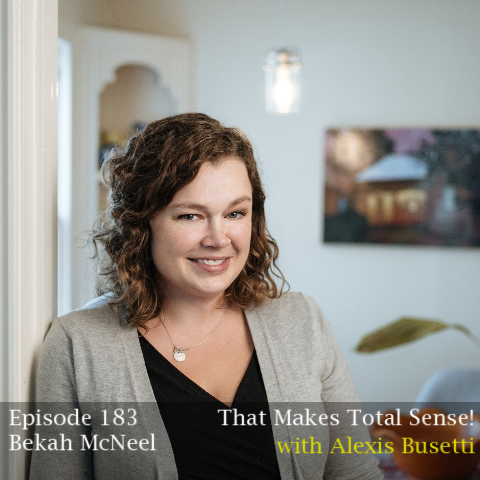
Speaker 2 00:00:41 Oh, I think, I forgot to tell you Becca, I'm in Texas too. Are you in Texas?
Speaker 3 00:00:45 Yeah, I'm in San Antonio.
Speaker 2 00:00:46 Yeah, yeah, yeah. I'm in Houston, so I feel like we're just native. Oh, wow.
Speaker 3 00:00:49 Right. Yeah. Yeah. We're just talking down I 10.
Speaker 2 00:00:51 That's exactly right. I actually went to my first two years of college in San Antonio and at one point, I think you just decided, where did you go? Like, I went to Trinity.
Speaker 3 00:01:01 I live across the street from Trinity.
Speaker 2 00:01:03 Do you, I I, I shouldn't say this being recorded. I, what, what my experience was. I loved this city.
Speaker 3 00:01:10 Sure.
Speaker 2 00:01:11 I was not a great fit for the school. I'll
Speaker 3 00:01:14 Just say that. It is extremely particular. Yes. Like it is a, it is a such a specific Yes. Kind of experience you can have there. Yeah, yeah,
Speaker 2 00:01:22 Yeah. And I was not that girl, but I didn't know that. Mm-hmm. <affirmative>, you know, when, when I went it was, and this was, you know, this has been a couple of years ago. Um, but it was, uh, I kind of had this, you know, I wanted to go away from home a little bit. I'm from Oklahoma, Uhhuh <affirmative>. And what the line I heard was, if you get in, you really should go. Because at the time it was kind of tough, you know? Um, academically there were some, some kind of high requirements and everything. But then that felt like a challenge to me cuz I was kind of like, boat up, you know? I'm like, oh, if I get in, oh, I will Uhhuh <affirmative>. I like, I will totally get in. Right. And then I did, and then I went and then I didn't love it. And so,
Speaker 3 00:01:58 Yeah. So then I
Speaker 2 00:02:00 Transferred. But I loved the city. It was amazing.
Speaker 3 00:02:02 It's a nice city. It's, I mean, San Antonio of, of all the Texas cities, I love Houston a lot. Um, San Antonio is the only, I think, the only major Texas city I'd wanna live in.
Speaker 2 00:02:13 See, and I almost said that about Houston. I wasn't gonna be like, oh, I don't wanna knock it. But Yeah. But we, I mean we each kind of have our particulars, but I love driving Yeah. Through San Antonio and visiting. Of course, I love eating in San Antonio. Like
Speaker 3 00:02:24 Yeah. It's that I will put San Antonio's culinary
Speaker 2 00:02:28 Yes.
Speaker 3 00:02:28 Offerings up against any in the world. Yes. And I've gotten, I worked in the, in travel marketing for a little while as I transitioned out of ministry. And so I got to go to some of the, like, the culinary capitals of the world. And every time I was like, yeah, okay. It's, it's amazing. It's great. Yes. But I don't feel like, oh my gosh, I have to enjoy this cuz I'll never have a great meal again. I'd always be like, no, this reminds me of a place back home. Yeah,
Speaker 2 00:02:55 Yeah, yeah. Yeah. I mean, I will say the last thing, and then we won't have to do a culinary tour of San Antonio, we're really gonna get to the meat of this conversation. But a couple of years ago we were driving back from having gone skiing in New Mexico and so we were coming back home. Mm-hmm. <affirmative>. Mm-hmm. <affirmative> we're, and I, and I'm like basically kind of like, can we time it so that we have to stop in San Antonio for lunch or dinner or whatever it was. Because I'll tell you what I, what I wanted and what I got absolutely hooked on when I was in college in San Antonio that it's been my experience. I can't get anywhere else. I would have one of those moments where I was like, I have to enjoy this now. Cause I'm Yeah. Is puffy tacos.
Speaker 3 00:03:33 Oh yeah. I had to,
Speaker 2 00:03:36 I have to have all the puffy tacos. Like I have to, I have to eat enough puppy tacos tied me over over.
Speaker 3 00:03:43 And that's, that's a cruel situation because they really shouldn't be eaten very many at a time. They
Speaker 2 00:03:50 Mac's not. I
Speaker 3 00:03:50 Know, right. It's not something you wanna eat a lot of because that puff is from being fried. It's so, it's like,
Speaker 2 00:03:56 And you can't take it home though, cuz I'm not gonna experience the same puff at home.
Speaker 3 00:03:59 You can't. Well, and once they're cold, they're not good.
Speaker 2 00:04:02 They're right. They're not right. Yeah, they're
Speaker 3 00:04:04 Not. That is so funny. I was like, puffy. That is so funny.
Speaker 2 00:04:07 Yes. The puffy tacos. I have to have the puffy tacos and now no one else knows what we're talking about and that's fine. No, but puffy tacos in San Antonio was a must. Yeah. Yeah. <laugh> it had to happen.
Speaker 3 00:04:16 Absolutely.
Speaker 2 00:04:17 So now that we're done with that <laugh>
Speaker 3 00:04:20 Yeah.
Speaker 2 00:04:21 Although, although we won't be, I have one other Texas kind of thing up my sleeve, but that'll come later. Yeah, yeah, yeah. Um, oh, my husband came home and he is like, do you know what day it is in Texas today? I'm like, please don't tell
Speaker 3 00:04:29 Me. Don't wanna know. No, you don't. Whatever. We're commemorating locally. You don't want to know
Speaker 2 00:04:34 <laugh>. No <laugh>. But we'll talk about it later. It's all, it's all blended in, as you say in your book. And as you, as you point out in your book, it's all blended in. It's all there together. Yeah. So what we're really here for, for those folks who aren't interested in taking culinary tours, Antonio, which, you know, you, you should go there sometime, is Becca has written a, an amazing, hilarious, meaningful, incredible book that I just finished this morning called Bringing Up Kids When Church Lets You Down a Guide for Parents Questioning Their Faith. But Becca, before we get into the real part of this conversation, I, I'm just gonna put a real small challenge in there and say, I am a parent, we have four kids. Okay. Like 13 to nine. So there's like a lot of kidness in our house in our lives, and they're having for, you know, we have young teenagers now, but I actually, this book was most helpful for me, maybe even not as a parent necessarily mm-hmm. <affirmative>,
Speaker 2 00:05:34 But just as a gal who has experienced church art, who's grown up in kind of this white, evangelical American, whatever it is we're calling it right now. Um, who's still committed to Jesus and the church. Yeah. And, um, and maybe even not maybe my role as a parent, I, I did read it in that way cuz I can't help but read something through that lens. But that probably wasn't the first, the first way in which I read it. I think I just read it kind of like I said, as, as a gal who's had some of these similar experiences and, and, and it was comforting for me to hear from someone say, yeah. Mm-hmm. <affirmative>. Yep. I get you mm-hmm. <affirmative>.
Speaker 3 00:06:12 Yeah. Well, I'm so glad I'm, I'm glad that you're bringing up this kind of tension because it's, it's actually very much what I want people to know about the book is because people, when you think parenting books, a lot of parenting, quote unquote a parenting book, um, it is focused on your relationship to your kids regardless of context. So it's, and, and two, it's credit like a Tina Payne Bryson book, a, um, the, I forgetting their name, the, the Blessings of a Skinned Knee. These amazing parenting books are meant for parents in all sorts of different situations.
Speaker 3 00:07:02 The prompting events for this book were not about necessarily questions about my kids. It was me. It was the what now? I mean, an a, uh, an alternative title could have been like, what Now? Millennials, <laugh>, um, you know, because what was happening is we were starting to have conversations about, okay, we, you know, this generation of, uh, people who are parenting now has made some big moves and has this very different spiritual journey than a lot of our parents. Or even like the Gen X, like the people half a step ahead of us. And the, what I, what it was really more about was the context of like, oh, now we're parents, we have to make a bunch more decisions. And it's forcing us to relate to this thing again that we thought we weren't gonna relate to. And people, I have explained it, the title to people as bringing up kids or parentheses or reparenting yourself when the church lets you down parentheses.
Speaker 3 00:08:23 Because if you live in America, it has <laugh>. Like, because a lot of the things that maybe you feel let down about in the broader culture are tied to the influence of white evangelicalism or, um, really white expressions of religion as a cooperating power source to other, to racism, to colonialism, capitalism, run ramp rampant. You know, I'm not, I gotta stop being so hard on capitalism. People are getting annoyed, but <laugh> like it can go off the rails. And so that's, I think that the, um, the subtext of the book is this is you. Even if you don't know it's you, <laugh>. And that's what I tried to get. I kind of tried to say, and, uh, the pressure, I will say in the publishing industry was make a, make a guidebook, make a step by step, make it a how to. And I was like, I'm, this
Speaker 2 00:09:35 Is so glad you do that. Can I just say that <laugh>?
Speaker 3 00:09:38 Well, I was like, the audience that I'm trying to speak to is we're over going to Well and they're gonna throw it out the window because that's a bullshit tell, you know, not, no, I mean,
Speaker 2 00:09:49 You know, it doesn't work. The guidebook don't work. That's why we're here, Becca. Exactly. Exactly.
Speaker 3 00:09:53 Like I've been carrying like
Speaker 2 00:09:55 The guidebook
Speaker 3 00:09:57 <laugh>, I've been hearing alliterated FivePoint sermons my entire life, and here I am
Speaker 2 00:10:04 <laugh> your, were longer, we only got three points, but they're definitely alliterated.
Speaker 3 00:10:09 Yeah, we were Presbyterians, so we were there. You know, we're buckled in for 45 minutes, my friend. No,
Speaker 2 00:10:14 But they're not yelling at you generally. No, no, no, no yelling. No yelling. <laugh>. It's red. So that's, that's a different dynamic, but yeah. Yeah.
Speaker 3 00:10:22 That's so, so
Speaker 2 00:10:23 Funny. I mean, we're out for the guidebook though.
Speaker 3 00:10:25 No, I
Speaker 2 00:10:26 Think we're out juices. Like, I'm done. I'm done with this
Speaker 3 00:10:29 <laugh>. Yes. And I think that comes from the sniff of like, I don't buy it if you think you've got it figured out. And I, I was talking, actually, this is so interesting. I was talking to a Gen Z friend about their relationship to, uh, the family and monogamy and stuff and building families. And my friend was saying that the millennial generation, more or less, you know, I put a pretty soft definition on that took the approach of like, divorce rates are really high. Um, families, families are kind of failing, for lack of a better word, or collapsing, you know, not healthy, whatever. And our res our answer is to try to do this in a different way. So we're gonna delay marriage, we're gonna get married later, we're gonna have kids later, and we're gonna have fewer of them. They're, you know, all these different ways. And my friend was saying Gen Z is kind of like, what if we scrap monogamy <laugh>? What, what if we just don't do this? And I thought about it and I thought, you know, in some ways
Speaker 3 00:11:51 The trajectory is different. But if you look at the baby boomers, then Gen X, then millennials, it's a similar generational compounding of church because you have Gen X that's like producing things like Mars Hill and Acts 29 and they're going, we can do this, but better. We just need a different kind of leader, a different kind of structure. You know, there's, even though the, the boomer's tinkered with it, some, you really see Gen X doing this. Like, we're not gonna do church like you're used to. And then the millennials kind of coming along being like, we're not gonna do church <laugh>. You know, like a handful of the older millennials try it, try to start their own thing. And then you just see more and more millennials being like, this kind of looks like all the other institutions that we're really disillusioned with <laugh>. You know, like Occupy Wall Street was our thing.
Speaker 3 00:12:51 Like, there's just too much overlap. And so I think there is with many, many things a each generation tinkering with how much further do I need to step away? And I think that's a credit actually to kind of the, the human cohesion and our social, our social connectedness is that we're like, okay, the first generation out of the box doesn't throw everything away, you know? But it, a few generations later they're like, still not working. You guys are still getting hurt. <laugh> like, yeah, this is, um, you know, when you watch a, the Catholic priests having a sex scandal and then you see Mark Driscoll abusing his power, you're kinda like, I don't know that this is a unique to any one individual. I think we have a structural issue. And of course, you know, the baby boomers and even genetics two agree is like structural issue. We don't do structures or systems, like
Speaker 2 00:13:57 Really?
Speaker 3 00:13:58 Oh,
Speaker 2 00:13:58 Okay. You're right. My bad. Yeah, my bad. Yeah. I'm, I'm the, I'm kind of in the, the larger parenthetical I learned over Twitter a couple years ago that I'm a geriatric millennial.
Speaker 3 00:14:08 Um, yeah, me too.
Speaker 2 00:14:09 Mm-hmm. <affirmative>. So yeah. So my, I I wondered we had too many similar experiences. I'm like, I be like this same age <laugh>, but my husband is, who is only a few years older than me, is like technically a Gen Xer. Right. Which I think he's like kind of too proud of sometimes, you know, it's like I'm not Oh, right. You know, and I'm like, okay, let's, like, there's three years between us. Okay. So like, let's just be
Speaker 3 00:14:28 Okay. How old are you? I have to know because
Speaker 2 00:14:30 I'm, this is this, I'm 41 and he's 44. Okay.
Speaker 3 00:14:33 Yeah. Okay. My husband is 42 and I'm 38. And so Yeah. Same. I'm a geriatric millennial and he is like, he was born in 1980. Yeah. And so he's like, I don't fit in anywhere. And I'm like, you say that <laugh>, like you're kind of proud of it. Yeah, yeah. But you want me to think that you're really sad about
Speaker 2 00:14:54 It. Yeah, yeah, yeah. No, and that's how I was, until I learned that I was a geriatric millennial, I was like, oh, okay, well I can't claim that anymore. That
Speaker 3 00:14:59 Explains
Speaker 2 00:14:59 Everything. Yeah. Yeah. Mm-hmm.
Speaker 3 00:15:00 <affirmative>, I'm anyone. Yeah. Um, and it explains a lot though. I will say that the Yeah. The whole, that designation didn't come out of nowhere because Right. I have younger millennial friends and I'm just like, oh, okay. We don't think the same about a lot of things.
Speaker 2 00:15:14 Yeah. This isn't even close. Yeah. This isn't even close. Yeah. And, and I think what caught me, so even with, with all of that part of what it's bringing me to from the book that I'm like, yes, this is, this is the thing. So you named it with different language than what I have given it, and you are much more succinct, which was great. So now I'm gonna steal this <laugh>, but, um, part of what, actually I'll just say like, even part of what prompted me to start the PO to start the podcast a few years ago, and I think it, I think it is in on one of my pages somewhere, but it's this phrasing and it, it, it stayed with me, which is in my faith journey specifically, I kind of started realizing now I'm late to the game, Becca. Okay. I'm late to the game.
Speaker 2 00:15:55 And I'll explain that later. But I started realizing maybe it's not actually all about having the right answers. And I kind of wanted to be like to myself, now hear me out here, Lex <laugh>, maybe it's not all about. And then the air quotes come in, having the right answers, maybe. Mm-hmm. <affirmative> just, maybe we could do this thing in part by just asking some better questions. Mm-hmm. <affirmative> like what if, right? Like, what, let's daydream for a sec. What if we started asking better questions? And then I read your book. I'm like, oh, because I was worshiping certainty.
Speaker 3 00:16:41 Yes.
Speaker 2 00:16:42 Yes. <laugh>, like so many of us did by default. Like so many of us were raised to do. I will tell you, my experience is a little different than what you describe because I wasn't really parented this way. Mm-hmm. <affirmative>, I was definitely kind of cultured this way. But, but I, what I would say even more than that is I was youth grouped this way.
Speaker 3 00:17:04 Yes, yes, yes, yes. Spiritual parented. Yes.
Speaker 2 00:17:06 Oh. Oh my goodness. Like if I could tell you if, if the true love waits cards could talk girlfriend, you know, it's like they're, I mean, it's everything, right? I mean, I'm like, yes. Oh yes. This is all this stuff. And so I think part of, part of my journey when I'm reading this and why I said, it's not even necessarily for me about parenting my kids, although that's definitely worth, we, ugh, been thinking about that mm-hmm. <affirmative>, right? Mm-hmm. <affirmative> is I, the parenting in that, for me, how I was youth grouped, I guess started so much later that my u-turn was a bit later, right? Yes. Like the, where I got off the, of the course was much later, right? So my, my oldest kids when they were born and babies and crying all of the time mm-hmm. <affirmative>, like I was still putting in them in the car at the certain time of day. This is how old they arrive. I was putting them in the car at the certain time of the day so that I could listen to focus on the family, on the radio, the broadcasting.
Speaker 3 00:18:04 Oh wow. Yeah.
Speaker 2 00:18:04 This is pre podcast. This is pre, you know, whatever. And so that was my like happy place, right? Like, I mean, <laugh>, full disclosure, put a dairy queen cuz we are in Texas and I would get myself a dipped cone <laugh>, and I would sit in the parking lot at Dairy Queen, my God. And hopefully my twins would not be screaming anymore because, you know, the beautiful sounds of focus on the family on the radio was coming through. And so I was learning how to parent, you know, with and how to be married and how to all of the things through this wonderful magical broadcast that would come through. And while I was eating my, my dip cone with my hopefully not screaming kids in the back. And, and then it was because it it for me as a personality man, do I like having the right answers. Right. And not just because I like to be Right. Which I totally do mm-hmm. <affirmative>, but it's because the right answers make me feel so safe, <laugh>. And if I can have right answers about God and faith and my life and relationship to that, there's nothing that feels safer to me.
Speaker 3 00:19:15 Yes.
Speaker 2 00:19:16 Until it doesn't
Speaker 3 00:19:17 <laugh>. Right. Well, yeah. Exactly. Until you can't, until the answers aren't squaring with your life and then you're like, oh no, now the answers are working against me. Mm-hmm. <affirmative> and I feel exceptionally unsafe.
Speaker 2 00:19:29 Right.
Speaker 3 00:19:30 Because certainty, that's,
Speaker 3 00:19:33 And this comes up over and over and over again in the book that the opposite of perfectionism, which I would say is like certainty embodied. Mm-hmm. <affirmative>, um, is belonging. It's this. And you can't be secure in your belonging if you feel like you belong because you got the right answer. Or you, you know, that's the thing is that, and where this comes into childhood development is that secure attachment and security in the relationship with your parents is fundamental. It is one of the big determiners of your trajectory, you know, and the damage that can be done and not, not existential damage. It's not that if you grew up this way, you'll never have a healthy relationship. It's not, but the unforced error <laugh>, like the additional pain and suffering of having this condition, even if you're meeting it, but knowing that there's a condition creates an insecurity.
Speaker 3 00:20:53 Because one day you might not, and e like I've talked to so many friends about like, oh no, my parents are never hard on me, but I heard them be really critical toward a bunch of other people. And that set up a boundary that if you become one of those other people, this all, you know, this is under threat. So I heard my mother be extremely hard on working moms and, you know, culture wars, feminism, blah, blah, blah. Um, if you, if you were gonna have, if you wanted to have kids, why aren't you raising them? That kind of thing. Or if you didn't wanna raise kids, why'd you have 'em? That's tell they'd say it. And I am a working mom, and so the deprogramming that had to happen with tying together, every time my poor son throws a tantrum, I'm like, it's because I'm working. Isn't it? Like he's in first grade, he's legally required to be in school all day. Like, what else am I gonna do? <laugh>. And yet I worked, I've worked their whole life and I'm like, it's because I wasn't around enough when you were a kid. My husband's like, you worked at home <laugh>, um,
Speaker 2 00:22:08 Give yourself a break. <laugh>.
Speaker 3 00:22:10 Yeah. Also, if you had worked, you
Speaker 2 00:22:13 Had
Speaker 3 00:22:13 Worked out, there's there's a thousand healthy ways to raise a child. That's right. But those old messages, and that's the big thing is like, even if I've walked away from a lot of it in my dark, in the dark, in the anxious times when things aren't going well and I am looking for an answer as to why I, I run back to that certainty. And I think that's, I talk about this in the book, like at the end of the day, I have to be compassionate toward my parents who were like seventies party children who then found Jesus in the eighties. I mean, it's like my parents are America. Um, you know, and I, but I have to be compassionate because they were freaking out and then they had a baby and <laugh> and that's scary. And anyone who's had a baby can be like, wait, they sent me home from the hospital.
Speaker 2 00:23:06 This baby I've that so many times. I'm like, what are they thinking?
Speaker 3 00:23:08 They didn't have to keep it alive.
Speaker 2 00:23:10 Yeah. They didn't give me any like, pamphlet, even like <laugh>, nothing. What are they thinking?
Speaker 3 00:23:17 Yeah. Like where's the, isn't someone gonna oversee this?
Speaker 2 00:23:20 That's right.
Speaker 3 00:23:21 <laugh>. And, and you're terrified. And at that, I mean, you see it, when I was pregnant, we were visiting with a friend and he was like, man, you are in every marketing person's favorite demographic right now because you will buy anything if you think it's going to keep your baby safe, make your baby healthier, smarter, whatever. And it's true. And I, I don't, I think that there's two things. There's the like natural, instinctive, the parents are grabbing onto anything that they can because they don't, they love the kids. We love them. I don't wanna screw you over <laugh>. You know, I don't want to be like, you know, yeah, you're, you're probably gonna be incarcerated in college because you have no self-control. But that's not my problem. You know, that's not how we, no one relates to their child like that. And, but as I point out in the book, that is a very, if that were just the, if that were the one factor, I think it would be a much easier battle to say like, Hey, we're gonna set everybody free.
Speaker 3 00:24:37 Unfortunately, there is a larger cultural discourse about the responsibility of the parent to maintain American values, American, um, culture. There is a, there is a white supremacist stream through the parenting, uh, literature of the 20th century. And, and that's when parenting starts to get very sciencey and very expert driven. And, um, you see, you know, disagreements between hard and soft parenting and whatnot, very quickly that gets tied up in the, it's you parent, if you don't do a good job, America's gonna like go this terrible liberal way. And so you feeling free and feeling and showing yourself grace gets short, like gets cut off because it's your job to keep America what, you know, keep America great again or whatever. Um, and so there's those two things coming together and we're very good at dealing with like one or the other. And I don't think we can deal with it. Like, you have people who are really strong on the individual. So like, this is a pastoral concern. This is something that we need to just help people, you know, in their personal life. And then there's people who are like, burn it all down system systems. It's both. And I think unless we're really honest about that, we are going to, um, either not, either way we're not fully going to find a more peaceful way to be.
Speaker 2 00:26:23 Right. Yeah. <laugh>, oh my goodness. There's just, there's, there's just like so much there. Um, <laugh> I was thinking about first when we were talking, I was thinking about, um, my therapist recommended a book to me cause about the belonging component, right? Right. And I think that, I mean, this is not unique to me. This is something that we most of us feel to some degree, right? This like fear of not belonging or we have to meet some condition, you know, or something like this. And so she recommended a book. I was, I was trying to think, I think it's called The Power of Discord. Have you, have you heard of this? But I've
Speaker 3 00:27:00 Heard of it. I
Speaker 2 00:27:01 Haven't read it. It's, it's basically like one, the, the, my main takeaway, I haven't finished it, but my main takeaway from the, from the part that I had read was basically was talking and I, and I, I think I reflected it back to her at one point. Cause I was like, is this actually what I thought it said? But it's something like in the, in the relationships with people that you're closest to, like you will disagree something stupid like 60% of the time or something like that, right? Mm-hmm. <affirmative>. And this is not on like, you know, what are we gonna have for dinner or mustard or mayonnaise? This is like, you're really gonna straight up disagree about some pretty even critical things like mm-hmm. <affirmative> the majority of the time, like mm-hmm. <affirmative>, we can't expect to be of kind of, of one mind or however you wanna say it, with even the people that are closest to us, right?
Speaker 2 00:27:44 All of the time, this is not real life, but part of what happens, right? Is this rip and repair of relationship, right? Where we are like, oh, okay, I did something that really disappointed you and then I'm gonna understand why, and then you're gonna forgive me. And then, you know, our relationship is gonna be stronger and you know, blah, blah, blah. Mm-hmm. <affirmative>, we kind of, you know, go through some of this process. But I think that, you know, part of what the culture, this kind of religious culture never really taught me those things. Like, I wasn't really exposed to even that concept of rip and repair. It was just the, the certainty and the perfection that you talk about, right? Like, I have to do these things a certain way to mm-hmm. <affirmative> be accepted to move forward, to really be a faithful Christian, to be a good church member, to be a good woman or mom or wife or whatever it is. Yeah. And I think that it's, but then, and even stopping to kind of say, yeah, but why, or how come, or what does this look like? Or what if, you know, something tragic happens or what if nothing tragic happens, you just don't feel like it that day <laugh>.
Speaker 3 00:28:53 Yeah, exactly. What if I have a tragic, I have a tragically like out of balance brain chemical day
Speaker 2 00:29:01 <laugh>. No. It's like, I'm just, I'm just done with it. But, um, but yeah, the, the, the certainty, um, and you talked about kind of when, you know, our kiddos are little, but one of the things that was kind of the most fascinating for me that you ex explained during the book were how you were trained as a kid and as a teenager to be safe or whatever that looked like. Make sure you didn't lose your faith mm-hmm. <affirmative> as you got older, because these are a couple of the critical points, right? Like, we wanna make sure we do everything to where, you know, we have the right car seats and baby food and sleep training and all of this stuff, and we can't screw up. I mean, I, I used to have these things. My kids were preschool. I'm like, I, what if I feed them peanut butter and jelly when they're really supposed to have chicken nuggets?
Speaker 2 00:29:51 And what if they're not organic? Like, I've screwed my kids over, right? Mm-hmm. <affirmative>, they're, they're nothing in their life is gonna be right, right? I've messed up their brain development and everything is gone then, then those kind of, I don't know, there's a break in that a little bit, but then you get to these middle school, high school years mm-hmm. And then you start the, oh crap again. Like, yeah, what's gonna happen when my kids, and this was it for us growing up, so I want you to share some of those experiences for you. But it is the, what happens when my kid goes to college, they're going to become an atheist, Becca, and you need to do something about it. And whatever you do can, can prevent that from
Speaker 3 00:30:31 Happening. Only you can prevent atheism. <laugh>. Yeah.
Speaker 2 00:30:34 Only you can prevent atheism and drug addiction and unwanted pregnancy and you know, all of the things mm-hmm. <affirmative> that is, that are sure to happen when your 18 year old goes off to college. And we were, we were parented or youth grouped or cultured or whatever in a way to try and ensure that that didn't happen. So, mm-hmm. <affirmative>, um, do you mind, can you share your, um, your ut oh isn't, isn't intended to be an entirely type this conversation, but your gt, um, experience and then, and then what that was a part of, you know, the larger, a part of what that
Speaker 3 00:31:11 Was like training? Yeah,
Speaker 2 00:31:12 Yeah, yeah, yeah.
Speaker 3 00:31:14 So I attended an apologetics camp. It was like training us to defend our faith because there was the, um, that attitude of they're gonna go to college. And I have to say that it wasn't just, the picture that was painted for our parents wasn't just, they're gonna go get information and that information, that truth, those facts are going to challenge their faith. It was, this is a hostile environment where people who hate Jesus are going to try to recruit your kid very different. Because if, if the discourse is,
Speaker 2 00:31:55 I'm laughing because I'm like recruiting them for what, you know, like
Speaker 3 00:31:58 For the atheist team,
Speaker 2 00:32:00 <laugh>, <laugh>,
Speaker 3 00:32:01 Like, I don't know, but the, the picture really, and they do, you'll see
Speaker 2 00:32:06 My friends let their kids become atheists,
Speaker 3 00:32:08 <laugh> ex. It's a very like, like constant vigilance. Um, the the idea that you're gonna walk into a college classroom and you're gonna say, in what context? I don't know. I'm a Christian and your professor's gonna be like, haha, fool. You know, and like see <unk> and like, oh, you'll be decimated and then you'll leave the faith. Like, um, I am not gonna say there's no professor in the history of professor ness that has ever like, ridiculed someone for being a Christian. Obviously, you know, people are in universities. I had a friend in grad school who was like, ah, it's bothers me so much that somebody is smart as you believes in this magic magical stuff. And I was just like, yeah, well, you're kind of an ass sometimes. So, you know, I don't know, do you like being around me <laugh>? Because, um, it was, you know, there's also this thinking that our kid, like the infantilizing of our children to say like, oh, they, they won't know how to think for themselves and they're so susceptible.
Speaker 3 00:33:25 And I'm like, you're like in a screaming match with that kid about their curfew, and you really think they don't have any like, of their own ideas. You know, you're fighting about what they're wearing. You're fighting about who they're dating you every decision they wanna make. They're making an opposition <laugh> to authority in not every decision, but, you know, so if they've really made this faith their own chances are they're gonna fight for it. Are we maybe anxious talking about my own parents and everybody that they don't actually believe this <laugh> that you know, that? And then you're kind of going, well, what's been the point of all that you've been training me to do? And you see how much of it boils down to don't have sex, don't do drugs, like the fear of, of who we would become. Would we be queer? Would we be, you know, sexually active?
Speaker 3 00:34:27 Would we be drug addicts? Like, it, it gets very big and then the belief doesn't matter as much and the, like, the right thinking and the doctrine and or the orthodoxy surfaces later once you're married. But when you're younger, it's a lot about control. It's just trying to control you and keep you safe. And so when I went to this apologetics camp hand in hand with how to defend a seven day creation, which is as painful as it sounds, was like devotions on, on true love weights. Or, um, there, there's a, there was a political social academic overlay that obscured what we were really talking about. Like, is it important that the bible, that the earth was created in seven days because that somehow foundational to my faith? Or is it because you don't want me to have sex and, and I cannot figure out why, because it's all rolled up into one big, um, message.
Speaker 3 00:35:38 So that's, I say all that to say, when I went to this camp, it wasn't just like soccer camp where that's all we did. There was ton. It was, it was your classic Christian camp as well. But on, we did a lot of learning how to debate, how to prep for that day when an atheist and would be in one podium, and we would be in the other podium and we'd be having a formal debate, um, and grew up thinking that could really happen at any given time. And we, on the last day, they take you out to a college campus and you like, go try to evangelize. And the whole point was to make us unafraid. It was to say like, these people on a college campus don't know more than you, don't be intimidated. Don't let them make you think that your, your faith is juvenile or ill-informed or magical thinking or whatever.
Speaker 3 00:36:35 And like the insecurity and the like defensiveness was so palpable. And of course, now that I've been to college <laugh> and worked at a college, I have seen that, you know, an 18 year old college student who was there for summer classes when we went up to try to evangelize him so that we wouldn't be intimidated, like this poor kid, he's just there trying to take philosophy 1 0 1 or, you know, biology 1 0 1 and get the credit out of the way. And if we were peers, he would not be intimidating to me for, for one thing. But it was this very like, do you know where you're going when you die? And then you try to like, um, debate them essentially. And, and I don't, the the purpose of this particular outing was not to win souls for Jesus. Like we'd talk about it like it was, but it was really to inoculate us against fear and intimidation, all this just going toward painting this picture for us of a war that was going on that we were like at risk because we were being targeted by the enemy.
Speaker 3 00:37:57 And I will say that the, the unintended consequence of that was that when we went to college, if you didn't have the disposition to go pick fights with everyone or to like, and, and there were kids at this apologetics camp, you're like, yeah, you're totally that guy who's gonna like, raise your hand in the philosophy class and be like, what about Occam's razor? You know, or whatever. Um, if you're not that guy, if you're just kind of a general, like, I just wanna have friends, I just wanna like get my degree and move on. Or if you're curious and open-minded, it's not the debates that get you. And I tell this story in the book, it's not that that got me like it was going and realizing how non-com combative it was, it was how curious everyone was and how fun it is to learn and be, get to be curious in ways that had kind of been shut down, um, by always needing to have an answer.
Speaker 3 00:39:02 And that certainty, like to certainty is anathema in good education. Um, you definitely, there's tons of education that can become arrogant and overly certain, but in really good education, curiosity and learning and growing is the point. And so when you get a taste of that after growing up in a world of very rigid certainty where questions like there's a lot of what, um, linguists call, thought terminating cliche and whatnot, then you, that breath of fresh air and those open conversations are way more seductive than a debate with an atheist or whatever. And so that's eventually what got me was I was like, oh, I actually appreciate how respectful these people, I mean, they're curious about the fact that I'm here and also at the time like an evangelical Christian, but they're not with one or two exceptions. They're not judgy about it. And like, they wanna listen to me, I wanna listen to them.
Speaker 3 00:40:15 They're encouraging me to listen to people who are in the course I took. They're encouraging me to listen to people who are on the margins of society, which is way more in line with my faith than fearing those people because they have different ideas. So all that to say the, I think I was a better envoy for Jesus <laugh> or like represented representative of what a Christian dis position looks like in grad school, being curious and friendly and whatnot than I was going up to the UT campus when I was 14 years old and trying to like start a debate with the kid taking summer school <laugh>.
Speaker 2 00:41:03 I just, you know, when you're like, I just like, we're, we're not really starting conversations with anyone with mm-hmm. <affirmative> the question like, what are you concerned about? What would happen if you died today? Like that's kind of a mm-hmm. <affirmative> that, that's, that's very much the stereotype for anyone who's kind of done street evangelism kinds of things, but you're like, yeah, I <laugh> when would you ever do that in, in another setting? Like ever, you know, it's like, hi, my name is, yeah, where are you? Um, right. Um, not, it
Speaker 3 00:41:35 Sounds like you're about to kill someone. <laugh>, frankly, it sounds like a threat.
Speaker 2 00:41:40 <laugh>, like, they don't know if you have a weapon behind your back. They're like, I'm just curious. I'm sure. But
Speaker 3 00:41:44 Like the girls in our little, you know, 1990 sunflower shirts and blossom bucket hats were probably not super intimidating, but if we'd have been a group of guys, I'm sure this guy would've been like, uh, what do you mean?
Speaker 2 00:41:57 Yeah. Like trying to find the closest security tower, you know, like the little bit naked push, like, um, I need someone to come and meet me at the corner. Yeah. Yeah. Um, but you know, I mean, I feel like Becca, this conversation is so, I mean, it's just if as you mentioned, like if you've, if you've grown up like in a, in America kind of in general, maybe you didn't go to that camp, but, but you might have been the kid on the campus or you might have been someone who knew the kid on the campus. Right. Or you might have been the one going, I do not know what those guys are doing over there. You know, like especially in our age group, this mm-hmm. <affirmative>. I think that's, I think that's one of the things about the book that was helpful for me. You cover a lot of topics, but it is, this is really, this was, uh, penetrating all of these areas of our culture mm-hmm. <affirmative>
Speaker 2 00:42:50 Of our American society. Um, this is, this is kind of, this is kind of covering this, right? Um, one of the things Oh, oh my goodness. So I said I was gonna, we can go to a couple places with this. So my husband comes home, I don't know, maybe he was listening to npr, this is my guest. He comes home from dropping the kids off this morning. And he was like, so do you know what day it is in Texas today? Oh Lord. And I was like, I know, I don't wanna know. And he's like, it's Confederate heroes day. And I'm like, well, I mean, what do you, what do you say to it's Confederate hero's day? And he goes, and you'll wanna know when it was instituted, not after the Civil War. And I said, well, of course not after the Civil Rights movement, duh Yes.
Speaker 2 00:43:35 Says, yeah, of course, 1973 or, you know, like whatever it was, right? Mm-hmm. <affirmative>. Um, but this is part of it is that when, and, and I think some people who may not have been as closely related may have been lost when you said, we're defending a seventh day creation, which is connected to the fact that they don't want us to have sex. But I'm like, oh yeah, like of course it is. Yeah. And then, and then we lost some people. There, there were like 10 people who were like, I have no idea what a seven day creation has to do with not having sex. But let me, let's just say like, trust us. If you grew up in Evangelical Youth group, of course you know that these are related, but it's also related to the confederacy, the white supremacy. Mm-hmm. <affirmative> is also related to the politics, the moral majority. The all of this is, is very, very connected. Yes. And so, I i, as this, this I don't think is in your, your book and so pop pop quiz. Yeah. Because this is, because this is one of the ways to show it. But you, but you know this answer, I'm pop quizzing you because I know that you know this answer because you're an education reporter, Uhhuh <affirmative>, which is what was the issue that brought the conservative right wing together when it did. And, you know, spoiler, it wasn't abortion.
Speaker 3 00:44:53 It wasn't abortion, it was segregate schools desegregation.
Speaker 2 00:44:56 That's right. That's right. Yeah. So, I mean, so I don't know. I mean, like, so, so I'll tell you a couple of the places that I'm, that I'm thinking while you're mm-hmm. <affirmative> while we're here, and then I'll save you back a ticket wherever you want. Um, one of them is that white supremacy thread that you, that you put in the, in the book about, oh my goodness, there's white Jesus, and there's, there's all of the things. And then there's, um, the Union of Religion and Politics. I told <laugh>, I told the story of your daughter's insult on the camping trip. Oh, <laugh>, uh, multiple times in my house and got a laugh out of everyone, by the way. Yeah. Um, and then, um, yeah, so tho those are kind of the couple of the places where I'm, where I'm thinking kind of surrounding that, because I'm here, it's 2023 as we're recording this, both of us sitting in Texas, and this is a holiday in our state today. Today
Speaker 3 00:45:54 So much. I mean, I was talking the other day to someone about like, man, um, somebody's saying, well, you could never get away with that now. And I'm like, <laugh>, try me. Like, there's a lot you can still get away with. Like, if, if you can still have a confederate heroes remembrance day or whatever, like cancel culture is just not the problem that you think it is. <laugh>, you know, we have a entire state economy that is thriving, yet no one has canceled Texas. Here we are. Um, um, I think that it's all tied together. The, the love of certainty, the perfectionism, the white supremacy, which ties into the religion and like this, all of these concurrent agendas, um, are what happens when religion or faith, a faith system becomes advantageous for maintaining power. And really the states's back to like no sooner had Christianity kind of established, then, you know, it becomes no, not no sooner.
Speaker 3 00:47:32 There were some centuries not to discount the suffering of the Christ early Christians <laugh>. Oh, you eventually we get to the point where it become, we have, you know, Byzantium and the Byzantine Empire, and you have the Holy Roman empire, and then you have the church like religion being this power source, um, for earthly power. <laugh> not like the strength to go on, um, when really in all of its history, like that's when it has been the closest to God is when it is the soul source of strength for a people when it is, um, God's heart is for the oppressed because there's nothing else competing for their hearts. Um, but when you, you know, you had, um, what did you, you were talking about earlier, like the introduction of a reward corrupts, this was a Hidden Brain episode. I'm a hidden brain junkie. Uh, I dunno if you listen to that podcast, but know what I'm, yeah.
Speaker 3 00:48:34 Do do. Love Me Some, some Sean Garum. Um, the, but they were talking about how you introduce rewards. Like I'm doing, I remember this, this is, we were talking about the, the attraction to going to a competitive school, even if it's not necessarily a good fit. But somebody like, you're, you're on the road, you're motivated by your interests and stuff, and then somebody goes, wow, you're so smart. You could X, Y, or Z. And suddenly you're like, oh, that reward has replaced my motivation. So once religion becomes this, like, oh, it can also give me access to political power. I now share a religion with the emperor. I now share a bible study with the senator. I now share a, uh, a language, a secret language with the billionaire. And you start to see this corrupting influence of all different kinds of power on faith.
Speaker 3 00:49:42 And, and very quickly faith just becomes one more kind of currency. You can have political power, you can, and it's influence. And in my chapter, in the chapter in the book that's on religion and politics, I talk a lot about how what we think of as politics is really kind of made up of different relationships to power and the ability to exercise it, the authority to exercise it, and what we like it being exercised on our behalf as prosperity. And you see in the United States especially, there's just a, a huge, we are enamored with the idea of prosperity. We are enamored with the idea of influence. We are enamored with authority. And you see that certain political parties and movements are very big on authority, that like, he's in this position and therefore he's right. And you see that works really well with a certain hierarchical construction of religion, which very quick, like, and I, I firmly believe that the, the competing pull on the human heart is love and power, love pushing, pushing, benefit out versus drawing benefit in. Um, and I don't mean power in the like physics term of the ability to do, but I mean power over others, love for others, power over others. I think those things are always competing in the human heart and the degree to which faith has influence on people and can lead people to give me their power or share power with me, or gives me power over them.
Speaker 3 00:51:34 Faith is going to join up. And, and if this happens long enough, as we saw that it has in the United States, you do have tons and tons of people who've only ever heard one version of the tr of a, this is how it is. And I, so I don't think that every single evangelical out there who's concerned about abortion, let's just say, um, is power, a power hungry, white supremacist, <laugh>, you know, who's like, I think that there are, um, again, it's with the individual and the system. We have people with genuine concerns. If you believe that hell is a real threat to people who don't ha have, have not placed their faith in that Jesus died and rose again. And you believe that eternal conscious torment awaits those people, it is loving <laugh> to go out and hardcore evangelize and to like try to get them on the straight narrow. Like it, that is what love would look like. So I don't think that every single person, if you believe that an unborn baby baby is a sacred human soul, who you know from conception, has a relationship to God and can suffer and you know, has say, then yes, your relationship to abortion is gonna be different. Those are individual convictions.
Speaker 3 00:53:13 They are formed and take place within a system where g what do we learn in in most classes is that like America was colonized for God golden glory. Um, we, I think we tend to think of that as some people were in it for God, some people were in it. No. It's all of those things together. And if you add all those things together, what do you have is power. It's power. It's the ability to influence people's eternal soul so that they're, they can't be unmoved by your ability to control their physical world. If I can control both your eternal destiny and your current situation, you can't escape me. And so this, the desire for wealth and control in this life, and the next is the project of European colonialism. And you see it from, from the get-go. And, and, but if you read like historians like Karen Armstrong, they'll point out religion has always played a role in conquest and, and depression and whatnot.
Speaker 3 00:54:30 That doesn't mean, I mean, so is food <laugh> that doesn't, I guess people will be like, see God's always, like, religion has always been a force for evil. And it's like, well, okay, food, um, what access to resources, like there can be things that are parts of our life that are vital to us. Like the more vital something is, the more it can be exploited. And I think that we have to be really, really aware of the systems that we're building and how much they are built on, and thus encourage us to see religion and faith as a source of power over others or social control or wealth accumulation. And I think that the call is just to resist that.
Speaker 2 00:55:19 Yeah. But that's tough because as you point out, those of us who have been raised in this, we we love authority.
Speaker 3 00:55:27 Yes.
Speaker 2 00:55:28 And it makes us happy. Mm-hmm. <affirmative>. Right. And it's not just having authority over someone, it's someone having authority over us.
Speaker 3 00:55:36 Yes.
Speaker 2 00:55:37 That makes me happy. You know, for me there's different, there's different things. I don't know, I'm not an expert in the engram. I could, I could name what mine is and say what makes me right. It makes me feel safe. Right. If I know, like I have a boss. And, um, and I think that's part of what, and you named this, this is part of what we saw with Donald Trump, right? Mm-hmm. This phenomenon mm-hmm. Right. Of I think you might call him like a pit bull at the door kind of, right? Yeah. So it's like this, you know, like some somebody's there kind of barking at the things that aren't supposed to be there. Mm-hmm. And even if he doesn't actually believe those things aren't supposed to be there or whatever it is, like we feel safe kind of behind this big dog because he's gonna be in authority with power and a loud bark and maybe a loud, you know, a hard bite <laugh> Yeah.
Speaker 2 00:56:22 To, to deter the, to deter the things that aren't supposed to be kind of coming near to us. And I think that, that for me, um, honest to goodness, that for me has been one of the challenges with my own parenting journey in this. And, and you named that and wonderful, it might have been in your chapter on sex, but it was like kind of the, the context was, was bigger than that too. But it's, you know, I, that's where the temptation has been for me, right? Is I'm like, mm-hmm. Well, I'm going to, I'm the one in authority. It's the, because I said so and I'm the mom and this is the way it's designed. Not only that, this is the way God designed it. And I kind of, you know, that's real, that's hurts me to kind of even say that out loud because it's like <laugh>, I have used that power for evil, right?
Speaker 2 00:57:12 Yeah. I mean, I have, I have totally done that as a parent, and I mean, when I say evil, you know what I mean? Right. It's like self-serving selfer. Exactly. Self-serving. Right? It's like I, I'm, I already told you I can't marvel talk you right now, but it's like I'm not, you know, but, but you know, feel like the villain, right? Yeah. You know, but, but it's like I have used that power in the, in the, in the mom way. Mm-hmm. <affirmative> in the parent way to just be like, listen, you have to do what I say because that's the way it works. Right? Like, I'm the mom, you're not now fall in line. Like do the thing that I say and, and that comes from my own love of authority though. Yeah. That comes from my own love of that. Like, there is something in me that wants the pit bull, right?
Speaker 2 00:57:52 Yeah. There is something in me that want, that wants, I don't mean Donald in this case, but there is something in me that wants someone or some system mm-hmm. <affirmative> or some structure or some ideology or whatever it is to kind of protect me from the things that they say are harmful or wrong or whatever it is. Now, of course, the problem with that is those things aren't always harmful or wrong. Right. They might just be different. Yeah. Um, but then I kind of, when I internalize that and then I, and then I have, then I speak to my kids this way or I try and put these things up, then that becomes like super problematic in, in the, you know, in some of the ways that we're talking about. Mm-hmm. Because what I really want, right? Like, what I really want for my kids, and I, and I'm not unique in this, and our parents weren't unique in this, no matter how we were parented, what they really want is for us to have a strong mind and think for ourselves and to love people mm-hmm. <affirmative>
Speaker 2 00:58:48 And to be kind and to pursue an experience, you know, Jesus presence and love and you know, all of these things and to mm-hmm. <affirmative> and to be like hardcore going after our, our neighbors and making sure that we can do whatever we can to make sure they feel all of those same things. Mm-hmm. <affirmative>. Um, but sometimes in the throes of parenting, it doesn't come out that way. And I kind of default right back to that authority, that power, you know, that kind of relationship. And in part, and it's, you know, in part because that's just the water I swim in. Right. Like, that's kind of what's been modeled for me kind of when I, when I say I wasn't necessarily parented in this way, but I was youth grouped in this way or cultured in this way. Um, and it's really hard to, you know, really hard to escape that.
Speaker 2 00:59:36 I mean, we don't, we don't, none of us get really a free pass <laugh> Yeah. On that. I mean, it takes a lot of, it takes a lot of work. And I, I do love. You know, we, I don't remember if this was before or after the recording, so I'll say it out loud. This is not a guidebook, you know? Right. So, <laugh>, right. Bummer for you folks who thought <laugh> that this was a guidebook. This is totally not a guidebook. Becca does not give you Oh yeah, we did. Cause she don't give any alliterate points. You don't have 10 steps. You don't have any of that. That I, you know, none of it. Mm-hmm. <affirmative>, you don't have any of it. Um,
Speaker 3 01:00:07 But I'm gonna make you feel really bad about wanting it. <laugh>. Just kidding.
Speaker 2 01:00:12 But one of the things you do talk about is being able to have these conversations with our kids that are formative. Mm-hmm. <affirmative>, you know, and one of the joys that I've experienced as a parent, and as many times a day as I fail my kids and I fail myself in, in, in all of these, like trying to be a good parent kind of situations, is that by just trying to let go of some of that authority and power that I crave, kind of at the gut level, you know mm-hmm. <affirmative>, um, my kids are forming me
Speaker 3 01:00:43 <laugh>, right? Yes.
Speaker 2 01:00:45 Yes. Because they're, they're smart little critters, you know? And they're, and they're loving and they're kind, and they're asking me questions that I don't have the answers to. And we're looking stuff up together and they know, you know, toss in junk that I don't have any idea about. Cuz I'm a geriatric millennial and I don't do that. You know, and
Speaker 3 01:01:03 It's
Speaker 2 01:01:03 Like, yeah. You know, all of the, the things, um, and I think it's beautiful because we're getting to form each other. Mm-hmm. <affirmative>,
Speaker 3 01:01:11 You know, and Yeah. And that can only happen. Yes. That can only happen with humility, right. <laugh>. Like that's, you know, me having all the answers, <laugh>, and I know, I know, and authority is the o like, the opposite of that is me being humble enough to accept that maybe you have some answers and should have some agency in the situation. But I really wanna speak to that idea that, um, that one, that desire for safety and the reason that we look to someone to follow, or a strong man, um, personality or some kind of authority. Um, when I was being raised, the only virtue really that was expected of me as a small child was to be obedient and being obedient was, and that was all we talked. And in our house there was really one rule. We knew what our parents wanted, but at any given situation, we would obey.
Speaker 3 01:02:25 And like, that was the core rule that underpinned all the other rules. And, and my parents, to their credit, didn't have a ton of standing rules. Everything they were very good at considering the situation, considering, you know, making it. But what they, whatever they decided was final. So that, and, and not in a like, okay, well we're the parents so we have a responsibility to keep you safe. And but more of their, um, their, their word was final in a way that was in a sense, uh, sa sacrosanct, it was ordained by God. It was, this is God's final word on your desire to go see this PG 13 movie and, or, you know, your desire to get your nose pierced or whatever. And that's different than a ugh, as the person in charge of your safety. And not that they didn't ever make decisions this way.
Speaker 3 01:03:34 I don't know, it'd be too hard on my parents. There were some hilarious decisions. There's my favorite story to tell is that, uh, when I was a freshman in high school for our school's homecoming game, all the college, you know, the alumni would come back and there was this kid in college who like, I don't know, looking for easy targets or something. And he wanted me to go to this party with him after the big game. And I said, oh, I don't think my parents are gonna let me do that. And he was like, let me talk to him. And so yeah, so full of himself. So he walks up to my parents and says, I'll have her back by 10:00 AM <laugh>. And my parents just burst out laughing. And they were like, yeah, she's not going <laugh>. And at the time I was like, y'all are the worst.
Speaker 3 01:04:20 And my mom goes, you will sooner than you think, laugh about this. And what kind of mom I would be if I had said yes to this. And I often ha I, that was one of my mom's, like, best parenting moments. And I often use that with my kid. Like, think about mommy's responsibility to keep you safe. If I let you eat that knowing that it's gonna make you sick, would I be doing my job? And so all that to say that having authority as a parent, because that's one of the concerns is that if I let this go, is it just anything goes? And I don't have any say. It's not that, but that is different than I don't owe you an explanation. I don't owe you any kind of framework for understanding this. My pa my word is final and holy. And your resistance to it is a sign of how sinful you are.
Speaker 3 01:05:17 That is a different equation. And it, I think many of us grew up thinking that if I'm just obeying, then even if I make the wrong, like I don't have to worry about exercising judgment. I don't have to worry about wisdom. And I found that it, when I got into my twenties, it is, it was very hard for me to make decisions cuz I'd, I'd only, and so I would just look for somebody to tell me what to do. And you know, I don't know how much stock I put in the Enneagram either, but that's not very, actually very characteristic of my personality. It is something that was really, really formed by not being exercised. Like I had a 10 year old's decision making capacity. And so it was really like the, a huge journey has been learning how to say, uh, I want this, is that a good enough reason for me to buy it?
Speaker 3 01:06:20 Little things. And, and, and there's a lot of pendulum swinging <laugh>. Um, and so the, the catch 22 that so many of these parents experienced, and I would imagine everyone our age has their story is the, um, when you base everything on obedience, a lot of it is fear. And so they try to, we try to attach to God, cuz nothing can be bigger or more powerful than God, but to the degree that your kids buy that, um, you know, some kids bought it more than others. Some kids really did grow up with like God anxiety of like every time they masturbated, thinking they were gonna go up in a puff of smoke, but <laugh> other kids was gonna die. Okay. Oh, yes. <laugh>, oh, um, the, um, but for a lot of us, what we really feared was our parents. You know, I really didn't wanna be grounded.
Speaker 3 01:07:20 I really didn't wanna get a spanking or whatever. And that it's, it's impossible, I think in many ways to tell kind of where your kids are on that because they don't necessarily know where they are. It's all rolled up into one big ball of authority. But I do say a lot of times that you're in the degree to which that is based on a fear of you, the parent, you're not gonna be the scariest, um, person in their life for forever. You're not gonna hold the richest rewards or the biggest threats for their whole life. A a romantic partner, friends, developmentally it is appropriate that at some point it will not be you. Um, <laugh>. And I think that if we are conditioning kids to do what the, what the alpha dog wants and we're like baptizing, like, we're encouraging them to think like that. It makes it so, and that's a nat it's also like a natural thing.
Speaker 3 01:08:31 Um, but we're setting them up to make it even harder to one day resist peer pressure or a, an abusive partner or a cult leader <laugh> or whatever. Like if you want to make people, if you wanna give kids a tool set to one day live according to the values that you've worked so hard to communicate, there's a, like, there's a practical, there's a skillset that goes along with that. It's not just like, oh, the values themselves make you able to live by them. Like there's, like, I, my and when I started therapy, like really intensely, the first thing we did is map out the values, but then you spend the next three years trying to, trying to stop your brain from getting in the way of your values. And a lot of that had to do for me at least with, um, a fear of making the wrong decision. <laugh>.
Speaker 2 01:09:33 Yeah. I mean, it, it is like all, all of those things that you just named are, are super tough on both ends, right? Like they're super tough for whoever is whoever happens to have the authority in that situation and for whoever, um, the one is who is expected, you know, kind of to obey and what, and what that looks like. And trying to figure out what that looks like. And one of the things we have, um, one of our kiddos is adopted and we read a lot and I went to a lot of groups, um, trying to, to kind of help me cuz I'm like, parenting is really tough in general. Adoptive parenting for me has been really tough. And one of the things that this, uh, adoptive parenting expert, um, talks about is, uh, kind of helping train our kids to ask for compromises.
Speaker 2 01:10:22 Like, you know, to, to a, to accept no, which is really hard for all of us, right? Like even just this morning mm-hmm. <affirmative>, I had had experience where I had, I had nod my kids like as they were on the way out the door, and then I received a text message that wasn't even a no mm-hmm. <affirmative>, it was like a, it just felt vaguely like a no. And all of a sudden I'm like, oh my goodness. Like the way that I feel on the inside right now, I've just made all my kids feel that way, like right before they go to school. You know, I'm like having, because I'm like, no one wants to hear no Right. <laugh>, like, right. No one wants to experience that. It feels like a, you know, on on, on the kind of more dramatic and like me, it's like, it can feel like a complete rejection.
Speaker 2 01:11:01 You know, you're like, oh my goodness, this is mm-hmm. <affirmative> awful, the belonging that we talked about, everything's history. Yeah. You know, um, so one to accept no, but then also when there is a no that they don't wanna really accept, like, how can we respectfully ask for a compromise? You know? And Yes. And there are times when I just have to be honest, like there, because there are lots of times when I'm like, here's the deal, I love that you ask for a compromise. The answer is still no. Right. And, and I've done that mm-hmm. <affirmative>. Um, but I try and make sure that there are, sometimes even when I don't love the compromise, I still say yes to it because I want them to experience that feeling of bringing an idea to someone who had like mm-hmm. Stomp down the previous thing. Right. And then they get to experience that, you know?
Speaker 2 01:11:43 Yes. Or whatever it is. Yeah. Like, and then, and then for them, what does that feel like? I don't get everything I want, but I get some of the things I want because, hello? Like, this is life like this. Okay. Yeah. So my parents, so this is, this is partially who my parents were. My parents got married in the seventies as teenagers and Oh boy. They were, yeah. Yeah. So, and they were like, my mom was, had graduated high school, my dad had a semester left of high school, and so this is mid seventies. They're like, you know, rock and roll, like whatever. And so my entire growing up, I wanna say I was in college before I realized that it was the stones and not my dad who wrote, you can't always get what you want. My gosh, I didn't know. Gosh. I did not know. And that was like the biggest compliment to my dad, right? Like, he's the Jagger on the inside, you know? Yes,
Speaker 3 01:12:32 Yes,
Speaker 2 01:12:33 Yes. But this was the one repeated refrain in my house. Right. Which, which by the way, I loved mm-hmm. <affirmative> because it's just the truth.
Speaker 3 01:12:42 <laugh>. Exactly.
Speaker 2 01:12:43 You can't always get what you want. But if you try, sometimes you just might find you get what you need.
Speaker 3 01:12:48 It's, it is wisdom for the ages. And I listen to it often because it is, and I think too, I just want my kids to know that my answers are based in a thoughtful
Speaker 2 01:13:07 Yes.
Speaker 3 01:13:09 Earnest love for them. And I have really thought about them in my answer giving. It's not just because they're, you know, when you're just like, Nope, my answer's no. That's it. I think they're left to wonder like, is it just cuz you don't want to? Is it because you don't? And, and, you know, and they're in their drama. It is always because you don't love me <laugh> like every child somehow has that one in their back pocket. But because that's what it feels like, you're right. No is the language of rejection and sometimes you have to make it. But I think that making it a, um, a pr a no in your service, you have to add a because you have to, when I say when I, but when you give the, because my kids come back with, well, but if I do it this way, I will avoid that concern.
Speaker 3 01:14:07 And I have to be open to like, okay, did they just succeed in convincing me? You know, the, there was an allergy to that when I first had kids because it was like, they're gonna run all over you. They're get, but that's goes back to this very Dobson esque picture of the authority and the child in battle intention rather than in cooperation. And are we really all trying to cooperate to, you know, do good things for each other and be happy and healthy and get to know God better and, but also enjoy, you know, as the Westminster confession says to glorify God and enjoy him forever. Like, are we really trying to work together toward that? Or are we intention oh, between a sin, nature and the God's authority. And I think pushing that away and saying together for the pursuit of good is a really much better way. That doesn't mean it's conflict free. I, I mean, I have conflict with my children literally every day. Like there is some, somebody yells like, it's a successful day if it's not me. <laugh> yelling. Yes, those are, those are the good days. If it's just the kids <laugh> and I'm just clutching the steering wheel. Like, but
Speaker 2 01:15:31 Every day they're stomp with Yes. Every
Speaker 3 01:15:33 Day. Yes. And I have a hard time with that because conflict to me always signaled somebody's in sin and somebody needs to come around to God's way. And I, so I, I am very catastrophic. I get very like, oh my gosh, this is a sign that there's brokenness in your life and you're gonna end up, you know, blah, divorced with an addiction and you know, a criminal record and all these things. You won't be able to have real relationships. All of my catastrophizing, I think comes, is very close related. I don't wanna say it comes from, but it's closely related to my perception of conflict as there being a right and a wrong and a sin at the root and that kind of thing, rather than this is just people learning how, like that you're gonna disagree 60% of the time. Right. And learning how to resolve our conflicts in a healthy way, I think requires us to let our kids have some agency in it. Right. Like, just make them active participants.
Speaker 2 01:16:38 It's real. Probably not like a, because I'm the same way and it's probably not like a s the thus the dipped cones in the, in the focus on the family when my kids were screaming. But, you know mm-hmm. <affirmative>, I mean now I'm like, oh yeah, it's may, it's, it's not catastrophic brokenness that's gonna lead to a life that, you know, that I would never dream of for you. It really is that somebody ate all the Ritz before the other one got downstairs.
Speaker 3 01:17:00 Mm-hmm.
Speaker 2 01:17:01 <affirmative>, that really is it. Yeah. And, and, and that's all right. Yeah. In this moment that's all in, in
Speaker 3 01:17:07 The next moment and that's
Speaker 2 01:17:08 Enough's going to be something else. And that's enough. Right. And in the next moment it's gonna be something else. But, but that, even that though, ugh, okay, I gotta wrap this up because I'm like, I'm like all the places I could go, you know, but I'm like, yeah, but I'm like, even even that though, some of the even parenting books that I read, you know, even just this silly Ritz example, it's like Yeah. But what that actually means, right. And then it's an explanation of how your kids are in sin. Yes. And not just the one who, who, who ate all of the Ritz, but the one who was angry because he didn't get the Ritz. Yeah. They're actually both equally in sin, Becca. And it's our job to go in and make sure I'm like, this is why we need Jesus. Cuz I can't do that job. Yeah. Like I just, the
Speaker 3 01:17:44 Pressure, the the pressure is it's ridiculous.
Speaker 2 01:17:48 It's too great. And you know, and, and I know that you, you have, you have said this and it comes across in your book and I just kind of wanna like explicitly say it right now as a, as a co geriatric millennial. And, and, and, and, and you, and you did allude to this with your parents who came, who came to Jesus and then had kids immediately. Right. But it's like mm-hmm. <affirmative> all of our parents like us are, and were doing the best they could and can with what they have. Yes. All of them, right? Mm-hmm. <affirmative> our parents now, our parents then us now us in 20 years when we have kids who were, you know, in therapy because of all of the stuff that we mm-hmm. <affirmative> mm-hmm. <affirmative> didn't do. Right. You know, um, it's a hard job and we're all, you know, doing the best that we can with what Yeah.
Speaker 2 01:18:33 We've had and you know, part of the reason I'm grateful for your book and your words in this space, like I said, it's, it is great for parents who have kids, but my heart goes out to, and I, I include myself in this. People who, and you said it even at the beginning, people who kind of just need to reparent themselves in some ways mm-hmm. <affirmative>. And it's funny that you use that language cuz I told my, my husband, I said, I'm not a therapist. I feel like I can't use that language, but that's what I wanna say. Mm-hmm. <affirmative> Becca is like, I feel like I was reparented a little by reading this book. Yay. You know, like it helped me Yay. In, you know, in that, in that way. Because for me, I need some of these places to be thought through a bit more, to be healed a bit longer mm-hmm. <affirmative>, you know, to all of this before I can like more holistically address them as a parent, you know mm-hmm. <affirmative> with my kids and not entirely before. I think some of the messiness is that we're addressing those things while I'm <laugh>. Just,
Speaker 3 01:19:34 It never, it never fails that the thing I am most worried about in my children is the thing I'm struggling with the most myself.
Speaker 2 01:19:46 Oh. I say I hate that they're little mirrors. It just drives me nuts.
Speaker 3 01:19:49 <laugh>. It's, I, I I, my poor husband, I will come up and be in tears because my son just immediately goes to the worst possible explanation. I think it's because he's depressed and my husband's like, you lit what just happened? <laugh>
Speaker 2 01:20:15 Or because he's related to you. Right. This would be the response in my aunt or because he's your child, right? Like, yeah. Did
Speaker 3 01:20:21 You not
Speaker 2 01:20:22 Hear yourself 10 minutes ago? Where
Speaker 3 01:20:23 Could he, where could he have gotten that? I don't know. And I mean, but I do think, yes, just letting it's I what I hope people get from it. And the reason I wanted so much humor in the book is because it's like we have got to let g like life should not feel like we are white knuckling up an icy mountain road <laugh> life. It, you know, when Jesus says like, the truth shall shut you free, I came that they may have life and have it abundantly. Like we know all that intellectually, but we are not living it. And a lot of it is because of the pressure we've put on ourselves to uphold systems and to use our parenting to uphold those systems. And so for, I think this book is really for anybody who's just like, been squeezed to death by a system and even after they've thrown off maybe the seven day creationism or the whatever, they still feel the squeeze of the system. It's like, let's get deep, let's get into the roots and let's look at how we've been formed and do some work there. Whether it's re-parenting or healing or whatever it is that you need. Get down deep into the sources. And that's because the parenting is not the source. The parenting is what you do.
Speaker 2 01:21:46 Yeah. Oh man. I think that's, I think that's a great place to wrap it up. How do you feel? <laugh>? Great. Fantastic. Thank you so, so much for joining me. Really thank you for the book. I, I enjoyed my time with you before I had time with you just through
Speaker 3 01:22:02 Oh
Speaker 2 01:22:02 Thank you. Through the pages of this book. It was, it was really fun. And as I mentioned, so I'm gonna say this, you know, just out loud again for the folks who are listening, a couple of people came to mind pretty instantly in a few of these, you know, like when I was going through the chapters, I'm like, oh, I'm gonna send a text to her and her. But, um, in one case it was somebody who does not have kids is, is not married. We've just had some of these conversations of these shared experiences, you know, and, and another is someone who didn't grow up in a believing home, you know, and so this, this wasn't her baggage, you know mm-hmm. <affirmative>, but still just culturally we're swimming in it. And so, um, so I just wanna kind of throw out there for folks who are going, ah, I don't know if I need another parenting book or, you know, this or that. I'm like, listen, you do not have to be a parent to benefit from what, um, Becca has put in this book. And, and bottom line it is just kind of really funny. So, um, anyway, thanks. So, so go grab it. Um, it's bringing up kids when church lets you down a guide for parents questioning their faith. And I'll put a link to where folks can grab it in, um, the show notes. So thanks so much for being here.
Speaker 3 01:23:05 Thank you so much. This was so much fun.
Speaker 1 01:23:09 The links for all the resources mentioned in today's episode can be found in the show notes, music and podcast production by Seth Bueti. Be sure to give us a review on iTunes and subscribe at your favorite podcast listening app. You can also visit us at, that makes total sense.com.