Episode Transcript
Speaker 1 00:00:06 Welcome to That Makes Total Sense, a podcast dedicated to exploring God's generosity and justice. I'm Alexis bti, a Christian aiming to ask good questions and encouraging you to do the same. Every one of us is wired by God to live out generosity and justice. But the how sometimes eludes us that makes total sense is a way for us to get together, posture ourselves as learners, and challenge one another, to practice generosity and justice in a tangible way every day.
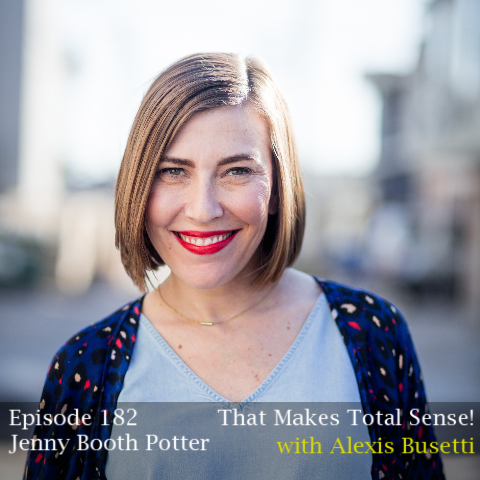
Speaker 2 00:00:44 Well, I just, I just kind of love how many times this happens that I feel like we should have pressed record, really, you know, 20 minutes ago, <laugh> when we started. But, um, I'm here still with Jenny Booth Potter. She has written an incredible book called, doing Nothing Is No Longer An Option One Woman's Journey Into Everyday Anti-Racism. Jenny, thank you. Thank you, thank you for being on with me today.
Speaker 3 00:01:14 Oh, I'm so excited. And I agree. Like there were certain things that we just talked about that I was like, wait, say it again. But I know that we're gonna have a great conversation. So thanks so much for sharing your space and your, your community, your people with me.
Speaker 2 00:01:28 Yeah, thank, thank you. I really am, I'm, I'm incredibly grateful. And yeah, I mean, we'll, we'll, we'll do the redo, right? We'll, like, we'll talk about these things again and they'll be a little bit more, no one
Speaker 3 00:01:39 Should have FOMO
Speaker 2 00:01:40 <laugh>. That's right. That's right. We'll, we'll, we'll flesh these things out a little bit more. Um, I will say, gosh, Jenny, I don't even know where to start with this e except maybe to say that you are a storyteller by trade, and this comes out in your book. And so I think maybe I, I kind of would say that maybe just about the book itself, and even for this conversation, I read the title of this book, they've, it's got anti-racism in the name, and they're like, ah, I don't know. Like, they feel like maybe they wanna pulse the breaks, or they're not really sure. Um, I would say this is not a deterrent, this is an invitation and your journey so far, right? And the way that you have, um, told this with your own story mixed in with all of this, um, it really just shows us a, how anyone can do this work. I, I hope that you agree with that statement. That's how I felt when I were reading, was reading your book. And, um, and b I would say that it is a, a work worth inviting anybody into mm-hmm. <affirmative>. So if anti-racism scares anyone, don't let it scare you. This is a beautiful, beautiful story of your journey so far.
Speaker 3 00:03:01 Thank you. Yeah. It's, uh, you know, I knew from the get-go, like as soon as I got the idea for the book, the title, that was like a no-brainer. This has been my anthem, my mantra, my vow, since I really kind of had my, like, conversion experience with how I see the world. I, I declared these words that doing nothing was no longer an option for me. And it was interesting when it comes to the subtitle, you know, then you start getting publisher's marketing team and, you know, just, you have a lot more buy-in because that's, that could, maybe, that could, that that title could apply to anything. And so, um, you know, anti-racism is such a loaded word, and it, it, and it loaded on purpose, like it carries a lot of weight. And I hope what my reader, um, experiences, what I've experienced, that I'm a lot less anti things than I am pro things.
Speaker 3 00:04:03 And so I think sometimes that we're like, oh, it just, it, it sounds abrasive. It sounds like, um, crabby <laugh>, you know, to be anti stuff. It's like, ugh. Just like, don't be a hater. You know? And I hope that, that, you know, what I have learned in my journey is, it's not just that I'm a, like, I'm obviously as the name and place against racism and working against that, but it's because I have witnessed a vision for humanity operating in a way free of that ism. And that's what I really, I think, is more exciting to be welcomed into. Um, but I, I, I think, I think it is important, um, to, to, to draw definitive lines. And I think that scares people to be like, well, can I just kind of be this, you know, can I be like moderate? Can I be flexible?
Speaker 3 00:05:02 And so I think it is scary and bold to proclaim. Like, actually, you know, I talk about this in my book a little bit. Like, I don't believe in moderation. I believe, and this isn't just, you know, my words. This is a lot of scholars, including Beverly Tatum, who writes about racism being like a moving walkway, that just because you're standing passively on this walkway, the walkway is still moving in a direction. And so in our society, the walkway is racism, right? And so, in order to actually be anti-racist, it's not just about stopping your movement, it's about turning and running in the other direction. And so that is what I, uh, that is what I believe in. That's what anchors me. Not being anti something, but running in a different direction towards something better. And so, so I mean, we are in the year 2023, which just feels like the future.
Speaker 3 00:06:01 I don't know what I'm saying, <laugh>. Um, but you know, I think for a lot of people, they feel kind of worn out from racism conversations, from anti-racism conversations. There is a temptation to like, oh, I feel like I drank from a, from a fire hose, a lot of people that have been in these conversations. And so I from experience know that statistics and data can really be overwhelming to people. And so when that starts happening, people get fatigued by whatever topic you're talking about. And so it became really clear to me, I wrote most of this book post the summer of 2020 post George Floyd being killed post, um, about Arbery and Breonna Taylor being murdered. And I knew that people that were like interested in this conversation might feel a little worn out. And I think sometimes when you're worn out, it helps to just isolate on one story, right?
Speaker 3 00:07:04 And to not let the overwhelm out. Cause that's not what I'm interested. I'm not an interested, interested in knocking people out with information. Like, you're no good to us. You're no good to the work if you're overwhelmed and feel like you don't even know where to start. And so I think by starting with one person's story, it's so much easier to connect and to, and to say, ah, me too. I felt that way too. I wanted, I wanted people to not be caught up in buzzwords, but to be caught up in swept in story and relatability and, and drawing connection points between my story and theirs. Because I do think my experience is not just, I think it is, it is slightly universal for American Christian women. Um, so yeah. I just, I believe in the power of story. And don't be scared by my subtitle, <laugh>.
Speaker 2 00:08:07 Yeah. So you said something really important at the beginning of that, so thank you. And I don't wanna miss it because I would say it's not like I'm some expert or something, but I've like, had a few conversations and read a few books in this subject matter. My first master's degree that I got a hundred years ago was in Social Justice. And I'm trying to tell you, I have never heard the Moving Walkway example until I read your book. So I wanna camp there for just a second, because I will tell you as, as the kind of student that I am, generally, my first instinct was to do exactly what you're pushing against, which is, yeah. But most people don't know that that racism is the moving sidewalk. Or people, you know, get they, they have backwash against set. But tell us all the stats.
Speaker 2 00:08:51 Jenny, tell us, tell us why, you know, systemically this is the way it is, and da, da, da, da. But I'm like, okay, pause, Alexis. This is, you know, this is sometimes how I learn best. But what was more meaningful, I think is, is for you to share some of these moments early on in your adulthood in college, when you became to realize that that analogy was actually correct mm-hmm. <affirmative>, because the way that you share your story, um, your kind of upbringing before college didn't really evidence that for you, um, if I'm reading it correctly. And so, um, I wanna share just a small story first, and that hopefully will lead into, um, to, and you'll know where I'm going as soon as I as soon as I share this. So I grew up in a home that my mom is Mexican American, my dad is white.
Speaker 2 00:09:49 And I was, I realize now what a blessing and what a privilege it was to grow up in a home where, uh, now we would say my, my, my parents' social network was very multicultural. Back then, it was just my parents' friends, right? Like, we, we wouldn't <laugh> we didn't know. We didn't know that. Right? Um, and so I, I wasn't really aware that there were folks who grew up kind of in a, in a, in a monolith when it came to race or ethnicity. Like, I wasn't aware, oh, there are, are black folks who like, have only African-American friends or white folks who have only white friends. Like, I just didn't know that was a thing. Um, I learned it <laugh> when I got to college, but I didn't know that before. So anyways, so I was in, you know, fourth grade or so, and an African American gal from my class was having a sleepover birthday party, and she lived, I grew up in a small town in Oklahoma that literally is still divided east and west.
Speaker 2 00:10:48 Mm-hmm. So there's the east side of town, which is the black side of town, and the west side of town, which is the everybody else side of town and the east side of town has black churches, black funeral homes, black, you know, everything. And so my friend lived on the east side of town. She was having a little birthday summer party, and I asked my mom if I go, sure thing. So before we go, like, you know, that afternoon or the day before, my friend's mom called my mom. Hmm. And she was like, you know, is Alexis still planning on coming to the party? And my mom's kind of thought this was an odd, you know, phone call, but she's like, yeah, yeah, for sure. You know, what time does it start? Four o'clock, you know, whatever. And the, the mom said, well, I just wanted to kind of call and give you an out, because none of the other white girls Yeah.
Speaker 2 00:11:39 That so-and-so invited are going to come because she lived on the east side. And then, and then that was kind of exasperated. Cause not only did she live on the east side, but she lived in public housing that was reserved for African Americans and indigenous Americans. Mm-hmm. And so there was another layer even on top of that, right. And <laugh>, we talked about those kinds of things in my family. And so my mom told me, you know, Hey, and, and it was kind of like, oh, so-and-so, you know, that the preacher's daughter, she's not gonna go. And so-and-so that the teachers are, she's not gonna go. And, you know, whoever else was invited. And, and my mom kind of told me, basically, I know you want to go. And at this point, like, we are for sure making this happen <laugh>, right? Like, there's not gonna be anything that will stop us from going.
Speaker 2 00:12:30 And, um, and of course I had a great time, but I just remember my mom kind of expressing the hurt that my friend's mom, you know, had expressed to her over the phone. And then Mia receiving this kind of, uh, weird welcome when I got there that seemed disproportionate to a guest coming to a birthday party. Right? But it was, you know, and, and for me it was, and my mom, it was kind of like, of course, why would we not go? Um, but for them, it represented something that I wish it didn't. Um, and that's one of those memories, one of those race related memories that's really formed me as I've, you know, trying to go through my own anti anti-racism journey, um, that this was in, this was in the late eighties, Jenny. Yeah. I think we're the same age. And so it's like this, this was not in, in, you know, pre brown versus board or, you know, whatever.
Speaker 2 00:13:24 I mean, this is, this is in the now <laugh>. Right? Um, and I don't want kids to ever have to feel that way, that their friends aren't going to come to their party because their parents are afraid of taking them to the quote other side of town. Um, I wanted to lead in with that because you had a friend who had a sleepover experience too. And I felt like that was so powerful to me. I'm hoping you'll share maybe that story or how it impacted you and kind of how you started to realize this moving sidewalk really does move in the direction of racism. Yeah. Which, you know, hadn't necessarily been your awareness before. Um, you had some of these experiences later in college, if that's fair.
Speaker 4 00:14:13 Yeah. Uh, I just wanna cry. I, cause I just Yeah. I mean, that's, yeah. Mm-hmm. <affirmative>, um, to your point, like your, your, it was, it was, your response wasn't just an acceptance to, it wasn't to a, to an event. Right. It was a, we, like, you matter and we want to, one of the things that I've heard about protests is putting your bodies where your beliefs are. And I feel like you weren't protesting something, but there's something about saying proximity. Like, I will, I will, I will come to you. Like, I'm not just inviting. I mean, I think a lot of times, and I promise I'll answer your I'll, I'll get there, <laugh>. No, you're great. But, but I think I was, I was just thinking about this this morning. I was thinking, I'm trying to work on language around integration with my kids. And so much of the, you know, post, um, yeah.
Speaker 4 00:15:21 Brown V board, all these other things was like, okay, black kids, now we're gonna bus you to the quote unquote good schools. And you go there now, and I, we don't really care how long it takes, but like, we're not actually putting money or resources, um, or respect into the schools that you've been attending before this new law. And there's something I think that, uh, that transcends that, that, that in white spaces, we often think, oh, we just need to be more invitational. If we just invite the black people, the other people of color to our spaces, that's being, that's building, you know, the longer table that's building the mosaic. That's, that's really, that's racial reconciliation, right? And so much of that is on our terms. It's on the spaces that we feel comfortable, it's on the spaces that we're familiar with. And extending an invitation is very important.
Speaker 4 00:16:24 I don't wanna minimize that, but accepting one, right? Accepting that you're gonna navigate a neighborhood that maybe you're not as familiar with, navigate discomfort or perceived risk or any of those things. That is beautiful. And so I just, um, and just, uh, yeah. And I, I see I, as you were talking, I was like, oh my gosh, I totally see why this is a moment that has, that has really stood the test of time for you. Because I'm guessing the other girls that were invited that didn't go, they never had a conversation with their mom the way that you did. Right. Um, and I tell a story early on in my book about this trip that I got to go on. And the whole point of it was really looking at the lens of American history, um, really through a white black lens, you know, and, and in some ways, like really a black lens of how are we centering the black experience in America?
Speaker 4 00:17:37 And it wasn't just a bunch of white kids that got on a bus and went to like, different civil rights sites. We were all partnered up. So it was always a black student with a non-black student. So my partner, um, was a girl named Katrina. And she and I grew up probably 45 minutes away from each other in the suburbs of Chicago. And they encouraged us before we went on this trip to get to know each other, like, to get to know your partner before you go on. And so we had at least one coffee date where she told me a story of if being invited, right? Being invited to a classmate's sleepover. And I think she was in first grade, and it was her first sleepover, and she was so excited. And she shows up. She grew up in a predominantly white suburb. And so she shows up to the sleepover and they're having f you know, she's having so much fun.
Speaker 4 00:18:37 And when it, when it comes time to actually go to sleep, one of the girls starts saying things like, I don't wanna sleep next to you, because black people have bugs in their hair and just starts. And all the other girls hear this, and they're all like, ew, you know, shrieking and moving their sleeping bags away from Katrina's. And, um, Katrina's crying and kind of looking for help. And the girl's, white mom is in the room and witnessing all that happening and doesn't intercede in or interject in any way. And what she does do is allows Katrina to call her mom and ask her mom to pick her up. And you know, part, I remember this story so clearly, but even in doing, like the research for my book, Katrina was gracious enough to kind of like rehash that story with me. And she, in the, like, retelling of it, she was like, Jenny, my, it was like my mom was waiting for the call.
Speaker 4 00:19:40 Like, she wasn't surprised. She wasn't surprised. She was expecting, expecting, um, first grade girls to have picked up the racism of their parents and perpetuate it in this way. And that, I know for Katrina was the part that even more so than, you know, lies about her cleanliness or, or anything like that, it was the fact that her mom was not surprised because her mom had seen this before. And this was just history repeating itself. And what does that do to you as a kid who, like, how do you trust white spaces? Do you? And, um, yeah, just, yeah. It's just, it's, it's so incredibly painful and it's so incredibly preventable. And I think that's the, that's the, the grief of, you know, one of my favorite thinkers, activist artists of all time is Andre Henry. And he has this line that I cannot repeat enough.
Speaker 4 00:21:05 And I know you've had him on your podcast, but you know, it doesn't have to be this way, right? It doesn't have to be this way that a little black girl goes to a sleepover and her mom has repeated trauma and she has been inr, you know, Katrina's been introduced to trauma. It doesn't have to be this way that, uh, that your friend's mom had to basically preemptively try to make sure that that wouldn't happen. You know, that you don't come, that, that a bunch of white kids don't come to her daughter's home and start insulting them, or, or not showing up. Like just, it doesn't have to be this way. And, uh, that's such a microcosm, I mean, all these things we're talking about, right? That these, the neighborhoods, the school systems, all these things that keep us segregated, even when there are no law, no longer formal laws around those things, um, it's so layered.
Speaker 4 00:21:59 But I think distilling it to a, to a quote unquote simple sleepover story and just the, the pain of something that is supposed to be for so many kids, it's this like passage of independence and exciting and so many other kids. It is a traumatic experience that probably, um, you know, I actually had a reader, I just remember I had a reader reach out to me and say, I was outta sleepover where something like this happened and I had forgotten about it. Cuz I'm a white kid. I'm a white girl. I had forgotten about this. But I'm guessing the black girl that was at the sleepover that was ridiculed or ostracized has never forgotten this moment. You know? And I, I, I think that's the, you know, just the very definition of privilege, right? Walking in the world, experiencing things and just letting, like what is happening, the pain and trauma that is happening to someone else, you are, you are, even if you're not perpetuating it, you're completely oblivious and you just, you just get to keep your nice sleepover memory or no memory at all because it was nothing of incident in your life.
Speaker 4 00:23:13 Right? It was a blip and you've moved on and who hasn't been able to move on, right? And so, yeah.
Speaker 2 00:23:26 Yeah. I think it's kind of as you're, as you're talking and I'm like, here's the deal. Like, this is not an urban legend. There isn't one sleepover, right. <laugh>, this is a, it's not, it's not one sleepover. Like this is though just an example of going, I hate that this has happened. No doubt in every city, right? In every state in almost every age and stage, right? That something like this keeps happening to black little girls, preteens, teenagers mm-hmm. <affirmative>, right? Not, not even to talk about, you know, what, what's happening in our adult lives and, and to black and brown people in general, right? Like, this is not the space, but as a mixed woman, I have this kind of, uh, a bizarre kind of experience where in my body sometimes I very clearly carry the privilege of, of being a, a white woman. And then other times I'm the one being asked these dehumanizing questions or having these experiences as well. Right? And so I just kinda wanna put out there that it is the black experience in America, and it is the bipo experience in America as well, that these things, um, are happening. And there's not <laugh>, there's, there's not just one sleepover. This is, this is all the sleepovers friend, and this is hard.
Speaker 4 00:24:48 And can I just add, it's also the white experience. Yeah. Right? Like, and I think, and I think that's, I, yeah. Yeah. I think that's so important. I, I think there was, I, I get apprehensive when I say my story is universal, right? But I do think so often where like, oh, well that happened to Katrina. Well, who is it perpetuated by? Right? And so I think that is so important to name that it isn't just like, well, kids will be kids. No white kids perpetuating harmful, hurtful, repeated who taught that girl to say those things. That's right. Who, who told all of, you know, like, so it is also the white experience as well, but it is on, it's obviously, it's a different word, the different player in the game, but it is pervasive in white spaces as well. And I just, I think that's important that white people aren't just invisible in this conversation, right? But that we are, we are held visible, we are held to further examination. And, um, because otherwise we get to just let it pass, you know? Oh, we just get to be bystanders right? Right. In this, and we're not,
Speaker 2 00:26:06 Right. No, I'm, I'm so, I'm so glad you said that, Ginny, because it's Daniel Hill. Um, white Lies is the book that I'm thinking of where he specifically talks about white supremacy. We're just gonna throw out all the vocab words, you're gonna scare people. Today we're gonna talk about anti-racism, we're gonna talk about white supremacy, we're gonna talk about 'em all because they're all real things. Um, but I love, I, I, I think I hadn't, it hadn't registered very clearly in, in, in, in as clear of a way as it did until I read Daniel's book. Um, but, but you know, he talks about how white supremacy, because it's a lie about humanity mm-hmm. <affirmative>, how it hurts everyone, right? So when white supremacy says, I am better than you because I am white, this is obviously, this is harmful to people who are not white. And we can, and we just as we just did, can have that whole conversation all day about why this is harmful.
Speaker 2 00:27:00 But as a white person, it is also saying something to you that is not true about your own humanity. You are in fact not superior to someone else just because a label of of whiteness has been placed on you. And believing something that's not true about our own humanity Hmm. About the imago dayness of us is just as harmful to ourselves, right. As, as any other, as another lie. Right. Because it is a lie <laugh>. Right? Right. And so, and so when we, when we start to try and sell lies about our, um, our, our likeness being made in the image of God, then we're, we're distorting this truth, which is never going to be helpful or healthy. Right? It's, it's always going to be harmful. And so, um, I do appreciate that you bring that out because it's not like robots were saying this, or it's not like this was something, you know, something that just like a, a voice out of nowhere, right?
Speaker 2 00:28:03 Like, this was per, these things are being perpetuated. And as Andre says it, it doesn't, it doesn't have to be this way, but I think this does help, help me kind of that moving sidewalk picture again, right? You know, we can, we can watch 13th and I would, I would recommend people do, right? There's a lot of good statistics and laws and, you know, all the things, and there's facts, right? And, and I, and I want people to, to know the work of E J I and, you know, all these kinds of things. But these types of stories help us personalize what that looks like to be on that moving sidewalk that is racism. Right?
Speaker 4 00:28:40 Totally. I mean, I think, I think it is so helpful to think of any ism, right? Uh, just so much, so much of our lives are spectrum, right? It's, and, and so often we think, okay, well, we should start with the most extreme version of the spectrum. So we start with police brutality, we start with a school to prison pipeline. We start with slavery, or, you know, voting discrimination. We start with these vi like very like, big worthy things to be working against, right? Or, or, or flipping, like switching, changing eradicating. And I think it is so often that we start there on this journey, we're like, got it, I'm on the moving sidewalk. I'm running, and you know where I'm running. I am running to the most capital R racist bring up, you know, let me Adam, Adam 'em. And what that means is we're actually running past all these other things in our lives that we actually have a lot more proximity and influence over than maybe national statistics and data on policing and, and prison population and, you know, ratio of what a white person is sentenced to for marijuana versus a black or brown person, right?
Speaker 4 00:30:08 Like, again, don't hear me say those things are not worth pursuing, but I think if you're only pursuing those, like, I don't have a gun, I'm never gonna accidentally shoot someone, you know, or like, I'm never gonna call. I, I don't, I'm never gonna call the cops on what, like these extreme examples. Well, what is probably more likely is that I'm not going to train my kids how to engage in circumstances when they're classmates are all teasing the, the two black kids in their class, right? Like, I'm not going to, I, I'm seeing the rise of all these, you know, callouts for banning books and all the, like, that feels like smo, like all these things where it's like, I actually could inter inter interrupt that from continuing, right? And so I think it's so important that we start where we are and we build from there. Because otherwise it is like, it does feel overwhelming and it does feel way out there. And it does feel like, how am I possibly gonna change data and stats? It's like, well, what if you changed one story? What if you changed one interaction? What if my kids or your kids, when Katrina or your friend when they were all saying, Ew, you have bugs in their hair. What if they said, no, they don't shut up.
Speaker 4 00:31:44 Right? Like, like, no, I, that's, that's not okay for me that you said that. Like, these moments, we, we, we focus on the big, and I think we need to get better at focusing on the small, because that's where we actually have a lot more complicity, <laugh> than we do in the big
Speaker 2 00:32:07 Well,
Speaker 4 00:32:08 It's
Speaker 2 00:32:08 The struggle and control too, right?
Speaker 4 00:32:11 It's
Speaker 2 00:32:11 Not that we can't do anything, we're helpless when it comes to the big things. For sure we can, but every single day, <laugh> shut up. No, they don't. Right? Right. That we can live there and, and really it takes more courage. I think my experience tells me it takes more courage to live in the shut up. No, they don't space then it does to check a box at the ballot box every two years for every time there's a special election. Or even if there's not, cause I was busy that day, I'm just being real. I mean, it, it takes more courage for me to be in the shut up. No, they don't space.
Speaker 4 00:32:47 Yeah. And I think that's why I want people, I want white people to understand that if you don't have a vision for this work, it will stay just big and outside your everyday life. Right? So I, I want you to have a, I have a vision for this work. Like when you, and, and that's what I'm trying to create with my family, right? That's what we're working on together of not just here's the once in a while ways that we engage or like disrupt racism. But if we're really on this moving sidewalk, like which way are we running every day? Or which, you know, like, or ooh, actually right here, I'm standing still. So what is that telling me? Like I'm still complicit. What do I need to do to like, move in the other direction? Right? Um, because yeah, I just, I think we need to talk more about the practice of anti-racism, right?
Speaker 4 00:33:53 And you don't practice something once a year, <laugh>. You don't practice it twice. If you do, it's, you're gonna be rest. It's gonna be really frustrating every time. And you're probably gonna give up cause you're like, this sucks. I'm bad at this. Ah-huh. <affirmative> <laugh> because you haven't been practicing, right? And so, uh, but it is, it is risky. You are risking your, your, your belonging and acceptance in white, white culture. And I have a mentor that I love, and she is given me so much wisdom. And she went through, um, not just like a job wa it was like a very, like, dramatic like firing where it was like very public and she had to leave her job and her church and all these things. And we were on the phone, and she just said to me, Jenny, I lost the right things. Right? I lo I lost things, but I lost the right things.
Speaker 4 00:34:52 I didn't lose my faith. I didn't lose my marriage. I didn't lose community. Like that really stood by me in this time. And, and that's what I, I want white people, especially in this work to understand, oh, you will lose, you will lose things. Right? You might be seen as like the Debbie Downer in your school board meeting or at your church, small group or whatever. Um, but things I have not lost, I have not lost my integrity. I have not lost the respect of people in this work that have seen me show up in spaces where I could have just stayed quiet. And that means so much more to me. And that ke that fuels me, and that makes me wanna proclaim it longer and louder and harder. Um, I haven't lost a vision for the world that I wanna live in. Right? And so I just, I think it's just a, a reframing a shift of, yet I'm gonna lose things.
Speaker 4 00:35:56 I I'm going to, I am, I am. I just am. If you're taking a stand for something, it is going to cost you, but have it cost you the right things. Have it cost you, you know, prestige or what people think of you that aren't trying to create the same world that you are, right. That are okay with maintaining sleepover stories and status quos that unless we dramatically do something are gonna keep happening. And so I just, I think there's so much fear for white people in this work of like, oh, I'm so afraid of what's gonna, you know, like, I'm gonna do it wrong and I'm gonna get like canceled. Or I'm gonna, I fear, like, I fear what happens if I don't do this work you so much more than what I am afraid of. Like if I do it and do it wrong, cuz like, that's just like a given. So it just, I think getting those things out of the way you're gonna, it's gonna cost you, you're gonna make mistakes. Okay, now let's move on to the actual work because you're, you're, you're weighing things at disproportionate like rate, right? And I think we need to be more afraid of what happens to our world and to our souls if we don't engage than what happens if we do.
Speaker 2 00:37:18 Right? Yeah. No, well said. Um, this vision for the work, there was a, a, a, a story in your book because I just wanna say like, um, you've been, you've been doing this work, like fully engaged, doing it, teaching it, um, for decades now. And so you have a lot of experience and a lot of wisdom. That was <laugh> that was hard-earned. Um, but you, you tell this story in your book about, um, colored marbles, right? Mm-hmm. And I, I want you to walk us through this a bit, but if I could ask you to walk it through usm, walk it, walk us through it, maybe in this way Hmm. Um, with a, with an eye for the vision for the work, meaning everybody wants, and, and people hear, when you hear tell a story, everybody wants to have a bowl of pretty marvels, right? We don't want it all to look the same.
Speaker 2 00:38:16 Right. But what I think, especially we've experienced in a, in an acute way since 2020, and I'm hearing this from, um, a lot of my friends of color, especially in ministry, you know, who kind of are like, yeah. Um, it's great because, and, and you know, as long as I was the way I was supposed to be, I got to be the one black face on the staff page, right? Until they realized that, you know, that meant something, right? Um, other than being, you know, them getting to have a black face on the staff page, or, oh, I can, I can have this. And so, so part of it is you, you, you help us make a distinction because between what it looks like to kind of like, I don't know, halfway welcome diversity into our lives, um, because we want the pretty marble bowl and what does that look like versus, um, and not that it's always a binary.
Speaker 2 00:39:10 I think there's, you know, a spectrum there, but kind of, uh, for the purposes, for our purposes kind of versus actually what does it look like to have a vision for the work? Like when, when this story was going, it's like, but why, why do we want to have answered differently, right? Why does this matter? Um, what is the vision for the work? You know, even in some of those ways, because, um, I would say especially in this kind of post 2020, uh, us, um, I don't know, it it it's kind of like, well, I don't know. We just, we know the right thing is to have a bunch of black and brown people at our table. And so I guess I'll do that. You know, and I, I don't mean everyone is like that, but I mean that it's, it's kind of a, I don't know, it's trendy. Is that, I don't know. I, I, I don't really know. There, there's, it's all out there, right?
Speaker 4 00:39:57 I dunno. Absolutely.
Speaker 2 00:39:58 I can't see you nodding. I feel like I'm like, I don't know. Am I
Speaker 4 00:40:01 Alone? No, I, I know. I just don't wanna interrupt you, but yes. Say it. Help
Speaker 2 00:40:04 Me say it in a way that's better <laugh>
Speaker 4 00:40:08 Ab No, it absolutely is trendy. And I, um,
Speaker 4 00:40:14 And that doesn't mean that it's not, gosh, it's so, it's, I mean, that, that we, I could, we could talk about the, the ramifications of 2020 and, um, gosh, I mean even like the nuance of the word trendy, cuz like, I think it's, um, yes. I, anyway, my head is spinning that way. But yes, I agree. I, I think what I think what 2020 did for a lot of people was, um, a continuation of the training that we already had had start. Like, I know that I had already been having, and I talk about this in my book, I don't know if it's in the same chapter, but, um, talking about things that relieve our tension for racial justice, right? Oh, okay. So we're looking at the lineup of speakers. Okay, great. There's one black man who, all right, good. Not all, not all white men.
Speaker 4 00:41:11 Oh, one white woman too. Okay, great. Right? Relief. We feel a r a sense of relief. And I think that is what people are, are, are pursuing <laugh>. Mm-hmm. <affirmative> is the relief from the pressure. Right? So, okay, great. Yeah. We'll give you Great, yeah, of course. We want to hear from everybody. Look at our speaker lineup. Look at, we of course have more than one person of color that we can point to on this panel or on our staff page or whatever. And so now you see it and you say, great, that is a signal to my brain that there's nothing to push on our, like, push for now. Because that's actually what, I don't think these institutions are doing this on purpose. Maybe they are, they don't want any more emails about why are there only white people speaking at your conference? They don't want more pressure put on them to actually make change.
Speaker 4 00:42:07 And that sounds harsh. I I mean it too, like I, I think they, they don't want that because they don't. Yes. So anyway, because it is like casting at that point, they've cast who they're having and that is very different than we wanna be like, formed by the fullness of like these speakers and leaders and staff members. So anyway, that's a, that's a side, but I think that's what we're seeing as the like, kind of backlash of 2020 is just like, how do we not get emails that say we're racist? Like at a minimum. Um, it's
Speaker 2 00:42:39 Gross. Cuz when you said relieve the tension, cuz that was a really eye-opening part, like that you gave me some language there that I didn't have before. I read that <laugh>. But this is totally gross. My husband's totally gonna edit this cuz he hates when I talk about this. But it's like, but it reminds me of like, it's like you can either go to the dermatologist and get that thing dug out or you can just keep popping it, right? <laugh> Yeah. Can you relieve that little bit of tension? But that nasty goo keeps coming out, right? And right when he said, relieve the tension, I'm like, is it a tire? I'm like, no, it's not. It's like a cyst. It's like a, it's, it's like azi thing. Yeah.
Speaker 4 00:43:09 Yeah. You're not, you're, you're constantly bandaid. Bandaid, yes. Bandaid. Well, we need like surgery or chemo, right. You know, like we need like wholesale Yeah. Treatment. And we're not, we're not do, we're not treating the actual underlying issue. We're just covering it up. Covering it up, covering it up. I hope he doesn't edit that out because I think that was actually a really, don't edit it out. All right.
Speaker 2 00:43:32 Do you hear that? Um,
Speaker 4 00:43:33 <laugh>. But, uh, yeah. I mean, I, I was at a church and one of our, um, one of our tasks really was self-imposed, but we really wanted people to understand that you we're all living in a racialized world. This is not just an experience by people of color, that it's racialized. Like we're all making racialized choices day in and day out. And so I believe in the power of story, I also believe in the power of like, you know, experience. So one of the things that we created was an experience for the people that were taking this class where we presented them an empty marble jar. And we had two colors of marbles on the, like, on the table and we're basically like, pick a color that you identify with racially and then the other color is like everything else basically, or what you don't identify with.
Speaker 4 00:44:31 And we read a series of questions and the questions were things like, um, the last three books you read were by authors of your race or, you know, another race. Um, the last three restaurants you went to, the last three families you invited into your home, or the last three, um, like teachers that you had. You know, just all these types of things. And at the end of the experience, you are faced with cold, hard facts, <laugh>, right? A visual snapshot of choices that you make that you probably weren't thinking I'm in, I'm spec, you know, specifically reading three white authors, right? Like, you just, you're like, great, great. Like, oh, this, you know, this was available at the library ch you know, like seemingly innocent choices, right? But when you see them all kind of clumped together, you recognize the ways that you're engaging in the world racially without even thinking about it.
Speaker 4 00:45:43 And so I, I think it's just a, I mean, anytime you take an inventory of yourself or your choices, I think it's, it's really revealing, right? We think I'm so diverse, or I, you know, I'm whatever these things that we wanna claim. And then you actually line it all up and you're like, oh, I guess like, you know, those two books I read by black women, like, they didn't, that didn't change the contents of my marble jar completely. So if I'm really, if I want a, if I want to be making racialized choices that do not just always go with white people, that's gonna take some intentionality. And I walked away from that experience having my own, you know, like, like I was just talking about this with one of my, um, teammates who le we were, we were talking about how when we would pick lunches, like the, you know, we'd be like, Hey, let's try like that Indian restaurant or let's, you know, and like, again, very, that's not moving the needle of injustice.
Speaker 4 00:46:42 Like <laugh>, I'm not trying to claim it was like something bigger than it was, but I think it's getting you comfortable naming that the choices that you make are racialized in nature. And if I can't get you to rethink where you're going for lunch, if I'm not willing to rethink where I'm going for lunch, what other things will be literally left off the table for me to examine, right? And so I think it gets back to those like ordinary moments that we just are like, oh, like just, you know, like, nobody's gonna call me out for this. Um, but they are racial and we need to, to say that and to, and to understand that and study that and get curious about it. Not to be like, you're such a terrible person that your marble jar looks this way, but just to say, oh my gosh, look at all these opportunities I have to make different choices.
Speaker 4 00:47:33 And, and, and yeah, I think that that is a snapshot. Um, because I, I, I think I took that as a look at this invitation to change. And I think other people that weren't, this is unfair cuz they weren't necessarily in the class, but I think as I looked at the leadership of the church that I was in, I saw them trying to change the contents of the mar marble jar, but like, not by giving anything up, right? Not by replacing one choice, but just like adding it in. Like, let's just add a sprinkle of like, okay, great. Like let's, let's add something in. And, um, it really was for the optics of what the marble jar looked like, right? Yeah. And it was felt by the people that were being used, you know, it was felt by people that, hey, this is, I mean, they weren't saying it directly, um, but there were like undercurrents of this is tokenism, right? I feel like I am just like, I, I feel like I'm being used to perpetuate optics about what is happening behind the scenes. And it's not, you know, I feel like I'm being cast not, not, um, onboarded as a staff member. Right?
Speaker 2 00:49:01 Right. And, and you know, as you were talking about that, because these are some of these questions, I would say even kind of since, since 2020, it is kind of a marker, you know, since summer of 2020. These are, these are conversations that I'm having with, with moms at the pool kind of thing, right? And, you know, part of it is like, um, some of us in, in, in, in, in our own ways, and I think you and I are doing it kind of in our own ways and in our own spaces have opened ourselves up to these kinds of conversations, right? Like, I host this podcast, so I'm saying I yeah. Like I I wanna be a safe place for us to just have a conversation like this, right? Um, but in some of those conversations when, you know, when the a marble jar kind of experiment would be appropriate, when you were talking, I'm like, yes.
Speaker 2 00:49:44 But I think for, for many of us who might have be like, oh my goodness, I didn't realize my jar was all blue. Um, we also can kind of even pull out a little bit, zoom out a little bit on that circle and say, maybe I don't realize I'm making these, maybe I kind part of this work for me is maybe realizing that some of these choices were made for me a little bit by default, right? So I happen to live in a neighborhood that if we, if I'm being invited to and inviting only my neighbors, then my neighbors look like me racially because yes, I chose to move into this, so I'm going to own that, right? I choose to move, chose to move into this neighborhood. And 50 years ago when this neighborhood was being built, or 20 years ago, or 10 years ago, or five years ago when this neighborhood was being built, it was built in such a way that it was inviting, you know, formally or informally or legally, or not legally, right?
Speaker 2 00:50:39 This certain kind of people who would look like me. Where there, that's racially, socioeconomically, that goes together, that's a whole other episode. You know, all of this. But, you know, these decisions are kind of being made for me. I go to a church where all of the teachers are white men, or, you know, or whenever the te the preacher is using an example, he's only quoting these four guys who are all white men. And so of course, when I do a Bible study, I'm gonna do a bible study that's from, you know, and so maybe we think, oh, I'm actually, it's not that I'm intentionally making this choice. It's kind of like I've gone to a restaurant and they only have burgers on menu. Like, what do you mean? It's not my fault. I had three burgers in a row. I only go to this restaurant. They only serve burgers. Right?
Speaker 4 00:51:20 We are not responsible for the moving sidewalk existing. Right? Like, I, I really appreciate you bringing this up because I think that like, I do not believe, and I learned this from so many other people, um, but like shaming people for their choices. Like that's not what, that's not what, that's definitely not what I'm saying. I'm not right. Yes. Why did you, why did you intentionally move to an all white neighborhood, Alexis <laugh>, why are you, you know, that's, it is, but it is a bo it's like, oh, right. This is that moving walkway that
Speaker 2 00:51:53 We're Yeah, we can have an eye-opening experience, right? If we have these marbles, we go, oh my goodness, I didn't think about that, but maybe why did I not think about
Speaker 4 00:52:00 That? Why? Why
Speaker 2 00:52:00 Are, because this is who I'm surrounded by. Yeah. These are the restaurants that are easily accessible to me. If I'm only gonna drive five minutes, these are what's here. Or when I go to my local bookstore, these are the ones who are on the thing, you know? And we can start to inquire yes. Of ourselves, but we can also start to inquire of the moving sidewalk, right. Of the systems that have been built up around us, right?
Speaker 4 00:52:22 Yeah. That these things happened on purpose.
Speaker 2 00:52:25 Yes.
Speaker 4 00:52:26 Right. That there was a clear objective in how these things, these were things that happened by design, slavery happened by design on purpose. It just wasn't just like accidentally, poof, one day this exists. And well sure. Everybody just falls in line. Right? Like, these things were built in big and small ways. And, and that is what I think is worth poking at, right? Both the big and the small, not either or not saying it's an, it, it's exactly what we're talking about. It is an imitation to examine both you running on that walkway or standing, or maybe some people are literally, they like the direction that moving walkway is headed and they actually are walking along it or running, you know? Um, but to examine both the individual on the walkway and the walkway itself. And that is how you're gonna have a more sustainable, thorough, um, like wider vision of these things at work and not get bogged down.
Speaker 4 00:53:29 And I'm a terrible person. Why didn't I see I was making these decisions why I didn't even, oh my gosh, I didn't even think about this when I did X, Y, or Z. Right? But it's like you were just moving along, like not no one was inviting you to question the design of these things, right? No one wants a cog in the system. We don't want, we don't want to, to have to stop the walkway and examine, you know, what, what broke it, right? I mean, geez, that like, to like, take that metaphor, another level, like that's the work, right? How do we like, not just run in the other direction, but like ultimately break that side, that moving sidewalk. Yeah. Um, but, but yeah, this is not to be like, you're a terrible person. You did these things on purpose. This is a Wow. Yeah. This is bigger than I even realize.
Speaker 2 00:54:21 Exactly. But just my
Speaker 4 00:54:23 Personal choices.
Speaker 2 00:54:23 Exactly. And I, I wanna stay on the moving sidewalk for a second mm-hmm. <affirmative>, because I like you, we talked about this before. You love metaphors. I love meta. Mm-hmm. I just kinda think Right, me too. Um, in, in that way. But you know, when you, you named it earlier that, um, gosh, people are kind of done Jenny with this conversation with the bigger conversation, right? We're just like, haven't we talked about that? Um, and we could, we could get into even what that means when you have the privilege to be done right. With that versus when you don't. Um, but even this moving sidewalk going, here's the deal, <laugh>, even if you are actually turned in the opposite direction, if you're not actively walking, right? If you're, if you're, even if you're actively walking, you can still stay in the same exact spot geographically. Right? Right.
Speaker 2 00:55:18 So my point is a, that we could be turned in the right direction and still kind of get swept away, right? Right. Um, by, not, by not actively moving forward, but also that deciding to, to join in this work and to move toward anti-racism and to move and to move away from this, uh, this sidewalk, it means that we're, our heart rate is just gonna kind of always be at a level, right? Like, our thing Fitbit's always gonna be on, right? Like, <laugh>, we, this isn't something that we're like, yeah, I'm just kinda, you know, I'm just kinda chilling. Like, like my, my thing is going off going like, you're, you're in your zone minutes already, right? Like, you're, you're, because it, because it is hard work to be moving against the current of where we live. And, and you know, you say that this is by design and I, I completely agree. It's, it's, I I mean we'll go there I guess for a second. Mm-hmm. <affirmative>, I sometimes name this Mark Charles is, um, <laugh> is really kind of funny to me. Me sometimes. And my husband and I each have a favorite Mark Charles quote.
Speaker 4 00:56:26 I remember who that is. Oh.
Speaker 2 00:56:27 Oh, he's a Austin Jewel Link. He's a, he's a Native American author who talks on, okay. Uh, the Doctrine of Discovery specifically. Okay. Um, and, and he has a, uh, a couple of, well, he has a lot of, uh, great quotes, but he's one of those, my husband would call him a red, or maybe, I don't know if he's an Ingram eight, but they just kinda say stuff, right? And, um, so my husband's favorite Mark Charles quote is kind of in the, in the educational space, right? When he's, he my husband who's white, he's kind of reading all of this stuff in the last several years, and he's going, I never knew that. I never, you know, like he grew up in Colorado going, I didn't know the airport was named after this. You know, Klansman, who was a, you know, elected politic, you know, he lived there.
Speaker 2 00:57:06 And Mark Charles says, well, you weren't supposed to find out Exactly right. <laugh>. So, so that was also by design, right? Like, like my husband wasn't supposed to find out that that's actually the, the history of where he, of where he grew up. Right? And, and my favorite one is he's specifically in the context is talking about women. Um, you know, earning 70 cents on the dollar is kind of the example he uses. And he says, you, you, you act surprised when you see things like this. But when you see things like this, he says, I want to tell you, the constitution is working. The constitution was written by white land owning men for white land owning men. Right? And so, when we see racism in our systems, when we see women who have had to fight, you know, for these rights and still, you know, are not receiving equal pay for equal work, when we see redlining, when we see, you know, all of these kinds of things, he says, we sometimes act surprised.
Speaker 2 00:58:04 But I want to tell you <laugh>, that the constitution is working, right? And so, so I want, you know, for me it's kind of a difficult, you know, uh, balance. And I think for many Americans it is, right? Because we understand how beautiful in many ways our country is and, and the founding in all this, and it's also very broken. Mm-hmm. <affirmative>. Um, and that the brokenness, some of it was, was built in by design from the beginning. And so how do we kind of, um, navigate that space, right? As citizens who want to be, um, faithful to one another, who want to be faithful to the Lord, who, um, want to be, you know, faithful to causes like this of equality and justice. Um, it's, it's a tricky spot that we find ourselves in. Um, and how to love each other well inside the system that can be so beautiful and so broken at the same time.
Speaker 4 00:59:00 Mm. Mm-hmm. <affirmative>, <laugh>, I just wrote that down, that you aren't supposed to find that out, right? I mean, I just have to look him up and read more of that, because I think that's exactly it. Mm-hmm. <affirmative> right? When, when some of the blinders start coming off. Cause I think that really is what it is, is like I, you know, I was raised in, in the church, I was always so jealous of people that had like dramatic conversion stories where it was like I was in the gutter doing drugs and then I got saved and oh, like Jesus took me by the hand and you know, those, like, I once was blind, but now I see, right? I was like, oh, that's so awesome. I want a testimony like that. And then I literally had this like conversion moment with racial injustice where it was like, oh, I once was blind and I wasn't just blind, I was blinded, right?
Speaker 4 00:59:52 I was blinded, I was blind on purpose. I wasn't just born blind because of my own, you know, whatever. And I don't wanna get into like learning more about ableism, so I wanna be careful, you know, even like hanging out on that metaphor too much. But like, yeah, I wasn't, we weren't supposed to see these things, right? Um, because if we see them, we can name them and if we name them, we can resist them and fight them and change them, and oh boy, does that not work for the people that this is working for, right? Um, but it is interesting how, I mean, I just think anything, anything sustainable in life is gonna have nuance and it's gonna have, you know, both and mm-hmm. <affirmative>, right? It's gonna have complexity of roots that have beauty and that have caused pain and, and, and, and how, how do you deal with that complexity and nuance, right?
Speaker 4 01:00:56 And um, and I think that's really where like, having the vision comes into play, right? So that you don't, you don't, you don't make idols of these things, right? We don't idolize America, we don't idolize our founding fathers. We don't idolize the, you know, the amendments or the constitution, right? That we hold them as they are, whereas everything is up for craps. Uh, you know, I, um, but I, I think it's when we, we put disproportionate value and trust in those things that it gets, that it gets dangerous. And I think that's what we're seeing with the rise of Christian nationalism and all these other things. The, um, just all these idols that I think we're seeing in America, and it becomes really tenuous for any of us that are like, you know, I wanna be a, I wanna be patriotic. And actually what being patriotic means is like poking, you know, prodding further exploration of how do we get this to work for the most people that we possibly can.
Speaker 4 01:02:07 These ideals are beautiful, of all men are created equal. Like that is a beautiful ideal. How do we actually manifest that and live that out and lean into that, but not hold, hold this up as they can do no wrong. They are perfect. Let us bow down. You know? And I, I think that's, um, and how do we not idol? Yeah, there's just, oh gosh, I, there's just, there's a lot of idols that I think are at play and I think they need to come down. And I think we need to have a, we need to have a, um, firm, but like firm in one hand and like open-handed in the other, you know, I, I think that's the posture I wanna, I wanna be embracing and living out that I have certain things that I'm like, yep, if your, if your vision of the world says that I'm better because I'm a white person than Katrina, cuz she's a black person.
Speaker 4 01:03:02 Nope. Like, I am never letting go. I'm like, I am, I'm holding to that is not, that is never shaking. But other things, like, I'm open because I can always, how, how do we grow? How do we evolve? How do we get better? How do we, you know, we're not maintenance. I heard once, like you maintain things that are gonna eventually die. So I don't wanna just maintain my vision for the world and how I engage as a white American Christian woman mom. I want to grow in those ways, right? And that requires pruning and re you know, refining and examining the roots and looking for fruit and, but it's, it's willingness to change and evolve certain things.
Speaker 2 01:03:49 <laugh>. Yeah. And, and, and I think that's right. It's, it's, it's certain things in the openhandedness, right? So if you, um, had, you know, had been blinded because you weren't supposed to find out and we weren't supposed to find out, um, you know, it, it takes me back a little bit to your, um, to the book trailer, right? Mm-hmm. <affirmative> where you're, you're talking about in that closet, the, the, you know, you're gonna have to fish through here and figure out what stays and what goes. And it <laugh> that same language. It might have even been the same phrasing. It was kind of wild. Um, a few years ago, several years ago, we went through some, uh, church herd or family went through some church hurt. I'm not, I'm not unique in that sense, right? And thankfully I already had a really great therapist, right? So I was seeing her and, you know, part of it, it's, it's, it's church hurt's.
Speaker 2 01:04:34 Really, really big and complicated and complex. But part of it was, you know, I've experienced this hurt in this setting and these beautiful things about this tradition and that were involved in my faith and all of this. And now I feel like I've been like splat against the windshield and I don't know what to do. And, and you know, her, her, her question for me was, well, why don't you, and this was, and so I'm saying this in her, in the therapeutic setting that was between she and I, so I'm not putting this out there for everyone, but she just kind of said, well, why don't you spend some time asking Jesus what stays and what goes? Yeah. Yep. You know, and, but, but I will say I wasn't like, you know what, that's a great idea. And I went home and I started making a list.
Speaker 2 01:05:16 It was like, no. I was like, are you kidding me? At this point, everything goes, I don't even care. You know? And then, or at some point you, we might be in a situation where we grasp onto everything and we say, I'm holding onto these things so tightly, no one's gonna take them away from me. And we might have those kinds of responses to idols that we're grabbing onto or good things that we wanna push away because our experiences and our fear, you know, and all these things have told us something about the situation that isn't true or that we can't see clearly yet. Um, but I wanna say that, that for me, it wasn't this easy work, you know, it was a different situation, but I think it applies to this context as well. It wasn't this easy work that I was like, oh, you know what, sure, that's a great idea.
Speaker 2 01:05:57 And I went home and I made a pros and cons and ins and outs, lists. And then now it's great. I have, you know, forget it. I, I avoided that homework. And, and to be truthful, there's still areas where I'm avoiding that homework. Yeah. But it's coming in little by little, right? Where I'm starting to be able to kind of feel the freedom in, in some ways, or feel the safety for me it is, um, to kind of figure out what stays and what goes. And maybe even have those conversations with Jesus that I didn't even wanna have. I'm like, let's just talk about the weather, you know, <laugh>, um, because it's easier just to leave the stuff in the drawer. Yeah.
Speaker 4 01:06:33 Oh yeah.
Speaker 4 01:06:35 Yeah. I mean, ignorance is bliss. I don't, you know, like it, uh, going through stuff. Yeah. I will not turn this into a clutter metaphor, but like I already have in my book and in my trailer as you mentioned, like that is we are emo we are, we are, we are connected to these things. Like there's a reason we've held onto to these things for so long. They've served some sort of purpose for us. Yes, yes. Right? And so, so saying, I actually am willing to maybe let this thing go. Like, and I'm not, and I'm, and I'm, I'm letting it go because I'm trusting that what it will be replaced with will actually maybe serve me better. That's a really, like, again, put it on like a pillow. Like it's like a lovely sentiment that's really hard to like embody and live out. Um, but it goes back to just like, yeah, it goes back to I lost the right things.
Speaker 4 01:07:30 It goes back to having a vision for this work, right? It goes back to all these other things that we're talking about that are really also rooted in just like, how do you wanna be like the healthiest like version of yourself? Which is not why we do this. I wanna, even as I say that, I'm like anti-racism work is not like a self-improvement plan for white people, but it is a, it is a like side benefit that actually these areas of refinements in how you engage in the world in holding up what you've idolized, holding up, you know, holding that, um, the things that have like protected you or kept you safe, right? Like that's not just gonna stay in the like, bucket of anti-racism that's gonna like flow out into other areas of your life. Cuz they're actually a lot more, um, connected than I think we realize. But, but yeah, those, he human impulses for things that we know, like we know, like these are tried and true and maybe they didn't serve us before, but maybe they'll serve us tomorrow. And so, you know, we hold on, um, in a lot of ways, lot, a lot longer than we should. Or to your point, we say burn it to the ground, to the ground and Yeah, I think it's both <laugh>. Yeah. Right? It's, it's, yeah, it's both. Um
Speaker 4 01:08:48 Hmm mm-hmm. <affirmative> yay therapy. Can I just
Speaker 2 01:08:52 <laugh>? Yay. Yay. Therapy. Okay, so I think what I maybe wanna do, if you'll indulge me here, is just say there's like a whole lot of things we didn't get to that I really was like, Jenny, can we talk about this? Can we talk about this in our pre-recorded time? And it just didn't happen. So I'm gonna throw out some of these bullet points and say we're not getting to them, but then after that, as it, you know, teaser, like, please get the book and just read the stuff. Um, these were, you know, things that I, pages that I dogeared. Um, but then I wanna leave it with you after that and just let you wrap us up. And, um, you know, sometimes I say, Jenny, what's the question that I didn't ask? Where did we not go? Where did you, you know, where do you want us to do maybe an encouragement for people who are listening who have related to some stuff or maybe haven't, or brought something up in them.
Speaker 2 01:09:38 Um, so if you could close this with that, I would, I would love it. Um, but the teaser first, so I would say, here's a few things I wrote down that we are, that we didn't get to. Um, good grief, the actual story that made you say <laugh> doing nothing is no longer an option for me, which you opened the book with, which was, um, just so fantastic and give so much context to the good work they've been doing in the decades since then. Um, how white people benefit from privilege in this country, period, whether we know it or not, whether we've had anything to do with it or not, whether even before we signed on, I was telling my husband I love reading books by white women because for me personally, it helps me name some of these places where I realize as a, as a mixed woman who is white passing, generally I benefit from this privilege too.
Speaker 2 01:10:30 And what does that actually look like for me? Even though our experiences, um, in other areas are, are very, very different. Um, let's see. Oh, white women, <laugh> white women. And sometimes the danger of, I would say I, I've encountered this in other spaces too recently that I've been looking at, like, what happens kind of in quotes, like when the oppress become the oppressor, right? Like, what does that look like? Um, and then, and then the one I didn't write down, but black your Back Panther story of the Halloween costumes. So these are all of these things, um, you know, in the book and so much more where Jenny, you've just shared your heart and your soul and your journey and your wisdom with us. And I'm so grateful. And so I would say, as much as I have enjoyed this conversation, um, I do wanna encourage folks, um, just grab a copy of the book and, and see what sticks out to you, you know, what, what, what resonates with you and your story and your current context where you could do pick up this anti-racism work, this journey, um, you know, wherever, wherever listeners are.
Speaker 2 01:11:33 So that's my kind of teaser, um, for me. But then, you know, for you, where, where do you wanna take us in the end? Like what, yeah, what did, what did I, what did I not, where did I not lead us that you wanted to go?
Speaker 4 01:11:47 Yeah, no, this has been, uh, yes, I feel like I need to go, like I both wanna go lie down and take a nap and also like wanna like run around like, I, it's like <laugh> like adrenaline and exhaustion, but like, this has been such a full conversation. So thank you for the work that you did to pro like, prepare and, you know, all that jazz. But I really do appreciate the space and the Yeah, and like the feedback and the, the wisdom that you shared as well. So I just thank you. As you said in the beginning, you wanted to be a good conversation partner and you absolutely were. So thank you. Um, you know, as you were starting to be like, you know, go get the book Ah-huh. Please, yes, go get the book. Um, I have it all over my website, including my favorite black owned black woman owned bookstore in Chicago, which is called Semicolon.
Speaker 4 01:12:38 And they're doing incredible things in my city, and the owner is amazing. And so I just, um, you know, just to try to like take a, like a teeny tiny amount away from the Amazon Empire, you know, just one, one purchase at a time, but if Amazon is your jam, get it there too. But one thing I was gonna say, as you were talking about go get the book, is I was like, oh, I should let people know that there's a discussion guide. They can do this with their small groups. They can, you know, journal out their responses. And I, when I was launching the book I had for people that had pre-ordered that wanted to opt in, I offered a book club and it was called Don't Do Nothing Alone, let's do something together. And I think I wanna speak to the loneliness of this work.
Speaker 4 01:13:29 Like, I think it feels so good and rich to be in the company of someone else who has their own sherry stories has, can share their own like reflections that has done a lot of the work on their own. Because I think a lot of times in white circles we're immediately met with resistance when we try to bring up, you know, a topic or an idea that challenges what has kept so many people either comfortable or the, like, they haven't found out that they weren't supposed to find out that yet. You know? Um, and so I, I think there's a lot, lot of people, when I was writing the book, there were just a lot of people in mind that I know are doing this work alone. And I just want to encourage you that you are not, you are not like big picture alone in this work.
Speaker 4 01:14:24 And, um, I just wanna cheer you on that if you are being met with resistance, if you're the only one that is sending the email or that is asking for the meeting after the most recent hire at your job or at your church, or you know, your school, wherever you are engaging in your every day, like you are not alone. And what you are doing matters, and I wanna cheer you on because if you're not doing it, there isn't necessarily someone that's just gonna step in and do it. And so, um, however you can find community in this work, I would encourage you to do it because I think about the things that have anchored me in this work, and it is the people, it is the relationships that I've built over time. It is, um, and not just for like accountability purposes, but also because by being in a relationship with them and learning from them and learning alongside them, it's not these, these like big picture things.
Speaker 4 01:15:32 Whenever there's like a police shooting of an unarmed black man, I'm thinking of my friends who are raising black sons, right? And it, and it, and it, it, um, it personalizes it, right? It makes it harder for me to disengage and harder for me to numb out and to say, this is just the way it is, right? And so, however that looks, if it's not even, you know, it, it doesn't have to be people that like live nearby you, if you can find community groups that meet online, like I just, I encourage you, however you can do this work with other people, um, I would really, really encourage you to, because I think that that is what often is the most exhausting part, is feeling like you're the only one that sees, that has this vision or that sees the world that you do, that sees the brokenness, that sees the opportunity for change, and it can feel really, uh, overwhelming to feel like the weight is all on your shoulders.
Speaker 4 01:16:33 And so I just wanna assure you that it's not, um, but find your people and commit to them and commit to the work and just take it one step at a time. So yeah, I believe in you. I believe in what you're doing. And if you're just getting started, like, just take it one day at a time and, and don't worry about not knowing everything because nobody knows everything and nobody has it all figured out. And I'm still learning things every single day that are, that are the, like, what, you weren't supposed to find that out or, or, oh shoot, I, I thought it was this way, but it's this way and that's just life. But um, the commitment to each other, the commitment to the work, that's what's gonna keep you going. So please keep going.
Speaker 2 01:17:26 Amen. Thank you for that, Jenny. It's so good. Um, the book again, is doing Nothing is No Longer an Option One Woman's Journey into Everyday Anti-Racism by Jenny Booth Potter. And of course, the link to buy it will be in the, um, show notes as well as the link to buy it at semicolon, or at least the link too, semicolon. Yeah, we'll be there too. I think that's so fantastic. So anyway, thank you. Thank you. Thank you, Jenny. I'm so grateful for this time for the book, for the work that you're doing that I don't see for the work that you're doing that, that I do. Um, yeah. I'm just so grateful. Thank you.
Speaker 4 01:18:00 Thanks Alexis.
Speaker 1 01:18:03 The links for all the resources mentioned in today's episode can be found in the show notes, music and podcast production by Seth Bueti. Be sure to give us a review on iTunes and subscribe at your favorite podcast listening app. You can also visit us at. That makes total sense com.