Episode Transcript
Speaker 1 00:00:06 Welcome to That Makes Total Sense, a podcast dedicated to exploring God's generosity and justice. I'm Alexis bti, a Christian aiming to ask good questions and encouraging you to do the same. Every one of us is wired by God to live out generosity and justice. But the how sometimes eludes us that makes total sense is a way for us to get together, posture ourselves as learners, and challenge one another, to practice generosity and justice in a tangible way every day.
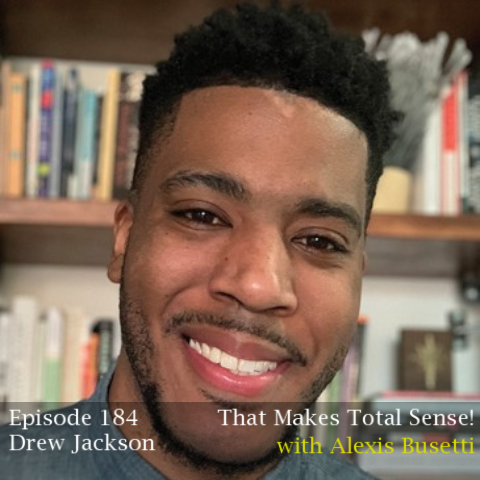
Speaker 2 00:00:41 Hey everybody. I, um, just finished this amazing second volume of poetry by Drew Jackson called Touch the Earth Poems on the Way. And Drew has joined me from the, from the Now Chili, New York City, <laugh>
Speaker 3 00:01:00 <laugh>. Thanks
Speaker 2 00:01:02 For having, thanks for coming back,
Speaker 3 00:01:03 Drew. It's so good to be back. So good to be back.
Speaker 2 00:01:06 I didn't tell you this in our kind of little pre-record session, but I, I finished it this morning, but I started this last week at the end of last week when I spent a day in silent prayer at a local convent. Hmm. And so it's like, you know, I'm supposed to go, it was an assignment for a class, so I'm not like, you know, super holy or whatever, <laugh>, but, um, but cause this is seminary, right? You've, you've been a seminary. This is weird, right? Yeah. It's like we do weird things. And so it's like, go for six hours somewhere and shut up and pray. And I'm like, what am I supposed to do
Speaker 3 00:01:41 For
Speaker 2 00:01:41 Six hours? And so, you know, you're not supposed to do homework and you're not, you know, whatever. And so, um, but we're supposed to be like spiritual or whatever mm-hmm. <affirmative>. And I was like, oh my goodness, I'll just take, this. Sounds like the perfect thing. And so I finished it this morning, but I started it at this beautiful convent, like almost in downtown Houston on some ridiculous amount of acreage with this gorgeous, they call it a chapel. It's like a full-blown, you know, cathedral, you know, kind of gothic style.
Speaker 3 00:02:15 Anyway. Is, is that, what's it, is that Rothko Chapel?
Speaker 2 00:02:19 Um, it is. Oh goodness. You would ask me the name of it and I would,
Speaker 3 00:02:23 I only ask cuz I was, I was
Speaker 2 00:02:24 Just there right now in Houston.
Speaker 3 00:02:27 I was in Houston like two weeks ago.
Speaker 2 00:02:30 I'm a little bit mad about it now. <laugh>. We can talk about that after close <laugh>, but I'm, I'm a little bit mad. What were you doing in Houston?
Speaker 3 00:02:41 I was, I was teaching at a retreat.
Speaker 2 00:02:44 Really? Yeah. Yeah. At this convent or at a different place?
Speaker 3 00:02:47 Uh, at a different place. Okay. At, um, eia.
Speaker 2 00:02:51 Yeah, yeah, yeah, yeah. Yeah. I'm not even gonna tell you that. It's like essentially down the street from my house. So, anyways, but it's okay. It's, yeah. But now I'm, yeah. Anyway. That's fine. I'm not, I'm not gonna be mad at my guest on Air <laugh>, so I'll pause and then I'll be mad and then we'll come back.
Speaker 3 00:03:12 I totally fantastic. I totally forgot that you were used
Speaker 2 00:03:14 To be Uhhuh. I'm hearing that, I'm hearing that right now. No, it's fantastic. Yeah. I, I actually go to school with a gal who's one of the pastors over there. Okay. Anyway. Yeah, yeah, yeah, yeah. Yeah. Great. Yeah. Great spot. But no, I don't think this was the name of the place anyway. I can't remember. But, um, but it was fabulous and it was a great place to start to read these poems. I mean, it was awesome. I'm not gonna be distracted by this Houston trip <laugh> pause. Anyway, um, no, it was, it was great. But this is the second time you've been on, because the first time we talked about your first book, God Speaks through wombs, which was, so let's set the stage. These are poems that are what we, can we say the reflections on Luke
Speaker 3 00:03:56 Reflections are in conversation with, is the phrase like these in conversation with the Gospel of Luke.
Speaker 2 00:04:01 Yeah. Okay. Okay. And the first one only covered the first eight chapters mm-hmm. <affirmative> of Luke. And I re I was seriously anticipating the rest because I was, because it was advent season. I'm like, I'm reading Luke. Yeah. What's going on? And then, but then this one, you shocked me because we do nine through the end. Mm-hmm.
Speaker 3 00:04:23 <affirmative>.
Speaker 2 00:04:23 Okay. So let's start there. Two volumes. And then what is this about?
Speaker 3 00:04:28 Yeah, so this one picks up in chapter nine and goes all the way through to the end. Um, and this one is really about, um, right, that change in chapter nine where Jesus begins to intentionally journey towards Jerusalem. And it's much less about the miracles and the, the thi. You know, like, you get a lot more of the journey of the disciples in this, in this part of Luke. Um, what's happening for them. And, and so I, I really, and this, the difference for me, one of the main differences in this collection versus the last one is that in this one, I, I ended up, I feel like there's a lot more of myself in the poems. Um, just my own my own stories of my own life show up a lot more in this one. And I, and that's intentional, um, because as I was reflecting on, you know, what it means to be on the way, uh, with Jesus, and, you know, what is it, what does it mean to take the things that Jesus has been teaching around love and faith, life, joy, grief, sorrow, suffering, all of those things that are so easy to sort of remain ideas in our heads, like discipleship, right?
Speaker 3 00:05:58 Is what is, what does it mean when those things actually come, come down to the earth and get in the dirt, say that of life and, um, put flesh on. Right? So, so this is this. I, I feel like the poems are grappling with that. The, the, those questions. And I'm wanting to bring them, not in every poem, but in, in more of the poems, much more personally into my own life. Um, so yeah. That's, that's what this, this volume is, is doing.
Speaker 2 00:06:28 Yeah. I, I appreciate that. And I, and I'll say, I just jotted down like a few what I felt like were recurring themes, maybe mm-hmm. <affirmative>, right. Like threaded throughout this, because it is, it is good to read. I would say maybe two things. It is great to read with your copy of the scriptures, just open to Luke, right. Cuz you have references at the beginning of every poem. I do wanna take a leap though and say, if you had never seen the Gospel of Luke mm-hmm. <affirmative>, you can read this book of poems and it will be very rich still. Mm-hmm. Um, the, a few of the themes as you talk about it being, being personal, but also just being in the dirt. Right? Um, so racism is a, is a thread that goes through this book. Um, economics is a thread that goes through this book loss. Mm-hmm. <affirmative> is a thread, um, trauma too. And, but I think that's because when you say they're, they're on the way, like with the disciples, right? I'm like, yes, because you know what the disciples are are learning as they're going mm-hmm. <affirmative>, right? Like, we don't get these disciples who have everything figured out. Like even when you get to a maus at the end of the book mm-hmm. <affirmative>, right? Like the, these guys were there and they don't know
Speaker 3 00:08:07 <laugh>. Yeah. Don't know
Speaker 2 00:08:08 What has just happened.
Speaker 3 00:08:10 They don't know.
Speaker 2 00:08:11 They don't know. Yeah. Right. Yeah. And so it's like, how can we know <laugh>?
Speaker 3 00:08:16 Yeah. No, that's good. And, and I think one of the other things that I wanted to do, and I intentionally right, end the collection with a poem on the Ascension that leaves us wrestling with questions, right. Living li learning to live with the questions, um, to live in the mystery. And, um, cuz I think that's so much of what this journey is, is that it's not about hard and fast answers. It's about living the questions.
Speaker 2 00:08:47 Yeah. But that sucks sometimes,
Speaker 3 00:08:49 <laugh>. Oh, it does. I know. It, it, it does. Um, cuz we love answers. Answers are, we need something to hold onto. Um, and, but yeah, there's there, but there, but there is something that's deeply formation for us and something that we discover, I don't know, in a much deeper, richer way about God, when we learn to embrace mystery mm-hmm. <affirmative>, there's something about God that we discover in mystery that we don't discover anywhere else.
Speaker 2 00:09:25 That's really good. That's really good. Um, and this, mm, I'm kind of jumping the gun here, but I'll I'll just go ahead and do it <laugh>. Um, cuz there are a few places I, I'll just say I started this book and, and I thought the last time Drew was on the podcast, I had this overwhelming list of poems that I was like, Ooh, and this one Ooh, and this one. And I was like, I'm not gonna do that this time. I'm really just gonna slow down and I'm not gonna mark every single one and blah. And I just didn't, it just didn't happen. Mm-hmm. <affirmative>. And so I ended up marking all of these, but some of the ones that, that I marked when I went back and opened up Luke, I'm like, this is super frustrating because I don't know what Jesus is trying to say. Mm-hmm. <affirmative> here. Right. Because Jesus says a lot of weird
Speaker 3 00:10:18 Yep.
Speaker 2 00:10:19 Stuff, right? Like, yeah. Parables are like messed up and like Yeah. Like, I mean, there was one, I don't think I wrote it down. I, this one just came to my head. But when, um, he tells him to sell what they have and buy the swords.
Speaker 3 00:10:34 Oh, yeah, yeah, yeah, yeah. Like, come on, Uhhuh. What, what's this
Speaker 2 00:10:39 About? Or, or the, the, the, the steward, right? Yes. And
Speaker 3 00:10:44 You're like, that was one of my favorite, that was one of my favorite poems to write.
Speaker 2 00:10:48 <laugh>. I'm so mad about it. And, you know, but that's why I say like, I feel like the poems could, could really stand alone. You know, you're flipping up this book and read it, but then when you go to Luke and you read it in conversation Yeah. As you say, right. I'm like, oh, I just get it. You know, it takes me into all of these other places, right? Mm-hmm. <affirmative>, which I think is the beauty of reading the scripture in community mm-hmm. <affirmative>, right? And so, like this book, that was one of the things that was for me, is a, is a gift saying, I don't get to sit down and talk to Drew every day. He's not my pastor, blah, blah, blah. Mm-hmm. <affirmative>. But we can read this, I can read this in community with you
Speaker 3 00:11:23 Mm-hmm. <affirmative>. Yeah.
Speaker 2 00:11:24 As you know, in conversation with you and some of these places. I mean, they just, they hacked me off all over again in the scriptures, you know, or mm-hmm. <affirmative>, they, they had me thinking about stuff in a new mm-hmm. <affirmative> way. Okay. So which one you said, you said one of your favorite was the sword one or the steward
Speaker 3 00:11:40 One? The, the, the steward one. Okay.
Speaker 2 00:11:42 Take us
Speaker 3 00:11:43 There. Take us there. Okay. So that, that poem is in, uh, the chapter called Economics.
Speaker 2 00:11:48 Yeah. I hated that whole chapter <laugh>. I was so mad at
Speaker 3 00:11:53 You. I think it's in that chapter. Hold on.
Speaker 2 00:11:55 Check. It probably was cuz I was so mad at you in that whole chapter. I was like, drew, you need to just mine your own
Speaker 3 00:12:04 <laugh>. So, so that poem was called, uh, I think this is when you're talking about called Situation Ethics. That one.
Speaker 2 00:12:10 Oh, okay. What, well, what page pages on. Okay, we're
Speaker 3 00:12:12 Gonna, so page 1 0 9. Okay. Page 1 0 9. Is that, cuz I think that's the one about the steward.
Speaker 2 00:12:25 Oh, maybe So that's not the one I was thinking of, but go ahead. That's not the one. No, no, no, no, no, no, no. But do it. But, but, but
Speaker 3 00:12:30 I'm curious. Okay. Okay. Take so Well this is, you, you still have your, uh, Bible gateway up?
Speaker 2 00:12:38 Yeah, I do. Yeah, I do. <laugh> <laugh>.
Speaker 3 00:12:41 So this, this passage, right? It's, it's a frustrating one. It's a, it's one where we're like, all right, what do we, what do we do with this? Um, so Jesus, it's the dishonest manager that, that
Speaker 2 00:12:55 One. Oh, yes, yes, yes.
Speaker 3 00:12:57 Yeah. Um, and basically like,
Speaker 2 00:13:01 I hate this parable <laugh> with everything that's in me. I just hate it.
Speaker 3 00:13:07 Yeah. I mean, Jesus, it tells this parable and just re reward. It's like, this guy is being re rewarded for being underhanded and cheat and dishonest, and what do we do with it? Like, what, what do you do with this entire thing? And Jesus is like, I tell you, make friends for yourselves by means of dishonest wealth, so that when it is gone, they may welcome you into the eternal homes. Like, what does that mean? Jesus, what does that mean? Right. And so this, this poem is like wrestling with, with that. And see for me, I don't know, I, I'll just, I can I, should I read the poem?
Speaker 2 00:13:50 Do it because I do have that one dog eared Drew, let's just say that. Yeah. I do have that one dogeared,
Speaker 3 00:13:55 This dog ear. I, I'll read the poem and then like Yeah, yeah. We can talk about it a little bit. So there's an epigraph before this poem from, um, Sheryl Sanders book, empowerment Ethics for Liberated People. Uh, and she says, Albert j Rato notes that lying in deceit normally considered moral vices were virtues to slaves in their dealings with whites. This radical reversal and moral reasoning was fueled by the basic conviction that the only morally appropriate response to the deception and depravity of slaveholders was to make every effort not to fulfill the ultimate objective of their efforts. That is to produce hardworking, honest, and submissive slaves.
Speaker 3 00:14:38 When I sit long enough with my bones, I discover stories like a paleontologist. I use the fine haired brush of my intuition to uncover things I never knew existed in my lineage. Are ancestors who lived by a different set of ethics with ankles and wrists pressed against the chains of enslavement. They made decisions that some today might call questionable question. Who sets the standard of morality? God, who's God the one who sovereignly ordained these chains? Well, then back to these bones, Booker t told a story about his mother waking him at midnight to eat a chicken secured from an unknown source. Of course, he meant the master mother could not fathom her children's mouths remaining empty while they feasted up at the big house on the food she had raised. We call God immutable, which usually means we refuse to change our view of God, let every deception be in service of heaven.
Speaker 2 00:16:04 That's the one <laugh>, I was picturing a different one in my head, but it's that line.
Speaker 3 00:16:12 Yeah, yeah, yeah.
Speaker 2 00:16:14 Let every deception be in service of heaven.
Speaker 3 00:16:17 Yeah.
Speaker 2 00:16:20 Talk about it.
Speaker 3 00:16:22 Um, well, I, I, I think as I was sitting with this parable and wrestling was like, okay, like my first, my first inclination, like, so when I come to, when I was writing through, um, this and, and I would come to a particular passage, it wasn't, I didn't come to each passage like, okay, let me try to talk about what this means. Like, I wasn't trying to write this like a commentary. I wanted to pay attention to, okay, what are the things that are, what are the things that are coming up in me? Let me put that in conversation with what I sense the text might be saying, or my frustration with the text or any of those sorts of things. Let me just kind of let it all come out on the page, however it wants to come out. And I think the thing that I was intrigued by in this was to, you know, to think about the, the power dynamics that were at play in the master manager of the house relationship.
Speaker 3 00:17:29 Right. And so that took me directly to, uh, you know, times or of chattel slavery here in the United States, thinking about the power dynamics between, you know, the, the quote unquote master of the house and the enslaved folks who would manage the house, right? And, and, um, right. The ways that sort of shrewdness was would, you know, would, some would say, you know, oh, you lied, or you deceived, that's wrong. You should never do that. But enslaved folks and their code of ethics was different. They were like, no, that's not that. That's if, if you're doing something that is allowing you to push against what the, the master is saying to, as Sheryl Sanders was talking about, to create, you know, submissive and honest slaves. Like, no, like you, you have every Right. And it is actually your obligation to, to undercut that. Right. And so that story that I tell, uh, that I reference in the, uh, in the poem about Booker t Washington and his mom, his, the story that he tells about his mom stealing chickens, was it really stealing?
Speaker 3 00:18:42 She's like, not a, not the way I look at it. I raised those chickens, I did all the work to raise those chickens, and we don't get any of it. And they just get to feast and, and party and enjoy good food while we don't have anything. No, those are, those are our chickens. And my, my children are going to eat. You know what I mean? So it's like, who sets the standard for morality? What are ethics? How do we, and, and so, um, I think that this parable brings that, that question to the surface. And I love that Jesus just sort of lets it linger there. He doesn't, he, he just lets it linger there. But he, he does say, you know, that that cryptic line, um, make friends for yourselves by means of dishonest wealth. Like we, I mean,
Speaker 2 00:19:26 I hate that he lets it linger there. I hate it <laugh>. I hate it. But, but I love that where you're taking us mm-hmm. With this mm-hmm. Be because it's further than many of us are comfortable. Mm-hmm. So let's go back to the story and Enla folks, and we could stop and say, because there is that, I thought there is that line where she, you know, says, um, that her children's mouths remain empty. Yeah. Right. So I think that's, that's where we're comfortable. Many of us mm-hmm. <affirmative> are comfortable. Mm-hmm. <affirmative>, we're just gonna keep it there. Like, will you, you, you, you have to quote, steal it or whatever because Yeah. Your kids are hungry. Yeah. And so it's, so it's a so, so that, that we can moralize that mm-hmm. <affirmative> and say, well if, of course, if your kids are hungry, of course if your family is starving, if you're not provided for, of course you would do that. Yeah. And we, and we we're okay with that mm-hmm. <affirmative>. But when you take it to what's, okay, no, no, no, no, no. But what's actually happening inside of this system. Yeah. I raise these chickens.
Speaker 3 00:20:45 Yes.
Speaker 2 00:20:46 And, and then you go, you go further to the places where you just took us. What is the, what are we actually doing? What, what, in what way are we moralizing this? Are we only saying No, it's okay. Because cuz that's what we wanna do. We wanna say, well, it's okay because X, Y, z it's okay because we're
Speaker 3 00:21:05 Hungry. Yes.
Speaker 2 00:21:06 Well, no. Mm-hmm. <affirmative>, take it to something beyond what is actually tangible in your growling stomach. Mm-hmm. <affirmative>, take it beyond to what's happening in everyday life. Take it beyond to what's happening in the laws of this unjust system that there mm-hmm. <affirmative> is being served without consent, <laugh>
Speaker 3 00:21:25 Mm-hmm. <affirmative>
Speaker 2 00:21:25 Mm-hmm. <affirmative>. Right. Take it to all of those places and Yeah. I mean, I don't have a question there. I'm just like, this is what happens when Yeah. Yeah. I read stuff like this and interact with stuff like this is, I'm like, yeah. Yeah. Because I'm used to saying, well, of course it's okay to steal if you're hungry. Yeah. But then we go, no, but actually what we are talking about here is, but what do you do when the whole system is set up like
Speaker 3 00:21:52 This? Yeah. Well, and I mean, but the, but then that, that raises the question too, of even to say, because not everyone would say what you just said, that it's okay to steal when you're hungry. Right. Someone would say, no, you can't. Right. Uh, you should get a job. Right. <laugh>, you should, you need to, you know what I mean? So, so right. Like Yeah. Yeah, yeah. You're right to question, to then question an entire system that is, you know, based upon some, like, large portions of the population remaining impoverished. Right. So that certain, certain portions of the population can quote, unquote feast up at the big house. Right. Right. It's like, okay, what about when the whole system is set up that way? Right. And then we criminalize poverty and we throw people in jail for doing what they need to do to feed their family. You know what I mean? So it's like, this is a question about the entire system mm-hmm. <affirmative>. So is it okay for me to steal if my child's hungry?
Speaker 2 00:22:51 Mm-hmm. <affirmative>,
Speaker 3 00:22:53 What, what's the, what's the code of ethics? We're working by here. Right. How do we, how do we, how do we, how do we navigate that?
Speaker 2 00:22:59 Okay. So let's go to some of the places I told you I didn't wanna go. Yeah. Because now we're here and now we're, now we're here. And so, so I'm just gonna say, uh, okay. So pause for a second. What I told Drew before, I wanna share this right now. Some of these poems felt very intimate and as you said, that you sharing your life here mm-hmm. <affirmative> a lot more of yourself in these stories. Mm-hmm. <affirmative>, many of the ones that felt that way to me were the ones that hit on racism. Mm-hmm. <affirmative>. And, and I just kind of thought, I don't know what to do with those mm-hmm. <affirmative>. Um, but so I didn't write 'em down. So they're gonna be harder to find mm-hmm. <affirmative>. So I will say, bear with us for a second because we may be flipping through the book here. What the poem that you just, that just came to my mind whenever you were saying that there's a line in it. Drew, please forgive me cuz I'm gonna botch everything that you wrote, but we'll, but you'll redeem it. <laugh> <laugh>. There's a, there's a line that talks about kind of the trajectory of the black boy, black man in the US and, and there's a, there's a line in it that talks about basically, and you threw it threw us bags of crack. Do you know what I'm
Speaker 3 00:24:11 Ah, that's in, that's in, uh, no Repentance without repair. That's, yeah. That's in the Zakia section.
Speaker 2 00:24:18 Is it in the See I told you I could have lived in that Zakia section. Yes. Okay. So now that I know where it is, I'm gonna try and find it. We'll, we'll have like a flipping word. We'll see who can,
Speaker 3 00:24:27 Yeah.
Speaker 2 00:24:28 Uh, here we go. 1 49. No repentance without repair. Ken. Okay. Can you take, can you take us there? You can read it if you want. You can just take us there. Cause that one,
Speaker 3 00:24:39 Yeah. Let me read it. Um, please
Speaker 2 00:24:41 Do.
Speaker 3 00:24:42 So this is in reflection on the Z story and it's called No Repentance Without Repair. This poem also has an epigraph before a quote from Tana Hasi Coates's, uh, article from the Atlantic, the case for reparations. And he says, it is, it is as though we have run up a credit card bill and having pledged to charge no more remained befuddled, that the balance does not disappear. The effects of that balance interest accruing daily are all around us and no repentance without repair. And I will tell you what repentance looks like for America. Hey back. No, not the vengeance. America holds dear. We will not forgive, we will not forget. We will hunt you down and make you pay. It looks like repayment recompense for everything stolen where to begin the beginning is as good a place as any a kleptocracy since inception, since those ships set sail west and laid claim to lands already inhabited, then sailed back across the Atlantic to capture bodies inhabited by the soul of Africa.
Speaker 3 00:26:02 This nation built on the backs of my ancestors who received lashes instead of cash for their work. And when Freedom promised 40 acres and a mule America stole that too, redistributed to the hands of former Confederates who went on to build generational wealth. And we got dealt the terror of the Klan. Those hooded white knights determined to beat back any advances we made. We watched plantations turn to prisons, we watched Tulsa burn. We were beat up and shot down just to earn our basic rights. Denied the benefits of the GI Bill after fighting on the front lines. We were redlined out of houses, huddled into ghettos, then thrown bags of crack for our troubles. No, a simple, I'm sorry, will not do a banner reading. Black Lives Matter will not suffice for salvation to visit this house. America must dish out far more than it can afford.
Speaker 2 00:27:24 My only note on that one was just an amen at the end.
Speaker 3 00:27:28 Mm-hmm.
Speaker 2 00:27:30 But, um, a kleptocracy.
Speaker 3 00:27:35 Yeah.
Speaker 2 00:27:36 True
Speaker 3 00:27:38 <laugh>.
Speaker 4 00:27:39 Yeah. Good.
Speaker 2 00:27:48 A kleptocracy.
Speaker 3 00:27:49 Yeah.
Speaker 2 00:27:51 I mean, say that cuz that's cuz that's the truth.
Speaker 3 00:27:56 Mm-hmm. <affirmative>, I, yeah. I don't know what to say about it. Like, that's, it just, it is, I think just to name it for what it is. Um, stolen everything. Stolen land. Stolen people stolen. Yeah. It's, and if we can't, we can't name it. If we can't be honest about it, then we'll never be able to really reckon with it.
Speaker 2 00:28:34 And you end, you end the phone by saying that a simple, I'm sorry, will not do. Yeah. But we have to name that we haven't said a simple, I'm sorry. Yeah.
Speaker 3 00:28:44 Mm-hmm. <affirmative>,
Speaker 2 00:28:45 There's not even been that mm-hmm. <affirmative>, I mean, Daniel Tiger, right.
Speaker 3 00:28:51 <laugh>, no Tiger
Speaker 2 00:28:52 <laugh>. Stop it. You know, you, you have kids.
Speaker 3 00:28:54 I have kids. I know Daniel Tiger
Speaker 2 00:28:56 Saying I'm sorry is the first step. Now how can I help? Yeah. We haven't even said I'm sorry. Yeah. Like, this is like step zero. We can't even do step zero Yeah. Here.
Speaker 3 00:29:05 Yeah.
Speaker 2 00:29:07 And so, as I mentioned, I'll probably beat the g
Speaker 3 00:29:10 Well, let's talk about Go like, I mean, let's, well, I'm just gonna like, well, I think it, it, it matters that this, that this poem is in conversation with Zakia.
Speaker 2 00:29:20 We are on the same page. This is exactly what I was gonna say. You can read it on its own, but when you read it in conversation with Zakia.
Speaker 3 00:29:27 Yeah. Yeah. Cause it, I mean, you see that what, what, what did repentance look like for Zaks? It wasn't, I'm sorry that you all were cheated or even saying, I'm sorry that I cheated you and then just moving on. Right. It was paying back everything that he stole and more and interest and, you know, it's like, yeah. And then that's when it, it's that point that Jesus says, salvation has come to this house
Speaker 2 00:30:11 And the mystery, and you name it. Cuz like I said, I could live in this Zia section. We could just have a whole episode on the Zia section, but you name it in, in other poems in this section. But to me, one of the craziest things about the Zakia portion of scripture is we don't know what happened.
Speaker 3 00:30:30 Nope. <laugh>, we don't know what happened.
Speaker 2 00:30:32 We don't know what happened. And so when I, when I take that and put that in conversation with this poem mm-hmm. <affirmative> and say, okay, America's supposed to be a Christian nation, drew
Speaker 3 00:30:42 <laugh>,
Speaker 2 00:30:44 The presence of Jesus is the only thing that we really know. Mm-hmm. <affirmative> occurred in that story of Zakia. We don't have a sermon mm-hmm. <affirmative>, we don't have a, a script of what the dinner conversation was. We don't have any, we just know that Jesus was there. Yep. That Zakia experienced his presence and somehow mm-hmm. <affirmative> in the, in this mystery of Jesus presence. Zakia was compelled
Speaker 3 00:31:15 Yes. Compelled
Speaker 2 00:31:16 Great word. His whole life. Yes. I mean, this is one of those weird places where I'm gonna get this all wrong. And so, you know, don't go yell at my Greek professor. But that the, but that the verbiage here is, am I right? The verbiage here is something like, not that he did it, but it's something that he was continually doing. And I will Yeah. Keep paying this back. Right? Yes. And so it's like this gives you this weird picture of like the, the, the transformation that's happening and continuing to happen in Zia's life. And if this is happening as a result of the presence of Jesus
Speaker 3 00:31:52 Mm-hmm.
Speaker 2 00:31:53 <affirmative>. And we call ourselves a, I mean, I know there's lots of evidence that we're not a Christian na I'm not, I'm just saying. Yeah, yeah, yeah. The people who are um, do a lot of stereotype. The people who are like most upset about saying, we don't need to do reparations are probably good ones who are banging the drum just as hard saying that we're a Christian nation. Mm-hmm. <affirmative>. But what's up with that? If we're experiencing the presence of Jesus, shouldn't we be compelled
Speaker 3 00:32:17 Mm-hmm. <affirmative>? We should. And so the question is what?
Speaker 2 00:32:21 <laugh>
Speaker 3 00:32:22 <laugh>, there's
Speaker 2 00:32:23 Not a question.
Speaker 3 00:32:23 I dunno. The question is question are, are we, are we right? Yeah. What g Who's Jesus? Which Jesus, who you talking about?
Speaker 2 00:32:32 Oh hmm.
Speaker 3 00:32:34 Right. Because if this is Jesus that showed up as Z Keys house, you know what I mean? It's <laugh>, we, we probably throw 'em out. Like, you know what I'm saying? Like it's, yeah. Yeah. It's, it's, yeah. Jesus and I just, Jesus. Which Jesus, which Jesus is this that we're talking about. Yeah,
Speaker 2 00:32:52 Yeah,
Speaker 3 00:32:52 Yeah,
Speaker 2 00:32:54 Yeah. Which Jesus,
Speaker 3 00:32:57 So I I don't know that Yeah. That there's so, there's so much in that story, um, that matters. What, what? Like, why don't, like, I I, I heard the story of Z kids all my life growing up in church.
Speaker 2 00:33:17 You sang the song too.
Speaker 3 00:33:19 Sang the song. Sang the song. Yeah. And so why don't we ever talk about this part of, like, we don't talk about this.
Speaker 2 00:33:29 Yeah.
Speaker 3 00:33:30 We don't. I
Speaker 2 00:33:31 Know
Speaker 3 00:33:33 We don't. And, and z and see what happened was for Zack, Zack key is' transformation that he experienced in the presence of Jesus. Ch changed, changed the entire city. Right. So for someone of Z K's position, you know, to be, to, to hold that much power, to be able to inflict. So for Zac Kius as a chief tax collector, to be hated the way he's hated, you know, like you can just get inside of that and say, okay, what, how much harm was he doing to the residents of that place? To to, to his neighbors because of some systemic stuff that was in place, um, that was affecting their livelihoods, affecting their wellbeing
Speaker 2 00:34:21 That he benefited
Speaker 3 00:34:22 From, that he benefited from, and Jesus's presence changes that something about Jesus' presence changes that. But it's not just, oh, now I got these warm fuzzies. Jesus was in my house. He had me over like he was over for dinner. Right. It's like an entire upending of that whole system that was causing harm for that entire city. Is that what we mean by salvation? Or do we mean something else? Right? Like, if that's what salvation looks like, I, I don't know. I just, it it, it, it causes me to say, we need to also think about what we mean when we say salvation. What does it mean to be saved?
Speaker 2 00:35:06 Well, here's what I can tell you, <laugh>. It means that salvation is gonna be a real dramatic story for people like Zia who have some serious problems, but not for me.
Speaker 3 00:35:16 Ooh. Ooh.
Speaker 2 00:35:19 Because I'm not a center like Zs. Ooh. He was really messed up.
Speaker 3 00:35:25 We wanna go there. He,
Speaker 2 00:35:26 He needs salvation <laugh>. Well,
Speaker 3 00:35:30 Oof. Hmm.
Speaker 2 00:35:34 He needs salvation. Drew. I'm not that messed up.
Speaker 3 00:35:37 Yeah, yeah, yeah. We're, we're not that messed up.
Speaker 2 00:35:42 Mm-hmm. Mm-hmm. We're not that messed up.
Speaker 3 00:35:47 Yeah. I think, I think that's, I think that's the, I think that's the lie. We believe <laugh>. I think that's why Jesus said I came for those who know that they need a physician.
Speaker 2 00:35:57 Oh, shut up.
Speaker 3 00:35:59 You know
Speaker 2 00:36:00 Why you keep throwing Jesus words back at me. <laugh>. I mean, this is tough
Speaker 3 00:36:07 Though. Yeah, it is. It
Speaker 2 00:36:09 Is. It is tough because too, when you say that and you say it's affecting the whole city Yes. And amen. And even if we're not the chief tax collector Yeah, of course. We have to ask, how are we benefiting from this system? Mm-hmm. <affirmative>, what would change if I Yeah. Said something about it. And what is salvation?
Speaker 3 00:36:33 What is salvation? Who, who, who are, who are zia's people? Who are zia's friends? Who are the ones who are not saying anything about what he continues to do. Right. Um, how about, uh, maybe you're not Zac. He, cuz we also know that the whole tax collection collection system was a Roman imposed system. So there's, there's, there's Zakk, right? Who is, you know, he's a, he's a Jewish man, right? And so there's this sort of, we can, we can talk about the injustice that's happening there where Zakk is part of something. Right. Part of a larger system. Right. You know what I mean? So like, there's, there's all these sorts of people that are caught up in this thing that are happening. Um, they're the, the folks who are, who are on the real underside of this, who are getting cheated and, you know, food stolen from their, their children's mouths and all of those sorts of things. The, the, the Zakk is, and the, the Levi's. Right? Like he's in that same Matthew, that same bracket of things. There are the Romans who have this whole thing set up and who are align in their pockets on the backs of those who they're oppressing and using and turning, turning your own people again. Turning their own people against them. You know what I mean? Like, that's a whole other thing that I actually, I get at in one of the other poems with about Judas. That's a whole other thing. Um,
Speaker 2 00:38:11 But we don't see anything like that in RD right now. Just to be clear, <laugh>,
Speaker 3 00:38:14 Which just, and then there are the, but then there are the, the, all the others sort of within that who are just like, well this is just the way things are. This is just what we're somewhere in that we're somewhere. Yeah. So what do we do? How do we, how do we, how do we respond to that?
Speaker 2 00:38:36 That's right. Yeah. I mean, let's keep, let's keep on Zs for just a minute. Okay. Because I mean, it's so good. Um, tree climbing,
Speaker 3 00:38:55 Tree climbing.
Speaker 2 00:38:56 1 47. I have the last stanza.
Speaker 3 00:39:04 Mm. Tree climbing. Yeah. And isn't there always something in the way, call it a crowd. Call it the loud preachers screaming me into, hell call it the friend who tells me I've strayed, call it the way faith has been manipulated, the gap between doctrine and love. Observe how each obstruction piles up one on top of the other. And watch the way they blame me for my inability to see
Speaker 2 00:39:57 He was part of a system. Mm-hmm. <affirmative>. And this took me to the part of the story in my mind, I'm thinking where everybody just gets real mad <laugh>.
Speaker 3 00:40:18 Yeah.
Speaker 2 00:40:19 That Jesus would even come mm-hmm. <affirmative> to Zakia. Mm-hmm. <affirmative>. You can hear them, can't you? I can hear them. Mm-hmm. <affirmative> mad about it.
Speaker 3 00:40:28 Mm-hmm. <affirmative>,
Speaker 2 00:40:30 Why is he going over there? Why is he going to see him? Yeah.
Speaker 3 00:40:38 It's his, it's, it is, uh, see this is a difficult one for me cuz I, I resonate with the people who are mad about Jesus going to civil st.
Speaker 2 00:40:49 You too. Yeah.
Speaker 3 00:40:51 Like, because here, like, what I, what I hear in this is, is you have in other, in other stories, you have the religious leaders who are mad when Jesus goes and eats with, you know, tax collectors and sinner. I don't, I'm not sure if it's, if it's the religious leaders here or if it's just the crowd.
Speaker 2 00:41:12 Right? Yeah. That's how I feel too is
Speaker 3 00:41:14 The crowd. You know what I mean? Mm-hmm. <affirmative>, if it's the, if it's the people who have have experienced Z is cheating them who are mad. And I'm like, yeah, I get that. Like, Jesus, why, why are you spending time? And so this is the paradox of Jesus, the conundrum of Jesus. Why? Yeah. Like, I don't know. I don't know. Like, it just, it is, it, it just is. And I don't, I think it's one of those things that we have to, whenever we're grappling with the story of Jesus, we're invited to reckon with this in ourselves. Like, why, why do, why am I mad <laugh>? Why am I mad? And, and you know, I don't even think we, we need to take it this far. But I think that the next thing is to also to sort of back to what we're talking about in the la like from that last poem, what hap what happens when Jesus sits at that table with Zia is not, Hey, let's just have a nice dinner.
Speaker 3 00:42:26 I enjoy your company, but there's something that happens that we're a confrontation of all of the stuff, all of the u the injustice is happening. Even if Jesus doesn't necessarily say something we don't know. But like, that makes like, to be honest that the rest of the story makes it easier for me to swallow. But what if that never happened? What if we don't get that part of the story? Cuz I don't know that the rest of the crowd, they didn't, they weren't in the house. They don't know exactly. You know, they just know that Jesus is in the house with Zia. What do we do when we don't know the rest of the story? <laugh>.
Speaker 2 00:43:08 Yeah. And, and do we, you know, I think for me, do I really believe it? Mm-hmm. <affirmative>, do I feel joy when as Jesus said, he came for those who were sick, like you mentioned before, like
Speaker 3 00:43:26 Yeah.
Speaker 2 00:43:28 Do I really sincerely experience that as joy when he actually goes to the sick people?
Speaker 3 00:43:35 Yeah.
Speaker 2 00:43:36 Meaning the sick ones who are in power and Yeah. Causing harm.
Speaker 3 00:43:42 Yeah. Well, what it does is it is, it is, it also redefines for us what we talk about sick. Mm-hmm. <affirmative> need of healing. Right? Someone who is in a seat of power, who's inflicting injustice. Like Yeah. They need healing. That's what Jesus showing up as Z Jesus' house tells me is that they need healing and that they are acting out of their sickness. You know what I mean? And so it, it's, does that, does that move me toward compassion or No. Somehow it moved Jesus to stop and say, I'm coming over. Like, what, what is it about the way that Jesus sees? Like that's, that's the thing where that, that gets me. It's like, what is it about the way that Jesus sees that's different?
Speaker 2 00:44:43 Yeah. No, it's true. It's true. I wanna hang out here in this space for a minute. Hmm. I'm thinking of two other poems. And you can, you can take us wherever you wanna go. You can go both places or you can go one or the other. Um, so 1 37 when hatred goes to church. Yeah. So we're right before Zakia, I believe in that one. Yeah. And, um, and just thinking about the money aspects of it, uh, 64 60 owed to the savings account,
Speaker 3 00:45:31 <laugh>,
Speaker 2 00:45:33 Because both of those are just self-incriminating for me when I read those
Speaker 3 00:45:37 Uhhuh <affirmative>,
Speaker 2 00:45:39 Which is why it's good to read scripture and community because I could skip over those parts and not have to think about them. Yeah. And then Drew writes a book of poetry and makes me <laugh> Sit with it for a second.
Speaker 3 00:45:55 Uh, well, you want, you just want me to pick one?
Speaker 2 00:46:00 Yeah. Wherever you wanna go.
Speaker 3 00:46:02 All right. Um, yeah. What were we, I I I'll do, um, do owe to the savings account. It, it switches it up a little bit. It makes it a little bit to me, for me, honestly, it makes it more personal.
Speaker 2 00:46:24 Mm-hmm.
Speaker 3 00:46:25 <affirmative> so owed to the savings account, and this is in reflection on Loop 1213 through 21, which I believe is a parable that Jesus tells about the, the, the man who was storing up stuff in his barns. I think this is the one,
Speaker 2 00:46:50 Did you say 12 through 21?
Speaker 3 00:46:52 Yeah. 12, 13 through 21.
Speaker 2 00:46:54 Oh, sorry. I got the wrong chapter. Oh, no. I may have messed it up. That's all right. Go ahead and go ahead and say it.
Speaker 3 00:47:06 Okay. Oh, yeah. The parable, the rich fool. Yeah. Yeah. Yep. Okay. I remember days when I knew nothing of a savings account. Our funds only enough to get us to the next paycheck. Praises were on deck when that chase push notification came through. And I'm not saying that now I've made it, but I can differentiate between a 401k and a Roth ira. I've noticed that the praises have lessened rather have been directed elsewhere.
Speaker 2 00:47:50 That was the one
Speaker 3 00:47:51 Yeah.
Speaker 2 00:47:52 Where I said I was really thinking you can go home now.
Speaker 4 00:47:58 <laugh>.
Speaker 2 00:48:00 Yeah. I'm I'm over you right now.
Speaker 3 00:48:04 Yeah, yeah.
Speaker 4 00:48:14 <laugh>.
Speaker 2 00:48:15 Because the, the reason this part of this was connected to me to what we were just talking about with zk is we're, I won't say we're all, many of us are implicated in this kind of attitude.
Speaker 3 00:48:32 Mm-hmm.
Speaker 2 00:48:33 <affirmative>, we may not be the ones who are physically stealing from people, but this attitude of money, attitude about wealth, attitude about consumption mm-hmm. <affirmative> attitude about security that may have driven Z to do what he did. Mm-hmm. <affirmative> that lives in me. I'm a liar if I say that doesn't live in me. So that one was hard.
Speaker 3 00:49:17 Mm-hmm. Yeah. Yeah. I mean, I think it was just for me, writing this was, um, like, you sort of similar to you, like coming to grips with what, what lives in me in that way, in relationship to money. Right. It's, it just the, the, even the noted difference in my posture toward God when my, when my checking and savings account look a certain way versus when they don't mm-hmm. <affirmative> mm-hmm. <affirmative> mm-hmm. <affirmative>, you know, um, yeah. And, uh, yeah. It's just, it's, it's, it's something to pay attention to. I think that's, if there's anything that the poem is trying to do is, is what is invites me to, I'll say, is to pay attention to that thing.
Speaker 2 00:50:15 Yep.
Speaker 3 00:50:16 Yeah.
Speaker 2 00:50:18 Yeah, yeah. Yeah. No, for sure. I will say back in the day, I used to follow a lot of, um, like social media accounts and stuff that were concerned about, like personal finance, budgeting, and, you know, things like this mm-hmm. <affirmative> and kind of one of the, you know, a lot of those have these kind of little tag, you know, tag kind of meme, like, you know, things. And one of 'em was the goal for a lot of people in these communities, they would say, I wanna, I basically, I wanna forget when it's payday.
Speaker 3 00:50:59 Mm.
Speaker 2 00:51:01 Like, I wanna have that kind of financial security Yeah. That I don't think about, oh, tomorrow's the first.
Speaker 3 00:51:09 Yeah.
Speaker 2 00:51:10 Right. And that's what I felt in that poem. Yeah. Right. Because there, because there is a time, and there were definitely seasons in my life where I'm like, looking at my, constantly looking at the calendar, right? Mm-hmm. <affirmative>, when's it gonna drop? When's it gonna hit <laugh>? Was it gonna drop once it gonna hit? Yeah. Yeah. And, and I can feel it, like I can take myself there, you know? Yeah. When's gonna drop? Um, and, and that was the goal of a, a lot of this community was, I, I wanna forget that feeling. Yeah. Right. But then we have a whole new set of things to deal with when we are at the place where we forget that feeling.
Speaker 3 00:51:47 Yeah. Yeah. No, that's real. And it's like, I'm, I'm not saying that there's anything wrong with forgetting that feeling, right. But there's al but, but then it also comes, you know, brings into question the, uh, also that larger systemic thing that we were talking about before of like, okay, what does it mean to be in human community where I can forget that feeling, but a lot of my neighbors can't.
Speaker 2 00:52:10 That's right.
Speaker 3 00:52:12 You know what I mean? So, so there's that question of things, and I think the, the parable brings that into question mm-hmm. <affirmative> where it's like, I've stored up all this treasure. Like the, the present reality is that there are other people who could have, who could have used what's in those barns, and then you die. And, and then what's a good, you know what I mean? It's like mm-hmm. <affirmative>, how do we relate to money? And well, I guess that's also, and I haven't really thought about this deeply, um, in writing this book, but you, you mentioned that one of the themes as you were reading was economics. And I think it's, it speaks more to a theme of what Jesus is talking about over and over again, is that like money and economics and the way we relate to it and how we share it with one another, like, it's such a theme for Jesus. It, it really comes up again and again in different ways. And, uh, it's something that I was recognized as I was writing these poems. I'm like, keep coming back to this over and over in, in these different ways. Um, I'm like, wow. Oh, this is, this is a real thing. And it's not, it's not economics in the way of like, you know, God just wants to, God just wants to bless you. Like, that's not, that's not what, not what This is <laugh>. That's not what Jesus is talking about.
Speaker 2 00:53:28 No, that's right. There was a, there was a, um, uh, rhyme Bible mm-hmm. <affirmative> that I used to read my kids when they were little. And the, the poem for this same parable sticks in my head, right? Mm-hmm. <affirmative>. And so part of it I can kind of almost sing, you know mm-hmm. <affirmative> part of it. And, and so, so I won't, I won't read the whole thing, but I found it. But because because part of it, it's talking exactly what we're talking about, the, at the mm-hmm. <affirmative> at the end especially. But, um, starts once, there was a wealthy man who had a very stingy plan. His, he put his money on a shelf and bowed to keep it for himself. Mm-hmm. <affirmative>, he filled his bulging barns with wheat, and though he had enough to eat, he wouldn't share. Mm-hmm. He didn't care that others had no bread or meat.
Speaker 2 00:54:21 Mm-hmm. <affirmative>. And, and it goes on and he says, you know, it's, it's, of course, it's kind of comical because it's a kid, you know, a kid's book. Um, I have three cats, but I want four. I have cows, but I want more. You know? Yeah. Yeah. And then at the end, you know, it talks about building the, the bigger barn so he can have more space. Yeah. And then, and then at the end it says, and, and, you know, basically, and, and, and what, and what happened was that, um, that very night, you know, he died mm-hmm. <affirmative>. And then, and then what happened the next day, people lined up <laugh>. Mm. Right. People lined up and they came and they took what they needed Yeah. From his excess. Yeah. Right. And, and it just, I think it speaks to, to kids share your stuff, right? <laugh> mm-hmm. <affirmative> mm-hmm. <affirmative>. But, but the message is, as you say, something that Jesus goes back to over and over and over again for us, because he goes back to loving your neighbor over and over again. Yes. Because he goes back to trusting God over and over again. Exactly. <laugh>. I'm like, this is not Yeah. About money per se. Yes. Right. Yeah. This is about these,
Speaker 3 00:55:38 It's about loving your neighbor. Yeah. Like, exactly. Yes.
Speaker 2 00:55:42 Jesus is so boring like that. Right. He keeps coming back to this same thing over and over again. Yeah. He should love each other in junk, you know?
Speaker 3 00:55:52 Yeah. Uh, but yeah, I mean that, that, but see, that's where it's like, that's where it gets dirty, right? Where when we talk about love, oh yeah. Jesus was about love, love in your neighbor. Right. Okay. Like for Jesus, that, that has financial implications, that has economic implications. Don't tell, don't, don't look at your neighbor and say, I love you, and not care about the fact that they can't eat. Then you, you know what I mean? So it's like, for Jesus, it gets down to that. It gets down to those things where it's like, if you, if you love me, what Jesus says, if you love me, you'll keep my commandments. Right. Which translation, that means love, looks like something. It has to look like something.
Speaker 2 00:56:35 It's the earthy, dirty stuff that you're
Speaker 3 00:56:37 Talking about. It's the earthy, dirty stuff. And so Yeah.
Speaker 2 00:56:40 But in, but inside of this kind of dualistic perspective, we're not into that. Yeah. Yeah. Because, you know, being goes back to salvation. It's real spiritual drew, don't you get it? Yeah. Salvation is just about the spiritual stuff. Yeah. As if Jesus didn't come in a body. Yeah. Right.
Speaker 3 00:57:01 No, yep.
Speaker 2 00:57:03 In like a real body.
Speaker 3 00:57:06 Yeah.
Speaker 2 00:57:07 And had like a real job. Yeah. And like, built real stuff and like dealt with money mm-hmm. <affirmative>, you know, and mm-hmm. <affirmative>, like didn't have much of it,
Speaker 3 00:57:18 Didn't have it, you know what I mean? Struggled with it. Like that's Yeah. Yeah. Mm.
Speaker 2 00:57:26 I mean, it's physical. It's material.
Speaker 3 00:57:31 It is.
Speaker 2 00:57:35 Okay. Maybe
Speaker 3 00:57:36 Go, go ahead. Go ahead. No, go ahead. Go ahead. Go
Speaker 2 00:57:38 Ahead. No, go.
Speaker 3 00:57:39 I was just No, I was just gonna say I love that, like, <laugh>, we ended up just staying here. Cause <laugh>.
Speaker 3 00:57:47 Yeah. I mean, I, it makes me, like, as we were just talking about this last thing, it, it took me to another one of the poems, and I think this is one of the ones that you had named earlier when we were talking. Um, the poem wishes it's in chapter 16. Um, and this, so, so this poem, like is, was, is written in reflection on the parable of the rich man in Lazarus. And in particular, the part of the story that Jesus tells, where it talks about how the rich man has to, like Lazarus is lying at this man's gate, lying at lying at his gate. Which, which means that the, that the rich man literally would have to walk around or step over Lazarus to get in and out of his house. And that just got all up in my business, living, living in New York City, to be honest. Um, and so this, this poem, this poem's called wishes.
Speaker 3 00:58:59 I see him when I walk across 14th street feet sticking out from under another's throwaway blanket crusted over gang green sneaker store. In my peripheral vision that to him likely seems a lifetime away, a great gulf fixed. I slip my hand into my pocket to assuage my guilt. I wish I could fill his hands with cash. I wish I could fill my heart with compassion. I wish I could fill my mouth with courage to ask his name. I wish I could see him as more than a barrier on my way to the L train MTA card in my hand. I push the gate open
Speaker 3 01:00:01 This hard stuff, drew. Yeah. It is a hard, but it's real. It's like this is the real stuff. This is part of the, I I mean to, you know, just speaking personally, this is part of the reality that I've gotta wrestle with living here is, you know, I literally, like, I have to walk by folks who are in situations of houselessness who are like, I have to walk by them every day as I'm going to and from home and picking my daughters up from school and Okay. You know, and so it's like that's one of, one of the, I I would say one of the dangers of living here is how easily, how easy it is to become numb to that reality, because it's just part of the fabric of the city. Right? So what is it? So, so what is, what does it look like to follow Jesus?
Speaker 3 01:01:10 What does discipleship look like in this context? It's like, how does my heart stay tender toward my neighbors who are, who are housing insecure? How do, how does my, how do my, how's my heart stay? You know? And so that's real. Um, and how do I struggle with the situation? Like with, with the sort of like, I don't know what to do to help you. I don't know what I can do. Sure, I can, I can reach in my pocket and give you a, a few dollars and maybe that's all I can do right now. Right?
Speaker 3 01:01:51 But there's so much more you need. And so like, what do I do? How, what do we do? Right? It's so, it's like, it's just this ongoing, this ongoing question. Um, and I think that's where this poem came from. Like, this is, this is real, this is like, we just moved to, to Brooklyn, so I don't live right at 14th Street anymore, but yeah, it's crossing 14th Street and seeing this guy and ha having to sort of make the decision of, am I going to look this man in the eyes or not? Because if I look him in the eyes, he's going to talk to me and he's gonna ask, you know what I mean? Like, he's gonna engage me, or am I going to conveniently ignore this man, or act like I don't hear him? Or this is, this is the real stuff. And so I don't have an answer to it.
Speaker 3 01:02:49 Like, my big, like, the large answer is, we, we got work to do. Right? There's, there's continual work to do. Um, yes, on the personal level when I passed this man by, but on the collective level of what is the work we're doing in our city? How are we holding our elected officials accountable? What are we doing to rally around, um, our neighbors who are on the edge of eviction, who could be, who are, who are one notice away from being out on the street? Right? That's the work. And when we talk about loving our neighbor, that's what we, that's what, that's what it looks like here. That's what it has to look like. Um, or else it doesn't mean anything. So, yeah.
Speaker 2 01:03:38 All right. Drew, I'm gonna do a couple things because I just looked at the time and I know that we could literally do this all
Speaker 3 01:03:46 Day. Well, this is, I, I just, I I love talking to you cuz we, and
Speaker 2 01:03:49 I'd be <laugh> and I'd be great with that. Um, but I know that in real life we can't. Yeah. So I wanna do two more things, if that's all right. I have a miniature last word, and then I want you to give the last word. It can be a whatever you want. Just complete freedom and that, you know, because I told you, I, I listed a lot of poems, I listed a lot of topics and we didn't get everywhere. So it's wherever you wanna end us. Um, what I wanna say, especially on, on that note of, um, of that poem of wishes is that I hope what folks hear in this conversation is that part of the work of discipleship is what, exactly what you said, it's this on the ground, physical, what do I do? All of this stuff that is meaningful and important. And another part of that work of discipleship is allowing ourselves to wrestle with Jesus <laugh> mm-hmm. <affirmative> mm-hmm. <affirmative> to wrestle with his words. Right. To wrestle with the text, to, to have these ongoing conversations with each other, with ourselves, with our circumstances. Mm-hmm. <affirmative> and with Jesus. Mm-hmm. <affirmative>, because this is hard stuff. Right. I think of the places in the gospels where the disciples say, Jesus, this is hard. Who can understand this <laugh>?
Speaker 3 01:05:22 Yeah, exactly.
Speaker 2 01:05:24 Mm-hmm. <affirmative> and I often feel that way. Um, this is hard. Jesus, who can, who can understand this. Um, but I hope, what I hope what folks here in this and what, and what they're encouraged to do is, is to wrestle. Because like we said, I think at the beginning we don't, there aren't answers. This isn't a commentary. <laugh>.
Speaker 3 01:05:46 Yeah. Yeah.
Speaker 2 01:05:48 And even commentaries don't have the answers, right? Mm-hmm. <affirmative>. Um, but this is just, this is, this is is hard work, but it's good work. Yeah. And it's work that needs to be done. And I think it's our, it's our privilege and our pleasure and our joy and our responsibility as Jesus followers to continually, um, have conversations with the text and to, and to wrestle with it. So, and I think that, um, that was a paradigm shift for me years ago, and how I just engaged with the scripture. And so I'm kind of saying that, cause I'm wondering if there are folks who, who, you know, may have even heard me say stuff like, I hate that parable <laugh>, you know, or something like that. And going, Uhhuh, oh my goodness. You know, but it's like, uh, oh, but man, this, but, you know, yeah. Yeah. This doesn't, this, I'm not saying I hate Jesus, you know, but it's like, but we, we have to wrestle with this because these things are, these things are hard and they're challenging. Yeah. Um, and, and, but they're edifying at the same time. Mm-hmm. <affirmative>. Mm-hmm. <affirmative>. So, um, so yeah. So I appreciate this work that you've done and helping me wrestle. Hmm. So, and now I'll hand it over to you.
Speaker 3 01:07:04 Well, um, I'll just take, I'll pick up where, where you left off and just say that I really, I mean, to me, this is the work of scripture, the work of discipleship and the work of poetry to, to lead us more deeply into wrestling with the questions. That's what, that's what Jesus does, right? When he says, come and follow me, or come and see. Right. It's, it's, yeah. Come, come and linger with this question a little bit longer. Right. Don't I, I, I say all the time, like, we don't have to talk about Jesus as a poet, but Jesus, Jesus uses poetic devices all the time in his parables and all the things he's doing right. And whenever he is talking about the kingdom of God, right. He can only use poetic language because what else are you gonna do? Right? The kingdom of God is like a mustard seed.
Speaker 3 01:08:03 The kingdom of God. Yeah. It's, it's all of those metaphors simulate, um, and those aren't answers. Those are mysteries. Those are questions. What is, what do you mean that the kingdom of God is like a mustard seed? What do you mean? That the kingdom of God is like a banquet feast? What do you mean? Right. And, and I love that in the parable where the parable of the sower, Jesus tells the parable about the four soils, and, and he just leaves it at the place of whoever has ears to hear, let them hear, which I always say is the end of every poem. It has this invisible line, <laugh>, that's whoever has ears to hear, let 'em hear. And in Mark's account of that right, it says that the, that the crowds walk away frustrated with Jesus. But Jesus, Jesus' students, his disciples come back to him and they say, what did you mean by that?
Speaker 3 01:09:04 Can you tell us more? And his response to them is, what to you has been given the secret of the kingdom to everyone else outside? It remains in parables. Right. And what's the secret? What's the secret of the kingdom? I don't know. My interpretation of that is that the secret of the kingdom is come and stay with the question. Come and linger longer. Stay with it. Right. Live the question with me. And so I want to just end us on, uh, this, with this poem that is the final poem in the book called Ascension. And um, this poem is about the journey of discipleship. It's about poetry, it's about everything we're just talking about. And it's, uh, reflecting on the ascension. And there's an epigraph, um, before this poem, um, a quote from the poet Morgan Parker and her, her poem, exclamation Point. She says, we are the revolutionary poem, exclamation point. You don't have to go home, but this is only the start. The good part is what comes next. And this is what poetry does. It carries us, it invites us into a story unfinished saying, write the next stanza. It gives us no plan, no blueprint for the future, but simply asks us to witness, take it in and declare what we have seen. It flies away, but does not leave. It's presence remains long after the page has been turned long after the last word spoken. It leaves us with questions gazing toward heaven for answers but no answer descends its intent to get us to sit with the questions again.
Speaker 2 01:11:17 Amen. Amen. All right. This is Touch the Earth Poems on the Way by Drew Jackson. It's a second volume poems in conversation with the Gospel of Luke. I'll put the link where people can grab a copy of this one and God speaks through wombs. Um, in the show notes, drew to say thank you is just inadequate. But thank you for coming. Thank you. And being with me again. Yes, it is an honor. Thanks.
Speaker 1 01:11:47 The links for all the resources mentioned in today's episode can be found in the show notes, music and podcast production by Seth Boetti. Be sure to give us a review on iTunes and subscribe at your favorite podcast listening app. You can also visit us at. That makes total sense com.