Episode Transcript
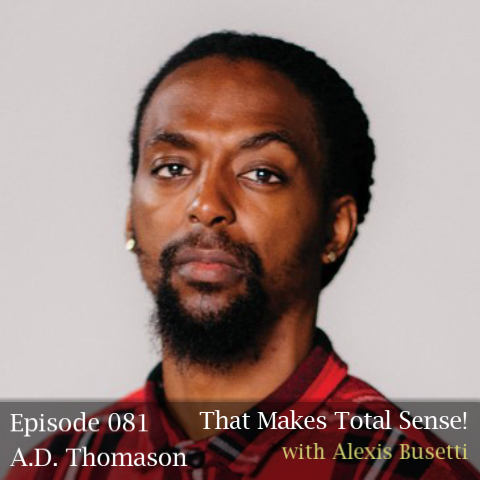
Speaker 0 00:00:07 Welcome to that makes total sense. A podcast dedicated to exploring God's generosity and justice. I'm Alexis resetting the Christian, aiming to ask good questions and encouraging you to do the same. Every one of us is wired by God to live out generosity and justice, but the house sometimes alludes us. That makes total sense is a way for us to get together. Posture ourselves as learners and challenge one another to practice generosity and justice in a tangible way every day. Hey guys, I am sitting in a sunny Houston, Texas at the end of February, and that is a big deal. It's not normally a big deal in February, honestly, but you've probably seen, we hit an ice age last week. So we are trying to get back to normal today. And one of the things that I love that is part of my normal is to talk to podcasts, guests, especially authors who have written incredible books that are relevant. And this is a word for today. So I'm here with 80 Thomason, the author of the brand new book, permission to be black. My journey with Jay Z and Jesus. Hey Ady how are ya?
Speaker 1 00:01:23 I'm good. I'm excited to be here and have this delightful conversation.
Speaker 0 00:01:29 Oh, I'm excited too. I made, I hope, I hope it's delightful. I feel like, I feel like after reading the book, there may be some tough spots. I'm not going to lie. This is, this is a really good book. Um, delightful though.
Speaker 1 00:01:49 Yeah. In engagement of UN
Speaker 0 00:01:51 Yes. Yes, yes, no. I think it's going to be delightful between us. I really do, but I'm just like, this is some hard stuff, man. Yeah,
Speaker 1 00:01:57 No, it's a lot. It's a lot in there. I try to put myself out there. Yeah.
Speaker 0 00:02:02 I mean, you brought it, but, um, but I'm thankful that you brought it. I mean, what, I feel like permission to be black. Yeah. That's like a whole, that's like a whole sermon in it. I mean, that's a whole thing in and of itself. What, what are you, what are you hoping to communicate in just that title? Because that is, that's kind of edgy.
Speaker 1 00:02:30 Yeah. You know, twofold, you know, black folks can read and say like, man, we don't need no probation. You know, it could be that in. And then it, the title itself could just be a starter LER or people. Okay. Let me, what is he talking about? Um, but in the, in the ethos, the reason why we went there is if you look historically at black folks, they've had two. Let's just, let's just say we started a conversation at 16, 19, you know, being forced into this country, they've had to alter who they fully were to make it. And I'm saying, I still believe that it happens. We've just called it normal. Right. So, and when I say normal, normal could be in order to achieve success like education or get this job and be on this staff, whether it's in corporate America or just church culture, we've said, you have to be this way.
Speaker 1 00:03:31 So what I'm saying is forget the results that they have ascribed to you be your fullest, God given creation, despite the results, you have permission, but here's the tension because we've elevated. The results in a trauma has been. So a horrid of, of what's been taken, you know, um, from black folks, it's hard for people to say, well, I'm going to be my fullest self, but I may not get this type success on this side of heaven. So that's, that's the idea like, man, you have permission. You, you have the freedom, right. And you may not get the results, but being a full self has God created you to be is better than being a half self and then getting the results of the world. And then you can't look at yourself in the mirror,
Speaker 0 00:04:27 Man. That's a lot right there. That's good. Because, because I mean, because then that means we got to talk about whiteness because yeah, we do. We got to talk about whiteness because, because it's what you just said. If I can like, kind of say it back to you that I'm understanding this it's whiteness. I don't want to say whiteness has defined the black experience, but I would say the black experience in some way has to morph itself into some sort of white ness accepted thing in order to be like you said, successful in order to have the ring in order to do the thing. Right. But what you're proposing and I agree with you is that what is more important than the success that whiteness might give someone is the ability and the result of being your full self in your full blackness. Yeah,
Speaker 1 00:05:36 Exactly. And people say, well, what's the win? Well, the win is your full humanity, your soundness. And if you're saying you believe in this, God who created you, the win is you're expressing the full artistic expression of how he made you. But when you curve that back because trauma or you want something and creation, that's what Christ has said. Well, what does it profit a person to gain the whole world and lose their soul. People jumped to salvation, but you could lose your soul and still be, say, you just lost it on earth,
Speaker 0 00:06:16 Man. Yeah. I mean, take that <inaudible>.
Speaker 1 00:06:27 Yeah. So w we, you know, it's the person, it's the classic movie where a person called quote unquote sales out. And they can't look at themselves in the mirror though. They have their quote unquote name in lights. And so when I hear Christ, I don't just think salvation. When he says, what does it profit you? So what do you gain that you got these things on earth, but yet you robbed yourself. And I would say, you robbed a guy because the guy said, I created you this way. Hey, Adam, I created you to be a six foot five black man who likes to workout in shape. You're passionate, you're zealous guy. And when you curve that thing down to act like you're this, this past docile person, and people think that that's who I am in creating you. You see what I'm saying? So it doesn't, it doesn't just stop at, you know, Adam or the person I'm saying, if we're God's pulling his masterpiece, the question that I would ask, are you letting his full masterpiece be revealed in your life? Or are you saying the results that someone else has declared is more masterful than how God has created me?
Speaker 0 00:07:43 Well, come on because you just robbed me too. Exactly. Cause if I'm your neighbor and if I'm your sister in Christ and you're not being your full self in your full blackness, in your full identity, in your full everything, you just named about yourself and you are, and you are curbing that because of what someone else says, you need to be, then you have robbed me of our communal experience as brother and sister, because then I don't get to gain what I can gain from you being your full self in our community. Yeah.
Speaker 1 00:08:17 And, and, and, and in a sense, expand yourself and your understanding of God. You know, that's a lot of nuances in there, but yeah, that's the foundation.
Speaker 0 00:08:28 That's good. So, yeah. So where did it come from? Where did the book come from for you? Where was it birthed?
Speaker 1 00:08:35 Uh, it was birth. Let's see, I was coming back from the Paul S in the book. I was coming back from Nepal, uh, well, going to it, if I'm being fair, I was going to Nepal and 10 years in me and my wife, we were just like butting heads. We just weren't seeing eye to eye. And the things that we were taught in that evangelical church has just like, man, this stuff don't have any power to it. And I was just low. I was just like, man, did I ruin this woman's life? Was this a bad decision? Where were you supposed to get married? So you thinking all these things and then conversely, so you got the marriage going, but then conversely, I would say, and I know we're going to talk about this, but I would say from 12, you know, when the trauma happened, dad leaving her mom severely wounded in a shooting, but from 12, all the way up to 37 at this point in time, I never knew that going to talk to someone about my emotions was an option.
Speaker 1 00:09:36 Don't think about that. You got 25 years of a kid going through all this trauma, and he's never thought it was the option to express hurt pain exhaustion. And so you just, you, you had this tightness or feeling in your body and your chest over this time. But she was like, well, I guess I just guess that's normal. So I was coming back from Nepal and one of my friends suggested is like, man, I think you should just go talk to somebody, go see a, go see a counselor. And like the black community, I don't know about other communities in the black community. That tends to be like the middle finger. You don't go see a counselor, unless you crazy. So, but I was so low. I was like, bro, I try anything. You tell me to stand on my head and eat some crickets. I'd do it, rub his, go chase it. You know,
Speaker 2 00:10:25 I'll stand on my head. He's in crickets, in the counselor's office. If this is me, I'm saying that as somebody who's been there. So I'm just saying,
Speaker 1 00:10:36 So I went and when I went to go talk to the counselor, I tell him my story. First thing he says to me, I'm surprised you're still alive. Not just physically, but spiritually, your body should have collapsed and emotionally, because you haven't processed all this trauma. And so that was the first time I was like, yeah, what is trauma? What does that mean? But I will say this when I left that first session, I go y'all I feel guilty. Like a survivor's guilt. Like I'm cheating on life. Like literally felt guilty. I felt good, but I felt guilty. Cause I go, Oh, this
Speaker 2 00:11:06 Is what we've always needed.
Speaker 1 00:11:08 You know? Like you telling me, I could have talked to somebody at 12,
Speaker 2 00:11:15 This is a thing,
Speaker 1 00:11:20 Oh my goodness. I literally, I was tripping. I was like, you need to tell me we didn't have to hold all this stuff here. So the guy's looking at me like, yeah, these have been option. So that was the impetus of writing this book. Just, you know, I joke with people, this is not the book, but I joke with people, if there was a sale loan, the Jordan's shoes, right. I would be telling everybody, Hey man, 50% off, some Jays, you know, you gotta go right now. And so what this book, I kind of saw it as that like, Hey, there's a sale on healing. It, this is all you
Speaker 2 00:11:54 Gotta do.
Speaker 0 00:11:57 I mean, it's true. But I am going to say, so I'm just going to throw this out there. So I was, I was feeling the same way. I, um, I started going to therapy after our son came home. We have it, we have an adopted son and it was rough. Um, and there's, there's all this stuff out there about, you know, cause, cause uh, adoption is, um, comes from a place of loss. It doesn't matter what the child's story is. Even if it's a, even if it's a beautiful from birth, the adoptive parents were in there. It comes from a place of loss, um, for that child because that child has lost his, his parents, his family. Right. Um, and so there's, you know, there's this research out there that, you know, when, when you start caring for and having close interaction with someone who has had trauma, that it will bring your trauma back up to the surface.
Speaker 0 00:12:55 So, uh, yeah. So I was similarly aged and going, Oh crap, what is this? Like? I mean just saying the same thing. I was like, I will do N ni like, like I'm calling people. I need help. I don't, I don't know. I don't know what's happening in my life. I need help. Um, and so, and so I started going, um, you know, to therapy after, after he came home. But I will say it is like a sale. Like you want to tell everybody it's here? The thing that I kept saying is this is hard work, man. Like, like, like this is like, yes, I want to tell everybody on the planet, but I want to give them like the big asterisk, like, disclaimer, like there's a sale, but man, you're going to pay for it. Like you won't pay for it because this is hard work. And I mean, the stuff that you put in the book, I would say it's it, it it's a short ish read. It's it's not a, it's not a 300 page,
Speaker 2 00:14:04 But if which
Speaker 0 00:14:05 I do too. Yeah, it was, it was awesome. But I'm like, but if you have not had the experience of like, you did have like, Oh my goodness, I'm cheating. Like all we have to do with this, like, it's going to take you a minute to get through this because every chapter is something new. If this isn't your language, if this isn't what you're used to, like if someone had handed you your book.
Speaker 2 00:14:32 Oh yeah, I totally, you know, the emoji where your brain explodes.
Speaker 0 00:14:43 Yeah. That's what I'm saying. I'm like, how long would it take you to get through that book? If somebody had handed it to you two or three
Speaker 2 00:14:49 Years,
Speaker 0 00:14:54 Like it was 160 page book is going to take you three years to read it. What?
Speaker 1 00:14:58 Yeah. That's that's a good note. No, no tape B Nate, this is three years into this, this, this book. So you're true. You're you're right on that.
Speaker 0 00:15:08 Yeah. So it is, I agree with you. It is something you want to share and you say, this is it, man. If you can, if you can do this, if you can walk through this, like I want to tell everybody about it. It's just going to take you some work.
Speaker 1 00:15:23 Yeah, no, it is. It's funny in there. I can't remember if I talked to, I think I did, but I, you know, when I was doing all the work and you having these conversations and one of the things they say is like, Hey, don't, don't internalize. If something hurts, you talk about it, you know, in a, non-threatening not escalating way. So when I started to do all of this stuff and you know, have conversations about the past and then depressing, I started going to bed at like seven 30.
Speaker 0 00:15:51 I knew you were going to say that, like I know he's good talking about going to bed tired. No, it is man. Cause it's exhausting. Right? Like, like it gets exhausting. Like I can't even yes, yes. You're going to bed at seven 30 because your body, um, and you talk about that in the book too. That's actually one of the books that has been recommended to me as the body keeps score. Yeah. Um, that I haven't read yet.
Speaker 1 00:16:20 This is good. It's good. I mean, that's not a one you can thumb through real, real fast either,
Speaker 0 00:16:27 Which is why I'm avoiding it. I think
Speaker 1 00:16:30 It, you know, it's, it's um, what I would say, what he does a good job at is using stories. I hate to say practical because a lot of these stories are really traumatic, but he uses stories to kind of walk you through his research. So is it is it's intriguing. And that's what I would say. The stories are intriguing.
Speaker 0 00:16:51 Yeah. I mean, you, we talk about that the body, the body keeps score. The w you were going to bed early because you retired. And a lot of this we feel like is just individual because we're in this, we're in this, uh, you know, society where we're liberalism, rains, individualism, rains, and we, and it's all about us. Right? It's all about the person. The person is it's, you know, my relationship with Jesus, my relationship with this, my, my, my stuff. But you talk about this on a much grander scale that I think is not only appropriate. I think it's accurate when you talk about this on the much grander scale of not just, what does this mean for you as a black man, but what does this trauma look like for the black community? Can you talk about that black community and the black in the black souls? What does this look like? What does this trauma look like?
Speaker 1 00:17:53 Yeah. Um, you know, in there,
Speaker 0 00:17:58 It's
Speaker 1 00:17:58 A big question. So I just argue historically from research that the umbrella that black folks have had to be under has had one S uh, one set of path and existence as it pertains to their humanity, then other people's right. You can probably throw the native Americans in there. You could, you could throw, uh, Japanese Americans in there with the concentration camps. But I argue, we got here through forced slavery, right? So that's a uniqueness. And in that uniqueness, it was legal for us not to be fully human. So in that legality, we could not process our humanity. So these, these things of, you know, Hey, that hurts. You, don't get to say that, you know, you pick cotton, Hey, that hurts. You. Don't get to say that we're selling your child. Your mail gets castrated. Your woman gets right. So when you go through all of that, and these are, these are the, the big, Whoa.
Speaker 1 00:19:09 Wow. But just think through centuries of not being able to say the, the basic foundation of emotions hurt you and to express that, that does something to a people. You, you, you, you, you have to supernaturally come up with a version of what it means to be human and black. And that's where you get the whole, like you just endure, or you don't talk about it. That's just the way that it is. But sadly, what that creates is mental problems. It creates health problems. Right. And that's what I talk about. The black experience or black trauma. I'm talking about the historical narrative narrative tied to the, um, black body and black community of its humanity. You know, even when we talk about civil rights, I argue, we all need to talk about civil rights in the right light. We talk about civil rights as if we've always agreed that black folks were human to have civil rights. Right.
Speaker 0 00:20:15 That was huge for me. Yeah, yeah, yeah, yeah, yeah. Yeah. I mean, that was, that was huge for me. Sorry, go ahead. I would, I'm just like, no, no,
Speaker 1 00:20:23 That's fine. Um, so just, just those points that, um, um, I'm trying to just raise an awareness conversation and hopefully in it changed in existence that what I'm saying is not an old conversation. This, this is a new conversation and needs to be expanded and become a new normal,
Speaker 0 00:20:45 Right. Because I'm gonna, I'm going to compare this for a minute and we'll see if, if I, even if I even get close, but okay. Because you talk about, and we'll talk about it in a minute. I hope, I hope we'll talk about it in a minute. You talked about redefining blackness a lot, um, in this book, because what you have just described is a lot of what has constituted the definition of blackness for a long time in America. But I would, I would ask the question. Do you think that the black community does not, may not even think a re redefinition needs to happen because this is just so normal?
Speaker 1 00:21:31 Oh, that's, that's, that's, that's what I'm saying. It needs to be redefined. Like, here's the thing on that point, we did the best that we could because it was legal and it cost us our lives to process our full. He met me like, literally it cost us our lives. It was legal for us to be murdered and people get off. So now I'm saying now that those times have changed, though, they're still stressors and traumas. When it comes to policing, going out the door, we need to redefine who we are in light of health, not in light of trauma and enduring,
Speaker 0 00:22:10 Because that is where Jesus, once every single black person in the black community is to be defined with different parameters by his parameters, which are for health and healing and abundance and redemption and restoration and reconciliation, and all of the things that Jesus comes to bring. Right. But instead of just making it,
Speaker 1 00:22:44 Instead of just making it like, no, no, no exaggeration. I thought that was life. You just had to endure. There was no joy, no redemption. You get that when you die. And so when my, on my counselor talked about that, I literally like, man, you, you, you got it here. Am I going to go? Ha, I was like, have you read the history books, man? You know, but I will say this, it kinda opened my eyes to this. This is, is my part. And our part in this generation is to reveal it manifest what the former generation couldn't just because of hypocrisy was so stark that it was part of the law.
Speaker 1 00:23:35 So I go, I believe this is part of my purpose. If not, it is to say, we all have to live like that. No more. I, we don't. And Hey, allies y'all need to lean on y'all sub culture and people groups to change this stuff as well. You know? Cause, cause we not running for our lives and we not swinging from trees. And so with that, we need to level up and not just go to comfort, but going to, okay, how do I use this freedom to get what my ancestors no, they should have had, but they couldn't. How can I honor that legacy?
Speaker 0 00:24:20 Right? Because that, I would say in the ally community, when I said that, that blew my mind. It's I mean, I don't, I don't want to give a spoiler, but man, it was close to the end of the book. It may have been the conclusion when you're talking about that, talking about human rights, as opposed to civil rights. And if allies, if we only hop up and say, something is wrong, when we see some sort of major civil right being violated, we're part of the problem is what you said. Nope, I dog-eared that page. I mean, not dog-eared probably 30 pages, but that's, but that's serious because I think you're right, because we have to know the history. We have to know what has happened. What has been in order to see where we can be and, and to be able to have a line to where we say this isn't good enough. Yeah. Oh, you can buy a house in whatever neighborhood you want and that's good enough. No, it's not. No, no. It's not a space. Sick. Yeah.
Speaker 1 00:25:30 Yeah. Do you know what you know, it was crazy that it, and, and, and, and hear me out, like not now did I, that I say, I would say the Lord gave me the opportunities and the freedoms to study this. I really will say this. I go, Oh, we've assumed people have known this. We was, we were, so people have a true framework of Lord centered justice, a true framework of lore center equity. Like what is equitable? Like a lot of people don't even know why the United nations was formed. Not that they were formed, but why? Right. That wasn't about civil rights in all countries. That was about human rights in all countries. They were saying, because you're human, you are afforded certain equitable rights before we get to the laws. So when I started reading this stuff, I go, Oh, this is not normal conversation for most people. Right? And, and, and again, this is just philosophical point. If I determined you're not worth the same equitable rights, Oh, it's going to be hard pressed for you to convince me to change some laws that yo faggot. And even if we change them in your favor, it's going to be hard pressed for me to flesh them out. And so that's why it's always been as grind because we haven't leaned hard into no, it is not equitable. How we see them, therefore goes the laws, the jury systems, yada, yada, yada,
Speaker 0 00:27:09 This is, I don't know. I'm just throwing it out there. How do we start? And I don't even know which community I'm talking about right now necessarily. Obviously I'm talking about the majority community for sure. But I'm just saying, I don't know where else this question goes, but I'm like, how do we start changing our viewpoints and asking those questions of is, is this a civil rights issue? Or is this a human rights question? Because I, I feel like when I feel like we just live in this civil rights space so much, but the, but the humanity that you're talking about is, is, is bubbling under the surface still. Right. Um, so I don't know. I'm like, how do we start having those conversations? How do we start asking those questions and looking at those aspects of life?
Speaker 1 00:28:09 Yeah. I think, I think that's a good question. So what I challenged my students, when I taught at Kings college as an adjunct professor, I said, the United nations asked this question, okay, what should each human being be afforded? Right. That let's just say, it's not, it's not worth celebrating. And somebody said, well, why wouldn't you celebrate it? Because this is what should be given me. Right. You know, so breathing like we don't celebrate breathing. Amen. You breathe it. We don't do that. Right. So you got life, life itself. If you're born is life itself. Right. And they would say, you know, uh, the United nations would say like the ability to progress in society, like, you know, make it for yourself to find food, clothing, shelter, laugh, joke, have kids write. Um, Bible has said, be fruitful, multiply. So all of those things just, you know, have life and afforded to you.
Speaker 1 00:29:13 They would also say, uh, in that progression education, right. If you want to work, um, that those things should be yours because you're a human. Right. And they should not be held back because of skin, skin, color, class, gender Cree, yada, yada. So as you start going down through all these lives, you go, you're like, Oh, most of these, most people don't even see us, just the natural human. They see them as they need to be legislated and fought for it. And that's the problem. Right? So now, and this would be a zinger. And I tell people this would be a zinger. No, I don't want you to celebrate that. I'm the first African-American male to get blah, blah, blah. Yeah. Like, like a degree, like, man, he's the first one that's like celebrating, breathing. That that should have been, that I should have had that anyway, that just shows you how traumatic the society was that we celebrate a natural thing that should have been equitable for people. Right. Right. That should have just been par for the course. Right. You see, you see what I'm saying? And so as you start looking at holidays and the celebrations, then you'll see like, wow, we're so far from a level playing field to even talk about what true progression is.
Speaker 0 00:30:37 Right. And then you go, what does that do to a community every single day? When you have all of these areas, all of these things, all of these education jobs, those things like you're saying that are basic. And we say, we have never seen a black body hold that position. You know? I mean, this is we've, we've got Kamala Harris now. Right. My girls are thrilled. Like they are like beside themselves, they love every minute of it, but I'm like representation matters. But when we, and when, and it's huge, it's a big deal, but my daughters will never see themselves as being any, like, they can't possibly hold a woman. Can't possibly hold the highest office in the land. Right. Because she never has before. Right. And, and, and we're just now where we've got a VP. Right. And, and then, and then let's just go there. We, we entered in a post-racial society. I don't know if you knew that Ady but, uh, back in 2008, America entered a post-racial society because we had our first black president in the whole United States,
Speaker 1 00:31:52 United States post racial, that presidency change all the hearts of humanity. It's so funny. Like the, how people just LA yeah. Y'all don't believe that. Now we believe that. No, you, don't not, not, if I break it down to you,
Speaker 0 00:32:10 Nobody believes that nobody believes that. But if you say it, then, um, you don't have to pay the therapy bill. Right. Because there's no more trauma, no more, no more trauma. I want to, I want to mention this because we, um, we really did just come out of it an insane week here in Texas. And we're still recovering. I mean, the, the lines at the food banks are long and not everyone has water or heat, um, right now. But I was listening to one of our local officials and she, what she said was logistically, um, sound. But it was so profound to me when I, um, internalized it. And she was, it was in the midst of the blackout. It was a moment when we had power. So when we had power, we had the news on. So we could figure out what in the heck was going on in our city.
Speaker 0 00:33:13 And excuse me, this local official came on. And she said, you know, we're still in the midst of the crisis right now. And she said, but as we move toward recovery, we are going to need your help. Because unlike the kinds of crises that we are used to in this part of Texas, namely hurricanes and floods, you said, normally the people who are responsible for obtaining aid can drive through the streets and see where aid is needed. They can see the trees fall down. They can see the flood lines, the water lines, um, you know, where, where the water has risen. Um, they can see the power lines are down, whatever it is, the, um, the results of the crisis are visible to the outside. She said, but in this situation, it's different because all of the damages inside of the home, um, so there's busted pipes.
Speaker 0 00:34:19 There's no heat, there's no water, none of this. So she said, we need your help. You need to call for help. You need to tell us that there is damage inside your home so that we can get the aide to help you. We can get the aid that you need. And it hit me as I contemplated at the rest of the week, because I thought that this is what trauma does to us. Right. We, the damage is on the inside and nobody driving by can see it. And so nobody's going to come up to me and say, Hey, right. I have to say, Hey, I need some help here. Let me have damage.
Speaker 3 00:35:08 And I need some help here. And it, and it, but it may be like,
Speaker 0 00:35:11 Like you're expressing where we look around and we can't see inside anybody else's house. And so we think, well, isn't it just normal that my, that my pop got busted or isn't it just normal that your furnace is not supposed to work when it's 30 degrees, right? Like it's just normal that it busted your, like your neighbors. Like, no.
Speaker 3 00:35:29 And because nobody's talking about it, nobody's talking, everybody furnace may be not working. He like, I guess that's normal. I guess we're just gold.
Speaker 0 00:35:40 I guess they go home and they go, you know, what we, we have to call out is one thing. But I think before that, and I feel like that that's part of the gift of your book is it draws the attention to us. If, if, if people have not had maybe something that got them to the breaking point, like you had, or like I had, yeah. Your book is a gift that draws the attention to their current circumstance and says, look, would you please take a peek inside? Because that may not be normal.
Speaker 1 00:36:15 Exactly. That's good. That's a good illustration too. I like that. Yeah. You, and here's the thing. One of my friends read it. She he's Japanese, uh, of Japanese and Mexican descent. And she goes, is can I write a book called permission to be Asian? And, you know, and, and one of my friends he's he's of Nigerian descent. So, you know, people would see him as black, but he has his Nigerian culture and upbringing. He was like, man, I just feel like this book is about a permission to be human. And a lot of people haven't had that permission to be their fullest human selves, but they got to like, they got to take a peek on inside. And that's the, one of those things where one friend was like, man, I think you should, you should make it permission to be human. I go, look, bro, I hear you.
Speaker 1 00:37:10 But that would be kind of disingenuous to try to speak to all of the human condition and try to get illustrations from, you know, all these cause it's like, when do you cut it off? Right. You're like, well, I gotta put my Indians in there. You know, I got to put my, you know, as you just keep putting us, like, man, I'm gonna just cap it. I know my experience in generally black folks and, and you know, African-American history. But that, that, that is one of those things that I feel like people are getting without me having to say, is this permission to be your fullest sale? Even though I call it permission to be black.
Speaker 0 00:37:51 But I mean, that's, that's the thing. Like I felt, I felt like kind of two levels of it, right? Like when I was reading it, I felt like I, I want to keep this as sacred space or the black community. And hopefully this conversation in part will do that. But at the same time, just me reading it, I'm like, I can have that kind of in the back of my mind, but I'm gleaning everything I can from this book for me to write, like I a hand it out to my black friends, but like, I'm gleaning, I'm bleeding. Like I'm thinking of Ruth right now. Right? It's like leave some stuff on the corners. Right? Like you left some stuff on the corners for us. Like, I feel like you left some stuff on the corners intentionally that we could come and pick up and not be penalized for it. Right? Like, like we're gonna, we're going to come and take what 80 is going to leave for us.
Speaker 1 00:38:44 No, I liked this. I liked talking to you, you a Bible nerd, like myself, not too many people will bring a Ruth in gleaned into the edges. I'm like, Oh, okay. You and no scriptures.
Speaker 0 00:38:57 It's the only thing I have. Right. I'm like, I'm like, I always not. Now I'm going to do it again, but not intentionally, but I'm always thinking of John six, right. When Jesus is when he's throwing down and he's like, you're going to have to drink my blood. And everybody's like, no, thank you. That's gross. I'm not going to do it. And then he turns, right. And he says, what about you? Are you going to leave too? And their answers were, where are we going to go?
Speaker 1 00:39:29 There's
Speaker 0 00:39:30 Nowhere else to go. You have the words of life. Where are we going to go? I don't have anywhere else to go to. And so, I mean, I get the feeling that you, that you, I don't want to put words in your mouth, but I get the feeling that you did. I have been through some, a little deconstruction in your faith. We've been, I say, we, my husband and I, but I've been through some deconstruction in my faith too. But I'm like, I'm never going to deconstruct past Jesus. Like I can't, there's nowhere else for me to go. Yeah. He's everything right?
Speaker 1 00:39:58 No, yes. Yeah, no, but it's like, like I had a friend, I don't know. It may, it may have crossed your window, but he released, uh, a biblical, I would say a good biblical depiction. He could add some more diversity, but overall he released a good technical approach to Shamgar. And I go, my man Shamgar, Dyke dog. That's that's like maybe three lines, depending on what translation you read. Like, I was like, bro, you in the Bible, I, you, you read a read in the Bible, you know, I say, I said, not to make people go no Shamgar. You know what? Oh,
Speaker 0 00:40:43 With a book about jibs, a book about Shamgar, what?
Speaker 1 00:40:45 No, he did. Uh, he, I'm sorry. He did a, um, a theatrical yeah. Depiction. So hold the past, you know, sham growers is, you know, 600 Philistines with an ox scope. And so I'll be like, man, I'm going to tune in, how did this brother to pick like three lines, you know, like, and he did a good job. My guy did a good job. He has, he has a studio. He, you know, filmmakers, things like that. And uh, but I was joking with him. Sorry bro. You are a Bible nerd. I'm a nerd because I know Shamgar, you know, like
Speaker 0 00:41:18 It's all, all the nerd, all the nerd time get together. No, it's, it's good. Actually. I tell my husband all the time. Like I, I, uh, I didn't share with you before, but I'm like in my, uh, first year of seminary actually. And so I really, really try not to be that annoying first year seminary student. But sometimes I just, sometimes I just damn you're smiling because you know those, you know who I'm talking about you where you won.
Speaker 1 00:41:47 I wouldn't say I was watching. I tried to chill in the back because you know, some people were, I'm more like, I know the information, but some people want to play that role. I will let y'all play the role. And I'm just going to laugh.
Speaker 0 00:42:00 No, in class, I never I'm in class. I feel like I'm way less. No, but I'm talking about with like my husband and with, you know, I'm like, okay, well, you know what I learned today about this Greek word, you know, blah, blah, blah. I'm like, I'm like, I try not to be that like in like real public. Cause it's super annoying.
Speaker 1 00:42:18 Yeah. Tell my wife, you got to read the room, you know, you got to yeah.
Speaker 0 00:42:23 No, that's it. No, that's the truth anyway. Okay. Sorry. I'm like back to the notes people as if I've ever looked at them. Um, I didn't, I didn't look at him. Um, I don't know if we want to go there, but I may just ask you anyway, because I did mention deconstruction a little bit and I know you have a different project where you talk about your time in white evangelical spaces. Is there anything you want anybody to know about your time in white evangelical spaces that you can say like in this, in this amount of time, see whatever you want. I mean, there's not, there's not it like in this setting. Something's okay. And something not. Okay. I'm saying, say what you want to say. I just don't know. Time-wise I know you have another project on it, but
Speaker 1 00:43:13 Here's what I would say when I, when I talk about it, I don't talk about it in a condescending sense and in a sense of, uh <inaudible> right. I just talk about it in the sense of, I was 17 when I got into it and I was 34. So if you give half of your life to something, you believed it. Right. So I got, you know, as, as, as we say, I got real receipts, this, you know, like, you know, when you, when you really give your, your youth, the best of your years, you fought you for winning basketball contracts and things of that nature because of the belief of this subculture. So in the, in the, the, the book that I, I do think it's worth checking out, uh, confessions of an ex evangelical, why I left Christianity and started practicing Jesus. You know, I just talked about why I left and how the subculture was the problem. And I'll summarize it like this and talking to my brother yesterday, I'm listening to the Lauryn Hill unplugged album, came out in 2002 and I'm like, yo, that was 19 years ago. Then I'm asking if my different friends, and I'd be curious to hear what you said, but I'm asking my different friends. What would you say to yourself 19 years ago? Right. And I said, I'm driving in long beach, California for this fashion gig. And I can remember this, the smells, the colors, the truck that I talk about in the book. Um,
Speaker 0 00:44:53 He gave me
Speaker 1 00:44:55 His best. Right. So powerful. And so I go, I remember that. I just remember that time, but what I would say to my 19, well, myself, 19 years ago in this answer your question about my time. I would say, Adam, your God is very big right now. Like you couldn't convince me that God couldn't make me fly. If, if I'd need it to fly, that's how big my guy was at that time. And I would say, Adam, this subculture is going to try to shrink. Your guy is going to try to shrink. Your hope is going to try to make it so logical that your guy only fix fits into their practical and pragmatism. That's what I would say, Adam, don't let it happen. And I'm telling you, I'm getting back to that. You know, a lot of people say, well, I still, I still see you as that person, but I'm talking about internally.
Speaker 1 00:45:54 I'm telling you, Alexis, you, if you like, yo Adam, we got 24 hours to get $2 million or this neighborhood is just going to burn. I be like, God's going to do it. How's he go out? And he going to make it come from the ground. That's how big my God was at that time. And I saw a lot of stuff. And then you go through this thing, shrink box, you know it, and sooner or later is just small. So that's what I would say. I mean, I can talk about the race and stuff like that, but that's probably the sudden Opsis is that a shrunk? My guy. So now I'm just getting back to my big guy, big guy, big hope,
Speaker 0 00:46:34 Good night. That's a big word, too big God and big hope and big word. I'm going to take that and pray. I internalize that because that's good. That's good. Getting back to the big gun, man. Why do we do that? We try and shrink him so much.
Speaker 1 00:46:57 You know what I'm thinking is actually fear, uh, being led down, you know, Bible says hope deferred makes the heart grow sick. And so if you hope in something, I think God knows the emotions that if it gets tougher, your heart could just have this anx. And why am I even believing in this? And so you have different people who may have been burned by different things and they start to call it that discipleship. Right? And so now you're taking on their trauma and wounds instead of continuing to look up. But it's hard to look up if they're your heroes and the people pouring into you, you know? So what I always tell my kids, I go, I want you to be people who are wise. I want the world to be big. And I want you never to be afraid to ask God for anything his ass, he may or may not do it. Just keep asking.
Speaker 0 00:47:53 Can we end there? Because we talked about, you talked about the truck and somebody given, given him, given you his best in that. And I think what, you just nailed it. I'm going to ask you to expand on what you just said about, um, not being afraid to ask God. Yeah. But what if you have so much trauma that you don't believe anybody wants to give you their best? Not even gone. Like, can you talk about either what's false about that or what's true about God wanting to give you?
Speaker 1 00:48:34 Yeah. I mean, it, it, it is hard, you know, because what you have to do is delineate between the imperfections of humanity that God allows for you to still believe that he can supersede or redeem those imperfections. And so what I, what I've realized, this is what I realized. And it's hard. One pastor always said it to me, you cannot have forgiveness without an offense, but the offense hurts, you know? So you cannot have a big guy without bleak situations. You can't, but that's what we want. We don't wanna, we don't want to be in bleak situations, but we want a big guy, you know?
Speaker 0 00:49:25 Yeah. The way I've heard it phrased is nobody. Everybody wants a miracle, but nobody wants to be in a situation where a miracle is needed.
Speaker 1 00:49:32 That's good. Yeah. And so when you talk about understanding what it means to get someone's best, I had to have somewhat of a broken narrative to appreciate that moment, but that broken narrative is so tough. You know what I'm saying? So it's like, you know, you get, you, you have to have them, you know? Um, and so if people are listening, I said, okay, well, what do you, what do you do with trauma express? The trauma heal from the trauma. But, but don't see the trauma as you have an, a narrative that's less than see it as God is in the business of doing great things, amidst trauma, so that they might, I'm like be encouraged. Cause like, okay, all right. All right, this is, this is what, this is what God does. And a lot of times we don't see it like that, man. That's good. You know,
Speaker 0 00:50:40 That's really good. I said, we were going to end there, but I have one more question. Give it to me. What do you wish I would have asked
Speaker 1 00:50:49 What I was, uh, you know what the womp I, you know, I talk about the 1%, right? And the book.
Speaker 0 00:50:55 Yes, yes.
Speaker 1 00:50:57 That's uh, I think that's, uh, that's uh, that, uh, I wouldn't even say misunderstood because people don't understand it. They don't know about it. I would say so the 1% I would say the book is, is this. I talk about the statistics. I give actual statistics of a black man who has to traverse, you know, through, let's just say his neighborhood. And for myself, broken home, then outer society as the graduate high school, not go to prison. One in three black men go to prison. Um, they're 1.5 million black men right now on a count of four, they think it's due to mental health and, you know, just wandering and just trying to figure themselves out. So you do all these statistics, black male, a man, or a black woman outnumber black man. And then when you put it, put up these other life filters, can you trying to do something redemptive or positive?
Speaker 1 00:51:59 They didn't have a family and redeem, strongholds, all these things. It's less than 1% is actually 0.7%. But most people see that as, Hey, that's normal. That's, that's a D yeah, I know him. Good guy. He, he looks happy, you know, like he has it. And I go, that's that's 0.7% of 330 billion people. Right? And so what I'm making is what I'm saying is this percentage needs to be, um, preserve, celebrate it. Because for the first time, the numbers show that black man, like this is just black men in general are becoming extinct, right. Dying off why? And if you don't understand what it means to dive, to look up the Mayans, to look up the original Cubans, not the S the Spanish Cubans to the original ones, watching a documentary called Cuba Libra. And they broke it down, like how the indigenous became extinct.
Speaker 1 00:53:04 And somebody filters that I miss that I mentioned in the book I was seeing in that documentary. So it was just, it's just one of those things where I go, nah, I know we talk about the magic Negro, you know, in culture, but let's just call this, let's call it the supernatural, um, keeping of the black male. It is supernatural. It's not normal for us to come through all of that. Still be in our right mind and UVA. We, you know, we have a dialogue and a conversation. No, it's not normal. It's not normal. It's actually, it is super it's above the natural. And so I just make the case, like no black man need that. I, Hey, man, I appreciate that. You're alive. And you're sorry, I'm I may praise God for that. What, what do you specifically need? It's it's almost like, um, it's almost like when you see a gift that the person may not see their rarity in them, but you see the rarity in God preserving them for the body. So I don't don't hear me say it like, yo, this is about the black male and a black male being special. I go, no, this is about a gift that God wants to use for the body. And there's a reason why he preserved so that all can benefit.
Speaker 1 00:54:32 You see what I'm saying?
Speaker 0 00:54:34 That's good. Yeah. Yeah, no, you, I feel like you kind of start with that and you kind of end with that in the book. And, um, and I think that you're right. I think for those of us who are blessed enough to have black men in our lives, who fit that description, um, I don't know that we realize we're looking at a gym every time we have dinner with them or get to have a conversation or, you know, um, valued their friendship. I don't think we realize we're looking at, um, as you put it, as you put it a dying breed, you know, I don't think we realized that. And how important exactly what you just said. Let's, let's preserve life, um, for them and for the body let's promote life. Right? Let's make this not the case.
Speaker 1 00:55:42 Yeah. Not really, you know, it's, it's, it's, you know, it's, it's, um, you know, one of, one of my, one of the one day, hopefully, and hopefully as sooner than later, but I want to restore either a 70 Barracuda or a 70 challenge. Her DUSA has a car for those of you don't know. And just go through the process right. Of the, you know, the rarity and things like that. Or it's 67, Shelby GT, Eleanor as it's called and gone in 60 seconds, but just go through the process. But if you go look up those cars right now, because of the rarity, the price is high because people value it. And all I'm saying is if you look at the history and what the black man and women, and I say black man, because I'm a black male, but what they've been through, I think the price of gratitude should be higher and considered when it comes to, you know, us doing life together, or maybe asking them to do certain things in certain organizations, because there, there are more things attached to it, the mental way, that legacy way, right?
Speaker 1 00:56:59 The financial, all these things. And we try to make it normal. It's not normal. We have yet to be equitable, equitable people yet. So it's not the same. And that's why I really bring that up. And, and I, I wanna, uh, highlight that in is it's tough because I know people in there and connotation and their limited understanding and finiteness, they're going to think I'm talking about black exceptionalism. Like, so you were saying exceptional. No, I'm saying that God preserved it for a reason, the black male, I'm saying that he did that. Because if you look at everything naturally that other men of other ethnicities went through, they died off and we should have died off. There should not be a D. Let me say it better. There should not, there shouldn't be a black face in America. Given what we've went through. Historically naturally, president Johnson said in 1965, Daniel, Patrick Moynihan said it in 1965 with this one and report. So naturally we should be without black people in America, let that sit. And God has said no, for a reason. Now you tell me why. He said, no. He normally only says no, when he's doing something supernatural, that's all I'm saying,
Speaker 0 00:58:26 But you know, that's good. And the picture I got was of Moses arms being upheld so that the battle could be won. I'm like Moses was a leader. And, and he was unique in that. Um, and black men are unique in that, but when, when his arms were physically being held up, yeah. The battle was being won for the whole community. And so, and so part of what, I'm, what I was hearing when I was in maybe think of that picture is what can we do to hold the arms up of black men? What can we do to hold the arms up of the black community, um, in their uniqueness. So that as a community we can win.
Speaker 1 00:59:14 Yeah. That was good. That was good.
Speaker 0 00:59:17 Anyway, I mean, I could just, I could just listen to you talk all day about, about this, um, about this, but I don't know. I guess we'll end it, we got into some time, but I will say I'm holding it in my hand. It's a beautiful book too. Like I, they did it. I mean, IVP, just, and, and even on the back, I was like, the letters are raised, you know, and it's just, ah, it's beautiful. Um, I'll put a link of course, to the book in the notes for this show, but it is called permission to be black. My journey with JJ Z, Jay Z and Jesus. And it's out this month, right? It's only a couple of weeks old.
Speaker 1 01:00:01 Yeah, no, it actually comes out February 23rd. So Tuesday,
Speaker 0 01:00:05 Oh dear. I thought I had the wrong date in my mind. I thought it was the night. Oh my goodness. Wow. This is incredible. Okay. So it will be out by the time this airs, I think this is coming out, um, Monday the, uh, the first, so this will be out, um, uh, whenever this airs, this is awesome. So, uh, Ady where can we find you, uh, on social media and, and all of those contacts?
Speaker 1 01:00:29 Yeah. So read rev, R E D as in the color, then R E V as in victory. So red rev on Twitter and Instagram, and then permission to be black.com. Um, you could track the book and resources I'll put up there. And, uh, non-profit, uh, I am red rev.com because we do a lot of stuff in the city. We're trying to create Oasis and bill many cities, you know, uh, for, I would say people in need and then allies who are trying to live more of a communal way of your shoe. So,
Speaker 0 01:01:05 And I will say, is that the, is I am red rev. Is that the same place? Because you say in the book, a couple of times you are not going to leave anybody out on this. So if anybody needs help finding a counselor or getting resources or anything like that, you and your team, you guys were there like real time and real space to help people find what they need for healing. So, yeah. So I'll put all of those links, um, in the notes for this too. And I mean, I'm, it's, it's the morning, but I'm telling you, I'm feeling a little bit exhausted. Like you were, this was a good conversation. I'm feeling like, Ooh, like I gave it my everything, and now it's time for bed. I don't know that case form too, but, um, but no, it's good. This is some really, um, serious words that Ady has for us in this book. But man, I just feel like if, if we can embrace them, there is healing on the other side of it. Um, there's healing, right? So
Speaker 1 01:02:04 Here's on a lighter note. I'm surprised you didn't ask me about my mom in the glasses story. She's still don't know. So I'm waiting. She does it stop. We'll wait until she reads book. I think she's going to laugh. My mom, she has a sense of humor. So I think she's just going to holler on the phone. Like, ah,
Speaker 0 01:02:27 I have to tell it now after that, we'll just, but you have to tell it now because I thought he is serious. He has literally has not told his mother.
Speaker 1 01:02:36 So yeah, the, some of the story, I play it out a little bit more in the book, but to summarize this story, when I was younger in middle school, I lie to my mother to get glasses. Now this makes no sense because it's Detroit fighting artist of glasses. Aren't going to make you harder. It's going to make you look softer. But for whatever reason, I lied to get glasses. And that's, let's just say that's around between eight and 10 I'm 40 yards. So, you know, she still doesn't know to this day that I, that I lied to get lasted so much. So though, when we get together, she goes, son, you remember that time where God healed you a blindness. And I said it, but I know y'all, I'm terrible for that. So
Speaker 0 01:03:27 Awful thought I do not. I mean, I kind of do want to be a fly on the wall, but I'm like, I do not want to be around when his mother finds out. He just straight up lied, but she's been feeding her faith all these years. You better have something there. I don't know.
Speaker 1 01:03:46 So the way I try to justify it in the book, y'all got to see why, but yeah,
Speaker 0 01:03:49 Yeah, no, it's good. You better have a cake or something for that woman. And she finally, when she finally gets it, that's, that's amazing. But no, there are, I mean, we, there are so many good stories in the book, so many good illustrations cheat codes. Um, thanks so much for coming on ID. I appreciate it. The book is incredible.
Speaker 1 01:04:09 Thank you. Thank you too kind. And God gave me that, obviously that story, but that revelation. And so, uh, I am, I am hoping that it catalyzes and it takes off and, you know, 20 years from now, you know, we will say, Hey, you remember that time where we interviewed as a book was coming out and you see, you know, a lot of people's lives would have been changed since then, so
Speaker 0 01:04:35 Amen. Amen. Let it be. So yeah, the links for all the resources mentioned in today's episode can be found in the show notes, music and podcast production by Seth city. Be sure to give us a review on iTunes and subscribe at your favorite podcast listening app, you can also visit us at that. Makes total sense.com
Speaker 4 01:04:55 <inaudible>.