Episode Transcript
Speaker 0 00:00:07 Welcome to that makes total sense. A podcast dedicated to exploring God's generosity and justice. I'm Alexis resetting the Christian, aiming to ask good questions and encouraging you to do the same. Every one of us is wired by God to live out generosity and justice, but the house sometimes alludes us. That makes total sense is a way for us to get together, posture ourselves as learners and challenge one another to practice generosity and justice in a tangible way every day. Hey everybody, I am here today. I'm just going to go ahead and say, I'm trying to take a deep breath because, um, it's been a week in Texas. We're recording this right at the end of, um, the ice storm and we're trying to get things back to normal here. And thankfully part of that for me, is getting to do a podcast interview and I'm so excited about it.
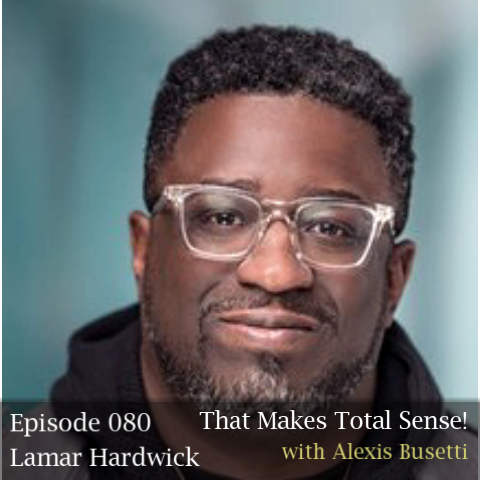
Speaker 0 00:01:03 Um, I spent some of my time reading his book by flashlight this week when we were without power, but I'm with, uh, Lamar Hardwick, otherwise known as, uh, the autism pastor. Hey Lamar, thanks for being on. Thanks for having me and his latest book is called disability and the church, a vision for diversity and inclusion. And right before we started recording, I told the Mar that I am, I am rethinking so much of my, um, gosh, if my church theology really, and not just church theology, I mean, we could, we could go a whole, a whole lot of different ways here, but just, um, this was a book that challenged me. That's what I want to tell you is a book that challenged me, but it also encouraged me, um, as a member of the body. So I wanted to start with your story, but now I'm kind of thinking, gosh, can you tell us where did this book come from for you? And then, and then we'll go to your story. Cause I know that that's an important part of the book.
Speaker 1 00:02:14 Yeah. Um, great question. So the book actually sort of the combination of, uh, the last few years worth of work in this area, um, you know, one of the interesting things about writing a book is by the time it comes out, you spent the previous two years plus working on it. Um, and so a lot of what it addresses, I think maybe God just had a way of producing or giving birth to a book in this time and this season, because a lot of these things I wrote about before, a lot of the things that have been happening in the last two years. Um, so ask the question about where the book from is, is, uh, you know, I have had, uh, the, the benefit and the fortune of God, Gracie me to be able to be lead pastor of a church. Um, and not just the church I serve right now, but even prior to that, and what I learned after my own diagnosis was, um, there are a lot of people that have not had the experience that I've had with the church, although I've had a rough road myself.
Speaker 1 00:03:28 And so being a pastor, but also being someone on the autism spectrum, living in the road or the disability community, but loving the church so dearly, I realized that the church has probably in my estimation, the most under utilized resource for the disability community. And it's not because they don't want to be a part of the church it's because the church has often failed to be that significant resource that could, uh, support them. So I look at not that everyone will be able, you know, we're all different. There's the saying in autism community, if you met one person with autism, you've met one person with autism. Um, but I do know that the church has played a significant role in being the kind of support that has allowed me to be the person that I am now. And if that's true for me, how many other people who don't have access to the church, not as physically, but the allowing equally could become more of what God wants them to be, but they just don't have the church, uh, supporting them. And so, uh, I feel like I'm critical of desserts because I love the church. And so I felt like this is a calling for me to be able to bring both worlds together and say, if we do this right, this is what's possible.
Speaker 0 00:04:47 Yeah, yeah, no, I was, I feel all of that after reading the book and, um, I started thinking, you know, myself about what could I do, right. What could I do to, um, help bring about some of those things that you talk about, but, um, so you've already named it. We've named it a couple of times that you got a diagnosis of being on the autism spectrum. But tell us about that because that didn't come for you as a child that came for you as an adult after you'd already been serving in ministry, correct?
Speaker 1 00:05:18 Correct. Yeah, yeah. Yeah. So I was diagnosed in 2014, December. Um, I was 36 at the time. Um, but one of the things I share with people is I always knew, um, from an early age, uh, so, so my official diagnosis, which is not necessarily its own diagnosis anymore as Asperger's, which is a rolled under now the umbrella of a variety of different autism spectrum disorders. Um, so for those who don't know, um, I think the delineating factor between Asperger's and what most would consider like your classic autism is that there tends to not be a speech delay. Um, and so everything else, uh, that comes along with being on the spectrum are challenges for me. I just have speech. Um, and even that can change depending on the stresses around me, the environment. So I knew, um, I would say probably as early as seven or eight, that there were significant differences between me and other children.
Speaker 1 00:06:31 Um, the best description I can give is that it felt like the world was in on an inside joke that I didn't get. And so I faked a lot of things just to keep from being bullied. I didn't know what I needed to do to fit in, but I knew what not to do to be singled out. And so, um, I sort of did what a lot of people in the autism community, what the term is called masking, where you learn to mimic other behaviors that you see other, uh, children and adults doing as a way of trying to fit in, not understanding all those things. So, you know, when you grow up, don't understand things like social cues, body language, things that you naturally sort of learn and develop around the age of 18 months. Uh, those things are not natural to me and often can be a barrier to relationships because if you think about this 90% of communication, it may not be that high, but 90% of all communication is non-verbal.
Speaker 1 00:07:37 So we say things that we don't actually say, you can imagine if I don't understand that 90%, how difficult it is to fit in and understand people and people don't understand me. So I say that to say, I've always known, um, I've heard thing life, but you learn how to deny deflect. So in my previous church, I was considered being considered to be the lead pastor after my predecessor resigned. Um, and so I started to hear a lot of comments, uh, about my social interactions with the adults. Prior to that, I actually had spent most of my ministry doing ministry for youth and young adults. And so I like to joke that all teenagers are socially awkward. So nobody really noticed that I was socially awkward.
Speaker 1 00:08:32 So I actually did very well with the youth ministry grew tremendously because all the kids that were weird and awkward in school felt at home around me. Um, but I started after my predecessor resigned, I was asked to preach and teach more in the adult service cause they really enjoyed my speaking. Um, but I started to hear a lot of language. Like he walked past me, he didn't speak, uh, he doesn't look approachable, his facial expression, his body language. Um, even some people thinking that I was mean and unapproachable, and those are all things I knew that I would never do on purpose. But I started to realize that what people are experiencing is not what I think it is. And so I had to ask myself a question that I really asked people and I talk about it in the book is what do people experience when they experience me? Um, and it was a hard question I had to ask myself, but the reality I had to come to you was all these people can't be wrong. I didn't like what I was hearing, but mostly it was just objective observations about people's experiences with me. And I had heard of my whole life kid.
Speaker 0 00:09:43 Yeah. And I just stop you right there, because that was one of the first things that struck me actually, when I was reading the book. Cause I think you talk about that in the introduction. And I just thought, Whoa, like what would happen? What would happen in life? In our societies, in our communities, if we all had the courage to ask that question, how are other people experiencing me and really listen and really seek to understand like, like you share as a part of your story that hit me like a ton of bricks. I mean, that is, that is a really brave and courageous thing to do, but I just think, goodness, what would it do for our community? What would it do for the church? You know? Um, if we really could all sit with that and ask ourselves, what does that mean? What, what, you know, what can I do? And um, how can I reflect, you know? Yeah. Anyway, I just, I just had to, I felt like I had a name that for me, because I really, that was really something powerful that I loved about your story.
Speaker 1 00:10:47 It's, it's a hard question to ask. Um, because we grow up really thinking that people's experiences with us are saw backup. I think we grow up and we are filter the world's experience through our own eyes. And we don't realize that there's, there are people on the other side of us who may not have this experience that we think we're presenting. And so I had to ask myself that, um, I didn't like it to be honest like that. So I don't want to make this seem like it was all roses and gumdrops. I didn't like having to do that. Um, because I had grown up learning how to defend myself against people's, what I felt like were attacks of my character because a lot of growing up and not knowing that I was dying, you know, that I should have been diagnosed. Um, most of our people interact with me and the things they said about me always came off as character issues.
Speaker 1 00:11:41 And I knew internally, I'm not the person that you're saying that I am. The problem is that that's what people were experiencing, even though that's not my heart. And so when I started to hear adults in the church, things, I thought, okay, I've been hearing this my whole life. Everybody can't be wrong. Um, and what people are experiencing is not what I think it is. And so that sort of pushed me to a place where I hit a proverbial wall. I was having a lot of, uh, anxiety attacks, um, just things. It, it heightened a lot of the external, uh, manifestations of me being on the spectrum. And so I finally had to figure out, okay, what's going on? Interestingly enough, I was doing my doctorate and, uh, a gentleman that I work with who I really respect, I had had to take a class where I had to ask people to do an assessment of me.
Speaker 1 00:12:37 Um, and it was, it was a class that the pastors had to take, but it was in a psychology department and we took probably 20 different assessments. Um, and one of them was, I had asked seven people who I work closely with or who know me to do an assessment. And this older gentleman that I really respected, he was an associate pastor. He literally wrote his assessment of me and it read like a diagnostic criteria. He said, Lamar has a hard time picking up on social cues. The market's laser focused on one task at a time, so on and so forth. And honestly, at that time, I didn't know what a social cue was. I had never heard that before. So like most people, when you don't know what something is, you Google it. And that's what led me to this sort of rabbit hole of figuring out, um, there's such thing as social cues that sustain as body language and facial expressions and all these things.
Speaker 1 00:13:30 I had no idea meant anything that I really don't even really notice. Um, but it also led me to start to look at other people like me who had the same story and eventually that trail led to autism. And so I actually did my own sort of research for about a year and I was pretty convinced, this is it. This is what people have been saying about me my whole life. And so after about a year, I finally got up the courage to tell my wife, I think I know what's going on. I think I know what some of our communication problems are. Um, and so she helped me to find, uh, a clinical psychologist who would later diagnose me. And really at that time it was just confirmation. I knew after reading, this is what people have been saying about me. Now I have a label for it.
Speaker 1 00:14:22 And so now we can figure out what to do about it, if there is anything to do about it. So that's sort of that journey. And I share with people that I, not only that get diagnosed, I stayed with a therapist for two years, um, to help me unravel a very complicated past, but also to give me some tips and tools. So a lot of the success in my ability to do the things that I do now is attributed to doing the work of not only getting a diagnosis, but saying, I know this is not going to change, but are there things that I could do that could be helpful along the way? And so that was a two-year journey after my diagnosis, that my wife and I went through with my therapist.
Speaker 0 00:15:10 Yeah. I mean, that's thank you for sharing that. Um, I just feel like already in that space, that's going to minister. Um, I know you've already ministered to them, thousands and thousand people who've heard that story, but I just feel like even right now that that's going to speak to some people, um, who are having a hard time figuring out, maybe what's going on in them. It may not be autism, but it may be something, um, and that having the diagnosis helps, right. Being able to name it, um, helps so much, I think even in my own life, at similar age, um, I was diagnosed with an auto-immune disorder. Right. And it was just like, if I, I, you know, I look, it was the same kind of thing. I, I could look back in my life, you know, 20, 30 years and go, this was it.
Speaker 0 00:15:53 This was at the whole time we just didn't have a name, but now I can do something right. I can do the hard work and I can, I can kind of move forward and it helps. But when you said, I want to, I want to focus on what you said for a moment, knowing that it's not going to change, but still moving forward because that, and you name it in the book, that is a problem for a lot of people in the church to have the resolve in your heart and your spirit and your mind in your body, whatever it is to say, I know this isn't going to change. I need to look to the Lord. I need to do the hard work and I need to, to live with this. Right. I need to move forward and live with this. Um, and I'm hoping that you can talk about that, um, in your own experience, but also with some of this, um, like I said, some of this that was kind of new theology for me, right. About what, you know, what does it mean for our identities? What does it mean to image God in this way? But, but maybe I'm also talking, you know, sharing, share what you share about being a member of this, uh, disability community, and also a member of the church community and how, um, those two communities didn't overlap for you, especially at first.
Speaker 1 00:17:18 Yeah. I think one of the best ways to talk about that. And I talk about this in the book briefly is, is wrestling with the fact that initially when I was diagnosed, that it seemed like those two things were conflict and then wrestling with, with God and with honestly, with other people to say, you know, no, I don't believe that's a conflict. And so I tell a story in the book about, um, as someone who sort of had an issue with me taking on the label, autism passer, which by the way, is not something that I chose. Um, it was something I think I said that in the book that someone actually sort of named that, and I'm like, you know what, I'm going to run with that one. It would made it people, it made it easier for people to find me on social media.
Speaker 1 00:18:03 So I changed my handle, but initially all of my pages that was not the name, but I remember having that conversation with this person and they said, why would you label yourself that way? You know, you're, you're a good pastor. You're a good speaker. And I said, you know, it's only a problem. If you think those two things don't go together. And so at that point it was saying, you know what, I'm going to try my best to reconcile what tends to be seen as a conflict and say, no, that's not, I don't believe that's what God intended it to be. And so another, another great example, like we love Paul and I love, uh, you know, his, his life and his witness. Um, and we talk a lot about his story and it's like our favorite, one of our favorite verses God's grace is sufficient.
Speaker 1 00:18:50 But what you learn about Paul is what, by the time he writes that before that we don't really know a lot about his personal life. Like we know he's educated, we know those things, but he didn't really let us in on like what he struggles with. And for the first time, when he talks about this thorn, he opens up his life and says, you know, I know you got to think I got all together, but I have this issue that I actually asked God to take away. And God said, no. Um, but one of the things I share with people is it's interesting that he says, you know, this thorn is not what keeps me from becoming the best version of myself. As a matter of fact, keeps me from becoming the worst version of myself. And when you read, he says, keep me from becoming conceited, which is the very worst version of yourself.
Speaker 1 00:19:36 You could be, right? He says that no one actually keeps them from becoming the worst version of himself, not the best version. And so for me, reading that again, after my diagnosis, they came alive in a way that I said, this doesn't have to stop me from becoming the best version of who God created me to be. As a matter of fact, if I lean into it like Paul did and say, I'm proud to boast about my weaknesses. Not because I want to talk about how much I struggle is to be clause for me so that the power of Christ can be seen in me. And what I needed people to see is Jesus working in my life, because there were a lot of things that I was not good at. And what I learned from Paul is that it doesn't have to be a conflict.
Speaker 1 00:20:22 This is not going away, but it doesn't have to mean that I can't be the very best person that God created me to be and to serve him well, it actually, if I lean into it and acknowledge it and lean on God, it can actually stop me from becoming a worse version of myself. And so, um, it doesn't have to be a conflict. I think that we have done a disservice to the church because we have created this theology where we have numbers and to suffering, you have an aversion to any kind of problems at all. And one of our main goals that we've taught ourselves in church is to find a way to leverage our faith, to get out of the stuff that we have to walk through. Um, one of my favorite portions of scripture is listening to Jesus. Pray, always say, you can learn a lot about what people think about you by listening to the brave for you.
Speaker 1 00:21:17 So I joke like when people pray, give them our wisdom, I secretly say this thing I'm stupid. Right, right. But, but you, you get John peeking in on Jesus' prayer for his followers. And Jesus has the audacity to say to God, I'm getting ready to come back home, but leave them here. Right. And it's like, wait, I thought the whole point of follow you around, who wants to get us the heck out of here? And you're praying for God to leave us here, but he makes a provision. He says that even though they have to stay here and I'm going there, they're still mine. And so what I tell people is that there's some things that are not going to go away. Um, there's some things that might not be healed on the side of heaven, but we're still hits. Uh, and that's, what's the comfort in helping me reconcile what shit, what oftentimes feels like a conflict. It's like, Oh, that's not going to go away, but I'm still here. And I still have a purpose and I still can conserve him, uh, to the best of my ability and not let this stop me from being the best version that God created me to be.
Speaker 0 00:22:22 Yeah. Um, I wonder if, if you could just give us a, like a little kind of like a little appetizer, a little order of, I just kind of want to throw it out there. Um, as food for thought, because I had the experience of when I was really, um, kind of at the beginning of my adult spiritual formation, um, in college, I was working a part-time job for a family who had a teenage daughter at the time, um, who had cerebral palsy. And, um, she, you know, there are different degrees of disability, of course, that come with that diagnosis. And she had a friend who had the same diagnosis, but he was, um, non-verbal and he had to, you know, eat with a feeding tube and things and things like that, a school friend of hers. Um, but she was verbal. Um, but she used a wheelchair to get around.
Speaker 0 00:23:27 And so we had, we had a blast together. I was with her for a couple of years and they were believers her family's a Christian family. And one of the things that she said that really stuck with me and, and I, I felt this in your book and I read it in your book, was she, she basically said to me, um, she doesn't enjoy it. And, um, and she kind of asked people not to pray for her healing anymore because it made her feel like there was something wrong with her when she saw herself. And she saw her relationship with God and she didn't feel like there was anything wrong with her. Um, and that was so profound to me in those, in those moments, especially because I was coming in contact with a tradition that, um, just wanted everything. Like your son just want everything to be better, you know, just wanted everything to be, to be whatever version of that, you know, is kind of in our own, in our own minds. Um, but, but she was just completely confident in who she was and who God had made her to be in the image of God that she, um, was bearing. Can you talk about that concept for us? Because I feel like you're the same sentiment, at least if I read it correctly comes through in your book as well.
Speaker 1 00:24:52 Yeah. And that's one of the sections that I deal with is this having the hard conversation about healing, right. So we, so let me say from the beginning, like I believe that what happened in the Bible happened, so Jesus did heal people. Um, so I don't want anybody to misunderstand that. Um, but I think we have to zoom out for a second and understand what, what the purpose of that was. Um, and I think that it's even a line in my book where I say, Jesus, didn't just come to bring healing nerve. He came to bring heaven to earth, right? So it it's a much bigger idea behind. So if you study his healing ministry of Monterey, most much of it happened at the beginning of his ministry and it was to validate his divinity. Right. But also a large part of that was to restore, pay very disenfranchised part of the community, which the disability community back into community.
Speaker 1 00:25:48 Um, and so I think if you look at, in the grand scheme of things, um, we have to understand that God is the one who gets to choose the vehicle by which he proves his divinity. Um, and sometimes that's not, it's not always through divine healing. Not that it didn't happen, but, um, again, it was Jesus as a way of validating Dom God, one of the stories that telling the book and the way helped me wrestle with that as a parable of the wheat and the tears were, you know, the, the sow good seed. And then it says, you know, Jesus interprets it, but it says that enemy, all God says is it wasn't me. That somebody came in and did planting weeds. And they both looked together, look the same as they grow together. And everybody's all up in arms, right? We got to fix this, we got to fix this.
Speaker 1 00:26:41 We got to fix this. And when Jesus interprets the story, he says that the master tells a metal, let it grow together. Because sometimes in your attempts to fix things, you ruin the harvest. You ruin the possibility of what the wheat can can produce. For me, that helped me to understand I've drawn an analogy that my neurology is a tangled system of wheat and tares. Some of it that makes me struggle. Other parts of it makes me special, but what God, what Jesus communicates is that ultimately God is committed to seeing the process through so that you can reap the harvest of why he puts you here in the first place. And even in that commitment, that meant that he told his workers, we're not going to fix this right now because it's going to damage the harvest. So what I tell people is that I might not be healed, but maybe just, maybe it's because he knows that trying to fix that will damage the harvest.
Speaker 1 00:27:46 And so I, I've learned to live with that and depend on the fact that there's a bigger picture. Um, and yes, this is a complicated mess. But what Jesus does say is when he interprets is that, um, the angels are the one who's going to have to fix it. So what I tell people, there's some things that are just above our spiritual pay. Great. Just because you know what the problem is, doesn't mean you're authorized to try to fix it or authorized to try to leverage God ability to fix it as a means to alleviate what may be uncomfortable for you because in the end, his commitment was to the harvest. Um, getting the most out of that, that seed. And I look at my life and for those of us who may struggle with that concept is to say, okay, even if that does happen, maybe it's because God has a end game and a commitment to seeing him get the most out of your life when you're here. And sometimes that means that those things have to co-exist together in order for him to do that.
Speaker 0 00:28:50 Yeah. That's good. Thank you. Um, thank you for that. Like I said, um, my husband and I often joke that we, you know, we solve the problems of the world when we talk about things like this, right? So I'm not expecting us to solve the problems of the world. I'm just thinking, I kind of want everyone to feel a little bit of that theological discomfort with me as they wrestle, you know, as they wrestle with that. But if we can move on, you touched on it at the beginning of your answer, um, and move on to another parable and to the church, as you said, you know, part of that. And, and that was again, a great way for me to look at it with some of that healing was like the restoration to the community, um, that a lot of those miraculous healings, um, provided for the people who Jesus was ministering to.
Speaker 0 00:29:41 Um, but this is really the, the, the thread that goes throughout the whole book, right. Is what can the church do is the church meant to be, um, I think gee was when I read it, I thought this is who the church is meant to be. Yes. The title is talking about the disability community, but this is who the church is meant to be. Um, so can you talk about who was the church born? You say we were born to be this and then this, um, the parable about the, um, about the banquet, because that was just like, like paradigm shift, mind blown. Wow. When you, when you talked about that.
Speaker 1 00:30:23 Yeah. So I approached it from the premise Zen when Jesus built his church and I have preached this for years. Like I tell people when Jesus said he's going to build his church, he meant it, right. It wasn't a suggestion. Um, and the church is continuing to move forward thousand. I tell people think about this. This is thousands of years ago, thousands of miles away in a place, most of us will never visit. There's no reason why the church should have made it out of the first century. Right. But when Jesus said he's building it, he meant it. And he said, the Gates of hell will not overcome it. But then he goes on and we were loving that scripture. But then he goes on to tell Peter, and I'm going to give you the keys to the kingdom. Right? So, so the church that he's about to give birth to is holding the keys to the access to God's kingdom.
Speaker 1 00:31:15 So in essence, he's saying, look, it's on you. If people don't access the kingdom access this new way of living this open society actually restoring it back to the way that I initially intended it. There's no plan B the church is it. If people are going to experience the kind of loving grace and kindness and compassion that is necessary for them to understand the beauty of who Jesus is, we're it. And so, so I say that, look, this is what we were born for is to go out and give access to people who are on the margins, who have yet to experience the beauty of who Jesus is. And that's what Jesus did in his ministry. He was always with the people who didn't really have an opportunity to experience that. So when you look at the parable of the bank within, in Luke 14, um, it starts off with him going to an actual dinner party, right?
Speaker 1 00:32:12 There's a man who's invited who has proxy, which would be a modern day version of congestive heart failure. He had something that causes limbs to swell. Well, the Verifeed fairs, these didn't invite him there because they wanted to include them. They want to extort him. They wanted to see what Jesus was going to do. So Jesus does heal them and sends them away. And he talks about, you know, your or docking for the best seats, the seats of honor. Then he goes on to tell the story about a banquet at their banquet, about a guy who goes out, invites all these people that declined. And he says, okay, go out and invite them line the blind, the cripple, and the poor, the marginalized community. And the servant does that. And what I love is when he comes back, he says, I've invited all those people and there's still room for more.
Speaker 1 00:33:02 So what I say is is that the church, this grand table, that God is setting, has to start with that community and the, the problem with most of our churches. And I'll just say this particularly in the West is that we started with the people that Jesus says prior to that, he says, don't invite your brothers and your sisters and people who can repay you, right? Because that's your own reward. You we're getting what we deserve. Right? He says, instead invite this group of people. And then later on, he tells a story and he says, God says there's room for more. And my point is that when we start in the right place, there's always room for everything else you want to do in your church. The reason why it's so difficult to fit this conversation into churches and our visions and their budgets and our mission is because we built it backwards.
Speaker 1 00:33:52 When you build it backwards, it's not going to be room for the disability community. But when you start with them in mind, there's room for everything else that you want to do, all this stuff that you want to accomplish your mission and vision. And the beauty about is Jesus also said, don't invite the people can repay. You said, invite this group because then God is responsible for the repayment. And so it invites a whole other level of God's blessing that may not even be on our churches because we built it backwards. Um, and so Jesus almost says, if I could paraphrase you getting what this is your reward, because these are the people that you invited. So here's your reward. But if you started it with the right group and Dan, you were to see something even more tremendous happened in the life of your church. It's. So it's really just about learning how to set the table or in this case, reset the table in a way that values, who God values, uh, and invites a different level of blessing onto our churches in our organizations that doesn't exist when we don't include that group, that he's instructed us to invite first.
Speaker 0 00:35:03 I mean, this was, I'm not joking. This was a, this was a game changer for me when I read that. Um, and I just kept thinking about, you know, all the implications, right? Um, of aware, what does that mean, where we are now, where we could go, where we, where we, where we could be, where we should be. Um, because one of the things that we can see and you bring this up is that the disability community is the, I want to, I want to say it right. I may get it incorrect, but basically like the largest is minority community and in the world really. But, but the disability community is entirely underrepresented in the church. Can you talk about that?
Speaker 1 00:35:55 Yeah. So when the subtitles talks about a vision for diversity and inclusion, uh, what I do is try to help what people to understand, you know, our culture is shifting and I think rightfully so. Um, it's starting to recognize that there have been historically, uh, certain minority groups that have not had a voice. Um, and so you starting to see a lot more push for that. Um, and that's, that's a great, most of it has been focused racially and ethically. And I think that's the thing that the church needs to deal with. But if we're going to have a discussion about inviting minority voices to the table that have historically been not included, we've got to start with the largest minority group in the world, which is persons with disabilities. That's around 19 20% of the population, almost one in five. Right? And so if you're talking about a minority group, it's the largest.
Speaker 1 00:36:52 Uh, and so when I talk about diversity and inclusion, I'm saying, let's zoom out. Let's talk about this group, which is in the minority. And what I tell people is it's the only minority group that anyone can become a part of for any reason at any time, whether you're born with a disability or through life circumstances. And it's, and the reality is if we all live long enough will become a part of it, because at some point you're going to have to, and I tell people, you also have to broaden the understanding of that. If, if you have to utilize anything, uh, any measures of support measures to help you, your body function, then technically you're in that group, whether it's corrective lenses, walking assistance, blood pressure medication, right? And so the point is it helps us to think more broadly in terms of what, what marginalized communities have been missing from the conversation.
Speaker 1 00:37:52 And it helps to bring, I think, more empathy, because the reality is that you may already be in that group and you don't recognize it. Or if you live long enough, you could be a part of that group. Or if something were to happen, you could be a part of that peer group. And it's the only minority group that you can join. Um, that there's, you're not necessarily born into console. I think we just need to have that conversation because if we look at who's missing from our church as well, while we're trying to become a more racially and ethnically diverse, and our church is this group is missing from our churches largely. So I think that's a conversation that we need to have. Um, and I, and I believe that the waters are being stirred. And I think people are now being open to understand that. And like, there were, they're simply not there, um, 20% of the population, but yet we don't see them a lot in our churches.
Speaker 0 00:38:47 Yeah. I mean, I'm just, I'm just gonna be honest when you said that, um, you know, this is the only group that you can join, um, that when I was a teenager, my aunt joined the disability community. And, um, and so that was really formative for, for me, um, as an adolescent and going into adulthood, um, because I, I watched our human frailty, um, you know, happen in our, in our own family, um, because she had experienced a brain injury. And so for her, it was, um, it was a very traumatic, uh, transition into the disability community, but what it did for our entire family, we, we thankfully very close knit family. We all lived close together. And so we all really took turns, um, being caregiver. Um, but it opened all of our eyes to things that we were just not thinking about before, because they didn't affect us.
Speaker 0 00:39:51 Um, you know, so in-home services or a wheelchair ramp access. And, you know, just all of these things that we just did not have any sort of context for because they weren't a part of our everyday lives where all of a sudden, a part of our everyday lives. Um, and she was a part of the church that, um, she had grown up in. And so accommodations were made easily for, for her as an individual because she was a part of the family. But when I read your book, I thought, yeah, but there were very, very few and that, that church isn't unique, but very few members of the disability community in that church. And just kind of thinking about, you know, wow, what kind of accommodations would we have to make to make this a widespread thing along those lines? I'm wondering if you will talk one of the other things that really just, it kind of slapped my face, was the church exemption from the ADA, what that communicates, I'm going to say yes, what that communicates to the disability community, but what does that communicate to members of the church that exemption?
Speaker 1 00:41:06 Yeah. And it's, it's unfortunate. So, you know, the ADA Americans with disabilities act high not to talk about in the book is really the child of the civil rights act like a lot of the playbook for that came from watching the civil rights movement and saying, which was birthed out of the church. Um, so it's ironic. It's like, yeah, it's ironic that, you know, this movement for equal rights for African-Americans, which, which the help develop the playbook for equal rights and access for people with disabilities. The church decided that we don't have to be under federal guys and that, like, I get it with, you know, the whole separation of church and state that, you know, the federal government really doesn't have a say, so over regulating what the church does. I understand that. But from a social perspective, it sends a very bad message to the disability community.
Speaker 1 00:42:11 And I, and I think that we have struggled to overcome that, uh, as a church because we sent a message to the community, but it also, we have sort of internally sent a message to the church that this is not important. Um, now granted, you know, most churches now that are modern, have the accommodations, they have the wraps, the elevators, you know, access. What I'm talking about is much deeper than that. It's not just having physical access. It is rethinking the way that we have structured our churches, the way that we do services, the way that we, because here's the reality, the reason why the civil rights movement needed to happen is because you had an entire culture that was shaped, formed, uh, and was developing without the voices of a certain group of people to say, you know, this is a problem. Um, and does the same thing in the church, right?
Speaker 1 00:43:09 Uh, and same thing with, with disabilities. So what we ended up doing is we created churches that are largely created by the same types of minds, the same types of people with the same types of experience it's most of whom are able body. We have no idea what it's like to not have physical access to a building, not even have theological access to the things that we say we believe sort of an example of that is. And I talk about in the book and when I talk about theological access, for the most part, we tend to still preach and teach about the stories of disabled people in the Bible as object lessons and not real people. And so even the way we preach the texts, they're only there to quote unquote, be some figure to teach us about how good we have it, or how much we should be more appreciative of the fact that we're not them.
Speaker 1 00:44:05 Um, I don't see Jesus teach, treating them like that. He treats them like people. Um, and so that's just one example of when you have churches that are being built and constructed and, uh, there's no voices of people with disabilities. You tend to see us replicate churches all over the world who have the same ideas and thoughts and teaching and the songs, and the way we do worship that have totally ignored the fact that everybody doesn't experience life, the way that you do. And we need to consider that. And really that goes back to my initial question that I had asked myself, what do people experience when they experience me? And then I said, the church needs to ask itself. That question can be brave enough to say, what do people with disabilities experience when they experience us? Because we've been telling ourselves that we are welcoming of everybody, but the reality is if you listen to them, they'll have a much different story of what they experienced when they experienced the church. And I think that link is that the ADA and the exemption from that has positioned us to be a poor witness to the disability community, because we have told them, and we've consistently told ourselves that that's not that important.
Speaker 0 00:45:19 Right. And maybe kind of circling, circling back around, um, to kind of where we started. Um, you know, because I agree with you. I think it has positioned us to be, um, to be a poor witness. But when you were talking about the object lesson, um, that we sometimes use, uh, even in the Bible, people with disabilities as objects lessons, one of the things that you talk about in the book, and it reminds me of, of the, the man with dropsy at the beginning, when you talk about, there's a difference between being invited and being included. And, um, and you have a section where you talk about being able to learn from one another. And I think it could be easy right along the lines of object lesson there to say, as the church we are, even if we are inviting, maybe we're inviting just to serve, you know, are kind of in quotes, right? Maybe we're inviting just so that we can, um, so that we can give or that we can offer, but we're not letting that be relational and inclusive, um, relational experience, right. Where we're saying, we know you have something to teach us, we have something to teach you. We have something to learn from you. You have something to learn from us. Um, that that's really, um, not, I think even sometimes when, when there is some availability that it doesn't look very mutual, um, the exchange, right?
Speaker 1 00:46:53 Yeah. Yeah. You see that a lot. Um, and the way that we approach, even our attempts to sort of explain some of the things that we see happen in the Bible, like a great story. Now, sexually sound this conversation with a few people the other day, um, you know, the story of the man born blind. And they asked no who sand his parents or him, which, which is a ridiculous question, how much? Cause the infant have sinned out of the wound, the called God, the right, like you just got here. There's no amount of saying that he could've done that. Would've made him responsible for his disability. What's interesting about that story. You seem to find this to be true about the church still is Jesus does heal him, but then there's this whole back and forth about, well, you're not really that guy. Is he?
Speaker 1 00:47:51 How are you? Are you still that same guy? Well, let's bring it. And his parents to speak for him. And it's like, the guy's like saying, hello, I'm a person in here. Right. And everyone is talking around him about him, about his discipline, about what it means about, what's possible about his relationship with Jesus. And it's almost as like, he's not even a real person whose voice matters in that story. Uh, and so I th I was sharing with a friend. I said that that still happens, right. We, we he's there. We know he's a part of the story, but between us, isn't the Pharisees and the parents and everybody's talking around him. And so there's sort of this, this thing in the disability community, nothing about us without us, right? Don't talk about us without honoring our voices in that conversation. Uh, and I think that, that, that's a big thing that the church needs to learn how to do better.
Speaker 1 00:48:51 Um, and to honor the image of God and the gifts and the skills that persons with disabilities bring to the church that can strengthen the church. And if we look at the textbook was one of the best examples of that. I talk about how in Galatians, he says, you know, I, I didn't come here, stop in this province because I chose to, he had this quote, he says, physically broken. He goes on to say that some of you would have you've cared for me in the beginning. Right. He says, consider me a burden because of my physical limitations. And in fact, some of you cared so deeply. You would have given me your eyes, if you could, which is sort of a nod to now, we're getting a little bit of insight into what Paul's story. Might've been. Some people that he had an epilepsy, we knew he was going blind as he needed a scrub, but then he says, but then something changed where I was.
Speaker 1 00:49:44 He didn't consider me a burden. At first, all of a sudden, now you started to distance yourself from me in a way that he's like, what happened at first? You guys were really good to me. And now all of a sudden, and I think that's still happens in the church. Um, I think it's still happening in the church. Just like, like you said, in the beginning of say, Oh, we're here to serve you. We're here to put Paul's problem was the moment that he tried to have a voice. And he said, when I started to preach the truth, all of a sudden, now you don't want to have voice. You only want me to be here so that you can sort of satisfy this need to say how believable you are. Right. But the moment I have something to offer to the church, all of a sudden, now my voice doesn't matter. And I think that's something that's still a problem for the church that will say, we want you to be here. But how much of that is out of our need to sort of feel benevolent and to demonstrate how Christ like we are, because we've done ministry for, which is why I advocate that disability in the church and disability ministry is not just doing disability, doing ministry for people with disability is doing ministry with people with disabilities. And that's the distinction that I see is a vision of what can strengthen the church.
Speaker 0 00:50:59 Yeah, no, that's, that's really good. I loved that, um, that ministry with, because this is again, it's, it's, um, you see it all, all across different areas of diversity. It's they being invited will come and sit at our table. You're welcome to come and sit at our table. As long as you do things our way and eat our food. And, you know, you can, you can come hang, but you just need to me to kind of chill and be, you know, with us here, but across all areas of diversity, this is not, this isn't what creates true diversity solidarity ministry. You know, that's not what it looks like, right.
Speaker 1 00:51:40 Which is why Jesus is very annoyed at that party. When he says, you all are come here looking for the seats of honor, right? You want to take up all the good seats. And I say in the closing of that chapter is that the seats have been stolen and it's time for the church to give them back because we have assumed that only certain people belong in those seats. And Jesus is saying, stop trying to position yourself. It's kind of like James and John, like, Hey, Jesus, we know you're number one, but can we be two and three? And Jesus was like, this is not about the seats. It's about this cup. Uh, and I think we've got to figure out why do we feel the need to only put certain people in the seeds of honor and dismiss other people's voices, particularly the disability community. And that's, that's the thing that we've got to really work on.
Speaker 0 00:52:28 Yeah, no, you're right. You're absolutely right. I mean, I feel like we could, um, I feel like I could sit here and ask a hundred more questions, but for the sake of time, I will say, what's the one question you wish I would've asked? Like what, what would you like to leave us with, um, a word of encouragement, a piece of hope, a cliffhanger to, so everyone will go out and buy the book, um, and, and read this amazing, uh, amazing story and be challenged in their own theology. Um, what would you like to leave us with? What, what would be your final word?
Speaker 1 00:53:09 Yeah, I'll say this, and this is probably the most controversial part of the book where I talk about is there disability in heaven and unpacks, some of where those ideas came from in Paul's writing. Uh, and so I want people to go ahead and read it, but here's what I'll say. What I learned in my research is, is that for the Christian Church, heaven is our ideal and it should be, even Jesus says, pray when you pray, pray my kingdom, come on earth as it is in heaven. Here's what I'll say. If our ideal sacred space does not include a vision of disabled bodies, how much harder is it to include them in what we try to create as the ideal here on earth. And so for me, we can debate about what Paul really meant, but I, I would want people to ask themselves a tough question.
Speaker 1 00:54:09 Well, in revelation it says every tribe, tongue, culture, skin, color, all of that is still intact. Those are real bodies that are present in heaven, who carry with them, how they were created when they were here. So I had asked myself, why is it that I continue to envision a place where disabled bodies don't exist? And how much does that inform me, trying to recreate sacred spaces here on earth. That also doesn't include those bodies. And it's no wonder why we have that struggle. So I would ask people to wrestle with that re read that part of the book, be challenged by it. Uh, I don't even come up with the answer, but I just want us to be mindful of that. Whatever we think our ideal is, is going to inform how we try to create space here. And if those persons, we don't envision those persons being present, it's no wonder why they're not present in our churches.
Speaker 0 00:55:09 I am so glad you brought that up, because that was definitely one of the places where I'm going, you, you are stretching me. Um, theologically, and, and this book is really causing me to think about things differently. And, um, and I am wrestling with it. Um, I am wrestling with it because, um, because you bring it up and I think it's, it's extremely, it's an extremely valid question. And, um, yeah. Yeah. How is that affecting how we're living our, our lives here and who we're including so good. Um, pastor, how can we get ahold of this book and how can we connect with you on, uh, social media or on the internet?
Speaker 1 00:56:01 Yeah, so the best way is my website, autism pastor.com. Uh, it has links to all my social media. Um, but if you're looking for me on social media, you can find me at autism pastor on Twitter, Facebook, or my personal page tomorrow, Rick, I'm really not that difficult to find, to find, and I try to make it that way. Um, but if you go to the website, it's sort of a clearing house, there's a link there even to how you can buy the book, which is everywhere that books are sold Amazon. Um, you can also get it through my publisher, InterVarsity press, but wherever you buy books, she could be able to get the book.
Speaker 0 00:56:41 And do you also have, um, links on your website to, um, other resources for people within the disability community? And if not, do you have any that you'd want to just throw out right now that might help people in that area?
Speaker 1 00:56:56 Yeah, there's tons of great stuff. Um, one that I'll throw out is probably my favorite and I'm biased because I've been writing for them for years is key ministry. Um, so key ministry, not ministries because key ministries is something different key ministry, uh, singular, uh, two, a great organization. I speak at their conferences pre COVID just about every year. Um, but the reason I bring them up is not just because I've been a writer for them is because they're also a great clearinghouse for a lot of other, uh, helpful ministries around the country that are doing great work. And so if you go to them, they even have a map that shows you all the churches in the U S that are disability friendly. Uh, and so, yeah, they're just a great clearing house for anything that you would want to know about how to be more inclusive in your churches.
Speaker 0 00:57:50 Yeah, that's great. I mean, it's, it's, I'm so glad you bring that up because that's something we didn't even touch on that I, that I had in my notes is you, you tell some stories about it in the book, but we also have some, um, you know, family and friends who have, uh, specifically children with special needs who, um, either are, unfortunately either they're not being served by their current church, or that was a huge part of their decision making process for where their family would call home. Um, was, you know, who, what congregations had services, um, for their children with special needs, um, you know, that would allow them to interact, um, as a family at church. And so, yeah, I'm so glad that you brought that up because that's a whole other, that's a whole other section, a whole other segment that we didn't get to. So thank you so much. Thank you, Mark. Thank you for your voice. Thank you for, um, for not shying away from some of these tough, controversial things, because we all benefit. I think when we can dive more deeply and, and ask ourselves, what, what do we believe in? Why do we believe it? And, and how is that changing how we serve as members of the body? So thank you so much. The book again is incredible and it is called disability and the church, a vision for diversity and inclusion. Thanks for coming on. Thanks
Speaker 1 00:59:17 For having me. The links
Speaker 0 00:59:22 For all the resources mentioned in today's episode can be found in the show notes, music and podcast production by Seth B SETI. Be sure to give us a review on iTunes and subscribe at your favorite podcast listening app, you can also visit us at that. Makes total sense.com
Speaker 2 00:59:36 <inaudible>.