Episode Transcript
[00:00:07] Speaker A: Welcome to that Makes Total Sense, a podcast dedicated to exploring God's generosity and justice. I'm Alexis Busetti, a Christian, aiming to ask good questions and encouraging you to do the same.
Every one of us is wired by God to live out generosity and justice, but the how sometimes eludes us. That makes total sense is a way for us to get together, posture ourselves as learners, and challenge one another to practice generosity and justice in a tangible way every day.
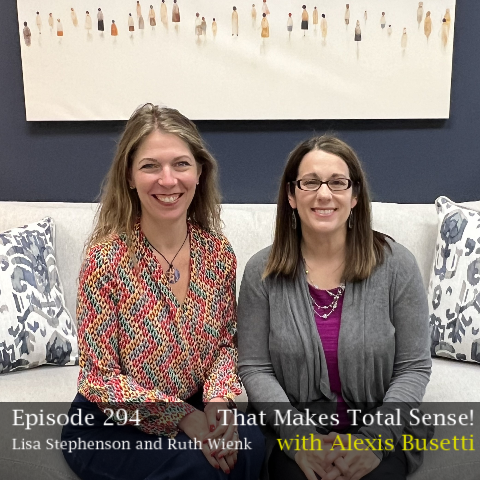
Well, I am really thrilled to be here with our guests, Lisa and Ruthie today. It is my spring break, kind of, and so I'm, like, enjoying the wonderful weather in Houston. We get to say that about two, two or three weeks a year. And so this is one of those times. And they are both at Lee University in Tennessee. And so I'm curious, what's spring like in Tennessee? What's your. What's your weather? What's your norm?
[00:01:16] Speaker B: A lot of pollen.
[00:01:18] Speaker A: Oh, tell me about. Same here. Yeah, yeah, that's. That's the one drawback.
[00:01:22] Speaker B: And it heats up pretty quickly. So I think we finally turned a corner. It's been up and down a little bit, but we're hitting 70s and 80s this week.
[00:01:30] Speaker A: Yeah, yeah, yeah, for sure.
[00:01:33] Speaker C: And while some might see the pollen, I see the flowers, and it's just beautiful. I lived in South Dakota for four years, and while I loved South Dakota, it was still cold and dreary and snowy this time of year. So I'm very, very happy with all of the color and the flowers that we see whenever I go out the door.
[00:01:52] Speaker A: I love it so much. I had a meeting this morning. We were talking offline that it was. That's Monday. And I had a meeting this morning that I almost forgot about, but it was with two gals who were new to me, and they were both in the northern part of the US and it was, like, snowy and all of that stuff still. And I'm like, I think it's going to hit, like, 83 here today. And. Yeah. So, yeah, if, you know, full disclosure, if I wasn't here sitting here with you, which I'm thrilled to be, I would be sitting at the pool. So until it gets, like, so hot that it's too miserable to even sit at the pool. But anyway, I'm here with Lisa and Ruthie not to talk about the weather, although I'm always curious what spring looks like for people.
We're going to talk about their newest book called Redemptive Service, Loving Our Neighbors well, again, two professors from Lee University, Lisa Stevenson and Ruthie Wink Is I saying that right?
[00:02:44] Speaker C: Yes.
[00:02:45] Speaker A: Okay, perfect.
Like you're flirting. I love that.
But Lisa is a professor of systematic theology and Ruthie is a professor of sociology. And so they've come together and written this beautiful book about Christian service, redemptive service. And so I'm going to let them really take, take the show. But as I was reading this, I had my own thoughts on this first question. But I really want to ask you guys what was behind, what was behind the writing of this text for, for you, maybe in general, but also like right now, and in part what I'm curious about. And again, like, I'm thinking about my own context and my communities that I have interactions with. And so I have my own answers for who I think would be a great audience for this book. But.
But what were you observing? Maybe, if anything. And then, and then who's the audience that you guys were thinking about as you were writing this book?
[00:03:51] Speaker B: Thanks for the question, Alexis.
I will speak for at least myself because this was a joint venture. So, Ruth, you might have had some other motivations, but I have been teaching at Lee for 18 years, and for a majority of that time I've been the director of our benevolence program, which all of our students have to do 80 service hours by the time they graduate. And so there is a class they all take. It's a one hour class, meets once a week, and it's kind of an introductory course to why do we do service as Christians? Why is this a part of our worldview? Why are we requiring such a thing at this institution? And so after years of teaching that class, a couple of things begin to happen. One was that I became more and more convinced that this is really a part of the heart of Christianity. I mean, I always knew it was important, but I'm not sure I quite grasped how important it is. And even in researching this book, it just, it still even then impressed me from beginning to end in the Scriptures, how much service to our neighbors. It just does not go away. It is a constant request of God on our behalf to be his people and to represent him in this world. So as I became more and more aware of that, I also, as the director, constantly looked for textbooks that we could use and readings that we could use. And there's a lot of great material out there. But what I found was there was nothing that seemed to hit home on both what I would say is the theological end of it. So why do we do this? There's great books that are nothing but theology. But then there's no praxis or how do we do it? And there's lots of books on how we do it without a lot of theology. So Ruthie and I, from my perspective, we. We tried to partner together so we could hit both of those ends really well and really allow the reader to walk away with some solid thoughts on both why we do this as Christians and how we can do this as Christians.
[00:05:57] Speaker C: Absolutely. I can just pick up with what Lisa is saying there.
And for me, the piece that I would add to that how. Is not just how to do it well and how to how to do service ethically, but also our posture of ourselves when we engage in service. And this is where I. One thing that I think is perhaps an addition of this book to the dialogue in general is this idea of we engage in service from the position of deep solidarity with those whom we are serving. So really examining ourselves for any kind of a hidden hierarchy or a sense of superiority or a sense that. I had this figured out and that's why I'm serving. But realizing that, no, everyone has something to gain, everyone has something to learn.
And in many cases, those who we are serving have things figured out that we don't have figured out. And I don't, I don't read that a lot in a lot of places, but I think that's an important posture to begin with.
[00:07:23] Speaker A: Yeah. Yeah. Thanks to both of you for that. I would say for, for my part, as a reader, this had me thinking a lot about the history of American evangelicalism and how these, this posture of service used to be a part of just regular interactions. It just used, you know, I would say, prior to the great reversal.
[00:07:57] Speaker B: Right.
[00:07:57] Speaker A: This was just like how, how we operated, but it was so long ago. And I think many of us don't. We don't. We don't know the history. And so we've grown up. I have grown up in a. Spaces where these two things were seen as very similar, separate, or, you know, there's. There's kind of like maybe one or two categories that we as Christians might do. And those categories, I would say from my perspective, might be kind of slender. It's not that they're bad or something or we shouldn't be included, but, you know, serving at a soup kitchen that gets a thumbs up and that's something that, like, yes, this is something that we're going to do. Or when I was growing up, it's very common for youth groups to do like short term missions trips, you know, to overseas locations and things like that. And, you know, there's probably a few others, you know, that I can name. But I would say those. Maybe those kinds of data points were the ones that I grew up with, where it's like, okay, this is. This is it.
But I would say for most of the communities I was part of, and I'm talking about, like, Bible Belt conservative, white evangelicalism that I grew up in, we didn't look and weren't taught to look at service in a very holistic way.
Just in general, not about ourselves or the people. You know, just like service as a. As a thing. We just weren't, you know, taught. It wasn't really like a. I don't know, like a holistic part of our faith experience, maybe.
And so. Yeah. So anyway, so I had a whole. I thought, oh, my goodness, I. I could see a lot of folks who would really benefit from a book like this, as you mentioned, who bring. That brings all of those aspects together.
And I want to ask Lisa, you're the. You're the theology professor, so I want to give you first. First dibs on this one. But I think for me, I'm, you know, I am kind of oriented toward this, like, service. I mean, I. One of my first master's degree had a concentration in social justice. And so those. That act, that active part was really familiar for me.
But my question is, why is it important to combine these. In other words, in this book, why is the theology piece so crucial to this discussion?
[00:10:27] Speaker B: Sure. Great question.
We attempt to both defend and answer that by using the parable of the Good Samaritan. And so I'm gonna. I'm gonna use that for a second in that parable. Many times we think that parable is about doing right.
[00:10:46] Speaker A: What.
[00:10:46] Speaker B: What is God calling us to do? So it's all about action. But part of our. Our argument in the book is that before action comes vision. Like, how do we see our neighbors? Because if our vision is blurry, if we refuse to look at other people, if we refuse to see them with compassion, if they are just problems that we need to step to the side and not be bothered with, then we're never going to act. So before, in a sense, we can get to action, we have to ask about what is our heart position, kind of what Ruthie was talking about? What is our heart position towards our neighbors? And. And looking at.
[00:11:24] Speaker A: In.
[00:11:24] Speaker B: In Christianity and from a Christian worldview, what does God call our heart position to be? I mean, yes, we are sinful human beings, so we're not perfect. And we probably don't see them clearly like we need to. But part of sanctification and working towards reflecting Christ more in this world is looking at ourselves and seeing where maybe we're not being honest about how we view our neighbors and opening. Opening ourselves up more towards the way God sees them and towards the way God is calling us to see them. And in that sense, therefore, being the body of Christ in this world and being that Good Samaritan to our neighbors who are in need. So I think the theological position doesn't just point us towards good works, but as Ruthie was saying it, it helps us to see that this is a part of our spiritual disciplines. Serving our neighbor isn't some marginal thing that we do once a month, but it's just as important as our prayer life. It's just as important as going to church. It's just as important as reading the Bible. And I think that's proven both in the text. I know I think we might get to some of those prophetic texts where you see that come out. But I think we also see it in the New Testament in certain places that. That God. God is calling us to love our neighbors. And that's integral. I mean, the great commandments, love the Lord your God with all your heart, soul and mind, and your neighbor as yourself. And part of loving your neighbor is serving your neighbor.
[00:12:47] Speaker A: Yeah. Ruthie, anything to add on that?
[00:12:51] Speaker C: Yeah, and I think for me, the reason why I was excited to contribute to a text that started and did so well with the theology of what Lisa did, is because it's important for us as humans, and particularly as Christians, to live lives that are in alignment, where what we are doing is in alignment with our belief system, that we have consistency and cohesion between what we believe and what we do.
But so often for so many of us, unless we're living in academia, unless we're constantly talking about these things, it's very easy to forget. It's very easy to forget some of the theological truths if we're not constantly rehearsing them.
And so I.
I loved contributing to a text that. And co authoring this with Lisa because it. It brought that cohesion and that consistency and that alignment so clearly and so explicitly into being that it doesn't let anybody off the hook. Right. Everyone has to engage, everyone has to participate because God is very clear from the beginning of the story to the end of the story.
[00:14:14] Speaker A: Yeah. I'm excited for this conversation and for the text, both as a theologian and, as I mentioned, as someone who has a degree in Social justice as well, because these things aren't separate as we have, you know, as I alluded to earlier, these things aren't separate. And that leads me to Ruthie, when you answered the first question, a word that stood out to me that you said was solidarity. And that is, I'm going to want you to elaborate on that term and what you mean by that term. But I think theologically this is one of those concepts that is beautiful. But I'm also wondering if it is a little controversial for some who maybe haven't read some of the stories, particularly in the Old Testament, in the way that you present them. Lisa. But you, you say, particularly in, in the Old Testament, Yahweh's interaction with Israel, you say something like Yahweh is not just aware of Israel's oppression, but cares about it and chooses to enter in, to it, participating in their suffering. Which sounds a lot like solidarity to me. But I'm wondering if you can elaborate on that idea, on that theological idea.
And I think in part because it's a little bit easier to see in, in the life of Jesus. But I still think that for some of us, we, I would say maybe I have compartmentalized the suffering of Jesus and said he did this kind of like on our behalf, but the incarnation wasn't really like an entering into our maybe suffering. But then when we think about Yahweh, it feels even more abstract to me to think about Yahweh entering into the, the suffering and the oppression of Yahweh's people. So, yeah. Can you elaborate on that theological idea?
[00:16:24] Speaker B: Yeah, I think we see it explicitly in, in the instance of the Israelites and in the Exodus.
And, and we highlight this in the book is that here you have an instance of, of people who are in bondage. They are literally being oppressed, physically being oppressed. And it says that God hears their cries. He. He sees them and he hears them and he responds to them. And the Hebrew words that are used there, it's not just this distant knowing, but it's this more intimate knowing of he's going to enter into this pain and suffering that they have in order to, to bring them through the Exodus to liberate them. And so, you know, there's great Old Testament scholars who talk about that this deliverance that God brings about is not just this distant deliverance, but it's this intimate relationship that begins from the Exodus and continues on through the covenant that God cuts with Israel, where God is invested and involved in the life of these people. In Such a way that, that he's staking his reputation, in a sense, on them and on their ability to be his people and to represent his character and his nature in the world. And as the Torah gets written out, we. We see that come about, you know, do some of these things because I did this for you. Don't forget what I did for you in the Exodus. And I want you to use that as an example by which to treat others. And so we see this pop up multiple times in the Old Testament. Yeah.
[00:17:58] Speaker A: As you were talking, I was thinking about. I think that for me, often when I think about the Exodus in particular, you know, this rescue mission, this deliverance that you're talking about, it like, almost looks a little bit like a, you know, like a claw to me, like. Like Yahweh comes down, grabs the people, picks them up and pulls them out. But as you were talking, I'm like, this is more like a first responder, though, you know, like someone who's actually going into this crisis situation, you know, Then immediately what popped into my head was Daniel, like, there were four in the fire, you know, like, there's someone there, like Yahweh is. Is entering into that. That dark, hard place with his people and, and accompanying them out, rather than kind of like this claw experience where he just kind of grabs them, you know, and like just drops them over in. To someplace safely. Yeah. Anyway, sorry, Ruthie, do you have anything to add to. To that one?
[00:18:59] Speaker C: No, I. There is a lot that I have to say about solidarity, but.
And I'm not the theologian, but with the discussion of. To me, and I can talk about materially and as a sociologist, what I think about what, like what poverty is.
But when it comes to solidarity and people who experience poverty from a theological standpoint, even almost, I wonder if it's. Poverty is a violation of shalom, is a violation of justice, is a violation of peace, is a violation of people's. God created the earth and all of the bounty of the earth for us to experience, and people can't have enough to eat or they don't have shelter, then that limitation is a violation of God's plan and God's creation for humanity. Right. And so solidate. Like, when God takes the position of those who experience poverty, he's taking the position of those who are not getting the. The bounty of his creation. And from that position, like, deeply, our job then is to experience solidarity, not judgment or people who are experiencing poverty.
So, yeah, I get to how it can be controversial, but I do think it's very important for us to think through that at a deep, fundamental theological position.
[00:20:46] Speaker A: Yeah. I want you to talk more about poverty. I'll butt in for a moment and say one of the parts of the book that struck me. I'm sitting.
My husband was reading. Uh, anyway, we're. We're dorks in this family. I just want to just, like, say that out loud. But he was reading, like, one of the Jewish commentaries or something like that, you know, just, you know, in his free time over coffee or whatever. And I looked over at him, and it was this. It was this part on. Because when you talk about poverty being a violation of shalom, and then there was a section on Sabbath, and I was like, as much as I have thought about Sabbath, Sabbath, like, as a Christian, as a theologian, as all this, I'm like, why did it not hit me what a justice issue this is?
And. And so, you know, part of what was written, I think, and you women ladies, correct me if I'm wrong, but it was just like. Because, you know, part of the. I'm thinking back. I don't have the page pulled up, but I'm thinking back to Scriptures. And part of what it is, is like, your manservant shouldn't work and your maid servant shouldn't work. And, you know, there's all of these things. And I'm kind of like, oh, yeah, this just makes sense. But it. Yes, but in society, there would have been people who. It would have been easy for them to take breaks because they have. They live in plenty. They have plenty. They can choose when they're working and when they're not working. And for others, it would be very easy for. For the people who had plenty to exploit them and make sure that they worked every single day. And, you know, and I'm like, oh, like, this felt like such a duh moment to me. But that was part of what came to mind. But, Ruthie, I'm wondering if you can elaborate either, you know, on that, but. But also on poverty as you talk about it in the book. Because.
And just, you know, riff on what you just said about poverty being a violation. Because again, the scriptural part, and you mentioned it in the book, is like, one of the things that comes up is we have this New Testament passage. It's like, oh, well, you'll always have the poor among you. And that ends up being. You know, I'll just say I think it ends up being kind of an excuse for some, which is like, oh, we can't help it. You know, instead of Looking at this and say, saying that creation, God through creation, desires plenty for people, or shalom or wholeness for people. We say, oh, this is just kind of part of the design, you know, what? Well, oh, well, there's just always going to be poor people. What can you do? You know? And it's kind of easy for us to throw our hands up in that. But you also talk about the different, about different types of poverty, which felt really eye opening for me. So choose your own adventure, talk as long as you want.
But, but when you brought up poverty, I'm like, oh my goodness, there's so many, there's so many things there.
[00:23:30] Speaker C: Yeah. So I'll start there with the, the Jesus passage where he's, he does say the poor you'll always have with you. And how I respond to that as a sociologist, because I bring this one into my class a lot, my classes that I teach.
And in that text, first of all, I, I, I think that when we use that to let ourselves off the hook about addressing or managing or entering into solidarity with people who experience poverty, we're, we're misreading what Jesus was saying, right? He wasn't saying that he doesn't care about people who experience poverty. And I think we address this in the text. What he's saying there is love me more, right? That our love for God comes before our ideas of social justice. And in fact, maybe even in this text, what we're trying to do is say that our ideas about justice come out of our love for God. So what Jesus is saying put me first and that I don't think that any of us who are Christ followers would, would disagree with. At least I hope we would.
So then, if, if that's where we're starting, our starting point then is we, can we, then we think about the, the discomfort of that text. You know, I don't know in this world that any social scientist is going to say that they're going to be able to solve poverty like it's not safe, something that is solvable, but it is something that we can enter into and manage, and it is something that we can enter into and work on. It is something that we can be invited into and help to make our systems better and help to make people's experiences better and help to increase people's agency so that they can make better, more informed, healthier choices for themselves. Right? So from that perspective, then we don't get let off the hook. When Jesus says the poor you'll always have with you, we actually get invited in a new way to engage.
And so certainly we can talk about all of the different kinds of poverty that we adjust, that we address in the text.
But I do like that idea of we're engaging in it, we're managing it rather than trying to solve it. And nowhere does Jesus let us off the hook from doing that because that would be inconsistent with so much of the rest of Scripture as Lisa's section of the book so clearly articulate.
[00:26:24] Speaker A: Yeah, and when you said our, that action comes out of our love for Jesus. You know, like I'm also hearing him saying when we, he was hungry, you know, we fed him, when he was thirsty, we gave him something to drink. Which also then takes me back to that entering into our suffering and oppression. Like Jesus came as someone who, he didn't, was not an earthly ruler. He didn't have a man mansion that he lived in. He experienced homelessness and he walked. You know, he was an immigrant, he was a refugee and, and, and, and all of those things. Like he was reliant even in his physical body on people to help tend to his needs. And when we think about the call that we get from him to continue in that. I like that phrasing of it's, it comes out of our love for, for Jesus. Lisa.
[00:27:28] Speaker B: Yeah, I would just tag on to what Ruthie has said and, and agree wholeheartedly and just note that Jesus isn't making those words up. He's actually quoting the Old Testament there, or Matthew's quoting the Old Testament and it comes from Deuteronomy 15, in which the whole point is there's poor amongst you, there's always going to be poor amongst you. And the next phrase is, so therefore open your hands up and don't be stingy and don't be hard hearted, but serve them. So it's anything but an excuse to do nothing.
It, it's a motivation to go and do as much as you can. I like what Ruthie said. You know, it's not that we're solving it, but that we're managing it and, and that we're, and in managing it, we are helping to bring about the shalom and the peace that, that God desires in his creation and as a part of his kingdom, as his kingdom is coming here on earth until Christ returns.
[00:28:26] Speaker A: Yeah, let's hang out there for a second theologically, because the Torah has a lot to say about, about this kind of thing. I'm thinking right now about God's partiality, which again, there, there are some circles where I'm like Say, say God's partiality. And it's like, eek, what are you talking about? But, but we see it, you know, and, and there's. I'm thinking right now about God's partiality to the dispossessed is, is how it's put in the text. And so, Lisa, I want to turn to you first, because I think there, there are places, and you point those out in the text. Like there are places in the Torah, which I'm thinking about, where it's like, if you are in a court, you know, you don't get to show partiality just because someone's poor or because someone's rich. Like, you've gotta, you've gotta look and see what's happening in your, you know, but this is the, this is a God of justice in this situation. But there are some situations where God does show partiality. So talk to us about those.
[00:29:36] Speaker B: Yeah, I mean, I think we also see that in the Torah as well. I mean, there are times where there, there seems to be kind of an equal footing. And then there's other times where God seems to show a special concern for those who, in that time and culture and context would have been on. On the margins of society, would have not had quite the same means and power and even social clout, if you will. And so there's a special concern that, hey, you all, as my people, need to look after them and you need to do right by them in ways that you might not think are fair. But this is how I'm calling you to live, because you are my people. And again, and this is what I did for you. Yes.
So don't forget that this is what I did for you. You benefited from this posture. And now you have to be people who also turn to others and are willing to. To give them what I am, I am asking you to give them. So I think we see this happen in numerous places in, in the Torah, which I lift up in the book. And then for me, what becomes most important is we see how important that is in the prophetic text because they fail to do this. And when they fail to do this, God is really, really displeased. Really displeased. So much so that you can't just make this up with good prayer, good offerings, good fasting, good whatever. Like you have created injustice because you've ignored what I've told you when it comes to serving others, especially those who are on the margins. And this is a serious problem.
[00:31:12] Speaker A: Yeah, this.
Keep going and talk to us about the profits because I mean, as you're saying, like, I. So I'll say, like, yes, and amen. I'm thinking now about places where, gosh, it's like, if I were the writers, I'm like, I am so sick of saying, because I am the God who brought you out of Egypt. Like, I am so sick of writing that, you know, but it's there consistently. And then I also think about passages like, you have inherited these spaces, wells that you didn't dig. You got houses that you didn't build. You got groves of trees bearing fruit that you did not plant. And you are benefiting from all of these things. So don't forget when the wealth starts coming in that this place was prepared ahead of time for you. You tended to it, but you didn't build everything that you're benefiting from. And, and that matters too, I think. You know, I think I can see that in my own life of, like, I, I have something, but I need to not forget that I did not. A lot of times I didn't, I didn't build what I have. Meritocracy doesn't work for me. I can't say everything that I have is because I did something, therefore someone else is undeserving of, you know, xyz. And I think I, I. That's part of what I see in some of that posture is, as my grandma used to say, don't get too big for your britches.
Remember, remember where you came from, you know, kind of situation. But the, but the prophets talk a lot about these things in generalities, but also very specifically with the, with Israelites at different times in, in history.
Yeah.
[00:33:10] Speaker B: So I think, you know, a couple of thoughts there. One is just that the society back then was a lot more communal.
And when they, they tend towards individualism, God reminds them of their communal covenant. That is, not just with him and them individually, but also with each other. And so, you know, being a Christian in the west, we tend towards individualism as well. And I think at times we are guilty of some of the things that we see in the prophetic text because our individualism just overwhelms us and we forget about our brothers and our sisters. And we think, as long as me and God are good, I'm good.
But that's just contrary to the covenant that God cut with the Israelites in the Old Testament. And even the kingdom of God that we see emerging in the New Testament is that God is always calling a people, not a person. And in order to be a people, the images are always Collective, together we represent who he is here. But I, you know, in, in talking about not being credited with one's own, shall we say, goods or wealth, etc, there's this beautiful passage in Isaiah 7, I believe it is, where it's this parable and, and at first you don't know who it is until you get to the very end. But it talks about a master vineyard. And it's the master vineyard who invests the time, the money, the energy, the effort to build this award winning vineyard. And as it goes on, that vineyard does not bear the fruit that that master vineyard put in the time and the effort for it to bear. And there's judgment on it. And it has to do with issues of justice and righteousness. And instead of producing justice and righteousness, it says that they produced bloodshed and a cry. Interestingly enough, that cry is the same word for the cry going back to the Exodus that the Israelites had. So the same cry that they had, they are now making other people have because of, of their behavior. But the idea is that you, you are not credited with a good harvest. God is.
And therefore if you're not credited with the good harvest, you are not the owner owner of the vineyard. God is the owner of the vineyard and you just steward what God has allowed you to be a partaker and a benefactor of. And when you steal that from other people, you're stealing that from God. And so we have to tend not just to our own selves in that garden, but to the rest of our brothers and sisters in that garden as well and make sure all of it. Again, the idea of shalom, widespread goodness, health, prosperity and harvest is pla. Is present for all.
And multiple prophets on multiple occasions, in multiple ways talk about how this is what God expected and this is not what is happening for various reasons. So I think it's interesting it's not even just one prophet, right? Maybe we could write it off it was just one prophet, but it's multiple prophets saying very similar things in very poignant language that if you truly read it should quite frankly disturb you the way that they're describing the reality of what's happening.
[00:36:31] Speaker A: Yeah, yeah, yeah, I agree. Ruthie, I'm curious when Lisa was talking about kind of this communal versus more individual lifestyles. As a sociologist in the west, in the U.S.
how do you see individualism playing out when it comes to activism, service, these kinds of things that you're advocating for, especially in Christian communities?
[00:37:04] Speaker C: So I think it's really hard for many of the populations that I talk to. Or many of the people who are going to, might even be listening to this podcast. If growing up in an individualistic society, when this is just kind of our status quo, the way that we see things, and then that's going to be the interpretive lens in which we view not only our own situations, but the. The situations of the people around us, it gives us kind of a skewed perception, right?
And so when we think about having a community orientation rather than an individualistic orientation, then all of a sudden it opens that up. Now the individual in me can. Can I still have enough of the adolescent, Ruthie still, you know, living and saying, wait a minute, but what about me? What about my family? What about what's good for me?
The thing is, as we mature and as we mature in our faith, as we hopefully mature in our having stronger, healthier communities, all of a sudden we realize that what's good for everyone will actually also be good for me. That if I can, as a. As a sociologist, as a community organizer, as just a citizen, if I can elevate the common good using terms that might be a little bit too loaded, but if I can elevate and advocate for the benefit of everyone, then particularly those who are benefiting the least from our systems, then all of the sudden, everyone will benefit from that. And so that means that I have to move myself out of the center of not only how I vote or how I think or how I ascribe the reasons for the social problems that we might experience or see.
[00:39:31] Speaker A: So as you were talking, I was thinking about how disability theology has informed that for me.
So I often think about.
I had a guest on previously, and I'll put it in the show notes. I've had a few, several folks on talking about disability theology. That one I'm thinking of in particular right now. Her name is Amy Kinney, and she talks about this in her book quite a bit.
But one of the things that she lists several examples. And so this is just like these real, you know, some micro level, but it's like something that we can maybe all relate to. But she said this is all by memory right now, so maybe don't quote me on this, but. But it's like I remember some of these examples, like some of these things that were brought about because they served the disability community, but that we all benefit from. So, like, one of them was like text messaging, you know, like, this was for people who had hearing impairments initially. But like, I promise, like, I. I would guess if I had to bet all of Us. Each of us have probably texted today, or we probably will text at some point today, because it's easy. You know, it's like one of those things that, like, we don't have hearing impairments, but we all benefit from something that was developed because. To benefit people with hearing impairments or ramps and on sidewalks or, you know, widened sidewalks. It's like, this doesn't only benefit people who are in wheelchairs. This benefits, you know, parents with strollers or people riding bicycles or tricycles or, you know, like, all these. Someone dragging a wagon behind them. But, you know, with whatever it is, like, these things that, you know, it's the. These small things that we think of as small, which are actually huge for folks who need this for. For their ability to get around.
But they benefit all of us. And they're not controversial, you know, now it's like, okay, this is just. Well, they can be. I guess they are. Let's not get into Church's history with ADA and, you know, things like that. But.
But, you know, they don't have to be controversial. It's like, this is beneficial for.
Beneficial for a group, and this makes it beneficial for everyone. Of course, I know that you're talking about different things, but this is what. This is just one of those things that came to my mind. But it's like. But when we realize, as much as we want to be individual, we really are all tied up in each other, with each other. I have a friend who moved to Houston recently who's from a big city in the Northeast, and she said Houston doesn't have any zoning, really, to speak of. And so it just kind of feels haphazard. You know, you kind of walk around. It's one of the biggest cities in the country, obviously. She's like, I just kind of like it. We're just all kind of on top of each other, you know, And I'm like, I like it, too. You know, it just reminds you that you're not alone, that you're wrapped up in.
In your neighbors when you're just kind of, like, all on top of each other.
I. I'm wondering. Kind of trying to decide where I might want to ask us to go next. But I think one of the things I'm thinking of this will be for both of you, maybe. Lisa. First, as I'm thinking about.
Oh, I'm thinking about the Torah. And I'm thinking about how even as theologian, like, the Torah is hard. Um, it's hard to go through, and sometimes it can feel repetitive and boring. And, you know, all that especially for, you know, I think maybe for lay readers as well, it kind of feels that way sometimes.
And so I think part of what I'm. What I'm wanting to draw out is. And you did a great job talking, starting to talk about, like, the covenant, but, like, what are some of the things conceptually that we can say this is part of God's character, this is part of God's maybe design for God's people.
And these are ideas and concepts that are very relevant to us today. So I'm thinking sometimes it can be confusing to look back and say, well, I don't care about my linens and my silk getting mixed up on the same day, so why should I care about, you know, xyz? Because they all just kind of feel like all these laws get lumped together or whatever. But there are values, I think is how you put it in the text of, like, these are values that God calls God's people to live by. And these values are not just still relevant today, but they're. They're expected. This is how we would. This is how we would live. This is how we would treat one another.
[00:44:18] Speaker B: Sure.
Well, I'm not an Old Testament scholar, so that. That's my first disclaimer.
Unfortunately, you know, we don't have an Old Testament scholar with us, because I would love to bring them in. They. They certainly have a better understanding of, of everything that's going on in the Old Testament and with the Torah. But from what I do know, I mean, we see the covenant, first of all, is not just about religious things. It's about a whole way of life. So, So I think first of all, that shows us God is concerned with our. Our whole way of life, not just with what we might think are spiritual things. And then we divorce. Divorce that from, you know, physical or materialistic things. But the Old Testament is pretty concerned with both of those aspects equally the whole way through. And I think we see that come through the New Testament in terms of the Torah itself. You know, some of the. The laws I was noting, we see a repetitive phrase and a. A repetitive group of people that God is. Is continually continually lifting up and protecting. Um, and so in that society, it was those who were the widows, those who were the aliens amongst them, those who were the orphans. And I think if I. If I recall right, the poor was the other part of that phrase. It. It gets said different ways at different times, but there's always this group of people that God is continually marking out as. And, and don't forget about them. In fact, these laws are especially for them. Now if we've read through any of those laws and we have an inkling of our 21st century society, we can feel like these just don't make sense. Right. We can't do this in our society. And on the whole I think that's probably true. Literally, we cannot live out a one to one correlation with many of those laws. But that doesn't mean that we just then abandon them and move on as if they have nothing to communicate to us about God's heart on these issues and the things again, that we should be concerned about. So for instance, in the book we talk about some of the Torah laws that are concerned with lawsuits or sharing the harvest or loaning money to people or fair trade or parody. Those are all things that still affect us today. And we are struggling as society and cultures and nations today to, to know the best way forward in some of these areas, especially amongst the Christian denominations. And so while I don't think those laws spell out exactly what we do, they surely point to a direction, a posture that we should at least take into consideration about how is the best way to embody these kind of ideals in a 21st century world. So our rules and regulations might look different and even the church might need to do something different than, than what the rest of society is doing because it just doesn't line up with some of the rules and the principles behind those rules that we see in the Old Testament. So for example, I talk about this whenever I teach this course. The loans.
It may not be possible to give out loans with no interest. I don't know, I'm not an economist. But surely it's possible to give out loans without ripping people off, causing them to go into drastic debt because they are forced to, to borrow money short term because they have some kind of emergency need and they have no other way of getting that money. Like there must be a better way that we can help them get the money they need without breaking them in the process.
I think the Torah would point to that kind of posture and I'm not sure that, that we fully have realized those kind of opportunities or ways to loan money in our current culture and society.
[00:48:03] Speaker A: Yeah, thank you. Do you have anything to add to that immediately, Ruthie?
[00:48:07] Speaker C: I think Lisa's hitting the nail on the head with that. You know, it's obviously society has changed and the way that we are living and interacting with the natural world around us is a little bit different from when the Torah was given. And yet there is an intentionality.
There is a, a drastic resistance in, in the law. There's a d. Drastic resistance to just living life based on what feels good or what seems right. But there is a, an intentionality to thinking about what does it mean to interact with creation, what does it mean to interact with my neighbor? What, how will my neighbor be affected by my choices? And that, I think, is still very relevant for all of us today.
[00:49:05] Speaker A: Yeah. Yeah. I want to go from there back to you, Ruthie, and ask you as a sociologist to talk about social location, because that's part of what Lisa brought up. She just didn't use that phrase and that exact question. But, you know, we have those, those people groups that the Torah talks about, widows, orphans, migrants, or, you know, aliens and those experiencing poverty. But those point to parts of those, the social location of those populations and, and that they were marginalized in that society. I would argue most of those groups that were listed are marginalized today as well. And so we haven't, we haven't gotten very far when it comes to, when it comes to that. But, but as a sociologist, help us understand social location, what is meant by that term and then how that relates to this conversation we're having about service today.
[00:50:10] Speaker C: So. And I'm going to also bounce back to an earlier part of the conversation that I didn't speak to. When we're talking about social location.
It's a very abstract term, and it gets a. It can.
So I think one way that can be helpful to think through it is a discussion of and understanding that every society across humanity has always had some kind of social hierarchy. And we can't point to a society that did not have a hierarchical order. They all have.
And in a hierarchical order, you're going to have a system. As a sociologist, I'm going to see a system that establishes where people's positions are in that hierarchy. Who is in the center or who is.
Does society working for these people or is society working against these people?
How is power distributed in this society? How is power is like the, the ability to get your way despite the resistance of others, Right. How is social status or prestige distributed? So who is. When they, when this person speaks, are they going to be listened to? Are they going to be disqualified or delegitimated? How. And of course, then we can think about how is economic resources distributed in a society that's also going to be part of the hierarchy. So when all of these things come together and describing who people are, that gets into their social location. Are they People that the rules and the norms work for them, or are they people that get pushed to the side? And our rules or social norms, are they people that have.
If they speak, they will. Their voices will be heard, or are they those that will be pushed aside? And so when we were talking earlier about God's solidarity with the dispossessed, and we were talking about, well, there are times for impartiality.
This discussion of social location really challenges the idea of, in an explicitly hierarchical society, does impartiality exist?
Is it even possible to have.
Or do we need to understand that there are going to be social norms, there are going to be levels of social prestige or social status that are just going to be ascribed, even, like, bias, like, even without us wanting to even actively resisting it? I'll still. I've still been socialized into these systems and I'm still going to play into it. Right.
And so that comes into this discussion of service, and that comes into this discussion of seeing and interacting with the world the way that God does. Because then we say, wait a minute. My ability to see, because I am inherently fallen, my ability to see is inherently fallen. And I need to be asking my creator and my savior to refine and reposition me so that I can do better at how I'm seeing and how I'm helping and how I'm serving and how I'm engaging in the world.
[00:53:55] Speaker A: Yeah, thank you for that. I just sent an assignment, so I know, like, probably not even enough to be fully dangerous, but I feel dangerous, you know, talking about some of those. I think the text I read called them social rewards that you were talking about. But. But those aren't set, you know, and then they keep. They keep getting distributed. And then how are they getting distributed? And who is receiving the. The wealth and the prestige and the power and those kinds of things. And it. I'm seeing like a snowball, you know, like, oh, this, this. Yeah, this just keeps happening.
I'm realizing now what the time is, and I'm feeling a little bit nervous because there's no way we're going to get to everything. But I do have one, I think one more question before we wrap it up, because this one that speaks to the.
To that. The action part of the book, Ruthie. And I think it's. I'm just going to ask you to define, if you can maybe do a brief introduction of the concepts that you mentioned and that your part of the book is built around relief, development, and advocacy. That was a really helpful framework for me. And even As I was talking about earlier, like kind of the things that I grew up with, those didn't, I think Lisa and I were talking prerecord. But like they all kind of fall into one category. There wasn't like a big, you know, like a spectrum, I think for when a lot of Christian communities are thinking about how they might serve, they. There is probably more a broader spectrum that we could be thinking that includes those three categories or concepts that you give us relief, development and advocacy. So can you just hit on those? I know this is not going to do it justice at all, but if you can give us just a little taste and then of course there's going to be a way for people to grab the book in the show notes and they can read more on it.
[00:55:58] Speaker C: Wow, thank you.
The quickest way for me to respond to that, and I'm actually going to give Lisa credit because she was the one that thought about this and brought this to me, is that that old phrase that is probably overused. You know, give a person a fish, you feed them for a day, teach a person to fish, you feed them for a lifetime. And then so for those two things, right, like relief is going to be that, that giving a person a fish or in whatever ways meeting the immediate needs.
And that can be whether it's a housing need, whether that's, you know, hurricane relief, whether that's food banks are ultimately relief. So if I'm doing a soup kitchen, for example, I'm doing relief work.
Development is, and I really do like to conceptualize development as both a process and, and an outcome. And this is a really. So development is just kind of the, the cr. To me, the crunchier, more important topic. So when we're talking about development, it's as a process, it's enhancing a community or a people group's ability to act collectively to like empowering a community to do their own work for themselves. Right. And that's, that's going to be the process aspect of development. But then the outcome is when a people group is starting to take collective action, when they are then the result of that action to improve the community long term, whether it's like their ability to put in water projects or just the long term sustainable, what we call development.
And then the third construct there and this, I, I don't know, Lisa, I don't know where you got this. I don't know if you thought of it or you read it somewhere.
But for.
So she brought me this idea of advocacy is not just giving a fish or teaching a person to fish, but addressing the conditions of the pond and looking at why doesn't everyone have access to fish and is the water potable and are the fish edible and does everyone have like a space to go to that other people aren't already taking out? Is the water, has it been overfished and all of those things. And so advocacy really gets us into like the structural limitations and looking at the root causes of why people might experience poverty or why there might be inequities in society. So when we're talking about advocacy, we are actually doing the deep long term work that can put the developer or the relief worker out of a job, which isn't that the goal?
And so when we're talking about advocacy, I'm like, I want to look at what are, how can we change our policies, how can we change our built environments, how can we change our social norms so that fewer people have to address these problems in the future?
[00:59:27] Speaker A: Yeah, thank you so much for that. I know it was quick, but I really wanted to get to that one that feels really important to me for like a boots on the ground, you know, those kinds of ideas.
So I think I will ask us to wrap up by giving each of you, asking each of you if you could sometimes with professors, I'll frame it like, what would you tell us if you were wrapping up class today? Or you know, what, what would you give us, you know, I'm your student. What would you have me to think about, you know, between now and then, you know, now and next time? Or maybe just an encouragement for folks listening who are, who are thinking already about these kinds of things, you know, how would you encourage them to continue as their, as their thinking turns into action, maybe for the first time or, or more action, wherever they are. And I won't, I won't call on one of you. I'll just ask you to go whoever wants to go first and then the other one, and then the other one can end it.
[01:00:29] Speaker B: I'll go first, I guess I would say.
And, and I got this from Ruthie. So, you know, this has been, the beauty of this book is we both have gleaned from each other's strengths and disciplines. But sometimes thinking about this work and then trying to do this work, it can be so overwhelming and it just feels like the need is so big and it's, it's not worth doing or it's too hard or I have to know too many things to do it right, so why should I even start?
And then sometimes it gets uncomfortable. But despite all that, that, that God can use our brokenness and still our. Our meager five loaves and fishes and still feed the multitudes. And so we just have to lean into our. Our weaknesses and lean into our insecurity and lean into our uncomfortableness and trust God. And trust His Spirit is leading and guiding us and is with us. Do the best we can to educate ourselves. It's not an excuse to go in uneducated and then just do whatever we want. We need, we do need to educate ourselves. What are the best practices? Who are the other people in our community that are already doing these things? I think sometimes the church, and in its excitement and compassion, if you will, it just wants to go out and do instead of partnering with people who are already in the community doing this and have been doing this sometimes for decades and already have those relationships and know the best practices instead of just partnering with them. So don't just go out alone. See who else is already doing this work. Partner with them. Trust God. Do your best to educate yourself, but at the end of the day, you have to serve your neighbor. You can't sit on the sidelines. I mean, God is calling us to get out there and get our hands dirty.
And it's good dirt. And so that, that's what I would say and what I would leave the listeners with is, is go out and get dirty. Do it the best way possible. Do it with a humble attitude. And then see what God does when you do that.
[01:02:25] Speaker A: Thanks, Lisa.
[01:02:28] Speaker C: Yeah, that's. That's so beautiful. I don't exactly what she just said. It's.
Doing this work isn't about trying to get it right the first time. It's about being willing to work and keep working and refine our processes and listening better and talking better and asking God to give us more love and for the people that we're working with and more insight and more wisdom into, to build better connections so that we can be better neighbors with the people that we're serving and see how that's transformative, how that doesn't just transform communities, but how that transforms how you see God, how you see yourself, how you interact with your families. It's. It's beautiful and it's exciting and it's messy and it's uncomfortable, but there's a vibrancy that comes from it that I hope people can be encouraged and excited about engaging in.
[01:03:37] Speaker A: Thank you so much, Ruthie. Thank you both so much for coming on and talking with me today. Again. Their book is called Redemptive Service Loving Our Neighbors well by Drs. Lisa Stevenson and Ruthie Wink. Thank you so much for coming on.
[01:03:54] Speaker C: Thank you for having us.
[01:03:56] Speaker A: The links for all the resources mentioned in today's episode can be found in the show notes, music and podcast production by Seth Buscetti. Be sure to give us a review on itunes and subscribe at your favorite podcast listening app. You can also visit us at that makes Total sense dot com.