[00:00:07] Speaker A: Welcome to that Makes Total Sense, a podcast dedicated to exploring God's generosity and justice. I'm Alexis Busetti, a Christian, aiming to ask good questions and encouraging you to do the same.
Every one of us is wired by God to live out generosity and justice, but the how sometimes eludes us. That makes Total Sense is a way for us to get together, posture ourselves as learners, and challenge one another to practice generosity and justice in a tangible way every day.
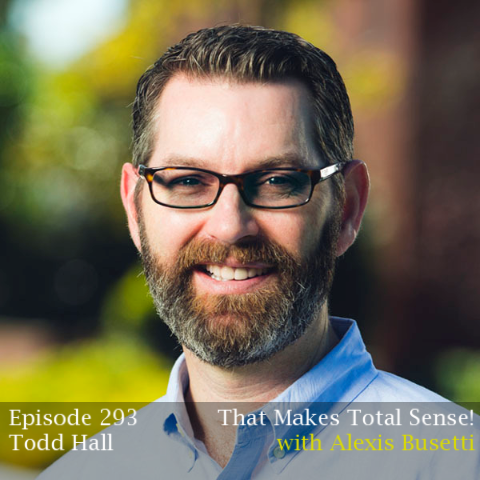
Well, I'm here with my guest, Todd hall, and I keep smiling because I'm so excited about this conversation that we're about to have. I'll also just say as I feel it coming in a bit more, I don't know what's happening with the spring weather in Houston, but it's affecting my voice a little bit. Please forgive me, Todd. And listeners, it might be, yeah, it's a little less smooth than what I'm accustomed to. But we are going to chat about the book that you wrote that also your wife contributed to, which is exciting to me.
It's called Relational Spirituality, A Psychological Theological Paradigm for Transformation.
Todd, you are a professor at Biola, so we are kind of neighbors when I'm.
And Pasadena at Fuller, when I get to go out there occasionally. And so I'm just really stoked about this conversation and we'll find a place to start. But first, I want to give you the mic for a minute and maybe if you could introduce yourself and kind of a little bit of your background. I've mentioned that you're a psychology professor, but that might help as we get along in this conversation.
[00:01:55] Speaker B: Sure. Yeah. Yeah. Well, thanks so much, Alexis, for having me on the podcast. Really appreciate it and also looking forward to the conversation. I think it's a really important conversation for the church right now, especially in this moment that we are in with so many things going on. So, yeah, in terms of my background, as you mentioned, I'm a clinical psychologist and therapist. And so I teach at Rosemead School of Psychology, which is the School of Psych at Biola in the doctoral program. So I train clinical psychologists to be or therapists. And I've been doing therapy myself for nearly 30 years now. So that's a big part of my background. And as you probably know, Rosemead, there's a big emphasis on what we call integration, meaning trying to bring together theology and psychology.
And so that's been one of my areas, and I teach in that area.
And that is. You see that reflected in this book. But, you know, so that's my. So my Background, really just to say a little bit more about that, clinical psychology in general. But I really got interested in graduate school, well, even undergraduate, I would say, in this whole idea of integration, but specifically in the context of spiritual growth or what we now call spiritual formation, because of my own story and journey with growing up in a family that was. Had quite a bit of dysfunction, my mom struggling with a lot of mental health issues and becoming a Christian at a young age, which was wonderful and, you know, saved me literally in a lot of different ways. But I experienced a lot of disconnection in my relationship with God because of those relational issues. And so as I started to get exposed to. To psychology and some of the quote answers, you know, brought in ways it explained my experience to me and helped me grow and heal, I got really fascinated with how can we bring this together with theology and spiritual growth. And so again, I was exposed to that as an undergraduate, which was really a gift in, at. At Biola. I went to Biola for undergraduate.
And so I ended up going to. Going to Rosemead myself, did my PhD there and did my dissertation on the relationship between psychological and spiritual maturity. So essentially this book is an. Is an outgrowth of, you know, 25 years later on the same topic, which is really interesting. So, so that's. Yeah, that's kind of my little bit of my backstory and background.
[00:04:25] Speaker A: Yeah, thank you for that. There's so many places that I, you know, my mind is going right now, but I'm thinking of as you were talking about your own background, you know, I started reflecting on my background and when it came to spiritual growth, as you mentioned, or what we call formation now, which is a language I started using only in the last, you know, several years, and theology. And so I grew up in.
I try to claim it as the buckle of the Bible Belt. That's at least what they told us growing up. But, you know, southern Oklahoma and largely in what in biblicist context. And so a lot of emphasis placed on the Word of God and these things that.
And, and I would think I almost want to say, like a lot of pressure put on, like the Word of God. Right. So like the, these things, this is the, the guide, this is the roadmap. This is the thing that can kind of, you know, make all these problems go away and or, you know, grow you in the places that you need to grow. And I love the Bible. You know, I have an M. Div. I'm getting a PhD to seminary.
But I think that the way that I encountered that paradigm of what is this as far as the Bible inside of this Biblicist context? It didn't leave a lot of room, in my experience, for this kind of spiritual growth aspect that you're talking about. There are places that do. I wasn't really involved in any of them. And I would say name places maybe that might have been, like, more Charismatic or Pentecostal. Like, there's Biblicis there, but there's also kind of space for that. But it's still not the same as what you're talking about in this book. And so it might be good for us. And some friends and listeners know that. I am not a huge history buff, but I appreciated the history section in your book tracing this. I think it's really important that we understand this split, as you. As you name it, between theology and spirituality, because it wasn't always that way. And it kind of became that way intentionally as you trace it. And then I think now there's an effort. I think, you know, Rosemead is included in that. Fuller is included in that, with even these. These terms, these words of integration. And lots of folks are. Are making efforts to try and reunite these things that probably shouldn't have ever really been split in the first place. So could you talk us through. We don't obviously have time to go through the whole section. Why? I would say grab the book and read the section because even as someone who's not a history buff, I really enjoyed it and found it to be very valuable. But maybe if you could highlight some of the places where you trace that split between theology and spirituality and why that matters, you know, like how we're still seeing that reflected in our context.
[00:07:36] Speaker B: Right, right. Yeah. Yes, I think it is helpful context. And, you know, there's a lot that's been written about this, but what I tried to do is just pull the. The headlines together, you know, in a. In one place, and. Because it's. Yeah, it's a huge area, but, yeah, basically, you know, when you look back to the early church, especially the first five centuries or so, there really wasn't this split in these two things that we call theology and spirituality. They were. They were fairly unified. Not that everything was perfect by any stretch, but they were. They were much more unified. And so the, you know, the. The Greek term theologia represents that. Right. It really, back in the early church was this kind of unified thing that integrated experiential knowledge of God and study of God. And, you know, so the Christian scholars and church leaders during, you Know, in the early Church, early Church fathers, when they were engaging in intellectual reflection, it was typically in the context of a deep experiential knowing of. Of God, right? And they were. They were working out doctrine, but it was because this impacts how we live out our faith, you know, as doctrinal issues came up. So it was really much more.
Much more integrated. And then. So then that.
That became split apart, you know, beginning probably 8th century. And then another sort of marking point around the 12th century with the start of the university, there were a number of kind of movements, if you will, that sort of led to this split. And so one of them was the. A big one was kind of the shift from the. A lot of theology being done in. In a monastic context and monasteries and the shift to a university context, right? So that happens, you know, right around 1200, University of Paris. There's maybe a few other universities that predate that, but that's one of the big ones. And so what happens is you get the development of, you know, the faculty of theology, right, which is Department of Theology, the development of the discipline of theology. And so now it's a very different context, right? You're not living in a monastery and involved in. In prayer and community. You're going to university, and your job is to master a set of, you know, explicit knowledge and doctrine about God and things like that. So that's a big movement. Another one was the rise of Scholasticism in the Middle Ages. So, you know, originally that was just sort of a, you know, scholarly approach to things, but it became a methodology that really was highly logical, right? So focus. This methodology was question, argument, conclusion were the sort of three, you know, micro movements of this scholastic methodology. And so, you know, you have people like Peter Abelard traveling around debating, you know, what they call a peripatetic teacher. And so he would have followers go with him. And so he was really incorporating a lot of logic into what he did. And so there's some other reasons why that happened. Some of Aristotle's works of logic were sort of lost and then got rediscovered and translated and brought into the university and into the Faculty of theology. And they, you know, became very enamored with. With logic. And so that was. That was a big movement.
And then, you know, the other really big one would be the Enlightenment. So we're talking in very broad strokes here, right? But just, you know, the development of the scientific revolution and the development of the scientific method gradually leads to some big shifts in our epistemology, how we know things, right? To where it Elevates reason and what I tend to refer to as explicit knowledge as the only valid ways of knowing and ultimately, you know, quantification and experimentation, Right. So doing an experiment that you can repeat things and find replication and applying logic to that and ultimately quantifying things, because that came from physics and the hard sciences, so to speak. And so that. And interestingly, that is still, as you know, I'm sure, a huge part of the academy, right. There's still this sort of logical, positivist view of knowledge. And the interesting thing for our purposes about spiritual transformation is that impacted Protestant thought in North America, particularly how we approach Scripture, even revivals. So folks were applying scientific principles to revivals, and then Scripture, Right. So Scripture came to be seen as a series of facts to be arranged through scientific principles rather than a relational narrative and a relationship with, you know, revelation of God. That is part of the relationship, Right. So, you know, and then also in terms of the impact on spiritual transformation, then you get the. The liberal fundamentalist split starting the late 1800s, right. That has a big impact as well because the liberal camp, so to speak, emphasized religious experience and ethics. And the conservative, you know, what became fundamentalist camp doubled down on correct doctrine. Right. Which is explicit knowledge. And you, looking back, you can see historically why that was the case. And there were some understandable reasons for that. But to some extent, experiential ways of knowing God got sort of lost.
So all that leads to this. Yeah, the split we still have in a lot of evangelicalism, not all of it, as you mentioned, but a lot of it. And it was, it was labeled in a way, by Richard Lovelace, who wrote a book in 1979 called the Dynamics of Spiritual Life. And so he called this the Sanctification Gap.
And so that kind of refers to this split between. Right. Many believers who have this, you know, sort of explicit knowledge of God and theology, but it's just not translating into the way they live their lives. Right. And their. Their relationships. So I think that we still see this. And as you mentioned, Alexis, probably In the last 20 years, I would say, is where we've seen a movement to try to bring these back together in our seminaries and other programs. I mean, prior to 20 years ago, there really weren't spiritual formation programs or emphases within seminaries. And then these things started to. To happen. And I think that was a result of just many church leaders and, and professors seeing this sanctification gap, you know, in, in the church and also in our leaders. Right. That there's just there's just so many people who, who are still struggling even though they're, they're getting this training.
So I think especially at the seminary level. So, yeah, those are some of the big high level movements of this, of this gap. And that's really what I'm trying to address within this evangelical context. And I try to caveat that again, this isn't applicable across the board to all traditions or denominations, as you mentioned, but I think it still has a big impact.
[00:14:52] Speaker A: Yeah, no, for sure. Even. Thank you for that. Even hearing that high level summary again, I'm reminded of several of the things that struck me as you were talking. But when we think about how in the last you mentioned couple of decades that there's been a new emphasis on spiritual formation and I would say across maybe many, across many traditions, I don't think it's fully kind of invaded evangelical space at large. Like, I don't feel that in my, in my context, especially probably geographically in the part of the country that I'm in right now, being in Texas, I don't necessarily feel that just kind of in everyday church life or something like that, but definitely in the seminary space, which I think is important because of the using balance isn't the word that I really want to use, but I would say I think it's important in that context because of the emphasis on the other kind of knowledge that you've, that you talked about. You know, we can, you know, there might have been a quarter in my M. Div. Where I was taking a systematic theology class and a class on spiritual formation or disciplines, you know, where one of the requirements in those classes might have been for me to, you know, find, find a place and go on a silent retreat, you know, and practice some of these, some of these disciplines or experiment, you know, with some of the practices. Reading about the monastics, you know, that it's like what, what were they doing and, and, and these kinds of things in more than just a church history kind of way. And that feels significant to me that we are being trained in this way and that hopefully then we will, that will, you know, come out in our, in our areas of ministry and things like that.
But it is, it still feels, for me there's, it feels a little bit tricky because, you know, I mentioned the spaces where I grew up and sometimes I, yeah, it's still hard for me to maybe categorize or do I need to be categorizing, you know, or things like that. I think part of what was helpful for me with your book is that it gave language, albeit psychological language that I didn't have before, but it gave some language to help me understand maybe what I'm experiencing and, you know, what I have experienced in the past and then also what I'm learning, like the technical things of what am I actually learning. Gave some neuroscience words to that. So I'm gonna really fall on my face when I try and talk about some of those things, which is why you're here. So thank you.
Great. It's good to have a teacher on the podcast sometimes. But I'm wondering, as you're talking about this split between theology and spirituality, a natural place that I think for us to go. And you feel free to butt in and say, no, actually, let's go somewhere else. But feels like the thing that felt most impactful for me in the book, which was this concept you mentioned explicit knowledge, but in the book, you also mentioned implicit knowledge. There's implicit and explicit relational knowledge. And I think that is great. If I'm remembering correctly, this applies to ourselves, to the people around us, but also to God, which is where, you know, where it. Where it goes with the theological theology and spirituality split. So.
So can you talk about those two things, the implicit and explicit knowledge, maybe define them and then help us?
[00:18:45] Speaker B: How.
[00:18:46] Speaker A: How did they connect with this other split that we're now trying to mend?
[00:18:50] Speaker B: Right. Yes, definitely. Yeah. So, as you mentioned, what I try to outline in the chapter in the book is that we have two fundamentally different or qualitatively different ways of knowing. So explicit knowledge, which is conscious and more easy to put into words, and then implicit relational knowledge is one way to describe it, which is, we might say, non conscious, operates automatically. It's emotional. It works at the level of emotion. It's felt in our gut. And it's this implicit knowledge that most directly drives how we feel about ourselves and how we relate. And that's why it's so foundational. So that's kind of the basic argument in the book, is they're. They're both important and they need to work in harmony.
So I'm not trying to be careful to say. I'm not saying ditch explicit knowledge. It doesn't matter, you know, what you think about God or understanding doctrine or things like that.
But if you only understand and have knowledge at the explicit level of. Of God and even just, you know, life in general, but God and. And theology, that's. That's really not the essence of Christianity. Right. It's. It's a relationship with God through Jesus. And so There has to be a relational kind of knowledge. Right? And, and we see that, you know, throughout Scripture, which I touch on as well, that these two ways of knowing, so, so explicit knowledge of why I emphasize implicit relational knowledge also is because in this context that we're talking about, you know, sort of Western Protestant, Evangelicalism, explicit knowledge has been emphasized, as we just mentioned, with this split, right. And so we sort of lost the implicit relational knowledge piece. And there's a lot of reasons for that. I think part of it is the, the, the split that I just talked about and I think part of it is psychological as well, that it's, you know, this, this is a lot of the conversations I'm having now with church leaders about this is in this realm that I think to get into the relational knowledge piece and really bake this into the church is messy and scary. Right? If, if you haven't done your own work and you do not know what's going to come up for you when you're relating to somebody and painful emotions come up and it's going to dysregulate you, you are going to shut that down subconsciously.
And I think that's a big reason why we, you know, avoid that.
So, so there, there's these, yeah, they're two different ways of knowing. They, they feel different, they, they work differently. Again, they're both important. But I think the, the implicit relational knowledge, again, I emphasize it because I think that's part of what's been lost and we need to bring back. That's one reason. The other reason is because I do think it's foundational for again, the way we actually feel about ourselves and relate to others. So that's one of the points I make in the book, is that when there's a disconnect between the two, implicit relational knowledge and explicit, if you know a lot of theology and things about God, but you don't really experience that at a deep level in your emotions and in your sense of self and your implicit relational knowledge as well as attachment, you know, in your, your close relationships, you may, you know, you may think someone should love you or have, you know, explicit knowledge about how this should work. But if you don't feel that in your close relationships, that's what's going to drive how you actually relate to others and your capacity to love. And so that's the foundational level that needs to be transformed. That's why it's so important, why I emphasize it. So the explicit knowledge is more logical, linear, language based. It's processed More in the left side of the brain, not exclusively, but somewhat more.
And the implicit relational knowledge is more.
There's a lot of names for it, but gut level, it's again, it operates in emotions. Emotion has, emotions have a certain kind of knowing built in, which is a really important point. That's part of what I talk about in the book because I feel like emotion. There's not a very good understanding of emotion in the church, I think and church leadership, it gets discounted a lot is, oh, emotion is just a disorganizing force and so you need to ignore it because your emotions might carry you away and cause you to sin or whatever it is. Right. And that's kind of a superficial understanding of emotion that's really referring more to like mood or superficial desire.
But if we take a really kind of deeper scientific understanding of emotion. Emotion is how we evaluate meaning, how we evaluate the meaning of events for our own well being based on our experiences. So another way to say that is emotions are like the dashboard of the soul.
So they have a, a type of knowledge built in. It's not necessarily objective knowledge in the sense of hey, if you're feeling like doing this thing that's not loving or sinful, you know that's correct and go do it. Right? No, but it tells you what your implicit self, how your implicit self is processing the meaning of events.
And that's the starting point for true transformation. Right. You can't bypass that. If your implicit self, which is this, you know, kind of implicit level we're talking about is saying this person is going to abandon me so I need to cling to them. So that would be one, you know, anxious style attachments we'll, we'll get into, I'm sure, or this person is going to cut me off, so I need to relate in a certain kind of way, then that's, that's what you're, that's how you're, that's how you're evaluating that meaning. And that's the starting point for transformation. You can't, you can't bypass that. So that's a big piece of implicit relational knowledge is it's based on emotion which has again information built into it and it's formed through our relational experience. So it's a type of knowing that is built into our relationships and our emotions.
Christopher Bolas, who is a psychoanalyst called, uses the term unthought knowns, which I think he actually got from Freud. And so I meant, I think that's a great term that comes up A lot in therapy, you know, is when we help people give language to, to their experiences that they've never had words for.
And that's a big part of the transformation process, and that's implicit knowing.
So.
Yeah, so an example would be, you know, a client. I've had many clients with this kind of scenario where there's, you know, they know a lot of theology and know about God's love, but they feel very distant from God because of past attachment wounds and, or trauma. Right. And they just don't feel loved by God. And I think a lot of people in the church had that experience. And if you don't understand all of this, it just makes it worse if you hear from leader, leadership or the church. Right. Well, that's just not correct. You shouldn't be feeling that way. Right. Because God is loving, so what's your problem? In effect, sort of thing. Right. Instead of.
That's completely normal and understandable given your experiences in your important relationships.
And so now we're going to work on rewiring that experience. But the fact that you're feeling distant is not a sign that there's something wrong with you. It's a sign that you're, that you're human and that you're processing things the way we're supposed to and that you're coping with pain.
So, yeah. So, yeah, I think these two ways of knowing are really, really important. I've experienced that in my own life. That was part of my own story that kind of got me into this. And then I think it's also important to point in the book that, you know, we see these two ways of knowing in Scripture as well.
So you have eposis, which is more analytical knowledge. And then you have gnosis, this, you know, Greek word which refers to more personal, relational knowledge. And you think about Paul in Philippians3.8, when he talks about knowing Christ surpassing, you know, everything else. He's using the term for a deep, personal, relational knowing. He's not talking about just knowing Christ up here. Right. So I've had questions people ask before, like, well, if this is so important, you know, from psychology, why don't we see this in Scripture? And it's like my answer to that is, like a lot of things, it's not spelled out in Scripture, right. It's not. There's not a lecture in Scripture that explains this, but it's assumed and referred to throughout Scripture. So. So again, I think the headline point is they're both important. They need to work in harmony. We need to understand God and doctrine and, you know, God's moral compass, how we should live, all of that. But it needs to, you know, sort of get integrated into our heart and our experiential way of knowing.
[00:27:57] Speaker A: Yeah, thank you for that. As. As you were talking, I had two really quick things that came to my mind. One of them. And you touched on it. I wrote it down and boxed it on my notes as you were talking. And then I just wrote doubt question mark with a boxer on it. But this is similarly to when you're saying someone goes to a church leader and says, I'm feeling this way. And then the answer is, well, you shouldn't. Right? And I would say, especially now, this is like, I'm not throwing shade. This is the context with which we're all doing the best we can with what we have. Right? But I would say in my youth group growing up, there probably wasn't one kid who in Sunday school, at some point didn't say, I don't know. Now, I grew up in a Southern Baptist context, and so the. So the question looked like, am I really saved? You know, am. Am I? So in other words, I mean, you could you. Does God love me? Does God want me? Does God. Am I secure in God? I think is what we're really asking. You know, when these, when these Youth group kids, 14, 16, 18, are asking these questions, am I really saved? It's am I secur in God? And as you point out, a helpful answer is, you are processing, yes, you're secure in God, you're processing and you have pain points and all this. And I mean, goodness, let's get you to therapy so you can talk about these things and that kind of thing that have been helpful. But often the answer that is received is from this explicit knowledge, from this biblical knowledge, from this theology versus the spirituality, which is, let me show you the five points here or the 10 points here that I can show you. You are indeed, you know, objectively you are, you know, blah, blah, blah. And it's like, ah, but that's not helpful when you're not. When you're feeling, you know, when you're experiencing, you know, for those kids, they named it as doubt. But when you're experiencing those things that feel like a lack of security or attachment or those kinds of things.
The other thing I'll mention to you, I used to hold this very close to the chest, but. But I don't anymore, and I've mentioned it on several podcasts. But back when I was in my early years of therapy, my therapist Suggested to me. She asked me to tell her some of the things, or maybe I mentioned it. Is this something that I pray every day? And I said, I just want to please God.
She didn't chastise me. I don't think she thought that was a wrong thing to pray, but she was kind of asking me to delve deeper. And she was delving a little deeper. She said, suggested to me, what if you tried this experiment?
What if you don't have to stop praying that you would please God, but what if every day, in addition to or included in your prayers, you prayed something like this, God, help me to experience your love today.
And I thought she, I was like, you must obviously not have a license. Like, you must obviously, like there's something, you're a quack, there's something wrong with you. Like, that seems like such a stupid thing to pray. It was so outside of anything that I had ever encountered because of that split. I think largely, you know, this was not, this is not what you're supposed to do. Have you not seen the discipleship checklist? Do you not know the Bible reading plan? Like, obviously you have an issue and don't understand how this works. But I trusted her and began to pray that. And it was a turning point in my relationship with God. It was really a turning point for me because.
For lots of reasons, but one of those is that for me, it opened me up to experiencing God's love in ways that were different than what I had been trained to do, you know, and to look for places and, you know, context to experience God's love that I thought were outside of the box, you know, and it sounds very, it sounds very silly. Like it's very, you know, elementary for a lot of folks probably. But, you know, know, even just this, you know, like my, my grandmother used to do these things. Oh, look at the beautiful moon, you know, look at the sunset and just pause. And in that moment in, you know, in that environment, to, to experience God's love for me, you know, inside of that.
But that's very. What. For me, it was very different than the explicit knowledge I had been trained to grasp onto. And, and like you said, we don't need to ditch that. I don't think there's anything in us that would say, let's ditch that. But, but in the, in the environment that most of us were, were raised in or, or grown up in the faith in, for many of us, it's a very different, It's a very different experience to, to, to, to, to pay attention Even to some of those implicit ways of knowing, you know. And I would say, even for me, I'll stop after this. But I say, even for me, like, it is a moment where, you know, I learned from my therapist also to pay attention to my body. You know, what am I feeling and where is it? And, you know, those kinds of things. And sometimes that can be, you know, oh, I'm feeling something disruptive or disturbing. But many times that is how I'm trying to train myself to connect with God, is I'm noticing something in my body, you know, what am I feeling in my body? Oh, it's this deep knowing, you know, this deep knowing that I am God and God is mine, and, you know, I'm God's and God is mine. And we are connected in this way. And sometimes, you know, I'm saying words right now because we're on a podcast and that's what we do, we say words. But those are often deeper, you know, than words. But those moments, you know, matter. And as you point out, they matter in our relationship with God, but they matter in our relationships with each other. You know, I've been married for like a long time, and that's obviously a large part of our. My relationship with my husband is we have these feelings, right? We have feelings for each other. We even say that when, you know, you know, you see a show. What's the big deal? Oh, the big crisis in some show you're watching is that somebody has to feelings for someone else, you know, and it's like, because those matter. And as you point out, it's not always some superficial thing that. That should be dismissed or something like that. But often it's a deep. There's a. There's a. There's a knowing there that we connect with. And so anyway, there's not another question necessarily built into that, but it's just to say that I have noticed in my own life that those bringing in, even if I didn't have language for it, some of that implicit knowledge when it comes to my relationship with God has really been. It's really been world changing for me to have that addition there.
[00:35:27] Speaker B: That's amazing. That's such a good example, Alexis. And I mean, yeah, so a couple things come to mind there. I mean, one is just the importance of. You were talking about feeling things in your body, right? So I mean, emotions have a physiological component to them. They are foundationally.
There's a foundational, physiological, bodily component to emotions. I mean, we're, you know, I would say we're Embodied souls, right?
[00:35:51] Speaker A: Yeah.
[00:35:52] Speaker B: And so that's. That's very central for experiencing God in our own internal world and, and connecting to others in relationship as well as connecting to God. So that's, I think, very important.
And I mean, the example you gave of, you know, your therapist suggesting pray for God to help you to experience his love. Right. And that was so foreign as it is for a lot of people, unfortunately. I think part of the reason for that sometimes. I don't know if this was for you, but this is part of my story, is that we actually end up using our spirituality in ways to. To protect ourselves from pain, which is very normal and understandable. And so I talk about this as, you know, misguided approaches to spirituality. It's not. It's not conscious usually it's not something we're trying to do.
But, you know, we end up either focusing on intellectual or, you know, head knowledge, explicit knowledge, or, you know, sometimes it's the spiritual high, sometimes it's just trying harder.
And if you think about, you know, many sermons and back to your point, like, this is not throwing shade. It's, you know, we're. We're all doing the best we can, but oftentimes in sermons, there's. In. In our church context, in this particular context, we're talking about Western Protestant evangelicalism. There's. There's not a lot about the transformation process. Right. There's quite a bit about the end goal. Right. What does it look like to be a mature believer? What does it look like to be Christ like? And scripture spells that out pretty well. There is a fair amount in scripture about the process that gets missed a lot of times. But this is where psychology fills in a lot of gaps. And there's not a lot in teaching in churches about what does that process actually look like. And so I think that's where psychology can really help us to. To flesh this out. And that we do end up sometimes using our spirituality to, again, protect ourselves from pain, which is normal and understandable. But we need to get to the root issue of the pain beneath that so that we can process it and then experience that connection with God because it has, you know, when we use our spirituality in a way that protects us from pain, it also cuts us off from God.
There's no way to separate those two things.
So you have to deal with the pain to reconnect with. With God.
So I think that's an important point. And the other thing that came to mind is, you know, you talked about students who maybe have doubts, and so Somebody will come in and say, oh, here's the five points, right? Sometimes that can be helpful, but it depends on what the issue is, right? For a lot of people in the church, even young adults, the issue is not that they don't know what Scripture says about God or that God loves them or that, you know, they're saved or whatever, right? The issue is they don't experience it and they haven't had it modeled in their life with authority figures and adults who are. Who are loving and model and represent God to them and so give, you know, I mean, yes, we need to make sure they understand explicit knowledge about God, but oftentimes that's not the issue, and the focus needs to be more. What your therapist did for you is helping open up a pathway to experience God.
[00:39:10] Speaker A: Yeah, yeah, yeah. You know, you're. No, I think you're. I think you're totally right.
Place I'd like to take us next. It feels.
[00:39:21] Speaker B: It'S.
[00:39:22] Speaker A: It's one of the places that was the most fascinating for me in the book. But there's a. There's a connection there for me because again, like, there. I like the black and white stuff, you know, I like the stuff that I can read. I like, you know, and so these, you see opening up pathways. I'm like, yeah, that's the stuff I've been missing, you know, for. For a lot of time. So. So I'm going to give this quick example and then ask you to, To. To go there, to take us there, because this was so fascinating to me. But.
So my husband and I mentioned, we've been married for a long time. We have four kids, and our youngest kid is adopted. And so I, of course, because this is kind of my natural bent. I read a lot before he came home. He came home as a toddler. And one of the things that I, That I read that struck me, and this was from an attachment expert was she was basically like. I felt like what I gained from. From this. These certain parts in her book were basically like, you just can't overemphasize the importance of things like eye contact.
So I'm like, this feels real stupid to me. Like, you know, like, eye contact, really, you know, like, you look at this and you're like, okay, if you want a job, you should have a firm handshake and eye contact, you know, But I'm like, but. But eye contact with my. You know, And I think. Because part of it is I had three kids. That was a natural, you know, part of the early months for Us, you know, when there was breastfeeding and just, you know, that, just that hold and stuff. But that's very different when you have a two year old. You know, two year olds. I know we all can just a reminder if you haven't seen two year old in a long stand still or they're not still very long. And so sometimes the eye contact can be, it can be more difficult.
But my point is that that connection, you know, this, this I to eye connection, I just kind of thought why is this such a big deal? You know, I'm looking for tips that are more. Maybe feel a little bit more concrete to be honest. You know, like what are some of these things that I can do? I'm looking for, you know, in my context, I'm looking for things that feel a little bit more formulaic then, you know, make time to, to make eye contact with your baby. You know, like to me I was like, I don't, I don't know, I don't get it. But I'll, but I'll, you know, I'll give it a shot. Yeah, but that, I was, I thought of that as I was reading this chapter on Created to Connect because it has a lot, there's a lot of infant studies and things like that in there. But the reason I'm asking you to talk about it specifically in this conversation is for me some of what it brought up is just like the design of us as people that it's not. We can't kind of boil it down to what can be explained or expressed in language. As we've mentioned with this explicit stuff. You can't just write a book and capture everything about it.
That there are pathways and I don't. Again, I'm stumbling over my language because I'm not a psychologist. But connection points that are, there's different, you know, they're just, they're different. But it's like so beautiful to me that I'm like, oh my goodness, did God design us this way? That some of these things that we don't maybe don't necessarily have to think about, you know, but we just do as people are actually what help strengthen our relationships or build our bonds with one another. I don't know, it just kind of felt cool to me. So feel free to take any of the things that you mentioned in that chapter, the places in the book that are, that are on that and just elaborate so that we can, you can help explain what I'm trying to say.
[00:43:11] Speaker B: Yeah, no, you did a great job. Yeah, that's What I mean, what I try to lay out in that chapter is that this idea that we are pre wired to connect and that I do believe God designed us that way, meaning that I think at one level it is the fundamental way that we bear God's image. Right. That we are relational beings as God is relational fundamentally in the Trinity. And so I think psychology fleshes that out. I think, you know, and I do some work in the book on a theology of, you know, what I call being in relation in terms of theologies of the Trinity.
And then, and then come alongside that with, I think there's many fields and sub disciplines within psychology and related fields that point to the same thing, that we are fundamentally relational beings, that we grow and develop most fundamentally through healthy, secure relationships.
Eye contact is one of the big ones that you just mentioned. So gazing behavior is an interesting example in infant research. So, and I'll come back to that. But yeah, there's evidence across all of these, you know, multiple fields that kind of point to this fundamental truth that we are, were that we were fundamentally relational. So infant research is one area and you know, just to give the, the sort of high level headline of that, prior to, I would say 1970s and before, the view from infant researchers in psychology was that babies, infants are not relational when they're born. They sort of grow into being relational. So if you look at developmental theories, people like Margaret Mahler, they talk about, you know, different stages of development, one of them being normal, autism, basically meaning infants are not really relational and they sort of grow into that.
By 1985, that was mid-80s, that was completely overturned because of infant research. And so there's a key book by Daniel Stern called the Interpersonal World of the Infant where he pulls a lot of that research together and really kind of, you know, shows the research is not consistent with this old view. Infants are actually incredibly relational from day one. And even in utero there's even research that infants recognize their mother's voice in utero.
And a lot of that had to do with just figuring out how to ask questions that infants can answer, which is through their preferences. So they can, they can give you an answer by showing you what they, they, you know, what they give attention to. Right. I'm going to look at this thing instead of this thing over here that shows my preference because obviously you can't just ask them sort of questions on surveys. Right.
So there's a lot of research, yeah. On infants that they are actively relational, that they catch other's emotions like we all do. Throughout life, that they're influenced by interactions and influence others, that they develop complex expectations of how relationships work, which is the foundation of attachment theory. That we develop these sort of mental schemas for how relationships work, which in attachment theory is referred to as internal working models.
And so by 12 months of age, those mental templates are in place. So there's research called the Strange Situation, which is this experimental paradigm that Mary Ainsworth developed who, who worked with John Bowlby, who was the founder of attachment theory. And so she documented a lot of Bowlby's theories. That we see this in this experimental paradigm with infants that they, they show these different attachment patterns. Already by 12 months, they've already internalized through this gut level implicit memory how this relationship with mom or dad or attachment figure works and what I can expect. That if I get upset and distressed, mom is probably going to shut down and be distant, or she's going to be intrusive, or she's going to be inconsistent. You know, sometimes she'll be there to comfort me and help regulate my emotions, and sometimes not. So my best strategy is maybe to hyperactivate my attachment system and become clingy and needy. That's, you know, anxious attachment.
Or some, some infants learn by 12 months, again, usually it's the. The parents are, you know, kind of shutting down and having more of a dismissing, avoidant type of attachment. And so they learn a similar strategy that the best way to maintain some sort of what I call pseudo connection is to just shut down or deactivate my attachment system and not express the deep need for relational connection that's actually there because it's pre. Wired into us by God. Part of the way we see that is when they, you know, later started to do some research using physiological measures. And you can see infants with these insecure types of attachment.
You can see elevated blood pressure, heart rate, things like that. Even though they're not expressing, maybe like with the avoidant or, you know, types of attachment, they're not really expressing the knee, they're not. Not pursuing physical proximity to mom when the mom comes back. But their blood pressure and heart rate is going through the roof.
So that shows they're distressed and there's this more foundational need.
So, yeah, there's a lot of, a lot of research in infant research is one area. There is.
I mentioned some of the neuroscience around this as well. You mentioned gazing behavior. So that's something Daniel Stern talks quite a bit about, which is really fascinating that he. So he makes the point that infants at a very young age have full control of their gazing behavior.
And so when you look at an infant and a, you know, mother or father attachment figure engaged in gazing behavior, you're looking at two people who are equal in that relational modality.
And they regulate their emotions through gaze. So if, you know, if you're gazing and they become too activated, they will look away and, and you know, if their heart rate is going up and then they'll, that will calm their heart rate and then they might look back.
But it is a, it is a way of relating that's fully developed in early infancy. It's just not, they're not relating with words.
But that's also the foundation of attachment. It's, it's the emotional communication that happens between mother or father attachment figures and the infant that sets the foundation for whether the attachment becomes secure or one of these more insecure types. And so a lot of that is, is, you know, reflecting back their emotions to them. So they see themselves mirrored in your face and in your gaze and helping them regulate their emotions. So when they get too upregulated and distressed that you calm them down. All the mother. Right. They do come naturally, as you mentioned. Right. For, you know, one's relatively healthy mothers, fathers, attachment figures, it kind of comes naturally. Right. You, you sort of match their, their tone and their rhythm and you might bring it down to help them calm. We sing songs to them to help them go to sleep. Right. All these things, and all of this is very central in psychotherapy as well. These are the same things we do. So I'm, I mean, I talk about this a lot in teaching my students, you know, who are learning to do therapy, that the fundamental way that clients heal is not through the interpretations we give. Like, I've never had a client come back and say, I mean, they don't usually come back and report, but in research and in my experience, it's never been a client really that's come back and said, you know, what was really most helpful and healing was that one thing you said that just made sense of everything. There are those moments. Right, Right. But most of it is the way I felt in your presence and this deep knowing that, that you accept me. And they might not use a language, but sometimes it's even, I feel that you love me in a non romantic, you know, broader sense, but that you, that you care for me, that you're emotionally present, that you accept me. All the, It's a, it's a deep feeling that comes through thousands of moments of, of psychotherapy or maybe it's not always thousands, but just some moments.
That's not so much the words, it's, it's the emotions and the non verbal. And that's exactly what is happening with infants that sets the foundation for attachment. So, so that's a whole area. Another area where we see this idea that we're pre wired to connect is when you look at the absence of close relationships. There's a lot of research on, you know, just this social connection outside of attachment theory. That's sort of an adjacent research area, that it's actually a significant health risk factor as as much as smoking, obesity and physical inactivity. And so there's some really interesting research done by Julianne Holstadt Lent at byu. She did a meta analysis that was published a few years back that documented that social disconnection is as much of or more of a risk factor for mortality as smoking 15 cigarettes a day. And so she's framing it that way to argue that this is a public health issue. And so also The Surgeon General, Dr. Vivek Murthy has talked a lot about loneliness, wrote a book on loneliness called Together, has published several reports about how arguing that loneliness is an epidemic in our society and citing some of this research that it is a public health issue. So it affects our emotional well being, our spiritual well being, also our physical well being. Another fascinating area is how genes are expressed differently based on relational experiences. So, you know, there's an interaction between our genetic, you know, genetics and our relational experiences. There's some early research with monkeys, for example, showing that, that nurturing caregivers buffer or even can reverse genetic vulnerabilities to anxiety. So where they know, okay, these monkeys have a genetic vulnerability for anxiety, but then they have a very nurturing or caring maternal figure and they end up doing fine socially, it sort of overturns that vulnerability.
So it's just, it's a, you know, I'm just scratching the surface in that chapter. You know, there's so many areas that are all converging to suggest that, yeah, that we're relational beings. This is how we grow and develop. And it makes sense when you look at it from a trinitarian perspective. Right. This is how we reflect God. This is how we grow in love and sanctification.
[00:54:09] Speaker A: Yeah, thank you. I, I remember when I read that that monkey study that highlighted that monkey study that you like, this is, this is wild. You know, this feels really, this feels really wild to me. Like, yeah, I keep going back to my own natural bent toward that explicit knowledge where I'm like, make it make sense, you know, like, why does it, why does it make sense that nurturing, a nurturing mother, you know, could, could do this in a monkey? Or why, why does it make sense? 15, 15 cigarettes a day. We know the kind of health, you know, issues that someone can have. Fifteen cigarettes a day. Why, you know, why is it so important for us, us to be with each other and connected to each other in this way? Anyway, I just, anyway, it's super fascinating to me.
I know we're probably getting to time.
I'm like, I have so many, my notes, I have so many more questions. I'm thinking maybe I'll ask one last question and then I will just give it to you after that to just kind of wrap up in the way that, that you would best want to kind of put a bow on this. And then obviously I'll just say, like, grab the book. It's so, it's so good, Em. It's just, it's, it's dense in the best ways, you know, of, of exploring some of these different things. But you mentioned, just real quickly you said the word sanctification. And I'm, this is one of those words that I'm familiar with from my upbringing, less so from my seminary experience, probably, but more so from my, from my upbr. Bringing. But you, you have a, a phrase that you say in the book, Loving presence is the ultimate goal of sanctification.
And that form for me, again, in, in a good but similar way to some of these other things where it felt a little foreign. When I think about sanctification, I would say loving presence isn't the first. That's not the flashcard answer I'm going to give you. If someone says, what is sanctification? Or what's the goal of sanctification? Sanctification. But when I was reading, you know, of course, in the context of this full study, it made a lot of sense. So what do you mean when you say that phrase, Loving presence is the ultimate goal of sanctification?
[00:56:35] Speaker B: Yeah, so I think loving presence, I use that term in a way to, to sort of indicate how we reflect God's image as image bearers. Right. That, that God is intrinsically loving and relational. And so we reflect that as being image bearers.
And partly, you know, because of that, sanctification involves becoming more loving, growing in our capacity to love God and love others. And we see that as a core, you know, the two greatest commandments. Right. And, and really all throughout kind of scripture in the New Testament, in Particular.
So I think that there's, there's good, you know, sort of arguments and evidence in scripture that that that is the goal and it connects with a trinitarian view of, of God as well. And I think it's the end goal and also the process which is what gets lost a lot that you know. So one of the ways I describe it is that we are loved into loving. That you don't become loving by just explicit knowledge or, you know, or other methods or relationships that are not loving or healthy. That you have to experience love in order to become, developed a capacity to love, to be able to love others. And ultimately I would say that God is the source of all of that, but we still need to experience it with human beings. And that's part of what I mean by loving presence, right, is that we, we as image bearers, we represent God to others by being a loving presence to them and helping them grow.
So yeah, so as I mentioned, you know, Jesus identified that two greatest commandments, right? Love God and love others. And love is a huge topic though. So when you really get down to it, it's like, okay, what does love mean? And there's all kinds of views in our culture and songs. And so I try to really articulate more clearly like what, what do we mean by, by love here? And there's really two essential components, goodwill and connection. Which in the theological literatures, you know, early church fathers and mothers especially was referred to as union. Right, if you've heard that term. So I'm just translating that as, you know, loving relational connection. But so goodwill means actively desiring and working toward what is objectively good for the other according to God's design. And I do think it's objective. I don't think that means that we always know what it is, right? We have to, to be discerning. And we can, we can have good intentions and still have a negative impact on others. That's, that's another really important point that I make in the book.
So, but being loving. Goodwill doesn't just mean doing what people want. It means promoting their highest good, which is ultimately relationship with God, but also relationship with others and healthy relationships, loving relationships. And then you know, as an extension of that holistic well being in all the areas of life. But I think relationship with God is the center of that connection or union involves desiring and seeking appropriate relational closeness. So intimacy within the context of the type of relationship. And so that's one thing I talk about is that, you know, there are different types of relationships and Closeness and intimacy looks different for different types of relationships. Right. Like, I don't really relate to my wife in the same way I relate to my sons. You know, like is there were growing, they were growing up. I didn't, there were certain things I didn't share with them because that wasn't in their best interest, that wouldn't be helpful to them. So you have to take into account the type of relationship.
But this has three aspects that I talk about in the book. So emotional presence, being fully attentive and attuned. Mutual closeness, which involves sharing vulnerability and accepting others vulnerability. You can't be close if you're not, not vulnerable. And you know, share things that are important and meaningful to you and your internal world. And then also appreciation, celebrating the personhood of, of the other person. So part of what I talk about in the chapter, as well as the parent child relationship or parent attachment love is, serves as a prototype for God's love for us and the love we should have for others. And so when this really is at its best, this kind of love, you know, we can think about this with our, with children, right? You said you have four kids, I have two sons.
When this is really reflecting God and operating at its best, it's pervasive love, it's constant, it's personal, it's responsive and it remains steadfast. Right. Hesed love in the Old Testament even when the other person is difficult. Right. We there, we've all probably had some moments like that with our children or spouses, partners, friends. Right. There's, you know, and of course we're difficult sometimes.
And so I, I think, I really think attachment is the basis for this deep love that, that moves beyond just what feels good to me in the connection. Right. And that's part of where our society struggles so much with divorce and just relational dysfunction and things. Right. It's like the second that this relationship is no longer, quote, meeting my needs, I'm out. Right.
As opposed to a commitment based on attachment. Right. Which is that I love and care about you for no other reason than this deep bond like that is the reason. It doesn't get any deeper than that. It's not because you meet some needs of mine and make me feel good like so many songs talk about. Right.
So yeah, so I think parent attachment love is, is kind of a prototype for God's love for us and our love for, for others as well. And, and yeah, as I was just talking about loving presence by this. It's not just any sort of superficial type of Love that we see in our culture, it's specifically tied to the person of Jesus Christ and the mutual love among the three persons of the. The Trinity that we are invited to participate in. Right. And we see multiple passages throughout the New Testament talking about that participating in Christ or in the love of the Trinity.
So Jesus told his disciples, right, in John 15, as the father has loved me, so I have loved you. Abide in my love. Right? Abide in this very love that has existed among the three persons of the Trinity for all time, all eternity.
That's kind of amazing, right? So I think that's the goal of spiritual formation, is to grow in this capacity for loving presence. And I think that also is what it means to be transformed in the image of Christ, who is the exact image of God we read in Scripture as well. Right.
And it's not just something we do. It's who we become as we're is. We are again, being conformed into the image of Christ, which. So I think that's really the essence of sanctification.
[01:03:36] Speaker A: Yeah, no, that's so great. I. Quick side note. I'll put it in the notes here. I was thinking there was a book I read by Chuck De Groat in my master's in one of my pastoral ministry classes. It's called Toughest People to Love, how to Understand, lead, and love the difficult people in your life, including yourself, which I love that. So I've tried to keep track of some of the resources that you've mentioned. I'll throw that one in there, too. But that's the. Including yourself. Sometimes we are the difficult person to love in our lives.
But loving presence, it's applicable in that situation, too.
Todd, as we wrap up, one of the things that I love to ask when I have professors on the podcast, and I've asked it in different ways in different settings, but I'll ask you, how would you wrap up this conversation? Maybe if this was class. And I'll say this, your classes may be different than some of the classes I've had. I would say in many of the class settings that I've been in, we don't get to everything we want to get to in that, you know, 45 minutes or an hour and a half or whatever. We just. We just don't quite get there. Now, for us and for our listeners, there won't be a Wednesday version of that. You know, this isn't the Monday, and we're going to the Wednesday, so. So we don't. So we don't have that, but we do have a link to the book. But I would say, how might, you know, we realize I have high school or something like the bell's about to ring. But you know what, how would we, as we, as we wrap up this, this session of our seminar, I might say, how would you wrap this up for us knowing that people can go back, they can, they can re. Listen, they can, they can grab the text. I'll also put a note for your other text that we, we kind of chatted about off, you know, off this conversation as well. If you'll mention that maybe that would be another resource that people can go to if they want to have a different kind of version of some of this information. But yeah, so, so how would you wrap us up if we were, we were sitting in class together?
[01:05:39] Speaker B: Yeah, well, I think, you know, a big point of the book is to not just know these things in our head, but to actually grow, right. And experience God's love in a deeper way and grow in our love for others. So I think kind of I would wrap up on a more practical note. And I think that's just part of my bent as a therapist. Right. So thinking about, okay, how do we put these ideas into action and actually grow and become more integrated, which is another way of saying more healthy and secure in attachment language. And I think that comes down to a couple of key things. So one, that one is, is relationships developing deep relationships where you can grow and story, which we haven't talked too much about, but that's a, that's a very important part of, you know, telling our story, hearing other stories. That's an important part of growth in these relationships and then contemplative spiritual practices. So I mean, sort of a prelude to that is becoming more integrated. And growing involves self awareness. Right. And becoming aware of the disconnects in your own life. But in between these two ways of knowing what are the, you know, where places where you believe certain things about God in, in your head, but it doesn't feel experientially true. Where are those gaps? And then also recognizing possible misguided approaches to spiritual growth like we talked about earlier, where maybe there's ways that people are using their, their faith to protect themselves from pain. And I would just say again, that's normal and it's understandable. There are always good reasons for that.
But you have to become aware of those things and then get to the pain underneath that and process it so that you no longer need to protect yourself in that way. And that will free you up to Have a deeper relationship with God. Because when you're protecting yourself in that way, for example, this intellectual approach and sort of maybe using head knowledge of God to keep pain away, it's going to also disconnect you from God and from other people in your life. So, so I think that's kind of the prelude is self awareness. And then as I mentioned, cultivating deep relationships that provide both comfort and challenge. That's sort of the summary of secure attachment.
People in your life who provide comfort when you're distressed, but also in a positive way challenge you. And so you can internalize the sense that okay, this person is for me, they have my back. And that helps me to explore the world, explore my internal world and try new things, that sort of thing. We need safe people who help us to feel God's love and also challenge us to grow by beyond our, you know, comfort zone. Second, I would say engaging in what I call the knowledge spiral, which is this process of bringing these two ways of knowing together, explicit and implicit knowledge. A lot of that involves story, as I just mentioned, so, so finding people in your life who, who feel safe and secure, who you can trust to tell your story, especially the painful parts. And that helps bring these two ways of knowing together and, and sort of translates these unthought knowns, brings them into conscious awareness. And so one of the fascinating things is that when, when we tell our story and put words to our experiences, sometimes in ways we've never done before, it changes the experience, it changes the memories, the, the, or the, I should say the experience of the memories. Right. Doesn't change what happened to us in the past, but it changes the experience of the memories. When I tell you my story and feel accepted, it changes the experience of my story.
So that's very fundamental. And then allowing stories from scripture, other people's testimonies, etc. Practicing contemplative scripture reading can really help help it sink into our heart, right? Not just studying it explicitly, which is important, but also contemplatively reflecting on scripture.
Processing suffering is a big part of the growth process here. Bringing things to God in lament as well as sharing it with others. But lament is a fascinating area where there's a, there's an arc in, in Lament and, and it's really overlooked in our traditions a lot in the, you know, this context that we're talking about Western, you know, Protestant evangelicalism. But you know, 60% of the Psalms potentially are psalms of lament.
And so when you look at them, there's an arc. And it's got these three phases of crying out to God with your hurts, asking for relief, and then expressing your faith or trust in God. And you can see a psychological process there across that arc that actually brings these two ways of knowing together in a really fascinating way. So the other thing I would say is get involved in spiritual community where you can experience belonging through shared identity, shared experiences and a shared purpose. That's a key part of the growth process as well. So those are some. Yeah. Some thoughts to just sort of bring these ideas home to, you know, your listeners. Practical. Their own growth process. Because the goal really is to bring theology and spirituality together back to this original wholeness of theologia in our own lives and grow in our capacity to love God and love others.
[01:11:04] Speaker A: Awesome. Thank you so much. Todd. Can you name the other text that covers some of these same concepts, but in a slightly different. Different way you released a couple years ago?
[01:11:14] Speaker B: Exactly. Yes. So Relational Spirituality is an academic book published by ivp. Shortly after that, I published a book called the Connected Life, and that's a trade book also published with IVP Press. And so that's the same basic message, but it's a trade book, so it's a little easier read and more stories and that sort of thing. So that would be great for somebody who wants a first, you know, first take on this or for church groups, groups, small groups, things like that. Whereas if you're more academically inclined, you know, graduate school professor, theologian, psychologist, you know, relational spirituality might be a better fit.
[01:11:51] Speaker A: Awesome. So I'll name that one again. That was the one that. That I read for this, for this time. But we don't want to. We don't want to miss the Connected life either, which I'll link in the show notes as well as this one. A Relational Spirituality, A Psychological Theological Paradigm for Transformation by Todd hall, which Elizabeth Lewis hall, his wife. So thank you again, Todd, so much. This has been really. It's just felt like a brilliant conversation. Thanks to you. So I really am just appreciative for your work and for the time that you took to chat with me today about it.
[01:12:24] Speaker B: Yeah. Well, thank you so much for having me on, Alexis. It's been a wonderful conversation. I really appreciate it.
[01:12:31] Speaker A: The links for all the resources mentioned in today's episode can be found in the show notes, music and podcast production by C. Seth Buscetti. Be sure to give us a review on itunes and subscribe at your favorite podcast listening app. You can also visit
[email protected].