Episode Transcript
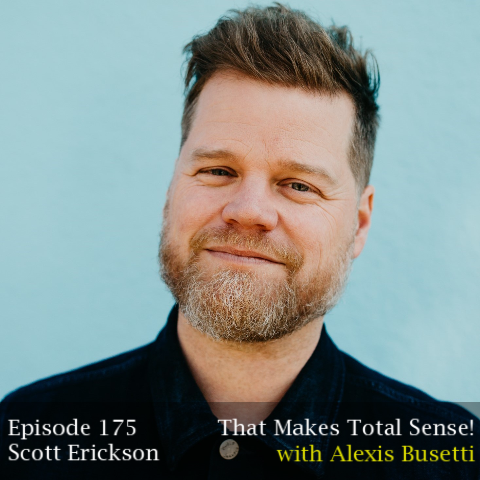
Speaker 1 00:00:06 Welcome to That Makes Total Sense, a podcast dedicated to exploring God's generosity and justice. I'm Alexis bti, a Christian aiming to ask good questions and encouraging you to do the same. Every one of us is wired by God to live out generosity and justice. But the how sometimes eludes us that makes total sense is a way for us to get together, posture ourselves as learners, and challenge one another, to practice generosity and justice in a tangible way every day. Well, I am so excited to have on the podcast today, Scott Erickson, all the way I say all the way from Austin, Texas, just down the road. Hey, Scott.
Speaker 2 00:00:54 Hi. I know we're, we're just a long football pass away.
Speaker 1 00:00:58 That's right. We're neighbors, practically all. Mm-hmm. <affirmative>, all the, we did chat a little bit before how being in Texas, you know, Texans say Texas, it's a whole other country. But we did say, I mean, living, you've lived in Houston. Living in Houston and living in Austin are just like totally different things.
Speaker 2 00:01:13 Yeah. Same amount of queso, but very different. Yes. <laugh>,
Speaker 1 00:01:18 I would, I would argue same amount of queso, very different queso.
Speaker 2 00:01:22 Ah, that's, yeah. Mm-hmm. <affirmative>. I could see some differences for sure.
Speaker 1 00:01:25 Yeah. Yeah. So tell us what you do in Austin professionally, and tell us a little bit about your family too, before we get started.
Speaker 2 00:01:33 Well, I'm a professional, uh, queso consumer. And then in my spare time, I'm an artist, which is a descriptor that has lots of different meanings. So I'm a, I'm a visual artist, which means I'm a painter illustrator, and I translate and contemplate and communicate about the world through that. Uh, I'm an author, co-author of a couple prayer books and author of this book and another book coming out next year, um, and try to make experiences through that. And then I am a performance artist, and I do these, like, one-man shows multimedia, sensory, interactive experiences with audiences nationwide. And that together is what I say is I'm an artist,
Speaker 1 00:02:13 <laugh>. Oh, I love it so much. And you're, so the book that we're talking about today, um, has some striking artwork in it. It's, it's just beautiful, honest advent, and it's got, uh, an illustration on the front of a pregnant woman. And so I definitely do not want to forget your introduction of your family because you, you dive into that in the book for sure. So go ahead and tell us a little bit about your family.
Speaker 2 00:02:39 Yeah. And, um, I'm been married to my wife Holly for 15 years. We have three kids, a nine year old boy, eight-year-old girl, and a two-year-old boy. So back to toddler and, and diapers and all that stuff.
Speaker 1 00:02:53 You are a brave person.
Speaker 2 00:02:55 I'm in my forties. We had him <laugh> when I was 41. 40. I was almost like, wow. 40 and a half. Yeah, I know. Yeah, he Jones. He will graduate college or high school when I'm 58. So <laugh> nice. Like,
Speaker 1 00:03:10 Oh my goodness. Yeah.
Speaker 2 00:03:11 Yeah. It'll keep, it'll keep us interesting. You know, we'll know all the latest rappers. Um, we don't already in our fifties.
Speaker 1 00:03:19 Oh, no, that's right. I mean, we have, so we have four, um, our, our twin, we have twin girls who are 10, and then we have an eight-year-old boy, and then we have a six-year-old boy. So we're, and I figured we were probably close to the same age. My husband is, he just had a birthday. I mean, he's 42 or something like that. So we're, so we're close. We're in the same scope, but I'm telling you, when our youngest could wipe his own bottom
Speaker 2 00:03:42 Yes.
Speaker 1 00:03:43 The world changed for us.
Speaker 2 00:03:45 Yes. I'll, I just, in my heart of hearts, whenever I'm so, so frustrated, I just go, if you can make it like two more years Yes. It'll a year and a half. Yes. When he's four, it'll just be like a different thing.
Speaker 1 00:03:57 It will be a different, yeah. A totally different world. And now I took my oldest, he's going to like this little pod, or my youngest to do, he's doing this little pod for his virtual school because help me with first virtual, first grade, I'm just like,
Speaker 2 00:04:10 I can't <laugh>
Speaker 1 00:04:11 Yes. Beyond my pay grade at this point, <laugh>. Um, but you know, he's like, can, can buckle himself. Right. And I feel like that, that again, that's like another line, man, another level, right? Yeah. When, when they can buckle themselves too. So that's great. It, it comes out in the book. So, um, the book, the name of the book that we're talking about today that will kind of, you know, be, uh, the centrality of our conversation probably is called Honest Advent Awakening to the Wonder of God with us then here and now. So let's just start if you can, and give us like a generic recap of what Advent is, because I didn't grow up celebrating Advent. Yeah, yeah. And neither did my husband. And so I know like some, some church communities, some church cultures and traditions do and some don't. And so give us just a little recap of what that is.
Speaker 2 00:05:05 Yeah. Advent is a season. Advent in Latin just means coming. So it is a liturgical season, just meaning it's giving a framework to otherwise <laugh> like void, uh, of going, Hey, for these five weeks, these, or sorry, four Sundays leading up to Christmas, let's spend time thinking about the coming king, the coming Messiah, just like it was announced to Mary and then going through the pregnancy and, and all of that stuff. So it's a, it's a way to just kind of awaken your soul of going, think about hope coming in your midst. What is it like to long for that? And it's allowing those longings that we have for restoration or fulfillment to come to the surface and really like deal with those prayerfully and, and spiritually and, and so, um, yeah, I grew up Protestant two. We just talked about Christmas and Easter. And then you find out, oh, there's like advent up till Christmas and then there's Lt up till Easter, there's <laugh>, and then there's this whole thing called ordinary time, which just is amazing, you know? So there's all of these, uh, traditions and timelines in church calendars that have been practiced by women and men throughout history. And, um, one of the things I think that's great about participating in it is that it lets us know that we're not so individualistic that we're actually part of this great cloud of witnesses or this great communion of saints that's all doing this thing together. So, yeah.
Speaker 1 00:06:30 Yeah. No, I love that. Actually, I'm, I'm reading another book right now for, um, for the show, but I wanted to read it anyway. And the author talks about, um, even reading of scripture, you know, even just like that, um, we've turned it into this kind of indivi individualistic thing, but then mm-hmm. <affirmative> recognizing that this really is a community thing. Yeah. And when we read it aloud and we participate together, and so when you're talking about that, especially now when, you know, some people are back in, in service and buildings, but some people are online, and it just helps to have something like that on the calendar to know that we're doing, you know, all of this as a, as a larger Yeah. Church community and a larger church body. And so thank you for that because that, I didn't want that to be like a hindrance to anybody as we got into this talking about the advent.
Speaker 1 00:07:15 But when you talk about that part of, of, of the coming, one of the things that I just, I kind of wrote in all caps when I was making notes for our talk today was feel the weight that W w A I T, right? Yeah. To feel the weight. And, um, and of course I like think about, of course this has like a pregnant woman on the front. We're talking about Mary, we're talking about Jesus and the birth. And I know you've got three kids and your wife has told her birthing stories and she has heard some birthing stories mm-hmm. <affirmative> in her day. I know that's true because
Speaker 2 00:07:51 Oh, my wife has a doula for a while too. Yes, yes. Yeah. She's massaged babies out like she's done. Yes.
Speaker 1 00:07:58 But I feel like that's kind of the question, right? Is were they early, were they late? When did they come, you know, how far along were you when the baby was born? You know, when mm-hmm. <affirmative> when we're having these conversations and so feel the weight. I thought, okay, I had, I had, my twins came early and it shocked me there wasn't enough anticipation there because they were supposed to not be that early. But my son, my, my first son who's my third baby, he never wanted, we had a, a lot of experience feeling the weight because he never wanted to be born <laugh>. He just thought he was gonna hang out. So I'm just like, I don't know. I just feel like if you can like, talk about even that, how did you try to capture feeling the weight? And let me back up kind of back up a minute, but like, where did this even come from?
Speaker 2 00:08:51 <laugh>? Yeah. Yeah. Well, I can, because I'm a pro, I can tie those both in. Let's do
Speaker 3 00:08:57 It. Let's do it. <laugh>,
Speaker 2 00:08:59 Let's start where it came from. Um, it was four years ago and it was right after the last election, which whoever said you voted for, I think we could all agree, felt really divisive and long and fatiguing. Mm-hmm. <affirmative>. Um, and that year also we, right, were right in the midst of the Syrian civil war and we were seeing these horribly devastating images of cities demolished and refugees and death and Zika Flint water crisis. There, there was multiple gun, uh, shooting school shootings that year. Um, and then like after the election, you know, it's not even Thanksgiving yet, but you just go into stores and it's just like the holiday decorations, the, just the Christmas season, just like dusts like a snowfall on everything in society. And I remember just like being at some store and going, none of this feels relevant at all. It feels so meaningless compared to the chaotic and troubling world I live in.
Speaker 2 00:10:03 And I love Christmas. Like I'm a Christmas fan. I, I am one of those lamos that sets, like, saves an all Christmas music, all day long channel on my radio. I like put it on the loop off the playlist. I I put lights on the house. I keep my lights up till February. You know, like I, I'm that weird neighbor. You're that guy. You're that I'm that guy. I love a tree. Like all of the things I'm into the, I'm into the celebration, but I just found it so shallow. Um, and I'm not even like really poking against like we, well it's cuz we took Christ out of Christmas and stuff. Even the like nativity seems seemed sanitized and like non-relevant. And um, and I was like, sure. And, and that was shocking cuz I was like, isn't this supposed to be like the good news and great tidings of joy?
Speaker 2 00:10:58 And yet it feels like not powerful in the presence of all of this chaos. And, um, so it, it sparked in me this like, well what, where could I find this? And at the time my wife was pregnant with our third, and it's so cliche, I feel like just saying it, it feels like cliche. It's like, well, churches will have a pregnant lady come up and be like, what's it like in there? What does it feel like? You know? And I get all that. But I, and I say this in the book, I'm not a woman, but I live with one and I've witnessed three pregnancies and three births. And in that time I noticed like, uh, very aware of the physical aches and pains that my wife is going through the, the fluids talk about when she became a doula, I never realized I could hear the word mucus plug so many times in my life. <laugh>,
Speaker 2 00:11:43 You know, and, um, and just, and the kind of like the plans. And you don't know how it's gonna happen and you, you make a plan, but you're like, when is it gonna come? All of this? And, and it, and it was that kind of female biology and that real like, attention to the actual process of how incarnation happens, how something that's unseen come, becomes seen. Um, it, it, it, it felt like it was really, I guess <laugh>, it felt really honest. Like it was like actually coming into the world is this scary, risky, hidden, mysterious process. And, and you've been at your births hopefully, maybe you're drug, I don't know, but like, people who haven't been to births, well also, like people who aren't parents. And, and I know that can be hard cuz some people wanna be parents. But as like, your theology changes when you become a parent.
Speaker 2 00:12:38 Absolutely. Like all the things you think about grace and, or forgiveness and sin and all that. It, when you look at relationships and children through the lens of love, it changes how you understand God and everything. And I have burst into tears at each one of the births I've been at. There's some, there's some I can describe medically and technically what's happening. But you can't describe what presence looks like, like what presence feels like when it comes into the room. Like when another person who wasn't there comes into the room, you're like, here it is. And it's like the manifestation of all of this longing and anticipation and plans and thinking and desires and there it is. And it's a wonder. And so I went, I, I got, I was like, I'm less in, in unless interested in the, the logical conclusions of what incarnation means that are.
Speaker 2 00:13:38 And I was just like, what does it mean for a baby to come in the world? What does that mean for the mom? Who carries it? What does that mean for her body? And so I humbly started trying to draw and illustrate what I was seeing in my wife dealing with and, you know, her boobs that are two different sizes, <laugh> and like, you know, just like real diff you know, difficult things. Not trying to objectify the female mill form cuz there's too much of that, but just go like, I'm observing. I'm a witness to this. And um, I just started posting that stuff on Instagram and my own kind of musings. And I had tremendous feedback mostly from women. And what was really interesting to me, admittingly as a man was that women were like, thank you for depicting something that's real. And, and what hit me in that is like, yeah, for one, most of the imagery we have for Christmas has been created by men.
Speaker 2 00:14:36 So, and, and I understand, and I I'll talk about this in the book, whereas like nobody wants to see the ugly alien looking baby that comes out. You know, they'd rather see like baby Jesus who looks like three months old has is cleaned off and is sitting upright, can hold its neck up, you know? Um, but I think there is a bit more to that, which is, um, and I, and I talk about this in the book, which is, uh, you know, the female body has been, um, kind of has been pushed aside by male-oriented hierarchy in religious institutions. And it has been deemed, you know, a a monthly biological period has been deemed unclean and you must go outside the camp, uh, uh, a female like has been diminished as like, we're, we don't know if you have of the ability to teach, uh, a female body has been like, Hey, if I get in the elevator with you or ride in a car with you, I'm gonna want to have sex with you.
Speaker 2 00:15:37 So I can't do that. You know, it has put all of this, this kind of, it has made it scandalous or, um, s you know, dirty or all of this. And, and it really was humbling to go to, to, um, how, how do I wanna say this? Like, not that I was like, I'm not gonna change all that. No. But I was like, I can be a, uh, a husband, a male, a, a lover, a supporter, and go, I think that has actually been very wrong and I would like to pay honor to the fact that, um, in this story, God's sacred plans came through female biology and by, uh, diminishing that we have missed out on the sacredness of that. And so, um, and then it's not just all about like nipples and labia, you know what I'm saying? It's like, uh, <laugh> like uteruses and stuff.
Speaker 2 00:16:32 It's, uh, like also like who are the other people who partook in this? Who are the, who are the shepherds? Who are the magi? Who is all the who's Joseph? Like, we never talk about Joseph, you know, and like, what was it like for Jesus to have a dad? And, and it's kind of these musings on all of these things happening. Um, and then I did that over a few years and gained enough that I went to a publisher and I said, look, here's a book. And they said yes. So that was kind of my, my my honest intentionality was like to try to, to bring wonder back into something I loved that I felt like mass consumer consumerism and marketing had diminished and kind of watered down and, and took a lot of joy out of, and, um, that's what I wanted to find. So that's where it came from. I'd been talking a while, so I kind of maybe forgot the second question, part of that question
Speaker 1 00:17:21 At a time. No, no, that's good.
Speaker 2 00:17:22 You, you can just respo if you wanna respond to anything I said.
Speaker 1 00:17:25 No, I wanna respond to everything you said because I'm just like, it was, it was so good. Um, but I would, so I would say, um, praise God. I'm glad the publisher said yes because it's so good. I, I, um, I told you before we came on that I'm like, I already was trying to figure out like, how in the world can I get my hands on a bulk order of these? Because I've started making a list of friends that I want to give this to because it was so powerful. Um, part of the reason it was so powerful for me was as a woman, like I'm, I'm making a list of girlfriends, honestly, that those are just, who is is coming to mind in the introduction when you start talking about the female biology. Was, I, I cried. I mean, like, I teared up at this and, and I hollered at my husband and I said, this is, you've gotta hear this, um, because of all of the things that you said. And, um, and as a woman who I think culturally my church culture, um, has looked very, very masculine mm-hmm. <affirmative>. Um, and, and there was, it was kind of like, I know this sounds like a weird statement maybe, but I would say as a woman reading this book, and particularly as a mom and particularly as, as someone who has been pregnant, um, I actually felt very seen Hmm. Um, in the pages of this book. Um, wow.
Speaker 2 00:18:55 That's a great compliment. Thank you. I mean, so I'm humbled by that.
Speaker 1 00:18:59 So thank but thank you for writing it because I, I I did, I just thought, wow, this is, you know, I, I, yeah. I just, I just felt, I just felt very seen through it. Um, you, I wanna, I wanna comment on a couple of the things that you said. First of all, this incarnation, this idea of something, something else, uh, who is in unseen becoming seen and, and this idea of being a parent and how that changes us, uh, and changes our faith mm-hmm. <affirmative>. And so I, I wrestled with personally and in, um, I think there are particular church traditions who I think the intention is good, but who seek to make the narrative so seamless because we know from Genesis one that Jesus was there, right. Um, yes. And so, and so I feel like there are some traditions who with good intention seek to make the narrative so seamless that Jesus was always there, that when he comes on the scene, it feels anti-climactic.
Speaker 1 00:20:08 Yeah. Um, and I understand where that comes from because we want to see the unity of, of the trinity. We want to see the plan that he was the lamb who was slain from the beginning of the foundation of the world. But I remember a particular day I was walking my daughters like this double stroller, right? I have all but lost my mind because I had twins and I didn't know what to do with them. <laugh> <laugh>. And, and I'm walking them and, and I think at this point my husband was with me, but I had been mulling it over all day. We, we, we disclosed our enneagrams earlier and I'm a six and, and I'm an internal processor, right? So I'd been mulling over this all day and I just told my husband, I just looked and I said, I, I, I've been asking this question for a long time, but now that I'm a parent, I feel like I can ask it in a different way. Mm-hmm. Which is, if it was all seamless, then why did it even matter that he came?
Speaker 2 00:21:06 Mm.
Speaker 1 00:21:07 And and when I had the girls, I'm like, no, <laugh>, I get it. I get the seamlessness. But there is no comparison to a promise of a baby and a baby.
Speaker 2 00:21:20 Yeah.
Speaker 1 00:21:21 There is just no comparison. And I feel like part of what you do in this book is you take us through that middle part.
Speaker 2 00:21:33 Yeah, yeah.
Speaker 1 00:21:34 Between the promise and the baby.
Speaker 2 00:21:36 Yeah. Yeah. Well, there I, like you come, uh, what you're describing is very similar to the roots that I grew up in, at least the narrative of Jesus. What there are other theological, um, views of incarnation, which is like when, when in Philippians two, when you're saying like he took, he humbled himself, took hisself a, a form of a servant. Um, that one of the things about Jesus's incarnation is that, um, he didn't know. He had no memory. So if you look at Jesus' story, the Garden of Gethsemane, his freaking out is cuz he doesn't know if he's gonna resurrect, he trusts God. But cuz that's what he's heard to do like there. So if you start to see the story from that, like he didn't know, and that was part of taking the mantle off and becoming us. That's part of his humanity. It's a much different story. And then you're like, oh. So he was really human <laugh> like we are because we don't know. And that is, that will take your dead dying faith and go, excuse me, I'm sorry, what did you
Speaker 1 00:22:53 Say? Yeah, no, that, that's what I'm experiencing right now when you just did that is he didn't, excuse me. I'm sorry. What?
Speaker 2 00:22:58 He didn't, he didn't know. Um, cuz then it's, then it goes, then you're like, wait, God really did take on vulnerabilities. Mm-hmm. <affirmative>. And then that's, that's why the angels show up and sing cuz they're like, you do you understand what's happening right now?
Speaker 1 00:23:15 Right.
Speaker 2 00:23:16 Yeah. That'll, it's, that'll cook your noodle for a long time. It will. That that theological viewpoint has single-handedly like restored everything that I thought I had to like throw away cuz it didn't make sense anymore has just like helped me get it. Like, oh, that's, yeah. So then, then, then why his name means so much that it's I'm with you, God with us, is that in our own, the vulnerability of unknowing of not knowing, of not knowing how it's gonna turn out. We don't have an an unempathetic high priest.
Speaker 1 00:23:54 Right.
Speaker 2 00:23:54 We have one who's like, I know what it's like to not know how it's gonna turn out.
Speaker 1 00:24:00 I mean, <laugh>, you're okay. We're like, I'm thanks cuz I'm not gonna be able to sleep tonight. <laugh>. So that's <laugh>. So there's that. Um, yeah. And I'm like, and I have another meeting in a couple hours, like how am I gonna do this? Okay. Focus Alexis focus. Um, but I wanna,
Speaker 2 00:24:17 So then, sorry. So then when you go ahead, you start thinking about this whole incarnation story, you're just like, yes, it's God participating in, it's, if God is incarnating through human vulnerability and inviting human vulnerability to be like it, it is the way that God is, uh, putting on and coming in and being in the world. And so where we can find God now, where we find Jesus and our midst now is through our own human vulnerability. It is in all of our, our doubts and our fears and those things that we are able, those don't become the walls separating us from God. They are the doorways to connect to
Speaker 1 00:24:56 God. Right.
Speaker 2 00:24:57 Right. It's not about becoming perfect, it's about perfecting. Well, um, that's maybe a different kind of quote. We're perfe, <laugh> we're perfecting, uh, well that's, let me change <laugh>. I was gonna go a different, it's not about being, it's not become being perfect. What what we're here to do is perfect our love together. That's what we're doing. Right. But we're doing that through all of our weaknesses and vulnerabilities and stuff. Um, anyways, yeah. We could keep going, but I think you have another
Speaker 1 00:25:23 Question. No, it's, no, it's so good. No, I, no, I, I wanna, I wanna kinda keep going in that vein because, um, you, you said at, I think it's even in the intro, that part of what you were talking about and that you've got, you know, the snow dusting and, and the decorations, and we do this every year and, and the quota wrote down was familiarity kills wonder mm-hmm. <affirmative>. But I feel like what you do in this book, because yes, there is an aspect in which I a hundred percent agree with you, that the familiarity of it kills the wonder. Mm-hmm. <affirmative>, we know what's gonna happen every year. It's the same. Yeah. We get this, we, we know the story, we know the carols, we know where we can go see the best nativity scene. We know who's got the, who's we, we know all of it. But this book for me, the familiarity, you took it to a different place. Hmm. And it restored my wonder. So what I mean by that is, when <laugh> spoiler alert, there's a, an illustration in the book with someone wiping a baby booty,
Speaker 2 00:26:33 <laugh> <laugh>.
Speaker 1 00:26:35 And, and that is familiar to me. I have four kids, I have wiped a lot of butts in my mothering days. That is familiar to me. But that restores my wonder in the incarnation. Yeah. Cause even though I don't wanna think about it, because I think sometimes we've been, uh, maybe trained to think that it's not honorable, but the truth mm-hmm. <affirmative> and, and you define that in kind of the ways, same way I do it with my kids, like, what really happened, seeing what really happened. Right. Like the truth is, somebody had to wipe Jesus' booty,
Speaker 2 00:27:09 Change all those dirty nappies. Yeah. Yeah.
Speaker 1 00:27:11 Change all of his dirty diapers. You know, like there's, there's not even like a special little trash can for them to put it in. Like they've, they've gotta figure this out. But this familiarity of the humanity that I feel like you, you brought in this book, um, helped restore some of the wonder of the incarnation Yeah. For me. And, and not, and not kill it like the decorations do, but but it restored it because that is, that's what we're familiar with. We, we know what this kind of family thing looks like. Yeah.
Speaker 2 00:27:45 Right? Yeah. Yeah. And that particular meditation is for mighty God from the Isaiah prophecy. Mm-hmm. <affirmative>. And I think I started by saying, um, if you live long enough, your the, the end of your life will begin as the beginning of your life. Yes. This somebody else wiping your butt. Yeah. And it's like, from vulnerabilities, from vulnerabilities, from vulnerability to vulnerability, our life begins and ends. Yeah. And, and I go, I walk through like different seasons of your life, what those particular vulnerabilities look like. And, and really the, cuz when people say mighty God, um, what, because of our mm. Love of power and violence, we think, we think mighty God means I have the biggest Iron Man suit and can take everybody out. Right. And, and, and besides that one time that Jesus flips over tables, which pe a lot of people use to, to support violence, you're like, he doesn't do anything mighty that way.
Speaker 2 00:28:42 There's no like, like, and what I, what I uh, um, submit is like Jesus is mighty because he is willing to go through it. Mm-hmm. And that is he's willing to go through human vulnerability and not like shirk away from it and not, and like, and that's what we're invited to do. And, and so Jesus is mighty because he, he didn't, he didn't ever step out of what he was asked to do. And granted, I, I think in that one I'm like, he had some extracurricular activities that we, we maybe don't have, but like still it was beset with his own weaknesses. Which is, I mean, it's hard. Like, uh, this is the journey of any faith person is it, it's, it is our tendency to, we might not think we're like, you shouldn't make any gods other than God, but we do. That's just what we, even our idea of God is an image of God.
Speaker 2 00:29:36 Yes. It's doesn't enco encapsulate the holy mystery that we've given a name God, to try to describe it. You know, so always we have to keep confronting these cliches or these conclusions that we come to. Not that we're not landing on any kind of like, uh, gathering of character or information, but we always have to, when we make an, we've finalized an image, like when we've become bored with the image, it's the problem isn't God itself the problem is the image we constructed And to think about, um, and some to some people, maybe Jesus having weaknesses scandalous to them. But you're like, so he never slept, he never got tired. We know that's not true. He Right. Speaks of being thirsty and hungry and sitting down for arrest, needing to get away a break from the crowds. Like this is Yeah. A heartbroken grieving cry.
Speaker 2 00:30:28 I, I tell people all the time, um, I'm like, look, I'm a Christian because of the resurrection, but I'm mostly a Christian because of the shortest verse in the Bible, which is Jesus wept. Because uh, if I've cried at friends' funerals and if there's a story about God participating in humanity and that God never cried at one of his friends' funerals, I wouldn't believe it cuz I would be like you were insulated from the whole thing. Yeah. That, that on. Like, that's one of the reasons I think it's a real true story. Cuz I was like, cuz get ready, uh, you will find yourself at your friend's funeral weeping mm-hmm. <affirmative>. And that's part of this life. And I find that the Jesus story is actually dynamic enough to have all those aspects of it. Um, it's just what we butt up against or what becomes familiar is the, like, maybe the the conclusions we, we come to about what this story is.
Speaker 2 00:31:23 And if we go deeper and look at it longer, a admitting like, we'll maybe find it admittingly. Like sometimes I wish the Bible was written better, <laugh>. Like, I wish like Anne Lamont could take a chapter or, you know, just, it's, it's not, it doesn't, you know, it's not written like a play. It's, you know, it's an ancient script. It's, it's, it has a purpose. And these books have like a specific way, a specific audience they're trying to get to and study and hermeneutics and all that stuff can help exhume some of that. But like, I really viewed it as, I wasn't trying to be like, here's an in-depth word of what this Greek word means, although I do mention a couple Greek words, but I, I like was more of like, how is this revealing humanity in here? Um, and uh, cuz what why, why I am still interested in the Bible is, um, and this is one of my teaching muses, is I say, um, the reason we're the only reason we're telling this story because it's not a story that just happened back then.
Speaker 2 00:32:22 It's a story that's happening right now. If it was just a story back then and it doesn't apply to now, we would stop telling it. Right. But because like, sure, God asked one guy to take his son up on a mountain and sacrifice him and provided an alternative. And that's very specific. But we all have times in our lives where the thing we love the most is maybe the thing that needs to, that we have to offer up. And that's incredibly hard to do. You know, like, and, and and so on and so forth. You, you know, you know what I'm talking about <laugh>?
Speaker 1 00:32:56 No, but along those lines though, I want, there was, there was this, like, I dogeared a lot in this book. I I penciled in a lot in this book and starred. And, um, and really truthfully, it's, I think you, you said this when we weren't recording earlier, that, that one of your friends, one of the endorsers said, this isn't a Christmas book. And, and, and I agree. Like I, I try and thankfully so far it's, it's, uh, I've been able to do it, but I, I actually like love reading and so I love reading the books of the authors that I'm gonna get to interview like, um, in full because, um, because I enjoy it and it helps me hopefully have a better conversation. But with your book, I used it as a devotional. And today I found myself kind of a little bit sad that it was over <laugh>.
Speaker 1 00:33:51 I was like, <laugh>, I'm done. I don't have anything. You know, that's a great conference. I did, I did. I mean, I did my normal scripture readings today, but then I was like, oh, where's my, oh, it's, it's done. But you know, I can start it again. It's great. But one of the, one of the quotes that I have that I thought was so powerful that goes along with what you're saying is you say, um, there was a moment when the presence of God was felt as the unease of mourning sickness. Hmm. Don't be surprised if your current unease is that same exact avenue of presence. Yeah. And I just thought that was so powerful because again, it's like familiar, right? Like you, you go on and, and I want, I want you to talk about it, but you talk about the uneasy and queasy feeling of having to go through with the physical details of the calling mm-hmm. <affirmative>.
Speaker 1 00:34:46 Right? Like we, and you also say, and I want you to talk about it, not me, but how an uneasy uneasiness isn't always a sign that we're doing it wrong, that we're doing something wrong. Right. Because we, we look through this Luke story and we see the announcement and we see like she's kind of scared, but then she gets over it and then she goes to visit Elizabeth and then she comes back and then she has a baby. But, um, that's a 22 minute sitcom wrap up of Yeah. How that happened. Yeah. And even in the sitcom, the chick is usually pregnant for the whole season, right? Yeah. <laugh>. But like, I mean, that's a pretty quick thing. But, but like I have a dear friend of mine is, is pregnant right now. And we were talking about how the morning sickness is just such a stupid term because for many women who have it, it's all day, it's all day on the morning, you know mm-hmm. <affirmative>, and then you can hope that it goes away at the end of the first, first trimester. But for a lot of women it doesn't. Yeah. My sister was gigantic pregnant with my nephew and puking every day. Mm-hmm. <affirmative> and, and it's just like, but that's, but he's a healthy six foot six boy now this wasn't a sign that she was doing something wrong. No. It was just part of the growth process. Yeah. So, oh my goodness. Talk to us about that.
Speaker 2 00:35:58 Yeah. <laugh>. Yeah. Like my wife, uh, it's, she, she had always like the worst, like third trimester heartburn, just, I remember her just being like sitting up in bed at like 2:00 AM just like, I can't lay down or my, it hurts so bad. Yeah. And, and if we went to the doctor, the doctor would be like, you're doing it. Right. What? It's part, it's part of the process of growing something new. And I, I, in that meditation I allude to like all kinds of uncomfortable, the sign of growing is unco is unease. It is. Um, like I, well we had just moved when I was writing this book, and not only because of Covid did like my calendar go away. Um, we moved and we were isolated in Austin. We couldn't see our friends, the city's closed down, all of this stuff. And I was like, I, we knew it was the right move, but it was very uncomfortable to be where we're at.
Speaker 2 00:36:58 It's very uncomfortable to pack up your stuff and move to another place. It's like very uncomfortable to train for a marathon. It's very uncomfortable to like try to start dating again. It's very uneasy to like try to learn a new skill and do it. And I say like, I've been building a speaking career over the last few years and there have been many speeches that I've given where I've thrown up a little bit in my mouth before I gave a speech. Or like that acid comes up and you're just like, Ooh, nerves. Right. It doesn't mean you're doing it wrong, it means you're on the right track. And, um, I think in that meditation I end with, like, if you asked a pregnant woman who had just thrown up in the toilet, if it was, why are you doing this? And she's like, it's for love.
Speaker 2 00:37:41 I'm doing it. I'm doing it for love. And I think that's the same answer we get from God in une is like, why are you doing this to me? Which our question is to God, like, have you left me? Are you ignoring me? And God is like, I'm growing you and growing involved discomfort and I'm doing it because I love you. And so the place that you're finding unease is maybe where the divine is working in your life. And maybe that looks like allowing yourself to start being kind to yourself or thinking that you could be beloved allowing yourself to forgive and, and get rid of that hate that you've been carrying, even though it's justified. Cuz that person's a real jerk and hurts you really awfully. Maybe it's, um, maybe it's the unease of like, starting again mid midway through your life and going, uh, a lot of my dreams didn't come true and this is not where I wanted to end up, but I'm not done yet and it's gonna be humbling, but I can, I can start over, I can try something new. You know, and those are un those will be uneasy feelings for sure. But it might mean that you're on the right track. Yeah. Yeah.
Speaker 1 00:38:55 So I want to kind of, um, start to end, start to end where you end, because we talk about the unease and we've talked about vulnerability. And in the book you talk about risk, which is, you know, what makes us feel vulnerable and uneasy mm-hmm. <affirmative> and all of that, um, can lead to fear. Right. Like we just talked about. Like Mary was freaked out when Gabriel came Yeah. And met her. And, and we can cut this if you're not ac if you're not okay with it, if you're published, not okay with it, but <laugh> No, it's fine. End by saying be not afraid. What if, what if we said this instead of Merry Christmas?
Speaker 2 00:39:50 Yeah. It could be a legit substitute.
Speaker 1 00:39:52 Yeah. Tell us why though. Because I, that just made me smile.
Speaker 2 00:39:58 I mean, throughout the holy scriptures and specifically in this story, uh, the announcement or the coming of like the divine and human connection, a lot of, a lot of that, uh, announcement or coming to starts with don't be afraid. Like it starts with, because what is, I mean, if we, what are we thinking about when we think that? Is it just like, oh, a flash of light and I'm scared? You know, like, like is it startled? Is that like, don't be afraid? Or is it, is it deeper than that? Is it the fear of like, oh God, everything's gonna be different now. Or, uh, maybe it's like, oh, this is actually true <laugh>, there really is a God, you know, like, it, the fear is is, you know, we'd have to see like the thing behind the thing behind the thing. It's the fear is building off narratives and assumptions about how things are supposed to work, how it's supposed, who am I supposed to be in the story?
Speaker 2 00:40:57 And all of that's being torn down. And so, uh, I think, I think the invitation there is to go what are our deepest fears? And God's announcement to us is going to start, uh, with those fears. It's gonna start with like, do you even see me? Am uh, are you even involved in our lives? God. Um, yeah. And so I I think that it's interesting. It, it, it may very well be that I'm misinterpreting and maybe it's just like every angel comes with a light show and it startles people and they're just like, just chill out. Just wait till the sparkles die down. And then I'll tell you something. But I, I think it's, I think I, I think that revelation and communication with God, actually, it's always gonna confront these deep things in our heart. And, um, I think when we are, when we say Merry Christmas, we're saying like, all of your, uh, assumptions about how you think this is supposed to go down can be toppled over, like something new is coming and that's possibly with you. And in order for us to enter into it, we need to address our fears. And so that, I think God's coming his message, what I take a take on is like, be don't be afraid. Like let's start with your fears. Let's start there right before that and, and we'll get to good news and tidings of great joy.
Speaker 1 00:42:26 Right. Because when he, you know, I just kept thinking that the little button, right? That, you know, somebody's, somebody's mother-in-law or grandma or aunt has that button, um, on their jean jacket that says, put the Christ back in Christmas. Yeah. Or that's on their bumper sticker. But I'm like, but saying be not afraid because I, because I agree with you. I think this is not just about a, a light show. Um, my kids will try to scare me. You know, I come out of the bathroom, woo. Did I get you? You know, I'm like, listen, I'm a mother of four. There's nothing you can do to make me afraid. Okay. Yeah. You're not gonna scare me, but I will admit to them sometimes of being startled. Yeah. Right. Um, but I do, I do I think that there, I agree with you that it's more than a startling that there is this deep fear. But when I think when you're talking about that, like, putting the Christ back in Christmas is the truth. That perfect love cast out all fear. Yeah. And so when he is coming to us and saying, there's gonna be transformation, there's gonna be revelation, there's gonna be something new mm-hmm. <affirmative>, um, it is for the sake of love.
Speaker 2 00:43:37 Yeah.
Speaker 1 00:43:37 Just, just like the morning sickness. Right. It's for the sake of love. And so don't be afraid of that. Um, yeah. Good tidings, joy, um, all of that that you just said, and,
Speaker 2 00:43:49 And let this is, this is how we're gonna, this is how we're gonna become best friends. Like, think about, Hey, come on. Like, I know this isn't exactly what you're talking about with the fear, but the first one is about revelation and talking about like how I think we all kind of wish we had divine revelation, but it's like there's a cost with that. And do you really want it? Like, for example, would you want, uh, an interaction with an angel if, or would you wanna be told something that then now every time you go to Target, you hate it, maybe you already hate Target. You know what I'm saying? Like, what if, what if a perspective in you changed so much that the flavor of all that, like consumerism was trying to give you just went out Right. And it became tasteless. Right. Do you love Target so much that you're like, I don't wanna lose liking Target?
Speaker 2 00:44:41 Or would you be like, I'm okay losing Target mm-hmm. <affirmative> because there's something better. Mm-hmm. <affirmative>, you know what I'm saying? That sounds kind of weird. It's not like I'm a, I love Target, but Target works really hard when you walk in their story. You're like, oh, come on. Yeah, it's kind of fun. I'm gonna buy something and feel good. What if all of that changed for you because of something that God gave you? Right. Would you be happy about that? Or would you be kind of pissed, like, God ruined target for me, <laugh>, but it happened, but Chip and Joanna are there and they're God's angels on earth. No, I'm, you know what I'm saying? Like Yeah. Yeah. This is what we're talking about is like God coming to Mary, like just effed up her life Yeah. In a way that maybe later on she's like, it was worth it.
Speaker 2 00:45:26 But it, it, there was a lot of pain and things along the way. And I, and I think like to really embrace incarnation, uh, I'll just tell you, this isn't my story, but this is where a lot of this influence comes. There's this great author, I think he's still alive, Frederick Bakner writer pastor, um, mostly an author, but he, he tell, he, he, he has this essay called A Message in the Stars, and it's in his, it's in this book. Um, oh, you'll just find it. Oh, well your Secret's in the Dark. It's about se sermons based on like depression and dark times of life. But he goes, why doesn't God give evidence of his existence in a world that's desperate for it? Mm-hmm. <affirmative>, like, why doesn't he? And he goes, well, what if God did? What if God did give physical evidence of his existence?
Speaker 2 00:46:14 Say one night you looked up in the sky and the stars had adjusted and it's spelled, it's me, God, I'm here, <laugh> and astronomers and scientists looked at it and they're like, literally, Pollar moved to spell this out from our perspective and to keep it in line as it as we're orbiting, you know, all the things. And like what would happen to the, he's like, what would happen to the world if there was actual evidence? And he uses, like churches would meet in football stadiums and some people would be freaked out, some people would be like, I'm right. Some people would feel vindicated, all of this stuff. And he's like, what if it changed every night? Like it was in different languages. It was in French, it was in Japanese, all this stuff. And he goes, years passed. Five years later, he was like, if I was to make a play about it, here's how I'd see it go down.
Speaker 2 00:47:00 A dad and a son are out looking at the night sky. His son's like, what's that? Dad and his dad go, and it's in French that night, and it says <unk> <unk> And his dad's like, well, that's evidence that God exists. And he's like, a kid in his innocence would say, well, we all felt, which is so what if God exists? What does that mean for us anyways? Hmm. And Frederick Bakner goes, I don't, we, I think what we think our real question is, is does God exist or not? And he's like, I don't think that's our real question. I actually think our real question is, does God exist in all of this? Mm. Like this, like my life, this life, your life, our life. This human happening that's going is God in this. Not just out there like I'm here, but like in it and the name God with us El alludes that he's intentionally involved.
Speaker 2 00:47:59 And so what we, what we have to do is to get into the messiness of all this and go, are you, I mean, I, and I don't, I haven't sold this to many people, so you are lucky <laugh>. But like, you know, I constantly am l I'm, I live in Austin and I'm at home a lot with three kids and stuff. But I'm like, do you have plans for climate change? Do you, do you, do you have something to offer us? Like we could use some help. Do you, like, how do we end endless war? Like, do you have any, are you in, are you in the midst of this? Like, you know what I'm saying? Like all the stuff that's coming up, I'm in my deepest heart. I'm like, I know you, I guess you exist, but are you in this how, where, how, you know.
Speaker 2 00:48:49 And I think that's where like, that's my fears. That's my real fears, my Sure. I'm afraid of sharks when I'm in the water. Yes. But I think like, my deepest, deepest fear is like, are you really in any of this? Are you, and my meditation on a incarnation is to have hope that Yes. In a way that I, that I miss a lot. That yes. At least that's my hope. Mm-hmm. <affirmative>. And that's what, that's what I'm going for. Does that, does that make sense when we talk about fears? Like what's the fear beyond the fear? Beyond the fear? Oh yeah. I'm sure I'm afraid of falling rocks when I'm hiking. But more of my fear is like, is my existence meaningless? That's my deeper fear. And I think that's the fear that being not afraid confronts. It might be like, Hey, not to startle you, but I think it's also like, I see you. Yeah. Which is a deeply meaningful and powerful statement.
Speaker 1 00:49:51 Yeah. No, that's, no it, it's, I'm all over it. No, it's, it's, it's really there because this is about our becoming and it's about our humanity and it's about our goop and it's about all of this. And, and when you were talking another book, so yeah. So this is how it become best friends, because I, when you were talking about a book, I was thinking about another book and you, you've, there's, it's possible you've read this one. I had not read the one that you were talking about, but this, um, Brennan Manning has just been like, all over my week this week. Yeah. Um, he just like popped outta nowhere in some of these places in my mind. But, um, there was a book, I, I, it was republished under another name I read it, an old thrift books copy, um, called The Lion and the Lamb, but I think it's now called, um, something like the Relentless Gentleness of Jesus or something like that.
Speaker 1 00:50:46 But mm-hmm. Um, there's an, an analogy that he uses and I think he stole it. I think he, I think he, he cites someone else, but he talks about how do we view God? And when you were talking about is, you know, it, does he exist? Okay, we see him in the stars, but what does that mean for me? Yeah. And he kind of even talks about what, what have we done as a community? What have we done as a church? Um, we see God if, if this was wagon train times, if this was Oregon trailer from the Northwest, but if this was,
Speaker 2 00:51:17 If this I died of dysentery, <laugh>
Speaker 1 00:51:19 <laugh>. Right. But if this was wagon train times, we see God as being, you know, the, the judge in the high tower in the town mm-hmm. <affirmative> kind of looking out on all of the townspeople, making sure that everyone is doing what they're supposed to be doing. But then he describes, um, kind of what I feel like is more accurate. And certainly it's, it's more telling in my life that I needed to hear it at the time was he describes the Trinity as being members of the wagon train. Right. Like, yeah. Like God, the father is, he's kind of out front, like he's leading us and he's showing us where to go. And, and Jesus is the, he is the trail hand. Like he's helping change the wheels and he's in the dirt with us. And when things stop, he's the, he's kind of the trail hand and the Holy Spirit is the <laugh>. He says he's a, he's a wild man. <laugh> is what he says. And he, and he, um, and he goes out and he hunts, he's a buffalo hunter. Right. And he comes and he, and he cooks the meat in. Anyway, it's, it's, I'm probably getting some of those wrong. It's been a minute since I've read it, but it's just this. Yeah. It's not just, does God exist like you said? Sure. Um,
Speaker 2 00:52:40 Yeah.
Speaker 1 00:52:40 But it
Speaker 2 00:52:41 Is what is. Yeah. But he is like, he's involved, like, um, Freddie B says in that he goes, what if that feeling that you have of lacking God is the presence of God in your life? Hmm. Like that feeling you have of like disconnection Right. Is actually an acknowledgement of connection cuz you're aware Oh, because you're aware of that, you're aware of that relationship. Mm-hmm.
Speaker 1 00:53:03 <affirmative>. Mm-hmm.
Speaker 2 00:53:04 <affirmative>. Yeah. Yeah. And he goes through all these like, simple things, which was really, uh, like a precursor or like a model for me to go where, what are all the simple overlooked places that actually, like, cuz there's a talking about not coming out of any other, but like Protestant tradition, there's a thing called the examine, which is a Catholic fusion. Mm-hmm. <affirmative>, at the end of the day, you examine and you go, where did I, I see God today. And uh, you know, maybe every now and then it might be some big explosive firework kind of thing. But o oftentimes it's just in really simple moments of observation or attention or kindness of like a, an unexpected kindness of a stranger. Um, wishing for something in it coming like it, you know, like, it was almost like, oh, is somebody watching out for me? What's going on? How did they know I needed that? You know? And that is often where you find God involved or see, or kind of see this divine woven this into your life. Mm-hmm. <affirmative>. Yeah. Mm-hmm. <affirmative>.
Speaker 1 00:54:01 Yeah. Yeah. I, I mean I'm like, I don't know if we have time to go there. One of the things I wrote down is you have this meditation because, because when you're saying that, it's like those simple things. I remember, I remember a particular moment in college, I was walking from my crappy apartment across campus mm-hmm. <affirmative> and I, it was cold outside in Oklahoma. It's always windy. And I saw, I, I call them hopping birds, but you know, I don't know what kind of bird it is, but it doesn't <laugh>, it doesn't walk, it hops, right? Yeah. And it was just this little hopping bird that was on the pavement in front of me. And I had this thought, um, that I thought was me, but now I wonder if it was actually the Holy Spirit. But the thought was, God put that hopping bird there for me. Like, because I love hopping birds. I just think that they're, uh, there's just something about them that I think they're so amazing. And I feel like if I were practicing the exam, and I would say that's how God showed up today. That's where I saw 'em, was in this little hopping bird. But I do think that there are, in some traditions and in some cultures, um, Christian cultures where we feel like to even acknowledge something like that is arrogant.
Speaker 1 00:55:18 Right? So it's too much about me at that moment. But I think now, kind of in my, in my old age, I'm feeling like, is that arrogant or is that an acknowledgement of our relationship of this divine relationship that we have? And, and you have this meditation where you, where you say maybe Jesus needs us.
Speaker 2 00:55:45 Hmm. Yeah.
Speaker 1 00:55:46 And, and that's, that's scandalous You say, and I'm like, I said it, it is it's scandalous to say,
Speaker 2 00:55:53 And then I end with Why is that?
Speaker 1 00:55:56 <laugh>? Why?
Speaker 2 00:55:56 Yeah. Why? Well, because I preface like to be fully human. Cause people are like, Jesus was fully God and fully human. It's like to be fully human is to need people. Yeah. No human who's ever been healthy or whole has lived a life without needing people. And I go through kind of like a life of needing and go, didn't Jesus need all this? So if like, if we need him, doesn't he need us? And why is that so, so scandalous to say? Right. Because we want, because it's like I start with being like, we'd like to think that Jesus was just this solo act. Like not needing anybody. Not just like, I'm gonna overturn religion and start another one. I guess I don't know, you know, like that. Oh, and I don't need anybody. I'm just by myself.
Speaker 1 00:56:41 We always say that all I need is this lamp. Right? The Steve Martin
Speaker 2 00:56:45 <laugh>. Yeah. And you're like, well that doesn't sound like a healthy person at all. You know? Yeah. Healthy people are intermeshed with others.
Speaker 1 00:56:54 Yeah.
Speaker 2 00:56:55 Yeah. Yeah. So that, and, and I con I confront the, on the, the, I confront the scandal in me. I'm like, why is that there? Yeah. Who told me that? That would be so scandalous. Yeah. I'm not like proposing co-dependency, you know, like in an unhealthy way. Yeah. I'm just saying. But like sociologists and psychologists would be like, no, healthy human relationships involve loving commitment to one another. Yeah. Through friendship, through marital commitments, through all kinds of relational things.
Speaker 1 00:57:24 Well, I'm gonna tell you. No, go ahead. Yeah, yeah. No, he nee he needs
Speaker 2 00:57:29 Us. He needs us. Um, and we need him. And uh, yeah. And there is this kind of cosmic interwoven that I think as you keep going, you, you start to see it. I think you're alluding you're, at least when I hear you tell your story from my own experiences, I'm like, uh, yeah, it's probably both. And like the truth is, is like birds are just around and you notice one, right. But also something inside of you, an internal pattern in you was reflected in an external pattern outside. And at that moment, those two things came together. Mm-hmm. <affirmative>, that's the chapter on the Magi. Mm-hmm. <affirmative> where I was like, the amazing thing about the story of the Magi is not that they went and found Jesus, it's that they looked in the sky and they saw a star and they said, the God I've been wanting to know has given me a sign to go find him.
Speaker 2 00:58:18 Mm-hmm. <affirmative>, let's go find him. What it started inside, they were like, I have this desire. And then it got represented on the outside, and then the two brought them into that experience. I have this out, you, you listening at home, can't see this, but I have this big owl tattoo on my arm because I had this experience, bit of a story, but like, uh, the way that I developed talks as I go on long walks. So I was on this three hour walk in Portland. It was getting dark, it was kind of drizzling out. And I was praying for wisdom. I was trying to figure something out. And I was in this park, Laurel Horse Park, and I was li I was praying to be visited by wisdom. And in that moment, I, it came to me. The thing I was trying to figure out is like, oh, that's it.
Speaker 2 00:58:58 That's it. That's what I've been trying to figure out. And then moments later, this giant bird buzzed me like huge wings. And I was like, whoa, what the heck? And then it went up in the tree in the dark, and I took out my phone, turned on the flashlight, and there was a giant owl there just looking at me. And I stood there for a legit 10 minutes just watching it and looked at me like a girl ran by with her dog, dog. And she stopped and she's like, is that an owl? And I was like, yeah, it just buzzed me. She's like, whoa. And she kept running. And, and then I ended up leaving and kept walking. And then later on I was like, what just happened? Mm-hmm. <affirmative>, I prayed for wisdom. I got the thing internally, and then I was visited by the animal that represents wisdom, at least in our culture.
Speaker 2 00:59:43 And then, but then I found out later that owls tend to buzz people because they're highly territorial. So what's true? Maybe both. Right? And that's what, that's what mystery is. Mystery is the in between of two paradoxical truths. It's living in the paradox of like, owls are territorial in their guard. So maybe this owl had a nest somewhere and is guarding it. But isn't it interesting that my interaction with this territorial owl happened at the same time this prayerful journey was happening? And I live in the mystery, and I don't know if you're this way, but I'm like, I don't care. It does, like what was really happening isn't important except it did happen and it changed my life.
Speaker 1 01:00:27 Right?
Speaker 2 01:00:29 And that's the fruit of something happened. And I think that's what, when we, at least those of us of faith, there are many things on the one side of the paradox, were like, there's probably an explanation. I'm probably making this up. But then there's this <laugh>, like birth is just biology coming out of biology. And then there's this other side of it, and it's like, but why did we all cry when that happened? Yeah. And in the middle of it is the mystery of our lives. And that's, I think where we're bumping into the divine is in that middle.
Speaker 1 01:01:04 That's perfect.
Speaker 2 01:01:06 <laugh> perfect.
Speaker 1 01:01:07 I think that's, I mean, I do, I think that's a great, I think that's a great way, um, to wrap us up. So Scott, this has been incredible. The book, which I will link in the notes again, is Honest Advent, awakening to the Wonder of God with Us Then here and now. It says on the cover 25 readings for Advent and Christmas. And I am going to agree with your friend that this is 25 readings for whenever the heck you wanna read this, because <laugh> it is, um, surely it is good seasonally, but, um, but this is just good for, for everyday life. So let us know where we can find the book and where we can follow along with you, because I'm kind of thinking before the next book comes out, I'll wanna be one of those Instagram followers who sees the drawings before it becomes a book.
Speaker 2 01:01:59 Yeah. Um, well, I'm most active on Instagram. I'm Scott the Painter there. Um, honest Advent has its own website, honest advent.com. But you can find the book in any place major books are sold. Um, and then my website, Scott Erickson art.com. But, um, yeah, the next book is my one Man show. Say Yes, that I'm, it's being turned into a book, so I'm in the midst of that. So that'll, that's coming, that's coming out next year as well. But
Speaker 1 01:02:26 That's amazing.
Speaker 2 01:02:28 Um, I'm, I'm talking about vulnerability. Oh man, I've been doing some pep talks the last couple days. Creating anything, creating it, it's creating something is very humbling and, and I just had to like go, okay, big breath, I'm in my forties, let's learn. You know? Yeah. Like, it's just, it's just a humbling process of learning. But then, but then realizing like, if I'm here, that means like everything I like, why would it have, why would I be here if God hasn't brought me here? So I'm, I'm in, I'm believing that everything I need is on this journey. So let's just go on the journey.
Speaker 1 01:03:04 Well, thank you so much for doing it. I actually had in my notes that quote of yours, all creating is an expression of vulnerability. Mm-hmm. <affirmative>. And so I appreciate you doing that. And then I think, I don't, I don't remember where it is, but I feel like I remember also jotting this down, that we connect with one another in the places where we have a limp. Yeah. And so, um, yeah. And so by you being vulnerable enough to create this and share this, it connects with us even if we don't get to do it face-to-face, but it, you connect with us and then we can then connect with others and connect with God. And it's just this really beautiful, beautiful story that's happening in the midst of this. So thank you so much for sharing it with us.
Speaker 2 01:03:46 You're, you're welcome. I'm, it means a lot that you actually read it and loved it, and I know I'm on the right path,
Speaker 1 01:03:53 <laugh>. I did. Thank you so much, Scott. The links for all the resources mentioned in today's episode can be found in the show notes, music and podcast production by Seth Bus. Be sure to give us a review on iTunes and subscribe at your favorite podcast listening app. You can also visit us at. That makes total sense com.