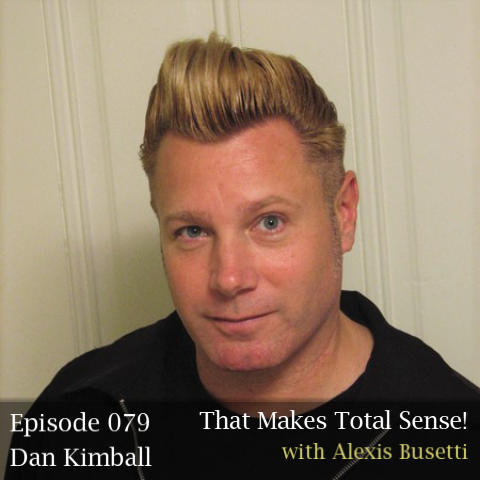
Speaker 0 00:00:07 Welcome to that makes total sense. A podcast dedicated to exploring God's generosity and justice. I'm Alexis besetting the Christian, aiming to ask good questions and encouraging you to do the same. Every one of us is wired by God to live out generosity and justice, but the how sometimes alludes us that makes total sense is a way for us to get together, posture ourselves as learners and challenge one another to practice generosity and justice in a tangible way every day. Hey everybody.
Speaker 1 00:00:39 I am so thrilled to be sitting with Dan Kimble today. We are in different parts of the country, but I'm looking at our rooms look strikingly similar because we've got a couple of musicians apparently at each house. So, um, so that's kind of funding and you're a drummer, right?
Speaker 2 00:00:58 Yep. Uh, I've been a drummer for, since a teenager and pretty much like punk and rockabilly music and big band jazz. So those are my kind of
Speaker 1 00:01:10 Nice. My husband is the musician here. I'm not going to lie. So if you see anything back here, um, I play around occasionally, but, but he's the man. Um, but Dan has, I'll get into some of the many roles that he plays here in a minute, but I want to get this title out front because this is one of the best book titles ever. This is Dan has written how not to read the Bible, making sense of the anti-women anti-science pro violence, pro slavery and other crazy sounding parts of scripture. Did I get that? All right. Dan is a, an author. Obviously he is a pastor. He is on staff at a seminary and he leads the regeneration project. And Dan, this was my absolute favorite line of your bio. And so I normally don't do this, but I'm going to steal it straight from your website, which is his passion is to see Christians follow and represent Jesus in the world with love intelligence and creativity.
Speaker 2 00:02:23 Yes. Yep. That's what I asked God to please do in my life. As I live out as a follower of Jesus every day,
Speaker 1 00:02:31 Every day, I love all three. I love the focus on, on all three of that. So that was a quick bio. What else should we know about you before we get into the conversation about the book today?
Speaker 2 00:02:43 Yeah. Uh, well, I'm in Santa Cruz, California, which is a beach town in Monterey Bay, about 80 miles South of San Francisco. Uh, been here for 30 years and, uh, I was a youth, a youth leader in a church, then a young adult leader. Then we planted a church vintage faith church 16 years ago. And we're still still part of that church. And I also am part of Western seminary as, as you noted, but probably, uh, married, uh, to my wife, uh, Becky, uh, show you a picture. Uh, and so my desk and I have two daughters who are both non-identical twin daughters, 18 years old. Um,
Speaker 1 00:03:21 How did we not do that? You have twin daughters. I have twin daughters. Oh, you do? Okay. Do ours are identical, but they're 11. That's so fun. Yeah.
Speaker 2 00:03:29 Yeah. One's now in Oregon and one's down in Santa Barbara.
Speaker 1 00:03:32 Oh my goodness. Great. I love it. I always love to, to see and meet twin parents who have made it further than us,
Speaker 2 00:03:40 It was like, you know, none. And then two at once. And it was, uh, um, uh, a whole as, you know, a unique, uh, experience with twins in that way, same age and the whole thing.
Speaker 1 00:03:52 Same everything. Yeah. Sorry I interrupted you. Go ahead.
Speaker 2 00:03:55 Okay. Well, I think probably, you know, when you're looking at this book about the topics of anti-science anti-women violence, slavery, that's in the Bible. The reason this came up in my background was I was not raised a Christian. So I grew up in Paramus, New Jersey, which is a suburb of New York city. You can go to one of the streets in my town and see this New York city skyline. And so my culture growing up, um, my parents, um, w were, they would, I've identified as Christian, but they weren't, you know, active in any church or anything. Cause it was just, that's what you were back in New Jersey at that time. And when I went to Colorado state university, I was never an atheist or anything. I was just a there's probably God, but didn't think much about, about God or not. But when I was at college and right when, and this is kind of an important part of every person's story, you get to your later teens and your college years, and you start asking the bigger questions of life, you know, what, what philosophies of life have I been raised in what philosophies of life?
Speaker 2 00:05:00 Maybe I wasn't aware of that I might be drawn to you start asking a lot of questions and that's normal. And a good thing to do is question everything, everything, question, everything. So, uh, for me, it was, uh, at Colorado state, I started wondering, um, I was at, uh, one of those, um, what are they call it? Like, right, right. When school starts, they have like fairs, you know, with all the
Speaker 1 00:05:24 Oh, right, yeah. Like student activities and stuff like that. Right. Join our club.
Speaker 2 00:05:29 No, exactly. And so I'm there and I'm just like wandering around looking at the tables. And, uh, there was one table that had a little, it was a Christian table and it had a bunch of little pamphlets on it. And one of them said, and I don't know exactly what it said, but what it, I read the Bible verses in it. And it said, I'm the way the truth and the life, no one comes to the father. But through me, and I'm reading this little tract and I had no idea that Christians or the Bible claimed that there's only one way to God. I just assumed there's all types of ways. And, and I remember that was so intriguing of a concept because I was immediately wondering like, what if I grew up in Thailand? Would I be Buddhists? What if I grew up in Iraq, would I be Muslim?
Speaker 2 00:06:16 And I thought that was sort of a, uh, an arrogant sort of thing. And I'm like, is that really true? I'd never thought about it before. And that's probably was a turning point for me back it up. I wasn't seeking or, um, you know, we talked to literally, I had nobody witnessing to me, no parents that were saying, uh, you know, you should be part of a Christian group. There is none of my friends are Christians. There was no pressure whatsoever. It was purely a, a sense of if there's God is this right. And I'm looking at the girl that the, remember the, at the table she had and was just saying like, well, what if she grew up in Thailand when she'd be out of Buddhist table giving up Buddhist club stuff, you know? And that got me on a, on a, you know, it wasn't like a dove in head first, but a little by little, I started becoming aware of church Christians, wondering if it was American culture subculture, where did this thing come from?
Speaker 2 00:07:18 And then I started buying little, uh, like, you know, bought a book about a Bible because I, uh, and it was unusual and I can, uh, and to get to the, let me get to the end of this is that as I started reading things, I once walked home and in my living room at my house, I had a bunch of friends. I was in a band at that point. And then this was the second year of college. I think it was. And my friends were cut quiet when I walked in. I remember it was like, you could tell, they're talking about you. And they said, Mike, what's going on? And they said, Dan, we're one, we're getting worried that you are reading Christian books and a Bible. And I'm like, what are you worried about? And they said, you know, Christianity's, you know, it's going to turn you into a, a person that loves war and all about the end times and battles and stuff.
Speaker 2 00:08:11 Cause that was really popular at the time. It was a lot of focus on the end of the world, predicted in the Bible kind of a thing they were saying, you're going to lose all of your creativity. Um, uh, the, the word, like this is like a cult. Like how can you possibly believe in this stuff? So there's sort of a unplanned. They wouldn't have called it an intervention, but it was a strong moment because I'm like, my friends are concerned for me that I'm reading a Bible and interested in Christianity because of they weren't Christians, but what they were concerned of, what I would become. And that was another major moment for me because I'm like, all right, well, why do people believe what they believe? Is it just that they grew up in it? Is it because of what part of the country or part of the world you're in and it's your adopt your culture, beliefs, like in what is real about faith and why, why it is the Christianity claim? That it's the one way to God. So that was my entry into faith.
Speaker 1 00:09:12 So what, so what happened? Like how did you respond to that moment? Because you did become a Christian, but how, how long did it take or what was, um, what was in between that? Because I can only imagine as, you know, thinking back to that time in my life, that was so formative. Right? Am I, my friends were everything, uh, you know, back then. And in fact I still have many of the same friends that I had, you know, in college and that, in that same formative time, and I'm thinking, Oh dear, if they were concerned about you, they're worried about you. Like, what did that do to your, to your informal search in that moment? And what did it look like when, when you did commit to Jesus?
Speaker 2 00:09:55 Yeah. Now I want to say this, like, you know, I know if there's someone that's not a Christian or a believer or even an atheist that's listening right now, some of the things you could go into subjective experience. So I understand that there's criticism about or questions about this, but for some reason, like again, I had, no, I wasn't in a bottom out experience. Life was really great. I, you know, you could say like, I, I didn't need God. I do need God, but I wasn't like something going on my life that I needed God that I thought I needed God. And, um, it sort of was like, as I was wondering, it was like, right, God, if you're real, you know, help me understand this stuff. And I do believe, cause it feels like, and this is again in a, um, an experience of, I think as human beings when there are people that say like Lord or God out there, you know, help me know if you're real, that I think God then started drawing me to him because it was something I couldn't shake.
Speaker 2 00:10:55 It was sort of a, almost like a magnetic pole to say, is this true? But what you, what my friends. And as I started realizing, you know, I was in a punk band, I was non-conformist, you know, I'm just like, it was not like don't go along with whatever's popular. Uh, and then what I can say is it made me want to, like, I was petrified, I'd be joining a cult. I was petrified that I would never want to place faith in something that might not be true. You know? And, and so for me, it was becoming question everything. Don't just look at the Bible and just accepted. It says, it's, God's word that the circular argument Joe just said, okay. And go with it. Um, I tried out a campus club and I tried out a, uh, more of a traditional church and I could not relate to it at all. The music was horrible back then. So I guess my, it was, for me, it put more of a, uh, a very strong, um, desire to really see where did this Bible come from? What makes this different than other religious writings, that all claim they are from God as well. And that was my deepest search as I entered into it.
Speaker 1 00:12:12 And so now this many years later, you've written a book about how not to read that same Bible. Can I ask you, where, where did that come from? Like where, what was in your, in your mind when you decided to pursue this, writing this book?
Speaker 2 00:12:36 Yeah. All right. So going back to some of, uh, the story of entering into the evangelical Christian world, right? So I'm an outsider coming into evangelical Christian world. And at the time it's changed a lot since then, the music was horrible for me looking in, it was, uh, again, this was a long time ago. So music has changed. Um, there, the culture of, and climate, it felt like non, and I say this with, I'm saying this as the perspective, looking in from the outside, it did feel like non-thinking people accepting, whatever the person upfront said. When I was in certain conversations, they were so shallow and it was always, you know, God is good and isn't this great and certain happy things. But at the meantime, I'm thinking of, you know, uh, Wars and other parts of the country and children starving in Africa and different things that were going on in the world at the same time.
Speaker 2 00:13:32 And, um, and I moved to London with the band and the, in the band, what occurred was I was reading the Bible, still playing in London in this band. We took a year to just have fun and go do music. And I walked by a tiny little elderly church. Um, it was called chaplain, the open book on a lunch hour. And they had a Bible study that select Bible study inside. And I walked in and there was an 82 year old pastor named Stewart Allen, his pictures on my right here next to my desk here. And, um, I walked in, he said, he looked up at me like here for the study. And when he said that, if he didn't say that I probably would have backed out and left. Cause I'm like, oops, like this wasn't what I was expecting. And I sat down with them and he was an Oxford grad.
Speaker 2 00:14:17 Not that, that was important, but I was able to have winsome conversations with them. I looked, I was totally into the punk and rockabilly scene. So I was dressed and everything. And he didn't judge me for my exterior appearance. He wasn't asking, Hey, what'd you do last night? Cause I was in the whole music world and doing everything. And um, and it was through somebody that took the time and patience and it was Intel and not pressuring me putting in answering questions. And Oh, and it was in England where I began hearing about the grace of God that it wasn't just the ceased, you know, Jesus on the cross Rose again from the dead, like Christian set up so easily. But from the outside, thank you. This, we believe in a man that died. Think of how this sounds. It's like, this is when you're hearing it.
Speaker 2 00:15:02 You believe in somebody that lived, that he died, he was buried. And then he came back from the dead, right? Like we say it so casually think of this like Christians. And he wrote, think of if I'm listening, if I ever was to talk to you and say like, Hey, um, I saw this guy, Jerry, and, uh, you know, he was, uh, totally hit by a car dead for sure. And, you know, buried him onto his thing and the ground. And all of a sudden I'm seeing him he's alive, walking around. We would really think it was, you know, that we were insane. Right. If we were to say that today, that is what we believe as Christians. Right. We can't forget that. Right. Um, and so fortunately for me, as I started understanding what the gospel was in the scriptures, first Corinthians 15, taking on sin, faith in him, it's not by your actions, forgiveness.
Speaker 2 00:15:56 Uh, you know, it's all on the cross, uh, you know, payment, resurrection. I'm like I'm forgiven and I can have a sound so cliche, but God can know me. He knows me personally. And that changed my life. And that's when I put faith in Jesus. However, there's no way I could just stop there. And just because my friends are still, you know, like, are you in a cult? What's going on? I had to know why I believed what I did. And that has been thematic, which led up to the re this book. Cause I still serve with people in our town that these are the questions I'm seeing people deconstruct faith, uh, generally because of the Bible, the Bible is being, uh, because of online with the memes, like there's plenty of memes in the book that take Bible verses up and plaster them up.
Speaker 2 00:16:44 Uh, women, women be silent, you can't speak. And then there's tape across the mouth of a woman and a graphic and the Bible verse underneath or slavery verses and there's Bible verses underneath or violence, uh, in Bible verses underneath. So is this true? Or have we just been at a surface level believing without questioning? Have we been more into the Christian subculture and community and friends and good songs and music then really, really stopping and saying, what the heck do I believe? And then going into it. And I just want to assure everybody is that scriptures are a hundred percent inspired by God. It is true. But I think we've been looking at the Bible to surface as Christians and we don't have that luxury anymore. And I, and we never should have really, but it's, uh, I just think we have to really look at what the heck this Bible is.
Speaker 1 00:17:37 So thank you for that. I'm going to see if you can follow me, cause I'm going to kind of flip this, this, uh, this cult thing on its head for a minute. So I was, um, having a conversation with another podcast guest and now I can't remember if it was offline or not. So I won't mention who it was, but someone who is close to my age and she was talking about her experience, um, of going kind of going into a church for the first time, um, as a new believer. So kind of similarly to you did not grow up in church, did not grow up with knowledge of the Bible, but these conversations that she was having inside the church and kind of, and I know we'll get there with the book, but she was, she was saying, she's having these conversations. And she's recognizing that the people who are sitting in the pews don't know what the Bible says, but she, the first time before she went in, she read the Bible cover to cover.
Speaker 1 00:18:39 And her comment to me was, I don't understand how you would go and basically become a part of a church without having read what they believe. That feels like a cult to me. Right? So she's saying, I read the whole thing, you know, trying to be short, is this something I want to commit to, you know, is this something that I want to go into, but culturally, um, and especially in different parts of the country are, are, are kind of different in that way. We talked about that a little bit before we press record, but a lot of it is just kind of like, well, I go to church or I'm, or I, you know, I, I self identify as a Christian because this is what my family did. This is what I've always known. Um, I've always been to Sunday school. Um, you know, I was baptized as a, as a child or whatever it is, but so many of us don't really know what's there.
Speaker 1 00:19:33 And so I know that that's one of the things that you talk about in the book is, so then when these things, you know, they get, they get thrown at us later in life as adults, or maybe as adults with kids. And we go, um, we have to read the whole story of Noah and the arc, and this is kind of, this is like nasty, right? Like this isn't exactly the, um, nursery scene that we have with a rainbow and a little Brown boat. Like when we really get into this, like this, there's some scary stuff here. Right. And that's, and that's just Noah, right? Like you, you talk about a lot more of this where you were seeing, as you said, people who were kind of starting to look at this and go, I mean, what kind of questions, what kind of questions did you see that raising for people?
Speaker 2 00:20:29 Well, it's, I mean, you just said it, I think what's gone on in the evangelical church at large. I mean, it may be all churches, but I'm just, that's been my world and I'm still in that world. And the good sense of what that word originally means, you say the word evangelical and it means a lot of different things. I'm talking about the original meaning of the word, uh, when it started, not in a political sense, but I think, um, when you start reading the Bible and you're actually reading it for what it is, it is filled with the most bizarre, um, violent, um, strange things. If, if you're reading it from an exterior kind of viewpoint coming into it and, uh, and also beautiful, loving grace-filled positive, amazing things to right. But I think the evangelical church has focused so much, like what you said in churches.
Speaker 2 00:21:24 And we, all of our songs are about how much God loves us, which is wonderful and who he is. And now these other things are being brought to the surface. Um, and I think, you know, you just said, no, his arc and every single nursery, we see Noah, you know, the F you know, the Noah arc and animals, but we don't show all the dead bodies floating on the water. Right. And that was part of the story. And I think what's going on for, non-Christians looking in now saying just like, when I, when I was not a Christian, like, is this a cult? Like, what the heck do you believe in a God that would slaughter children and, and want sacrifice and, um, you know, and the slaves and all the different things in there. Um, and, and then you're also seeing people that grew up in the church that never were confronted with these things, or, or now wondering about it and saying like, how, why, um, can I really believe this stuff?
Speaker 2 00:22:23 And then you're also seeing deconstruction happen happening saying, well, culturally things go against the Bible. And I can't my heart, you know, so I say like, my heart believes this. And so the Bible can't be right. And so therefore I'm deconstructing faith and I'm looking at the Bible differently. I can say this, I could not be a deconstruct, a deconstructionist Christian, and still be a Christian. I'd be an agnostic. I, I, my, and we can talk about it if you want to, if I would, if I went into a progressive sort of full understanding of how you view a scripture, I would just see it as a, uh, another world religion, probably not. Right. And, uh, and I'd be an agnostic. I don't think that, I guess then you dismiss the Bible as a non inspired book really. So we can talk about that, but that's, you're right. And that's, what's going on out there today.
Speaker 1 00:23:20 Well, and to that point, one of, one of the quotes that just jumped out at me from, from the book is you say, um, you're talking about, I think this is in this section when you're, you're kind of laying out what happened, like the creation fall, redemption consummation, kind of a storyline of the Bibles. So, so I hope we get to get to go there too about the Bible of being grand story. But I think it was in that section where you're kind of whining out that foundation and you say, humans chose to doubt God's generosity and not to trust in God's guidance or the order he established. They wanted to define good and evil for themselves and to have God's order be centered on them instead of God. Yes. And that is where we can't go. That's what got us as a, as a human race in trouble in the first place.
Speaker 1 00:24:19 Right. Is exactly what you just say. And so I think for, for me, um, it's, it's that first part of, of humans chose to doubt God's generosity. And I have to, um, that's one of the things that I feel like God uses to speak to me is to remind me constantly, constantly, he's reminding me of his generosity of his generosity toward us. Right. And so if I, sometimes I would say that sometimes I'm tempted to think he's good, he's holding back, you know, he's doing this or that. And, and that's what got us in trouble in the first place I need to, for me, personally, if I could focus on God's generosity and on exactly what he knows, and he establishes what is good and what is evil, because he is good and he is generous. Um, then that will keep me kind of more, um, on the right track.
Speaker 1 00:25:21 Um, but maybe we can talk about that kind of, that story. And, um, and this big picture of the Bible, because a lot of these things that you bring in the means, which we look at them and we think, Oh my goodness, that sounds ridiculous. It's, it's getting lost in the weeds, but it's, but it's kind of a classic. Sometimes we can't see the forest for the trees. We see this, we see this little meme and we can't get over that stumbling, uh, that stone and then, but we need to see the big picture of what, what was God doing in the Bible? What is he doing in the Bible?
Speaker 2 00:25:54 Yeah. I mean, totally. And you said something, um, which I think is really important because if you only have a shallow understanding of the Bible, and even by, I mean, this is not, this is Christian too. If it could be part of churches, their whole lives and even kind of read through, through, through it somewhat, but what, what I've seen happen over and over again, and this I'm going to also raise up to the contemporary evangelical music scene as well, because a lot of people mainly get their understanding of God from, uh, music lyrics. And again, I love music and are in our church. We have music all the time. Um, I, I, uh, there's some great music out there and great worship music out there. However, if we're just constantly pumped over and over, and again, God loves us, he's for you pursue your dreams.
Speaker 2 00:26:47 Uh, you know, and, and, and we start thinking, God promised us things in life that then don't happen. And then we can start being disappointed in God for things that he never promised us. So I've seen that a lot. And, and that's because we only know some of the more happier overtones of scripture about God loving you. But when we then have the disappointments, like, why didn't this happen? Or all of a sudden my, my dad died or, um, it could be, you know, I'm, I'm not married and I'm 45 years old are things that people are get. Um, you know, I want to say like confused about, there's never promises that those things would happen. So I, and a lot of it is then you're claiming God was gonna do things that he never did because it's never in scripture. So you have to look at what does God promise in scripture and what doesn't, there's a lot of factors.
Speaker 2 00:27:42 I think all leading up to this moment, I think it's social media that has taken hours and hours away of our lives from reading scripture. I think churches have been so convenient with what we do, and we want to have people there. So are, you know, a lot of the teachings at a, at a certain level, which is you want to come out like happy and excited about life. But then I do think a lot, I've searched a lot of the most popular churches out there. And you don't see too many sermons on the Tufts stuff in the Bible out there. I mean, it's just, it's just true. You get a lot of the pump up things. And I just think all these factors are leading into a, uh, we don't know the full story of the Bible, how it's put together. And so then we have wrong understandings of God, disappointments in him, don't understand how to handle the cultural issues that are pressing and making us question things.
Speaker 2 00:28:34 And then we see deconstruction happen, abandoning of faith and disappointment in, in there. So, um, it might do you want to walk through like, just some of the basics of if I'm someone like what you would recommend to look at the Bible as that's often confusing? Yeah. Let's do it right. So, because all of this, you know, as we talked a little bit, like you can look at slavery versus anti-women versus, uh, violence versus anti-science versus like these verses that definitely some of them are very difficult to understand. There's no getting around it. However, the majority of them are solved with, if you started looking at the Bible for what it really is. Um, not to say this, if anyone's listening, I believe. Cause I can say, well, Dan doesn't think the Bible's from God. I believe at 100% of every word in the original manuscripts, the Holy spirit guided the authors to write down what God wanted to communicate to the people of that time.
Speaker 2 00:29:36 Now we have copies of copies and there's anywhere I've heard from, you know, 2% to 6% variance in, in what the originals probably said to what we have today, but no major doctrines or theological differences are from those variances. That over time we have really good confidence. What we got here is what God wanted us to have saying that I want to make sure everyone understands that because then I'm not, I'm not just dismissing it because you can, well, God really didn't say that. Or the scriptures don't mean this. Like I am a hundred percent. I believe God inspired everything in the beginning. This is a very important premise, um, to start out with. So, but when I'm looking at this Bible, when I first got it, like when you do most people see it as a book and a really important thing is the Bible is a library, not a book, right?
Speaker 2 00:30:27 The Bible is a library, not a book. You can't look at it like I'm reading a book like a normal book. Um, even if it's like a Christian book or any type of book, it's not a book, it's a library. Now when you walk into a library and I've trained myself just over the years, because I, when I first got it, I thought it was like a book like I'm reading Lord of the rings. Like it's like a book, a little storyline, one author writes the whole thing. Now there is one author by, in the Bible, the Holy spirit, but it's written by humans as well. Right? And God used the spirit to write through different people, 40 different authors over 1500 years, you know, three different languages. And it's not a single book. I can't stress that enough because there's so much mess up that happens when we don't think of it.
Speaker 2 00:31:14 And if you walk into a library and you walk over to the history section, you pull up, uh, you pull a book off the history section, and then you want to say, is it from 2015? Is that history? Is it, you know, uh, civil war history? Is it a European, you know, early German history. Like when you pull a history book off, you have to read it and its context, but also there's expectations. It's a history book written in a certain way. You walk over to another section of library, there's poetry. You're going to pull that off. But then what time period was poetry written in the time period matters, not just the genre. And, uh, and you have to open up the Bible and realize you're in a library of over 1500 years of collected books and different genres, different types of people. And when you pull it out, you can't just jump like many churches have taught us to do whatever I read. How does this apply to my life? And we try to put it right in our modern lens and say, right. What's, what's God saying to my life through this verse. And it probably wasn't written to you. So you have to look at it in that way. All right. So any thoughts about the library part? Cause that changes everything. When you look into the Bible, it's not a single book, it's a library of books.
Speaker 1 00:32:32 No, it, it does change. It does change everything. And, and I would say, um, I, I joke with my husband and I I'm the quintessential super annoying first year seminary student. And I try to be so only to him, but here we are on air, you can edit that out. Um, but I was in a, uh, a language class and looking through songs, right. And, and I kind of came and said again, I I'm with Dan. I believe everything that he just said, yes, everything is a hundred percent inspired scripture by God, Holy spirit. As the author, you know, all of this stuff, a hundred percent, I believe. Um, at the same time I'm taking a risk and I'm saying, I came and told my husband, Oh my goodness, there are part of the Psalms. I forget what I, the exact words that I said to him.
Speaker 1 00:33:25 But I basically said, they're a part of the songs that aren't theologically sound. And, and he kind of laughed at me, but it's like with the recognition that when David or another Psalmist is writing his poetry, he's lamenting and he's writing his feelings on the page. Right. And there's hyperbole and there's PO you know, there's these things that like, I think about my journal, you know, and I, I have this stack of journals that I've told my husband, look, when I'm dead burn these. Okay. Like, no, no one gets to read these, but it's because things come out of my humanity that I write in the moment in the emotion, because they're big, they're big things and I have big feelings. Um, but if I'm writing that God has left me, I don't, God hasn't actually left me. It means I feel alone. And so I don't know if that would fall into the category, if you have any thoughts on that, but it's just kind of, for me, it was one of those, Oh, I can't read a book of songs in the same way that I can read a book of history in the same way that I can read, you know, a letter that Paul wrote to a certain community.
Speaker 1 00:34:41 They, they do need to be read in different ways, because exactly, as you said, I, anytime I read poetry is kind of one of the easy ones for me. But it's like, when I read this, I anticipate that there will be imagery that I'm not going to actually take in a very, very literal sense.
Speaker 2 00:34:59 Yep. No. And that's a beautiful example. And that's where say in the library, uh, you go to a book of poetry, but then it's who wrote the poetry and Psalms was written again in spirit, a spirit inspired, but you'll have people that are pouring out their lives and their emotions. And you have to make sure it's like, not, it's not God's thing, those things, it's, God's spirit allowing people to express what they are feeling and going through. And that's why proper Bible study methods are so critical. So you're not taking someone's expression. You know, when it's everything's genre makes a difference. Jesus said, um, I am the bread of life, right. We don't look at that and say, Jesus was a loaf of bread. Right. It's so we it's just, you have to always take the effort of what was of Shaundra. And that's why it's a library book.
Speaker 2 00:35:57 All true. And when Jesus was saying he was, you know, the bread of life, he's the vine. He doesn't mean he's an actual physical plant. So it doesn't mean, you know, when you say this, I've heard critics say, well, then the Bible is meant to be taken. Literally I'm like literally where it was meant to be literal Jesus wasn't being literal when he called himself a plant or a piece or a loaf of bread. Right. So what what's going on there, and that's, that's one way is a major way of your have to look at the Bible as a library and not a book, or you can come to some very, uh, unfortunate and sad conclusions that could give you a wrong understanding of who God is.
Speaker 1 00:36:38 Yeah. Let's, let's go to you already. You already kind of, uh, put it out there, but this idea that you talk about in the book that is huge. There were a couple of things that I now repeat to myself over and over again, one of them is this that I'm going to bring up. The Bible was written for us, but not to us. And then maybe you can piggyback on that. The other one that I repeat over and over to myself is never read a Bible verse.
Speaker 2 00:37:03 Yeah. Which is kind of sounds contradictory, but what you mean? All right. Another one. And this is from a professor at Wheaton, John Walton, who had a phrase, the Bible is written for us, not to us. Uh, and that is again in our churches generally. You know, we always want to say like the Bible, I w we're taught to jump to application, we want to know what does it mean to us? Like, you know, what does it mean to my life, my family, my decisions. And we have to remember the Bible was not originally written to us, but it was written for us to learn about God and what he would want for our lives. But we can't. Right. Let me ask you this. Right. Who was the book of revelation written to,
Speaker 1 00:37:48 Oh, you're going to ask me this after I just said, I'm a seminary student. John wrote it to, uh, the churches seven churches, right. Just don't make any,
Speaker 2 00:38:00 Was coming through the, by the book of revelation. And it can do this with any book. It was written to seven churches and a specific time period going through specific struggles under certain persecution that was happening at that time. And that's the key to understanding revelation. Right? So you got to say like, what was the spirit of God through John? And, you know, see, Jesus has words in there too. That was like, that was communicating. But right upfront, it says to the seven churches, does it mean we can't learn from it? Of course we can, uh, in, there are some future things written to it as well, but let's go to Galatians. Who is the book? What was the, who is Galatians written, right. The church really shift from what was going right for the softball. Well, so if you think of it, right, you read and then you go, like, it's, turking, they're, they're arguing about circumcision, right?
Speaker 2 00:38:57 We aren't arguing about circumcision today. There was like intense fights about, should you have to be circumcised to be a follower of Jesus. Right. And they're arguing about that in Galatians. Now we don't see, you know, circumcision versus like, I just saw you had a coffee mug, like written on coffee mugs, you know, because, but that was a very important thing going on at that time, as they were understanding what it meant to be Jewish, the Messiah came. What about all the law before going into now, what it meant to follow Jesus and not having to do that does a, non-Christian have to become circumcised. Say, you'll see that in a letter to the Galatians there. Now, do we learn from it? There's amazing truths in Gullah and the book of Galatians, but we also have to extract that it was written to someone else originally and focus on that first and then say, what does apply for us today?
Speaker 2 00:39:56 Again, these are simple things, but Ephesians, Romans Corinthians, like, you know, there's actually four letters to the current church. We're missing two. Uh, the first letter is actually the second letter because you'll read it. And it says in my former letter, so Paul wrote another letter and Corinthian church was dealing with problems in the church. And so what we have to always do is remember it wasn't written to us, but written for us to learn from this is why the creation stuff and science, to just jump quick to that. We have tried to read into the early chapters of Genesis, the questions that we have today, that was not the point of the book of Genesis Genesis. It was written to the people of Israel. Remember was no, there's no scripture before then the people of Israel were in. So they, it was, uh, oral tradition, oral stories that they had about Abraham and their forefathers, that then they were in Egypt for 400 years.
Speaker 2 00:40:59 God rescued them out of Egypt, brought them into the, was heading into the promise land. And then they're in the Sinai peninsula. There's different thoughts of where they might've been. But for all of those years, then God was saying, I'm now going to retell the story of, I am God, not the sun or the moon. Um, the questions the Israelites had, where should we still worship the sun or the moon? Um, is, is God personal? Uh, you know, where did we come from? Is it safe? Like they were asking those questions. They weren't asking about layers and age of the earth in those things for us to read into that. It's interesting, but we're missing the entire point of Genesis by focusing on those questions. And that's why it was written not to us, but for us, most likely this is his, uh, well, I want to go into most likely because that'd be a whole another discussion that, but my point, like God said, this here's something God said in Genesis, he talks about the human heart.
Speaker 2 00:42:04 And as the, almost like the heart is thinking, right, you don't see the word brain. Um, Jerry, wonder why? Like, does the heart actually think, right? No. Right. It's but they used to think that, so that's why the, they would sacrifice the heart, pull it out. Like the brain was useless. They didn't know what it was. When you go back to Egyptian culture, they would drain out the brain. It was like not, it was nothing, it was a useless tissue. And they thought the heart was where we think from, so you'll see God using language. And he talked about the heart. God's not lying to them. He's using their setting in their language, which still carries today. We still talk about our hearts, you know, our heart desires. It's not our heart, our heart to muscle, right. For pumping blood. And I think we just have to be careful when we look at the Bible, not written to us, but for us, got to go back in that length and I culture what's going on to then understand it more, really, really important. Um,
Speaker 1 00:43:05 Well, I'm glad you brought up the, uh, the science part of it because, and I don't know that we'll have the full time to go here, but I am just going to throw it out and say, when we go down those kinds of paths and we, and we don't realize that it was written for us, but not to us, you, you have a, a kind of lengthier quote from Billy Graham in your book. And I don't remember exactly what it says, but he basically says that the Bible isn't a science manual. Right. And, and I think it's that we have created, we sometimes what this will lead to is, um, these false dualisms right. So the example that's always at the front of my mind, because of in this genre is my husband. It is the science religion debate because my husband is a geologist. So he is an earth scientist.
Speaker 1 00:43:57 Right. And when he was getting his doctorate, we were young, married, you know, twenties in our twenties. And that was one of the things that people asked him all the time was how do you reconcile these two things? Because when we read the Bible in a way that it wasn't intended to be written, um, we create false dualisms. And I think, you know, I'm just gonna throw it out there. I'm not saying I want the discussion to go there, but I just kinda wanna put, put, put this, put this out there that I think that it happens with, you know, science and religion is a good example, but I think it happens in a lot of other areas that we can see playing out right now, like socially and politically we've read the Bible in such a way that we have then created these false binaries or these false dualisms that really don't necessarily exist. Um, but we're kind of doing in doing so. We're putting the focus somewhere where the focus really wasn't intended to be. So I'll throw that out.
Speaker 2 00:45:03 I mean, we S we certainly certainly do that and we can do that. And we can, um, you know, with, with the whole science issue, could God have created everything in six days, six 24 hours, uh, if he wanted to, yes. God's God, he could do anything, but there's no question that he couldn't do that. When he was communicating to the people of Israel, how he created things, was he trying to answer our modern day questions that we have today? It wasn't written to us. It was written to the people of Israel who were worshiping, um, sort of, uh, we're under Egypt's, uh, you know, in slavery to Egypt for 400 years, saw the Egyptians worshiping different gods. They heard the Egyptian creation stories. And so he was telling them they are not the true God. I am the true God. I created everything. There's a lot of reasons to believe the six days are actually a temple inauguration, because that is what they would have been familiar with, that they built temples back.
Speaker 2 00:46:03 Then there would be six days of like loading everything into the temple, the furniture placing everything and function in order. And then on the sixth day, uh, the, the King or whoever it would be, would be there the seventh day, they would rest. There's like some really beautiful ways of looking at it because God was his point was I created everything. What, what were the 10 plagues about like, you know, the 10 plagues, weren't just about overcoming nature. Each one of those plagues was overcoming in Egyptian God or goddess. There was points that God was trying to say, don't worship the Nile, the God of the Nile river, or don't worship this God that has the frog head like I'm showing you I'm God overall. And that was his point to the Israelites as he was retelling the creation story. And it said, when we pit it against science, because it's not written for that.
Speaker 2 00:46:57 And then it gets into all sorts of complications. The sun was created on day four, but how was their light and day one, if the sun wasn't created until day four, what did the earth orbit around earth was on created on day one. And then as you can go, and of course, go read, go look at the Bible project videos on Genesis chapter one. They go, Tim, as we shared earlier, he's a friend of mine and a brilliant guy that raises up. It's not even the heavens and the earth, the words, the Hebrew words, there are sky and land. He was talking to them what they could understand visually from what they saw. Uh, there's so many things. So, and it's sad when it gets complicated in that way. And then we, uh, it's not meant to be like that. So, and it's sad, then we get people abandoned faith over, over things that shouldn't be abandoning about with, with those types of things.
Speaker 1 00:47:51 Yeah, no, it's, it's true. I love this like big picture, but kind of get us, get us refocused. So can you take us to never read a Bible verse? That's my favorite sentence in the book. I love it.
Speaker 2 00:48:08 Never read a Bible verse and that's from another, uh, brilliant guy named Greg Cocal from a ministry called stand to reason. He says that word, that phrase, and it's basically, we are masters of extracting Bible verses putting them in coffee cups, memorizing certain Bible verses. And they're generally, always the nice ones. Um, and the problem sometimes they, uh, it's good to memorize scripture. So I'm not at, I want to memorize. I'd love to memorize the entire Bible, but where we get into trouble is we extract a Bible verse out of its context, not knowing, uh, who is written to what light, what part of the library is it in? And then we can start believing truths that aren't actually true for us. If we're just looking at a Bible verse and that's why we should always look at, you know, what, what's in the paragraph, what's in the chapter.
Speaker 2 00:49:02 Uh, there were no chapters of verses in the original Bible, but I'm saying that for, uh, communication right now, you know, what's in the verse, the chapter, the book, uh, who wrote that particular book, when did he write it? Or he, you know, what was the purpose of that book? How does it fit in? And then you can extract the verse and say, ah, this is what it means more, you know, that's like looking at a piece of a carb. Uh, if you saw a automobile taken apart and laid out in a parking lot, and then you see like a little piece of the carburetor and you want to examine that carburetor, pull it up and then make a conclusion about the whole, just from that little piece of carburetor when you're not looking at alright, what, what, what's the function of this little piece?
Speaker 2 00:49:45 What's the carburetor? How does that fit in the engine? What kind of car, what year car who bought the car? What was the socio economic, uh, status of the family or whoever or individual that bought the car? What's the purpose. And then you can probably make more sense of the whole. And Jesus would quote, Bible verses. This is really important, but in that culture, they had the whole thing memorized. So it's like the song you would say the first line of a song. And then we would automatically know the rest of it. Like I could start with the song and say something. And then all of a sudden we'd know the rest. So when you seeing certain Bible verses quoted it's often because there was an indication of them saying, start, they're talking about the whole section. So we get into trouble just quoting single Bible verses or opening the Bible and pointing our finger that, you know, making a decision God spoke, and God could do that.
Speaker 2 00:50:36 I'm not saying you can't, I just wouldn't. I'd want to know what was going on there. That this is also all right. This one more thing. This is why there's all of this, uh, nuttiness about looking at Leviticus laws, because she'll see these do not eat shrimp, do not get tattoos, do like certain things that we see an end and Christians are getting mocked for this, do not touch the skin of a dead pig. And I'm on West wing. The, you know, the TV show from 10 or 15 years ago, you know, golden globe warrant, wedding or award winning show said that, um, you shouldn't be able to play football. Then if you're a Christian, because you're touching a pig skin and it made, what's amazing to me that that made the, that made the show, got past all the script writers and put out, and now it's mocked.
Speaker 2 00:51:29 One footballs are not made of pigskin. So the whole argument's done anyway, the mad cow leather or, or, uh, or rubber, uh, of some sort. So the whole argument is fake, but it certainly was fun to poke fun at Christians. And then the Levitical laws were meant for a people at a certain time. You don't just read the Bible verse and then say, look, you're supposed to do this. It wasn't written for us, not to us. Was that written to us or not? It's a library, not a book where in history, what kind of book it was. And we have to put the effort into looking at this stuff. And that's why there's where mocked and people pull verses out and we'd go blank. Like, is that really in there? Does it say to do these things and we're pulling verses out of context, not, not just read a Bible verse Christians, I've been doing it really nice with the nice verses.
Speaker 2 00:52:21 And now the activist atheists, most atheists are not activists. They're just atheists. They leave everybody alone. There's a percentage that are activists trying to prove Christians wrong, and they're the ones making the memes. And it certainly looks good and it catches Christians off guard about things like that, but you're not going back in. And it's, it's sad when that happens, cause it looks good. Uh, but it's not. And Christians are guilty of just reading single Bible verses without understanding the whole I memorized Bible verses. So let me get, but a memorizing Bible verses with the whole in mind to make sure I'm understanding what I'm memorizing.
Speaker 1 00:52:58 Yeah. I mean, that's, that's so good. And, and I think that you're, you're right on with that. And I hadn't really thought about that before that as Christians, we tend to do that with kind of the nice versus the nice sounding verses, but we get, but we do, we get caught off guard when someone brings up something that's less familiar or that is not nice. Um, because it's there. Um, I didn't, I didn't think I was going to ask you to talk about it, but maybe we can, maybe we can kind of round out and we can kind of land land this. Um, and I'm gonna ask you to kind of wrap these things together in my mind, they are wrapped together and maybe, maybe they're not, maybe they're not in everyone else's mind, but, um, because like you said, many, much of the time we can look at that.
Speaker 1 00:53:57 We can look at these verses that seem troublesome. We can bring it out of the context. It may not make it easy, but it's at least explainable. Um, but there are some of them and I will raise my hand to be a person who has struggled with it. And I'm just, I'm gonna, I'm going to throw out the, the issue of violence. Um, really when I was reading your book, I was, I was, I had heard a lot of the things that you had said the arguments were, um, weren't familiar to me and it was very good. And I kept in my head thinking, where is he? Where's he gonna go with violence? What, what is going to be the answer for that? And when I say the three things that are kind of wrapped together for me in this, let me, let me say them. Um, the struggle with, with violence in the Bible, um, the idea that some of the Bible is mysterious. Um, but also Jesus, that, um, that he is our he's. He is our savior he's he is, yes, he's in the Bible he's of the Bible. He quotes the Bible. He's he's included in this, but, um, can you make sense if, if I, if I gave you those ingredients and said, make whatever recipe you want right now, is are those three things, something you can put together?
Speaker 2 00:55:16 Yeah. I mean, uh, as I wrote, the violence passages are by far the most difficult to fully grasp, you know, if it was Jeremy, we'd probably wouldn't have done it, that it just like, um, the cross is violent, you know, the, um, there's violence that happens throughout the entire Bible. And, uh, and I think what I tried to write about is now there's so many accusations that God was a bloodthirsty, God killing babies, uh, genocidal, and, uh, you know, a power freak that was just wiping out people if they disagreed with him. And, um, and then you can look at all the violence. I mean, there's stories of horrible violence in the Bible, rape incest, uh, you know, cutting up people into, you know, cutting up a woman, raping women, cutting it into 12 parts and spreading them around all of these things are just horrible, horrible stories.
Speaker 2 00:56:15 Uh, and one with violence in the Bible, you always have to say, did God order this violence? Or was it a story that happened, you know, the rape of that woman and cutting her body into 12 parts that God didn't instruct any of that there's violence that occurred that is just being reported on in the Bible. Not anything that God instructed, that's really important because we will see that that's a lot of violence suddenly becomes human violence that they did on their own. However, there's no erasing unless you change your view of scripture, that God did instruct violence. And that is hard to understand. It's hard to, um, I don't know, what's the word, you know, wrestle with or, um, however what's really important is, uh, when you see violence used, it was always warning beforehand. There was always pleading beforehand. There was always pleased, you know, and it's kind of a, uh, please change your mind, repent.
Speaker 2 00:57:22 Uh you'll you'll see. I mean, you'll see God begging, you know, the, the words of begging people to, I says, I have no desire to see anyone perish, please turn to me like warning after warning, after warning. And then at times, then God has God. And then he used people and, uh, and then violence did occur. And, but it wasn't like random with no reason that, you know, the city of Nineveh was an extremely violent, uh, city, you know, cutting off body parts had skins on the walls. And then they repented, they changed when God gave the warning. They repented people have the opportunity to change. And then at times God does use violence. And, um, you know, but I look at the God of the whole story. Remember we talked earlier, the whole story God's character and the most repeated Bible verse is loving, compassionate, slow to anger, forgiving.
Speaker 2 00:58:25 That is God. At times when he used violence, I, if he then used violence in those, in those particular times, then that's what had to be done in those specific time to that time period. That's the only way I can look at it, unless you say, well, the people of Israel, mate, this is what some will do. People, a visual made those stories up that wasn't really God doing that. Then I'm like, all right, what else did they make up then? You know, it was, I mean, it's because then it moves the scriptures into something entirely different and then I can start deconstructing. And then for me, I personally wouldn't be able to have faith because then the whole thing changes in that way. But I use this example. It's like Mary Poppins, remember, um, there's a, we know Mary Poppins. I don't want to trivialize violence at all.
Speaker 2 00:59:16 You know? Uh, and it's horrifying. It's, it's horribly sad in act of war. When someone dies, it's a horrible thing. People die in acts of war. It's horrible, horrible when that happens. Um, and most of the times you'll see violence occur. It was generally in acts of war that were, that were going on. Some God instructed and a lot, he didn't, I keep saying that you always have to say, what did he say and what were just stories of violence that occurred. But, uh, Mary Poppins is a good story. People know Mary she's, um, you know, she comes in to help a family, and then she leaves at the end. It's all. It's, uh, uh, you would St. Mary's a wonderful person in that way, magical nanny, but there was a on Google, you can type in scary Mary and see a 62nd video clip that someone put together and they take little excerpts of Mary Poppins.
Speaker 2 01:00:11 They have her like mainly looking out a window, and then they clipped to a scene where all of the nannies are being blown away that are applying for her job. Like, you'll see, like her, her head turning, like, almost like it's twisting around, like in the extra cyst. And at one point then you'll see her like staring at these kids and they get sucked up into the closet and the doors shut and the chimney, and they piece all of these things together. And then they have two kids, like running away at the end. And then it says, scary, Mary, hide your children. And if you didn't know, Mary Poppins you'd think she, it was a horror film. Like if I didn't know the story, I'd like, that's a horror film. But when you, when you're looking at little extracts, then piece together, then you know, the tears, this word, you know, the character of Mary and like, no, it wasn't a horror film. Uh, and that's, what's happening with scripture is we have to know the full story of God from beginning to end and there's violence in the new Testament, you know? Um, there's, I mean, there's hell
Speaker 1 01:01:10 Hell of some sort. I read it. I read acts today and an ice and some virus I'm going, Oh my goodness. This is between that. And Samuel last week, I'm like, this is tough. There's some tough things.
Speaker 2 01:01:23 Well, and people, I mean, I write about this there, you know, cause sometimes like we'll all right. And so each one of these topics, that's the hard part about writing a book like that every, every one of these topics can be an hour just to itself.
Speaker 1 01:01:35 Absolutely.
Speaker 2 01:01:38 How do you surface talk about violence in the Bible without it sounding trivial, but you know, like when you're even you think of Jesus, not, we don't, I don't even believe, uh, we haven't talked about this part, but here, like talk about red letter Christians. Right. And it sounds good, but I don't think Jesus would be a red letter. Christian, let me explain why. I don't know if I'm poking in some area that some people get upset with because we only then see a piece of Jesus, right? As Tim Mackey and Mike and the whole, I just saw a talk that he gave, you know, the old Testament points to Jesus, Jesus himself said all of the prophets and the law in the, the old Testament is about Jesus. If we're to separate that, and you never want CJ to psychopath, that was actually not true.
Speaker 2 01:02:35 Or these things didn't happen. Jesus acknowledges the entire old Testament to be part of the, of pointing to him and that we can learn about him even through the old Testament. When we look to the new Testament, you know, to just talk about the red letter, red letter, Christians, it's wonderful Jesus teachings. But then we're saying all of the old Testament that Jesus himself said, we're supposed to know about, about him. We're dismissing. And also all the new Testament. That's Holy spirit inspired. We're missing about Jesus. So we get a, a reduced understanding of Jesus by just saying, I'm a red letter, Christian, I want to be a a hundred percent scriptural, Christian, you know, all inspired scription. Uh, because most of what we know about Jesus also, or a lot is not in the red letters. That make sense. Yeah. So like, and I, and I know that's kind of a thing happening, but there's some really serious stuff in the new Testament.
Speaker 2 01:03:33 Like I'm reading second Thessalonians chapter, a chapter one here's verse coming to my mind. So it's like talking about judgment, right? Because this is, I'm just reading a read more than a verse. All this is evidence that God's judgment is right. It's talking about a future judgment that will happen. And it says the results you've been counted worthy of the kingdom of God. We like talking about kingdom of God. So it was talking about sure, what's your suffering. God is just, we all agree. He will pay back trouble to those who trouble you and give relief to you who are troubled and to us as well. Then, then it says this, this will happen when the Lord Jesus here's, our Jesus will is revealed from heaven in blazing fire with his powerful angels. He will punish those who do not know God and do not obey the gospel of our Lord Jesus.
Speaker 2 01:04:38 They will be punished with everlasting destruction and shut out from the presence of the Lord, right. That was her heavy words about Jesus. And then we have to define what the gospel is. You know, if you're saying that they don't in the gospel, that's the first Corinthians 15, the gospel is not just about acts of kindness and love. That's a fruit of the gospel, which is a heart changed by heart emotions. And in our mind, by what Jesus did on the cross, sacrifice blood body, death, resurrection penalty for sin up, that's the gospel. And all I know is I read these verses and then Jesus becomes more than just a, um, you know, the red letters. There's a lot more to him that we should be learning about.
Speaker 1 01:05:27 Yeah, no, you're, you're exactly right. And I love the, um, I had a, a Sunday school teacher when I was in, I don't know, maybe fourth grade or something like that, third or fourth grade. And, um, she explained it to me in a, in a third or fourth grade kind of way. Um, because we grew up, I grew up in a, in a church that was very focused on, um, the act of salvation, kind of like the, the, the personal act, right? Like when is the moment when you, when you, um, accept Christ into your life. And so I asked what about the people who lived before Jesus came, right? Because I'm super concerned about them at this time, because they don't fit into my, uh, my budding theology in those moments. But I loved her answer for me. And I still go back to it in a lot of ways where she said the people who lived before Jesus and when the Bible was being written, we're looking forward to him, just like, we're looking back to him.
Speaker 1 01:06:33 And I understand that it was a simplistic thing and that, that, and that theology is grander than that. But it was a beautiful picture for me that I still come back to because, you know, Jesus himself said, right. All of these scriptures point to me, and I love the, the, the, the men who were coming back from a ma, you're going to a Mason like King, you don't, you don't know what happened. How did you not know what happened? And he's, and you know, it's this, like, he just explained it to them. He started with the Torah and he just explained to them where he is. Right. And all of that. And, um, I feel like that may be a good place to land, but I do want to let you, um, I do want to let you wrap it up for us, and then we'll get some, uh, some places where we can find you and where we can find the book. But before that, what would you, what would you add? What would be the thing that you would wrap this up? The thing you really want us to hear today?
Speaker 2 01:07:30 Yeah. Well, you said something that was really important, which I think so many have experienced to where I'm now reading, read letters from Jesus, Matthew chapter 28, when he's resurrected from the dead. And then he's speaking to his disciples and he says, all authority in heaven on earth has been given to me, therefore, go and make disciples of all nations. I mean, all people, everyone, not just the Jews, everybody baptizing them in the name of the father, son, Holy spirit. And this is the important part and teaching them to obey everything. Right. And then it says, I, uh, every, everything I've commanded you, and then surely I am with you always to the very end of the age. But I think a lot of Christians make that decision like, right. I'm putting my faith in Jesus. I'm now I'm converted. And I'm in. And, but what, then Jesus linked to teach to obey everything we got to learn, like, all right, what's the everything, you know, what's, what's because it's it, our lives should be absolutely transformed.
Speaker 2 01:08:36 Being a Christian is not easy. It's easy to go to church meetings. You know, it keeps like even the word worship and all another discussion. But I mean like worship, I think we've done such a, a sad thing with especially younger generations, teaching them and incorrect direction, direction. I'm sorry. A definition of worship. You ask anybody what's worship music singing, right. Worship Romans chapter 12, verse one and two it's worship is a being a living sacrifice, offering everything up to God, our actions, our thinking, making decisions that may go against the culture. Um, that is your act of worship. Not, you know, it's easy to just sing some songs. I mean, that is worship, but, um, you know, the Romans 12 defines worship as sacrifice. And, um, and I think we've just it's and that when it occurs, it's like, I think that's why we get so mixed up on, uh, you know, it should be the worship leader, the worship pastor and the church should be the accountant.
Speaker 2 01:09:39 Uh, not the music guy, because if you think of this, uh, the, what do people sacrifice the most time and money, right? As an act of worship. So the person overseeing money, right? Why aren't they the worship pastor? Because there it's a lot, it's a lot harder to sacrifice money than it is sitting in a seat and singing some songs to a band. So, um, but I think like we've taught a, um, too much of a easy version of Christianity, which I understand why people get disillusioned. And if you don't know the scripture, if you're there listening and you don't, you're wondering, well, what about this? Or what about this? And, you know, um, I can tell you this, that it's, the, the scriptures are life-changing their life. Um, but you got to know, I will say this cause we didn't get into this. The scriptures in the new Testament teach things that are very counter-cultural today.
Speaker 2 01:10:33 If it's so easy now to take Bible verses out of context, not looking at the whole story and then saying, well, I'm feeling this and I emotionally feel this. Therefore I will find the way for scripture to back up what I'm saying, using very poor Bible study methods. And if you don't and that's really sad, that's going on a lot. And then it's, um, there's no, there's no cultural clash. And, and then that's an easy form of Christianity. That's not the, the scriptures. And I, and that's hard to say, but that's just true. We should align our lives with the scriptures. What Jesus said here, obey everything, not just the parts we want to. And I just challenge any, like, if you're really following Jesus, you should, we sure want to know what is he saying? What is he saying? I could not live with a form of Christianity that I wouldn't want to know what the heck it is.
Speaker 2 01:11:32 Um, if I'm giving my life to it. And, and if you're Dick, if you're in deconstruction mode of thinking, please know, um, I, I get it. I totally understand. I can see that, but I, I can also say there is truth. The scriptures are reliable. And, uh, and I just think it's a, um, I just beg anyone to please consider her really examining the whole story of the Bible before we deconstruct something. That's really, um, you were generally deconstructing things for reasons that that there's re there's responses to these deconstruction, uh, answers. I listened to so many stories. There's so many good responses. I understand why, um, I'd want to deacon I'd wanna live a different version of Christianity if it was up to Dan, but I'm choosing to yield my life to what the scripture say and what Jesus said. Um, all right. That was a long answer.
Speaker 2 01:12:26 But, uh, my heart, my heart breaks for people that go through this. And I understand the difficulty. I understand if you're torn about people or lives and would God really say this? That's why then you really got to know what God says or what he doesn't say. Because so often today people are saying, Jesus would say this, and I'm telling you, he does not say that, you know, or this is my God. I'm like, well, what about the God of the Bible? My God would be like this, but that's not the God of the scriptures. Um, Jesus would do this. I'm like, you're, you're saying that on a subjective viewpoint, you're not looking at it. The whole of the scripture, what Jesus would do and what he did or didn't do you can't just take one Bible verse out and then say, that's what Jesus would do. You got to look at the whole story and that's heartbreaking because people are making major decisions about faith and beliefs without a full understanding of the scriptures.
Speaker 1 01:13:22 I thank you. I love it. And I think that what stood out to me right there the most, um, was when he said, if I might live a different version, if it were up to Dan right up to Lexis that it's our, it is our, um, it is our joy, even though Jesus told us that we'd be difficult. Um, it is our joy to submit ourself to him. Um,
Speaker 2 01:13:50 Jesus submitted to the cross and the violence that was about to happen. He prayed and asked for it not to be in the will of the father. He said, like not. And he yielded to the violence of the cross that was about to happen the next day. And he could have ran, he got, have fled. Um, it was, you know, that's, that's, that's great part. Uh, but he went through with it, knowing that is what the father wanted.
Speaker 1 01:14:16 Right. To get us exactly. Yes. For us. Oh, thank you, Lord. Um, and thanks Dan, for this book and for this conversation, I'm going to read it again, cause it's too much fun, but this is how not to read the Bible making sense of the anti-women anti-science pro violence, pro slavery and other crazy sounding parts of scripture, Dan, where can we find the book and where can we, um, I don't know if you're on social media or things like that, but where can we, um, follow you in those spaces?
Speaker 2 01:14:52 Yeah. I mean the books on Amazon or anywhere it's put out by Zandra Venn, so it's available, uh, all over. That's a publisher. And, uh, my name is Dan K I M B a L L Dan kimball.com. And, um, and I, what the book was written in six parts. And so we're also, we're putting up free study books, free slides. If you want to teach any of this, that was a parent I'd want to know. This helped my kids, youth, pastors, young adult leaders, you know, uh, and also, and I mean this sincerely, if anyone can't afford a book, like I get two cases of them, you know, like for free from when you put out a book, I'll send anybody a book that wants one. If they can't afford it's 12 bucks on Amazon right now, I would just want anyone to read this. So please, if you don't just send me an email, my email is on that website and those resources, because it's so important lives are at stake and decisions about faith or not. So if it's helpful, I want to make sure that anyone gets it.
Speaker 1 01:15:53 Oh, thank you so much for that. Thank you for that generosity. And I'll put, um, all of those links on the show notes for this episode, and this is really fun because I was kind of trying to keep track a little bit of some of the passages, the Bible passages that you brought up. And so just for fun, I'm going to put those on the show notes too. And so people can just click there. It'll probably be Bible gateway or something like that. So click there and kind of follow along while Dan is reading those passages, the passages, not just the verses, but thank you so much again, Dan, I really appreciate your work. And, um, and I really appreciate this book. I know it already has been helpful, but I know it's going to be helpful to so many who have questions.
Speaker 2 01:16:34 Well, thank you for being willing to talk about this. Uh, all of our beliefs come from the Bible, so I sure hope, uh, you know, we want to make effort to make sure we're understanding it to the best we can. Um, so thank you for having the focus of the, of this podcast on this topic.
Speaker 0 01:16:53 The links for all the resources mentioned in today's episode can be found in the show notes, music and podcast production by Seth B SETI. Be sure to give us a review on iTunes and subscribe at your favorite podcast listening app, you can also visit
[email protected].