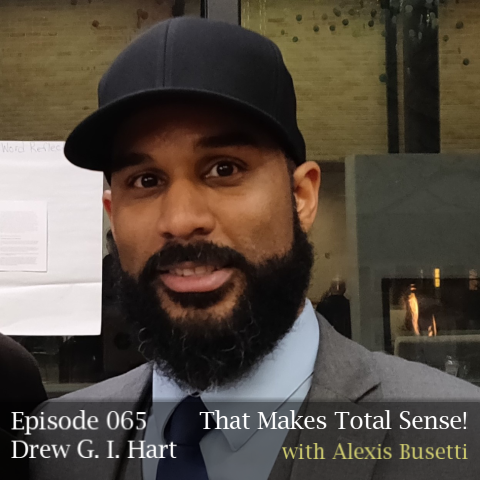
[00:00:10] Speaker A: Welcome to that Makes Total Sense, a podcast dedicated to exploring God's generosity and justice. I'm Alexis Busetti, a Christian, aiming to ask good questions and encouraging you to do the same.
Every one of us is wired by God to live out generosity and justice, but the how sometimes eludes us. That makes total sense is a way for us to get together, posture ourselves as learners, and challenge one another to practice generosity and justice in a tangible way every day.
Okay, Kara, you are not the first person to say to me today it really feels like a Monday.
Monday on the west coast feels like a Monday.
[00:00:55] Speaker B: It feels like a Monday. I mean, before we started recording, we went over our Mondayness, and I feel like we just. We just. We just.
If listeners could see I'm putting my fingers a half an inch apart, it is. It is. It is a Monday.
[00:01:08] Speaker A: Yes, it is a Monday. It is very much a Monday. But I'm really excited because I feel like this space, I can kind of sit and almost transport myself to another place. Now, here's the kicker.
Your book talks about this. Do I want to go back to this place I'm about to trans that we're about to get transported to? Some of me. Sorry, sure. And some of me is like, kara, don't take us there.
Anyway, I. I want to say this on the mic. You and I have chatted before. I didn't look it up officially. I really think it was, like, back in 2020. So, a, thank you for being brave and coming on before, like, way in the early stages of the podcast, and B, because I have, you know, kind of followed some of your, you know, writing and interaction on social media and things like that since then.
When I saw the title of this church Camp, I really. This was the thing that came to my head.
I.
I am only basically extending my hand, reaching out for this book because there are. I don't even know who they would be, but there are probably only a handful of people that I would really trust to write and comment on this, because for me, like, a lot of the folks you interviewed for the book, and I think for you as well, as it comes out in the text, this is. This is kind of a sensitive subject. This is one of those places that feels very complex and complicated. And for some folks who may not have an experience, they're like church camp. How is that complex? And trust me, we'll get there.
It. It is very complex. It's very complicated. And so I just want to thank you for being that kind of author, that kind of. That kind of person who can just engage with this conversation with grace, but also doing it in a critical way and recognizing the complexities, not just for you, but for so many of us for whom church camp was a formative part of our upbringing. So anyway, I just want to say that up front that I'm really grateful for kind of how you modeled, you know, this conversation in your writing.
[00:03:33] Speaker B: Well, thank you.
You're welcome.
No, I appreciate, I appreciate your insight.
I, I don't think I even realized or knew how complex it was going to be until I really got into it, even though the book, and I'm not sure if you know this, but the book was birthed from the both. And if I can make that a phrase, the book was birthed from paradox. So as I've, as I've told some people, my first book came out in 2019, which is what you and I did the interview on a year later.
And then we had this wild thing called the Pandemic that happened that affected the entire world.
From that, I, I, I didn't write an entire, a whole, A whole. I didn't write an entire book, but I did have a concept of a book which was on paradox, and it was on the both end and, and I thought, this is going to be the, my next book. It was, it was proposed to be titled Both Can Be True.
And it was looking at all the, it was, it was pairing up different words, different opposite words, and then seeing how two things could be true at the same time. Because for me, that was the height of the pandemic was this, it was this experience of the both. And long story short, the book didn't, was not what publishers wanted.
And the overwhelming feedback that I got from my agent or from publishers through my agent was that they loved the idea, but they didn't want individual essays. They wanted a through line. They wanted one singular experience of paradox, of both things being true at the same time.
And that is when and where and how and why church camp came into motion. And this idea of this being the book was realizing this is one of. Church camp is one of the most formative experiences of my life. Some of my best friends.
I am who I am today because of church camp. And I think that it's problematic. When I look back on it now, I go, oh, wait a minute.
I was complicit in a lot of things that I do not think were helpful that were harmful.
Yet another phrase of the both. And so, yeah, thank you for noticing that.
[00:06:03] Speaker A: Yeah, thank you for, for putting it out there in that way. It's definitely a through line. It's, it is a, it's a cultural thing for white evangelicals in the US I want to say the whole name of the book because it lays out some of what we'll talk about. Chur Camp, Bad Skits, Cry Night and how White evangelicalism betrayed in a Generation.
How the book is lined out is you have a chapter kind of for each night, kind of for each day. And in our camp it was like the evening service. There was an evening service every night. I gathered that it was similar.
The speaker comes and there's like a theme, you know, for every night. And so each chapter represents one of those nights, which was anyway just brilliant and super fascinating the way that you line that out. I want to tell you just a tiny bit about my church camp in general and how it kind of was similar and a little bit different from what you described. Just so that people kind of know where I'm coming from too in this, in this conversation.
So you're, you're lining out things. Camps that I think probably most people would be more familiar with is kind of the young life ish camps where they're, you know, folks kids come from probably maybe the region, but also other parts of the country altogether for this week long thing.
It's not necessarily that they're tied to their churches, right. It's more like individual campers or maybe groups of campers and then, and then these kind of services and skits and you know, big mess hall kind of situations, cafeteria, all that.
The, the church camp that I went to differed in some logistical ways that I think are a little bit important to the context. But also I was shocked because I thought, well, my camp was so different. And then I read your book and I was like, no, it wasn't. It was exactly the same, you know, so mine was one of the biggest church camps, at least church campgrounds in Oklahoma.
I don't know how many kids normally come to camps like this per week, but there would be thousands of kids at this camp every week.
You know, as I'm remembering it back, and this is of course been a long time ago now, but you know, maybe 5,000 kids a week or something, which is. Felt very big to us.
It was church based though. So we all came with our, with our respective youth groups. So we all came in, our youth group was all together in one cabin. So we weren't staying with strangers unless it was like kids other people had, you know, friends of people or whatever.
And so a lot of our Interactions were based with our home youth group, which was kind of unique, maybe in that setting. So a lot of the relationships were stable. We did make relationships outside of our group, which were different. And I think it was only five nights, but interestingly enough, all of the themes were there. All of the same. The same themes that you guys covered in seven, we covered in five. Krynite. Everyone knew Cry night at our camp was Thursday night. Like Thursday night. We didn't call it Cry night, the night you were supposed to get saved, which we'll get to, interestingly enough, because it was a Southern Baptist camp. And so anyway, it's a once saved, always saved, if you get that language. But then we all still got saved every Thursday at camp every summer. So anyway, yeah, those are just some of the logistical things contextual for me. But it was, it was super, super fascinating.
I want, if you can give a little bit of.
You've given a background a little bit to kind of the book, but I'd like for you to share with listeners a little bit of your own context of you as your experience with church camp.
You know, this isn't something that you went to once in seventh grade or something like, this was something that you were involved in. And then also for the book, the interviews that were involved in writing this, because it's also not just like your experience and then like literature research, it involved other people's actual lived experiences as well. So could you just tell us a little bit about that so we can have a background as we get into it?
[00:10:19] Speaker B: Yeah, absolutely. So I.
I started going to camp in my first summer. I was 9 years old, and that was in 1988.
So people can do the math and figure out how old I am.
And then I started volunteering at camp, and that would have been 1996, when I was in high school. And then I worked my first summer as a summer staffer in 1998.
So one of the things I do early on is I listened all the different roles I had at camp.
So these are the different roles I had for then really starting. I mean, if you, if you count 1996, when I started volunteering for the next 20.
I mean, for the next 20 years, maybe 22 years.
So these are the roles. Cleanup crew, kitchen staff, lifeguard, ropes course instructor, camp counselor, head counselor or leader, program team musician and camp speaker. And camp speaker is. That's the role that. That's really the lens through which I view the book.
So, yes, my role as camp speaker and all those other roles were both at Young Life Camps, but they were also at a number of denominational and non denominational camps. So I just a little more context. I used to be a high school English teacher, so I had my summers free. I chose. I didn't want to teach English during the summer. I wanted a summer. So the way that I paid my bills during the summer was as it was to be a camp speaker. So once I started speaking at camp, and this was actually prior to working for Young Life, once I started speaking at different camps in the Santa Cruz mountains, I was then recommended to other camps. Now, obviously I didn't land at an SBC camp because they would not have hired me to speak as a woman.
But for those evangelical denominations that did allow women, I spent my summers speaking and I was mostly on the west coast, but I spent my summers just speaking different week long camps and indeed the themes. So that's where the seven Night or the seven Talk series. It did happen at Young Life Camps, but it also happened at, I mean it happened at every single camp that I ever spoke at. Whether that, whether Cry Night, which Cry Night, by the way. And I know we're going to get to. It was never said from the front of the room. It was the secret thing that the staff said and, or the secret thing that the campers knew was coming. No one ever actually like wrote Friday Night up on the bulletin board or something though.
So those were the experiences that I had. Now, I will say I was never a full time camp staff employee. So there are people that have dedicated their lives to camping ministries that work year round.
And so I was what was considered a seasonal employee. And that was my experience, the lens through which I viewed camp and as a camper, when it came to writing the book. Your second question.
I.
My writing style, at least in nonfiction writing, is it's. I mean, I would generously describe it as hybrid memoir, maybe hybrid spiritual memoir, but it's a combination of spiritual memoir, journalism and theology.
So in that way I knew that I had my experience and I had my own story, but I also knew that I knew that I had also benefited quite a bit. And even though I experienced harm as a woman, I did not experience harm as a person of color. I identify as white. I did not experience harm as an LGBTQ or queer identifying person.
In that way, I wanted to gather as many stories as I could from other people, not just folks who identified as queer and, or as people of color, but from people who had experiences in this world.
So that's where I interviewed almost 50 people for the book.
And then I also finally got to the point where I was like, I need to stop interviewing people because I know what I need to say. I just need to get into the writing.
But it was such an honor to hold all of those stories.
I literally probably. I printed out all of my notes. I probably had an inch worth of interview notes afterwards. And I would go on these writing weekends and I would just comb over them like, you know, getting back into them, but I was also holding their stories. So those are the two.
Those are the. Those are, I think, both of the answers to your questions.
[00:15:06] Speaker A: Yeah. And I think that from what I gathered from what you shared in the book about the interviews, that's what was interesting to me is the.
Is the wide spectrum, you know, some folks who came into it and they're like, yep, this is who I am. You know, you could. You could basically Google that person and probably find their white pages. And then people who are like, I'm going to do this completely anonymously. You know, I don't want to, you know, anyone to really know where, you know, who. Where this information is coming from. Folks who might have said, yeah, I'm going to send my kids. Kids to camp next week, and I hope they have a great experience. And other people who are like, never, you know, like, I will. That will never be an experience for my kids based on my own experiences. And so, again, I think that paradox, you know, keeps coming through.
I don't, you know, there's. There's nothing about me that. Even though my. My experiences were probably more along the lines of, yeah, I don't think my kids are going to go there next week, you know, based on my own experiences, I would say there's. There's nothing in me. And I. And I didn't gather this from you either. I won't put words in your mouth, but there's nothing in me that's like just kind of like cry night was never said it from the front. It's like, there's nothing in me that thinks that the organizer of these camps are like, yeah, we can't wait to do something that's going to cause everyone to, like, have deep down, you know, trauma and harm. And when they look back on this in 20 years, they're going to be, you know, it's like, no, these things, I believe, were done with the best of intentions and people wanting campers to. And staff to become, you know, close, more closely connected with God and with one another and with nature. You know, as it happens in a Lot of these places.
But it is, you know, in some ways, it's a product of. And it helped produce this culture of white evangelicalism in America that we've seen is very harmful in so many ways.
I want to get right into that, because these chapters, as we mentioned, kind of these nights of camp outline some of these places where this culture has become really harmful for many.
And one of them that resonated with me so well, there's several that resonated with me. We probably won't get to all of them, but maybe I'll bullet point at the end. The ones that we don't get to, you know, that. That really stuck out to me. But one of them that I want to start with is this mixed messaging. So, like, there's. There's a lot of mixed messaging that happens. That happens at camp that I would say. But people who are insiders don't necessarily view it as mixed messaging. It feels maybe very logical.
But I think for me, I would. I would name it as mixed messaging. So one of those. Is this mixed messaging on really even who God and Jesus are?
You know, is it like, what is their character? What is their relation to us?
You know, what is their relation to salvation? And it's like, depending upon what night you showed up at. At church camp, you might hear about a very different God. And I don't. I don't really think that's being unfair to. To say that, because this. As the story progresses, I think the message becomes kind of convoluted and confusing. So can you talk about that a little bit? Like, in. Through the lens of church camp? Like, what did we. What were campers hearing about God? Like, who God is?
[00:18:31] Speaker B: Yeah.
To me, so much of this goes back to the four spiritual laws with Campus Crusade for Christmas, Bill Bright. I almost said Bill Hybels, and I'm like, wrong, Bill.
Wrong time point in history.
So you have. I think it was in 56 or 57, 1956 or 57, Bill Bright wrote or created the four spiritual laws. And that's where I think any of us who were raised or who found a home in evangelicalism and white evangelicalism might remember the. The drawings of the two cliffs.
And so you have God on one side and man on the other. Wasn't usually human. It was just man.
And then you have this chasm that exists that even though the two want to be together, they cannot because sin separates the two. And so that's where Jesus comes in on the cross and he fills in the gap. And then there's this bridge so that man can get to God and God to man.
In order to make real that message. There was oftentimes a logical talk progression or sermon progression, whatever we want to. Whatever we want to call it, speech progression, that happened. And so that. That meant introducing, even though wide swaths of the audience were Christian, identifying as such, whether this happened in one night. Some of the. Some of the interviewers I talked to, their cry night, which is simply a way of saying it was the night in which you got right with God.
Their cry night happened on, like, the second night of camp.
So it may happen. Sometimes it happened early in the week, sometimes it happened later. But oftentimes, in order to get to that point in which there was an emotional response to the message of God, you had to introduce campers to God and then you introduce campers to Jesus. But then there. So. So that's where again, we. We don't have the cross in the middle of the cliffs yet, but you want to paint this picture of who God is and of who Jesus is and, and of the loveliness and beauty and make for. For the person of Christ, make Jesus the most attractive person ever.
But then there's this problem of humanity. And that's where I remember camping out in the Gospels.
And then we got to the point. In my. In my book, it's chapter four, but it's the. It's the. It's the point. It's the chapter called Dirty Rotten Little Sinners, where all of a sudden you have.
So you have the. The loveliness and the beauty of God and of Jesus. And then you have the reality that you're a dirty rotten little sinner. And really the only thing you can do to prove that equation correct is to. Is to go into Paul's writings. And so then there would kind of be this complicated, complicated juxtapositions of different verses from Romans maybe paired with, like Jesus's response to the woman caught in AD it was always the woman who sinned. You know, we have Eve, we have the woman who was caught in adultery. It was never a man who sinned.
And then in order to get that cross in the middle of the two cliffs, and the next night you're gonna have Jesus who died on the cross for your sin in order to make the equation right. I know I'm. I'm answering, I'm. I'm giving a very long answer to what was a simple question.
But it was such a mixed message because you had to prove the equation right. And yet the equ as you refer to it, this mixed message, this is, I mean, it's the four spiritual laws. It's going back to the original of that. But it's also, it's like we in the middle of it when it comes to dirty rotten little sinners and even the cross in order to prove this correct. Because really it's an. It's in order to get to the point of proving penal substitutionary atonement theory correct. That's what we're trying to work into the theory. That's when you, you, you aren't even if, if viewers could see me, I'm. My hands are like pointing to the different nights of camp. You don't have to get to penal substitution until like night four when dirty rotten little sinners comes in. But that's when it's like, okay, wait a minute. In order to prove this correct, that God did what he had to do, God always also being a male, being referred to as male as or by male pronouns, he had to like, kill his son on the cross.
And so, so this is where it's. I mean, again, like, it's just. It of course there ends up being mixed messages. And of course then kids or campers or humans, whoever is on the receiving end of the message, because it's also not just a camp.
This is, this is vacation Bible school. This is youth group. This is from Sunday sermons. Like, this is the pulpit in so many of our churches that are preaching, that are, that are adhering to this particular atonement theory, meaning Jesus on the cross of why God had to do what God had to do.
And that's not the only way. But of course it creates a mixed message.
[00:23:46] Speaker A: No, it's not a long answer. It was not a simple question. So I, so I appreciate that. I mean, I think it's not the only way, but it's presented as the only way and part of what's mixed about it for me and you and you, you mentioned it and we kind of skated past it. But. But I might want to go back for a second. It's so. It's like there's these couple of things. So one, one is God is. Is and Jesus, they're lovely and you know, all of the things that. Beautiful and all this and so angry that God had to kill his son. Which is like super disturbing.
You know, can be especially, I'm thinking, like part of the reason why I think this doesn't feel disturbing is like a whole, a whole other bullet point on my, on my notes. But it's because, like, the goal of all of this is conversion. But as you mentioned, most of the people there are already self identify as Christian. So it doesn't feel odd because it's what we've been hearing in vacation Bible school and Sunday school and Sunday sermons. And so we get there and it doesn't feel weird for most of us.
But then most of us have already, we've already had some sort of conversion experience or maybe we've had some, you know, whatever the church tradition we have, you know, we've, we've, we've done that. And so it doesn't feel like odd, but it really, but it really is odd. Like penal substitutionary atonement theory. I'm not a fan of it, but it really is presented as like, the only way. Like, as we were talking before, you know, you also talk about camp songs, and one of the camp songs that we sang growing up was he paid a debt I, you know, I.
He did not owe. I owed a debt I couldn't pay.
And Jesus came and he washed my sins away. And then of course, because it was church camp, we would say wax on, wax off, you know, and. And it was this penal substitutionary atonement thing. It was this. It was a debt, it was a judgment, you know, it was all of this. And so there's a mixed message of like, who is God? Is God like loving and beautiful and wonderful, or is he like an angry murderer? Because that feels like an odd combination. But then there's also like, who are we? Now, I will say, just from my own experience, I don't really remember a ton of humanity being presented as something that was beautiful and loved and, you know, all of that, it really was more focused on like, dirty rotten little sinner. But I imagine that at some camps there's also the mixed message. And in some churches, I know this is the case too, of, like, you as a person are wonderful and lovely and loved by God and, you know, and God was so pleased when God created you and, you know, all of these things. And you're also the scum of the earth and this is a problem. And God can't bear to look at you. And, you know, there's all of this, like, I think you, I think, sorry, I'm reading a few books right now, but I think it was yours where you're like, but God can only view us through the lens of Christ. Like, if Christ isn't there, that God the Father can't even bear to look at us because we're so shameful and this is really, this is really hard too. And then I think about what's the audience for this kind of communication? Well, you started going at nine, I started going at maybe 12.
That's, that's an interesting, that's a tough age for this. Like we're discussing this as adults who both have theological education and are recognizing the confusion in that. But then how does that feel as a 10 year old or a 12 year old or a 14 year old to be receiving, you know, and interacting and being, and being expected to interact with that messaging? That's, I don't know. I just, I just, just.
Yes, there is a both and I know they're trying to share the love of God and this feels like a really. Yeah, this is, this is really hard.
[00:27:53] Speaker B: Yeah. I, in, I mean, right about the middle of the book, I, I, I included some answers from different interviewees about as to the theology. And so I just asked them what was the theology communicated or that you perceived at camp? And here are a few of them.
Jesus saved you from an angry God. You were saved from going to hell.
You're dirty. But don't worry, God loves you so much that he killed his only son.
A third one. Jesus loves me, but his dad thinks I'm a piece of shit. I apologize if I'm not supposed to cuss on air.
Fourth one. I'm a wretched sinner and I don't exist. And I cannot exist without that, without God.
I mean, and there's a couple more that are included in there, but that is exactly what people are deconstructing. That is exactly what they are thinking through is this theology in which that was communicated that they were on air. I say dirty rotten little sinners. But there are multiple times in the book in which I use the phrase piece of poo because that's what it was, right? That, that we were. Because of human depravity. Which is again, like if we. This is all part of unpacking penal substitutionary atonement theory, the fancy, the big fancy word for it. But that's where the wretchedness of being a sinner not. And it's, it's also that language of being a sinner, not just of having sinned. Human, humans, humanity sins, but there's a difference. Brene Brown talks about this. When it comes to shame. There's a difference between saying I have sinned and I am a sinner. And so I think about my own kids who are 10 and 12 now, and this is what they're entering into and the that which their minds are formulating and wrestling with, that which the world.
Which the world thinks about them, that which is communicated by and from and through the church. They are taking all of that in right now. And. And. And it is forming their. Their identities. Did this form who we were at 9 and 12? And for me, as I continue to go and be a part of these spaces and then preach these words and this message through really my 30s, I mean, it's. For me, this is where I just go. This is. I. I do still believe in God. I think there's a whole lot of people who are like, wow, you really.
You really fell off the deep end. Or like, if they're still in that evangelical world, they're like, we're just really sad.
Like, that's their response. This book just makes us really sad about what happened. And I'm just like, no, I actually now have a beautiful, healthy view of who God is. That does not include this. That doesn't make me feel like a piece of shit at the end of the day, because that's actually not who God is, and that's not who Jesus was to people.
[00:30:50] Speaker A: Yeah. Yeah. I want to just interject here. I almost never do this, but at the end of the show, notes and episodes, I usually have, like, a little section of, like, mentioned in this episode, but also, like, other shows that you might enjoy. But I'm gonna put a couple of in here. I don't know which section they'll go into yet, but we. I have recorded a couple of episodes, so I want folks. If people are like, I don't even know what that is, or whatever. I have one with New Testament scholar Andrew Riera, who you might know. Actually, I'm not sure. But anyway, he has written a really, like, a systematic theology book on kind of like, in defense of not penal substitutionary atonement. Kind of based on.
A lot of it is based on, like, Old Testament sacrificial laws and things like that. But anyway, it's.
[00:31:36] Speaker B: It's.
[00:31:37] Speaker A: It's a. It's a really deep, nerdy dive of a book.
But there's. But it's out there basically saying, is this even biblically? Like, we know this is common message, but this. Is this even biblically, what we're looking at. And then there's another one I recorded with a guy, Fulu, who. Who writes on Eastern Christian traditions, and that this isn't something that is common at all. And. And not just penal substitutionary talent, but even views of. Of sin and sinners and, you know, this kind of thing anyway, just to kind of throw it out. Like, it's not like, like either one of us are totally off the deep end. Like, there's a vast Christian traditions that span the centuries that span the globe, and not everyone.
And they're, and they're valid. And so not everyone thinks about soteriology or like what it means to be saved in terms of penal substitutionary atonement, which is, you know, included in that. Like you're mentioning the four spiritual laws. This idea that we're kind of dirty rotten little sinners. This like, you know, the judgment or the debt piece, that was big in my tradition. This isn't the only way to view that. So I'll, I'll throw those in for folks who kind of want to do a little extra, you know, homework in that area.
But yeah, I agree with you. Like, I'm the same. Like, I'm not going to sit here and say, no, humanity doesn't sin. But I think that what in neither are you.
When you mentioned Brene Brown, I think if I'm not mistaken, part of what she says when she talks about guilt and shame is like, guilt is like, I've done something bad, if you want to say that way, or I've made a mistake, but it says I am bad and bad, I am bad. And I think that's the message. At least that's the message that I got really was not necessarily you have made a mistake or it's normal as humans to mess up, to make mistakes. We do this, but that this was now becoming our identity instead. Our identity is not beloved child of God. Our identity is dirty rotten sinner. You know, like, you are bad. And then take it one step further.
I remember an illustration, I don't remember if it was church camp or somewhere else. Basically saying to, to, to take off your point or about God seeing us through the lens of Jesus. Like, I, I think I, I heard it was like God looks down and sees red dots and white dots and basically like these people. And if we were white dots, we were saved and we were red dots, we were not. But that there was this binary distinction and then even how God viewed us as individual people.
Basically, you know, you, I don't think they would ever say bad or good, but it was really like kind of saved or unsaved, like through the, you know, atoned for or not based on, based on that. Which anyway, we could go a whole lot of other places which doesn't necessarily have anything to do with spiritual formation or relationship or anything. Like that in ours usually had to do with what happened at cry night, which was a, a prayer, usually like a, a response, a hand lifted or something like that.
[00:34:42] Speaker B: Well, and if I can interject one more thing, the reality is that in so what. What I discovered, and I think I kind of always knew this, but I was interviewing one friend who's a pastor and he had big feelings about camps even, even as he felt called to the church and his denomination was not. He was part of the Covenant denomination.
His denomination within evangelicalism a lot of times is even considered a little more progressive. They still, I, they, they kind of rescinded a bit when it comes to LGBTQ issues, but theologically they've all. The Covenant has always been, has always erred on the side of we're just going to major in the majors and minor in the minors now. All that to say he, he said it to me this way when I, in the interview, he said, but they flip a switch at camp.
And he wasn't necessarily naming camps, but he was like, he was like public or public penal substitution is not a part of what the Covenant Church believes. And I'm not meaning to throw the covenant under the bus here, but he said, but it is used at camp because it's what works.
And that to me spoke volumes across. So, across so many camps. The reality is that in a seven day setting or a five day setting or even a weekend camp setting, I've spoken at a million weekend camps and we were truncating this same message into four talks instead of seven.
But in a week long setting, if you're trying to get from point A to point B, point A, which is, you know, whatever the starting point of maybe non Christian to point B or point Z, which is Christian, because the whole point of camp is conversion. That's what donors want and that's where the money is coming from. If we're really going to get into it, then you have to preach a message that's going to convert and penal substitutionary atonement theory is what works. That is what gets the numbers. And so that is why and how so many camps, even if they don't believe in that theory, they use it because they're going to get converts.
[00:37:03] Speaker A: Oh my goodness. Okay, so that brings us to like, I'm so glad you mentioned that. I've got just. I just want to say no, no, I'm. No, I'm super glad you mentioned it.
I've got like two more places I think we'll be able to go in the time we have left. And, and so I'll just say, sometimes I ask us, choose your own adventure. So, Kara, choose your own adventure.
Because you mentioned capitalism in that this is what donors want. You know, they want, they want the metrics, they want the outcomes. Show us, you know, show us that. But then there's so much more when you, when you talk about that with, with capitalism, where the money flows, you know, you even, you were talking about, you know, paying your bills over the summer, but then I saw your chapter on what staffers are making. I don't know how many bills you paid.
But so there's that. But then there's also the other piece is if the point is conversion, which we've kind of outlined, it is also ironic because a lot of people, they already self identify, but then conversion to what? And that is this conformity to white male normativity that often, which we've alluded to, but that's often like what are we converting to? Or what is the expectation that a camper will be converted to at that point? So if we get to both, awesome. But choose your own adventure. Which one do you think you want to talk about first?
[00:38:21] Speaker B: I mean, obviously I think they're both important.
The. Well, that which I just turned to first, I did turn to the section on capitalism and I actually wrote about this on substack last week, which I don't think the message all the way got across, which was also so much of the message of this particular chapter.
So in every single chapter, if, if we laid it out very plainly, each of the chapters is laid out with what I said very briefly, what I said from the stage, what was wrong with what I said and what we could say better or what we could say instead. And again, this is not just verbally proclaiming. It's not just verbal proclamation, but it's the deeper meaning behind it. And so that's the irony of chapter six. So it's, there's really, there are, there's seven main chapters and then a prologue and an epilogue. So I always like really short chapters. But because the container that this book is written, that was, this book was written into was on the seven talks. That's why we have longer chapters. So in chapter six, which was supposed to be a chapter on the resurrection, so a lot of times the, the night before that was cry night and Jesus died on the cross and everybody cried. And, and we can talk about emotion, emotionality and group think another time, but then the next night, sometimes we would forget to say or mention oh yeah, and P.S. jesus died again, or Jesus rose again three days later, guess what? He's not dead. He hung out with his friends and then he ascended into heaven 40 days later. And that's the good news, is that Jesus is alive. And you know, so it would be, it would be this message of the resurrection and of new life, of life after life after death, as nt right.
But the, the irony of that is that, is that it so often got truncated by different elements. This is what I'm communicating or saying about that substack thing. So even though the message was supposed to be about that, somehow it got convoluted. And that's where we end up looking at and identifying capitalism, consumerism, transactionalism within this chapter instead of this theme on the main part of why Christians are Christians, which is the resurrection. So the part I just turned to, though, one woman I interviewed who decided to go by a pseudonym, her name is Carolyn in the book, but she worked at a Billy Graham camp for years, both as a seasonal summer staff employee and as a year long camp employee. And because she also now lives in the area, she did not want, she did not want her name named.
But she talked about when she was a seasonal summer staff employee, she talked about how the most coveted award that they could get at the Billy Graham camp was the Outback Award.
And so I'm sitting here, you know, where I'm on the other side of the screen, and I'm like, the Outback Award, what is that?
And I'm just reading, I'll just read two very short paragraphs. Wait, what's the Outback Award winner? I asked Carolyn, not unlike her toddler son, who had now dropped a Thomas the Tank Engine in her lap, eager to play. My question came as an interruption to her thoughts. Desperate to unpack and dislodge the memory, to pick apart the pieces of a memory tied up by insider speak, I couldn't help but cut in. Oh, that person got a $25 gift card to Outback Steakhouse. She replied, even if you didn't get it the first week of camp, you still had another week or two to get your conversions up. Quantifiable fruit for Jesus, you know, so whatever counselor, you know, whatever counselor got the most conversions in a week at camp, got an award, got a gift certificate for Bloomin Onions. Like they gotta go to Outback Steakhouse for dinner. And that was the thing they were most excited about, that they were all coding. So all of the behind the scenes staff, like they're working super hard to get their kids to convert because they know if they get the biggest, highest number of conversions, then they will win a prize. Like it is just mind boggling.
[00:42:36] Speaker A: I mean, shout out to Outback though.
[00:42:38] Speaker B: You know, did they sponsor it? Like, I mean, I'm curious but like, I mean like, I may not have had that at the camps.
When I was a summer staffer and also as a camp speaker, I got paid. I got. I really, I was paid. I'm not. I don't remember the exact numbers, but I was often paid the exact same. To speak at a week at camp as a summer staff employee was for the entire summer at camp. Wow.
Like, unbelievable. I don't think I actually put that in the book.
But you know, it's like, but they were getting free room and board and they were serving the Lord, you know, like, so it didn't matter if they were, if they were only making $200 every two weeks.
And P.S. i may have worked at camp 25 years ago, but I researched so many numbers for different camps. Like as far as what they're paying today. And I was like, oh my God, it's like the same amount. Like there has been no inflation on the amount of money that a 20 year old makes at camp. So.
But I mean we, we made a. I may not have had the bloomin onion outback award outback award winner at my camp, but we did have the morning after the time when everyone got to stand up and share. Like at morning divas, everyone got to stand up and share what had happened. And the reality is that is that staff members walked away either feeling wonderful because three kids accepted Jesus into their heart for the first week, or they felt again like back to chapter four like dirty rotten little sinners. Because no one stayed behind to talk to them. No campers gave their lives, you know, and it was. There was. There were equal there, there was. There were other quantifiable things that were happening as far. Even if you weren't winning something from outback steakhouse, you were still there was the glory. Like, think glory is quantifiable in some areas. So anyways, just thought I would bring that up.
[00:44:37] Speaker A: No, that's great. P S.
I bribed my husband with an outback dinner one time to get him to go to a bar group workout class with me. He did. And then as soon as we left, he's like, when? When am I getting my dinner? So you know, I mean, it's. It works.
[00:44:53] Speaker B: Billy Graham camp and your house.
[00:44:56] Speaker A: My house. Shout out to Outback now. I shouldn't have Said that because now it makes me. Made me lose my train of thought of where I wanted to go. Oh, I remember. So one of the differences that I thought was really interesting is I remember when I was in camp and going to camp in high school, middle school and high school, I remember chatting with my friends who did not go to church with me and who happened to not go to the same big SBC church camp, but they went to other campsites, probably more similar to like, what. What you write about in the book, and it's the expense of the camp itself. So here's the truth. I would not have been able to go to camp if that camp was as expensive as what you named. And I knew that it was because I had friends and, you know, because. Because that's part of it. Like at my youth group, because it was all connected. It was like, you want to.
That's part of the, the, the. Even the, the evangelistic nature of camp is you invite your friends to go to camp who may not otherwise go to church or may not otherwise go to camp. And for ours, it was a really easy sell because it was so cheap. And I'm sure it was because the church subsidized it. And they probably, you know, the arrangements were different because it was just kind of a different kind of camp, but it was super cheap. I mean, less. I mean, this is, you know, however long ago it was, I was going to camp in the 90s, so, I mean, but maybe $50 for the week or something like that. And that was everything. I mean, we, we ate and we slept and we did, you know, all the things for like five days or whatever. And so it was super easy. That was it. That was an easy sell. Because, of course, you're. I mean, I even had a friend come in from out of town one time to go to camp with me because it was, you know, it was cheap.
But that wasn't the case with a lot of that. And if we have time for my next adventure, I think that can be a good segue, which is part of it, because I do some.
I've always been interested in, you know, racial wealth disparity in the country and like all these other factors that come in. But part of it is these camps are kind of, what do they say? Like, they're, they're. They're by and for white evangelicals, middle class white evangelicals.
And so, because who can afford to send their kids to camp if it costs $2,000 a week? And then you have multiple kids that you might be Sending at the same time. And it's just. It's really just one week that limits severely who is able to attend these camps. And then when you get there, you can see, yeah, it's.
[00:47:34] Speaker B: It's.
[00:47:34] Speaker A: There's a certain in group that is able to attend them, but there's also a certain in group of who is working those camps. And then that goes to what you see is what you get.
And when you are converting, what are you converting to? It's more than just a faith. It's a cultural encapsulation of that. Of that faith that looks like white normativity, really.
So I don't know. What do you have to say about that?
[00:48:03] Speaker B: That was a lot.
This is.
Yeah, I mean, this is. This is much of the very last chapter which the title is Now Go and Live the White Way of Jesus.
So part of where this book also birthed was a question of whether I could send my own kids to camp.
And, and why I bring that up now is that my boys both identify as children of color. They are biracial, mixed race. They. They both of them right now identify as black.
And that is one of the biggest questions. That was one of my biggest questions that I had was. I mean, there was the spiritual component, but there was also this question of whether or not they would be valued for exactly who they were and for how they identify in such a situation.
There was one young man that I interviewed, his name is Malcolm. And he had experience both within young life camp environments, but also.
I can't remember what other denomination it was, but he had. He had experience in a couple of different denominations. I'm trying to find where he is right now. I. I should have looked this up beforehand, but. Oh, here it is. Um, so he. One of the things he said from it, he's. He's a black queer man. And he, He. He said he has a. There's a list of lamentations.
When it comes to cultural and theological assimilation and what he was being asked to assimilate to or toward, he writes the following. I lament the idea I needed to buy chocos, use multicolor highlighters for my Bible and listen to white Christian music to feel like I was a part of what God was doing. As a black kid, I felt forced to sacrifice the parts of my blackness I loved and the part. Parts I didn't even know existed, to have a seat at the table, which was at a table which was built on white normativity. I do not like comfort color shirts, but that's what I Wore because young life told me that's what I should like. My blackness was once used as the punchline of a skit because my area director said there would be nothing funnier than a large, angry black man coming in and tackling someone.
So the reality is that both for camps, camp seasonal employees, of which I also write about this, but 83% of seasonal staff employees are white.
So you already have a number that is 83% is white. But you also, then you have the campers that are reflected there too. And in the same way, it's not a stretch. One of the questions I asked interviewees, which I was like, I feel like this is kind of a leading question, but like it was a statement. Agree. Do you agree or disagree? Camp is made for rich, white, straight kids.
And the majority, I mean, a good majority of folks who answered said yes, that's exactly true. Because if the. I looked up the average. I'm kind of jumping between chapters now, but I looked up the average amount of the cost of camp at the, I think the top five or the top 10 camps in the US and some of those camps also were two week camps. There was no one week, but I split the cost in half. But the average cost was $1,694. Now you do have camp settings that, that, that are severely underwrited in a good way by denominations, and so they do only cost kids $100 to go. There are also growing numbers of camps that are serving populations that, that cannot afford camp. A lot of camps would say, well, if you want to come and you can't afford it, then just fill out this scholarship form. But the reality is that like, I mean, there are so many people for whom like, it's, it's demoralizing to fill out such a thing.
So in, in so many different ways, the camp experience today, what it has become to me is an invitation into white normativity. It's an invitation into assimilation. And it's keeping people out both because of, both because of the cost, but also because of the actions.
So that's, that's a long answer. Once again, I feel like I'm saying this to every question, but that's a long answer to your question.
[00:52:27] Speaker A: No, no. And I, I haven't really felt like any of them have been long, so just FYI, I thought they've been great.
Kara, I'm wondering if you can leave us with, I don't know, maybe just a last thought about the, about the paradox. Kind of back to where we started, I think.
Yeah, I mean, it's, it's easy for me to come in and pick. I told you pre record, I'm like, I have notes. But I did that intentionally because I didn't want this to sound like an interview you did for the book. And let Alexis tell you about all of her experiences. Good, bad, and, you know, and indifferent.
But I'm wondering if you could leave us kind of with the last thought on, on the, on the true paradox of this, of this topic and what it represents for our. Yeah. Our Christian culture in the U.S.
yeah.
[00:53:19] Speaker B: Well, the page that I just turned to in the book is in the prologue. And to me, the prologue once again holds the both and I hope in a very tangible, experiential sort of way. But one of the places where I wrote several of the chapters for this book was at the same camp that I started working at as a seasonal staff employee.
Sometimes I felt like I needed to hide my face, but other times I was like, I'm home. And there's a paradox for you right now. But at one point I was. I took a walk with Libby, the dog of the house where I was staying of some friends. I took a walk with Libby and we went all the way up to the top of the property to the camp that I had worked at. And I remembered a song. And it was a song that we sang to the campers every single night. And we. It was, it was our camp song. The song I. I don't know if I should sing on air, but I'm just gonna do it. So the song goes like this.
May the Lord, Lord mighty God, bless and keep you forever.
Give you peace, perfect peace.
Courage in every endeavor. And the song keeps going. But I thought of that song that we sang over the campers.
And what I write right after that, I say the same God I met as a summer sapper in 1988, 1998, was still there. That same God was still in me. For that same God was still present in this place. In that place. Maybe the truth is this. Even if and when and as we change, even as we evolve and tear down and reconstruct new versions of faith, we are found enveloped in a mystery. Who meets us in that place? Who looks over us with grace and love?
Even if this. If this God now sings a more non gendered version of the song, this same God still sings a good night prayer over each one of us.
And I continue with a couple of even ifs. But to me, that message is the same. And it's, It's a message of paradox. But God is still here, and God is still loving us and embracing us.
[00:55:36] Speaker A: Amen to that.
Gosh, thank you so much, Kara, for coming on and for just, yeah, being someone who can hold the both and, and hold the stories of yourself. And for those of us who, who share those experiences again, the book is called Church Camp, Bad Skits, Cry Night, and How White Evangelicalism Betrayed a Nation. And there'll be a link to where you can grab a copy of that in the show notes. But thanks so much for joining me, Kara.
[00:56:06] Speaker B: Thank you, Alexis.
[00:56:09] Speaker A: The links for all the resources mentioned in today's episode can be found in the show notes, music and podcast production by Seth Buscetti. Be sure to give us a review on itunes and subscribe at your favorite podcast listening app. You can also Visit
[email protected] Sam.