Episode Transcript
[00:00:05] Speaker A: Welcome to that Makes Total Sense, a podcast dedicated to exploring God's generosity and justice. I'm Alexis Busetti, a Christian, aiming to ask good questions and encouraging you to do the same.
Every one of us is wired by God to live out generosity and justice, but the how sometimes eludes us. That makes total sense is a way for us to get together, posture ourselves as learners, and challenge one another to practice, practice generosity and justice in a tangible way every day.
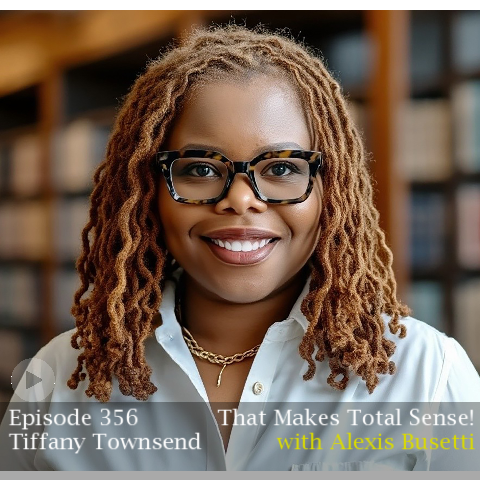
Well, I am, like, super, super, super thrilled to talk to my guest today, Tiffany Townsend.
Tiffany, I just told you I've read several, I would say, books that are kind of in this same genre.
And, well, first I would say, but I don't think any of them written by a psychologist. So really, props. I'm trying to, yeah, trying to think maybe, but I feel like not, okay, maybe tell me if I'm missing some and I'll put them on my list.
But there were other things that made this text unique that I hope we get to talk about today. But really there is a lot about social justice and what's happening right now, but also the history part. And so that's a lot of what I want to touch on today.
The book that I, that we're going to talk about today that I just loved by Tiffany is called Weathering the Storm, Navigating the Antisocial Justice Wave and who.
It's that part that got me because I think there's so much out there about advocacy, allyship, solidarity, what's happening.
And I don't, I don't. I'm not seeing as much in a, in a long text like this about. But what do we do about the pushback or even like talking about the fact that there is pushback? You. You see that on social media and things like that, but like a text by a psychologist talking about, yeah, there really is pushback, and it's not the first time we've seen this kind of pushback. Right.
So let's navigate this together. So, anyway, we're going to talk more, but I just want to start off by saying I thought it was really unique. I thought it was super pertinent for this time that we're in right now. And I'm so grateful for it and grateful for you being on. So thanks so much for coming.
[00:02:40] Speaker B: Well, thank you, Alexis. I appreciate you inviting me on for reading the text. And I mean, that's. That's amazing to me and I'm excited, excited to just have the conversation.
So I look forward to it. So thank you so much.
[00:02:56] Speaker A: Yeah, I'm, I'm trying to figure out where to start here, but I think maybe, maybe kind of what I alluded to when I was introducing it is your book does a great job of naming a lot of the current issues, but I think what I was grateful for, and again, I've seen things like this from historians, but to see something like this from the perspective of a psychologist felt different to me, and that is talking about the patterns of what we're seeing now and how they are similar to what we've seen before.
You start off the book by talking about Obama's election.
[00:03:55] Speaker B: Yes.
[00:03:56] Speaker A: Which I could almost, like, feel it again, you know, the way that you described it.
And then since we've lived through the time period after Obama's terms, it felt.
Gosh, it felt really hard.
[00:04:16] Speaker B: Yeah.
[00:04:16] Speaker A: To read about that, like, joyful time just to, to kind of think about how. I don't. I want to say things have crumbled, but. Yeah. I mean, it just feels like there was. There was kind of an up, and then there's been a real big down. And I think that you, you, you mentioned this isn't. But this isn't the first up and down wave.
[00:04:36] Speaker B: Right.
[00:04:37] Speaker A: So let's be, let's be real about that. So can you talk a little bit about kind of like what you were experiencing and then also kind of how your husband named some of those things at Obama's election that you're like, yeah, oh, yeah, yeah.
[00:04:52] Speaker B: He's a realist for sure, man.
[00:04:54] Speaker A: I'm married to one of those two. It's tough sometimes, isn't it?
[00:04:57] Speaker B: Isn't it wonderful?
But, but I wanted to start the book that way because for me, that was radical hope. I mean, that was the first time I really experienced it. And I didn't want folks to go back there feeling like, oh, man, we're no longer there. I wanted folks to have that experience and go back and say, we can do that again, like this is possible. Remember what it was like. Remember how that felt. I wanted folks to experience that. I'm so glad you said you experienced it. It took you back there. Because that's what I was want. That was what I was going for. But I want people to feel that emotionally because a lot of what I talk about in the book is heavy. It's kind of academic. It could be dense for some folks. But I wanted folks to experience the emotion of that moment because that is the hope.
That's the part that I want folks to hold on to and appreciate that if we've gotten there before, we can get there again. And now we know how to do it because we have a roadmap. And that's really what that book is, is for us to look at our past as a roadmap, as to how it's been done before and done well before. This is not the first time we've been here, and we can take lessons from our past.
[00:06:23] Speaker A: Yeah, I. I did feel that. And, And I, I think that you, you're. You and I are both married to realists. Sometimes my realist husband calls me a Debbie Downer. And it just is true. Sometimes I kind of have this melancholy bent where, you know, I see the gray and not the silver lining all of the time.
I don't always see it is what I mean. But.
And so I think that that's kind of.
I did feel the radical hope and then.
And then I get too many news alerts on my watch. Let's just say that.
[00:07:05] Speaker B: Yeah, sure.
[00:07:07] Speaker A: And I even, you know, put some notes in here because obviously when things like this, it's not a magazine article, so it's been published, and then things have happened since it was published. Right. And we could name many things. But as I was reading it, you know, one of the, One of the big news stories was, and I hope continues to be, you know, Supreme Court decision about.
About our electoral boundaries, you know, things like that, where we're saying we have just gotten taken back to like, pre civil rights era kind of stuff. And, you know, in that first chapter, you name, you know, increase of hate crimes and, you know, racialized hate crimes and things like that.
Anti dei, anti woke, you know, kinds of things.
[00:07:57] Speaker B: Yeah.
[00:07:57] Speaker A: But I wonder if you could put that in perspective for us and especially for those of us who read about other times when things like this were happening in history books, you know, we weren't living it. And so it might seem far off, even though it's not really, but maybe take us back to.
To other times in our history, in our country's history where we faced these same kinds of things. And as you said, and then hope emerged and people did the work and we saw real change.
[00:08:32] Speaker B: Yeah. For me, I think this time should be a signal that we've been doing something right because the resistance is so strong.
And so that says that there was fear there, there was an appreciation and an acknowledgement that, hey, there's been progr.
And so now we have to push back even further or even more. And so we've seen that. And to your point, we saw it after Reconstruction and then there was this period of Jim Crow. I mean, that was the pushback to reconstruction, and then we have civil rights, and then we have a pushback to that. Now that we're seeing in many ways, I think this racial reckoning that we had, where there was this awareness of inequity in a way that I hadn't seen before.
I think folks kind of appreciated it.
And then there was a push, a move.
I think we did move the needle, and I think people were surprised at how much the needle was moving. And then there's this backlash. So. So we've seen it, but each time. And that's the piece that I really wanted to highlight, that each time we've been able to make progress, it's been. Because we've done it collectively.
We haven't sat down, we haven't gotten discouraged. We haven't decided that this is the end. We kind of put our heads down and work together more and more and made sure that our alliances were stronger. And so I think we have to make sure we're staying focused, but more importantly, staying together. So those who are fighting for justice, we have to come together. We can't do it in these individual pockets, because that's how we end up burning out first off. But then we also don't have the same impact.
[00:10:44] Speaker A: Right. I think one of the things that you did that was so helpful for me in this book, because, like I said, it can feel overwhelming.
I get the alerts, and it just kind of feels like there's something happening every day, multiple times a day, and what do we do? And it's disorienting in some ways, but the way that you have laid out the book, and you correct me, but. But it's. But it's like you. You laid it out in chapters and in sections where you kind of. You name something, an issue, something that we notice, something that's. That's going wrong, and then kind of like an anti. Antidote to that. Like, how can we. How can we shift that? You know, how can we do that? And. And breaking that down into categories felt really helpful for me.
[00:11:36] Speaker B: Oh, okay, good.
[00:11:38] Speaker A: When. When. But when we look at it all together and you think, okay, there are. And, you know, just to name some of the ones that. That you name in the book. But when we think about them as kind of like a. I don't know, sometimes I. The way it. It feels and we experience it is kind of like a swarm. You know, you're like, oh, we can't hit everything. It's Like a whack, a mole. We can't hit everything at the same time because we've got gaslighting, we've got anti DEI stuff, we've got microaggressions, we've got, you know, blatant, you know, racism and all these different forms. So we've got all these things going, and it's like, there's not a big enough shield. You know, it's like you.
It's like a swarm. But when you say, okay, look, let's take tokenism as an example. Let's bring that in, let's kind of break it down, let's define it. What is this? Where do we see it? You know, these kinds of things. And then what could we do.
[00:12:29] Speaker B: Yeah.
[00:12:30] Speaker A: In that area. To help make a shift.
[00:12:33] Speaker B: Yes.
[00:12:34] Speaker A: Oh, my gosh. Well. Well, I would say you're a teacher, so.
Okay, Alexis, you know, but. But it's like, oh, you break it down, and then when you can kind of see more clearly what's coming at you, then you can make a more informed decision about how to approach that problem.
[00:13:00] Speaker B: Yes. And. And for me, and I appreciate that you liked that I was breaking it down. I didn't even think about breaking it into smaller bites. But to your point, I think that does help. I think for me, I wanted people to appreciate that hope doesn't mean that you don't know what's happening or that you ignore it or minimize it. You hold that in your mind, you know, what you're facing at the same time that you think about, okay, this is what's coming. Now, how do I address it? A very promising, practical way of addressing it. And so I broke it down because I wanted to have that practical approach to problem solving. So for me, it was about the problem solving part because, you know, sometimes I don't know about you, but sometimes I do read those books as well, and they do a great job of laying out what the problem is.
But then you're left feeling like, yeah, you're right, this is horrible.
And I.
To make sure that I provided some ideas. Not that everything I said is a silver bullet or actually would be the most effective, but I did want to start the conversation around, okay, so now what do we do? We know we're here, but what do we do about it? What are some ways that we can address it? And for me, as a psychologist, I see all of this showing up interpersonally. You know, as a psychologist, that's what we see. That's what I work on with my clients.
You know, that's what I saw when I was teaching.
And so for folks to appreciate, not just in theory or not, you know, 10,000 foot, these are the issues, but how do they show up for you in everyday life? And then how do you address it? So that was the goal for me. I felt like if it were practical, that would help to give folks hope, to know that there are certain things I can do today to kind of address some of these issues that we're seeing.
[00:15:07] Speaker A: Yeah, I think. Yeah, that makes a lot of sense to me. And it was also really helpful.
I want to jump around a little bit in the content of the book because there were, like I said, I've read a lot of books in this same genre that would kind of probably be stacked together in the library, if you will. But there were a lot of new things to me in this book, both new information, new facts, but also new framings for facts that I was already familiar with.
And so I'm wondering. Those were the things. Some of the things that I jotted down. So.
But I'm wondering if we could skip around a little bit and kind of.
Yeah. Talk through some of these examples when you're talking about the problem solving part.
And I want to.
I want to hang out near Obama for a second.
[00:16:07] Speaker B: Okay.
[00:16:08] Speaker A: As we record this. I did not know until I saw it on Instagram last night. He was actually in my cell city last night with a couple of Texas candidates actually right now. Right. Yeah. So super pumped about that. He had tacos, of course, because you get tacos when you're in Austin. But anyway.
But one of the things that you talk about in the chapter on violence and intimidation is that black advancement is a trigger for white rage.
And I'm, you know, thinking about that. You allude to it when in the intro, when you talk about Obama's presidency, but there was this backlash of no
[00:17:00] Speaker B: step too far. Right.
[00:17:01] Speaker A: Yeah, we're not doing that. No. And so I wonder if you. Because that section felt very real to me. Heavy for sure, but also very real because, like you said, let's. Let's name it. Like, let's name what's happening. And then, of course, I don't have the copy right in front of me, but I also have a note to myself that Carol Anderson had some notes on that. Okay, so. So that was enough to get you where to let you know what I was. What I was thinking when I put that in there. I'll have the exact quote. Quote there. But could you talk about that? This black advancement and white rage dynamic. And then, of course, with some of the practical things after that. So that, you know.
[00:17:46] Speaker B: Yeah.
[00:17:47] Speaker A: And I guess, what are we looking at there?
[00:17:50] Speaker B: For sure. I think, for me, wanting to understand where it was coming from. Right.
Why you see that kind of connection between black excellence, black achievement, and this anger and rage. And I think it's because the way our society has been structured, I mean, it's hierarchical, for sure, and it's based on race on purpose. Right. That's a way to kind of divide us.
And black folks have always been at the bottom. I don't care who else immigrates and comes to this country. We have remained at the bottom of that hierarchy.
And so I think there's this existential kind of threat to that hierarchy. When you start to see black people achieve, it says to some who feel like they don't have anything else going for them, which is absolutely not what I'm trying to say. But if they feel that way and they begin to attach their worth to the one thing they feel like they have an advantage that gives them an advantage in this country, and that's their whiteness, then when they see black folks doing better than they think they're doing or better than they think black people should, it really triggers this kind of rage, this, how dare you? You're not at the bottom like you're supposed to be. Get back to where you're supposed to be. And there's this push to kind of make sure that that hierarchy stays in place, because that's how they keep the advantage.
And I don't know necessarily, that it's always conscious, Right.
I don't know that it is. I think it's just kind of. It's kind of a subconscious reaction to the system that's been put in place and someone upsetting the apple cart.
[00:19:59] Speaker A: Right? Yeah.
Yeah. And I think it's important, as you name it's the system that's been put in place, because over the centuries in the U.S.
there have been systems that are put in place that ensure that that racial hierarchy stays intact. And you talk about some of those in your book. Immediately, I think of, as you mentioned, Jim Crow. Immediately, I think of education and what that has looked like. And there are systems. And I think, like you said, it can be subconscious. If you look and you go, wait, that's not how this system is supposed to work. Mm. It's supposed to work in.
In this way.
So then what.
So then what do we do when we. When we see that happening?
[00:20:55] Speaker B: Yeah, I think. I think when you Say we. I think it would depend on who we. Who we are we referring to? Are we referring to marginalized folks and people of color? Are we referring to folks who've had an advantage in this hierarchy and appreciate that we all have some advantage in the hierarchy, some more than others.
There are different kind of systems of oppression that are in place in this country.
This book talks a lot about the race hierarchy, but there are other systems of oppression, gender, sexual orientation, other systems. And so we all kind of have our own positionality in those systems. But as far as race is concerned, when you see that, what should you do? Well, one is we have to first acknowledge that there is this hierarchy. And I think one of the things that I try to encourage when I used to do these workshops is for everyone to appreciate the role they played in the hierarchy. Right.
And appreciate that because there's a hierarchy. I am in no way saying you started the hierarchy.
Like for you, acknowledging it means that you set it in place. That's not what I'm saying. But I am saying that you hold a position in it and that everybody has to appreciate what that position is. So we have to name it, we have to accept that it's there and then figure out what do we do about it. But we can't do that if we're pretending that it doesn't exist.
And I think that's the piece. And I don't. And I think one of the things where the conversation has gotten co opted is this notion that by naming it or taking it out of the shadows, we in some way are being more racist than the actual system, which I don't understand how that has come to be. I understand why there's that narrative, but I don't understand why people believe that.
Right. So we're not saying that we agree with the system or that it's right or one needs to be, we need to flip the system. No, what we're saying is this needs to be dismantled and we need to all find a way that we can have equal opportunity. So we're not talking about replacing people at the table.
Right, the table of opportunity. I'm not saying. No, you should. There are only a few seats at the table. So we should tell white men, get up from the table, and it should all be marginalized. Folks, that's not what we're saying. We're saying, okay, you're at the table, let's get more seats at the table.
Not keep those narrow, limited seats and kick people off the table. But how do we add more seats at the table so we can all have access to opportunity
[00:24:00] Speaker A: that is such, it's such a tough thing to communicate, to have a conversation about, at least in my experience. I was thinking to two things came to mind.
I don't think it was in this chapter, but you talk about a.
So, so a couple of things here. You talk about a study that was done with advantages and disadvantages in Monopoly and that the folks who had the advantage. Like actual advantages, like my kids play Monopoly and if I told them, look, we have two boys and two girls and if I was like, okay, here's the deal, you guys can play, but the deal is that the girls are gonna get. And you know, and I name all these advantages that these players in the study got. The girls are gonna, they're gonna get twice as much money every.
They get to roll the dice twice. They get, you know, the boys would be like, I'm not playing.
I'm sorry, I'm not playing. That's not fair. Right?
[00:25:02] Speaker B: Not fair.
[00:25:03] Speaker A: But in this study, you, you, you talk about the findings of it where the folks who won with the advantages were like didn't, didn't actually talk about their advantages or didn't actually recognize.
[00:25:15] Speaker B: Yeah.
[00:25:16] Speaker A: That they were even there or it didn't acknowledge, acknowledge that that was the
[00:25:22] Speaker B: reason that they won that to attribute the, their winning to their own skill.
[00:25:29] Speaker A: Right.
[00:25:30] Speaker B: I'm just really good.
[00:25:31] Speaker A: I'm just better at Monopoly than you.
Well, yeah, you get twice as much money every time you pass around. You get to roll the dice twice. You get all these other. Yeah, of course you're better at this game. I guess. I mean like the wild.
And then I was thinking about a time. It feels like a little vulnerable to say, but I was thinking about a time when I was in a spot where I had been invited to this setting and I, it was, it was a ministry setting. And I walked in and there's like. So I'm, I'm. We didn't talk about this beforehand. Sometimes I try to give a little bit of context, but I'm mixed Hispanic, my mom is Mexican American, my dad is white. And so I identify as, as that. And, and I walked in and there were maybe 30 people in the room. Again invited to be there. Maybe 30 people in the room, maybe five of us total were a part of like any marginalized group that we knew of. So I could, I could look out and I'd say there were five like bipoc and women total in the room.
[00:26:40] Speaker B: And women.
[00:26:41] Speaker A: And women. Right. So like, you know, like like three of us were like bipoc women and then there were like two other bipoc guys there in the room.
And. And I don't know about any other, you know, marginalized groups. Those like, just what I could see with my eyeballs. And I was telling someone about it who's a white male in leadership in a different setting but in a similar context. And I was just like, kind of expecting him to be like, man, how crazy, or that sucks, or like, whatever.
And the answer I got from him was because you made me think of it, because you were talking about being at the table and he was like, well, sounds like you need to find another room.
Because, you know, I'm like, I walk in the room and there's all of these white men and then there's like a handful of us who don't fit that demographic. And I was trying to explain, like, how that felt, you know, like as a. As a bipoc woman walking. Walking in. And he was kind of like, well, sounds like you need to find another room. Find a different room. And I was like, I feel like you didn't just hear what I just said. Or don't.
[00:27:48] Speaker B: Yeah.
[00:27:49] Speaker A: Understand what I just said or don't acknowledge, you know, like, don't acknowledge what I just said. Like the prom. Anyway, it was just like, kind of blew my mind. And it does, like, spend years and it still blows my mind whenever I think about it. But I think that that kind of response maybe is more common when we're talking about this kind of thing than we would like to think.
[00:28:16] Speaker B: I think.
I think we have to appreciate that people's experience really colors the way they see things. And it's difficult for folks to have perspective outside of their own experience. It's just difficult. And I'm not going to say that I'm the best at it either. Sometimes I don't. I can be clueless about certain things, but if you have not had to experience that, you have no idea what that feels like.
[00:28:45] Speaker A: None.
[00:28:46] Speaker B: So the notion that I can just pick another room, like you have the luxury to just pick another room.
Totally misses the point. I mean, totally misses the point. And I think it's just because that's the experience. I do have the luxury. Luxury to pick another room. So why don't you just pick another room?
And I think people just.
It's hard for people to not appreciate that other people's experiences are valid and very different.
[00:29:18] Speaker A: And very different. I mean, that was thing. I'm like I said, I was invited into that Space. And I'm like, I don't know when I'm going to be invited again because a lot of these are invitation only kind of things. And it doesn't look like marginalized folks from marginalized groups are getting, you know, seats.
[00:29:34] Speaker B: The invitation. Yeah.
[00:29:35] Speaker A: At those tables. Right. They're not, they're not getting, not getting the invitations.
Let's, let's talk about gaslighting for a second.
I don't know when you stopped working on this book, but this is, we're in a place right now where I don't think it's debatable that we just have a president whose MO is gaslighting.
[00:30:03] Speaker B: Yeah.
[00:30:04] Speaker A: So yeah, we get to see it.
[00:30:06] Speaker B: Yeah.
[00:30:07] Speaker A: Just on the front page basically every day. So if, so if people didn't know what it was before, we know what it is now. We've got examples that come out of the news every day.
But so I want to talk about, about that because.
And we talk about the patterns because narrative has always mattered.
[00:30:31] Speaker B: Oh, for sure.
[00:30:32] Speaker A: Oh my gosh. I mean, I think about. Bryan Stevenson talks about that a lot. Just how narrative matters so much in this.
And so maybe if you can talk about that a little bit and then a kind of a follow up question. But I won't interrupt you. I'll just put this bug out there now. Is this was one of those areas where I was like, oh, this is new to me.
You mentioned a term, you talk about a term called Racecraft and I think it's in this chapter too. So I'm wondering if you could also maybe define and talk about that some in this context of narrative and guess.
[00:31:08] Speaker B: Yeah, and I think that's good that you.
They're very connected. Right. So Racecraft is a way to shape the narrative.
So we'll talk a little bit about that. I will tell you just as information that I finished the book as Trump, as president Trump was elected.
So a lot of the chapters had already been written. Yeah, we experienced gaslighting in his first.
[00:31:40] Speaker A: Yes, of course.
[00:31:41] Speaker B: Administration. Right. So we had a lot of it. But I don't think any of us were ready for the level of gaslighting that we see now.
And so the book was done. That chapter was complete. It probably would have looked different.
It would have, it would have been a completely different chapter had I been writing it during this administration.
[00:32:07] Speaker A: Still so helpful, by the way. Still a very incredibly helpful chapter. But I'm just like, we just see this on full.
[00:32:13] Speaker B: It's just blatant now. Right. I mean it was, it was clear before, but it's just blatant. I mean, it's just really amazing how blatant it is.
And so I think your point about narrative is really important to talk about. And it's this idea, and racecraft as a way to shape the narrative is a way in which, and I don't have the exact definition because there are two sociologists, scholars that created this term, but it's a way to.
Take the actual racism out of the narrative.
You're talking about race, but you're not attributing it to racism. You're attributing it to just kind of the natural way of things. This is just kind of how it's done.
And so the example that I have in the book, and I want to give those scholars their due, so I'm going to look for it while I'm talking. But the example that I gave in the book is how they would, how you would hear folks say, oh, black people were discriminated against because of their race. Right. As opposed to really naming that there was a system put in place and that racism was an intentional kind of hierarchy that was put in place. You say it was because of their race. To suggest that in some way that race requires this hierarchy and that, you know, it's just because of their skin color and it's really their issue, not the system's issue. So that's kind of, so you're, you're shifting the focus from the actual racism, the systemic institutional piece, and you're putting it on these individual characteristics and suggesting in some way that that's the natural order of things.
[00:34:18] Speaker A: Okay, I just found it because I was able, I cheated, and I was able to do it on my digital copy that I found Karen Fields and Barbara Fields.
[00:34:29] Speaker B: Thank you.
[00:34:30] Speaker A: And since I have it here, I, I, you also gave an example because it, because it is a, it feels nuanced when you, when you talk about that. You're like, it is a, it is kind of a slight turn, but it matters.
[00:34:46] Speaker B: It matters.
[00:34:46] Speaker A: It matters big time. And so could I give this, you have this example about maternal mortality rates.
So you, you, you'd give it just kind of as like, example headline that reads something like this, Black mothers die at higher rates during childbirth than white women.
And you say again, this may seem benign enough, and certainly many black women were likely happy to see increased awareness of an issue that had gone unaddressed for too long. But by crafting the narrative from this vantage point, black mothers became the focus of the story. The subtle message being Black mothers are responsible for their higher mortality rate.
[00:35:32] Speaker B: And I talk a little bit about those articles during that time. They focused on black women's obesity, their higher diabetes rates, all of the things that are related to lifestyle kind of choices, without even talking about how those very choices are related to some systemic issues as well. Right?
[00:35:53] Speaker A: Yes.
[00:35:53] Speaker B: Access to, to health care, access to fresh foods.
So the discussion then shifts, the focus shifts, the discussion shifts away from the systems that make the care and subsequent outcomes, health outcomes for women, different based on race, to the idea that black women are causing all of these inequities in their health outcomes without appreciating the systems that make that possible. And the discussion about those systems didn't take place. And so again, it's a very subtle kind of narrative shift, but it's enough to shift the discussion and move us away from really talking about what we have to do to ensure that there's more equitable health care in this country.
[00:36:51] Speaker A: Yeah, I, I want to, I want to, I hope that this, there's a thread in my head. So I hope it's there for you and I hope it's there for our listeners. I'm fine, but I want to, I want to go kind of back to you, start off your, your first chapters on stereotypes and microaggressions.
But the reason I want to go there is this.
I have, you know, I just say like anecdotally when I've chatted with folks about microaggressions or even seen people just talk about things that they've experienced, you know, online or things like this. A lot of times what, what I hear is if you hear this or if you're reading this, you may think how did he or she know? How, how did I know that this was a microaggression? How did I know? How can I attribute this? How can I be sure?
And the answer often is when you've experienced it enough, you just know. Right, right.
And, and I will say in a light hearted way, my husband and I are watching through New Girl for the first time and last night there was a, with the, this episode where she's very, very stereotypical. She's trying to buy a used car and she's getting the run around because she's a woman.
And the, the, you know, hilarious. Of course, you know, answer is she has to have a man, either one of her roommates or her boyfriend come and accompany her, you know, to, to this so that she ends up getting a good deal because she's a woman. And of course it's New Girl. So things flip around and all this stuff. But it's like, but you know, as a woman, if you've been in that kind of spot, this is likely you're at a mechanic shop, you're at a whatever. So yes, like we know and, and, and I don't really have to convince someone because this is just, you know, this is kind of a thing that happens. But again, I think even in that kind of lighthearted example, what we see. And this was one of those things I was like, ah, talk about this more. Is the stereotype being connected to the microaggression. So in this silly example from New Girl, it was the stereotype. Is she, what is she going to know about cars? She's just a woman, right? She doesn't have any idea, you know, blah, blah, blah. And so then she gets the short end of the stick because he can, he feels like he can do anything. He can charge or anything he wants. He can say whatever it is about the car that he wants to because what is she going to know? She doesn't understand the difference.
But that connection that you make between stereotypes and microaggression felt really key to me and it made me think about things in a different way. But, but again, the thread here is that, is that kind of.
These things are small. Some of these, not. They are small, but they're, they have big effects, but they feel small. You're trying to explain them and they're nuanced sometimes they can be subtle, but they're very very, the impact is very, very big. And they're, and they're very big problems. So that's, that's kind of the thread there. Um, but I'm wondering if you can talk about that, the microaggressions and the way that you connect it to stereotype.
[00:40:03] Speaker B: Yeah, because I think you're. How you started the conversation is people ask, well, how do you know? Right.
And I think that connection to stereotypes is really important to answer that question because people think, well, I didn't intend to do that.
The reality is that a lot of times we're functioning off of a stereotype without even knowing we're doing it. Right. We're responding to it, we're engaging people based on stereotypes.
No idea that that's what we're doing. If you are holding a stereotype and treating someone based on the stereotype, that person who you are engaged with knows that's a stereotype because it's not them. It's absolutely a category. It's absolutely something that they represent, but not their humanity. They know that immediately. Immediately. When you start treating me that way, you clearly don't know me. So it doesn't. I don't have to know your intent to know that you are responding to me as a category and not as a person. You may not intend to do it. That's not the point. You are seeing me as a category. You're not seeing me as Tiffany or Alexis. And so when I am being treated as a category, I know that immediately.
Right. And so the microaggressions are based on those stereotypes. And often those stereotypes are so prevalent and pervasive that we don't even know we're reacting to them. We don't even know that they're functioning in our interactions. We just feel like that's just what it is. Right. And so I think sometimes people, again, connect intent with outcome, and they're not the same. Right. You may not have intended that outcome. That's fine. But here is what happened, and here's why.
And, you know, because you didn't intend it, it should be okay for me to raise up the mirror and say, hey, just. Just so you know.
You know, maybe you didn't realize, but so, you know, so you're aware.
I am not.
Whatever this stereotype is. I mean, I don't even have to say it, but just acknowledging that there is a microaggression and making you aware of it lets you know that you're functioning based on inaccurate information. And you need to change the way you're engaging with me.
[00:42:38] Speaker A: It's so tough. And that immediately took me to the Supreme Court decision, honestly, about intent.
But it's. You know, when my kids were younger, I used to say, because it's hard. It's hard for kids. It's hard for grownups, too. It's hard for me sometimes. Just hard to apologize, you know? And I would say if you're dancing and you step on someone's foot, even if you do it on accident, their foot still hurts.
So we still have to say, I'm really sorry that I stepped on your foot. Yeah. Because even if you didn't go and maliciously stomp their foot, you may have been having a really good time and stomped their foot, you know, on accident, and it still hurts.
Like you said, the impact is still there whether you intended it or not. And that is.
Anyway, I'm gonna stop there. But, yeah, that is.
That's. That's really tough. But thank you for making that.
Making that connection that you can recognize you're not Seeing my humanity.
[00:43:54] Speaker B: Yeah.
I mean, you can feel that, right? That's immediate.
[00:44:00] Speaker A: Yeah, immediate. Oh, immediate for sure. No, it's immediate.
Oh, my gosh, Tiffany. I'm like, I'm wigging out because I've got stars, but then I've also got other places that I want to go. Oh, my goodness.
Okay, I'm gonna skip the start and.
And go to the chapter on education.
[00:44:20] Speaker B: Okay.
[00:44:24] Speaker A: The note that I have here was education was not conceptualized and designed for the masses in the United States.
[00:44:35] Speaker B: Correct.
[00:44:36] Speaker A: And that I feel like I almost just want to set a timer and be like, for five minutes, we're just all going to think about that.
You know, we just need to let that true statement sink in.
The other day, I was scrolling on Instagram, as you do when you're avoiding doing your homework, and there was a woman. I don't know who it was, but, you know, a reel popped up. And this woman, she just kind of said, sometimes when I'm feeling down, I just remind myself that I'm a Latina with a master's degree. And that was just. That was the whole reality, you know? And so I, you know, popped it to my stories and put it on my close friends, you know, like, on my. So it's only people could see it.
[00:45:30] Speaker B: Yeah.
[00:45:30] Speaker A: But it was like, yeah. Yeah, right? Like, yeah. Sometimes when I'm having a bad day, I just think, yeah, I'm a Latina with master's degree. Like this. This. Unfortunately, because of the way this system is in the us this is not as big of a club as it should be.
[00:45:47] Speaker B: No, it's a very small club, unfortunately.
[00:45:52] Speaker A: Yeah, right. I mean, I'm talking to someone. It was also in a small club. I mean, a black woman with a PhD, that's a relatively small club. Yeah, relatively small club. It should not be that small of a club. I'm not saying everybody should get a master's degree or everybody should get a PhD, but that the system makes it way more difficult for some folks than others is not okay. And as you said, it was designed that way. It was conceptualized and designed that way. And because of your experience in education, I'm wondering. I'm really hoping you can elaborate on that, because I'm imagining that there are some folks are going, what?
[00:46:42] Speaker B: Yeah. I mean, you think about how education started in this country. It was not these open, big things, schools. A lot of times it was, you know, families that had money enough to get tutors to come and educate their kids, or private schools or boarding houses. That kind of thing, the public school system didn't exist. So we're now trying to retrofit this notion of educating broadly on a system that was designed to educate the few, the ones who could afford it, the ones who we wanted to be leaders in this country. Yes, let's educate them. But everyone didn't need to have an education back in the day, and there wasn't a sense that that was necessary. And so I think we have to appreciate that, that the system now is built on that foundation of inequity, and we're continuing that level of inequity.
So. Yeah. And, you know, I think one of the things that I learned in researching this book was how inequitable the higher education systems was for African Americans in particular. I mean, and that was done by design. And we still see. See the evidence of that now when you look at universities that were created to educate black students, they are historically and chronically underfunded, and that started from their inception.
So. Yeah. So now we're saying, okay, we need to be more inclusive, but we really have to think about redesigning the whole system. Right. As opposed to trying to make something inclusive that was never designed to be inclusive.
[00:48:44] Speaker A: Yeah. I think about, you know, I think about it being illegal for. To teach an enslaved person to read.
You know, I think about, obviously, segregation in public schools. I think about now, and you talk about it too in the book, the way that the public schools are funded through property taxes and things like that. And then now we've got school vouchers that instead of.
And I think this is one of those places that it kind of reminds me of something we talked about earlier, but it's like, this is one of those places where even school vouchers are kind of being marketed as if this is going to help the equity, but it is actually doing the opposite of that. And when folks point that out like, no, this isn't actually fixing inequities. It's actually making inequities, inequities even broader. Like, it's making the problem worse.
Then there's pushback, you know, against.
Against that. And it's difficult for some people to see how, you know, you're like, it's, oh, it's like advertise is kind of being this great thing, but it really, those kinds of programs make the educational inequity even worse, even bigger. Right? Yes. You talk about HBCUs being like, just continually underfunded and then even thinking about, well, HBCUs has a history. Are there? Right. Because black folks Couldn't get educated in predominantly wine institutions. And so, you know, and so all of these things, this, this system as that phrase, I hope lives in my head rent free for a while. But conceptualized and designed, it was not conceptualized and designed for the masses. And so we're trying to kind of piecemeal some of these things together.
And then it takes me back to the other. And then when the advancement comes, black folks, marginalized folks, when the advancement comes, then the rage comes in.
[00:50:57] Speaker B: Yeah, this is not how it's supposed to be, right?
[00:51:00] Speaker A: Supposed to be.
[00:51:00] Speaker B: Yeah, yeah, yeah.
[00:51:02] Speaker A: This is not how it's supposed to be.
What else in this education chapter maybe felt particularly meaningful to you or surprised you when you were doing the research for it?
[00:51:22] Speaker B: I think again, the, the fact that hbcu, this was a surprise to me because I think I just, you know, my friends and I were educated in an HBCU and so we just kind of accepted that it's not, you don't have the same resources. Like it was just kind of like that's just what it is. But when they were funded, they were 882 times underfunded from the state institutions for white Americans. I mean, 882 times.
I was surprised at that. I mean, I guess I knew, but I guess I just hadn't thought about it. So that to me, that number, you think about that back then and then compounding that now and you can understand why there's a, this historic and chronic underfunding.
So that was eye opening for me. And the reality is for many communities, not just black communities, education is their key. That is how we find a way. I mean, your colleagues saying, I mean, I just think about the fact that I'm a Latina and I got a master's degree. I mean, that says something. And that does give her an advantage that she would not have had if not for that.
It is a gateway for many, education is. And so when we restrict it, when we make it difficult for people to get access to it, when we make it such that they aren't as successful or can't perform at the same rates, we are making sure that it is difficult for them to get out of whatever strata they're in economically, that education is really huge.
I think for many, because it's been so difficult, many people of color haven't felt like it was a viable avenue.
And I think that narrative that you're talking about, I think there's this narrative that supports that when we elevate people of color in other Systems like entertainment and in sports, and we downplay the achievements of people of color who have done it through education. I think that's by design. I think that's to support the. This narrative that education is not a viable option. And we know that it is, and we know that it's a game changer.
[00:54:06] Speaker A: For many people, it is a game changer. I'm gonna. I'm gonna drop a couple of things in the shownotes here, but I just want to say them out loud. I'm gonna put in the recommended podcast for this, my most recent interview with Terence Lester where he tells his story and then he talks a lot about educational inequities.
And then a book that I read in my master's program actually called Nobody Cries When We Die by Patrick Reyes, Hispanic man who. That was one of the first times I felt seen when it came to higher education. You know, he talks about his experience as a Hispanic man, young man in a. In a pwi, predominantly white institution on the east side, East coast, you know, and. And just what that felt like, you know, coming from his community and going there. Because I keep saying it, Tiffany, because it wasn't conceptualized and designed for us. And so to be in those spaces many times, some of it, sometimes. And some of us can feel that, like, this was not designed for me, 100%.
I met this PWI and this was not designed.
[00:55:18] Speaker B: Absolutely, yes. So the experience is. I mean, just being there is hard.
And I'm of the generation where we, my parents generation were the ones that broke the door down. So they were the civil rights. So we were the ones that got to walk through. We were the first ones that got to walk through that door. And so for us, being there was huge.
Just being in the room was like resistance. Right. Because it was not intended to be.
And many people had not been in those spaces. And so because we had not been there before, it was very aversive for a lot of people. I mean, it was made known to you that you weren't supposed to be there.
That was part of why it was so tough.
[00:56:08] Speaker A: Right, Right. Yeah. Yeah. Thank you for.
Yeah, for affirming that. I mean, that's. That's really tough.
We're not going to get through my pages and notes. So I'm going to cut to this.
I'm going to say grab the book, read it. It's fabulous. It's wonderful. It's amazing. It's been my companion as I've had coffee over the last week or so.
But I want to ask Because I am aware of this about myself. Again, I'm named myself. I can be a little melancholy. I can be a little Debbie Downer. And so all my notes are like, what about this? What about that? But we started talking about hope. We started this conversation with Hope, so saying, Tiffany, even with everything that I've brought up that's been like, oh, what about this? What about that?
What brings you hope?
What is bringing you hope right now?
[00:56:57] Speaker B: In this moment.
[00:56:58] Speaker A: In this moment, yeah.
[00:56:59] Speaker B: And. And to be fair, if I did not acknowledge that some of this stuff gets me down too, I, you know, I wouldn't be honest here. Right.
The through line that I had in the book and we didn't talk about it, was my time at a university where the students were protesting some racial injustice.
And the way they came together, the way they understood the power that they had in organizing and supporting, supporting each other and making sure that they stood up because they felt like injustice to one is injustice to us. All that to me. And they were younger than I was at the time, but they, I mean, they organized in such a very effective way. They were strategic and thoughtful, and I was very impressed. And I use that story throughout the book because I started the book with this idea that the hope sat in a person.
You know, Obama was this person who could bring us together. And I had hope that he could do all of these things.
And I think as I wrote each chapter and looked at the solutions that kept coming up, they were all related to this collective action.
Not only how effective collective action is, the fact that we together can really move the needle, but that there's healing in it. And so part of what made me feel better was reconnecting with those folks and understanding that we're a part of something bigger. And so when I see. And a lot of this was starting to bubble up when I finished the book, but has really gotten bigger now, people taking it to the streets and saying, this is not okay. And we. I don't care what background you come from. What I do know is that I'm not going to stand for it. And when I see someone else getting mistreated, I don't care if I'm not an immigrant. I don't care if I'm not, you know, Latinx or Haitian or whatever. This is not okay with me. So for me, seeing folks do that brings me hope. And it helps me to appreciate that the power is not in the individual person. And I make that statement and I make that point at the end of the book because it was A revelation for me because I really did feel hopeful when there were certain people who were coming to the forefront saying, hey, I'm throwing in my hat to kind of help lead this march.
But the reality is it's the people that really is the seat of the power. It's the people and we are all here and we all see what's going on and we all know that we want to continue this march. And so that for me is the hope. Seeing everyone who knows that this is not okay and I'm willing to stand up and I am not going to, you know, allow you to mistreat any of us.
I think that that's the hope.
[01:00:22] Speaker A: Yeah. Thank you for. I, I know I actually thought earlier I was like, we didn't talk at all about small town usa, but that's the, the place where you, where you encountered those, encountered those students. And, and I appreciate that. That brings, that brings me hope too, when I see, you know, I love seeing the pictures of, you know, people on the beach, you know, like spelling out, you know, the, their, their resistance.
[01:00:47] Speaker B: Yeah.
[01:00:49] Speaker A: Oh, it's helpful. I also, one thing that came to my mind when you were saying that is if, if the power and the hope in that way doesn't rest on one person, you know, Obama, in that case, you know, I think maybe our destruction doesn't either, you know, rest on that person.
[01:01:10] Speaker B: Yes, absolutely.
[01:01:11] Speaker A: You know?
[01:01:12] Speaker B: Absolutely. Absolutely. I love that.
[01:01:15] Speaker A: Yes, we can gather, you know, and be hope filled and hopeful together.
I'm so grateful for that. Tiffany.
Oh my gosh, this book.
This book is so great. I'm going to name, say the name of it again.
It's called Weathering the Navigating the Antisocial Justice Wave by my guest today, Dr. Tiffany G. Townsend.
Tiffany, this has been such a pleasure and I just want to tell you how grateful I am for your work. Not just in the writing of this book, but in telling of your own story and in the work that you've already done and that you continue to do that gave you the experience and the education to write something like this for us. And so I just appreciate you sharing it.
[01:02:07] Speaker B: Thank you.
[01:02:08] Speaker A: Gosh, that's so generous of you. And, and I just, I just am grateful and hopeful in your continued, in your continued work on this space. So thanks so much for coming on today.
[01:02:23] Speaker B: Thanks for having me. I really enjoyed the conversation. I really did.
You had some really great questions and I so appreciate you really thinking about it and having those, those thoughtful questions and that conversation. I enjoyed it so much. So thank you.
[01:02:39] Speaker A: Thank you.
The links for all the resources mentioned in today's episode can be found in the show Notes, music and podcast production by Seth the City. Be sure to give us a review on itunes and subscribe at your favorite podcast listening app. You can also Visit us@thatmakestotal sense.com.
[01:03:14] Speaker B: Sam.