Episode Transcript
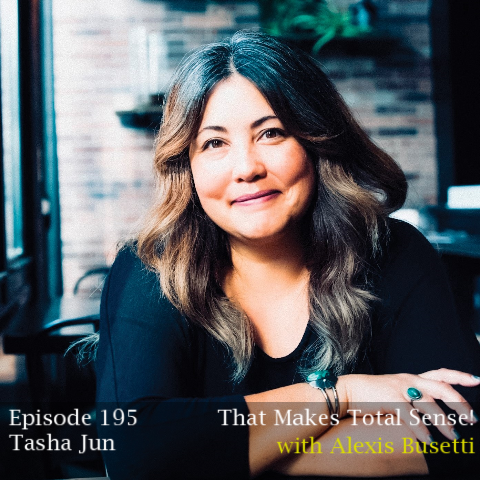
Speaker 1 00:00:06 Welcome to That Makes Total Sense, a podcast dedicated to exploring God's generosity and justice. I'm Alexis bti, a Christian aiming to ask good questions and encouraging you to do the same. Every one of us is wired by God to live out generosity and justice. But the how sometimes eludes us that makes total sense is a way for us to get together, posture ourselves as learners, and challenge one another, to practice generosity and justice in a tangible way every day. Hey everybody. I was just telling our guests that I had the most amazing time with her yesterday, even though she wasn't here, but over coffee, reading her book, <laugh>, um, Tasha June has, ugh. Anyway, she's such a gifted storyteller, but she has gifted us with her new book. Tell Me The Dream again, reflections on Family, ethnicity, and the Sacred Work of Belonging. And this is what we're gonna chat about today. Tasha, thank you so much for coming on.
Speaker 2 00:01:11 Yeah, thank you so much for having me. I'm excited to be here.
Speaker 1 00:01:14 This book, I just wanna, I just wanna get it out of the way and say, this book was a personal blessing to me because I'm a mixed girl and I love, love, love reading authors with that perspective, even though we don't have the same mixed heritage. It is just, as you point out in your book, it's a unique place. It's, it's a unique circumstance in life, especially I think, I mean, I don't know anything different, but I would say, especially in the church mm-hmm. <affirmative>, um, it's kind of a unique, um, circumstance and situation. It's, it's a unique identity and it's, you know, something that I think the more mixed people, biracial people I speak with, the more I understand our stories kind of have these similarities of places where we really embrace that. But places where maybe we feel like we can't timeframes when that's the case. And you had some, you know, you've had some of those same ups and downs, and so I just wanna start off by saying thank you for sharing this, and thank you for, for generously sharing your story with the world so we can connect with it.
Speaker 2 00:02:26 Oh, thank you. Yeah, you're so welcome. And thank you so much for letting it take up space in your whole day yesterday, <laugh>,
Speaker 1 00:02:34 It was a, it was a real joy. It was a real joy. But, um, so, so first I want to go ahead and ask you to just share about your, um, you know, if, if, if someone said, okay, I don't understand, like, you know, um, how you ethnically identify or whatever, and you're obviously really open about sharing that, so would you just share it with us? Like, how do you identify what, what are your, what's your background? And then, you know, even get into a little bit of how you have had to navigate that, how you have navigated that, um, in, in your life. Maybe in, maybe we can start kind of in the early, in the early parts. Yeah,
Speaker 2 00:03:13 Yeah. Well, I think, you know, when I was a kid, I, you know, growing up in this multicultural, um, biracial home, um, I don't think I would've had the language for that, but I was very aware of the fact that we had dual cultures, um, dual, um, ethnicities, you know, things in our, in our home, I mean, from just our table setting. So one thing that, you know, I grew up with is my mom making mondu, which is Korean dumplings. You can fry them, they can be in soup, steamed, you know, so many different ways. Um, and there's a certain kind of dip that most Koreans make, you know, kind of a soy based dip for, for mondu. But my dad grew up in California, um, and he loves salsa. And so like on our table, it was always the mandu with the salsa <laugh> and like, just always, you know, just, I guess I just grew up always aware of the fact that there were, there were both, um, but did not have language for that.
Speaker 2 00:04:09 So that, that came a lot later. Um, and mostly through people questioning me, like, what are you, um, you know, as a kid we moved to Japan, which is, you know, not part of my cultural background or ethnic heritage. And yet on the street I would have people ask me what I was, or like in a store, someone would ask me and I'm like, I'm thinking I'm Asian, like you, but, but we're not the same and I'm American. And then getting a weird look back when I said I was American, cuz to them I didn't look typical American. And then having to learn the words for I'm Korean and then getting another weird look, you know, just so I feel like some of the language came out of necessity and annoyance because people would question, you know, me and feel the audacity to question Yumi, like whether they knew me or not. You know, I'm sure you've had that too. Um, and that just, that only increased as I got older. Um, yeah.
Speaker 1 00:05:02 Yeah. It's, it's funny, I was talking with my husband yesterday as, uh, after I was reading it and I said, my husband's white blonde hair, blue eyes. And I said, I have yet, because I wanna pause on the, what are you, because I'm like, I have yet to speak with someone with mixed heritage. I, I, I say mixed. Now I actually owe that to Chandra Crane because that was what we said growing up was mixed. And then that became like, real taboo, kind of like, it was like derogatory. Like you don't say that. It's kind of pejorative. Right? And so then I didn't know what to call myself because as, as a Hispanic woman, even in, you know, all that's complicated, right? So as a, as a Hispanic woman, that's not even considered a race in America because of how we do all the things.
Speaker 1 00:05:44 Anyway, it's just a mess. And so I just went back to, I went back to mixed after Chandra. But anyway, I I, I was saying, telling him I've never encountered a mixed person who has not had that question. Hmm. Yeah. I, I haven't, like, I've yet to come across that. And so I wanna, I kind of wanna pause there for a moment cause I won't share my whole story, but the first time I was asked that question, um, our family had moved out of state. And, and that, that was important to me because now that I'm looking back on it, I think it was the first time that we had moved outside of my parents' hometown. Oh my God. So everyone knew me. It was a very small hometown. My parents grew up, they started dating in high school. You know, everyone knew my parents.
Speaker 1 00:06:27 I look exactly like my mother. She couldn't deny me if she wanted to. So everyone just, there was no, what are you question? Cuz everyone kind of knew, you know, our families all knew each other. But when I went into a space where people didn't know me and didn't know my family, that was the first time I experienced it. And then it just kept, it kept coming. And for me, I was in middle school mm-hmm. <affirmative>. And I went home and told my mom that I had no idea how to answer that question. And so I said, I I'm a person. Like, I didn't know what she meant. Like the person, you're just so
Speaker 2 00:06:59 Smart, <laugh>. I
Speaker 1 00:07:00 Was like, I dunno what you mean. Like, I'm not a dog. I don't understand the what, you know, like the, what are you, but that, that's normally, that's normally the, the, the, the word right? Is it's what Yes. And so I just kind of wanna hang on that, on that for just a moment. For us to kind of, as we move into this conversation, kind of let that sink in of what those of us was. This mixed racial and ethnic heritage. That's kind of the world many of us find ourselves in, right? Yeah. As people are trying to give, categorize us, put us in a position, give us a place, um, that I don't know, maybe is theirs or something that they can wrap their minds around. But it often is not something that we've thought about in the same way as maybe the people questioning us. Do you think that's fair?
Speaker 2 00:07:49 Yeah, I think so. I I also think too, I think, you know, there are other people who maybe aren't mixed, maybe other, you know, um, ethnic minorities. I don't know if that's all changing. So I don't, I, the terminology is difficult sometimes, but that are also asked that question mm-hmm. <affirmative>, but something different about being asked that from people whose, whose either ethnic group you feel tied to, you know, so it's, it's people that are different from you and it's also people that you think, well, like, I mean, other Koreans, Korean Americans asking me that, or white people, you know? And I'm like, well, but I'm also white and I'm this, and, and I think it just creates this extra layer of just distance and feeling like you don't belong anywhere. You know, just kind of this erasure, um, that I don't, I I know it's, it's present with others too, but there's something really unique I think, for us that are mixed that, you know, where we get asked that by our own people, <laugh>. Yes, yes,
Speaker 1 00:08:47 Yes. For sure. This was, this was a white girl who who asked me that, you know? And I was like, wait, like my dad's white, you know? Anyway, yeah. So it was, yeah, it, it was very much, it was very much that, and you've, you've talked about, you've said the, the word belonging a couple of times. It's in the subtitle of your book. And that, um, was a thread throughout your book that ki kind of this work of belonging. But what, what I wanna just mention about that is what felt very profound to me. And it's, it's, it wasn't something that was new from your book, but every time I receive it, it, I feel like it deepens it for me, is that getting to know ourselves
Speaker 1 00:09:30 Gives us, helps us a, participate in the sacred work, as you call it, the sacred work of belonging. I do, I think it, it helps us to do that in a more meaningful, you know, profound way, but it's belonging with each other. Mm-hmm. It's belonging with God too, which is like a huge, you know, thread throughout your book that was so powerful and meaningful. Um, but I think sometimes, especially kind of in this like, I don't know, evangelical American culture is kinda weird, right? In some very, well, in a lot of ways it's kinda weird <laugh>. But I think there's this like, um, you know, sometimes we've taken this like, you know, some of these scriptures that I think are important and meaningful and profound and we say, okay, I must decrease and God must increase and I'm gonna, all the flesh must be gone in this. And we, and we take that and sometimes skew it a bit, I think as, as like, I'm not important or I'm, I don't matter, or these things about me just need to completely disappear. But what you present in your book, and like I said, an idea that's been formative for me for, for several years now, is that actually getting to know ourselves is a way to connect with God.
Speaker 2 00:10:43 Yeah. Yeah.
Speaker 1 00:10:44 And, and, and, and that, and so I want, can you talk about that a little bit more? Cuz you did it mainly in the context of, of your ethnic identity, which was so powerful for me. But we all have this work of, of getting to know ourselves, to help us connect to God. So for those of us who might maybe culturally be seeing, like, I don't understand how that works. I've been told this or that, how does that connection work between getting to know ourselves and, and, and that helping our relationship with the Lord?
Speaker 2 00:11:14 Yeah. Um, well, I'll start by saying that I think, you know, I share about this in the book, but in my own faith journey, um, which I mean, there were, there were little bits and pieces here and there, you know, that I tried to piece together in the book, but it really didn't start to deepen until I was late in high school and then in college. Um, and I think it was very real, my experience of, you know, learning about the Bible, learning about who Jesus is, and that was very real to me. But there was this point that I came to where what I was offering, um, in my relationship with Jesus, what I would write in my journal, what I would pray about, um, how far I would go. Um, it would always come to a stop, you know, it was like what I thought I could present of myself.
Speaker 2 00:12:00 Um, and so I think, I think a lot of people can do this for me and my experience within spiritual community at the same time, um, I felt like I needed to hide, you know, the Korean parts of myself or the ethnic parts of myself that just didn't fit in into the, the majority culture that I was a part of in those spiritual communities. Um, and I did this without thinking, and I did it with thinking, you know, like both. Um, so I think those two things were happening at the same time. And I got to this point where it was like, if I'm gonna really receive Jesus' love for me, all of Jesus' love for me, and that's gonna be transformative for me from the inside out. Um, then I've gotta offer all of myself, you know, there's only, there was only so much that I was offering in my relationships with others in community, um, and in my personal relationship with God.
Speaker 2 00:12:50 And so it ca it be, it came to this point where I was like, am I gonna risk that? Um, and there was a lot of fear there. And I think there can be a lot of fear for people, you know, just to really show up honestly and fully. And a lot of us have never even done that work, have never even faced, you know, those hidden corners of our hearts or just the, or even just our family, you know, pass. We just wanna wipe it all under the rug. You know, I think, I thought when people said that, you know, now that you're a Christian, the oldest guy and the newest come, it was almost like this ticket, like to being whoever I wanted to be <laugh>, you know, good and whatever, you know, whatever I wanted to look like, be like, um, but that's really not what's going on here. And so I think to be able to actually surrender, to grow, we have to actually know who we are, and we have to, and that's a, that's something that's in process, but I think facing ourselves honestly, um, offering up our stories where we come from, honestly, that that is what is gonna enable us to grow in intimacy with God and also with others. And then enable, you know, growth and becoming who God wants us to be and who we were meant to be. So,
Speaker 1 00:13:56 Yeah. No, it is, it's, it's, it's really good. But it can be, it was something that was really hard for me to kind of latch onto, you know, because as you say, like, well, the, the old is gone and the newest come and you're this new creation. And so it's like, there's some, you know, I don't know, maybe some, I think I don't know that I'm alone in that, that sometimes it's just kind of difficult to say, yeah, but how do I incorporate this part? You know, like who I am into that idea. Right? Yeah. Um, so I think that can be tricky. I think that can be tricky sometimes. But I wanna, I wanna kind of like keep touching on that, you know, as we go throughout the conversation. Um, that was one of the things that felt the most meaningful to me about your story is how that continued to happen Hmm.
Speaker 1 00:14:40 For you. Yeah. You know, um, and, and how you shared that. Um, something I wanna go, I wanna go back to when you're saying like you would maybe hide the Korean parts of yourself mm-hmm. <affirmative>, you know, sometimes intentionally, sometimes not intentionally. And you mentioned in the book that this wasn't something, that idea wasn't something that you were like taught at home, right? Like, you weren't at home, it wasn't like there was no shame in that or anything, but that when you went out and I, this stuck out to me because I had a similar experience and it's very hard to do. It was, has been very hard for me to describe, but you gave me some language. It's like when you go out though, like society just kind of says whiteness is the thing, right? Yeah. Like, you, you know, especially I think we're, we're probably similarly aged.
Speaker 1 00:15:31 And so, you know what, my daughter said something the other day about Disney princesses, and I said, Hey, listen, I was like, when I was a kid, yeah. <laugh>, there were all the princesses were white. I was like, <laugh>, they were all white. They were all shaped a certain way, you know, you know, all this kind of stuff. But, so it's not, you know, Disney princesses, but really more seriously, you mentioned things like history class and, you know, all these kinds of things where we don't, it's not that anyone ever came out and said, yeah, to be a good person, you need to be white, or to be, to look at, you know, you need to be white. But at the same time, we didn't see any representation. There was something about societally that encouraged, that encourages white as the, as the model. Can you talk about how, like, how that affected you before, before even maybe you had words for what that was, what that actually looked like?
Speaker 2 00:16:24 Yeah. Um, I mean, I can remember in junior high my one other friend who was also mixed. Um, and this was before we moved to Indiana, so it was kind of a diverse area. Um, it was pretty normal to be a lot of different things. Um, and yet I remember a summer where we were trying to lighten our hair, you know, just spraying so much sun in, in it. And it's not even like we talked about, of course we didn't say it would be wetter better if we were white, but clearly <laugh> it would be better in our minds if we looked less Asian, you know? Um, and my hair is turning gray now, so it looks, it's like all different colors. Um, but when I was younger, it was very black, you know, and I could not just fought with my hair, and it was very much like my ethnic trademark, you know, it was like the thing that tied me to my culture.
Speaker 2 00:17:08 And yet I was always fighting with it, just wrestling. And I'm, and, and I don't think it was because just, you know, it was hard to manage my hair. It was because it was already inherent, it was already baked in that I needed to look different, you know? Yes. Because there was no representation. Um, but yeah, there was just nothing. So it was like all the message was already there that this was a, a worse way to look, a worse way to be in the world, you know? Um, that hierarchy was already, it's just so systemic. There's so many layers to it. So
Speaker 1 00:17:37 There's so many layers. I remember, like I, with the, with the hair thing, I remember being out in an elementary school and, um, they were talking, the teacher was talking about heat absorption as light absorption. And she took me and a blonde girl that I was good friends with, and she really said, touch their heads, oh my God, because my hair was, was dark. And, and it was like, which one is warmer? Right? And I'm like, oh my goodness. Really? It's, I I didn't have any, you, I was like third grade or something. And I have all these classmates coming around like, you know, patting the top of my <laugh>, my dark brown hair, because it was, they just, you know, it was, it was the, anyway, it was the one in class that was gonna be Yeah. Darker than everyone else's. But anyway, it was kind of, anyway, kind of crazy. But, um, it is systemic. There's layers to it. There's all of that. And <affirmative>, and when I mentioned earlier, I don't, I don't have any really other experiences, but in the church,
Speaker 2 00:18:33 Yeah,
Speaker 1 00:18:33 We feel it too.
Speaker 2 00:18:35 Mm-hmm. <affirmative> mm-hmm.
Speaker 1 00:18:36 <affirmative>. And, and this isn't something that I wanna, that I wanna say lightly. I think that as a edges, church, evangelical American culture, however we identify in that sense, I think we're wrestling with it. I think we, we have been, there's times when we've done a better job than others. Yeah. But you, you, you have kind of several data points, a little moments in your life where you encounter this mm-hmm. <affirmative>. And there was one that stood out to me where you were asking about the diversity of a ministry.
Speaker 2 00:19:12 Yeah.
Speaker 1 00:19:13 Can you talk about that in the response that you got from the leadership when you were just, you know, inquiring about what that looked like for their, for their ministry? Yeah.
Speaker 2 00:19:22 Um, yeah. I, the response was, well, and to, to back up a little bit before asking that, I mean, there had been a lot going on, uh, in, in the media and the world at the time. And, um, that ministry had been involved in what they would maybe call racial reconciliation or, you know, some, some term that, um, that they had embraced. And, and they weren't, they were doing good work, um, for their community. Um, and so when I asked that, it was this response of, you know, well, it is important to us, but, um, I think I asked how important diversity was going to be for them going forward. Um, and they said it's important to us, but, you know, a lot of people, um, in our community are just weary of talking about these things. And it just felt like a, wanting to believe the best on my hand, but, but on my, you know, side of things, but also just like a gut punch.
Speaker 2 00:20:17 You know? Like I just, you know, the, I guess the, and I feel like this happens a lot to a lot of us. You know, just this, this expectation that, um, we will endure and be as weary as we can possibly be for as long as, as needed while other people can recuperate. I, I don't know, you know, because these, this is our life, like the, our lives and, and you know, for others it's even more dire. And so anyway, um, yeah, that just felt like a gut punch. And I think at that point I just, I think I just got silent. Cause I was like, you know, I don't even, um, I have things to say, but it was just that, like, that conversation itself was so worrisome to me. <laugh>, you know, so,
Speaker 1 00:21:00 Yeah. Yeah, yeah. Yeah. Can you talk about sometimes, um, you know, maybe sometimes like that when it's been difficult, but also sometimes when you have felt encouraged mm-hmm. <affirmative> maybe, maybe even by, um, you know, the majority culture in the, in the church sometimes where you have felt, um, yeah. Encouraged or that there was a, an attempt to understand or, you know. Yeah, yeah. Sometimes like that.
Speaker 2 00:21:29 Um, actually with my church, um, um, a year ago I had asked, so I have this small group that I founded. It's, um, just a local, um, Asian American little sisterhood of women. Um, and we started gathering throughout the pandemic, well, we weren't gathering during the pandemic, we were texting and doing Marco Polo during the pandemic. And then, um, towards the end of like, when things were shut down, we met in my backyard. Um, so we could have like a little celebration of Asian American Heritage Month, Asian American and Pacific Islander Heritage Month. And it was just, it was really encouraging. It felt very much like church. And then I wanted to do it again the following year. So last year I asked, you know, my pastor could, we, and I kind of went into it because of past experiences, not at our church, but just in general like that we have talked about, like, can I maybe use one of the rooms, like to gather these women cuz my backyard, I don't know what the weather's gonna be like, the backyard doesn't really work for a larger group.
Speaker 2 00:22:30 Um, I had just kind of gathered a core group of women that previous year, um, and he really just blew me away. He was, you know, not, I mean, I kind of went in asking for breadcrumbs and he said, of course you can have the room. How can we bless this group of women, you know, and welcome them? And not like bait and hook, like what can we do to get them to come to our church, but like, what can we do? Um, just to love on this group of women, because a lot of them, um, go to church, different churches in the area, a lot of them, um, don't attend church at all, have no faith background. And then, and then there are also, some of them have just been really hurt, um, by the church. And so it's quite a mix, you know, <laugh>.
Speaker 2 00:23:07 Um, and so I mean, he was like, can we buy them lunch? And I'm like, well, there's gonna be like 40 to 50. That's a lot of food, you know, just for something that, it's not even a church function, it's just me, you know? Um, and so he's like, we'll buy them lunch. You pick the place. And just, they just went beyond what I expected and I think I had expected so little because of just those kinds of responses from before, you know, where I'm like, I'm making people tired, you know, just saying anything <laugh> asking for space for me or for us. Um, and that was really encouraging. Um, and we had an incredible time there. It was just, um, just a time where we felt really cared for as a group of women, um, and specifically cared for in our ethnic and racial identity. And so I, I can't, I mean, there are are very few times when I felt like that is the case, you know, where my whole person was cared for, um, in a church setting that wasn't just something that I was doing, you know, <laugh>. So, um, that was really encouraging and that really kind of shifted, I think. Thanks for me with as far as hope, just hoping for the future <laugh>. Yeah.
Speaker 1 00:24:17 Yeah. Yeah. No, that's, that, that is really encouraging. Thank you for sharing that. Um, and it's, and it's fun that you said hope for the future, cuz like, my next thing I was thinking of is like, I wanna hear about your kids, you know, because because you, you tell a lot in the book, you know, um, and you can see kind of generationally between, you know, your parents and then, and then you and your sister and then your kids and, and you know how you are. I don't know. Tell us about some of the ways that you're like embracing your cultures for yourself, but then also how you're sharing that and see your kids, um, you know, embracing that and maybe in their, in their own ways even. Yeah,
Speaker 2 00:24:57 Yeah. I mean, I think, you know, they're experiencing, and I don't know if you feel like this with yours too, but they're experiencing something different, you know, than, than I grew up in. Um, there is more representation, like, not that it's, you know, we're finished, but there is more. Um, and that changes things for them. Um, but a as far as sharing things, so I think I am really just trying to be honest about my journey of, um, reaching for hope, but also reaching into kind of some of these lost places that I bring up in the book. And some of that is, you know, loss that my mom experienced. And I mean, she spent so much time trying to just survive that there was no room for reaching into, you know, trying to embrace these places that were lost or that were discarded. Um, it was just survival and trying to survive so that her family could survive.
Speaker 2 00:25:45 Um, and so then for me, I feel like I have a little bit more room, I have more privilege, I have things that she did not have. And so being honest about that with my kids and letting them see, and just kind of inviting them into that process. So, you know, just that can be a conversation or that can be, you know, uh, we had a cur or an international grocery store open and it has a ton of Korean food, a ton of Asian food, like everything. And just inviting them into how excited I am about that. And also telling them, you know, for the longest time we had to drive to this place and this place, and it was really hard to get stuff. Like, and it was even harder for, you know, your harmony, your, your grandma. Like, she couldn't find anything when she first came to the States, you know, and just kind of lost, you know, her favorite foods.
Speaker 2 00:26:30 So I think just talking about that honestly. And also also inviting them into things like, you know, Korean holidays that I didn't grow up, um, celebrating, but telling them I wanna learn about it. Kind of, I guess letting them know that we can go back and like re-embrace things we can, we can, you know, own things that maybe we didn't have. Um, and that, that process like is, is okay. Um, and it doesn't mean that we're saying we're, you know, we're experts or we're lying about whether we, you know, grew up with them or not, but that we can go back to those things, um, if that makes sense. So, and they're eager, I, I think all three of them are very different. They have very different personalities. Um, but they own their, you know, koreanness and they also are interested in like, the full scope of their ethnic background, you know, um, while being aware that I think the, the Korean side, you know, you can go by percentages, but I think the Korean side is just a lot more present because my mom grew up there. And so, whereas on my husband's side, you know, I mean he, they've got Scottish and, or he's Scottish and he's got some other stuff, but, um, it's just, it's not as present, you know? So I dunno if that answers Go ahead.
Speaker 1 00:27:42 Yeah, no, no, it is, it is. Great. And I, I love that part that you say, I mean, yes, there is more representation. So, you know, like, um, one of my daughters recently did a report for her Texas history class. I had to choose a Texan, a famous Texan, and she did Selita, which like, you know, oh my heart, right? Um, and then, you know, our, our boys were out for, um, Cesar Chavez Day, you know, and so that was, so that was great. But at the same time, you know, I, it was exactly as you say, I, I love that focus on saying, even if we didn't grow up with something, yeah, we can still continue to learn about it. And, and what a super cool example that is for our kids. You know, I think sometimes I have struggled with feeling, um, maybe even a little bit of shame about that.
Speaker 1 00:28:25 Not not about what my, what my parents did or didn't do, but just kind of like, I think for, for some mixed people, there's kind of like, I'm not enough of this. Oh, yeah. Right. Like, I'm, I'm not Mexican enough. Yeah. And so if I don't, if I didn't, you know, have this experience or whatever, maybe I'm not Mexican enough, um, but to just like embrace, like, this is how I grew up and these are some of the things that I'm embracing now as I, as we mentioned, get to know myself better. Yeah. Get to my people better, you know? And, and so I have a, but you know, I have one of the presets on my, uh, car radio is the local Teo station, you know, and so I'll say like, I, that wasn't what we had in my house, but I will say, this is what I had every time I went to my grandparents' house, right?
Speaker 1 00:29:06 And so, like, you know, for me there's like a, there's an a, there's an affection for that, there's an nostalgia for that. And I don't listen to it all the time, but sometimes when there's nothing on, you know, I'll, I'll flip, we're flipping through the stations and I will often say that to my kids because I want them to, to feel some kind of connection or at least be aware Yeah. You know, of some kind of connection. And I think that it's great that we can, um, you know, we're not bound by what our previous experience has been. And, and our, and our kids don't have to be bound by our previous experiences as well, and we can learn and grow together. Yeah. Which is just super cool. I think.
Speaker 2 00:29:44 It is so cool. And I think too, when we're, I mean, I think for both of us, you know, and a lot of mixed people, I mean, just depending on the, the background and the history, I feel like there's, when I'm telling them like, well, harmony couldn't, cuz my mom, she couldn't even celebrate like true soak. That's a, a holiday that I talk about in the book that we're trying to embrace now as a family. But she, because she was growing up in war times and like, you know, I mean there, you know, so even, even just talking about, well, we have to learn, so we'll check out books. And I mean, they'll have questions like, well, why do we have to learn about, like, why don't, you know, and then even talking about, that's like a easy segue to talk about, well this is also part of our people is this history of loss that we've gone through.
Speaker 2 00:30:22 And so almost like saying to them, I mean, they don't have to do this, but they have the opportunity. Like we can rebuild, like we have now, we have this, we have this position where we can rebuild. And so that's something that we can do for our people, you know, and carry it forward. Um, and of course they're gonna do what they wanna do with that, but to make it available for them is, is just a joy. I feel like, you know, to give them kind of a purpose that that ties into their heritage and their story. So.
Speaker 1 00:30:51 Yeah. And you know, a a thought that I just, that I just had when you were talking about that is, you know, with, with your mom's experience of growing up in wartime and loss, but you know, there, there is also an aspect of loss with, with me of, with many people who aren't the ma majority culture in, in whatever, wherever they live is, there's this, you know, colonialism also causes this Yeah. Loss, right? And that legacy of colonialism is still here. And so, you know, we can teach our kids to embrace our ethnicities and their, you know, their own background. But I also think in doing that, there's something that we show them, like, this is super cool, like, to talk to your friends about it, you know, to embrace their friends, you know, different, you know, cultures and ethnicities. You know, I mean it's, it's, it's something that I think this generation has a, an opportunity to do that in a way that maybe we didn't as much when we were growing up of like, like you said, there is more representation, there's more awareness where we are not there by any stretch of the imagination.
Speaker 1 00:31:58 <laugh>. But, you know, I think it's like, as well, like, you know, my kids can say, oh yeah, well, like my, my grandma's Mexican, like, your grandma is Korean. That's super cool. You know, tell me about that. Like, you know, what are some of the foods you guys eat? We, we eat this? Or, you know, whatever. And, and, you know, going to those stores with each other and, and eating each other's homes and embracing that about each other, because that is, I think also some of this belonging is like, I, I was telling my kids the other day, like, look at even just that one flower bed we were driving on the, on the service road. I'm like, look at that one flower bed and how many different colors and shapes and they're are all different heights and, you know, all this. And that's because God loves diversity so much, you know? Mm-hmm. <affirmative> and that it, and that it people aren't an exception to that. Yeah.
Speaker 2 00:32:47 Yeah, yeah.
Speaker 1 00:32:48 And so when we can do that, I think we're, we're forming each other because, you know, your perspective as a mixed Korean person is gonna be different than my perspective as a mixed Hispanic person, and how cool that we can learn something new about God. Oh yeah. Through each other's perspectives in that way. And even through our holidays and foods and all of those kinds of things, you know, the way that we celebrate, I just think, yeah. Anyway, it's really beautiful <laugh>.
Speaker 2 00:33:13 It's, it's helpful and Yeah.
Speaker 1 00:33:16 Yeah. It, it really, really is. Um, so I wanna talk just a little bit, because you mentioned it a few times, um, your, your craft, the writing part of it, and you end the book with a beautiful story, um, that I think you wrote for your, for your kids maybe mm-hmm. <affirmative>, but as a, as a storyteller, as a writer, can you talk a little bit about that and how that as a, not just a craft for, for you as a, as a professional, someone who does this, but even just as, as people, right. Who loves to hear and stories, how does that blend in and incorporate and work with all of these things that we've been talking about, belonging, getting to know ourselves better, getting to know God better, diversity, all that kind of stuff.
Speaker 2 00:34:05 Yeah. I mean, for me, I think that has been the path towards, um, taking an honest look at myself and what's going on on the inside. Um, the first time I wrote, um, with anger and a lot of feeling about having moved from California to Indiana and some of the things that I was experiencing specifically as an Asian American, um, when I, I didn't have much language for any of it at the time in high school, but I had a paper due and I wrote, and I don't even remember what the assignment was, but I remember I was angry and it was late and I just turned it in cuz it was late. And I was so mortified that I had actually expressed how I honestly felt. Um, and I had said some really strong things that for me was uncharacteristic at the time, you know, to at, to, for it to be external in any way.
Speaker 2 00:34:58 Internal. Yes. Um, but even with myself, I would, you know, shove it down. And so I turned it in and then I remember my teacher, um, standing up in front of the class and I saw the paper and I was like, oh my gosh, like, he's gonna call me out. He ended up just talking about how the writing was really good and I was still completely mortified. Cause I didn't know any second if he was gonna start reading it. Um, I think he read like one line, but it wasn't that bad. It was a little bit like I was mocking something, you know, out of anger <laugh>, um, in Indiana. So I was a little embarrassed, but I think it, it shifted something in me because it not on, not just because he was positive in response, but, um, to let something out in a safe space, you know, before it was turned in, and then for it to be received and safe in his hands.
Speaker 2 00:35:50 Um, that shifted something in me that was like, okay, I'm not crazy. Um, there's a space for this. For whatever reason he thought this needed to be said. Um, and it just shifted everything. It just like, you know, so, so that happened. Um, I had already been a journaler, you know, for years, but I had never expressed like, what felt like very negative feelings that were inside of me, you know, outwardly in a way that I remember. Um, and so I think I just thought, okay, in some way there's some power here. And it's not like power to take over. Like there's transformative power in expression. And for me, that was the written word. And so that has continued. Um, I mean since then, and I took a creative writing class in college, and most of that was because I loved, I loved just creativity, loved reading, creative work.
Speaker 2 00:36:45 So I thought, you know, maybe I'll just try it. I had some space, you know? Um, and that those classes were transformative again for me, um, to receive, you know, other people's writing and, and it was poetry and fiction, but there's still so much truth in it, you know, so much feeling. Um, and it was a safe space for that, you know? Um, and so I think to be able to have those places just really just really reinforced how much I need other people's stories and I need to express mine. Um, and with honesty, even if, you know, the feelings aren't all lined up and there's, you know, growth that needs to happen there to be able to let those things out before they're, they're, they're tidied up or, you know, presentable, um, I think is really important for all of us, you know, in some way or another. So
Speaker 1 00:37:33 Yeah. I love what you said about receiving other people's stories mm-hmm. Too, right? I mean, I think there's something that can be kind of cathartic about releasing our own stories, but, but receiving other people's stories Yeah. Is so powerful. Oh my gosh. Yeah. It's just,
Speaker 2 00:37:52 Yeah.
Speaker 1 00:37:52 Gosh. It is just, it is, it is so incredibly powerful. Um, gosh, I don't know. There's like lots and lots of places I could go. I saw, okay, this is one place that I should go. I'm just gonna bring it up. I'm just gonna, I'm just gonna say it out loud right now. I do dog ear my books. I, I <laugh> I know from this though, we are at odds and that's okay because God loves diversity. Do you
Speaker 2 00:38:19 Know, I thought
Speaker 1 00:38:19 I read in here.
Speaker 2 00:38:21 No. So I I that
Speaker 1 00:38:22 You're not a dog era. I was
Speaker 2 00:38:23 Embarrassed about it because that professor said he never do yourself
Speaker 1 00:38:27 <laugh>.
Speaker 2 00:38:29 And I thought I was not supposed to do that if I was like an actual writer, you
Speaker 1 00:38:33 Know, I misread it. Okay. We're then, we're the same, then we're the same because I'm, I'm like, I, like I have dog eared this whole, um, yeah, this, this whole thing. Um, but anyway, so now I'm like, okay, well, like where do, where do, where do we go? Where do we go <laugh>? Um, because I could just, I could just choose my dog ears. I know, right? My husband doesn't do it either. He doesn't dog earing, he doesn't write in his books. And I'm like, oh my goodness. What? I know,
Speaker 2 00:38:57 Mine doesn't either. He has like one bookmark. I have like 3 million and I still, of course
Speaker 1 00:39:01 All my books find
Speaker 2 00:39:02 Any bookmark. So <laugh>,
Speaker 1 00:39:03 Mine aren't actual bookmarks. They're like receipts or like business cards or, you know, like something like that. It's just, anyway, it's not, it's not it. Um, <laugh> on the story part, um, as we, as we kind of start, as we kind of start to lay in the plane, you, you say that sometimes our family stories can feel scandalous
Speaker 2 00:39:30 Hmm.
Speaker 1 00:39:32 Or scarred and to the point, this is what you said, that, that sometimes we believe that they can't offer the world anything good. Mm-hmm. <affirmative>. But I think some, I want you to talk about this because I think something that I'm learning is I have felt that same thing and then I look around and I'm like, oh dang, everybody's stories are scandalous and scarred <laugh>
Speaker 2 00:39:54 If we're honest, right. <laugh>. Right,
Speaker 1 00:39:56 Right, right. If we're honest. So how does that even, you know, sharing and I, I'm not talking about like, you know, like blowing people up or doing, you know, I, you know, whatever, I'm not talking about that, but I'm like, those parts that we feel, you know, compelled or, you know, re released even if you wanna kind of use that language to, to share what how does even sharing and receiving those stories. Yeah. And those parts of our stories help. Where, where does that take us? Mm-hmm. <affirmative>, where does that lead us when we do that in, in ways that are healthy and, and and, and appropriate and faith build.
Speaker 2 00:40:33 I mean, I think, you know, like that paper that I wrote in high school when I opened up, it was o I was opening myself to receive. It could, I could be receiving a lot of different things. You know, I could be receiving shame or, you know, I was being scolded or judgment or, you know, a lot. Right? And when we share, that's, that's always there, but it, it can also be positive. Um, and so, you know, when I started writing more in college, the stuff that would always come out, even if it was fiction, and I also took a memoir class, which is where this book started. Um, and I just couldn't finish it because I hadn't lived enough. Um, which just wasn't time. But it started there. It was always a lot of the stuff that wanted to come out, um, the stuff that felt scandalous or the stuff that just felt hidden, um, the stuff I was afraid of.
Speaker 2 00:41:17 That's the stuff that, you know, almost wanted to release, um, as if it would come out with a question, not to to everyone else that would read it, but like, God, are you real? Do you love me? Do you love all of me? Like, can I, can I present all of this? We're kind of going back to the, the beginning right? Of our conversation. Can I present all of this? And is it loved? Like, and can I receive that love when you answer? You know, um, or is it just, you know, or am I just gonna throw the whole thing away and just keep pretending? Like, I felt like that was a constant thing. And so, um, I think that that's part of why it's so powerful when we share our stories and receive our stories. Not, not for shock value, not, you know, just to get someone's attention.
Speaker 2 00:42:03 I know people do that like in writing or in journalism or whatever, but for me, I think, and for a lot of people, it's this offering, um, that really comes with that question. Is God good? Does God love us? Holy Is has God been a part of all of this? Emmanuel, you know, all these things that you know, like Jesus asking, you know, who do you say I am? It's kind of like that coming back. I think again and again when we offer those stories out and then when we receive, when we read or hear, listen to someone else's story and conversation even, um, I think we're asking those same questions, you know, cuz we're encounter encountering something different maybe than our story, but I think it always points back, you know, to what we've experienced. And, um, that's kind of what I, what I love about really specific stories is I think that they really dig in and make you think about your own lives and your own understanding of yourself and of God. And so, um, I feel like I kind of went off on a tangent, but I just, I think there's something, whether we're aware of it or not, something really sacred and spiritual in that process of offering a story and receiving and, you know, being vulnerable when it, not just to be vulnerable because it's trendy, but, but really like, it's like this faith step, you know? Like, this is me. Am I loved? Am I beloved? Do I belong? And, um, working through the answer of that <laugh>, you know, when you either give or receive.
Speaker 1 00:43:23 Yeah, no, that wasn't a tangent to me. <laugh>. That was, that was, yeah, that was perfect. And it, and it is like, you know, just that recognition that's through, you know, through your vulnerability and your generosity. Like you said, this, this could, I'm open. I loved when you, I'm opening myself to receive something when I give this, and it could be right these things, but it also could be this, you know, and, and that it allows people the opportunity to reflect is, is really powerful. Um, Tasha, as we, um, as we start to, as we close out here, um, I feel I've taken us in a lot of different places, but what, I mean, what as, as you offer your story to the world mm-hmm. <affirmative> and, um, you know, what is it, what's one of the things that you hope people would be able to take away? Maybe, maybe it's a feeling, maybe it's a call to action, maybe it's something different, but like, what do you hope, what do you hope people experience through your sharing of your story for them in their own lives?
Speaker 2 00:44:29 Yeah, I think for anyone that's reading it, I hope that it will, um, point again, like I said a minute ago, kind of point back to their own story and, and anything that's, you know, kind of highlight anything that's hidden or anything that's, um, just hasn't had the chance to, to be loved or to experience love cuz it is loved. Um, I believe that. But, um, I think for them to go back to those things, to think about those things and to kind of start that, you know, that that sacred work of belonging. Belonging is already all of ours. But I think to receive it, to name it, to start to live it, um, it's gonna take some work, but that's good work. Um, so anything that can point anyone towards that and also towards, um, seeing that for other people, um, maybe people that they, they haven't really noticed it before, that they don't even really notice, you know, starting to see a little bit better, um, the people around them.
Speaker 1 00:45:29 That's beautiful. Thank you so much. Mm-hmm.
Speaker 2 00:45:32 <affirmative>, thank you for having me. <laugh>
Speaker 1 00:45:34 Again, this book, tell me the release date.
Speaker 2 00:45:37 Uh, May 9th. So May 9th tomorrow? Yeah. Or when, I don't know when this is gonna come up, but Yeah.
Speaker 1 00:45:42 Yeah. I actually dunno either, but I'll let you know as soon as we stop recording <laugh>. But we're coming, I mean, this month it'll be this month in May, May 9th, um, I'll have a link to this book, either to Preor at that time or to, or you know, when it actually comes out to purchase this. It's, it's gorgeous. Um, literally inside and out holding an arc of it right now. And, uh, uh, advanced copy of it right now. It's beautiful. Um, again, it's called Tell Me the Dream again. Reflections on Family, ethnicity, and the Sacred Work of Belonging. Thank you so much, Tasha.
Speaker 2 00:46:14 Thank you.
Speaker 1 00:46:16 The links for all the resources mentioned in today's episode can be found in the show notes, music and podcast production by Seth bti. Be sure to give us a review on iTunes and subscribe at your favorite podcast listening app. You can also visit us at. That makes total sense com.