Episode Transcript
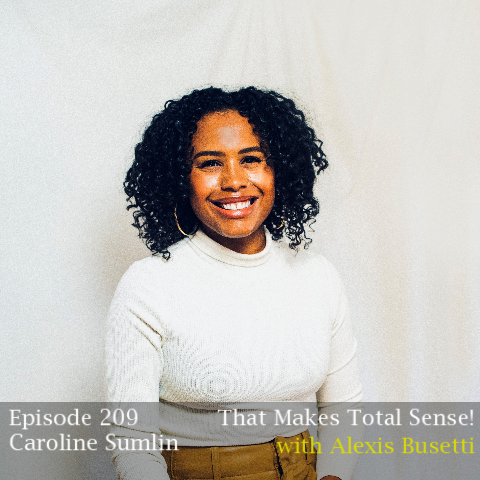
Speaker 1 00:00:06 Welcome to That Makes Total Sense, a podcast dedicated to exploring God's generosity and justice. I'm Alexis Busi, a Christian aiming to ask good questions and encouraging you to do the same. Every one of us is wired by God to live out generosity and justice. But the how sometimes eludes us that makes total sense is a way for us to get together, posture ourselves as learners, and challenge one another, to practice generosity and justice in a tangible way every day. Okay. So I think I'm just gonna start by saying I have already teared up. We have both cracked up. Um, the internet has gone on and off, and I've gotten out of this Zoom call. So we've had a pretty <laugh>, we've had a pretty active pre-recording session, Caroline.
Speaker 2 00:01:00 Yes. And it's been a, it's been a time. A time was, had
Speaker 1 00:01:04 <laugh> a time was had. We were both momming before we got on this call. Yeah. And our kids are collectively amazing. And yeah. So here we are. I feel like I need to take another deep breath, but, um, I'm pumped about this conversation. I'm really, really excited. Um, I just spent some time with your book, mostly at the pool, if I'm honest. That's where I do most of my summertime reading. So this released, of course, this, this episode will release a little bit later, but the book released yesterday as we're talking. And it is called, we'll All Be Free. And I want to say this subtitle, because this is gonna, the, the title sets the stage for our conversation. But the subtitle is really where we're gonna dig in how a culture of white supremacy devalues us and how we can reclaim our true worth. Caroline, someone thank you so, so much for joining me today. Thank
Speaker 2 00:02:07 You for having me. It's an honor, it's a privilege, all of that. And I'm also pumped for this conversation.
Speaker 1 00:02:15 Well, I'm, I'm super excited. I've already told you that, um, this, there were places of this book that were really tough for me, um, but I could tell by the way you wrote it that you anticipated that and you encourage the reader <laugh> through those tough places. So, um, I'm gonna choose to grapple with some of that in my next therapy session and try and make this <laugh> a little bit more broad. Um, try and guide us in a little bit more broad conversation. But what I do want to start by asking, because the, the subtitle is, I think very true and provocative, that white supremacy devalues us. And I just wanna be clear upfront that when you say us, you mean everyone.
Speaker 2 00:03:06 Yes.
Speaker 1 00:03:07 You do not mean everyone bipo people exclusively, you mean Correct. Everyone. Correct. Um, and so with, I just wanna kind of put that out there for folks who are listening and then let that lead into like, why was this book an I important one for you to write? This is your first book. You've been working of course before this, but why is that an important message for you personally right now?
Speaker 2 00:03:42 Two, two main things that I, that I wanna say. Um, first of all, we have a tendency to, to look at tendency's not the right word. We, we look at our society, um, and white supremacy specifically. There's, you know, so much controversy and quote unquote divide around this right now. Like in, in, just in this, um, in this era that, that we are in, uh, in the early 2020s. I guess that would be the decade. It's kinda weird to say, um, and be, because we have been taught and, and conditioned in, in many ways about our society and how we function and how we operate. Um, and specifically around white supremacy, we have been taught that that is, that is not exist. That is not something, um, that is a problem or its existence is something that is specific to, um, either, uh, actual like white supremacist groups or people that identify as white supremacist, uh, white supremacists.
Speaker 2 00:04:51 Or some people may at least, um, admit to its existence perhaps during the days of colonization and chattel slavery. But, um, but think that that would have ended at this point, or especially ended post, post the civil rights era. Um, and, and believe that anything like, like you mentioned in the beginning, um, that if, if there's anything, um, white supremacy related in today's day and age, then, and that's a big if, 'cause a lot of people really aren't, aren't, um, completely, uh, willing to, to see that, that it's there. Um, that we, we've been taught to believe that, that, like you said, that that's, that's a bipo problem or that's a black problem. That's not an everyone problem. Um, and really, even if that's, it's a them problem, it's something that, um, either I don't have to worry about or deal with, um, I'm not affected by, but also it's their responsibility to get it together.
Speaker 2 00:05:44 And if they just get it together, and if they just try harder or succeed more, or, um, act a little bit more like me, then maybe their problems would be solved. And not realizing that that in and of itself is a perpetuation of white, white supremacy. So all that to say, I, I knew in my, I I've, I've always wanted to make sure that in my teaching, I helped us understand just how white supremacy is, is an all of us concern. But it wasn't until I discovered the, the depths of the culture of white supremacy in which we live in and really began making connections in my research, um, in my conversations and everything, um, and in my own life that I realized like, wait a minute, this is not something that just is an all of us problem on a structural or, or systemic level.
Speaker 2 00:06:44 Because the, those, those are, those are even, even even for the people that, you know, maybe you're beyond the denial of white supremacy. You're beyond the, okay, sure, white supremacy existed but doesn't exist now. Maybe you're beyond that. Maybe you've been able to at least see, um, structural impacts that impact us all. For example, um, for, I'll, I'll use, um, I'll use healthcare as an example. I'll use the way that we, um, the, the way that there are systemic, excuse me, disparities in maternal healthcare between, um, between black women and, and white women. But at the same time, the, the treatment of, of black women and the lack of resources for, for black women and maternal healthcare does also impact white women because you're still affected by it, even if you're not affected, affected by it. Why is my throat killing me? Sorry. <laugh> affected by, affected by it at the, at the level or at the rate in which a black woman may be when it comes to maternal healthcare.
Speaker 2 00:07:46 Just the fact that there are a, um, a lack of resources and, and there's a specific way that black women are taught to be treated and taught to be believed by about their pain. A lot of that carries over to women in general. And then, so we see women also experiencing, um, disparities. There. We see women also experiencing, um, mistreatment when it comes to, this is just a specific example of maternal healthcare. That's a systemic issue, right? Some people are at least at the point of being able to see, well, I see systemic things. I see systemic things that racism has done. I see that, um, the, the cancellation of certain bills and, and certain, um, ordinances and, and laws and, and provisions by government in the name of racism have also canceled it for us all. So we, we can see that, but still not able to see it on that cultural and deeply personal level.
Speaker 2 00:08:37 Um, when I discovered this culture of white supremacy that we live in, and I realized that all of these standards and norms and, and mortals and values that we as a society have been conditioned to just kind of fall in line with and not really ever question. When I realized that that stemmed from systemic white supremacy, that that came from, that came from the, the society that, that we have built, thus creating this overall arching culture and realized just how interconnected it all is and realized that this is why, you know, this speaks continuing with women. This is why women have struggled to, to love their bodies for centuries, for for decades. Um, I wasn't say centuries, but for decades. Um, this is why, you know, men even have the pressures that are placed on them in this patriarchal society to be the providers and to, and certain, even though they have privileges when it comes to the way that they're viewed.
Speaker 2 00:09:33 And white men, you know, essentially can get away with most things that most other people cannot. But at the same time, there's a flip side to that as well. Um, this, this is where that comes from. This is where that hustle culture comes from. This is why our mental health rates are, are declining and, and doing so at such, you know, exponential rates. This is why our children are struggling in schools. Um, it go, it just go down so many rabbit holes with this. I, when I realized that was the culture we were living in, and all of that can be traced back to systemic decisions that were made in the name of white supremacy, thus causing us all to feel like we have to constantly chase. And we've normalized that and think that this is okay. I was like, wait a minute, like this.
Speaker 2 00:10:16 This is no, why is nobody talking about this? Why are we not talking about this? We, we, we, this is, this is killing us, you guys. It's killing us. And I also think I, this is a very, I'm, I'm sorry I'm a long-winded person. Um, I had, I had to cut a lot of sentences in my book. 'cause they, I could be, I could be long-winded. Um, but the second, the second part about this was also when we realize just how much something is impacting us personally, it does super charge us to want to do something about it. You know? And un it, it's, it's an unfortunate reality of being human. We obviously have the, have the ability to be sympathetic towards causes and towards people and towards circumstances that, you know, we don't, um, we have never experienced, you know, just to use an example of someone experiences a death in their family and maybe it's a death that you've never experienced before.
Speaker 2 00:11:11 So you have a sympathy towards that person. You know, you know that they're feeling that they're, that they're grieving and you wanna be there for them. And, and you may even feel a little bit of that heaviness yourself, but there's something different about when somebody loses somebody that you have lost all of a sudden it is like, oh no, I know how you feeling? Okay, I am, listen baby, I have been there. This is the worst thing in the world. And your support, it doubles you. You're you, because you know what they need. You know what they need in that moment because you've been there and you still going through it. Right? So I think that's how, that's, that's why this is so important because when we realize just how deeply impacted we are about this, we're gonna be supercharged to be like, we, we can't do this, this anymore. We, we can't live like this anymore. Oh, no. I, I now see why it's so important to do this work of not only dismantling within myself, but then working towards the dismantling as a society as a whole.
Speaker 1 00:12:07 Yeah. Thank you. I don't mind the long-winded answers. I think they're great. Um, I think a while back, I, it was like, it hit me in a conversation I was having with, um, a pastor at Daniel Hill and who wrote a book called White Lies. And it was about this, um, white supremacy in Christian culture. And I, I won't quote him on it because I don't remember exactly what he said, but I just remember kind of my aha moment. Um, and that was that if white supremacy is a lie, which it is, then this lie is harmful for everyone. The lie that says any human is superior over any other human is not just harmful to the humans who end up on kind of the quote, bad side of that lie, right? Like you've, like you just talked about. But it's also harmful for the people who end up quote on the good side of that lie, right?
Speaker 1 00:13:15 Like, it's not okay for any human to believe that they are superior over another human. This is damaging, right? This is hurtful and harmful to that human as well. And this was like I said, this kind of like this, like this moment of like, oh, snap. Like the, like this is, this is actually really detrimental to even to white people. Um, but one of the things that, that your book kind of, I think I wasn't necessarily willing to go there on my own. I hadn't really thought about it. As you mentioned, it's not the conversation that people are having. I'm on board with all the systemic stuff. Like, yes, we can see this, this is a, granted, not everyone sees this, but like, this is a problem. But the fact that the culture of white supremacy would have the ability, and it does have the power to affect how I see myself as a person.
Speaker 1 00:14:16 This is something that I don't know, I was even fully ready, you know, like there were hints of it in my life, right? But like, am I fully ready to even go there? So before, um, I ask you to give us a couple of definitions. 'cause I think that's where I wanna go next. Like, define white supremacy for us. You define this culture and you've got some great places in your book where you, where you do that very clearly. Um, I'm just gonna throw out, I'm just gonna throw this out. So again, this can be something I deal with with my therapist. I'm just gonna, I'm just gonna throw it out. Um, I, so I'm mixed Hispanic and white. And growing up, there were a few of these things that I wouldn't have as a 9, 11, 14 year old have said, oh, this is because we live in a culture of white supremacy.
Speaker 1 00:15:05 Right? But I can look back and name it now, right? So one of them was, um, the shape of my toes. I looked at all my white girlfriends and their toes all were the same shape. <laugh>, when they get a pedicure, it all look, it, there's a certain, look, I don't know how to describe it, but in my mind, at least this was the case, right? Um, but mine don't look like that. Mine, mine are the shape of Cheetos. They're kind of bony and they're kind of weird looking, you know, or whatever. Um, you know, they're, they're, they're these, they're, anyway, that, that's it. Um, my, my skin, I used to always say, why is my skin green mom? Why is my skin green? She said, your skin's not green. Well, I didn't know then because it wasn't even like out in the, you know, and, you know, whatever the beauty things like, oh, it's because it's olive.
Speaker 1 00:15:58 This is a tone, right? This is a skin tone. It's kind of very, you know, Latina, it's Mediterranean. Oh, it's a thing. But to me, I just knew it didn't look kind of peachy. Like some of my white girlfriends, um, it didn't look brown like some of my black girlfriends. It was just green and it was weird to me. Or, you know, the shape of my nose, right? Kind of the way that this is. Um, uh, one of them was my dark hair. It didn't change colors in the sun. Like my white girlfriends with lighter hair would have even lighter hair in the, you know, and there wasn't anything, like, I didn't necessarily wanna color my hair, but I didn't even have the option to do it because it was so dark. Anyway. But all of these things were not necessarily grasses greener on the other side, but that was what I saw represented as normative, as beautiful, as human, as womanly, um, you know, naming those things.
Speaker 1 00:16:57 Um, I had a, you know, Barbie movie just came out. I had a Nico Barbie, she was Hawaiian <laugh>. Um, I think that was her name, but I loved her because she looked the closest to me of like any of the Barbie dolls, right? But there was like one of her, you know, um, and, and so anyways, so naming those, like now I look back and for the past couple of years I look back and say, oh, that's because these things aren't white features. Um mm-hmm. <affirmative>. But that's not systemic. I mean, there are systemic things to the, that are incorporated in those for sure. Right? Um, you know, is my, is my picture on a resume gonna look, you know, when you compare it to like, those things are systemic, but those really affect my person. Yes. How I view myself, right? How I view my own value, um, my worth.
Speaker 1 00:17:48 But, you know, those things affect my, in the, in the nineties and the eighties, we used to say self-esteem, right? Those things affect how I view, um, myself. But those, it's not that those things are objectively not good or not beautiful or not okay. It's that they're not white features. Right? Um, and so I feel like that's gonna track with you. 'cause I just read your book, so I feel like that you were probably on the same page. I just wanna throw that out as something for me and kind of an evidence for me to say, okay, let's actually have this conversation about how it affects our personhood. Um, not just our systemic stuff. The systemic stuff is very important, but man, when it comes to the end of the day, and I lay down, it's me, right? <laugh> mm-hmm. <affirmative>. Mm-hmm. <affirmative>, it's me. And we could even go there. It's me and Jesus. Mm-hmm. <affirmative>, you know, and that, that probably is a session for my therapist. So anyway, but I just wanted to throw that out there. That's my long-winded, you know, intro too. But define, so when I say, okay, those things can be traced back to white supremacy. Help us define those. Define white supremacy and what a white supremacist culture looks like.
Speaker 2 00:19:09 Well, your example right there was, was definitely one of the ways a white supremacist culture looks like. But that's, it's not just in beauty. It's in, in our schools. It's in our workplaces. It's, it's everywhere. Um, but when we look at a culture of white supremacy, we're looking at the fact that systemic so systemically we have created a hierarchy, right? Very obviously, there is a hierarchy. It was created. The white race specifically was created to be the antithesis to blackness. Um, so anti-blackness essentially came first with, um, with kind of the, the, um, the beginnings of colonization and, and chattel slavery and the beginnings of kidnapping Africans and bringing them over to the Americas, not just North America, but bringing them over to all of the Americas and placed them in, um, in enslavement. And the reason behind the choice for Africans and what people that were at the time were not considered white.
Speaker 2 00:20:13 There was not a white race. Someone didn't look at themselves and say, I am white. There was a recognition of course, and the difference of skin tone and the difference of features. And there was a, an ideology that was beginning to circulate. Um, and this, I think I, I, I could be getting this, I, I've done so much research, so sometimes I get my words and, and my titles and things like that mixed up, um, if I don't have my notes right in front of me. But, um, specifically the, the doctrine of discovery is one of the doctrines that was, that was written to essentially create this narrative about, um, Africans and, and their black features and their dark features and their way of living. So you, you take European people in European culture, and they're discovering, essentially Africa, they're discovering, um, what they see to be this beautiful land with, with lucrative, um, resources and kingdoms and, and a completely different way of living.
Speaker 2 00:21:19 And, and, and, um, and some may, you know, practicing Christianity and some not practicing Christianity. And you take the mindset of Europeans who were predominantly Christian, I believe at the time, predominantly Catholic. Um, and they think to themselves, well, why do they have what I don't have when I'm supposed to be worshiping a God that said that I should have dominion over the earth and I should have as, as, as, um, as, as a Christian, I should have, you know, e everything, everything should be in me and in our Christian possession. So we're going to create a narrative and, and essentially label Africans as the opposite of what we see. So we're going to label them. We see them operating in magnificent, quite obviously intellectual and beautiful ways. Obviously different than the European way of living, but, but beautiful and, and, and po and all, all positive attributes. Um, and we're going to write lies and essentially say they are negative, they are ugly. They are in ciid, they are a heathen, they are behemoth. They, they're like monkeys. And, and attach these, these, these characteristics to them and this narrative and, and use that to justify the kidnapping and the enslavement of them and the domination of their land and the stealing of their resources, and the stealing of their intellect and the stealing of their property. And why am I getting emotional when I talk about this <laugh>?
Speaker 1 00:23:01 Yeah, because it's
Speaker 2 00:23:03 <laugh>. Uh, I mean, I know, but like some, I usually, I don't get emotional, but it's just been an emotional week for me. So I think it's just all lag at the surface. Um, so you, you, you, you know, it, it starts, but it starts there. It starts with this, this, this narrative being created and, and spreading throughout the western world, spreading throughout Europe of what blackness, the, the beginnings of blackness and, and that being a bad thing. And, and this, this, um, this other justification of, well, you know, we are lighter skinned and, and, and we we're resembling of, of, of, of a white essential, essentially like a holiness, right? Because the Bible sometimes talks about, you know, white and being holy, and they, you know, take that outta context and be like, well, we must be, we must be holy. We must be better because 'cause look at us, right?
Speaker 2 00:23:58 And, and just kind of using that to, to justify. So all that to say, you know, you, you build a society based on these, these beliefs and everything that you do, right? Even we get past, um, slavery, we get past the creation of, of race itself. But we, we, we now have this, have this mission to make sure that we are always upholding and maintaining not only the white race in, in, in, in and in numbers and, and, and actual like, um, like data superiority in, in numbers, but also in, in, um, in standard. So we are going to make sure that we create systems in our schools and systems, in our workplaces and systems and, and everything from, from our earliest, you know, in the industrial revolution and the types of jobs that black people are allowed to have versus white people are allowed to have.
Speaker 2 00:24:59 And, and, and the creation of the low skill jobs and the domestic jobs and the agricultural work. And then the white people have the, the manufacturing jobs and, and essentially purposely creating a divide and creating what's considered a superiority over an inferiority. And saying, this is, this is because you, the, the, the white race is the smarter race and the white race, um, is, is is the race that's, that's, that's, that's capable. And um, and obviously you mix that in with the actual ra, the actual racism and hatred. Um, and, and what do you think is gonna happen? A culture, of course is going to be created to say, alright, what is, what is superior? What is better? I must sound like this. I must act like this. I must look like this. I must present like this because that is better. And, and even to the point where if you're not white, you, you believe, you believe that this is the way to make sure that I gotta prove myself to say, look, I am good too, or I am as good as you.
Speaker 2 00:26:02 But that's the narrative that was created. And you, you, you systemically, you're, you're making sure wealth is concentrated to the white demographic, and therefore you can create a culture that says that, that that wealth essentially belongs to, to, to whiteness, essentially. I mean, you get to the point where, um, you know, so we'll, we'll go into schools, right? We've, we've created a, a, a, a, a huge divide has been created in schools between black students and white students and achievement gaps and things of that nature. Um, and culturally speaking, um, and I, I forget exactly what the, what the story is here, but there was, you know, there, there was a time when, um, you know, of course black people not having access to education and, and enslavement and, and, and always fighting to make sure that, that, that education was always, you know, top tier number one, we're gonna prioritize education.
Speaker 2 00:26:58 We're gonna sneak and we're gonna learn. We're gonna create our own. Schools are gonna do this, we're gonna do this, we're gonna do this. Um, around the time of, of integration, um, we begin to see, uh, it's, we, we, we begin to see there being a divide even in how, um, black students, like, so, so for example, when I, when I was in school, um, if I spoke a certain way or I, um, you know, enjoyed learning, I, I was, I was being, I was called white. You're, you're acting white. Why you act white? White? You know? 'cause because it wasn't considered black to want to learn and black to want to, to, um, to enjoy an education or to, to, yeah. So it, but that, but that, that narrative began somewhere in integration when, and because integration, while was, was rightfully, rightfully done, it also presented a lot of challenges with the backlash there as well.
Speaker 2 00:28:00 And between that backlash and, and some things that happened culturally and essentially, um, black students becoming unsafe when they integrated into white schools, um, in a, in a, in many different ways, created this, this culture, this narrative of, of it is white to be educated, right? But that, I believe that even traces further back, because even before, even when schools were segregated, it was white to have more resources. It was white to go to Ivy leagues. It was white, it was white, it was white, right? So I hope that's explaining a little bit. So you, you, you have these things that are done systemically, and then it morphs into a culture. It morphs into a belief getting into beauty. It was believed. And, and, and, and the, the narrative was, was, was told in order to maintain and save and, and, and sustain our white race, we wanna make sure our white women are, are thin and, and always well, pres well represented for their husbands.
Speaker 2 00:29:01 And it was actually taught and preached to save the white race. You gotta, you gotta be thin. You, you have to watch your food. And that also corresponded with, um, a Christian belief too, that, to that, to control your food was, was very Christian and, and disciplined and things of that nature. And then you teach this, this, um, this moral superiority, if you do this, and if you're thin, and if you, you control your food that makes you morally superior to those black folks over there that like to eat too much and like, and are all obviously overweight. And now you've got this representation of thin and of course, um, Eurocentric beauty features as well, you know, being the standard, being what is superior versus features that are not Eurocentric. Um, and that's why we get to situations like where you were a child looking at your features and thinking that there's something wrong with you because that was not represented as beautiful in our society when we are looking at where those representations come from. So it's, I mean, it's, I could continue on and on and on, because when I say it's everywhere, it's everywhere. And there's no way that I could, I could ever cover all the places that it exists. But I hope that that gives you, um, a good understanding of, of that culture and how it's impacting us so deeply. And so, uh, so specifically as, as well, and each of us are gonna have specific ways that it impacts us that are gonna be light bulbs for us.
Speaker 1 00:30:28 Yeah. Um, thank you for that. I, I wanna, I wanna talk about maybe one of the, the light bulb places for me, because part of what you do in the book is you kind of talk about some of these characteristics that we might not associate with white supremacy, but they have a root in white supremacy. So I'm gonna give examples. Um, perfectionism is one, uh, that, that one is one that was new to me a couple of years ago, and I'm still kind of wrapping my mind around what that looks like. But we've got perfectionism, uh, capitalism. Oh my goodness. That could be a whole book library in and of itself. Um, capitalism, uh, individualism, uh, we talked about the, the standards in education. Uh, the, literally just this morning I was having a conversation with one of my kids and I was saying, um, you know, 'cause we were talking about, you know, I said a lot of times in schools, you know, I was like, it's, it's kind of like people look at Hispanic people and think that they're stupid, or, you know, or you don't speak English or you're lazy, or, you know, all of these things.
Speaker 1 00:31:42 And I had, was telling him about a book I had read that really helped to name some of those things for me. Um, and I'll put that in the show notes. It's just, it's called Nobody Cries When We Die by Patrick Reyes. And it was amazing. But I was also reading a study separately of where they had these kids in elementary school, and one of they're giving some sort of, you know, standardized testing, which we could, that again, could be a whole library, um, of how that has roots in white supremacy. But like, one of the questions was for these young elementary school kids, um, they wanted to see how they were at giving instructions. Can you, can you like, kind of logically and in order give instructions what's easier than making a PB and j, right? So give these instruc give, give instructions for how to make a pb and j Well, except for when it came to the Latino kids who didn't eat PB and Js and didn't make those in their house and had never seen anyone make a PB and j well, they can't describe in order logically and step by step how to make a PB and j.
Speaker 1 00:32:45 So they're labeled as being stupid. Oh, my, you know, all of these things, right? But you're like, but if you ask them how to make something that they eat every single day as a snack, they could describe it for you. This is, this is not, the issue is can they describe this? The question was phrased in a way, the question was surrounding something that is not culturally universal, right? <laugh>, not every kid knows how to make a bb and j 'cause not every kid and every cultural house, east, BB and j's. Um, so, so education was another piece where I wanna go that was kind of one of those moments for me was, um, professionalism. When you talk about like, kind of what we see as professionalism and the roots of that in white supremacy. That was one of the places where I was like, okay, say more. Like, say, say more about this. 'cause the other ones I'm like, okay. Like I was, I, like, I was like tracking. And then this one was like, I was totally tracking, but it did catch me off guard. So, um, so I hope that, that, like we may, we are not gonna get to all of these other topics. I hope that people read and, and learn more about this, about the root of, of some of those other things. But what about professionalism and white supremacy culture?
Speaker 2 00:34:09 Yeah, I mean, I think it's, it's, it's one of those things where when we're, when we're talking about these different characteristics, it's not necessarily saying that all of them are bad in and of itself, right? Right. It's not saying that, okay, everyone should just like, go to work and, and be indecent and just, you know, go in your underwear because forget the rules of professionalism, quote unquote, right? Not necessary. No, not, not at all. That's not, not at all. Not at all. <laugh>, you know, I mean, but, but at the same time, at the same time, um, at the same time, we have to stop acting like our western culture is the only right. Culture and our Western way of dressing and our western rules when it comes to speaking and what's considered professional and what is considered unprofessional, is the only right thing in, in that, in that. And adhering to those rules of, of professionalism is what qualifies somebody to do a task or to do a job.
Speaker 1 00:35:30 Say that thing. And to do that. Well
Speaker 2 00:35:32 Say
Speaker 1 00:35:32 That, say that <laugh>, that was the moment. Mm-hmm. <affirmative>. That was the moment.
Speaker 2 00:35:36 Say that. Yeah. So, you know, for example, we can talk about the way that we speak. And I, I mean, and believe me, I, I do it. Okay. I code switch, you know, I mean, I have a lot of different dialects. I am Minnesotan, first of all. So I have a northern dialect. Um, and I was raised in suburban Minnesota, so I don't speak like I'm from Georgia, I don't speak like I'm from Tennessee. Um, but at the same time, I'm also a black woman, and I have, I do speak African American vernacular English. Um, growing up, my mom also a black woman could not stand <laugh> when I, as she said, would break out into my Ebonics, that's what we used to call it in the nineties, couldn't stand it. Because in her, in, in the way, and this is, this is how we all, no matter what race or identity we are, we all perpetuate white supremacy.
Speaker 2 00:36:33 And we all have internalized anti-blackness. So in her mind, this was unprofessional in her mind, this made me sound stupid, because if you are smart, you speak a certain way. No, this because somebody speaks African-American vernacular English, or just because somebody speaks with a certain dialect or an accent, um, does not make them less smart or less professional. It means that we have decided as a, as a the world really what colonization and white supremacy globally decided English was going to be the language. Everyone needs to know. Let's act, let's ask ourselves why that was a language that was chosen. Let's, let's get real, let's, let's talk about that and then have the audacity to say that if somebody whose native tongue is not English specifically, you know, in Amer in, in, in American culture, in Americanized version of English that is, is, is closest to probably British, British English that we could get.
Speaker 2 00:37:35 And then there's of course British, British English, which is different. But, um, you know, that kind of like that, that the Scandinavian kind of tongue is what's classified here as the, the standard. Um, we have the audacity to think that if someone is not speaking that particular type of English, if that's not their native tongue, or culturally, you know, what, what is what is presented in, in, in their households and, and, and historically with, with their ancestors and their lineage that, that it's wrong and that it disqualifies them from doing meaningful work or meaningful whatever, whatever, whatever it may be that we're, that we're, that we're kind of assessing here. So, yeah. No, like that, that period point blank, that is, that is absolutely ridiculous. That is, that is the most disgusting that it gets me so angry. It, it gets me so angry because, and we, but we really do, as a society, we really do fall for things like this.
Speaker 2 00:38:33 And we really do believe that it is, it is warranted and it is okay. And, and, and we should be, you know, requiring everyone to, what's wrong with, with requiring certain standards of, of professionalism to make sure that we are having the best of the best do or perform a job. Sure. I'm not saying there shouldn't be certain standards, but what are your standards? Are your standards rooted in white supremacy? Are your standards rooted in what it takes to do a job and do it well, and do it in a moral and ethical way that prioritizes humanity? 'cause I can guarantee you most of the standards that you're requiring do not align with that. 'cause if they did, we would not be seeing the problems that we do today in most of our industries where people do not matter, but profits do. Right? So yeah, <laugh>,
Speaker 1 00:39:21 Right? It's one of my favorite, um, Mark Charles quotes who he wrote on the doctrine of Discovery. Um, also, but he <laugh> he says, why are you surprised by this? The Constitution is working. So the first time I heard him say this was, you're talking about like, you know, he says, you wanna know why women make 70 cents on the dollar to men because the constitution is working. Like, why are you surprised by that? And when he goes on and, and, and often says the Constitution is working, his point is that the Constitution was written by white land owning men. Correct.
Speaker 1 00:40:05 For white land owning men. Mm-hmm. <affirmative>. So one of the things that got me in this, in this, um, when you were discussing this topic in the book was, um, professional dress. And I like in quotes, kind of professional dress. And, and when you said, you know, that these things don't make you qualified or not for whatever job it is, right? So, um, there's, there's a little bit more variety, I would say, for women. But I think about men and I, and I often have had this thought of, okay, so you can be completely qualified to do this job, but what if you can't afford or don't own, or it's not your culture to wear a suit to this interview mm-hmm. <affirmative>,
Speaker 2 00:40:54 Right? Right. You
Speaker 1 00:40:56 Are not even gonna get your foot in the door. Mm-hmm. <affirmative> if you don't have the attire or, um, you know, this, this is still a thing in some, with some employers. Um, what if you have visible tattoos mm-hmm. <affirmative>, or, you know, or this, I know as a black woman, you can most likely relate to this. This has been a big one, is what about hair? Mm-hmm. <affirmative>, can people wear hair, natural hair? Is this going to put a big X on your, you know, resume when you walk in? If you have a natural, you know, know hairdo, or if someone is wearing braids or, you know, like you just keep, you keep going down the list. Does this make someone not qualified to do the job because they don't present in a certain way? And I do think some people might think it's a stretch, but when I think about the Mark Charles quote, this continues to make sense to me.
Speaker 1 00:41:59 This is white land owning men. This is what is normative is a white man who has the means, right? The wealth mm-hmm. Like you mentioned mm-hmm. <affirmative> to own property. If you have the wealth accumulated to own property, and you continue to accumulate wealth based on that property, then you have the resources to afford you certain things that other people don't have. Mm-hmm. <affirmative>. And you may say, I don't love to wear a suit, but you can go get one. Mm-hmm. <affirmative>, and you can present in that way. So this was just one of those things that I was like, okay, I'm like, education, boom. Like you're, you know, preaching to the choir, like, capitalism, come on. I wanna learn more about that. Individualism. Yes. And amen. Perfectionism, I'm working on learning more about that one <laugh>. But this professionalism was like, whoa, whoa, whoa.
Speaker 1 00:42:56 Like, I had, I had thought about it kind of in the abstract, some abstract ways, but this made me kind of sit down and go, yeah, <laugh>, you know, like what she said, you know, why, you know, kind of why is that a thing? But, um, anyway, I don't know. I, I think that that, so that's gonna be one of those that I kind of keep learning about. Um, I wanna pivot from that and ask you, you mentioned it in the book, but didn't necessarily like go full force and elaborate, but I wanna ask you to elaborate a little bit here, because, uh, professional spaces haven't been my space for a long time. I stayed at home with my kids for a long time. Now I'm a student. Um, but the church has been my space. Mm-hmm. <affirmative>. And you mentioned how this white supremacist culture had deeply affected and really hurt you when it came to your church life.
Speaker 2 00:44:04 Yeah. Can
Speaker 1 00:44:04 You talk about that a little bit?
Speaker 2 00:44:07 Yeah. So, um, I was raised in the black church. If I get emotional, just I'm full, full, full trans transparency. Good. Because good. You're good. Um, woo Child. Um, but I was, I was raised in the black church, and never once had I ever thought about, you know, anything, anything different, even though I live, just to, just to paint a picture, I'm from proudly from the Twin Cities proudly from Minneapolis, St. Paul, Minnesota. Um, and I lived in the suburbs. The suburbs was white, white, white. Um, and like, like most, like most suburbs are, and the inner city, that's the whole conversation too. <laugh>, that's the whole conversation. And the cities were, um, much more racially diverse. Um, and, you know, a lot of black folks lived. And I, um, my mom, my mom did a really good job of, even though I was raised in the suburbs and went to like white schools, every other part of my life was rooted in black culture, baby.
Speaker 2 00:45:03 Okay. I went to the oldest black church in all of Minnesota. Loved, loved it for me. I l always been like, we had a pro-black household, black music, you know, always playing in the speakers. Black. What art on the wall? Just blackity? Black, black, black. Yeah. Yeah, yeah. So I had, I felt like I almost had like two worlds, but I still saw in my, my education world and my school world and things of that nature, kind of like this, this idealization of, of whiteness. Um, and I began to internalize a lot of things. Um, even though I loved my blackness, I began internalizing, you know, but white, but whiteness is better and I should, I should be more like this. I should do more like this and, and everything. So, um, while I, while I remained in the black church, all of my childhood, I, as I got older, I began to, to, um, and, and I, at some, some point in middle, I think it was high school, I had some friends who, um, you know, they, they, we, we were all Christian, but you know, they attended, um, a, a, a white church in the suburb we lived in.
Speaker 2 00:46:11 And at one point I went to church with them and kind of got involved in some of the things that they were doing at that church. And immediately I began to think to myself, this is better. Wow. This, this seems better. And, and, and without even like really having like a real reason for it, I just had internalized that when white people do things, it's a better way to do them. Even though I absolutely loved attending my black church and always felt more comfortable around my culture, I just, a couple of introductions into a white space of worship, and I started to think, I want more of that. Instead, I think they're doing it better.
Speaker 2 00:46:54 That paused, I went to Howard University, which is historically black college. Love that for me, best decision I've ever made for my life, in my life. And, um, had the opportunity to really be involved in the church life on campus, which is basically, it, it's, it's giving, it's giving Maverick city music meets Kirk Franklin all the time in, in all of our services and all the things we did. Very contemporary, very modern. But, you know, with, with our, with our roots and our, our blackness and step and all the just gospels, ah, all woo great. But at during college, I was learning more. I, I really began to learn more about who Jesus was and began to develop more of a relationship. I I didn't really learn a lot of that in church growing up. And I don't think it, at the time I thought this was a flaw of my church.
Speaker 2 00:47:49 I began learning from a friend of mine more about a relationship with God. And I was wondering, why didn't I learn this in church? And my friend, we, he was someone who listened to all types of worship music. He listened to gospel and he listened to all the black artists. But he also listened to Hillsong. He also listened to Jesus culture. And I had never heard this before. And so I was like, Hmm, this sounds better. Immediately this makes me feel more moved. And he's teaching me these things, and he is, you know, um, telling me more about certain, uh, pastors and, and written books that he, and, and for him, I mean, he learned from everybody. He, he was, he went to, he went, he was a, a al always predestined to be a pastor. He, he went to divinity school, so he, that, that was him.
Speaker 2 00:48:39 But I am someone who was internalizing this, is thinking like, oh, like I'm learning more and I'm getting more from the white presentation of, of Christianity. I think, I think this might be better because I didn't get this when I, I I, and it just kind of caused me to ignore all the good stuff that I had gotten from the black church and really understand what the black church was, which is so much more than just Christianity. It is, it is culture. It is community. It is protest, it is family. It is safe spaces for everything that the black community couldn't have anywhere else. But I just said, forget that. I think this is better. You know? And I think, and, and I think it all rooted back to what I always felt was better because of my surroundings in school and seeing things on the media and thinking always internally, like, I love being black, but white people do it right.
Speaker 2 00:49:31 Without really having words for that. So I, uh, after college, I found what, what what was considered to be or is considered to be, um, like a mul, a multi-ethnic church. I really thought I was doing something. I was like, okay. It was the best of both worlds. Clearly black folks like it here too, and other people of color like it here too. And we have white pastors and there's white people on the worship stage, and there's like one black person. But I see other black people worshiping too. And I see it. I'm like, okay, so, so we are, we're all good here. Okay, so cool. I'm just, I think this is, this is really what it should be, right? This is it. This is it, guys. Without realizing, 'cause I didn't have an understanding of white evangelical culture at all. I had no understanding of what that was.
Speaker 2 00:50:12 'cause that's not what, what we do in the black church. There's, there's, there's, um, there's some roots in it. Because you think about, you know, our, our, um, you think we think about the history of Christianity in general. There's, and, and the fact that it's white supremacy and Christianity, you know, especially western evangelical Christianity go hand in hand. There's roots of white supremacy in the black church, which is another conversation. Um, a good example would be like purity culture. We didn't have, we didn't call it purity culture in the black church. We definitely had similar things that we were taught about the way we present ourselves and things like that for the male gaze. That, that, that was, that's, that was everywhere. But overall, like, what's fundamentalism? I didn't know what that was. Like, what is this? Who are these people? Who are these, these, every, everyone's talking about the, the, these, these, um, what's the guy's name?
Speaker 2 00:51:03 Um, uh, help me. Uh, which one? Oh my God. Um, oh my God, he's, his name. Don't take my Billy Graham. Is it Billy Graham? Mm-hmm. Mm-hmm. <affirmative>. Okay. I didn't know who that was. Billy Graham, like who, you know. But this was like, so I'm, I'm, I discovered like a whole world of really what majority Christianity is in our country, and majority of the way that our country, um, runs and operates, that I had no idea about because there was that, that just wasn't a thing that I, that I was, that I was raised in. And I'm not saying there aren't like very strict black Christian homes or anything like that. I, I actually was raised in a little bit more of a, a less strict home, but I knew of folks that only was allowed to go to hallelujah night and not go trick or treating.
Speaker 2 00:51:52 So it's not like we in the black church didn't have our strict rules and didn't have different things that I, that I'd seen and witnessed or whatever. But I didn't, over overall, like the extreme evangelical fundamentalism culture. Like I didn't know what that was. And so when I, when I entered into this church that I began going to, I didn't know that's what I was entering into. And I essentially just kind of, just kind of allowed myself to just be, uh, you know, brainwashed really, for lack of better words, um, and be taught that this is the way to be Christian. And there was many things that I was taught in that environment for, for about 10 years that really, really hurt my relationship with Jesus. That it became performative. It became about checking certain boxes. It became about feeling like that the only way that God wanted me to, to live my life was to be unhappy.
Speaker 2 00:52:58 Because the unhappy I was, the holier I was, there was just a lot of things that I, and I just took it at face value and took it as truth because I really had internalized that this was better. And I used to think the black church was just, I didn't wanna just, you know, go and, and stop my feed and, and, and listen to gospel music and, and, and, uh, and catch the spear. I thought that that was, that was, that was, you know, I was tired like that. Like I, it should be like this where we're all lifting our hands and worshiping like this, because that's obviously better, because that's what the white folks do. And I can just feel the Lord. Like, I really looked down on my culture and the way that I had grown up and believed that this presentation of worshiping was inferior to this presentation of worshiping.
Speaker 2 00:53:48 And all of that was because of my own internalized anti-blackness. Um, and I'm so glad that I, I now know better, um, and have realized like, this actually was not ever superior to any other presentation of, of worship, of, of the Lord. And also, and, and what really hurt was I had to learn, um, just how rooted in, in racism, the faith that I was, the, the way that I was choosing to practice my faith. I was choosing to practice my faith in, in an, in a, in an environment that was still believing and upholding outward racism, but smiling in my face. So it was a lot, it was a lot <laugh>, a lot that I had to, that I had to deal with and, and grapple with and, and have those light bulb moments in just how I had fallen victim to that white supremacy culture mindset.
Speaker 2 00:54:51 That because this is normative and this is, it's presented a certain way, and the way the music is, and the way someone speaks. I mean, even like the way, you know, I, I had been trained to believe that the way white people speak, when you hear them speak, it's supposed to sound better. It sounds more intel intellectual, it sounds, so I would think listening to, um, I would think that listening to my, uh, the pastors at the time preach, I would internalize that as something that was like superior because they spoke a certain way and they dressed a certain way and they all wore skinny jeans. And I, I really bel No, but see, for real, I really believed, I really believed this was better. Um, so yeah, I feel like I'm, I'm now rambling and, and, and repeating myself. But that was essentially, that was essentially my journey.
Speaker 2 00:55:44 And I didn't realize that that was what I was doing until I really began to study what white supremacy culture was, what white evangelicalism was, what fundamentalism was, and the fact that there's harm done in the church on all fronts. And I'm not saying, I'm not over here saying, oh, the black church is perfect, or any other church. No, because they're not. We know that. But the belief that the black church was inferior because it didn't look like whiteness, um, is something that I've, I've had to deeply, I apologize, there's lawnmowers outside. I am so sorry if this picks up on, um, and I realize my air conditioning just went off, so that you might hear that too. Um, so I apologize for that. But, you know, just, just the belief that that was, that that was inferior and, and that, um, I, I've had to do some deep repenting in that. And, and really I'm working really hard on not only deconstructing things that I had learned over the past 10 years, um, but getting, kind of getting back in touch with, with the black church and my culture and, and knowing that the way that we worship and what's cultural to us in the black church is absolutely beautiful and wonderful. And, and yeah. And that's <laugh>. Yeah, that's it.
Speaker 1 00:56:54 <laugh>. No, I'm so grateful. Thank you for sharing that part of your story. Um, it, it is not to discount, but to enhance, I think just to name that your story while unique to you, is not a unique story, right? Mm-hmm. <affirmative>, like, you, you, I think you list, um, Dante Stewart's book as a, like a, one of the recommended reads in the back of your book. Yes. And yes. And you know, when you were talking, I just kept thinking about his story, right? Mm-hmm. <affirmative> or, um, you know, they on a, uh, pass the mic did a whole series of leaving loud, right? Like there's, you know, all of these stories. I think about, you know, um, my, my own story. I usually, you know, when I think about it, I usually kind of debriefing with my husband, I'll say the way I was discipled, right?
Speaker 1 00:57:45 The way I was, you know, and that you can put that in quotes or not, you know, kind of depending upon what I'm talking about. But it was in those ways. It was not just, it was the, the, the practice of the faith was very entrenched in whiteness. And, um, and, and as you mentioned, anti-blackness, anti, and then, you know, the spectrum that you talk about in the, in the book as well, it's anti-blackness. And then there, and then for anybody who lands in between, there's a level of anti there as well. Um, so thank you for sharing that. I think that's really, um, important for, for folks to hear, um, you know, not to, you know, shame anyone for the, for their faith tradition or anything like that, which I know is not your, not your, um, goal or point or mine either, but just to say, let's, let's notice mm-hmm.
Speaker 1 00:58:37 <affirmative> what is around us, and that if this is harmful for some people, then it's really harmful for everyone. Mm-hmm. <affirmative> inside of that tradition or culture, there's, I don't think, you know, um, I don't, I just don't see this in Jesus where he was like, you know what? It's totally cool if that thing is like harmful to those people. Just don't forget about it. You go over here and just don't worry about them <laugh>, like, it's like this really silly, you know, it's like we just need, you know, we need to, we need to pay attention. We are, uh, community and we need to pay attention. And if it's harmful to one of us, it's, it's, you know, not just harmful. Because it's harmful to them saying, how is this harming me too? Mm-hmm. <affirmative>, you know, and those lies that we believe are harmful.
Speaker 1 00:59:26 Um mm-hmm. <affirmative> kind of as we started, not just to bipo, bipo folks, because it's a white supremacy. The white supremacy is harmful for white folks too. Mm-hmm. <affirmative>. Um, and that's important. This is something that we need to, we need to uproot. We need to mm-hmm. <affirmative> as, as you, as you kind of lead people through. Um, you know, Caroline, we hit, oh, I don't know, two of my bullet points or something on our <laugh> on this notes, but this is great. I think, um, you know, I think people can, people can grab the book. They can, um, they can read more. They can, uh, research those aha moments, you know, for themselves. You give, you have lots of footnotes and great recommended reads for people. Um, I wanna ask you to maybe just leave listeners and readers with something. Um, I told you before we started recording that I, that you were in my head yesterday in my run <laugh> mm-hmm.
Speaker 1 01:00:27 <affirmative>. And it was as if I could hear you, uh, cheering me, but also saying to me, like, ask yourself these questions. You know, why, what is driving this at this point? Um, and so that's what it was for me. But maybe, um, more, you know, more generally, how would you, um, how would you encourage folks who've listened to this? They've just picked up the book, they've just started it. They're on, you know, varying places in their, in their journeys. Um, how would you cheer them on to, to keep going, to keep noticing and to keep healing?
Speaker 2 01:01:04 Hmm. You know, healing is, it's messy <laugh>, it's messy and it's emotional. And I'm on the journey with everyone. I make that very clear in my book. Like, I am not over here on the other side of some sort of healing from white supremacy telling you everything to do. I am taking you on this journey with me. And it's, it is a daily thing. When you explain to me how you were kind of thinking about certain things while you were running and, and asking yourself what's driving you? What's pushing you right now, it's going to come up. That, that's how, that's how it is. It's not like this thing that you do that it's like, okay, I'm going to, I'm going to read this book and I'm going to enter into this moment where I will heal all things white supremacy and then I will emerge and no longer think this way again.
Speaker 2 01:01:52 Ha ha ha. Like, oh, I wish it would be awesome. But it's just not reality. Reality is it's daily. It's in the small things. It's okay. I find myself getting anxious about this right now. What's driving me? I find myself, you know, um, picking apart my body in the mirror, oh, let me stop again, because that's, you know, you're gonna fall into sometimes that like the what's, what feels normal and what feels comfortable and what feels safe. And a lot of times that is also trauma. And, and that is, and that is harmful things that, that, that are, that feel that way. 'cause our body just recognizes that. But that doesn't mean it's a good thing. If you are constantly having to rework and rewire and reteach and relearn and unlearn and do over and over and over again, you are in the right place.
Speaker 2 01:02:36 You are not doing anything wrong. There's no, I should have fixed this right now. No, no, no, no. Excuse me. Absolutely not. Keep going, keep going. It's when you're in those moments that feel hard, that you are having breakthroughs every single time you're having a breakthrough every single time. And even if you realize that you are, you know, falling into a, a, a, a typical or normal or what feels comfortable, but you know, more than likely harmful, you know, thought pattern or behavioral pattern, and you realize you've been doing it for a while, but then you, then you have a moment where you snap out of it maybe a day later or two days later, even a week later, there's no shame in, oh, well dang, I wish I would've noticed that. Shoot, I wish I i I wish it wouldn't have taken me so long.
Speaker 2 01:03:23 No, no, no, no, no. Because you still got there. You still, and that's still a breakthrough. That's still a win. That's still taking those steps forward. Um, and something i I write in the book is that if you feel like you're rebelling, you're probably doing it right. Because, because society has given us these norms and given us these standards and given us this, this, this, this, you know, line of, of, of what is good and, and what is perfect. And, and anything that falls on either side of, of that line is, is, is wrong. And we feel wrong doing that. So when we are choosing to, to change certain thoughts and behaviors to decolonize and, and deconstruct and, and, and forge, forge ahead, it a lot of times will feel wrong. And it will feel, and you might even question yourself a little bit, like, Ooh, should I be, is this right? Or, you know, maybe, maybe I should just go back to what, what was, what was comfortable was safe. Um, if you are feeling like a little bit of a, of a rebel, you're probably doing it right in in in those moments. I, I encourage you to, to keep going.
Speaker 1 01:04:31 Thank you so much. That's really, that's really helpful. 'cause I think sometimes that can be a sticking point, like, oh, this, you know. Yeah. Anyway, everything that you just said is, is really helpful and encouraging and amazing. Caroline, thank you so much for being here. Thank you. Thank you. Congrats on the book launch yesterday. Um, this is, again, we'll all be free how a culture of white supremacy devalues us and how we can reclaim our true worth. And of course, a um, link to how to grab this will be in the show notes. And I'm just, I'm just so appreciative. Congrats. And, um, yeah, keep doing what you're doing.
Speaker 2 01:05:10 Thank you so much. It was a pleasure speaking with you today. I have Thank you for having me here.
Speaker 1 01:05:17 The links for all the resources mentioned in today's episode can be found in the show notes, music and podcast production by Seth Busti. Be sure to give us a review on iTunes and subscribe at your favorite podcast listening app. You can also visit us at, that makes total sense.com.