Episode Transcript
[00:00:05] Speaker A: Welcome to that Makes Total Sense, a podcast dedicated to exploring God's generosity and justice. I'm Alexis Busetti, a Christian, aiming to ask good questions and encouraging you to do the same.
Every one of us is wired by God to live out generosity and justice, but the how sometimes eludes us. That makes total sense is a way for us to get together, posture ourselves as learners, and challenge one another to practice. Practice generosity and justice in a tangible way every day.
Okay, I've just covered up the book, Jared. Like, I've got so many things here on my husband's desk, and I was like, oh, no, I've got to grab the book, Shirley. I brought it up. I did.
I'm super stoked to have you on the podcast today.
[00:00:57] Speaker B: And.
[00:00:57] Speaker A: And admittedly, I do this sometimes with. With dense books like this. I finish it before I start talking to my guest. And then I realize I don't think I've actually given myself enough margin to process.
So some of our conversation today might look like me processing in real time, which I'm not always super great at doing. I'm kind of an internal processor. You know, like, by the time it comes out of my mouth, I want it to have gone through some stuff that may or may not happen today, but here we are.
[00:01:28] Speaker B: I will. So I mentioned it in the book, but my. Some of my vocation is in a day job capacity is as a chaplain, and particularly in hospice. And, you know, I tell people, and I found myself embodying this a lot, just giving people space to do that. And I'm more of an external processor, which we'll find that out, I'm sure, over the course of this conversation.
But one of the things I'm learning from chaplaincy and pastoring, too, is that our words or our internal processes are just that. They're processes. And, you know, so there's something about our media environment which penalizes the process that, you know, we've got to come out and make a really hard statement that incentivizes engagement or kind of in some ways even shows us conviction.
And don't get me wrong, sometimes that sort of stance is necessary, but its necessity is also should be corresponding to.
To rare as well. If everything is a zero sum game, if everything is a conviction, well, then maybe we're just ideological and, And. And that's it.
So I'm. I'm happy to, you know, I end up telling people a lot, like, your words can be like pizza dough. You know, that's the analogy I use. We. We can knead this dough we can disagree with the words that we're trying to capture, you know, concepts with and, and kind of tease things out. So. Happy to do that. Yeah.
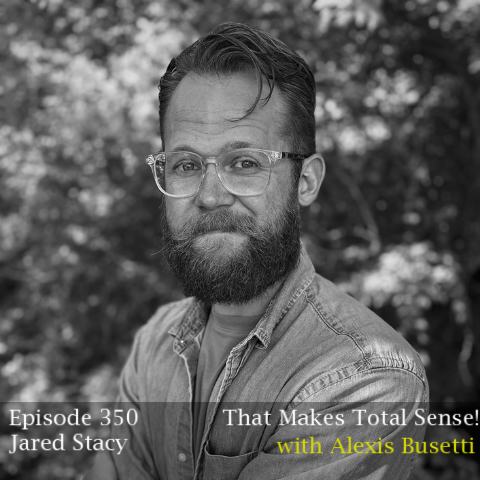
[00:02:50] Speaker A: I appreciate it so much. Before we get much further, this book that I dug out under my clipboard, I'm gonna say the title of it and, and say that I'm just really excited to talk about it, especially right now. It's called Reality in Ruins. How Conspiracy Theory Became an American Evangelical Crisis by Jared Stacy.
Jared I am a current PhD student, and so there is a little part of me, I was also married to my husband when he went through the process of getting his PhD, and there's a little part of me that just, like I want to say, Dr. Jared Stacy, Ph.D. like, all the things like, like, do it over, you know, like, do it over. Because I recognize, and I did recognize from walking with him through, through his process and now going through my own, that there's a lot that goes into that. And I know that this book is some fruit of that work. And so I just want to recognize, like, yes, like, there's, there's kind of the accolades that come with having a PhD, but there's also a lot of, a lot of process that we don't always understand is kind of behind that.
And so, you know, the, the research, the methods, the, you know, the, the way that you have thought through, you know, some of these things has been honed, I'm assuming, over the years, and you are probably still in process kind of as a continual student, is what I'm learning as a PhD student. But, and so I just want to kind of recognize that this didn't come from nowhere, that you are, like, trained and, and have learned how to, how to go about thinking about this kind of topic and also helping others think about this kind of topic. So I just kind of want to name that off the.
[00:04:36] Speaker B: I appreciate that. I do. I appreciate that, Alexis. I, you know, and to let people know on this, too, like, it's bringing and distilling scholarship into and for public consumption for the public good is really fraught. It's very risky, especially because a lot of things does, does get lost in translation sometimes.
And there's a part of me that just loves the academy and loves the nuance and the work that stands on its own, but the process of distilling that and taking academic concepts and trying to find correspond popular concepts that can give us some sort of semblance while maintaining the, the rigor of the academy, that's, that's hard and, and the execution of it is always fraud, it's always risky. And there's better scholars who've been engaged in this sort of thing for, for much longer than I have. And I think, you know, one of the things about, especially talking about conspiracy theory too, is it's also a minefield in and of itself. So it's not just the generic, the generic classic, you know, how do we distill the academy into, you know, popular culture or for the public good.
It's also, everyone has a lived experience with conspiracy theory and, and there's so many different disciplinary approaches to talk about conspiracy theory.
And I almost talk about none of that in, in the book. It's almost completely, totally this, the scholarly superstructure, if you will.
And there is a huge ask of saying like, hey, trust, trust this.
In a way, you know, the dissertation is publicly available, but I don't expect people to go and read it.
That's why I wrote the book.
But there's plenty of conversations and work to be shown and background to be had. And we're also living through a crisis of, of trust in expertise in academia, in all sorts of institutions.
And when you combine that also with memoir and telling your own personal story, then you run into what James Baldwin said, being sentimental is a form of dishonesty.
And so how do you tell your story in such a way and integrate it with the distillation of academic concepts that makes it palatable, but doesn't on the one hand fall into this ditch of sentimentality and on the other hand is compelling and not totally dried out academic technical jargon that people, it's not that people can't understand, it's that it doesn't speak to the very lived problems that we're facing collectively together.
So that's my way of sort of describing that landscape and thanking you for naming it for the listeners.
I do love the process, I do love the work, but there's a lot of names to thank and a lot of people in a culture that comes from behind all this too. The idea of a loan academic, academic working away as some sort of a hermit in a monastery type approach is, you know, that was the furthest thing from the truth with my experience.
Knowledge is always communal. So just a couple of rambles, I guess, on that, on that front and how I thought about the book and in some respects, based on its topic, based on the scholarship behind it, it's very risky to bring all of those things together.
But I'm grateful for these conversations because I think in some ways it's allowing Me to sort of look at this, narrate it, and talk through it, because the words are on the page, but also the conversation. That's what the spirit of the book is about, is dialogue, uncertainty, and. And encouraging each other on the way.
[00:08:24] Speaker A: Yeah, thank you so much. I felt that work when I was. When I was reading it, and there was a little bit of the behind the scenes for me that I was kind of like, ooh, I wonder. I wonder how this correlated, you know, things like that. But, yeah, so I. So I felt that work, and I really appreciate it.
On that. I would like to get.
I don't want to say, oh, gosh. Okay. So there's, like, kind of three things that are going through my head right now, so I'm gonna. I'm gonna name those, and then maybe we can talk through this as a way for you to help keep me accountable. That I actually want to go. I actually want these things to be accomplished. Number one, I'd like to talk. I'd like for you to give us some definitions. There'll probably be more that will go throughout the conversation, but I have highlighted a few that I think will be helpful as we're talking so that when we use this terminology, we're all kind of on the same page. We know what we're talking about.
And then you mentioned memoir. I would like for you to give, you know, at least just a snapshot of when you were really steeped inside of evangelical culture, what that looked like for you.
Because I think those of us who have either been in evangelical culture, evangelical adjacent culture, I think that there is some, especially with, you know, deconstructive deconstruction movement and things like that, there's been a lot of kind of broad stroke brush painting, but I think a lot of us who have lived there.
I interviewed an author one time who talked about evangelicalism as a neighborhood. And I would say, I think that's a fair analogy. And then also I think many of us would say, even in my neighborhood, as I. As I look around, my husband and I were walking last night, and I was like, oh, I like that porch, or I like that whatever. So I'd say each one of us, our houses are very different. And even if it's the same floor plan, you know, we've probably decorated them in different ways. And so I use that analogy to say that we've. We've got different evangelical experiences. And so I'd like for you to share that. And then the third is I had a couple of bullet points that I Realized I'm probably using as a filter a couple of takeaways for me. And so as we go through the conversation, I'd also like to share those so that we like, number one, to say, is that fair? Is that a fair takeaway?
And then number two, could that be helpful? So maybe starting with some definitions first.
I. I think maybe if we could start with three.
I'm. I'm gonna say, I think that would be a helpful starting place.
Number one, conspiracy theory in. In general, like, really, like directly how you define that. Two, holy paranoia.
And three, totality.
[00:11:18] Speaker B: Yeah.
[00:11:18] Speaker A: Yeah. So if so, could you. Could you give us framework? Like, what are we. What are we dealing with when we're talking about those three things?
[00:11:26] Speaker B: Sure. So in this format, it's probably helpful for me to show some of the scholarly superstructure. You know, in the book, I define conspiracy theory very simply that it claims to. It's a storytelling act, right.
That reveals secrets, claims to purportedly reveal sort of hidden knowledge.
And in such, it spins reality. Right. It generates a bounded view of the whole. And so the intelligibility of a conspiracy theory is actually reliant on more primal stories that are going on.
And there's a correspondence between conspiracy theory that emerges to explain an event and the more deeper bedrock of these primal stories and the scholarly superstructure from that and sort of collapsing of terms is intentional and holy paranoia factors in. So I'm going to do. Do two with one here.
You know, there's an ongoing fault in the. The field of conspiracy theory studies that is very popular in the work of Kassim Rossum or Qasem. Kassim Qasem. And. And it has to do with two different accounts of the phenomena.
So there's. There's two kind of competing ways to articulate conspiracy theories. And. And one is the particular list, and the other is the generalists.
And the particularists take a very rationally strict view that says, you know, a conspiracy theory is. Is any interpretation of an event that cites a conspiracy as a salient cause.
And the criticism, the generalist criticism of this view. Before I get into that, let me define generalist. Generalist is. Is much more broad, right.
So the generalist camp is looking at conspiracy theory not just as a sort of rational failing, but also it's more prime to see how certain broader narratives can be typologically understood. And so that's when we get narratives like Karen Douglas's Psychology of Conspiracy that has, I think, like five. And I think I cite that in the book, like five different.
You Know, it's got a Manichean binary, like good and evil. It talks about.
And I think I unpacked some of this. You know, it, it implies a holy battle, you know, between hidden actors and this sort of struggle.
And so that's a very generalist way of approaching conspiracy theory and the, the criticism that the generalists make. I'm a generalist. I kind of align with that. And I'll explain for a second why.
But the criticism that generalists make of particularists is that when you go down that road, basically everyone becomes a conspiracy theorist. You know, the 911 Commission is a conspiracy theory because they say, you know, hey, these, these, you know, Saudi Arabian, you know, funded, you know, terrorists flew these planes. Well, that, that's, that's a conspiracy theory.
And so you very quickly find out that doesn't actually give us a lot of purchasing power on these sorts of narratives that are driving not just public discourse, but shaping people's imagination through screens and, and things like that. So you, I just think you very quickly run into a dead end. And, and the challenge that, that I found when I was pastoring was that a lot of these narratives too, these conspiracy theories understood in a more broad sense correlated or, or corresponded to people's theology, right, that at some level claims about, you know, exclusively Democrat child sex trafficking, for example, were bounded up in, in, in a Christian understanding and interpretation of the world.
And the heart of that is what I call holy paranoia, which is a way of defining. The crisis in my title is not a crisis of clinical pathology, it's a crisis of theology. And at the heart of holy paranoia is a Jesus, a Christology that is caught between these compromised stories, primal stories, and the story of Christianity or the Christian story.
And so that's all the scholarly superstructure, and for my reasons of sort of collapsing terms like conspiracy theory cons, which is a very particularist move to segment those and kind of treat it as really a rational failing only because, and here's the challenge, if you adopt the particularist viewpoint, you're going to end up also articulating Christianity as a conspiracy theory.
And that's not something that I think is accurate for a host of reasons and not because, not because there's no rational legs to stand on in terms of, of Christianity. But I just find that the generalist approach to understanding conspiracy theory in our social political moment and then also articulating or giving us some more purchasing power for the ways that these broad narratives, not just of particular events, but wholesale myths, are very much referred to a Christian Imagination. And at the root of that, I'm arguing, is a holy paranoia is. Is a Christology that is caught up in these not just collisions, but also fusions of stories. And I talk about that in the book. You know, it's. It's a. A Jesus committed to a particular story of America and the anxieties that that story implies and necessitates and the Christian story.
And so to our third point, what does that express? What is holy paranoia generate? Well, holy paranoia generates totality, which is not to say reality.
It says totality is a experience of reality as a bounded whole. And so when I use the word totality, I'm. I'm maybe gesturing towards Peter Berger's social. The social construction of reality and academic concepts like that that tries to get after how human existence and experience is comprehensive. We strive to have some sort of comprehensive way of looking at the whole.
And so in this sense, I'm sort of trying to find a better and different way to tackle the problem of conspiracy theories within Christian community, where people who are non Christians would only have the language of saying, you don't live in reality, which is a pathologizing statement, right? Like clinical delusions, things like that. And I explicitly sort of disavow, like, that's not what we're talking about when we talk about this.
And so it's. It's my way of trying to find language at this problem that doesn't pathologize people, that acknowledges the collapse of these terms in ways that kind of avoid the rational limitations of it, ultimately to kind of get down to a point where we can get some purchasing power, but also so we can cash this out in theological terms like what theological changes or adjustments need to be made so that the Christian story bolsters itself against this sort of correspondence rather than just freely sort of giving free rein to suspicion that says, well, this sounds a lot like, you know, what the Bible says the end times will be like, for example.
So I hope that's helpful. I mean, there's. There's scholarly superstructure behind all of that.
And in the book, I define conspiracy theory as something that reveals secrets and therefore spins reality.
And that conspiracy theory is. Is definitely set in a wider, you know, primal story told about the world. And when that kind of concept comes to. Comes inside evangelicalism, it sort of erupts as a sort of holy or other paranoia, which is distinctly theological, distinctly Christological.
And, and the experience of holy paranoia generates totality, this experience of reality as a sort of a bounded whole. And I use and Try to cash that out in just biblical worldview language, which tends to always stand in for, and assume that Christians have this wide vista where we can sort of see everything going on and sort of see it above of everything that's going on.
And that sort of epistemological totalitarianism, which I use that term in the book, there's a lot of heat in that term, but it's really just meant to generate and ask these questions of, well, do Christians really get to claim that sort of, that sort of vantage point, that, that sort of view?
And I argue that. That it doesn't. And so that, that's my, that's kind of a look behind the curtain and all the scholarly superstructure behind all that, that unfortunately, there's not enough pages and footnotes to cite all that work in there, but it's what's fueling it, for sure.
[00:20:38] Speaker A: Yeah, I really appreciate that because as I was doing, I'm doing some of my own reading, and I think it's just natural that we make connections with things that we're learning about and things like that. And so I am reading right now on different, you know, epistemologies. And, and when you were talking about totality, that was the first thing that came to my mind. So I'm glad that you even named that, like, epistemological totalitarianism, because I think that. That I would, I would also, I would agree. I would also argue. No, I don't think Christians get to claim that view.
And, yeah, anyway, I think it's. I think it's harmful, actually, when we do.
[00:21:19] Speaker B: Yeah. And that's, and that's, that's sort of the cash out that I make at the end.
[00:21:22] Speaker A: Right.
[00:21:23] Speaker B: If there are listeners who are kind of like, well, where can I go to read more? I mean, there's a huge influence of Foucault on the idea that discourse, or our way of talking about something generates its own form of knowledge and produces knowledge. And so, like, I, you know, like just putting cards out, like the, the idea of producing knowledge that, irrespective of its rational, factual truth value, that's. That's very Foucault. And, and so that's. If people want to, want to go do that, they're more than welcome to. But that was a huge sort of influence on not just the, the scholarly superstructure, but really trying to distill that into, okay, what's going on. When a conspiracy theory comes, well, it's really telling a story.
Right? That's, that's, that's my way of of just kind of bringing it to our, our current moment. Like we're, we're not dealing just with a collection of false facts. We're telling a story that's right. And that, that's meant to sort of give us some purchasing power on a very common level for the story that Christians tell and examining how the collision of stories, you know, produce or generate a certain imagination that is prone. Not pathologically so, but prone because it's plausible, because it's got some resonance with the stories that we've accepted as normal, given through, you know, any, any one of those placeholders.
[00:22:51] Speaker A: Yeah. Thank you. Give us a snapshot of your evangelical background.
There were, there was a taste of similarity to mine, but again, like I mentioned, different floor pan, same neighborhood, different decorations. So. Yeah, so give us a snapshot of, of what you were familiar with in your evangelical context.
[00:23:14] Speaker B: Yeah, so I, my move has been generally right to the direction of left. I wouldn't say left, but right to the direction of left.
You know, coming up, I'm very much an heir of like, fundamentalist Christianity. So I'm talking about J. Frank Norris and Jerry Falwell before the sbc.
So that, that was kind of the stream that I was in. But I was also from grade school, part of a DL Moody non denominational school that was affiliated with Moody Bible Institute. And so I had a connection, I guess, somewhat to the Wheaton element, the Chicago element of evangelicalism.
And then of course, I went to Liberty and was a Southern Baptist pastor. And so that was sort of my journey through it.
You know, I stayed away from, I wasn't in any sort of. When you, when you look at the histories of evangelicalism, which when you lay them all over top, they're not all saying the same thing.
You know, there's a bunch of conflicting stories. And that's why I, you know, sort of make the claim in the book, there's no authorized story here. There's not even an authorized definition. You know, you could approach this sociologically, theologically, and sort of, I sort of like just shrugged my shoulders and say, you know, at some point we have to recognize that what's at play in all of these different definitions is the potential for schemes of justification, of shelters to sort of differentiate, like, the good evangelicals from the ones that we prefer not to be. And, and so, you know, I kind of gesture towards, I'll tell my story.
And it may have resonance with some and others, but, you know, I, since going to Aberdeen and meeting other people from different experiences too, that there can be resonances from people who, like, attended Wheat. I not in that orbit for people who were on the west coast schools like George Fox, you know, institutions like, like Focus on the Family in Colorado Springs, like, and, and this kind of brings me up to a bigger point. So that, that was my trajectory, right? Like fundamentalism, you know, kjv. Only things that, that Southern Baptists were kind of moving on from while we were still kind of doubling down over.
[00:25:28] Speaker A: And.
[00:25:29] Speaker B: But, you know, I came through Liberty and ended up in the sbc. And so that was, that was, that was pretty much my trajectory. But I think it does raise the question of, okay, well, how do we have any sort of shared experiences here?
What's the neighborhood? And I think I'm really compelled by, in terms of materialist sense, economic accounts of evangelicalism. And I gesture towards that in the book specifically when I'm discussing the way that the Big Lie conspiracy theory sort of took hold. You know, it didn't take hold in evangelical institutions. It wasn't generated necessarily by that. Of course, there are those who would articulate and say, well, the Council for National Policy is an evangelical institution.
Okay, I'm happy with that claim. We could talk about that. But in, in, in many accounts of evangelicalism produced by a guild right of historians, the CMP doesn't feature as some sort of. It may in future histories to be written.
But so that, that's, that's my story. That's kind of where I come from. But I'm very interested in showcasing how the commonalities that we may have depends a lot on. On how we consume this thing called evangelicalism, the music we listen to that's produced the, the reading and the writing that we consume, and also the, the ways that political organization activates itself through this network of Christian music. And it's, it's, it's one. It is one big thing in that sense. When you adjust for economics and material, you start to see, oh, there's, there is some, there's a commonality here.
That's where maybe the neighborhood exists. But I like and I quoted it Daniel Silliman, who was the news editor for Christianity Today for a while. And he applied a sort of the accepted theological definition for evangelicalism by the historian David Bebbington. You know, evangelicals are people of the cross, people of the Bible, people who believe in conversion, right? This, this turning to God. And also people who are active, like, in believing that their faith touches the world and should change how we do things. And when he applied that, that definition to the formation of Christianity today. His conclusion was it. It doesn't predict. It doesn't explain why the founders included who they did and excluded who they did. And so I think that's a really salient point, and it's not my job, it's not my place to define it.
As a theologian, I feel like my task is more inviting us to see what's at stake when we do and what we. What we stand to lose by kind of trying to create it. And my. My concern, and I say it in the book, is, you know, it can be a shelter. It can be a shelter away from who. Who evangelicals are actually called to be. And so I think at heart, my concern is right, that we, and I say we because I'm. I'm not gonna.
I'm not going to cut myself off from this tradition that shaped me, even though I wouldn't follow through with it in an identification way now, is to say that I hope we wouldn't confuse the collapse of a house built on sand with the kingdom of God. And to the extent that our definitions that also organize institutions would not stand in for what it means to hear the command of God and to respond appropriately.
So all of that is sort of churning in the background of just telling my story in the memoir. It's like, what's at stake? You know, those are some of the stakes, I think. And insofar as my story has any resonance with anyone, I think that's. That's interesting, you know, but far be it for me to cast a really broad brush and say, like, this is the thing. Well, no, I was through fundamentalism, through the sbc, and, you know, stayed away from Wheaton and George Fox and Colorado Springs, but I read books that came out of those places. I listened to radio programs from them. So that's where I think the consumption comes in. That was a lot. I'm curious to kind of hear where that resonates with you, where there's some overlap and where there's. There's some distance.
[00:29:46] Speaker A: Yeah.
Yeah. So I grew up sbc, and I've. I've ingest argued with other guests of who actually grew up or lives currently in the buckle of the Bible Belt.
There's a lot of claims to that in central parts of the U.S.
i grew up in southern Oklahoma, SBC. I did Bible drills. I went to church camp. I did, you know, all the things.
In my learning about Christian nationalism, just as an example, and the influences of that in my. In my experience, experience, I usually say, I. There are many things like kind of in, I want to say white evangelicalism.
I'm mixed Hispanic, my dad's white, my mom's Hispanic, and I grew up in a very white Southern Baptist church. And I, I usually will say I was youth grouped in, in a, in a way, but not parented in, in those ways, but youth group and, and church culture is like super influential.
So, so yeah, then I moved on to.
Had never had any sort of experience with any sort of Pentecostalism or charismatic anything, especially the SBC context that I grew up in, was very resistant to anything like that and then ended up in an Assemblies of God campus ministry and, and church in my young adulthood.
And so I've seen a little bit of the spectrum of that. I, I jokingly like Kristen Cobb Dume's kind of, you know, quote definition of evangelicalism as anybody who likes Billy Graham, you know, and then I read yours and I was like, oh, or maybe Billy Graham's a bit too liberal for you. And that would maybe put you in a whole different, you know, part of the neighborhood there.
But I do also, as a student of culture, I do, I am fascinated by the consumption part that you just talked about because, you know, same. I couldn't even, you know, in my youth group years, like, I couldn't even have named like a Christian university or seminary or like anything like that. But I'll tell you, if I wasn't listening to the music, the curriculum that came through, you know, all of that, I was very formed and shaped by it, even though I didn't really even know where it was coming from.
And I would say maybe, maybe. Lastly, for me and my reflection on that, thanks for asking, is that one thing I've been struck by, I don't know, maybe in the last five to 10 years especially, is that many of those things that I was formed and shaped by, I was under the impression that those things were, were ancient and they are not. Most of the doctrine, you know, most of the dogmatic stuff that came down to me is probably less than 150 years old.
You know, much of the stuff that was very, very formative culturally, you know, that was taught. You know, these, these are the things that we were being discipled under.
And I think that that's worthwhile for me to say because 150 years is a really small snippet in Christianity in general.
150 years of.
And other Christianities that have existed in that last 150 years don't share many of the things that were very formative to me.
But inside of that context, inside of that water, it feels like the only kind of true thing.
And that was really what kind of shaped. Shaped my experience, I think, was this understanding of just like we just talked about, you know, epistemological totalitarianism. Like, I. We have it. Whatever is being taught to me, it's something that we have.
And because of the stakes, I was really fearful, you know, of, of kind of the other in. In both ways. In the other as in, you know, gosh, there's this love for me that I really want this other to be a part of this, you know, gain this knowledge. But then also the other as in there's nothing that can be offered to me outside of this, outside of this framework. And that's really, you know, that's really.
Gosh, I think that in general, I would say, like, as humans, that feels like a real unhealthy place to be, is kind of like I can't learn from people who are kind of outside of my orbit.
And that feels real tough, you know.
So, yeah, so that's kind of my.
Where that kind of lines up and where it doesn't. We were not KJV only, but I still joked and it was truly a joke. But like, even in my campus ministry, if somebody had a King James version, I would say, well, if it was good enough for Jesus, it's good enough for me.
And that was it.
I want to mention, since I'm already talking, I want to mention kind of the couple of things that have kind of been living rent free in my head since I read this. Because you're pretty.
I feel like you're pretty clear in that this isn't like a.
This book isn't intended in any way to be some sort of measuring stick. And I was really grateful for that. And instead it, it is a tool that we can, that we can utilize. At least this is how personally how I'm taking it is to be a real introspective, you know, tool and usage.
And that's hit me in a couple of ways since I read it. The first one is I'll just kind of start with the lower one. Like, I get super frustrated and I'm just gonna like, I mean, just like put my cards like right out on the table. Like, I get super frustrated with like, the.
When like super die hard Trumper Christians like, will like kind of pound their fists at things.
It just kind of irritates me. It just kind of rubs me the wrong way.
And in response to that, and I would say many of Us are probably share this from maybe different perspectives, but I will name mine again, cards on the table, enneagram1 over here where I'm like, listen like this. But, but this isn't even true, you know, like, like whatever it is. And, and, and, and I think what's living rent free in my head as I start to think about these things is the facts don't matter.
Like, to be real, real blunt, like that's part of it. Like, the facts don't matter because a story is being told.
And to have that in my mind and to shift that irritation to a curiosity, like, help me understand what it is about this story, what is compelling, what, you know, how even does this, you know, fit into it? So I'll tell on, you know, I'll tell on myself in a couple of ways. So yesterday I listened to like a couple of news podcasts in the mornings, and one of them is from npr. And it's like a real quick. It just gives you like a few stories. And they had the sound bite of Trump right now, as Jared and I were recording, we're in week three or four of the war with Iran.
And, and I don't remember the exact context. People can go look up the quote, but it was basically like, right now he's saying that they're in talks. Iran is saying that we're not in talks. This is all going to be data by the time it comes out, I'm confident. But the sound bite that they were using and the quote that the journalist kept saying over it was something to this effect. Like, basically, if this doesn't work out, then we'll just bomb to our heart's content.
And I mean, someone accused me of being a pacifist when I was in high school. I don't know. I mean, it's just that didn't sit right with me. And like, this kind of over and over, like, we're just going to bomb to our heart's content. We're going to bomb to our heart's content. We're going to bomb to our heart's content. I would say, okay, I'm not going to get into a theological discussion with folks who, you know, kind of hold these views and all this kind of stuff. But I would say, like, if we are talking about facts, and this is where it doesn't really matter is I would say, like, tell me how now this fits into.
He's the president who's bringing peace, you know, like, like, tell me how we're just gonna bomb to our heart's Content, kind of like in a jovial way lines up, you know, And I would say, but the facts don't really matter because we're telling a story. And so. So that's one. The other part of what I'm gonna tell myself is you bring up, near the end of the book, Biden's condition at the end of his presidency. Okay. Okay. Jared. I was so ticked off.
I watched the debate that you referenced. Like, not the whole thing, but, like, I stopped watching because I was like. As my teenagers would say, I was experiencing secondhand embarrassment. I was like, this is like, this is so bad. Like, I can see, like, where I was, the device I was watching it on, you know, like, all this. I'm like. Like, this is so bad. I was. I was not on the same floor of my house with my husband. I'm texting him. Like, you've gotta. Like, you won't believe this. You know, like, it was so, so, so bad.
You report on it. I'm like, I remember reading the commentary the next day and for the weeks after. Right. I mean, obviously, to the point that the candidacy was changed.
And. And it. It's like all of the news outlets are reporting the same thing. And it's what you shouldn't look like. We.
This condition of this president has really deteriorated, and we can see that. Like. Like, you can see it with your own eyes.
And then. And even now, I don't want that to be true.
[00:39:53] Speaker B: Right?
[00:39:53] Speaker A: And so, like, there, there, there. I. I think I'm paraphrasing.
Maybe I'm not, but there's a question in your book where you kind of say, why do I want this to be true?
And I had to ask myself that question. Like, I actually don't. What I want to be true is that he was great until the very end. Like, oh, my goodness, it was the right decision to put Kamala in. Blah, blah, blah.
And even these years later, when you write that, it kind of irked me, even though I know that it is true.
And so I could sense that in myself, of the power of narrative, the power of story, and then that real self reflection that said, okay, but why, like, why do I not want to admit what basically the whole world, including myself, saw in real time live and this many years later, why am I getting irritated with this guy who at the time I had never met, is writing it on a page? You know, it's like. But it still was affecting me because there was something in me that didn't want that to be true. And I didn't want to accept that. So just like a, like a real, like a real life example. I think that's really helpful, you know, of saying like. But it is this storytelling part of conspiracism of conspiracy theory is very powerful, you know, to the point that a president who's going to say we're just going to bomb to our heart's content, like that somehow fits in with the narrative of the most peaceful president we've ever had.
And for me, you know, at the same time going, you can clearly see what is happening. Like if this was your relative, you would say we can probably need to seek out some services, you know, like we need to when you do this. But at the same time I just like couldn't, I didn't want to admit or see it for myself. So those two things are kind of, kind of like a, like lenses for me as I was reading the book. But even as I engage with news and theology and stuff like that now, it's kind of like, do I have a story that's like greater than facts? You know? And if I do in some of these situations, why do I actually keep carrying that? Why do I want that to be true?
From there I would love. Oh my gosh, Jared. I'm like looking at the time, I'm like, oh my goodness, how are we going to fit all of this in?
[00:42:20] Speaker B: We can go rapid fire. I can try.
[00:42:24] Speaker A: Oh, none of these are rapid fire. Okay. None of my questions are rapid fire.
Well, I do want to talk a little bit because this is one of the really interesting things for me is, and you alluded to it earlier, but the theological work that the conspiracy theories and evangelicalism are doing, and in a different part you said how they've always been a load bearing wall. And I think that's a really great picture. And it's also so important because it's not just social or political by any stretch of the imagination. We could you, you make an argument that this has been present in America kind of in general for a long time. And I agree.
And in evangelicalism it is. Do the conspiracy theories go further and they also do theological work. Yeah, so. So talk about that.
[00:43:18] Speaker B: So in the book specifically, like once we get out of like chapter three, which is sort of just telling the history and especially into then chapter four and five where we kind of do an autopsy of holy paranoia.
And then from there we sort of talk about like red pilled evangelicalism, right? Like these, these communal practices of reading the Bible a certain way and also expecting revival. Like I Kind of pinpoint both of those as practices that I think create a certain community.
And it's a community that sort of overlays in some respects with, with conspiracy like conspiratorial culture in the United States where, where people's expectation of revival is, is, is synonymous with the national myth of revival.
Where people's reception of the Bible is more about, you know, sort of a, a coded or even an index. Right. So it could be a geopolitical code. It could also just be an index of, of chapter verses that, you know. You were in Awana. I was in the fundamentalist version called King's Kids. Right. So it was very, it's very similar. And then.
[00:44:23] Speaker A: Oh, I was in Girls. I was in gas.
[00:44:25] Speaker B: Gas. Okay, all right.
[00:44:26] Speaker A: I was in GA's, you know, gas. Yeah, yeah, yeah, yeah. And yeah, and the Baptist. Yep, I was, I was in GA's. Yep. My, my male co.
Students were in Royal Ambassadors.
[00:44:38] Speaker B: Royal Ambassadors.
I just say like I'm incredibly grateful for that foundation.
[00:44:44] Speaker A: Right.
[00:44:44] Speaker B: Like it's not, it's not chipping away at it. It's not saying like hey, like this, this catechesis is wrong, but it certainly was inherited in a certain way, in a certain form as it's, you encounter that and its use in the, the sociopolitical world. And, and, and, and in this I would say, I would also say, you know, some of the book is gesturing towards non Christians who don't know what GAS are, right. Who don't know what Awana or King's Kids is. And, and whose only understanding of Christianity has to come with what they hear on the airwaves. And, and we on the inside can dispute whether or not that's accurate, true or real. But at the end of the day a witness has to be made.
Christ is in for and into the world as the world.
And you know, when, when we're talking about the ways that these, this does theological work, what I'm really talking about in describing that load bearing wall is almost like a point of correspondence, right? So the chapters that come after the history, the autopsy of holy paranoia and red pilled evangelicalism, looking at the practices but then also the parts, right? So in that chapter on, on autopsy and like the sort of plot devices, right, like, like these are the devices that go into, and we looked at, we looked at individualism, we looked at morality, we looked at the apocalyptic narration. And, and my point all through this is not to eviscerate what has come to stand for and, and embody like evangelical theology. And I I'm using quotes there as I say that it's, it's to identify theological disorientations, theological malformation on how these currents, right? So, for example, I quote Jurgen Moltmann in criticizing individualism and saying, like, we can critique individualism because we are shaped by modernity and the Enlightenment. That says we are individual subjects. But molten comes in and says, you know, we can reject individualism, but our God is a personal God, right? We, we come to say, you know, Jesus is my Savior, and then acknowledge, oh, he's the savior of the world too.
And so it's identifying theological disorientation and the malformation that it causes when it expresses itself in the political.
But that's not to implicate theology. That's to do theology.
It's to do theology against theology.
And so I look at those plot devices not as a way to excoriate or to exercise theology entirely, but actually to say, like, there's a. There's a wrestling of theology with theology.
And so, you know, for example, on the individualism point, you know that it's very easy for us as modern people, and this has nothing to do with evangelicalism until we get to a certain point. It's very easy to just think of ourselves as autonomous individual subjects. And if you want to talk about it, in my day job as a hospice chaplain, like the entire industry of healthcare is erected on this centralized notion of patient rights and autonomy. And I'm not here to take down that artifice, but as a theologian, I'm here to suggest that there are limits to that approach.
And so when we talk about individualism and the way that that features in conspiracy theories in general is often that, well, there's, there's an individual who is doing certain actions directly, right? That there's no, there's no, you know, if you make a plan to do this, the individual does it, and there's no interference. They're. They're incredibly efficient in conspiracy theories at doing what we claim they're doing. Doing. And that's a problem.
But it's. But it's. When that becomes also theological is right here. Is that an individualism that is baked into the, the Christianity that, that we're talking about here. What it becomes really easy to. Is just an embrace of these identities of saved and damned, right? That, like, we're able to categorize individuals and draw the line between, like, these people are in, these people are out. Now, I'm not denying that Jesus uses eschatological language. I'm not Denying that Jesus tells a parable about the sheep and the goats or the separating the chaff right from the wheat.
These are all part of the parables that Jesus tells. But my point in all that is that our Christianity does not give us the chalk to draw that line.
And, but when conspiracy theories naturally traffic in a division of us versus them, we're right, they're wrong. Of all categories of difference, be it Republican and Democrat, right, it's we're two. And, and guess what? This is what I love to point out. This is not original.
Like, like this is Howard Thurman, MLK Junior's mentor. This, this is Frederick Douglass. Like, like this, this is a reception of African American theology, black theology in this country that, that has not had its proper reception inside white evangelicalism. Those, those criticisms have not, not found their way in to this point.
And so identifying this as such and saying, oh, conspiracy theory can sort of be a live exercise as a window into this disorientation and the malformation it causes. And that, that's difficult to grapple with. I mean, I would, I'd be the first one to admit it's a very novel and, and different approach because we've been trying to grapple with conspiracy theories through fact checking in so many different ways. But then to suggest, well, theology is actually implicated in this is like a whole, that's a whole claim in and of itself. And that's one of the, the chief claims of the book. But actually going into this chapter, right. Of these plot devices, apocalypticism, right. Like the notion, you know, and take, take the, the war with Iran, right. Like how uncritical of us. And I say us in general just to identify Christians in America for the, for the non Christian public to hear talk of the end times in Armageddon as some sort of loose license for just continuing the bomb. Because we feel like that's what the end time the, you know, that that's. Yes, that's actually distinctly Christian. Like I'm not gonna, I'm not gonna sit here and say it's not, it's disoriented, it's malformed. But to dismiss Christian nationalism by saying it's not Christian denies what people think of themselves who embody and espouse these views. They think that they're Christian.
And I'm not here to draw the line and say they're not, because that was my first point, is that it's, that's not up to us. But when we do the theological work, it's, it's a conversation of theology to say, well, what does it mean to talk about God? Who is this God? And, and the good thing in all of this is that I think God's more committed to exercising the, the, the idols that we create and give his name to than, than we are. And I think in the background of all this, just to bring this down to earth, I've thought a lot about the story of Gideon and, and how the, the, we're introduced to Gideon in a time of sort of external pressure, right? The Midianites are raiding their crops and so there's an economic crisis and we tend to, we tend to tell that story from the beginning and the end and we forget the middle. And, and the middle is not God winnowing down his army to 300 men. The beginning is actually Gideon being told by God, I want you to take a bunch of raiders and in the middle of the night tear down the Asherah pole that's in your hometown. That was the God of fertility, that was the God of harvest. He was ruining their economic system before the Midianites were.
And so I think about that account a lot because I think in some ways that's what it looks like to do theology against theology.
Theology against theology is always a preparatory move. It doesn't, it doesn't introduce people to God. It creates space for God to reveal himself.
And that I think is in general this sort of theological preparation and current that could easily be coded as destructive, right? I mean, Gideon's dad comes out and says, hey, this wasn't me. You go deal with my son. That was him, right? There was, there was this vacuum and that has in many ways just framed and informed and fueled this sort of theology against theology that the book is doing and identifying these load bearing balls and in some ways showing the disorientation. But in no way, it's just, it's just preparation and that, that sort of expectation and preparation. And you know, as a theologian, I'm sitting here and I, I quote Bonhoeffer in the book who says, you know, we, we don't make a new beginning with God, we can only pray for one.
And, and that, that compels me like no other. You know, that the, the challenge I think in a lot of criticisms of evangelicalism is that at the end of the day, they still need evangelicalism to keep doing the things that it's doing in order to sustain whatever counter claim or culture or institution is trying to be built. Like if we need this Christianity to continue on being itself in order to justify whatever we're Building over here, that's, that's not the prophetic work of, of the Church.
And so that, that's the sort of challenge and the risk involved in doing this sort of work.
And I, and I think being able to kind of pinpoint it particularly, you know, whether it's individualism, whether it's, you know, this disorientation, you know, we, we benefit if, if we deal with it, we benefit if we identify it.
And, and so that's the sort of work that is, is being undertaken over the course of the book and trying to identify these points of correspondence. Right. With theology that, and I really appreciate, you know, what you said, Alexis, about the sort of dogma that that is inherited in these spaces tends to be emphasized by reactions against something. So, for example, like I was very much influenced by cessationism, right. The notion that there are no more speaking in tongues or miraculous gifts or things like that in, in my fundamentalist or two, I was, I was very influenced by a reaction against the Catholic Eucharist and the daily or the routine giving of Mass, right. Like I, I took communion or the Lord's Supper at almost a very random or almost quarterly schedule. And that was intentional to sort of embody like this church is not Catholic.
And so many of us in our own ways ended up understanding theology as a set of reactions that were. Emerged from the pressures of history that when you put them all together, do not constitute the whole of Christian faith, but they loom so large and so, so, so, so strong in our minds, in our inheritance.
And, and, and, and so when we begin to reconnect with the answers and the articulations of faith and expressions that have come before us.
And this, I talk about this in the book. That feels like apostasy.
I mean it, it feels like, and all I mean by that is not becoming a heretic. It's just appo. Like from, from static. From static from, from, from standing still, moving away from a standing still point.
And, and that sort of disruption, that sort of disillusionment in the book. I, that might be God's deliverance.
And, and I'd be the first person to tell you that's the most perilous thing, perilous place to be.
But I think it's in a secondary or even tertiary sense. It's actually good for democracy when the church is in that perilous place. But that's not the primary.
You know, it's to let the Church be the church and hear the command and voice of God.
I think democracy is better when the church is. Is in that position.
[00:56:38] Speaker A: Yeah. I'm glad you pointed out the, the reactionary nature.
This, this actually came up in conversation last night with my, my husband. We were walking. I was talking about, you know, he's. What. What did you do today? What do you have going on this week? And I said I'd. Well, I finished your book and, and I was going to talk to you today, and I brought up something that I'll bring up now, which was when I was in my M. Div. Program, early on, we had had. Our family had had like a. A church disruption and we were looking for a new community and we, we found one, like, I mean, in this grand scheme of things, like, relatively quickly. But at the time that I was given this particular assignment, I didn't feel like, super.
I'm going to use the lingo. Ready? I didn't feel super plugged in. I wasn't like, you know, I wasn't. Our family wasn't like, super involved. We had had some wounds, and so we were kind of easing our way in and things like that. Of course, it was also like in the midst of the pandemic, so it's really hard to do that kind of. Of stuff when you're not in person and, you know, blah, blah, blah. Anyway, so I was given this assignment to write, and it was like many seminary assignments that I had had. We were invited to write something in our current context, you know, so that was the lens. And I was like, I don't have a context. You know, I was like, I don't have a church. I don't have a church context.
And so I was kind of struggling with it. It was early on in my degree and, and I reached out to my, my professor and I was kind of told him what was going on. And so he was real gracious and, you know, was like, hey, this, this, like, happens more. Because I felt a lot of shame too, especially given my previous context, because here I was like a seminary student with no church home. Like, that felt like the most oxymoronic thing that I could say out loud. And he's like, this is way more common than you think, you know, and. But, you know, so he shared some grace there. But what he also said to me was he was a pretty. He's pretty blunt. And he said, because my temptation was, I was like, I don't want to do this, but I kind of don't know what to do was like, I could talk about this in the context that we were in, but There was a reason we left, you know, and so it didn't leave a good taste in my mouth.
And he said, you know, it's more interesting when you're writing. It's more interesting to be for something than it is to be against something.
And.
And it was pretty simplistic, but I found it to be pretty good advice. But I also found it to be. The reason I found it to be good advice isn't just because it makes for a better paper, but I think it. Because it makes us.
It calls us to be more imaginative.
You know, it's very simple, you know, and there is some interpretation and stuff like that. You know, I'm not an artist, but I have kids who are. You know, it's like, okay, well, here's a bowl of fruit. You know, draw this. This still life. It's like, well, there's going to be some interpretation there, but you're given, you know, you're kind of given this thing.
And so I think that's what I found, and what I've tried to cling to from that comment is it's more imaginative, you know, to kind of be for something. And I think where. Where else I would.
What else I would add to that?
You know, what was going through my head when you were talking is that I have been very grateful to be in contexts in the last several years where I have. That I found to be very expansive. You know, questions and curiosity are really welcomed.
Dogma is kept to a minimum, you know, and there's, you know, question asking is really welcomed. And there's not, you know, kind of a threat, and it's not just certain kinds of questions. You know, I think that was even one of those. Like, there's. There's a Sunday School answer, but there's also Sunday school. Sunday school question, you know, and. And it's like, no, we can. We can kind of ask and. And. And. And try and live in some more theologically expansive spaces, which does feel like apostasy, you know, at. At first.
And. Yeah. So I. I appreciate. And everything that you said, that was kind of one of the things that I kind of latched onto was this.
The reactionary nature.
Yeah. So.
Oh, my gosh. Oh, my gosh. Jared, I'm looking at this and I'm like, we're not. We're not even close. Everyone grab the book. That's what I'll say.
Maybe one more.
Okay, let's do this.
I had four things listed here. Oh, my gosh. I would say choose your own adventure. And I Will let you land the plane there.
So you can land it. And then also give us maybe like a generalized kind of ending statement, if you want. I might, I might end up budding in. Obviously, we've seen that in this conversation. So I was really curious.
Some of the things that stood out to me were conspiracy, the conspiracy theory, connection with. And I'm kind of, kind of name these other things because I was like, yes, yes, yes, yes.
But I, but I enjoyed how you named them. So in conspiracy theory, there's connection with anxiety and fear.
[01:01:51] Speaker B: Right.
[01:01:53] Speaker A: That felt really palpable for me when I was reading this. Gosh. There's also a connection with the desire for order and certainty.
Again, like, I feel that one in my bones. So anxiety and fear, order, uncertainty, whatever we don't cover, people can grab the book and read it.
A connection with like a.
I don't know if you use the word oppression, that's the word that's coming to me right now. But like a targeting of marginalized populations and then also with a martyr myth.
I won't put my thumb on the scale.
I have one that I was going to ask, but I do want you to. You like, choose your own adventure and then we'll try to wrap it up after that.
[01:02:39] Speaker B: Well, I mean, I think, I think the things that you've named here we can.
This is all very much storied material. I mean, let's try to. I'm trying to bring them all together and I talk about it in the book how stories that are told just across humanity in general are always doing work to provide the order to answer the anxiety. Right. To provide the certainty that erases the fear.
[01:03:10] Speaker A: That part.
[01:03:11] Speaker B: So, so I think there's fundamentally a relationship there. And in the book, I use the example of Star Wars Right. In 1977. Like America is right on the, on the heels of the Vietnam War. We're act. You know, and my, I got this insight from my PhD supervisor, Brian Brock.
You said, you know, we're right in the middle of acting like an empire, but getting a giving, giving ourselves a story that lets us imagine that we're the rebels again, you know.
[01:03:37] Speaker A: Yeah.
[01:03:38] Speaker B: And. And Lucas himself, in an interview with James Cameron, you know, said. Because Cameron identified, you know, if you look at what the rebels do in Star wars, you know, asynchronous warfare and, and small cells, I mean, they, they're, they, they're probably what we'd call terrorists.
[01:03:53] Speaker A: Right.
[01:03:54] Speaker B: Luke Lucas, without hesitating, said, when I wrote Star wars, they were called Vietcon off Yeah. And. And so he was very awake and aware to his time.
And, and I, I read an article just this week and I talk about it in the book that looked at 2008's Iron man right in the middle of a bogged down, beleaguered population with the Iraq war. And here comes Tony Stark out of a cave in Afghanistan.
Some, some seemingly solving all our problems with the myth of a hero.
And it was in conversation about why Project Hail Mary right now is capturing, embodying a lot of the hope and resolving a lot of the tension that we feel.
Conspiracy theories are all meshed up and bound up in this. And so I would probably say that.
And particularly the anxiety or fear, the order, uncertainty. I mean, there's Christians, there's ways of telling the Christian story that deal with this as well. And certain theologies that are more prone to, like for example, you know, one of the approaches in Christian ethics is to really emphasize creation order, right. This concept of creation order.
And when conspiracy theories kind of on the cutting edge of things, sort of code, like Salem, Salem witch trials code, women's bodies as suspicious and the bodies of the enslaved as deviant.
Like there's, there's an account of creation order that says, well, this is actually how things should be. That in ways that we may, we never have suspected are absolutely the backstop when this live act of narration is saying, well, this woman or this enslaved person is, Is more prone. Why? Because this concept that we have buried in our theological backyard.
But then you also mentioned, and this is. Well, I just talked about targeting, right. How the stories we tell kind of. It's not that we need proof. It's not that we need proof that, you know, immigrants are criminals. And this I'm speaking in, in the hypothetical way.
[01:06:01] Speaker A: Right, right.
[01:06:02] Speaker B: I'm speaking to the way that these conspiracy theories take hold. And I say it in the book. Sometimes what doesn't matter is whether or not it's provable, it's that it's plausible.
And, and so the targeting that we're seeing in these very live acts, right.
People can argue, and this is a very particularist view to say there's no evidence that Haitian immigrants were eating pets in Ohio. So that's stupid.
Okay.
But the generalist would say those stories are continuing to cause and affect that community and their, their half life life persists irrespective of facts. So the particularist is a very narrow account. The generalist opens the door not just to sociopolitical accounting of these stories, but it also gives theology a sort of seat at the table to say, oh, the Christian story can be bound up in charging these, giving them a half life, perpetuating them, giving them authority that exists beyond the fact checking force field.
And then that brings us to our final point, the martyr myth.
And you know, I, I wrote this book not expecting to share as much of my story as I did.
And the, the Columbine kind of wrestling with the facts on the ground versus the story that evangelicals told was very disorienting, you know, because for the reasons I explain in the book.
But the, the word martyr has always meant witness. And, and the implication of that is witness to what?
Right. Labeling someone a martyr is in our post Christian or Christian saturated time of disreality labing some martyr is an act of storytelling.
And, and it, it's a window into something thing. And, and here's what I'll, here's what I'll observe about your original observation, Alexis. That just comes from what I, the argument I make in the book is that, you know, there's a point where facts don't matter and that's where the stories are too powerful, too primal. It's not like we know them, it's that they're just obvious.
They're what we would call biblical. And I get that. But putting some pressure on that point, that's why I use the language of apostasy, because I realized as a pastor at some point to walk back some of these conspiracy theories would have caused a major crisis of faith.
And so when we look at these martyr myths, I also want to just highlight the speed of our moment.
We don't have time to think about this story.
And, and it's something that we found in other times where the forms of totalitarianism or autocracy or of tyranny, it, we, we find that people actually start to journal more or that journals give us a better picture. Because what totalitarianism does, what autocracy does, is it eradicates the past, it mythologizes the future and it leaves us only with the present and we forget.
And so we become victim of a story that has to inhabit our present moment. And it's just a continual act of storytelling in ways that give us order and certainty, in ways that, that deal with our anxiety or fear, in ways that may dispute or discredit or distort the facts. But ultimately, and this is where I think in the book I cash out, it's not to pathologize people who conspiracy, who opt for conspiracy. The, it's actually to acknowledge that they're trying to find a place to stand, that they're trying. You know, research shows that those who engage in conspiracy theorizing have a perceived sense of victimhood. And it's not my place to deny that, but it is, as a theologian and someone who's also dealing with the history, to pinpoint maybe a paradox of evangelicals saying that we are a persecuted minority when, in terms of consumption and material networks, evangelicalism has been one of the most widely successful religious movements over the last 500 years. And if you want proof for that, I would also point you to the fact that evangelicalism across the world is one of America's greatest exports, because I've seen the Bible studies in churches in the UK that come from the United States. So that's a very small claim, but I think, hopefully it encapsulates a lot of what we've talked about.
You know, that conspiracy theories are very much a live act. They really don't submit very well to our neat and tidy definitions.
And when we kind of let that go or collapse some, we are better able to gain some purchasing power on the ways that theology and Christian culture can be implicated and can be distorted, and then that leads to malformed practices.
And so, you know, at the end of the day, appealing to better stories is very much a posture that I'm inviting people to inhabit, a place to stand.
I make the argument that I think is the only argument to be made from this point is that from a Christian standpoint, you know, reality is something that we receive.
It's something that we discover through encounter, through a pilgrimage of faith.
And there's a certain rational scandal to that, because in Rome, the image of a cross was not what it is today.
And so I want to preserve the shock of Christian faith.
And by looking at conspiracy theory through that window, I think we're afforded a glimpse of.
Of ways that the stories that we don't even know we're telling, we're keeping some cards under the table.
So to give readers maybe an image to end on that encapsulates all of this.
You're familiar maybe with that very famous sports photograph of Muhammad Ali.
Nike uses it, right. He's got his. He's standing over Sonny Liston and. And he's got his. You know, he's pumping his fist and. And the way that the image looks. I mean, it looks like he's just delivered this knockout blow.
But that's not the facts. That's not the story. Right. The image conveys a certain set of Facts that the story itself radically challenges because the fight only lasted for a minute and 40 seconds before most people were in their seats. Liston was on his back.
And to this day, in the world of boxing, it's. It remains an open question. And whether or not Liston took a dive, like fixed the fight, and there were many suspicions that he did, or whether Ali landed such an incredibly fast punch that was surprising for its power, that put Liston on his back. But what we do know is that that moment, Ali is not yelling in triumph. He's actually saying, get up and fight.
And there's a whole host of stories that we tell about keeping cards on the table or cards under the table. And if the book is unsettling in some ways, that has been my experience of pilgrimaging on with God.
That act of becoming Christian over and over again is finding that I'm keeping cards under the table. That we all are. That the stories we tell, what we want to be true, we're constantly invited to bring that into.
And the last thing I'll say is that I actually think a recovery of the Old Testament would really help us as Christians in this regard.
Khmezkotes was a Dutch pastor who studied under a Jewish philosopher.
And he would say that, you know, that the. We now, as New Testament Christians, we return to the Old Testament because it is. It is the.
The period of expectation and anticipation.
And there are. There's deep resonances with the story of Israel and the people of God looking for our own bread in the wilderness. And I think those. That's the stories we tell.
And so I'm. I'm. I'm very keen on retrieving a decidedly decided emphasis on the Old Testament as one sort of Christian intervention in conversation with Jewish thought, not in opposition to it. So I'll leave that as a practical note. But I will say thank you for having me on. Thank you for letting me ramble and expound, and I really appreciate the dialogue and conversation.
[01:15:19] Speaker A: Yeah, thank you so much, Jared. I appreciate it.
I looked up that photo while you were mentioning it, and you can buy a limited edition print signed for only six grand.
[01:15:31] Speaker B: Look at that.
[01:15:31] Speaker A: Six grand. I know. It could be yours hanging in your living room or study, but it's. But the, The. The caption under it, Muhammad Ali reacts after his first round knockout of Sonny Linda Liston during that, you know, and so I'm like, wow. It was just. It felt. It felt just. Just real appropriate, you know, that for this sum of money, you can have this story, you know, you can have an image, a symbol of this story in your, you know, in your living room or whatever.
Yeah. Because I think, I mean, that could be a whole other episode or, you know, preach that sermon, Jared, for us about the economy.
But you know, what we're willing to pay, you know, what, what are we willing to give, you know, to maintain the stories that we want. So, anyway, thank you. Thank you. Thank you again. The book is it's out now, right? It's like out in real life now, out in the world.
Reality and Ruins How Conspiracy Theory Became an American Evangelical Crisis by Jared Stacy, who's been my guest today. Jared, this has been a pleasure. Thank you you so much for being on.
[01:16:38] Speaker B: Thank you for having me. I've really enjoyed it.
[01:16:42] Speaker A: The links for all the resources mentioned in today's episode can be found in the show notes, music and podcast production by Seth Buscetti. Be sure to give us a review on itunes and subscribe at your favorite podcast listening app. You can also Visit us at thatmakestotalsense.
[01:17:02] Speaker B: Com sam.