[00:00:07] Speaker A: Welcome to that Makes Total Sense, a podcast dedicated to exploring God's generosity and justice. I'm Alexis Busetti, a Christian, aiming to ask good questions and encouraging you to do the same.
Every one of us is wired by God to live out generosity and justice, but the how sometimes eludes us. That makes total sense is a way for us to get together, posture ourselves as learners, and challenge one another to practice generosity and justice in a tangible way every day.
Okay, Joel, sometimes I share, like, a little bit of my own context before we get going. And I forgot to share this with you, so I'm gonna say it. I'm gonna say it out loud as we start recording.
[00:00:51] Speaker B: Okay.
[00:00:51] Speaker A: I read this book. This is. Okay. I just want you to kind of be aware not necessarily of the smart level that you're dealing with, but of the nerd level that you're dealing with when you're talking. And there is a difference. You know, people can be nerds without being super smart. And I'm a nerd for sure. I turned in my last final, and then I spent the next, like, five days reading your book.
[00:01:18] Speaker B: Oh, my goodness. Yeah, that's a great question.
[00:01:21] Speaker A: Nerd city, right? Like, I mean, it was. It was crazy because it was your final end.
My final was in missiology as a discipline. This is my first. I just finished my first quarter at fuller in the PhD program. PhD in Intercultural Studies program. Thank you so much. So, anyway, so I set that aside, put my laptop away, and then picked up your book, and.
Whoo.
I will say this for me, who I am a nerd, but I am not a history nerd.
In fact, admittedly, I avoid history sometimes. If I'm being really honest with myself and with my guest, who does a lot of work in history, I avoid it. I'm not, like, one of those guys who just, like. Just, like, can't get enough or whatever, you know? Like, I took, like, the bare minimum and my m. Div. Of the history classes I had to take and all of that kind of stu stuff, which is maybe part of the reason why I was. I was so enthralled. Like, I was. There was a lot of. I'm shocked, but not surprised. There was a lot of, oh, my goodness, I'm surprised. And I want to get into that a little bit more. But this. This was a. This was a really tough read in some ways. I mean, I kept going like, I couldn't put it down. But I was also like, what the heck is happening?
[00:02:50] Speaker B: Yeah. You know, it's interesting because I didn't know any history when I started writing the book. So, like, I had, you know, I've. I've had a Intro to History class, you know, about 20 years ago.
But somebody reached out to me about writing a reparations book. And for a number of reasons, you know, I had felt that it was most definitely the right project for me. However, when I agreed to write it because it was an acquisitions editor that reached out to me, what I didn't tell them is that I didn't know anything. And so that's the best. Yeah, yeah. And so, as you know, I consider myself a writer, you know, not a historian, not a philosopher, none of that. But when I write, you know, it's kind of journalistic instincts. And so in my first book, I dealt a lot with Enlightenment philosophy. I had had no philosophy courses other than an intro course. And on this, you know, I think what I can do pretty well is read primary sources. And so, you know, in the book there are focal figures in it, but I found myself having to read other stuff as well to kind of wrap it in the context that could help make these historical figures make sense. Yeah.
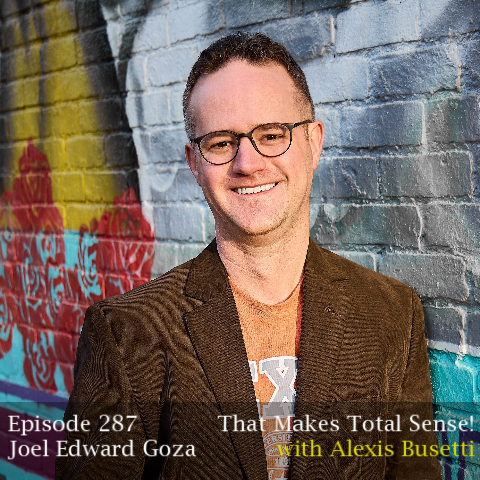
[00:04:03] Speaker A: So I got ahead of myself when I say the name of the book because it is about reparations. This is Rebirth of a Nation, Reparations and Remaking America by Joel Edward Goza, who's my guest today, obviously.
But here's what I want to say about the primary sources piece because this kept going through my head. So I'm going to use an analogy that was. It was familiar to me.
I had in my M. Div. I had a professor who was a messianic Jewish believer scholar, Jen Rosner. She's been on the podcast and I took her for a history ish class. I don't remember at Fuller. The names are like ridiculously long. It's like a full thesis for like a course. Names. I don't. I don't remember what the actual course was, but it was. It was history ish class course. Now I had had, I would, I would wager to say probably more than the average Christian exposure to history when it comes specifically to the parting of the ways. So, so Jewish religion when Christianity was growing and then this separation that happens in the early centuries. And I had had, like I said, probably more than the average Christian's exposure to that. And so I was familia of the really like devastating and violent and, you know, gross things that happen historically during that time and the way that Jewish people were treated and then even forward, you know, through the Reformation and these kinds of things.
Then I take this class and Dr. Rosner presents a lot of these things to us in the form of primary texts. And I remember feeling, feeling a lot of feelings kind of all over again. But I also said out loud, as I was, you know, processing with my husband, I said, if I had not had some exposure to this already, I think my instinct would be, is she crazy? You know, like, where is this coming from? You know, because this isn't the kind of thing we get in church. This isn't your regular discipleship course. You know, you don't, you're not exposed. Like in my circles, we're not exposed to those kinds of things. And like Protestantism, Evangelicalism, like, this is not the world. But I had had some exposure. So when I read the primary text, I could focus on that and not kind of also be shocked too. I was like, I know, I know this happened. I know this was bad. Anyway, so use that as an analogy.
I had a very similar experience reading your book.
[00:06:42] Speaker B: Yeah, yeah, yeah.
[00:06:45] Speaker A: Who is this guy? What are we doing here? Like, like, like what are we doing? Like, really, we're doing this with Lincoln? Come on, Joel. You know, even Jefferson, I was like, I knew some of this stuff, but he was the one I probably had the most notes on, to be honest, was the Jefferson sections where I was like, I don't even know where I've been living.
[00:07:08] Speaker B: Yeah, Jefferson is a. You know, I think most people are very complicated humans. I think to be human is to be complicated.
[00:07:18] Speaker A: Amen.
[00:07:19] Speaker B: I don't read Jefferson as being complicated at all. I mean, I think he is deeply.
[00:07:25] Speaker A: I almost spit my coffee out.
[00:07:27] Speaker B: Yeah. Yeah. I mean, I think, I think Jefferson's a deeply sinister dude, you know, like Lincoln's deeply complicated. Deeply complicated.
But there's a simplicity to Jefferson in the narcissism of Jefferson and the violence of Jefferson in the self justifications of Jefferson that, you know, once you, once you get Jefferson, it's no longer complicated. You know, things kind of fall into place and they make sense and there's a deep consistency within his work. Yeah.
[00:07:59] Speaker A: So let's, so let's come back to Jefferson because I want to. I want to. I want to kind of hopefully I want to set you up to kind of set the stage for what this book is at least, you know, I, I will kind of tell you how I read it and then you tell me, yeah, that was the goal. Or.
But there are. So, so the way that this book is presented is it is historical from Jefferson ish through Reagan. Ish. And then we've got, you know, kind of this proposal toward the end of. Yes, I am ultimately talking about reparations. And no, this is not impossible. This is how, you know, these are some of the frameworks. This is actually how we could do it, like in. In present. In present day, right now. But included in that there is, I think, what. What I saw as I was reading it is themes and of course, themes, myths and lies and also systemic patterns for white supremacy. And why, like you kind of lay out, like, why has this been the consistent nature of the United States? And, and this is from, you know, these historical figures like Jefferson who have kind of laid these things out, who have, you know, used writings and literature and propaganda in some cases, you know, through. Throughout history to.
To reinforce white supremacy and what that looked like. And then also its effects, especially you focus a lot on anti black racism. That's kind of the main, Main population we're talking about here. So we're talking about slavery, we're talking about lynching. We're also talking about things like welfare and things like that as we move forward. Civil Rights act and things like that. But you've got these themes and what I thought was very interesting and I've seen it done in different books in different ways. But, but the focus of what I saw here was these are the lies that white supremacy has always supported. And then even as the culture has shifted and changed and, you know, some of the situations have changed, these. This is how these lies have been perpetuated to kind of reinforce the system that we have at play. And so it's just this real ugly cycle, you know, is. Is what I've seen with these, with these themes. And so part of how you do that is you bring out a handful of historical figures, many of them leaders who were men, who kind of exemplify, but also whose work was very instrumental in supporting and reinforcing these lies and systems. So I would say, a, how'd I do? And then B, you take it from there.
[00:10:58] Speaker B: Yeah, yeah. And I mean, women are essential in the. In the story, unfortunately, in really tragic ways. But, you know, what I wanted to do was really analyze the lies and myths that I had to deeply unlearn. And so to take a step back on the book, you know, I grew up in Houston, Texas, where you are now in 1979, is when I am born. And because of where I was born and because of when I was born, almost everything that I thought that I had known about black people, I had Learned from Ronald Reagan. Wow. And so when I agreed to write the book on reparations, I had known that Reagan lied to me, and I had known to Reagan lied to me simply because I had lived in Fifth Ward, which was a predominantly black community, and at least worked there for about 20 years.
And so what I wanted to do in the book is to really examine where the lies of Reagan had come from.
And before I started, you know, I had a hunch journalistically that this was nothing new. But what I didn't realize when I wrote, when I began writing is in between Thomas Jefferson writing the Declaration of Independence and then the signing of the Constitution several years later, Jefferson writes a book called Notes on the State of Virginia. And in Notes of the State of Virginia, what Jefferson essentially does is he begins the type of lies that Reagan will continue.
And they're really three simple ones.
The first one is, is that there's something wrong with black sex and black families. Like, we had to establish this in order to make sure that in the era of slavery, that we never viewed black families as having sacred worth. So if you split them apart in slavery, no problem. They couldn't. They weren't really capable of intimacy to begin with. You know, in the 1980s, if black families are hungry, no problem. You know, they've really brought this suffering upon themselves. And so the particular. The particularities of the different public policies might evolve, but the work they're trying to do to desensitize the American conscience is very similar. And so that's one of the lies, you know, that there's something. There's something corrupt with black sex and black families, and black folks just kind of bring the suffering on themselves. Secondly, that the black folks are naturally lazy. So in the days of Jefferson, what you want to say, that black folks are naturally lazy because this justifies the violence of getting them to work, and that without the system of slavery, they're not working. In the days of Reagan, it is that, well, if we provide any provisions for people and if we take care of their needs, then they'll no longer want to work, you know. And so one of the. One of the things I think in the book that surprised me was really getting into the logics of welfare, you know, and what I didn't realize is how passionately advocates of welfare actually fought for work requirements. They're like, yes, you know, welfare needs work requirements. MLK said this. You know, the advocates for Welfare in the 1980s were saying this with one exception, and that was for women with young children.
And what they said, though, is they went a little bit beyond just worker requirements. Not only should we work, but the work should be dignified and it should have a living wage. It should have strong wages with it. And so when we start talking about welfare and people saying, well, people didn't want to work, that was absolutely not true. What they said instead was, is that they actually needed jobs and if the jobs weren't there, that we need to try to create them and it needs to be dignified work. And then the final work lie that ties together Reagan and Jefferson was that black people are less than brilliant.
And so this gets to why they don't do different types of work for Jefferson, but for Reagan, it's educational investments. It's this type of thing.
And so what I do in the book is I tell the stories not only of Thomas Jefferson and Ronald Reagan, but the stories that connect the two from Abraham Lincoln. And then we have the era of white terrorism.
And so I tell the stories of actually American liberals in that section of Thomas Dixon and Grant Madison. And I would assume for most readers, these are two names that they haven't heard of, but we haven't heard of them because they were in many ways intentionally erased from the American memory. But yeah, so it's telling these stories and in many ways, you know, it was the work of reparations that got me into the work of history. And so when I read history, I do read it through the lens of reparations. That's how I learned it. And so you see these themes, you know, and I titled the book Rebirth of a Nation because what ends up happening in every era of racial transition is that there is about a 15 year window where radical possibilities emerge and where we have to decide which direction we are going to go. So following the Civil War, it's not clear Jim Crow is going to be the solution in America. In fact, it looks like it's not going to be. We are going to pursue this interracial democracy. What ends up happening, though, is that rather than working into the. Of continuing the work of economic empowerment, of deepening the work of repentance, like Frederick Douglass had called us to do, Jim Crow arises. And since we didn't do the work of economic empowerment, empowerment and repentance, we had very fertile ground for Jim Crow to take root. Same thing with King is it looks like we're on a trajectory. We have declared not just simple civil rights, but also a war on poverty, where we are going to intentionally pursue racial justice and economic equity. But we abandoned that work we buy into the rhetoric of law and order, which was, of course, the rhetoric of the Ku Klux Klan, and go in a very different direction. So, yeah, that's the very general layout of the book.
[00:17:42] Speaker A: So I have a couple of things. One is. One is a side note, and the other one will kind of take us back toward the book. But we don't have to leave this one as a side note. It's up to you. Talking about Reagan. So I'm. We're. We're similarly aged. I was born in 81, so Reagan's already president when I was born.
And if I had a dollar for every child I knew whose first name was Reagan in this context, this is, you know, this is. This is kind of where we, where we live. But when I. And I know, we. We knew this In 2015, 2016, the Trump Reagan connection. But this was another place in the book where I was like, joel, you need to stop. Because I don't remember seeing his name a lot from your pen in this book, but my annotations, I have dgt. I just had to shorten it. I'm like, dgt, dgt, dgt. It's all over the Reagan chapters, from direct quotes to now that we're seeing his cabinet fills come in. And I look at Reagan's Cabinet, you know, because I. I think partially like I was alive during. During Reagan's pregnancy. Pregnancy. Presidency. I, you know, I'm like, he's. He's. A few paragraphs in your American history book is. I'm not, I'm not reading biographies on Reagan, you know, on a regular basis. I kind of like, I'm like, I get the gist, whatever. But then I'm reading your chapters and I'm like, oh, stop. Like this, this is a lot. And so just to look at these similarities with the language, with the rhetoric, with the connections, like, who are the supporters? Who is he trying to, you know, put himself in close proximity with? Again, like, like I mentioned the Cabinet appointments, the slogans, the, you know, even just some of these. The. The show, Busy Ness, you know, of all of this, like, they're. I'm feeling a little bit discouraged as you talk about, you know, these, These possible transition periods, you know, like, are we in a spot? And then I, I want to remain hopeful. And then in the back of my mind, I say, but did America choose again?
[00:20:10] Speaker B: Yep.
[00:20:10] Speaker A: You know, to not move forward towards more systemic equity. Did we choose again?
[00:20:17] Speaker B: You know, well, you know, it becomes interesting. So, you know, for those who are not familiar with Ronald Reagan, you know, it is Ronald Reagan who does the slogan make America great again until Donald Trump. Ronald Reagan has the wealthiest and widest cabinet members. When you look at the institution supporting it, folks like the Heritage foundation are absolutely transformative for Ronald Reagan. And you know, the policies in many ways become very similar. Reagan was much more pro immigrant than what Trump is.
And when you look at what the differences are, I think that they do become revealing and I think are both scary but perhaps hopeful. So one of the differences of Reagan and Trump is that a non peaceful transfer of power would be unthinkable under Reagan. You know, Reagan really did believe in America. That was simply beyond himself, you know, so is he a narcissist? Perhaps? Every president is to some extent, you know, but not to the extent of being completely an amoral actor in the. He was immoral, not amoral is how is how I would characterize Reagan. However, what Reagan was great at, which Trump is not as good at, is creating white consensus. And so what will happen under Reagan is he gets all white folks to buy into him. And so you don't have hardly any white folks that are adamantly committed to fighting Reagan, because what Reagan does is he rejects the racism of the Southern segregationist as far as how it becomes framed as angry fury, vitriol. And he provides a very soothing, softer form of white supremacy that proves just as lethal. What Trump has done is he's, he said no. You know, it's kind of fertile ground for this more angry, for this more angry form of white supremacy. And what becomes interesting when we think about where this thing is heading is that from 1980 till in many ways, 2016, Ronald Reagan was the president.
He set the agenda, he laid the track and train tracks, and everybody played by his playbook. Once Trump is in office, it's this colorblind, this post racial thing, it no longer carries water. And so when we think of the future, I think that in many ways the future is in the hands of the dissatisfied at this point who refuse to go along with Trump.
And so I don't necessarily look at the future in despair. You know, the question will be, is whether or not there will be enough fight in the resistance to not become a conspirator with Donald Trump. And only time's going to tell that, you know, and you know, one of the things that becomes that, you know, when you look at history, when you look at politics historically, is that all politics is participatory, whether that is democracy or whether that is fascism.
And so right now, will people Begin to self censor. Will people kind of lean into the Trump playbook and just kind of play along?
That is what is yet to be determined.
And so.
And that part, in many ways, is in our hands and how we respond to this moment.
[00:24:04] Speaker A: Yeah. Thanks for kind of indulging that.
[00:24:08] Speaker B: Sure. Yeah.
[00:24:09] Speaker A: For a second, I do want to go back to maybe perhaps I would say Thomas Jefferson and Thomas Dixon.
These, These two Thomases.
I think this was one of the places where I felt uncomfortable in the book. I felt uncomfortable a lot, Joel. I just really. I felt. I felt a lot of disappointment. Disease.
Reading this book, which is, Is not a criticism. I. This is, this is an. This is a needed disease.
But one of the places. And you've already, you've already bursted that bubble here today was, was your analysis of Jefferson. And, and here's what I want to say. Like, I just, I was tracking with you. I'm like, yes, he's complicated. Now in the book, you say he's not. So. So you saying this in the podcast is not a surprise to me, but still, I think for my American sensibilities, this feels really rough to, to, to kind of call out Jefferson in these ways. Now, some things that we know, yes, it's like people are like, yes, he was a slave owner. And yes, you know, like, this is like old hat. But I do want to talk about how the reason I'm bringing up him and Dixon together is their texts. Like, how deep, deeply, deeply impactful and influential these texts were. And, and for me, again, I'm not a history buff, and so I am translating in my head to contemporary times. What. What are we reading now? That is, you know, or, or how are we being influenced by media now? You know, that is really deeply influential and deeply impactful. And then seeing this and going, yes, like, words matter, these conversations matter, these books matter. How we receive them matters, you know, how we push back against them matters. And these two places, again, as you mentioned with Thomas Dixon, I did not know his name. And I just, just a side note on your writing, when you say you're a writer, I was like, there were so many places where I was like, it was like a. It was like a moment in novel where I was like, no, that's the one. You know, and so you did that for me with Thomas Dixon, for sure. For sure. So I'll let you do that again in this conversation. But. But those two, those two men with their texts, I'm wondering if you. You've. You've talked a little bit about Already kind of introduced this idea of Thomas Jefferson and these myths that he introduces, but these were greatly impactful. I feel like even as you say Reagan, he was president and then he laid these train tracks and move forward, Jefferson did the same.
[00:26:48] Speaker B: Oh yeah, absolutely.
[00:26:50] Speaker A: He did the same thing with, with white supremacy. And so maybe if you could, you know, talk about Jefferson and then to also talk about Dixon and, and specifically about their writings and how you saw that culturally be impactful.
[00:27:04] Speaker B: Yeah, well, one of the things. So when we go to Thomas Jefferson, you know, Americans, you know, know that Thomas Jefferson has a magical power with words. You know, I mean, he's, he's magic. We hold these truths to be self evident that all people are created equal and endowed by their creator with certain inalienable rights. Right. Well, what we don't realize is that a lot of these words that Jefferson takes and he has a magical ability with them, but they're also taken from. Many of them are taken from a writer named John Locke who is a philosopher. And when he writes all people are created equal, people think that Jefferson was hypocritical and he wasn't at all. He didn't believe that African Americans were human. And so when he says all men are created equal, he is questioning the very humanity of African Americans and putting them outside of the equation of equality. And so what he is doing there, it's sophisticated, but it's not complicated. You know, and what I mean that, you know, I mean, there's just this consistency. When you take our Constitution, for instance, I know this isn't Jefferson, but this is the era, right? And when they talk about establishing justice, well, what are our founders saying when they're writing about establishing justice?
This was based with them wanting poor people to pay their debts. And it was contract theory. And the reason that you have the Constitution is that you had many poor people creating great unrest. And they were afraid of democracy at this point. And what they want to make sure of is that the people who were poor, that their debts are never absolved. And so that's what justice looks like for our founders. And so this writing becomes very transformative. But we have to understand things from the perspective of the people who wrote them and what they were trying to do with them.
And there are some great things with our Constitution, namely that they understood their own limitations and so that they have a process of amendments where the document can be, can be improved. But you know, Jefferson's a great writer, he's sophisticated, he's in with the times and he is who the Elite folks read. When you move over to Thomas Dixon, he took his style. He is brilliant. I mean, he is brilliant. But what he wanted to do was to create popular propaganda for the masses. And so I know we've said the name Thomas Dixon. Thomas Dixon. Thomas Dixon. Well, who, who is Thomas Dixon? What people may have heard is the birth movie, Birth of a Nation, that is a probably the blockbuster in the first half of the 20th century of America that leads to the resurrection of the Ku Klux Klan.
And Thomas Dixon's novels, they were very simple novels, but the leopard spots and the Klansme become the movie the Birth of the Nation. And he takes the same type of ideas that Thomas Jefferson has. And he explicitly says, I'm getting these ideas from Thomas Jefferson and puts it in a context that will justify for him the ritual of unfortunately lynching. That's what he wanted the his novels to inspire and to perpetuate. And so he will take a very different approach to the type of propaganda that Jefferson does by making it just appealing to the masses and really gaining traction to justify when America turned its back on interracial and egalitarian democracy. The interesting thing with Thomas Dixon is that he is a social gospel liberal.
So he is raised in the Carolinas, he will move to New York, he will powwow with the Rockefellers of the world, becomes the leading preacher. But he is a deeply committed liberal. And so one of the things that we see in this era is how liberalism itself often provided the very cutting edge racist ideas in American history.
And what will tie both liberals together and conservatives is a deep commitment to white supremacy. And in many ways, Dixon's own family tells this story because even though he is a committed liberal, his brother is one of the leading fundamentalists of the nation. And he will be one of the editors of the, the perhaps the most transformative theological text in American history, which is the fundamentals. And so yeah, yeah, it is, it, it is nightmare stuff that, that we ride on and that I write on in those chapters.
[00:32:08] Speaker A: So I want to, I want to pause for a minute with Thomas Dixon's propaganda to the masses.
And I think I have had another scholar on the podcast a few times, Reverend Dr. Malcolm Foley, who did his dissertation work on the lynching era in the US and this is one of those places, I think the last time I had him on, I may have said this just like we. This is one of those places in American history that gets skimmed over quite a bit. And you've used a word here that is accurate and I want To I want to kind of sit with for a minute as we talk about like these, the, the lies about African Americans that Thomas Jeffer Jefferson creates. It helps create and perpetuate and that Thomas Dixon also takes over. And then how in this white supremacy, this lynching era was an error era of terrorism. Like, yeah, this was absolute terrorism. It was intended to be terrorism. It was intended to be fear invoking. It was intended to, you know, this is, this is the, the, the worst of the worst. And something that I think strikes me every time is I think a lot of us have been conditioned, for example, to look at numbers and statistics and we might say, well, this is a. Now forgive me, but you might say, oh, this is a low, this is a low number. When we look at this is. This isn't in the millions, you know, this isn't in the hundreds of thousands of people who were killed during this era. But this wasn't the, the point. The point was to create an environment where African Americans felt fear and terror essentially at every turn.
[00:34:07] Speaker B: Yeah. And you know, it. Is it terrorism? Yes, but this was also scientifically inspired terrorism. And so to understand the era of white terrorism and Jim Crow segregation, you have to understand it by the aims of the people who crafted it. And so one of the justifications for keeping people in slavery, for instance, is, well, what is going to happen if we free them? This is what's going to happen. They are going to try to annihilate us.
It is going to be a war of the races. So for our own survival, now we've got to keep people in slavery.
Coupled with that is this mythology that we are civilizing the enslaved folks. And without slavery, they will devolve. And so when you look at, there is this writer named Charles Darwin who is at work.
And what Darwin sees history itself as is a war of the races.
And they will flip annihilation on its head. And what they will begin arguing is that after slavery, black people will begin to devolve and eventually the quote unquote inferior races will be annihilated. Now when you get, when you look at Darwin's work, what Darwin is saying is that this thing is going to take centuries. And then you have the rise of social Darwinism saying, well, Darwin, you are right in everything except for your timeline. Because what we can do is we can create public policies that will hasten Mother Nature's work. We can create policies that will kill black people off so much faster than you can imagine. And we can get to utopia without the utopia without any Inferior races, perhaps within decades. And so these are the theories that underwrite the type of work that will begin taking place in the 1890s and moving forward. Not that there wasn't, you know, prerequisites of it. And so when we think about what lynching was, what lynching does is it becomes this symbol, and it becomes a public ritual meant to keep entire communities terrorized. Okay? And so, you know, you have thousands upon thousands of people who are lynched, but that's not really the body count.
The body count are the people who are dying from preventable diseases, people who are dying from starvation. So when you read a Stokely Carmichael, for instance, he's going to say what he says that there are two forms of racism. There is personal racism, and there's structural racism. Personal racism are these actions that you can catch with a camera. For instance, the bombing of the beautiful little children of the church in Birmingham. It says, you know, that kills four girls, and you could catch that action with a camera. He says, what you're not catching with a camera is that every year in Birmingham, which is not a small. Which is not a large town, you have 500 African Americans dying annually from starvation, infant mortality.
And so when you look at lynching, the body count of lynching is not the victims of lynching itself, but it is the overall victims of. Within these communities. And now you're talking millions upon millions, you know, that get killed during this era based off of nothing other than American racism. And to think of the era of segregation, you have to go to the Trail of Tears for a similar. A similar things. And this is why. It is that type of intentionality that creates the direct link between America and the program of Nazi Germany, where in Nuremberg, they look to America to provide the blueprint of how do you translate racist ideas into public policy? And they will take our laws, de. Radicalize them a little bit, and implement them for their own racial project in Germany.
[00:38:33] Speaker A: Yes. Which is.
I feel like we forget that.
[00:38:41] Speaker B: Yeah, yeah. And we've been. You know, we've been trained to forget that. You know, so, like, you know, I went to a small evangelical college, and what I had figured is that if I ever walked away from Christianity, it would be because of the Holocaust and what happened with the Holocaust. I mean, just the unimaginable.
But for me to believe that and to think that that would be my stumbling block meant that I didn't know my own history.
Because the crimes of Nazi Germany are not international. Those things have been domestic. Yeah.
[00:39:12] Speaker A: Yeah. Amen. You're exactly right about that.
As I mentioned to you, this historical part was the part where I'll still be processing. I read this as if it were a textbook as I was going through it. But I don't want to let the time slip away from us without talking about the reparations piece. And I think that's a pretty good transition.
I wrote a quote down is only half of the sentence, but I think this feels like just a good. A good thing to say out loud. You put it in the book early on, but as we begin even just our conversation on reparations, habitually, historically, I would say now you have a quote that begins the sentence, white Americans often desire innocence more than justice.
And.
And that read as really profound for me, I think, especially, you know, reading through this, reading through the, you know, the colorblind era that I kind of grew up in. You know, this was very. This was very Reagan D.C. talk was singing about it. You know, we have all of these things, and. And so we, you know, white white America wants It. Wants it to kind of go away. You know, we want it to kind of just be. Can't. Can't we just all get along, you know, that kind of thing?
Because I think we desire innocence more than we desire justice. And. And even. Gosh, even the constitutional quote that you pulled in of, like, this justice. Yeah, this isn't. No, this isn't what you might think it is in. In, you know, our current context text today.
And so unlike some other books that I have read on reparations, which have been great, by the way, you actually take a significant piece of the book and say, no, this is actually like, logistically possible. Like, this is actually, like, financially how we could do it, like, logistically how it could be done. Like, and I think that's part of it. We look at it and go, if you're not, like, just ideologically opposed to it, it becomes this problem that just feels entirely too big to solve. Oh, my goodness. How would we ever, you know, do that? And it's like, we do a lot of other things, you know, and that. That was kind of your point in a lot of places. Yeah, well, but we did that and. And we did this. And, you know, so. So I would love for you to talk about even, you know, you tell a little story in the book about, like, kind of some of your first responses to this reparations piece, and then maybe if you could just take us through. I know we can't go through all of the chapters on reparations, but just kind of some of those, like ease our tensions a little bit. For people that might be feeling like, Joel, this is an entirely problem that's entirely too big.
[00:42:14] Speaker B: Yeah, yeah. Well, you know, it does become interesting that we can defeat gravity, we can put men on, on the moon, but we feel like we cannot create an interracial and egalitarian democracy.
Economically. Equitable democracy. That's right. And at the root, what we must understand, if you ask why it is not an equitable democracy, why it's not an interracial. Everybody plays the same today. One of the things we have to admit is that we've never aimed for it. And if you've never aimed for it, we cannot be surprised when our systems have created precisely the outcomes that they were designed to do. But you, but, but you, you know, you mentioned how even for me, you know, I was deeply resistant to reparations. And so when, when people talked about reparations, I had like this out of body experience because I, even though I had lived in Fifth Ward for 20 years, I was pretty sure that I was committedly against reparations for all the reasons that you mentioned. This is utopian politics. This is impractical. We can never do this. You know, there, there's really no purpose behind it. And yet I had a mentor challenge me to really think, think through it. And in many ways the book is, is my journey of unlearning some of the assumptions that had always prevented me from really hearing the very legitimate cries of radical black voices. And one of the things that I'll highlight, even though I travel with these racist thinkers, I'm also bringing along people from the black freedom movement because at every step along the way, they're telling us that there are these other possibilities.
And so one of the things that becomes important as we talk about history is to realize that we have gotten us to the state that we are not because it was inevitable, but because of concrete choices that we have made.
And if we have imagined a nation that can be divided along the lines of race, wealth and algorithm, it becomes our responsibility to be in reimagining what the future can look like. And this is the work of reparations.
The work of reparations for me is about the work of creating a more perfect union, is about healing democracy.
And one of the things that becomes very clear when you enter into the reparations conversations is that the people who have framed the common imagination on reparations are those who have been most adamantly opposed to it. And unsurprisingly, they're not telling the truth of what reparations work is. And so when I think about the framework that I received to think about reparations, you know, reparations is retributive just on white people. It's just this retribution that's getting even. Well, that's not the case. Reparations is only about the crimes of slavery that I have no responsibility for. Well, that is not the case. Reparations are impractical and we don't have the money to do it. And this is going to crucify middle white America and poor white Americans. Well, no, that is not the case.
And so if none of these things are the case case, you know, what can reparations look like?
And I have to take a step back and say part of our resistance to it. We had talked about how we want innocence. And the truth of the matter is that when we say we are against racial justice or we're against reparations, what we are really saying is we are quite comfortable with African Americans having a second class status in our country. And we would rather them have that second class status than really do the type of work that is necessary to create a very fundamentally different future. And so when we think about creating a different future and thinking about reparations in rebirth of a Nation, what I write about is the work of repentance. Because what the work of repentance does is it begins creating new political possibilities. And despite everything that we have committed in our nation and all of our crimes, the work of repentance has never had a deep investment made into it. And so Frederick Douglass is crying out to the nation to enter into a, and this is post Civil War, enter into the work of repentance, enter into the work of economic empowerment. And yet we ignored him.
MLK does the same thing after the passage of the Voting Rights Act. Well, our work is just beginning. We've got to learn how to repent. We've got to learn how to economically empower African Americans. We've got to start creating jobs.
And we ignored him. And when we ignored America's profits, what ended up happening is we left soil that was ripe for the re entrenchment of white supremacy. And it is, by the way, good for no one. I mean, this is what keeps white Americans deeply poor.
Deeply poor, deeply impoverished.
And so when I think about reparations in the book, I share a story about a family I worked with in Fifth Ward.
And you know, there's a grandmother and I wanted to talk to her about reparations and And I mean she was a no nonsense person. And I asked her about repentance and what I was expecting was people can keep their apologies that don't mean, that don't mean nothing to me.
But instead when I spoke to her about what repentance would mean to her, you know, it changed the tone of the conversation. And when I reflected on our, on our conversation, one of the things I think that I see in her wisdom was that until we are ready to repent for the crimes committed against her grandmother, her mother and herself, we will be a nation that is ready to commit those same crimes upon her children, her grandchildren and her great grandchildren. And so when I think about repentance and entering into the work of repentance, I'm not thinking about the work of white self hate and self flagell. You know what, when I'm talking about repentance, what I'm talking about is the type of work that is necessary for an accurate self understanding and the work that is necessary to bring the crimes that we have historically been ready to commit to an end. And so the work of reparations begins with a work of repentance that is deeply relational, deeply relational and yet has the power to take on, has the possibilities of taking on true political power. And we see this in the age of abolition, you know, that you had good white folks that eventually radicalize, you know, they start creating underground railroads, they start putting their life on the line for this work. And so that type of repentance and that type of radicalization has happened in our nation. It has happened. When we think about repayment, you know, people are concerned that you know, our nation can't afford this. You know, we're talking about $17 trillion, which is a little bit more that is under than I can fit under my bed, right? Like that's significant sums of wealth.
And yet when we think about how reparationists are talking about doing this, this isn't what is laid out on one check. This becomes probably about a decade, maybe even a little bit more of erasing the racial wealth gap. And one of the things that becomes interesting is that when we look at the next 20 years, there's going to be nearly as 70 trillion transfer of wealth among predominantly white families. This is the white wealth, this is the concentration of wealth that has happened within our nation. So the money is there, you know, and when you're with those who are against reparations, you know, one of the things they'll say is people need to work for what they have. And I'M and I get really excited and I'm like, okay, I think that we've found something that we can agree on. You've got to work for what you have. So this is what we're going to do in our nation. We're going to outlaw inheritance. And they're like, no, no, no, no, no, wait, that's not what I'm talking about. I was like, I was like, yes, it is. You said that you have to work for what you have.
So white children cannot get their parents wealth. We will have to figure out ways of reinvesting in that. You know, we're going to be able to fight climate change, we're going to be able to provide great education for everybody. We're going to be able to provide health care for everything. This is great. They're like, no, no, no. The rich white kids can get all that wealth without working, but black children, they've got to work for the wealth that they receive. You know, and so one of the things that will happen when you really start looking at it is our nation has to radically rethink, has to radically rethink the relationship between the wealthiest white families and the poorest black communities. So in every major city you will have individual white families with more wealth than the collective wealth of black America in that city.
And that is not only a system that is crucifying black people, that is a system that has made surviving in America so difficult for all of us, even middle income Americans. When you start thinking about what it looks like to survive, it's not an easy thing. It is not an easy thing. And what reparations does is it begins transforming the incentive structures within America.
And what we know for sure is that racism strikes much deeper than the racial wealth gap. And so that is the work of repair that I talk about in the book. And in the work of repair, what we're trying to do is fundamentally transform the very aims of our institutions and to create institutions and to create a government that explicitly, as other countries do, much better than we do, aims for equity in racial justice. So yeah, that's a little bit of what's in the closing part of Rebirth of a Nation.
[00:52:41] Speaker A: Well, but I think it's good to point out some of those things. Like when you talk about mentalities and that inheritance that you pointed out, I mean, one of the things that immediately popped into my head that that's kind of, you know, low hanging fruit when we talk about these kinds of things is the, the Reagan mentality of, you know, against the welfare system you know, kind of with air quotes or whatever, all of this. And then, you know, and then you. And then you look at the.
[00:53:08] Speaker B: Your.
[00:53:08] Speaker A: Your local white family and you go, well, part of the reason for this disparity is because you were able to buy a home. Why were you able to buy a home? Because your grandfather was able to buy a home through. Because he served in the military and he came home, and then there was all of this available to him. Was it available to who might have been his black neighbor? No. Because of redlining? Because of incentives.
[00:53:33] Speaker B: Neighbor was a veteran, right?
[00:53:35] Speaker A: That's exactly right. Even if his neighbor was a veteran, you know, it's like, was. Was he able to go to college? Was he able to secure a home? Was he able to do all these things with these government programs that often aren't referred to as welfare, but are welfare programs, you know, but they're just kind of these socially acceptable welfare programs for that were restricted to white Americans who. That increase this racial gap even more. And what we're seeing in kind of this building, the middle class, you know, and that kind of thing. And it just. It's just, you know, kind of like, you know, you kind of smirk and you go, okay, so food stamps are not okay. But, you know, your down payment assistance program, that was okay. And then. And then, you know, and then the home equity that it builds and then the ability to pass it on, you know, tax free, and, you know, and then, et cetera, et cetera, et cetera, and it ends up snowballing at a.
[00:54:23] Speaker B: Very, you know, at a very simple level. When Reagan is running for president, he does this great image of the welfare queen. And the idea with this is that you had these poor black families that are ripping you off.
[00:54:36] Speaker A: That's right.
[00:54:37] Speaker B: They are living off of your nickel. And I mean, they're offering nothing. And they're. The problem. Now, the truth was, is that we were in a financial catastrophe then. We didn't have the money that we needed, and yet it was not the welfare queens. What ends up happening in the 1970s is you have tax shelters that come up among the wealthiest Americans. And in 1980, the IRS is ringing the alarm bells. We cannot pay our bills. We cannot meet our obligations because we cannot enforce our tax code. And so it is not welfare queens that are crippling our government's ability to function. It is tax evasion kings.
And what he was able to do is to kind of ring the bell and get people looking in a different way and blaming folks who are not to blame for our nation's issues all the while, you know, he himself was a tax evasion king. I mean, there'll be years where he didn't pay any tax at all. When we think of welfare recipients, you know, I am not sure if our nation has ever had a greater welfare recipient than Elon Musk. I mean, when you look at the investments that have been made to power this ambition to go to Mars, I mean, nobody receives that I know of. And I need to look at the hard numbers. I could be wrong, so take that with a grain of salt. But it is very safe to say that Elon Musk is one of the greatest welfare recipients of all time.
And what will be interesting is how they justify all of these things.
But the truth of the matter is, is that we live in America, you know, it shouldn't be deemed impossible for black families to live with dignity. And even when you look at what a reparations, a real reparations check would begin looking at, all that would do is close the income differential, the racial income differential on every year. So if you look at what the income of white families and the income of black families, just as there is a racial wealth gap, there is an income disparity. And reparation payments wouldn't be doing much more other than healing that income disparity and creating a foundation for long term financial sustainability within a capitalistic system, strangely enough. But yeah, yeah, yeah.
[00:57:14] Speaker A: I'm so appreciative that you took the space to talk about that. Not just making the case for why it's needed, but, but making a case, you know, for saying this is, these are some examples of how this is actually, is actually doable. And, and this, this could happen. This isn't a pipe dream. This isn't something that is like, too grand, you know, for, or too complex for us to figure out.
[00:57:40] Speaker B: Yeah. And you know, we live in a nation where not many people need to know how the system works, you know, and so we don' the system works. So, for instance, you know, I traveled the nation on the book tour and I'd bring up the term estate tax exemption. And I was only in one place that was very wealthy that knew what an estate tax exemption was, you know, and so most Americans today do not realize that wealthy white families who are worth less than 26 million as a couple or 13 million as an individual, so those families pay no inheritance tax. And then the inheritance tax they do pay is quite meager.
And, you know, they have all these ways of justifying it, but it is certainly Not a system designed to provide a meritocracy. You know, that that thing is a myth.
[00:58:32] Speaker A: Yeah, that's right. That's right. Joel, oh, my goodness. I really could go on and on and on listening and talking with you about this. I'm so grateful for the work that you've put into this. Like I said, on both sides of this, this historical work that, you know, felt shocking and devastating to me all over again and pretty much every chapter, but also the future work, you know, this like that helped me to feel hopeful and, you know, those things towards. And then. And then how you have. And then how you've connected those in this book.
I want to say again, the name of the book and then give you the last word as we close out our time together. So, anyway, the name of the book is Rebirth of a Reparations and Remaking America by Joel Edward Goza. Of course, I'll put where people can grab a copy of that. They can't have mine with all my annotations in it, but they can grab their own. And so I'll put that in the notes and then. And then how you can see more of Joel's work as well. But, Joel, where would you, as an author, but also as a teacher, where would you like to leave us today in this conversation?
[00:59:55] Speaker B: Well, maybe I can just leave you with a blessing that perhaps I've received recently. And so I was in Chicago with folks who are working on reparations.
I was with Dr. William Barber recently. And one of the things that provides a very different paradigm is being around people whose goals and political ambitions extend beyond a lifetime. That's a very different framework than those who are ready to hang everything on a particular election cycle.
In no way do I want to underestimate what we are facing right now as a nation. We are entering into a period that is an absolute nightmare or has the potential of being an absolute nightmare. I do think that there's going to be a lot of people that are suffering. I mean, I just. I don't see a way that that is dodge. However, one of the things that reparations can do for folks is help them to imagine a different world. And so if your listeners simply close their eyes and they imagine what it look, what our nation looks like after we had begun making reparations, what does that mean to raise children in that nation that no longer fears racial justice, that no longer fears economic equity, but this becomes the commitment that they make for their lifetime in order to provide the world that their children, their grandchildren, their great grandchildren need. Now, if we can have a precise aim like that, that is the type of world we can start making choices to create.
[01:01:41] Speaker A: Amen. Thank you so much Joel. I'm really appreciative for your time today.
[01:01:45] Speaker B: Well, thank you for your time. I appreciate it.
Thanks Alexa.
[01:01:51] Speaker A: The links for all the resources mentioned in today's episode can be found in the show Notes, music and podcast production by Seth Buscetti. Be sure to give us a review on itunes and subscribe at your favorite podcast listening app. You can also Visit
[email protected].