[00:00:05] Speaker A: Welcome to that Makes Total Sense, a podcast dedicated to exploring God's generosity and justice. I'm Alexis Busetti, a Christian, aiming to ask good questions and encouraging you to do the same.
Every one of us is wired by God to live out generosity and justice, but the how sometimes eludes us. That makes total sense is a way for us to get together, posture ourselves as learners, and challenge one another to practice generosity and justice in a tangible way every day.
Okay. So, Kelly, you should know that it's. It's funny. I just feel like I.
I don't know, I read my part of the script when I'm on with people in different roles, and so I've recently had some spiritual directors on, and I'm kind of like, okay, I'm directee. Just, you know, and I, you know, professors, come on. I'm like, I'm your student. Tell me everything. You know, Journalists, come on. Anyway, pastors. And now a psychologist is on, and I'm like, I don't really want to have to prep my audience for what I'm afraid this could turn into for me.
I don't have a. Well, I do have a couch in here. My mic won't reach, so we don't have to worry about that.
But I read this book and took way too many notes. And then the problem happened that when I was done taking all of my notes and dog earing all of the pages don't come at me. People who don't do that, I realized I didn't really differentiate notes for the podcast versus personal notes. Part of the reason for that was, like, 95% of them were just personal notes. And every time my pencil hit the page, I was like, alexis, you're gonna have to actually talk to him about this for a recording. This cannot be your just personal moment here with this book. But it was. So thanks.
[00:02:05] Speaker B: You're welcome. Well, the good news is I was raised by a therapist, and so I know what it's like to be turned into a client.
And so I go out of my way not to do that to people. And my wife and I are both therapists, and so we've had to go out of our way to not do that to our kids. So I'll do part here in not making you a client. Does that sound okay?
[00:02:27] Speaker A: I trust that you will. We've talked before, and I totally trust that you will.
I'm just hoping I can do my part and not turn myself into a client. So that's. That's really where I'm struggling.
I want to Say the name of the book and then maybe give us a second to kind of talk about with the, with the listeners, how this, you know, kind of self help weekend moment for me when I was reading this book really, really is connected to larger conversations that we're having in the US But I think even some globally right now in the church, in politics and culture.
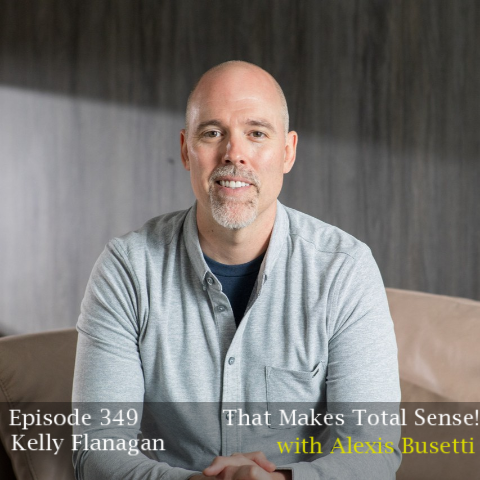
So this really isn't just like, Alexis needs help, so she got Kelly's book. I think this is. The concepts that you bring are. Yes, for our own personal edification, and I think communally they make a. Well, you know, can make a really big difference. So the name of this book is called the Road Less Triggered Turning Conflict into Connection with a single choice by Dr. Kelly Flanagan, who is my guest today for like the third time.
[00:03:30] Speaker B: I think I know this is number three.
[00:03:32] Speaker A: This is so fun.
Yeah. So if I can name, I want to put myself in the position of a student, if that's all right here, and say if I can name, I read this single choice as opening our hearts or allowing our hearts to remain open, not closing them. If we use them, if we use that in the negative, is that fair?
[00:03:57] Speaker B: That's the choice.
[00:03:58] Speaker A: That's the choice, Right?
[00:03:59] Speaker B: That's the choice. Exactly is.
[00:04:01] Speaker A: So connect that. Kelly, tell us a little bit about the choice, because I know we're gonna spend a lot of time talking about the choice, but tell us a little bit about that choice and then how that relates to kind of these larger conversations that are happening right now.
[00:04:13] Speaker B: Yeah.
So I think one of the most important things to do out of the gate is to sort of establish what we mean by triggered and how that's to choice. Right. So I say early in the book, and this was added late because that title didn't come until late, but I realized as soon as I put triggered on the COVID I was going to have to put it in about the first two pages of the book because it's a loaded term. Right. I mean, for me, as I say in the book, as a clinical psychologist, it has a very clinical sort of sense to it. You know, Vietnam War vet who hears a car backfire and is triggered back into memories of the war. That's a, that's a mental health issue that a very select few people have.
On the opposite end of the cultural spectrum, you've got a TikTok influencer who gets the wrong kind of cold foam at Starbucks and is telling a million followers that they're triggered. And in that sense, it's just happening all the time, everywhere to Everybody. And it doesn't really mean. It just means we didn't get what we wanted. Right.
But in this book, I wanted to talk about a very specific, repetitive moment that happens oftentimes in our relationships. And although I don't say this in the book at this point, I would say I'm talking about like a three stage process when I talk about getting triggered. The first stage is nervous system activation. It's physical, right? It's the nervous system fires up and not.
I think of the nervous system as like a furnace. And furnaces don't kick on full blast all at once.
They have that little pilot light that whooshes, you know, you can hear it go whoosh and things start to heat up in there.
And that's the most common form of nervous system activation. It's not zero to 60 in three seconds. It's that sort of lighting of the pilot light inside of us. So that's the physical stage of it.
The second stage is the emotional, spiritual, sort of relational stage where we close our hearts to what's happening. And we basically say, this isn't feeling good. I don't like this, I don't want to experience this. And I'm going to enter into a state of emotional, spiritual and relational resistance against what's happening here.
And then the third stage is the decisional stage, which is I'm going to let my heart close.
And I talk about in the book, when your heart starts to open to something, naturally you don't have to let it open, it just does it. Right? And we have this moment of choice, though, where our nervous system gets activated. Our heart starts to close in resistance to it. And we actually can make a choice to let it continue to close or to open it back up. And that's really where we have our power.
Your nervous system's your nervous system. It's going to do what it's going to do. You don't want to get rid of it. You know, you're walking through a dark parking garage at midnight and footsteps come up behind you. You want your nervous system very reactive.
And the heart also, I believe, is designed to close. Like, you know, God gave us a heart that can close so that when we have more than we can handle, we can close it.
We learned to do it early on as kids when life got too hard. Right.
The question is, do we want to allow it to happen automatically, unconsciously and constantly? Because if we do that, our lives become dramatically diminished and the conflict in our relationships escalates frequently. So can we recognize that Heart closing. Can we make the decision to open it back up and stay in full engagement with what's going on? Which doesn't mean passive, doesn't mean doormat, it doesn't mean allowing even. It just means in participation with, like, with full access to all of the gifts and wonders of your own soul and spirit and humanity. Meeting the moment, rather than cutting off from the moment, cutting off from yourself. So we want to encourage people to develop the capacity and to be empowered to keep their hearts open in those moments.
[00:08:21] Speaker A: Yeah, I want to. Before we get into this kind of cultural moment where this connects, could you, you paint really meaningful and powerful word pictures in the book.
And I think that what you just said, we can imagine.
Okay, my heart is open or my heart is closed or what that might feel like. Or what, like, logistically we get it. Like. Okay, I understand what you mean by that, but what was helpful for me that I might ask you to do for listeners is describe some of those moments where our hearts are open. Because when you did that in the book, I could almost, I don't even say almost. Like I could feel those moments. And that really helped me with. Because you talk a lot about, gosh, this book is so. There's so much embodiment in this book and even what you just said with the nervous system, like, this is a real felt, embodied, thought thing. But that also our hearts being opened or closed is also a real embodied experience.
And so when you describe some of those kind of common, you know, moments when people might have very, very open hearts, you know, they're at a 10. You, you, you give that, that range sometimes in the book, asking people to just, you know, rate their open heartedness. I could feel those 10 moments as you were describing them. So could you give one or two of those and, and just like help us so that when we're, when we hear us say open hearted in the conversation, we kind of have in our minds what that feels like for us.
[00:09:58] Speaker B: Totally. Can I read a little excerpt from the book?
[00:10:00] Speaker A: Yeah, yeah, yeah, I'd love it.
[00:10:01] Speaker B: I've only had one book signing so far and I didn't get to do a talk. It was just pure signing. So this is like, this is like an author moment for me.
[00:10:08] Speaker A: Please do. Yeah.
[00:10:08] Speaker B: All right, cool. Here it is. When everything is going the way you want it to, the choice to be open hearted is an easy one. So easy, in fact, it doesn't feel like a choice at all. You just open your heart to what is. You let it all in. You come all the way out to meet it. When your team wins the big game, it doesn't feel like you're choosing to enjoy it. It just feels like celebration.
In fact, your heart is subtly opening like that all the time, and you let it. My heart naturally opens to my first sip of coffee in the morning. Sunrises over the Atlantic and sunsets over the Great Plains. Good weather at my tea time and good moods at dinner time. A walk in the woods. Peppermint patties. Someone sent me peppermint patties in the mail. Is awesome.
My wife's approval. People doing what I believe is best for them. God answering my prayers according to my preferences that I mentioned. My wife's approval. Financial security. More financial security. Also, in case I haven't mentioned it. My wife's approval.
[00:11:01] Speaker A: Yeah.
[00:11:03] Speaker B: Yeah. It happened again this morning. First sip of coffee in the morning. Right. Just that. That moment. Um, and I think one of the blessings of this process in this book for me is isn't just learning how to keep your heart open when it's hard. It's really developing an appreciation for all those moments where your heart really is open and. And not missing them, but going, oh, this is. This is one of those. This feels great.
[00:11:30] Speaker A: Mm.
You tell a story, an anecdote pretty early on in the book, I think, if I'm remembering correctly, that speaks to conversations that we've probably all had recently.
And that is, you're sitting down with a dear friend maybe you haven't chatted with in a while, and you kind of realize in this polarized, political, partisan place that we're living right now, that this dear friend who you have all this history with lets you on to know, oh, crap, they are on, like, the opposite end of this spectrum than me.
[00:12:17] Speaker B: Voted for the other person.
[00:12:19] Speaker A: For the other person.
[00:12:21] Speaker B: And.
[00:12:22] Speaker A: And it really is tough, I think, especially, you know, I. I remember years ago, I did an interview with a gal I'll. I'll. I'll cite it on here. Maya Lease Cannon is her name. And I can't remember the name of the book. Something social media, I think, but she. She was gave a statistic that I think it was in marriage maybe, or a relationship with significant others in the US that basically political affiliation was more important than religious affiliation. I mean, this is like how. Yeah, this is like how kind of seriously we take this kind of thing. And you realize, oh, my goodness, they're on the other side of this. And if you're a person who, like, can kind of recognize an other side, you're probably committed to your side in some pretty significant ways.
[00:13:09] Speaker B: That's a good.
[00:13:10] Speaker A: So this is probably a semi big deal to you.
[00:13:14] Speaker B: Yeah.
[00:13:14] Speaker A: And, and, and, and what happens, this process that you just shared.
[00:13:23] Speaker B: Yes. Yeah.
[00:13:24] Speaker A: What's, what's going on there? Because I think we can also feel that moment when you describe it.
[00:13:29] Speaker B: Oh, there's so many important layers to that. So. Yeah, what you're talking about is a scene that I paint in chapter two of the book where what I'm trying to do is I'm trying to illustrate the nine most common forms of close hearted reactivity and defensiveness.
And I had the option of telling nine different stories to illustrate those. Or I decided ultimately what's the one most relevant story I can think of right now? And yeah, it's just two friends, sort of just old friends discovering like, oh, we've, we've diverged.
And I think the, the layer of it that's so profound that could be worth a whole episode there is that as soon as, that. Yeah, as soon as you can say them.
There's also an us. And you're in, you're into a layer of identity now. And what you're getting at is that people's identities are more formed around politics even than religion at this point. Right. Which is a new, a new era in a way for culture.
And so I wanted to just illustrate all the different ways we can show up to that conversation with a closed heart.
Readers of the book will see that I make it very clear that it doesn't matter which side you're on, you can engage reactively in any of the nine defenses.
This isn't about affiliation. Right. It's about how we're reacting in the moment. So, but I will say, and this related to it, to what we just mentioned, that, that having an open heart isn't a passive heart.
One of the things that I discovered really early on in, you know, for those who read the book, they'll find out that this is a, this open heartedness was a practice. I didn't plan to write a book about it. I didn't plan to develop it into a process for managing triggered moments. I just was trying to quit doing damage to my most important relationships. When I settled on it as a spiritual practice. Moment to moment, I will notice my heart closing and try to open it back up. Well, it transformed my life. It quickly started to transform the lives of my clients. So I started to preach it and I went to an event in Costa Rica of entrepreneurial women where I was keynoting and I just told them how great open heartedness was for 50 minutes. And at the end of it they're like, oh, so you mean I've just got to tell everybody everything?
I shouldn't say everything to my employees. And when I heard that, I realized they were associating open heartedness with not having any boundaries about what comes out of them. Like, oh, okay, that's something I got to clarify. Well, a week later I go to my online community and I give basically the same keynote. And this is a very different sort of energy community from this entrepreneurial group.
And the response I got was, wait a second.
So I just learned how to set boundaries and now you're telling me I sort of got to lay down and be a doormat. And I'm like, oh, they hear open heartedness and they assume no boundaries about what gets into them.
[00:16:28] Speaker A: Right. I think those two are so important. I kind of want to, I just kind of want to pause and like say that. Right? Like those, those two things, it's like we're just like this open conduit for like whatever comes in and out of us. And I think, yeah, if we think, oh, open.
But that's not what you're saying. And it doesn't mean to be agreeable. Like, you don't have to sit at that table with your dear friend and just fake agreeableness or whatever you are.
[00:16:54] Speaker B: In fact, that's one of the nine close hearted defenses is to disappear and pretend those are two of them, disappearing and pretending.
And so a lot of times when we tell ourselves we're being open hearted with somebody by just being quiet and being polite and letting you know, we're actually spiritually bypassing the work of open heartedness by practicing a closed heart and clever disguise.
Right.
And so I realized I really needed to get clear with folks that an open heart, it doesn't make your boundaries weaker, it makes your boundaries wiser.
It makes your boundaries certainly kinder.
What I, what I say is that it, it, when you set a boundary with an open heart, you cue up collaboration rather than setting basically a battle, like setting it up for a battle.
So I knew that I needed to clarify that and to the point where chapter seven of the book is all about this intersection of healthy boundaries and open heartedness. But I actually realized I needed to at least give a nod to it in the introduction to the book because everybody I was saying open heartedness to was immediately going, can I still have boundaries, boundaries? And I needed to answer that question. Yes. In fact, they'll get better. Your boundaries will actually get better.
And then we wait till chapter seven of the book to really dive into this intersection of boundaries and open heartedness.
[00:18:24] Speaker A: Yeah, I appreciate that.
Before we got on the call and I was telling you how great I thought the book was and how much I was going to try to not be a client today, the other thing that we talked through pre record that I think is worth mentioning here is the really clear connection between the content of this book and not because the theme of the podcast is important necessarily, but I do think the theme of the podcast represents some important concepts that I'd love to continue conversations about, which is generosity and justice, and specifically how those manifest in our relationship with God, ourselves and others.
And so could you, maybe for my sake again, but also for the listeners. How is this content, especially open heartedness and boundaries, connected to how we live out God's generosity and justice in our everyday lives? Because I think those examples that you gave of like open heartedness in everyday life, you know, those experiences of feeling it and not having to work towards it, I think this boundaries and open heartedness, like this is something that we, these are, you know, I don't, you know, I don't want to, if I necessarily want to say tools in our toolbox, you use that a little bit. But these are ways that we can live out that will help us to live out towards those values of generosity and justice. So can you connect that for us?
[00:19:56] Speaker B: Yeah, and I'm excited too, because I really do think this intersection of boundaries and open heartedness is.
It's the thing underneath every disconnected conversation we're having culturally and politically in my mind, like, I mean, there's a lot of layers to it, obviously, but it's an important one. So the way I see it is that those who tend to lean toward the political right tend to place a really high value on boundaries and justice.
And those who tend to lean towards the political left place a really high value on open heartedness and generosity.
And unfortunately, and both of those are great. I mean, those are essential and necessary. In fact, the message of this book is that those need to go together, but in our cultural conversation, we've sort of pitted them against each other.
And the political right believes you can't have justice and boundaries if you also have open heartedness and generosity and empathy.
And those on the political left tend to have a hard time imagining it's a lack of imagination, what it looks like to have open heartedness and generosity and empathy while also having clear boundaries in a clear sense of justice.
And so those Two sides tend to now are closed hearted to each other, ironically, and therefore just in resistance against the other.
Rather than looking for the opportunity to integrate those two really good things. We joked at the beginning that both sides, sides see themselves as good and they're both right.
They're both correct that those are two really good halves of a healthy human experience.
But culturally and conversationally, we're needing to learn personally, because this is hard personal work, to learn how to have a healthy boundary and keep an open heart at the same time.
In fact, in the book, I suggest that most of our deepest personal, emotional and spiritual growth happens in that intersection where we're learning how to have a healthy boundary and to keep our heart open to the person we're setting a boundary toward.
[00:22:12] Speaker A: Yes.
Where I want to go after this little footnote is to that spot where when you talk about that we have a habit of setting boundaries with closed hearts.
[00:22:27] Speaker B: Yes.
[00:22:28] Speaker A: And then what that ends up looking like. I do have a little footnote on the, on the kind of leaning left and right because I think what you said is, is, is spot on. And excuse me, and I'll add a layer here, I'm talking to things, so I hope it, I hope it comes out reflective of what's actually in my head right now.
But I think when we add the Christian community into that political, what you just described there, there can be some areas, so just again, just adding another layer, there can be some areas where that justice and generosity end up flipping maybe, you know, so I'm thinking about some Christian communities that lean right, calling out justice orientation on the left and, you know, maybe wanting to redefine justice or name it as something different or, you know, kind of in some ways demonizing a justice orientation there and saying, you know, there should be this focus on love, which, you know, I read, you know, kind of as generosity. And then, and then I think that there can be, you know, the, the opposite of that probably can be true too, you know, maybe Christians who lean left.
And now I'm probably going to get lost in my narrative here, but you know, I think that there can be those, those layers as well, where what you said, I think remains true, where we kind of name, this is where I am oriented. And this is kind of the right place, the correct place to be oriented.
You're oriented to that, but when you're oriented to that, it looks gross. You know, that needs to be kind of fixed. And I think that that can happen in both ways. And especially when we, when we mix our faith into that yes. Then that gets really messy. You know, I mean, I. I'm. I'm in Texas, where you probably are aware, because I feel like much of the country is aware of kind of some of the races that are happening here and some of the ways that people of faith are coming out here. And there are these conversations of, like, this person is not representing Jesus. You know, they're saying they're representing Jesus or they're saying this or whatever, but this isn't it. And when we mix our friends, faith in there, then it gets real tricky because it's not just, this is my opinion, there's like an authoritative stance that we attach to that opinion. I think we all have. It can have a tendency to do that. I mean, and then I think that that makes closing our hearts easier in some ways, because I might say to you, Kelly, the way that you, like, you say God says this. I'm simplifying. Kelly says, God says xyz.
And I know that that's not true, or I don't believe that, or I don't see that in the scriptures. And so why would I open my heart to him? He's just out here saying stuff that's not even true. You know, he's just out here damaging the reputation of, you know, of God or, you know, God's people or whatever.
And so I think that we see those things mixed so much like they are now, but they always have been. I'm just kind of manifesting differently in different ways.
[00:25:43] Speaker B: You asked the question rhetorically, but I didn't answer it. Why would I open my heart to somebody who I believe is spreading a false gospel?
[00:25:51] Speaker A: Right. Yes. Yeah, yeah, yeah. We hear that phrase even.
[00:25:54] Speaker B: Yeah. And the question, why would I open my heart to him? Comes from the misconception that opening my heart is an endorsement or an allow or a permission or whatever.
[00:26:04] Speaker A: It's the boundary that we just talked about.
[00:26:05] Speaker B: That's right.
[00:26:06] Speaker A: It's in and out.
[00:26:06] Speaker B: Yeah. The reason for opening your heart to him is that an open heart is what enables conversation and dialogue and relationship. Right. And so without an open heart, curiosity,
[00:26:18] Speaker A: connection, collaboration, all of the things.
[00:26:20] Speaker B: Curiosity, connection, exactly.
All of the things.
This is something I discovered early on in my clinical practice that I didn't understand till much later, is that most of us already have inherently the capacities and the tools to connect deeply.
It's when we close our hearts, we cut ourselves off from those capacities and those gifts.
And so, yeah, we keep our heart open so we can keep the conversation going and see what beauty might come out of that conversation. Right.
And I really appreciate you pointing out that, like, I was careful to say political left and political right, because those are pretty clear at this point.
[00:27:04] Speaker A: Definitely.
[00:27:05] Speaker B: And thank goodness it gets messier when we enter our faith into the dialogue that, you know, to me, faith should make things a little bit more complicated. It's not something that cleans things up. It's things that deepen and sort of shines light on complexity and nuance. So I love that addition and I really appreciate you saying that.
And then where the message of the book comes back in and says, okay, well, even if in your faith communities you flip flop sort of your sort of polarity there, if your heart remains closed, all conversation is over.
[00:27:45] Speaker A: Yeah.
[00:27:46] Speaker B: You know, religion, right. In the Greek means re. Ligament to reconnect. Right. Our religion is meant to be an ongoing conversation that increasingly connects us to all people. So we keep our hearts open to keep that dream alive.
[00:28:00] Speaker A: Yeah, yeah. And I want you to keep going where you, where you were going, if you would. And I'll remind you of the question that my footnote took away, which is having a habit of setting boundaries with a closed heart. Because I do think not only do we do that in our interpersonal relationships, whether that's with people very close to us or, you know, what, whatever that might be.
I, I got the feeling in the book you have a, a couple, you know, that you, that you follow through with pseudonym. And I, I got the, I got the feeling that Sarah. Is that her name? I can't remember that Sarah was maybe doing that with her mom, you know, like, you know, so I say we can do this in these, these interpersonal relationships, but I also think it applies to what we're talking about here. Because if we see something, and specifically if we see something again, I'm just going to kind of like I'm gonna, I'm gonna push it to this edge or whatever. Because I think in our faith we might even say. And I, and I've heard folks say this, like what they're espousing is harmful.
What they. Again, the they right. When we say this, whatever. But when they are espousing, that's harmful.
And so I'm gonna put up a boundary and my heart is closed, you know, because of whatever. And so I'm not talking about actual harm, like abuse and things like that. I'm kind of talking about that rhetoric, you know, But I think that that's just, and that's just one example to say, so I'm gonna set this boundary and when I set this boundary. It is with a closed heart. And then I would say maybe a. As a psychologist, I'd love to hear, like, maybe not why we do that, but, Kelly, why do we do that? And then also, like, like, but. And what difference? Like, why do we. Why do. Why would we care if we're setting a boundary to set it with an open heart. I know that's going to be a thread that continues through our conversation, but maybe just to get us going here, because I do think a lot of us, I mean, we. We hear boundaries. We've been reading about boundaries for a long time. It's in. It's in the water now, which is great in a lot of ways, but. But there are some misconceptions, I think, and maybe the way that we practice them, this being one example, is not exactly what might be the most helpful for us or the most healthy.
[00:30:08] Speaker B: Yeah. One of my favorite social media memes goes something like, well, if you don't like my boundaries, you're probably one of the reasons I need them.
[00:30:17] Speaker A: Yeah, exactly.
[00:30:19] Speaker B: It sort of exemplifies how we tend to set boundaries at first, which is we're just gearing up for a fight. Like, we're gearing up for a battle. Right. And if you expect a battle, you'll get a battle. I always say if you wear blacks and gloves to church, you'll end up with a boxing match, not a church service. You know, and so the why. Why do we tend to set boundaries with a closed heart? And there's a couple answers to that. At least one of them is that it's the natural developmental progression into setting boundaries. So when we're born as an infant, we have no boundaries. It would be absurd to be like, sorry, mother, I'm not nursing for the next two hours. I need some me time. You know, like, it's just you're dependent and so you have no boundaries.
And as a child, very. You're not often taught to set boundaries. Right.
Oftentimes a child setting boundaries is seen as disobedience.
Right. And so it's sort of trained out of you.
And so what happens in the natural developmental progress. This isn't true of everybody, but most people is they enter into the childhood, even teenage and young adult years, and they are not very good at setting boundaries.
Someone recently asked me, what's the hardest boundary to set? And I said, it's always the one you fear is going to cost you belonging.
Like, I'm going to set a boundary, and then you're not going to want me anymore. So it's a really sort of treacherous thing to attempt and to learn. And so we progress through the early years of our lives not being very good at setting boundaries. So more codependent. I think that's the natural next step from dependency to codependency.
But codependent people are some of the most quietly close hearted people you'll ever meet. Because I always say resentment is a boundary you didn't set yesterday. It's the natural result of not setting a boundary. So when you have 10, 20, 30 years of not setting boundaries, you've got 10, 20, 30 years of your heart closing with resentment.
And then finally you go to therapy and you're like, I don't know why I'm miserable and I'm all these things, but I need to talk to somebody. And your therapist starts to teach you how to set, but they recognize that you aren't having any boundaries in your life. Unfortunately, most therapists don't also recognize that your heart's closed. And so they teach you how to. So they add boundaries to a closed heart. That's just the natural developmental progression. And it's only when we start to discover that that isn't a much better state than codependency that we go, okay, I have to learn how to be boundaried and open hearted if I really want to be in thriving, healthy relationships. So that's one answer. It's just the natural developmental progression in the moment.
The answer is it's a close heart is sort of a safe shield that you can set boundaries from behind.
Right. Like to set boundaries with an open heart is valiant. It takes a lot of courage. You're saying I'm going to be vulnerable to your response.
I'm not going to say your response is okay, and I'm not even necessarily going to condone your response. I'm just saying I'm going to feel it, I'm going to experience it, and I'll let myself digest it as I decide what to do next. That takes some guts.
And so I often say a closed heart is a safer way to practice boundaries.
The metaphor that I like to use there is when I got to driver's ed when I was 16 in high school, the first day of driver's ed class, our instructor said, when I'm done with you, you're going to be able to drive on lsd.
And what he meant was Lakeshore Drive, because we lived in Chicago. You know, he got that reaction from all the, you know, all the, all the 16 or 15 year olds. But he didn't teach us to drive on Lakeshore Drive. He taught us in the empty parking lot at the local community college. And that's what a closed heart is for. Boundaries. It's like the empty parking lot of boundary setting. It's a safer space in which to practice setting boundaries.
But if we continue to stay close hearted while we set our boundaries, our life remains stuck in a little parking lot off at the community college. Our life remains small and diminished. And we actually want to be able to drive on lsd. We want to be able to get on Lakeshore Drive and set boundaries with an open heart and experience the fullness of life that way.
[00:34:27] Speaker A: Yeah.
Gosh, I really appreciate that, Kelly, again. Okay, I'm going to flip myself out of wanting to go into client mode and I'm going to remain in interviewer mode, host mode here.
[00:34:39] Speaker B: Um, I watched you physically do that.
[00:34:43] Speaker A: I bet you I'm sure it wasn't hard to see. I'm one of those people that, you know, people might DM me on zoom. Like, Alexis, watch your face. You know, like, okay, I have it too.
[00:34:52] Speaker B: It's like that deep retreat all the way into yourself and then having to like, come back out and be like, okay, yeah.
[00:34:57] Speaker A: I'm like, okay, yes, I was all of those things. I was in another space in my mind. I was in different relationships, I was redoing things, I was imagining, you know, different scenarios. And now I'm back.
But I think that that's really important.
I do want to talk about. I think this leads into one of the things that you begin the book with. But it is haunting me.
So thank you, Ugg that now this is living in my brain rent free, which is communication breaks down within people, usually not between people.
And if I can say again, I'm trying to. You can probably see this too. I'm trying to switch my mode because student is such a healthy, happy place for me that I'm trying to switch from client to student in my head. But I'm gonna say as a student, when I read that, I started imagining kind of what you said. And maybe you can talk a little bit about this too. You talked about the three stages of being trigger, but when you talked about the, the black box in the car, about recording what's going inside and not the external conditions.
[00:36:13] Speaker B: Right?
[00:36:14] Speaker A: And I thought about just kind of did a little, a little imaginary exercise in my head of like these moments that are common for me to feel triggered if I'm real. And I feel the safety to do this because you gave some of your own examples. I am a parent of four.
Getting to be bigger people. Yeah.
[00:36:37] Speaker B: Oh, yeah.
[00:36:38] Speaker A: I have different triggers now than I did when they were all under the age of six.
[00:36:43] Speaker B: Yes.
[00:36:45] Speaker A: And now they are all 16 and under. And I have different.
Different.
[00:36:49] Speaker B: The teenage years are the most triggering years of parenting.
[00:36:52] Speaker A: They are so fun and they are so hard. And I will say, just to be real, the times that I feel the trigger the most are the times when they are so reflective of me, when they are just a mirror looking straight at me. And I'm like, I just cannot stand what you're doing right now because you are so me. And I cannot stand when I do that.
Here you are being it right now. But I've thought about those moments when I read that, and I thought, is this really about, you know, pick one. Right. Is this really about what's going on between me and the little person standing in front of me?
Or could I. Could I flip that script if I were capable. If I practiced taking a moment and saying, alexis, what is going on inside of my head? Yes, like, who so hard to do with that reptilian brain.
So hard to do, but could I? And then. And then how valid does that actually feel to me? And. And the good news is, it felt really valid. I haven't had a lot of chance to practice it, but it felt really valid because I could imagine scenarios I could replay, right? These, like, you know, snarky kind of these moments between me and this tween or this teen and go, yeah, but what if I had had the capability yesterday of going, okay, Alexis, where are you breaking down? What is this actually about? You give some really great questions. Not what's wrong with me, but what happened to me? Or what is this reminding me of?
You know, some of those moments, some of those questions, what if I could do that and then pause for just a second and respond in a different way? Really, part of what I got was, what if I could respond to what was actually happening between us?
[00:38:39] Speaker B: That's right.
[00:38:40] Speaker A: And not really what was happening in my internal world, which, as you just kind of saw in real time, is kind of rich and muddled at the same time.
[00:38:50] Speaker B: Yeah, well, you've earned it with that many teenage tweenage people in the house, believe me.
[00:38:55] Speaker A: Yeah, yeah. But I. Can you talk about that piece more? I think it. You don't have to specifically talk about how it reflects in the political things that we've been talking about, because I think it's just. It universally affects how we are interacting with folks.
[00:39:09] Speaker B: Yeah. I mean, it might be a provocative statement to say, and maybe it's not always true, but it's pretty close that there aren't any relationship problems. There's individual problems lived out in relationships.
[00:39:19] Speaker A: Yeah.
[00:39:20] Speaker B: And we, I was a couple. I was trained, I mean, University of Illinois for four years, Penn State for graduate years, specialty in conflict and communication, Master's thesis on it, dissertation on it, trained in great couples counseling training program.
And it didn't work in the real world. You know, I often say I was the most, I had the most well stocked communication toolbox of all. And I would go out into the real world and I would teach people communication skills. And I started to realize they already had them all. Like they were in most areas of their life and even most areas of their relationships, they'd be functioning fine and then this moment would happen and they would close their communication toolbox and lose access to all their skills. And back then, I didn't know what to call that they know it was their heart that they were closing.
I just knew I couldn't do couples therapy anymore because it didn't work.
And so down the line, once I sorted it out a little bit, the way I would start couples therapy is I'd say, so what we're really going to do here is you're each going to be doing your own individual therapy in the presence of the other person, bearing witness to their growth, so you can support them in that.
And if there's a level of safety in your relationship right now that can support that doing that work in front of the other person, then we're good to go. But if you don't feel safe enough to do your own individual work in front of them, if you're going to be triggered into protection mode over and over again and get disconnected, then we should split this out into individual therapies. And, you know, I think therapy gets a bad rap, you know, like that it doesn't support marriages. But to me, that's the most profound way to support the marriage is to really drive home to two people that, that you are shutting down. You're shifting from connection mode into protection mode. And then you're pretending you're still in connection mode, but you're sabotaging yourself and you're sabotaging the relationship with that double bind that you're putting both of you in. So let's actually deal with that shift that keeps happening for you. What's going on internally, the disconnection that's happening inside when you shut down and then we'll come back together and you're going to discover that the thing going on between us is actually pretty simple to solve once we are able to relate differently to our own internal turmoil. Now to your point, and this is why the first third of the book is about dealing with the nervous system.
The lizard brain is telling you when it's activated that you are experiencing mortal danger and an existential threat.
And you will not be able to do that inner reflection. Right. You won't be able to be fully present to yourself if the nervous system's activated. You know, it'd be like trying to tell.
It's trying to tell a thousand year old machine that's been designed to keep you alive. Like I know there's a tiger chasing me right now, but I just want to really reflect on my wounds. It's like ridiculous. You're never going to do it, right?
[00:42:25] Speaker A: Yeah.
[00:42:26] Speaker B: Got to get that nervous system quiet.
And then once you do, you'll have sort of the margin to go, okay, my 14 year old said this and I'm reacting this way, but what might, what else might be going on in here besides what's going on between us?
And one of the, one of my favorite sort of little analogies or parables that I share in the book is about a guy who's out on a foggy lake early one morning just enjoying the peace and tranquility of the lake when all of a sudden his boat slams into another boat. And he, he starts to shout at the other guy for running into him right as a breeze comes and dispels the fog and he sees that the other boat is empty. You know, and to me that's such a powerful illustration that we think we're reacting to the other person, but really we're reacting to the bumping of boats. We're reacting to some experience that just got churned up inside of us. And now we're trying to get them to do or say something different to make it feel better in here.
And instead how about we just camp out here for a little bit and try to understand what just got churned up inside of us. The bumping of boats that happened in here.
[00:43:32] Speaker A: You give another example, I think. And now I didn't mark it, but I think it was from maybe a monastic father. Yeah, who. Yeah, can you tell that one? Because that was the one that I felt real deep, that one cut.
I read that one.
[00:43:49] Speaker B: Yeah, the Desert Fathers, you know, early Christian monastics, like I think in the 1300s or something like. And they Thought civilization is my problem.
And so we need to go out to the desert and get away from. And then I won't have all this reactivity and all this anger. And then there's an old parable about one of the desert fathers is, you know, in his new home, the cave, on the first morning, and stubs his toe on a rock and starts shouting at it, you know.
[00:44:16] Speaker A: Yes.
[00:44:16] Speaker B: And, yeah, I do love that because it does really illustrate we're responding to some sort of painful experience that just got sort of triggered in us. And it really has oftentimes very, very little to do with the messenger and everything to do with the message we're feeling inside.
[00:44:35] Speaker A: My daughters.
A couple of years ago, we were.
My husband and I started letting whoever's in shotgun seat have control of the radio.
Oh, sometimes that is great. Sometimes it is hard.
[00:44:48] Speaker B: I'm just picturing the battle for the front seat.
[00:44:51] Speaker A: They have their own system for that, actually, which I'm like, super proud of. The kids, I mean, yeah, there's four of them who can sit in the front, and they all. They have their own system. It's fabulous. We didn't get involved in that. And they. They. They are still doing it. It's wonderful.
But then the battle becomes for. If there's more than one kid in the car, whoever's controlling the radio, they want. They have backseat radio drivers. And so, you know, they all want it. But usually when it's. When it's like, just.
When it's just my daughters, they're. They have a similar enough taste, so they're okay.
But there was that Taylor Swift song that was. That was playing on the radio quite a bit a couple years ago where she says, you know, hi, I'm. I'm the problem. It's me. But I used to sing without even thinking about it because I didn't, you know, owning the albums or anything. I just heard it on the radio and I really. I would shout like it's you. Hey, you know, like, you're the problem. And I just. Just like this feels like. So this feels like, okay, Alexis, take this and journal about this, you know, for a little bit. Instead of. Instead of shouting the ha. Hey, hi, I'm the problem. It's me. But that's, you know, I'm like, okay, I don't want to label myself as a problem, but it really is like, hey, what is happening in me? Instead of shouting to the empty boat or to the rock that was there, I stumbed my toe on it's you. It's clearly not you in this moment and a lot of times.
[00:46:11] Speaker B: And if you still are operating from the activated nervous system, that's almost always you're going to shout, it's you. Because the nervous system, that part of it is designed to deal decisively with threats out there, so it only has
[00:46:24] Speaker A: one card to play. Right? Right.
[00:46:26] Speaker B: Yeah, you're a threat to me, and I need to deal decisively with you.
And so the process I lay out in the book is about really learning how to bring your higher mind, your more evolved mind, back online in the moment. Not tomorrow, once the damage is done and you've had a chance to calm down, but right now, in the moment. So you have other options. Because if it's just the nervous system, the lizard brain activated, you're to do that every time
[00:46:54] Speaker A: I want to. You were so great to share a lot of stories that were personal in the book. And I'm going to. I'm going to ask you to share one that I feel like illustrates this. But I would love for you to talk about some of the. The questions that arose from you, you know, that you could. That you could share to help help fill our. These. These parts of our toolboxes.
And I'm thinking about the story in the book where you literally were alone and you were shoveling firewood scraps in your driveway, and when you got triggered alone in that moment.
But the questions that you practiced exercising to deal with that in that moment, because those felt really helpful for me as I was kind of doing. Okay, let's try some of this in the moment introspection kind of thing.
[00:47:49] Speaker B: Yep.
Yeah, I'm happy to speak more to that. So a few layers of that, the context of that story. And it's an incredible grace if you ever come across one of these situations in your life where you get triggered by somebody, but you just know it's not fair what you're doing. Right. And so it's a situation where my kids have just helped me, like, all afternoon in the driveway stack firewood for the winter. And they've said, can we go in and have hot chocolate now? And I'm like, oh, yeah, I'm so grateful for you. Go in and. And warm up. And then 10 minutes later, I look in the house and they're inside enjoying hot chocolate. And I'm triggered that I'm out here in the driveway alone. And it's just one of those moments where you're like, this is not fair to them. This is clearly about me. Right. And so let's.
[00:48:34] Speaker A: You had just given your blessing.
[00:48:35] Speaker B: Yeah.
The absurdity of me walking in at that point, being angry at them. And so clearly this one's about me.
And so to be able to have a little bit of that perspective helps you to sort of slow down and start asking the questions.
And the question that I suggest repeating, and this was given to me at some point at a men's retreat somewhere, I don't know where it originated, is this wouldn't be so difficult if it didn't remind me of this wouldn't be so difficult if it didn't remind me of.
And it can be a powerful way to start to trace the thread of that particular pain point back through your story.
You know, another example comes to mind. Well, that one wouldn't have been so hard if it didn't remind me of. The really powerful moment is when you can trace the pain point you're feeling right now to a point in your life where the person in front of you didn't even exist in your life. You know, because a lot of times, marriage in particular, we like, sort of like we put all the blame on our partner. Well, I was pretty much okay until you started acting like a scoundrel in our marriage. And then you start to realize, actually, this pain point I'm feeling with them, it predates them.
And now all of a sudden, there's some more emotional flexibility in that moment.
The third layer of that that I think is important to address is it sounds paradoxical to be triggered when you're alone. But I think that's one of the most common times we do get triggered. It's still a relational experience, but we're alone. And one of the things that you start to see over time as you create space to hold in, to hold space for your pain point, is that the more you can just settle into it rather than trying to defend it or get rid of it, the more you settle into it, you do discover a loneliness, like a really painful loneliness, is oftentimes at the bottom of that triggered moment. And when I say loneliness, I'm talking about I think of three pillars of loneliness. Feeling unseen, misunderstood, or unsupported.
I have a hard time finding a fourth pillar when I talk to people about loneliness.
[00:50:51] Speaker A: Can you repeat this?
[00:50:52] Speaker B: Yeah. Unseen, misunderstood, or unsupported.
And guess what for me is a big one is unsupported.
And so here I am out in the driveway, feeling lonely, and I'm feeling unsupported, even though I just gave them permission to go back into the house. And so now I Can go, wow, feeling unsupported and alone. This wouldn't be so hard if it didn't remind me of. And sure enough, there's a thread of that running through, through my story. But what's interesting is the lizard brain, it can't tell time.
All painful moments are at one moment. And so as soon as you can start to tell time with your pain point, this thread of loneliness and unsupported running through your story, you're actually actively bringing your higher mind back online and you're giving yourself more emotional bandwidth to respond with. So I would encourage folks to ask that question, where might there be some loneliness in my reaction right now? Where might I be feeling either unseen, misunderstood, or unsupported?
And believe it or not, like our teenagers can evoke that from us. I mean, I know it's our job to be parents. We're supposed to see them, understand them and support them, but guess what? We're human beings who want some of that in return.
Right?
[00:52:07] Speaker A: Yeah.
[00:52:07] Speaker B: And when they apparently get the teenage job description that says you don't have to do that anymore, it's really, really frustrating and hurtful. It's hurtful and darn it.
[00:52:18] Speaker A: Yeah. Yeah.
[00:52:20] Speaker B: I remember one of the first times early on in practicing boundaries and open heartedness at the same time.
My 15 year old at the time, because I was driving him so he didn't have his license, he was just being really rude in the car and it was stirring up all that stuff for me and I was so proud of myself. I looked at him and I said, quinn, I love you unconditionally, but I don't drive you unconditionally.
So if you keep up this behavior, you will be walking the rest of the way to wherever we are going.
[00:52:54] Speaker A: That's right. That's right.
[00:52:55] Speaker B: Right. And. And that felt like good. A good combination of justice and generosity.
[00:52:59] Speaker A: Yeah, there you go.
[00:53:00] Speaker B: Yeah.
[00:53:01] Speaker A: Yeah. I. I mean, you know, I have found myself probably not in my best moments, but just when I'm. When often when I am feeling a little frustrated, even though I try to say it in a way that's not coming across as irritated, just like a real. You know, sometimes it irritates me when people say just a gentle reminder. I'm like, is it gentle? But you know, I'm like, but just like a gentle reminder of like, like, hey, you know what? Like mom and dad, like, we're like humans too, you know, and so like, I mean, we get hungry, we get tired, you know, we have things to do, we have needs. You know, like we just, you know, we're, we're people too.
And, and I don't think our, any of our teenagers, you know, kind of mean it or think about it this way. I do think it's completely developmental and you would have way more insight on that than me. But it does feel sometimes like, okay, really, all I am is Uber driver and chef and, you know, whatever. And it's like I'm, I'm, you know, there's a utilitarian nature sometimes to our relationship that can come out in this stage, which is different, I think, than when they're toddlers or preschoolers where there is a utilitarian nature there too, but they're not invoking it as much. This is, you know, there's a lot of request here. And yes, thankfully, you know, for the most part, my kids have, you know, share those requests with a lot of kindness and there's not a lot of assumption, you know, that I, that I will do or that I will be able to. And I'm grateful for that.
But yeah, just this like humanity, you know, like just a reminder of like, everyone who lives here is a person. We all have these needs.
[00:54:31] Speaker B: I think we talked about that a little bit in our companionship conversation that, that, you know, you go back a generation or two and the family revolved around the parents and usually the patriarch.
[00:54:45] Speaker A: Yes. We sounded familiar. Yes, yes.
[00:54:46] Speaker B: And so like it was all about that. And guess what, guess what felt lonely was only seeing, understanding and supporting the patriarch. And so we've sort of, I always say we worry from our wounds as parents. We parent from our wounds. We're trying to same retreat. We raise our kids to survive our childhood rather than thriving in their own childhood. Right. And so, so we've swung the opposite direction where we now revolve around our kids and we see them and understand them and support them. But that extreme is probably has its own deficits. And what you're getting at is can this be a place where we learn how to be in companionship with each other, in real mutual, bilateral relationship with each other.
And this is where kids get to learn how to do that and to learn that I'm human too. I have feelings too. They don't have to be the center point piece of your world. You don't have to care for them and manage them for me, but they do exist. So let's talk about them.
[00:55:45] Speaker A: Right, Right, right.
I think that's really good. If I can go back to your firewood example for just a minute, a couple of Things came to me as you were resharing it, and I realized one of them probably came to me stereotypically as an enneagram, one where my.
My internal critic never shuts up. She's really loud and her voice is kind of screechy, and, you know, she's just. She's just always there.
And I thought it was in the story. It could have been someplace else.
But what. In one of those places may not have been this one. You're.
Your reaction was like, what's wrong with me?
And, you know, like, you. You feel this trigger and you're like, you recognize, as you stated at the beginning, this is not fair. Like. Like, I know what's happening. I know. I know the way I'm feeling towards them right now is not fair.
What's wrong with me? And. And when I read what's wrong with me? And then. And then. And then the next question of maybe that's maybe a better question than what's wrong with me is what happened to me? And then that felt like a little bit like, okay, that's on the other side of the pendulum. And then what. What you. What you shared just now that I think is extremely helpful is this wouldn't be so hard for me if it didn't remind me of. Of whatever it was.
But I thought I just kind of had this little picture come to my mind of, you know, one of us, me or my kids or somebody falling down on her bike, you know, like, getting a real.
Like a real. A real good scrape, a real good, you know, whatever, and kind of having that same what's wrong with me? And you go, what's wrong with you? What happened to you? You fell off your bike. Like, it happens.
[00:57:36] Speaker B: That's right.
[00:57:37] Speaker A: And now we have to deal with this injury.
[00:57:41] Speaker B: That's right.
[00:57:42] Speaker A: Like, whatever it is. And so it's not what's wrong with me? Like, that's not a great question there because, I mean, you could answer it. Well, I have a skin knee. That's. Well, that's not wrong. That's just. That's just a wound. But. But then, like, okay, what happened to me? Well, you fell off of your bike, and that hurt. And now you've got to get cleaned up. Now you're gonna have to tend to that for the next several days until it really starts to, you know, go through that. That natural healing process on its own.
You may have a scar. I still have a scar from when I, you know, fell, you know, kind of innocently on my bike or I wasn't doing anything, you know, stupid or whatever, I just, I just ran into some gravel at the end of a driveway and. And fell.
And so I still have a mark of that. But it's not what's wrong with me, it's what happened to me. And then I think the question there, like you said, it's this wouldn't be so hard for me to leave the bike analogy then if. This wouldn't be so hard for me if.
And then we can think back to those.
[00:58:42] Speaker B: I really appreciate what you put your finger on there.
So, yeah, that shift from what's wrong with me to what happened to me is a shift. Actually, they titled the book after it. Bruce Perry, psychiatrist and Oprah Winfrey titled their book after it. So that's where that shift comes from.
I do think, like you and I, I think lean more in the direction of what's wrong with me. Some people do tend to default more to what's wrong with you, you know, immediately.
[00:59:09] Speaker A: Oh, there are moments. Don't get it twisted.
[00:59:11] Speaker B: And we can all share both. Yeah, exactly.
But I think what you're getting at, which is really important to name, and it's illustrated by a kid falling off their bike and skinning their knee, when they say what's wrong with me is they're now in pain management mode rather than pain experiencing mode. They're going, what's wrong? Pain shouldn't happen.
I don't ever want to experience it again. And so what did I do wrong to make this happen?
And what you're getting at is their task at that point is not to beat themselves up for having gotten into a painful situation. It's to feel their way through the pain Right. Until it starts to heal. Which is what pain does if you can feel it and let it flow through you rather than trapping it in you.
I often say pain that comes through you turns into joy. Pain that gets trapped in you turns into trauma.
Right. And so this idea that when hard things happen, as soon as the inner critic is getting involved, that's a pain management technique, not a pain release technique. I had this happen. I woke up at 3:30 in the morning last night with all sorts of little relationship neuroses on my mind. What did I do to cause, you know, and I recognized it, that this was just me trying not to feel how some things have hurt lately.
[01:00:41] Speaker A: Yeah.
[01:00:42] Speaker B: And if I can just let myself feel the hurt and let it pass through my mind has a lot less to do at that point because it doesn't have anything to manage. It's it's moved through. It's not working to keep it trapped in here.
[01:00:55] Speaker A: So I, maybe we can, I feel like, man, we can either have a part two or maybe we can make this. We'll. We'll truncate it and make this kind of the other part. Because I, because I do want to talk about that, that pain. Experiencing pain for a bit.
There's a lot of pain to experience in the world right now.
You know, a couple years ago, a friend and I co wrote a Bible study on Lament, you know, just for our small group at our church, you know, just to kind of encourage us to lean in to some of that, especially with just kind of the darkness in the world.
And I was thinking about. We got some hard news this week that's been hard for our family and, and the sadness has hit me in these different moments and, and I, even before I started reading the book just because, you know, I've been trying to do the work for a lot of years.
Been trying. I'm. I'm like. And I'm a crier in general. I'm just like, gosh, I just, I'm just not going to try and stop the tears, you know, And I was in a place where I could, you know, is my kids spring break, we don't have anything, you know, super serious going on. I had wrapped up some finals, but I was kind of trying to manage that too. Like, okay, let me, let me wrap this up in case this detrimental thing really gets worse. And then, you know, I know I'll be distracted. And so, you know, so I was telling my husband I spent, I spent my day, you know, working really hard. And then a flash of sadness would come. And maybe the first flash of sadness, I would, I would let myself feel it and I would cry and I would do what I need to do.
Then I'd get back to work and I'd feel that sadness again. And then maybe in that moment I'd distract myself, you know, but then I'd come back to it and so. But I was aware of what was happening and reading your book reminded me because you talk about that some.
And I will say some of this.
You know, I would say don't tell me if it's bad advice, but do tell me if it's bad advice.
I don't know if you watched Shrinking on Apple.
[01:02:56] Speaker B: I watched like the first half of the first season and then we got busy and I haven't finished it, but
[01:02:59] Speaker A: I didn't mention to. Yeah, so. So this isn't really A spoiler. But Harrison Ford's character, when he's talking to the daughter, you know, and people you watch the first episode, you realize the daughter has lost. Lost her mother.
And he gives her the advice of Harrison Ford's character as a psychologist in the book, in the movie, or in the. In the show. And he gives her the advice to. To, like, actively cry in her grief, like, 15 minutes a day.
And so he says, this is what he has practiced. He puts on some sad music. He does. And he put. And he says. He sets a timer and says, okay, I'm just gonna let myself be really sad, you know, for these 15 minutes or whatever.
And then when the timer. Now, this isn't in the acute aftermath of the death. This is, you know, over a long period of time when. When the grief that is very profound because the relationships were very deep, you know, it's. It's extended. And I think, if I'm remembering correctly, she kind of resists it. And then you see her just, like, diving into it, you know, she sets her. Closes herself off in her room, and she sets that timer and she bawls her eyes out, you know, and then when the timer's done, she's done. And she kind of makes this a habit. And we went through some really hard times last year as a family.
And.
And over the summer, everyone in the house was home. This is six people and two dogs, and everyone was home. And I remember one day I told my husband, I'm feeling very sad. It feels like it's all kind of catching up with me. I don't feel like I have a lot of space to process this.
Can I have an hour? You know, and I just went. I literally parked my car in a parking lot. It was hot in Houston. I parked my car in a parking lot. I put on an album of lamentation songs that I thought would, would, would bring out some of these emotions that I'd been trying hard to compartmentalize. And I just bawled my face off, like, wailing, you know, put the sun shade on so people couldn't see me in my tinted windows and wailed and wailed and wailed until I felt done. And then I paused, you know, Do I actually feel done? No. I don't let a couple more songs play bald some more, you know, cleaned up my face and drove home.
And for me, as a crier, I would say the crying part doesn't take much work. But the allowing myself to feel the pain part really is so, so, so difficult.
[01:05:35] Speaker B: Yes.
[01:05:37] Speaker A: And I'm like, But why? Like, it's like, you talk about it in the book, and even, you know, with this Harrison Ford example, it's like, but, but like, why does it matter? Like, why does it matter that we cry, that we feel these things, that we experience them? Because we can just live.
[01:05:51] Speaker B: Yep.
[01:05:51] Speaker A: Without it. Yeah, we can.
[01:05:56] Speaker B: We can live without crying.
[01:05:57] Speaker A: Oh, yeah. Or feeling that, you know, I mean, you know, or resisting it. You know what I mean? I feel like resisting it is work, but experiencing it is also work.
[01:06:06] Speaker B: Yeah. Boy, you're right. We should do another hour.
I'll say. I mean, for real. Cause probably what animates me the most, because this is the real pivotal threshold of things, right? Like when you, you know, in your triggered moments, you're.
You're participating in a lifelong project of keeping pain trapped in there, and you're trying to. Saying to the other person, I don't want any more of it. I don't like the stuff that you're bringing up in me right now. And, and this needs to stop.
And you're just demonstrating and thank you for sharing the courage to, to do some of the work to allow that pain to come up. And people say, how do I get myself to cry? And the answer is, how do you get yourself to quit stopping yourself from crying? Because actually, tears are really. Sadness is very buoyant. It starts in your gut, it moves up through your body, and it's just trying to get out your eyes. And it's so simple. That's the pathway. And it's designed to do that. It's meant to do that when you cry. Tears of sadness, they're rich in cortisol and adrenaline. They're actually carrying out the chemicals that activate your nervous system. So when you. You'll feel calmer after you cry. You'll be healthier after you cry. Those chemicals in your body harm your body long term.
And tears that you don't suppress come in waves that last about 90 seconds tops. So it won't end your day, right? You'll. You'll be able to choose which wave to ride in on and then get back to work, right?
It's when we block it.
And it keeps wanting to come up and we keep blocking it, which requires a tremendous amount of energy. And now we're starting to almost get sort of depressed because of the psychological energy it's taking to keep our sadness in there. And now we're calling our sadness a terrible thing because it's starting to feel heavy. And it's like. It's not the sadness that's heavy. It's the blocking of the sadness that's heavy. The sadness is buoyant, and it's just trying to come through. I did a talk to a room full of families last summer in Colorado, and I asked them, I said, okay, everybody, so where does sadness like to leave the body? And all the adults looked at me like I was totally crazy. And the kids can't, you know, bouncing in their seats. The eyes, the eyes, the eyes. They know. But at some point, we got the message, you know, from somewhere. Maybe it's just the other precocious kids in fourth grade who'd already learned how to bottle up their tears and made fun of us for having them. But we learned somewhere, and it's become a mental, psychological, emotional habit to block them when they come up. And relearning, how to just let them come through so that you can be lighter, so you can be more peaceful, so you can be more joyful, so you can be more passionate is one of the most freeing acts of personal growth and healing that you'll ever experience.
I had a friend who. I've been in conversation about this for a while. He texted me a while back, and he's like, kelly, it happened, like, last night. It just surprised me. He was with his wife. It all came up. It all came through.
He said, I feel like I've got some cheat code on life today. Like, I feel lighter. I feel more. I feel. Everything's got sharp edges to it. Like, it's like, yeah, like your. Your soul's energy is now able to flow up. It was trapped behind that sadness. So I get really animated about this, and I really want people to take seriously how wonderful it can be to finally cry.
[01:09:33] Speaker A: Yeah. Yeah. No, I love it. It made me think of.
Gosh, my husband and I were very first married, and I was just. I was just kind of feeling ick, you know, I mean, like, it was fine, but I had school. I had, you know, whatever. Just, like, a lot of stuff. And I was kind of just. I don't know, just kind of telling my sister, oh, I just know. And she goes, let me tell you what you need.
I was like, okay. I mean, I'll never forget this. She's like, I'm gonna tell you what you need. She's like, you need to order out some really great Mexican food, and you need to put on a really sad movie. And she recommended one to me, and she was like, and you just need to let yourself cry. And she was like, kick Seth out of the house and tell him that you just need some time.
And I did exactly what she said. I ordered some really good. I can almost smell it. I ordered some really good Mexican food.
[01:10:20] Speaker B: Like, you can remember that night?
[01:10:22] Speaker A: Yes, yes. Oh, I remember. I can put myself there.
[01:10:25] Speaker B: I remember the night in 2012 after. And I'm a therapist. I'd gone probably 20 years without shedding a tear. I remember the night in 2012 when it came through again for the first time, and it was powerful.
I would want to say for listeners that one of the more common sort of psychological mechanisms, ironically, that we use to push it back down or that accidentally pushes it back down is trying to understand it.
Like, as soon as your mind gets reinvolved going, ooh, why am I sad right now? It immediately drops back down in the body. And so one of the things we talk about in the book is that you don't understand your way to feeling. You feel your way to understanding. You let it come through, and then you go, oh, that's what it was about.
And you get to just sort of enjoy that insight in the peaceful aftermath of it.
[01:11:11] Speaker A: Wow.
Last thing I'll say on the crying bit is funny.
My husband, who is. He's generally not a crier. I kind of like, I cry for the both of us. Like, I. I unabashedly, at this point in my life, I'm like, yeah, I just cried. The tears just come, and it's okay. I'm not embarrassed anymore, you know, whatever. But we. We have really enjoyed the. The most recent season of King of the Hill. But we watched it, the original, you know, when it was. When it was back then, and there's a quote. I. I feel like Hank is talking to his niece, maybe, and he says, or maybe it's Peggy. And he just. And my husband will do the voice, you know, and he's like, well, the way I see it, you have a choice. You can cry or you can not cry. And whoever he's talking to says, well, like, what. What do you do with those emotions, you know, if you. If you choose to not cry? And he says, well, instead of letting it out, you just hold it in.
Like, every time you get that feeling, you just stick it into that little pit inside of your stomach.
You never let it out.
And I'm like, this is. You know, so that's kind of like the running joke in our house as well. You could cry or you could not cry.
Just not cry, you know? And it's like, not crying is almost never a choice for me. I'm. I'm gonna cry.
I'm going to cry. That's just the way it is.
Kelly, there's like so much more that I want to talk about that I think I could without going into client mode, but I feel like we probably should wrap it up. When I look at the time, I
[01:12:51] Speaker B: mean, it's an incredible conversation. Yeah, we could keep going.
[01:12:55] Speaker A: Just keep going. I say have a lot of bullet points that, you know, I'll just kind of name some of them for listeners as like just if this didn't already whet your appetite, you know, you talk about in the kind of vignettes with the, with the couple.
Gosh, you have a really powerful moment of a five whys interview that, that was just so, so wonderful to me. We do have a intersection axes of open to close heartedness and boundary to unboundaried.
That really is helpful. We talked about it a little bit, but you really dig that in a chapter. Another, another note I had was, gosh, trying to reflect. We've talked a lot about ourselves, but even just a curiosity of reflecting when, when we are kind of experiencing on the other side of someone else's heart, closing, you know, kind of recognizing that there's probably pain associated with that for them and you know, how we can be, you know, show compassion and interact with them in a way that will be healthy for us and for them and for our relationship.
[01:14:00] Speaker B: And everything that we've talked about is really training.
You can't really appreciate someone else's pain till you've learned to sort of notice your own in there and feel it and get more familiar with it. So in doing that you're actually getting prepared so that when someone else is closing their heart, you go, oh, they're in pain rather than reacting to their protections. And there's some freedom in that as well.
[01:14:20] Speaker A: Yeah. Kelly, I want to ask you to have the, kind of have the closing words here and, and maybe we'll take us back to the beginning when, when people hear open heartedness, you know, maybe what do you, what do you hope they hear in that? Or, and, or what might be some questions they could ask themselves or some, some things that might lead them toward a more open hearted posture even before they grabbed the book. But, you know, more open hearted posture today.
[01:15:00] Speaker B: Well, I think with the context that we've created today, which is that you can have an open heart and be safe. You can have an open heart and be sovereign. Right. You can. That's possible.
I would just want people to know that open heartedness is freedom and get emotional saying that. I think Ram Dass says whatever you push back against has got you right.
Whenever we enter that state of close hearted resistance, we're trading a lot for that little extra dose of safety.
We're trading a lot of freedom. We're trading a lot of love, we're trading a lot of life.
And I would just encourage people that you can be safe and sovereign and free all at the same time when you're open hearted.
[01:15:50] Speaker A: That's amazing. Thank you so much, Kelly. Again, the name of this book is the Road Less Turning Conflict into Connection with a single choice by Dr. Kelly Flanagan, who's been our guest today. Today. Thank you. Thank you. Thank you so much, Kelly, for, for being on and for chatting with me again.
[01:16:05] Speaker B: This conversation was a blessing. Alexis. Thank you.
[01:16:08] Speaker A: The links for all the resources mentioned in today's episode can be found in the show Notes, music and podcast production by Seth Busetti. Be sure to give us a review on itunes and subscribe at your favorite podcast listening app. You can also Visit
[email protected].
[01:16:39] Speaker B: Sam.