[00:00:05] Speaker A: Welcome to that Makes Total Sense, a podcast dedicated to exploring God's generosity and justice. I'm Alexis Busetti, a Christian, aiming to ask good questions and encouraging you to do the same.
Every one of us is wired by God to live out generosity and justice, but the how sometimes eludes us. That makes total sense is a way for us to get together, posture ourselves as learners, and challenge one another to practice. Practice generosity and justice in a tangible way every day.
Okay, so I am always.
I, you know, I read Amar. I try. I try to read every book for the podcast. I think. I think I. I think I have.
And I am thrilled with. I'll read the 300 page ones. And to be honest, this one, I think is under 90.
And I was like, you said everything.
Like you just said. You just said everything. And so I'm also grateful for those. I remember interviewing Malcolm Foley about his anti greed gospel, and he said it was mercifully short, I think was the phrase he'd use, mercifully brief. And I was like, this, this one was as well. Um, but it was so, so dense that these ideas are more than the 87 pages that they fill. And so I just want to say thank you for writing it, thank you for sharing it, and thank you for packing so much into this brief book. It really was a wonderful, wonderful read.
[00:01:47] Speaker B: Yeah. Thank you for reading it. It was a discipline, a practice of discipline to keep things short without losing substance and without being too un nuanced, but leaving readers with space to think for themselves, to move within the book and beyond it, which is the hope to not prescribe what people should do with this book, but instead to encourage them to read it and find their own application.
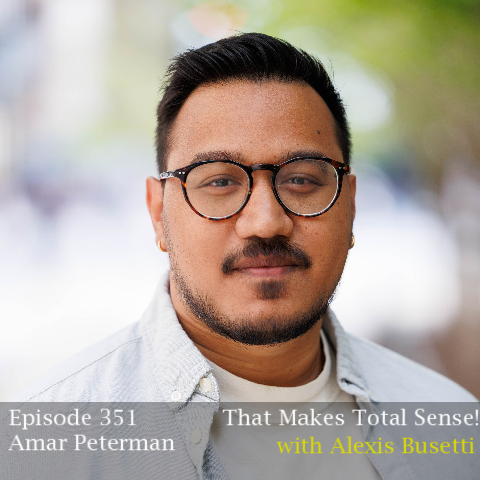
[00:02:16] Speaker A: Yeah, Yeah. I think the brevity part, when I was doing my m. Div, I'm like, oh, my goodness, you want me to put this in 250 words? You want me to put. And I'm like, Like, that is so much harder than putting it into 500 words. You know, and I've had these discussion with my everywhere, from my middle schooler to, you know, students that I'm taing. It's like, is this too. Is this too much? And I'm like, you know, it is. It is a discipline, as you said, but it really requires us to think in terms of clarity. Like you said, like, what do I actually want to say in this, in these words? And how can I say it very clearly? And I thought you did just a wonderful job of that. And like I said, so much here is still spinning in My head, and I think it will continue to spin in my head. So let me say the name of this wonderful book. It's called Becoming Neighbors, the Common Good Made Local by Amar Peterman, who's my guest today.
And before we really get into it completely, I want to. I'd love to ask you to talk about something that you mention in the introduction. So prerecord we said I mentioned to you there was a lot of theology here that I thought was just really fascinating and deep and wonderful.
And there's a lot of conversation right now about neighbor love.
We in the US Live in a time where neighbor love feels hard for a lot of us. You talk about that some in the book you mention yard signs and things like that. That kind of, you know, they kind of give. Give a little vibe.
But I think when we, when I will say for myself, when I hear talk about neighbor love, I immediately. Right. Many of us turn to love your neighbor as yourself. This command that Jesus has given us, and it sounds like when we are in relationship connection with God, out of that we'll pour neighbor love. And I don't think that's wrong.
However, you have this wonderful. And I rarely do this, but I think I will do it a lot today because there are so many sentences that are just so good that I'm going to quote directly from the book.
But this, but, but early on in the book you say this. We must become a people whose faith and desire are nurtured, formed and cultivated by love for our neighbors.
And that at first I'm like, that feels backwards to me. But I. Then I thought maybe it's cyclical, the idea that our faith would be formed by the act of loving our neighbor, kind of rather than we have faith. So we do try to love our neighbors. I think it's both. But this concept is that our faith would be formed, that our faith would be cultivated and nurtured, that our desires would be that same. Those same things by the love for our neighbors. Feels.
Yeah, that feels kind of wild to me. So can you talk about that theological concept, that maybe spiritual formation concept, and then why that is so foundational to kind of the rest of the work that you do in this book?
[00:05:43] Speaker B: Yeah, I'm so glad you picked up on that.
It comes from a few things. One was a class I took at Princeton Seminary on their farm that they called the Farminary, which is wonderful. It's led by Nate Stuckey, who's a former PhD student there, who does some really wonderful eco theology. But it was A class on faith formation and ecology with. With Nate and then Kenda Dean. And the premise of the class was to say that faith is never static, it is always being formed and shaped.
And from that I took kind of this poetic license. I was reading a lot of Christian Wyman who get cited a lot often in the book as I was writing and trying to cultivate a more poetic, almost lyrical style of writing instead of.
I think I'm more inclined to a dry academic form where I can be long winded. And so to push back against that, I'm like, poets do such a great job.
An essayist too, of condensing really complicated and lofty things into really pithy lines.
And so I attempted to do that often in the book and turn to this notion that we often think of faith as this thing that we possess. And the scriptures at times point to that and say, you know, if you have faith that is the size of a mustard seed, oh well, faith is like an object. It's a mustard seed. It's something that we pick up, it's something that we hold on to and the move was to stay instead. I think faith is deeply dynamic. That it's something that ebbs and flows, that moves in and through the world as the Spirit does, and that it's this, I call it a polyphonic hum of belief and devotion. That there's something that's tied. That faith is tied to the things that we believe about God, but also the way that we live in light of those beliefs in an act of devotion to God.
The other thing that I was wrestling with was Augustine has this concept of use and enjoyment. It's very popular and well known, but. But essentially he's saying that there are things that God has given us to use and there are things that God has given us to ultimately enjoy, and those are the ends of the things that we love.
It's not in the book. There's debates about if neighbor can fit into that category of enjoyment or simply in the category of use.
I lean towards saying neighbor absolutely fits in the category of enjoyment because if not, then our neighbor just becomes a utility that we use towards a greater love of God. And I think the Scriptures point us to a vision of neighbor love that is an end in itself. Love your neighbor. Yes, because God calls you to. And so there is this dynamic of we are loving God in the act of loving our neighbor, but we don't see our neighbor as something that we use towards a greater thing beyond them.
Because once we start doing that, then we are not looking at our neighbors anymore. We're not truly loving them because we're always trying to look beyond them to something else or to some greater goal of I'm going to love my neighbor, but secretly I want to convert them.
Secretly I want them to believe this thing about this policy or this thing in our community, or I'm trying to persuade them of something instead of encountering their reality of who they are. Which points to this.
We often talk about neighborly love. It's. It's fairly, at times, flippant language that we use. And because it's so prevalent and popular and we slap it on just about everything that's Christian, it's not wrong to do that.
At the same time, when it actually comes to loving our neighbors.
And I love that yard signs being both the physical signs we see in people's yards and the yard signs we put all over our social media feeds and our substacks and profile pictures and whatever else that convey who we are and who our allegiances might be towards.
To step beyond someone's yard sign, physical or otherwise, and encounter them in the messiness of their reality and their experiences opens us up to a radical practice of neighbor love that sees people in all of their hopes and dreams for their neighborhood, but also the fears and vulnerabilities that often inspire those yard signs that point people towards a more complex understanding of the world than kind of the simple binaries that we often are placed into and that we support through our decisions and actions. But I think it is in this very radical work of encounter of neighbor loving neighbor, that our faith is deeply formed.
And in that. I talk about the table as a central image in the book. And I say, we can't show up to this table where the common good is cultivated, sitting in the corner with our hands over our ears, pretending that we can't hear anyone.
We have to desire to come to the table, which means we have to desire to know our neighbors. I think there is a cyclical process here of stepping out to attempt to love our neighbors in the ways that we know how, encountering them, and in that encounter, cultivating a greater desire to love them more and to love them in ways that are more particular to who our neighbors are.
And this is a cycle, I think, of neighbor love that can heal communities, that can heal cities. And I think the premise of the book is the common good made local. And so I'm not trying to prescribe that this will change our entire nation.
I think that it can.
But I don't think that Happens on this grand scale of headlines and national media outlets and this and that. But it begins by stepping outside your door, going on a walk, smiling at your neighbors, asking them how their day was, building relationship with them, showing up to the neighborhood potluck or community center or event, and meeting the people who live around you.
I think these are all things that cultivate a desire to love our neighbors. And in that act, we are deeply formed by the people and the places around us. And bringing that into a broader space of plurality, of all the complexities and differences that exist in any neighborhood, shape who we are in the way that we see the world around us.
[00:12:34] Speaker A: Yeah. Before we get into common good, which is where I really kind of want to go next, when, when you were talking, I was, I was really thinking about neighbor love, but also, like, being loved by your neighbor.
You have like a little line in the book where I'm like, oh, yeah, this is, this is totally us. Like we, where Christians are used to, we want to host, we don't necessarily want to go to someone else's table.
And I think that that can be true. It's like, well, I'm going to love my neighbor.
But I wonder if you can talk a little bit about the mutuality of allowing ourselves to be loved by our neighbor and how that contributes to faith formation and things like that. I'm thinking that specifically right now because our family just moved to a new city, so we have literally all new neighbors. And we were, we haven't been here very long. We were taking a walk the other day with a dear friend of ours who came in to visit, and this was the first time she'd been to visit us in this, in this city because we haven't been here very long and we just happened to run into a neighbor. And there were some things going on in our, you know, family lives, and so we're just checking in. And then I had also asked another neighbor if I could borrow some sugar. And so we were en route to this other neighbor's house when she ended up, like, getting out. And she was like, oh, I'll just, you know, she was like, I'll just kind of meet them part way. And so she came in and my, my friend was like, it doesn't feel like you guys have been here only, you know, only a few months. And that was wonderful to hear. We are, you know, kind of getting more settled. We had, we literally had our next door neighbors. We, we were chatting outside before Christmas, and she said, if we ring your doorbell on Christmas morning, at 8 or 8:30. Open it. Because we have a tradition of making homemade cinnamon rolls and giving them to the neighbors. And of course, we were like, yes, please. But as I'm naming these things, even out loud, but as I was thinking about them, I'm like, in all of these situations, we are the ones who are receiving from. From our neighbors. Like, we're the ones people are checking in on. I'm the one borrowing the sugar. Cause I didn't, you know, put it on the list beforehand. You know, we're the one receiving, you know, these. You know, these holiday cinnamon rolls. You know, all of these things. And when we were in our neighborhood before, in our. In our other city, it felt a little bit different because it felt like there was a little bit more reciprocity there because we were more established, you know, and things like that. But logistically, it doesn't necessarily matter. But it's just I'm in a space spot right now where I recognize I really do want to love my neighbors. Well, and part of that, I think, for me, is what you discuss. Like, I don't always have to be the one to host. Like, sometimes I really am the one to call and say, I actually need. Like, can you please. Like, can you give me a recommendation for this? Or can I borrow this? Or, yes, please, bring your cinnamon rolls over. And I don't think feel this, like, need to say, now I have to bring them something sweet next week. It's great if I do, but it's not transactional.
They're loving me in that way, and I am, like, letting them.
And that part feels vulnerable and all that kind of stuff too.
But I wonder if you can talk before we get into common good, like I said, which is where I want to go next. I wonder if you can talk a little bit about that because you recognize that as Christians, kind of in a generalization, we're not great at that. We're not great at going to someone else's table. We kind of want things done, I'll say it maybe on our turf. We kind of want things done on our.
When we're able to kind of.
Can I say control, but when we're able to kind of, like, set. Set things up.
[00:16:33] Speaker B: Yeah, yeah, absolutely. I mean, I think we think of Christians throughout, especially. I'm thinking in an American context, that we've done a lot of interfaith civic pluralism work and at times have willingly sought that out. Often I think I'm just falling into it because this is the state of our country and our neighborhoods is that people across many different faith traditions share a community.
And so often when I'm at these interfaith spaces, the question is often, like, where are all the Christians? Like, well, they're at their own table.
They're not here because they don't see, and I think it's a failure and a mistake, but they don't see value in being hosted by folks different than them.
They don't think there's anything to learn from this table. And. And I think that couldn't be more wrong. But this is the, you know, perhaps arrogance of American Christianity. And these are certain, certain parts of American Christianity. It's. I'm not trying to speak for the entirety of the tradition across many peoples and places and communities, but there's often this, like, pragmatic element of, well, even if we're going to do something as a community, well, the local megachurch has the biggest sanctuary and a, you know, gigantic industrial kitchen attached to their sanctuary. And so they can host everyone. And this is just logistically what works best.
That's often there's systemic reasons why that might be the case, that the church has the biggest venue and resources to do something.
It also means that all the Christians get to show up at a place that's very familiar to them, and again, as you mentioned, get to play host, get to say welcome, get to code everything in there in things that are familiar to them.
There's something really unique and challenging about saying, maybe it's not the most practical thing we can do, but we're going to host this at someone else's place of worship, or we're going to host this at a local community center where no one gets to say we own this, apart from everyone saying, we all own this. This is our community center.
This is also why I think the potluck is such a beautiful illustration, because it's not, you know, the aunties in the church who are making all of the food for everyone, which is a gift and wonderful generosity, and also it contributes to the, let us give you everything. Let us, Let us be the ones to provide the material food, but also then the often the intellectual weight of things as well. But at the potluck, it is inviting everyone to contribute and to say and to take ownership of the shared space.
And so that's why I think this challenge to embrace the role of being a guest in someone else's space, to practice humility in that way, to reckon with the uncomfortability that's inherently going to come from being somewhere that's not familiar. But seeing all of those things as sites for continued growth, as something to work in and through, to then grow into deeper relationship with other people, to expand our own imaginations of how people perceive the world and themselves within it.
I mean, you can learn so much about someone not only by the dish that they'd bring to a potluck, but their own homes and what's on their. I mean, I always, when I'm at someone's house, I go straight to their bookshelves, whatever's available to see. That's the first place I want to go. But there's pictures and the way that a house is structured and how it smells.
I just last month was at a iftar for a colleague of mine who hosted it at his parents house.
And being in that space was like, this is really fascinating. It was a South Asian household and so some elements of it were so familiar.
There's so many couches and chairs. It's like these people host folks a lot.
They've intentionally set up the space not to have everything, you know, staring at a tv, which I'm guilty, that's how my living room is set up, but instead in a circle and everyone is looking at one another.
And so I think there's so much to learn if Christians are willing to give up that role of host, even when it's logistically the most practical thing, even if it makes the most sense to say, let's go out of our way to be hosted, to humble ourselves, to say, I need something from you.
I'm going to follow the rituals and patterns of your community, of your liturgies, as a learner, as an observer, when it's appropriate, and to let that be an opportunity to practice love in a new way and to learn how to love someone again in the way that they desire to be loved.
[00:21:50] Speaker A: Yeah, no, that's really good. It made me think of. And you may have done this in your seminary experience as well, but when we had the assignment, excuse me, to go to the service at a place of worship that was not familiar to us, that was not Christian, and the strong recommendation from professors to reach out ahead of time to say who you were, to say what you were doing, because then you can't be a fly on the wall at that point it is like I am intentionally coming in.
It would be easy to kind of slide in and out. But then, but then that also gives them the opportunity to host you, you know, to talk to you, to ask questions, to allow you to ask them questions.
You know, those Kinds of things. And it, you know, when, when I did it, it was a wonderful experience. And then I had the privilege of reading some master's students who had just done this and to. I mean, every single, single assignment, they were just blown away. You know, they had. They had so many unique experiences. But things that, they're like, if I. If I had a dollar for every time when I didn't expect this or, you know, this, I. My perspective on this completely changed after I talked to so and so, you know, and I'm like, this is. Yeah, this is kind of what it's about. But we have to put ourselves out there, you know, to do that. I think we'll return to the public in a. In a. In a bit, because that's. That's part of it.
Before we get like, too, too far, I want to talk about this concept of the common good, because I think when we hear that again, I don't want to implicate everyone. I'll say when I hear that it's one of those phrases for me that feels a little bit mushy. And I'll say what I mean by that because I think it's something that we hear it kind of frequently or maybe frequently enough where we just kind of like, assume we know what it means and then we move on. And. But. But really the definition might feel a little ambiguous or, you know, it's just, it's. It's. Yeah, it's kind of mushy that. That's the phrase I'll use.
But I want. I would like for you to elaborate on when. Use a couple of things when you use the term common good. So a couple of things that stood out to me that were helpful as I was, As I was looking at this is you say the common good is built and it's not found. And that felt really meaningful and important to me. But also, and this is the part that I think might weird some folks out, you have to kind of read the line twice, but I want you to elaborate on it. So it's built, not found. But also it shouldn't be. The common good shouldn't be reduced to what is good for, like, the most number of people.
And that you're like, wait a minute, that was kind of in my ambiguous definition. You know, like, it's common good. It's like, good for the common people. Like, it's. It's kind of like all of us, but. But not necessarily.
So. Can you talk about those two things? Why you say the common good is built, not found and then also elaborate a little bit on why it can't necessarily be kind of boiled down to, or I think you say reduced to what is good for the most number of people.
[00:25:22] Speaker B: Yeah, absolutely, Yeah. I think you're right to point out that notions of the common good are always mushy and vague and ambiguous because what is the common good for who, which good, which commons?
It often is just it ends up being this kind of rhetorical tool that politicians and pundits and also pastors and everyone in between uses to say what is good for us.
Part of what inspired me to write this book before I even knew it was going to be a book was growing up. I'm an Indian American adoptee, I was raised in a Polish Catholic neighborhood, I grew up in a white evangelical mega church. And both places implicitly and explicitly named what the common good is. And neither included me, neither vision included me.
So this isn't either I'm doing something wrong or I'm excluded from the common good and I don't know what to do with that, or this actually isn't the common good. And so I was wrestling with a lot of that through, I mean especially Christian conceptions of the common good that also have their own at times deeply racialized dynamics of. Well, to be a good Christian is to presumably kind of be formed into this image of a white self sufficient man, like, well, I can't be white and was told to, you know, it. There was times, both from pastors and professors who said, you have to leave your Indianness behind and become, you have to find your identity in Christ.
Because these are two separate things. Indianness is tied to paganness, to some sort of heathen quality. And instead we need to find our identity in Christ. And of course that was only an instruction given to the non white people, it wasn't given to anyone else.
And so immediately there's never really this temptation to say the common good is something that exists as the single universal thing.
And so the premise was, what do we do with that then?
And the move through researching and studying the common good turned towards this vision of I don't think the common good is something that exists out there, that we just need to build the right ideological spaceship to go capture it and then bring it back and then we have it.
The common good is cultivated. It's built when people across lines of difference join together.
And that gets to the second point of a common good that is simply good for the numerically most amount of people, more often than not ends up just being tyranny and I think we see that throughout history, is that it's this presumption of, well, it's the common good. It fits, you know, the majority culture, the majority people, and everyone at the margins gets no, no benefit.
And so instead, this vision of the table is to say, everyone gets a seat.
And again, we talked about hosting that. Christians are so eager to either, we mentioned, ignore the table, remain absent from it altogether, or they show up, walk past their seat, grab the microphone, and pretend that they're running the meeting or assume that they're running the meeting, because why wouldn't they be?
The invitation of the book is to say, take a seat. Join with your neighbors in cultivating a common good that brings together the best of everyone's tradition and culture and perspective.
This is, I think, what a meaningful common good looks like. It's one that considers the lived reality of everyone who is present and what their hopes are for a community.
And I think for all of the.
There's significant and meaningful division in our neighborhoods and in our world that should not be overlooked.
And the table shouldn't be a place that, like, ignores all of that or pretends it doesn't exist or looks past it and says, oh, well, we're all just really trying to do the same thing.
I think the challenge of the table and the challenge of cultivating a common good, the reason it so often is not cultivated is that we assume that our differences mean that there's nothing that we can work together towards.
And I think in my experience, that isn't the case, that there are certainly irreconcilable differences.
This also gets back to desire. If people are going to show up to the table saying, my way or the highway, so to speak, then they don't have a place at the table. They're not desiring to know and love their neighbors. They're desiring to find a way to get what they want.
And so this cultivation of the common good requires a disposition of love and care, community care, and a willingness to join in this uncomfortable space of commonality to seek a shared good for the whole.
And so, again, it's not as though we just need to read more books to find out the right ideological pieces that help us find the common good. It's saying, the common good may very well look different in my community than someone else's, because my neighbors are different than someone else's.
And that's a good thing that we get local with our visions of the common good and seek what is good truly for our communities with the hope that this formation of individuals and communities spreads out from the community to the city to the state, to the way that neighbors across state lines across the globe begin to interact with one another. But it has to begin to, with a personal disposition and cultivating this in our own communities before I think we can ever hope that we can have some sort of more expansive vision of this.
[00:31:31] Speaker A: Yeah, a couple of things came to mind when you were talking about that one, when you said my way or the highway, then I think that goes back to this enjoyment versus usury thing that just feels like usury. You're just here for my purposes.
When you're talking about the common good, when the marginalized get left behind, it made me think of.
I am like, barely even a student of disability theology. But years ago, I interviewed Amy Kenney, who has a book called My Body is Not a Prayer Request, and she had this really meaningful section, maybe even chapter that was really meaningful for me, where she talked about, like, all of these inventions and accommodations and things like that that were made for.
To serve people with disabilities. And how, like, thinking about that being kind of the inverse, like how when that is what's done, more people actually benefit from, you know, those things. Like, you know, ramps over, you know, like curbs being cut in or ramps in buildings or even like text messaging, you know, like all of these different innovations that were driven with the desire to serve people with disabilities who needed accommodations and how, like that actually ends up serving more people. We all benefit, you know, from those things. So many people benefit from those things. When you're reaching to what is good for folks on the margins kind of versus the opposite, you know, like what you were talking about. Which leads me to think about something you also mentioned where I don't remember if it was Amy or someone else in that space.
Maybe.
Maybe Lamar Hardrick. I'm trying to think. But talking about diversity in that context, you're talking about disability as diversity. But. But anyway. But diversity and differences you talk about as being a gift. And, you know, you kind of talked about that just now. But like, when we can see one another. Yes, there are some, like, irreconcilable differences that you're talking about, but the desire to be like, to see diversity and difference as gifts. And even going back to kind of how you started that of like, the white folks in the class were not asked to leave their.
Certain parts of their identities behind.
I'm mixed Hispanic. I'm also a woman. This is. Yeah. In a lot of theological spaces, those things are not welcome.
But the diversity is, Is beneficial.
I, I really, I was looking at the time and I'm going, oh, my gosh, Amar, we haven't even gotten to like, the stuff that I like, have really starred on my notes.
But I'm gonna try because so this may feel. I'm not trying to give anyone whiplash, like, of changing kind of what we're talking. It all goes together. It's a wonderful book. But I wrote on the beginning of chapter three, just like this chapter, like, just like the whole. Like there's this whole chapter where you talk about practices of neighbor love. And, and some of them are compassion, humility, lamentation, accompaniment, these kinds of things.
What got me.
There were so many things in that chapter that got me. But maybe where we could start, because I told you the theological pieces were like hitting me hard in this was the Incarnation.
The way that you talk about the Incarnation in this chapter. And kind of two things that hit me. When we're talking about this in the context of neighbor love, when we're talking about this in the context of being at the table.
Number one, Christ incarnate made himself dependent on creation.
Like, yes, but also. Shut up. Like, this is so hard, you know, I mean, we just replayed a conversation I had with Amy Peeler where we talk a lot about Mary, which is. I mean, goodness, she's so beautiful.
But that, you know, like Christ being a human like no other. But also in part, like he was dependent on creation in general, on his parents, on. On. I just, I just can't. That was just like. I have to reread that section multiple times. But also this part. So Christ being dependent on creation, the throne, ness. I'll kind of let you talk about that. T H R O W not O N E But also who. There was another quote, I think, from. From another theologian. I can't remember who it was, but of God. The concept that God permitted and does permit God's self to be a question mark in the minds of God's own creation.
In this context, I thought, how many of us?
And it's kind of a joke, I'll say with women in the workplace, for example, we say something at a staff meeting.
Thirty seconds later, a man says something. What? Something the same something that one of us just said.
And it's the best idea ever. We're going to have this great endeavor. We're going to build programs and we're going to do all these things based on what he just said. It was really her idea.
And that gets real frustrating. And so we can talk about that in another context, but. And it's wrong. Or just say, like, it's wrong.
But I just thought, oh, my goodness. Like, as frustrating as something like that feels, the idea that God permits God's self to be a question mark in the minds of the people that God created, like the humility. I think it was in the humility section, but, like, the humility involved in that strategy, that concept that, like, that blows my mind. And so I'd love for you to talk about this theologically, but also practically because these two concepts are in a book on neighbor love and common good.
So, yeah, Christ incarnate as dependent, and then God allowing God's self to be a question mark.
[00:38:06] Speaker B: Yeah, I love this section. And I wanted it to be so much longer, but then it would have been disproportionate to the others. And so I kept it.
I put a lot.
[00:38:14] Speaker A: Write another book, Amar. Just write another one. And it can just be all about. It can just be all about that.
[00:38:19] Speaker B: Oh, I would love to.
I also, I mean, I left.
I left clues in the footnotes to let people continue to think. I mean, that's the whole. The whole book is trying to, like, give people access to be like, oh,
[00:38:32] Speaker A: the footnotes are wonderful, by the way. Thank you. Wonderful, wonderful. I live for footnotes. They were wonderful.
[00:38:38] Speaker B: Yeah, same. I love them too. And so I'm so glad that for the people who spend the time looking at them and seeing where I'm thinking, who I'm thinking with, who I'm drawing from.
Yeah.
The move to start a section on the Incarnation with Martin Heidegger was fun. I really love Heidegger's work.
In the past year, especially even after writing the book, I've gotten more deep into his work, which is at times deeply, deeply problematic.
And also he seems to be this. And he's asking the question of, like, what does it mean to be? And I think that's a question that's so important. And it's the thing that I think so many of us are asking. And Heidegger writes in a way that's so inaccessible that I'm like.
Folks like Jamie Smith have done an incredible job of making Heidegger more accessible. He has a book, Jamie has a book called how to Inhabit Time that is very Heideggerian and is wonderful.
Heidegger, though, has, in trying to describe this reality that we exist within and our experience within the world, talks about thrown ness and says that, you know, it's this recognition almost of that we've been thrown down the side of a hill and have bumped up against stumps and trees and other rocks and brush and this and that.
And that shapes us and who we are. And it's this recognition that we are. We are caught up in the world.
We are not isolated islands or some sort of thing that exists outside or above time, but we exist within it and are thrown, thrown into it and molded by the people and places around us that we can't extract ourselves from that.
You know, Heidegger is in no way a Christian, but we might say that the thrower, the one who sets all this in motion is God.
We can at least say that, you know, this endless chain of causality God sets in motion at the beginning of time. And there's this. I just found this profound idea and theological musing that God enters into the very causality that God begins, that this ripple of cause and effect, God places himself within to be drowned, to be killed by his very creation.
And what kind of, you know, the humility that that exemplifies is something that we will never attain. And yet it is our example to, you know, in the way that Christ empties himself for our sake. You know, I talk in the book as well about how in the incarnation, in Christ's life, death and resurrection, there's nothing for Christ to gain in this or in that. Anything Christ gains, it is not for God's self, it is for us.
And I use that to say that goodness exists to be given away because God, everything that Christ merits and the cost that it takes to merit those things is immediately given away to the people who love him and to all of creation. And so I think there's just this radical example of humility found in that the quote of this, that God allows God's self to be a question mark comes from Michael McDuffie, who is.
He was an older, very wise, very artistic professor in undergrad, who was really he. And Ashish, who's the book is dedicated to, was a mentor and friend and professor and undergrad.
But Michael McDuffie was. Was the other.
And he would often. I have a list in my phone from undergrad of just the random things he would say. And this was one of them. He just would offer these random musings.
And it never, since that time over a decade ago, never left my mind of what a way to exemplify the depths to which Christ and God humbles God's self to allow us to act freely in the world, to.
To choose God, to choose to love God.
And if God is willing to do this, then what are we willing to do as well?
So often I think neighbor love, in a economy of headlines and likes and clicks and this and that, there's a temptation to be like, I want people to see this. I want people to know that I did this. I even want the person that I love to know that I was the one who loved them. I was the one who took their trash bin in. I was the one who plowed their driveway this winter.
And I think in a small way, like doing these things without the desire for recognition, with the ability to not do things in a way that we're trying to coerce our neighbors to love us back, but instead to simply love them because they are our neighbors and because we're loving them in an attempt to live like the God that we claim to love, is a radical practice of neighbor love. To displace ourselves, to decenter ourselves, to get off of this treadmill of accolades and recognition and digital capital, and instead see this vision of God's desire and God's call for us to love our neighbors and as a service to God, as a practice of devotion to God that, again, forms us and benefits those around us.
I think the example of the incarnation is just the pinnacle of what humility looks like in our world today.
[00:44:43] Speaker A: Yeah, I mean, that goes to. That question mark piece also points me in another direction. And we chatted a little bit about, you know, and you mentioned it again just now, but yard signs and this, like, gosh, it feels real polarizing right now, and these kinds of things, and like, the unwelcomeness, the inhospitality that Jesus received, oftentimes this question mark, even when you're saying, I was, you know, I plowed their driveway. I'm in Texas. We don't plow driveways here. But I, you know, we pulled in the trash bins, we maybe we blew their leaves or whatever it is, and some of those things we might do. Then going back to what I said before, a lot of times we were receiving that feels a little bit uncomfortable. But what about us interacting with, Doing our best to show love to neighbors who.
I don't want to say they don't love us, but maybe we feel no kind of love coming back at us from them or we don't feel it coming from them in the first place. Or I will say, as a Mexican American mixed woman, I. I would see yard signs about immigration, you know, living living in this part of Texas. And I'm like, you don't like Me, you know, like, I mean, I would just feel, you know, I'm like, I don't like, you know, and when I was at my, you know, I'll say maybe at my worst, but maybe at my cynic, my. My cynical self, I'd look at those signs, I'd be like, okay, thank you. Like, I appreciate that. You just kind of let me know, you know, like, where I stand and what, you know, what we're doing here. But I wasn't running to blow leaves of this person, you know, like, I wasn't running to do that kind of thing. And I know that sounds. I'm not using it necessarily sound trivial, but I'm just saying, like. But how do we, like, not just, like, physically show love, but, like, how do we even, like, cultivate that. That love in our hearts or. Or. Or. Or cultivate an openness in our hearts to love someone when we're like, you are. Maybe even. Maybe they're even openly hostile to me and mine.
How.
What have you seen? You have a lot of practical experience in that. Of course, I love also being in the theological weed, so you could go there, too.
But how do we do that? Well, how do we do. Do that as a sign of devotion? How do. How do we let that kind of love form our faith and desire? Because it's really hard. And a lot of times I just want to be like, man, whatever, forget it.
[00:47:37] Speaker B: Yeah. I mean, one thing I say in the book is that I do not think that the call to neighbor love is God calling us to harm or to put ourselves in harm's way. And there's almost. I mean, you know, I grew up in evangelical spaces where the martyr was uplifted in this way where it's like, you have to be ready to die for Christ. And so if you're gonna, you know, we need to be bold in this way. And are there people called to that? Yeah, there are some.
And I think God makes that calling clear. But I think for the majority of us, it's not like, I'm not gonna go walk into, like, a white supremacist group and be like, I want to practice loving my neighbor here.
I don't think that's wise. I don't think that's helpful. I don't think that's doing what Christ is calling us to.
The book, you know, the book is titled Becoming Neighbors. It's drawn from Eugene Peterson's translation of Luke 10 and the parable of the Samaritan.
And Jesus, you know, has this wonderful interaction with this Religious scholar, scholar of the law, and at the end of the parable says, which of these three became a neighbor to the one in need? And the scholar says, the one who showed him kindness. And Christ says, go and do likewise.
I think that's the example of neighbor love. I mean, we've all heard too many sermons on the Samaritan.
And so I tried to not exhaust that section for fear that, one, people would just skip over the chapter entirely thinking it was about that.
But two, there's lots of things that people have said about it. So the three things I draw from it are, one, that the Samaritan helps, even though the Samaritan wasn't the one who caused the harm.
I think that's an example for our world today, especially as we see the ongoing consequences of systemic injustice and racism and marginalization and hatred, that there are people in deep need.
And even if we aren't the ones who specifically caused that harm, that doesn't absolve us from helping the people around us.
To that. The call to neighbor love is often a call to stranger love.
I mean, that almost as a double entendre. That is, it is a strange love to. To love in this way, but to that the people we love are often strangers to us. We don't know them beyond, you know, the things that they'll signal to us. And so what do we do with that?
And three is, of course, that the call to neighbor love is a call to enemy love. And what does it mean to love not only our neighbors, but our enemies? And the task of becoming neighbors is to love those who may not love us back. To not see neighbor love as a fool's errand, but instead a radical witness to the love of the radical love of God.
But again, I think we can be strategic and we can be considered in how we practice this love. I don't know. In Texas, where people have guns, I probably wouldn't go over to someone's property and, like, start blowing their driveway.
[00:50:50] Speaker A: This is real life. Yeah, you know, this is real life.
[00:50:53] Speaker B: But maybe I can again, I think neighbor love, too, is just so often we want to do these grand, gigantic things. And I think at times neighbor love can be the most simple interactions it can be. You know, you run into someone at a grocery store and they drop something, and, you know, maybe they're wearing a red cap, and I go and I pick it up for them, like, all right, I'm going to keep walking. I don't want to. You know, I don't necessarily want to have this exhaustive conversation with you, but I can show you love in that way. I can see you as more than the signal that you're sending to me.
And so I think there are small ways that we can practice neighbor love. And there's also ways in which you might not be the first person who should go over and practice neighbor love. In that way, maybe there's someone else who's already in relationship with that person, who's maybe a friend, maybe less likely to be harmed or to have some sort of negative consequence come their way.
And so I think also, you know, this goes to a degree can go back to like the wanting to, one, the martyr element. But two, the virality, the likes, the comments, the I can't wait to tweet about this in some way that there's this way to try to get recognition from that.
I think the call to neighbor love is wide, but it's also considered, it's also strategic. It's also seeing who God has placed in our lives and the opportunities that God opens for us to do this. Not that we need to go look for the most dangerous or unlikely place and love our neighbors there. We can love the people who we can start with, the people who are easy to love, the people we have a lot in common with. That's also okay to become neighbors to the people who are very much like us, who we are already friends with.
And then, yes, let's cultivate the practice and the discipline of loving people who may be less like us.
And then for some, perhaps even the people that might seek our harm. And considering what does loving them look like in a way that is both honoring to God and honoring to God's desire for us to be whole and healthy and. Well,
[00:53:15] Speaker A: yes, I was trying to figure out where I wanted to go next, because it's almost going to be next and then we're going to be out.
But I kind of along those lines to kind of continue tracing that thread to a degree.
I, I want to, I want to ask you to, to talk about kind of like how we love our neighbor because you, you have. And this goes back a little bit to the enjoyment versus utilitarian nature of it. But again, I'm going to read this like one sentence, but you said when we fail to do this to enjoy others in God, we're tempted by possessive loves that place the neighbor at the service of our own beliefs, goals, and interests.
And I think that that is an easy kind of trap to fall into.
You know, I've seen that and I wasn't necessarily going to go there. But like, I, I've seen that rhetoric some in, in some Christian evangelical spaces, you know, where maybe they would say, like, yes, I'm going to love my neighbor, but that's not love. You know, to, to do this or that is not love. And you go, well, maybe it feels like love to them, you know, like supporting people that you don't necessarily agree with, you know, these certain things on. Or. But it's like we can, maybe what I'm saying is we can go in and say it's love, but have an agenda, or we can go in and say, and it's love, but really the goal is to get this person to change their perspective to my perspective, or we can say it's love. And really the goal is that in some way, as you say, loving them is really in service to myself.
But that's not humility. That's not compassion. That's not selflessness.
That's. That's not any of those things. That's not accompaniment. We didn't even talk about that. But, you know, like.
So I guess I would say none of us are immune to that. I don't think. I don't think we're. I don't think any of us are immune to kind of going into a situation maybe with the best of intentions and then kind of maybe realizing it, maybe not that. Oh, what I'm saying is neighbor love. Whether it's. I'm saying it to them, I'm saying it to my followers, I'm saying it to myself, oh, this is neighbor love. But maybe, maybe a good litmus test is this person isn't experiencing it as love.
Or, you know, or maybe it's. It really is. Is benefiting me or is in service to me in some way. Can you talk about that? Because I think that there is a little bit of. There is some nuance that's involved in, in, in. In reckoning with that part of loving our neighbor. Because we can, we can maybe get tunnel vision, you know, or we think, oh, I know what's best. I know what's best for this person. I know what love looks like to this person. This person's like, no, that actually doesn't. I don't experience that as love at all.
[00:56:26] Speaker B: Yeah, I mean, I think this is, this goes back to like the complexity of loving our neighbors and beyond the yard signs is that when we walk past it and we presume this is how this person should be loved, and then we try to love them in that way and they go oh, this isn't helpful at all.
That's really challenging. And that, in a way, can, like, bruise our own pride or assumptions.
But it should be an opportunity to learn about the people around us.
I think, too, there's, you know, the struggle of neighbor love, I think, is that it's often such slow work.
And again, you know, growing up in evangelical spaces like evangelism was this, like, was this singular event where we would, you know, stop someone in the local mall and say, do you know Jesus? Or have you ever stolen a pen? Well, you're, you know, you're a thief. Have you ever lied? Well, you're a liar, and Jesus can save you from that.
And you have this, you know, debate, and you have your tactics and your strategies, and then this person comes to Christ and then you go. They don't really say what you do after that. You pray with them, and then they go on their way.
When I look at the example of Jesus loving the people around him. Jesus lived out of the reality that he is God and the truth that he is God. And he was not afraid to say that.
But he also didn't stop at every single person and beg for them to believe that this is true.
He kept moving. He kept going on his way and finding the people around him who needed to be loved, and he interacted with them and he loved them deeply. And I think that's our example of neighbor love where it's, yes, Jesus wanted them to leave behind a lesser way of being and to follow him.
I don't think he. He hid that. And at the same time, he kept going. He kept moving on, on his way.
And for us, I think there.
I think, you know, this is like the eudaimonism that's like, hidden, hidden in the book, which is to say that I think there's a better way for us to live together. I think there is a better way to be as a community, as a church, and I want to call people into that.
And at the same time, the way that I want to do that is by living that out in a hopeful, futurial vision that I anticipate is already breaking through into our world, into the best that I can. I want to live out of that vision and out of that reality that is to come.
That's a different way than loving people to say, I want them to stop voting for this person or doing this thing, man. I want them to stop doing these things.
And there are moments where that should be really clear and there's spaces for that. And also, if we're loving our neighbors, perhaps for the first time, that might not be the best entry point.
That might be a conversation that is cultivated through a relationship, that. Where trust is developed, where love and shared reciprocity and vulnerability and understanding and knowing are brought together.
And then we have those conversations.
I think we're so quick to like, to jump to this is how I love my neighbor, by telling them that what they believe is wrong. And whether that's a political thing or whether that's a theological thing.
And so often I think it goes against the evangelical impulse to say, how many people have you converted this year? How many people have you converted on your latest expedition of sorts, to go and find lost people and instead living out of a disposition of love that is cultivated through devotion to and belief in God, that then I think when people see that more loving, beautiful way of being together, they will see, well, what is that person doing in their lives? What kind of things do they support? How do they speak and act? How do they respond when tragedies arise in our communities, in our country, across the globe?
And that is a way of, a deep way of persuasion and love that is often overlooked because it's slow. And I always want to condition like, I don't mean to be a gradualist in the sense of there's times where we need to, like, take action.
I'm also an organizer, and I have a deep love for other organizers and activists and people who can mobilize folks to respond to crises, to injustices in a moment's notice. That is also needed and that is also a practice of love, specifically to those who have been harmed by the injustice.
I'm not trying to say this gradualist approach is the singular way we do things, but it is to say, don't overlook it as the slow work of formation, the slow work of changing neighborhoods, changing communities, changing individuals.
There's a both and to it of being willing to step in in a moment's notice when things arise, and also developing the relationships with people around us so that we can do that work of breaking through, to use biblical language of hardened hearts to move towards offering a better way of being in the world with and for our neighbors.
[01:02:06] Speaker A: Amara, I usually ask kind of one final question, but listening to what you just. So I will give you the opportunity a hundred percent, but listening to what you just. I'm like, oh, my goodness, let's just rap. You know, like that. Yeah. Anyway, that felt really great. Maybe, maybe I'll ask this one. This is. This is one of my go tos but we've covered a lot of ground. Again, folks. I'm like 87 pages. Come on. There's like, so, so, so much here.
Um, but what's the question?
What's the question that I didn't ask?
Like, something that you're like, oh, if, if she would have, if she would have gone here, we could have, you know, we could have gone there. What, what's missing from this conversation that you really want folks to know? It may not be able to be a full answer. It may be like this, and then pick up the book or this, and then see your pastor or this, and then, you know, get together with your best friends or whatever it is.
But, yeah, either. What's, what's. What's the question that I didn't ask? Where's the place that you wish we could have gone today? And then give us a little, Give us a little teaser. Give us a little trailer.
[01:03:21] Speaker B: Yeah, I mean, we're. We're in the first week recording this, the first week of Eastertide, and I end the book with what I call a resurrected imagination, a vision of the world, a perception or a lens to see the world through the resurrection of Christ. And it's at the front of my mind. One, because we just celebrated Easter. Two, because I was tasked on the Monday after Easter preaching to a bunch of preachers and ministers for a chapel at Uchicago and was thinking, what do I have. What do I say to all these folks who are, I'm sure, are exhausted from the past week, just did how much on Sunday, and now they're here on a Monday night to receive something instead of be the ones to give so much.
And I turn towards this. I don't mention the story in John 20 of Thomas.
And Carvaggio has this depiction of Thomas and Jesus that stuck in my mind. And I almost. I want to like, exegete both the picture, the painting and the passage. But the point of it was to say that in this moment that Thomas finger enters into Jesus side as Jesus in the painting describes, guides Thomas hand into Jesus.
He's cultivating a resurrected imagination. He's taking the skeptical, I think rightly skeptical Thomas and saying this is something that defies all reason. I, in the sermon talked about how you can't reason your way to the resurrection.
It defies reason. It defies the laws of causality, the laws of nature that God dictates.
And yet what we can do is stand in awe of this reality and live in light of it. And that's what a resurrected imagination is, is this opportunity to see the future life that exists beyond the present death, no matter how unreasonable that might feel in these moments of death and terror and depravity and loss, to say that the resurrected Christ is with us, the Spirit is with us and moving and resurrecting, redeeming the world around us, if only we have the eyes to see it and to respond to it.
And so that's one thing that has stuck in my mind in this moment, is to say this is something that is, I think, unique to Christians, that we have a resurrection story and that we're called to live out of this, again, futurial vision that can see a new, beautiful life that exists even at the brink of this terrible death.
Yeah.
[01:06:09] Speaker A: Yeah. Amazing. Thank you. Thank you so much.
That's beautiful. Again, the book is called Becoming Neighbors, the Common Good Made Local by Amar D. Peterman, who's been my guest today. I'll put the link where folks can grab a copy of this in the show notes as well as I think, I hope I got a list of everyone we mentioned, books, you know, all of that kind of stuff. I usually try and put that in there for folks so they don't feel like they have to take notes.
But anyway, it's been a real joy having you with me today, Amar, and I appreciate the work that you're doing, both in what you've done in the book, but also what you have been doing and continue to do outside of this book in, like, real life.
It's, it's, it's really meaningful.
And I just thank you that you share out of your experience and your research with us. So thanks for being on.
[01:07:01] Speaker B: Yeah, thanks for making the space. It was really wonderful.
[01:07:05] Speaker A: The links for all the resources mentioned in today's episode can be found in the show notes, Music and podcast production by Seth Buscetti. Be sure to give us a review on itunes and subscribe at your favorite podcast listening app. You can also Visit
[email protected].
[01:07:29] Speaker B: It.