Episode Transcript
Speaker 1 00:00:06 Welcome to That Makes Total Sense, a podcast dedicated to exploring God's generosity and justice. I'm Alexis bti, a Christian aiming to ask good questions and encouraging you to do the same. Every one of us is wired by God to live out generosity and justice. But the how sometimes eludes us that makes total sense is a way for us to get together, posture ourselves as learners, and challenge one another, to practice generosity and justice in a tangible way every day.
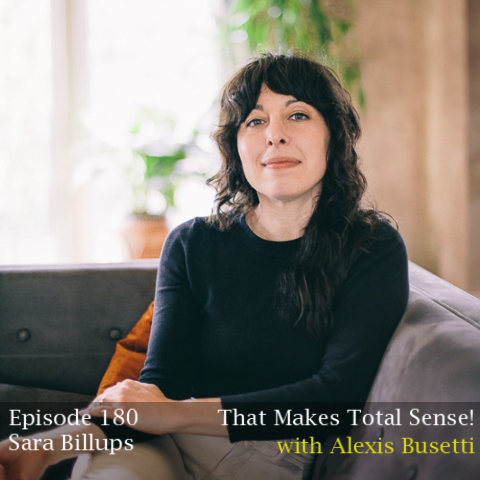
Speaker 2 00:00:41 Hey everybody. I am super stoked to have Sarah Billows on the podcast today. She's written an incredible book that Sarah, there were moments where I was like, I just, we can just change out some of the pronouns, scratch the name out, you know, for this town or that town. And I really felt like for much of the book I was reading my story, um, but this is called Orphaned Believers, how a generation of Christian exiles can Find the Way Home. Thanks for writing in this, and thanks for coming on today.
Speaker 3 00:01:15 Oh, Alexis, thanks for having me. I'm so happy to be here to talk to you.
Speaker 2 00:01:19 Yeah, I didn't tell you before we started recording, but there I was like real tempted to just say, okay, we don't really have to record this, right. We're just gonna, I'm gonna pour myself a cup of coffee and let's just <laugh> let's just talk about our experiences, because this book was written by someone who came of age. You were, I mean, this is eighties, nineties, you're in Sunday school, you're in youth group in American White Evangelicalism.
Speaker 3 00:01:45 Mm-hmm. <affirmative>. That's right.
Speaker 2 00:01:47 I mean, so I think my first, I, how I'd love it if you could get us started is, you know, I'm, I'm kind of jokingly saying like, this book is my story. Um, so I feel like it was written for me. But who did you have in mind when you were choosing, because it's kind of part your story and then, and then, um, well, I'll let you tell what it, what it's about, but, but who did you have in mind when you, when you decided this, this is the story that I wanna tell. This is the book I wanna write.
Speaker 3 00:02:17 Yeah. Um, think that's a great question. When I, when I was writing the book, um, I began to explore some things that happened to me coming up in the Midwest, as you said, in the eighties and nineties. And I realized that we're in a moment of history in the American church, specifically in the, the white, even evangelical American church when we're struggling to come to terms with what that means. And so, um, I've, you know, been in Seattle for 18 years and in that time seen many friends, um, leave church struggle with talking about faith, um, trying to grapple with or hang on to believing in Jesus as there's many broken things surrounding the church. And, um, I was writing it for folks who, like me, are looking around the American church and trying to find Jesus and wondering where Jesus is. So folks who are in a, in a middle space, um, who are trying to be faithful and yet our are struggling and maybe are a little lonely, um, it can feel like a pretty isolating place to be when you're either culturally orphaned, like when you're maybe living in the Bible belt, um, and everyone talks about being a Christian, but you're not feeling a lot of like, real formation and then, or maybe you live in a progressive place.
Speaker 3 00:03:37 I've lived in both kind of places where you have to explain what it means when you say you're a Christian, and that's really exhausting. Or I think about folks who are spiritually orphaned, um, people that believe in Jesus, but maybe feel like they've been hung out to dry in the church, or who can't like, swear their reading of the gospel with what they see around them. So those are the kinds of people I was thinking of folks that are looking around and trying to find Jesus either holding onto their faith or wondering what happened, um, in the midst of our complicated culture.
Speaker 2 00:04:11 Yeah. Thanks. And I wanna share, you know, um, it's not really a spoiler alert, I think you open and in the book with this, but I just wanna, I, I would love for for you to share a little bit because through all of this story that we'll get into as we continue in this conversation, um, you're still a Christian and you're still in the church <laugh>. Yeah. And, and you know, in, and in the Bible belt, sometimes I don't know how it looks in other places, but sometimes in the Bible belt we hear things like, oh, well, you know, I, I am, I believe in Jesus, but I'm, I'm sober out on the church that now, now my church looks like, you know, I drink, I drink coffee on my deck and watch the sunrise, or, you know, I do these things, but, but, and there's nothing wrong with drinking coffee on your sun, you know, watching the sunrise on porch.
Speaker 2 00:05:00 I love that. But what we hear, and what I mean by that is there are a lot of individualistic independent activities that people are calling the church. And, um, and number one, my heart is broken. I've experienced church hurt too. And so, um, I know all experiences are different, but I resonate with, um, that kind of, that desire to just say, forget it. This is it. It's just me and Jesus. Um, but as a, as a student, um, as a, as a specifically as a theology student, I kinda have a real theological issue with that, um, with that, you know, kind of framing of, of that. And so, um, you know, you don't have to have the same, you don't have to agree with that, but I would kind of like to open that up and say, you're, you're a Christian, you still are part of a church. Yeah. And like
Speaker 3 00:05:56 Why though, <laugh> <laugh>. Yeah. I mean the, when I think about the church, I mean, the church is what Jesus, like, what Christ left us with, you know? And so if, if this whole, if this whole thing is true, like if I am building my life around the belief that there really was a virgin birth, an actual resurrection <laugh>, like if Jesus was bodily resurrected from the dead, like if these wild audacious claims really happened, and they are how I am flanking and centering my life, it means that, that I am called to be a part of, of Christ's body. And the way that that manifests is that we have the church. And, um, I think that if that's true, a remnant of the church will always be here to stay. And the question is, what do we do with it? You know? And so this is such a good and tender question because I think what I've learned, um, over the past many years is that we're all in really different places.
Speaker 3 00:07:00 If we have the gift of long life, we can go through seasons that are really spiritually dry. I mean, I would say that I wandered through a spiritual desert for, I mean, it was 12 years. It was 12 years when I felt very bewildered and confused and was just treading water. I mean, if my faith was like under a bull, it was like the, the flame was like barely lit for a long time. Um, but I realized that the thing about the church, the gathered body of believers is that I don't get to be in control of who I worship with. I'm with people that maybe I wouldn't choose to go to French with, like people that maybe I wouldn't even necessarily relate to, but like that I end up loving. So that's such a beautiful embodied experience to go to church, to like stand in the communion line with people that you didn't pick, that you're challenged by, that make you grow, that make you question yourself.
Speaker 3 00:07:57 Um, it's very uncomfortable. And that's very sort of <laugh> that's sort of un-American in a way because we're not kind of customizing it. Um, and it's messy. And I think that any church, even the best church, um, the most perfect church is, is certainly it doesn't exist. Like even in healthy churches, there's plenty to criticize. Um, but I think that the other thing about my experience is that in Seattle, you usually folks don't go to church by accident. Like it's uncommon to go to church here. And so if you decide to, there's usually an intentionality. But having grown up in Indiana and the Midwest, I've experienced the other side of that where everybody went to church, but it felt very flat. So I, I guess I just say that if, if you have a heart that's burning to ch to change things, if you can work to reform the church from within, um, if you're in a healthy church, that's like a beautiful calling.
Speaker 3 00:08:51 Um, and I think we need to move into that work if we can, but the personal experience of where other folks are, if they're taking a break or if they're in an unhealthy situation, I mean, as, as we both know, it's so broad and nuanced that I'm, I talk about it in a tender way, but in a way that hopefully is in encouraging and inspiring with like kind of a longer view of, of life and of seasons of life, but with a hope and desire that those of us in healthy places can like actually work to bring, to make space for other people to, to come and flourish.
Speaker 2 00:09:24 Yeah. That was like, you know, so much more beautifully articulate than I asked that question. So I appreciate that. Um, yeah, and, and, and, you know, two, two things there that I kind of like and, and b I'm also in the communion line and people are going, yeah, I wouldn't have picked her <laugh>, right? Like, like just as you say, like this is a, the reciprocal kind of thing, right? Like realizing that realizing that I'm that person to, to people that I'm standing in line with too, and that that's beautiful, right? That's, um, that they get to choose to stand in line with me is amazing. Um, and yes, that there are, you know, you know, there are seasons when, when people do need a break. And so I don't mean to minimize that at all. You know, when we had come out of two kind of, uh, situations that, that, um, you know, had some, had some really hard kind of toxic aspects to them.
Speaker 2 00:10:18 And afterwards, I just, I borrowed a phrase that I had heard a Bible study teacher, teacher say about her love life. And, and, and she just, she used to say, my picker is broken. Mm-hmm. And I told my husband, I'm like, here's the deal when it comes to church, my picker is broken. Like, you know, like, I'm just not doing this well, and, you know, and so I was basically just kind of like, I don't, I feel like I don't even, I can't even have much of an opinion on this other than the fact that I think we need to be in a place. Right. Um, but I didn't, I was lucky in that I had a partner who could help me navigate that situation, you know, where otherwise, you know, left to my own devices. I, I don't know, you know, <laugh> Okay. What season I would be in right now. Right. Um, but yeah, it's, it is really, really, it is really tough. And I think it's, it's also common as you talk about in the book, because we have, we orphaned believers have come, we've been kind of homegrown in a, in spaces that have yielded mm-hmm. <affirmative> what we're experiencing mm-hmm.
Speaker 3 00:11:24 <affirmative> right now. Absolutely. Yeah. I mean the, when you were talking, I was thinking about how, um, I, I mean, I'll say first when it comes to Christian conversion, I do believe that there's, that there's agency and decision and choice that because we are free, um, we make a choice to follow God. I think that's beautiful. That's such a restorative, hopeful, um, posture and moment. Um, and you know, my dad, uh, my dad, uh, is Jewish corrupt era formed. Family got saved in the seventies in a very dramatic way. He was at a Bible study. He was at a low point in his life. He had divorced my mom after being married for six months. Something kind of caught in him after a few weeks. He just felt like, and he like was in this like, small apartment in fort me, Indiana, like lept over the couch, ran to the parking lot in this apartment complex and like fell on his like face and like surrendered to Jesus, like this beautiful, powerful conversion.
Speaker 3 00:12:21 So I think that that is, um, important and theologically grounded. But I also think that an evangelical culture, sometimes we grow up with like an individual salvation narrative, like culturally in the way that it makes us a un as kids unsure whether or not we really weren't really are saved. And I think, you know, many of us grew up asking Jesus into our heart every night, like, I did many, many nights, weeks, months, and years in case we weren't really saved. So there's a fear that creeps in quickly, and there's something so beautiful, like you were saying about looking for church with your husband. Like, we can carry each other. Like there's a beautiful communal aspect of church and of relationships, um, if we're blessed to be in them or they're, you know, in those 12 years of spiritual desert for me, like my husband really carried me, and that was a beautiful, like grace and a gift. There's times when I've carried him, like, I think we can carry each other in times of doubt, or, or, and I think that that's a little bit against the sort of narrative, like of an individualistic American kind of almost, almost consumerist like narrative about, uh, salvation, um, culturally so, not theologically, but culturally. Does that make, does that make sense?
Speaker 2 00:13:36 Yeah, yeah. Yeah. Okay. Yeah, yeah. For sure. For sure. And I'm, I'm so glad that you brought up your dad because he is a central character, um, in your book, and we learn a lot about your dad and about your formation through, um, your experience of him as a parent. And, um, and so for this, I will say this is, this is actually a true, you know, um, kind of spoiler. Like I, your dad is going through some health problems. And so I, that was one of the first things that I checked in about. And you said you had just gone off the phone with him, so praise <laugh>. Yeah,
Speaker 3 00:14:14 Dad. Yeah, my dad, my dad was diagnosed with, uh, multiple myeloma, which is a treatable but not curable form of, of cancer, of, of bone cancer, blood cancer. So he's, uh, he's, he's doing as he, the treatment is hard, but he is doing well. Um, but that's the, yep. So with my dad, you know, um, he, so we got saved in the seventies really radically, but it was also in a time culturally when there was this book, the Late Great Planet Earth by Hal Lindsay, that was just burning off the shelves that was selling millions of copies, like more copies than the Joy of Sex top of the New York Times bestseller list. And it was the time when there were Christian scare movies and like more broadly in culture with the Red Scare and the Cuban Missile Crisis. Like there was just this sort of apocalyptic fear, like Ronald Reagan was talking about, used apocalyptic language in sp in a couple of speeches, you know, so there was a, a fear of the, this future of the world.
Speaker 3 00:15:08 And so that really flavored my dad's, um, conversion from Judaism to Christianity. And so I grew up hearing a lot about the end times and had a, a fear of the rapture. And so interestingly, my dad now decades later, um, still, still believes, um, is he is a rational, reasonable person who loves Jesus, who believes he will be raptured before, uh, before cancer ends his life. And that, that, the emotion of that for me, the reality of his belief and how to, how I square that with his illness, um, you know, is, is really interesting and complicated and really invite, invited a lot of reflection for me about what it means to grow up with a parent who has that kind of posture or belief.
Speaker 2 00:15:52 Yeah. So maybe we can, maybe we can kind of pause there, because when you talked about how Lindsay, which believe it or not, I don't know, I think we're both seminarians right now. You're going for your demonn and I'm going for my M div. And, um, I had to read a couple of chapters from, from Late Great Planet Earth for one of my classes. It's, I'm serious. Of course, I will say this, this was a, like, it was a how not to. Okay. So <laugh>, it was like,
Speaker 3 00:16:19 I've never met anyone else that's read it from like my generation. I, I read it too, cuz I thought, I mean, I grew up hearing about it. It's time. Yeah. So that was, it was interesting.
Speaker 2 00:16:28 I did not read the whole thing. I think I read, you know, chapters five and six or something, but it was four. It was
Speaker 3 00:16:32 An old skimable for sure.
Speaker 2 00:16:33 Oh, yeah, yeah, yeah, yeah. It was for an Old Testament class. And it's, it's wild, right? I mean, it's rich and it's wild. But this is one of the, so your, so your book is, is broken up into three sections, and the first one is end times. And I am here to tell you, like, I can't, I don't know how many nights I like, was skipping the tv, I was skipping my screens because I was like, Sarah, this is so intense. Like, this was, this was my life, right? Like this, this end times section was my life. And then, and then you've got a really rich section that you just explore culture wars and what that has looked like in American Evangelicalism, you know, probably from a little bit before you and I were actually in it, but kind of what we were born into, I might say, you know, through now through, you know, the 2020s, um, and then consumerism, which I mean, goodness, I, I wanna, I wanna get there. Um, but I'm feeling like we might wanna start a bit with the end times, as you did in the book, because
Speaker 2 00:17:38 It shaped your dad, it continues to shape your dad. And it, it shaped me too. I mean, I, I can't tell you how many nightmares I had as, as a, as a, a kid, a youth group kid, you know, who grew up in this, watching these terrifying movies. I mean, I feel like, I can't even say it. I feel like I might need to have like a blur pair. Like these were movies. I can't remember if you mentioned or not, but this was like, if you didn't get raptured and you were still here in these movies, like, it, like these kids knew that they were gonna have to be decapitated, right? Like, they would be beheaded if they wanted to be saved, if they wanted to join. Jesus. This is terrifying
Speaker 3 00:18:24 <laugh>. Yeah. It really
Speaker 2 00:18:24 Terrifying stuff. And this was, this was like church youth group. Like, we couldn't watch Chucky or Friday the 13th <laugh>, but let's throw these rapture movies on and pop the popcorn like Sarah, this shaped us.
Speaker 3 00:18:40 I know. It's funny how, I mean, so I went back and watched a thief in the Night just to, just to refresh my memory, you,
Speaker 2 00:18:47 Wow,
Speaker 3 00:18:47 This seemed to be a teen scene at the end. Yes. I guess that's a spoiler, but maybe that's an appropriate spoiler.
Speaker 2 00:18:52 Like that's an appropriate spoiler. Don't watch it
Speaker 3 00:18:54 <laugh> as a, as a 40 something. Like of course it seems kitchy and kind of like, like if I had just seen it now, I'd think this is ridiculous. It feels so much like the seventies and eighties. It has like a, it's very dated. It just seems silly and kind of laughable, but like as a child Oh yeah. Seeing these things in formative years, it truly was terrifying. It really was, was quite an experience. And so, um, like, you know, I I what I, I write in the book and it's like, um, one of my first memories, like literally one of my first memories is I was in my living room and my dad had talked about not taking the mark of the beast. I was maybe four years old, I don't know, maybe five. I think I was probably four. And so I traced 6, 6, 6 on my forehead because that's what he had talked about not doing.
Speaker 3 00:19:42 I don't know why. I ran out into the backyard and my mom was like hanging laundry, and I burst into tears and I said, mom, I'm going to hell. You know? And she just like held me and I was sobbing. This is like as said before I started school. Like, this has been printed in my brain, you know? And so I think I'm, I'm just framing that, that dramatic moment to say like, many of us have a moment like that. My husband had one, he remembers being maybe eight or nine, like crying in the backseat of his car when his dad said that he wouldn't, um, he wouldn't grow up and have a family or sort of career because he would be raptured. And so parents don't do that because it's like mean, or they're, they didn't understand, they didn't think that they were trying to be like somehow abusive or infused terror in us.
Speaker 3 00:20:26 They, to, they did it because they felt like, I mean, at least I can speak for, I think my dad would say, and he's since told me, I'm sorry, he's apologized, um, in adulthood many times for making these choices. But I think he did that because he felt like it was his duty to make sure I wasn't left behind, you know? And, and so I understand that, um, and I, I, you know, my dad and I have worked that out and I've certainly done that work, but really looking back, thinking like, how did, how was I formed? How were many of us formed by fear as opposed to by like love and the presence of Jesus and prayer and community and celebration, those true good things. Um, I was formed by <laugh>. I was formed by like the mall and T G I F on Friday nights, on the, on the tv. And by like a fear of the world ending, like I was formed by culture and by church. And those kind of got, they kind of bled into each other in my young mind.
Speaker 2 00:21:25 Yeah. I mean, they continue to though, right? I mean,
Speaker 3 00:21:30 That thread you can, yeah, that's right. You can pull that thread all the way through. Yeah.
Speaker 2 00:21:34 Yeah. Sorry, what were you gonna say?
Speaker 3 00:21:36 Oh, just that, um, the interesting thing about being an end times kid for me is that there was part of, so I, I was terrified, but then there's this part of you that kind of gets the script down. Like do, like, this is, uh, premillennial dispensationalism, right? This is the idea, um, that was popularized by John Nelson Darby serving in the 18 hundreds and the uk and then g really landed in America when the, the wars happened. Um, because before then in the twenties, during like the social gospel, there was a lot of optimism that we could work to make the world better. But then when the war happened, there was obviously disillusionment and a lot of loss. And so these ideas took root more like, let's escape like Jesus come back because things were really bad. And so that makes sense culturally. Um, but when I was a little bit older, I was still afraid of these things, but I also began to metabolize the, the reality of the rapture and had a script.
Speaker 3 00:22:35 And I could talk about this seven year tribulation period. I could tell you exactly what happened. And I have this, this, this like vivid memory in high school when I still believed in a literal rapture and premillennial dispensationalist kind of mantra that I was sitting in this ice cream shop with my best friend in high school and we're sitting in a booth in the back of the shop. She had a banana split. And I was going through the script cuz I felt like I had a duty to tell her what would happen so she wouldn't be left behind. And like, by the time I got to talking about the Battle of Gog and Megan hug, like her spoon just like suspended in midair in her mouth, like dropped open, like, what am I, like, what is she? It was just, it's very comical thinking back now, but really, like, I felt like I had a duty to share this message, just like my dad felt like he had a duty to tell me, even as a four-year-old kid.
Speaker 3 00:23:24 And the other thing that crept in was this feeling of exceptionalism. I I was very melodramatic and theatrical for me how I talked to my friend in high school about the battle of Gog and Magog, but I also felt like this sense of like, I know what's gonna happen. I have a duty because I know Jesus will return in my lifetime. Um, but there's also this sense of exceptionalism that can kind of tell me like, wow, it feels interesting and almost kind of exciting in this sort of weird way to know what's gonna happen. And I think that's the thread we can pull on towards Christian nationalism today and conspiracy theorists, like when you think, you know how it's gonna go down, there's a feeling of control and of power that comes, even if you wouldn't vocalize it like that, that really is about security and feeling like we can know what's gonna happen. And maybe that means that environmentalism is less important. Like maybe creation care is less top of mind. I mean, I was certainly raised thinking Earth Day is something you can ignore and it's maybe new agey and the world's gonna end anyways. So there's all sorts of relevant applications decades later to what happened to a lot of us in those decades, the eighties and nineties.
Speaker 2 00:24:37 Yeah, I mean, I think, I think you're right. There's social implications and cultural implications for sure. Um, there are, there are environmental even implications, you know, and I think that, I mean, I don't know how, I don't know how it kind of, if we wanna go there, but I'll just throw it out and if not, we can, we can not talk about it or we can even edit it. But, you know, one of those things for me, um, and it's it's personality too, right? So I, um, I <laugh>, my, my spiritual director this week was talking about Enneagram stuff and mm-hmm. <affirmative>, she was like, I think I want you just to kind of sit in this six space because, you know, six as many of them are, are really fear, you know, driven and, you know, things like this. But, you know, take that or leave it.
Speaker 2 00:25:21 Personality-wise, I was a very fearful kid right? And experienced a lot of anxiety anyway. And my parents weren't the ones who introduced me to this. It was my youth group, you know, like just my youth group stuff, right? This was what was, this was what was taught. And, um, so I would say it had, for me theological implications mm-hmm. <affirmative> because then I'm growing and trying to figure out how do, is this something? And I think now the question I might ask if I'm gonna be real blunt and even even kind of maybe too imprecise, is, is this something I even need to hold intention, right? Because then I start going, Jesus loves me, this, I know before the Bible tells me. So he loves me so much that he's gonna make sure that my head has to be cut off by a guillotine if I happen to be left behind because I didn't say the right words, the 40th time that I asked him to come into my heart because I missed that one thing I should have said in this inner prayer.
Speaker 2 00:26:23 And so when I'm left behind, you know, my, my nightmare was literally that I was left behind taking care of my disabled aunt, that it was the two of us who were left and I was, you know, 15 or whatever trying to figure out how to get to her home and you, you know, care for her, right? Because my entire rest of the family were real Christians and they had, they were gone. And, and so I'm going, how do I hold this? What, what did I learn? And I have words for it now, right? But what was I learning about Jesus and who he is that this would be what I would be kind of forced to go through? Um, and for me, it didn't feel theoretical, right? Um, at the time it felt very real. And so I, I just kinda, I don't know, I'm gonna throw that out there to you as someone, you know, like you, you were still walking through this mm-hmm. <affirmative>, um, you know, we're, we're both, we're still Christians and we're still in the church, right? So, so what does this mean even for us theologically about how we were formed by these end times perspectives.
Speaker 3 00:27:20 Yeah. I, that's, I mean, that's so good. I, uh, I think there's a, a joy, uh, in participating in God's work of, uh, of caring for God's kingdom, of bringing God's kingdom and reality into the here and now, into the present. Um, and I think that advocating for change, praying for our cities, like doing redemptive work, um, to make the world better, looping back to that kind of 1920s like social gospel stance, I think that that's like a real beautiful kind of counteractive measure to, um, to sort of work against whatever has taken root in some of us that, that has this sort of anticipatory, um, fear or at least theology around the world go getting worse. Like, I think that there's still something wired in me. Things are getting worse, and my job is to, in a present local way, try to make things better as kind of a way to counteract that.
Speaker 3 00:28:20 Um, so that's, that's about as far as I go. Like I think end times culture had that, again, that fear created from the Cold War and the world ending. But the other thing I would say is that formation like grounds us in Jesus in the present as well. And so, like you mentioned your director, I mean, to not withdraw from the world, but to embrace it, not, um, not to immerse ourselves in it, but to not to not embody a posture of fear, but to say like, how can I be present and actually with my life bear witness to God's goodness and redemption again in the here and now? It just feels like a floaty answer, but that's, that's where I am to kind of counteract that narrative of grown up.
Speaker 2 00:29:03 Yeah, yeah, yeah. No, that's, no, that's good. Yeah. I mean, there's, gosh, there's just, there's just so much there, right? There's, there's so much there. But I think that, you know, as you, as you transitioned, and we don't, we can transition there now or not, but as you transition from your end time section into the culture war section, I mean, this is, it's, it's, you're, you're opening the door and just going into the next room, right? Because this is all Yeah. <laugh>, it's so, it's so interconnected because, because now you've got a place where we've been, e even American evangelicals, specifically white American evangelicals have been formed in these ways by this is, this is shaping how we understand ourselves inside of culture, as you said. Like, I'm sitting here having ice cream with my friend, and this is what I feel like my duty is.
Speaker 2 00:29:51 This is what I need to do. And then we all aged and we can vote and we can have these conversations on an adult level, and we're leading Sunday school classes and we're becoming politically active and we've been shaped and are continuing to be shaped by these perspectives. And then now we have, I mean, I'm not even talking 20 20, 20 16, I mean, we can go back to, I remember voting in my first presidential elections mm-hmm. <affirmative>, and I'll just go ahead and say it. It's not gonna be as shocker to anybody. I, I cared about probably one or maybe two things, right? Mm-hmm. <affirmative>, um, what is the guy's stance? And of course, it was always a guy, what is the guy's stance on abortion? Yep. Right? Which box should I check? And then I don't know if I had any other, um, you know, s stances and, and, and my <laugh> Yep. My dad is like ringing his hands right now. He's like, oh my goodness, how good. You know, he's, he's like, <laugh>, I've evolved dad. You know, I have. But, um, anyway, <laugh>, but you know, this was not, this was not at all politically how he, how he kind of brought me up to think about those things. But I was really formed by some of the stuff that we just chatted about and that led to, you know, kind of single issue
Speaker 3 00:31:17 Yeah.
Speaker 2 00:31:18 Stuff. Right. Because environmentalism wasn't on the ballot for me. That's right. Um, even though I was really cared about social justice, I mean, I have a master's degree in social justice, um, it still felt very separate from my faith because of how the evangelical culture is, um, in America. So, I mean, how did those connect for you?
Speaker 3 00:31:41 Yeah. In,
Speaker 2 00:31:42 In life and in the book? How did this connect for
Speaker 3 00:31:44 You? Yeah. When, well, when I turned 18 on my literal 18th birthday, my dad took me to the Ellen County Republican headquarters in downtown Fort Wayne, Indiana. I was registered as a card carrying Republican. I got a literal actual card <laugh>, a little paper card, and then we went and had chili dogs, uh, Fort Wayne's, famous Coney Island next door. I mean, it was like, there was never a question that evangelicals voted Republican, that Christians like us had a duty that voting representing the unborn, um, was what the, the multitude of, of voices that were not, um, able to vote or have a presence or, or experience. Life was our duty. And because of that, no other issue really mattered. This issue blanketed over all of the other issues. And so, um, I talk in the book about how my mom got pregnant when she was 17, um, was, uh, is Italian and was raised in Chicago and was sent to a home in Columbus, a Catholic charities home where she had a baby and, and had to sign the papers, never meeting the child.
Speaker 3 00:32:56 And the child was given up for adoption joyfully and l and wonderfully, we've, we've reconnected. When my brother turned 18, he was able to find us. So that's actually a really wonderful, uh, end to that end to that story. But there was so much shame, um, involved in, in the, the story of my mom when she was so young. And, um, I think that because of that as well, there was this real personal layer to adoption and to, um, our duty to think about not only opposing abortion, but also to doing the work that we can to protect lives. And so, my mom volunteered at a crisis pregnancy center, and, you know, every year we would get this Christmas card in the mail that had the names of the baby's lifestyle were saved, and we put it on the fridge. And then that's, I never once thought what happened to these kids, like, after they were born?
Speaker 3 00:33:53 Like, we, you know, and this is not a new idea, like this is actually wonderfully talked about by many Christians right now, especially after the overturning of Roe. It's just like, what, what happens to a child? Um, what is our duty for whole life care? And not just, not just, uh, for, for babies, but also for, for immigrants and refugees. Like, what is our, our real value of life? And so the, um, the sort of squaring away, like how I vote, and as an adult, as a person that has political opinions, like you said, who might teach Sunday school, who has a life where I'm raising my own kids, like how do I talk about and think about a real biblical, um, way forward with voting that, that, you know, believes in pres, that believes that life is, is life, and that all life deserves to be, um, deserves to be a thing that we can support and that we can come alongside as the church and not just sort of be stuck on an issue.
Speaker 3 00:34:53 And I guess the last thing I'd say about abortion is just how really new of an issue it is. And I think that, you know, I didn't realize until researching the book that it wasn't until there was a political strategist named Paul Wyrick in the seventies that was really looking for an issue that would stick with evangelical voters and abortion was that thing. And so the, the rise of the religious gray and the sort of marrying of republicanism and evangelicalism around abortion is still a pretty, like a pretty fresh thing that it's been like all of our life if we're, if we're middle-aged or younger. And so it feels like it's always been there, but it really hasn't in the long history of the church and even of America. So I also try to put context from like, timing around, around it.
Speaker 2 00:35:39 Yeah. I mean, that's, that's really important and beautifully stated, you know, so it's not about saying, oh, well now I'm gonna find every, you know, uh, I'm gonna, I'm just gonna start voting in an opposite way, or something like that. Right. But it is about a, a holistic, you know, perspective. And, and it, it, it's really troubling. You talk about it a little bit here, and it, and it has been troubling for me for probably since I was a teenager, because I'm like, if, if an alien came down and you just said, I need you to guess what these two phrases mean, pro-choice and pro-life, like, they wouldn't get it. Right. Right. Like if an English speaking alien came down, rather they wouldn't get it. Right. Because, um, because, you know, tho and of course those are, you know, political names Yeah, right. For even the positions.
Speaker 2 00:36:26 But it is, you know, frustrating and I'm, I am, I'm grateful, as you mentioned, this is becoming a topic that's being talked about a lot more es you know, especially yes, the turn of, of overturn of Roe, but also, um, you know, in these past few years with the awareness of what's happening at the border of, you know, especially with, you know, children being separated from their families with, you know, refugees, the, the population, refugee population and internal displaced people is just keeps growing. Um, and I think a lot more people, you know, my, my issue on this when I was a, I was a teenager, was I was doing a position paper on the death penalty mm-hmm. <affirmative>, um, against, and I interviewed my pastor as one of my sources because we were encouraged to have a variety of, of sources for this researched position paper. And I just knew that he was going to back up my position and you just know mm-hmm. <affirmative> that he did not <laugh>, um, back up my position whatsoever. But even thinking about that as a, like a pro-life being the phrase like, yes, I am so grateful that now this is 25 years later, you know, like that, that more and more Christians are talking about what does it mean to be whole pro-life, but pro all of
Speaker 3 00:37:46 Yeah. Amen. Holistically pro-life,
Speaker 2 00:37:49 Holistically pro-life and, and that those values are something that we can start talking about culturally and not just in voting. I know that you didn't mean that, but like, you know, in all of our lives, how are we carrying this conversation and these actions with us and forward?
Speaker 3 00:38:07 Amen. Yeah, that's right.
Speaker 2 00:38:10 So, um, can we, while we're here for just a minute, can we, can we talk about Christian nationalism?
Speaker 3 00:38:19 Yeah. For just
Speaker 2 00:38:20 Two seconds. I mean, I don't that, that
Speaker 3 00:38:22 Was like so enthusiastic <laugh> that may
Speaker 2 00:38:24 Not leave us as much time for consumerism, but, um, but I'm, I'm just going, this is, this is another part of these culture wars, right? And we, most of us probably watched the Insurrection right? January 6th, 2021. Um, and we saw the things that you described in the, in the book. So how did this, how did this hit you? What, what, given your experiences and you know, what you were writing for the book, like how did, how did that, um, how did all of that strike you? What are you doing with that?
Speaker 3 00:39:01 Yeah, I mean, the, the truth is, I, I moved to Seattle 18 years ago. I spent the first 12 of those years kind of flailing around kind of culturally trying to understand how to live in a place where it was complicated to talk about being a Christian, uh, when the 2016 election happened. And then moving forward, I realized, oh, I think I have something to say. I think that my experience growing up is something that is not just mine, but has bigger implications about the church. And just watching what was happening, I began to realize, I think that I have something to share that might resonate with people. And so, so for me, it was a, even two years ago, a time where I was just beginning to figure out how to talk about these things. And, and for, for me, when I talk about nationalism or any other piece of, of, of politics or culture that is kind of connected to the church or affiliated with it, like, I think it's our responsibility to like root these things out.
Speaker 3 00:40:02 Like to bring everything to light, to surface abuse, to talk about, uh, sort of how Republicanism has, has in many ways unmatched and evangelism, um, how nationalism has risen. Because we want to, we wanna surface those things to, to bring them out of the church cuz they wanna come back around to Jesus. And so the work that we're calling, I don't think is to burn it all down, but to say, let's take everything that's false, and that is an arrow away from the revolutionary work and life of Jesus. And, and let's, let's root that out and come back to like a flourishing fate that is formed on good and true things that is formed on, on biblical hope. Um, and the challenge and goodness of that. So the, when the insurrection happened, I had already been thinking about this book and writing a little bit about these ideas publicly.
Speaker 3 00:40:53 Um, and I just began to think, um, a lot about the history of the church. And again, I mentioned communion. Like when we stand in that line, thinking about all the people that have come before us and the folks that will come after us is really beautiful. Um, but, you know, if the, if the Christian story is 2000 some years old, like if, if that's true, it means that it is so much older and deeper and broader than America. And that if that means God is concerned with the flourishing of all people in all countries and places. So I began to explore and think more about the global church and just trying to figure out how to broaden our perspective a bit. And contrast, contrast that with the, with the, um, with what happened, um, on during the insurrection and with the rise of nationalism.
Speaker 3 00:41:40 And you know, now we see that there's, uh, some popular books that talk about Christian nationalism being a positive thing. Um, but to me it is clear that, um, that Christian nationalism is like this false belief that God works through nations. Um, uh, it's, I'm sorry, it's not the belief that God works through nations, but the belief that God is uniquely concerned with America and with the prospering of this place more than any other place. And that, because really we know that God works everywhere in all across all time. So that's, so the, this idea that God has this special like place or love for America, I think is not grounded in biblical orthodoxy. You know? And so the gospel having spread for as long as it has is, is beautiful and depthful and certainly existed for the us. So if the gospel is true, that means that it's true for all places and times, not just this one. So that's, that's sort of why I felt really compelled and inspired to, to dig in, dig a little deeper in the book, think about it. Yeah.
Speaker 2 00:42:44 I think that's a wise way to look at it, is to broaden our scope, right? I think my, my in initial perspective was to kind of like hone in, right? Like what is happening right now? What is, you know, what is going on in this one space and time? Um, which I think is, I think is valid to kind of study something like that up close. But, um, but what I'm hearing you say, I really love, it's just like, let's, let's broaden, right? Let's like, let's broaden what the Christian faith is, who we are, what is the gospel <laugh>, right? And when we look at this in a very broad way, then we can kind of see ourselves and our country in this perspective right. Of of yeah. Of this much larger global Christian, uh, story that is, that was and is and is continuing, um, yep. And we'll and will exist past when, whenever America exists, right? Like this is, it's gonna keep going. It existed long before and it will
Speaker 3 00:43:45 Continue to exist. That's great. As you were talking, I was thinking of this M l k quote, um, uh, that the church, the church should remember, or like must be reminded that it's not the servant or master of the state. I'm not getting it perfect, but that the church is the conscious of the state, you know, and so how do we, how do we think about it with that frame? And he said that like in the sixties, and so that was so forward thinking. Um, but it seems like we're struggling as a church because we're trying to, because we're instead of expressing moral courage and that this is just, is a different way that we're really conflating church and politics to kind of, I think some people would say to maintain dominance or to maintain control or to keep America a white facing nation when we know it demographically.
Speaker 3 00:44:31 But that is changing and that is a beautiful thing. Welcoming diverse perspectives, immigrant and refugee voices. I mean, um, that there's I think a threat to some folks, and I don't know that people, I don't know, I wanna be careful cause I don't know that somebody, I think some people would say I'm a nationalist. I think Christianity should dominate, and I think I should feel like I'm in power if Christianity is in power. But really like the lived experience of someone. Um, I don't know that family members of mine that I think are relating to nationalism would even say I'm a Christian nationalist. I think, I think some folks would, but I think many of many folks would just think, I believe that God has a special place for America. Like God has a special, had a special place for Israel <laugh>. And, um, and we, and things will flourish here because of that. There's sort of a special blessing, and I just don't see a biblical grounding for that. And I think that there's a, so there's sort of sort of lighter ways that nationalism filters in, even if it's not being preached directly from the pulpit and, and all over the place, you know?
Speaker 2 00:45:31 Yeah, yeah. Yeah. I do. And I'll just, I'll just say right here, um, that I actually was, I'm kind of taking some notes here and I'm going to put in the show notes, um, a book and an interview that I did with a guy named Paul Miller, who's a professor. Oh yeah, sure. Mm-hmm. <affirmative>, um, who, I don't know if you can help me with the name of his book, Sarah. Now I
Speaker 3 00:45:51 Was just looking at it last night. That's so funny. <laugh>
Speaker 2 00:45:53 Yeah. It's, it's leaving me now. But it's a fantastic, um, it's a fantastic deep, deep dive from a scholar, um, who is a believer as well, who worked in bush administrations and things like, you know, ex-military, all of this. It's, it's an incredible book where he really does get in, and even you say this here, like there are even different definitions for what Christian nationalism even means, right? Um, and so I just, I'm just gonna throw that out there and say for people who might kind of wanna dive a little bit deeper into that, I have found Paul Miller, um, his book to be a really great resource for that. And it helped me, I would say it, what it did for me was just kind of helped me think about it better, you know, because I felt like I was kind of grasping at straws. Like, I know there's something happening, but like, what is it? And I felt like Paul kind of helped give me some language and helped me understand and think about it in a, in a kind of a better way than I was thinking about it before. So I'll put that in the show notes as
Speaker 3 00:46:47 Well. Yeah, absolutely. It is. So it is hard to, it does feel muddy sometimes, Alexis, like if I post about nationalism on Instagram, for example, usually somebody will say, there's nothing about being a patriot. And I'll say, I mean, I'm a patriot too. Like, patriotism is love of country. That is not the same thing as conflating sort of God's blessing on America with, with, with being proud of your country. So there's, there's nuance and definition that I think it's important for us to get clear on. And I think Paul's book is an awesome resource. It's a great
Speaker 2 00:47:15 Idea. Yeah. It's, it's, yeah. It's, it's really good. So yeah, thanks for clarifying that as well. Um, Sarah, I don't think we're gonna have the moments to dig into consumerism like I really wanted to, and I have got some things starred in that chapter. So <laugh> or in those chapters in that section of the book, maybe. Um, I think maybe the last thing I'll ask, and then I wanna give you an opportunity to, to, to kind of say what you wanna say after that and kind of close it however you want to. Um, but one of the themes of your book that I thought really, um, kind of held things together for me and help, helped me have a, have a healthier perspective than I might if I was just recollecting on some parts of my own story, if I could say it that way, is that, um, this theme of, of liturgy. Mm-hmm. And you, and you say, um, in one and more than one place, I think, but this statement that liturgy is the work of the people and that it's for everyone. Mm-hmm. <affirmative>. And, um, and by that you don't necessarily mean repeating things in high church, right? Yeah. But it can be, and that can be included in that. So can you just, I don't know, give us a little flavor of what, of what that, you know, why did that make the book? Why is that theme so important to you running through these topics?
Speaker 3 00:48:41 Yeah. I, uh, you know, we, we can't resist kind of cl just to talk about consumerism to say that there are forces in the market that shape us, you know? And we can't resist those things if we're not shaped by the inside out, you know, to have. So I think that formation and, and sort of right liturgy is like a vitamin or an inoculation against the, the market or, or a consumerism or things that seek to form us, um, instead of Jesus. You know, those things are not, those things are not bad. I mean, I, I joke that I grew up going to the mall on Saturdays as a kid, and the service on Sunday, I went church on Sunday that those are not things that are <laugh> that are bad. I mean, I was at the mall grabbing Christmas gift the other day. It is just about sort of a mindset and posture and how that forms us.
Speaker 3 00:49:32 And so, um, you know, I think that, I mean, I, I've gone to an Incan church for, I go, I've gone to the same church for 18 years. We were Presbyterian and now Anglican. So like liturgy is something comfortable to me, literally, but it is certainly not, liturgy does certainly not only mean like the smells and bells and like stuff of high church. Um, it just means looking at how we're formed. And I think I say in the book how we're all living out liturgies all the time, which just again, means work of the people. And so our work, my work and my family growing up in the suburbs in the eighties and nineties was like, I was just kind of joke, like it was about the Super Bowl shuffle or, um, or like leg warmers or spandex. Like, we had all sorts of like, like jazz or size liturgies.
Speaker 3 00:50:21 Like I'm vie I kind of play around with it a little bit. But like, really, um, the work that we do with formation, like having liturgies in our life that form us can give us wisdom and can give us perspective and can be a healthy way to kind of combat, um, other forces. And so the truth is that liturgies help us to remain rooted in Christ as opposed to rooted in our political party or the market or, or any other thing around us. And also, I think that it can help us to not be defensive and to be wise. And so if we see, uh, racism or nationalism or a false ideology creep up, we can use formation and sort of healthy liturgies and practice again to fortify against some of those broader cultural things that can creep in. So I think that that's really beautiful, and I think that can be done individually as well as communally just sort of pointing an arrow back to what we were talking about, about church and the health of community and practicing our faith together.
Speaker 2 00:51:28 Yeah. Thank you for that. Um, what, what would you say to someone who, um, you know, resonates with the title of this book? Mm-hmm. <affirmative>, I think Orphan Bleepers. I think, I think that's me. Yeah. I think, I think I might be in their generation of those, those experiences sound familiar and maybe they're kind of unsure of where that leaves them, you know, whether, you know, maybe they, maybe they still go to church every single Sunday, maybe their heart's there, maybe it's not. But they're kind of, you know, realizing some of these, um, things helped form them. Um, yeah. What would you say to them?
Speaker 3 00:52:11 Yeah, I, I think I would start by, I would start by saying it feel, it may feel lonely, but you're not alone <laugh>. Um, that I don't know anyone who has not had a severed or strange relationship, um, with someone in their family or with, um, maybe like a former pastor or youth group leader, someone that they know that has been a mentor. Um, many of us have experienced broken or strained relationships over political difference or over the state of the church right now. Um, and the goodness of the, of the Christian story, again, like I said earlier, if it is true, it is such a beautiful transformational thing. Um, so following the message of Jesus, um, I think is grounding and brings us to a greater community. Um, and so I think I would say to seek other people, even if it's harder triggering, if you can, if that felt safe to not give up, um, to talk to people, to talk out loud, to think about other specific practical ways that you can continue to be formed.
Speaker 3 00:53:22 I mean, Alexis, you mentioned spiritual direction. That has been very transformational to me. Um, there are people that say, I can't, that have told me, I can't pray right now. And so I think that, that, if that is true, or if you don't know how to pray anymore, like just reading a psalm like, you know, like Eugene Peters has a beautiful, I mean, the message, uh, maybe some parts Phil David, that I think is such a beautiful, like, grounded translation of the psalm. So just like sitting and reading or listening, reading liturgy or the Daily office, um, just ingesting good things. Um, just sitting in quiet, even if you can, just starting really small is really wonderful. Um, so I think I'd, I'd say some of that, but also if it helps to know that there, that there are some of us here that are choosing to pursue, um, relationship with Jesus and to ground our lives around that good message, um, of, of love, of neighbor, of love, of the world, um, because we are putting our hope not in ourselves or our own success, but in the, in the beautiful message that we can, we can be changed and grow and be of service to one another, um, through the Christian story, then, then, yeah, you're not the only one.
Speaker 3 00:54:36 And, um, even if it feels lonely to persevere, to hold on because I think that it's worth it. I'm convicted that it is.
Speaker 2 00:54:45 Amen. Me too. Sarah, thank you so much for being with me today. Um, I really just enjoyed this book so much. I'm, I'm appreciative. Uh, it's really generous of you to share your story with us and um, and I don't take that lightly. And so I appreciate you, I appreciate you doing that and weaving your own story through, through these other really important tough topics. Um, this
Speaker 3 00:55:13 Is, thank you. It's been such a joy to be with you and I've loved this conversation. Alexis, thanks so much.
Speaker 2 00:55:18 I'm so glad. This is orphaned believers. I'm gonna put the link to this in the show notes for where you can find this Orphan believers, how a generation of Christian exiles can find the way home. Thanks so much, Sarah.
Speaker 3 00:55:30 Thank you.
Speaker 1 00:55:32 The links for all the resources mentioned in today's episode can be found in the show notes, music and podcast production by Seth Bueti. Be sure to give us a review on iTunes and subscribe at your favorite podcast listening app. You can also visit us at. That makes total sense.com.