Speaker 1 00:00:06 Welcome to That Makes Total Sense, a podcast dedicated to exploring God's generosity and justice. I'm Alexis Bii, a Christian aiming to ask good questions and encouraging you to do the same. Every one of us is wired by God to live out generosity and justice. But the how sometimes eludes us that makes total sense is a way for us to get together, posture ourselves as learners, and challenge one another, to practice generosity and justice in a tangible way every day.
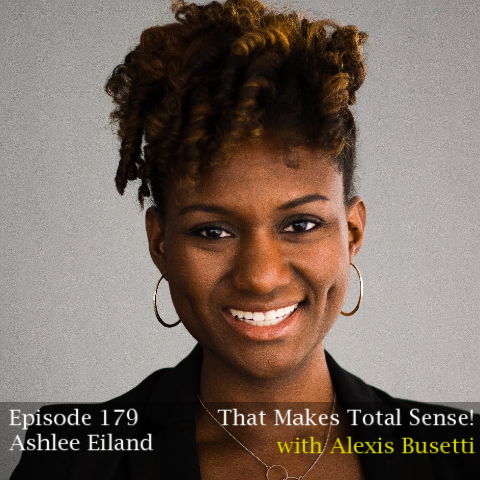
Speaker 1 00:00:42 Hi, this is Alexis Bus, and you're listening to That Makes Total Sense. Today, I'm bringing you a conversation I had with Ashley Island. Ashley is a leader, she's a pastor, she is a writer, and she is the formation and preaching pastor at Mars Hill Baptist Church in Grand Rapids, Michigan. Um, Ashley has written a new book that we talk about today at the podcast called Humankind, how Reclaiming Human Worth and Embracing Radical Kindness will bring us back together. And I am telling you this book was exactly what I needed in this season, and I am going to tell you it's what you need to at the end of every chapter. I left that chapter Feeling challenged and encouraged by Ashley's call to kindness. She takes her own stories and her own narrative and writes them in such a way that is so relatable to all of us.
Speaker 1 00:01:42 We talk about this a bit in our conversation, how when she was writing this book and getting ready to publish it, she knew that we would be in a contentious political season right now, but like the rest of us, she had no idea what the rest of the environment would look like in 2020 right now, when her book released, um, with Coronavirus and Racial Injustice coming front and center in addition to the political unrest. But this book and God's timing and releasing it really speaks to all of those things. So I encourage you to get ahold of it. Listen to this conversation today with Ashley. She is so encouraging and follow her on Twitter and Instagram. I'm telling you, I feel like if you can be an encouragement on Twitter, then you have found something. And Ashley's Twitter is a goldmine of encouragement. So enjoy this conversation I had today with Ashley Island. Hi everybody, I'm Alexis Bus and welcome to That Makes Total Sense. I am so excited today to have Ashley Island on the podcast. Hi Ashley.
Speaker 2 00:02:46 Hi Alexis. Thanks for having me.
Speaker 1 00:02:48 Oh, I am more than excited. I am more than excited to have you. We, before we pushed record, we got the chance to just kind of like debrief and prep a little bit together, and then we prayed and we just said maybe we should have taken the time to just do that.
Speaker 2 00:03:05 Just do that because y'all, this woman is prayer warrior. I just like, keep going girl.
Speaker 1 00:03:11 Uhuh, this is what our country needs right now, right? That's
Speaker 2 00:03:14 Right. Yes.
Speaker 1 00:03:15 We need some sisters and brothers to sit with each other and pray. Mm-hmm.
Speaker 2 00:03:21 <affirmative>. I think so. Ooh, say that again. Mm.
Speaker 1 00:03:23 I mean, we do, we need, we need some sisters and brothers to sit together and pray, and we also need some kindness in our lives. And that is what Ashley is going to talk to us about today. So we're, we're going to talk about her book because it is, I didn't even show you this, Ashley. It's like you probably can't see it very well. It's like completely dogeared, <laugh>, like, I mean top and bottom. Literally. I was going through the notes and I'm like, the first dog ear on this book is on page two. Oh
Speaker 2 00:03:55 My goodness.
Speaker 1 00:03:56 <laugh>. So, just to let you know, the first dog here on this book is on page two. It's crazy. So Ashley can, we'll get into this in a minute, but can you give, tell us a little bit about yourself, where you live, your family, what you do for work, all that kind of stuff?
Speaker 2 00:04:09 Yeah, would love to. So my husband and I, we're currently in Grand Rapids, Michigan. I am a preaching and formation pastor at Mars Hill Bible Church here in the area. And my husband is our worship pastor. So we get to Oh,
Speaker 1 00:04:24 That's fun.
Speaker 2 00:04:24 Do life and ministry together. And we have three amazing littles. We have a five-year-old girl, a four-year-old boy, and an 18 month old girl.
Speaker 1 00:04:35 Oh, you're not kidding,
Speaker 2 00:04:37 <laugh>. We are. We are in the thick
Speaker 1 00:04:42 Of you. Were in the thick, yes.
Speaker 2 00:04:43 So many things <laugh>. But, but before we moved here, my husband and I lived in Chicagoland where he's originally from, and before that, my first career was in human resources with Nestle usa. So I joke with people and tell them that I worked for the literal Willy Wonka factory. Yes. <laugh>. And, um, yeah, I went to college out in Los Angeles, but was born and raised in Houston, Texas. So I am a Texan at heart and I love Texas. I miss it. But we are loving our lives out here in the Midwest and pastoring this amazing community.
Speaker 1 00:05:19 Oh, I was hoping that you would get to the Born and Raised in Houston, Texas part, um, because that is, that was part of w the, I think that was one of the things that I felt connected to you in the book as an author is, is I'm like, you're talking about my stomping ground. Like you're, you know, I'm like kind of picturing, you know, okay, like this is what the northwest part of the city and Oh, she went to school kind of over in this area, or, you know, things like that. And so, um, and so we've been here about 10 years, so we're not Oh,
Speaker 2 00:05:49 Amazing.
Speaker 1 00:05:50 Yeah. We're those people who the bumper stickers say, I wasn't born in Texas, but I got here as fast as I could. Yeah. <laugh>, my husband would hate that I said that <laugh>. Um, but my kids are all Texans. That's just all they know, um, is Texas. So
Speaker 2 00:06:05 We love it. It's a wonderful place to live in, grow up and I miss it. And there's so many good things I got from being raised there and it's just a beautiful place and so many, it's
Speaker 1 00:06:15 A beautiful place. But it's June right now and it's really, you're laughing because it's it's unreasonably hot.
Speaker 2 00:06:24 Yeah. The heat is like a blanket.
Speaker 1 00:06:26 Yes. <laugh>. It's like a weighted blanket.
Speaker 2 00:06:29 A weighted like Yeah. Just not even a, a thin blanket. No, it's like a thick wool blanket Yes. Of
Speaker 1 00:06:37 Heat. Yes.
Speaker 2 00:06:38 From June through, sometimes early September. So, bless you all because <laugh> no joke.
Speaker 1 00:06:48 It's maddening. It's maddening. But I'm, it's the opposite though, in Michigan, right? With the, the snow and the cold is just absurd.
Speaker 2 00:06:57 Yeah. I mean the cold is absurd, but right now we are enjoying like seventies Oh yeah. Which is considered warm for our parts. So yes. We're, we're trying to enjoy every minute we can outside.
Speaker 1 00:07:10 Yes, for sure. Yes. No, that's so good. That's so good. So you are a, a teaching and formation pastor. Can you like, unpack that a little bit? Cause I don't know that every church, local church has that kind of title, so Sure. What does that, what does that mean? Like, what are your responsibilities to the congregants? Especially like the, the formation part? I'm interested in what that looks like.
Speaker 2 00:07:35 Yeah. Once a month, right now I am preaching for our con congregation. So a lot of what I do is prep and prayer and really soaking what I call soaking Hmm. In the text. And, uh, it's mostly because I feel like if I'm going to proclaim, cuz really preaching is proclamation mm-hmm. <affirmative>, um, and inviting people into an encounter with God's spirit through the word. If I can't have an encounter myself with the text, then whatever is proclaimed is going to come across as an authentic and, um, disconnected in a way. And so I, I do, I take a long time just to, to figure out what, what are you speaking in this text to me personally? And hopefully that translates, uh, for our community for a specific time, you know, from any platform that I'm on. And so that's the preaching part, the formation bit.
Speaker 2 00:08:32 It's really neat. I get to work with a dear brother also on staff at Morriss Hill. He leads our formation school, and it's really an invitation. I think we do two cohorts a year, uh, or one cohorts. Uh, and they meet over the course of two calendar years. And we invite people into deeper waters with Jesus. And that's through a few different avenues. We invite people, people to read different books, um, on everything from silence to justice, uh, really spans the, the gamut of topics. But, and then we have a practice that hinges around each different module. So the way our church works is we have these directions that we orient our liturgy and our discipleship essentially around. So one module might be the outward direction, and how are we being a, a people who is seeking to be an authentic loving relationship with those around us.
Speaker 2 00:09:25 We have an upward direction where we're orienting our hearts and aligning them to God and saying, God, we wanna worship you in all that we do. And in all the ways we live our lives. And there's the inward direction and so forth. And so we're essentially taking people on this journey together in community, and we get to teach on Monday nights. And so our, my friend Tim, he does most of the teaching, but every now and again, I'll, I'll hop in there and, and teach some of the coursework and really just offer myself as presence to anyone who wants to debrief the material in a more intentional way. I do, uh, lead some practices with our cohorts as well. And so it's an opportunity for me to invite people to be shaped, informed, into a more Christ-likeness through this small community. And it's really beautiful and it's really unique and it's such a joy to have been a part of, you know, we've, we've only lived here for eight months now. The, the my first cohort, you know, walking folks through August to May was such a joy and I can't wait to do it again.
Speaker 1 00:10:33 Wow. I just, I love that. I kept hearing, I have a good friend who, um, we, we were walking through some Bible study together and we've been friends since, uh, college and, and you know, there'll be sometimes when I'll just go, ah, I can't believe I missed this. Or, ah, this is what, you know, like, I've got this finally clicked for me or something. Or I'll say something like, it just feels so elementary, you know? And she'll say, yeah, but friend, it's, it's a broader, deeper work. Yeah. You know, and I just think like a lot of that stuff that you're, maybe it is the first time that a lot of people are hearing or, or, uh, absorbing the information, but for some people maybe it's not. And I just hear, I just kind of hear that like, it's like a broader deeper work.
Speaker 2 00:11:15 Yes. A broader,
Speaker 1 00:11:16 Deeper connection because
Speaker 2 00:11:18 Yeah. And it's, and that's why I just love the sacred text because no matter if I've read a passage from the gospels 10, 20, a hundred times because it inner sex where we're living and how we're living our lives for a certain time and place, I'm reading it and I'm experiencing it in a completely new and fresh way based on my wife's context Yes. Or my family, or what I might be going through. And so it is, it's a, it's a, it's an in invitation to deeper waters, even though we might be reading the same book twice Yes. Or studying that one passage again. Um, and it's really walking with people through their lives to say, where is Jesus leading you in this part of the journey?
Speaker 1 00:12:05 Oh, it's so good. It's so good. And, um, I have no doubt that you're really good at it because I felt so much, um, I would say, I now you, you're giving me some words. I would say I felt that invitation in your book. Mm. Reading through you, sharing your stories, um, gave me the invitation to, um, look at myself and look at God and look at other people through the eyes that I hope are more like what Jesus sees when he sees people. Um, and I felt some of that formation invitation, um, since you've given me those words and there are good words, um, in your book, humankind, can you tell us what, what, what was the message behind and in this book that you really wanted to get across when you, um, when you had this idea and when you started writing?
Speaker 2 00:13:23 When I first started writing the book, I was anticipating that its release would come at a point in time when our political climate would be contentious. I knew 2020 was another major election
Speaker 1 00:13:39 Year. Right. And so you were wrong.
Speaker 2 00:13:42 <laugh>,
Speaker 1 00:13:43 Let's just throw that out there. You weren't wrong
Speaker 2 00:13:45 <laugh>. I don't think I was wrong. I didn't know how small of a slice to the 2020 pie that would actually be. Right. I thought it was gonna be like 90% of the pie. And it turns out Oh,
Speaker 1 00:13:58 But if we think about 2020, like a pie, I kind of like that. Yeah. It makes it feel a little better. Right? Yeah.
Speaker 2 00:14:03 <laugh>, it's like we don't know what's baked in the pie. That's right. May not, may not taste good, <laugh>, but it's a pie. You gotta stick your fork in there and see what comes out.
Speaker 1 00:14:14 Don't let that meringue fool you.
Speaker 2 00:14:15 That's right. <laugh>. It's not meringue, it's shock <laugh>. Um, right. And so I was anticipating giving folks a different perspective on how to engage one another's lives for such a time as this. When I, I felt like we were going to live and die on the formation of opinion Hmm. And really throw out what truly matters in the way of each other's worthiness. And I just, I did not want that to happen. Little did I know that we would also be looking down, um, you know, the 2020 tunnel Hmm. And seeing, um, injustice and living amidst pandemic and really being, um, invited into living and, and learning and interacting differently on a day-to-day basis outside of our own political convictions. And so what I was hoping to do was to take the spiritual fruit of kindness and to re-envision it for us. Because today, even when you say the word kindness, I don't know about you Alexis, but I I think of like the Mother Teresas of the world, the Mr. Rogers of the world, those who on a large scale have called us together. Um, but biblical kindness is so much more than what any one of us can pull off on our own in the way of niceness,
Speaker 1 00:15:47 Right? Yes.
Speaker 2 00:15:50 Biblical kindness is empowered by the spirit of God. And so how do we live in a way that takes into account that all of the fruit of the spirit is truly lived out in narrative, in story, in parable. And to say the way that God has chosen to reveal God self to us is through word. And I was saying, I I don't want this to be a, a leadership book of sorts, where you have five ways to be more kind. Although I think the, the practicum, you know, is important. I wanted this to be story because I truly believe story causes deeper and empathy with one another and helps us recapture. And, you know, the subtitle of the book, reclaiming It helps us reclaim human worth in a way that helps us see, no matter what you believe, no matter what you've lived out, no matter how your beliefs and values came to be in the context of your own family or your own experience, what I can't deny is that in my belief of scripture and who God is, that God has created each and every human being out of his own image and likeness.
Speaker 1 00:17:10 Yes.
Speaker 2 00:17:11 And because of that, that demands a respect and a reverence for God's creation in that human being.
Speaker 1 00:17:22 Oh my goodness. Like, yes. All of the yeses to that. I wrote out this, this was my first dog year, I'm telling you on page two, but you say kindness will be able to undo the damage we've done because it's the secret weapon for detecting the intrinsic worth found in every person.
Speaker 2 00:17:47 Mm, mm-hmm.
Speaker 1 00:17:48 <affirmative>. And I love that definition. Yeah. I love that definition. I was, um, introduced recently by a, a pastor friend of mine who has also come on the show, and he talked about marriage and he talked about marriage, um, being the partners in this marriage, fighting for the other one's dignity.
Speaker 2 00:18:18 Mm. Yeah.
Speaker 1 00:18:20 And I loved that picture. And when I, when I read this, I, I, it's like the same thread for me there, that it's the secret weapon for detecting the intrinsic worth found in every person. Can you like, speak to that a little bit more?
Speaker 2 00:18:41 Yeah. One there, I think there are a few ways that kindness is distinguished from niceness. So niceness happens out of our own power and will, and I think niceness can be passive kindness, biblical kindness. I mean, we take our cues from, from God's self. I mean, you go back to the book of Jose in the Old Testament and right there in Jose 11, God describes his relationship with his people. And he's saying, I led you by the chords of kindness and essentially his pursuit of his people, regardless of how they worshiped at the alters of other idols or were unrepentant, he reminds them the way I've led you is by the chords of kindness. Mm-hmm. And I've consistently called you by my perpetual care and steadfast love and unwavering faithfulness toward you. I have called you to be reminded of the dignity that is given to you by myself.
Speaker 2 00:19:51 And so kindness in our own human relationship, if we are going to mirror that relationship that God has with us, is intentional, it's perpetual. It, it requires an effort that we, that we do fight to dignify the other person. It cannot be passive. We have to choose kindness. Um, and we have to choose to, um, reflect and call out the inherent worth of every single human being. And we have to decide what wins. Like at the end of the day is, is one's opinion. Is that, is that the hill that we are going to die on?
Speaker 1 00:20:37 Yes.
Speaker 2 00:20:38 I also think we get our own egos wrapped up in this because I don't know about you, I don't like being wrong. Oh,
Speaker 1 00:20:44 I, I literally wrote that in my prayer journal this morning. Yeah. I mean, it's like, God, keep me from this desire to be right.
Speaker 2 00:20:52 Yes. Right. Yeah. Yeah. And, and I think our, our worthiness gets parked, our worthiness gets parked and rooted in, um, the longevity of our based systems and thinking to say, well, I grew up a certain way and was taught that that was right. I pursued a certain career or a certain level of success in order to feel like I've made something of my life. The things that I was taught that people that I loved, even some of the pain and the hurt that I've experienced along the way, I don't want them to not be worth it. And so I'm going to hold on to and clench to, and fight for my opinions and values and beliefs because I wanna know that my life is amounted to something.
Speaker 1 00:21:39 Right.
Speaker 2 00:21:41 But at the end of the day, how do we say, uh, prayers of gratitude and thanksgiving for the things we've been given and our experiences and everything that's shaped us and informed us along the way, but but not be so married to those things that we can't reground our rooting and who God is. And to say, because I'm rooted in, grounded in God, in the way of Jesus, um, I can let go of some other things for the sake of the unity that he's calling us to. I mean, that's what Jesus prayed for. Right. When Jesus prayed for us in John 17, he prayed for our unity
Speaker 1 00:22:24 A lot of times. A
Speaker 2 00:22:25 Lot of times he said, he said that we might be one is he and the Father are one. And, um, but that means we have to work for it. And if we're going to work for it, we have to be willing to remind ourselves of what we're truly being rooted in right now.
Speaker 1 00:22:43 Right.
Speaker 2 00:22:44 And is that calling us into further unity or is that calling us away from it? And we have to be really honest about that.
Speaker 1 00:22:53 I think. I think that honesty, and that's, I think honesty and grace are maybe the two themes that I would say I could trace through the narrative that you share in your book. Mm-hmm. <affirmative> mm-hmm. <affirmative>. Um, because I feel like grace, um, of course kindness is the overarching, but this theme, this thread of grace goes through, which I think speaks to, we need to see each other as image bearers first.
Speaker 2 00:23:33 Mm-hmm. <affirmative>.
Speaker 1 00:23:34 And so even if someone says or does something that I think is stupid right now, <laugh> mm-hmm. <affirmative>, I'm going to extend grace. But the honesty part that you're talking about says it doesn't stop there. I can't look at them and extend them grace and say, oh, I think what they said is stupid. I'm gonna extend them grace. I think the honesty part is turning the view around to ourselves and saying, yeah, but did, am I, is that coming from me? Is that a, like, like <laugh> often in your book I kind of joked about earlier, I'm like, I, I was often asking myself, oh my, am I her like <laugh> <laugh>. Like, you, you have an interaction with someone and that person sometimes says or does something that's not very kind. Um, or sometimes you're very honest and vulnerable and say, sometimes you're the one who did something that was not, not super sensitive.
Speaker 1 00:24:32 And then I, and then I have to look and I think you, you invite the reader to look and, and take an honest look at, at herself or himself and say, yeah, but am I doing that? Yeah. Am I the one that is <laugh> kind of making someone else extend that grace toward me? Yeah. Um, does that make sense? I'm, I'm feel like I'm not saying that very well, but it's just like this, um, this, this, um, this, this idea of kindness and, and it identifying worth in other people. I feel like if I'm just gonna lay it out, that sometimes I have to be honest with the fact that I have not treated some people as if they're interested.
Speaker 2 00:25:16 Mm-hmm. <affirmative> mm-hmm. <affirmative>. Yeah. And Alexis, that's, that's the beauty of confession. It is by God's kindness that we are led to repentance.
Speaker 1 00:25:27 Amen.
Speaker 2 00:25:29 And so if we are going to act differently, um, I, this is really when it comes down to it, I love what you were saying about grace and truth, when it comes down to it, this is all an overflow of our, from our hearts, all of it. Um, I think of Paul's words to the Ephesians in Ephesians four, where he implores them be kind to one another. Tenderhearted Yes. Keyword. We'll go back that into that in a minute. Forgiving one another as God through Jesus Christ has forgiven you. There's so much even in just that one statement. But I, I believe that a time like we're living in now when we're seeing so much injustice where there's so much to grieve, there's so much even to be angry about. Where I'm trying to look at my own heart's terrain is to say, how might this cause my heart to be callous?
Speaker 2 00:26:36 Because with a callous heart, we cannot love as Christ calls us to love. So really the work, at least for me, and you know, as in having conversations with other people, the work is heart work. Yes. Because if I am going to walk forth a mission, or even in just relationship with someone else, my heart must be postured so that I'm able to both receive grace and give it away. Yes. To receive kindness and to give it away. It's, it's a two-way flow. Yes. Yes. Um, and sometimes that receiving grace and kindness comes in the quiet place in the morning when it's just me and God. And to say, this is how I have not loved you with my whole heart. This is how I have not loved your creation, your people with my whole heart. Could you like refill me again with the vision of your kingdom? God forgive me. Like what a beautiful place to live out of a, a place of confession and humility and repentance. To say that the only way I can profess this faith, this faith is by recognizing that I'd fallen short that I needed a savior.
Speaker 2 00:27:57 Um, I, it's interesting, I tucked in, in that one chapter in Ephesians for up top where he cautions Paul s uh, the Ephesians away from Hardheartedness. And, and down to that verse, when he calls them to be kind to one another in the middle, he, he talks about anger. He says, be angry, but don't sin. He's, he, he gives us some really good handles that I think are great, um, are great opportunities for us to step into life together in a deeper way. Uh, but I do think we have to go back to that space of going, that thing that I'm wanting to call out of someone else in the way of accountability is, is that teetering on the edge of judgment, that's not mine. That is, that is not mine to execute.
Speaker 2 00:28:56 Accountability happens best in relationships that are trusted, that have been formed over time where we can speak truth to one another in grace. And that's where I think the problem is. Sometimes we're wanting to do that online over Facebook or Twitter or Instagram, but there's not, there has not been an enmeshment of life and opportunity to love one another Yes. On those platforms. Yes. Um, and so yes, there, there needs to be a, a place where especially those who are public and who are leading and influencing and forming people in such important ways are held accountable. Um, but that must come from a place of us first saying that we are ourselves being, we are willing
Speaker 1 00:29:40 To be held accountable ourselves. Right. And I think the enmeshment part that you're talking about is so key, and it's so important because I, I had, um, man a friend years ago kind of, kind of speak, speak this, and I'm like, oh, it's, it, it makes a lot of sense. Um, because it's, she, I don't even remember now exactly what the context was, but it was just like asking the, the advice of asking before you react or respond, asking does that whatever you're gonna respond to line up with what you know to be true about that person's character. Mm, mm-hmm. <affirmative>. Right. So it's like, oh, maybe, maybe that stung. Maybe there was something that person said or did that stung me, but, and it doesn't mean you don't get to respond or anything like that, but the pause to say, I know this person. We're in relationship.
Speaker 1 00:30:37 Mm-hmm. <affirmative>, does that wound that I'm feeling right now, is that injury, does that sting line up with what I know to be true about that person's character? Mm-hmm. And then think about the hurt kind of in the context of what you know to be true about their character. Um, we have, we learn, I think we learn to do this. We get to practice on God, right? Yeah. Because it's like there's so much in the Bible that's confusing, or when we see things like we're seeing pandemic and injustice and, you know, all this stuff, and, and they're, it's, it's, it's okay to, to, to let God have it and to talk with him and to be angry like we see in the Psalms and two lament and all of those things. But if we start saying, well, you did this or you did that, we, we have to line that up with what we know about God's character.
Speaker 1 00:31:25 That's right. Well, God is love God. It's God's kindness that brings us to repentance. God is compassionate. Jesus showed us what it means to walk in truth and light. And so if I'm gonna start pointing my finger, then I have to pause first and ask myself, does this, how does this line up with what I know to be true about God's character even? Yeah. And, and you're right, because online or things like that where we see, we don't have the privilege of walking in relationship with everyone that we see. We don't have time to walk in relationship with everyone we see online and to get to know their character. Um, and so that requires a work in us to say, am I just gonna, can I let this go <laugh>? You know? Right. Or, um, or what, or, or, or what about that? So I, I honestly have like a page and a half of notes, but I'm just gonna ask you like, let's just scrap some of it for now.
Speaker 1 00:32:21 Um, can you speak to what you are seeing specifically related to the racial injustice that we're seeing right now? And you are, you're online mm-hmm. <affirmative>, I, I, I'm sure that you have extremely appropriate boundaries, but I know that you are seeing some of the same stuff that the rest of us are seeing. Yeah. Um, this, this kind of, um, well, I'll just let you take it. What, what are you seeing? And if you could, um, if you could speak to the situations and if you could speak to the individuals and groups as a pastor, which you are mm-hmm. <affirmative>, um, what are you seeing and what would you say? Yeah. In the other ear,
Speaker 2 00:33:06 What I'm seeing largely is 400 years of oppression that have been not in alignment with God's design for his people. Um, not be kicked up for the first time because we've seen some of these headlines before. I think they are unique in that they're coming so closely together. Right. Um, and they're being, um, publicly displayed in a way that at one point we didn't even have the technology for. Um, but now we're coming to a point where, you know, we need to decide, will we let the systems that have shaped informed our country continue to live on in the ways in which they've existed? Or are we going to make some changes? And here, like if you imagine pulling out a junk drawer, like I remember, I remember moving from one house to the next and getting to the junk drawer. Like we all knew that the junk drawer was messy.
Speaker 1 00:34:14 Oh. That's like the reason I won't move
Speaker 2 00:34:16 <laugh>. Yeah. The junk drawer.
Speaker 1 00:34:18 I don't wanna pull it
Speaker 2 00:34:20 Out. Yeah. Yeah. We, we have, um, we have this drawer in the house of our country's history. You pull that drawer out and you, you know, it's messy, but it's, when you start to take out the individual pieces of it, they are sprawled, um, way more publicly than, uh, we've seen in a long time. And so it's like taking those things out of the drawer and trying to walk around the house. We're tripping over everything. And what's being kicked up is pain and wounding. And we have to, um, answer the question that God asks in Genesis of Cane, where is your brother?
Speaker 2 00:35:14 Do we have the fortitude and the resolve as people in this country to care about the whereabouts and the concerns of our brothers and sisters who are in pain, um, black and brown people who have, um, just weathered injustices over and over again? And so I'm seeing, seeing pain in the ways in which protests are happening, where people want to be heard and they want to be heard because they want someone to acknowledge that they are worthy mm-hmm. <affirmative>. And not just that they are worthy, but that the systems that impact their lives are constructed in such a way that, um, take their concerns and their lives and they're flourishing into consideration. And where that's not an alignment, people are crying out for change. Um, as a pastor, this is interesting because it's really easy to stay focused on articles or podcasts or, um, just quick headlines over social media to really take a deep dive and figure out how do, how do we form people right now in this season?
Speaker 2 00:36:28 Um, I'm really seeing this moment as twofold, one, an opportunity for me to go deeper in my own wrestling and lament, um, as a woman of color in this country, there's so much to lament. And it's, it's like I hardly ever know what headline or what, um, news article is going to trigger pain in, in my own story. You know, I'm raising a, a, a black boy, and that means a lot for me as a mom right now, but as a pastor, um, it's really important for others out there or other leaders who are, are pastoring a flock to say, what does this mean for my specific context? I live in Grand Rapids, Michigan. What is the history of Grand Rapids? How have communities been formed in Grand Rapids? Why is it that a concentration of poverty, or even the way that Covid 19 has impacted a certain community?
Speaker 2 00:37:25 Why is it only con concentrated in one zip code? What's behind that? And how can I surround myself with other leaders and people who are, uh, more in tune with the history of this place, who know the concerns of different communities and enter into the specificity of my specific context in a way that's caring for those immediately around me. It's so easy to be elevated at the 30,000 foot level and to care about the concerns of our nation and our world. And that's really good. And we should be praying, um, for wisdom and discernment and change. And I live here, <laugh>.
Speaker 2 00:38:06 I live where I live. And, um, the call for me is to say, um, what does all of this mean for right here, right now? Um, and, and it's interesting. I'm seeing my neighbors starting to have conversations with local police departments and the local school boards around how do we make sure that what's written to the fabric of the system doesn't cause further harm to communities that we care about? Um, and so it really is a, a collective wisdom that needs to go forth into all of our communities and the places of influence where we live and move. Um, for you, it might be your workplace to say, let's take another look at our policies. Let's hear from people who may have been impacted in a way, whether we meant something to impact them negatively or not. How can we open up and listen? Um, and how can we invite people to the table who've been unrepresented in so many, in so many ways? Like, this is an opportunity to take what we're seeing on a broader level and to realize that a lot of what we're seeing has been simmering for years. This isn't new. Right. But then, and now, what can I do specifically for my context and my areas of influence that can further align to the heart of God in his definition of justice and mercy and truth and grace and unity for, for his people? Like, what does that mean for me in my own family, my own workplace, my own community right now?
Speaker 1 00:39:45 Oh, it's, it's, no, it's so good. It's, it's so good. And, um, I think that that question, where's your brother? Mm-hmm. <affirmative>, um, is so key. And I think there's two, I think there's two sides to it though. I think that, um, for many, I will say for many white Americans, um, they don't have any brothers of color mm-hmm. <affirmative> or sisters of color, or people who are, they're technically their brothers and sisters in Christ, maybe, or they're coworkers. Um, but the love and the relationship of a brother, um, isn't there. Yeah. And so it's kind of easier to ignore the question Yeah. Of where is your brother if, um, if you don't already have the existing relationship. Um, so I think that that's part of it. On the other hand, I was, um, having, um, a conversation recently, um, with one of my girlfriends who is black, and I just told her, I mean, we're, we're lamenting together and we're processing together.
Speaker 1 00:40:54 Yes. Um, she, they don't have kids yet, but she's married to a black man. I'm raising a black son. And so this is, um, for me hitting differently, um, a little bit than it had before. Not a little bit. That's not true. A lot. Um, yeah. Differently than it had before. And I had told her in my, in my frustration, oh, gee whiz, I thought we were talking about looking at policies or, you know, things like that. And I said, I think I had fallen victim to this idea that is not entirely true. That if we just have relationship, then everything will be better. Mm-hmm.
Speaker 1 00:41:31 <affirmative>, right? Because mm-hmm. <affirmative> it, it won't be better. And I'm, and I'm kind of, I mean, I was kind of down on myself about it, you know, I'm like, she was, I was kind of one of those like, can we just sing Kumbaya? We'll all get along. We have brothers and sisters that look different and it's great. And, and I know that that's is a naive idea because policies do need to be changed and we do need to look at these. And, and that is, that is a, a, a key place where I'm, I'm hoping, um, to be able to use what voice I have and educate myself and, and move in that direction. But my friend did correct me and said, and what I think this goes back to your, to your can enable question, she said, yeah. But basically it's these kinds of relationships that make you care about the policy.
Speaker 2 00:42:16 Yeah, that's right.
Speaker 1 00:42:17 Right. That, that's right. It's, it's, it's not that we, it's, and not that those relationships that, that they're not the be all end all. But if I have a close relationship with you, then I can empathize more, more readily with your circumstance and understand how these policies are impacting my family. Yeah, that's right. And I have, I have, there's my skin's in the game now. Yes. Because because you're mine. Yes. And, and, and that is where that question I think, um, can be really, really impactful Yes. For us is Where's your brother? And you go, yeah. Oh, snap. You're right. Yeah. You look around where, where is he? You know? And so I think that's important. Um, if you have time, um, I, I'm wondering if you'll end with this, uh, out of, literally out of the pages, page and a half of notes I have, I have all of these things in the book, cuz they were just so amazing and powerful. I did not write this one down, but I'm wondering because it's so relevant right now. Yeah. You'll talk about when you invited the police officers.
Speaker 2 00:43:23 Yes. <laugh>. Yeah. Did
Speaker 1 00:43:24 You know it? Did you know I was gonna say,
Speaker 2 00:43:25 Knew it, that I I knew it. Well, it's, it's interesting.
Speaker 1 00:43:28 Again, I literally didn't even write it down. I thought of it just now. I'm like, ah, that story.
Speaker 2 00:43:32 Yes. It's interesting. That's the chapter that people are pulling out as excerpts for other, for other publications. And again, I did not realize that it would be so relevant for right now. Oh, it is. Um, and I, but I think it ties in some of what you were saying, that even in our, our small gestures and relationship, and I'll talk a little bit a about more of what happened here in a second, um, that's not the end all be all right. Sometimes in the context of relationship, however deep it goes or not, that helps us see whatever happens next as, um, an impetus for change. We are more motivated to change. We are more motivated to speak up and use our voices if we have relationships in mind that matter to us. Mm. Amen. Um, so for this, for this one chapter, it was right, uh, after Charlottesville and what we were seeing in the media with protests and, um, there's so much division and hurt, um, coming out of Charlottesville.
Speaker 2 00:44:34 Um, and we lived at the time in this small town next to a river, uh, really quiet and quaint beautiful town. And immediately after Charlottesville happened, we started noticing confederate flags pop up all over our neighborhood. And my husband's a runner. And so he would come home sometimes after a run and say, you know, I saw a new flag. Uh, someone like cemented it into, uh, their yard or, you know, some, some one had two flying, one on the bottom floor, one on the top floor. And it was so jarring because coming from Texas, you know, grew up having a very specific narrative in mind of what that flag represents. Um, and to be honest, Alexis, I was scared. I felt fear welling up in me in a way that I knew was not going to be productive, that was either going to paralyze me, um, or cause me to be outwardly so distrustful that I was not going to be able to love well and really any of my relationships.
Speaker 2 00:45:47 And so I, you know, I remember in a quiet moment just saying, Lord, what do I, what do I do here? And, um, I had this crazy thought to say, uh, Ashley, draw closer in proximity. Draw closer, draw near to the object of your fear. And I was honest with myself in that moment, and I admitted that although I had friends and family members who were, um, serving and protecting in both the military and in law enforcement, I was scared of the police in that season. I was just scared. Um, not doubting that there were a few individuals who were her protecting and serving in, in really productive ways. But I think overall there was a sweeping fear of unknown to say like, what, what could happen to my family being one of the only black families in this neighborhood? Would we get the benefit of the doubt if we called, um, would someone know that this was our house?
Speaker 2 00:46:48 And that I'm not the intruder, I'm the owner, right. Just so many questions. And so I, um, my response to all of this was to reach out over social media to our local police departments. I think I chose two or three in the surrounding area, including the one for our town. And I said, if there are any officers who would like to come and just have a conversation, I'd love to share our heart a little bit about how this past season and in the news events have been impacting my family. But I also wanna hear from you and how it, how it's impacting you as someone in law enforcement right now. I didn't think anyone would chill up necessarily. I'm like, who's gonna like blast this message out to everyone on staff? Like, who, who really <laugh> would potentially care about any of this? Um, but I did invite a couple of friends over just to say, Hey, would you hold this space with us while I I do this thing?
Speaker 2 00:47:42 Encourage, um, this feels very risky. Would you just sit and hold the space and be praying? Um, as you know, this timeframe goes by and, um, I remember my daughter and I making coffee and cookies and it seemed to fall so short, I just had to sell. Like, what in the world am I doing? Like this is going to fix a single thing. Um, these toll Tollhouse cookies and two officers did, they showed up and I remember they parked their car across the street, and as they were walking towards our house, I just, I felt all these butterflies and these jitters and I opened the door and I walked out and I, I remember saying something to the effect of, thank you. Thank you for coming. I love it. And we had this really underwhelming conversation, Alexis, I mean, it's not gonna make it in anyone's movie, real, like, it's, it wasn't Hallmark movie worthy.
Speaker 2 00:48:39 Right. The dialogue. And yet what was so important about that touchpoint, it moved from the events of Charlottesville and how this impacts their jobs and my family. Um, by the end of it, we were talking about baseball and their families and their, their kids, and, uh, they left. And I remember we got in the mail not too long after that, two stickers for our kids, two badges. Sweet. And then at Christmas, by c time one of those officers became in, in our police department and they sent us a Christmas card, <laugh>. So and so, again, it's not like that fixed everything. It's not like it fixed. Like we didn't look at policies that day. We didn't talk about policing or cameras. We didn't, but what it did is it humanized them. Yes. Their dignity, going back to what we were talking about at the beginning of the episode.
Speaker 2 00:49:36 Their dignity was intact from that point forward in my heart. And that was so important for me that God said, I do not want you to fear, fear not, but if you can humanize and see someone made in my image and likeness and come to understand there's a story there, then you can move forward hopefully in a way that's, that's unifying and that, um, is empowered and is strong and courageous in helping to write so many things that are wrong and in your midst. And, and that's what it gave me. It gave me, um, a boldness to move forward, not out of fear, but encouraged to say, um, maybe I have just a little bit more in the tank to, to, uh, to actually be on mission in the ways that God's called me to step into this broken world.
Speaker 1 00:50:33 Oh, thank you. Thank you. I just, I'm, I'm so glad that you shared that, that the two things that I really, really heard you say in that was that you had a fear welling up that you realized was not going to be productive.
Speaker 2 00:50:52 Yeah.
Speaker 1 00:50:54 And, and noticing not just the fear, but its lack of productivity. Yes. And, and that you realized that you were gonna have to take action in order to reverse that narrative.
Speaker 2 00:51:08 That's right.
Speaker 1 00:51:09 Yeah. Because that fear was not productive. No. But what you did was productive and what you did was the second thing I heard, which is you moved closer in proximity.
Speaker 2 00:51:19 Yeah.
Speaker 1 00:51:20 Because you're right. Because we are not going to be able to focus on someone else's dignity from a 30,000 foot view.
Speaker 2 00:51:29 That's right. Everybody
Speaker 1 00:51:31 Just looks like dots from up there.
Speaker 2 00:51:32 That's right. It doesn't become important enough.
Speaker 1 00:51:35 Right.
Speaker 2 00:51:36 Um, and some would say like, that was really risky
Speaker 1 00:51:39 <laugh>. Right.
Speaker 2 00:51:40 But that's the point. It is, it is risky. It's risky for by someone's presence. Our own harmful narratives, um, become unraveled. And that's a really good undoing. Yes. But, but that does require risk.
Speaker 1 00:51:58 It is.
Speaker 2 00:51:59 And thank goodness for the, for the gift of community, because with others there to sit in presence with me, I knew I wasn't alone.
Speaker 1 00:52:09 Yes.
Speaker 2 00:52:09 And this work cannot be done alone. So lest we believe that we ourselves can conquer ourselves and conquer the systems and like we can't do it alone in a vacuum. We need each other.
Speaker 1 00:52:25 Yes. I think it's important. You're right. We can't even conquer ourselves by ourselves.
Speaker 2 00:52:29 No. <laugh>
Speaker 1 00:52:31 I mean, I wish, I wish you would, I wish you would do a sermon just on that. Yeah. Send me the link because I will <laugh> I'll listen to that on repeat. But we, we can't even conquer ourselves mm-hmm. <affirmative> by ourselves. Mm-hmm. <affirmative> because we need each other.
Speaker 2 00:52:46 Yeah, that's right.
Speaker 1 00:52:48 So badly. Oh, it's so good. Ashley, thank you so much. Where can people find you and where can people find your book? Humankind?
Speaker 2 00:52:59 Yeah. Well, humankind is wherever books are sold online and in person. I saw it in the flesh at Barnes and Mobile for the first time not too long ago. And it was a crazy experience. So it's everywhere. Um, but I mostly, the platform I love is Instagram. So I'm at Ashley Island also. Same handle on Twitter. Um, and then all of my work
[email protected].
Speaker 1 00:53:23 Thank you so much. And I'm just gonna encourage everybody out there to follow Ashley. I told her before, um, full disclosure for me that I just happened upon her on Instagram. Someone I think in their stories had posted about her book and I started following her. And what I have seen from, from your platform, Ashley, is those same two things I see in the book. It's, it's honesty and it's grace. It's, it's honesty spoken with so much grace. And so this is, um, I feel like your platform is a safe and encouraging place for people, um, for people to enjoy and, um, and even kind of process right now. That's, that's what I've seen from you. So I really appreciate that.
Speaker 2 00:54:04 Oh, thank you Alexis. I've loved this conversation and I'm so grateful for you. Thank you for having me.
Speaker 1 00:54:10 Thank you for coming on. The links for all the resources mentioned in today's episode can be found in the show notes, music and podcast production by Seth Bueti. Be sure to give us a review on iTunes and subscribe at your favorite podcast listening app. You can also visit us at. That makes total sense.com.