Episode Transcript
Speaker 1 00:00:06 Welcome to That Makes Total Sense, a podcast dedicated to exploring God's generosity and justice. I'm Alexis bti, a Christian aiming to ask good questions and encouraging you to do the same. Every one of us is wired by God to live out generosity and justice. But the how sometimes eludes us that makes total sense is a way for us to get together, posture ourselves as learners, and challenge one another, to practice generosity and justice in a tangible way every day. Well,
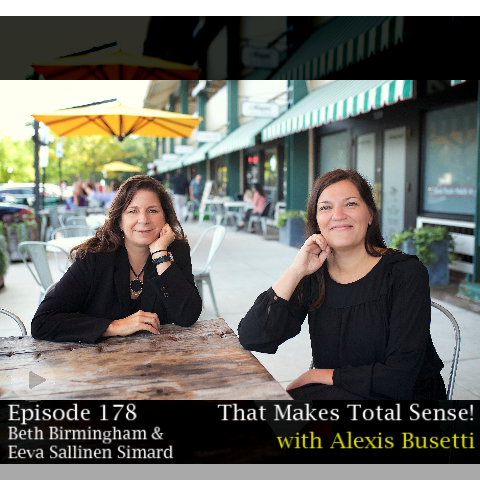
Speaker 2 00:00:42 I always get really excited when I have three Zoom rooms on my screen because it's, it's so fun to interview not only authors, but co-authors in a space. And that is it. Today, it was actually surprise to me, so I just finished, finished, uh, creating Cultures of Belonging, cultivating organizations where women and men thrive. And I have authors Beth Birmingham and Ava Sal and Samar with me today. And I feel like I wish we could have pressed record five minutes ago because even some of the things that we just talked about, about journeys and being in these missional spaces, um, our conversation has already been valuable. So thank you ladies so much for joining me today.
Speaker 3 00:01:27 Thanks for having us. We're excited to be here. Absolutely.
Speaker 2 00:01:31 So I wanna start off by saying, um, that just sharing with, uh, our listeners what I shared with you when we, when we first sign on this morning, which is that I spent the day reading, finishing this book yesterday. I didn't do any of my schoolwork, which is really not great cause I have finals next week. But I spent, I spent the day, um, finishing this book at home and I texted at least four or five girlfriends with the cover of this book. Some of them got the picture of a paragraph, and I'm like, you, like, you have got to, you've got to get your hands on this, you know, it'll, it'll go for you in your workplace, or, Hey, you with these conversations we've been having about church or, you know, whatever, um, you ladies covered so much ground in this, and at the same time it felt really, um, digestible. So I hope that we can, I hope that we can, uh, chat about that and unpack some of that today.
Speaker 3 00:02:33 Awesome. Thank you so much for sharing your experience. Yeah, I think, um, probably the book reflects a lot of our lives and our lived out journeys. Um, not just working in in the space, missional space, but also our kind of personal experiences. So I think that all comes through and it's hard to put into a book, um, and contain it all. But, um, thanks for, for sharing that, your experience reading it.
Speaker 2 00:03:01 Yeah. I wanna thank you so much, Ava. I wanna get started with this. Um, you know, and just kinda ask maybe the obvious question first, which is, um, you know, maybe asking each of you to just describe what a culture of belonging is, and, and just as a reader to say that I really appreciate the way that this topic was framed as such as a culture of belonging. Because I would say, speaking from the perspective of a woman who has been on my own journey for the last decades on what, what does this mean for me looking at my life in as a, as a minister, as a mother, um, you know, as a worker. Um, there are lots of ways that I, that I feel like I could come at it <laugh> that may not be as edifying as creating a culture of belonging. And so I really appreciated that framework because even as I, as I was reading, um, that helped shape how I was experiencing even, even the book. So when you all say a culture of belonging, what do you mean by that?
Speaker 4 00:04:09 Well, I'll let Ava talk to, cuz in the book we actually define it so that we set it up for the book, but there's actually a, a meaning behind our definition. You know, we have worked for some of us 25 years, uh, in missional spaces, and we often hear these organizations talk about wanting to, um, be part of creating the kingdom of God and ushering in the kingdom of God. And we talk about that as one of our aspirations that we wanna bring to communities, you know, God shalom to the communities of poverty around the world. But it just, you know, suddenly struck us, maybe not so suddenly, um, how odd, when you think about the kingdom table and the diversity that we know is spoken about in Revelations, and then you look at our organizational profiles and you look around an executive team and you look around senior leadership influence teams, and we don't actually reflect the diversity of the kingdom of God. We say we want to be part of ushering in. And so that feels really disjointed. And so it was part of the impetus for wanting to set out on, uh, working on this book is how do we create organizations that are consistent in not only their messaging, but the what they are modeling in carrying it out.
Speaker 4 00:05:41 Ava, why don't you share what we've Yeah. What we created.
Speaker 3 00:05:44 Yeah. Yeah. Um, so I mean, d e i efforts diversity, uh, equity and inclusion ever efforts are at their peak after, you know, we see these big crises in our country, George Floyd, the, uh, the marches that ensued or Me Too, and organizations, you know, want to create better diversity, want to address the issue, but they fall short. Um, because, uh, diversity and inclusion is an inconvenient event for an organization when you're used to a mon monogamous, um, I'm sorry, homogenous culture, uh, where certain kinds of voices are valued. Um, when you invite in other kind of voices, it creates chaos. Um, it creates, um, maybe inconvenience, it creates, um, it, it becomes uncomfortable, especially to those who have had the, the key seed who have been leading. And so you, you know, you can have this event where you're inviting people in and you may, you know, recruit someone of a woman of color or more women onto your leadership team.
Speaker 3 00:07:03 But then when they start to speak their minds about what they're seeing in the organization, very often, um, you know, the mic kind of gets pulled away. Um, because what is being heard around the table is not status quo, is not what we're used to. It's not what makes us feel comfortable and belonging is, so there's this great quote where it says, diversity is being included to a party, and inclusion is being asked to dance at that party. And belonging is inviting the person who's invited to the party to teach us a new dance. And belonging means that who you are and all of the things that you are bringing to the table change how we do business change. How we think as an organization. It's not just that we have different colors or different genders, um, around the table, but we have different ways of doing things. And, um, the belonging means each person is valued as they are. And our definition of belonging is if we include people and we value them, and we include them as they are, they will then in turn turn around and show, you know, loyalty and dedicate themselves to the organization for the sake of the success of the organization. And that's genuine belonging. That's very mutual. So that's sort of the, the definition of belonging.
Speaker 2 00:08:31 Well, and I love that you point that out, that it's, that it's mutual and the subtitle of the book, as I mentioned, is where women and men thrive. And I just thought of an analogous kind of circumstance. Um, I was able to speak with Amy Kenny, an author who talks about, um, her disability in the context of church life and theology. But one of the things that she, it was just really eyeopening to me when she brought it up, is talking about when we design, um, inclusive spaces to include people who have disabilities, it really benefits everyone, right? Yeah. And so, you know, she talked about everything from, you know, the, I forget what they're called, but you know, when the curb is, is cut at an angle, right? So wheelchairs can go up, but that also serves people with strollers and bicycles, you know, things like that or mm-hmm. <affirmative>,
Speaker 2 00:09:16 That text messaging wasn't initially for, you know, people who have, um, a heart of hearing, but that everyone benefits from this technology, right? Because it's inclusive. And that when we create, as you're saying, these cultures of belonging, that it's not just, okay, well we want for women to be able to catch up, you know, or something like that. It's like, no, these spaces are actually been places where people can, all of us can thrive when we all ex we'll all experience belonging by creating these, um, spaces that are really, you know, inclusive. Um, Beth, before we started recording, you mentioned that missional organizations, Christian, kind of, you know, stamped organizations we're behind the times on <laugh> this, and we tend to do worse than secular organizations. And I wanna point out that, um, there's a really terrible graph in <laugh> this Fuck that gives, um, a comparison of female leadership for evangelical nonprofits and then compared to all nonprofits, and it is embarrassing
Speaker 4 00:10:30 <laugh>. Yeah, yeah, yeah.
Speaker 2 00:10:32 What, what is happening? Why are we, I mean, I, I feel like I could tell you why we are, but why, like, why are we so far behind as, as Christian organizations in our inclusion of women, especially at these leadership levels?
Speaker 4 00:10:48 Yeah. So we, we have observed this, and the reality is it is a systemic issue within Christian organizations. And we often try to approach it with a single action remedy. So after Me Too movement, all these public statements, we support women, we advance women and blahdi, blah, blah. And within a few days, you know, back to status quo, um, black Lives Matter, we support people of color, we stand with the community, blahdi, blah, blah. And then within a few days back to status quo, I guarantee you more money was spent on lawyers and communications experts to write those statements than was spent on actually changing the culture within the organization so that these things stop happening. So it starts with a theology of seeing each other as the imago day. And people often think, well, if we just put everybody through theological training, that will be it.
Speaker 4 00:12:00 No, cause there's other, um, biases and barriers that are embedded in all the other, um, parts of the system that we address in the book, the six levers, if you will. But it starts with the Imago day. Do you believe that women and men are both created in God's image called for his purposes and equipped for that calling? And when it gets right down to it, many people don't believe that. Now your organization can say, we absolutely will allow for a female to be a ceo. We're not a church. We're, we're a parachurch organization. But if you don't declare it clearly that we are an, an organization that believes that women and men are created in God's image and equipped and for any of his purposes, whether it's preaching the gospel or being the chief financial officer or chief information Officer, unless you declare that individuals can bring and do bring their personal theologies into the workplace.
Speaker 4 00:13:09 So if you happen to be unfortunate and work for a supervisor that doesn't believe women should be in leadership roles, you will get less leadership development budget put towards you, less opportunity for coaching and mentoring by that supervisor. And sometimes blatantly excluded from key career, uh, experiences like travel because you're a female. And, and to that last one we're referring to the Billy Graham rule, where men can say, I'm not quite comfortable traveling with Ava because she's a woman. When have you ever heard an organization say, well gosh, Bob, we will miss you from the trip. Ava's going, but the assumption is that Ava will stay home because she's the female and someone else is uncomfortable traveling with her. So we need to start challenging and pushing back on some of this. And, and it's so, it, it's no one to blame, you know, how do you say to a man who has spent an entire lifetime in a church where they've never seen a woman preach the gospel, they've never seen a woman on the platform and then suddenly expect that they can, um, change easily, you know?
Speaker 4 00:14:29 So, uh, that's one piece that needs to be addressed. It starts with theology. It certainly doesn't end there. Um, and the longer I live, the more I sometimes wonder if the theological piece has become a scapegoat. Um, when you start to have conversation about the difference between patriarchy, complementarianism, and egalitarianism, you do start to see that the argument breaks down. You know, when we say we believe in patriarchal organizational structures, because there, if you keep chiseling away at it, then there's always, except in the case of, you know, so we don't want a woman to preach from the platform here in America. Totally fine sending her off to evangelize those people in foreign countries. Cause somehow we value them differently or the saving of their souls is valued differently in the kingdom. You know? So when you start to have the discussion, it starts to chip away at it.
Speaker 4 00:15:35 Um, we'll allow Ava to teach, you know, from the Bible. Any boy from the age of zero to 12 <laugh>, suddenly he is the age of 12 and his ears get C clogged and he can't hear the gospel methods from a woman, you know? And so, again, when you start to chisel away at it, so I sometimes think, um, people's theology as a scapegoat, what it really boils down to is self-interest. The first thing. And every man who's listening to this podcast might get scared at the idea what we talk about, gender equality. Cuz the first thing they think of, what does it mean for me? And, you know, I, there's a quote in the book, uh, of a glass door comment when one organization wanted to set about just doing some research on how we might advance more women in the organization and the next door the next day, sure enough, there was a comment on glass door of a middle, mid-level, you know, white man that said, white men need not apply here. Just by starting to ask the question, he kicked into, uh, self-interest mode. This means I won't get a future, um, promotion. You know, future men like me won't get hired. You know, never, never taking a step back to ask the question, do we work in a just environment? Is this space a space of fairness and justice that is actually part of the biblical message we say we wanna carry around the world, though, in my opinion, it starts with the theology, but I think we need to continue to probe that further.
Speaker 2 00:17:14 Yeah. I mean, I had to censor myself from just saying preach and amen. The whole time you were <laugh> you were talking, Ava, what would you, what would you add to that about this, you know, showing up in these Christian organizations more, you know, more prevalent in a more prevalent way than some of the secular organizations that we are around?
Speaker 3 00:17:34 Yeah, there are, I would say there are probably more ways that folks in churches, um, and not just Christian churches, this is prevalent in other religious traditions as well, that we're socialized to see women as those help mates. And, um, kind of, you know, we're socialized by the age of seven to how we see gender roles. And if we've seen women serving men, um, through food and clothes and care and all of those things, all of our lives, um, and, you know, maybe our communities are more traditional as Christians, we still have some of these things more prevalently. Um, you know, it's really hard to move away from that and seeing a woman as a fully capable person who's gonna be making, you know, very clear good decisions just as any man would, you know, and it's just how we are programmed. Um, so it takes a level of almost de deprogramming and understanding of our own biases and, um, where our own socialization is coming from.
Speaker 3 00:18:52 It's interesting, in the book we researched a bit like, you know, who are the men who are more likely to make those decisions of okay. Or like a u-turn or kind of aha moments of like, okay. Um, and it said that fathers of daughters, especially if their firstborn is a daughter, um, they're more likely to kind of come to the realization that women can also lead. And it's so interesting how sometimes it's so personal, something like that, that can, um, that can touch you and kind of change your thinking. But organizations cannot rely on that. Organizations have to set up, um, processes and systems and, and policies. And, and that's why this theo theological perspective is so important to Christian organizations because we are not churches, um, we are not organ, you know, we, we don't church people, we don't, but we can say, theologically, this organization is going to stand for women's leadership. And if they are not, and we can name organizations who will theologically not accepted, they should say it. They need to be very forthcoming that a woman will not be able to succeed here and a woman will not, you know, be elevated to a director or a VP or a C E O because you are wasting that fine lady's time and talent. She's sitting there waiting for a promotion that will never come and organization, if they're choosing theologically that direction, they should be very forthcoming about that fact. Yeah,
Speaker 2 00:20:39 Yeah. Yeah. I mean, I, I couldn't agree with you more and you know, when you're talking about this socialization in, in the inside of this theological piece, cuz it does, it's, they're, they're very, very intertwined, right? I think too, you know, something that, um, I think is, is a theme maybe in maybe an underlying theme, or maybe it was just because I'm the reader, um, that I kind of felt this was, it's this theology though, runs really deep, not just with men, but with women mm-hmm. <affirmative>. And so I would say, I mean, we don't need to tell my story here, but, but I, you know, grew up inside of a church culture, um, that was very, very, um, complimentarian is probably the correct word, I think more, I would say now it leaned definitely more toward a patriarchal, um, system. And that even though that's not my natural bent, I mean, I'm kind of, you know, kind of feisty and, and, and, you know, stronger and more outspoken than, um, you know, maybe, you know, my voice is be a little bit louder than some would want. Um, I did receive that though, you know, it did become a part of my theological formation and my spiritual formation because when we want to please the Lord, you know, we want to make sure that we are living in accordance with what we, how we believe we're created to be. And if that is to be
Speaker 4 00:22:13 Filling blank,
Speaker 2 00:22:14 Feisty, you
Speaker 4 00:22:15 Know, <laugh>, if it's, and so don't even admonish yourself for maybe your voice is louder. Maybe you're a bit spicy. God created you that way and for a purpose. And so, you know, don't dis the creator
Speaker 2 00:22:29 <laugh>. Right? But then, but then I'm, but you know, I think that we internalize, you know, that thing that says, but that's not actually a woman, so you should be fill in the blank. You should be, don't you understand that you're the weaker vessel? You guys mentioned that phrase, you know, or don't, don't you understand that you're intended to, as Ava mentioned, you know, serve in this certain way or you haven't been designed to be a leader of X, Y, Z. And so you need to have this position instead. And, and that can become a really tough, um, theological barrier to overcome as well. So we're not, my point is we're not only speaking to men in this space to say yes, have an aha moment, but I, it's been my experience and part of it is kind of this Bible belt culture that I'll call out and say, you know, I think a lot of women in this, in this space also need to have an aha moment of yes. Like God created you, you know, to, we all have different skills and, and giftings and you know, God created you in this way. Like, do it girl. You know, like, um,
Speaker 4 00:23:29 Well, and, and that's
Speaker 2 00:23:30 Some of that life, you know,
Speaker 4 00:23:31 So much of our, our, uh, identity and existence comes more from tradition and the way we've always done it, than actual biblical teaching. So when you look at, um, complimentarian patriarchal theology, it does tend to be, you know, if you picture the entire scripture as a mortgage board, okay, a buffet table, it does seem to be three places. So they've picked three different dishes and they pile that up on their plate and say, here's the argument. If you look at scripture from beginning to end and the movements and the intentions of scripture and the people God, you know, called on and the people Jesus affiliated with and the ones he called to be his first evangelist. And you take the whole of the purpose of Jesus coming, then it absolutely affirms the Imago day in women and men for whatever God has called them, to not to be put a by a man who says, I don't want to hear scripture come from a woman.
Speaker 4 00:24:39 Um, you know, and, and if you wanna go real deep into evangelicalism and, um, conservative theology, we used to talk about hell <laugh>, we used to talk about sin way back in the day, haven't heard those kinds of sermons in decades. But if you believe that Jesus is the way, okay, do you really think God is only going to use 50% of creation in order to bring people to him? If we truly believe that hearing the gospel message is the way to relationship with Jesus Christ, do you really think he's going to silence and sideline half the team? It makes no theological sense when you start to chip away again at the theology. This is more theological conversation than I think I've ever done on one of these podcasts. I'm probably freaking Ava out <laugh>. No,
Speaker 3 00:25:36 No, I like it. But I'm staring at Ava's face cause I'm like, you you wanna say something? No, I, I just wanna balance that out too with, um, you know, we ask the question, you know, what came first, um, the theological emphasis on, uh, women's sidelining or the exploitation of women's free labor? Yeah. Because conveniently those two have been intertwined in our culture to the point that we do not know which came, which is the chicken and which is the egg.
Speaker 4 00:26:09 Yeah.
Speaker 3 00:26:10 Yeah. And so I would say, I would say, you know, in 2021 women, uh, free labor of, uh, women performed globally was, um, 10.8 trillion out of the 88 trillion economy, globally economy in 2021. Yeah. That's, you know, that is a ma that is a massive, single largest, uh, industry in the world is free work. Yeah. And you know, the, the US economy is based, it is built on the, the backs of women's free care work. I'm from Finland. We have, uh, we have care that's provided at a federal level because women's contributions to the economy are so needed. And so childcare, maternity leave, all of those things are federally provided in the us There is no such thing. Women do free work. And how convenient is it that we theo theologically justify? Yeah. But that's also the spiritual and godly way of being, um, because even churches benefit in massive ways from women's volunteer work.
Speaker 4 00:27:23 Yeah.
Speaker 3 00:27:23 So I'm just saying, I think women, I know that it brings in patriarchal context, it brings us a lot of value. It is our currency as women to be the helpers and whoever is the best helper is the, the most, you know, elevated woman in that group. But we should, we should question what is the motivation behind all of this free work that we're conducting? Yeah. And why couldn't we not get paid for our valuable work? Yeah. So those two theology and economy are like bedmates.
Speaker 4 00:27:57 Well, and we saw this with the, the slavery movement, you know, um, the use of scripture, the use of biblical teaching to justify slavery. Uh, and much of the engine of that was economic, uh, driven, you know mm-hmm. <affirmative>. So all of that labor that was not going to be, um, suddenly free and used, um, in farming and, you know, all kinds of industries, um, we would, that would've been lost. And so churches and pastors and, you know, bible teachers joined in that cause to justify why slavery was the God ordained order. So mankind left to its own <laugh>, uh, has an, a strange ability to justify things that I think in our hearts and as we absolutely know on our final day, um, are not going to be justifiable.
Speaker 2 00:28:54 Mm-hmm. <affirmative>. Yeah. I, I kind of wanna, like, I'm not asking Seth to edit anything, but I am gonna say, babe, I did not tell Ava to bring that up. This, this, this was part of our conversation last night, but it was very, but it was very eye-opening for me, right. Because, you know, I mean, who hasn't been a part of, I would say most of us haven't worked in, in missional organizations, you know, in the NGO sphere or in nonprofits, but I mean, these churches would not have their doors open if it weren't for, you know, the vol Oh, for sure. Volunteer work of women, I mean, in general, right? Yeah. I mean, everything from childcare to food to, you know, all of these things. It's
Speaker 4 00:29:36 The, there's it 80 20 rule, <laugh> 80 of the church's work is done by, you know, women.
Speaker 2 00:29:41 And, and you know, and you know, we've talked too about, um, even in, you know, something that I've talked about kind of in my setting at, at seminary, right? Because I'm with vocational pastors and bi-vocational pastors is, you know, we talk with the women about women getting part-time, they work part-time technically for the church if they are paid gen. And this is, you know, generalizations again, but, you know, but they're doing really full-time work mm-hmm. <affirmative> and because of the theological piece that, that has already been mentioned, they're doing pastoring work, but many of them are not being called pastors. Mm-hmm. <affirmative>. So they're part-time non pastors, many of them doing full-time pastoral jobs, but because of our gender, we're just not valued in that way. And that shows up, Ava, as you mentioned mm-hmm. <affirmative> in, in the economic space, but then also in this leadership, um, space that really much of this book is, is based around, right?
Speaker 2 00:30:40 Yeah. So there's different titles which have different levels of influence inside of these spaces. And, and that was one of the things that I think I just kept coming back to. I felt like I just kind of kept knocking my head against it as I was reading, is, you know, these, you guys have a wonderful section that I feel like kind of encapsulates a lot of what I'm thinking right now. But, um, Ava, you mentioned being in homogenous spaces and, and part of this section I'm thinking of talks about how it's kind of easier to solve problems in a homogenous space. Mm-hmm. <affirmative>, you don't have to kinda think as hard, you don't have to work as hard because everybody there is kind of thinking, you know, similarly to you, but that the problems aren't solved in, you know, the complex problems aren't really solved Well, no.
Speaker 2 00:31:25 In those spaces, um, that aren't filled with diverse thought. Um, but a lot of times women in these missional spaces are being left out of these conversations mm-hmm. <affirmative> and, um, you know, and it's just, it's just mind blowing. I, I'm gonna mention real quick, and then I know that I'm gonna let you women you ladies talk, but, um, one of the things that I, I just wrote literally, I, I don't think you can see, I just wrote hello? Like big capital letters, exclamation point, um, on, I don't even think it's in the same section, but it was talking about how it says, uh, the organization's leaders were okay with advocating for vulnerable people across the world, but they did not acknowledge the vulnerable position of their own staff member as a woman in a cultural context that respected only men as leaders. Yeah. You know? Mm-hmm. <affirmative>, and it's, you know, what you started with Beth, but it's like, oh, we're gonna help all of these women globally even talk about that the stats in the book of these mission organizations are helping more than 50% of the population they're seeking to help our women and girls. Mm-hmm. <affirmative>, they don't have any women and girls at their leadership tables. Yeah. This doesn't even make Yeah. Normal sense. Like we don't have to go into the theological of it. Like anybody who had looked at this would say, how that's dumb. Like, how can
Speaker 4 00:32:35 You do that? 70, 70%? Well, in the UN stats are 70% of the global Christian workforce in poverty alleviation are women. And we've estimated 70% of the people who make the decisions to give money, even if their names aren't on the checks or their credit cards, uh, are women. Absolutely. And yet you have such little gender representation around, uh, the table. And again, as you said, it's not just numbers around the table. It's that sense that men and women both find a place of belonging. Cause there's many men in Christian organizations that don't aspire to leadership because they've only seen one model of leadership. And it's that, um, industrial, hyper workaholic, hyper-masculine style, um, that is still too pervasive in Christian ministry. There's nothing biblical about workaholism. Even when you are working for the kingdom, there is nothing godly about abandoning your spouse and your children. Mm-hmm. <affirmative>, even if you're doing God's good work, there's nothing biblical you can try until the cows come home. There is no rationalization for that. That is not what God calls us to. And men who have chosen to be present in their family's lives, to not miss their boys' baseball game or to be, you know, there for the key moments in their family's lives, they've sometimes been slated as not executive material. Those people are exactly executive material, right. If we are looking at the type of executives we need for kingdom ministry.
Speaker 4 00:34:27 And so, you know, yeah. It's just, um, again, why we've created this system approach to how to address it. Because part of it is the theology. Um, many men aren't interested in this conversation. Many people aren't interested in this conversation cause they're so busy trying to do the work of an ngo. And so that's why the whole chapter about the strategic case, because that does tend to, you know, capture people's minds. I assure you, more executives across the NGO space today are reading Harvard Business Review articles than they are reading Christians for Biblical equality. Priscilla Papers, <laugh>. So the theology, we can all talk about how great it is. It's not used as strategic material within our NGO space. So what is is the corporate research, hence the reason we put the whole section in about the business case, because there is just unarguable, inarguable evidence that says if your organization has greater diversity around your leadership tables, it will be a better performing organization.
Speaker 4 00:35:39 Now, we don't have a tracking mechanism like the McKinsey Research and others within the faith-based development sector yet, but a then are involved in some initiatives that plan on moving, um, the needle in that space. And so, um, so we do have to borrow from the corporate world, but better innovation, better employee engagement, lower employee recidivism, um, better employee retention of the millennial generation, being able to attract top talent. These are all some of the benefits that will come to our organizations if we just start to work diligently on this, um, diversity of voices and culture of belonging around the table. And why wouldn't we want that? I mean, I'm happy that Coca-Cola produces 30% more Coke this year. That's great. I really want Living Water International to, uh, see 30% greater performance in installing clean water around the world. I really wanna see world relief have a 30% performance increase in serving refugees and displaced persons around the world. Um, that's the stuff that matters to us. And again, for all of our reading of other corporate materials when it comes to leading an organization, why are we skipping over that whole chunk of research <laugh> that says, you know, if you just worked on your leadership table, you'd actually have better performance. Um, why shouldn't we want that for Kingdom ministry work? Hmm.
Speaker 2 00:37:19 Ava, do you have anything to add to that?
Speaker 4 00:37:22 No, not too bad.
Speaker 2 00:37:23 <laugh> good. But I just thought I, that was one of the, anyway, that was one of the things that I just, I think I kept, I just kept coming, I just kept coming back to that, um, close to the end of the book. It might have even been in the concluding chapter. You share some stories. Um, men, some men share their stories of being married to or being closely associated with women who are in some of these leadership spaces in these missional organizations. And they're rare, um, but they exist <laugh>. And that was actually a really, that felt like a really edifying part of the conversation to me, you know, just a tiny bit, you know, with my family and I, we moved to Houston almost 13 years ago for my husband to work after he finished his, uh, doctorate degree. And I, um, you know, had had my master's and quit my job and stayed home with our kids.
Speaker 2 00:38:30 And I did that full-time for seven years. And he was traveling and, you know, work, travel, and I re, you know, there were days I, one time he was on the flight to Canada and I was literally covered in puke from my twin toddler daughters. Right. And, you know, and I would, I would live vicariously through his, you know, I'm like, what? What'd you have to eat? You know, where, where'd, where'd you go? Where'd they send you? You know, and he'd tell me about some, you know, private chef who'd come in, you know, or whatever. I'm like, well, we had peanut butter and jelly and mac and cheese and it was really great. You know, and then, you know, and then things have kind of, uh, you know, seasons have changed for us, but we've both been on this journey of what does that look like?
Speaker 2 00:39:15 And, and, and I, I do wanna just say that that's been all encompassing for us. Right. And as you mentioned, Avia, because the theology and the economy are bed mates mm-hmm. <affirmative>. Um, but in our home, it's marriage, it's family, it's theology, it's economy, it's work. Mm-hmm. <affirmative>, it's, all of those things are in how do we view one another? How do we belong to one another even inside of our family? How do we, um, see our belonging in our different communities and in our different spheres? And it felt really beautiful to see some of our experiences even being mirrored in those men's, uh, words at the end, you know, at the end of the book. And, and even one guy kind of said, I, you know, we have this season where it kind of looks more like she's doing this, and then the season where it looks more kinda like, I'm doing this.
Speaker 2 00:40:07 And we are kind of going back and forth. But I will say, you know, as I alluded to earlier, some of those concepts felt very foreign to me even 15 years ago that there would be a season when a woman in her home, a Christian woman I would say in her home, would be really, um, leading in a space like this or be vocationally supported in that way. Um, it felt, it felt very foreign. And, um, and so this was a, that was a beautiful, I don't know, kind of, kind of part of the story to hear men supporting their wives and their, uh, colleagues in that way. So like, how, I don't know. What, what has been your experience in hearing some of those stories from, um, from men in those spaces?
Speaker 3 00:40:57 Well, I think, um, we mentioned maybe early in, earlier in the book this concept of like a kept woman. And I remember growing up in quite a fundamentalist evangelical church where there was this reputational risk to a man who was not able to econ, you know, support financially. And, um, my husband's Canadian, I'm finished. So from the beginning we had no other, I mean, we're immigrants, so we had to work, but then also, like, we just had no other examples than we were both gonna work. And I was gonna have a career because that's how I'm kind of, uh, that's how I am minded. And my husband got so much flat in those early years, like people would just tease him and he didn't care because, you know, he loved it cuz it was like f a 50 50 marriage. And he, he was enjoying the benefits of being in a, you know, compliment y in a, in a egalitarian marriage.
Speaker 3 00:42:10 We both did all the work together. Um, so I think there's a graduation from that kind of thinking. Um, the examples in the book are older men, kind of, who have kind of already journeyed. There's one kind of a younger guy, but then a couple of older men. But what we're seeing is among mil millennials, this is kind of like a part of millennial men's thinking, like that they have a new way of seeing this, right? And they wanna enter the space and they don't wanna waste all of their years productive years just working. And there's like a shift, I think. And I think churches and organizations have to be prepared for that. Um, it, it's not anymore this ultra masculine I am, I am taking care of my family financially. My wife is staying at home. This is, I'm seeing like a shift away from that.
Speaker 3 00:43:05 Um, and that's gonna be interesting for organizations to, uh, like Beth was explaining, people don't want to just have one type of leadership where it's this ultra masculine, um, some might even call it to toxic masculinity. Um, but I think that's, that's something that we're seeing. We're seeing men who really wanna embrace all of the different parts of their lives, and that's becoming more and more socially acceptable. And I think we're, we're really celebrating that. So I think, um, for women to fully express their ambition in organizations and in their careers, they're going to need this support system. They're going to need their partner to come alongside their family members to come alongside, um, to support in all of the care duties. So th this is kind of what we're seeing is this pendulum a little bit or this shift, um, in our cultures and we're really excited about it, that hopefully it's not just these few handful of stories, but it's like gonna be everyone's story that, um, men are coming alongside.
Speaker 2 00:44:14 I I wanna, I wanna stop you right there for a second because the way that you just phrased part of that got me really excited, right? So about like the men, especially some of these younger men, I'm a, what they call us geriatric millennials, but you know, <laugh>, that's me. But, you know, so the guys younger than me right? Are, are wanting to explore these more parts of their life, right? Mm-hmm. <affirmative> and that just, that just hit me like a ton of bricks because I thought Yeah, me too. Right? But, but if there is, as you said, this expectation for a kept woman, um, and, and, and culturally, especially in the, in Christian organizations and, and churches and and cultures, there is an expectation, as you mentioned, like your husband kind of got flack for that. Um, but, but this supporting each other in our giftings and in our vocation allows both of us to explore more parts of our lives that we want to explore, right?
Speaker 2 00:45:15 And there's, you know, this kind of this beauty for a man who's kind of relieved of some of those duties mm-hmm. <affirmative> of only having to work those 70 hour weeks like you mentioned Beth, but also a relief that some women, and especially mothers sometimes could feel of this. You know, I, I can't tell you how many conversations I've had with other women close to my age of saying, I mean, I feel guilty, but, you know, I mean, I don't know that I just wanna be with my kids like 24 hours a day every single day. Like I used to enjoy and then fill in the blank, right? I used to enjoy going on long bike rides, or I used to enjoy, you know, crafting or I used to enjoy, you know, the engineering job that I had, you know, or, or whatever it is. And, but that the way you just phrased that of being able to explore more parts of our lives, like that's not just belonging, right? Like that's belonging, that's, that's illness of, of life in a, in a different way. In a way that it doesn't allow us to have if we're, you know, pigeonholed into that. Sorry, go ahead. Beth.
Speaker 4 00:46:17 Isn't isn't that what God intends for us, right? <laugh>. So, I mean he created you to love your hobby, right? Um, and so the workaholism that is a US centric issue, um, is a form of idolatry. You know, a man is more proud or a woman might be more proud at her title of vice president than she is of mother or a hus. A man might be more proud of his title of vice president than he is as his title of father. And that's a bit, you know, that's a distort a distortion of our identity. And so, um, the men that we interviewed, I loved that most of them, they are in their sixties and they said they didn't want to diminish God's call mm-hmm. <affirmative> in the lives of their wives. Mm-hmm. <affirmative>, like they would've a hard time facing God in heaven. Mm-hmm. <affirmative>, um, if they found out that they had diminished what God had intended and put in that person mm-hmm. <affirmative>. And so cuz quite a few of them were married to CEOs. And it's important to note that they were also all men who had been former vice presidents, were former CEOs. So they weren't, you know, um, they were top achievers of their own, but recognized that they didn't wanna be the ones who diminish God's work in the wives of, uh, in the lives of their wives and how God was going to use them. Go ahead Ava, you've got something
Speaker 3 00:47:48 To read. No, I just wanted to add to that point from here, we talked to this one woman, Michelle, who works in gender re reconciliation, and she said in speaking to her, you know, men, um, she says, and how men, by not allowing women to have a voice, are actually complicit in obstruction women from being obedient to God in using their talents. So it's not just an issue of convenience or, uh, or what works for, you know, culturally, but it's like going, going after God's call on someone's life here. That seems quite <laugh>, that seems pretty bad, right? That someone has a call on their life and you are going after it because it's culturally inconvenient. <laugh> seems pretty bad.
Speaker 4 00:48:45 <laugh>.
Speaker 3 00:48:46 I wouldn't wanna do that. Yeah. Yeah. One three, not it. That's not No, no, no. I do not wanna do that. I do not.
Speaker 4 00:48:53 Um, well, and again, we know a lot of women who've been put forward for CEO goals or people have said, oh, you should go for the CEO role. Um, or even reached out to by executive search firms, I have a friend who is a partner at executive search firm and he can't, he said, you wouldn't believe how many women won't go for the top jobs. Not because they're not capable, but because when they look at how the top job is currently lived out, 70 hour work weeks, 40 weeks a year travel, et cetera, et cetera, they said they don't want any part of it. And so the reason why this is an imperative and and taking this book seriously and working through the different parts of the system is we need to be creating a different model of what it means to be CEO e I'm thankful that I work closely with a woman now who is remaking the model of the CEO for an ngo and she's living it out herself, but she's also requiring that her team live it out as well.
Speaker 4 00:49:58 You know, being fully present in the lives of their families, not missing their kids' games, not having people work, you know, disastrous hours, you know? Um, and part of it's, you know, she's a smart cookie, uh, <laugh>. So she's read the research that says our future generations count on us. The impact that a father has on the first few years of his children's lives if he's present and engaged is huge. So how can you work for a Christian NGO that's focused on children around the world, but you're making all of the children of the employees of your organization suffer because their family, their parents have to be workaholics. You know, it's such a contradiction. Um, and so, you know, we do know, especially for girl children, the impact of having a father actively engaged in the first few years of their life. Reduction in eating disorders, reduction in unexpected pregnancies, um, huge impact on positive self-esteem. Why wouldn't we want that for the kids of, you know, the people who are serving kids around the world.
Speaker 2 00:51:08 Mm-hmm. <affirmative>. Yeah, absolutely. Mm-hmm. <affirmative>. Well, we have a couple of minutes left and I mean, I think I told I could do like a whole book club on this. So I mean, I, I feel like I've, I've taken, I've taken us lots of different places, uh, today and still have lots of dog years left where I could go. But I wanna leave this with, um, what would the two of you want to leave listeners with, um, in this conversation? We've covered a lot of ground, but, um, this is completely, completely open for you. Something that you notice is impactful when you speak about this and, and, and people share, you share this research with people or something that's personally meaningful to you. Um, yeah. What would you, what would each of you want to leave us with at the end of this conversation today?
Speaker 3 00:51:57 I'll go first. Um, I think, um, what, what's been important for me as I've journeyed on this great deeper understanding towards, um, my own, uh, creativeness and coness like that I have been created me, I have been created in the image of God and I have been called, not as my husband's wife or my father's daughter I am called, um, and that God has put in me the gifts through which he desires to me for me to lead. He does not, he has not put in me some wrong set of gifts that I have to work out and train myself out of to become more like some other person. He has put in me the gifts that he is looking for me to use in serving and leading other people. So I would say to each woman who is a desire to lead or work in a position of influence, like lead from who you are, like lead from the giftings that God has put, they are not a mistake and lead from those things. And I don't think that I could have the ability to lead my multicultural, multi-generational team if I didn't lean so heavily into who God has pre created me to be. Um, so I'm just, I would say to women, you know, find out who you are, celebrate it and lead from those places.
Speaker 2 00:53:36 Amen.
Speaker 4 00:53:37 That great. Mine would be then, so if's gonna speak to the women in the audience. Mine would be to speak to the men. I have had the privilege in my career of knowing, um, so many amazing men who serve in the sector. I am truly blessed by the men in that have God has brought into my life over these years. And so I've had a lot of conversations about this book and what the hindrance are. And so my one message would be, this topic probably seems scary to you or you don't know how to get started. And so I would say lean into the fear. Um, lean into that fear of what does this mean for me? What does this mean for my career? Should I, should I be broaching this topic more in my own organization? To be an advocate for not just women, but for a better workplace, for all of us?
Speaker 4 00:54:35 Um, yeah, pressing into the fear. Because the reality is if you have served God in your Christian NGO all these years and you suddenly are going to, you know, do things differently that makes a belonging culture for your team, for your division, do you really think that God is just suddenly going to leave you out of his plan <laugh> if you are not applying for that c e o role? Because you wanna encourage some of your female colleagues to go for it. Do you really think the God who has called you and brought you this far and used you for such amazing stuff that he's really just gonna suddenly say, okay, you're out the picture now. Mm-hmm. <affirmative>. So you've gotta trust that we serve a god of abundance. Mm-hmm. <affirmative> and he absolutely has a space for all of us and that we can be celebrating each other's accomplishment and creating better representation and diversity around the table and know that we are still going to have a full reason and purpose in his kingdom work. So that would be my encouragement.
Speaker 2 00:55:49 Amen to that too. I'm so appreciative. Again, this has been, uh, Beth Birmingham and Ava Allen and Samar authors of creating cultures of belonging, cultivating organizations where women and men thrive. And I will have the link of course, to where people can get their hands on a copy of this book in the show notes. So thank you ladies so much for joining me today.
Speaker 4 00:56:14 Thanks for having us.
Speaker 2 00:56:16 The links for all the resources mentioned in today's episode can be found in the show notes, music and podcast production
Speaker 1 00:56:23 By Seth Boetti. Be sure to give us a review on iTunes and subscribe at your favorite podcast listening app. You can also visit us at. That makes total sense.com.