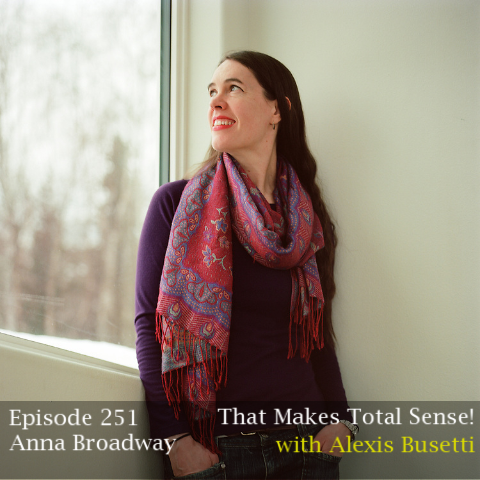
Episode Transcript
[00:00:07] Speaker A: Welcome to that makes total sense, a podcast dedicated to exploring God's generosity and justice. I'm Alexis Bussetti, a Christian aiming to ask good questions and encouraging you to do the same.
Every one of us is wired by God to live out generosity and justice, but the how sometimes eludes us that makes total sense is a way for us to get together, posture ourselves as learners, and challenge one another to practice generosity and justice in a tangible way every day.
So as is the huge around here, and I normally say, I just. I'm so awful at this. I'm like, I just finished this book over coffee, or I just finished it today. It was. I just finished it at the pool. We're recording this in May, and then I'm realizing where you are. It may not quite be pool season yet.
[00:01:04] Speaker B: Well, actually, we had snow yesterday.
[00:01:09] Speaker A: Very.
[00:01:09] Speaker B: Lightly, but I was driving to ballet and there were like, you know, kind of thick flurries of snow coming down, and the screen by the Walgreens was saying something about the temperature being 50. Like, I was like, what is happening? I wished I could have taken a picture on my phone. I don't think it was actually 50, but there was something super strange with the weather. So not pool season here.
[00:01:32] Speaker A: Not pool season. We're in Houston. It starts to be pool season. Usually, like near the end of April ish. It's like. And sometimes I'm like, it feels hotter than that. Sometimes even early April, sometimes late March. But there's something in me still that says, I can't sit by the pool, though, until at least, you know, like we have to. I don't know. I feel like we have to at least have a five. The month has to at least be May. But regardless, it is pool season here. It is not pool season where you are. And I just finished your book by the pool.
I really want to thank you for your work in this book. And I say that not that generally writing a book isn't incredibly difficult, but the project of this book was probably is beyond the scope of anything else I've read. So I want to get into that in just a minute. But first, I'm going to say the name of the book. It's solo planet. How singles help the church recover our calling. And part of what I'm particularly interested in is that it is very easy for me. I'll just name it for me. I think it's easy for many of us, especially christians in the US, to centralize our own experiences, to normalize our own experiences. And then, you know, I have. I was guilty of this, especially when I first entered seminary, of saying, like, the church or Christians or Christianity or whatever. And then professors gratefully would push back on me and say, what do you mean by that? You know, what do you mean by that? And what I meant by that was what my experience was.
And of course, that was not broad enough for the term I was using. So. So this is what I. I just want to say, I am. I am particularly grateful that when you're writing about the experiences of single christians, that you have chosen to do this in a way that is much more representative, even globally. So.
So could you start maybe by telling us a bit about that part of the project, like the pre writing, the research project?
[00:03:59] Speaker B: Well, this was strange for me. My first book came together a lot faster, I think, in some ways, and this was a much more extended journey. I think it was around 2012, 2013 that I first had the idea of writing a book on singleness that might be based on interviews. And at that time, I was both reluctant to write it and thinking that I would, if I did it, mostly focus on the US.
And then, through a series of circumstances, began to realize how segregated a lot of my influences were, and that if I were to try to have even a representative picture of the us church, that I was going to have to work around some problems I didn't really understand. So that led to a very extended, and by no means finished reckoning with racism and race based injustice, and my own responsibility in that. And that in the intensity of it, really extended from 2014 to late 2017. And in the middle of that, if you had asked me about this other singleness book idea, I would have said, well, I get lots of ideas. You know, that was just an idea. And that was one of the ones that didn't make it, because I didn't really see any connection between that idea and the work that God was doing.
And then in late 2017, on my third international trip of the year, as it happened, very unusual for me at the time, I suddenly got this idea to quit my job and spend a year interviewing singles all over the world and write a book about it.
And it seemed like crazy. But I think part of what so quickly convinced me that this was the right thing to do was when I realized it wasn't actually a new idea, that it was this old idea brought back, and finally, probably in the shape it should have been all along, but I just hadn't had the courage, and I wasn't ready for a number of reasons. But by late 2017, it was kind of the only thing I could see putting my savings into that actually felt like an investment and a good use of that money.
So then it was about six months before I actually got on the plane because, you know, I had to let people know. And there were just a lot of things to prepare for. And, of course, even the preparation wasn't all that it could have been because you never know what something like this will be when you're sort of making it up as you go along.
So that's how I ended up doing what ultimately took 17 months, more or less, for field work and that I conducted from late May 2018 until the fall of 2019. So God's timing, in hindsight, was really remarkable, because if I had started much later, I would have run smack into Covid and just been dead in the water.
[00:07:09] Speaker A: Oh, my goodness. And this is, I mean, I think when we're talking about your travels and 17 months and this being global, the first, the first thing I did when I picked up the book was read the methodology section at the back, which is, you know, kind of a dork thing to do. But, but I read that, and I'm, and I'm glad that. I'm glad that I did because this lists the number of people, the number of cities and countries and, you know, all, and I'm, it was, it was overwhelming to read, Anna, and so I'm like, I can't fathom living this for 17 months. It was, it was, I, you know, it was, it was overwhelming to read, and, but you also, you know, had notes about language and education and some of these things for us to, you know, keep in mind while we're reading. And at the same time, this really was a really good, like, swath, like, this was, this, the representation here was, was quite wide.
So anything that you want to say about that portion that I'm kind of just skimming over in that methodology part.
[00:08:33] Speaker B: Yeah. So for readers who aren't familiar with the book, over the course of 17 months, I talked to nearly 350 christians from almost 50 countries, most of them I interviewed in person. The number of countries they're from is a little bit more than the countries I went to, just because I did talk to some people who were living outside their country. Maybe they were expats. I think in at least one or two cases in Egypt, they were probably refugees, but I'm not certain. So I tried to spend time on continents that was somewhere between their proportion of the world's population and their proportion of the world's christians. I mean, it was by no means exact. And sometimes there were things like, oh, I'm in India, and I have one page left in my passport, which is definitely not enough for the visas I may yet need. So, you know, then I was sort of delayed there to get a new passport, and then, like, oh, I'm in Brazil, and I've been held up at knifepoint, and I no longer have my brand new passport with all the extra pages.
And so we have to fix this problem again.
So there were. There were unexpected things like that.
[00:09:48] Speaker A: Yeah, but this was. I mean, in the trip, vignettes were. Were a treat to read as well, but, yeah, so this was, this setting out to do this is quite remarkable. But I also felt.
I don't know, it felt.
I'm not quite sure of the word here, but I'm thinking about, how about the single friends that I currently have, who I've made friends with over the years, and the similarities all across the globe felt very striking to me. This is not to say that there aren't unique experiences and particularities that definitely exist and are, you know, worthy of noting and prominent and things like that. And at the same time, I would say not just the experience of the singles who you interviewed, but, like, their experiences as singles, but then also their experiences as singles in christian communities. Where I'm going, oh, crap, we're making a lot of the same mistakes no matter where we are, you know, like, we're making. As christian communities, we're making a lot of the. A lot of the same mistakes. And, you know, it doesn't matter in some. In some ways, if you're in Brazil or if you're in Ghana or if you're in Australia or, you know, if you're in India, like, dang it, you know, I wish that we were doing better. And in some way, you know, there definitely are particularities, as I said. But in some of these things, I think the experiences of the singles that they express to you in these interviews, they just resonated. You know, I'm like, this person could be my neighbor in Texas, but his experience is maybe as a Catholic in an african country, you know? And so there are lots of other parts about his life that may look very, very different, but some of what resonates is the same thing that resonates with my neighbor, you know, here in Texas. So I'm curious about that for you as a single author and in this case, researcher and as a Christian.
I don't know, like, tell me a little bit about, like, how. That's how I read it. But how did you experience some of those conversations?
[00:12:24] Speaker B: Well, I think I was a little bit surprised initially because I had this sort of naive idea when I started out. So at the beginning of the project, I knew that the bulk of the research and sort of discussion about singleness, at least in the US, tends to center women, probably younger women and women of european ancestry. And so I knew that that was leaving out a lot of people. And I expected that once I got outside of the american context, maybe I would find, like some cultures or some churches that somehow handled singleness better than we do in the US.
And that wasn't the case. There were pockets, you know, like, there was one international church in Hong Kong that I think did a better job than many.
But in a way, I'm not surprised to hear you talk about the ubiquity of the problem, because Jesus said it was our love that would identify christians to the world. Well, why would the love within the church be remarkable? Because we're loving people that the world doesn't expect us to love. Well, to have a deep relationship between married people and single people kind of runs against the grain of human society and culture. In a lot of ways, that's a kind of radical thing. And I think when it happens, it demonstrates that family in the christian context is not primarily based on blood or marital vows. It's based on the Holy Spirit that unites us. So in a way, the fact that we struggle to have relationships like that, that we struggle to build spiritual family and love each other like that, I don't think is surprising, you know, because Jesus implies, like, the place where this is most likely to happen is going to be in the church, because it will be my work in your midst, and that will be sort of the miracle that identifies that I'm present, is what I think he was saying, you know, and of course, the difference is not just about married and single people, but I think that's something we can all relate to as being a struggle.
[00:14:47] Speaker A: Yeah. Yeah, I think. I think that you're right. And, you know, when we chatted, pre recording what you just mentioned, this family piece was one of the sections and overarching themes. But particularly early in the book, you spend a lot of time on family and familial relationships and things like that. And I think that there were a lot of things that stood out to me in that section. And I think part of it is things that I have seen in my life where I have. I have struggled in this area, and then in some ways, I have. I have struggled, like, personally, then. I've struggled interpersonally as well, and I've struggled often to extend the invitation. And what I mean by that is, you know, if my, if my parents call or my sister calls and said they don't live in the same state, and if they say, we're gonna be in town tomorrow, like, yeah, like, the expectation, and it's, in my, in my case, in my particular case, it's, it's a correct one, is that, well, I'll just, like, make sure that the guest room is cleaned up, you know, and whatever. And, like, they're gonna be here and it's not in it. And again, in my particular case, there's also not the expectation that we have to, like, roll out a red carpet for them or something like that. They're gonna come and we're gonna eat tacos and we're gonna chill and, you know, whatever. It's just going to be, it's going to be real casual, and they're just going to be here, and we're just going to be family together.
But I think sometimes, and what I really appreciated about this section, there was, there was a piece where you said sometimes the singles and the marrieds, they kind of, they kind of think that, you know, they're, they're misunderstanding each other without even talking about it, you know, and so I might think as a married person, oh, my goodness, so and so doesn't want to just come over and eat hot dogs and, you know, whatever, and, like, have that same kind of familial that my sister might, if she, you know, she came over, and at the same time, the single person might be saying, oh, my goodness, if I, you know, of course I want to come over and just eat hot dogs. Are you kidding me? Like, I don't want anybody to have to buzz or, I had a single co worker over, and she was in town not long ago, and I said we, we had worked together enough that I was like, listen, like, if she's digging through that, this is her first time in my house, and I'm like, oh, a fork, right? Yeah, the drawers over there, you know, and I said, I'm so sorry. I'm just, I don't have it in me right now. Like, we were both in sweats or whatever, and she said, I'm so glad that you didn't do anything special for me because it would make me less likely to invite myself over the next time I was in town. And she didn't invite herself over this time. I invited her, but it really was like, okay, we are. I think it might have even been leftover chili. I'm so embarrassed. But it was. I was like, it's a pot of chili. It's, you know, whatever. She was like, I can't have chili without Fritos. I was like, great, bring the Fritos. And we just, you know, and we just had this, like, whatever. But where I was not self conscious enough for her not to come, but feeling a little bit like that, like, I'm not the hostess with the most us in this situation. And she was just like, listen, if you had tried to do that, it would have made her feel a little bit like, that was so much effort. I don't want to make her go through so much effort the next time I'm in town. And so it just ended up being real casual. But I think there was a part where you're kind of like, we have these expectations, maybe of ourselves and what we think the other party wants or expects or deserves or, you know, whatever, that we sometimes miss those familial opportunities just to be with each other, just to hang out, because we have this expectation that really isn't, you know, probably isn't even valid for the other person.
[00:18:43] Speaker B: Right. Well, and what strikes me about the example that you give, which I love, because I've experienced a lot of hospitality like that, there's a real vulnerability to it. You know, like, this is not really an Instagram worthy thing, but it's that kind of vulnerability that also happens when people stay in our homes. You know, that the conversation happens around things like making toast or coffee or putting the dishes in the dishwasher. And I really think there was so much deeper of a blessing than I expected in the fact that most of the time on my travels, I stayed with christians in their home, you know, sometimes with a family, sometimes with a single person. But it didn't just help in terms of the cost. It was immensely important in terms of my emotional health throughout the trip, where I was in dozens of cities and not seeing people I knew most of the 17 months. But I think it was also a real reminder that often the deepest community just happens around everyday life and not doing something special. And so one of the things I talk about in the book is not just the struggle for married people and single people to better integrate our lives, but I think one of the big barriers is, as you're saying, these expectations. As I framed it, we had this almost dating mentality that the way that I'm going to see my friends is we meet up in a third space for a meal or food or coffee or something.
But many people probably have only a very limited time and financial budget for that kind of thing in the month. And so then maybe their spouse and everybody else in their life is competing for that space. But what I have found is, like, well, if we start to say, okay, your dog walk or our respective trips to Costco or, you know, my need to wash laundry, that's not 250 to wash it in the machine at my apartment complex, like, all of those things become opportunities to spend time together. And I think they can actually be a lot richer for it. Like, I remember so fondly this trip I took to the grocery store in Seoul, South Korea, when the family hosting me sent their oldest daughter with me. Like, it was just so much more interesting to have somebody to share that with, you know? And I'm sure for her, that was also kind of a special sort of adult feeling responsibility to get to go with this stranger and kind of accompany them. But I think there's a lot of our life that I don't want to idealize the past, but I think a lot more work was shared in the past out of necessity. And that built relationship in a way that was good and through a lot of factors. I think, especially in this country, we've lost that because it's so individualized now. And I do think the way we've come to think about family, and especially the nuclear family, probably makes things a lot harder for married couples than it has to be, you know, because it's like, well, I can't let you into the day to day, and I have to carry all of this alone, me and my spouse. And I think we've lost the goodness that can come from doing those things in community.
[00:22:29] Speaker A: Yeah, I think there's a lot there. And one of the places that I'm, like, feeling a little bit nervous about going there, but I will, which is, I think, in the US, much of what I have, I would say I was discipled into as a young person and as a young married person is this, like, I would say, overemphasis, I might even say idolization of the nuclear family. And so I think that seeps out, and it looks, it probably looks different for different people and different families in different spaces. But, you know, I think one of the things that might be a combination of that is I'm thinking about, you know, like, weekend time or evening time or something. You know, you have this nuclear family where, and especially, you know, depending upon what your space is, if you're in a. In a complementarian space or a space where there's an expectation that one spouse, particularly the wife, may not work. Then you have, you know, this thing where the, the father of the home, you know, is gone for 40, 50, 60 hours a week. And so the evenings and the weekends become this, like, gold, you know, this precious time that just cannot. And I'm not saying there's something wrong with wanting to spend time with our spouse or things like that, but then it ends up being like, you know, you don't want anything or anyone to interfere with that. So you've got the work piece, but then you've got this nuclear family piece, too, that I think plays into that, and it ends up, you know, kind of where.
And maybe, I mean, say maybe where, you know, I feel like I I've observed and I've definitely have lived it for, you know, certain seasons in my life where it's like, I might say, oh, I'm doing things in community because on Sunday mornings, I go to a service for an hour. But that's my christian community. That's what it is. But then generally during these other times, I have, like, work and home, and that's it. And this nuclear family is the. It's, like, the most important thing. And it's not that that's not important, but I think also there were times when I probably was a little bit, like, scared into, well, if I don't have this much quality time or if I don't have this much that, like, if I'm letting people into this space, am I really doing my job as a wife or as a mother or whatever? And, you know, I kind of had to grow into actually, you know, like, saying, actually, it's kind of like that example that you gave. It's a huge blessing to have other grownups in my kids lives who can speak to them in ways that I can't speak to them, who share interests with them that I don't necessarily share who, you know, like, this part of it is, like, is amazing, you know, to have that. And, like, I really enjoy these other, you know, the company of these other grownups, these other families or, you know, whatever it is or our single friends. And so to just invite them into our spaces, to not be afraid to go into their spaces, um, it actually is a really, really beautiful thing. But I will speak for myself. I think there was part of that, and I think, for me, it did combine kind of this work piece and this nuclear family piece where I have been, like, really hesitant to do that. Um, and I can't exactly put my finger on, um, on why, necessarily. And then when you can't put your finger on it, I think then it just becomes a habit. Well, you come home and you do this, and this is who you spend time with, and this is what your family looks like. And so then you, you know, it just be like, you just don't think about inviting other people in. Or when you get the invitation, you just kind of go, ah, I'll speak for myself. Oh, yeah. Well, on Fridays, we, you know, we do this, and so we maybe turn down those other invitations or, you know, whatever it is. And I think that that does, that cycle can get, can get perpetuated, kind of depending upon what we have, you know, been taught to believe about that family unit and the importance of that family unit. And then, of course, that ends up as, as you're, as you talk about and as other singles have talked about, that ends up putting, creating barriers and keeping people on the outsides of some of those spaces.
[00:26:55] Speaker B: Yeah. You know, um, that actually reminds me a lot about something I talked about first in my first book, Sexless in the city, which was a memoir of reluctant chastity. And I remember there was a point in my early twenties where I both really wanted marriage and was a little afraid of it because it seemed like the way it looked for so many people was sort of your life got really boring and, like, the adventure was over because you'd kind of achieved all of the things that you were seeking. And mostly your life was just about your family, and there wasn't really much to put in any kind of annual update, aside from like, oh, our kids reached these grades and we went here for vacation. And yet at the same time, I had this very different example of my own parents that they had within their marriage, had this idea of following and seeking God in a way that radically redirected them so early in my life. They were thinking about places they could go as a family to be so called tent making missionaries, where dad would continue to work full time and his career would kind of provide and entree into a particular country. And so, as I talk about in my first book, they ultimately moved to Singapore right after I graduated from high school and spent about seven and a half years there and ultimately built relationships and were in ministry with people who were exploring Christianity. And then because of how they were continuing even into their fifties, to think about, well, what does it look like for us to serve God and to keep seeking his kingdom and telling people about him. Then my dad ended up pursuing a PhD that he didn't finish until he was about 60. And then they ended up, ultimately, he got a job as a professor at a school with a very international student population. But all throughout their married life, their life was not defined primarily by this typical narrative arc of, like, having kids and raising them and being moderately successful in your career. I mean, like, they had a long stretch where they didn't own a car, they didn't own a house. They were renters. And this was in, like, their forties and their fifties. You know, they didn't buy a car, I think, until they were in their late fifties after this long stretch. And they didn't buy a house again until they were in their sixties. And so they made very unconventional choices relative to a lot of their peers.
But they were also such a wonderful model of structuring your life not around marriage and family, but the primary goal of seeking first God's kingdom and his righteousness. And it really changed the way that they approached things. And, yes, they made sacrifices and there were costs, but I also think they had a much more fulfilling married life as a result of that. And so even in my early twenties, there was this kind of tension between, like, how I saw most people doing it and both wanting it and not wanting it the way that most people were doing it. And then this very interesting example of how my parents were living that seemed more exciting, honestly, you know?
But it was also interesting because I saw a kind of, like, envy, I think, among a lot of my parents friends, you know, that they saw the adventure, too, and really enjoyed reading about it. But I think, you know, partly God didn't call all of them to the same thing. But I think also some people probably it's easy to want the comfort and the security, you know? It wasn't until I was on my field work that I realized how much of my faith was bound up, even in things like a refrigerator, you know, like, wow, I don't worry about my food tomorrow because I have a refrigerator. I'm not. Not worrying because of Jesus. I'm not worrying because it's my refrigerator. And you take a refrigerator away, and all of a sudden, I'm like, you know, or the same with, like, the security of a job and a paycheck. And so it has been really jolting to see, like, wow, if I'm trying to really follow God as I think he's asking me to, I can't hold on to anything. There's nothing I can say to him is off limits, you know, not even my health. I'm probably still, to some extent, dealing with the vestiges of parasites that I got on the trip and certainly still figuring out, like, wow, okay, what does my career look like at 45 when I have now taken basically six years off from full time work for the sake of this project? So it definitely puts you in a much more dependent position, I think, to follow God in that way, but it's a lot more exciting. And the best part is whether or not it's actually exciting, because there's plenty of mundane and boring tedious faithfulness and stuff you don't like. But I just think it's a lot more fulfilling because that's the way God made it to be. Like, there is a blessing and a peace that comes from surrender and seeking first his kingdom is something we're all invited to no matter what our life seasons look like.
[00:33:08] Speaker A: Yeah, I really appreciate that, that example and you sharing that with about your parents.
I realize I'm like. As I'm talking, I'm like. I'm just processing out loud, which I don't really like to do. So, anyway, sorry about that. But, you know, I think what you bring up is an important point, and it's a good example. And also, you know, not everyone is called to the same thing.
And I also think that. And, you know, part of this is realizing and what you. What you say in the book and what I. What I hoped to get at, so I'm going to start get myself a redo. Um, is that this marriage and family business, it's not that it's a bad thing. It's that it's not a higher calling than singleness is. Um. Or. Or to have this marriage and family and have it look a certain way, even as you give the example of your parents, isn't better or the way it's kind of supposed to be, you know, as opposed to. As opposed to a life that looks different than that. And I think that sometimes, because we have treated it that way in our culture, it gets lost. And it looks like the expectation is to say, okay, something is lacking in your life. If you don't have this, if it doesn't look like this life, if it doesn't look like my life, if it doesn't look like marriage and kids and a mortgage, then it looks. Then what's. What have you. What are you doing wrong?
Why don't you have this thing?
[00:34:47] Speaker B: Yeah. I think that has so much to do with questions of discipleship. Right. Because that's a very specific understanding of maturity.
And it's also blind to all kinds of injustice in the world. Like, you know, a mortgage is a lot more possible for some people in a very small number of people, actually, than it is for the vast majority of people. I mean, I'm living in a city where, by my calculation, you could not afford the cheapest rent in Anchorage and have the rent income ratio that most landlords look for, unless you're making, like, 24 or $25 an hour working full time, which, by the way, is more than twice the minimum wage here.
[00:35:42] Speaker A: That's right. Yeah.
[00:35:43] Speaker B: So. And I didn't realize this until I was looking for an apartment myself last fall, having had my rental income, my budget, in theory, increase 50% because I no longer had a storage unit. And I was shocked to realize, like, there was almost nothing I could afford, you know, and I make a very good hourly wage. I just don't work for many hours right now. But, like, it was really shocking to actually drill down into the economics. And so I think when we live in communities where we're mostly around people who are just like us, you know, we. We forget that some of these things are not as feasible.
But, oh, there was something else I was thinking, and sadly, it has blown my mind. But.
[00:36:50] Speaker A: Well, let's spin off that for a second, the economics of it, because, you know, this has been something that I have had a lot of discussions over the years with my single friends, is they're just household finances. So, like, everything from. And you touch on a lot of this in the book. So you just, you know, you're just mentioning, you know, with housing, it's like, if you have, you know, often if you even think about someone who might be married with no kids, just as an example, or maybe just one or two young kids, like, the space that is offered on the real estate market, whether it's rental or not, you know, a single person could live in the same space as a couple could very easily, but a couple would often have two incomes, right, to pay for that space. Or, you know, I think, like, when you just become accustomed to even grocery buying and eating, you know, you mentioned having a refrigerator or not. It's like, you know, there, I'm in the opposite situation where I have four kids, two of whom are teenagers, two of whom are boys, who are hitting the areas where they eat the ages, where they eat a lot more. And I'm like, in the opposite situation of some of my single friends, where I'm like, I need to make this last. Like, how can I you know, what can I do to stretch this pot of chili, as I mentioned before?
[00:38:21] Speaker B: Right, right.
[00:38:22] Speaker A: You know, as opposed to some of my single friends who are going, I could never make a pot of chili because I would never go through a pot of chili, you know, so even just the economics of that or, you know, what's the smallest amount of meat, you know, that they could buy for my single friends who are not, you know, vegetarians? And it's, you know, some of these things where just the economics of that, like, is something going to spoil even with the refrigerator in the US going to spoil before they could possibly go through it? Or, you know, what, what does this look like? Or. Yeah, you know, there's, there's all, there's all sorts of things like that where, you know, I think one thing that you bring up in that, in that case, and especially with food, which I really appreciated, which was communal living, not like in a commune, but living as, you know, communities helps us in some of these ways where I might say my, you know, my friend who if I'm in close relationship with and we're having these conversations, she says, oh, my goodness, I'm gonna make this recipe for myself or for work or whatever it is, and I don't need, you know, I will never use whatever it is. I will never use an entire thing of cumin or curry powder or, you know, something like that. And to buy that is going to cost $12, you know, to buy one thing and all I need is a tablespoon and a half of, you know, this spice. And then I get to say, please come use a tablespoon and a half of my curry powder, you know, you know, for your, for your dish. But even things that I don't think about regularly where I'm like, this is impacting, you know, this is economics. $12 for a spice is completely ridiculous when, you know, like, I'm not going to make this all the time or it might just prohibit, like, oh, I'd love to experiment in this way.
[00:40:10] Speaker B: Yep.
[00:40:10] Speaker A: But I'm not going to go out and buy this thing, you know, just for that or, you know, whatever it is. And so it's like, oh, yes, the, just the living experience expenses look different and could be prohibitive just from that lifestyle of being single to either having a roommate or being married or having a family that looks different or having a different family situation. Like a lot of the global folks that you talk to who live intergenerationally or something like that, like, this looks very, this looks very different. But unless, like you say, if we're living only with people who look like us, we're not even aware that that's a thing. Yeah, we're not even aware that that is a struggle or something that people are going through.
[00:40:55] Speaker B: Yeah. I had this very interesting experience during Holy Week that a woman contacted me through Facebook and ultimately was cleaning out her brother's apartment after his death.
He had a lot of boxes of food that he'd probably gotten from like a food pantry, and it was expired. It took me probably like three and a half hours, maybe more, maybe more like 4 hours to just go through all of the food and sort it by expiration date and then what kind of thing it was. And, you know, there was some stuff that I had never seen before, but I'm pretty sure was considered, like, government commodity meat or something.
But based on research from the USDA website, it was like, okay, I think these things are. Most of it was probably still good, but needed to be used pretty quickly. And so then I was able to distribute it to certain people and actually put quite a lot out in my building by the mailboxes because I'm in one of the cheapest apartment buildings in the whole city and I know there are people. Well, it was proven by the fact that even though it was expired, almost everything got taken within a matter of, like a couple of days. But, you know, it comes back to something that this pastor friend of mine said years ago, that we often look at economic challenges and think there's a provision problem, that God hasn't provided enough for this. And he said it's actually a distribution problem. We have enough, you know, and it's been personally like a really remarkable experience in the past two years how much food God has given me at no cost. I mean, like hundreds of pounds of food have passed through my hands because of my buy nothing group. And Alaska is unique, where when people move out of state, they usually can't take any food with them, so they have to kind of completely unload because of the move process.
And I have received so many, like, partly used packages of, you know, whatever and. And been able to help. Honestly, a lot of single parents in particular, that I've been able to redistribute things. Or there was a point last summer when I reluctantly asked in my buy nothing group if anybody had extra dried beans because I was almost out and it was hard to ask for something I planned to eat rather than just use for a craft project. But finally I did, and one woman had 40 pounds of beans and lentils.
And it had just been sitting in her house because a friend of hers had kept going to, like, food pantries or whatever and getting their boxes. But whenever the, like, beans or the lentils were in it, he didn't want them because he didn't know how to use them or he didn't like using them and. But he knew there was some value in them. So, like, then he gave them to her, and she didn't really like them either. And so then they ended up with me. Well, you know, I'm somebody with an eight quart instant pot despite being single and, you know, occasionally help out with a meal for a women's shelter. And so it allowed me to be generous with others, to be generous with the church potluck because, like, beans and lentils are a big way that I stretch meat. I mean, because they're pretty economical and it takes your protein a lot further. It makes it a lot more nutritious.
And then, of course, it turned out recently, oh, I have an iron deficiency. And because I received 14 pounds of lentils from this woman, I've been incorporating lentils into my diet a lot more. And lo and behold, lentils are something you should eat every day if you have an iron deficiency. So, you know, like, God's provision has been really creative, but I think he really has shown that, like, there's actually been even in a dead person's belongings, you know, there's so much that could be a blessing to other people if it can be distributed, because all that stuff would have gone into the landfill otherwise. And as it was, there was a lot of problems, usable stuff they just threw out because they didn't have the time.
And that's something where probably a person who maybe didn't have the means, like me, was more rich in time and therefore able to come help and take two carloads of stuff and redistribute it to people at church and other locations.
[00:45:56] Speaker A: Anna, that is making me think about something that I thought was really valuable in each of your chapters and something that I think it can be, I will say it can be personally kind of challenging. For this reason, some of my closest friends who are single are single because they have not yet married and they want to marry.
[00:46:25] Speaker B: Right.
[00:46:25] Speaker A: And for me, as someone who has been married for a very long time, I sometimes, and this is like an admission that I just, I feel, you know, kind of weird about saying it, but sometimes I think I have felt like, oh, because they're in a life situation that they don't want to be in this is something where, like what? Like, it's more like what can I offer this person? Like, how can I support this person? As if, and I hate to say it, but it's like as if I have more, right? Like as if I have something. And I don't like that. But I think that that has probably has been underlying and, you know, you know, hopefully not in my relationships in general, but I think, you know, I don't want there to be that mentality. But I sometimes wonder if that's what it is. And part of what I mean by that is that I think that in general, these relationships with my friends are mutual. I think that we would say that they are. But I kind of sometimes wonder, I kind of ask myself, like, you know, is this a situation where I feel like, oh, well, he or she is in a situation where they don't want to be in. And so I don't know. So I kind of maybe, hopefully I don't approach it differently, but I might.
In that case, then I think it is I can ask myself only, like, questions like what can I do instead of also, like, how can I receive from this person? And I liked how in your chapters, those were something, those were questions that you're asking every reader to ask, like, particularly what do I have and what can I give?
And, and I think that that's, that to me, is a great, those are great questions for everyone in relationship. But I think if I'm asking what can I have and what can I give, then it also is what can I receive? And I think it is also just human nature. Right. Like, you just mentioned that in your story of, like, I felt awkward asking for something for myself because I wanted to eat it, not because I was going to, like, distribute it or use it, you know, in some other way. And so I think, I guess part of it is just like human nature. We feel more comfortable giving than we do, than we do receiving. But you ask, you know, what, what am I grieving?
What do I have in the situation? What can I repent of? And then also what can I give? And so I, what I want to ask for you is, from you is like, why are those important questions when it comes to these different topics? So we've, you know, we've covered some of them without explicitly knowing them, like shelter and food and, you know, family relationships and, you know, christian community related things. But why are those questions important to you in those spaces?
[00:49:34] Speaker B: That was something that came to me early. I think it's partly rooted in prayer, one of the very early structures I learned, I think, probably from my dad when I was a child, of how to pray was this acronym of adoration, confession, thanksgiving, supplication.
And so I think it doesn't completely align with that, but I think there are some similarities there in terms of thinking about, like, well, what is my disappointment or my pain around this topic? But I guess another part of it was I felt like those questions help any reader, whether married or single, to think about the topic. And my real hope is that a lot of people who read this book are going to read it in community, read it with at least one other person who's in a different season from their own. Because then when you're talking about housing, you know, and, like, what do I grieve? What do I have? Whoa, that's probably really different, you know, like, probably a married person is like, I don't have enough time for myself, or I don't really have a space that's just mine where I can leave my project out. And a single person might be like, I have so much space and time that I'm actually struggling with, like, loneliness. And maybe sometimes I need to go to the grocery store just so that I have some sense of human contact in my day. But another thing I was thinking about in terms of what you were saying, it makes me think about a friend of mine in his eighties who recently had a stroke, and he's a widower.
He's one of the singles who very much gets overlooked. We don't think about singleness being a widower or a widow or an older person, and yet they're all around us. And even if people like that have children, they still have a lot of the same challenges. And so this friend has helped me with four of my moves within Anchorage because I've had to change housing frequently. And, you know, there was one move that he was there to the bitter end with me, and he was having a lot of shoulder issues, and so he couldn't necessarily carry a lot, but he helped with sweeping. And just to have him with me at the end when I'm so exhausted and that moral support of, like, it's not just me, you know, somebody is in this with me. And then we could eat dinner together. And I don't know how many times he said to me, it feels so good to be needed, you know? And then, like, when he had his stroke, he has lived alone in a relatively remote location.
They think he was probably alone after the stroke for 36 hours.
And the reason he was found was because another single woman had agreed to let him pick her up from the airport when she flew home.
And she was the one who noticed he didn't come pick me up. Something's wrong. She's the one who sounded the alarm. But how many of us, and I'll admit, like, I've been a little bit uneasy with his driving myself sometimes. You know, like, as much of a tremendous blessing as he has been with my moves, I don't know if I would have, if I would have chosen him to be my ride, but her willingness to depend on him in that way may have saved his life.
And so, I don't know. I think there's something really powerful to be learned from that story, and, like, who are we willing to let meet our needs, you know?
[00:53:37] Speaker A: Oh, I mean, I was, as you're telling that I was thinking of during the early days of the pandemic, we had new neighbors, and a single mom moved in with her two daughters, and they moved in.
And I want to say it was the beginning of March of 2020. It was something like that. I mean, it was literally just days or weeks before, you know, our communities went on lockdown. And, and it was such a blessing to have them, to have them close for the time that we, that we had them close. But it was, and again, this woman did happen to be a single mom. But I think, too, as I, as I think about. I'm doing a lot of processing with you, Anna. But as I think about some of that processing that I did, I think it's, it's the, it's the human nature part of it. In that case, it didn't have anything to do with her being single or a single parent as much as it was. I don't really want to be interdependent in the way that I'm called to be interdependent sometimes.
But, you know, but it was a situation where we had, you know, six in our family, and they had three, and they weren't huge milk drinkers. And at that point, there was a limit on how much milk we could buy. And so, you know, so here she comes over, you know, with gallons of milk, or she ended up, you know, I have dietary restrictions, so I needed, like, a special kind of oatmeal, you know, and I couldn't find it at my place. But when she got wind of that, you know, she, on her next trip out, she picked up a bag and brought it over, and it was so kind, and it, you know, it's like, it's a gallon of milk. It's a bag of oatmeal, like, you know, but that beauty of being interdependent as neighbors in a time when we were all really vulnerable. And I think if I were to phrase it now, I would say, I think it does us all really good when we can think about ourselves with that vulnerability in mind.
You know, not just the vulnerability of our neighbors, which is very, very important, but also letting some of our own vulnerability show so that our neighbors can meet our needs, too.
I think that. That it was shining through during the pandemic because we were all, you know, exposed to be vulnerable in certain ways.
But I think that when we do that in our relationships, yes, with people who look like us and with people who don't, then we're all better off for it.
[00:56:38] Speaker B: Yeah.
That reminds me of something I talk about in the book. When I was talking to Ray Aldred, who runs a theological program in Vancouver, Canada, and I was talking to him about trying to include indigenous Americans in my research, he said something that, at the time, seemed like kind of a non sequitur about how wild horses share their food.
And it was a long time before I understood what I think he was talking about, which was this idea of reciprocity and mutuality.
And there was a time several months ago that I was walking in Anchorage on a summer day, but it was kind of cold. And as I was getting toward the end of my walk, I was like, like, man, I would really love a cup of hot tea. Well, I was near church, and I happened to have a key to the church, so I could have gone in and, like, raided their kitchen for a cup of tea. But then I remembered that this older woman that I had recently met lived across the street from the church, and I had her phone number. And for some reason, though, it felt, like, very presumptuous, I thought, I bet I can probably ask her for a cup of tea. And so I did. And I think she was a little bit taken aback at first, but then by the end of the visit, she was, like, so glad that I had stopped by. She was glad of the company. And I look back and, like, now she puts her coat down every Sunday for me to sit next to her, you know? And there was such a turn in our relationship that happened because of that, you know, slightly awkward request, like, could I possibly have a cup of tea? You know? And so I think it led to a very reciprocal relationship. Like, yes, I have helped her with rides sometimes, but she's also given me lots of bags of dried beans and lentils from her food boxes. You know, so it's, it's really beautiful the way that God has woven mutuality and reciprocity into that relationship.
[00:58:49] Speaker A: Yeah, I love that. The last thing I'll say on that is I'm reminded of Shannon Martin has a book on neighboring, and one of the things that struck me in her book was that she says, you know, she talks about people in her community are often in need of rides, and that's something that she can often give, but she can't always do it. You know, she can always do it, but she can often do it. But she kind of, one of the phrases that she uses is, but I want you to ask again, like, I want you to keep asking. And I really like that sentiment because of kind of what you're saying, the vulnerability or the awkwardness, you know, let's say that had gone a different way and you asked her for a cup of tea, but she wasn't able to provide it at that time, for whatever reason that might make some, one of us go, you know what? I went out on a limb, and it didn't quite work out. And, or maybe it did, but things. Maybe she doesn't share her seat with you in the future. Maybe she kind of avoids making eye contact. She thought, I don't know, that felt really weird, you know, or whatever it is.
But I think that I like that phrasing because it's like, even if this doesn't work out, like, I want you to keep asking, like, please, if I'm not able to do this, I want you to keep asking. But then I think about that for myself, too. Like, I want to be the kind of neighbor community person who will keep asking, you know, even if, you know, not to be a pest, but who will just kind of keep, you know, putting myself out there. In a way, I guess so. I think. But again, like that, this kind of living that we're talking about requires that of each of us, that we put ourselves out there in a certain way.
Anna, we have covered a lot of ground, I would say, regretfully, for myself, I have covered more ground than I wanted to, but I've enjoyed the conversation. Now I'm feeling a little bit like I I have, anyway, processed a little bit more. I'm an internal processor. And so for some reason, I don't know, maybe you have an easy to talk to spirit. I just. Here I am laying some stuff out. But we covered a lot of things in the book, but we didn't cover a lot of things, too. And so I would encourage people to grab a copy. I mean, there's lots of stuff. One of the notes I had that was a particular interest to me that we didn't quite get to was on singles in ministry and what that looks like lay ministry, but particularly also vocational ministry. You know what that might look like. We didn't talk at all about sex or sexuality or sexual minorities, which you also talk about in the book or parenting. We barely even touched on that. So there's lots of other topics that you cover in the book through your own experiences, but also through those hundreds of interviews that you conducted. And so while we won't have time to get to those today, I do encourage people to grab a copy and look into that. It's worth the read, whether you're at the pool or I guess reading it in snow flurries, like you might be if you're in Anchorage in May.
Yeah. So it was great. I will ask you, Anna, as we close out, what might you want to leave listeners with as you think about your conversations and what you gleaned from them? What do you hope we might glean from them?
[01:02:23] Speaker B: Well, I really hope, as I said, that people will give solo planet a chance and read it not just on your own, but read it with other people, especially people who are in a different life season from you, whether they're older or younger, married or single, because I think the conversations that solo planet can give you with those people in your life is probably the best possible gift. You know, I really tried to structure it in a way to facilitate conversation. As you mentioned, there's the four reflection questions at the end of each chapter and then also a discussion guide at the end of the book. And so I really hope that it helps people talk to each other and think more about how we can become more interdependent. And I think that's something that can enrich all of our lives.
[01:03:15] Speaker A: Amazing. Thank you so much. Again, it's solo planet, how singles help the church recover our calling by Anna Broadway I'm again so appreciative of your work for sharing your literal journey with us through these interviews, through your own personal experience.
Yeah. And I'm just grateful for what your project continues to shed light on in my life.
[01:03:40] Speaker B: Well, thank you.
[01:03:42] Speaker A: The links for all the resources mentioned in today's episode can be found in the show notes, music and podcast production by Seth Busetti. Be sure to give us a review on iTunes and subscribe at your favorite podcast listening app. You can also visit us at. That makestotalsense.com.