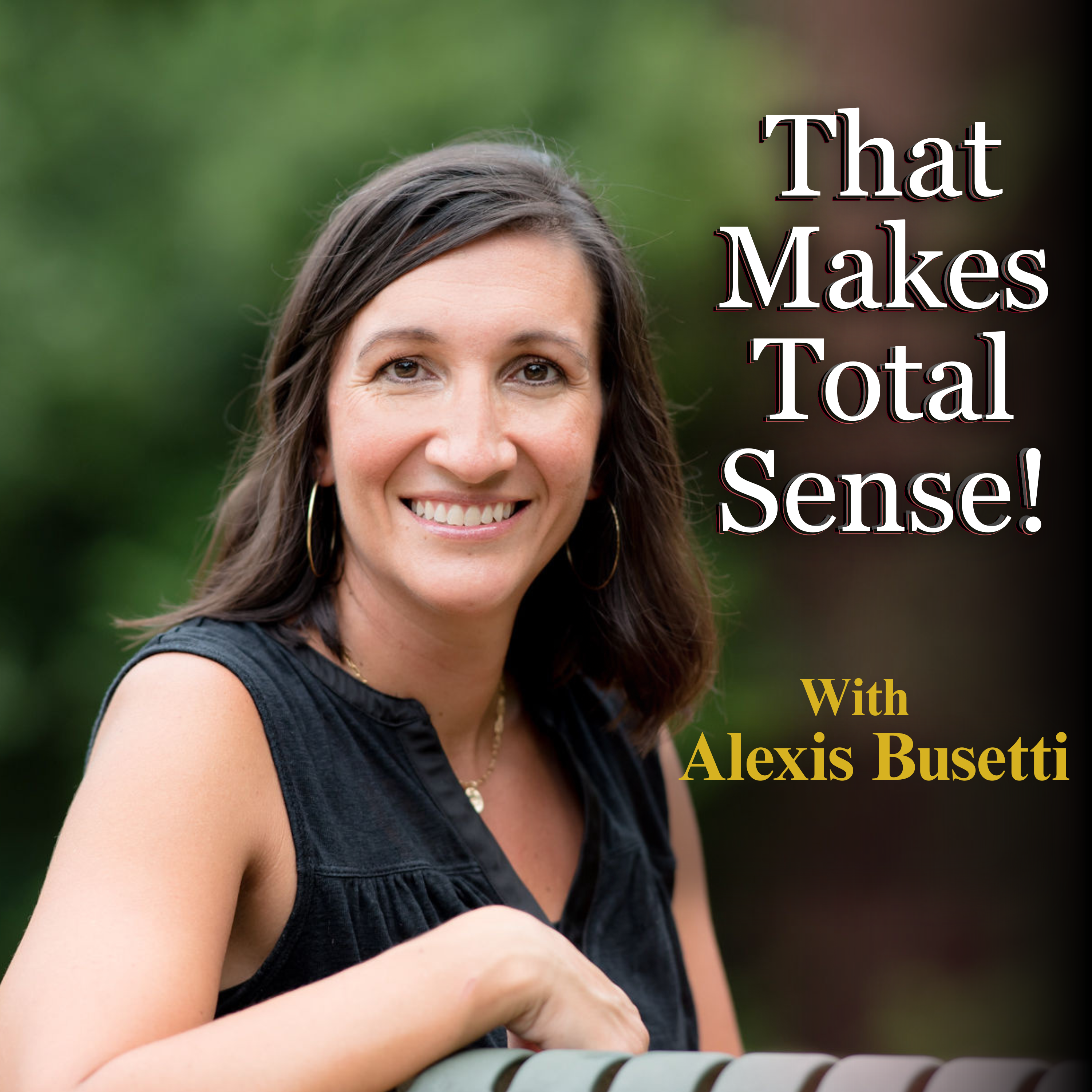
Speaker 0 00:00:00 <inaudible> hi and welcome to that makes total sense. The podcast where we talk about faith, finance and everyday life in a way that makes total sense. I'm your host, Alexis obesity on this podcast, you'll hear the personal stories of friends I'll be interviewing who were doing familiar things in new and innovative ways. We'll answer questions specifically about money and our relationship with it. And we'll explore faith and Bible teaching together in all of these. It's not about changing our convictions as much as it is about <inaudible> with our methods. We'll have a lot of moments here together where we then say that makes total sense.
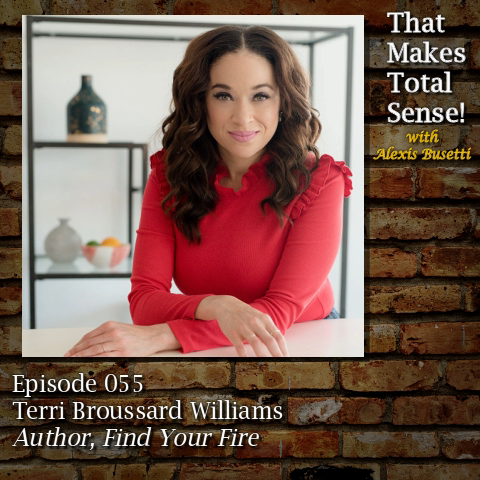
Speaker 0 00:00:44 Hi, I'm Alexis Piseti and you're listening to that makes total sense. Today's conversation is with Terri Broussard Williams. I invited Terry on the show because honestly I was feeling a little bit hopeless when it comes to our current political climate and political culture. And I have been watching Terry since we met a couple of years ago. And I can tell you, she exhibits hope at every turn. She is a movement maker. She is involved in politics and she is mostly involved in change. And so I just thought if anybody can speak hope into this current situation, I feel like Terry can, and she really did. She helped pull me out of the nitty gritty of, um, individual issues and candidates, and really framed it in a way that was so helpful for me. And that is learning and understanding what we are passionate about and joining with other people who are in that movement, who are passionate about the same things from there, the politics gets much easier, but I'll let Terry talk with us about that.
Speaker 0 00:01:59 She also has a new book called find your fire, and I will link that as well as ways to connect with Terry in the show notes. So I hope you enjoy this conversation today with Terry B. Williams. Hi, I'm Alexis Booth SETI. And welcome to that. Makes total sense today. We have with us Terri Broussard Williams. Hey Terry. Hello. Thank you so much for having me here. Oh, I'm so excited about it. So Terry and I met, I was trying to think back. I knew it wasn't last summer, but it was either two or three years ago, two summers ago in Austin with, um, our friend Michelle McKinney. She had a little dinner at an amazing Mexican restaurant actually it's smell does. Yes, that's what it was. It was delicious. And um, so Terry and I had a really, I feel like that night was so unique, just a really unique opportunity to spend with some women who are just moving in, shaken in their own worlds and their own spheres of influence.
Speaker 0 00:03:01 And so Terry, this is what was funny. So the prompting for me to ask you to come on the podcast, I'd been mulling it over and thinking about it before and kind of wondering what topic we might cover, because you do so many things, but when you said, I think it was on primary day when you said voting days, my favorite day or something like that on an Instagram story. And I thought that's it. If she can come on and give us some hope in this political season we're in. So Terry, would you just introduce yourself to the audience and just give us a feel for what you're doing right now and what your background is? Sure. I am Terry pre-cert Williams. I feel like I I'm, I'm a mutt. When it comes to professions, I've served as a journalist. I've worked in three different television stations.
Speaker 0 00:03:54 I have worked at two nonprofit or three nonprofits. I'm was a nonprofit fundraiser for a hot minute and a lobbyist for two nonprofits. Um, I've been lobbying for about 20 years and now I lobby at it at a tech company. And I've also served as a press secretary and communications director for U S Senate candidate, um, in the South. So I have a variety of experiences, but at every juncture I've been fueled by one thing and that's giving people access to information either by way of television or by way of the mission of the nonprofit. So they could choose to make a donation or inspiring them on behalf of a nonprofit to take action. Um, you know, I give people access to information so that they can make decisions for themselves and their community. And I fully believe that when you give people access to information, they use it for good.
Speaker 0 00:04:49 So, um, yeah, that's a little bit about me and what I do. I love that answer so much because, um, so we, we chat about this just a minute before we pressed record. But, um, when Terry said she just loves election day and I thought, I don't know anyone besides my dad. I don't know anyone besides my dad who feels that way. I kind of about the, the activity and the participation of politics. I feel like a lot of people and maybe this is just my sphere, but I feel like a lot of people kind of almost see it as a necessary evil or as a duty, or this is kind of something that we have to do instead of what I think is probably more accurate. Um, even going back to the founding of our fathers, which is this, this is something we get to do.
Speaker 0 00:05:41 We get to participate in the forming of, um, of the leadership around us and, and what that looks like. And so my husband and I were having a conversation and we were kind of like rethinking, especially in this election season, um, you know, some of the candidates, some of the platforms, some of the issues. And I remember him just expressing to me that he felt overwhelmed by what was around us. And he was just like, how in the world do we kind of as lay people with other jobs and other things that we do, how do, how can we possibly educate ourselves in, in your words, how can we gain that information, right. So that we can, like you're pointing out, make those informed decisions and use the information that we have for good. So I know that that's a large question, but, um, can you kind of tell us, like on different levels because you've been involved in, um, in that giving of information at so many different levels, can you kind of tell us, um, maybe even on some of those levels that you've experienced, what that giving and gaining of information might look like for everyone, from, you know, the person who is only going to vote every four years in a major election to someone who has maybe a little bit more involved to maybe someone who is looking to be an activist in their community.
Speaker 0 00:07:12 So what, what can that look like on some of those levels and how can we even get started? Yeah.
Speaker 1 00:07:18 I, I want to take it back a step back. Um, so I am the founder of a platform called movement maker, and I believe that leaders, her moments into movements. And I also believe that everyone could be a great leader. Um, there are so many roles that people can play as a leader that is turning a moment into a movement. And that could be, you can be the builder of the movement. You could be the supporter of the movement. You could be the person to amplify the movement. There are so many roles. And so I think that for people that don't really feel compelled to vote it's because they do not see voting as being part of a movement, they might get so caught up, um, in the set of CISM of the process or not feeling like anything is happening. But if you want change, you have to be a part of a movement, either build it, support it or amplify it. And so if you are supporting that candidate in the voting booth, because you believe they are the change agent, that can be your role, or if you believe in an issue, you can amplify that issue by voting on a ballot for an initiative. Um, there's just, there is a role that we all play on election day, but getting back to why I love election day, it is really because I'm a political scholar and also part like that is some good reality TV.
Speaker 0 00:08:54 You are sitting
Speaker 1 00:08:56 On the other side of the TV, looking at poll numbers, and then you get to see the election night party. And someone comes on the stage and they might give a speech and they might be really sad, but someone else might be really optimistic, you know, for the future and, and happy like election night was reality TV before it exists. But you know, my grandmother, um, is 93 years old, she's still alive. And she has been a poll worker on election day for the last, like 30 something years. Now, she didn't do it in March because of her age. And COVID like, we'd be putting her in harm's way. Right. But I have a picture of her last year sitting there checking people in. And so if she asked someone that had to wait till later in her life to have the opportunity to vote until, you know, she couldn't vote until the sixties, then I can show up to that voting booth and hit yes or no for someone I'm hitting yes. For the people I believe in and I'm joining their movement and I'm not hitting something. So I'm saying no to those that I don't want to be a part of your movement. So I just, I love election day for a lot of
Speaker 0 00:10:14 The reasons I, I enjoy this idea of your, um, of being a movement maker. Right. And that we can do that on all of these different levels and kind of different layers of that. Um, maybe let's bring this back to because, because it's a privilege, it's something we get to do. Your grandmother, didn't get to do this until the sixties. And I think that people, our age don't relate very well to that. Um, because, um, unless we're really in tuned and kind of listening to, to certain sources, I don't know that we, um, we see struggle in front of the voting booth. Um, there is still struggle in some areas, but I don't think we see it, um, like it was broadcast, um, in the sixties and before that. And so, um, it's a privilege and it's something that we want to participate in, but we want, I feel like, um, I'm a part of the generation who, even though I was younger and I couldn't vote, then I remember the MTV rock, the vote campaign.
Speaker 0 00:11:32 Right. Um, and I feel like this is a great thing we say vote, but I want to go back to what you said of we're hitting. Yes. And we're agreeing with, I think this person can move us in a direction that I want to go. And I'm saying, no, I don't, I, I'm not writing this writing here. So how can we go into the voting booth in an educated way? Um, that's, that's kind of the question I think for me right now, because, um, I'm just going to go ahead and throw it out there and say I have in the past, um, I have sometimes had the tendency to be kind of a routine voter and to say, this is kind of what I'm used to. Oh, I'm pretty sure this letter next to their name means a certain thing. And so, uh, it's probably okay. And that is a shame to me to even admit that, but there have been elections where, where that has kind of been my emo. And so, um, if I want to change that for myself and I feel like there are probably other people who are looking at what's happening around and they say, maybe I want to dig a little bit deeper right now. Um, how can we, how can we do that in a way that's productive, but maybe not too overwhelming? Is that even possible?
Speaker 1 00:12:59 Yeah. So I view life in like third state, I think there's a rule of thirds to everything. And so if you look at the process from that perspective, there might only be a third of the things on the ballot that you feel connected with, that you care about. That is okay. Right. Um, there might be a third on the ballot that does not impact you directly. You know, for example, I do not have kids, but I, you know, pay taxes that go to a school district. So I might vote yes. On what I think is best, but it just, it's going to hit different for me because I don't have, you know, kids. Um, and I don't understand it in the same way that someone that has kids does. And then there's a third that you just might not be interested in. Like we have to understand that it's okay.
Speaker 1 00:13:56 Like, I feel like so many times people say it, it's your duty to vote. It's your duty to care about everything, but truly, I want you to care about the things that you really care about, um, and still participate. I'm not saying don't vote on everything on the ballot because your vote does count towards something and it does matter, but get passionate about, you know, the third that you really care about dig into the third, that you really want to be a part of that movement, because then you can evangelize and share those messages with others. Um, and that energy is going to propel you to show up on election day. Um, if you care about three things on a ballot of nine, right, you're going to go simply to vote on those three things. Um, and so when we think of it in that way, it does not feel as overwhelming.
Speaker 1 00:14:47 Um, and you might even have a friend or, you know, a spouse, someone, a partner, or someone who might be in your, your ecosystem that might care about a different piece of a third. So if we can each lean on each other and be more open and transparent about what we're thinking about and what we don't know, we might find some partners along the way that can help educate us. I, and this is, this is my own personal belief, but I feel today, we don't talk about politics as much as we did. Um, 10 years ago, you know, there, there's definitely a disconnect about, you know, when we sit down and break bread with people and we talk about how we might vote and who are the candidates that we care about. Um, and some of that might be shamed. Some of that might, might be someone not wanting to feel judged about their beliefs. Um, and some of that might just be us be afraid to admit that we don't care anymore and that we need to explore and push the envelope in a different direction. Um, but I do think if we can bring some of those tenets from the past, back to the present day that that we might find, um, that we are reenergized and that we might find our fire and become more, um, just invigorated to hit yes. On election day.
Speaker 0 00:16:08 Yeah. So as you were talking, I was thinking about that. Um, gosh, I just keep going back to your original statement of just giving people information. Um, and, and I think a, like you said, having those conversations with people that we love and respect is a way to give and gain information about the things that we really care about. Right. So I think it's kind of like, that's kind of the joke is that Thanksgiving, let's not talk about politics or religion. Right. But if we can sit around with people that we love and respect and hear their opinions, hear why they're passionate about certain things, let them hear us about why we're passionate about certain things that third, um, that we might be passionate about on the ballot. Um, then I think that is a way of gaining and getting information so that we can make more informed choices.
Speaker 0 00:17:02 And I feel like, um, I kind of want you to put your lobbyist hat on for a second, not in a, um, not in a partisan way or in an issue way necessarily, but, um, I think, but in an information giver kind of way, right. So that it's like, where are some, I don't know, I don't necessarily want you to, I'm like rethinking this question now, because I don't necessarily want you to name like specific news outlets or something like that, but I'm like, where can we gain some of that good information that's going to give us, um, some accuracy and some, just some general information about this, because I think even now kind of in this Twitter, we
Speaker 1 00:17:50 Can say, you know, well, I can't, I can't learn why, why that's important in 280 characters, or I can't learn about that issue in a hashtag, you know, like that hashtag with an acronym I've never heard of before it doesn't actually tell me anything about what I would be checking yes or no to on the ballot. So can you, can you kind of like give us some, some places or some spaces that are, um, would be good for us to learn when I, um, when it comes to issues that, um, would impact us or impact our communities. Yeah. Um, and I actually, I think it's different for everybody. Like everybody will find their information, um, at a place where they feel comfortable, what I, what I, instead of telling people where to go, um, because I think it's so important that you, you visit, um, spaces that you value that speak to you.
Speaker 1 00:18:48 Not every news outlet can, um, really give you the information in a way that you will distill it and want it right. But I would say it's not so much about where to go it's to make sure that the information is accurate. Um, as someone that's a former journalist, I check and I double check, you know, I, I love the New York times, but that is not everyone thinks that the New York times is fair and balanced. Um, but I tend to turn to their podcast, um, called the daily. I'm obsessed with the daily, love the daily. I just, you know, I just can't get my day started without it. It's, it's what I need. And that's because the facts are given in a way where there's a narrative, there's a story and you could feel and hear it. And sometimes I walk away with a different perspective or are wanting to learn more about something I didn't know about, um, because of the way it's told, you know, and that might not resonate for me when I read the New York times on my phone.
Speaker 1 00:19:49 Right. But that story just doesn't come alive. So I, I will say, find a news outlet that speaks to you and then check and double check that the information is factual. I think we're a lot of people get caught up on Twitter is they do only read, you know, the tweet. Um, they read the headline of the tweet. They don't read the substance of the tweet, or they clicked the link to see what that news article is actually about. So you might walk away with misinformation or a perception about something that is not true. So do the work. Um, I definitely think that is one way that we can help each other is by just spending a couple of more minutes to read a news article or to double check some information. One thing I have that I feel like might be obvious, but, um, maybe, maybe you can speak to it in a different way.
Speaker 1 00:20:43 Um, especially during election season, um, it's not true across the board, but I feel like I'm often a candidate on this is on both sides of the aisle. Um, focuses partly on what he or she represents and believes in and during the campaign and partly on pointing out the difference between him and or her and her opponent. And so maybe the information that we get about a person might be only from their opponent. So I think the obvious thing is it's like, should we be going to the, each candidates own site or own information to see how they are representing themselves when it comes to certain issues or how their policies might affect a community or things like that. And, and, and do you think that there might be a tendency for us to kind of get our information from the opposing view only? Does that make sense?
Speaker 1 00:22:02 Yeah, but I think I want to take the conversation in a different direction. Um, if you're a 10 is truly to inspire people to vote, that is an action that is people being part of a movement. You know, I think that when we get too tied up into candidates, a candidate might disappoint us or they might not bring home the results that they promise that's when we get discouraged. And so I want to really, you know, encourage people to become part of a movement, to learn about issues that matter to you, to learn about the things that impact your community, and then the candidates will follow. You know, and if you're, if you're part of a movement, you're going to want to know which candidates are in alignment with that outcome that you want, you're going to do the work to find out which candidates really stand up for what you believe in which candidate supports your movement, amplifies your movement, or helps you build your movement.
Speaker 1 00:23:02 And that it's not, it's not transactional, right? When you vote, it is transactional. It is a yes or no. But when you really focus on being part of a movement that lives on that list for all of perpetuity, because you're creating change for your community and change within yourself. And when you're part of creating change, it just feels really good when you win. And when you see that sidewalk that you lobbied for dollars to be in the city budget, that it actually, isn't late down, there's a new sidewalk and kids are riding their bike or they're walking on it. And now everyone's being more healthy and your community is actually active in, you know, because of just a sidewalk. Um,
Speaker 0 00:23:46 And so that, that would be my perspective on that is really, um, pick the movements that you care about the things that will move your community forward, and then the people will follow. And the people being you as a leader, that's turning a moment into a movement. And the people that are on the day is voting yes or no, that are, that, um, are representing you, right. They're an extension of you and your community. Oh, that really resonates with me. Thank you for, um, for shifting that dialogue because I, I, I really appreciate it. That really resonates with me. And, and it makes me think that, um,
Speaker 2 00:24:29 <inaudible>,
Speaker 0 00:24:32 It makes me feel like our involvement is much more based on the communal good. And, um, and our seeing our community forward in health, um, as opposed to, I want this, you want that, like, it kind of an individualized, like voting is individual, like you said, voting is transactional. We're going to go and we're going to choose yes or no on these different buttons on these different issues and on these different candidates. But it really resonates with me to put it in perspective of a larger, um, kind of life narrative, right. That we have these things that we care about. We have people that we care about. We have, um, we have movements that we care about. And then when we see, you know, well I have a career or, um, I, I have these other things, right. I don't feel compelled, or I don't have the opportunity to be the person on the ballot, but I can find other people find those people on the ballot who are representative of the narrative that I want to see move forward and support them, um, as they, as they do that.
Speaker 0 00:25:46 Um, and as they support me right, as we kind of support each other in that communal movement. So I just appreciate you giving me that, um, that language, because it makes a lot of sense. And I think I'm probably not alone when, um, I get kind of wrapped up in the details. Right. And I sometimes can't see the forest for the trees, so to speak, but I feel like what you're giving me a vision for is to, is to kind of live with the forest in view and to view some of these other things, um, in their place, I guess. Yeah. That's beautiful. I love that. I love how you broke that down. Oh, well, I'm just, I'm, I'm trying to comprehend what you said because I thought it was, I just thought it was so great. So, um, so thank you so much for that. Um, how can we all along those lines to kind of go back to what you said? Um, we all have perspective
Speaker 1 00:26:44 And we all have opinion, and we all have our, our viewpoints that we want to see lived out in our community. Um, how can we find, um, other people who are involved in the movement that we want to be a part of? Yeah. Um, I think that the universe puts us in, uh, in the same room with each other all the time. You know, how many times do you have this thought in your head? And then you see someone post on Instagram and you're like, she is my people, they are my people. Or you might, you know, go to a PTA meeting and you, you know, there's something that you want to change, um, at the school. And you just happen to sit by, you know, a mom or a dad that feels the same way. You will find them. Um, they always reveal themselves to you.
Speaker 1 00:27:41 But if you want to do more of curating, um, your tribe or your collective, then, then really there are four things that you have to do. And I talk about these four things and find your fire, which is my very brand new book. Um, and I call it the Firestarter formula, but you have to, and this works, if you're going to lead your own movement, or if you're looking for people to be part of a movement and you want to be in the backseat, but you have to, you know, find that, cause I know exactly what that causes and, um, then you have to start communicating, you know, people don't know your why, why you care about something and what you want to do. They're not going to invite you to the table. You know, there are going to be happy hours without you. Um, if they don't know that you're interested in their happy hour and, and so then you'll want to, um, be a part of that collective and really show up, um, and, and do the work, right.
Speaker 1 00:28:35 You only get invited again to be a part of that group of people that are moving a movement. If you, you do the working, you show up. And I always say, you have to show up with a good heart, good intentions and good work ethic. And then last, you will work together, um, to really do the work, you know, the change, that's the really heavy part. That's where you get your hands dirty, where you get so tired and weary, but then you get energized because you're doing good in the world. And a lot of times you'll even meet new people in that stage. Um, I recently heard a podcast interview where it was someone who's been a part of the black lives matters movement. Um, she, she was telling how she was an activist in high school. And I forget the issues that she worked on in high school, but they were all school related.
Speaker 1 00:29:26 So then she leaves and goes to college and she becomes an educator and then a principal. And she is in schools when Mike Brown, who is an individual that was killed by policemen on the East coast, um, when he was murdered by cops and something inside of her clicked. And she started thinking about movements and getting involved in black lives matter movements. And just one thing after another. And the next thing she knew, like a month later, she was moving across the country, um, and was going to, um, to Ferguson to be part of, you know, the protest and the activism going on there. But it was because she had been a part of the change earlier in her life that she was able to plug into to the next movement. And so you will find yourself receiving invitations time and time again. Um, when people know you to have a good heart, good intentions and good work ethic. And I also believe that if you truly are a person that believes in movements, um, that it is a high that you experience like no other when you do when and when you do find success. And so you will want to continue to do, you know, work that will improve the things around you. So you will find movements on your own too. Um, there's just something about the people that do this work well, that they are always around.
Speaker 0 00:30:50 Oh, thank you so much, Terry. So we're wrapping up. Thank you for your time today. I appreciate it. I appreciate it so much. I feel like this is going to be an episode. I'm going to revisit myself. I'm over it again. So we're going to put your new book, the link to buy your new book on Amazon. Find your fire. We'll put that in the link for the show notes, but, um, tell us real quickly where we can find you and connect with you.
Speaker 1 00:31:15 Yes, yes. Maybe we should do this again after the elections and yeah. Found their fire and that's exactly right. We could talk about some movements that can change the world. Um, but I'm on Instagram at Terry B. Williams. You can also find me at the same place on Twitter, Terry B. Williams. And my website is also Terry B. Williams. There, you will find a plethora of resources for people that are looking to build support or start movements. I have tens of stories, tools, and strategies to help them along the way, um, from podcast episodes to a little YouTube TV, um, to even, you know, stories through a blog. So to matter the type of way you like to get your content, it is all
[email protected] under inspiration.
Speaker 0 00:32:02 Awesome. We will link all of those places in the show notes. So I appreciate it so much, Terry, I feel like I need to like bless you to go, keep moving and shaking and changing the world around you. But thanks so much for being with us.
Speaker 1 00:32:16 Yes, I will take all of the blessings. I often say the very first movement I witnessed was watching my grandparents build a church in their neighborhood and then the church burned down and then my parents led the capital campaign to rebuild it. So we are a family of faith and fortitude and we love some good blessings.
Speaker 0 00:32:34 Amazing. Thank you so much, Terry will bless you in your day. Thank yeah. Thank you. So thank you again so much for listening. Don't forget to subscribe. So you want missed an episode, share the link with your friends. You can visit
[email protected] and until next time, this is Alexis Piseti remembering to do well for ourselves so we can do good for others.
Speaker 3 00:33:03 <inaudible>.