Episode Transcript
Speaker 2 00:00:07 Welcome to that makes total sense. A podcast dedicated to exploring God's generosity and justice. I'm Alexis. Boetti a Christian aiming to ask good questions and encouraging you to do the same. Every one of us is wired by God to live out generosity and justice, but the how sometimes alludes us that makes total sense is a way for us to get together, posture ourselves as learners and challenge one another to practice generosity and justice in a tangible way every day.
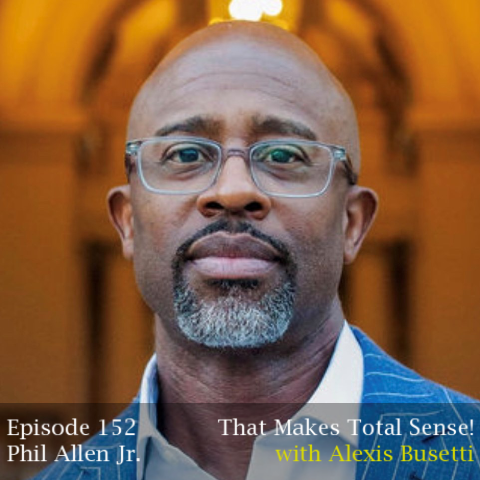
Speaker 0 00:00:38 Hey everybody, I'm super stoked because I have a new, like real life friend here. Who's joined me for the podcast and I promise I didn't like threaten him or anything. We did spend a week together in DC as part of a group. And then I was like, oh man, I've gotta have you on the show. You've gotta come and tell your story. And he was so gracious to say, yes, this is bill Allen. And he is the author of an incredible book. I'm sure <laugh> that I haven't read yet, but I've seen the documentary. I did the, I don't, I don't think this is gonna be a situation where the movie's better than the book. I'm sure they're both gonna be incredible, but this is open wounds, a story of racial tragedy, trauma and redemption. Hey Phil.
Speaker 3 00:01:21 Hey Alexis. How you doing? Thanks for having me.
Speaker 0 00:01:24 I'm I'm fantastic. I'm just so, I'm so stoked that you came on and I'm so used to saying this is an incredible book, but I haven't read it yet. <laugh> because I literally got it in the mail yesterday, but bonus points. And we'll talk about all this later, but you created a documentary to go along with this book that shares your story. And I did watch that and it is phenomenal.
Speaker 3 00:01:49 Thank you. Thank you. Yeah, I partnered with, um, my buddy, um, El Michael Lee, he's a filmmaker director and, um, I was at Sundance and good for, for a class. And I saw these films that there were hard films. There were truth telling film. There were prophetic films. And I, it reminded me of my grandfather's story, my family's story. And I remember sharing at a forum that I was in, in Sundance called win rider. And they were there to curate a space for theologians and ethicists, um, to talk about film at Sundance. And I shared my story in the forum and it was, you could hear a pin drop and afterwards someone said, you have to tell this story. And I knew they were talking about film making. I was like, uh, I don't know. And, um, yeah, I called El Michael Lee, my, my buddy. I said, man, I got, I got an idea. And I told him about it. He was on board and we raised the funds. We raised enough funds to, to shoot it, to travel back home, travel to Minnesota, do interviews, uh, rent equipment, all that stuff. And it came together in six months, um, to do a short film and we had tons of footage. We could have done a feature length, but we wanted to do a short film instead.
Speaker 0 00:03:21 Wow. Well, I mean, I'm gonna put the link so that everyone can watch it, um, in the, in the show notes today, obviously, and also a link to this book that I cannot wait to dive into because, um, because there's more that, like you said, the footage alone, I'm sure it could be a, a future, but the, the, the, the, the story is more than a 40 minute story. And I, and I'm anxious to get in and dive in a bit deeper. And, and I just wanna, I wanna open before we get into the meet of the episode and our conversation today, I just wanna open by saying thank you. Because just after watching the documentary, um, which is about tragedy, that's happened in your family, um, these are the kinds of things that many people would say, don't talk about this, or we, we don't talk about this.
Speaker 0 00:04:19 Right. And I, and I know there's some of that in your story as well, but, but that we don't talk about this. We don't share this or this isn't, this is too painful, right? This is all the array of, of, of reasoning behind that, that I think is valid. Um, and so I just wanna say thank you, because I feel like as I was watching this documentary about your family, um, that in a way I was receiving a gift that I, I certainly don't deserve. Um, and, and in a way that I was receiving a gift that was so valuable that I can't help, but wanting to share it. <laugh> <laugh> with everyone else who doesn't deserve it too know, I think you've, um, cuz we can learn so much from this and from, and from your, your generosity and your openness to share this. So I just kind of wanna get that off my chest and just, and just say that I'm, I'm incredibly grateful.
Speaker 3 00:05:13 Thank you. I I'm, I'm excited to be here and talk about it. I'm glad you brought me on, so thank you. Well,
Speaker 0 00:05:20 Let's talk about a little bit, um, since I kind of like baited the hook a little bit, I'm in Houston, you're in California. I just said we spent a week in a different Georgetown, not Georgetown, South Carolina. Yeah. But we spent a week in a different Georgetown together. So what is your, I mean, tell us a little bit about your, um, you know, you're in class Sundance, none of this is making sense to anyone who's hearing it. <laugh> um, <laugh>, you're in a theology circle at Sundance. None of this is making sense. So give us like the context, bring us all together. Like what's your educational background? What are you, what are you current? What have you done? What are you currently doing and, and studying. And then, um, and then, you know, maybe bring us into this story and how this is a part of all of that.
Speaker 3 00:06:02 Yeah, yeah, yeah. Um, so I'll, I'll go back a couple of decades. <laugh> good. Real quick. I'll I'll, I'll sum it up real, real easy. Um, so I went to school in the nineties at North Carolina, a and T state university, H B C U. Um, that's where I spent four years. I played college basketball division one college basketball. Um, I, I had no idea the time I had, I had no clue what went on in my family. Going back to what you said, we don't talk about this stuff. So I'm just going about my life. I just know that I had a granddad that he died. I think I knew he was killed, but I didn't know any details. My, my uncles, I have two uncles that got drafted to the NFL. Um, my dad was, they say the best football player of the three of them and his two older brothers that got drafted and one was a Heisman trophy candidate. So I came from that, that lineage. Um, so sports was my world and that's what I, only thing I wanted to do was play basketball professionally. And, um, when that didn't work out, um, went through a dark dark season, um, some depression and then went back home and rededicated my life. So I grew, I grew up in the church, rededicated my life started being a personal trainer fast forward, moved to Maryland, started modeling in that Jo matter of fact, my agency, my modeling agency was not far from where we were.
Speaker 0 00:07:27 Oh, fantastic. Georgetown.
Speaker 3 00:07:29 I used to a chance to go by there and, and, and see them. But 20 years ago in little, over 20 years ago, I was modeling, moved to New York to model that didn't really work out, um, talking about race. That was part of it. Black male models just do not get opportunities in the industry. Um, so started trying to act and I'm a personal trainer, so I can go anywhere in the country and work. Um, and my friends there told me, man, you're pretty good at this. You should try LA if you wanna do film and television. And I was like, okay, you don't have to tell me twice. <laugh> glad I already visited LA. I loved it. I wanted, I wanted to live out here. Mm-hmm <affirmative> um, so I came to LA in 2002 to act, but then I got here and did not want to act.
Speaker 3 00:08:20 And that's when about two years in, um, I was still floundering in my faith for about eight years. From the time I got saved in 96 to oh two and um, oh four, I'm sorry to oh four. And then I got re I rededicate my life for the last time and this time I, I didn't look back. So now I'm, I'm in ministry, um, volunteering, um, I'm, I'm serving, I'm learning, I'm being mentored. And then I go to school at the Kings university and I get, I go part-time for seven years and get my bachelor's. And then I took a year off. Um, during that time I had gone through a divorce or got separated and was going through a divorce. And I don't know what made me decide that that was a good time to go to grad school <laugh> but I went into grad school, really.
Speaker 3 00:09:14 I think I was, I wanted to have something to focus on while I was going through that pretty traumatic and humiliating, um, event or, you know, divorce. So I met fuller at this 200 15, graduated 2017 with the master's in theology, master of arts and theology took a year off and I had applied to the PhD program at this point. I knew I wanted to teach. I knew my time as a pastor, cause I, now I'm a pastor for about 13 years, about 10 years. Um, and I knew my time was nearing it in there and I wanted to teach, I wanna be in front of young minds and engage them. Um, I was a young adult pastor for seven years. So, and my ministry after I planted after that was mostly young adults. So, uh, I was accustomed to that group. That's my sweet spot, I think.
Speaker 3 00:10:11 Um, and then I pursued a PhD. So I've been going into my fifth year, um, PhD candidate in ethics, Christian ethics, a minor in theology and culture. So a lot of my research is at the intersection of race theology, ethics, culture, um, justice. And now in the last few years, trauma trauma mixed into that. So that that's what I've been studying. And in the midst of that, we went, I mentioned Sundance. One of my classes, never thought I'd be at Sundance, never had a desire to go to Sundance. So I go to Sundance for a class, um, cuz Martin Luther king Jr kind of undergirds his theology and ethics kind of undergirds my, my work, my, my research. And so we go to Sundance and there are these films and they're talking about all types of issues that you films and you don't see in the, in the theater. So these are the independent filmmakers that are telling the truth about like the ugly you, you it's an emotional week at Sundance. And that's when I got the idea to, um, to do a film. It reminded me of my story. I was encouraged that my story needed to be told and, um, I did. And so that's, that's how it all came about and, and writing the book, it all was inspired. Um, by Sundance,
Speaker 0 00:11:40 Did you write the book first or make the movie first?
Speaker 3 00:11:42 I started writing the book and then I stopped because we got so invested in the film. I couldn't do both. And it was so emotional. Um, so taxing, um, triggering. I could only do one at a time, but I did enough to where one of my professors, um, presented it to fortres press and they were interested in, in publishing it. And once I, once I got the contract, I then finished the book. I had written like two or three chap, like an intro in two chapters. And I wrote seven chapters in five months, four, no three or four months, I was writing a chapter a week and then spent the whole summer with four rounds of edits, four or five rounds of edits. And then we, we finished it the following fall.
Speaker 0 00:12:43 Wow.
Speaker 3 00:12:44 And, and I'll
Speaker 0 00:12:44 Say not to, not to mention being in a PhD program <laugh> yes. I'm saying
Speaker 3 00:12:49 Not, you know, not that Sundance was the only influence, but in Martin, my class on, um, ethics and theology of Martin Luther king Jr. There was a, there was a moment there as well where I felt like I needed to tell the story. That's when I was thinking about writing the book, I never thought about doing the film. So I started writing the book a after I came back from Sundance, that kind of pushed me to tell the story to, to write the book, put it together and then do the documentary as well.
Speaker 0 00:13:19 I mean, this is Phil, this is just, it's so incredible. And just because I have, you know, just a little bit of these conversations, you and I have had about some of the things that you're continuing to research and write about. I'm I'm so grateful you are in this space. I, I I'm, I'm just so grateful you're in this space. I think you are, um, yeah, one of the right needed people to tell these stories, um, because you tell them with truth and honesty and grace and um, thank you. That's incredibly difficult. Um, so let's, let's like dive into the story a bit of, of, of what you've told. And I wanna say, besides it being incredibly well done, I just wanna name at the beginning of this, that there there's an entire middle section of this documentary, um, on the effects of trauma. So the effects of trauma to people individually, the effects of trauma to families and the effects of racial trauma.
Speaker 0 00:14:36 And even though I haven't been able to crack the book yet, Dr. Lamberton, who is our current president at fuller, um, when he writes one of the blurbs for the back of your book, I thought I'm gonna read part of it if that's okay. Because I think that it's really important to, as we move forward. And especially as we talk about your story and the trauma piece combined, but Dr. Labon says Phil Allen's story is as unique as any personal multi-generational African-American tragedy can be. And that means the narrative is also a painfully common one.
Speaker 3 00:15:17 Mm.
Speaker 0 00:15:21 And that hit me like a ton of bricks. And so I wanna say that at the beginning to say, yes, we want to honor your family. We want to honor your family's legacy and your family's story and your grandfather's life and his horrific tragic death. And to say out loud, this is not the only tragedy <laugh>
Speaker 3 00:15:46 Yeah.
Speaker 0 00:15:47 In our, not just in our history, but in our contemporary time, this is unique and personal as Dr. Lamberton says, and it is common.
Speaker 0 00:15:58 Yep. And we need to say that out loud. And I, and I think that we need to, we need to say that more. We need to say that probably louder. Right? We need to say that in more spaces that what we're getting ready to talk about is thank you very generous of you to share your family's story. And this is not the only one. Yep. This is way more common than many people realize this is way more common than most of us want to admit. Um, and this is also a, a much more of a current reality than we also want to, to admit, or maybe that we are aware of. And so I just wanna say that at the beginning, because I think it's a really important framing as we talk about your family's story. So with, with all of that preface, Phil, why don't you go ahead and get us started wherever you want to?
Speaker 3 00:16:53 Well, you know, I wanna go back to something you said earlier about, um, we don't talk about these things because it's too painful and, and I would, and I, and I agree with that a hundred percent and also it's too painful not to talk about it.
Speaker 0 00:17:09 Thank you. Yeah.
Speaker 3 00:17:11 Right. Um, because of what we're carrying, so that trauma. So, so when my grandfather in 1953 to give some back backstory for the listeners, my grandfather, Nate Allen Navy veteran served in world war II, um, came home and nine years later, he's had an argument with his boss. He left the job and his boss, some, I don't know if it was days or weeks later told him he can come back to work. He sent a message by someone and he can come back to work. So my grand, my grandfather gets in this small boat by out behind our, um, downtown area. Now, now it's called downtown. All the stores and shops are there and it's right on the Harbor. So behind it is water. And so he gets on this boat with two coworkers and they go over to a small island, maybe 300 yards away behind that, that those stores and, um, called gold island.
Speaker 3 00:18:16 His boss is waiting for him there with a shotgun. So these two men wrestle my grandfather to try to hold him. And my grandfather gets away from him. He was very athletic. You know, you talk about his son's playing football, his grandson playing basketball, another grandson playing division one college football. Um, people say that my grand, we, we are, all of my, all of us are my, my grandfather's. All of us wrapped in one, in terms of athletics. He was that he was phenomenal athlete. So was my grandmother. And so he got away and he tried to dive for the water cause he was a great swimmer and got shot in the back of the head. His death certificate says accidental, drowning. So the first question is, and then it says on, there fell off the boat. So, so he just fell off a boat and drowned a Navy veteran, a great swimmer.
Speaker 3 00:19:14 He wasn't pushed off. He wasn't hit over head. He just fell off the boat and drowned. Huh? And so there was no investigation. So now we're talking, the, the people who held him down, the man who shot him, the police who wouldn't investigate the coroner medical examiner, who wrote this on the death certificate and signed it. So we had this network, which is representative of how systemic racism really works. It's not just one person. That's why we can't have the conversation just around bigotry. The conversation can't just be around who shot my grandfather. It has to include all the dynamics, all the factors systemically and how systematically works together so that these things continue to happen, right? Whether it's physical tragedies or microaggressions or disparities and inequities, whatever, it's the network. So my grandmother, you know, that's traumatizing my uncle, her brother, one of her brothers said she was never the same after that.
Speaker 3 00:20:17 So she raised four kids by herself and she got remarried a few years later. And he, that person died of, uh, um, died of health reasons. So she essentially, and she was single the rest of her life, but she raised these kids herself. The grandmother I knew was the traumatized grandma. That's who, that's what discipled me, that this didn't make the film. But I said this in one of the interviews, trauma discipled me through my grandmother, through my father. Right. And that's just one side of the family, cuz on the other side of the family mom's side, my grandmother, her father was killed at the hands of racism as well when she was two. And then my father was two when his father was killed and he's, this is direct line to me. So I take this personally. I, I take racism personally. It was almost like if racism is satanic demonic, which it is, I, I feel like it was after me, like trying to cut me off.
Speaker 3 00:21:26 Like I like, God's got something for this young man. We gotta try to cut him off generations head. So just missed my grand. My grandmother just missed my father. I'm here, I'm here now. Right? And so my grandmother trauma, when I talk about is too painful, not to talk about because you could see it in her posture. You could see it in her accountants, her facial expression, her temperament. And I would always ask growing up, why is she like this? Cause she, she was hard to be around sometimes, but she'll give you the shirt off her back. And I love my grandma strongest one of the strongest women. I know, but she was hard to, she was tough on, on you. But she also prepared me for where I am today. And I told her this before she passed away. Thank you, grandma. What, what you see in my life right now as part of your fruit.
Speaker 3 00:22:29 And so I knew the traumatized grandma and then you fast forward that to my dad when he found out at nine that his father was killed by the man who lived a few doors down from them. He used to play with the man's kids. He said, and he, and from that point on my grandmother told me years ago, she said from that point on, he was an angry person. So now he has absorbed that trauma and he's carrying it in his body. And in Korean culture, they call it hon that underlying bitterness, the deep abyss of the soul, right? That's the father. I knew. That's all I know. I mean, he's better now, but he medicated through alcohol, all types of drugs. He spiraled domestic violence with my mom. I mean another strong woman that I know. Um, and then me and my sisters. So we absorb this trauma generation after generation. Even if you don't believe in the genetic transference of trauma socially, it can be transformed because that's what we're, that's the context in which we're being formed and even theologically the generational cur generational curses being passed on. And so no matter how you wanna look at it, it's passed on intergenerationally. So that's why we have to go back and get, we have to practice Sankofa and go back and get the truth from the past.
Speaker 3 00:24:09 Cuz that's the, that's the medic that's medicinal, right? To, to not talk about it or to talk about it in different terms to white wash it, um, is, is, is, is painful and destructive and you're right. It is a common story because every time I've shown the film, there's at least one African American who will share something happened to their grandfather, their uncle, cousin, somebody in their family, something happened long in terms of race and someone going missing someone dying, um, things of that nature.
Speaker 0 00:24:48 And I'll just go out on a limb and say, and, and those are the, those are the only, the ones you're hearing are only the ones who are available to share at that moment, right? Yes, yes, yes. How many people are go back home thinking or call their mom on their way back, right?
Speaker 3 00:25:01 Yes.
Speaker 0 00:25:02 Did you, do we ever know what happened at, you know, how, how, how, how much is that part of it? Um, gosh, Phil, there's so much there. One of the things that stood out to me in the film and I, I can't remember who said it. I think it may have been the pastor that you interviewed. Um, he talked, he used this term vigilant justice. That was very common. Of course it was very common in the United States. It was very common in the south. It was very common. He said in, in Georgetown, South Carolina where, um, your family lived and grew up. And
Speaker 0 00:25:39 I wanna talk a little bit about that related to this system, all of these systems that you're, that you're talking about because it's not just your grandfather's boss, the one who, the one who shot him and killed him. All of these things work together, as you said, and I can't help. But think about the climate of what was what's been happening in the last few years we talked about it. I think it was before we, before we hit record right in the summer of 2020 with AAU Arbery and George Floyd and Brianna Taylor and, and all of this death and tragedy and more trauma at the hands of, as the, as the nursing professor says, you know, people who are authorized to carry deadly weapons, right? Mm-hmm <affirmative> um, but there is a connection there, and I don't want people to, I don't want anyone to miss this connection between what happened to your grandfather.
Speaker 0 00:26:45 What was so common in the south then as vigilante justice in quotes to what's going on now? I mean, Ammad Arbery's situation is the direct link to that. Yes. So we can start there maybe, but it is, but it is bigger that it is systemic as well. Because as you, as you named in your grandfather's story, there is the people who wrestled him, the one who shot him, the police who never investigated the exam medical examiner, who wrote something that was not true and signed it and all of this, if, if one, I, I, I, I just wanna throw Emily, like if one person had decided to break that chain to be kind of the weak link, there could be a different story in the aftermath of your father's a grandfather's horrific death, but, but no one did.
Speaker 3 00:27:40 Yeah,
Speaker 0 00:27:40 Yeah. Right. The trauma would still be there, but the healing process could have looked a little different, right? Yes. A lot different. Yes, perhaps. Right. If someone would have stood up and, and, and rang the bell for actual justice, not vigilante justice. So I don't know where you, where you wanna go with that, but can you help us kind of make those connections?
Speaker 3 00:28:03 So in, in, in my research, you know, I'm researching the plantation. Cause I believe we, we still live on the plantation. All of us, every one of us in this country, this country is a plantation United plantations of America. If I want to, would dare use that term. And there's several things on the plant that make up a plantation. One is the organization of space, the management of bodies and the enshrinement of whiteness. Those are three things that I've identified of. And there's a few more, but those are three. And so when we talk about these systems, these systems are in place to do at least those three things, as well as deprive people of resources based on color, you have your hierarchy. Um, there may be some tokenization which further legitimizes the, the system because if, if one or two can make it out, see it's, it's legit.
Speaker 3 00:29:04 It's good. There's nothing wrong with it. But those three. So the system is set up to organize space that benefits white Americans to manage bodies, typically social control control of bodies. We're not go when we're talking about Roe V Wade, and we're talking about control of bodies, but that's a whole nother conversation. Um, but when it comes to race, the control of, of black and brown and, and, and, and very shades of bodies, um, and with that, and to make that there's this veneration for whiteness built into everything, it's built into structures, it's built into, um, language laws, it's built into everything. So the system can now just operate on its own and people can, can claim plausible deniability because we didn't have any intent or malice here. And that's where it, it, it, it, it how it gets away with, with, with so much. Um, so when you think about my grandfather's my grandfather's situation, um, to control a black body or a black agency, how dare you speak to me a certain way. Um, I'm gonna allow you to come back to this space to work, and then I'm gonna set some ground rules. And if you don't abide by them, then if something's gonna happen to your body.
Speaker 3 00:30:37 And because part of what you have to to understand is you, you need to have this respect for this white man, but then the other be the systems are in place to reinforce that. That's why it's so easy to write, fell off the boat and drowned. That's why it's so easy to not investigate because you investigate. Now, you're gonna ha you're gonna, you're gonna taint whiteness cuz the, the evidence is gonna show this white person is wrong. And if you set that precedence now it's, it's, it's spreading. So it's gonna unravel the whole system. So everyone has to play their part, including they're expecting people of color to play their part as well, adhere to the system. Um, I, I, I think that way too often, we, we fight the battle at the symptom level and we react and respond and we need to change laws for this and that, but on the ideological level, logical level, until that changes until that is no longer acceptable, we're gonna always be fighting symptoms. We're gonna have a chronic issue. We're gonna continue with the chronic issue of white supremacy. That's what causes the inflammation in the, the, the social body.
Speaker 3 00:32:06 But we just keep taking painkillers and we never deal with the inflammation. And so we can talk about the system all day, but until we deal with the ideology that undergirds, that we're gonna always be dealing with the system and the products of, of R, which is racism, racism to me is the product. It is the, the, the, the progeny, um, but white supremacy is the father.
Speaker 0 00:32:33 You know, when you, um, interviewed your friend who is a white woman who had lived in Africa, and then she moved to the states to South Carolina. So much of what she said was profound. And, and the thing that I was thinking of while you were talking, because it is, you know, it's, I know that this phrase is tired, but it is the water that we swim in. It is the air that we breathe here. And so it feels kind of in air quotes, it feels very normal, right? We don't even realize it and she's coming in. And at one point she said, I know this may not be weird to you because you grew up here, but this was weird to me. Right. And, and she talks about being in these spaces where it's, it's very segregated, you know, neighborhoods and parts of town and all this stuff.
Speaker 0 00:33:23 And that these, you know, big homes, big, nice neighborhoods, rich parts of town where the white people live are actually called plantations. Right. And she's going, what is wrong with this picture? Right. And, and, and I think more than that, what I read into it was why does no one see that this is absolutely horrifying? Right? I mean, we, we have, uh, a really large neighborhood in the, in the suburbs here that, that, that boasts, that it is one of the most diverse neighborhoods in the, in the greater Houston area. And it was really only like three years ago that they dropped the name plantation from the, the name of the neighborhood. And I got curious about it because one of my, my friends lived there and, um, and I was like, she was like, no, no, no, it's just, and then she said, the first, the first word now, no, it's just this now.
Speaker 0 00:34:18 And, um, and I was like, okay. So I kind of got curious and I went and looked and I'm sorry, but even the PR behind that was really crappy. Like, I mean, the copy that was written, couldn't even say why they should have dropped it. Right. It was just kind of like pat us on the back because we dropped the word plantation, but don't really ask us about it. Right. You know, like, I'm like, this is like, this is absolutely absurd, but it didn't become, you know, kind of to your point. It didn't become the most, one of the most diverse subdivisions in the greater Houston area after it dropped the name plantation, we got all these people of color <laugh> living in this, in this quote, diverse, you know, neighborhood with the name, plantation, tacked onto it. And no one thinks about it. Like we are, we are in the part of the country where Juneteenth is a thing, because people who were enslaved didn't receive the news for years, that they didn't have to be enslaved anymore. Like this is Texas, right. This, this is the environment, this is the culture. This isn't just 150 years ago. Yeah. Yeah. This is now. But as you're talking about this San COFA, and I'll let you define that word in a minute, as you mentioned it, we can't look back. Like we just have this like societal inability. I feel like to, to look back and see those things and see ourselves in them.
Speaker 3 00:35:49 Yep. Yep. You know, it is, it is funny. Um, when you say they, they, they remove the name plantation, and my question would be, um, but is it still the culture of a plantation <laugh> right, right. Yeah. Um, I want to know who's who owns the space who's managing the space, is that diverse? Cause I have a problem with the term diversity anyway.
Speaker 0 00:36:17 Right.
Speaker 3 00:36:18 Um, I used to think it was great. It was amazing. I was at this diverse church, but if diversity is your goal, then you've missed it
Speaker 0 00:36:26 A hundred percent.
Speaker 3 00:36:27 You can manufacture diversity and still maintain the culture that you had prior to it because everyone has to assimilate to the culture. And so, you know, people boast of diversity, a lot of times I'm like, uh, I need to see the culture. I need to see what's happening. Um, in this space before we can pat anybody on the back
Speaker 0 00:36:51 Who's plantations were diverse.
Speaker 3 00:36:53 Exactly. <laugh> exactly. You know, um, who, uh, yeah. Who who's, who's managing this space, who's at the decision making table, who's steering culture. Right. Uh, who's writing the policies in that space. That's, that's what, those are the things. Because, because until you ask those questions, you're not even engaging the ideology that undergirds that's been so normalized. Right. So, yeah.
Speaker 0 00:37:30 Yeah. Um, I really have to say, I loved the, um, the time spent in the documentary with the nursing professor. Um, she's phenomenal by the way. And, and she, and she says that the, the, the racial ideologies, I feel like I could just read on her face. Like I just loved her expression. Right. As she said, as she said those words and, you know, and to go into the, the trauma to kind of take it there for a minute, she, um, gosh, Phil, there's just so, oh, I just hate it so much. There's just so much, that's been normalized that we just accept as societally, without even thinking about it. And one of those things coming from her, um, from her advantage as a, as a medical professional, as a PhD, as a professor, all of these things, and she's going, yeah, here's the situation. We still have medical students and doctors who actually, when surveyed respond that black people do not feel pain to the same level as white people. She did not make this up. This is, these are, these are the, the people when you go to the urgent care <laugh>
Speaker 3 00:38:52 Yeah. Yeah.
Speaker 0 00:38:53 Because your kid has a fever or you have the sniffles, right. Maybe you're, maybe you're pediatrician, maybe, maybe your general practitioner, there, there there's a good chance, right. That these people who are tasked with healing us now, doctors are great and I'm not, you know, but, but it's just like, they could really have this as something that they have normalized and, and it comes through, not just, it's not just a theory. It is when they're actually treating patients. And I wanna, I don't wanna say too, whew, cuz this one hit, this one hit really hard. Um, and I would say as someone, so, so I actually, I have a black son who does have a condition that the doctor told me, I'm I don't, this, this probably will not affect him. I do want to let you know, it is much more common in black people.
Speaker 0 00:39:49 She said African Americans, which is, which is a good language as well. But my, my son is African. Um, and so, and she didn't know that at the time, which is fine. But, um, but, but even with him being born in Africa and his, and his, you know, birth parents and family are in Africa and, and he has some of these same physical traits that have come over. And from my Mexican side of the family, they just say, well, diabetes is just more common. You know, some of these same diabetes is just more common or this, you know, in the black population, hypertension is just more common, you know? Like, well, is it why? And, and, and someone who would actually come in and say, why though? Yeah. Why is this more common? Why are there more deaths from health related issues in these age categories among these populations? Why, why have we just accepted it? Why have we not asked why what's influencing this? Okay. So sorry. I'm just, I, that, that got me like all crazy. That's, that's good. When she started talking about, cause I had heard the thing about black pain and dismissed it, but then when she talks about no, there are actually med students who still believe this, I'm like, excuse me, what
Speaker 0 00:41:05 Bill talk to me,
Speaker 3 00:41:07 You know? And that didn't surprise me because well, the, the, the, the med student statistic did, or that, that data did, but I've had those experiences where they, they assume. So I, they either assume you're okay and nothing's wrong with you? Or they're assuming something about your lifestyle <laugh>. So I had, I had a season where I couldn't sleep 2011. I couldn't sleep. I literally was afraid to go to sleep. And I believe it was a spiritual issue because it literally went away the day that pastors came in late hands and prayed over me. And I slept like a baby that night for the first time and over a month. But for about 30 days, I couldn't, or 40 days I couldn't sleep. And, but I'm still working. I'm still pastoring. I'm still serving, I'm going a hundred miles an hour. And so my, that, that affects your immune system. Sure. So I went in and this doctor, she wasn't white, she was Indian. And she, she said something with my white blood cell count was off. And she said, I need to, I wanna order a, um, HIV test.
Speaker 3 00:42:24 I said, how do huh? And she said, yeah, because of this. And I was like, is that the only reason why that would be off as if I got HIV? She didn't ask me anything about what was going on in my life, no context. She just went there. And I said, ma'am, I've been abstinent as a PA, a single pastor. I've been abstinent for the last six years. Nothing. I'm pretty. And I've taken HIV and STD tests in the past over, over that, that period sometimes just, just cause I wanted to take, take it a second one and be, make, you know, make sure whatever I said, I assure you, there is nothing there.
Speaker 3 00:43:09 And, but I'm not, but how do we get here? How do we go from that to here? So I go to, I leave that place and go to another doctor's office. And he said he was, he might have been Jewish. And he, he kinda shook his head. He said, yeah, she's not familiar with black. She must not be familiar with black patients. She said, um, anemia is something that is common in the black community. And I'm a bit anemic, by the way. She never asked those questions. She never got context. And he and I, I explained that to him and he said, there's, there's probably nothing going on that. But, but the, the lack of sleep, lack of rest working extra hours is taking its toll on you. And that's all it was because once I started sleeping, everything's back to normal. My blood everything's backed was fine, clean bill of health.
Speaker 3 00:44:06 But the fact that she assumed the worst that had, was attached to my lifestyle, which goes back to this, this, this racial trope about black men and sexuality, right? Like that's the only thing on our minds type of thing. And so little subtle things, microaggressions, um, that we experience on a daily basis, um, come from those unconscious biases. Um, but they were normalized in the language, whether we're talking film, whether we're talking media, um, whatever the case may be, it's normalized in that language and, and it's perpetuated, but we don't, we don't know the history. We don't know that that came from someplace, right. That's why we gotta Sankofa go back and get, go back and fetch African term to go back and fetch is, is going back to the past to take those lessons. People talk about, I don't dwell in the past. No, I, I visit the past often. I don't dwell in the past. I don't soak in the past, but I visit the past often because it has so many lessons to tell me, how did we get here?
Speaker 3 00:45:19 Why, why am I, why is, why is my body responding this way to this? Why does my, what happened with my dad? Cause there was a point in time when I realized my dad is hurting. As much as I am, doesn't justify the things that he did explains why he did it, why he was the way he, he was, he couldn't be a father at 21, 22 in his twenties. When my grandmother never spoke to him about his father until he was 37. And he said, ma, I don't know who I am. Can you tell me about my father? But it was too painful for her to visit. She couldn't even tell me 15 years ago when I asked her, she couldn't tell me she didn't wanna have the conversation.
Speaker 3 00:46:12 I learned about my grandfather and what happened seven years ago. So if my father doesn't know who he is, how do I know who I am? Where would I get that? And a young boy looking to his dad, for example, as a model for identity, for affirmation and all those things. My, my father told me he was proud of me. You know, he said he was, I was special when I was 32. I cried like a baby that day. I was waiting to hear that he could, he have told me that years earlier. Sure. Did he have the capacity to maybe not, but that's why we gotta understand this idea of, of racial trauma. That's passed on generation to generation because we carry it in our bodies and it's normalized. Hypertension then becomes normalized. Diabetes becomes normalized. The food. We eat that, that came from our ancestors because they ate what they had, that what they could get the pig intestines.
Speaker 3 00:47:25 They didn't have the best of the, of the animal. They ate the pig intestines to chitlins. It became a delicate intestine. It became passed. It was passed on to us and we just ate it. Cuz it was normal. It was good cuz they did it. They did it well. And then you realize what it was and it's like, whoa, wait a minute. Should I be eating this? But it's passed on spankings. When I was little, we get spanked with a switch. Sometimes you had to go get your own switch. Where'd that come from? That's what they did to the slaves. So correction is correcting people is attached to violence. So in the black community, how do we correct each other violence and words, violence and, and behavior violence and parenting. And it's not just a black community. I mean it's, it's in the white community too. The, the Latinx community, it's in every community, but I'm, I'm dealing with our community here. And that's why we gotta go back and learn, go back and see where where's the roots. Where are the roots of these things? Why, why do we do this?
Speaker 0 00:48:31 You know, I wanna go back to your grandma for a second on that because gosh, it's powerful when you're talking about these relationships, right? And I say, I think part of what we're res we're resistant to this kind of thing as Americans, because Americans value individualism, right? That's the narrative is you should, whoever you are in whatever circumstance, you're in, be able to a pull yourself up by your bootstraps B not care, what somebody thinks about you. Right? All of these things that we kind of get told over and over again in different forms are part of this narrative of, of this exceptional individualism that we have. But, but the scriptures tell us a different story. And God tells us a different story about our identities. And that is that it is formed inside of community, right? Yes. Not because we are who we say we are.
Speaker 0 00:49:28 Right. And that we can just own that or something. That's stupid like that. That's not real life. That's not how we were formed and made by our creator. And that's not how he intends to continue for us to form. We continue to form inside of community. And so we go back and I think about your grandma and, and you say, everyone says, she changed that day. She wasn't same. I'm like, yeah, of course she changed. Like everything she knew inside of her relationships changed the day her husband was murdered. Yeah. Right. This guy who was the boss who provided the paycheck for your grandfather's hard work was no longer an employer. He was a murderer. Yeah. Right. These guys that he worked with or that he knew sometime from the community were no longer acquaintances or coworkers, they were the ones who fought him. Right.
Speaker 0 00:50:25 Or the, you know, the neighbor, this is a different situation. Now. Now her role is not that of wife. It is that of single parent. Right. It is widow now like all of these things, wow. When your grandfather died, every relationship that she had was now different. Wow. So of course she was different. Right. We can't anticipate or expect that she, as a person, as an individual would live up to this American lie that, well, she is who she is. And none of that stuff matters. Bull crap. Right. I mean, that's not even it. Right. Every we're we exist relationally <laugh> yeah. And inside of community and your grandmother's community and relationships changed dramatically and drastically that day. And as a result of that, so did all of these other relationships and communities that the trickle down effect was very real from that trauma. And so, and so yes, you, two generations removed.
Speaker 0 00:51:34 And I say that kind of loosely were, have been affected by that. Of course your father <laugh> was affected by that now. And you know, and you, I think now we're getting a little bit better. They say, you know, I've, I've heard things. Oh, he was only two. My son was two when he came home. Oh, he was only two. He doesn't remember da, da da, no, no, no. Mm-hmm no, because his body remembers his spirit remembers he may not be able to name something and have a cognitive expression of that. But that doesn't mean it doesn't live, you know, inside of him. Yes. You know, like with your family anyway, there's not a question there, sorry bill. I just, it was just like this, like, you know, kind of just like, yeah, of course. You know, of course she's different, um, and changed and the, and the trauma, it's not just painful. It's harmful.
Speaker 3 00:52:27 Yeah. But that's, it's so good. It's so good. What you just said about relationships are inherently different when that trauma hits, not just the person's different, but she's gonna relate to everyone differently. Which means that there has to be a, a grace extended to her, cuz she's now trying to navigate this new space and how to relate to people with this trauma in her body.
Speaker 0 00:52:56 Right.
Speaker 3 00:52:58 But then I don't have that context or that language as a kid mm-hmm <affirmative> so I don't know how to relate to her, to this, this version. Mm-hmm <affirmative> you know? Right. Um, but you said something that reminded me of a story. I think my grandmother used to tell me or did tell me my dad used to crawl when my, when my grandfather went to work, when my father was a baby, he would follow him crawling to the door as he left. Right. So think about this. When he, when he, when she told me that I imagine after my grandfather was killed, my father still crawling to the door because his, he, he, that was part of his rhythm.
Speaker 3 00:53:45 He doesn't know it as a rhythm, but at one and a half, at two years old, that was his rhythm to follow dad. So I imagine him following and there's no dad thus begins his search right? For the rest of his life, pretty much. And my father one time would wander as an adult would wander down to what we call the, the boardwalk downtown and just go stand at the water, um, near where his father's body came up. And I had, I, I put those two together, the baby and the adult wandering in search of dad. And I told my father a few years ago, after his brother, one of his brothers died. My uncle Bobby died six months before my grandmother. And we many people believe that that kind of took her out, added, added that level of stress that she just couldn't uncle Bobby was like the, the one he got in the least amount of trouble. He was a mentor. He was kind of a standard bearer. Everyone looked up to him and, oh, I lost my train of thought. What was I saying?
Speaker 0 00:55:06 When your uncle Bobby died,
Speaker 3 00:55:08 My uncle Bobby.
Speaker 0 00:55:09 Remember that? The, the connection between your dad as a baby and your dad at the water.
Speaker 3 00:55:15 Oh. And, and because they died, my, my, my dad said his psychotherapist, so now he's sober. He has a psychotherapist and she said, you're grieving. Or he said, you're grieving your brother and your grandmother's your mother's death. And I said to him on the phone, I said, do you think you're grieving your father's death too? And he said, well, Phil, I, I never knew my dad. And I, he died when I was two. And I said, that's my point. Yeah. And he said, wow. He said, I never thought about that. He said, you might be on to something. I never considered that, that you've been grieving all this time. Yeah. And I'm absorb, absorbing that grief as a kid I'm living and seeing that, and can't understand is this what life is supposed to be. Right. So,
Speaker 0 00:56:22 Because it's your story and it's a common story.
Speaker 3 00:56:27 Mm-hmm <affirmative>
Speaker 0 00:56:31 And you're right. I mean, to take us right back to where, where you, you started us it's and it's too painful not to talk about it. It doesn't go away if we just keep our mouths shut.
Speaker 3 00:56:48 Yep. Yep. Now, now think about it collectively, not just individuals telling their stories, but the nation telling its story truthfully to the next generation. Yeah. If it's, it's, it's painful to, to talk about it, but as we're seeing things play out, it' too painful not to,
Speaker 0 00:57:12 And we have to start asking those questions, where did this come from?
Speaker 3 00:57:15 Yep.
Speaker 0 00:57:18 Some of us are asking, but we have to, we have to encourage others to ask where did this come from? You know? Um, and I think sometimes things could be easier to accept if you think it's a freak accident. Right. But when you, but when you, but when you get the backstory and you realize this was no freak accident, someone planned this, or yeah. In the event of an, an accident, no, this person was speeding or something, you know, like felt accidental, drowning. I think that was, that was supposed to make everyone accept that as some sort of freak accident
Speaker 3 00:58:03 Mm-hmm <affirmative>.
Speaker 0 00:58:05 And even that was not the beginning of America's racial trauma story. Right. That was hundreds of years in the making mm-hmm <affirmative> that story could have been the story from a working plantation a hundred years before that mm-hmm
Speaker 3 00:58:27 <affirmative>
Speaker 0 00:58:28 That story was no doubt. The story of working plantations across the country a hundred years before that.
Speaker 3 00:58:35 Mm-hmm <affirmative>. Yep.
Speaker 0 00:58:43 So this is rich and good
Speaker 3 00:58:46 <laugh>
Speaker 0 00:58:47 And hard.
Speaker 3 00:58:48 Yeah. Yeah.
Speaker 0 00:58:50 And hard. Um, I would, I, I wanna, I mean, we didn't have a script or any kind of planned questions, and so I appreciate your <laugh> graciousness in that after spending the week with you, I thought, oh, gee was, I don't even really have to talk. I can just let Phil lecture for an hour and that would be okay. <laugh> but I do, um, I do wanna kind of to, to, to leave with a couple of things and just, I have a couple of requests. So, so the first one is I would love for you to be able to, to kind of wrap our time up, to close this out and to, to, to share anything that's left on your heart, that, um, that we didn't get the chance to talk about in this unscripted conversation. And that's my first request. And, um, and my second request, because, um, even though I don't know you as pastor, I know you as pastor. And so, um, I would just ask if you, if you would actually close this out after, after your comments, by just praying for us, <laugh> that we'd have the, the courage and the compassion to do this kind of work, that your story, um, gives us to be able to do.
Speaker 3 01:00:08 Sure, sure. Um, thank you for giving me this space. I, I, I'm gonna close with what's in that last chapter of the book, actually, um, these four LS, you know, people always ask, what do we do? What do we do in, um, it's a combination of what do we need to be then? What do we need to do? And so you heard in 2020, I kept hearing the phrase, listening, learn I'm listening and learning. That lasted for a lot. For some people it lasted about three, four months, six months max.
Speaker 0 01:00:44 Oh, I was gonna say a few weeks. That was good. <laugh> you're, you're gracious. <laugh>
Speaker 3 01:00:49 But, but we were missing a couple of key pieces in that. Listen, learn lament then labor.
Speaker 3 01:00:57 So here's where that came from in that MLK class. When I told first told the story of my grandfather, I had never told the story, but it hit me when we were watching a video of Emmett till, and I imagine my grandfather's body would be like Emmett Till's body was when it, when he was found. And I told the story in a small group and I saw it was two white, uh, white guy and a white woman were in my small group. I shared with them and they began to weep. I had never experienced that before. I had never experienced a white person authentically emotional in grieving lamenting black pain.
Speaker 3 01:01:37 And I just, I was, I was blown away by it. Then I shared it with the, the entire class. And there were, there were more tears, even my friend EZ, who you need to meet soon Enes. Um, and people would share with me afterwards. And so I wrote some thoughts down. I said, man, they listened to me. They were in a context of learning from people of color, an Asian professor talking about MLK. And they were learning from me. And when in that moment they lamented see, we can't move forward without lament shared lament. Cuz that says that you feel what I feel. You may not know what I know. You may not have experienced what I experienced. You may not get it fully, but you feel something, you feel my pain. That means you see me. You hear me. That means you have just, you have just placed value on me and my, my pain.
Speaker 3 01:02:39 And you're entering into that space with me. You're not retreating. You're not rejecting. You're not denying you're entering into the space. You're you're willing to sit there, right? Because that will fuel your labor. It's the lament that fuels labor, not laws, right? Not ideology, maybe not even theology, unless it's a theology of lament that fuels labor and the labor piece. There's not a one size fits all. It depends on the context. It depends on where you are. It depends on the season. You're in. Cause you, whatever your labor is today may not be your labor in a year or two from that.
Speaker 3 01:03:27 But the listen learn lament. It changes who you become because if you step right into you saw something, you got angry. Now you wanna try to fix it. You're gonna compound the issue cuz you don't know what's going on. And in 2020, everyone, a lot of my white friends and a lot of people on, on TV and social media wanna fix things. This has been going on for 400 plus years with native people and African African, uh, enslaved people. You ain't gonna just come in and fix this cuz you think you, you finally seen it. You've seen the light and now all of a sudden we're just gonna do this. No, you need to become someone different and you need to lament and then you need to learn and find out how can you labor? Where is the need? Because oftentimes you can overstep those boundaries and cause more harm.
Speaker 3 01:04:27 So I think that's the, that's the piece I would wanna leave people with is listen, learn lament and let that fuel your labor and how you labor and with whom you labor. And it's an ongoing process. There's no, this, I don't believe this will be fixed in our lifetime. I believe we can make it better for the next, for those after our lifetime. But to some degree, there's gonna be this issue maybe a hundred, 200 years from now. We look back. If this country's still going strong, um, or going at all, and we see that even systemic issues, institutional issues are fringe. Maybe that's a possibility, but in my lifetime, I'm not confident that we see this utopian. There's no more. We are post racial. I don't believe I, I I'm cynic, but I do believe we can make it better for the, for the generations coming. Right.
Speaker 0 01:05:32 That's good, Phil. That's really good. Yeah. That's really good. I'm with you. And I don't generally classify myself as a cynic. I just think that's kind of a that's real talk, you know? Yeah, yeah, yeah. It's not gonna be, it's not gonna be fixed in our lifetime. Yeah. Um, before you pray, I'm gonna say the name of this book again in the documentary by the same name. And I will link both of them in the notes. This is open wounds, a story of racial tragedy, trauma and redemption. Thanks, Phil. Will you pray for us?
Speaker 3 01:06:07 Thank you. Yes. Yes. Holy God. Almighty. God gracious, father. God who fathers us and a God who mothers us a God who extends, expresses paternal instincts and maternal instincts. And we need both a God not confined by our imagination, but a God that inspires our imagination. We've we thank you for this space. I thank you for Alexis for this space. Oh God. For her voice, her wisdom, her passion, her boldness, oh God that I have seen on full display. Thank you for her grace father. I pray my prayer for everyone listening. And for those who may not listen, I pray for righteous indignation at where we are, that people are tired and not a tired, not a fatigue that says, let me close my ears and my eyes and let me retreat. But a fatigue that says enough is enough. A fatigue that, that, that, that allows for turning over tables.
Speaker 3 01:07:35 I pray for prophetic vision and voice and passion over the church. And over this nation, I pray, oh God, for solidarity, which implies advocacy in the work of justice and equity. It implies risk in standing with those who are most vulnerable to this particular ism. We can expand this to other isms, but this particular ism, oh God, I pray, oh God that you move us in this way of solidarity. I pray for grace, grace to receive grace, to hear and grace, when we speak, we don't want to just be heard. We wanna be effective. So father, I, I pray that we are, um, indignant, even angry. I should use that term as you would be at injustice, but God also pray that we remain hopeful. I'm afraid of who I will become. If I'm not hopeful, I'm afraid of who we will become. If we're not hopeful, we love you. God, we thank you. Bless these words, this conversation. And as Alexis said earlier, may it multiply? Oh God. In Jesus name? Amen.
Speaker 2 01:09:22 Amen. The links for all the resources mentioned in today's episode can be found in the show, notes, music and podcast production by Seth. Boetti be sure to give us a review on iTunes and subscribe at your favorite podcast listening app, you can also visit us at that. Makes total sense.com.