Episode Transcript
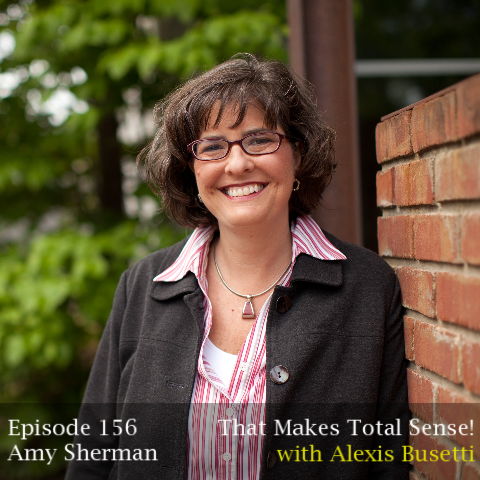
Speaker 0 00:00:07 Welcome to that makes total sense. A podcast dedicated to exploring God's generosity and justice. I'm Alexis, Boetti a Christian aiming to ask good questions and encouraging you to do the same. Every one of us is wired by God to live out generosity and justice, but the how sometimes alludes us that makes total sense is a way for us to get together posture ourselves as learners and challenge one another to practice generosity and justice in a tangible way every day. Hi everybody. I have just finished another amazing book for the podcast. And today I'm talking with author Amy Sherman, this most recent book by Amy agents of flourishing pursuing Shalom in every corner of society, um, is, is so rich. Amy. This is just when it says every corner of society. I feel like that's no joke. This is not a marketing employee. <laugh> this really does touch so many areas. And I would challenge listeners and readers of this book, that there is some area inside of this book that Amy talks about that we probably already feel passionately about and something where we might just need a little, a little nudge, um, a tool, an idea, um, something that we can go to go to the Lord with and say, Hey, maybe I can, um, start practicing this, whatever it is for the flourishing of my neighbor and my community. So thanks for coming on to talk about it, Amy.
Speaker 2 00:01:46 Oh, thank you very much for having me and for your interest in the book.
Speaker 0 00:01:49 Oh yeah. It's it is. It's really good. And it's really rich. And I also wanna tell people that you give the disclaimer right away that I totally took advantage of, which is you don't have to read it all in one sitting <laugh> you don't have to sit down with this all at once. It's pretty dense. Um, but the, but it's divided up into, into sections that will help you kind of, um, with a focus area, I think for, for different people, with different interests in different, in different ministries in mind. Right. So Amy, where, where, um, I would like for you to kind of just maybe to start us off by giving us maybe a kind of twofold question, I'll give you a twofold question here. One is, um, this book was, was birthed out of your work. So I'd like for you to tell us about your work, what do you do? And then also, um, just what was, what did you envision for readers of this book when you were, when you were writing it?
Speaker 2 00:02:54 Yeah. Great. Well, you know, when, when people ask me to describe what I do, I often will say, I feel like the Lord has called me to be a minister to ministries. Um, so what I love doing is coming alongside of congregational leaders and, um, you know, Christian nonprofits that are trying to do good in their communities. Um, and they need help thinking through that maybe they wanted evaluation, maybe, uh, maybe there's some great ministry that I found out about and I just wanna shine the spotlight on them. And so I write a story about 'em, uh, or maybe they've asked me to come and they're thinking about how to replicate somewhere else or they're, you know, needing a new strategic plan. Um, but I love, I love getting to come alongside of Christian leaders, um, and helping them to helping them to even be more effective, uh, in their, in their outreach ministry.
Speaker 2 00:04:02 And so this book, um, grew out in large part of, uh, a question that I feel like I was hearing or a comment that I feel like I was hearing a good bit. Um, that was a actually a pretty encouraging in a way, um, question or comment. And that was that pastors were saying to me, uh, you know, Amy, we're really trying to cast vision in our community, in our church community for being, um, a people for the city, uh, for being a church that's living into that, uh, you know, verse in Jeremiah 29 7, where it talks about seeking the peace and prosperity of the city. We we're taking that seriously and we wanna do it, but honestly, um, I don't know exactly how to do that and, um, not exactly sure what that, that should look like. We, we wanna do it, but, uh, need some help.
Speaker 2 00:05:06 Um, and so that was really the impetus, um, for the book, um, wanting to do something that would help those, uh, folks, uh, out. Um, so the vision, uh, for the book, I think is to both, um, equip those congregational leaders who are already committed to this idea of wanting to lead churches that make a difference in their communities that are seen as contributors to their communities, um, that are taking seriously, this call in the scriptures to, to love their neighbors and to be a blessing to, to their neighbors. Um, but I hope also, um, that it will inspire, um, some others who maybe aren't as familiar with this way of thinking or aren't as familiar with, um, just how extensive the, the, the, the Bible's attention is to these questions of seeking our neighbor's flourishing. Um, and just how rich our, our Christian history is. Um, for me, one of the most fun parts of working on the book was studying church history and seeing all the amazing stories from the past of, of how the people of God have been involved in seeking, uh, the thriving of their communities and in all different dimensions. Um, that, that was a really fun part of the work.
Speaker 0 00:07:04 Yeah, that was something that, um, that I really appreciated about the book, because I, um, I tend to not necessarily be a history buff. And so my <laugh> my concentration, a lot of times can just go to right to right now, you know, oh, we can, we can, we can do this. We can, um, you know, you've seen churches with, uh, you know, daycare centers or, you know, there's one, uh, just read this morning about, you know, thrift store or something like that. And these, you know, these modern ideas, but going back to, you know, Christians were building hospitals, right. We were going into places with plagues, not coming out of places with plagues, you know, and, and that, it really is a rich history, a rich Christian history of, of not just caring for our neighbor and their needs in this benevolent kind of way, which is good. And we've always done that, but also seeking the flourishing. And I really, um, like that language that you use throughout the book, we're not trying to help people just to get by necessarily what we're wanting is for them to live this abundant life that Jesus talks about. Right. Um, in their, in their physical lives right now.
Speaker 2 00:08:16 Right, right, right.
Speaker 0 00:08:17 Yeah. Um, so you have, um, before we get into a few of the, the specific topics that I, that I hope we can hit on today, um, you have this book organized by, um, by section and, um, and you call them community endowments. And I really love, I love that language so much because for me, it gave me a context. So, so a little bit of background on me. I have I'm, I'm in an MDiv program right now at fuller, which is phenomenal because we, I feel like this seminary does a good job of integration when it comes to justice work and faith. Um, but I also have a master's degree in social justice from a secular university that I got a decade plus ago. And so, and so my mind always goes there. We say, well, yeah, we want, of course we want education equality.
Speaker 0 00:09:19 Right. And I think that that's a good thing. I think everyone can probably agree that that's a, that's a good thing. That's not something that's controversial, but to frame it in this way, right. To frame it as part of, I think you frame it as part of the true right. Um, to put it in this context, um, was so just made that call so much richer to me. Um, so you have the good, the beautiful, the true, the just, and well ordered the sustainable and, um, the prosperous and each of those realms goes along with something very tangible and practical and needs and areas of flourishing that we can see, um, right now. So, um, so what, what was kind of your, why organize it that way? I know you spent kinda a significant time in the introduction saying why, but why organize it in that way with those community realms?
Speaker 2 00:10:28 Yeah. Well, so, you know, it's a book that tries to take really seriously the idea that God really cares about flourishing, that God created a world of Shalom and that, that he is going to restore, uh, full Shalom in the new heavens and the new earth, and then the in between parts, um, Jesus is on the move, um, and we're called to join him in his work of, of, of renewal. Um, so God's passionate about flourishing. We ought to be passionate about flourishing. We are called to seek the flourishing of our, of our neighbors. Okay, well then let's define what is this thing called flourishing, uh, because the secular world has its own definitions about it. Um, but the Bible has very, very rich understanding of what flourishing, um, really is. Um, and, um, this framework it's called the human ecology framework and it was developed by a group called the thriving cities group, I thought was, um, such a strong framework because essentially what, what they were doing is they developed, uh, this paradigm was, they were saying, okay, well, what, what makes for a thriving city?
Speaker 2 00:11:44 Uh, and their answer was, well, you have a thriving city when these six different dimensions of societal life are each robust and healthy and strong and sort of strongly, uh, interconnected. And they came up with, uh, you know, these names of the good, the true, the beautiful, the, just the sustainable and the prosperous, and, uh, rather than calling them arenas or dimensions or realms, uh, they decided to call them community endowments because that endowment is a, is a dynamic rather than static thing. An endowment can go up, you know, like if a university has an endowment, they hope it keeps going up and more people are giving money and, and their amount of, uh, you know, funds to spend go up. But sometimes endowments go down right in, in, in hard times. So they wanted to capture the idea that, that these different realms are, are dynamic dynamic, and they can be stronger or weaker, um, depending on the intentionality of the citizens, uh, in, in, you know, trying to bring health and strength, uh, to these, to these arenas.
Speaker 2 00:12:56 And so if I was trying to write a book that helped pastors, uh, figure out, well, how do we seek the flourishing of our city? It was like, okay, well, here's, here's a way of thinking a about that. If you wanna have a thriving community, it's gotta be strong in each of these different arenas. And by breaking it down into these different arenas, I think it begins to give people some handholds and it begins to, uh, I think help them recognize, oh, given what God has blessed this congregation with in terms of our physical assets and our people assets, it might be particularly strategic for us to try to contribute, you know, to this particular community endowment. So I have gone to a church for many years that has a lot of medical people, a lot of healthcare people. Um, it makes sense for, for my church and my community to think about, you know, what would be some ways that we can contribute to strengthening that, that realm of the, that realm of the city.
Speaker 2 00:14:09 So, so I organized the book, you know, using, using that framework. And the, and the other reason that I really landed on that particular one was because as I was really studying well, what does the Bible teach about flourishing? Because there's all sorts of secular philosophies. And we have sort of modern, very Western, uh, very highly individualistic, you know, depictions of, uh, of, of flourishing. Um, but what is, what is, what is a scriptural view of flourishing? And as I tried to identify what I call the marks of true flourishing and began sort of inventorying those and beginning to write them down and cluster them, you know, into similar things, it was like, oh, goodness, look at the amazing amount of resonance and alignment. Here are the thriving cities group, uh, these faith friendly scholars, um, you know, they've identified these, these six arenas and the institutions within those arenas, as you mentioned, the educational system in the arena of the true, or, you know, the criminal justice system in the arena of, of the, just for example, well, gosh, when you look at the, how scripture says, these are the things that really matter for human flourishing, I just saw this amazing amount of overlap and residents and alignment between the framework and that biblical idea of flourishing.
Speaker 2 00:15:40 So I realized that, wow, this could really be a helpful framework, uh, for folks trying to answer that question of, of how to seek the thriving of their city.
Speaker 0 00:15:48 Yeah. And is, it was thank you for explaining that it was just so good because I, like I said, I think sometimes for, for me personally, my bent can be toward, um, oh, this just seems like common sense. Or, you know, I, I learned this there in this, in this other setting, but to have it, to bring it back to, to be able to kind of biblically base it, um, in these arenas just felt really good to me. It felt really strong.
Speaker 2 00:16:15 Well, I appreciate that. And I think it's, I think it's really important because of course, you know, uh, at least more conservative evangelicalism ha has, I think sometimes, you know, focused, uh, only on a couple of these endowments rather than on, on a broader, uh, view of them. Right. So, uh, the arenas of the true and the good have historically, I think been very important <laugh> to the kind of conservative, uh, Christianity, um, and that's, that's good and that's right. Um, but it's not the whole story. Um, and so there's a comprehensiveness about the biblical understanding of flourishing, uh, and there's a comprehensiveness about this framework, uh, that I think is, uh, you know, it's, it's just theologically accurate.
Speaker 0 00:17:08 Yeah, yeah, yeah. That's good. Um, well, let's start with one of those. Um, so for our purposes, I've kind of thrown out, um, if we get there and I <laugh>, and I'm gonna say we may not. Um, but if we get there, um, some of the, the sections that were really, uh, just stood out to me when I was reading were on the true and on the beautiful and on the just, and, and I would say that, that beautiful section for me, I grew up in conservative evangelicalism. And that was one that just missed me. I'm not saying it's the fault of my tradition, but I will say that that one just missed me. And, and it's only been maybe in the last three or four or five years that I have been kind of, of reintroduced to that idea of the beautiful and that God is really in that.
Speaker 0 00:17:55 Um, and so I, and so I can't wait, I, I I'll try and make sure we get there. Um, but the true, you know, I mentioned I'm in school, I've got four kids, right. And so even just to the point that we were uniform shopping this week, right. <laugh>, this is very practically, um, on my mind kind of all of the time. But instead of, like I said, I've kind of framed it in some ways and in with kind of a more secular, or maybe just a, really an individualistic or even just kind of secular community, um, ideas that I think are good and they yield decent results. But I wanna start with a couple of these that you point out to, which is that God has actually designed us all as people to be learners and how even just bringing that theological idea into this community endowment makes a difference in how we practice this.
Speaker 2 00:18:54 Yeah. I mean, um, again, when you really try to study human flourishing as depicted in the scriptures, um, obviously you have to take human nature seriously. You have to really try to understand, well, what is the Bible really teaching us about, about human nature? And, um, the fact of the matter is we people that have brains and yet we're people that have brains that develop slowly over time. We don't show up, uh, on the planet already knowing everything there is to know, um, God designed it so that we are built to slowly acquire new information, uh, new understandings, uh, to make new discoveries, um, God, um, inherently put into us inquisitiveness, uh, God gave each of us, um, uh, you know, intellectual capacities that have different, um, you know, different types and, uh, and different.
Speaker 2 00:20:15 And there's this, uh, there's this reality to the idea that, um, discovery is just sort of an important part of, of human flourishing. There's something really fun. Something really satisfying, something that just sort of makes us feel alive in, in this whole notion of, of learning and of, of, of discovering. I <laugh>, I have a, a, a friend of mine who's got four boys and, uh, they're, they're older now, but when they were little, I just, this story I've never forgotten. It's probably from 20 years ago, but <laugh>, she was laughing about the fact that like, she sent her a little kid off to kindergarten or whatever, and one day he came home and he's just, he's just bursting. This new fact has, has come to him and he's just bursting. And he can't wait to tell his mom about it. And he comes up and he says, mom, you know how it looks like the sun goes up and kind of moves around the earth, man. It's not that the earth goes around the sun <laugh> and she's like, she's like, yes, I know isn't that amazing. And then he looks at her and he is like, you knew this and you didn't tell me.
Speaker 2 00:21:48 So it's, it's such a delightful picture of, of the joy of, of discovery and, and yeah, God, God designed us to be learners. And, um, you know, God is infinite and affable and we are going to spend all of eternity learning and discovering more about God. Right. Um, so this is, this is a really important part of our, of our flourishing.
Speaker 0 00:22:20 Gosh, I just love the way you describe that, Amy. It just, it just almost, it just almost brings me to tears. And I think it's, I think it's because I haven't, I haven't been a formal student in so long, you know? And so now it's like, I'm, I'm devouring books, I'm devouring lectures. And I feel like that kindergartner, right? Like I just cannot get enough. Um, and even the, well, what,
Speaker 2 00:22:44 What really, what really knocked my socks off and thinking about this was, it was like a, a further dimension of wonder over the incarnation when I sort of realized, well, wait a minute. Oh my gosh, like Jesus was a learner like Jesus in his human form shows up as a baby. And he doesn't yet know everything. I mean, he does know everything in his divine form and he's fully human and fully divine. And you can't even wrap your mind around that. I mean, that's just way too complicated, but yet there was there's this reality that there was an unfolding of education and learning even by the second person of the Trinity. So honoring human nature, including the part of human nature, that is this part of us that is made to grow in, in knowledge. And that even was Jesus' own experience.
Speaker 0 00:23:51 Yeah. I, I almost, I almost brought that verse up just a couple of minutes ago, thinking that, and Jesus grew in, in wisdom and favor and stature, you know? Um, and you know, he, yeah, he, he didn't know how to walk <laugh> right. Like, you know, like Mary and Joseph were calling him right. To, to come across and take those steps and, and, and yeah, just thinking about Jesus, teaching us how to be human, um, that includes this, uh, this divine design for us to be learners. Um, but let's take that a little bit further when we talk about these community endowments, because we all know the stories that are the exception and not the rule of well. So, and so didn't go to college and look at him or so, and so didn't have this or that advantage, but, you know, she made it this way or that way, but, and, and, and those are beautiful and amazing stories, but they're, I think is something in us.
Speaker 0 00:25:01 I think the way you phrase it is that supporting quality education for all is a, a justice matter. So we're all designed by God to be learners and supporting that inside of these systems is something that as believers, I'll just like, say it, I guess, like we sh we should be doing that. Right. We should be supporting that, not just getting tickled that somebody learns a new fact or sees a pretty butterfly they haven't seen before. And that becomes a part of their, but, but actually, what does that look like on the ground every day for kids and adults, um, who are, who are inside of systems that, um, our learning systems, our educational systems.
Speaker 2 00:25:51 Yeah. That's that, that's right. That's right. I mean, God, God wants, uh, God wants every kindergartner, I think, to have a wonderful educational experience, whether that kindergar is a child of a believer or the child of a, a nonbeliever, you know, God causes the reign to fall on the, just and the adjust. Um, um, so, so God cares, uh, about that. And, and then we, again, we have to, we have to honor part of what it means to honor the dignity of each person and the Imago day, the image of God in each person in each child is, is to say, wow, we need to be a society that is gently, uh, cultivating the mind of each, each little tiny image image bearer, whether they're in the rural areas or the urban areas, whether they're in a poor community or a wealthy community. Um, it's just part, it's just part of what loving our neighbors and our children means. Um, and it's very practical too, because education is so tightly associated with so many other, you know, future opportunities, um, for folks. Um, so we've just, yeah, we've, it's gotta matter to us. It's gotta matter. Um, to believers, whether the, the children on the other side of town are having equal opportunities are, are having the, the, the chance to, to grow as the little intellectual beings that, that God made them to be. And, and to come to the fullest fruition of what God wants to see them blossom, uh, into.
Speaker 0 00:27:56 Do you have, um, do you have in your mind right now, an example from the book, or just an example from elsewhere in your work where you saw a church or a community of believers really fostering this, um, in a way that was really powerful, um, had a big impact, or just, or just stood out to you as being particularly creative, maybe?
Speaker 2 00:28:26 Well, in the book, I, um, I talk about the ways that different churches are, are partnering with some different, um, national ministries that take really seriously children's education and the desire to, uh, really support, um, particularly lower income kids or, uh, kids in public schools that are just struggling, you know, a little bit more. Um, and one, one of the stories I talk about is this, you know, tiny little, uh, church in a, in a more rural, uh, community. I think it's in Tennessee. I can't quite remember off the top of my top of my mind, but, um, I just remember there's a national ministry called kids, hope USA, uh, and they, they essentially recruit churches to get matched up to a one particular elementary school in their, in their locality. And the idea is that the church will recruit, um, mentors, uh, who will go in, um, weekly to the, to the school and really bond with one of these, uh, struggling kids and develop a relationship with that child and encourage them and, you know, read with them, do homework with them.
Speaker 2 00:29:45 Uh, and then there's even some other special activities that, that they suggest that, that, that the church has put on for those, for those kids that are, uh, matched up. And, um, I called the director of kids, hope USA. And I said, you know, I think highly of your program. And I'd love to hear some examples of some churches that, that you feel are, you know, just really, um, really sold out, you know, really, really, really, really committed. And, uh, so she put me in touch with some, uh, of her, you know, like state level people. And one of them came back and said, you've gotta talk about, you know, this church. It was like, Cumberland. I forget exactly the name of the church, but anyway, the church has like, you know, 50 people or less. Um, and for over a decade, they have provide like more than half of the people in the church are signed up.
Speaker 2 00:30:42 Uh, and, and they're just all about, like, this is the thing that they do for outreach. And they are so engaged in this local elementary school, and they love these kids and they do things in the summer with these kids and they invite these kids to come to, you know, to the, to the church. And they, they love on the, on the kids in the school. And they're just, they're so completely sold out and committed, um, to, to these kids, uh, in this particular school. And the, and they stick with, you know, the kid year after year after year, it's just, it's the most beautiful thing. And, and I loved that story because so often, um, the, the really sort of inspirational stories about church outreach that you hear come from relatively larger churches, or relatively more affluent churches, they just have a lot of resources. And so they can kind of go out and do these really cool, uh, things. But, you know, here was just this very modest, um, you know, very small church, but wow, what an amazing, what amazing testimony and story they, they have in, in loving, loving these children.
Speaker 0 00:31:54 That's amazing. Thank you for sharing that. Yeah. I just, you know, and, and it's something I think too, it's, the book is full of stories like that, that are so encouraging because they're not all these, these big wealthy, you know, or, or, or affluent, or, or churches that have ton a huge population or something. It's like, something like that. It's like, I can do that. <laugh>, you know, yeah. I can, I can, I can do that. You know, that's something that's something many of us, um, would have availability to do, but I think sometimes we maybe get a little discouraged because we think it's, it's a small thing or, you know, something like that, but wow. It's just, so the power of relationship, again, just the way that God has designed us, um, right. Is, is so huge and is, and is so much bigger, I think, than a lot of times we kind of, you know, give it credit for, um, let's, let's move on to, um, to the beautiful, Ugh, because this just, I, I, um, I will admit at first I am not an artist.
Speaker 0 00:33:02 I am not anything <laugh> of this sort. I, my kids make fun of, even my stick figures are creepy apparently. Um, it's, it's all of the things. And, and because of that, I sometimes personally, I have just struggled because I'm like, I just don't get it right. <laugh> like, I just, I don't get it. This isn't the realm in which I work. I don't understand an artist mind sometimes I don't understand what comes out. You know, my husband who comes from a really creative family and his mother was an artist. And, and he'll tell me, you know, when the kids get into these modes, he's like, sometimes you just have to, just to create for the sake of creating, you know, not everything needs to be perfect or kept, or this or that. I'm like, yeah, I don't get it. I'm, I'm getting better, um, at it, but, but I just don't get it.
Speaker 0 00:33:48 And so this section of the book was so encouraging to me, cause it's an area that I feel like God is, is growing me in and has been growing me for the past few years. But I think it is, I don't know, maybe it's just my perspective, but I feel like this area, this community endowment gets really neglected because it doesn't feel like, um, you know, in, in the hierarchy of needs, right. It feels like, you know, food, food, shelter, education, but then art just gets kind of lost up here. Right. It feels like something that's not, um, you know, it's not really needed or, or whatever, but this is just, I think, I think you make a really good case that this is just not, um, you know, when God sees us as flourishing and we see him as beautiful and each other in the earth anyway, you're gonna say it much better than me. <laugh> so talk a little bit about, about the, the beautiful, this realm.
Speaker 2 00:34:50 Well, it's funny cuz you know, I I'm like you, I can't even draw a stick figure. I mean, I am so non-artistic um, and I've kind of been a tomboy my whole life too. So even, even like, like the little girly stuff that little girls do to make beautiful things, you know, they're just focused on flowers or dresses or pretty this or pretty that, and you know, I'm running around in my Washington Redskins, you know, football uniform, uh, at the age of eight, you know, I'm, I'm not like making flower arrangements. Um, so, so, so the beauty, the beauty thing is, is new to me as, as well. But I, I, I think that one of the, one of, of the things that, that occurred in my life that really made a, an impact on me. Um, so I I've spent a lot of time in, uh, poor communities, um, poor communities in the majority world and, and poor communities, um, here in the United.
Speaker 2 00:35:56 And, um, it never ceases toey me. Um, I think I could close my eyes and picture, uh, this one scene in particular, uh, in a slum, uh, in a developing country and, and just how people who had so little materially, um, nevertheless were looking to decorate with a, with a flower or they, they will have, they, I could remember this one shack, but they had the, the people had like cut, cut some colorful pictures out of, of magazine or somehow got a hold of, you know, these, these colorful magazine pages and had just sort of, I don't know what, what they did to like stick 'em onto the side of the, the cardboard of the, of the shack. And, um, and what it said to me is people need beauty that, that, that actually that whole idea that, oh, what we really need is, you know, water and, and food.
Speaker 2 00:37:11 And of course we do need, need those things, but there's something really quite basic as well, uh, about a human hunger for beauty. And this has actually been fairly well documented by, um, you know, sociologists anthropologists, people that think about this kind of, kind of stuff, um, that there, there's just really something to this idea that, that, that art, isn't this kind of optional add-on that, you know, once all these other really important things get taken care of, you know, then you can worry about music or beauty or, you know, whatever. And, um, so I, I think, uh, I, I think that really started to change my own view. Um, the other thing about me in addition to being, not an artist, a tomboy, I'm also kind of a cheap scap. Um, and so I've always been one of those people in the church. That's kind of like, um, oh, we're gonna, um, vote on the church budget or whatever.
Speaker 2 00:38:23 Um, well let's not spend like a whole lot of money, like making the, making this room, all fancier, whatever like that that's money that could go to like, you know, we could send that abroad and, um, there's people starving everywhere and, you know, so this whole notion of like spending money on, on making something beautiful, like here's this beautiful stain glass window. Um, you know, I was always the person that was like, ah, we don't need to do that. You know? Um, and I, my views on these things, um, have really have really changed over over the years as I've reflected on how, how central beauty is to God's own character. Um, how much the Lord delights in beauty, there's so much beauty in this world that he created. Um, the people that make beauty, um, are so obviously inspired by the maker capital T capital M, um, and, and by the, the power of beauty, I think that's the other thing is that as I've grown older, um, I have even me being my, my frugal, uh, tomboyish, you know, personality, um, I have increasingly realized, wow, there is nourishment in beauty.
Speaker 2 00:39:56 There is power and beauty. When, when I enjoy that sunrise over the ocean, it sparks a wonder in me, that is a really important thing. Wonder is such an important quality for, for Christ follower to have, there's a piece that comes over you. There's a, there's beauty does something to our souls. Um, and, and to our, to our hearts, um, it's a bomb, it's a, it's a healer. Um, there there's power, there's power and beauty. Um, and we neglect, we neglect that to, to our, to our disadvantage, um, because there's just, there's just too much in the scriptures that, that make it clear that God loves beauty. You know, one of the things I really studied for that chapter was how intricate all of the directions are that God gives to the craftsman, um, building the tabernacle in the wilderness. And, and later that the temple, uh, and even the instructions about the pre sleep garments, um, like here I am, you know, 20 years ago, uh, sitting in a church meeting and all I care about is function. You know, don't spend that extra money. We don't need that stain glass window stick our regular old window. It's just all it is about function. And, and here's all this huge biblical evidence that God cares about more than function <laugh> yeah. You know, the temple, the tabernacle, the priestly garments ha had all of this beauty, it wasn't just about function. Um, so clearly beauty matters to God. Um, and therefore it has to matter to us.
Speaker 0 00:42:02 Hmm. I love that wonder does something to our souls. It does. I mean, I think it's, you know, I, I could use, I could use the word if I'm chastising myself and say, I think I have been arrogant in some of these areas. Like, I know what you need. <laugh> right. You need, we need to get, we need to get jobs. We need to get education. We need to get food and water and, you know, a, a functional right place to live or be, um, and, and God does want all of those things, I think. And, um, I think this is, this is not a, a second tier need, right. For us as humans. Um, which is hard for me too. It's hard, it's hard for me to, to kind of get that. But, um, but once I started, you know, even starting to practice things like that in my own life, um, I would notice like, just things when I would notice something, I would smile more, right.
Speaker 0 00:43:09 Like more joy yeah. And would come to me, um, because of the beauty that I had, I had intentionally, um, put around me. Um, and yeah, I just, I just think it's awesome. I hope, I hope God continues to grow me in that area because, um, because it, it's, it's amazing. Um, I know we don't have much time left and so I'll, I'll say, ah, get the book, get the book, get the book and read on, on these other things. But, um, maybe since, um, we were gonna talk about, uh, justice, could, could you talk about this? This one is, is kind of a big one, but maybe we'll, we'll kind of round out with that and then I'll let you end this wherever you want after that. But, um, one of the, the things that you brought out in the book that was huge for me as I just kind of theologically am working through these things in my mind is, is you kind of talk about the relationship of justice and injustice and power. Um, and gosh, I feel like each one of those words is so loaded <laugh>, um, especially right now, um, where we are in the world where we are in the United States. Um, but can you just, just, just say whatever you want to about that relationship of, of those three things, what that looks like in this setting, this community in endowment and yeah. Realm of the just,
Speaker 2 00:44:38 I I've been really helped by, uh, my friend Gary Hogan, uh, who's the founder and, um, currently the, uh, president of international justice mission, which is a, a pretty well known human rights, Christian human rights, uh, organization. And, you know, he, uh, he just talks about injustice from a biblical perspective is fundamentally about the abuse of power that injustice happens when power is not used the way that it ought to be used. Um, and, uh, the Bible is so clear on the idea that God is both all powerful, uh, and God is just, and God delights injustice, and God does justice and God works justice. These are all, uh, phrases that are, that are, that are in the scriptures. And what we see there is that fundamentally the, the way that we know that God is just is that God always uses his power, uh, in the service of love and goodness.
Speaker 2 00:46:05 Um, God always uses his power to do that, which is right, or to set things that are not right to, to becoming right again. So, so with God, God is just because of the way he deploys his power. And we, um, engage in injustice because we are deploying our power, not for the good of our neighbor, uh, not in ways that are in a accord and in alignment with treating other people with dignity and, and respect as the, as the image bearers that they are. But instead using power to oppress other people, using power, to extract from other people, using power to advance our own interests, um, at the cost of another's, uh, interests or, or, or needs. And that's been, that's been helpful, helpful because, uh, honestly, um, you know, these concepts of justice and injustice, they're, they're humongous. And, you know, I, I was a political science major in, in undergrad and, you know, read lots of philosophy, right?
Speaker 2 00:47:25 You, you got all these people writing. I, you have Plato writes about an Aristotle, writes about it, and John raws writes about it. And, uh, Nicholas Walter store writes about it. You know, these, these tones that, you know, these huge 500 page books on, you know, what is, what is justice. And, and there's a lot of really good things in those books, uh, and people should read them. Um, but I have been helped by, by sort of getting to the nub of it. Um, this notion injustice is about the abuse of power. Um, and therefore, um, we have to learn as believers, how to steward our power and to use our power well for the advancing of love and peace and just relationships
Speaker 0 00:48:20 That is so helpful. And I needed to, I needed to hear you say that again. <laugh>
Speaker 0 00:48:27 I needed to hear you say that again, because it is it's. So it's so huge. And when we get down to it, that is a helpful way of looking at it. I thought, I thought I read it this morning and I can't, I can't place it immediately, but one of the things I think that you say in this, uh, in your, in your next steps, kind of in the, in the conclusion of the book is that God shows us very much so paraphrasing, because I can't find it, but something to the effect of God shows us how to use power and what to do with power, and that is share it. Um, that, that's how, that's how he utilizes.
Speaker 2 00:49:10 Yeah, it's, it's such an amazing thing. You know, Jesus, uh, you know, what is Jesus's modus opera with power, he shares it. Um, he, he breathes power into the disciples in, in Pentecost that the power of the spirit comes down upon us. We are empowered, um, by the all powerful God. Um, and, and therefore those, those of us who follow Jesus, um, we not only seek to, we should not only seek to deploy our power, um, in ways that advance justice for others. Um, but we should also share that, that power. Um, it's not just us going out and like fighting for the little guy, right? That's, there's a little bit of journalism there. What about coming alongside quote unquote, the little guy and recognizing whatever assets the little guy has and then using our power in ways that build up his power or her power. Um, so this, yeah, this notion of, of sharing, sharing our power, um, I think is a really helpful, uh, really helpful concept. And, and actually, you know, Andy crouch has written about that so well, uh, in, in his, in his books. Um, so if you really wanna know about the stewardship of power read Andy's book called playing God, cuz it's terrific.
Speaker 0 00:50:47 <laugh> I do like I, Andy is another one of those people he's been awesome on the podcast and, and it's just, yeah, when I, when I read Andy some I have to read, I have to read and reread <laugh> Andy. And when I hear him on a podcast or even on this, I feel like I have to re replay, uh, Andy, but yes, yes. Um, yeah, that idea of sharing power. Thank you for that. Um, Amy, where, where would you wanna around us out today with this, um, discussion? Where, where would you, where would you land us? Someone who this is sparked something in them. They start to think, oh, oh yeah, this is, this is resonating. Um, with me, what would you wanna leave them with today?
Speaker 2 00:51:37 Um, well, I, I, I think that, um, I think that seeking the flourishing of others, isn't easy. Um, there are inspiring stories in the book, um, and I hope people will get inspired. Um, the truth of the matter is, um, once you actually get out there and start sacrificing yourself and seeking the good of others and, and doing that in a way that actually costs you something, um, it can make you start feeling like you're not really flourishing that much. <laugh> um, you just sort of feel like, oh, I'm just sort of sacrificing a lot. Um, and, uh, that's, that's just reality. And, um, and so I think it's just really helpful to remember the promise that is embedded in the, in the Christian call. And we, we hear it from Jesus when he talks about, you know, it's, it's in the laying down of your life that you actually find your life.
Speaker 2 00:52:47 Um, and it's, it's even embedded in Jeremiah 29 7 because the promise that the instruction is seek the peace and, you know, pray for the city and seek its seek its Shalom. Um, but then there's a promise because in its Shalom, you will find your own Shalom. So a as you are faithful to me, you God, in seeking the flourishing, even of your enemies, cuz let's face it. I mean that was a, that's a command given to the exiles in Babylon to the people that had captured them and took take, you know, brought them out of their Homeland and brought them, you know, into this foreign foreign land. Um, so the, the, the letter to the exiles, I mean had to been a cause of such tremendous consternation, you know, this notion that God would be telling us to love these people that are pagan and terrible and the enemy of, of God and the enemy of Israel.
Speaker 2 00:53:56 And yet God is saying, no, I want you to actually seek their wellbeing. And the promise is that in their wellbeing, you will find your own. And, and so I think, um, reminding ourselves of, of that promise, not that you do it for the promise, not that you, you know, not that it's sort of this calculation of, oh, okay. Well, like if I sacrifice for somebody else, then somehow God's gonna like really bless me or something. It it's not that, but it's resting, it's a, it's in this idea of, okay. Um, this is the narrow way that God is calling me. This isn't the broad easy way. This is the, this is the narrow way. And, and it's gonna be hard. But to remember that it really is the way ultimately of true flourishing. It is the way ultimately of true and deep and lasting joy. It, it is the way of true life, real life. Um, even though at times along that way, as, as we lay down ourselves for others, for their flourishing, it, it can be hard. But to remember, yeah, God's, God's designed this in a certain way and, um, and the Shalom is coming for you too.
Speaker 0 00:55:18 Amen. That's a good word, Amy. Again, the book is agents of flourishing pursuing Shalom in every corner of society. And I will put the link where you can get your hands on that book and the show notes, as well as, um, the organizations and the, the authors and the other books that, um, Amy and I mentioned today, so that we can all have the resources that we need, or at least some starting places, uh, to get going in pursuing the flourishing of our neighbors. Thanks for being here, Amy.
Speaker 2 00:55:49 Uh, thank you so much for having me really enjoyed it.
Speaker 0 00:55:53 The links for all the resources mentioned in today's episode can be found in the show notes, music and podcast production by Seth BTI. Be sure to give us a review on iTunes and subscribe at your favorite podcast listening app, you can also visit us at that. Makes total sense.com.