[00:00:07] Speaker A: Welcome to that makes total sense, a podcast dedicated to exploring God's generosity and justice. I'm Alexis Busetti, a Christian aiming to ask good questions and encouraging you to do the same.
Every one of us is wired by God to live out generosity and justice. But the how sometimes eludes us that makes total sense is a way for us to get together, posture ourselves as learners, and challenge one another to practice generosity and justice in a tangible way every day.
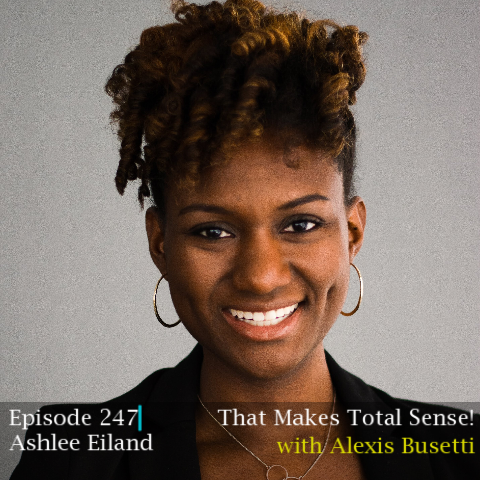
Okay. I think it's so fun to see someone you haven't seen in a long time. Hey, Ashley island, how are you?
[00:00:49] Speaker B: Hi, Alexis. I'm doing great. It's so good to be with you today.
[00:00:53] Speaker A: I am so super excited.
We talked. You were. I don't want to say that you were. Our conversation was one of my guinea pigs, but it felt like it kind of was. You were really early on.
[00:01:08] Speaker B: I was.
I was honored to be one of the, of the first cohort of podcast guests for that.
[00:01:16] Speaker A: I feel like, I feel like I should almost apologize. I'm like, I don't even know what that conversation looked like. I know we re released it semi recently, maybe in the last year or so, actually, because my husband was like, you should.
[00:01:28] Speaker B: You should.
[00:01:29] Speaker A: I was like, should I do a rerelease this week?
[00:01:30] Speaker B: I don't know.
[00:01:31] Speaker A: And he was like, you should rerelease that conversation with Ashley island. And it was like, it was like digging back up. It was one of my favorites. That book, humankind, which I'll, you know, put the link in there again, was still just one of my favorites. You're such a great storyteller. And I was reading it literally in my front yard during the early days of the pandemic.
[00:01:50] Speaker B: Yes, I remember that book coming out April 7, 2020, which I, ten out of ten do not recommend. If you are a content producer or artist of any kind, do not put out your first work in the middle of a pandemic, the beginning of a pandemic when everyone is at home.
[00:02:13] Speaker A: Oh, my goodness.
[00:02:14] Speaker B: It was, it was really crazy. So even as we're planning for the release of the second book, Alexis, I'm doing everything in some ways for the first time again.
[00:02:25] Speaker A: Yes, I bet. Oh, yeah.
[00:02:27] Speaker B: It's really wild.
[00:02:28] Speaker A: Oh, yeah. But I want to, I mean, we're not going to talk about humankind. I'll link the episode. You can talk. We could. You can listen to that in these, these early days. But it was a fabulous conversation. But that book was, though. I remember that. I think one of the reasons it stands out to me, you're nodding your head because it probably was similar to you. I think we chatted about it then is it was like, ashley, how could you have gotten the timing?
It was wild. I say now, of some folks, I say this of my dad, politically, there's that. There's a show I love called Madam Secretary that's so old. But I say these folks, I'm like, I don't know how prophetic. I'm not discounting that, but I will say prophetic part might be some of it, but I think that there are some folks that are exceptionally perceptive. And that is also how I felt about your book. I was like, this is, you were. I felt like, oh, my goodness, she's gathering stories, gathering experiences, all of this stuff, and then handing them, it felt like a gift handing them to me. At the time when I was ready, most ready, to hear and see and experience and feel those things, you were, you just kind of handed me this gift. And so the timing of that book was just, I felt like it really, really incredible.
[00:03:47] Speaker B: Yeah. Thank you for saying all those things, Alexis. It felt like to me that the timing of that release, although in some ways hard, it was perfect. And fortunately, and unfortunately, kindness is an evergreen topic. Yes, it's fortunate because it is a fruit of the Holy Spirit, and so we'll always need to be looking to cultivate and recognize the fruit of kindness. But unfortunately, our current day and age, when we look at our interactions with one another and how we hold each other's stories and who we are in the image of God, we still have a long way to go. We have a far way to go when it comes to stewarding kindness and offering it for ourselves, first and foremost, and then for other people. So I do feel like it was a grace to be able to write that book when I did. And I had no clue.
I had no clue. And so I just say God knew.
[00:04:52] Speaker A: Yeah.
[00:04:53] Speaker B: And God knew the kind of surprise that it would be to myself and to a lot of my readers as well.
[00:04:59] Speaker A: Yeah. Yeah. You said something there that sparked, I don't know, maybe we'll do an experiment here. Maybe you said something, and I thought maybe this could be a way to at least begin this conversation or maybe even frame how we talk about this book that's coming out called say good. So the full title is say good, speaking across hot topics, complex relationships, and tense situations. But the phrase that you used was how we hold each other's stories.
[00:05:35] Speaker B: Yeah.
[00:05:36] Speaker A: And that feels like I just, I don't know, I almost like I'm like, kim, Kim, you just be my spiritual director for a second. Let's just sit in that. You know, like, let's just sit in that phrase, like, how we hold each other's stories.
If I use that to frame what I've just read and say, good, I feel like that takes me in places that are even deeper and even more profound than what I was already thinking whenever I read it.
So me just kind of throwing that back at you. I have two kind of questions that would maybe start us off, and the first one I want to say, even given this subtitle coming off of just talking about kindness, we have a long ways to go. We're holding each other's stories a whole. Did you write this to, like, who would you love to see pick this book up and then maybe be. And it doesn't have to necessarily be in this order. Could you help us locate yourself as a writer? So that's something I'm. That's something else that's changed since the last time we chatted. I'm, like, almost done with my M div. Probably by the time this airs, I think I will be done, actually, if my podcast calendar goes the way it is. And one of the things that has been so central to my theological education is locating authors and allowing them to locate themselves, because it's, you know, I think it's something that the theological world has not historically done very well. We've just said we're all object. You know, this is an objective perspective of the text, but we know in real life that that's not it. We speak from who we are. We speak from where we've been. We speak from maybe where we hope to go.
And so if you could tell us maybe, who did you have in mind? Who are you hoping might pick up this book and then help us locate yourself as an author?
[00:07:48] Speaker B: I love those questions. Alexis, this is, by the way, listener, one of the reasons why I love being one of Alexis's guests, because her questions are deep and wise and really generative.
I don't have to think very hard about who I wrote this book for, because the book was quite literally birthed from actual conversations I had with some of my girlfriends.
So right after Ahmaud Arbery was killed, I was sensing this kind of rise in anxiety on social media, and that elevated anxiety translated to actual conversations with my friends, where it was mostly my white girlfriend reaching out to me and asking, Ashley, what do I do?
I know that I care deeply about what is happening in our nation in the way of racial injustice.
I know that I am continuing to learn, but for this moment, in response to this topic, we'd probably put Ahmaud's story under that part of the subtitle of my book. It was a hot topic, but it was more than that. Parenthetically, was also the story of a person's life that we were holding, holding together as a nation.
And they were asking, how do I know, as a white woman, what is mine to say right now?
Or is this an opportunity for me to fit this one out, resist the virtue signaling, and just be an absorber, a listener, a learner?
And at that point, Alexis, I felt, as a friend, the black woman who is feeling impacted by what happened to Ahmaud on various levels, as a woman, to a black husband and having a black son, I really felt energized to meet my friends at their place of vulnerability and humility and to say, yeah, how do you know?
What is the discernment process by which you choose to say something on social media or to a family member?
How do you know? And I was driven by that question. So I wrote this book for anyone who, like my friends, finding themselves, or is finding themselves in a place of potentially heightened anxiety or inner wrestling, because there seems to be an urgency and sometimes even an expectation that we have something to say for everything that crosses our path. Even if we accidentally open up the news app on our phone, somehow we still feel responsible for the holding of that information.
And that's been instilled in us over and over and over again because of our social media engagement, because of how we're showing up to online spaces in particular.
But I wrote this book for my friend, and I hope that a lot of my current and future readers will receive the book as a friend because I wrote it, the tone of a friend, as someone who can both encourage and challenge, as someone who cares deeply about our collective formation, not just about someone's individual work, I think it's really tempting, as an author, to say, here you go. Here's what I have to offer you now it's on you. Do with it what you will. So when I think about locating myself and who I am as an author, I think, too, there's a text in the Old Testament that I felt like the Lord gave me on a silent retreat. And I'm not sure if we talked about this before, but from Isaiah 58, it's the passage on true fasting, and the passage is intended for a group of people, the people of God. But I felt like, as I was reading it.
You know, I kind of said the silent prayer, God, you're going to give me a new name, new heaven and the new earth.
Would you be so kind as to give me part of my new name now? Give me a glimpse about what my new name might be. And the Holy Spirit was so faithful to give me. Isaiah 50 812.
And the second half of that verse says, you shall be called the repair of the breach, the restorer of streets to dwell in.
So I feel like, as an author, I am sent through word to repair breeches, to repair broken walls, to restore the places where we inhabit together, whether physically or just emotionally, in heart, societally, socially.
So as an author, that's what I do. I'm sent to heal what's broken through word. And it doesn't matter what I do as a vocation, it feels like that's what I'm here for. And I feel like I get to do that through writing. And I hope both humankind and say, good. And whatever else I go on to write after that stays in that vein of repair and restoration.
[00:13:36] Speaker A: Gosh, thank you so much for that. I mean, um, I was having a conversation the other day with a psychology professor at school, and we were talking about birth order, and he said that with families in the US having fewer and fewer kids, that there are fewer and fewer middle children, and that middle children have tended to be peacemakers.
[00:14:02] Speaker B: Wow.
[00:14:02] Speaker A: They, you know, they learn how to bridge the gap, you know, there. And so that, especially in our polarized world, he was just kind of asking the question, are we seeing some of that, you know, play out that we just have maybe not specifically middle children, but fewer people who are able to bridge that gap and, you know, kind of speak toward peace in that. And so when you were. When you were talking about your location, that was what came to mind is a. Is a. Is a peacemaker, someone who can bridge gaps, you know, and help with that restoration work?
[00:14:43] Speaker B: That's so interesting because I'm not a middle child at all. I'm my mother's only child, and I'm the youngest of my dad's kids.
But in many ways, I feel like I grew up with a lot of middle child syndrome.
[00:14:57] Speaker A: Interesting, because.
[00:14:59] Speaker B: And I talk about this a lot in humankind. It's feeling like not enough for black culture, feeling not black enough, but then being immersed in predominantly white spaces, feeling tokenized and too much so I. I was negotiating with my very life.
[00:15:18] Speaker A: Yes.
[00:15:18] Speaker B: In between.
[00:15:20] Speaker A: Yes.
[00:15:21] Speaker B: And now I'm doing a lot of the work I'm reading right now Richard Rohr's falling upward and doing a lot of second half of life work. And so a lot of that has been teaching me, you know, coming out of first half of life identity pieces and that conflicting and inner warring that I was kind of navigating in the first half of life. But, yeah, it makes total sense. And it's not just the name of your makes total sense that that image would come to mind for you, because it's truly how. How I felt. And I think that's what's given me. And hopefully for our listeners, they're understanding that who we are, who we have been in our lives, absolutely lends itself to who we are becoming.
[00:16:10] Speaker A: That's right.
[00:16:11] Speaker B: As our true selves.
[00:16:13] Speaker A: That's right. That's right. Yeah. I was not to harp on this and stay on it for a while, but I was having breakfast with a friend of mine a couple of weeks ago, and we're both ethnically mixed, so I'm white and hispanic. And we were just chatting. Her father was white as well, and so we were just chatting about how I mentioned that same middle child thing because it just kind of blew my mind. But how someone told me, who has a lot of work in racial reconciliation spaces, he's a white man. But he was saying. He said to me, alexis, the US is trending, and we know this to be true. He's like. He's trending more and more towards people who look like you. Right. And he was speaking to me as a mixed person, but in a different way, but with some similarities. I could relate to that as well because it's kind of like in Hispanic. I am a hispanic guy who doesn't speak Spanish, so I am also not enough. But then, you know, too brown in some other spaces as well. But I think it does give some unique perspectives of how to. How to bridge those gaps because we have to. Okay, here we go. You said that makes total sense. And I'm gonna say how we had to walk on the tightrope. Okay, Ashley.
Okay, so no one else got that yet because they haven't seen the book. But throughout the book, you say, say what? What the name is for people who walk a tightrope. Okay. I feel like this should be like bar trivia. No one knows this. No one knows this is an actual name. Please don't. You didn't beforehand. Right?
[00:17:52] Speaker B: I did not know the research. What is it?
[00:17:55] Speaker A: Who are. What are they called?
[00:17:56] Speaker B: A funambulist.
[00:17:58] Speaker A: Oh, say that again.
[00:17:59] Speaker B: A funambulist.
[00:18:02] Speaker A: This feels like a fake word. But it's not. It's a very serious, real word for people who walk tightropes.
[00:18:10] Speaker B: That's right.
[00:18:11] Speaker A: But that's somehow, I think, how I have felt. Maybe you have felt that way as well. Some middle children probably have felt that way. But also, I think this is put on, as you mentioned, you're talking to your friends. You wrote this book for your friend. I agree that it reads like a friend gave me this book.
I think it's put on us, this pressure, this tightrope feeling, and not necessarily in the same way. We're going between two worlds sometimes, but just feeling like, oh, crap, one slip up and I'm gone. One, I can't. I can't go too far to the left, to the right in many ways. Right. But I can't go too far one way or the other. I lean even just in a direction second, trying to catch my.
There's a good. I will destroy myself in some ways. I will hurt myself, hurt others.
It's a very scary.
It's a very scary feeling. And so I appreciate you taking the moment to locate yourself as a repairer.
That's hard work.
That's really hard work. And locating yourself and saying you want, as a friend writing this book, you want to challenge and encourage us. And as a reader, I felt that.
But this work of repairing, of restoring, that you feel called to do, I think that sometimes we. I don't know.
There's work that I feel sometimes like. Like you said, we feel responsible.
We feel responsible for these things that we see in here. We feel responsible to say something. And I think you argue, and I will, too, that we don't always need to.
We don't always need to. And you as a guide, give us some ways to think through this.
Because just because we feel a certain responsibility doesn't mean it's actually real.
[00:20:28] Speaker B: That's right. It doesn't mean it's ours.
[00:20:30] Speaker A: It could. The responsibility doesn't mean it's ours.
[00:20:32] Speaker B: Good call.
[00:20:33] Speaker A: Yes.
[00:20:33] Speaker B: Right. It could be real.
[00:20:35] Speaker A: That's right. That's right.
[00:20:36] Speaker B: And the weight of it could be felt. But the discernment comes in to ask, is it ours to carry you?
[00:20:45] Speaker A: That's right. That's right. Maybe. And I'm feeling. When you said that, I thought, okay, we're both parents.
I'm not everybody's mama.
[00:20:52] Speaker B: You're not.
[00:20:53] Speaker A: Oh, trust me, there's some days at the playground when I kind of want to be everybody's mama, but I am not everybody's mama. Now, if it comes to safety, I don't have to be your mama. I will, you know, pull that arm up out of the pool or whatever. Right.
But that responsibility is not mine.
[00:21:12] Speaker B: That's correct.
[00:21:13] Speaker A: Okay. I just. That was for me. Sorry, that's recorded for everyone else, but that was. That was for me. That responsibility is not. Is not mine. I'm a parent. I have four kids. But at the playground, I'm not their mama.
[00:21:26] Speaker B: You're not everyone's mama.
And you can care about those children and about their safety, of course, but you have given. Been given a disproportionate amount of stewardship and care for four particular kids.
[00:21:45] Speaker A: That's right. That's right. That's right. That's right. Okay.
[00:21:48] Speaker B: All right.
[00:21:49] Speaker A: So help us with this. So it's written for to your friends, you are a repairer, and we have this image that spans the book of tightrope walkers. Okay, so in some ways, this is obvious, but give us some high level view of why this image felt particularly useful with the content of this book. And we might save some of the specific examples for later because you go through a lot of different tightrope walkers. But why did this image feel particularly useful for the content that you present in this book?
[00:22:38] Speaker B: Well, here's some bonus, bonus behind the scenes. All right, info. The original title of the book was talking the tightrope.
[00:22:48] Speaker A: Ah.
[00:22:49] Speaker B: I am a visual and visceral learner.
I learn by what I see and how I feel.
And the sense that I was getting from my friends was the same feeling that I imagine one might have if you are learning how to walk a tightrope, because it requires balance and control, it requires patience, training.
And I felt so many of those skills, those learned skills, when it comes to the art of tightrope walking, were transferable to speak to that same sense of angst or tension that we might feel navigating our way verbally through difficult conversations.
And so I just kept having this image, and I said, you know what? I just want to have fun with this. And I, for a short period of time, poured myself into researching different types of tightrope walkers training centers overseas.
The different components, watching YouTube videos. I mean, it was really fun for me, Alexis. And I felt like it was instructive to the writing because I felt like it informed a sense of, a sense of grounding, that the work and the stories and the framework was grounded in something that people could see sense and feel on a different level.
So I really felt like even though the title changed, the through line still tethered the work and stitched it together, because really, when I write, I want to meet readers not just through what they see, but through how they feel. Now speaking to a sense of feeling and emotion.
Yeah.
[00:24:46] Speaker A: Yeah. I can't believe I didn't think of this while I was reading it. It's probably because I haven't been on it enough. We have a, I bought, it's not like all of my other workout equipment that's sitting in a corner. Okay, it might be a little bit, but I bought like a, like a mini slack line. So it's like a really sport. It's like a balance board. So it's long, you know, it's maybe, I don't know, five or 6ft long, but it's just a slack line in the middle, so the ends are bowed up, kind of curved up, and it's a slack line. It's supposed to help with balance, right. And so you could like, do push ups on it and stuff like that. Or use it, but I'm, I'm telling you. So I pull out YouTube, right, to get these tutorials for how to use this board. And I am trying to tell you, I tried. I tried one night I was like, okay, I'm watching the show and I'm going to leave it out and on the ads because, you know, I pay the cheap streaming services, right? So I'm like, okay, so I'm on my ads on Hulu. I have like a minute and 30 seconds and I'm going to go up and I'm going to try and just practice my balance for 90 seconds. Yeah. Can I just tell you that I'm like, my heart, my heart rate was elevated.
[00:25:57] Speaker B: It's a lot.
[00:25:58] Speaker A: 90 seconds of trying to balance on this stupid slack. On this stupid slack line. And then here you have stories that we know, that we've seen, right? People, like the guy goes and makes an omelet in the middle of the thing. You're like, yes, doing like, this is incredible, but so much practice and it's, and it's nerve wracking. I, mine is literally like eight inches off the ground or something and it still feels like you're saying this experience, it still feels very, it's anxiety producing in some ways.
[00:26:31] Speaker B: Right?
[00:26:31] Speaker A: Because I'm like, yeah, it's risky because I'm like, I mean, I could sprain my ankle. I'm kind of that age, right? We're second life people, I guess the second half of life people, you say. But I'm like, I'm that age where I'm like, I could sprain my ankle eight inches off the ground, like, for sure. I could fall off eight inches off of the ground onto my hardwood floor, for sure. But it's. It's. It can be anxiety producing just that small amount. So here we are, walking the tightrope. You give a framework for the book, a model that. That you keep throughout the sections. And so I just want to say those out loud, and then we can, you know, chat about some of those, because each one, I will say, even when I saw the word, I had certain things that came to mind. But then how you elaborated really changed my paradigm in some of those. So you use the pear model, which is passion, accountability, influence, and relationship.
And I think each of us who are kind of struggling with talking the tightrope, we're struggling with sometimes saying good or feeling that responsibility, we can relate to all of those things. And I think starting with passion feels really important to me because, as you mentioned, with your. With your girlfriends, after a mod arbery, we're passionate about certain things, but this passion. My. My words aren't yours. But, like, this passion without or not being paired with a certain amount of discipline can look. Well, I think we know how that can look.
I don't know. Our moms are on Facebook, right? Like, we know how that can. You know how that can look? Okay, not that my mom or anyone else's mom is the mom on Facebook, but I'm just saying, you know, we hear things, we see things from folks who maybe have a lot of wonderful passion, but then the discipline, the accountability, the relationship, those other things that you mentioned take a backseat to some of that. But that's not the only thing that you name with passion. So I'm wondering if you could kind of start there. And I'll chime in with a couple of things that stood out to me, maybe in the passion section, but why was this an obvious place for you to start?
[00:28:57] Speaker B: Yeah, I think very simply, when I was thinking about my friends and I think about my readers, take the social media platforms away, take the Internet away.
Would you have cared about this in the eighties, like, when we had no. No way of projecting or voicing our opinions more broadly, more quickly, do you actually care about this without a headline?
I think.
I think, for me, I went back to the root of the word passion, and in the Latin, the root is passio, which means suffering. So you think about the passion of the Christ, suffering of Christ.
Passion isn't just a hobby.
It's a holy grace given specifically to you so that when potentially you face hardship or some sense of fork in the road, some obstacle, that holy grace gives you the means by which you can move through it, where the obstacle does not seem so big.
So when I talk about passion, it's not just what are the things I like to do. What are the parts of God's kingdom, the people who are amongst God's kingdom? Things that reflect the heart of God, that I've been given a holy grace to endure, even when it's hard.
Now, we all start somewhere with our passions. They grow and they take different shapes over time.
But just like we were talking about myself with reconciliation, there are a lot of people and a lot of my friends who are people of color who are doing the work of reconciliation just by living.
They don't take it on as an additional call or motivation to stand on purpose in the gaps in the breach for very good reasons. Whatever those reasons might be, for me, the work of bridge building is a holy grace.
And that holy grace is a gift that I did not give to myself. I feel like it is God given. Your passion is God given.
So if you start there, that helps to initially filter through and weed out all of the other potential topics of conversation or flammable headlines that you could come across and have the self discipline to say, is that in alignment with what I know my passion to be, or is this something that I am being asked to care about, to pray about, to learn more about, but distinguished from my center of the target passion that was given uniquely to me? So I think it gets us started with that filtering process, and I hope that making that distinction, it kind of gives us permission to have a sigh of relief to say, not everything I read falls into the camp of a passion area for me. And that's.
And we'll talk about this a little bit more when we get to accountability. But I think that's why the image of the body of Christ is so important.
Because if we forget the image of the body of Christ, that's when the responsibility feels even heavier, when we feel like it's all on us.
[00:32:43] Speaker A: Yeah, that's really good.
That's really good. Also, if this had happened in the eighties, would you care about this? I think that's.
I mean, that hit, you know, it did. I mean, because I'm like, in the. And in the eighties, we didn't, not only could we not post about everything we didn't know about everything we didn't like, we do now.
[00:33:05] Speaker B: Yeah. You got your paper delivered.
[00:33:06] Speaker A: That's right.
[00:33:07] Speaker B: I remember my parents would buy a Sunday paper with a comic section on the way to church.
[00:33:12] Speaker A: That's right. That's right.
[00:33:13] Speaker B: Just the ability to receive information. Yep.
Was a lot slower. And so if all the things happening in our world now had happened then because wars were still happening then, division and contention was still happening then, but we didn't know about all of it, and so we had to be hyper focused.
We had to be hyper focused on our.
And we'll talk about this. An influence on our immediate surroundings in a different way. Mm hmm.
[00:33:45] Speaker A: Yeah, yeah. And I think, you know, Hyper focused, but also, you know, everyone. Okay, now I'm really dating. I'm like, everyone wasn't blogging. Okay, I know not everyone blogs these days, but, you know, everyone wasn't blogging. Everyone wasn't. There wasn't so much content. Right. Like, how much content is produced. And so I think it's easy. I think it is easy now, because we sometimes feel like either we are an expert or we can be an expert in a matter of five or ten minutes. And so if we. But if we look at our areas of passion, I think those things that maybe, as you mentioned, like, they keep coming up over and over and over again for us, it's not necessarily like a. Like a fleet, fleeting thing. And I'm not saying it's not good to try and educate ourselves or to listen to, you know, to listen to folks.
You know, I was trying do my best when the war between Israel and Hamas broke out to point folks to people who I knew had interactions with personally and things like that.
But I'm like, this woman has a PhD in the conflict.
We could listen to her and let that cue us, you know, give us a clue that a PhD in the conflict is going to be something that we cannot, as much as our hearts want to. And I think that. I think the motivation is good, but we cannot, in three USA Today articles, one segment on CNN, and then an interview on Fox News, be able to understand the conflict and what's happening right now to the point that maybe what we say is actually going to be necessarily terribly helpful, you know? And so I think also maybe in some of those places where we do feel a passion, you know, boiling up to say, I don't have a responsibility for, you know, this space or in this space to do this, but maybe I can point people to someone whose voice is really practiced in, you know, speaking up on this issue, someone who, you know, people who are speaking up when the headlines aren't, you know, railing, you know, someone whose passion takes them to that, takes them to that education takes them to that habit and those hobbies of reading, you know, in their spare time, you know, those kinds of things over and over and over again.
And so I don't know. So, for me, sometimes things, thinking about things like that are helpful, because I. I don't know. I have a bleeding heart. You know, I'm like, I want to know about all these things, and. But it's just hard. It's not really possible for us to do that.
[00:36:33] Speaker B: Oh, it's not? And I just came up with a phrase while you were talking, Alexis, that I think is true enough to say out loud, and it's that news nukes nuance.
[00:36:47] Speaker A: Yes. Say that again.
[00:36:50] Speaker B: News nukes nuance.
[00:36:52] Speaker A: That's right.
[00:36:54] Speaker B: So, as an on ramp, news might be helpful, and I would say with an asterisk, sources matter.
[00:37:03] Speaker A: That's right.
[00:37:06] Speaker B: But news does not, even, in some of the longer form variations, give us the nuance that comes with the texture of our humanity.
We cannot possibly, in that short period of time, whether it's through a minimally worded tweet or a longer article, we cannot feel the heartbeat of God all the time through something that's so truncated and so where the heartbeat of God is not.
And if God is love, if love does not live there, then there's no way then we can touch the nuance that comes along with the intricacy of our humanity, which is required for conversations like this. So I'm not saying news is all bad.
I'm just saying it's limited.
[00:38:04] Speaker A: Yeah, that's right.
[00:38:05] Speaker B: It's limiting. And so where else do we go? What other streams do we draw from?
I feel like that's part of our discernment. And discernment, in and of itself, is accessible by the power of the spirit. But it's also, it requires a slowness and a presence that oftentimes those different mediums don't afford us.
[00:38:27] Speaker A: Yeah, I think what I'm hearing more and more come out in our conversation is this call to community, the call to be communal. And I think that, you know, so even earlier when you talked about, and we'll get there coming up, you know, the body of Christ. But even, like, you know, my dad is in journalism, and so he often jokes like, his job is to read the news all day, you know?
[00:38:55] Speaker B: Yeah.
[00:38:56] Speaker A: I mean, he writes news, but his job as a journalist is to read the news all day. But we can't all be journalists. In fact, we shouldn't all be journalists. We should be grateful for the job that journalists do, but we all have jobs. And so even if we look at our, at our body in humanity, not just in church, but in humanity, this call to be communal in this. And, but the image of a tightrope walker makes us feel like individuals.
[00:39:23] Speaker B: That's right.
[00:39:24] Speaker A: Not, I think, what you're trying to communicate, but even in your stories of individual tightrope walkers, they have trainers and teams. And I'm thinking about the guy across the Grand Canyon whose team, team was preparing the line for him so that he could go across and building platforms and these kinds of things so that this person could walk the tightrope. But even walking the tightrope is a communal activity if we think about it in that way. But it. But when we allow ourselves to put the spotlight in the wrong place, it feels like we're all alone. It feels like it's an individual thing. But what I'm hearing more and more in our conversation, I'm so grateful for its kind of, you know, when these moments for me is it just feels like this saying good is a call to community and it's a call to communal communication, communal forms of communication. And not just the self reliance or individualism that I think we are beckoned to by the world in so many ways.
[00:40:26] Speaker B: That's right. That's not to move too quickly into the accountability piece. No.
[00:40:32] Speaker A: Let's hit it. That's where we're going to go next. Let's do it. Yeah.
[00:40:34] Speaker B: That in first corinthians twelve, when we have this vision of the body, the apostle Paul is very clear in saying that the eye cannot say to the hand, I don't need you.
When we think of ourselves solely as individuals, if we were all the bunch of eyes, there would be a disproportionate impact of the way that we see. If we're all eyes, we're all just seeing, we're not feeling, we're not moving, we're not functioning in any other way.
I think that individual act with this vision of a team, other parts that are essential and some of the small, smallest parts the most essential, we're reminded, brings us back to the importance not just of what we say individually, but the impact that our words have on the whole.
[00:41:36] Speaker A: Yes.
[00:41:37] Speaker B: So when we are told in proverbs 1821, I love Eugene Peterson's version from the message where this verse says, words kill, words give life.
They're either poison or fruit, you choose.
That's the message version. We are not simply speaking into the void, for the void's sake, or even for our own sake, we are either giving and injecting poison into the waters of our humanity, or we are setting up what's needed to bear good fruit together.
There's no middle ground as the body. We are either functioning well or something is off.
We are either responding to one another graciously and in love, or something is off. And if something is off with one part of the body, ideally, we would all rally to compensate for that weakness in the body, not fight against it. I'm going to be a little vulnerable here. Last year, part of what was really difficult for me in this last year of transitional access was I was diagnosed with an autoimmune disease.
So, as now, someone who's a hashtag lupus warrior, I am familiar with what it's like to have a part of your body attack you without warning or permission.
So for me, I am understanding more meaningfully what it means together as siblings in Christ to be the body.
Ideally, we show up in a way that says, yeah, I'm going to go ahead and I'm going to set the stage for you. I'm going to anchor the rope for you. I'm going. I'm going to make it possible for you to do this hard work, to do this training well for the sake of all of our good. I'm learning what it means to have a body that attacks versus elevates attacks versus encourages.
All the more reason for our words to be part of the strategy that we deploy together as the body of Christ to see God's kingdom come to fruition, both the now and the not yet, by what we paint the fruit that we produce together on this earth while we have time.
I mean, there's just. There's. There's such an urgency for me.
You know, Maya Angelou has a great quote. I'm paraphrasing about the power of words and the power of the tongue.
We're reminded in James about the power of the tongue. I think we have.
I think that we have underestimated the power of words.
We have not given them their due weight, and so we have been pretty lax and sloppy at times. I know I have been with the ways that I use and project my words. And so this accountability piece is really about, do you have this vision for where you fit into the larger scheme of the body? And also, do you allow yourself to be challenged, exhorted, encouraged, but other parts of the body, too. My grandmother used to say, you always need people in your life who can tell you about yourself.
[00:45:08] Speaker A: Thank you.
Yes.
[00:45:15] Speaker B: If you do not have people in your life that you are willing to sit knee to knee with, who can tell you when you have proverbially broccoli in your teeth, when you are about to step in the muck, then we don't have the good structure we need in order to live out our passions with integrity.
And my caution would be to the listeners, if there's a topic that you feel especially passionate about, but you will not receive wisdom of any sort from anyone, that's a passion that needs maturing.
[00:45:57] Speaker A: Say that again.
[00:46:00] Speaker B: If you have a passion that you feel so strongly about, yet there is no one in your life from whom you are willing to receive wisdom, that passion needs maturing.
[00:46:18] Speaker A: Two things.
The first one's not serious.
When you said that there's like an inside joke that's now not going to be an inside joke anymore, but I was a while back, riding with my girls, and anti hero from Taylor Swift came on the radio.
[00:46:35] Speaker B: Yeah.
[00:46:35] Speaker A: And this was. I mean, this was a while back, and I busted out on the part where she sings it's me. I sang it's you.
That's it.
[00:46:49] Speaker B: That's it.
[00:46:49] Speaker A: It's you. See, you're the problem.
You're not. I'm the problem. I'm the problem in some of these things. Tell me about me.
The other thing is, this is a side note. There's a book here, Ashley.
I don't know. You may write it. I'll write it. We'll write it together. It'll be an edited volume. I don't know theologians and pastors with autoimmune diseases. So thank you for sharing that. I also have an autoimmune disease.
[00:47:18] Speaker B: Wow.
[00:47:19] Speaker A: This has been something since I was. I was diagnosed about five or six years ago. I think I'm coming up on six years.
So I have celiac, and this is one of these things where I go, as you say, my body attacks itself. And I just think, oh, my goodness, what can we learn, especially from what's going on in our current, current culture? This is really going to be a side note, but. But about attacking our. Ourselves as the body. Right. I got. I got. We call it. We call it gluten bombed in my house. I got mega gluten bombed about two or three weeks ago. And no one wants to know what happens when I get gluten bombed. It's not pretty at all, but it is still the wildest thing to me. When I think about it, I'm like, in my body, the gluten is the problem.
[00:48:12] Speaker B: Yeah.
[00:48:13] Speaker A: But my body doesn't understand that, so it damages itself, the parts of itself. And in my case, it damages the parts that are actually designed to take in nutrients.
[00:48:28] Speaker B: Yeah.
[00:48:30] Speaker A: The parts that are designed to help my body heal, to help my body negotiate the environment around itself, to help my body, you know, the cells get what they need.
My body attacks that part.
Not the actual intruder.
[00:48:47] Speaker B: Not the intruder.
[00:48:48] Speaker A: Not the intruder, which I just, anyway, I think there's not just a sermon there. Listen, there's a whole, there's a whole, there's a whole thing there.
There's a whole thing there that we see among ourselves so many times. It's like, you know, more of Paul, you're supposed to find these things, and then you come in, add, I think in this day and age, we can say, but you're attacking yourselves, you know, you're attacking each other, attacking the body sometimes. And I think that that ought not be, you know, anyway, so two side notes. There's a inside joke that's no longer an inside joke, and there's a book there.
But yes, the accountability, I think, is a very, very helpful piece. I want to, we'll just hit the last two. We can. I'm looking at the time, I really want to focus on relationship, but I do want you to hit influence because again, this is one of those pieces where I'm like, you just hear the word. And especially now, I mean, hashtag influencer. Hashtag, you know, it's like, help us with what you want us to take away. As friends who read the book, when you put this in your model and name. Influence.
[00:50:15] Speaker B: Yeah.
So we have to understand, in a recent few research center study, they came to find that 69% of adults and 81% of teens use social media.
So when we look wild, it's wild, which means we have been over time, since the age of social media, we've been trained to understand influence simply as reach or likeability.
On online platforms, we have forgotten that influence can and should be grounded in the spaces and environments that we frequent day to day. Because think about it, Alexis, you and I, though we might have days that seem similar on paper, we are seeing different people more frequently than either of us probably ever will in our lifetime. There are people you know and interact with on a daily basis that I will never meet. Isn't that wild?
So if we think of our spheres socially, of these particularly placed pods of people that God has given us to interact with, our families, our co workers, our neighbors at the park, our neighborhood associations, wherever we go to the gym or our other hobbies. If we're in a local theater troupe, whatever, wherever it might be, those people aren't in your life or in your sphere on accident.
And yet the people that you interact with on social media, you may never have a real life conversation with them.
You might forget their Instagram or Facebook or x handle.
You might interact with them for such a small amount of time. And so it's almost like I'm sensing the Holy Spirit. Say, would you relocate your attention and your time to the influence that I have given you? The place that I've given you? I won't go into it a ton more, but I love the story. I've come to love, even since writing the book the story of Abigail in the Bible, first Samuel 25, where her husband Nabal, is just. I mean, he's messing it up, and he's. He's not a good dude. And so David's coming, like, to confront this guy, and Anna uses her. Excuse me, Abigail uses her influence, and I love what. What she does. She. She packs up all of this stuff to present as gifts. I mean, homegirl absolutely has the gift of hospitality.
Has to. She gets on a donkey.
She gets off the donkey. As she approaches David, she hurries up and she fell before him on her face and bows to the ground. Now, that's not humility.
She is using her influence. She's using her posture and where she is, who she's associated with.
And she's paying attention to what's happening in her own sphere, in her own realm.
And she's using what she has, her hospitality.
She's using what she has, her hospitality and her humility to bow down and intercede.
I feel like we could reclaim in a powerful way the spaces in our lives where we have been given influence. So we're talking to parents, the kids that you've been given to steward. We're talking executives and boardroom tables, administrators, teachers, staff, people who work from home, people who are homemakers by profession, medical field, nonprofit work. I don't care who you are. Where you are right now is an area that only you can influence in a particular way.
So I talk a little bit about power in the book and power dynamics. I think I use my dogs as an example of.
I did that on purpose. Power is a hard conversation to have. And I think a lot of times when you talk about power dynamics, you inadvertently shame, even when you don't mean to. But I think there's approach to talking about power dynamics that is necessary, but also a little bit more accessible. So I try to do that in the book. But when you look at influence, you have to understand the power that you're bringing to the table in addition to who you are, your personality, your skillset, your spiritual gifts, you can't extract power from the equation, but there's a way to recognize and yield it.
[00:55:27] Speaker A: Well, yeah. Yeah. I'm glad you brought that up. I was having a conversation about power with a guest recently, and he wrote a book on power. And I looked at him in the recorded conversation, I think, and I was like, I don't know anyone who's doing this well, like, who's even talking about this? Well, you know, like, it's such a hard conversation to have. And so I'm glad that you named that. I think the more we talk about it, probably the better we'll get at it, and the easier it will be to kind of describe some of these things that we're seeing.
But even when you talk about our influence, something that has struck me the past several years and just continues to is Jesus, but his particularity, but also his limitedness.
And, and I just think, like, I I think we understand his particularity a bit. You know, jewish man, Roman occupied Palestine, you know, these kinds of things. But, but I'm like, but his limitedness, like, man did not have a car.
I mean, he walked the places that he did and wanted to go. I mean, they had a boat.
[00:56:39] Speaker B: Yeah. He rode a boat.
[00:56:40] Speaker A: His friends had a boat. He didn't even own a boat. You know, his friends had a boat because they were fishermen. So he could go, you know, he could. He could go across if he needed to. But even still, there's no motor on that boat. Right. He's just, you know, he's just walking. There's no microphone. There's nothing for him to elevate his own message. In that time, he was limited. And people trying to get to him. We're limited. I follow you on Instagram. You live in Michigan. I live in Texas.
[00:57:12] Speaker B: Yeah.
[00:57:12] Speaker A: We've never met in real life. We've had a couple of conversations. This is far less limiting than what Jesus experienced in his life. And so when you name, you know, in the book, this might be the section where you name the pharmacist, you know, that you. That you come and you. And you know her by name because you see her regularly. The folks at the gym, as you're saying, in the library, the teachers of your, you know, your kids school.
We're seeing these folks, people we go to church with, people that are at our neighborhood park on a regular basis. They're particular to us, as you mentioned.
But also let's throw back to the eighties like you said. I mean, we had a kid in the Sunday school say where the eighties are, real place. I'm like, oh, please. Oh my goodness, here we are. Yes, baby.
[00:58:02] Speaker B: I was born for real. And they were real fun.
[00:58:04] Speaker A: He did. And he said no. He said it was a hard place. That was, must have been a hard time, but, well, brother, in some ways it was, but, you know, anyways, so, but go back, you know, but go back to the eighties. We don't have that right. If I, if I want to contact Ashley in the eighties, we better live in the same place where our white pages will reach.
[00:58:23] Speaker B: That's right.
[00:58:24] Speaker A: I mean, you know, so even I think, yes, like embrace some of these things that are great. It's wonderful to have connections, people and all that kind of stuff. But as you're saying, what if the spirit is asking us to focus, to shift our focus to the people in real life whose skin we can touch, whose hands we can shake, whose voices we can interact with without Airpods and a microphone, you know?
[00:58:52] Speaker B: Yeah.
[00:58:52] Speaker A: What if we, you know, and maybe just imagine ourselves sometimes in this limited way that Jesus was limited. He was in a particular place at a particular time with a particular people.
And inside of that particularness of Jesus, he was limited in how he interacted with his influence. That's right.
[00:59:18] Speaker B: He chose to be. That's right.
[00:59:21] Speaker A: He chose to be. That's exactly right. And that, I think could lead us to the last part. Look at us, we're just, we're just kicking it here. I mean, we're moving right along.
[00:59:31] Speaker B: I love it.
[00:59:32] Speaker A: Relationship, the last part of the pair model. So vital.
[00:59:40] Speaker B: We were not created to do this life and to carry forward in partnership God's vision for us as part of the kingdom alone.
We just were not, we were told from the very beginning, it's not good for man to be alone.
And so for all the ways that we have been isolated and divided, either on purpose or accidentally, it is going to take a work, a concerted effort to move against the stream and become more together in the most divided of times.
When Jesus prays that prayer in John 17, we said, father, I pray that we are one, that they are one as you and the spirit are one.
That sounds really nice.
That it sounds really great. And what I'm saying is it takes work. It is going to take a lot of work and effort and intentionality to get back to a place where we are working against the forces of isolation and loneliness in order to re tether our conversations in response to some of these hot topics, inflammable, newsworthy headlines into real relationships that matter.
So take, take a flammable topic like abortion.
I know a lot of people that have lots of opinions, different ones, about abortion.
My curiosity is always not just tell me what you believe to be true, but tell me why and who it impacts.
The who is what we forget.
We're fine with what we're experts at what, because whether it's informed or not, our opinions, they flow from us. The what is good, the why, I think is like a second tier.
If you can get to why, that means you're interested in connection, something beyond surface level.
But the who does it impact?
That's what gets us to a level of intimacy together in relationship that I feel is missing. It's part of that nuance that's missing from some of our quick triggered reactions.
So I could say in the same breath, I have opinions about abortion from a multifaceted perspective.
I myself, in my experience, am an adoptive mom, which means part of that story is connection to a woman who decided to make an adoption plan, to have friends and relatives who have been up against the wall and needing to make a decision, the hardest decision of their lives, for reasons that I don't understand, right? So you start to build this beautiful, almost yarn ball of nuance. It's messy.
You may not be able to pull it apart very easily or to make sense of it very easily, but relationship is the foundation upon which nuance can stand strong.
And without real and fleshed relationship, Alexis, there's no place for our hearts to go.
That fruit that we talk about in proverbs 18, the words that we build, that can either kill or give life, that fruit is meant to be provided for nourishment to and for another human body.
And so outside of relationship, our opinions are but vapor.
So. And this is where the social media conversation comes up again. Because I could say I have had very meaningful relationships and interactions with people on social media. You're one of those people.
I'm not saying it's a throwaway, but what I'm saying is this fall, after what's sure to be another contentious presidential election in the United States of America, just a couple weeks after that, a few of us in our traditions are going to gather around the table and give thanks.
And based on how everyone's feeling that day before the football game comes on, there's going to be a bomb that's just verbally placed at the table, someone's opinion or reaction to something that may or may not have to do with politics.
I am more interested in the cultivation of that moment, what comes of that interaction with your family than I am. How many likes you get on an instagram post that may or may not be connected to your self perception of value and worthiness?
[01:05:31] Speaker A: Ashley, I'm going to throw out something that was just kind of spinning around in my head while you were talking. And this is a rhetorical question of, like, not just how do we do this? Well, but how do we do this? And. And I want to say, how do we do this? Because on social media, on my phone, I can look at this, and I can, this is. This is brilliant. And it's also terrible in many ways. I can interact with you, a black woman in Michigan, completely on the other side of the United States, in a couple of taps on my phone.
Now in Houston, Texas, and really everywhere. Like, it's not just racially and ethnically, but read the color of law. Like, this is real life. We are segregated. Not just racially and ethnically, socioeconomically, religiously. And so the people that I come into contact with every day, and I'm saying me. But it's true for most of us. They look like me. They look like I do. And it's not just superficially. What boxes would we check on some government form? Do they look like me? But many times they look like me in my perspectives, my political leanings, my religious leanings, my social leanings. They look like me. We're having a conversation with our kids. Where I brought up, we had a college pastor who said, I'm so glad you're coming to this college ministry, but you need to be part of a church where you can be around babies and grandmas every single week. So even age wise, we tend to be around people who look like us.
And so these meaningful relationships that you're talking about, it's really difficult to sometimes interact with folks who hold different perspectives, because we are just, and I will say this, we are by design. This is how our country was designed, architected this way. We're designed to be around people who look like us and have these same perspectives. And so when we encounter the passion, when we have this feeling, when we want to say or do something, we're not practiced at having these conversations around dinner tables with folks who don't share those perspectives because we don't know them. You know, I was shocked several years ago. I think the Washington posted poll. And it was like, I don't remember something crazy. Like 90% of white people only have white friends.
And it's like, but then when you look at, when you look at the other races, it wasn't much better.
[01:08:24] Speaker B: Exactly.
[01:08:24] Speaker A: It wasn't much better. So it's not just like, oh, you know, bad on white people. It's like it wasn't much better for anyone. That's just one aspect, though, as I named, there's all of these other things because this is how our public school system was designed. You know, this is how churches came to be about, you know, all of these other things.
And so I feel like it's one of those things where we have opportunity inside of social media that sometimes it's, it's low hanging fruit. It's kind of easy, you know, in some ways to reach out or to see that opinion or to say, oh, I'm going to DM Ashley because she seems real nice. And I'm just going to say, what do you think about this?
But, and that can be good. That's what a lot of what you talk about in the book. But to have those real life encounters, those real life relationships, the opportunities, I would argue we have to work for those opportunities, to cultivate those kinds of relationships. And it's difficult. It's wonderful and magical and fruitful and hard to do that. But I just think, I don't know. For me, it has been one of those in the last several years, especially, I would say, since the pandemic when I ended up, we spent so much time in our front yard and just talking to like, our actual neighbors, but just saying, you know, just kind of realizing how, how segregated, but also how, how much work it takes to do, as you're saying, like to be involved and invested in relationships with real people.
[01:10:04] Speaker B: Yeah.
[01:10:05] Speaker A: That we see maybe not every day, but real people that we see regularly that we want to reach out to and continue to see regularly.
That's tough.
[01:10:18] Speaker B: Yeah.
Yeah. I think there's so many, there are so many tentacles to this conversation, just two that spring to mind.
One, this really requires a lot of inward interrogation because we've got to ask ourselves why? Why do we want something different?
I can't remember who said this, so it's attributed to someone other than me, but if you want something you've never had, you've got to do something you've never done.
And so I'm thinking even about our rhythms, our rhythms of life where, say, if I want to cultivate opportunity to get to know someone in a different political party or socioeconomic class or racial ethnic group, maybe I have to be willing to disrupt my current rhythms in order to purposefully place myself in spaces where I might be invited to gaze upon the reality of someone else who's wildly different from me. And I say invited to because I do think there can be this voyeurism in our humanity where we just feel like everything is for our consumption and we were not given permission.
So I'm not saying do that. Like, I think there's a humility to being invited in spaces.
But.
But, like, this is why. For example, you know, I recently had a couple months off in between positions, and I just decided I was going to go to a community art class.
I am the youngest person by far in that community art class.
You know, midday on a weekday, it was a little uncomfortable. I sat down and immediately was like, everyone's too close.
I don't want anyone to talk to me. But it was so uncomfortable. What I'm saying is, just because it's uncomfortable, it doesn't mean you're in the wrong place. Perhaps the discomfort is pointing to growth, but in the same. The other side of that same coin. When you talk about rhythms, you have to talk about boundaries.
I'm thinking of family members and other people's family members who they might say, I want to cultivate that relationship, but it's not possible because we can never get past our differences of opinion on this one thing. And I'm going, but one, you have to reframe what that relationship means to you and who that person is and your perspective of the body. If you have the framework. Every single person that God has placed on this earth is an essential part of the body of Christ. Somehow, even if they can't see it themselves, you have to reframe. Why is this person in my life?
For what good am I in relationship with this person? What are they. What are they asking me to look at in myself?
What fruit needs to be cultivated as a result of this relationship with this person? But then we've got to get really good at practicing boundaries that say not just for the sake of preservation or self preservation, but I think boundaries give us a sandbox to play in safely.
And so this is where discernment, again, is so important. In relationship, harm is real. Trauma is real.
I have a friend who's a trauma informed therapist, and she would harp on this all day.
Being in relationship when there is harm present is really tricky and needs to be acknowledged and named.
But to the extent that we can kind of do our own work and set up good boundaries, either where harm is present or where just hard things are present.
It gives us an opportunity to see beyond the meaning of a given interaction to the deeper thing that God is trying to cultivate in us and between us, like, because God is always kind and good. And so if there's a relationship that's hard, I've learned to reframe and ask the question, God, what good are you trying to work on my behalf here and our behalf here?
And could you give me the spirit of perseverance and long suffering so that I might one day gaze upon that good fruit?
[01:15:17] Speaker A: Yeah, that's good. That's really good.
Okay. Thanks for taking us there, Ashley. I'm, I'm really grateful. I'm really, really grateful for your voice. I'm thankful for the, for the title that ended up being this book. Although talking to Tyroop would have been great too. But just say good. I think even what you, just, what you just ended with there is that, that lens that I hope to use more and more in my life of how can I say good? What, what good is God doing here? How can I see the good, um, that God is offering in this circumstance or in this place? And yeah, how can I position myself as a learner in that as well? So thank you. Thank you. Thank you. Thank you.
The name of this book, which say the pub date on it, when is it releasing?
[01:16:20] Speaker B: May 7.
[01:16:21] Speaker A: May 7. So by the time this comes out, we'll have preorder links for it.
[01:16:26] Speaker B: Oh yeah. Pre order links are up.
[01:16:28] Speaker A: Preorder links are up. This is say good speaker speaking across hot topics, complex relationships, intense situations. Ashley Island. I truly, truly am so grateful. It's always a joy to talk with you, Alexis.
[01:16:43] Speaker B: Likewise. I've loved our conversation today and I'm grateful for you having these conversations and leading us through such important, such important work. So thank you. Bless you.
[01:16:56] Speaker A: The links for all the resources mentioned in today's episode can be found in the show notes, music and podcast production by Seth Busetti. Be sure to give us a review on iTunes and subscribe at your favorite podcast listening app. You can also visit
[email protected] dot.