Episode Transcript
[00:00:07] Speaker A: Welcome to that makes total sense, a podcast dedicated to exploring God's generosity and justice. I'm Alexis Busetti, a Christian aiming to ask good questions and encouraging you to do the same.
Every one of us is wired by God to live out generosity and justice. But the how sometimes eludes us that makes total sense is a way for us to get together, posture ourselves as learned, and challenge one another to practice generosity and justice in a tangible way every day.
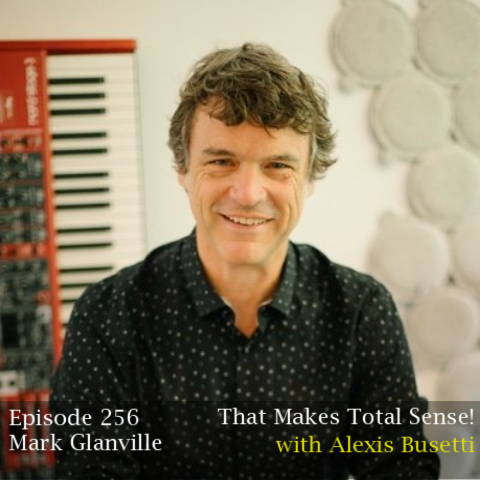
So this is. This might be a first mark that we. Not my first to have a musician on the podcast, but probably the first where we're both staring at instruments in. Our people won't see that when they're listening, but we're both staring at instruments in our rooms. And you are. May actually grab yours and play yours throughout the conversation.
[00:01:06] Speaker B: Right.
[00:01:10] Speaker A: Which I welcome. And I'm so. And I'm so grateful. I will not grab anything that's behind me. And that's, you know, not because I just don't want to, but because I really just can't. I can't. I'm not that kind of. And bases for me in my hands, the base is not a solo instrument. So there you go.
[00:01:30] Speaker B: Right.
[00:01:31] Speaker A: I know people for whom it is, but I am not counted in that. In that group, though. I'm getting way ahead of myself. You do have just a short little paragraph on the base where I thought, oh, my goodness, I did something right, like someone taught me well, and I actually was able to. To take on to that. So. So, again, yeah, I'm getting way ahead of myself. We might get there, we might not.
[00:01:54] Speaker B: Yeah.
[00:01:54] Speaker A: But we're going to chat about one of your most recent books called improvising church scripture as the source of harmony, rhythm, and soul. And you are, as I mentioned, a musician, a jazz musician. You're also a professor, though, and a pastor. And so I feel like all three of these threads came through in their own unique ways. You might even say, like, a chord in this. In this book. So I'm wondering first, if you could just tell us a little bit about your ministry and then, more specifically, what have you been perceiving and seeing in the church, especially in, I would say, the US and Canada that prompted the ideas for this book.
[00:02:45] Speaker B: Yeah, it's.
Excuse me. One, two. Sorry, I'm just gonna pause. I just got. I didn't turn my speaker off.
[00:02:53] Speaker A: That's all right.
[00:02:54] Speaker B: I'll pause and then start talking.
[00:02:56] Speaker A: So I thought I would sit. No big deal.
[00:03:02] Speaker B: Yeah. Scholarship music and pastoring.
All through school, I was playing music, started off as a classical pianist and got into jazz. And Australia's a bit further from North America, which is of course the home of jazz, black american music, but cotton onto jazz and that just became my life. And played jazz through my twenties at the same time, full time through my twenties, sorry. And still play every day today and practice every day and play professionally on the Vancouver scene. Love it. It's my happy place. Then I kind of just involved with church leadership and church ministry just through those young adult years as well and went to seminary and became a pastor and Presbyterian Church of Australia. I was pastoring and then in Vancouver in kind of urban, kind of justice seeking kind of churches. And my wife's a pastor too. She's also a scholar, weirdly, and a musician, actually a fiddle player.
So, yeah, just passionate. Reaching just for a church that expresses the tenderness of Jesus. Just reaching for christian communities that belong to a particular neighbourhood and just trying to learn together we're there. And how to nourish those communities, communities that love Jesus, Bible in our hand, prayerful, seeking justice for the marginalized and just displaying the tenderness of Jesus to our neighbourhood. And those might come, you know, to know his beautiful love.
And at the same time just doing scholarship. As a pastor, I'd kind of spend the first couple of hours of each morning in a cafe doing my scholarship and now kind of teaching training pastors, which I love. I'm an Old Testament scholar and just bringing those three together. And I really try intentionally bring those three together because that's where the joy is for me. So that's why I'm sitting at the piano, you know, and talking about church, you know, in light of a book I've written. And I think, you know, I'm leaning into it not just for my own joy, but because intentionally, because I think that in this post christian kind of cultural moment or the post christian cultural turn, one thing that the church I think needs to do is to really give attention to beauty, you know, to aesthetics, you know, to the arts for sure. But beauty in just about everything we do, you know, beauty in how we do housing, beauty in how we connect with the marginalized, beauty in how we worship beauty in how we set up a sanctuary, you know, beauty in our prayer, you know, I think aesthetics and beauty is really important as we bear witness to Jesus at this time. So that's. Yeah, that chord scholarship, three night chord scholarship, pastoring and music.
And I wrote the book. Which is your other question, Alexis, because. Well, you know, it's incredible. It's in my. I'm born in 73.
Just turned 50. Can't believe it. Just turned 50.
[00:06:00] Speaker A: Happy birthday.
[00:06:01] Speaker B: Thank you. Yeah, cheers. But it's in my lifetime that the countries where I've lived, Canada and Australia, have turned from being essentially christian societies to being essentially post christian societies, by which I mean the kind of symbols and values of the country mirror the symbols and values of the church, not necessarily of scripture, but of those two kind of social domains.
And that's not the case anymore, emphatically in Canada and Australia.
In America, I grant that the post cultural turn is more variegated like autumn leaves. It's different times. There's reactions against that, but yet the direction of western culture is clear. We're turning from christian to essentially post christian. And that means, I mean, that's a turn. You know, it was Constantine, Emperor Constantine, in 306.
That's when the church went to the center of society and in some ways started to call the shots. And so this is the first time in 1700 years where the church hasn't been in the middle of the conversation. And so, I mean, just think about that. Like, it's our generation, that culture has turned in this way. It's our generation. And so if this cultural turn doesn't demand us to recontextualize the church like missionaries, you know, I can't think what would, you know? So I believe with the Bible in our hand, we have to start to recognize what it is we are and what it is we do as a church that's more christian culture. And what is it that scripture, that Jesus, through scripture, by the inspiration of the spirit, is calling us to? And that's why I call the book improvising church, because like jazz pianists, we need to be rooted in a tradition and yet playing new melodies.
[00:07:46] Speaker A: So I'm glad that you brought up beauty first. This was one of the first kind of bullet points I had on my sheet. But I want to just revisit Constantine for a moment because I think another term you use in the book besides post Christian is Post Christendom.
[00:08:07] Speaker B: Right.
[00:08:08] Speaker A: And I want, if you could bring out a little bit about kind of what is meant by that term, I think, for. I didn't know a lot about Constantine before I had to take my history, you know, church history courses in seminary. And so there may be listeners who have heard his name kind of thrown around or, you know, but. But I would say one of the things that I was struck with when I was studying that time frame is how then, for me, the thing that stood out was how then power was married to Christianity at the time, political power specifically, but it affected christians in Rome who had seen persecution. And all of a sudden, when the emperor now is kind of on your side, then things look quite different for your regular life. And so that was kind of Christendom as we had come to know it. And I think, as a us citizen, you're right. I think it's variegated here, different responses in different times and different areas.
But that marriage of power and the church is starting to be, I think it's a good thing, but it's starting to be threatened, questioned, torn, you know? And then, of course, anyway, here there are people who aren't really ready to kind of admit I this post christian or post Christendom era, this turn that you're talking about.
[00:10:03] Speaker B: Yeah, you put it well, I won't go back to the history. You summarized it quickly and nicely there. But, you know, post Christian and Post Christendom, the reason I use the word post Christendom is it's that kind of level of symbols and values.
You know, it's not like the church was the president sort of thing, or is the president, or was the president 30 years ago. But the level of values and symbols of the majority of society, the majority report echoes, mirrors the church.
That's what I mean by Christendom or post Christendom in the 20th century. Some authors shy away from that phrase post Christendom, but by it I mean values and symbols, and the direction is clear. As I say, it's not going to be the same in 50 years. The trick is, or the trouble is, or the temptation is there is a cosiness being at the center of the conversation, and there is that temptation to grasp for it as it recedes and as we grasp for it, we do more harm.
And that's what, going back 1700 years, the church did harm. Once it was at the center. I mean, it was quite incredible decade when Constantine became emperor, the church was going through the greatest persecution it had experienced, a diocletian decade of persecution, which was, as you know, the borders of the roman empire. And then all of a sudden, they didn't know what was around the corner. They could never have guessed, but all of a sudden they're at the center. And within a few decades, they became persecutors themselves. And so in a mirroring kind of way, we have to discern the. As we grasp after the centre, even as we are taken away from the centre, you know, what harm may we be doing? I think it's time I argue in my book, for the church to let go of power and to focus on looking beautiful in a particular neighbourhood, displaying, embodying, expressing, extending the tenderness of Jesus. So if I was to summarize in one sentence what I think the church, in light of scripture, with the Bible in our hands, needs to be. It's to be a community of people who are receiving and extending the love of Jesus in a particular place. You know, a hundred of such communities in every city, and that'll do, you know, our witness to Jesus will reflect the tenderness of Jesus.
[00:12:37] Speaker A: Amen. I'm curious, especially with that attention to particularity of place. I'm curious now what.
How you would say jazz fits in for that. It fits into that for us, because you've already mentioned as an. As someone who grew up in Australia, jazz geographically was far from you. The origins of Jazzenhe were far from you and not particular to the place where you grew up. Yet you. I don't know, it's. I would say as a. As someone on the outside, you have fallen in love with jazz. You have. It brings you joy. You have put so much of your life's work into it, and yet this is not an art form that was familiar to your upbringing. So how does jazz help us with what you just said? Bringing. Bringing this beauty and living out this tenderness?
[00:13:45] Speaker B: Right. Yeah. It's black american music rather than aussie music.
And so I'm kind of one who's kind of.
I mean, it's an international art form now and always rooted in that. The story of black America. The genius, the resilience in the face of suffering and slavery. But that genius, that resilience, that's expressed in black american music, which is the gift to people in Australia. Right? Crazy and such. So wonderful. That's art. And I think art, it turns us to place. I think it's neurological, actually.
The right brain, which connects with our emotions, which connects with our embodiment, and through which we also experience music at emotional level, I think it's neurological then the way that in the right brain, music connects us to place, you know, I mean, any listeners on this call can, you know, think of their place of origin, where they grew up, and just think what song connects me with that place that will always be home, even as I die in my eighties or something? Actually, I'm Alexis. I was back in Australia. I live in Vancouver, grew up in Australia and Sydney. And I was back there in Christmas time, staying at my sister's house, which is close to the house I grew up in. And she lives on Cherrywood Avenue. And I was playing because she has my piano that used to be mine when I was living in Australia, a beautiful kauai piano. So I was just playing that kauai piano. And without even thinking, I wrote a jazz tune that I called Cherrywood after the street, you know, that Sarah lives on my sister. And. And that just. I mean, I didn't even intend to write, but there's music connecting me because I felt at home in this place where I grew up, the eucalyptus forest that surrounded me. Can I play with you? For your cherry wood?
[00:15:38] Speaker A: Yeah, yeah.
[00:15:39] Speaker B: It's in six, four. For the musicians, they have to count to six. But this just illustrates how music takes us home. And you could just think, you know, what is the music that takes you home? And then I'll talk about church. And we could talk about church and place.
That's cherry wind. I stuffed it up a bit at the beginning. It's a bit technical to play and I haven't practiced it for a while.
[00:17:46] Speaker A: But thank you. Thank you.
[00:17:50] Speaker B: But like, yeah, jazz roots is in place. Like in the biblical story.
The biblical story runs along the ground. It's relentlessly connected to place.
And I don't have time to go through the whole biblical story, but to start at the beginning, God placed humankind in a garden. The hebrew word for garden is gun. And that's a walled garden.
And, you know, it might be walled by hedge, it might be a royal garden with kind of a security wall. But the point is, it's a particular place.
It's not like a sprawling garden. It's a defined place. And that's fascinating. God placed the first human beings in a place. He didn't put them anywhere. God put them somewhere.
And starting there with Genesis two, the biblical story runs relentlessly along the ground. Humankind is connected to place. I mean, humankind is taken out of a place, taken out of the. The soil. The Adam is taken out of the adamah, the soil, to cite the Hebrew. So this relentless association with place, with soil.
And so a church that is flourishing, a church that is healthy, a church that is grounded, a church that's living faithfully and beautifully into the biblical story is rooted in a place rerouted in a place together, flourishing there, bearing witness to Jesus there, receiving God's love there, receiving love from the neighbourhood there in a particular place.
And I think rediscovering that and finding creative ways as commuter churches to rediscover that which is more complex is going to be part of recontextualising improvising church in the coming years.
[00:19:43] Speaker A: Yeah, you know, I don't know why you talking about that.
I think it reconnected me with the beauty piece, which I think is going to be ongoing. And I want to specifically get to that. But it made me think of ephesians one. So I'll say a moment before I get there, um, this connection to place, I think, in, in many ways, in my, I would say my protestant evangelical upbringing, um, was as lost as, uh, beauty was. Uh, you know, it was. And it's. And it's funny, kind of in part because I think, like I, you know, as, even as I was reading about some of the things that your congregation does in Vancouver, like the waving of sea branches, you know, for example, I think this is not, you know, one sanctuary looks like the next, looks like the next. Whether it's in this different parts of town or different parts of the state, or maybe even just in different parts of the country, you might be able to close your eyes and be transported. And it looks kind of the same, you know, denominationally, even. You know, this baptist church looks like that baptist church or this presbyterian church building, you know, looks like the next one. And many of them when the type that I grew up with were kind of stark. I mean, you know, not a lot of attention paid to physical beauty and aesthetics and things like that. But where I came to, Ephesians one when I was listening to you is what struck me years ago, and I hope continues to strike me, is this.
This phrasing that God adopted us because of his good pleasure.
That's the reason.
Not because we needed it, because we were desperate, because he knew that he was going to be this fantastic parent. All of those things are true. But that's not what that particular phrase in the scripture tells us, that he did this because it pleased him to do it, because of his good pleasure. And I think I want to think about beauty in that way. You know, why are these flowers this color? Why are these things the way that they are? Well, because it's beautiful. Because it brings us joy. Because it brings God joy for them to be that way. You know, I don't know enough about biology to know, is there a biological reason why I, you know, flowers need to be these different shades or these different colors? I don't know, but I think that it brings God pleasure. You know, I think that it brings us pleasure and joy when we appreciate those things and in the art that we create, it's similar. But as you mention in the book, in protestant tradition.
Much of that got, you know, it got kind of neglected in favor of things that you and I are both familiar with, you know, seminary type studies. Right. You know, when. When I was doing my m div, I just said, all I do is read and write. That's all. That's all I do all day, is read and write and read and respond and take more information in. In the form of black and white words and produce those, you know, similar black and white words.
But where's the, you know, where does, you know, how does beauty fall into that? How does beauty help us? And even. I guess I'll end with this. Even when I think about the writing and the, you know, the preaching that I do, I've never thought of myself as being, you know, some. Some people say, like a creative. Like it's a noun. Like this. This person is a creative. I would say you are a creative. And I'm saying I'm not a creative. You know, these guitars that you see in the background are not mine. They're my husband's. He is creative.
And then I had someone tell me, no, you are creative. Every time you write a paper, that's a creative act. Or then I started really trying to embrace that and preaching and saying, this is a creative art, or it can be.
And so anyway, these last several years, trying to really notice where that had been neglected in my own faith life. And how can I embrace it? Even as someone who would. I wouldn't call myself an artist or a musician, you know, even how can I, just as a. Just as a layperson, start to embrace that? And why does it matter, you know, to my faith and to my. Into the faith of my community?
[00:24:44] Speaker B: Yeah, I love that. This is great. I feel like we could talk all day, Alexis.
I mean, the. There's a certain malformation that happened in seminary and happens in seminary. We become hyper rational, and. And I can relate to that, too. I kind of lost my practices, my identity as an artist, and I see that, unfortunately, my students, too, become walking heads. People become tired, lose their physical fitness, become detached from their bodies.
Yeah. Willie J. Jennings speaks about the dislocation.
What does he say? He uses two words in the introduction to christian imagination, that at seminary, we become dislocated, and we become de integrated. That's not the word he uses. But the point is a lack of integration in myself as a person, the lack of location. People often move from seminaries and stop belonging to a place. And then people like you and I who've just gone through that, that we then become the next generation of christian leaders, and we kind of repeat that in our churches. And the point that you're making is we lose touch with the arts. We become disintegrated as people lose touch with our bodies, lose touch with our hearts in a relatively speaking way, obviously. I mean, certainly my students are superb people who I just love and admire and look up to in many ways. But this is the pattern, unfortunately, with western seminary education. So I think that that, I think for those who are training pastors like myself, we need to think very, very seriously about how we can train for that integration, for that holistic health, for that flourishing that includes the arts. And then how can we make sure that we mirror to one another that faithful christian discipleship means living wonderfully, living fully means expressing ourselves as artists, not just because we're an artist, but I, you know, expressing ourselves, as I said, in the way we do our housing arrangements, in the way that we, who we eat with, you know, are we just eating the usual, you know, gathering, the usual homogeneous gathering, cultural gathering around our dinner table, or are we living in diversity with that beauty that Jesus showed in the gospels? This man eats with sinners. This man befriends sinners and eats with them. Luke 15 one and two. There's beauty. There's an aesthetic right there. How about that aesthetic of ethics, that aesthetic of the beauty of who I eat with, the aesthetic of the ethical aesthetic of who I'm becoming family with, that's beauty that the world will notice. But you can't train for that just by reading books, as you're saying. You train for that by just, you know, it's holistic discipleship, isn't it?
Yeah.
So I entirely agree with you.
You know, I write in the book that the arts and that beauty, we don't need it to live, but the arts and beauty gives us a reason to live. And I'm not, once again, just talking about artists there. I'm talking about every aspect of our life. How can we attend to beauty in our ethics, in our eating? You know, not just going to cost, but buying from local farmers in our prayer deep, kind of integrated prayer life that infuses our church community beauty. So, you know, it's the difference between doing this.
Yes. May I just illustrate it on the piano just to get into the heart. So I grew up with that beautiful song, jesus loves me. This I know, and perhaps some of the listeners did, too.
Maybe this is how our Sunday school teacher played it, Alexis.
So, you know, and maybe just to push the metaphor. Maybe that's a little bit how we can do church. We just assume what we're doing is as christian culture is actually exactly what, you know is the most that the Bible requires of us. But let's play now. Jesus loves me with an artistic intuition full of heartland.
I mean, it's interesting to reflect on what happened there, isn't it? You know, the difference between the two? You know, you almost can't put it into words, but one's compelling and the other one's banal.
How can we be compelling as we follow Jesus in our particular neighbourhood, that attention to beauty in every aspect of our life?
[00:30:43] Speaker A: Well, and I think too, the. You use the word intuition. I kept thinking about embodied. I mean, yeah, your hands played both of those pieces.
But.
But, you know, we might say in, in that context or in other contexts, like, put your heart into it. Put your soul into it, you know. Like what? You know.
[00:31:09] Speaker B: Soul.
[00:31:09] Speaker A: You know, there's a. Yeah, there's a. There's a. There's a. There's a difference there. And when I think about that metaphor of, you know, it requires, yes, attention to beauty, but it also requires something of ourselves that the first example doesn't necessarily require. You know, the. In the first example, if you're a piano student, you could kind of play that in your sleep kind of thing. You know, it's one of those. You're driving down the highway and you. You are astonished and a little embarrassed. Maybe we just took road trips where I'm going, oh, how long have I been driving? And I, you know, things have just been passing me by. I've been like paying attention, but kind of daydreaming. I'm kind of on autopilot, as opposed to you're sitting in traffic or you're someplace new and you have to really, really, really be attuned to the things that are going on around us. And as I read your book, that's one of the things that I continue to think about is how the kind of church that you're calling us to is not something that can be done on autopilot. It can't be done in the way that we might see on, you know, on television or just because someone else is doing it this way. Like, it's not a pattern necessarily, like a cookie cutter kind of thing. We have to really be attuned to our place and the people who we're in community with to be able to do this faithfully.
[00:32:48] Speaker B: Yeah, that's great. And I love that word soul because that gets to so much, doesn't it? Soul gets to the emotions, gets to the heart, gets to justice, gets to community.
I mean, I'm thinking of kind of soul music and the depth of that tradition. And I think, you know, I mean, just to concretize it, because I agree with whatever, everything you're saying.
I have a chapter called Leader Full, leader Full in the book, which is a vision for leadership that I believe is emerges from scripture. You know, how could you be soulful in the way we conceive of ourselves as key leaders in a church, whether pastors or lay leaders. And what I argue is that the Bible is forming leader full communities. So in the corporate world right now, especially through Covid, and since COVID collaborative leadership has become a really important discussion. And while corporations are finding hard to do, many the best of them know that it's important. I think that in the church we need to move a step beyond collaborative leadership to what I call leader full communities. Now by leader full communities, I mean communities where each person in the church knows that they can bring their best gifts and even their imagination to the table. And we'll have a conversation about it. And so, speaking of soul, speaking of beauty, it calls from more, as you said, it calls for more from the key leaders. So pastors, I believe, need to have that emotional Spanish that can, that emotional flexibility to let people talk to one another about key issues, pressing issues, even difficult issues, or controversial issues or opportunities in the neighbourhood facing the church. And so pastors need to be facilitators, need to be people who can help one another work through conflict, need to be people who can bring, who can be gatherers and bring people to the table and then, and give energy to the best ideas and enable us.
So to sort of illustrate that, as I do in the book, in my own pastoral journey, when I came to East Vancouver, I found myself living next door to two other households in our church community. And I'm sitting in our household right now at the piano, and these houses are right here next to me. We share backyards and our particular house, the Glanville house, we've gone pretty deep in welcoming refugees, newcomers. So that's a part of piece of christian discipleship we give our attention to. Next door is quite different. They give a lot of attention to food systems to buy from local farmers, like I mentioned earlier. And they sell, they kind of resell to about, not for profit to about. They distribute the food is a better way of saying it to 20 different households in the neighborhood from local farmers. Right? And then the next door up, they've turned their garage, where they used to park the car, into a prayer space, an urban prayer space, one of a number. And that urban press space, we can book it. Sometimes they hold hours of prayer. But that was both beautiful and confronting for me as this emerged as a pastor, because, I mean, I remember a time where I noticed I'm not the expert on everything. I noticed.
I mean, I'm not. And I also noticed, alexis, my household, the Glanville family, we can't possibly hold every aspect of christian discipleship. We could do one or two things, maybe three or four, but we can't be welcoming refugees at the same time as having complex relationships with local farmers, at the same time as holding hours of prayer. We just can't. So for me, as a leader, I realized. I remember realizing it. I have to be a learner. I have to have the humility to ask questions of my neighbors and realize I'm never going to be the expert on these aspects of christian discipleships that they're holding. And then I become a facilitator. I become someone who gives energy to great ideas. I become someone who lets go.
And that's those kind of high, relational, intuitive leadership skills. What I call soft leadership skills are what we need to nourish leader full communities. And that's where the energy is. That's when it gets exciting.
So we talked about Sol, we talked about just this kind of embodied, if you like, approach to the life of the church. And I was just trying to concretize it by saying, let's talk about leadership. What could soulful leadership look like?
[00:37:29] Speaker A: Yeah, yeah, yeah. No, I'm, I'm glad you did. I. One of the scriptures that you brought up in that section, that, that wasn't in my notes, but my husband and I had just spoken about was when Jesus tells his community not to call anyone else rabbi.
[00:37:47] Speaker B: Yeah, right.
[00:37:47] Speaker A: And, and that's when I. That I think a lot of us just kind of pass over.
We don't really pay much attention to that. But what would happen if we, as lay leaders, congregants, but also if pastors really embraced what Jesus was trying to communicate there? And I think you did that well and say, none of us are going to be the expert on everything and not capable of doing all of this.
This looks like living in community by necessity, but also joyfully to receive what others in our community have to offer, and also to give what we have to offer and with recognition that we can't do it all, and we can't know it all, either. And so how. You know, and how beautiful that is to just continue to look to Jesus and say, okay, he's actually the teacher on this, and we're learners. You know, we're. All of us. All of us are learners on this.
[00:38:51] Speaker B: I want to play that on the piano. Yeah, I mean, I'm in a jazz trio, a professional jazz trio in Vancouver. And, you know, jazz groups are leaderful.
[00:39:02] Speaker A: Yes.
[00:39:03] Speaker B: We're listening to one another, constantly deferring to one another. So it's fun to illustrate it as a pianist in the jazz trio. So for those who don't know, a jazz trio, a piano trio is piano, double bass and drums. And so I would naturally lead because this is the way that piano trios work, but constantly deferring. So let's say, well, there's a. I'll play that beautiful Henry Mancini song, day of wine and roses.
No, let me just play something different. A different Henry Mancini song. Do you remember Moon River, Alexis? That beautiful Audrey Hepburn tune that she sings on breakfast at Tiffany's?
[00:39:39] Speaker A: Oh, maybe. Remind me.
[00:39:42] Speaker B: Yeah. Yeah. Well, let's say I'm playing it as a trio, so it'll go something like this.
I want to just keep playing. It's so beautiful. But let's imagine that the jazz trio is playing that. And let's just imagine, then, that the double bass player takes the lead, takes a turn at leading. I mean, I'm just making this up on the spot. But let's just say the double bass player decided to do what we call a pedal point, which means just repeat a bass note and hold it. Let's say it's the fifth. I'm playing an e flat, so that'd be B flat. And let's just see what that would do to the whole band. As the double bass player takes leadership. I'm not sure what it will do yet.
So you can hear by holding that pedal point. It built that beautiful tension, and then as the bass player takes that lead, the piano will lean into that tension, and the drums, especially, lean into that tension and build it up, and then it releases, you know, when the double bass player releases that pedal point. But that's how the church works, having that emotional health, emotional flexibility on the part of key leaders, to let go a bit and to nourish fan into flame. The best ideas facilitate rich conversations and let the spirit move among us, knowing that the best wisdom is there is to be found in the group, not with one person.
[00:41:53] Speaker A: Yeah, I mean, I want to carry this musical analogy a bit further. And then I would love. And then I would love also to get into your. The chapter on. You have chapter called worship and polyrhythms that I really. That I really loved.
But just for a second here, because I think I would say not to get too technical into the music part. Here's the deal. I can't get too technical anyway, so it doesn't. Doesn't really matter. I'm not capable. But there was so two things that I kind of want to say. First, when you talked about, you know, it's. We intuitively listened to one another in this. In this kind of trio. And so a couple of things on that. First of all, I will now touch on the base because we mentioned it earlier. When I was first learning how to play bass, I was very, very grateful. Well, I would say, first of all, when I. When I first learned it was because our bass player left the congregation and moved. And he was an incredible, incredible bass player. And I knew that I wasn't going to be that. But I thought, we've surely. We've got to have. We. We need one. Um, so I asked a friend for some lessons first. I asked my husband, who's a guitar player. Hey, do you think I could learn? He says, yeah, I think so.
So anyway, so I had a couple of lessons, and then there I am on Sunday morning. We were a small, very forgiving and gracious congregation at the time. So it was great. I was, I don't know, 21, 22, something like that, so. But I had a really great drummer who taught me how to play bass, essentially by exactly as you mentioned in the book. I learned to watch and anticipate and pay attention to his kick drum. And he was a guy who used to play in a prog rock band years before he started, you know, was playing at church. And he was this fantastic, fantastic drummer, like, way more talented than the three chord, you know.
[00:44:03] Speaker B: Right.
[00:44:03] Speaker A: I kind of, as you mentioned, the. The 30 white guys in the US and Australia who have kind of done this CCM worship thing for much of the world.
He was way more talented than this music really allowed him to display. But he taught me, he helped me understand what my job was. And my job, as he described it, basically, was to keep the train moving, you know? And so then, you know, from that point forward, anytime people ask about it, I learned that churches often are in need of bass players. And I tell them, all I do is play in the pocket. This is. This is the. This is the thing that I can do for you. If you want someone who's going to play like a. Like a crazy blues play like, this is not me, I'm not your girl. But if you want someone to keep the train moving, I can keep the train moving.
[00:45:00] Speaker B: Yeah.
[00:45:00] Speaker A: And I think that what makes me think about it in this metaphor is that before I learned that, I didn't really understand what a bass player did or how important a bass player is to an ensemble, or what's missing if the bass player is gone. And so I think some of those are kind of obvious in this metaphor that we're giving of different folks who have different gifts, can see different things, maybe can hear different things, and how we can then contribute. And the other thing I would mention is my husband and I have played in worship bands together for years. And for almost a decade, we played in a congregation that had really. He usually uses this term, very interesting music. So not generally kind of these three chord CCM kinds of things, but more music that was culturally relevant for the congregation. And it was really interesting music, but kind of because of that, and because the musicians who played on that band were so incredibly talented, many of them professional musicians, it kind of. That music kind of lended itself to the temptation for us to play over one another. Because everybody has a cool part, you know, like, everybody has something cool that they could be doing at that time.
You know, the acoustic guitar could go nuts. The electric guitar could have all sorts of pedals, you know, things. The piano player could go crazy. Same with the bassist and even trumpet players. Right? Like, we could all go nuts. But it was my husband who kind of brought to my attention, and maybe the attention of the band, if I'm remembering correctly.
And he sought out another musician who was a leader of a band, who was kind of saying, yes, but you can do this. But what does it look like when we accompany one another and when we, as you're mentioning in your ensemble, in your trio, when you take turns, you know, everyone's still playing something, but we can't all play the most at the same time, or it gets jumbled as it doesn't make any musical sense. And so I think that there is kind of like all of that is built into kind of what you're saying. We don't want just one person being the expert doing all the things. And when we're all operating in our gifts that can also be jumbled to at the far end. I think that we're not on that end of the pendulum for the most part. I think it'd be great if we had to correct from that end. I don't think that we're there in the church world, but listening to one another and enjoying each other's gifts in that ensemble, I think, is a place that I would love to see us move as a church community.
[00:47:54] Speaker B: Absolutely. And to take 30 seconds to land that beautiful, that plane that in terms of the leadership conversation, moving from the books that were being written 20 years ago with kind of the alpha leader, usually in the back of people's mind, a guy, probably a white guy, and what I call hard skills. So, vision setting, budget setting, leadership transition, mentoring, they're all good. They're all good skills, but leaning into the soft skills. And the soft skills are high relational intuition, high emotional intuition. So facilitation, conflict resolution, gathering kin keeping, stewarding, complex conversations, those facilitation kind of skills that nourish a leader, full community, that I think is kind of. That's where we need to, as leaders, be. Be growing and developing. That's our growth edge, I think, as a christian community right now, leading into that. That beautiful melody of being a band where that isn't full of alpha musicians, but being a band that's full of listeners. And that doesn't mean that there's certainly a place for key leaders, a place for pastors, place for elders. Absolutely. It's there in scripture, and we know just sociologically, it's jolly helpful. But then how can we lean into the soft skills and nourish or lead a full community? That. That's exciting.
[00:49:20] Speaker A: Yeah, yeah, yeah. I said I wanted to move into that worship and polyrhythms chapter, and I, and I, and I did, and I do. Although I feel like we've covered some of it. I think what's calling my name right now, if it's okay to switch, is this chapter on triplet of healing, kinship, and maternal nature.
When you started that chapter, I was kind of like, okay, yes, and amen. But I think for me, those things, well, say healing and kinship feel like undercurrents, and that, I want to be explicit, but in many of our communities, are. Are not. And so I was grateful that you brought them. I'm thinking of the PowerPoint, like, bring it to the front. You know, like, when you're. When you're. When you're creating about, like, bring. Bring that to the front. So I was glad that you brought those to the front. But then I also had a curiosity of this maternal nature, and I say that as a, as a woman, I say that as a. As a parent. So I'm a mother, and I was just almost flabbergasted at how that made the triplet in a good way. Because I think that if we. I just. My imagination kind of goes wild when I think, what if, you know, what if we paid more attention to this triplet, this healing and kinship and maternal nature? Like all. I mean, not excluding everything else, but almost like, what if we just had a period of time where we kind of had a one track mind almost, and we were like, really just put a lot of focus on those three aspects here, like, what would happen? I just. I don't know. It kind of, it kind of made my imagination start. Start going wild.
[00:51:30] Speaker B: Can I just pause and just heat up a coffee? I'm loving the conversation.
[00:51:34] Speaker A: Absolutely.
[00:51:35] Speaker B: In honoring beauty and aesthetics. Please. I got up late. This is my second coffee. I'm due for coffee.
[00:51:41] Speaker A: No, I'm probably on my third, so please heat it up.
[00:51:49] Speaker B: So much better. You need your second coffee, right?
[00:51:52] Speaker A: Oh, listen, coffee. I need the second coffee. It's not a joke. I heard. I saw something on Instagram or something saying, like, the first cup is necessity for some. And this is some people. Sometimes it describes me, but the second cup and thereafter is your emotional support. Coffee. And so I'm like, this is the one that, you know, I'll, I have. It's one, it's 01:00 in the afternoon here. And I have, you know, I'll heat it up. I throw it in the fridge when I'm not really. And then I go back and it lasts me and I'll keep it and I'll keep it with me. So anyway, that's great.
[00:52:26] Speaker B: I love the emotional support. That's good.
[00:52:28] Speaker A: That's a good lens right now, kind of where I am.
Yeah. Okay. So you asked that question, healing, kinship, maternal nature.
[00:52:39] Speaker B: Maternal nurture.
[00:52:40] Speaker A: Maternal. I think I wrote nature nurture. I've probably said nature a hundred times. Nurture.
[00:52:48] Speaker B: I really appreciate that reflection. So in the chapter healing, maternal nurture, kinship, I'm trying to reframe the conversation around social justice. The word social justice has become a complex word right now in the culture war. And so I'm trying to mine for biblical metaphors, biblical themes and reimagine the witness of the church in light of them healing, kinship and maternal nurture. And by healing, I'm talking about what if the church embodies the healing of God by kinship? I'm saying what if the church embodies biblical kinship, that movement of bringing the weakest among us into the centre, that kinship that we see in Jesus. But maternal nurture is so precious, and it's an unsung hero in scripture. It is such a dominant metaphor of God, God's maternal nurture.
So just real quick, for example, psalm 131, the psalmist comes to God as actually a God who's breastfed the psalmist. And now the psalmist is a weaned child with its mother, like a weaned child with its mother is my soul within me. This maternal nurture of God is such a dominant and beautiful metaphor, that kind of dependence, that kinship that the child has with God. In psalm 131, it's worth all listeners just memorizing. It's just a three verse psalm, like my heart is not lifted up. It's so beautiful. But then the maternal nurture of God becomes ethical, as God becomes a protector.
And you see that, for example, as I show in the book in RUtH, where BoaZ blesses Ruth AnD says, you will remember very quickly that Ruth is a refugee, a Moabite, come back to the land of ISrael with NaoMI, her mother in law. But they're desperate. They're on the starvation line. And Yahweh blesses her and says, may you find protection under the wings of Yahweh. The hebrew word is Yahweh's protective mother hen wings. And then on the threshing floor, you'll remember in the next chapter, I think it's Ruth 312.
Ruth says to Boaz, stretch out your cloak. And it's the same word as wings. Stretch out your wings and protect me. And Ruth is saying to Boaz, you know, I'm a refugee here. You blessed me, you know, speaking of Yahweh's wings, now you be the agent. You be Yahweh's wings. You extend Yahweh's wings as one of Yahweh's people. And Boaz does, offering that protection of maternal nurture, that justice, that incorporation, that inclusion. It's something I don't share in the book, Alexis, is that was on my mind when I wrote about this maternal nurture of God and the paternal nurture of the church was this beautiful story, or a troubling story, perhaps, that a farmer friend told me. And there was a bonfire on their farm, and all the animals were killed in this terrible barn fire, but the barn survived. And anyway, my friend Andrew walks into the barn once everything had cooled down, and he sees, actually a mother hen on the ground. The carcass is there, old child, and he kicks the carcass of this mother hen, and you know, just kind of nonchalantly kicks it with his boot. This charred remains of the mother hen, nothing was alive. Then all of a sudden, maybe around ten little chicks that had been hiding under the wings of this mother hen scurried away and were completely alive.
And that story just blows me away. The fierce protection of that mother hen, the love, the fierce protection, the solidarity, the loyalty, the commitment to life of her chicks.
And, you know, the amazing thing is that the Israelites who wrote the Bible were farmers. They knew that protective nurture, you know, the book of Ruth, you know, they knew exactly what they were saying when they spoke of Yahweh's protective wings. That Yahweh has our back. You know, we don't know the ways that Yahweh, that goddess, the God and father of our Lord Jesus Christ by the spirit, has protected us today, offered that maternal nurture.
We don't know the ways in the spiritual realm that God has saved us today, but God has. And so the church are those people that extend that maternal nurture of God that's so prominent in scripture, extend it to others, offering fierce protection, loving, loyal solidarity, putting our life on the line for others, you know, and just, if we just offer that maternal nurture, that love, that fierce protection in our particular neighborhood for those who need it the most, that'll do. The reputation of the church will change overnight. You know, thanks for highlighting that.
[00:58:08] Speaker A: Yeah, it was, yeah, it was one of my favorite chapters, probably.
Yeah. Because of the connection I feel to that social justice aspect, I think the last thing I want to try to touch on, and this is, I would say, as an american, I want to touch on this, even if we do it briefly, because we're just so bad at it.
And this is on the, you have a chapter on the sins of our kin, and that chapter, you use the story of the First nations population in Canada specifically to talk about this and point out, rightfully so, that Canada and Australia both have, are further along, I'll say, to date, have done a better job than the US of admitting and the sins of our forefathers and mothers and trying to work toward repair in that area. And I wonder, when we're talking about a book on improvising church, we're talking about church life and how that might look in a post christian world.
Help us with the, with this emphasis. Again, I'm saying this as an american and saying we're just generally not great at this part. And I, you know, my one, one of the kind of the low hanging fruit, easy answer is we're really individualistic in the states, Christians and non Christians, and so, and so looking and admitting to something that we didn't do, if we. Even if we say that, is not easy, but I would say once we start to recognize how necessary this is for our healing and growth and community and all these kinds of things, it's hard.
It's hard to unsee these sins.
And I will say just briefly, we were driving through the middle part of our country in these last couple of weeks.
Bible Belt, middle America, Kansas, Oklahoma. We live in Texas. And it struck me, I don't remember we were in Kansas or in Oklahoma, but there's lots of land. And there were a couple of billboards that I saw, a few billboards, actually, just with agents trying to sell real estate, large, large plots of land. And I couldn't help in that moment of thinking. Now, I'm a homeowner, so I'm just, you know, say that outright. But. But it struck me in a way that it probably wouldn't have maybe ten years ago, of kind of how blatant this is. Like, we've stolen this land as a country, and then here we are, you know, with these billboards advertising how much of it, you know, is still for sale these hundreds of years later. And it just. It just struck me.
It was. It was hard, you know, and uncomfortable and made me think gratefully of hard and uncomfortable things.
So. Yeah, so why is this sins of our kin so important for who we want to become as the church?
[01:02:10] Speaker B: Yeah, I think it's because there's so many lenses.
So, I mean, I think a spiritual lens is, you know, there is generational sin. You know, you just go to scripture, and nehemiah nine and Daniel ten are prayers of confession for intergenerational sin. The sins of our forebears are ours.
Where white on this call? There are others who are immigrants and not white, who weren't around when land was stolen and labor was stolen in slavery.
And yet, you know, middle class immigrants benefit profoundly from the colonial story, so they are part of the colonial story, too.
And, you know, another lens is trauma, intergenerational trauma, the trauma of brutalizing another people. The story, the trauma of enslaving, the trauma of stealing land, it affects the church. It shapes the church and disfigures the church. And then there's a trauma of receiving that mistreatment, that generational trauma that is still in the bodies and the neural pathways, as we know from neuropsychology of peoples today.
And so then there is acknowledging the way that, you know, not everything we do as a church and not everything we are as a society is simply of God and shaped by scripture. Much of it is christian culture, american culture, australian, canadian culture. So with the Bible in our hands, we have to fess up. We have to get real about the stories that shape the places where we live that have shaped the church community. So the histories of people and land, the histories of people and land is vital for the church to become vital again in post christian contexts. You know, here is christians so often saying, well, you know, yes, that was a problem, but we're not going to give it too much attention. And yet those outside the church know that the church has been so complete and sometimes, but not always, being among the worst offenders.
And so we have to get real. So I believe that the best way forward is to be local and to become curious about the history of our particular neighborhood, of our particular city.
You know, in our church, we acknowledge the land. We acknowledge that the land that we worship on is what we call the unceded territory. That means the never treated territory of the musqueam, the Squamish, and the slay Wautooth people. And, you know, in line with the kind of thing we're talking about, we're curious and we try and learn about our histories and the very complex histories of what we worship in East Van, which includes a whole lot of racism that's been directed towards the japanese community during World War two, what we call the internment during World War two, certainly toward First nations community, Black Vancouver. And it's only by becoming aware of our histories and literally lamenting it together that we can grow and be nourished by the spirit to do better. Today we're deeply formed by our stories, much more deeply than we know.
And even, I think, as we become more aware of our stories, we even read scripture with more wisdom.
Thanks for asking it. The scenes of our kin so important for witnessing communities in post christian culture.
[01:06:20] Speaker A: I'm tempted, as we wrap up to ask you this last one as a professor, but I'm going to step back and ask you this as any of the three parts of your person that we talked about before. So I would, the way, I'll tell you for context, the way I sometimes frame it when I'm talking to professors, which is I have seen the look on professors faces when someone asks, like, the question that they wanted someone to ask. You know, the classroom discussion is going in a, you know, a great way. And then someone asks that one thing and they kind of go, yes. And then they just, you know, kind of take it off on the train. So sometimes I ask this of my professor guests, what's the question? I didn't ask, but I won't frame it that way this time. I will just ask you to close us in the way that you choose today. So as a musician, if that's another, you know, piece of music, as a pastor, if maybe that's a call to action or something to think about, as a scholar, if that's something that you want us to intellectualize. But how would you, given the text and our conversation today, what would you like to leave us with?
[01:07:45] Speaker B: I think I'd like to play a blues.
The blues is black american music.
It's rooted in the experience of slavery and ongoing racism. It's genius. It's beautiful. And the blues has within it its DNA, is always the gospel, the kind of blues moan which sings the suffering of the world and of black american people and of the groaning of the world, the groaning of the creation. Romans eight. And there's always a resurrection shout in the blues. There's always this resurrection shout. It's always the cross and the resurrection held together. It's lament and it's celebration. It's hope, but it's hope because we can acknowledge what's broken. So I'd love to play a blues, and I pray that as I play the blues, that the spirit both convicts us of sin, but also, and at the same time, through that opens. Begins to open all of our imaginations for what Christ might be calling particular church in our particular place, too. When I think of what I call incarnational communities, the kind of communities we're talking about, Alexis, my favorite metaphor is I think of a bunch of blues musicians sitting in my local park, sitting on the park bench, singing the blues in the particular neighborhood. And what I mean by that is, you know, just imagine, you know, 510 people gathering around a park bench singing the bluest. They're lamenting, they're grieving what Christ grieves here. They're celebrating what Christ celebrates here. They're living in that tension, but they're there. They're showing up. They're fully embodied, and they're sicken with all their heart.
So let's, in our minds, go to your local park bench and sing the blues right now.
[01:12:32] Speaker A: Thank you so much. I have been with Mark Glanville today. We were discussing his recent book, improvising church scripture as the source of harmony, rhythm, and soul. Thank you so much for being with me.
[01:12:46] Speaker B: Thanks so much. Alexis.
[01:12:51] Speaker A: The links for all the resources mentioned in today's episode can be found in the show notes, music and podcast production by Seth Busetti. Be sure to give us a review on iTunes and subscribe at your favorite podcast listening app. You can also visit us at that makestotlesense.com.