Episode Transcript
[00:00:07] Speaker A: Welcome to that Makes Total Sense, a podcast dedicated to exploring God's generosity and justice. I'm Alexis Buscetti, a Christian, aiming to ask good questions and encouraging you to do the same.
Every one of us is wired by God to live out generosity and justice, but the how sometimes eludes us. That makes total sense is a way for us to get together, posture ourselves as Lear partners, and challenge one another to practice generosity and justice in a tangible way every day.
Okay. There are occasions, Robert, when I feel like I should say the whole extended name of my guest. And yours is one of them because I wrote it out. Robert g. Callahan, the second. Should we put Esquire? Should we put J.D. what do we put at the end of this? Because it needs something else.
[00:01:05] Speaker B: Bachelor, poor former law student is drowning in student loan debt.
[00:01:10] Speaker A: Like, there you go. All of the things, right? All of the things.
[00:01:13] Speaker B: Yeah, just Robert. It's good.
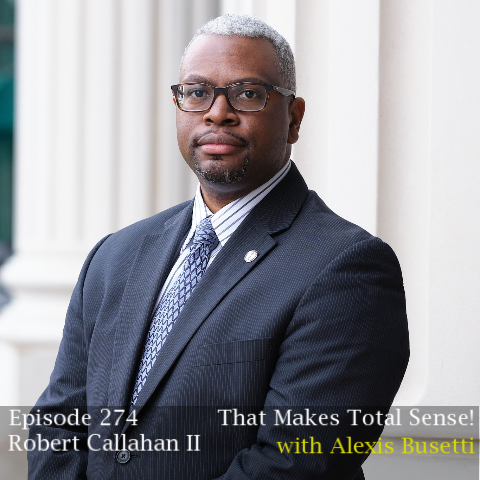
[00:01:15] Speaker A: Robert. Okay. Robert. I'm so thrilled to talk with Robert G. Callahan II today about your book, Fire in the Hole. Embracing our righteous anger with white Christianity and reclaiming our wholeness. We could spend, I feel like the whole time unpacking the subtitle of this book. We won't. But there are some places where we're going to have to go, which I think righteous anger is a place we're going to have to go. We're gonna have to talk about that and going to have to talk about white Christianity, because these, these both are words that some people just went, I'm sorry, what?
[00:02:02] Speaker B: Record scratch.
[00:02:03] Speaker A: Right? Record scratch. Right. So. But I also want to give a little bit of context before we get started that you and I are both in Texas. You're right up the road in Waco.
We argued pre record about who was actually in the buckle. I don't claim to be now in Houston in the buckle of the Bible Belt, but I do.
No, we're not even close. We're not even close. We are part of the. We're part of something. If you see the political signs around, we're recording this in October of 2024. By the time this airs, we will have a new president. But right now, you could tell some things by driving around Houston right now. It's not maybe what some people would think, but anyway, so we argued about if Waco is the buckle of the Bible Belt or if my home in Southern Oklahoma is the buckle of the Bible Belt. But say that to say we are both familiar with what you are calling white Christianity.
[00:03:02] Speaker B: Yeah. And I will also see your Southern Oklahoma upbringing and raise it with mid Oklahoma high school experience.
[00:03:12] Speaker A: I am so glad you brought that up.
[00:03:14] Speaker B: Was so treacherous. But yet, yet I would still say that. That Baylor Waco, Texas is the crown jewel in the middle of the rodeo belt of the Bible belt.
[00:03:27] Speaker A: I think what I appreciate about that is the recognition that it is in fact a rodeo belt buckle.
My whole life I feel like I've been ripped off because I've been picturing this regular old buckle. No, no, sir.
[00:03:43] Speaker B: Absolutely not.
[00:03:45] Speaker A: Absolutely not. This is a full blown. Now why did I not get that? Why has my imagination been just. It's been off this whole time, all these years.
[00:03:56] Speaker B: Do you listen to country music at all?
[00:03:57] Speaker A: Absolutely not.
[00:03:59] Speaker B: Okay, well, see, neither do I. So, like, there's, There's. There's no want to do it.
There's nothing more offensive to my frame of mind than having to sit through a country music concert at the fair, being surrounded by rodeo belt buckles. And so for me, it just makes complete sense that the Bible belt is a belt buckle.
[00:04:27] Speaker A: It is a belt buckle. So. Fun fact, fun fact about. My husband and I, we've been married for 21 years and I usually say this is actually one of the pillars of our marriage is our mutual hatred for country music.
I mean, you, you commented before, this is not on video, but you people know sometimes because we have like a bunch of guitars in the background. This is. I'm sitting in my husband's music room right now, so it's not like, oh, we just don't listen to it. We don't really care. Like, we're kind of a musical family. Like, we enjoy those kinds of things. My husband and I actually just went. This is. Anyway, this is fine. It's all, it's all good. My husband and I just went to experience Hendrix. So this, you know, show where all of these, like incredible guitar virtuosos. We heard Cristone Kingfish Ingram was there and Kenny Wayne Shepard. Anyway, we like music. Yeah, we detest country music. Like, I don't know if there's. I don't know. I, you know, like you. You pray that you raise your kids right. Right. And I'm like, I don't know if I will. If there could be a bigger disappointment if one of them grows up and is like, mom, actually my presets in my car, like, one of them is the local country. I think I will feel so betrayed if that ever happens. I'm hoping we're raising them right.
[00:05:42] Speaker B: Right. Like anything short of that. I mean, like, we're good.
I don't care what news you come.
[00:05:48] Speaker A: Home with, but, like, please, let's get your presets straight. We are not going there anyway. So it's a. It's a rodeo. It's a rodeo buckle.
[00:05:59] Speaker B: Yep.
[00:05:59] Speaker A: I'm happy with that. And I will give you that Waco can be the emerald jewel in the. In the buckle.
[00:06:04] Speaker B: Thank you.
[00:06:05] Speaker A: But what does this have to do with white Christianity? A lot.
A lot it has to do with this. So I want. Maybe if you can help us start there, just so we're kind of on the same page, like, when we're talking. Because we are going to be talking about that today. We're going to be talking about white Christianity. I. I often will talk about, like, white evangelicalism or being evangelical adjacent in some ways, things like that. So when you are talking about white Christianity, can you help us? You're a lawyer, so you're good with definitions and things like that. Can you help us understand. Give us a picture of what you're talking about when you're talking about white Christianity. Yeah.
[00:06:42] Speaker B: Thank you for that question. So, and by the way, I would be remiss if I didn't say thank you for having me, because this is an honor to be on your show.
[00:06:49] Speaker A: Oh, of course. Thanks for coming.
[00:06:51] Speaker B: So the title of the book, starting with the general title, it's Fire in the Hole. And the word hole is a pun. It's W H O L E. And that's because.
Reflecting the subtitle, Embracing Our Righteous Anger with White Christianity and Reclaiming Our Wholeness. My goal is for readers to walk away after reading this book feeling like they are okay to be their whole authentic selves. And so I also think about that verse in Jeremiah, which is. I think it's Jeremiah 20 and 8 and 9. He talks about how frustrating it is to. To feel like every time you open your mouth to talk about your understanding of the Bible, that you're just made a subject of ridicule and mocking, but then feeling like, but what else can I do? Because if I don't talk about it, then it just feels like I'm going to explode. And Jeremiah says, it feels like this fire in my bones.
And so I feel like that's very relatable for those of us that consider ourselves survivors from spiritual abuse. And so what this book is meant to tackle is spiritual abuse, specifically in the context of a racialized form of spiritual abuse. But generally, whether you consider yourself a minority because you're a woman, member of the LGBTQIA community, member of the disabled community, however, you see yourself as a survivor.
There are words in this book for you. And so to that point, as I was considering the subtitle, I really struggled with, controversially, should I say white Christianity? Am I willing to drop that grenade? And at first I was thinking, well, maybe this is, maybe the issue is evangelicalism. Well, no, it's not evangelicalism, generally speaking, because what we're talking about, the Big bad that we're trying to isolate here, is not a theological construct. Right. It's not evangelicalism proper, theologically speaking. That's not what we're warring over. Right. And so why are we even having the conversation about evangelicalism? Well, it's because, and you know, this being in the bible belt, because 81% of white born again evangelical Christians in the 2016 election identify themselves as Trump supporters. And as we're looking around us at all the chaos that has become Christianity here in the West America specifically, you know, that's, that's the group that I'm trying to capture. Right. When we're talking about the issues. And so it's not just evangelicalism. We could say, well, is it white evangelicalism? Like, if you're in the Bible Belt, it makes sense for me to say white evangelicalism. You understand who I'm talking about. But even if you're, you know, in New England or in the Pacific Northwest, where I've spent some time, or certainly if you're outside the US if you're looking at the evangelical church, like the Latino Evangelical church in South America or in Africa, the African evangelical movement, none of those things.
It's not about even necessarily the race that is attached to evangelicalism.
And there's also an aspect in which black evangelical pastors, and we've seen this, you could probably name some names, can perpetuate the ills of white supremacy in a racial, excuse me, in a spiritual context as well, in the same way that we know that it's possible for women to have internalized misogyny, it's possible for minorities to have an internalized racial understanding of white supremacy. Excuse me, theological understanding of white supremacy. And so what I'm not trying to isolate even just one culture. What I'm really trying to get at is what we consider to be normative. And so I talk in the book about two definitions of white Christianity. And the first one is sort of written in, like, King James Elizabethan English. Right. Like you said, I'm a lawyer, so definitions, but I define it as white Christianity serves as the shorthand to describe those whose orthodoxy and orthopraxy are dictated by an unshakable yet misguided tangle of faith and right bridled political and social conviction that are antithetical to everything that Christ represents.
So then I try to break that down into English, right, Because lawyers like definitions and we love to hear ourselves talk. So forgive this monologue, but in the next page I say that white Christianity is a also that subset of Christianity that intentionally ignores or does not consciously consider the effects of racism or prejudice in either the church or society on the marginalized, nor cares to having been given the resources and information to do so. So what I'm really trying to attack and get at is this idea that homogeneity is the ultimate good inside of this church context and that we can have a surface level storefron superficial visual diversity. And yet the church still not envision the beauty of diversity of the body of Christ that's painted in Revelation, where we have every tribe and nation and tongue around the throne. I want people to be able to show up, not just superficially, but internally in their full selves and to live with an understanding that the wholeness of who they are, how they view the gospel, how they view the social issues that are important to them in society and what the church should be addressing, those are all important and relevant to Christ.
And so therefore they should be equally important. And let's dignify those in the believers that identify themselves as minorities.
[00:13:10] Speaker A: Yeah, there's a lot there.
I want to add a couple of things that might be helpful for some listeners. And so I won't.
We didn't, you know, like, prep this, so I won't ask you to respond unless you like, are specifically familiar with these guys. But I will put the, put the, the sources in the show notes in case people are interested in like delving into that part specifically.
So in addition to your book, where obviously this is a lot of what you talk about, a pastor, a couple of pastors in Chicago have written books that talk about this specifically a couple of white guys. One guy's name is David Swanson. He has written a book called Redisipling the White Church, all about this topic because he recognizes the issues.
The other pastor is Daniel Hill. And now I cannot remember the name of this book, but this is where he talks about. He takes Willie James Jennings idea of white supremacy as a parasite on the host of Christianity, which is like a lot and puts. And puts that in there. I'll look up the title. Daniel's been on to talk about that book. And then as you Mentioned there are some pastors, non white pastors, and we can say pastors, we can say anybody who are perpetuating this. And I looked it up right before we got on, because at Fuller Seminary a few years ago, they, they had a little, that presentation. And Dr. Willie James Jennings went on and he had this part of the presentation was called Can White People be Saved? And in that, what he expresses is whiteness as a malformation.
And therefore he says anybody can be white. Like, you're not born white necessarily. You kind of, you're, you're opted in. Yeah. To this and to this malformation that says all of these things that whiteness says.
And so anyway, so I'll probably put those in case people are interested in kind of delving into that, that sphere. Because I feel like Even still in 2024, when we talk about white Christianity, whiteness.
[00:15:32] Speaker B: Yeah.
[00:15:32] Speaker A: Might, you know, other folks, might I have talked about white evangelicalism, as we said that there still is kind of some confusion.
[00:15:44] Speaker B: Yeah. And the thing that's so hard or frustrating for me as a black man is those, those leaders that you're talking about who have written those books as white men or white women can talk about whiteness in very clinical terms in a way that it's, they're given permission to dissect it and say this is a parasite. Whereas when it comes out of the lips of a minority, it's charged automatically, it's racially charged. Even if I say, I'm not talking about your skin tone, that message gets lost if you're not willing to get past the supposition that as a minority, I'm not allowed to make that assertion. And the idea of whiteness as a parasite, that really hits for me because in my observation or my frustration with white Christianity in the churches that I saw it perpetrated in was that for the longest time I thought if we just identify the problem and we point out that it's there, that, that white supremacy is present, that everyone will agree, oh, this is a problem. We don't want it here. Let's get rid of it. And I never considered early on that it wasn't the situation that white supremacy was an intruder, but that it was actually a welcome guest.
[00:17:16] Speaker A: Yes.
Oh, yes. I, I want to, I want to talk about that because there's.
Oh, my goodness, my, my head is going in a bunch of different places right now. But I think that where, where, where you said that in the book. I just thought that things are, things are starting to click for me in some Other areas, and that. That was one of them. I'm, I'm going to, I'm going to. I'm going to talk about the upcoming election just for a second.
[00:17:53] Speaker B: Yeah, this is a safe space to talk about it.
[00:18:00] Speaker A: It finally hit me, I think, for all of these years, since 2015, you know, I'm, I'm talking about Trumpism now, specifically.
I, I kept thinking, and you talk about this a lot in the book. If, if people just knew, if they just had the information. Right. If they just, you know, even talked about that in your definition, if they just had the information, then this would change things, then this would be different. People would see this differently or, you know, all of these things. And I think it's always been stirring in the back of my mind, but there was denial. You also talk about that in your book, Grief Stages of Grief. Right. And so I was in this kind of denial. I kept circling back to this denial stage of grief when it comes to this. And finally, just in the past week or two, I was like, you know what?
None of these things matter that I thought would matter when it comes to Trumpism.
People at this point, we're in 2024, getting ready to come up on election. People at this point who are supportive of Trump are supportive because he is exactly what they want.
[00:19:09] Speaker B: Yep.
[00:19:10] Speaker A: This is not, oh, you need more information, or, oh, can't you see that he. Blah, blah, blah, or, oh, my goodness, this movement. Don't you understand the issues with the movement? And I think finally, I'm like, oh, no, you perfectly understand the movement, which is why you support it. Because this is what you want.
[00:19:30] Speaker B: Yeah.
[00:19:31] Speaker A: Oh, it's, it's the welcome guest thing that you're talking about. This isn't something that you're like, oh, well, if people. Well, you know, the thing is that they just don't know that this is problematic. But maybe if we point it out, right. You. Maybe if we point it out, then that'll. And you're like, no, yeah, that's actually not the phenomenon that's going on.
[00:19:51] Speaker B: Yeah, exactly.
[00:19:52] Speaker A: So talk about that more.
[00:19:54] Speaker B: Yeah. And the reason why it's so frustrating and maddening is because it's not logical. It's. It's completely. Like in years of your. It would be completely possible for people to have a candidate that they're supporting that's conservative for whatever reasons, even though you may not agree with them, and you could still inhabit the same church environment and get along with one another and have relationship with one another. This is a different thing. We're now at the place where there is this populace that they want, not just a strong man, but they want wickedness. They want the 34 convictions for a felony. They want the sexual assault. They want the shyster businessmen. They want the racism with the dog whistles. They want all these. The sexism, the able. Oh, my gosh. There's something so, so, so insidious about the followers of Jesus who walked the earth as a healer endorsing a man that made fun of a disabled reporter.
What? Like, there's. And so that's why there's no bottom. That's why we just keep finding further levels in the basement and keep going down further. Because it. It has no logic to it. It. It's. It's an anathema to our. We're not set up as human beings to be able to understand this level of inconsistency in logic, the cognitive dissonance. It makes no sense to say that you are a Christian and wave a flag for all of these things. People want to vote for who they want to vote for. Privately, that's one thing. But don't. Don't try to fool us and say that you're just holding your nose and voting for someone when you've got three of his flags flying off the back of your lifted pickup truck. And you're.
[00:21:54] Speaker A: Don't talk like you live in Texas, Robert, now. And now I know you are. Now I know you're here.
[00:22:00] Speaker B: Listen, the stories that I could tell. There's a person in our neighborhood that around election day will dress up in period costume and wave a Trump flag outside of their home.
[00:22:11] Speaker A: You are a liar.
[00:22:12] Speaker B: No, listen, I. By the time this airs, I will have photos and videos for you. Like, it's. It's just. It's something else. It's a sight to behold, you know? Yeah. And so, yeah, I do talk about the five stages of grief, because I think that that's appropriate. And, you know, when we're talking about. If we're at church as a community, right, and we're looking at, like, why is it that we have fallen out of community with these people and none of this works, and nothing that we're saying makes any sense. And it's because we are mourning loss. We're going through the stages of grief. We go through depression. Like, well, let's even start with just denial. Like, you know, the church that I attended for over a decade, like, that church had so many different ministries that were aimed at, at least ostensibly, the marginalized community, you know, helping kids in this underdeveloped neighborhood, get their literacy rates up, which seems like a great thing, right? That. That's a good thing. Feeding the homeless. That. That seems like a good thing. We had a house for rehabilitation for one for women, one for men. That seems like a good thing. You know, like, we.
[00:23:25] Speaker A: We're.
[00:23:25] Speaker B: We're doing all these things that are unique to our congregation within the city, and also seems very positive and very progressive. But at the same time, the most atrocious things are being said and done from the pulpit, perpetrated on social media by not just church attendees, which shows a malformation of discipleship, but also the leadership in the church.
You know, none of these things make sense to me as a member. And so I'm like, surely we. We can't be struggling with white supremacy in a. In a church context, because look at all these other things that we're doing that are good. And so I had to wrestle with going through denial and saying, like, no, this is. This is still a problem. It's still here. And then we get to another stage of grief, which, by the way, none of these are necessarily chronological. And you can go through two phases and then find yourself back at the first phase, you know, ebbs and flows. But the next one that I wrestled with was bargaining. And I was just thinking, well, say maybe if I sit down with this pastor at lunch and tell them what I'm experiencing, maybe if several of us go to this pastor, either together or separately, maybe we would be able to convince them. Maybe if this person in the leadership leaves, then they would finally see the light, and it would change their perspective. Maybe if the worship leader quits, that would get through to them. Nope, that doesn't do it. Maybe if I give them this resource, this book, this podcast, introduce them to this black pastor, whatever it is. Maybe. Maybe if I stay here long enough, if I ride this out and I commit to staying within the congregation and trying to change it subversively, like a Trojan soldier from the inside out, then maybe I can turn the Titanic around. Maybe. Maybe, maybe, maybe, maybe, right? And it's just. It's a pipe dream because they. They have this system rigged the way that they want it. They are not off course. They are doing exactly what they want to be doing, headed exactly where they want to be going. And that's why you cannot change their mind. And so I found that I was bargaining with myself, trying to find a way to make all of this make sense, and I couldn't because it just. It wasn't the Sensicalness wasn't coming, right? So then you deal with anger and it's like, well, why is it like this? Like, it shouldn't be like this. This makes no sense. So, like, you camp out in anger for a long time. You go to depression.
You know, you wrestle with the people that you have been in relationship with in these small group communities with relationships that should matter, are doing things, saying things that are completely antithetical to not just the body of Christ, not just the concept of loving our neighbor and loving God, but also antithetical to, like, your relationship, your understanding of the lived reality that you have. Like, they're absolutely not concerned about your individual well being.
When you get to that point and you find yourself dipping your toes in true anger, the frustration that none of this makes sense, none of, none of why we are here and how we got here makes sense.
And that all of this is the system working as designed as opposed to a bug. This is a feature that gives you grounds to be frustrated and to be angry and for you to be so indignant that you're going to say, I'm going to save myself and my family from this situation and we are leaving this toxic space and we are going to make sure that everyone knows that this is not safe ground to be in.
When you do that, you are moving into acceptance and that's going to move you into peace of mind and into wholeness.
[00:27:51] Speaker A: But I'm grateful that throughout your book, you, you recognize and, and say explicitly over and over again that that leaving portion is not easy.
[00:28:07] Speaker B: Yeah.
[00:28:10] Speaker A: And, but I want to, I want to go to two related places, I think, because when I'm, I'm hearing you talk about your experiences and, and there's, there's two, two, one word picture that you gave that I, that really resonated with me. And then I want to, and then I want to talk about those, some of those personal experiences that you talk about in the book. One of them is the word picture. First you give this word picture of a, of a dog with a buried electric fence who has a collar.
So this, this was, I'll speak for myself. This was my story, A, my whole upbringing, but then B, much of my adult life as well.
Here's, here's the thing.
I remember when I talked with your friend Malcolm Foley in 2020, and I remember him saying, like minorities is we have to know how to navigate this majority world, like this white world. Right. We have to know white people don't have to know how to navigate in any of our Worlds. And. And so I would say this is. But this is how I grew up. But I didn't realize this is what was happening. But, you know, until later when I could recognize it, where I say, yeah, I know. I know how to navigate this white space. As a mixed Hispanic woman, I know how to navigate the white space. And you learn where your boundaries are, like the dog with the buried electric fence. And you look, this puppy looks happy and excited and all of that stuff, because that puppy has learned that you don't step outside of that line or you're going to get shocked.
[00:30:09] Speaker B: Yep.
[00:30:10] Speaker A: And it doesn't take very many times to step out of that before you realize, okay, that's, you know. And I think what I learned was that my whole self wasn't welcome in those spaces.
I. Parts of me were, you know, but my whole self wasn't welcome in those spaces. And that's a very hard thing to explain to someone who hasn't experienced that.
And I would say, I say, I don't know many white people who have experienced that where they're telling me stories like, yeah, I couldn't, you know, I couldn't bring myself. Now, there are some situations, I get that and all this, but I mean, just like, on an everyday basis, basically, all of the spaces where I entered as a mixed woman, I felt like I couldn't bring my whole self into that space. And when I say, that's hard to explain, explain.
The related thing that I was going to mention is I wrote a note at the beginning of chapter six, we break the silence. And I said, hang out here, because you give a lot of your experiences in that chapter. And part of what resonated with me was when you talked about your experiences with microaggressions, sometimes they weren't so micro.
And. And when you conveyed those, it wasn't always met with like a welcome understanding.
[00:31:45] Speaker B: Right.
[00:31:47] Speaker A: And I think, like, but you owned it. And you're like, no, I've been in this body. Like, I know what this feels like.
[00:31:54] Speaker B: Yeah.
[00:31:55] Speaker A: And this, this was on the heels of a chapter, if I'm not mistaken. It was in close proximity, where you talk about. You just as a lawyer, go through tons of these historic court cases, right. Like these over and over and over again. We're like, this is where we live. We need people to understand this is where we live. And so when you as a black man, say, this is my experience, I've been here before. Right. In my house, I say often, I've seen this movie. I know. And you know, I know what. That. I know how it's going to play out. And so for, you know, when minority people experience bipoc people experience microaggressions or things like that, sometimes it's hard to explain, but we're like, no, let me just. I just know. I know because I've seen this movie before because this is where we live.
So there's not necessarily a question embedded in that. But I'm wondering if you might. I don't want to say if you'll commiserate with me, but, you know, like, talk about maybe that understanding that there are places where you have to be silent or you have to be silent about certain things because the bargaining that you talked about didn't work.
And then also that you.
You know, that you just. That, you know in your body.
[00:33:13] Speaker B: Yeah.
[00:33:14] Speaker A: When things like this are happening.
[00:33:15] Speaker B: Yeah. As minorities. And again, whether that means a racial minority, women, lgbtqia, or the disabled, we are eyewitnesses to our lived experience. And so no one gets to question our lived experience. And that's a hard revelation to come to and a hard level of freedom to live in. If you have been told that you're not allowed to be free enough to believe that and that your word is subject to questioning and inspection and cross examination. And the example that I give, I do go through this litany of. Of legal history that relates to just the development of case law, just around race, just around civil rights, and from reconstruction to present date to emphasize that at no point in time in our country has it been as simple as minorities saying, this isn't right. Let's fix it, and society saying, oh, my bad, you're right. So silly of me, let's fix it. Let's hold hands and fix this together. And at every point in time along the way, we were met with opposition. It seems crazy now to talk about segregated water fountains in bathrooms being a lived reality, but in real time, when we were talking about that, with the vision of the future, that this is what society should look like, everyone said that we were absolutely crazy. And so we should have no surprise now that people are pushing back on. On our lived reality experience today. So when we get to the point where we say, hey, this is my experience in society, and people are saying, no, you. You miss, you misunderstood that you misinterpreted it. You. You read that the wrong way. That person didn't really mean it. They didn't mean the thing that they said, whatever it is.
When you understand that from a legal perspective, I like to use this Analogy.
Eyewitness testimony in the courtroom is direct evidence, which means that it has just as much weight and significance as DNA, a video, photographs. If you believe the evidence beyond a reasonable doubt, then you are entitled to listen to that evidence, hear it and accept it the same way that you would something that you saw with your own eyes.
And when you understand that the weight of our testimony is not on balance against the comfort of people of other cultures, but our testimony is what it is and has the right to be fully considered and weighed as much as any other evidence. When you understand that, then you no longer have to subject yourself to the approval and scrutiny of those that want to criticize your experience and your takeaways.
So, like you were talking about, there were parts of me that were welcome in white Christianity, in the church that I talk about in the book specifically a number of times. I refer to it as tfi, which stands for Toxic Fellowship Inc. Names have been changed to protect the guilty.
And I think everyone sort of has a Toxic Fellowship Inc. That they have attended if you can relate to the things that we talk about in this book. But there are parts of me that were, that were completely welcomed, you know, when, especially when I was still in my toxic phase as a man. You know, like my understanding of scripture seen through the eyes of patriarchy, that was welcomed.
My talents in leading a small group, that was welcome. My resources, my money was certainly welcome. My face, in terms of being on promotional materials and on the website and in the morning announcements, Sunday morning, when I'm in front of the camera smiling and saying, welcome to this church, all those things were certainly welcome. But when it came time to lament Charlottesville, when it came time to lament Eric Garner, when it came time to lament all these different things in society, none of that aspect was welcome. That's when, hey, you're being divisive and we all know that word. If you have been victimized and you're a survivor of spiritual abuse, you're disrupting the homogeneity of our environment here and what the language that they'll use is. You're disrupting the unity. But what they want is not cohesion of a properly functioning body of Christ. They want allegiance.
And when you recognize that, hey, my testimony is not subject to your scrutiny. I know what I know. I saw what I saw. I have had to navigate this Earth for 40 mumble years as a minority. And I, I know how to spot racism when I see it. So I don't have to have an argument with you about whether or not. I did experience racism, whether it be in the form of a microaggression or a macroaggression, I'm, I, I'm not crazy.
When you have that understanding, okay, and when you understand that they are completely welcome, they're completely fine with accepting parts of you in order to use you.
And you have the understanding that you're being further and further ostracized and pushed out. You're. The fullness of who you are is not welcome.
And eventually you're pushed out so far that you really have no place else to go. Your back is against the wall.
And you also realize that you're sort of being suffocated. That it may look like you have this huge, expansive field, to use the dog collar analogy, that you can run and play in, that's acres and acres of land that's just wide open with no fences. But the truth of the matter is, you know, if you get past 500 square feet in this little place in the backyard, you're going to get shocked by this, this, this chain that's around your neck, this collar that's around your neck, that there's this invisible force that's not visible to the naked eye that's operating beneath the surface that is going to deliver pain to you. If you step out of bounds.
When all those things come together, what can you do but leave?
And so I wrote this book because not just, I don't want to just encourage people to leave and let's all just commiserate in our misery together and suffer together. And like, that's not the goal. The goal is not to tear down the church, but to free you from an imitation of it. And so I think it's so important that people understand that you can go through deconstruction and you can go through reconstruction again. And it may look completely different than you ever imagined it looking it.
You may have an amorphous understanding of what faith looks like, but still have faith on the other side of it. But it's important for people to know that there's a model of faithfulness on the other side of deconstruction that doesn't look like snuggling under the same blanket with your abuser.
[00:41:17] Speaker A: Yeah, yeah, yeah.
I think when you talk a lot, when you talk about deconstruction, some in the book, I think that, that what you just named is really important. And I think there are a lot of things that have become an enemy of white Christianity, even if it's just a boogeyman, enemy wokeness. One of those. CRT is one of those. But deconstruction, I think was one of the early things.
But when we talk about what if we listen to people who are deconstructing, what might we find out?
What if we realize, you know, that some of what was being deconstruct, much of what is being deconstructed never needed to be constructed in the first place. So it's a, It's a good thing that it's, that it's coming down. You, you quote Kate Boyd a few times in your book, and I love the way that she, that she talks about that as well. And I'll put a link to her book in the, in the, in the notes as well.
But, gosh, I'm trying to think about where to go next. I think on that deconstruction note, you're going to see what I did there in a minute. Let's talk about your piano experience. That didn't even deserve like a, like a little.
But I like the way that you, that, that analogy of your learning piano and how that shifted or maybe didn't for you when you got a new teacher. And I will just throw out up front, as we mentioned, the guitars in the back. And I call myself a bass player, and that's really a liar. I'm. I'm a liar when I say that I can play in the pocket. If somebody needs me to come up, up, and they are desperate for a bass player, I can play in the pocket. But what I will often say is I don't improvise, but I don't improvise. There's lots of reasons why I don't improvise, but I think I can relate to some of the ones when you talk about. So tell us about how this deconstruction, how you related it to your experience in piano. I think people will get it. I think that will bring. Bring some of that home.
[00:43:52] Speaker B: That's such a personal story for me. It's really close to my, my heart because of recently trying to go back and play piano and realizing just how much I've lost and how difficult it is. I was probably four or five when I first started taking piano lessons. So it was before I was really reading, which meant that I couldn't learn theory. I. My teacher was just doing good to allow me to see this note on the page and associate it with this key on the keyboard. And so I couldn't even reach the pedals, you know, and so all the theory, like chords and cadences and scales, all that stuff Was going to have to wait.
But I learned under that teacher for, like, 10 years. And so I got very adept at recognizing the notes on the page and the corresponding notes on the keyboard, learning how to wing it, basically, and to get it close enough and then play by ear and pick up what I was missing that I didn't have to learn. Theory. If you didn't know any better, if you heard me in a competition, then you would assume that I knew every component of music that I needed to in order to be successful as a musician. And I swept competitions like, I need you to understand. I had huge trophies and medals and pins. I. I played the Phantom of the Opera suite. I played Bach, Beethoven, Berg, Mueller, Scott, Joplin. Like, I. I could do it all. I was very impressive. I had a very, I thought, promising musical career ahead of me until I moved and got a new music teacher who realized I didn't know theory. She could see that I was faking it, and she insisted that I learned theory. Well, at that point in time, I'm a teenager, and I've had more than a decade of learning things, things the wrong way. And so I had to go back and relearn. And it was so hard and so frustrating. And I tried for a couple of years, and I finally gave up on it. And I was like, really? Y'all are thinking about all this while you're playing these notes? Like, what? This is crazy. But it was just. It was too much, and I gave up. As much as I loved it. And I think about that as I talk about deconstruction. Because I grew up in the church, I knew so much scripture, like, Bible drill skills were unmatched. I could throw a scripture together for you that was handpicked out of context in order to address your circumstances, like the best of them. I was a. A prayer warrior. I could bind and cast with the best of them spoken tongues.
You could not keep up okay with my performance. But here's the thing. I didn't know it was performance until I ran into deconstruction, until it came to 2015, 2016. And I realized that I was compartmentalizing my faith from the people that I was worshiping with in the place that I was worshiping, because the thing that they were worshiping did not feel like God to me.
And so when I realized, like, oh, we're no longer on the same page. So, like, you know, I start going down the rabbit hole of deconstruction, I start sliding down the slippery slope. And as I'm hanging off of that cliff with one frost bitten finger.
I realized all those things that I had learned were not sufficient to help me get back up. You know, all the scriptures that I learned, how to spot reference. It wasn't enough. My prayer life, the guilt that I constantly bore for not having a quiet time in the morning, for all the different, the ways of. And listen, I was discipled.
I would have said discipled. Well, in terms of quantity and I thought even quality at the time. I mean, I've been so many different mission conferences, constantly inside of small groups, read every book that you could think of. Tim Eldridge, Wild at heart, I his, blah, blah, like all of it, okay? But I did not have the ability to compensate. When my faith was on the rocks, when the understanding of who Jesus was was so different from what the church was telling me that we should be about and what God believes is important. I didn't know how to compensate for those things. And so I had to deconstruct. I felt like I had to walk away from my faith. And it was really a, an act of sheer willpower because I loved Jesus, but I just could not. I didn't know what to think or believe anymore. And I got to where one of my pastor friends just said, you know, it's, it's okay to have these questions about all of it. Just take all the noise out of it and start with Jesus, okay? Just start with who Jesus is, who he was, who he said he was. Do you believe that he's the Son of God? Do you believe that he did the things that he is reported to have done, said the things he's reported to have said, that those things have significance? If you start there, you can build everything back up from there.
And that was life saving for me. That was enough to get me back up on the ledge.
And I'll be eternally thankful for that because I'm rebuilding my faith from that, from those embers.
And I think it's important for people to understand that just because we have a deconstruction experience, it doesn't mean that we have to walk away and there are people that will criticize us and say that we're in rebellion, that we're Marxist, that we're woke, we're deacons, we're deconstructionists, that we're doing it because it's sexy, crt, dei, whatever the acronym is that they want to use this election cycle, none of it matters.
We know that we have this genuine, authentic love for Christ and that the reason that we are deconstructing is not because we are seduced by some, you know, some offshoot of faith, but rather because we are seeing that the church, the people that taught us what it means to love God and love neighbor, that taught us how to read scriptures, have lost the ability apparently no longer understand what Jesus demands of us as believers, no longer have an understanding that the poor, the widow, the marginalized, the oppressed, the orphan.
Those are a central component to what God wants us to be about on this earth. And so if you are no longer, and I say this with great humility, and I want to be careful, but I have to say it.
If you are not following the things that Christ is about, you are by definition not a Christian. You are not a little Christ.
And if you are not in the business of representing, representing Christ in the world, you may have a wonderful faith, but it ain't Christianity.
[00:52:37] Speaker A: This one's real tough. I've seen this a few times and I saw it recently where there's this.
I think lament is fine, I think grief is good way to describe it, but there's this kind of, of long.
I'm not sure if it's a poem, but that I've seen kind of circulating around social media, which is like this, kind of, this thing that you're talking about. Like you, but you taught us, you know, like you taught us to love our neighbor and care, care about people who are vulnerable and, you know, all of these things and the list goes on and on and on, right? And then, and then when I start to do it, you disown me and say that I'm woke, or you don't welcome my questions or the deconstruction isn't welcome here, you know, or all of the things. And it's, it's very confusing.
It's very confusing. And I think that the thing that hit me about one of the things that hit me about your book, I don't know, I'm kind of laughing to myself. I'm like. I don't know if it's the allergy medicine or if it's what it is, but, but I was, I was. I found myself almost at the verge of tears. I finished your book today, but I think part of it, you know, when you, you quoted. And again, I can't remember who it is, but, you know, said. I sat with anger long enough. She finally said her name was Grief, you know, and I think that was. What was it? I told you pre record that I came into this pretty fired up because I could relate to so many of the experiences that you shared, I could relate to this kind of, this ongoing, this back and forth conversation with my Christian communities where I'm going, don't we see what's happening? You know, like, come on, you know, I go way back to, in Texas today. You would, you would know more about this than me. There's been a stay of execution. I was listening to an NPR this morning and I was one of those kids who, my dad is kind of a social justice warrior, always has been. And we grew up talking about politics a lot and stuff like that at home. And, and, and I was anti death penalty, like moratorium abolished the whole thing when I was in, in middle school. And I remember doing a position paper in high school on this and, and we had to have this variety of sources, you know, it's one of those things. And I was like, this is great. I'll interview my pastor because I'm doing a position paper on the death penalty. And my thought, and I say this now kind of facetiously, but it really was my naivety at the time. I'm like, he loves Jesus. Of course he'll be against the death.
And this is him. This is me. You know, again, when I was claiming buckle of the Bible belt in southern Oklahoma, white Christianity, and this man argued with me for a bit about why I should be in support of that. And that was real formative for me. And then, and then move on. I graduate from college and I get one of my first big girl jobs and I'm in, I'm in social work, state social work.
And I'm like, this place is going to be swarming with Christians. I just know it because this is our job is to help vulnerable people.
Spoiler alert, Robert. It was not swarming with Christians, but I couldn't figure it out. I couldn't figure out why it wasn't. I couldn't figure out why my pastor was insisting that it was a good thing that we killed people. I couldn't figure out any of those things. They felt very dissonant. And so I turned into that dog that just said, okay, well I'll just, then I'll just run around this part of the yard then, I guess, because I love Jesus, so I know I want to be here, but I'll just run around this part of the yard, I guess, because if I, if I stay here, then I won't get my hand slapped.
[00:56:55] Speaker B: Isn't it interesting that the group of people often most committed to loving neighbor and being about the work of loving people are not Believers.
Isn't it interesting? I had an experience. This was probably the top crest of the hill when I was leaning over and about to, you know, ride the other side of the hill in the deconstruction process, I had an experience where I was invited to be a part of this improv comedy troupe. And it was like a one time experience.
[00:57:37] Speaker A: You're so brave. I say you're so brave. That's like my worst nightmare. I'm gonna. I'm gonna dream about that tonight and I'm gonna sweat and I'm gonna wake up biting my fingernails. Just. You don't even have to do. You don't even have to say anything else. And I'm already, I'm like, I'm feeling it. My mouth is getting dry.
I can't. That's my worst. That's my literal worst nightmare. It's that and like showing up to class naked. It's like, I can't.
Anyway. Okay, I'm gonna try to listen now.
[00:58:05] Speaker B: No, you're fine.
[00:58:06] Speaker A: Breath. Alexis, you okay? Improv?
[00:58:09] Speaker B: Yeah, I. Yeah.
So first of all, lawyers like to hear themselves talk, right? And we dream of having a stage, so there's that.
But, you know, being an enneagram 8 too. Like, I mean, in college I was part of an improv group. Group too. And so like that, of course I was right, so.
But I was. I was invited to do this show as a guest. And they were. We were sort of like practicing. Like, what does it look like when you're in theater? Like, what are kind of the rules of the theater? And one of the things that they talked about was respecting the other people that are on stage and leaving room for that collaboration and so not closing the door. Like, you talk about ands instead of butts and you talk about taking the thing that they give you and incorporating that into what you're playing out on stage as opposed to shutting a door and saying, no, I don't accept the thing that you're telling me. This is not a box. This is a tree.
Just having care for and respect for the people in the theater, for the theater itself. And as they were talking about these pillars of. Of the theater, I realized, like, this feels very Ten Commandments. Y. This and not. Not. Not in. Not in a horrible way, but in a. Like, in a. Just like I have these expectations that are horizontal towards one another that, like, I. I want you to incorporate. Like, I. It felt very much like this is what. Jesus, this would have to share with us. Like, you know, like just the idea. The Basic idea that, like, you shouldn't steal right from your neighbor. Like this, like that plays out on the stage in that, like, I'm going to humble myself, I'm going to allow you to have space to be all of who you are. I'm not going to steal from you your dignity. I'm not going to like these. As I was listening to all of this, I was like, wow, this is, and this is a group of people that, the connection point here, this is a group of people who were atheists, who were decidedly non Christian, but had an understanding of what respect and dignifying one another was. And I realized that it was more true and it was more beautiful than the understanding of the people that I was going to church with. And, and when I grasped that, I was like, yeah, I think I am out.
And if you are struggling with, how is it that these people that I have been in community with who say that they have the same goals as me, they say that they love God, they say that they love their neighbor, they say that they're about the work of reaching the marginalized. They say all these things, but it's playing out so differently. And they're excluding me, they're criticizing me, they're marginalizing me for pointing out the cognitive dissonance.
If, if you can't understand that, I would invite you to consider like the analogy of if, if you've ever been married or gotten into a relationship and had people that previously raised you up, like guardians, that said, hey, we want you to find someone that is going to love you for all of who you are, they're going to treat you well, they're going to be kind to other people, they're going to be generous, and you find that person and you enter the relationship with them, you marry them, and there's this blowback, you know, from your parents, and they're like, hey, I, we don't, we don't want you to be in relationship with that person. Well, wait a minute. You told me that you wanted someone that's going to love me for all of who I am. Yeah, but you're my baby and I'm worried about you. But you told me that you wanted someone that's going to treat me well and be kind to others. Yeah, but I just think that this should be someone that has a degree and they've graduated from whatever and they're financially stable. Yeah, but you told me that you, you wanted someone that was going to love kids and was going to be a provider. Like, if you've experienced something like that, you can kind of get a taste of what it feels like to be a survivor of the spiritual abuse that we're talking about as minorities.
If you can't relate to anything else, maybe you can relate to that, because it's the same feeling that we're having where it's like, you told us, you told. Told us that Jesus was the champion of the small, that that it mattered how we showed up in society, that there was. This is the one I'll never forget. I never. The concept of intersectionality was fairly new to me by the time 2020 rolled around. But what I had understood, our church TFI was really good about talking about how, as believers, we should show up in every aspect of society, which means we show up in business and our calling is relevant to the work that we do in medicine, in education, in law, in public policy. Whatever it is that you're doing, like, there's a place that you are operating in where you are taking the kingdom of heaven with you. That felt a lot to me at the time that I was learning. I didn't know the word, but it felt to me like intersectionality. And so when 2020 rolls around and I'm like, hey, we should, as Christians be talking about the fact that we're seeing racism show up in the form of police brutality. We're seeing it show up in morbidity and mortality rates of black women. We're seeing it show up in education. We're seeing it show up in voter suppression. Let's talk about this. This right? Oh, no, no, no, no, no, no, no. We don't do that. That's. That's forbidden. We know. We wait. But you told me that my faith was relevant to all these aspects of society, so I'm a little confused. No, no, no, no, no, no, no, no, no. We don't talk about it. We don't rock the book. We don't want to get political.
We are fine camping outside of the abortion clinic and sending letters to congressmen and. And talking about immigration from the pulpit and all the. And darn sure, anytime our favorite representative, congressional representative comes through town, we're going to make sure that that individual is recognized from the pulpit and that they have the seat of honor in the front pew.
True story.
There's so much more I could say. I don't want to get myself in trouble, but we'll do all those things. Right? But we are not okay with you telling us that one of the applications of our faith is that it should show up in these different aspects of society. That's for the world to do. Which, by the way, they're capable and trained to do much better than the church because they've been doing it for a long time. Not waiting on the church to do it, because the church hasn't done it historically.
And so I think about this cognitive dissonance that we talk about.
Dr. Brittany Dahl tells a great story about how she was doing some inner work and dealing with anger in her inner child, and she was processing anger. And so she was saying, okay, I want to give space for anger occasionally, and so I'll let it out of the box on occasion, but otherwise I'm going to tie it down to this chair and gag it and just going back to that room and saying constantly to anger. Okay, I want you to. I want you to calm down. Like, I let you out for a little bit, but I just want you to simmer down. And she says one day, anger was screaming so loud that she took the gag off and she said, like, what do you want? And this. This little girl said, damn it, my name's not anger. It's justice.
And when I heard that, like, even as I say it now, it, like, sends chills down my spine. Like, this anger that we carry is righteousness. And it is not right for us to remain in a space where we're going to be gaslit, where we're going to be condescended to, paternalized, erased, made to wear a mask, told that we're not allowed to speak out about these things, told that we have to make ourselves small, told that the church has no business dipping its toes into these political things. Like, all of that is contrary to the identity that we should have as followers of Christ.
And when you get that, you will not allow yourself to stay in these spaces where you're going to be used, tokenized, marginalized, criticized, ridiculed, gaslit. Forget about it. It's time to go.
[01:07:54] Speaker A: I don't have anything else to say.
You read my mind. Because I was going to ask the last question was. Was going to be for you to talk about that anger piece.
And you named yourself as an enneagram 8i. I'm married to an 8 Lord have mercy. I have learned to love. 8 I am a 1.
And so that call for justice is loud for me.
I would say my husband, the eight.
The way that that plays out is his protective nature.
He is not about to let, if he. If it's on his wife, watch right? There's not. The vulnerable are not going to be sidelined on his watch.
But I appreciate you talking about that, that anger and that justice piece. And I feel in that for myself even. I know part of your goal in this book is to encourage that freedom and that healing and that wholeness.
And so I just want to say for myself that. But it, that part is a process.
[01:09:18] Speaker B: Yeah.
[01:09:18] Speaker A: I, I don't think for any of us who have found ourselves leaving places, it was not a one time thing where we're like, oh, that one thing from the pulpit, you know what? I'm never coming back. This was, this was something as you talked about. We argued with ourselves, we argued with other people. We're like, you know, all of that. It was a process for us to get to the point where we finally decided, enough is enough, I'm gone. But now on the other side of that, it's still a process of healing and wholeness and all that. And I think I can confirm it is not the allergy medicine. I think it is the content. But what I'll. I'll name for myself. And then I'm going to give you the last word here. But what I want to name for myself, that's been helpful for the book and also for this, this conversation has been helpful with, for me is, is giving kind of another level of permission to, to be angry, but to feel the anger.
I think for me, these past several years where we've seen this, this same. It's like there used to be as we used to sing this silly song when we were kids. And it's like same song, second verse, a little bit louder and a little bit worse. And I think like that's, that's what I've been feeling. Right. The past several years. And so it's easy for me to recite that I'm angry about things and that, that part is okay. But I think part of what your gift to me in this is a permission to feel that anger again. And maybe on a deeper level, in some ways, maybe as a cyclical part, you know, that it's okay to come back and it's okay to feel.
[01:11:10] Speaker B: Yep.
[01:11:11] Speaker A: That anger because these experiences are unjust and it's. And it's good to be angry about that and, and that even that can deepen our faith.
[01:11:31] Speaker B: Yeah.
[01:11:31] Speaker A: Right. There can be a, A depth that, that comes along with that as well. So I lied. I said I didn't have anything else to say and then I just processed right here. So anyway, here we go.
I'll pay you the therapist copay later. Venmo you. But yeah, so, so I think that's what you've given me in this is, is permission to feel that anger again. Not just to say I'm angry because I'm. That's easy for me now. Oh yeah, that ticks me off. Or oh yeah, I can't believe this. Or oh yeah. But to actually like feel that deep down and then recognize what, what is that doing to me? So anyway, Robert, I want to give you kind of the last, the last word in this conversation, but you know, maybe, maybe, maybe your encouragement to folks who have found themselves where you and I have been and though in different contexts or maybe folks who are in a place now where they're like, I, this doesn't feel healthy, but I can't imagine leaving.
This is a real tense time in our country. Yeah.
And it's a tense time in many of our churches.
So. Yeah. What might you say?
[01:12:51] Speaker B: I think what you've hit on is so important that justice and freedom take practice, that it's not a one time thing. It's. Even when you leave this space, it's so difficult to imagine what a faithful witness of Christianity outside of toxic Christianity looks like, especially when you haven't had a model for that. And what I want people to understand is that you do have permission to leave, to be free to seek your own spiritual, emotional flourishing, to embrace your feelings, to stop and feel and not feel as though you're required to produce and just keep grinding and keep going. And I have to be in a church planted in the seats every Sunday or otherwise I'm going to fall away. Like, trust yourself to go through this mourning process knowing that your mourning is precisely because you do love of Jesus, because you do understand the richness of what this is supposed to look like. And the sort of like Switchfoot says, the shadow proves the sunshine. Like this fact that you're going through this experience is evidence of what should be and you're recognizing that at some level. And so when you understand that you are essentially in this abusive relationship where you're constantly being told, I love you, you, I'm here for you, I care about you, but all the actions are contrary to that. You're being beaten up just week after week and you're being beaten up by those that are in this community, it is time to go to see your own freedom. You wouldn't allow anyone else to be treated the way that you're being treated, that you cared for, have enough care for yourself, yourself to say, I am going to sit down to lament, to be frustrated to embrace this. This anger and to recognize this. These are genuine feelings. It's real. I feel what I feel. I saw what I saw. I heard what I heard. I'm not crazy. And so I don't think that I can be here. And as scary as that is, sit with that and then say, okay, so how do I escape? How do I move into healing? And that's the third part of my book is really geared towards answering that question. And I talk about some very specific ways that that can play out. And I talk about how important it is to embrace anger as a catalyst and that it's. It's righteous and holy in a certain context. Right? So if it causes us to want to move out of fight or flight or fall on or freeze into, yeah, I'm going to. I'm going to use this anger in order to propel me out.
It's good. If it can cause us to build bigger tables to welcome people into our community, it's good. If it causes us to love our neighbor better than how we've been treated, then it's good. And one of the very practical ways that that shows up is I tell people to protect your sanity. And particularly as we're in this highly contentious election cycle year, there's so much intentional messaging that is misinformation and gaslighting and made to belittle and make us question our sanity. And I give the analogy I love using. I'm a nerd, so I love using science fiction. And I talk about Star wars and Star Trek in the book and some of my favorite movies and things like that. But one of the examples that I give in the context of Star Trek is if you're a soldier behind enemy lines and you're caught and you're being tortured and gaslit, you are told and trained that you can give your name, your ranking, your serial number. And the reason that that's so important is because when everything that your clothes are taken away, your dignity is taken away, your concept of what's happening in the world around you, you don't have all the information. And so your concept of reality is being taken away. Being able to walk out of that prison and know your name, which is immutable, it's not going to change your rank, okay, who I am, my serial number, where I fit in this community, those things aren't going to change. If you can walk away knowing those things, you can keep your sanity intact and win. The goal is to absolutely rob you of every bastion of your sanity. Being able to have a right understanding of reality, of who God truly is, of what this is supposed to look like, of what we're called to do, of your own dignity and your flourishing and your well being is a righteous act of rebellion. It's worship. And if you can leave with your sanity intact when everything is geared towards taking that away from you, you have won the battle. You have, you have won the race. You have stood when nothing else could be done. Having done all that you could do, you stood.
And that's what's so important, I think, for our readers to understand. And when you are willing to embrace the difficulty of, of where we are and the reality that we are, we are in a place where we have to leave White Christianity if you're willing to count yourself among the marginalized, there's a beloved community here that, like I used to think missions work was done abroad somewhere. And lo and behold, I mean, the fallout is there are plenty of bodies, police right here that need to be cared for, that have been wounded by the church. And there is a beloved community here if you are willing to count yourself among those marginalized numbers.
[01:19:36] Speaker A: Amen.
I agree.
All right. The book is Fire in the Hole. Wh Ole Embracing Our Righteous Anger with White Christianity and Reclaiming Our Wholeness by Robert G. Callahan ii.
Thank you so much, Robert, for coming on, for sharing your story, Broken Parts, Reclaiming Wholeness Parts, and for the encouragement. I really appreciate it.
[01:20:11] Speaker B: Thank you. It's my honor.
[01:20:14] Speaker A: The links for all the resources mentioned in today's episode can be found in the show Notes, Music and podcast production by Seth Buscetti. Be sure to give us a review on itunes and subscribe at your favorite podcast listening app. You can also visit us at that.
[01:20:38] Speaker B: Sa.