Speaker 0 00:00:01 <inaudible>
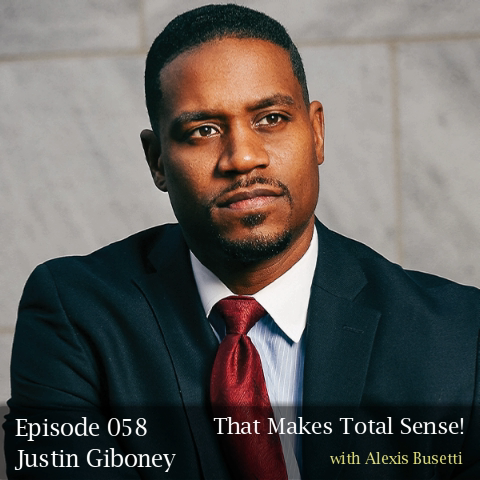
Speaker 1 00:00:07 Welcome to that. Makes total sense. A podcast dedicated to exploring God's generosity and justice. I'm Alexis resetting the Christian, aiming to ask good questions and encouraging you to do the same. Every one of us is wired by God to live out generosity and justice, but the house sometimes alludes us. That makes total sense is a way for us to get together, posture ourselves as learners and challenge one another to practice generosity and justice in a tangible way every day. Hey everybody, I'm here today with Justin Givani. I am so excited about this conversation because as I was telling Justin right before we came on, I did not find the organization that he co-founded soon enough. And that is the and campaign, which we're going to get, get to and talk about here in just a minute, but I'm here with Justin. He is the cofounder of the ad campaign. He's an attorney, he's a political strategist. He has also been, uh, served as a delegate for the democratic national convention. And he is the coauthor of a new book, compassion and conviction. This is the AAN campaigns guide to faithful civic engagement. Hey Justin.
Speaker 2 00:01:26 Hey, how's it going? Thanks for having me.
Speaker 1 00:01:29 Oh, I'm so glad you're here before we get started. I would love it. If you would tell us what you want us to know about you and then jump into what you think it's helpful for us to know about the AAN campaign as an organization, because I feel like giving that framework for what you guys do, what your mission and vision are, will help frame this conversation that we have about the book and about the civic engagement from this point.
Speaker 2 00:01:57 Oh yeah. About me. Um, you know, I'm just someone who, like you said, I'm not, I'm an attorney political strategist, but really someone who is really passionate about the intersection between faith and politics. Uh, as I look back over my life, I think, uh, very strategically placed me in positions to, uh, to speak on this issue, um, to, to help people through this issue. And, um, you kind of use my own struggles as a testimony to help people deal in better ways with politics, better ways than ways that I haven't always done. But now I've kind of come to understand. Um, and then the ad campaign, you know, the ad campaign is a Christian civic organization. Uh, we are focused on number one, raising civic literacy among Christians, so that they understand the process better and can apply their, their values better. We wanna, we want Christians to frame the issues, the major issues for themselves rather than have those issues framed by a party or an ideological tribe.
Speaker 2 00:02:53 Uh, we also want to make sure that there's representation. Uh, you know, a lot of times you just don't see people have a high value of justice and moral order, and we want to bring that representation kind of to the forest. So we're always writing articles, always putting out content. Uh, but there's, there's an underlying objective. I think of kind of reconciliation within the church. Uh, the church needs to be United and we think the way to bring the church together is by not just addressing the race issue, but addressing politics because we think politics and race are coupled in a way. And in order to get over one, we need to kind of address both. And so we want to bring Christians together based on biblical values to address things that I think ideology might keep us from really addressing in a biblical way. And then lastly, giving Christians on ramps to advocate for issues that we think our faith in the Bible speaks very, very clearly to. So whether it's the poor, whether it's, um, religious Liberty or, uh, the abortion issue, we think that Christians biblical Christians should be able to come together and advocate on those issues. And that will again, help bring the church together.
Speaker 1 00:04:01 Yeah. Thank you so much. I'm gonna, I'm going to ask if you can go back a minute, do you mind sharing, um, I don't know that part of your story, but do you mind sharing a little bit when you said I haven't always kind of address politics in this way or I can help guide people through because, um, you guys have been, uh, at the end campaign, you have been, uh, kind of this light for me specifically that shows me things can be done differently. Things can be done inside of politics, not always the way that I have seen them, uh, in the past. One of the things that that really caught me is the question, are you too progressive for the conservatives and too conservative for the Progressive's right. There's a lot of people, I think, especially since 2016 and even in 2020, a lot of believers are feeling kind of the frame that the phrase I've heard is politically homeless. Right. Um, and so I'm wondering if, have you always felt politically homeless or was there something in you that you've kind of felt a shift?
Speaker 2 00:05:06 Yeah, I've always had a, an issue issues with the party, but I haven't always felt politically homeless in ways that I probably should, or at least felt a tension within the party in ways that I should. So one of the things, as you mentioned is we're trying to get Christians to make sure that their identity is not in their political affiliation, right. That doesn't mean that they can't be affiliated with the party. It just means that there's a level of separation that allows you to critique the party and not be indoctrinated by a certain party. And I can't say that's always the case for me. I mean, um, I grew up in a family that was very much a kind of working class family that always voted Democrat. Uh, it was just something that was assumed that we would do based on, you know, stances on civil rights and things of that nature.
Speaker 2 00:05:50 But as I went on and time went on, I found that my opinions on other issues were shifting not necessarily in a biblical way because my identity was so closely tied to my party. And I really had to look in the mirror and say, this is not the way that it's supposed to be. You're a Christian. And you have to find a way to be Christian first. You know, I can't change my opinion on certain issues because I'm seeking validation from this ideological tribe or from this political party. And so I know that that's not something I always did as somebody who is a practitioner who's been in politics. I did not always practice politics in a civil way. I did not always show my opponents respect. I tell people very openly that I think we were probably some of the first, uh, trolls before Twitter even came out.
Speaker 2 00:06:32 We would, you know, feel, um, message boards would just all kind of just stuff that, you know, a Christian shouldn't be saying about other people, whether it's true or false. And so I had to, you know, kind of repented that I had a, um, a political opponent who I saw one as, Hey, how you doing? And she was basically like, you know, I'm doing much better now that you guys aren't on my back. And it wasn't a like, and there was, I could just tell the hurt, right? So I was like, man, that really hit me to save me. And these are people's lives. Like you can't just do whatever it takes to win. And that's where I was when I first got into politics, but I had to learn to get away from that. So I think in those two ways, making sure that I, I interact with others in a more Christian way, but also that I'm not that my identity is not in my party.
Speaker 2 00:07:15 So I think Christians should be very clear on once I tell you what party I'm in, don't assume too much from that, because my party's just a tool that doesn't mean, I agree with everything that's in the party, because if you took me, you, you might think that I was approachable. So you might think that I didn't care about religious Liberty. Well, I do. And I advocate, uh, for, for both issues, you know, for sanctity of life and for religious freedom, you wouldn't know that by just knowing that I'm a Democrat. So I think our party should say less about us than, than we sometimes assume that does.
Speaker 1 00:07:42 Yeah. That's actually one of, some of the first notes, um, that I had that I wanted to ask you about. So I want to go, I want to go back to that. Um, but first if it's okay, I wanna, I want to mention the book, um, because like I told you before, I'm, I'm like so close to being finished with that. It's a, it's a brief read. It's it's really good. It's it's um, it provides a framework, right? I feel like it's, it's this, we can all benefit from the framework that it provides, but what, what really struck me when I was, I was probably entering chapter eight ish or something was, I know, well, let me back up, first of all, the release of this book is like stupid, timely, right? Like it's, it's ridiculous. The release of this book is, is, is ridiculously timely.
Speaker 1 00:08:39 But I say that because I know as smidge about the publishing world, and I know that you didn't turn your main new script in, in June for this July release or whatever, whatever it was. Right. So, so I want to say that specifically to say that I feel like framework that this book, compassionate conviction gives us as believers. The phrase that kept coming to my mind was we need to go back to what we already know. This book gives us a framework of the way I'm going to, I don't use it often, but I'm going to say a, should this, this book gives us a framework for the way we should be operating inside of politics as believers. And right now, with as chaotic as the political climate is and feels right now, it's really hard to discern how we should be operating. So I feel like if we could pause on all of the emotions that we're feeling on all of the news that we're consuming on all, if we can pause and go back to a book like yours and say, okay, before things got super, super crazy, and in my face all of the time, this is how I should be operating.
Speaker 1 00:09:51 Right? And, and two of the things I took away from that initially were number one, we have to be true to the gospel. And number two, we have to be confident in who we are in Christ, right? Like you talked about that at the very beginning. And so if we're true to the gospel, even when our party sways, then we can, we know what the truth is. You talk a lot about truth and love in this book. And then if we can be confident in ourselves and who we are in Christ, then we don't have to seek our identification from a political party or a tribe or some other group that we've decided to affiliate ourselves with. And so I just, I guess all of that to say, I want to say thank you for this framework, because I feel like in the midst of the chaos, we can kind of go back and then this book leads us back to the scripture, right. Where we can just say, this is where we kind of should be operating out of. Um, so can you talk about maybe those, those few things, number one that were, were to be true to the gospel, number two, being competent in who we are in Christ and then, and then begin to talk about what this love and truth together means and looks like in the political sphere.
Speaker 2 00:11:12 Sure. Um, I will start just by saying that the gospel should impact every aspect of our lives, right? It's not just something that we do in church. It's not just something we do when we fellowship with others, the gospel should impact everything we do, including our civic witness, including how we engage in politics. And I think that's one thing that Christians are kind of missing. Uh, you know, we go to church and we feel all that, but we're not necessarily sure how to apply that to what we're doing civically to what to do in politics. And I think it's exactly what you said. We need a re application of the gospel because I don't think we have a clear understanding of how it applies to everything that's going on today, because everything that's going on today can seem so important. And so urgent that if we do something different, we're giving the other side and advantage.
Speaker 2 00:11:56 And we just have to stop thinking about thinking like that. And really think as Christians to say, it's not about me necessarily winning at this moment, although I want to win. I mean, look, I'm a political strategist. I never go out to lose. I'm always going to strategize to win. But sometimes the witness that we put out into the world is more important than winning. Right? We talk about the win, the witness over the wind and Christians have to have a, a, have to have the vision. We have to have kind of what I've called, uh, um, kind of the moral imagination to see past the moment that does not mean that we're not in the moment. That does not mean that we don't care about the moment, but if we're captured by the moment, if we're a slave to the moment, there's always something that the moment is hiding from me.
Speaker 2 00:12:42 And so Christians have to be able to say, yes, there's a lot going on. Yes, abortions are critical issue. Yes. Voter rights are critical issue. How can I represent those issues, but not in a way that's taking away from my witness because ultimately our faith is in God and that he's going to make things right. We're just doing this in service to him. We're doing this to be faithful. We're not doing this as humanist because we think we save anybody. Right. Um, we think we know we can do good. We know that God puts things in our sphere of influence for us to, to, to make a difference than to help people. But we have to be able to put it in perspective. And that's, that's what's needed at this time because everything's so urgent. We have this mob mentality politics, which says, you have to do this as hard as you can right now, as mean as you have to be, or else it's not going to work.
Speaker 2 00:13:30 And that's not, that's just not what the gospel says. We're playing, we're playing a longer game than we. And we often admit when we're, when we're talking about politics. So that's, that's the one thing that I would say as far as perspective when it comes to seeing how love and truth come together, that's the, as you said, the basis of our, our framework. And it's really what we think is a biblical framework. I think the great thing about the ad campaign and why people kept trying to kind of catch onto what we're doing is because we didn't really create the framework. We just put language to it. We just articulated something that a lot of Christians were already feeling. So when you hear it, you're like, that's what I was thinking. I just never said it like that. Right. And that, and that's just because the gospel is, you know, once you're familiar with it, we just wanted it articulated in this, in this space and at this time, um, and really, you know, it comes from a <inaudible>.
Speaker 2 00:14:18 Paul is talking to the church of emphasis is a church that's gone through a lot of suffering and has a lot of false teachers trying to infiltrate the church. And what Paul tells them is he said a mature Christian, regardless of what's going on, regardless of what teachings are going on is always able to speak the truth in love. And when I read that over and over, it's like a light bulb went off, right? The spirit kind of showed me to say love and truth, that these things go together, right? And that's exactly what we're not doing at politics. You know, folks who supposedly care about compassion and justice, you go to the left, but that means you need to surrender some of your convictions, folks who care about more order and things of that nature, they go to the right, but that needs, you need to surrender some of your compassion and Christians can't do that.
Speaker 2 00:15:03 Christians, I believe can choose a political party if they're using it as a tool and not part of their identity, but they can't choose between love and truth. So when I decided to vote for, to be in the democratic party, that does not mean that I get to say, you know what, sanctity, life's not that important anymore because I'm focused on this race issue. Or if I, if I choose to be in the Republican party, I can't say, well, racial justice doesn't matter that much because I only care about the same device issue. No, we have to care about both. And we have to show the world that you can care about loving too, because the truth of the matter is you can't really have love without truth, and you can't have truth without love. I tell people on the left all the time, you know, with this postmodern kind of idea, that folks around that people create their own truth.
Speaker 2 00:15:45 And there is no absolute truth. Well, if there's no absolute truth, then you can't call people to justice. You can't tell somebody that they have to do justice. If there's not a unconditional timeless standard for justice, that applies to everybody. Because if it doesn't apply to everybody and I can have my own conception and my own truth about justice, how can you tell me how I need to treat other people? Right? So even Progressive's need to understand that without absolute truth, you just don't have the justice that you want to call people to. Uh, that's how love and you know, that's how truth and, and, and love work together. That's how justice and more order work together. And we need to see that as Christians, if we're stuck on trying to be conservative or stressed, stuck on trying to be progressive, that we're not going to be biblical because both of those ideologies are made by human hands and they have limitations and they have very serious flaws. And if we're too close to them, we're not going to be able to see their flaws.
Speaker 1 00:16:41 Oh my goodness. So I've so many things floating around in my head right now, but this was the, this was the, the stopping point for me. Um, I'm going to read a quote and then I would love if you could, if you could kind of elaborate, fill in the middle for us. So, um, there's a section in chapter three, compassion and conviction that you, uh, you authors, uh, you call it a false choice. So I'm going to read the questions, skip the middle and ask you to fill that in and then kinda read the summary at the end, because it was the, the summary, just stop me in my tracks. So this says, this is these questions that we often get asked, right? Do you advocate social justice or family values? Do you support women or are you against abortion? Do you love the poor or do you believe in personal responsibility?
Speaker 1 00:17:42 And then you say, instead of answering the questions at the beginning of this section, as they were posed, Christians, should I support social justice, morality and family values? I don't affirm ungodly behavior nor do I hate the individual. I affirm the human dignity of all people. I love and care for the poor. And I believe in personal responsibility. In other words, proper framing allows us to embrace the love and truth of the gospel. Christians can reject false choices in politics without walking away from civic engagement altogether. And so you covered part of that, but I'd love it. If you could go into, what does that look like in civic engagement? Because these conversations are some of the ones I've had at the pool this summer, you know, because we start talking about this. People have heard a certain episode on the podcast, or they see a book I'm reading and we start to have, because they have an assumption about me because of something that they know maybe politically or ideologically or church wise. And then they're shocked because of something they see that I'm reading that doesn't seem to go along with, you know, what I should be focusing on basically. So I've had these conversations personally, but what does that look like to civically engage in that way?
Speaker 2 00:19:07 Yeah, that's great. I mean, again, we have allowed partisans and ideological tribes to frame the issues for us. And when they frame the issue for us, usually they either leave out justice or they leave out moral order, right. And they say, okay, you got to choose between truth and love or more order and justice. And that's just a false choice. As an attorney, I can tell you if I frame a question the wrong way, or in a deceptive way, there can actually be two wrong answers. And so those questions that you asked there, wasn't really a right answer because the question was framed wrong. And part of Christian politics, as we see this paradigm shift, which the ad campaign thinks is needed for Christian politics, it will mean that we frame the issues for ourselves. And we say, no, no, no. I'm not going to choose between caring about women and caring for the unborn.
Speaker 2 00:19:55 I care about bolts. How can my policy, a prolife policy show that I care about both? Well, I can address maternal mortality rates in places like Alabama, Mississippi, and all that. I can address the issues that make some women feel like having an abortion is the best issue. And I can say that this child deserves to live. It doesn't have to be one or the other, but too often, we allow others to frame the issue in a way that we think we have to choose a side. So someone may hear you say, man, I care about voters voter rights. And they say, well, you're not a, you know, you're not a Republican anymore, or you're not a conservative in New York. What does it have to do with me? That means that has nothing. There's no reason that I can't care about voter rights and care about the sanctity of life or, and care about religious freedom.
Speaker 2 00:20:38 Why should those issues be separated? Why, why, why do you assume that if I care about one thing that Progressive's usually care about, that I don't care about anything that's conservative. It's because we've allowed others to tell us what our identity is and what we should believe based on their ideology. And that's what Christians have to get away from. When you look at a serious issue, you have to be able to say, okay, what's the compassion side of this issue? How can I be compassionate? But what do my convictions all say as well? And if, once you learn this framework, you learn how those come together. And they're actually the same thing that they're not separate at all.
Speaker 1 00:21:13 Can you talk about, I mean, you don't have to spend a lot of time on her, but man, Fannie Lou Hamer, can we just go there for a minute? I, uh, I actually, it was crazy. I had been hearing her name a bit and um, then this past quarter at school, I was given an opportunity. We had an assignment where we had to choose a, uh, choose a historical figure and she was actually on the list. And so I jumped on it and, and studied her life. And I was just dumbfounded because as you repeated that phrase again, compassion and conviction, I thought that's her, like the argument could be made. Who's going to, who's more compassionate. Who's more kid who has more conviction about what she was doing. So a lot of people may not know who she is, but you, you write about her in the book a bit. Can you tell us because I feel like she encapsulates a lot of those, um, a lot of the essence of what we're talking about.
Speaker 2 00:22:13 Yeah. Uh, Fannie Lou Hamer is probably the consummate kind of grassroots, um, advocate. Uh, she grew up in Ruleville Mississippi. Um, you know, didn't have a lot of my parents were sharecroppers, you know, grew up, you know, uh, sharecropping for a good portion of her life. And then a civil rights organization came down and talked to and was talking to them about voting. And it was interesting because she talks about how she joined that group. And then she's had to demystify, voting to people in her area. A lot of people knew they had the right to vote, but because they hadn't been denied it for so long, they really didn't think that they could impact anything. And so they had to tell him, no, you can make a difference. You can even run for office or get the things you want if you vote. But they needed people to explain it to him.
Speaker 2 00:23:00 Cause it just wasn't real specific to them. So she was someone who fought for civil rights. I mean, put her life on the line for civil rights, but also was pro-life. She was someone that you could not put into some of these partisan boxes that they try to put us into today. And I think, you know, she is like the patron Saint of what the ad campaign is trying to do with compassion and conviction. Uh, she had been through so much, she's not one of these people that you hear talked about a whole lot when it comes to the civil rights movement, but the civil rights movement was nothing without somebody like her. I think maybe, maybe second to dr. Martin Luther King. She was one of the top orders in the movement, but she, you know, she just didn't get for whatever reason it could be sexism.
Speaker 2 00:23:41 Other reason you just don't hear about her enough. One of the things that stuck to me about Fannie Lou Hamer and there's so many different stories is she was chap traveling around the South and she was, uh, promoting voter rights. She got pulled over and got beaten by a cop for no reason just because she was trying to get people to vote. And she got beaten to where she could almost couldn't walk. And when somebody asked her years later, or a little bit later, how she felt about the officer, she said that I feel sorry for him. I forgive him. I feel sorry for him because he's sick. And she said that America is sick and they need a doc. And I think what that says about her was all that she was going through. She was Christian enough. She had strong enough faith to love somebody who would just be there for no reason.
Speaker 2 00:24:30 And I think when we have the type of mentality that she had to be forgiving, but to also be tenacious and fighting for people's rights, see some will think if I'm forgiving and I'm civil, that means I'm weak. There was nothing weak about family, nothing at all week about her. She was tenacious. She was passionate. She spoke truth to power and she was loving and she upheld biblical values when people in her, other people in our party wouldn't. And so she, to us, she just a major, uh, you know, and what hurts me and it, you know, I get emotional about this because she died thinking nobody would ever ever know the work that she had done. Um, and we're I'm I know me and I know several other, my friends are, are focused on making sure that nobody ever forgets.
Speaker 1 00:25:18 Yeah. Thank you for that. Um, I'm sorry. I didn't know that was going to be emotional for you, but, um, she was powerful. I mean, she was, she had a powerful voice. Um, she had a powerful, she had a powerful physical voice and she had an impactful voice. Um, one of the things that stood out to me about her life was, um, the garden that she had, right. When she was just th the compassion, just to feed people who couldn't feed themselves, um, for no other reason than, than, um, it was the right thing to do, right. She didn't want to watch anyone and be hungry. And, um, and when she, and, and when she realized there was a thing to do, she just did it. I was, you know, it was, it was this instantaneous thing. It didn't look, I don't know what was going on in her head, but it didn't look like she was weighing all of the, all of the pros and cons and this and that.
Speaker 1 00:26:18 And should I get in, she just jumped for it and that's really admirable to me. Um, also, so, um, thank you for that. I'm wondering just a few, few other things that I'm, that I'm hoping you can at least touch on. And, and one of them is this, and I feel like they kind of go together, but this idea of, of having partnerships as believers, partnering with people who may not be believers, but may, um, hold the, hold the truth on, on a certain issue or on a certain aspect of society. Um, and then kind of that going into this tribalism, right. Um, of how that,
Speaker 2 00:27:05 Mmm
Speaker 1 00:27:08 We've. We talked about it at the beginning, but kind of how we've let our convictions and other people kind of on the other end define like who we are. So I guess, I mean, they're not necessarily opposed, but how do we go into, uh, partnerships with people we don't necessarily consider to be our tribe, but then how do we let people that we might consider our tribe not define who we are and what we do and how we go about, uh, living out our convictions?
Speaker 2 00:27:35 Yeah. So, I mean, there are certain Christians who don't want to partner with anybody else, and then certain Christians who partner with other people and get carried away into that ideology or whatever so far that they lose it. And that's what we're trying to prevent. We're to say, number one, we can partner with nonbelievers. I mean, you see throughout history, whether it's civil rights movement, abolition, that we've been able to partner with nonbelievers and get good things done. And that's because of common grace, right? Because of common grace nonbelievers can do good deeds in society. And so we can partner and through that partnership, I mean, you never know there's evangelism, all other things that can go on there, but we shouldn't be afraid of it. We should be cautious because we have to make sure that we know exactly who we are and where our beliefs are, but also where our objectives overlap and where they diverge.
Speaker 2 00:28:23 And I think one of the major problems that we have, especially with young people sometimes, and in the justice movement is that when you partner with someone, you don't necessarily see it. And we call it co belligerency and that, and that's Francis Shaffer. It's not something we came up with, but, um, you get, you get into this partnership. You love the cause, but you're not noticing that you're getting carried away on issues where you shouldn't agree with it as an organization where they may have a different sexual ethic. They may have a different family effort. They may see the sanctity sanctity of life different. So if you enter into a conversation and you say, you know, I want to let people know the dignity of black lives. I want to protect them in the criminal justice system. Well, that shouldn't go into you now being pro choice and you now having a different sexual, right. That can happen if you're not careful. And so we want to tell Christians is to say, yes, you can engage, but you need to know who you are. And you need to know where your values diverge so that you don't get that you wouldn't go into unbiblical positions because you weren't ready to kind of draw the line.
Speaker 1 00:29:24 Right. And, and don't you think that sometimes this is kind of going back to maybe what, what you touched on in, in your life. And I touched on briefly in mind is that let's say, you do say, yes, I am. I am with this organization's stance on maybe black matter. We're saying, yes, I agree with this. I agree with their reforms needed in the criminal justice system, you know, all of this stuff, but then we can, as you said, keep going down that path, keep walking with people who, where, where they, where we diverged. And we shouldn't walk on their path, that we should keep, you know, keep close to the gospel. But then also this can, this can cause some issues between believers, right? Because someone says, okay, well, you're a Democrat. I can't really hang out with you. You must be crazy. Or you're going for black lives matter. You must be whatever or you're voting for. So, and so that must be crazy. And then you might go, well that I'm walking with them here because I see something needs to be done, but we don't get to paint each other with a broad brush and say, right, because I've partnered with them on X doesn't mean that I am with them on Z.
Speaker 2 00:30:37 We have to be clear. Exactly. We have to be clear about that. We have to. I mean, and some people don't want to do it because they think you have to be clear on that because I think Christian should be suspicious. If I see someone who is so Republican, that I don't see any difference between them and other Republicans. They're just a generic Republican. That's problematic. I think Christian Republicans and Christian Democrats should say, I'm in this party. I use it as a tool, but here's where I disagree with where the party is going, based on my Christian convictions or someone who's kind of, or even when you're supporting a certain system or our concepts, right. Or idea, whether it be critical, race theory or something like that, you need to explain what you support and where that theory that's made by man's hands goes wrong.
Speaker 2 00:31:20 And Christians that sometimes we just don't want to do that. We want to act like it's. The perfect party is the perfect ideology is the perfect concept. And we don't want to say, but it does fall short. All of them fall short. And when you're open about where they fall short Christian Christians, that may be a little skeptical now can hear you out because they know you're not a doctrinated. Um, and so we need to be more open to doing that and showing that we've thought critically, even about some of the things that we're promoting
Speaker 1 00:31:47 Set, you said the word and I was, and I was just about to go there. Can you talk to us about indoctrination?
Speaker 2 00:31:53 Yes. Yeah, sure. I mean, indoctrination, we see it in the Bible. We see it at many other places is basically, um, accepting somebody else accepting what somebody else says uncritically. So it's accepting and a belief without questioning it. And that's so, so often what happens in politics once the people that we look up to in our party make a decision. We just accepted as that's the way it's supposed to be. We're the good guys. And since the good guy said this, that's the way it's supposed to be. That's indoctrination. And I think a great example when we talk about it in the book is Daniel. And I think it's first Daniel and first Daniel, where the King says, Hey, eat my meat. You'll drink my wine. And Daniel says, no, I want to file myself. Right. This is a young, a young man who was smart enough to say, yeah, you're the King.
Speaker 2 00:32:42 Yeah. You're trying to endear me. And yeah, there's work I can do for you. But I know where to draw the line. And too often, Christians do not say that to their own parties too often. Christians who are running for elected office are Christians who are looking to come up in their jobs. Don't say, I want what you, what you have, but not, not like that. I can't get, I can't take it like that. And Christians have to draw that line. We have to say, regardless of what you're offering me, I can't go pass that line because I will not be defiled because my witness again is more than me winning this position or gaining this power or getting validation from you.
Speaker 1 00:33:19 Yeah. I mean, I feel like, like I said, if we could go back to this book and kind of like, just put our headphones on, right. And it's a law to, to the rest of the world, to the rest of the political climate that's going on right now and focus on focus on that kind of thing. Um, then we would be better off because, um, indoctrination is, is real. And it's very hard to recognize when we're inside of it, right. It's almost like we need like a smelling salt or something. Like, there's something we need a moment or a realization that the light bulb comes on. And we say, Whoa, I think I've just been following this party, this person, this movement. And all of a sudden, maybe we, we see there's a moment where we go, Oh, Oh dear. I can't believe you said that.
Speaker 1 00:34:13 Or, Oh my goodness. I can't believe they, they marched in this way for this thing or, or whatever it is. And, um, and maybe we can, you know, come alive to that. But I think that's why Christians need to be having these conversations with each other. And, and I feel like even sometimes we're becoming, we're separating into tribes within this. Right. I can't trust even what this Christian did about this because, you know, they believe in, in such and such or they voted for so and so, um, and so that indoctrination becomes really difficult to see. Um, and it becomes harder the longer we're in it, the harder it is to critically think about it. Um, and think about where our, um, where our convictions actually come from. Um, okay. I feel like we're probably need to wrap it up, although I feel like I could just take in all of the wisdom that you have for us, but I had a few other notes, but I'm going to ask you as we, as we start to wrap up, what, what would be the, the, the big takeaway you would have for us? And it doesn't, it doesn't have to be short necessarily, but, um, what, what have we missed talking about? What, what would you, if you were just having a one on one conversation with everybody who's listening and they're struggling in this area, they're a believer and they're struggling in this area of what, how to civically engage. What would you leave them with?
Speaker 2 00:35:42 Yeah, I would say that it's okay to struggle. I think it's okay to feel a tension between you and your party. Are you in an ideological tribe to where you just feel like I don't fit perfectly? I think the problem is when you are too comfortable, right. If you're too comfortable in your party and you're accepting all of that stuff, it's okay to feel the tension. So much of the Christian life is about a tension, right? A tension between, you know, what we want and what we're called to do. And so it's okay to live within that tension. You're not alone. And that could just be faithfulness that's, you know, you know, calling you into that tense and that's okay. And so that's what, that's the number one thing I would tell people and just have the courage to step away from any identity that's connected to your political affiliation, have the courage to say, you know what?
Speaker 2 00:36:28 I don't necessarily care what people are going to say about this because I have to be faithful. One of the things that we say is that to be a progressive or conservative on every single issue is actually very intellectually lazy, but even worse. It's not faithful, right? Because if I'm being conservative, when the moment calls for change and it calls for reform to reform things that need to be redeemed, then I'm being unfaithful. If I'm being progressive on issues that call for us to stand on the word, that call for us to stand on institutions and, and, and things that God has already said are good. Then I'm adding, you know, if I'm going to be progressive at that moment, then I'm adding to a world that's trying to reject truth. We can not always be conservative or always be ideologically progressive. We have to understand to be faithful. Sometimes calls us to be both. And neither party is going to tell you that most of these ideological trials, aren't going to tell you that because of your thinking, that way, you're thinking critically and you're making their job harder. And they want you to just kind of go along with what, with what whatever said. And so I would just say, take the time to work within the body, to have the conversations like you had before and have the courage to have a biblical witness. Now they conservative or progressive with.
Speaker 1 00:37:46 Thank you, Justin. That was that's amazing. Um, tell us the sides. Um, I'll definitely link the book and the, and campaign and, um, and your podcast, uh, I'll link all of that in the show notes, but can you tell us how we can, uh, how we can follow the work that you and the ad campaign are doing? Where can we see you on, on social and on the internet?
Speaker 2 00:38:07 Great. Yeah. So one, you can, uh, you can listen to our podcast, me and Michael, where who's our chief strategist have the church politics podcast and you, you can get that, you know, on either iTunes or other spots. And we usually do that once a week. And so that's a great way to just hear us apply biblical values to the issues of the day. You can follow us on Instagram and Twitter at, at a N D campaign at a and D and campaign. Um, and we are always putting out new, uh, content, uh, just to help Christians get through and messaging just to help Christians get through this moment. Uh, and then you can follow me at, uh, Justin. He given me just an EGI B O N E Y, uh, on Instagram and Twitter, uh, just for that type of messaging and content.
Speaker 1 00:38:52 Awesome. Thank you so much. And you guys will see when you follow Justin and the AAN campaign, um, these, these quick ans that just described the tension that so many of us are feeling, um, are profound. You can take, take one of these tweets that you see on, on Instagram or Twitter, and just kind of mold that over in your, in your brain. And, um, and it will just begin. I feel like to get us in more into the critical thinking it out of the indoctrination that is so easy to fall into. So I really appreciate, I know you guys have a, a civic, uh, organization, but I I'm tempted to just say thank you so much for your ministry, because it has, um, really ministered to me since I, since I found you guys. So thank you so much, Justin. I appreciate you coming on the show.
Speaker 2 00:39:39 Thanks for having me, Alexis. I enjoyed it.
Speaker 1 00:39:43 The links for all the resources mentioned in today's episode can be found in the show notes, music and podcast production by Seth obesity. Be sure to give us a review on iTunes and subscribe at your favorite podcast listening app, you can also visit
[email protected].