Episode Transcript
Speaker 0 00:00:07 Welcome to that makes total sense. A podcast dedicated to exploring God's generosity and justice. I'm Alexis resetting the Christian, aiming to ask good questions and encouraging you to do the same. Every one of us is wired by God to live out generosity and justice, but the how sometimes alludes us that makes total sense is a way for us to get together posture ourselves as learners and challenge one another to practice generosity and justice in a tangible way every day. Hey everybody,
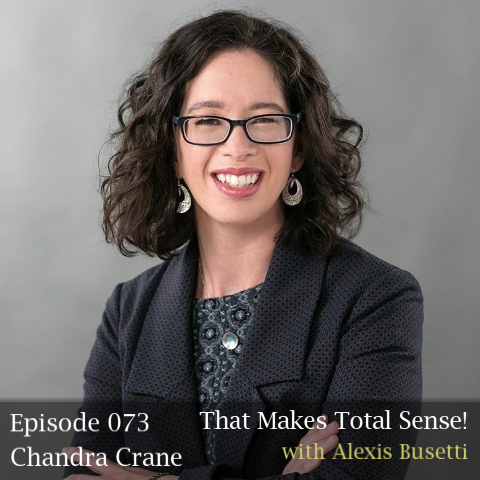
Speaker 1 00:00:40 I am just full disclosure, slightly emotional this morning, sitting across from Chandra crane because she has written a beautiful, beautiful book called mixed blessing, embracing the fullness of your multiethnic identity. And I was telling Shaundra before we pressed record that, um, we're, we're actually speaking a little bit before Christmas. And so I had just finished my quarter and I said, I should have read this a few days ago, but I finished it up this morning and therefore I am still processing what's in it. And so I'm hoping to kind of sit on the back burner as much as I can and let Shaundra speak about her book and about her story and about what that means in our relationship with Jesus. But I just wanted to go ahead and get that out there because, um, it's beautiful. It is beautiful. And Chandra has just done an amazing job. So Chandra, can you please introduce yourself and tell us a little bit about your mixed identity as you, as you refer to it and, um, and how you came about doing this book?
Speaker 2 00:01:54 Absolutely. So, as I say in the book, um, I appreciate that you understand that your listeners will need to get comfortable, right? Because this is not a quick byline. It's not a, here I am hearing MBN. Um, it's a lot of different things and it's complicated. Um, what I'm learning is that part of the journey and part of the beauty, I am ethnically mixed white American and Thai. So my birth father was a Thai national who came over to the United States for college, not my mom. Um, they went back to Thailand, um, but things just didn't work out between them, which is kind of its own heartbreaking story, culture, clash. Um, you know, in the late seventies, he wanted to be in Thailand and to be with his people and in his country. And she was very homesick for the States. So for the first five years, it was just the two of us shout out to single parents everywhere that is a ministry of its own.
Speaker 2 00:02:56 Um, and then met in married, the man who became my dad, my stepdad who adopted me when he married her when I was five. And he was African-American. So the majority of my childhood, I had a white mom, a black dad, and I looked fully, whatever that means, Asian. Um, and so that is very formative, also in a small town in New Mexico where the population is about half and half white and Hispanic. Um, so I grew up at the crossroads. I grew up in those borderlands as glare, and we'll do a, we'll say I grew up in that intersectionality, um, in a way that I didn't realize how much it was forming me. So fast forward, uh, 20 years I come on staff at the university and I read a book by Sandy Frazier called check, all that apply, and it blew me away. It was the first time that someone had said to me, so clearly and articulately, and also from a Christian perspective, because I didn't become a Christian until college.
Speaker 2 00:04:08 It would not be better if you had been one race, one ethnicity, if you were motto ethnic, it is actually so good. And so intentional that you are this way, that you are multicultural. You're a multiethnic. That is a part of your story and it's for good. Um, and it was the first time I heard, you know, the oft quoted Psalm one 39 applied to me as not a, well, yeah, everybody else, but kind of you, but as a genuine Nuno, this is U2. This is your story too. He, he created you, he knit you together and he meant for you to be who you are. So that was life-changing and beautiful. Um, the book eventually went out of print. So I started, um, harassing
Speaker 3 00:04:58 Lovingly harassing. Um,
Speaker 2 00:05:01 She who works for an, a varsity press who at the time was running the book table at one of our regular InterVarsity conferences. And so about once a year, I would see him and say, why is check all that apply out of prints? What is happening? And he would smile and his, his gentle way, and you'd say, well, you know, w we need the book for the next generation. And I would say, okay, well, how about a second printing? Tell me what to do in my very fierce, like, uh, my friends call me scrappy, do, um, you know,
Speaker 3 00:05:34 Um, yes. So yeah, I get it. Yeah, exactly, exactly. So I would say, what can I do? I'll, I'll write a letter. I'll, I'll be
Speaker 2 00:05:44 Phone calls, um, back when that was still a thing. And, and finally he said, you know, we need the book for the next generation. We can't just do a second printing because we need to tell more stories. There are things that are, have changed since then, demographically that we need a new book. And so then I started saying, well, who can write it? I'll convince somebody. And finally, um, another dear coworker at unity, he looked at me one day as I was doing my routine at the book table. And he said, why don't you write it? Which is the most terrifying and precious thing, right? That you could say to somebody who wants to be a writer who's I was starting to write a few articles back then starting to get her kind of her feet under her and forgot what it means to be a writer.
Speaker 2 00:06:31 Um, well, because God is over the top and gracious, uh, and ridiculous. And the way that he provides a way for us, it turns out that Al who was running the book table, um, was promoted to senior editor at IVP. And so he was my editor. So he said, Chandra, absolutely. I feel strongly. This is your time. And you are the one to write this book, let's start the process. Um, as we got to talk with Sonny Frazier and interview her, which was humbling and I was crying and she was crying. So I'm totally cool with a, with a sniffly interview. Absolutely. I'm here for sure. Absolutely. And she said something so precious. She said I've been praying for you. I've been praying for the person who would write the next book. Yeah, here we go. Um, and sustaining of her soldier on her shoulders, standing on her shoulders and being able to say I've had the Baton passed me.
Speaker 2 00:07:27 Um, just as a side note a little bit, I feel like that gave me such a heart for telling other stories, which she also did and check all that apply, but that was what lended, some of the urgency to, I want this to not just be my story, because I want others to stand on my shoulders in the same way that I'm standing on her shoulders. Um, I want to continue to pass the Baton to the next generation to more people. So that started a very long process. You know, the pool publishing a book is work and it's all the things behind the scenes that I had to learn about. Um, it's been a long journey, but put a powerful one and, and definitely have been sanctified hooray through the process. Um, and so yeah, now several years later, um, it's so precious. It's such a gift to say, wow. Or to hear people say to me, your book has blessed me. And just to see that dream, come to fruition and see something on book tables again, that is for us mixed folks.
Speaker 1 00:08:34 Oh, I, I have to tell you, I hadn't, um, I hadn't read, I haven't read, um, check all that apply, but when you were even just speaking of the impact that it had on you in the book, um, the first thing that came to my mind was my experience growing up of not being able to check all that apply. Um, and so I, uh, I graduated high school in 99. And so in the nineties, I was starting to fill out my own paperwork, right. Scholarship applications, or, you know, obviously college applications, but even just like, you know, taking myself to the doctor or, you know, something like that, all of these places where they ask you all of these questions. Right. And I, my dad is white. My mom is Mexican American. And so back then, I feel like it's maybe a little bit to a slightly lesser degree now.
Speaker 1 00:09:39 I don't see it quite as often. Maybe I'm not filling out as many forms, but back then it used to be white. And then paranthetically non-Hispanic so it was white. non-Hispanic was one box and then the next box was Hispanic. And I thought, I literally cannot check all of these boxes because I can't check. And sometimes I would, and I would kind of feel snarky about it. Like, I'll show you, I'm going to check the white, non, Hispanic, and Hispanic, and you get to figure that one out, you know, but it's like, you know, you've got all of these, all of these boxes that were, that were created by someone who isn't doesn't look like us, um, what, you know, what that community and, and all three are big. I feel like you, you, you are, you do such a great job of pointing out that even when things are unintentional, it still communicates something to the person who is mixed. It communicates something to us about our identity. And so, um, I CA I can only fathom how you felt when you read that book is probably the exact same way I felt when I read your book. And so I just want to affirm it. I, it is the next book, right? It is the next book for that generation, because I just felt so seen, even in your story, um, of that. Um, so can we start by talking about Jesus?
Speaker 2 00:11:08 Absolutely. Absolutely. It's a great place to start.
Speaker 1 00:11:11 That's one of the first, um, that's one of the first places where you, where you take the reader in the book is talking about Jesus' identity, different aspects of Jesus' identity. Can you elaborate, can you just tell the listeners what you tell the readers about Jesus? Yeah.
Speaker 2 00:11:34 What I think the mano ethnic world misses out on and that we miss out on when we buy into a mono-ethnic, formativity the assumption that everyone is just one thing is we miss out on the nuance and the complexity of Jesus. I love that he, the ultimate code switcher, he's the ultimate multi everything, because he's the God man. He was mixed is mixed for all eternity. I'm sitting on the throne, waiting for his kingdom to fully come, even right now in a Brown multi-ethnic middle Eastern body. Um, and I think that is so freeing to the reason we put each other in boxes is because we want to put Jesus in a box. And when we find most freedom and most healthy fear in, in looking at Jesus is when we don't try and put them in that box. When we see him as much as our little brains can for who he is.
Speaker 2 00:12:41 And so I, I loved doing the research and learning more about him and studying his lineage, which as you said, this is right before Christmas. And so of course the lineage of Jesus is something that we think about a lot. And I mean, I don't know how I missed it. Right. It's one of those where you're like, Oh duh, but you just, you, you read what you expect to read. You read what you've been told to read into it. The fact that he had non-Jewish form others, that God specifically ordained that for the savior, for the Messiah, the anointed one, um, that they have such powerful, beautiful stories. I mean, Bathsheba was most likely Hittite because she was your Ryan's wife and I've, I've done some of the research and I've talked to some of my very conservative Hebrew professors who had said, no, there's absolutely exegetical evidence that it was rape even, you know, considering the power dynamic, but also considering that she, what the text indicates is that she was in a very vulnerable place because she was just doing her, her washing from her menstrual cycle.
Speaker 2 00:13:52 Right. So she was not trying to attempt anybody into anything. And even if she had been right, the power dynamics, so here's this broken, horrible, heartbreaking story. But then God redeems, um, of this woman who is forced into the family of God by David, but then all look, it was, it was the Lord calling her all along, right. It was him making a way. And then she brings who she is as this non-Jewish woman into the way she mothers Solomon into the way she affects David into the way that the kingdom runs, um, rehab story, you know, there there's debate and there's discussion about what exactly her profession was and how shady she was. But we do know that she turned away from the gods of Canaan, but that doesn't mean she turned away from her culture. Right. And that's again, that's I think, I think we miss, um, no, she, she carried who she was as this former citizen of Jericho into how she parented, how she passed on what she knew of Yahweh's to her future children. Right. And so all of these stories throughout, you know, the faithfulness of Ruth, the Moabite illness, um, B the shocking story of Tamer
Speaker 3 00:15:13 Right. In the Bible, right? Yeah. Not a ton. Right,
Speaker 2 00:15:23 Right, right. And like, again, the nuance with which we read their stories, like on the one hand, what she did was a little shady. On the other hand, she was securing what was owed her by Levitical law. She was owed a son to take care of her and her father-in-law was doing her dirty. And so she did what she had to do as a helpless, but not so helpless woman in the middle East and out of that comes the savior. That's crazy. Right. Um, so all that is to say, um, I love that Jesus story is, is complicated and his lineage is mixed and it's not. And then there was this Jewish King and he was great and this Jewish King and he was great. Um, but instead it's this story of, of brokenness being brought into beauty. And, um, I was talking with my coworkers theme and he made such a great point, um, plug, plug, plug, he's coming out with a life guide Bible study from InterVarsity press in January about ethnicity, Steve Tomayo. Um,
Speaker 3 00:16:26 I saw that in the IVP email, I think. Yeah.
Speaker 2 00:16:29 Yeah. So I can try it. It looks so good and I get to work with him. And so I'm so honored to work with him and he's in the book. Um, I interviewed him for the book, so he, um, he was pointing out, you know, it's not just that Jesus history, Jesus himself was mixed, but the plan for the Jewish nation was to be mixed all along, which just blew my mind. And I've been mulling that over and thinking about that, like how precious that God designed his Holy set apart, people to bring the nations in from the beginning. He never had an intention for them to be ethically pure. He had intention for them to be religiously pure and all who we come and confess the name and go away could be grafted in to the Jewish culture and Jewish nation and the Jewish nation, um, which blew me away.
Speaker 2 00:17:20 And then when we think about Jesus and the complicated life he lived, I think like you said, I get a little snarky sometimes. I think it's fun that it's one more way that we realize Jesus poked at the ruling patriarchy of the day. Right. I think it's really special to say here's one more way that he saw the marginalized. He became part of the marginalized. He cares about the he's pointing out the dignity inherent and model of the dignity of the marginalized, and he's doing it in his body. Right? Like, Hey guys, I care so much for people of various ethnicities that I came in a multi-ethnic body, um, that'll preach. Right. That's really powerful. And it's, and it's such a gift. It's such a gift because sometimes Jesus seems awfully aloof to us. I think when we don't study him deeply. Um, and to know that he is an embodied multi-ethnic man who cares deeply and feels deeply, um, yeah, that gives our stories, their dignity and their impact. And, and even a little bit of a like, cool actually being mixed is not a leg up, but here's a special way I get to embody Jesus in my happens to me.
Speaker 1 00:18:40 Right. And I think that there's, um, in mixed identity and, and you capture this in the book is there's, there's a persistent tension, um, of, of having embodying a mixed identity. And so one of the things I thought of while you were talking is, um, and, and your, and your coworker Steve's comment, but is in the, in the story of the Exodus. Um, when I think about that story, I love to think about what some of some translations call some English translations called the mixed multitudes, right? So the people who came out of Egypt with the Israelites, what they were required to do was basically put their faith enough in your way, right. That they, that they presented themselves to the Israelites and said, I want to be in your house tonight when this plague is happening. And they left with them. So there were the Israelites, the mixed multitudes that went and left with them.
Speaker 1 00:19:45 They were rescued with them. They were redeemed with them. They lived with them in the desert, you know, I mean, presumably right. They, they traveled with them. They came out and they were all together in this community, which is so beautiful at the same time. I think it was kind of serendipitous. I'm reading through Deuteronomy right now, which I'm just going to say is just not my favorite book. It's difficult, it's complicated. There's a lot of things in there that make me cringe. Plenty of stuff. That's not PG, of course, but the, this week, while I was reading your book, one of the passages I came across and I, I should have cited it, but I didn't know I was going to mention it. Um, talks about that the, you know, how interim marriage was forbidden in, in the Torah and you can't marry a Canaanite woman and you can't wear a Moda Moabite woman into, to the 10th generation.
Speaker 1 00:20:44 You know, all of these things would happen. And I thought, Oh, but I just read because I had missed it too. I had kind of one of those dumb moments when I read your book of, I mentioned it to my husband, like, it's this earth shattering things. And he's like, yeah, babe. And I'm like, Whoa. Yeah. Like, you've been, you know, I've been talking about this multiethnic Jesus for all these years, you know, I'm like, I don't, you know, I'm like, no, I'm like, this is crazy. And so I'm like, just, I'm like, in my mind, I'm going, wait a minute. I'm reading about this. Multi-ethnic Jesus. And yes, this is true. And at the same time, like you said, his, his lineage is complicated because in the Torah it's specifically Outlaws marriages. Like Ruth's, you know, like this was not intended to be. And not only I would say Ruth's first marriage and her second marriage.
Speaker 1 00:21:30 Right, right, right, right. And I'm right. And yet she's a beautiful part of this story. And so I just feel like even in his embodiment of, of mixed heritage, we should, I think kind of feel the tension, um, that he, that he had in his physical body and in his, you know, traditions that would have been, that would have been with him, you know, um, in his body. So that was, that was so huge for me when, um, when you explore that, um, that his, his mixed heritage. Um, tell me about some of the other stories in the book specifically, I'm thinking when you, when you tell someone else's story, one of my favorite things was that you state how they self identify, and they're almost all different, which I loved, but can you talk about that? The importance of that, and maybe even how that morphs and changes for people?
Speaker 2 00:22:50 Yeah, absolutely. I mean, I think that flows really well with what you were just saying in the sense of I'm learning new things all the time and going, huh? How did I miss that all along? Like I'm pondering and will be pondering for the rest of the day, Alexis, the mixed multitude. I don't know how I had missed the weight of it. The significance of it. Again, I'm so busy worrying about the red seat, weren't they all, um,
Speaker 1 00:23:16 That's not a small
Speaker 2 00:23:19 Story, right? Yeah. So I'm hearing that. And I, I actually also just finished, uh, I think I read most of it, uh, reading Deuteronomy. It was one of my last classes that I took for seminary. I had to write a paper. Um, I actually wrote the paper on the living and the laws for the cleansing after childbirth and the menstrual cycle. And actually how there's a lot of dignity inherent because of that tension. Right. Of this acknowledgement. That just because something is unclean doesn't mean it's dirty just because something's unclean doesn't mean that it's sinful. Right. And so I think that ties into this idea of, yeah. I mean, Ruth's marriage was outside the letter of the law, but was apparently within the spirit as it was embodied in Jesus. Right? So all these things I'm learning, I love these conversations. I love talking with people and hearing their stories.
Speaker 2 00:24:12 And when it came time to finish, um, the, the second draft and really turn everything in and put it down, I made sure to email every single person and say, here's a screenshot of the snippet of how I'm featuring your story. Do you think it fits right? Because these were all interviews that I did hour long interviews that then I was calling some of the best quotes, which there were so many amazing quotes from people, um, to put where I thought they fit, but I wanted to make sure, you know, this is what you said. And that people, a couple of people came back and said, actually, you know, I prefer this, but also to say, is this how you identify? Is this how you introduce yourself? Um, and I did, I loved how diverse it was because I think that is a mixed story.
Speaker 2 00:24:54 That has been the freedom for me in reclaiming the word next. Um, so I'll, my editor was teasing me and saying, um, I said something in an original draft about, you know, whether you're just starting to realize that you count whatever that means as mixed or, you know, you've written a book on the subject and he was like, Oh, that sounds kind of arrogant. I know what you mean, but let's take that out because also there are like three of you, so that's a pretty exclusive club. Right? So in, in the, in the terms of breading it as a believer, right? So Sunday Frazier wrote check all that apply. Brian Bantam wrote redeeming mulatto, which is also an amazing book. And that really, as I was reading his work and pondering just the title, even like, what does it mean to redeem a term that was used for evil, but God intended for good, right.
Speaker 2 00:25:47 And so mixed. I used to call myself a Catholic a lot more than I call myself mixed. But when the Lord gave me the title, cause I really wanted a good punny title, like check all. Um, and I wanted something that was meaningful to also had a little bit of, of the word play. Um, and so once I started really identifying with the word mixed, seeing how it allows for the fluidity and, you know, some mixed folks are not wanting to identify as mixed and that's great too. Right. That's fine too. But there are a lot of us who have chosen to redeem a word that was used in a very derogatory way, you know, mixed breed, um, and say, no, actually this is good because the norm and the healthy thing is not Moto mixed is actually a large part of our reality. It's been a huge part of the reality, you know, I've had white folks be like, aren't we all?
Speaker 2 00:26:43 Well, no, uh, yes, sure. You have, you have scotch Irish, uh, Welsh heritage and that matters. And actually you are blessed whoever you are, the fictitious person when you dig into it, but it doesn't affect your everyday life. Right. And it doesn't cause that tension within you, that it does not just for people of color, but mixed people of color. So in thinking of what does it mean to be free to identify? Whichever way I feel is best, whichever way God has given me to identify. Um, what's really powerful. And just to say for me, if this time mixed really sums up the place on that, of being okay with nebulous things, enjoying the fluidity of life, being willing to say I don't have all the answers, um, that's been hugely powerful and I'm so grateful because another amazing coworker, I have so many amazing coworkers.
Speaker 2 00:27:38 Um, Jen Hollinsworth, I included her four postures model, um, that she was developing in the book. And then what a joy to have those categories, like she says not to tell us where we're supposed to be, but just to help us make sense of where we are at any given time. Right? So, so the first posture being followed security posture, where you identify as mono-ethnic and I had to do a lot of repenting to say, that's actually, okay, there's an unhealthy way to do that, but there's a healthy way to do that. And I think for a lot of us mixed folks who are black, white mixed because of skin tone because of the world being the way it is that for them to identify in solidarity, as black as African-American makes a lot of sense, and they're doing it with joy and with health and with power, with the strength of Lord.
Speaker 2 00:28:32 Um, the second one is, is, Oh, I have to look at my list and go, okay, I'm in seminary. So Jen had these categories and I like honed them and sharpened them and made them all start with S um, because you know, my preaching class trained me far too much. So the second one I have written down is the shifting identity. And that's the code switching. That's the one that made the most sense to me. I think when I was younger, like, I'm this one way about this? Another, because all humans actually quite switch, right? That's actually not that unusual. Um, I think I mentioned in the book, we don't wear ballgowns to the gym. You know, we don't, we don't talk to a courtroom official the same way we do to our best friend. Um, so actually shifting identity makes sense. And for some of us, that's, that's our natural inclination.
Speaker 2 00:29:20 Um, I definitely code switch when I'm with my black family, um, which my mom thinks is hilarious. Cause then I call everybody ma'am and sir, and being raised in New Mexico and in, you know, this culture where it's very chill, she thinks that's hilarious. Um, the third one is interesting because I think it's, it was, it used to be kind of a colorblindness, but I think again, there's an unhealthy and healthy way, right? So the unhealthy way is to, um, substitute something other than ethnicity because you're colorblind and because at the city doesn't matter because we don't see race, um, in a way that is basically just white, it's basically just white normativity. Um, but the, the way that I think is beautiful and the Jen has brought out is to do it as a form of respite and then a form of self care and as a form of fighting joy.
Speaker 2 00:30:11 So my girls are in girl Scouts, that's a huge part of their identity. And so when they're not thinking directly about their ethnicity, that's okay. They're not denying it. They're not putting it aside. They're just stepping into a different space. Um, and so I think that's a beautiful antidote to colorblindness to acknowledge it sometimes. I mean, white folks get to be something other than ethnic, so, right. So it's okay. It's okay for people of color and especially mixed people to choose in a healthy way to step into that space. The last one is the singular identity. And honestly, I also had to repent away from idolizing that, right, this blended, this, um, everything, um, a hundred percent, this a hundred percent that, which is really untenable. It's, it's impossible to keep that up for too long. It's not a healthy goal. It's not something we can achieve this side of the new heavens new earth, but there is some good in it. There's some beauty in it being a loosely held goal. And it being, um, as Stephen Garver would say, approximate justice, right. A sense of, okay, um, this is what we're hoping for. We just need to do it in a healthy way. And so that sense of what does it mean to combine different, different parts of these cultures that are mine and they all belong to me into me, into who I am. So I think there's your question. Yeah.
Speaker 4 00:31:37 So yes, that did, that did answer the question. And that was really that part of the book was actually really another part that was like freeing and affirming to me because the reason I brought up part of the reason I brought up the identities, um, and, and each person's story and their own self identification is in part because I am one of, and I know it's not only mixed people, I've spoken with some of my friends who are mono-ethnic, but, but usually people who are not mano ethnically white or black there's there's in this space in between, right. So native Americans or Asian-Americans, or, you know, um, have also been one of the people of whom this question is asked, and that is the, what are you question? And to be able to hear someone say, however you answer that is okay, like it's an acceptable thing, because I think part of it is the first time I was asked that question was when we had actually moved out of state from our little small town.
Speaker 4 00:33:01 I grew up in small town, Oklahoma, which is significant, mainly in that it is the same town where my parents still live. Now, my mom still owns a business there and my parents were, I mean, my dad moved there when he was five and my mom was born there. And so in that kind of small town, and I really favor my mom. And so in that small town, even in high school and I was working at the, okay, this is really going to date me, but we used to have stores where we sold physical music. Okay. Yeah. Like CDs were kind of new ish and also physical books. Um, but you know, we sold all of these things together. And so I worked there as a teenager and I would have people who were my parents' age come. And if I had never met them, they knew whose daughter I was because I favored my mom.
Speaker 4 00:33:55 So I say that to say it wasn't, I didn't ask, I didn't get asked that question. I don't think it was because I was mixed. I think it was because of our community. Everyone knew kind of what I was or who I was, because they knew my parents. But in sixth grade we moved out of state to Indiana, which is largely white. We lived in suburban Indiana for my dad to go to grad school. And it was, I mean, gee was probably the first week of school. Right. The first time someone says, what are you? And it went, it was kind of like that, right. How are you? And I, I went home and I'm like, I don't even know what they meant like, and I was, so I said, I'm a person completely unprepared, completely unfamiliar for what that would even, you know, what that would even mean.
Speaker 4 00:34:51 And so I think part of it is kind of even this, like you mentioned, the unintentional pity sometimes even when it's unintentional, what does that communicate to the person that's on the other end of it though? Right. And to me, I think now I can reflect back and say, I think I had to answer with my humanity. Um, because it felt inhumane in the moment. I think I would say now it felt, wow, it felt inhumane. I thought, what do you mean? What am I we're we're I have a backpack on we're in the same school, we're in the same class. I don't understand what that means. Um, and so I, I just love how you are giving voice to all of those identifications. Um, whenever you do that, whenever you, whenever you talk about that. Um, but what about, gosh, there's so many different places I want to go with this, honestly, there's, there's just so many different places. Um, where do you think we should go next? Where would you, where would you like to go? I feel like, I feel like, um, I told you before we started this, I told Shaundra I'm processing this so much. My biggest challenge is going to make it not be a counseling session.
Speaker 4 00:36:09 We worked through all of my mixed identity issues. Um, and so, and so where do you, where do you think, what do you think is a really important part that we haven't touched on yet?
Speaker 2 00:36:20 That's a really powerful question. So it's complicated, right? That's like everything else. Um, I've, I've been pondering that lately, just as I've been thinking, what do I want to do next with the book, with this ministry that I have with this platform that I've been given? Um, and it's, it's complicated in part because mixed, mixed, mixed kids. Right? So especially when we think of black, white mixtures look, most black folks are mixed because of the rape of the rape of the enslaved, you know, by their quote unquote owners. Right? So that's part of the history. It's part of the history for native folk. Um, Asian women were brought over to be comfort brides. Um, you know, in some ways I think, uh, lat Latino people are one of the healthiest least mixed, but there's still a history of colonization. And, you know, there's, there's a lot of, there's a lot of brokenness, uh, represented in, in multi ethnicity.
Speaker 2 00:37:25 But when you think in terms of black and white, right, loving versus loving, we're just now coming up on kind of the second generation out of that. So for example, for S for Sunday, her parents were directly affected by loving versus Virginia and by the, their parents being considered legal. So now she has kids of her own. Um, but some of us, you know, depending on the generational gaps, you know, we're getting mixed kids of mixed kids and things, kids coming up. And so there is this sense of, well, are we kind of all headed toward beige, right? Which, which feels frightening for several reasons. Um, definitely mixed cells. It's, it's hot, you know, you see any, well, look, you see any of the aggravating commercials around the holiday time, especially for certain brands, which I will not name for various reasons. Um, and, and, and it's, it's lots of different shades of beige, right?
Speaker 2 00:38:27 And so it's, it's seen as less threatening to those who are not comfortable with people of color because, Oh, well, they're just being just, okay, it's seen as well. Can we present this as progress for those who want diversity and inclusion? Look, we've got page people. Um, it feels like a threat to the black bodies and Brown bodies who have already are working to throw off the vestiges of colonialism and of violence and of conquest. Um, it feels like it is in an unhealthy way. I think some white folks might feel like it's a threat to the purity, blah, blah, blah, that terrible specious reasoning of the white reus. Um, and so, yeah, beige is not the goal, but it seems to be coming, be becoming the norm.
Speaker 2 00:39:19 And so I think the question there for me is how do we celebrate diversity? How do we not settle for easy answers? Um, I quote, I think someone from the Pew foundation, maybe in the book, who's, you know, joking about this like paradise of biracial babies that are gonna save the world, you know, and how that's such a flawed line of reasoning. And it's such a flawed thing to want, especially from a Christian perspective. Um, and so I think at least in the short term, it is these conversations, right? It is this dialogue. It is empowering people. And seeing people be able to share their story, be able to find words that fit their experience no matter where they are from one day to another or for a lifetime, it is figuring out ways to de-center whiteness to fight against colorism, but also not go to the opposite extreme where part of the lie that the idea of multi-ethnic people being a threat is in that idea of a pure white race.
Speaker 2 00:40:33 Um, and ironically and tragically and understandably, I think when black and Brown folks buy into that, they're reinforcing that narrative. That somehow there is a white purity and there is a black parody in anything else other than that, as an operation. So having these conversations, looking at our own mixed, mixed kids. So you and I both have these children where I say this in the book and my 11 year old is reading it. And I don't know if she's gotten to this part yet. And so I'm intrigued to see how she takes it. I do feel sad that they are less physically, genetically Tai than even I am like, I feel a longing and a sadness for them in that. Um, and so we're trying to, well, we're all trying to learn tie together cause I didn't learn Thai as a child. Uh, and it's going poorly.
Speaker 2 00:41:32 Ty has five. So one more than Mandarin. I cursed at my grandmother accidentally because I was trying to tell her something was beautiful and I was not telling her that something was beautiful. Yeah. It was awesome. Thankfully, the Thai have an amazing sense of humor and they just laugh everything off. Um, but yeah, like trying to figure out what it means to help my girls invest in this part of their culture that I don't connect with. But I think that backing up a little, zooming out a little, when we think about the revelations seven community, that's our goal and we don't quite know how it's going to work. We don't know quite how it's not going to just be all beige people. We know that over history, they're going to be a lot of black and Brown and a lot of pale Scandinavians, right. Because it's, it's the, it's the entirety of the church throughout history.
Speaker 2 00:42:23 Um, so there are going to be a lot of beach folks too, but somehow none of it is going to be diminishing the other. There won't be a hierarchy by way of contrast. There won't be a sense of, because I am this skin tone, I devalue others or ID based myself, um, that diversity of skin tones and cultures and languages, um, that will exist perfectly. Right. And so, and I'm, I'm even, I'm doing my own processing because this is such a good question, Alexis. And so I'm working through it and thinking, okay, okay. What do I hope for? Um, I hope that we will continue to root our thoughts about the here and now in what's to come. I want us to keep having conversations where we are wrestling with the tension we're dealing with. The complexity in the framework of the new happens in the newer.
Speaker 2 00:43:22 Um, I once heard a young woman say broken my heart. She was native. Um, I don't remember what tribe she was part of. Um, I don't think she had a sense of being mixed. I think she had both her parents were from the same tribe, um, talking about the elders wearing white robes and how it broke her heart. And it was hard for her to see herself in revelation because she wanted to work home colorful robes. And I wish, although, you know, nobody wants the seminary in, that comes up to them and it's like, well, actually the original Greek, but I wish I would've known at the time what I learned later studying that that word can actually be translated bright, not just white. So you know what, no, you get to wear your tribal robes someday and they will be bright. They will be blindingly bright.
Speaker 2 00:44:12 Right. Because when you think about it, our robes get washed white in the blood of the lamb, all, okay. So maybe there is some not necessarily metaphor, but, but some poetic license, some deeper meaning there other than just we all going to have Clorox right. On your clothes. Right. So I, I see so many ways in which we allow ourselves to get distracted by what we think cleanliness is why, what we think purity is about what we think, um, brightness and joy and light is. And I love that people of color and mixed folks, people multi-ethnicity disrupt those conversations and bring them back out of our westernized eyes, our mono-ethnic eyes, our, you know, far too comfortable, American eyesight. Um, so yeah, let me, let me phrase it. I think I, I really love thinking about what I want for my children, right? What I want for these two beautiful, mixed blessing girls.
Speaker 2 00:45:16 I want them to be able to embrace all of who they are and all of who everyone else is in a way that is a foretaste of the new happens in the new world in a way that hearkens back to the original garden, the Harkins back to what was good before things were broken. Um, I forget where, but I was having a conversation with somebody recently. And again, mind blown, right? Just thinking about, I think it was on Twitter, thinking about babble and how in a lot of ways Pentecost is the reversal of Babel, but the importance of not seeing that in this white normative way of, it's not that everybody starts speaking the same language again, people kept their language, but they heard the gospel. Right. And that's important. And also, I don't think as I think about it now, and as I've been having this conversation with this young man on Twitter, realizing that will, wasn't just a punishment for arrogance.
Speaker 2 00:46:17 He was actually a gift. It was a gift to, I told you to go out and celebrate the diversity of my creation. And I did this because you all decided to speak the same language hunker down, build this tower, be arrogant. Yes. But also not be diverse. Y'all just wanted to get together and your same little town and do your same little thing as it's not what I had for you. I had diversity in mind for you. I wanted you to be these tribes, tongues and nations. Right. And so just that beauty of, I want my girls to feel that in their bones to believe that in their heart, to, to process that in their head so that they can be part of this multi-ethnic body. Um, that's what I want for them. I also wanted them to learn, you know, to not backtalk me, uh, to pick up and depend on their socks off the floor, really helping me to listen to this later and be like, mom. Um, but yeah, that's, that's what I want to preach to mine too. Yeah. Yes. Okay. I'll all the, all the lovely little ladies clean up your clothes for the sake of your poor moms. Um, yeah, so that's what I want for my girls. That's what I'm praying for them as they move into adulthood.
Speaker 4 00:47:30 But you know, one of the stories, one of the quotes from one of the stories that hit me in your book, and, and as you were talking, it was the, it was the kind of the antidote or the antithesis to the, what are you question is I think she says, you know, she's, she's found herself beginning to ask, tell me about your family. And, and that's what I was hearing when you're talking about community and not just the community that is, but the community that is to come and what do we want for our children? And all of that is not even as we need to process for ourselves and understand how we self identify, which is kind of where I'm living in this space today. But that is a part of the piece of the communal aspect that you're talking about. Because when I told you that I was, that I was mixed before we started recording.
Speaker 4 00:48:23 Um, and you said, tell me about, tell me about your family heritage. Right? And, um, I didn't become mixed on my own, right. I am a product of my grandmother. I'm a product of my heritage and I have a product of my community. And so while it is important and that the self-identification piece is kind of speaking to me right now, but exactly what you're saying is, is, is the more important overarching piece. And then what you really emphasize, which is the, which is the main goal, right? Is what does this mean in our relationship with Jesus? How can we, um, how can we find our community in him and kind of understand that, that he, he understands us even in that way, which was just this, I just can't tell you how much of a mind blowing kind of thing that was understands us each in that way.
Speaker 4 00:49:25 Um, but talking about kids, maybe we can, maybe we can hit this row real quick, but, um, in this familial thing, I think one of the things that was, that was striking to me and it definitely was true in our family is that well, number one, individually, as we process and as we grow and as we learn more and identify in different ways, our physical features change, um, right. So that in the book kind of how it did for you, it did, it did for me, um, as well. And then of course our geography changes and that changes things. But also inside of our family, I have one biological sister. I really favored my Mexican American mom. She really favored and still does my white dad. So her complexion was paler than mine is her. Hair's a little wider than mine. She has these adorable.
Speaker 4 00:50:18 Yes. I think they're adorable little freckles that she gets, gets in the sun, you know, um, that I don't get and, and she's taller than me and we're shaped differently and you know, all of the things. Um, and so I just, it's just this again, I feel like it's another picture of our, kind of like our biological sameness of that. We're re two, you know, two sisters from the same parents, but we reflect them differently. And I think that when you're talking about that diversity, that was so beautiful in that in the tower of Babel is we are spiritually. We have sameness in that we are heirs. We are sons and daughters of the most high God, but in our diversity, we reflect him differently. Right. And that's beautiful. Right? And so for someone to look at my sister possibly, and not recognize her Mexican American heritage, um, or for someone to look at me and not recognize my white heritage or vice versa or whatever it might be, we're missing a part of, of the reflection of our family. If we do that. And I think if we can look at one another and recognize, especially, I mean, not just especially, um, our, our brothers and sisters in Christ, but all of creation, we can look at all in creation, the diversity, all of the people and say, and ask ourselves, maybe sometimes what about this person's self, right? What about this person's identity is reflecting Jesus in a different way, you know, than mine is. Does that make sense?
Speaker 2 00:52:06 Absolutely. And I love, I love that you said that, cause I hadn't connected it to the way that mixed, uh, the parents multi-ethnicity are the metaphor there. Right. It hadn't connected it to Oh, right. Like it takes more than one human to image God. In the case of your family of origin, it takes more than one child or the one daughter to image the parents. So I love elevate connection. I had not drawn that yet. Um, put those together, but that's beautiful.
Speaker 4 00:52:36 Yeah. I thank you. I just, I just love thinking about, like I said, there's so much to process for me and um, and one last place, I hope this isn't going to be a spoiler alert. I'm going to, I'm going to shout this one and say, please get a copy of this book. It is. Um, I don't think I mentioned it in the episode, but I did tell my husband, we're recording this right before Christmas. And I said, look, this is, this is going to be a thing for you. You can wipe off my whole everything else on my Christmas list. If you will just read this book because I know it will, it will help us connect in it. It's kind of like me saying, look, listen, everything she said, yeah, what, what she said, that's, that's what I want to be. But in the, in the epilogue, I just was crying before we even came in to talk. But this, there was a quote from an auntie Lisa that you say, if I read that, I just, it was so absolutely.
Speaker 2 00:53:32 But
Speaker 4 00:53:33 She was saying to, um, to someone that she was mentoring, yes, you don't belong and that's okay. It's the hallway is your home. Just decorate it here. You have access to all the rooms. You can come and go. It's okay if that's where you are and you so beautifully elaborated on that metaphor. But for, for those folks who may be, that is kind of a foreign idea, or they're not mixed or they identify as model ethnic. Can you S can you talk about what she meant and why that's important, maybe even as we, as we start to start to close?
Speaker 2 00:54:14 Yeah. I think, I think that's a beautiful place to, to start wrapping things up. So I loved finding out that my friend, Caitlin also had the hallway story rates I'm talking about earlier in the book that when it came time to do ethnic specific breakouts, I literally stood in the hallway. Like, where do I go? Right. I actually wanted to go with black staff, um, because I knew a lot of them and enjoyed their company and, um, I'm gregarious. And, but I realized at the time, and as I say in the book, I still, I wrestled with this 15 years later. Um, I didn't want them to have anyone in there reminding them of whiteness, um, that their Brown skin is not the norm. I didn't want the contrast there. I wanted them to be able to be Brown in there. Um, which is interesting, right?
Speaker 2 00:55:10 Because if I were ethnically black, white, that that's maybe not the healthiest thing. Right. Which is why I still wrestle with it. But culturally, culturally, I have that tie. I don't have ethically. Um, I really hesitated to go to the Asian room because I didn't feel Asian. And I felt like if I went to the white room, it was saying something, it was drawing a line in the sand that I didn't want to draw that. Okay. I just, I'm white. It's time to just accept it. Um, and so, so another beautiful auntie from the community, right? That's a very Asian thing we do, but I think it's an other, um, minority cultures as well. You know, we, we accord the respect to loved ones to people who are family in ways other than birth, or even legally, uh, with these titles of auntie and uncle.
Speaker 2 00:55:56 So this other friend said, come with me, you belong in here. You do. And so I went with the Asian group and it was very powerful as special. So when I was doing interviews for the book, talking to Kaylin, who is ethnically Korean, but as a transracial adoptee adopted by a white family and is now married to a black kid and has two beautiful biracial babies. When I was talking with her, she shared this hallway moment that she had to write, where do I go? I'm in the hallway and it's sucks. And this auntie Lisa, Lisa S Millington, that's when she said to her, it's okay. It's okay to be in the hallway. I think what's powerful about that is part of the gift that we mixed folks have to give to the church is a reminder that we are supposed to meet in the hallway, right?
Speaker 2 00:56:46 That the church is not supposed to be in any one room hunkered down and completely comfortable. Like we are supposed to be in the hallway. Like I said, yeah, we are nearing spoiler territory. Aren't we, we are supposed to be in the hallway, decorating it with all different cultural artifacts. We are supposed to be in a place where we have access to multiple rooms where we come and go, as the Lord sends us where we see that none of the rooms and the hallway are where we're going to be eventually and not where we're headed, but that we have that freedom to say, I'm going to make a home here because that's the board's asked me to do until such time as he comes back and makes all of this new, I think it's such a gift to hear mixed well, cause I include myself in that category obviously, but to learn so many stories from interviewing the book from talking to you today, Alexis, from all of the amazing conversations I've gotten to have over the past couple of years, especially to say, Hey church, this is who we're supposed to be.
Speaker 2 00:57:58 And it's hard and it's uncomfortable. And sometimes it's okay to retreat into one of those rooms for awhile, but that's not where we live. Our home is here. So journeying with the Lord Jesus, because he's out here in the hallway, Oh, I'm completely spoiling enough. He's out here in the hallway, on the throne. And that's all I'm gonna say about the analogy further. He's here with us. He's in the hallway and he's not going anywhere. He's in the hallway. He is in the rooms, he's on the throne. Um, when we mixed folks are cared for well and are thriving in Christ and wrestling with these things and asking the hard questions, then we can call other mono-ethnic siblings out into the hallway with us and say, come let us adore him, let us go, let us minister and let us love, let us decorate this and make it our home. And that's, that's a blessing to the church and that's a weighty difficult thing, but I think, I think we're up to it. I think we've exposed our up to it. And, and I'm really feel this sense of this is our time to be called into that and to, to step forward in it. So that's, that's my, my welcome mixed folks come to the hallway where we belong and, and rest here is. Okay.
Speaker 4 00:59:19 Thank you so much, Shondra. Um,
Speaker 2 00:59:22 You're welcome. Thank you.
Speaker 4 00:59:24 I accept your invitation. I'm so glad. And I hope others will too, because it is really, um, it's really a beautiful invitation and it's, uh, it's a beautiful place. Um, but beautiful. Doesn't always mean easy. Um,
Speaker 2 00:59:41 Right.
Speaker 4 00:59:44 Um, the book is mixed blessing, which is a great penny title.
Speaker 2 00:59:51 I was so delighted when the Lord to me
Speaker 4 00:59:54 Mixed blessing and my, and my girls, um, every time they've seen me reading it. So, um, I'll, I'll link it in the show notes. So you guys can go look at the cover, but this it's got this beautiful, colorful profile. And my, and my girls who are artists in their own right. Will come and say, mom, it's a person. It's a person. So I love it. It's got a beautiful, colorful profile on the front, a mixed blessing, embracing the fullness of your multiethnic identity. And the forward is by jemartisby, who is great. He's been on the show and he's, um, he's writing some incredible books, but it was just a really affirming, I felt like it was a really affirming forward for, um, for us mixed folks. You know, what does it look like to live in LA? And it was, and that was really good. Um, Chandra, where can we find you, if you hang out on social or a website and then where can we find the book?
Speaker 2 01:00:48 Yes. Thank you. So my website, Chandra crane.com has good connections to everything. Um, you can also, I've got a link tree that I think is linked off the website that has various speaking engagements. Of course, it'll have a link when this podcast goes live. Um, I'm on social. Most of my handles are at Chandra L crane, or you can even find me at Mick's blessing book. Um, I love, I love connecting with people on social. Although I will say after launch day on Tuesday, I had never spent so much time tweeting and texting and Facebooking, and grandma's snappy chatting as I, my thumb hurt at the end of the day. I knew I was officially middle aged because I couldn't keep up with it. Um, but I do, I, I have now scaled back and I feel good about it. I'm back on social media, not with a vengeance
Speaker 4 01:01:42 People make fun of my middle-aged husband because they say, mom, he only uses one thumb.
Speaker 2 01:01:47 I know, right? Yeah. Cause it's heavy and my bones are weak. Like what do you mean both thumbs? I don't know kids these days. I love having these conversations on social media. I love connecting with people. Um, and I love, this is one of my favorite things. I love connecting other people with each other. That to me is one of my greatest joys. I was on campus doing campus ministry for 15 years. And one of my favorite stories was when I asked some of the grad student women that I worked with after a Bible study, Hey, do you guys want to get together this weekend and hang out? And they were like, Oh, sorry. We, we actually already had plans and it felt really bad. And I was like, no, you just made my day. Like, that's my favorite thing. Like YouTube connected with each other.
Speaker 2 01:02:32 You are in it together. You understand each other, go with my blessing, you know, I'll hang out sometimes. But yeah. So I love, I love seeing the number of people who have been able to connect around the book and to find that community online. Um, that's really precious to me. So yes, please come, come, come. Um, the book you can find at university press, um, or Amazon, or, you know, hopefully your independent bookseller, wherever books are sold. We have an audio book now, which is amazing. Um, yeah. And it's read by just one more amazing story that God has just over the top and his goodness. Um, it is read by a woman, a professional voice artist who is, um, Chinese Thai American and speak Spanish fluently. Right. So honestly, um, we're just, we're just determined to spoiler this thing to death. The poem that I wrote that I have at the end of the book, she can pronounce it better than I can, like she could write.
Speaker 2 01:03:31 I know, so I haven't actually listened yet cause I'm like, I need some time to listen and just cry, but like, I'm so excited to hear her read the poem with all the proper pronunciation of the tie. Um, so it was beautiful that is available of course, ebook. Um, right now you can get 40% off, um, and free shipping, right? So if you use the code, EVN 40 because, um, every voice now another podcast that features, uh, authors of color, they are offering that discount. So that's awesome. Um, and if you can actually on social media, I have book plates that I would love to sign and send to you, and then you can paste it in the book. And so I have my quarantine hack. I can still do remote signing. So yeah, listeners connect with me. Let's chat on here, your stories. Um, let's talk about what Jesus is doing.
Speaker 4 01:04:19 Amazing. Thank you so much, Chandra. I just, I just wish we had more time, but this has been, this has been the best. This has just been the best way to spend my morning. So thank you so much for taking time out, especially this close to launch and this close to Christmas, I just really, really am so thankful and I cannot wait for other people to pick this book up and, um, and just see what, um, what God does with it in their hands. So thank you so much.
Speaker 2 01:04:49 Thank you for having me. It's been really fun.
Speaker 0 01:04:52 The links for all the resources mentioned in today's episode can be found in the show notes, music and podcast production by Seth city. Be sure to give us a review on iTunes and subscribe at your favorite podcast listening app, you can also visit us at that. Makes total sense.com.