Episode Transcript
Speaker 0 00:00:07 Welcome to that makes total sense. A podcast dedicated to exploring God's generosity and justice. I'm Alexis besetting the Christian, aiming to ask good questions and encouraging you to do the same. Every one of us is wired by God to live out generosity and justice, but the how sometimes alludes us that makes total sense is a way for us to get together, posture ourselves as learners and challenge one another to practice generosity and justice in a tangible way every day.
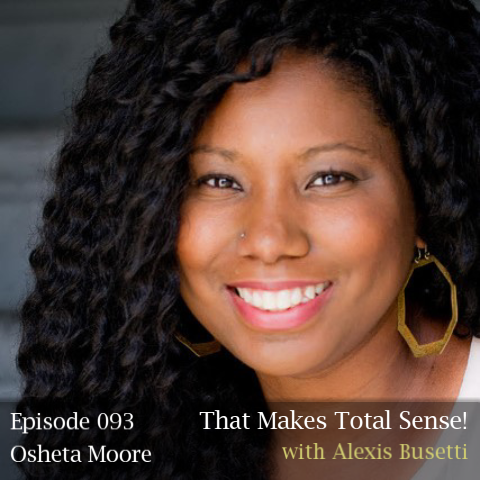
Speaker 1 00:00:39 Okay. So I was just talking with our guests before we hit record, and I'm telling you, she has given me and I feel really special right now. Oh, Shita I'm like she has given me the most incredible gift of being able to read her book before it lands in the world on May 18th. Um, but I'm sitting across from Oshida more today. Hey Ashita.
Speaker 2 00:01:02 Hey Alexa. Oh my
Speaker 1 00:01:03 Goodness. I'm S I'm so excited. I have to say the name of the book right now, because this is so incredible. So she has just written dear white peacemakers dismantling racism with grit and grace. It will be out by the time this episode drops, which I think is May 18th, right? Yes. May 18th. Yep. And this book, guys, this is going to be the subject of our conversation today, but we've already talked like, who knows where we're going to go? Yes.
Speaker 2 00:01:33 Try to grab an hour.
Speaker 1 00:01:36 You know, we'll see what happens. This is an incredible book, um, that she has written. I'm just like her pastor's heart just comes through and through and through in this book where she talks to her, primarily white audience about what does it look like to do the hard work of anti-racism reconciliation in a peace making way differentiated from peacekeeping way, which we'll talk about, um, but a peace making way that really is in the way of Jesus. So Oshida why don't you just get us started and tell us, like, where did this book come from for you?
Speaker 2 00:02:16 Yeah. So, um, this book really started, um, maybe I would say like seven or eight years ago. I really started, um, asking myself the like Shane Claiborne question. What did, what did Jesus actually meant it, um, when it comes to like some of his most challenging teachings about peace and nonviolence and love of enemy and, um, really like studying the sermon on the Mount and trying to figure out okay, so like jeans like that and make like, didn't just spend all this time preaching the, this like central, the central ideas about the kingdom of God for no reason. Like there's, I somehow have to figure out a way to integrate the sermon on the mountain to my, into my life. And, um, I was very comfortable with the Hebraic concept of Shalom, um, around that time. Um, maybe I would say maybe more like 10 years ago because my husband and I were in new Orleans during, um, in 2005 when hurricane Katrina happened. Oh my gosh. More than 10 years ago. Gosh, I'm old. But since 2005 hurricane,
Speaker 1 00:03:14 I know I was thinking hurricane and I was like, I remember where we were.
Speaker 2 00:03:19 Okay. So I've been really comfortable with the concept of her break of the Hebraic concept of Shalom for a long time. Um, because my husband and I were doing urban core development work. Um, but the way we talked about peace and peacemaking was always, um, mission focused or, or, or others focused. So I was seeking a piece of my city, like in Jeremiah 29, 11, that meant I was doing like the sensational sexy, urban core work of like sitting with gang members or praying with our community and things like that. Um, but then hurricane Katrina happened, we had to evacuate, we moved to Boston for my husband to go to seminary and I had to start asking this question w okay, what does it mean to live into these peacemaking non-violent, um, ethics of Jesus, um, when I don't have, but I don't have a ministry when I don't have like a community that I'm pouring myself out for.
Speaker 2 00:04:12 I don't have like this sensational thing to write in a newsletter. I just have like three littles and target runs and, you know, play dates and a home to care for. And that's really when I started exploring the idea of everyday peacemaking. Um, and so my book Shalom sisters kind of born out of this, um, journey that I took in self identifying as a peacemaker, particularly in my everyday life, but actually taking peacemaking seriously as a part of my spiritual formation in my discipleship to Jesus. But part of the way that I talk about peacemaking is not just, which was a trap I was in seeking peace between myself and others or systems of the world when those things are taken away, what am I left with? I'm left with myself and my God. And through writing Shalom sisters in a couple of times in that book, I talk about my journey of anti-racism from the perspective of God, didn't make a mistake in making me black.
Speaker 2 00:05:06 Um, I had to be comfortable moving through the world as a black woman, acknowledging my cultural, the culture, like my black culture and how, if I hold back, if I, you know, and code switching in a lot of spaces and hiding that I, that I'm black, because I feel unsafe, then I'm actually like I'm rejecting something that God intentionally placed in my life. And that it's an actual gift. And that I, that I can bring my full whole black woman self to spaces. I'm actually being a peacemaker because I'm being who God fully made me to be, but I'm also allowing others to kind of contend with that. And as I started having that conversation with myself and God and others about like, what does it mean to be fully black in spaces that don't always appreciate blackness or are anti-black then I started to realize, oh, we have a deeper problem here.
Speaker 2 00:05:54 It's not that, um, it's that I have people in my life who have like a good posture toward me and love me. And that's enough. I am a part I'm a black woman moving through this world. And there are systems that are preventing me from being who got fully, made me to be. And then around that same time, there were a lot of hashtags. There were a lot of, um, people dying, um, because the black people dying because the, uh, because of the police and police like routine traffic stops and things like that, um, there were a lot of laws being passed, um, that were making it harder for people black and brown communities to thrive or vote or things like that. And so I never, I never started this work out of being a peacemaker to talk about race. And so when somebody is like, oh, like, you just must really love this, like talking about race or setting, right?
Speaker 2 00:06:44 Like that was the furthest thing. I come from a predominantly white community. My godparents are right. People who I love, I'm married to my person. I'm very comfortable in predominantly white settings. I never want to talk about race, but I want to talk about God and I want to talk about Shalom. And I want to talk about being my full self. And I can't do that as a black woman, if we don't talk about race. Um, and so because of that, because of my, um, kind of, just because of the co eviction that I have around non-violence and the peacemaking ethic of Jesus, my conviction around being my full wholesale and my desire to be a bridge builder and to, uh, actively seek reconciliation. Um, I started doing this work really making space to listen and learn from white people and from a place of being like, we're not like I'm not wavering on some of these, these foundational ideas that we are all made in the image of God that we're all beloved. I'm not going to waiver on the fact that sin has integrated systems like that. Those things are not up for debate. Um, but what it, what we can have a conversation about is how are these systems affecting you and how is it preventing you from entering into this work wholeheartedly? Um, and then let's make space to figure out how we can grow together. So we can actually begin seeing God's Shalom, not just in ourselves and our interpersonal relationships, but in systems of the world so that all people black, brown, white, um, can thrive.
Speaker 1 00:08:08 Yeah. When, when I first, um, got connected with you on social media, um, I, I think I came across your account probably in that space of like this anti-racism peacemaking space. Um, but I have to tell you, even though I love your voice in that space, what kept drawing me back was your pastor's art, you know, and, and what I, what I'm saying in that is when I'm hearing you say, look, this isn't really what I wanted my gig to be necessarily, but I'm like, yeah, but if we're going to live in Shalom and do all of the things that you just said, like, um, we can't do that without first getting to this, like, this is a barrier. This is like dealing with the racial issues is a precursor to us living inside of all of those things that you just talked about. Right,
Speaker 2 00:09:03 Right. Yeah. We can't do an, I think that, that, I hope that when I talk to people about this, that it's from this place of, um, like a beach in six, where we talk about where I talk about it as principalities and powers like, or Walter wink in his book, talks about, um, systems and how, like, when I talk about this, it's not that I'm saying like, you, white person are the worst because you are white in America. And now you've got to figure out how to change and, you know, flex. And, uh, and now contend with this issue. Um, because you're the problem, like the way I want to think about it and talk about it is we are there. The problem is this is a systems that have been fortified and have been reinforced and were actually formed to support an idea that is deeply anti-God and tie and tie creation. God go that place. God made us all in God's image. And so if we are, um, if we want to do this work together, then we have to look at the problem and say like, this is a problem. We are not the problem. Maybe, maybe we are doing things that reinforce that problem or show how we are influenced by that problem. Let's have a conversation about that. Let's have a conversation of us against it, not us against each other.
Speaker 1 00:10:24 Right. So last year, um, probably right after we heard the news about a Mont Arbery, which was obviously like, you know, two months or something like that after his death, um, my dad and I were on the phone and, and I was saying something and I just, I just, I said racism. And it was like, every time I said racism, my dad said white supremacy, like every time. And I'm, and I'm kind of like sitting there, I'm kind of thinking you're making me a little uncomfortable, like for a moment. Right. And then it took me about one or two conversations where my dad was just continually saying the phrase, white supremacy to kind of, for this to sink in of what was happening, what he's trying to communicate, what's going on. And I'll tell you, one of the moments for me was I read, um, Daniel Hill's book, white lies, where he talks exactly like what you're talking about, this principality of white supremacy.
Speaker 1 00:11:16 And he says, this is problematic for everyone, whether you are white, black, or any other ethnicity, any sort of mixture of that, like me, you know, anything else because white supremacy is telling every human a lie about themselves, right? It is telling someone who is white, that they are better than someone who is not white. And it is telling someone who is not white, that they are not as good as someone who is white and so on both sides and everything in between white supremacy is telling all of us a lie about our humanity, about image of God ness. That is damaging not only to ourselves, but to the people around us, anytime we believe a lie, it hurts us. It kills us. Right. Right. Yeah. So you're exactly right. I mean, it's like we have to, we have to talk about this, like the principality that is
Speaker 2 00:12:11 Right. And that's why in the book I start, I started chapter one being like, I'm not going to patronize you and not stop. Not say that this is the issue that we're dealing with here. We are dealing with white supremacy and white supremacy culture. And I mean, if there's one thing that I hope that people take away from when they talk to me about this, or when they read the book is that my big thing is to take the sting out of some of these words and to like disarm some of the defensiveness that comes up with some of these words, because they are what they are, you know, like we have to deal with them now, can I talk to you about this in a way that empowers you? And that gives you some ideas and how to dismantle it. That's, that's where I want to be.
Speaker 2 00:12:52 I don't want to spend a whole lot of time, like, um, dealing with the, the like visceral, scary emotions that come out of it because you've been attacked with these words. So like, I talk about things like white fragility or white privilege and white supremacy. But I say like, this, isn't what it is. This is not passing a judgment on you by saying that you had some fragility. And then I talk about fragility, which you had mentioned like that suction, if you weren't telling me, like, you make you laugh. Like when I talk about fragility, I talk about it as a fear response. Like you're defensive because you're afraid. And what do I do? Do I judge you and, and make you feel stupid for being afraid? No, I say like, oh, it makes them makes a lot of sense. Why you have some fear. And I think, um, and so I, that that's my hope is that week we can start having a conversation about these words. That's not that, like I said, this arms, those emotional reactions, and it empowers us to move forward. We've got to figure out how to do that. Yeah.
Speaker 1 00:13:54 I, I want to start with one of my favorite things that you do in the book, which is you. Cause, cause I feel like, I feel like what I'm hearing is like, let's take the power away from some of these words. Right. But then I'm like, but let's, but let's utilize the power that is intrinsic. And some of the other words like beloved Oshida every time I would say those two things. Every time you address the reader as beloved, and every time you address the reader as peacemaker, like I could feel myself like tearing up. I'm like, I'm like she says, I'm a peacemaker. Like we can do this. You know? Like, like even in those funny sections with the, we're talking about the haunted hayride yesterday on the Facebook page, but it's like, but even in those, when, when you, when you're, I can, I can almost hear you laughing and in your laughter calling me peacemaker, it's like, you're calling out in me.
Speaker 1 00:14:49 Those things that God says is true about me. We can see the power in the, in the white supremacy and white fragility and why, you know, all of those things and we can name it and we can say, well, now that we know what we're fighting, then let's fight it. But on the other side of that, I feel like what you do in the book and in your ministry is you call out the truth in us. And what does God say about the ones who were supposed to be fighting it? So can you talk about this beloved ness and why you start the book that way? Why was that so important for you to do? Yeah. And
Speaker 2 00:15:27 So, uh, this book changed, like I said, it changed dramatically from what I had said to my, uh, my publisher when I signed the contract for dear white peacemakers and what it actually became. And the moment that it changed was when I was at a protest of a couple of days after George Floyd was murdered. Um, and I was standing in a crowd and I was looking around and I was seeing so many white people, white peacemakers. Um, that's the reframe that I do in my mind. Um, just, just so, uh, committed and passionate and bringing their full selves, like embodying justice and reconciliation and crying it out, crying out for it. And I saw from so many like different ages, I saw like babies in strollers. And I saw like, you know, older, older women like marching together. And I, I just saw just the whole, a whole span of white peacemakers just showing up.
Speaker 2 00:16:32 And I just had the sense that for some, this is new work for them and I just felt, and I don't want to be super rude about it, but I just felt God's deep concern and God's seeing they're overwhelmed. Like, um, and, and I just decided that if I was going to write this book about anti-racism that the world didn't need another, you know, teachery professoral kind of book, that's just like, here are the, here are the terms that you need to know and deal with it, or, you know, um, and even didn't need any more like, and I do share like hard stories, my experiences of dealing with racism, we didn't need any more black pain, black tragedy out there for the sake of it. Um, which was, which was kind of the book that I was working on. And to be honest, Alexis, like that book, it was like pulling teeth.
Speaker 2 00:17:27 It was so hard to write that book. And I didn't know, is it hard? Cause dependent, is it hard because the topic, it was hard because it wasn't the right book, but then watching all of this and seeing all these white peacemakers and just really wanting to know, like, wanting to know what, what do they need to know three months down the road? Like when we are no longer like relying on it, when they've already read a few books, they've gotten some push back. Um, they are having some internal, um, struggles, like what is the word that they need to keep them tied into this work? And I was leading breath, prayer, um, one morning. Um, and shortly after that, and I just, it was on, we were reading, we were reading now it's work. And now it's circles Hemi. Now in circles around this concept of 11, if I feel like this was his life, his life's work, his big aha that he offered the community and has transformed the way we interact with God.
Speaker 2 00:18:24 Um, I'd be lot of breath, prayer around belovedness. And I just, and I said something in passing that like, when I think about what I want to say to white peacemakers, it's like, I need you to know your belovedness so that you can proclaim my belovedness so that we can become beloved together. Um, and I had been doing some work around Dr. King's, um, concept of the beloved community, which he made popular. Um, when I was teaching, uh, when I was teaching anti-racism and leading a group down south to Silva civil rights program, I digested something similar to that a couple of weeks ago. So I was really comfortable with the concept of beloved community. And I was thinking about now one's concept of belovedness and there was something in me that just didn't like, I was trying to figure out what the connection between those two ideas and anti-racism work-wise.
Speaker 2 00:19:11 And because for me, when I talk to people about belovedness is, oh, it's almost always me and Jesus. Like my, I feel I am beloved. Like I have that tattoo, like I'm beloved. Like this helps me feel good and warm buzzy and move through the world. But I actually think belovedness understanding that we are loved by God, like full stop. We didn't have to earn it. We were, we were made to be loved and we were made to reflect love that God, that that is a huge aspect of our discipleship of Jesus. They will know we are we're Christians by our love. Um, if we can own that and make that our north star for, anti-racism not the checklist of having read everything, not necessarily the checklist of, oh, I got this policy changed or I posted that I signed the petition, which are all good calls to action.
Speaker 2 00:20:00 But if we base all of our anti-racism work on those fleeting things, when we don't have those things kind of like when I lost new Orleans, what do we have left? Then maybe we get apathetic. And especially for white people, it's okay. Like there's so many off ramps from anti-racism work. You can't offer up your belovedness once that is so core to you. And you know, that you're loved full-stop. You want to then, um, note help other people feel beloved. And so what I'm asking is white people. Can you think of that expression of love and belovedness torch bi-pod towards your black and brown siblings saying they're beloved. Now let's look at all the reasons why they are not feeling will love it and cared for. And then in doing that, we become what I think is Dr. King's vision for the beloved community. So, and for me, that is the Mo that is the only way I can do this work and stay hopeful because this work is so rooted in trauma and tragedy and violence that you can get really overwhelmed and you can be, feel really hopeless. But if I know that my angle is becoming the beloved community, and then I get, I start seeing it fleshed out and in ways that may not seem like they're big, huge steps, sources, mantling racism, but they actually truly
Speaker 1 00:21:15 Let's see, where do we go from hero shooter? So you were asking about some fitness. I know, but I'm gonna tell you where I was thinking. Okay. We can say, we can say don't hit record unless don't, don't, don't start it unless, so she says we can go there made me think of a modern Burberry's killers. I know it's skipping ahead. Can we go there right now? Yeah, let's go. Let's go there. Okay. So in the book you tell a story, um, about your Facebook page, and this was really impactful for me. I'll tell you why real briefly. Um, I think in the conversation we had before we started recording, I kind of alluded to like, this work isn't necessarily new to me. Um, I didn't, I didn't, I have the language now to say, I didn't really grow up in whiteness. Um, my dad is white, um, but we joked he's always wanted to be in the minority community, so it's totally fine.
Speaker 1 00:22:11 Um, but this is how, this is how I grew up. Um, the master's I got, you know, a hundred years ago before I had kids was in, um, organizational systems and social justice. And so it's like, this is, this, this kind of work isn't necessarily new to me. Um, but at the same time, I think I have not spoken to, to anyone, um, whether they are a lay person or a pastor or an author or a leader in this space, I haven't spoken to anyone who doesn't have some sort of personal recognition that 2020 changed everything. Um, it, when it comes to this work. Right. Um, right. And for me, I'm just going to say the, the moment, like, if, if we all had, if we, if we could, if we could narrow it down and say, this was when it happened for me, this was the moment when I realized something is not okay.
Speaker 1 00:23:01 Something is very different right now. It was actually not George Floyd's death for me. Yeah. It was a modern libraries. Yeah. And it was a modern, urban death for a lot of reasons, um, for me. Um, but you know, it was anyway, there was, there were just so many things surrounding hearing about his death probably in part, because I'm going, this was at the stage in the pandemic where nobody was going anywhere. We were all just stuck in our homes. And I'm not the only one in America or on the planet who was stuck in my home, on my phone. Right. Like the news cycle for me was life at that, at that point in time. And I'm, how did this happen in February? And we are just now hearing about it right in may at the time. Right. And I was hacked. I was like, I was like really mad.
Speaker 1 00:23:57 I was, I was, I was really mad and angry and sad. And then one of my girlfriends had posted, um, might've been, might've been Danielle Coke. It might've been one of her pieces of art. I don't remember. She put it on her story. One of my dearest, dearest girlfriends, his couple, um, friend of ours. And she, she just said, I'm tired. My husband can't go for a jog. What's this about? You know, she's just, you just said, I'm tired. Right. And I'm like, and it's, and it was kind of like, Hmm, okay. Like all, all of this right. Was coming to a head for me. I was thinking about my son I'm I'm bowing up about my friends. Right. Like, no, please don't you don't know, you don't know who you have awakened that this mama bear is here. Please stop. Right. Um, but it was a modern library.
Speaker 1 00:24:55 It was, it was that, that was the, the moment for me, where I was like, I it's it's there's, even though I felt like this work isn't new to me, there was also that at that point where I was like, there's not a going back for me at this point. Um, and then of course, and then George Floyd, and then Brianna Taylor, and then, and then, and then, and then, and, um, so to get back to the book, when you were talking about belovedness and you share this story in your book about, uh, uh, maybe it was a Facebook post or an, it was a social media post where, um, where you put some pictures and then you saw the comments roll in. Will you tell us about that? What was happening that day?
Speaker 2 00:25:35 Yeah, so a modern Arbery, um, Ahmad arborist shifted something in me too. I don't know if shift is the right word, because I had been feeling kind of like this since Tamir rice, um, Trayvon Martin, you know? Um, but the, there was something about Gregory and Travis McMichael, the father and son, um, they're hunters. They're, they're like Southern guys. Like these are guys, I knew my godfather is a hunter. Um, and there's just something about the whole of it. You know, like him going for a jog, him being cornered and trapped, chase down profiled shot, like a deer, like, uh, just all of it, all of it. Um, but I have this non-violence, uh, ethic, you know, my, my, my faith tradition deeply takes the sermon on the Mount serious in our formation. And it's, Jesus is very clear that we love our enemies. And I define my enemy as somebody who's just beyond my empathy.
Speaker 2 00:26:48 So if I can get to the place of lacking empathy for them, for someone, for being, sitting in a place of judgment or more superiority to them, then they've become my enemy. Um, cause we don't really have like, she's my nemesis. Like we don't have that language, right? Like we don't mind enemy language. Um, but that doesn't, that doesn't preclude us from that. At least in my, my perspective, we don't that doesn't preclude us from the teaching of the tournament Mount. We have to ask yourself, who's become my enemy for, so for me, it's those who are beyond my empathy. And, um, and I was watching something by Tony Morrison in an interview where she kind of talks about, you know, the, the sentiment that, uh, like James Baldwin echoes and his work that she talks about, that you had mentioned in our pre-conversation that like white supremacy.
Speaker 2 00:27:32 And even that you mentioned in our conversation now, white supremacy affects everyone black and white. Um, and so I made a decision to post about Amman Arbery's, um, murder, but I put three different graphics up. Um, Hawaiian was the interview with Tony Morrison, the next wasn't calls to action to like who to call, um, to hold accountable, um, hold those, the, those officials accountable, um, to speak out for justice. Um, and then also I put up the picture of Gregory and Travis McMichael, um, in like cammo, it's obvious that they are just finished. They're just coming home from the end of the day of, uh, of a hunting trip. Um, and that was a really intentional thing for me because my social media is for you, but it's also for me because whenever I recognize that somebody has become my enemy, that they're just beyond my empathy, where I want to hate them.
Speaker 2 00:28:29 Um, I had this practice of where I, I look at pictures of them and I, I asked myself to start imagining their life and their story to keep them human in my mind so that I can get to that place where Jesus says to pray for your enemies and bless those who curse you. Um, and that's just a practice that I've had for several years now. And I had to engage in that practice with a Mon Arbery. And that was actually really, it was really helpful for me at the beginning of that day, because as the comments started rolling in what I noticed sometimes is that white people who are doing this work, they will try to signal to, um, signal, but they're down for this work or that they are, they're equally grieved by attacking other white people. Um, so it may even be in comments where they're like, I actually, you should say this or I disagree with, or they are attacking the white person who is the suspect for whatever the thing is it's happening.
Speaker 2 00:29:21 And, um, I just don't have, I don't, I have no patience for that, that kind of language or those actions, because that cuts it, not that cuts of the belovedness of the person in that picture, because I deeply believe that no matter that our belovedness cannot be stripped away from us, regardless, like even if we do horrible things, I believe that when the McMichael woke up this morning, God delighted, he was like, those are my, those are my children and deeply angry and disappointed by what they did, but that doesn't change the fact that I love them and God loves them. I want to be, and I want to be a Jesus disciple. I have to figure out a way to get to that place of love. So, um, I posted to Instagram, but you know how it populates over to your Facebook, if you tell it to.
Speaker 2 00:30:03 And so this happened on Facebook where people were like signaling, like, and just calling them all kinds of horrible things. And so I, I wrote in the book that I just said, like, we're not going to do that here. Like we're not going to undermine our peacemaking with violence, violent words. Like we're not going to do that. Like, and all the things that I just said, they mean just as much to God today as, as they did, um, the day that they shot him mod, like, and, and that is a very hard position to be honest, take with a black person, because there is a part of me that wants to signal to the black community that I am as equally angry. And my anger is reflected in my retributive actions or my retributive words, but I don't see that model in Jesus at all. I don't see permission for me to live that way at all. I see Jesus healing when there's an intent or an opportunity to harm. Um, so I had to do that work and that, and that really is because I deeply believe that the beloved community is where we, where I want to be moving towards when I do anti-racism work.
Speaker 1 00:31:07 I'm wondering if, I don't know if I'm remembering it correctly, but one of the titles of your chapter, it might, this might have been in that title, but I'm like, it resonated so deeply with my mom ness because it was, it's like, here's what we're not going to do. Okay. Here's the situation. But I'm like, because I'm like, if you, if you, if I had a dollar, my kids had a dollar for every time they heard me say, okay, here's, here's the situation. Here's what we're not going to do. Okay. I'm like, and, and I mean that a little bit to be sassy sometimes, but at the same time, I'm like, but it does give us a lot of freedom for what we can do. Right. And so I appreciate the boundary of saying, look, there are some ways to say you're on board. Here's what we're not going to do.
Speaker 1 00:31:51 Okay. Yeah. This is off limits. This is what we're not going to do. And what you just said was the thing that caught me off guard when I was reading, it was God delighted when they woke up this morning. Right. Yeah. And it's true though. I don't know why it caught me off guard. It's the truth. Um, but it is the hard way. And, and I think there were a couple of things I'm hoping you can kind of help us unpack. And, um, and, and those, those things are first. You talk about how our anger, isn't like God's anger. And so there's a difference there. Um, but really you, you also talk about, and you alluded to it just now with this way of Jesus saying he abhors this third way, uh, pores, violent oppression and passivity, like there's a, and, and, and, and what you just said.
Speaker 1 00:32:53 I had written down on my notes too, that we, what do we do? What do we do? You say, what do we do with the savior who healed on the way to the cross? When he justifiably could have defended himself, he healed, you said when there was opportunity for harm, like, and I had not even thought I'm like, these people that were coming to Jesus for healing are first around. They're so vulnerable in those moments, they had leprosy, they couldn't walk, they couldn't see if there and, and like us, they were all sinners. If opportunity, if someone wanted to kick someone when they're down, right. You have a line full of people who are struggling with disabilities and disease. And, and even this, like on the way to the cross, he healed when there was opportunity to harm or, or to just do nothing, leave the guy's ear off, who cares. Right. Right.
Speaker 2 00:33:59 Good job, Peter. Thanks for defending me when I can't defend myself. Thanks for defending me. I think that's why, that's why you're talking about that moment specifically for white people. Um, it was meaningful for me because, you know, Jesus was like, basically the Peter, well, we're not going to do like those who live by the sword, but we're not going to do Peter. Like while I'm literally being like, led away to be tortured and then nailed to a cross, but we're not going to do is we're not going to participate in the violence. I'm about to experience right. Come on. And, um, and I think that for white people like that one, a signal that way I totally get it. Cause they have this anger in them and they don't know what to do with it. And there is a, there, there, there is a, there is a desire to, um, kind of be retributive for that anger.
Speaker 2 00:34:49 And, and when we feel helpless, like we can't go to them with Michaels and like, you know, beat him up. He can't, he can't like go bang on the doors of their Congress people or their officials and be like, we are stuck in our home. And many of us because of the beds are not leaving our own. So we use our, we use what we have at our disposal, which are our words to enact some sort of violence. And that kind of just like, kind of lets the steam out a little bit. But what I'm asking us to do as peacemakers is to not let the steam out of our anger, but to disarm it all together. And what that looks like is that looks like being able to have spaces where you can be angry. That does not, that does that. That is, that's not, um, contagious.
Speaker 2 00:35:32 So like I do have spaces where I call black friends and I just, I just let loose where I'm just like, I cannot get you see what the heck? So when people are like, oh, you're such a peacemaker, you're so kind and sweet Linda. I'm like, you get kind of sweet. Oshida because angry Yoshida has been pacing the floor, like just letting it out in a space that I know it can get out. It's a healthy space. And then that whomever I'm talking to, or if it's about by myself, when I'm going to prayer walk, it's going to bring you back kind of like the saunas, like just unleashed, but yet you are still painful yet. You are still God yet I will continue to bend this way. Like, but I think it's a, it's a healthy practice for us to be able to say this stuff will make us angry.
Speaker 2 00:36:19 It's just what we do with our anger. That matters because our anger is not like that. Like, God can be angry because God sees the whole scope. Like he sees the whole arc. He sees that person's life from when they were a little, he saw that traumatic event. He said the things that they've heard their whole life about black or brown people, he sees their insecurity being like he sees all of it. And he also sees, he also sees all the potential ways that people can enter into their most people's lives. That, that it's certain moments that could have the escalator or disarmed and maybe they didn't have it. He also sees what actually them actually suffering the consequences of their actions could, could do to make that community safer and maybe even help them come to a place of understanding their complicity to white supremacy.
Speaker 2 00:37:05 Like he, I just think that God sees all of it in a way that we don't and he sees all the possibilities and I don't have that. So when God can look and be angry, it's, I think it's a different kind of anger. I think God has massive anger at, at the principalities and powers and massive anger at the ways that sin and brokenness has, um, stripped this person of their inherent worth and dignity or prevented them from living as 11. That's not the anger that I have. I have anger at what I see is presented to me. And so that's why I always have to keep my anger in check. Um, because I, again, my end goal is not that we have some sort of flip of dynamic where now white people feel terrible about this work. Um, and so now they're doing it, or my end goal is not that we, you know, fix all these systems just for the sake of fixing these systems. I want us to have fix these systems because we deeply care about each other and we want to create a world for our children and our children's children to live into where their belovedness is a foregone conclusion.
Speaker 2 00:38:10 Yeah.
Speaker 1 00:38:13 That's so good. Um, as you were talking, I was thinking about this anger as a stage of grief, right? Yeah. But one of the things you, you say in the book is to be a peacemaker, is to be someone who learns to, and just what I kept thinking when you were talking was here's the situation anger on a Facebook post doesn't actually take any sort of relational commitment. But if I'm going to learn to grieve with you as a friend, if I'm going to learn to be a more faithful friend to you, if I'm going to learn to be a more faithful community member with you, learning to grieve is one of those things that says I'm in this for the long haul, because grief is long, right. Anger can be short-lived right. Um, it can be long, but, um, also I feel like expressing anger.
Speaker 1 00:39:20 I don't want to say it doesn't take any courage, but it's just like, it's, it's kind of a short thing. Right. Um, it's kind of a short gab, right? Um, at times, and it does feel good. I mean, I'm not gonna lie. It does feel good. Right. I think we all know that, but learning to grieve takes commitment. Um, and I would say, I would say personally and communally, um, because learning to grieve our own hardships is something that many believers do not want to do. Um, I don't remember who I was talking with saying, um, a lot of us don't have a theology for suffering. And so it's hard to, to do that, but can you tell us, like what, what did you mean in this context of peacemaking talking to white peacemakers, dear white peacemakers, who just your, your, your suggestion is, Hey, can I hold your hand and help you learn how to grieve?
Speaker 2 00:40:13 Yeah, I mean, so at the core of grief for me, and I've been on this journey of really paying attention to grief because my mom passed three years ago unexpectedly, and I was just thrown right into the mix of grief, um, like a visceral grief. And, and I saw a lot of parallels between my grieving of my mom and my like long-term grieving over the systemic brokenness around racial injustice. Um, and so that's, so for me, when I think about grief, it is a, an acknowledgement of something that has been lost that mattered to you. And to, to think of a white peacemaker entering into this space of saying, I'm going to grieve alongside you. Not just, I'm going to be angry because angry is a power over response. Angry is like you said, it's a fleeting response that you have some control. You ha like you get to feel big.
Speaker 2 00:41:18 Um, and white supremacy culture just reinforces that all the time. That bigness that like you be big, you be boss, you be first, you, you like, um, but for a white person in a white peacemaker to say, I'm entering into the space to grieve alongside you. For me means I see what is lost. And that matters to me. And so I'm going to enter into this process of saying, I wish it were this way. And, um, and Y and there can be, like you said, there can be moments of anger that flare up, but that's not where we stay. We stay in this. Um, this is not the way it should be this lump, this communal lamenting. And that, for that I think has, so that can have such a profound creates such a profound shift in your interpersonal relationships and in your churches. Like if you have a white pastor that gets up and says, we are going to grieve together about this, we are going to lament about this because what matters to us has been lost or reminded that it's been lost or that it was never the way it should be.
Speaker 2 00:42:30 Like we have this goal, or we have this dream and, and we, we don't have it, you know, like a heart, like a dream deferred makes the heart sick. What if we were people who were heart sick over and over racism. And so when I say to be a peacemaker, to be a white peacemaker, is to enter into this work of grieving. I think that that's such a vulnerable, humble, trusting posture to enter into, to say, I see what you've lost and matters. And it matters to me. Um, I think that that can be the birthplace of some really beautiful conversations and a space where you can begin to think of solutions and ways to heal and work through your grief together. Because of, I, I will just tell you as a, as a black person, if I, if I get the twinge that a white person, that's just doing this work, um, reactionary, you know, like, like for the like big feelings or for the, you know, like I can't really fully unburden myself about what is going on, which means to be fully, can't find the, by the problem find a solution to the problem, because I'm, I'm setting up a little bit of like, oh, I don't know.
Speaker 2 00:43:47 I don't know if I'm just another, like, match in your justice belt, you know, guide, if you're entering into the space to grieve, there's a relational trust that I think there's a lot we can build on.
Speaker 1 00:43:59 Yeah. Yeah. I agree. I do, because I mean, grief is hard. I think, you know, even just, even just this morning, um, I'm sorry about your mom. Um, when I read that in the book, I'm sorry about your mom and, and you just mentioned it, um, just this morning we were my husband and I were walking our youngest to school. And, um, he had spent some time on the swing set this morning, which we purchased, um, after my husband's mom passed away. And, um, and, and I just, I just started crying on the way to take him to school, you know, and I just said some, some days I just miss her, you know, some days I just miss her, you know, more than others. Yeah. And, um, and that was, that was one of those mornings for me. Um, because I think, you know, part of what, um, grief does is, you know, relationally, we get, do we, we get to allow each other that space and we get to commit to each other that when someone does have a sad day or, or an angry day, um, that we're going to sit with them in, you know, inside of that.
Speaker 1 00:45:11 And, um, and recognize that even though I may not be having a particularly sad or angry day, that doesn't mean the loss isn't real. Right. Um, that doesn't mean the loss isn't real. Um, great. So thanks for sharing that. Um, I'm wondering, cause I feel like that kind of goes into like that, cause I'm thinking like, what do I want to say that the grief I was thinking, it's kind of, it's kind of an equalizer in a way. That's not exactly what I want to mean, but it's just like it when, when we lose something that is valuable to us that, that there's no one immune from that, right. There's, there's no one is immune from grief or loss. And so it, um, can have a really humbling effect, um, because no one's immune to this, but it, it kinda made me think, I'm wondering if you can help us understand this concept that you talk about, I think is so key for white peacemakers of this humility, but you re you, you divided up into two categories of a moral humility and an intellectual humility. So kind of, kind of switching gears a little bit from the group talking about, but that concept was so helpful for
Speaker 2 00:46:27 Me. Yeah. I learned that from a, um, from a priest who did, uh, who was talking about, um, humility of her white people. But, um, so I don't want to say that that originated with me, but it's, it's what I've seen to be true in conversations and in pastoring white people. Um, and in the classes that I teach around this, um, white peacemakers, white people. Um, so, uh, again, if we're going to tackle white supremacy culture and we're going to, uh, re we want to dismantle it, uh, and we want to, we want to acknowledge it for the lie that it is so white supremacy culture says that white people and white ways and white intellect and white wealth and like white beauty standards, like everything white is white is right, right. Everything white is right. Okay. So when a white person enters into this work, and I'm sorry, I keep saying white people, but you hear me say peacemakers at the same time, um, when they enter into this work, because, uh, the way that they have been formed unknowingly probably by white supremacy is that they'll come into this work.
Speaker 2 00:47:43 And they'll somehow like, get an, a plus from the very beginning or that, um, that everything that they, they can take everything that they've learned and kind of what they already know and just kind of like, uh, map it onto anti-racism. So like, oh, I heard this over here. This is like this over there. And so, uh, so, uh, and intellectual humility, sorry, intellectual humility. There's this coming in and then coming under people of color and their experiences and their stories and their ways of moving through the world, saying that there's something about this way. Like these teachers that I, I really honestly know nothing about, like, I can maybe see similarities, but I I'm going to come under and learn, um, from them because we are the experts on this, to be honest, because we cause w because from a young age, we were taught to be, uh, to be mindful of this, to, to navigate the world, um, in order to survive, navigate a world formed by white supremacy in order to survive.
Speaker 2 00:48:47 Um, I, I, I, I think every black person, I know every person of color that I know can point to you the day, they realized that they were different than they were, if they were a person of color and they were treated because of that treated that way. And then an older mentor, a parent, a pastor, whatever of color, telling them, this is how the world is. You've got to figure out how to move through this world. Um, so when I am by white peacemakers to have an intellectual humility, it's the commander and say, I have not been formed my whole life. I have not been prepared my whole life to navigate this world, the reality of this world that you have. And so you have insight for me. Um, and then, so that's why that's one of the reasons why, when somebody comes to me and we're going back to like what we had talked about before about like neutralizing somethings terms.
Speaker 2 00:49:41 Sometimes when I teach these terms to my co to classes, um, somebody will come to me, oh, a white peacemaker. And they'll say, well, you know, when I think of this concept, I actually say this. And then, and that's when I say, actually, that's not really helpful. Like it's helpful maybe for you and your own reframing to help you know, how to navigate. But when you're talking to other people, when you're, when you're teaching others about this, you need to use this phrase or these terms, because oftentimes people of color have worked and studied and taught and have labored to give us this knowledge. And part of your intellectual humility is saying, okay, white fragility brings up a lot of stuff in me. Okay, great. So with your therapist, your spiritual, your pastor, your friends, and work through those emotions, but you got to learn to be able to say white fragility from the pulpit in conversations, because that means something.
Speaker 2 00:50:35 And I know where I'm at, the Angela made it popular, but she, she, she use a lot of work from people of color who, who came up with these concepts. She's learned she had intellectual humility to learn from people of color. So, um, so that's the intellectual humility piece. And I think if you're reading my book and I say this in my book, if you're reading my book, um, at some point I, you know, then you are practicing some version of intellectual humility cause you're coming underneath the teaching of a personal color. So it doesn't have to be like, you don't have to make it harder than what it is. Um, and then the moral, the moral humility piece is this, um, this instinct that I think a lot of white peacemakers have, but says, but I'm a good person. Or I have a really good heart, or, well, the Bible says this, like there's either Greek or junior male.
Speaker 2 00:51:25 So like using sort of moral arguments to, to find a loophole out of actually doing the work of anti-racism by saying, well, actually like I have, I have black friends and I really listened to them. I love them so that I, I don't think I have that much that I need to do or learn about this issue because in my life I'm proving that I don't have any, I don't have any problems with racism or I haven't been formed by white supremacy. And that is why I lean into the lower, not talking about your personal posture and to have a whole chapter about purity of heart. And, um, we're not talking about like your moral goodness here were asking you to acknowledge that the system is broken. It's really, really bad. It's hurting a lot of people and you may, or you may, you, you have been formed by it in ways that you may not even see or notice. Um, and so having that moral humility to say, like, I am subjected to this system too. Um, and, and maybe a ways that I don't even realize it. And I know, and I say this I'm a hundred percent sure a lot of these people are not doing it overtly. They're not trying to, you know, participate in white supremacy overtly. I believe that with my whole heart, but, um, we're all swimming in this water. So we're all, we're all gonna be wet. So,
Speaker 1 00:52:49 Right. And I think the thing that I had kind of in my head when I was reading the parts about moral humility and about the pure in heart kind of thing, is like, I'm totally sure this has never happened at your house, but we have a lot of kids at my house. And inevitably probably once a day, what happened? She stepped on my foot. No I didn't. Right. And there's this like back and forth and I have to go in and the conversation that I can, I could just press play right on my phone. I could just record it and then just press play, which is okay, sweetie. I, that you didn't mean to step on your brother's foot. And I believe you, when you tell me that it was an accident and then you didn't mean to, but what we need to recognize right now is that his toe hurts.
Speaker 1 00:53:37 So could you just turn to your brother and say, I'm really sorry that I stepped on your foot. I didn't mean to, but I acknowledge that it hurts. How can I help? Right. Like this, this is the story every single day in my house. And I thought this is on a, on a different scale, in a different scenario. Right. I felt, I felt like this is the same. This is the same song, right. That we're singing is, is I'm trying to tell you that this is hurtful. Yeah. I'm trying to tell you that you've stepped on my foot. And instead of just saying, sorry, I'm sorry, how can I help? Will you please forgive me? I didn't mean to step on your foot. There is sometimes a barrier and sometimes a defensiveness of, well, you know, I wouldn't step on your foot on purpose. You're like, okay. But here's the situation. Yeah. Right. Yeah. And
Speaker 2 00:54:30 I think, I think honestly, and this is why, I guess I start with belovedness because there is this need to say, but do I still matter to you? Like, do, do you now, do you think I'm a terrible person? Like there is this like, and, and so for me to combat that with starting with belovedness is saying like, listen, you are able to love it. Who is subjected to this really broken system. And so you're going to do things that prevent other people from experiencing their belovedness, but it doesn't mean, I think you're a bad person. I really don't. And for me, that's why I stopped. That's why I don't call people who are, who are participating in racist actions or ideas. I don't call them racist because I don't want to attach that to their core identity. Um, but that, and I think when our kids do that, like, I think it's so wise for you.
Speaker 2 00:55:20 And I try to do this to this to say, like, I see, thank you. Didn't mean to do that because I think that reaffirms their value and their worth to you. Like I see that you didn't mean to do that. However, when you did that, this is what happened. So now we have to deal with what happened. So that next time you're a little more careful. You're more careful. So you, so you don't do that. It doesn't mean I don't love you. It doesn't mean I don't want to be in a relationship with you. And I think that that is a fear that white people have is if they acknowledge, like I did that, that there'll be cut off. And I know that that's reality, we're dealing with something we're dealing with, cancel culture. Um, but for me, when I think of doing this work, I want to make, I want to make it clear that, that, um, I don't ever want a white person to feel cut off or unloved, um, in this work.
Speaker 2 00:56:10 And I, and I hope that, um, you know, building it on belovedness and having, having a conversation around that gives them the courage to say, yeah, I made a mistake because I think we here's thing that I noticed. I think that we are so well-formed in other aspects of our life to be able to do this work. If we can just sort of see the C you know, how they're integrated, how they parallel with each other, they intersect with each other. There we go. Like, we've done a lot of work on shame resilience. We can drop that into our anti-racism. We've done a lot of work of being center and Saint, like, I am loved by God, and yet I make mistakes. And these other aspects of my life, you are able to love it. You're going to make mistakes, white, these maker. Like, I think we can kind of see how these, these things kind of intersect. It can just, again, disarm and take the pressure off.
Speaker 1 00:56:57 You know, one thing that did that for me was you had, um, I don't know, it was like a page or two in the book where you're like, look, here's some ways that I've messed up. Right. And I was like, oh, she didn't mess this up sometimes too. And I don't believe that these were all 10 years ago. Right. Like, I, I believe that I believe that some of these, maybe they didn't happen last week, but they could have right. And into, to read kind of that list that you were so honest and gracious to give us in that book. It just gave me so much hope. Right. Because I just thought, no, oh dear. There's hope for me. Like, I, I started thinking of times that I had messed up in, in similar ways. And many of them I'm feeling like so much worse.
Speaker 1 00:57:37 Right. But it's like, I can, I can like, not own that shame. Right? Like I can choose not to own that shame. And you were giving me an example of saying we are, we are going, you know, to mess up. And it made me think I was interviewing one of my professors actually a couple of weeks ago. And he was talking about, um, living inside of deep difference. How can Christians be politically hospitality hospitable to their Muslim neighbors? Right. And at the end, this is the same conversation we sat. And he, that was his advice. You're going to screw this up. Like, you're going to make mistakes. You just need to feel comfortable with it right now that you don't want to be hurtful. You don't want to say, or do something that is awkward or as a mistake, but you will. And if you can, if you can kind of own that and then move in, then you can really do this work, you know, more, right. Yeah.
Speaker 2 00:58:28 My friend, Erin has spaces where, and I may have mentioned her in the book. I can't remember, but she had spaces that are white, only spaces where they come together and they're like, do you know what I did? I did the most, I did the dumbest thing, like, and they cut. And they worked through all of those, like that initial shame, response, those tears, all those things that like, I think a lot of white peacemakers are nervous about emoting to their black friends or their friends of color. Um, they worked through that together and then I'm like, okay, all right, go, go, go, go get them, go talk to them. I'll talk to the person you harmed, you know, work through it. Um, but you, but, but we held these emotions, which I think it's important for white peacemakers to now this is an emotional journey.
Speaker 2 00:59:13 You're going to have to build these support systems around you. Um, but yeah, I, I do the same thing. Like I so much with certain things that I, that like I'll make a mistake. And then one of my kids will be like, mom and I'm like, okay, okay, I'm sorry. And I have to go to somebody in that community. Or I have to go to another like parent parent of color and say, like, I did this thing and I worked through it. And then I'm like, okay. And then go to somebody in the community and say, I did this thing. Can you teach me to do, to be better about this? Like, this was one of the things I struggled with when I wanted to read the book and kind of my journey and understanding, um, how to be a better ally and a better peacemaker to my native brothers and sisters. Like, I feel like my hope was I, I shared over and over again that just because I am, I have some authority and experience, I, when it comes to a black perspective and doing this work of anti-racism doesn't mean that I am the authority of all of these kinds of marginalized spaces, because now I enter into these spaces as a marginalized person, trying to understand their particular marginalization and respect them and partner alongside them too. We're always on this work of peacemaking together and I'm just in it in different spaces, so, right.
Speaker 1 01:00:25 No, that's good. I mean, I'm like so thrilled with our conversation right now and really, I just wish we could stay on all day, but you know, probably wouldn't listen to for hours anyway, I would. But, um, but what is, um, as we start to close up our time together, what is like the topic that you wish we would've covered? Is there something burning? Is there like a question where you're like, man, I really wish we would've had the opportunity to go here because now I'm saying, please take us there.
Speaker 2 01:00:54 You know? Um, I mean, I think we covered, I think some of my favorite parts of the book, uh, and some really, really the heart around it. I mean, I just, I think I'm just going to reiterate what I've said before, and I've heard my equity hill talk about this. Um, we were in a kind of a dialogue on Instagram a while ago and we were talking about this and she, she put words and ideas around what I have counseled other people, but we've been circling around this, but like white peacemakers, you've had to kind of think about this as long haul. And so if you're going to commit to doing something over the course of your life, then you have to be willing to, to know you're going to make mistakes and that's okay. Um, but you also have kind of have to set up, you know, structures and systems and rhythms to help you do this work for the long haul.
Speaker 2 01:01:41 So it is okay to Sabbath around this work. It is okay to celebrate black joy over black trauma. Like it's okay to shift things up. Um, it's important for you to have white only spaces with people who are doing this work together with you. We can cheer each other on, you can encourage each other. You can pray for each other. My friend, Erin, when they got her together is actually an intercessory prayer time where they pray against white supremacy. Um, you gotta have that. You gotta be on therapy or with a spiritual director or a pastor because this is going to bring up a lot. One of the things that I say in the book, um, is that I know that a lot of white peacemakers have done a lot of work and owning their belovedness. And so sometimes when they enter into this work, um, because you're being asked to take this place of humility, you can mistake humility with, uh, shame or, um, even dehumanization.
Speaker 2 01:02:37 So like I really hate Moonlight. People like beat up on themselves for being white. I'm like, look, they can't make any wine or making, giving you European features and little bit, you did make a mistake and make any black. Um, so like being, having someplace to kind of work through those emotional pieces and, and it's just really does take, um, it does take an intentionality, but if you can do that, you're going to be able to do this work for so much longer. Um, then if you just rely on the next hashtag and you show up in the same way, and then the next hashtag, and then you show up in the same way. At some point, you're going to be like, what's the point? Um, and the point is the beloved community, which means we've got to do this in community with each other.
Speaker 1 01:03:18 Amen. Thank you. Oshida by the time this airs, you will be able to have this book in your hot little hands. So, um, I will link whatever is the best thing for me to link. How can people get ahold of dear white peacemakers?
Speaker 2 01:03:32 Well, for your listeners, I have one copy of that. I can give you to give away, then I'll sign if they want, if you want. Um, so I'll, I'll make sure you get that Alexis, or you can pass on, um, their information and I'll send that, but they want to purchase a copy that you can go to Amazon and purchase it from there. And then follow me on Instagram. I'm, I'm having an event coming up in June called white, uh, breath prayers for white peacemakers. Um, it's going to be a zoom event where, um, some of the prayers requests that white peacemakers have submitted to me, like I used to do this thing before I started getting into the thick of writing the book that I'm going to pick up now that I'm not longer writing the book, but I used to do these like mental health check-ins for white peacemakers, just to be like, where are you?
Speaker 2 01:04:21 And what, how can I be praying for you? And so that night's going to me, um, crafting breath, prayers, and giving some spiritual practices. That's an aspect of the book that we really didn't talk about that much, but like, I, I deeply believe in competent contemplative and spiritual practices as a way to do this for the long haul. So that night will be like a really hopefully beautiful contemplative space for white pacemakers. Um, so just follow me in Instagram for more details about that right now, tickets are free. Um, so I hope he can grab them. Awesome.
Speaker 1 01:04:50 Thank you so much. And yes, like I said, I've been following you on Instagram, like for, since probably at the pandemic. Right. And it has done it like, oh, she does account is one of my absolute favorites. I was participating in some of the breath prayer stuff, um, last summer and just, yeah, just felt like so pastored by you. It's just so cared for, so thank you so much for this work. I really appreciate it. And yeah, we'll um, I'll get the information out about the signed copy. That's fun. Thank you so much.
Speaker 2 01:05:18 You're welcome. Well, let's have a fun conversation. I like those. Thanks for having me. Oh, thanks for coming on.
Speaker 0 01:05:25 The links for all the resources mentioned in today's episode can be found in the show notes, music and podcast production by Seth SETI. Be sure to give us a review on iTunes and subscribe at your favorite podcast listening app, you can also visit us at that. Makes total sense.com.