Episode Transcript
Speaker 1 00:00:07 Welcome to that. Makes total sense. A podcast dedicated to exploring God's generosity and justice. I'm Alexis. We setting the Christian aiming to ask good questions and encouraging you to do the same. Every one of us is wired by God to live out generosity and justice, but the how sometimes alludes us that makes total sense is a way for us to get together, posture ourselves as learners and challenge one another to practice generosity and justice in a tangible way every day.
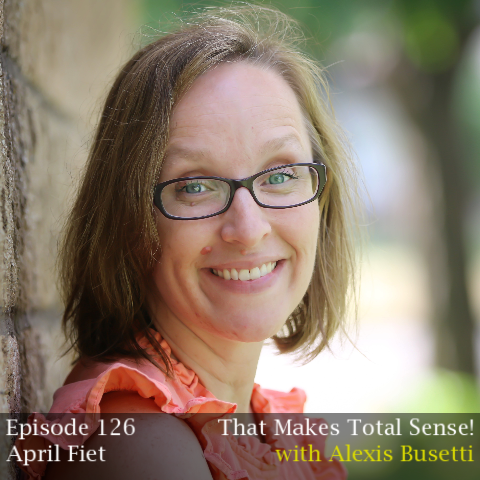
Speaker 2 00:00:39 Well happy new year, everybody. I am here with April feat, who I've been following for a minute on Twitter, and I love it. And I did not get all of the chicken references and chicken jokes April until I read your new, beautiful book, the sacred pulse, holy rhythms for overwhelmed souls. Thanks for coming on April and
Speaker 3 00:01:04 Thanks for inviting me on Alexis.
Speaker 2 00:01:07 So I told you before we got going. So I don't know if my bestie is going to be listening to this, um, or if the book will beat it there, but the chickens were part of what me, what made me think of my best friend Mandy, while I was reading this book. And so she's getting a copy for her late Christmas present. Um, and we'll get to the chickens. I promise we'll get to the chickens. Um, but this book is about the, the rhythms. Um, this is wholly rhythms, but the rhythms, and when I was thinking about earlier, I'm like, is it the rhythms, God created the rhythms, God ordained the rhythms, God encourages. And I'm like, yes, right? Yes, yes, yes. To all of those things. Um, so tell us like a little bit about yourself and then maybe where this book first came from for you. Like why, why write about those rhythms?
Speaker 3 00:02:09 Sure. Um, for those who may not know me or those who maybe, maybe do, um, I have been co pastoring for the last 14 years with my husband, Jeff. We spent eight years in central Iowa in a small town of about 650 people. And we had both of our children, um, experienced their first milestones in that church. We actually began our ministry there when my oldest was three weeks old. So we did all the things you should not do all at the same time. We had a baby, we moved, we started a new job and, and we were job sharing and trying to figure out what that looked like. Um, but after eight years there, we felt God's call to Western Nebraska. And we are out in Scottsbluff, Nebraska, which is the home of the Scottsbluff national monument and about 25 minutes away from chimney rock. So think all of the Oregon trail milestones and landmarks, and they're all in my backyard.
Speaker 3 00:03:09 And so out here in Nebraska, there are already all of these beautiful natural rhythms. Um, there are also some things out here that were different from where we lived in central Iowa. The Sunshine's here almost 300 days a year, um, which was a huge change from Iowa where in the winter you don't see the sun for months. Um, and so that, that was a different change for us, um, as far as rhythms of the natural world. Um, but one of the things that, that I discovered shortly after moving out to Nebraska was that, um, even good things can be too much. I found myself digging into so many different activities, saying yes to so many committees and volunteer organizations and extracurriculars, um, to help with them, with my kids because they were all good and they all felt life-giving. And one day I came home and I remember I walked through the door and I said to my husband, I just feel weary.
Speaker 3 00:04:19 And I couldn't put my finger on why, because everything in my life was good, but I just felt weary. And as I started to think about it, I realized that I was living in step with the rhythm of doing more and more instead of in a rhythm that was more life-giving and, um, more wholehearted. And so I started to think about that and it was like a lightning bolt. I had this idea that I needed to reclaim the rhythm. That was kind of the phrase that ran through my mind. And that was the working title for my book was reclaiming the rhythm. And I started to think about all the different rhythms in my life. The simple things that we take for granted, um, waking up in the morning, the meals that we eat, um, I'm a gardener. So that, that was a rhythm that really connected with my soul.
Speaker 3 00:05:14 Um, there's a time to plant and the time to harvest. And there's a time where the soil is quiet and all of those things are important. I started thinking about, um, the rhythms. I was observing my kids begin to live into their expectations for the day. Um, how did we eat our meals as a family? And I thought these were these little things, these little rhythms, I think this might be why I'm weary. And I started to brainstorm ways to fix it because, you know, I'm a fixer. And it was in that process that I began to realize, as I mentioned before, we started recording this, that, that my, my ideas for the rhythms in our lives, I had maybe had a superficial idea, a shallow idea of what it looks like to live in step with God's rhythm. And I had to dig deeper. Um, I don't know if that answers your question.
Speaker 2 00:06:09 Yeah, no, it's, it's great. I'm thinking a couple of things while you're talking first is, um, we did all of those things too. When our kids were three weeks old,
Speaker 2 00:06:22 We did all of the things that you're not supposed to do. We have, we had three week old twins and we did, you know, my husband already had accepted a job and they came early and we moved states and he got a job and I left my job and we had brand new babies and we were, um, all of the things, right. All of the things were new at the same time. And, um, and it's funny because I actually used it as an anecdote. I recorded a little solo episode that will air right in the week before this one is coming out. And, um, and it was funny because in that one, I'm talking about newness and change, but in the good that you're talking about kind of all is in that same category. Like sometimes we don't realize that the, that the good or the change or the new can also be what the word I used was stressful.
Speaker 2 00:07:11 Right. Like it can also, it can also be stressful, even if it's good, right? Like a job change for you guys as good. And a new baby is great. And a new church is wonderful and all of those things are good or the activities with your children, right. That you're exploring in your new home. You know, all of those things are good and new and change, but they sometimes yeah. Can make us weary or, or tired or, um, can bring stress. And so, and so kind of, yeah, trying to look at those things from different, um, from different angles, but when you're talking about the rhythms, um, so on, on this podcast, we kind of, the tagline is exploring God's generosity and justice. And there may be a similar, like what in the world we're talking about eating and chickens and like, what is this?
Speaker 2 00:08:03 But, but I'm like, but, and gardening, which I'm terrible too. Like not, you can't even categorize me as a gardener and say, I'm a terrible gardener. I'm just not one. But, but I was thinking about like how these rhythms that you talk about in the book and that we'll talk about in this conversation are ways to explore God's generosity, right? Like he has given us yes. All of these things, these ways to live into, right. Not just giving us food to eat through other people's gardens who are blessed in that way, but he has given us ways in which to eat and people with whom to dying and times, right. And space and all of those things that create that poles that you, um, that you refer back to in the book and, and gods, this is just one window I feel into God's generosity with us.
Speaker 2 00:09:08 Like he's such a giver too, to give us all of these things that create those rhythms that you talked about. So I just kind of wanted to say that close to the beginning, because this isn't an off topic kind of off shoot, which is fine if it is, but it, but I really just feel like it is a way for us to explore God's generosity that it's, this is these, this is one of the things that he gives us is this, um, is this these rhythms to live into in life. So, um, so I just wanted to mention that before we kind of got going on the rest of it.
Speaker 3 00:09:44 I so agree with that as, as you were talking, I thought about the way that my book is structured about the dance of time and the dance of intentionality. When you think about rhythms and you think about structures, it can feel confining sometimes, but instead it really is a gift of God's grace and generosity to us to offer us a rhythm that helps us to dance. We're not just slogging through life, like walking through deep mud and trying to put one foot in front of the other. We're being given the opportunity to dance and to delight in all of the things that are around us. And how good is that?
Speaker 2 00:10:23 Yeah. I love it. And yeah, so time dance of time, there's four sections, right? Dance of time, intentionality, belonging, and renewal. And I think it's in the time section, I may be wrong. Um, but I'm wondering if you might start with your snow day story, because it's so funny. So it's the beginning of January here in Houston and April. I know this is going to sound really silly to you being in Nebraska and coming from Iowa, we got hit with a cold front yesterday. It was 36 degrees. It's sunny. I know. Right. But it was when I'm from Oklahoma. So it was windy like, like Oklahoma, Nebraska, kind of this, you know, central Plains area. It was really windy like that, which everyone's saying that's just the worst part, right? Like I can handle the cold, but the wind is terrible. And, um, and last year in Texas, we had my, my kids keep calling it the deep freeze because really was kind of traumatizing.
Speaker 2 00:11:17 We, I don't know if you remember in Texas, we lost electricity. We lost power for about a week. Um, and a lot of us lost water as well. And so they keep saying, oh no, is it going to be like the deep freeze? Right. But this is the only context we have for this is a weekend February last year, where then it was 70 again. And then, and then this week is going to be 70 again later, but you had a snow day story that we just can't relate to. So, so tell us about that in this dance of, of time that you talk about sure.
Speaker 3 00:11:47 Where we used to live in Iowa. Uh, we lived in a consolidated school district and our town had, um, been consolidated into the school district with a town that was 11 miles way. And so imagine the busing and how long some kids would be on the bus, you know, at least an hour for some kids, if they were the first one on and the last one off, um, we would drive our kids to school most of the time, but that was 11 miles of just open highway. And when the wind gets to blowing out there even little bits of snow can cause whiteout conditions that make travel very dangerous, if not impossible. And on this particular, January, every Saturday and Sunday, there would be snow. And every Monday and Tuesday, the wind would blow. So ferociously that you couldn't see the road. I remember one day I looked out my window and the church that my husband and I served was maybe 500 feet behind our house.
Speaker 3 00:12:49 I couldn't see the church because the wind was blowing the snow so hard. There was just no visibility. And so every weekend for six weeks, we got new snow. And every Monday and Tuesday, the wind blew so hard that school was canceled. And it would always start out late start, and then is, are going to run hard surface routes only. So country kids, you don't have to go to school. And then by, by 10 o'clock nap, schools work, right. And the first couple times that happened, it was really fun. You know, it, you just, especially, if you don't have to go anywhere, my husband and I were lucky that we, we could work from home if we needed to, or we could, you know, rearrange our schedule so that we could spend that time with our kids. And at first it was great. Let's watch movies, let's play board games, let's bake cookies, let's make new flavors of hot cocoa, you know, whatever you could come up with.
Speaker 3 00:13:47 But by about the third or fourth week, we were starting to think, can we keep doing this? You know, can we keep rearranging our schedules continually because the weather is just showing us no mercy. And it became something to resent. The snow would start to fall. And we think, oh, not again, not again. And as I was writing this, I kept thinking about COVID too, about how, you know, we all thought, oh, we're going to be online with our kids for two weeks. And then it ends up being a semester and then it's a year. And then, you know, whatever it is, um, for each person's geographical location or situation. But at first you think, oh yeah, we're going to get the whiteboards out. We're going to make a schedule as we're going. It's going to be great. And then all of a sudden, it's not great.
Speaker 3 00:14:32 How, how long a Lord, you know, how long do we need to keep doing this? And, and it got me to thinking about other other moments where my free time is jeopardized. Um, I might wake up and I think I've got my day all planned out. I look in my Google calendar, I've got a, got a podcast interview with Alexis today and then followed by lunch with, you know, so-and-so or whatever. And then a child gets sick and you have to cancel all of that. And there's that moment where we can resent the reframing of our schedules. And we think, you know, I had it all figured out. It needed to go this certain way. And when it doesn't, it can be very frustrating and, and it might sound silly, you know, to get angry or annoyed or irritated by those readjustments in our schedule. Um, but as I was writing that chapter, I started thinking about how really those moments can be gifts and I've started calling them, holy interruptions, you know, what is God going to teach me through this holy interruption? And that's not to minimize it. It's still frustrating. You still have to reschedule things. Um, but, but they can be opportunities.
Speaker 2 00:15:50 Yeah. Yeah. When you talk about this, um, these four parts and you call them dances, um, you know, I think there are parts in a dance, right, where you kind of have to go with the flow, right? The music changes, or your partner does something unexpected. And that's kind of what you're talking about here. Um, but I want to stick around in time for a minute because there are also, um, places in a dance where you know, what to expect and, and you get to learn that part of the dance. And one of those things that you talk about is this is the concept of Sabbath, like a weekly, you know, God ordained time, um, where we can take a rest and it's not, well, it may feel like a holy interruption in some ways, but, um, but it's not one of those kind of unexpected things. And so Sabbath is just one of them. And you talk about some others too, but, but talk a little bit about the dance of time, where we know what rhythm to expect.
Speaker 3 00:17:05 That's a great question. Um, well digging specifically into Satta, you know, that's, that's, uh, a rhythm where we know every week that appears again and for the busy bodies or doers among us, we might, might even dread that once a week where I I'm supposed to stop, but I don't know how or whatever it might be. Um, actually a story about me. I went to high school in Utah and in Utah, especially in the city where I lived, I don't know if it's this way, everywhere in Utah, but in the city where I lived, everything was closed on Sunday. Absolutely everything. And the few things that were open, there was just this cultural pressure that you did not go there because if you go to that place, you're making someone else work. It's not just I'm getting what I need, but I'm, I'm also, you know, causing someone else to have to work.
Speaker 3 00:18:04 And that at first was frustrating to me because I had never lived somewhere that was, was structured that way. But after a while it became liberating. Um, that on those days you just knew you couldn't do those things. Um, there was the freedom to spend your time. In other ways, we, you know, of course we went to church, but we also could do different things as a family that we couldn't do other times. Um, and so in that way, having that weekly rhythm was built into the fabric of society, but where I live now, that's not the case. Um, Sunday is just another day you get scheduled on, on the work schedule or whatever it might be and learning how to find that rhythm of rest when it's not commonplace is so very challenging. And for me, uh, Sabbath cannot be on Sundays. Sunday is a work day for me. And so trying to find a way to, to receive the gift of Sabbath rest on a different day. Yeah. It's, it's challenging.
Speaker 2 00:19:10 Yeah. Um, you know, I think when it comes to Sabbath, so we, we tried really intentionally to keep a weekly Sabbath when I was in college. And, and here's, here's the kicker. I, it took me a while to learn how to be a good student in college. That's just the truth. I was a junior or longer than that before it really, you know, before, um, that was really the case. But what was funny is when we were trying to do this, so we had a group of friends and we were just kind of like, what if, I don't know, like what, what if we just did this and just, you know, just kind of took God at his word kind of thing, and just said, well, it's just kind of like my husband now calls it an experiment. You know, when we do things like that, well, it was just experiments.
Speaker 2 00:19:54 See what's going on. And what was funny is that all of a sudden, it was like, in my mind, on those days I was the best student ever like, oh, are you kidding me? I can't, I I'm not even supposed to study, like, how is it possible? You know, I'm like, right. Like Thursday, evenings, I was not concerned with whether or not I was studying or, you know, doing laundry or, you know, like whatever it was, we tried to abstain from some of those chores and stuff. Right. But it was like on Saturday though, in my mind, I was this golden straight a student with a clean apartment and always had her clothes in a row because how was I ever going to get any of those things done if I forced myself not to do them on a Sabbath. Right. And it's just, it was just kind of funny how it was almost like when, when you tell yourself you can't, or when you frame it in a certain way, then of a sudden you are, it's like, you just really want to write like your room. You're reminded of those. And so I think there's something in the, in the framing, even of, of how we, of how we approach things like that. Right. Is it a gift like you're saying, is it a dance? Is it, you know, or is it a kind of a legalistic like we have to, or have not to do certain things or abstain from certain things. Right.
Speaker 3 00:21:15 So relatable, I'm thinking about, about that in my own life, about the way, you know, if I'm taking this period of time away from the daily grind, all of a sudden I want to do all those things, or I feel I need to, if I don't do them right now, I'll never do that. I mean, you know, this pressure that, that we, yeah. That's so funny to me, as you were saying, I thought, oh, I, I really relate to that in my own life, but yeah. I mean, is Sabbath, is it a pressure? Is it an expectation? Is it, oh, legalistic thing that keeps me from living my best life, you know, is, is that the way that we frame it or is it a gift to receive? Um, something that I remember from seminary from one of my old Testament classes, was that some groups of people actually receive the Sabbath.
Speaker 3 00:22:04 Like it's a guest, um, light a candle and welcome it as the guests you've been longing for and how that really reframes the way that we perceive Sabbath, because Sabbath is supposed to be a gift. It's a great equalizer that says, God is still working and I'm not, God, I don't need to do all those things. God's got it taken care of. And it is a beautiful opportunity to be reminded of that. I think about, uh, Tish Harris and Warren's book about starting your day in the evening, when you go to sleep, you start your week or you start your day with the acknowledgement that God is still working
Speaker 2 00:22:47 And we're resting.
Speaker 3 00:22:48 Yes. Yeah. And what a beautiful, what a beautiful structure and what a beautiful reframing that is.
Speaker 2 00:22:55 Yeah. No, I love that. When you pointed that out, I was like, man, that's just, yeah, it's so good. There was evening, right. There was evening. And there was morning let's, um, let's move on to the intentionality portion if we could for a minute, because one of the things that struck me, um, was when you talked about shopping and I honestly, I thought, okay, where is she going to go with this one? I was like, I was, I was already intrigued. Right. We're in the second round, the second part of the book, but I just thought there's a, there's a rhythm to shopping. There's a, there's a, I think you call it like a, a tempo of transactions or something like that. So like, I, I do love it because it's like, it's we, if we see it, we can see it in, in everything. And shopping was kind of one of those places for me. So can you take us there
Speaker 3 00:23:41 For sure. Yeah. And that title, the tempo of transactions tempo is the pace at which a musical piece plays. And so I selected that word because we have a particular tempo, a particular pace that we often expect to be able to get things. Um, if I, if I dream up an idea, I should be able to log onto Amazon, put it in my cart and have it in two days. And whenever I encounter something where that's not the case, it's a frustration because that's the piece that we have many of us centered our lives around is that pace of being able to get things when I want them, you know, without having to wait and, and thinking about that, I also had to reckon with the fact, and this is where, you know, I said earlier, I had kind of a superficial idea about rhythms before I really sat down to write.
Speaker 3 00:24:35 And this is one of those rhythms that I had to realize there was a little bit more nuanced. Is it wrong to buy things online when we're in a global pandemic and it's not safe to go to the store? Or is it wrong to buy things online when a person maybe has mobility challenges or, um, something that makes being in person in the store problematic is that wrong? And I had to realize, no, it's not inherently wrong. Um, where I buy my things is not inherently just or unjust. It's about why I do things and how I do things. And so for, for purchasing things, am I an impatient purchaser? Am I one who wants what I want when I want it, regardless of what it does to other people? Um, there's a story in my chapter about a woman who, um, she works in a jacket making factory and she gets paid 77 cents a day, but that same jacket sells for almost $200 in the United States. And part of that story, she talks about how they didn't have enough food to eat or enough to drink that she and her small child drank coffee because she couldn't afford milk for her child. And so thinking about that, then I have to ask myself, is that, is that, uh, a godly way to shop? Is that a just way to shop? And the CEO of the company knew it was unjust to his workers, but couldn't see another way.
Speaker 3 00:26:21 And, and so for me, that temple of transactions, the reason it's under the dance of intentionality, it's about stopping and asking and wondering, where did this, where did this product come from? What was the supply chain that brought it to me? And I think we're kind of reckoning with that in this COVID world, where we go to the store and maybe not everything's available on the shelf. We're realizing that our food and our clothing don't just magically appear in the store. There was a process that brought it to us. And, um, and so being mindful of that process, and that doesn't mean that we never shop on Amazon again, or we never enter a big box store again, but we become intentional consumers in our lives rather than just mindless consumers. Um, that, that purchase whenever we feel a rumbling in our spirits, um, or whenever we're thinking, there's something we just can't do without it's the, it's the laying it just a little bit and taking that, that moment of intentionality.
Speaker 2 00:27:31 Yeah. So that's actually something, um, that it's been, I don't know, maybe 10 or 12 years ago when I was kind of first introduced to some of those ideas of supply chain and, and, um, you know, living wage and fair labor and, you know, things like that. And so, um, I wasn't planning on it, but I'll say in the notes for this, I'll actually just put a few of the resources that I have for anybody who's interested, you know, because that's one of the things that, you know, I'm trying to do. And there's lots, there's lots of us, we're trying to make it a rhythm, right. It's as you say, it's not always going to happen every single time, but if we can, um, you know, and I'll pause and I, there's a site that I go to where it can tell me kind of ratings, you know, on companies or brands, or how do they care for their people?
Speaker 2 00:28:25 How do they care for the environment? How do they care for, you know, these things in these orders? Because I want to make it a practice where I pause. Yes, you're saying before, I just instantly decide I want to have something. And so I get it because I can, because most many of us can, probably people who are listening to this podcast are probably doing it on a smartphone, on an app on wifi. Right. Like we have the ability to just do it. Um, many of us do, um, but it's good to, to pause. Um, and it may not be in the section. It may be in another one. I may be crossing my stories here. Um, but one of the other things that you talk about that I, that I love, that I can kind of relate to living in Texas is also when we're shopping or I think your example was in a coffee shop, how we're engaging in the rhythm of, of engaging with the people that we encounter when we are shopping and when we're having the transactions.
Speaker 2 00:29:26 Right. And not just like, you know, dinging everything up and then putting, putting your card in and, and just moving about your day, but engaging with people like people. Yes. Right. And having conversations with, I'll just be truthful. Maybe, maybe you being from kind of the central part of, of the states feel like that. I don't know if that's always kind of been a rhythm for you, but I think that people who aren't from this part of the United States think it's a little bit odd or, you know, I'll even answer my kids. You know, like when I wave at people, you know, when we're driving or in the store and like, mom, do you know them? It's like, well, no, but we just said, that's what we do. We wave. And we chat with each other in line and we, you know, that's, that's kind of what we do. So, um, I'm probably mixing it up, but what you talk about that a little bit too, especially with your coffee shop.
Speaker 3 00:30:16 Oh, sure. Yeah. I, you know, for most of my life, I've lived in areas where it's just expected that you would, would engage with the people around you, whether you know them or not. I did go to college in the Chicago suburbs and it is not the case there. Um, I think the more urban the environment and the more people you add to the equation, maybe the more suspicious we become of people that we don't know. Um, but, but out here in Western Nebraska, when you're driving on the highway, you have to wave at every person who drives the opposite way. Whether you know them or not, my kids will be in the backseat. Mom, do you know those people? No, no, no. We're just all on the same road. You know, this is what I do. Um, yeah. So, I mean, that's definitely a part of it, but my coffee shop story.
Speaker 3 00:31:03 Yeah. When we, when we had first moved here, I think one of my biggest fears, as I mentioned before, the town, we moved from an Iowa had 650 people. And so you knew everyone. If you went to the post office to pick up your mail, you knew the postmaster and, and would have conversations. You knew every, every person at the grocery store, um, that would ring up your groceries and it became a rhythm to ask about each other's lives. And to know, you know, how has your, how is your child, do they home from college? You know, those kinds of things that you just have those conversations. And that was one of my fears when we moved to a slightly bigger area, there's about 25,000 people here. So it's still relatively rural environment, but much larger than where we had been before. I was worried that we would become just a number in a sea of faces.
Speaker 3 00:31:55 And I didn't want that. And we found a coffee shop and, and darkened the door. And our second time in the coffee shop, the barista remembered our name. And the third time she remembered our order. And there was something about that that just warmed my heart and filled my spirit, that I'm not alone. Someone knows me and I belong here. There was just something about that. And the funny thing about that story is that years later, she actually became our church office administrator, which is just delightful. Um, but, but when she applied for our position, I, I thought about the way she made me feel known and in a way loved because she cared enough to remember what I, while I liked, I thought, oh, we need that kind of a person in our office. So when she applied, I was like, yes, yes, absolutely.
Speaker 3 00:32:55 Um, yeah, there's, there's something about being known by people. And, and one of the ways that manifests itself through shopping is I almost never take the self checkout. My husband is, I'm an introvert. My husband is far more introverted than I am. And he almost always picks the self-checkout because he's so introverted. You know, I just do my process in my own area. And for me, I am almost always pick the not self-checkout and my kids they've asked me about it, you know, what's up with that. And I say, well, I there's something about being with another person. And as they ring up my items, we have a conversation. There's something about that to me that I don't know. It just is life giving.
Speaker 2 00:33:50 Yeah. You know, I was thanks for sharing that. I was thinking about that, um, recently, and it's not a fully kind of, not a fully formed, um, thought or anything, but I read something that prompted me to think like about friendship or, you know, just being with people. And it's like not thinking about relationships, it's, it's funny. Cause I'm going to use the word, but in your shopping, not thinking about them in a transactional way, but you know, but longer-term relationships, right. Not thinking about them in a transactional way, but just because we just want to be with people, you know? And, and recently I, I had lunch with, um, some people that I know through school and I had been kind of thinking about this idea and we left and we had a good time. Um, but then, you know, part of me was kind of these, these worlds colliding where it was like, I knew they were my colleagues, but we really were just getting together for lunch because we wanted to, and, and, and one of, one of them was in, from out of town.
Speaker 2 00:34:57 And, but because of the context of it, of it being in school, I left kind of thinking by habit, what was accomplished during this meeting, you know? And I was refreshed to remind myself of nothing, right? Yes. Nothing, nothing was accomplished. Nothing can, there's not a box that got checked off. There's not a new initiative that's going to be started there. Wasn't another meeting scheduled. There wasn't some, you know, nothing career-wise or academic got completed, like nothing was accomplished. We were just together, you know, we were just together and we just had a good just enjoying each other's company. Right. And it was beautiful, but it's that belonging that you're talking about, you know, we kind of, kind of eased into that part, but, you know, um, with the, with the coffee shop, it's that belonging, and I'm thrilled to hear that, that she's working at your church now. That's like, that's fantastic. What a beautiful part of the story.
Speaker 3 00:35:57 Yeah. It's so good. So good. And she is that person in our office. I believe that, and this is not our topic, but I believe that the person who sits at the desk in the church office is a frontline minister. Absolutely. Um, they receive people in whatever condition they're in, whether they're just stopping in to say hello, or they've experienced a huge life experience that they need help processing and having that person who their heart is attuned to their rhythm of, of those relationships is essential. And so I'm just so grateful for her. Um, she, she's wonderful.
Speaker 2 00:36:41 Absolutely. We have a really dear friend of our family who that was her job, um, for many years. And we would have those, uh, dinner conversations. Right. You know, several, several of us were either in lay ministry or in professional ministry. And we would just talk about that and we would just try, you know, because it's also not an easy job. Um, and so we would just try to encourage her because she knew that was her ministry. Um, but it was, yeah, like you said, you kind of never, she kind of never knew what she was going to get, being that frontline person. And so, um, yeah, it was really fun to hear her stories and to try to, to try as best we could to encourage her in that ministry. Um, April, can you kind of, I mean, we're getting close to wrap up time, but I do want to spend some time on this dance of renewal.
Speaker 2 00:37:35 Um, not just because we're in January. Um, but you know, personally that's been something that I have been thinking about a lot lately, um, is, is through the prophet, Isaiah, God says it. And then, and then Jesus, we hear him say it in revelation, but this, I am making all things new and I just can't get that, that making verb out of my head. Right. Um, I grew up in a tradition that was kind of like, okay, you're new, you know, like that, like some, you know, something's different today than it was yesterday, which, which is true. Um, but if I can use, I think it's more true though, that God is making yeah. That is making all things new. Right. He's doing a new thing. He says, can't we perceive it. Um, and he's making all things new. It's it's, as you mentioned from, you know, he's working through the night when we're resting. Right. But this, this dance of renewal, it's not one that is just a one-time thing. It's a wrap.
Speaker 3 00:38:48 Yeah, absolutely. Yeah. And in my section on the dance of renewal, there are, there are three kind of movements to that dance. The first one is celebration. And to me, that is the way that we acknowledge what's been done and yet what will continue to be done. And that's one thing I absolutely love about the end of the year is we have the opportunity to look back on the previous year and celebrate, and it's not, you know, I made my resolution or I lost the way or I got the job I wanted. It's not that it's, it's finding those moments of appreciation and celebration for, for what we've lived through for what we've done for, for what we've received from each other. And that's something I'm not terribly good at that that's something that I'm continuing to work on. And I am thankful for people around me who will say, Hey, April, celebrate that, you know, take a minute, celebrate that.
Speaker 3 00:39:51 Um, there's something about that, that you don't just finish something you celebrate it that's like the stamp on the end that says, yeah, this was good. And we, we see that in creation. Um, God pauses it and celebrates everything that God makes. And I think that that is really our example to follow that as we go through our lives, we too should stop and celebrate, but then that celebration was followed by rest. Um, God, God rested on that seventh day as an example. I mean, God, God didn't get weary or tired like we do. Um, but, but that was really a gift for us. And, and part of that receiving of rest, we have to first receive the idea that we are enough, but we are worthy of rest that we don't need to keep moving every moment of our lives in order to receive God's affection or approval. We are enough in who God created us to be that we can receive that rest and be renewed. And that's a, that's a repetitive cycle. I mean, we do it every day. We wake up, do the things that we need to do or whatever it is that we're doing. And then we rest.
Speaker 3 00:41:12 And so that that's, uh, a movement for renewal as well. But then, but then the last one that, that I include in my book is the rhythm of the church year. And I don't know how many people listening to your podcast, Alexis are familiar with the church year or follow the church year. Um, but the church here was something that I grew up with in my younger years. And then in high school, the church that we attended did not follow the church year. And I didn't really follow the church year in college and coming back to seminary. And then later in life was my re initiation into the church year. And I have found for me that having that yearly rhythm has been profoundly renewing to me. It's not dull. It's not a boring repetition. It's not mindless. I see something new every single time I go through these holidays or go through these seasons of the church here.
Speaker 3 00:42:11 Um, we've just finished up advent. And now we're in Christmas, this in the season of Christmas tide waiting up for apifany and there's something profound to me about that space. Uh, one of, one of the things that I love to do the very most, um, we have a tradition on January 6th epiphany, we make a three King's cake as a family and we hide the baby Jesus figuring inside. And, and we all hope for the baby Jesus and our slice of cake. Um, but the thing I love the most about that is when all of the pressure, all the secular and societal pressures of Christmas are over. We have the opportunity in the rhythm of the church year to live into the season of Christmas and to receive the miracle of God, made flesh without worrying about, have I bought all my gifts? Have I gone to all the parties, all of those things. And so for me, that's an opportunity for renewal to really receive the miracle of God made flesh without anything else vying for my attention. It's been so restorative for me. I don't know what my kids think about it. I don't know if they think, oh, there goes mom making, making our King's cake again. Or if they're just excited, cause it's like a giant cinnamon roll and, and what's not to love, but I hope that they have that they are receiving by example and through repetition that those seeds for renewal as well.
Speaker 2 00:43:48 Yeah. I, I do love that cyclical renewal, right. Um, how, and, and it's, and it's in things that we don't do all the time, but we can see them in other things that repeat themselves, whether it's just like a walk through the neighborhood. Oh, I've never noticed that before, which happens frequently or, you know, rewatching a show, right. I'm not the only one who does that on Netflix, right. Where you go, oh, I didn't, I didn't notice that the first time around or, you know, um, you know, for a few years I read the same book every January to kind of, you know, get my year started. And it was, you know, or this time that w this was my goal, this, you know, hashtag goals, everybody. So between in this two week Christmas break that I had in school, I told my husband, this is my major goal.
Speaker 2 00:44:38 I want to rewatch all of the Rocky films like, and so we finished, we watched Rocky Balboa last night and I cried, but it was like, it was like, it was the first time for me, you know, watching it because it had been a while. But even some of those things that we recycle or a cyclical, like there's a new, right. There's a newness that comes from something being familiar enough that you can kind of walk down this path, you've walked it enough. It's trod enough that you don't have to watch your feet, that you can see different things in your surroundings. Right. You may have missed the lap before, right. Because you are doing it in this kind of cyclical, um, way. And I think the church is a, is a beautiful way in a beautiful to do that.
Speaker 3 00:45:24 Yeah. I love the way that sister Joan Chittister writes about it. I, I draw heavily on her, in that chapter, in my book. Um, but she talks about the church year is a yearly opportunity to be formed in the shape of the birth life, death and resurrection of Jesus. And I love that because we walk with Jesus through all of those steps every year. And we see new things. And depending on where we are in our lives, something we've seen before might hit us in a whole new way. Um, if, if you've just been betrayed by a friend, you're going to encounter the betrayal of Jesus in a completely different way, or maybe you were the betrayer, maybe you stepped wrong. And all of a sudden you're identifying with characters in story that typically you didn't identify with, maybe they were the villain and you thought, oh, I think, goodness, I'm not like that. And then you realize I'm more like that than I ever thought. Um, and so being able to go through those rhythms yearly throughout the seasons of our lives is really such a gift and an opportunity to enter into the gospel story more fully with our whole selves.
Speaker 2 00:46:36 I love that April. It's, that's beautiful to walk through with Jesus through all those steps. I'm wondering as we, as we close out, if, um, I should have a little button that I have on the things and just warning pastors, if you're a pastor, I'm probably going to ask you to pray. Um, but if you, if you feel comfortable, um, and if you're willing, would you pray for us? Just, just thinking about this, this, um, the beauty of this sacred pulse that we've been talking about, but would you just pray for however, the spirit leads, but for God, just to meet us in our lives, um, in these rhythms that he has for us.
Speaker 3 00:47:17 Absolutely. Thank you for asking. Let's pray, Lord, here we are on the cusp of a new year, mindful that no matter what day it is, no matter what month you are always making all things new board, we ask that you would continue making all things new, even us, even our hearts, our desires, our thoughts, our goals, make us new and make us after your likeness board, as we take these intentional steps through these early days of a brand new year, we ask that you would give us intentionality and wisdom, give us mindfulness rather than the numbness, rather than autopilot open our eyes, God, to what you are doing in our communities and in our homes. And Lord nudge us along, urge us to be part of this building of your kingdom now, or be thank you for this space. And for this time where each person who is listening, Lord, bless them, open their eyes and give them courage to live as your people, God open our ears to listen for your sacred pulse for your music. That leads us to dance. We are grateful. We offer all of this in the name of Jesus. Amen.
Speaker 2 00:49:18 Amen. Thank you so much, April again, the book is the sacred pulse, holy rhythms for overwhelmed souls by April feet, F I E T. And I mentioned earlier, April that you're on Twitter. Where is the best place for people to, uh, to find and connect with you on social media or on that?
Speaker 3 00:49:42 I am the most active on Twitter. Um, and that's at April feet, F I E T. Um, I do have a Facebook page by the same name and I post there occasionally, but not nearly as often as on Twitter. And then I've also got my website, which has my name April feet.com, where you can find all kinds of writings and reflections that I do. There's also a link there to a free ebook. It's a seven devotional book whispers in the wilderness, seven devotions of hope in uncertain times that I hope people will find to be encouraging.
Speaker 2 00:50:19 Um, thank you so much. Well, this conversation has been encouraging. This book, um, is incredible. I will link this, uh, title as well as, um, everything that April just said. And, uh, in the show notes that you guys can get your hands on it and I really encourage you to do so. It's beautifully written. Thanks for spending time with me today, April. Thanks for having me.
Speaker 1 00:50:44 The links for all the resources mentioned in today's episode can be found in the show notes, music and podcast production by Seth blue city. Be sure to give us a review on iTunes and subscribe at your favorite podcast listening app, you can also visit us at that. Makes total sense.com