Episode Transcript
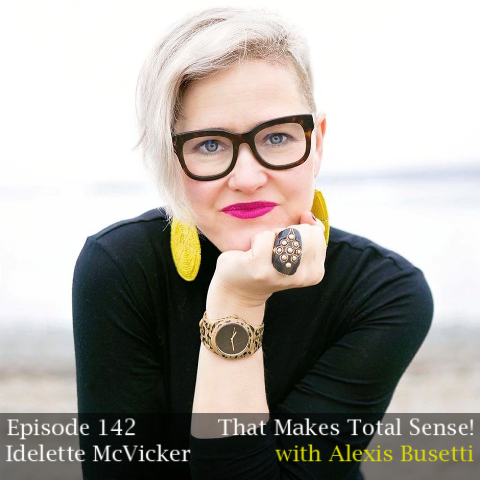
Speaker 0 00:00:06 Welcome to that makes total sense. A podcast dedicated to exploring God's generosity and justice. I'm Alexis, Boetti a Christian aiming to ask good questions and encouraging you to do the same. Every, every one of us is wired by God to live out generosity and justice, but the how sometimes eludes us that makes total sense is a way for us to get together, posture ourselves as learners and challenge one another to practice generosity and justice in a tangible way every day. Hey everybody. I was just tell our guests today that I literally spent all day yesterday. It was actually so fun. <laugh> I spent all day yesterday just reading this new book from ed McVicker, which has the most provocative title of a book that I've read in a long time. So everyone get ready for, I spent all day yesterday with this copy of recovering racist, dismantling white supremacy and reclaiming our humanity. Hi Ette. I'm so thankful you're here.
Speaker 2 00:01:16 Hi Alexis. I'm so grateful to be here. Thank you.
Speaker 0 00:01:20 So I didn't mention this in and we were first getting going, but in the, um, in your story, which we'll get into, because so much of this book is, um, interwoven with your personal story, um, of being a re recovering racist, which we'll talk about, um, but people can hear from the podcast that you are <laugh>, you are not AER or can native Canadian. Um, right. So, but I would say I have, I had a dear friend for years, she lived in the states and then she moved back home who was also thought south African, but her accent was very different than yours. Mm-hmm <affirmative>. And you talk about that in the book. And then I thought, okay, I wonder if hers is the same as so and SOS, but it's not. So can you just like, kind of start there and give us a little bit of your, of your background as far as where you're from,
Speaker 2 00:02:08 Right? Yeah. So I'm Africans, uh, by birth, which means my mother tongue is African Khans, which is, um, a beautiful language. And it was co-opted by my people, the African are people saying that this is kind of a language that needed to be used during a apartheid. Um, but it is a language that is spoken by many people in South Africa and I, and, and is a stunning, beautiful language it's language of my heart. And I think it's a language that gives me hope, um, for its invitation. Um, yeah, so I was born, uh, an African woman or, you know, <laugh> a baby, um, on the white side of the hospital in South Africa, in a town called Pearl. And it was right during the height of apartheid, which was that system of, um, laws, oppressive laws that segregated people based on the color of our skin and apartheid rained for 46 years, officially 46 years.
Speaker 2 00:03:10 Um, yeah, I mean, we can just pause right there, cuz I think the year I turned 46 was the year that I was like, whoa, I am alive now for as long as a apartheid was in this world. And I just had such a sense of the length of it and the impact that it had on people's lives that, you know, uh, we talk about seven generations of healing, right. So just the impact that have still, and that's not even, not now, we're not even talking about colonization, we're not talking about the things that were going on before official apart time. Right. So yeah, so I was born right into that white bubble, right. Went to, went to church every Sunday. Um, but it was all white church. Right. Um, everybody in our congregation was white. Um, my neighbors were white because apart I'd had designated specific areas for people to live. So I lived in a white neighborhood. And so when we thought about love your neighbor, the picture that came to mind was your white neighbor. Right.
Speaker 2 00:04:20 So it was, it was so evil and its intent to separate and segregate and divide us. Right. Um, and so school, you know, we, it was an all white school for the first, you know, for that, for that whole school education I had, it was in my final year in school, grade 12, that Nelson Mandela was released from prison. It was 1990. And so things were UN you know, were, were happening. It was, it was, um, you know, it was, and, and he got released pretty, pretty close to where I lived actually from where I lived. And, um, you know, so it was an exciting IM at that time. Right. But in the story, I thought he was, I was this good person, cuz I was like, yay. You know, Nelson knows getting released, yay. This is happening. Democracy is finally coming. And then, you know, really, it was only, I think after voting in that first democratic collections that I feel like I started to going on my journey of, of really reckoning with, oh my goodness, what have we done?
Speaker 2 00:05:31 What have we done? And what is my place in the story? Right. And I think it, it, it, it happened mostly when I actually left South Africa, I left because I was looking for some adventure to go work. I went to Taipei, uh, lived and worked in Taiwan, worked as a journalist. And I was in that context then like in this global context that I really, uh, re I realized, oh, okay. When these people hear my accent, right. My Africans accent, they don't necessarily see or hear that I was part of a liberation movement or that I supported democracy. They would hear that I was the people, or I was part of the people who had created a part-time and that I had been on the wrong side of history. And so it was understanding my place in that communal story. And so I had a choice of what do I do with that?
Speaker 2 00:06:29 Right. Like, um, a lot of people kind of go, well, you know, kind of shut that down and just wanna move on. And for me, my look was to walk right into it, towards it, to really go into the dark, the darkness of it. And, um, trying to figure out what is, what is here, where's the light like where, how do we, how do we turn this? How do I don't know? I didn't, I didn't know that there could be light, but I just, I just thought that I knew that the God of liberation, um, would, I don't know the promise of that, right. That there were, that there, the thought can turn and transform things. Like, not that you can transform what we had done, but I know somehow God can even turn this into a story of, of becoming of reclaim humanity, right?
Speaker 0 00:07:20 Yes, yes, yes. Thank you. That's
Speaker 2 00:07:25 A long answer to
Speaker 0 00:07:26 Your question. No, it's a good, but it's a wonderful, it's the perfect backdrop though. It's the perfect, it's the perfect background because, you know, when we go back to that provocative title, it was, it was actually kind of funny. I was, I was talking this week with, with someone and, and, um, I was, I was talking about a, a workshop I'm, you know, doing for one of, some of our local community in, in the next few weeks. And I said, I'm just a little nervous about it because, um, on the podcast, I don't really see my audience. And so, um, and so there's like a level of courage that I don't have to overcome in some ways. Right. Because you just kind of throw it out there and you just kind of, you know, if it sticks, it sticks and if not, and then I said, but this week I'm actually interviewing someone that I feel like it takes a lot more courage.
Speaker 0 00:08:10 And that's mainly because when we see this, this, this title, right, we go, whoa, whoa, whoa. Like, you know, there's kind of a, there's a whiplash for me. I think there's kind of a whiplash react. And as you were talking, I thought, how easy now? I don't mean right. Or, or good or something like that, but how easy would it be to just say, look, I was in favor <laugh> mm-hmm <affirmative> I was in favor of the liberation. I was happy when men I'm all of these things. Right. I, I grew up as a child in this, you know, I wasn't one of the ones who was, who was creating policies or something like that. And to, to just say, no, I, my, my, my being in favor of democracy puts me on the right side of history. And it's not that it's a binary, but I'm, but I'm still just, um, profoundly curious about, even after reading your book about this, this what happened in you was the opposite.
Speaker 0 00:09:14 And instead of that, you, you kind of, I mean, in this way, have like labeled yourself right. In some ways and saying, yeah, like I'm actually a racist, white supremacy has formed me, has impacted who I am, you know? Um, and so I'm just curious if you can, I've, I've butchered that, but if you can talk about why that's important to, to name and, and I'll say one more interjection before, before I give the, the floor back. But I would say, I, I love what you say when we may talk about it later about there's kind of a, an initial awakening and then there's like these continual awakenings that we need to allow ourselves to have. And so one of these profound moments in my continual awakening was, um, I read a book by a pastor Daniel Hill called white lies, and it's phenomenal. Right. I don't know if you've, you've read it or seen it's it's phenomenal. And one of the things, one of the ideas, right? This kind of main ideas of his book is that White's is this lie about the I Mongo day, that affects everyone. Right? So it doesn't just affect people of color. It affects white people too, because they have believed lies about everyone, every member of humanity, they have believed lies about other people's inferiority and about their own superiority. And that lies let's
Speaker 2 00:10:40 Just say perceived, perceived,
Speaker 0 00:10:42 Right. Superiority. Right. Perceived as superiority precisely. Yes. <laugh>. Um, but it, but it, but those lies when we believe lies about ourselves and when we believe lies about others, it is devastating yeah. To us as, as people. And so that was one of my kind of con continual awakening moments. Um, but that's really still, it's still hard. So can you talk about why say recovering racist? Why not say something else? Right. And then what about this white supremacy? Why is it important to, to name that as part of your story? And I feel like you invite others to name that as part of their stories as well, if it fits.
Speaker 2 00:11:23 Yeah. I think you, you nailed it with, with what Daniel Hill said as well. Like yeah. He is a phenomenal, uh, teacher on this too. Right. Like I, I read his first book. I haven't read white lies yet, but he's first book. Right. Um, white awake. Right. Um, and I, I think it is that, that having been shaped by this consciousness, right. Um, your, my personhood was formed. My consciousness was formed by this lie of white supremacy. Right. And the violence of that, um, first of all, and centrally, always to those, um, it violates right. Or it tries to violate, um, and tries to oppress. But, um, I think for me, it was this very interesting dance between my faith and my story. So I had left the Christian faith, to be honest with you. When I left my home, went to university, I was kinda like, I was kind of done with church cuz I felt like they'd, to me, the, this theology had this denomination had literally created theology, the, the theology for apartheid.
Speaker 2 00:12:42 And I just, I, I just felt so light to, and so disillusioned by what we had done through apartheid and I just went to define something different and I didn't think it ha I didn't think it would be in church to be honest with you. And so I, when I went to Taiwan, the irony was that I met in Jesus around a breakfast table there with the group of women. And the difference was it wasn't the white Jesus, right? It was. So there was a very different meeting and to meet Jesus in that global context then, um, was a profound awakening as well. And this invitation to relationship and the more I leaned into this Jesus, then more, this Jesus was speaking to me about a apartheid and the two things. It was like, it was the two things were happening, happening simultaneously. As I started walking out my faith, learning more like really growing in intimacy, um, learning how to hear from God, how to experie, you know, uh, those things, it was the invitation was to, to, to look back at my story.
Speaker 2 00:14:08 And so, um, those things, it was like my faith. I didn't have the language for it then, but my faith was even then, and antiracist faith because the God of the universe was inviting me to look at my story. Then it wasn't a, it wasn't, you know, a fad. It was because my liberation was connected to it. And I didn't understand it because to be honest with you, I could hardly talk about it. There was such a over there was such, um, there was such a lack of language for me. And, um, so I started looking at teachers. I started looking for wisdom because I, I just sense that there was something, there was something of this freedom just for freedom that Christ set us free. And I wanted that right here. We had just celebrated democratic freedom. We call the day freedom day. And here's my God who says it's for freedom.
Speaker 2 00:15:15 That crisis set us freedom. Like these things were just together. They weren't separated to me. And so I was, I was also looking at my life and kind of, I, I was on this journey of, you know, understanding my purpose, really leaning into that. And I had a, and I had a big dream and a vision for, for what that would be. But the more I try to walk towards that, the more stuck I felt it was like, I was, I, I, I couldn't move it. I like, I it's like my dreams were hitting a wall. And as I was trying to talk to God about me, my dreams, God was saying, well, hold on, look what you've done to other people's dreams to generations of people's dreams. And it was this, I had to come to that place about where I felt stuck, uh, where my voice felt silent, where I felt, felt that deep silence I had to go, oh, wait, how have we silenced others?
Speaker 2 00:16:21 Um, how I felt a deep separation in my soul, right? Just a very deep separation. Like I, how I felt awkward in relationships, I felt like I was, I just, I, I couldn't do it well. And I know I was in, and, and as when I moved to Canada, I really felt this, that loneliness, that deep loneliness and that separation, it was a very, and, and I had to go back to the laws that we'd created in South Africa. And it was, as I was looking at them and I would repent one by one, just holding up this mirror and the whole look at the past, it was like, God, it was untying the, kind of the, the very ties that were tying up my soul too. Um, and so I didn't have language for it, but, but when I started reading no future without forgiveness, um, that's when I realized, okay, this is by, by the arch Desmond Tutu.
Speaker 2 00:17:21 And that book was, was such a gift to me. I'll be honest. It was, I, um, I sat with that book and it was so often like, I, like, I remember I sat for months with only a few pages. Like I had to read it line by line. It was kind of like I had, I had only eaten white bread all my life, this white consciousness, my consciousness was emaciated. Right. I had not had sustenance. And so sitting with this spirit of this man, this generosity of spirit and this liberating voice was liberating. Me too. Right. So line after line, it wasn't just the words. It was the spirit within the words. Right. And one of the things he said, he said, freedom is indivisible.
Speaker 2 00:18:17 Our freedom is connected to each other. And he said, what white people don't understand is that they're connected to the oppression of black indigenous and people of color. And when we, he put, when I, as a white person, put somebody else down, when I dehumanize somebody, there is something in me that also gets dehumanized. And so he had this, this image of a movie, a, a scene in a movie by Sydney pointier. And, um, he, he described it with black people and white people being chained together in the ditch. And when white people try and move out of the ditch, we can't because we are tied together with these chains. Um, you know, and so Desmond too, to us saying that. And so it felt to me like, okay, I, I, I sensed that, but I didn't have language for it. And so when he, when I read that, I realized this is, this is, I do need to lean in because I want to Unie those chains.
Speaker 2 00:19:27 I want to Unie those changes that connect us. It's not just about my freedoms, but all it's our freedom, our collective freedom. So whether it, so it was this very, there was always this, this, I, I really see this, this, um, this part where it's our individual story, but it's also our collective story. And sometimes we just want to be in the individual story, the personal story, but we forget that we're connected it in a, in a communal story as well. And I think that's where the responsibility and the, and the identification became very powerful for me. Right. Um, and so, yeah, that, that untying, that walking that identification and this book couldn't be called anything else. Right. Like I just <laugh>, it had to be this because it really is that sober reckoning, that sober moment, that, that moment of coming to the end of whiteness within me, and, and also the system that we've created. Right. And just saying, I don't want this, I am here, but I wanted different consciousness. I wanna be shaped and formed by a beloved community consciousness. So there we go. <laugh>
Speaker 0 00:20:47 Yeah. I mean, I'm, I'm, I'm kind of processing some things as you're talking. And, um, so I'll start here and then kind of go backwards. I feel like one of the things I'm hearing is, you know, where the scriptures say that it's, God's kindness that leads us to repentance, right. You're experiencing more intimacy with God, which is an outflowing of his goodness and kindness and generosity. And it's kind of maybe unexpectedly, but drawing you to repentance right. Of, of these, of these things that had happened in your lifetime and an apartheid. And, um, and, and I'm, I'm relating this kind of in my, um, as an American woman, part of a American evangelicalism and, and thinking in my head how there is a tension that does not always feel good and is not always healthy in American evangelicalism specifically, right now, over the last few years, it's been kind of highlighted a bit more, um, where there is a call from the community for white evangelicals to repent, right.
Speaker 0 00:21:55 Corporate repentance, right? Yes. And there is a pushback, a, a serious pushback, and the pushback is, you know, kind of naming, even some of these things that I named with you. I, wasn't a part of that. That wasn't me. I wasn't there. I just lived it. I can't help it. Who, you know, I can't help that I was born white, you know, all of these things. Um, and I think too, I just think we have kind of a disease theological imagination about communal repentance anyway, but that's a whole other, <laugh>, that's a whole other podcast. Yes. You know, but I think it's, I think it's real, but, but you know, when you're, when you're, I just thought, but what if, um, not to, not as like a, a deceitful or trickery kind of thing, but I was thinking like, you catch more flies with honey, right?
Speaker 0 00:22:38 Like what if we saw, what if the white evangelical American church saw a call to repentance as an outpouring of God's kindness, right. Not a finger pointing. We know that's not who God is. That's not in this character to point his finger at us in shame, but a call to say this, like, I, I want you to experience this, right? Like this, this, this drawing closer to him, this intimacy, this kindness pouring out of him is a call to repentance because then it becomes, this cycle have been a good way. Right. Where you, you see more things and you're, you're able to, um, yeah. I don't know, just kind of just relationally with him and with, with ourselves and with, um, the community at large, uh, Christian and non Christian, we just become more deeply intertwined. Um, which is beautiful because it's how we were created to be. So, um, yeah. I don't know if there's a question wrapped up that, but I'm just kind as I'm listening to, I'm like, how did, how did this happen? You know? Um, cuz I think it's something so many of us want, we want it so deeply for our community, but it's hard because I think we see roadblocks there, you know, mm-hmm <affirmative>
Speaker 2 00:23:43 Yeah. Repentance. I, you know, it's, it's so interesting cuz I was, you know, I, in Taiwan I was shaped by an evangelical community and I'm so deeply grateful for that. Right. And I think, I think where I had the individual repentance piece, it would became very natural for me to, to move into communal repentance. Right. It was like, but this is a part of my faith. Well, why wouldn't I, if I, if I submit my life to God, if I'm willing to bend the knee because it was a part of my story. Right? Like, and, and, and I guess because South Africa had already come to this place, I'd already had the shattering like, oh, you know, um, yeah. I, I think penance moves us to such an intimate, beautiful place. Right? Like, yes, it is the possibilities, the transformation, the heart transformation. That's what we're talking about.
Speaker 2 00:24:39 Right, right. Yeah. And I think we talk about, we want revival, but we know that revival or even just like this aliveness and we talk about that word, right. Like that word is for me, it's just like this aliveness in Christ. I, it, part of that is repentance and then moving away from, they walk away from so I, yeah, the, the, the, the structural things are, I, I think it was surpris how long it took, even for the Dutch reform church to apologize. And, and, and I can see haven't haven't, they apologized, like, I don't understand. Right. Like, I, I, I think I just, it astounds me because I think if that is so part of our faith, if that's a part of a Christian faith is repentance. Right. Um, yeah. But yeah, I don't know. I <laugh>, it's a beautiful invitation. Yeah. It's a beautiful invitation it, and, and, and I think you were talking about God, there's not vengeful. God. I think maybe it's an intimate God. It's a God who, who, when I had to look at the suffering, I was a part of, and like, people were a part of creating, like when I just got a glimpse of that. Right. Um, the God of the universe is right there with me.
Speaker 2 00:26:06 And under like, you know, in my repentance, in my acknowledgement, um, yeah. In my, in my reckoning with this. Right. Um, yeah, like it was, it was so intimate. Right. And it's, it's like, oh God, you would even be here with me in this. Like, it just, I didn't, you know, feel like I was worthy to have God's presence. And yet this is the God we serve the, the God who says I am, I am. And, um, you know, Emmanuel God with us. And, you know, I, I don't know, you know, our God in God with white people too, in our repentance. But, but if we say, no, thank you, God, I, why would I listen to that? Then we block God off. We, we block that element of, of the fullness of love and, and joy and re like repentance and all of those things are beautiful concepts.
Speaker 2 00:27:08 It's part of the faith, right. Turning away from finding a different way, the way of love, you know? Yeah. I, I it's, it's so precious. It's so precious. That's why I'm hoping people will go on, on this journey together with me. You know, I still have to, I still have to repent, you know? Um, yeah. There's a, there's a song in South Africa that people sing and they still sing it. Um, it's a, it's a deep, it's a, it's a song and it's a song called sin NA and it is a cry of lament. It's a cry to the heavens God, what have we done? What have we done to deserve this, that, you know, people would oppress us and would hurt us and would make us suffer in this way. What have we done? And I sit with that and I think my question to me, and, and to my community is what have we done?
Speaker 2 00:28:15 Look what we've done. Look what we've done. If you look at the results and the consequences of the systems of oppression that we've created, um, look what we've done. So there's a reckoning, right? There's a reckoning. Yeah. But it's also for freedom, right. It's also for, it's also for an more intimate walk walk with God. It's not, you know, a label. Yeah. It's, it's, it's that thing you're like, oh, I know Renee brown is, you know, we should, should labeling ourselves. Right. Calling ourselves a lay able. And the, again, it was, it was the Reverend Kelly Brown Douglas who used that language. Right. Um, I was in a, we were in a listening to her at the festival of faith and writing in grand rapids. And that morning she was quoting a friend and she said, you know, the only thing white people can be are recovering racists.
Speaker 2 00:29:08 And that's where the, which came from. I, and for me, that moment was such a moment of liberation embracing that, honoring the truth. In those words, it was a moment of liberation and I'm so grateful cuz I had to stop running. I had to stop proving that I was as good white person, that I was this, you know, person didn't want the part. I like I was shaped by like consciousness. And so once I just go in th yes, this is it. It was just like, my body knew, this was the way this was the way through. It's not where we end. Right. It's not where the story ends, but it was a very much a moment, a time, a place and it, and it, and I go there still. Right. I have to go there still. It's not a linear process. We just go, oh yes, I am in recovery. I am in recovery from, from all this
Speaker 0 00:30:10 It's so good. It's I, I I've, I've said it's provocative and it is. Um, but it's also very Pauline, right? Because he says like, I'm the, I'm the biggest sin. There is you wanna, you wanna talk about centers? Like, hello, look at me. Right. And you, you know, like I've got this thorn in the flesh and I'm asking God, and he's not taken away and we're wrestling about this and we're arguing and we're, you know, and, and he just continues to own that. Right? Like he continues, he continually owns that and he tells his, the churches that he's communicating with, you've gotta own this and you've gotta be in process and you've gotta move on. And, and, and when he said it's not linear, um, I know Lisa, Sharon Harper forward was beautiful. And when, when she was here with me, um, we kind of, oh, she has a way of getting you to a deep place real fast.
Speaker 0 00:30:48 And she sometimes <laugh>. I was like, OK, I don't think I was ready to do that with the mic on. So maybe we could. Yeah. But she was talking about, um, you know, going in where God brings us kind of, uh, in a spiraling place, kind of inward, right. Where we might touch the same places over and over again. But at the same time, it looks different because it's at a different place on the spiral. Right. And so we want it to look very linear or kind of like a graph that just goes up or, or down or whatever the goal might be. But this picture that Lisa gave me, I hope never leaves me at this kind of spiral inward. Right. Kind of toward him. And it can be happening in multiple places, multiple spaces in our, in our faith. But that, yeah, we're gonna revisit that exactly. As you said, but when absolutely we revisit it, it looks slightly different cuz it's a different place. Um, on the spiral,
Speaker 2 00:31:35 Something gets healed when you move that, move through that or something gets liberated in a different way. Or I mean, some of the stories I had to spirals through, like I've done it like probably 40 times, 50 times, one moment in my story. Right. Like maybe more and then you just, oh, okay. You move to a deeper place. A more liberated place, right? Yeah. No, that image is so yeah, absolutely.
Speaker 0 00:31:59 Yes. It's beautiful and powerful. Um, I don't wanna stop this flow, but I do want to ask if you can give us okay. Be okay. So I'll just admit, and I'll say if there's any listeners like me, um, I, there was, I got schooled on a apartheid. Right. I think that, um, there were, it's not that it reads like a history book whatsoever, but you interspersed just kind of some of the fact sheet types of things. Right. And I think there may be people who kind of understand maybe, um, apartheid looks like a symbol for them, right. Maybe it looks like a symbol of segregation or a symbol of separation or a symbol of oppression, but we don't fully really understand the ins and outs of what that looked like. So do you mind sharing some of those, there were, I will say there were some places, some statistics specifically about like the minority, you know, population and things like that or, or, or, or where people could live. But, um, just some of those things that brought what you're talking about, when you, when you say you revisiting your story, going back to your story, um, that place where you grew up, um, I just didn't have a very good understanding of it before I read your book. So do you mind sharing just a, like a little kind of little blurb, a little fact sheet for us so we can understand just a little bit better, um, what that looked like for those 46 years
Speaker 2 00:33:27 Mm-hmm <affirmative> yes. Um, and I would like to also say if there's any listeners who need to just take care of themselves, cuz it's hard, um, to hear some of these things. Right. Mm-hmm <affirmative> and so, um, and especially when a white woman talks about these things, mm-hmm <affirmative> um, so please take care of yourself and um, do, do what you need to do. Um, and if you need to turn me off do that. <laugh> absolutely. Um, and so because really this book is positioned to white people and my hope is that it's for a different world. Right. So I'm having hard conversations with, with white people and that's really that that's the intended audience. So, um, yeah, just, and this is a space of liberation. So if, if, even if, um, yeah, just let's move together into these hard places and I I'm right here with you.
Speaker 2 00:34:20 Right. I, there was no arrival, right? Like you were saying. Um, so yeah, apartheid was, uh, was official lasted officially from 1948 to 1994. It ended with the first democratic elections in South Africa where this was the first time, you know, it's interesting. And even just talking about like, it doesn't, there's just so much in these words even, right. Um, it was the first time that millions of people in South Africa could vote. So if you were black indigenous or a person of color in South Africa, 1994 was the first time that people could vote <affirmative> and um, even just the violence of that, right. The dehumanization of that. Right. Because what does that mean? What was it, what did it mean by not allowing people to vote? Right. Um, so apartheid sec, um, gave everybody a racial identification. And so one of the things that is also a violence was that some of these classifications didn't exist before the apartheid government created it.
Speaker 2 00:35:40 So, um, you know, one of my friends, Nicole, Joshua talks about this in the book as well. Um, and how, you know, a part that created a racial designation for her. And, um, that didn't exist us before, before 1948, um, apartheid moved people into racially segregated communities. So officially like by law, white people could live, could only live in white designated areas. Um, people of color could only live in those areas. And if you were black, there were very specific areas where, where people had to live. Um, education system was a big one. It was so evil in its intent that it created a hierarchy of labor.
Speaker 2 00:36:39 Right. Um, so if, yeah, if you were, if you, if you were white, you could become anything, right. You could become a professional, you could become an architect or an engineer or a doctor teacher. Um, if you were a person of color, you become a teacher and you could become a principal, but only in a school for students of color. And if you were a black person, you could also become a teacher. But, um, there was this, there was no room for a black person to become a professional at the time. <affirmative> so the education system really, um, put this, put this incredible, like, um, ceiling, right. This, yeah. So this was all in the education system. And so you, we still see the consequences of that, right? Like the like years down the, and you know, people ask and I'm like, this is what a park height's created. Like we have to reckon with that. Right. Um, I mean, those are some of the things like there are so many laws, right? Like so many dehumanizing laws. Um, if you were, yeah, if you were a black person, you were not allowed to have a weapon, right. You were not allowed to own a firearm, but if you were white, you could, um, beaches were segregated. So only the best beaches were held for white people.
Speaker 2 00:38:24 Um, yeah. I mean, there's so much, right. Um, I mean there was even a law and I, and I, I, I wept when I read this, like, and I, there was a law in, in, in, um, and I don't know if it was only in tell at the time, but there was a law, if there was a white person walking on a sidewalk, if you were black or a person of color, you had to get off the sidewalk and make room. And when I read that, I just wept and, you know, I hopefully not white women tears because it wasn't about me. It was about what we had done. It's about repent. It was about repentance of, I just, yeah. The repentance for that deep, deep dehumanization that we tried to, that we tried, you know, I'm so grateful for the many voices, like, well, people tried, but you can't like there was this strength of, of, of spirit. Right. Um, yeah. There's just so many things. Does that, does that help to give you a little bit of insight into that?
Speaker 0 00:39:42 Yeah. Thank you. And thank you for the preface to that as well, because it is, you know, I could just close my eyes for part of it. Right. Because it's, it's, we don't wanna hear it. Right. We don't wanna, we don't wanna think about that, but I think it's important, um, to name it, I think it's important to name, as you mentioned that the consequences are far reaching. Right. Um, I think that, um, much of the much of the world, I feel like it at least, um, you know, I would say, um, it's been my experience as an American student, especially that, um, we applaud the, um, the efforts at, at truth and reconciliation, right. That came in South Africa after a apartheid fell. Um, and I think that that's appropriate. Um, and I also think that it's appropriate to name that, that the system felt, but the system still created consequences.
Speaker 0 00:40:34 Um, you know, there's, they're still lasting consequences. Right. Um, Mark Charles, you might quote him in the book. Oh, maybe you, maybe you do about discovering lands. Yeah. Uh, already inhabited, but he, he, um, he has my husband and I each have our own favorite Mark Charles line. And I can remember his and he can never remember mine, but mine is, um, he is, he is, he's giving this kind of list of consequences. And one of them he says is like, um, you wanna know why, you know, women only make 7 cents on the dollar for men in America. It's because the constitution is working. Right. He says, it's because the constitution is working. Right. And so when we see these consequences in South Africa still see consequences in the United States still it's because the system is working, right. The system was set up. I, I, I do appreciate how you name it.
Speaker 0 00:41:18 You name it in the book and you named it just now the evil intent was mm-hmm <affirmative> and then fill in the blank. Right. There are lots of them to put in that blank. Um, but man, to, to say that out loud to even just to myself, I have to pause because even in the us, it's very easy to become desensitized to the history, to become desensitized, to, to the, the awful, awful things that have happened in, in our country. Especially if it didn't affect us or our ancestors directly, um, in that, you know, as being the ones who were the oppressed to write, of course it is, that's what this whole conversation is about. Right. But I oppress it absolutely did. And it as you're absolutely correct. Um, unfortunately we're not the one sharing horror stories about it as often as we should. Right. That's we're not the ones naming the narrative, um, correctly as often as we should. Yeah.
Speaker 2 00:42:26 Yeah. I that think is just it's the soul work, right? It's the mm-hmm <affirmative> right. Yeah. Sorry.
Speaker 0 00:42:33 Yeah, no, it's no, it's good. I was just, I'm just saying like it's, but, but to say the evil intent, right? The evil intent of that law, right. The evil intent of the system, right. Mm-hmm <affirmative> the, the evil intent of, of, of slavery and Jim Crow and, and immigration laws that don't make any sense whatsoever, but are just designed to keep people out. Right. Like, like these things, there's, there's an evil intent right. To that. And I, and, and, and it's, it's very difficult to name those things individually, but it's, I, for me, that is one of the things that, um, yeah. I just appreciate you saying that, um, multiple times, I think you name it multiple times in the book and each you just, now that the evil intent of those, of those laws, um, in that, in that process, um, let's talk about something else hard.
Speaker 0 00:43:26 This, I love that you, this is like, this is your gig as you, you have the hard conversation, so let's talk about something else hard. Um, so, uh, you talk about leaving whiteness and, um, we've like, I've asked other guests to kind of define that phrase or like what you mean, you know, by that, that word. Um, because I would say the first time I heard someone use that word, um, I mentioned before, like I'm half white I'm way married to a white guy. And my dad's a white guy and PS, I always joke with them about how really difficult it is to be a white man in America. Like, it's just, it's like a real tough kick. Right. <laugh> but I'm like, okay. But next to point, but, but I was, I kind of didn't know if I wanted to be offended by that, like when someone was talking about whiteness.
Speaker 0 00:44:21 Right. Because I mm-hmm <affirmative>, but it was because I didn't really understand what they were saying. Mm-hmm <affirmative> when they said it and, and the conversation at that point, wasn't really, for me, right. It was for people who understood the, the, the thing I just was late to the game. And I didn't, I, I didn't understand. So, um, can you help us understand what you mean when you say whiteness or that you are leaving whiteness or that you had left whiteness? Um, because there may be people who don't understand that and they look at you and they say you're a white woman. I don't know what that means.
Speaker 2 00:44:53 Right. Um, you know, whenever I do definitions in the book, I, I always use definitions by black indigenous and people of color. Right. Cause I felt like it's not my job to define these things. Um, and I always that's, that's where my biggest teaching is. Right. It's, it's where I sit at the feet. Um, so I will I'll first, uh, refer to, um, Dr. Holy James Jennings. Right. And I used his, um, I used his definition of whiteness and I'll share it here and how he says it. He says, my use of the term whiteness does not refer to people of European descent, but to a way of being in the world, seeing the world that forms cognitive and effective structures, able to seduce people into its habitation and its meaning making.
Speaker 2 00:45:45 And so I see that really as this landscape of this consciousness that was created within me, how I saw the world or how I, how it wasn't just, it was seeing, but it's also being in the world. It was shaping of my consciousness, right. By white ideas, by white telling of the story, um, by when you center whiteness and a, and a, and, and, and, and that shapes you. Right. Or, or, um, when you only see white people in your, in your, in your classroom or in your church or in your neighborhood that shapes you, if you see, when you, when yeah. And I just, I, you know, I, I, I don't wanna be violent in my language. Right. And so some of this is honesty and I, so I just wanna be really careful. Um, and so please take care of yourself as you, as you, as you listen as well.
Speaker 2 00:46:51 But you know, that hierarchy was set up in around jobs. <affirmative> right. It was subtle things. Um, when we walked into the grocery store who is, um, behind a cash register when, um, you know, who was in a restaurant and who was not at the time, right. Or even when, after a party, it ended in South Africa who was serving and who were eating at the tables. Right. Um, and so that was like shaped by a consciousness and this hierarchy of understanding humanity. Right. And so there were these layers and I, the other piece, I, and this is, you know, whiteness, uh, whiteness is a telling of the story as well. Um, and I was really shaped by that. For example, even something as simple as my, as language, I grew up in a school where we, we claimed, and this is a big part of the story of my school that I grew up in.
Speaker 2 00:48:01 And I, I, let's just, I love the school community. I love the people of this community. And we tell the wrong story about Africans. We tell the wrong story about language. There is a language museum that we used to visit. It was across the street from elementary school. And we claimed that a part that Africans started in our school because we had these leaders that they were pastors, they were, who started speaking of cons. And so in 2016, I went to, and, and, you know, African started being named as the language of the oppressor because it was used, it was used as a tool. Um, and there was a, there was a, there was, there was a time when, um, <affirmative> in 1976 when the apart government decided, but all language of instruction had to be in Africa cons.
Speaker 2 00:48:59 And so if you were tossa and went to school, the, a apart government decided, well, you needed to be instructed in a cons, or if you were Zulu, now you had to be instructed because of like, people were so mad. Right. Of course, justifiably so and rose up against that. Students rose up against that. And I, and there, that was a very specific chapter in my book, too, but so it was named as language of the oppressor. But the story that we told was that a was started by these thinkers and by this, by these, um, pastors, because they started writing in Africa and I was standing with an indigenous man on the, on, on Robin island in 2016. And I was ashamed of Africans at the time. And I, and I love the language. It's the language of my heart. It's the language of my, of my soul.
Speaker 2 00:49:54 And it's beautiful language. And it's a, it's a Creole language. It's, it's a language that, that pulls from so many places in the world and is, and it's in the language itself. It, it, all of there's this coming together. Right. But I was ashamed of it too, because I had heard this one story, this one telling of Africans, and I was staffing on Robin island. And, um, he said to me, well, what's your, you know, and he was, we were speaking out for cons <laugh> and it was this beautiful moment, like, and was a girl group of us standing there, speaking of cons. And there was this whole, like this, this, this happening for me around Africa cons also on, on that island. And, um, and he said to me, so where did African start? I was like, well, we told the story that it started in par, you know, in, in my school.
Speaker 2 00:50:44 And, and he's like, Hmm, interesting, who were speaking of cons. And at the times, ACON was called kitchen Dutch. And so, and I was like, it was called kitchen Dutch. And he's like, so who was speaking it? I was like, oh, oh, the people working in the kitchen. And I was like, oh, the roots of this language is not these, this story of like the oppressor and the story of, uh, colonization, but it's actually a story of a language that was what was created for shape birth, um, in the, of, of people. And it's the way that we connect and communicate to each other. Um, and so it's done a lot of harm, but there's, there was, it was just such a beautiful moment of reclaiming for me too, of this language of like shifting out of that story of whiteness. Right. The story of propriety, the, of this is the hierarchy of, of who who gets to create or make a language. Uh, it's just, it was such a powerful moment for me. So that for me, is also leaving, like leaving that story. I was leaving whiteness. Right. Mm-hmm <affirmative> yeah, right there.
Speaker 0 00:52:07 No, that's so good. Um, I will link also just for people who want to explore that term more, if that may be new. Um, there was, uh, Dr. Jennings did, um, a short lecture and a, and a Q and a at fuller seminary where he talks about, I think, I think the, I wanna talk about provocative titles. I think the title of his lectures can white people be saved. Um, and, um, and then also he has a book and titled after whiteness, that is excellent. It's about, you know, it's kind of speaks to the academic world, but, um, I think it has tentacles, right. That go out into far reaching places. And so I'll probably, um, link both of those too. If people just wanna explore that a bit more, Dr. Jennings has done some incredible <laugh> he, I reading Dr. Jennings and then at the same time, I'm just like, I just can't, I can't keep up.
Speaker 0 00:52:56 Right. Like, I don't have the, I don't have the intellectual prowes to keep up, um, with Dr. Jennings. So, um, yeah, so I'll say catch, hopefully it's more than me, right? Yeah. <laugh> hopefully catch more than me, but I, uh, oh, it's a challenge, um, every time. So, um, one place as we, as we kind of start, as we kind of start to wrap up I'm there was a, a particular place in the book that was really, really powerful for me. And I'm hoping that you can share this story and expand on it a little bit more, but this was when you, maybe you had received a letter, I'm trying to think if you'd received a letter from a friend of yours who had said it was a, a black friend of yours who had said your, that both of your ancestors would be so proud of your relationship mm-hmm <affirmative> um, and then, you know, like most profound moments you had this epiphany while you're loading the dishwasher <laugh> <laugh>. Um, but that really spoke to me. I want, I don't, I'm not gonna spoil it. I want you to say, but it spoke to me as a, as a mixed person as well, because I, I could relate, I, in some ways I could felt like I could relate to kind of both sides of your story ancestors, that I might question, I might have answers that I wouldn't. And so, um, can you, can you, can you tell that and kind of, I just think that would be a beautiful place to kind of start wrapping up.
Speaker 2 00:54:18 Oh, thank you. Yeah, that was a profound, profound wrestling for me. And also, um, piece of the story for me. Um, he also, my friend, he, he gave, he sent me a birthday message and, um, we we've been friends for a long time. Um, and he is from Zambia originally. And he said to me, you know, one of the things he said was our grandparents would be so proud. And when he said that, I was like, oh, I dunno if my grandparents would be so proud. And so I love that. He said it, and I was so deeply touched by that. And I had to go wrestle with that. And so I just, I walked with it and I was like, God, help me understand how do I hold a love for my, the people I come from for my story and the fact that they were racist.
Speaker 2 00:55:25 And so how do I hold the story of my OMA, somebody I love with my whole heart who, um, yeah, who taught me how to play cards, who taught me to just who loved me. I listened to her pray at night. Um, we used to go away for weekends and we would bring her with, with us and we would share a, a room and she would be on the opposite end of the room. And I would listen to her pray and she was of deep faith and she helped shape my, my faith too. I would say absolutely. And this is my sense of being loved, but she had a photograph of the architect of a apartheid in her home growing up when I, when I was growing up and I started connecting these things right. And you're, hold on. That was HF. Forver on the wall in my OMAS house, this OMA that I love and how do I hold these things?
Speaker 2 00:56:27 And so my friend said that, you know, I went to, what would OMA, what would, would she be cheering me on right now? I was thinking about some of my other ancestors who have gone before. And also, I mean, I was, I was holding this up also against off, and I would be in circles, especially, um, with indigenous people. We say, you know, we talk a lot about ancestors or black, black women too, like talk about ancestors. Right. And I was like, I love this idea. I think it's beautiful. I can't go, I can't go there because I dunno what to do with my racist ancestors. Right. And so, um, yeah, so wrestling, wrestling with God and just like help me come to a place with us. And, uh, and so then I don't know, it's bending over to, to load the dishwasher, right. <laugh> maybe that's a place of deep humility or something.
Speaker 2 00:57:21 I dunno. Um, and, uh, it was just the sense of, oh, wait, my, all my ancestors have passed on. If I believe that they are in the place of love that they're in the place of light, that the veil has been lifted for them. Then they are in the place of understanding they're in the place of true seeing. They would know that this is the work they would know that love loves everyone. And that love is just, and love is the repairing of, of relationships. And love looks like justice in public as Cornell west says. Right. And so it was just this profound unveiling for me of just they're in the place of love. They're in the place of true understanding. They would cheer me on yes, they would cheer me on, but cuz they would see and it wouldn't be this. Yeah. Um, you know, and so it was like this profound moment.
Speaker 2 00:58:39 And then I was also reading at the time, um, a book, uh, it was telling the story of coming to the table, which is a, um, which is the story of, um, the family, the, the, the, the, um, the children of, of people who had once enslaved people. So former, uh, um, the holders of enslaved people. And then also the, the generations that have followed people who had been enslaved. Right. And so they had created this, uh, community called old coming to the table and they'd invited this indigenous speaker. And he had talked about in this book, I was reading, the people had come to the place of light. The people had come to the place of full understanding. And it was my little moment at the dishwasher and this confirmation by this indigenous elder and these two ideas were like, okay, yes, I, I think I can talk about this now, because this feels like truth in the inner parts, right. This feels like truth. And I think that was one of those things where also I had been looking for these answers. Um, and, and this was one of those answers where I had to do the wrestling as a white woman for myself. Right. That's what do I do with that? So, yeah, a huge, that's a, it's a profound moment. My dad passed on a year ago and I, you know, um, there would be, I, I think he's cheer, I believe he's cheering me on. Right. So, yeah.
Speaker 0 01:00:20 Yeah. I just really wanna just like personally, thank you for sharing that story in your book and for doing it again here. Um, there, there are lots of places in the book where you invite the reader to pause <laugh>, um, as, as you've done in this conversation and, and, um, and that was one of those places, um, where I took you up on it and I just used my imagination. Right. Um, I think in the book you referenced the cloud of witnesses. Yeah. And, um, and I paused to use my imagination, um, even for the, the little amount of work I'm able to do in this space. Um, those conversations would not always have been fun conversations with some of the people who've gone on before me, um, in my family. And, um, and I received so much joy imagining them in, um, SIM similarly, right. People have been so formative to who I was, but this might have been an area where we differed. Um, and I had so much joy received so much joy imagining their faces and their bodies in this cloud of witnesses. Um, yeah. You know, cheering on this work, right. Cheering, cheering on this work of love and justice. Um, so I just wanna thank you for, for putting that in. There was really, really me for me. Um,
Speaker 0 01:01:52 What would you like to leave us with? I just, I know that's kind of open, but, um, anything that you wanna leave us with, it could be an invitation or a prayer or a, or a word or a, a moment to pause, but no, no limits here, but, um, I'm just so thankful for your work and what you, and what you all for us. So, um, what would, what would you leave us with today?
Speaker 2 01:02:14 Thank you. Hmm. Well, if you're, I'm so grateful to be in this, on this journey together. Um, and if you're, yeah, I just, we belong to each other, right? Like I think when we understand that how much we, we belong to each other, wherever you are in your story, you are unfolded into the story. This is not a place of shame. This is a place of liberation. This is a place of becoming, this is a place of reclaiming. This is a place of justice. The joy that comes with seeking justice is so it's so beautiful. Right? Um, it's so, um, yeah, it's, it's not, it's notated, it's fullness, right. It's fullness of joy. And so, yeah, just, I, I long for people to gather in small circles of recovering racists <laugh> and, um, I even want to kind of, if you are doing that work, if you're meeting and you're kind of working through the book, and if, if you're doing that, I'll come I'll.
Speaker 2 01:03:25 If you wanna invite me to come and, and, and join you for one of those sessions, I would love, I would be honored to do that because we belong to each other. And my hope is that as we do this work, that we would do this harm. Um, and we talk about this kind of as aside conversation. And as we do, if we bring our question, right, we don't bring it to the large conversation, we don't come and do our come and do our kind of our dirty laundry out there. We do it with each other. We so that we don't do harm. Right. Um, and then, you know, like, yeah. Um, at the end there, um, at the end of the book, I really cuz I had to grapple again also with my kind of my school and uh, this whiteness that was so embedded into the school.
Speaker 2 01:04:13 Right. Um, and there was this, this, this verse in Malachi four to that says, um, the son of righteousness shall rise with healing <affirmative> in its race. Um, and I would love to just kind of bring that to our, to our, to our community, to this community, please, to our community. <laugh> right. Son of righteousness, may you rise with healing from arrogance healing, from arrogance and ignorance healing from the E T from any sense of superiority, son of righteousness may arise with healing from our racism healing for those traumatized by racist systems, policies, laws, actions, words, and ideas, healing for the wounds. We have inflicted healing from injustice. Son of righteousness may arise healing from defensiveness healing, from justification healing, from shame healing from blame son of righteousness rise in us, rise on all of us rise on beloved humanity. Say how I long for the son of justice to shine on all of us as humanity. Oh, how I long for healing for our world.
Speaker 0 01:05:35 Thank you so much. That's beautiful. Um, um, let's see. Again, the book is recovering racist, dismantling white supremacy and reclaiming our humanity. Ette. Thank you so much. Um, what is the best place for people to connect with you online?
Speaker 2 01:05:57 Well, they can find me on my website. It's t.com I D E ltt.com. I'm on Instagram made MCV, um, Twitter. And of course we have a community and she loves magazine.com. Um, we have a membership community at dangerous women, dangerous women.org, um, org G. And um, yeah, I would love, yeah, just please say hi. Um, I am hoping to do some liberation journeys. I write about that, um, where I've journeyed into the, into the south and, and understanding more of that, but also going back to South Africa. So if people wanna join my newsletter, that would be awesome. And stay, stay up to date on that. And also the, the journey of repair and restitution that I'm it now, cause that's a whole unfolding, um, of this book as well because 90% of the proceeds are, are donated for repair and restitution. So this feels like a, um, like yeah, making, just learning and unlearning and, and yeah. So that's, that's, that feels like a next chapter.
Speaker 0 01:07:04 Yeah. Thank you so much for sharing that. I appreciate it. Um, and thank you so much for being with me. I just really, um, I'm so grateful for you sharing your journey and for inviting us to join you.
Speaker 2 01:07:16 Thank you. Thank you so much for having me
Speaker 0 01:07:20 The links for all the resources mentioned in today's epic episode can be found in the show notes, music and podcast production by Seth BTI. Be sure to give us a review on iTunes and subscribe at your favorite podcast listening app, you can also visit us at that. Makes total sense.com.