Episode Transcript
Speaker 0 00:00:01 <inaudible> welcome to that. Makes total sense. A podcast dedicated to exploring God's generosity and justice. I'm Alexis. We setting the Christian aiming to ask good questions and encouraging you to do the same. Every one of us is wired by God to live out generosity and justice, but the house sometimes eludes us. That makes total sense is a way for us to get together, posture ourselves as learners and challenge one another to practice generosity and justice in a tangible way every day.
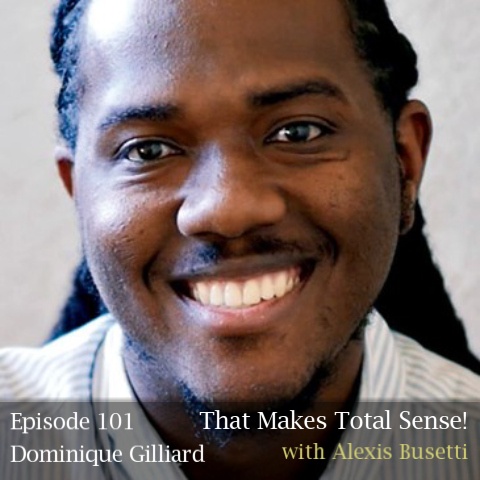
Speaker 1 00:00:39 Okay. Everybody I'm so thrilled to be sitting across from Dominique Gilliard today. And we're going to talk about a book that's a couple of years old, but I'm so thankful for the word still in 2021. And that is rethinking incarceration, advocating for justice that restores, Hey Dominique. Hey, excited
Speaker 2 00:01:00 To be on with you and your community. Thank
Speaker 1 00:01:02 You so much. I do have to say that I was shocked when we were talking right before we pressed record, because you said, yeah, I'm getting stuff ready for another book launch and I'm like, whoa, wait a minute.
Speaker 3 00:01:16 No, no, no.
Speaker 1 00:01:16 Tell me all the details. So can you give us like a little preview of that, uh, about the book that's coming out and tell us the title and when it's dropping? Sure.
Speaker 2 00:01:25 Uh, it's called subversive witness, uh, scriptures call to leverage privilege and it comes out August 24th. And it's a book that really is focused on how do we reckon with the reality of privilege and to do so in a way that allows us to not live in denial, not try to sidestep difficult and challenging conversations or to feel paralyzed by the weight of privilege, but to actually understand that the gospel invites us to strategically leverage our privilege to expand the kingdom and sacrificially love our neighbor. And so I really wanted to give the church some tools to think strategically about how do we move beyond where we are to a more faithful witness that really bears witness to the language I like to use is who and whose we are, uh, through how we choose to leverage what we've been entrusted with for really, for the gospel's sake.
Speaker 1 00:02:29 Yeah. I'm so excited about it. So just so everyone knows, I've already asked Dominique to come back. I haven't even chatted with this publicist yet, but hopefully we can get that set up because I'm really excited about reading the book. And I'm really excited about that conversation. I think that even just the word privilege is, feels like a hot button word right now, um, in the church and politically and all of that. And to, and so to be able to understand what this can look like from a biblical perspective, just makes me really excited. So thanks for writing that Dominique, and sharing that with us right now.
Speaker 2 00:03:03 Yeah. Excited to do it and excited to expound the conversation about religion too. I know when people hear that, they're like, oh, it's just going to be another book about white guilt. That's not actually what the book is about. And we actually talk about privilege beyond just racial privilege. Um, we look at different articulations and expressions of privilege to really see a more comprehensive understanding of what privilege is and how it functions in our society and how we can strategically use it in our own lives. That's
Speaker 1 00:03:36 Exciting. And you, I mean, you were doing a lot of
Speaker 3 00:03:41 Work, you're doing
Speaker 1 00:03:43 A lot of work and, um, one of the things that will give us kind of, I think, um, a little bit of a segue into the conversation about rethinking incarceration is to talk a little bit about the work that you do at north park, theological seminary. Um, so can you tell us a little bit about that in your role, um, with, within the seminary there? Yeah.
Speaker 2 00:04:06 So I'm one of the adjunct professors at the seminary and the school of restorative arts, which is a program that we run inside of a maximum security prison in the suburbs of Illinois, where we are the only institution in the state of Illinois that provides master's level education for incarcerated people. Um, and our program is focused on making everyday peacemakers and conflict ridden spaces. And there are few spaces as conflict Britain as our carceral system today. Um, and we get the opportunity and really the, the blessing to be able to, uh, curate, uh, these cohorts of students where half of the students are, um, men who are serving term sometimes up to 25 years to life sentences. And we pair them with seminary students at north park, theological seminary who come from the outside and join in cohorts, uh, inside and outside students who walk together, uh, in these cohort communities over the course of four years.
Speaker 2 00:05:19 And they learn how to be a pastor or president pro pastoral presence that deescalates conflict in the midst of conflict written spaces. And we're really discipling. Um, folks who become everyday peacemakers, who are disciples, who are actively making disciples inside prison and outside prison, um, all working towards a more restorative understanding of the gospel that really speaks to good news to everyone that in spite of whatever mistakes that you might've made in your life, the gas still has a missional purpose for your life and a, to be an intimate relationship with you. And so it's a beautiful program where we have seen, uh, lives transformed. Um, we have seen the entire prison itself really shift culturally and people have really heard the good news of the program to the point that we're getting a request from other prisons, uh, to actually try to bring a similar type program into their facility because they want to have the same kind of transformation. And we're actually getting a request from CEP for some of our men to literally be transformed, transferred from this facility to other prison campuses, to serve as prison missionaries, um, because they see the culture change, uh, because of the life transformation, the gospel Jesus Christ. So it's, it's been a beautiful program and I'm excited to report that we are expanding to a female facility in Illinois to replicate what we're doing. And it's just been beautiful to see God at work in this way. Wow.
Speaker 1 00:07:01 That's, that's amazing. That's just incredible. I mean, everything from the culture change to the, to the practicality of a graduate level coursework inside prisons, that's just, that's incredible. And it speaks to, I think the, one of the overarching themes of your book and, and, and the, and the work that I've seen from you in this space, which is that these things don't define us, these crimes do not define these prisoners, these inmates, um, God's the dignity that he puts on us as people made in his image. Um, we are all redeemable, right. And, and to pour into, um, this population in a way that's so beautiful, really communicates that in a, in a practical every day, way in more than just saying the words you're valuable, you have dignity. Um, this does not define you. You are going in and putting your money where your mouth is and, and showing it and helping them understand those truths.
Speaker 2 00:08:23 Yeah. I mean, it's, I mean, really taking seriously, um, kinda the words, the Bryan Stevenson may pretty famous, where he said that no person should be forever defined by the worst thing that they've ever done. And we know that while Brian's students, instead of, uh, and popularized, it that's really a gospel truth. And if anybody should understand that it should be Christians, because we know if we were forever defined by the worst thing that we've ever done, we'd be forever separated from God and destined for, you know, damnation. And, but yet because of the grace of God, that is not our reality. And I am a fundamental believer in the fact that, that, that grace that was first extended to us should hallmark our lives and should become something that informs our disposition towards our brothers and sisters who stand in the knees that need of grace today, knowing that, um, the good news of the gospel really is that regardless of what we've done, there are no caveats to that statement in scripture, regardless of what we've done, that God still desires to be in relationship with us and to be, uh, to invite us into mission.
Speaker 2 00:09:33 Um, and so I, I really believe that criminal, our criminal justice system is one of the most prime opportunities for us to bear witness to how much we truly believe that and put faith in action. And I believe one of the other things real quick about the program has been so beautiful is that we've been able to partner with a few people who have been released and to be able to also say that our relationship with them is not confined to when they are behind bars, but to actually invite them into beloved, supportive community of discipleship and mentoring and accountability, where we can walk together and really put what we learned in the classroom into Praxis. Um, and see last chains and see men, um, in this case, because it's a male facility who, you know, our society is taught to think of as people who we should keep a distance from and, uh, love from a distance to really invite them and equip them to help return to communities and make them safer places.
Speaker 2 00:10:52 And to advocate for restorative justice. This is that we don't outcast people and lock them up and throw away the key and forget about them. But we know the transformative power of the gospel and through, uh, through relationships and the power of the holy spirit, we know that change is possible, and we really equipped these, these men to bear witness to that in their lives. And so that's been one of the other really beautiful parts about it, uh, is to see it really come full circle where many of these men are now actively, um, in situations where they are actually speaking into the lives of other folks who might be going down this way we're path, and they can speak from personal experience and really say why, why there needs to be a pivot, why there must be an adjustment to worldviews and practices that might've become normal. Might've just become dysfunctional kind of patterns that just kind of have not really been thought through critically, um, to say like, Hey, there's a, there's a divine interruption that needs to take place here. And let me show you what that looks like. And let me show you why that's so necessary. So that's been the, the, the other really beautiful piece of this program.
Speaker 1 00:12:12 Oh, that's, that's awesome. It's making me think of all sorts of questions, but I'm going to save some of them
Speaker 3 00:12:18 Because, um,
Speaker 1 00:12:19 Because I'm, I'm thinking we'll get there. Um, I'm thinking we'll get there down the line, but thank you for sharing, uh, that, that beautiful program with us. I just think that it really, um, kind of sets the stage, right. So gets us in, in a good mentality when we start going down this road, because this is a difficult conversation. I know one of the, I don't remember the exact stats that you, that you shared, but, you know, part of this was how many pastors are talking about this from the pulpit. Um, and the answer was not many. And if you're white, probably none. And if your church is mainly white, probably none. Right. Um, and, but this is not because it's not an issue that the church shouldn't be involved in. We, we definitely should be involved in, in theologically. This matters, not just on this high level of, um, you know, something in theory, right. But this matters because of how we interact with our neighbors. So I would love for you to kind of start, because I think most of us are probably aware of the fact that the United States has more people locked up than any other industrialized country in the world. And we don't just beat them. Like we have really, we have taken the whole cake on this one. Can we start there?
Speaker 2 00:13:47 Yeah, yeah, yeah. There, I mean, we are, we are a nation that is become addicted to incarceration. Um, and you know, one of the ways that that's most explicitly articulate is the fact that, you know, we are a nation that, you know, declares itself to be the home of the brave and the, uh, the land of the free, but the 13th amendment says that slavery in our nation is still legally permissible, um, for those who have committed a crime. And so, you know, it just really, it contradicts some of the ways in which we define ourselves and declare ourselves that we still have a system of slavery that is operative in 2021. Um, and you know, some people, you know, will well chafe a little bit at the language of slavery, but that's the legal language. Um, and the fact that, um, you know, we have to look at how profiteering is connected to our carceral system and has been really since the declaration, uh, I mean, since the massive patient proclamation, um, and particularly after the reconstruction era, um, we really start to see this, this connection between, um, profiteering and incarceration, uh, in 1877, really, as we get the emergence of another sinister system that was made possible because of the loophole and the 13th amendment, which is known as convict leasing.
Speaker 2 00:15:31 Um, and so, uh, for folks who are really interested in that, I go into it in the book, but another really great resource to look at for that is a book called slavery by another name by Douglas Blackmon. Um, but it really looks at, uh, the how fiscally lucrative high incarceration it has been. Um, and why, uh, this is so important because we know as Christian scripture tells us, but the love of money is the root of all kinds of evil. And when we look at our system, just to give you a kind of quick example of how lucrative, uh, COVID leasing was, we know that, um, the state of Alabama had the best records for conduct leasing, uh, throughout the nation. And we know in that state alone, at least 200,000 black men were leased as convicts and the money earned in 1890 from convict leasing in the state of Alabama alone would have been equivalent to $4.1 million today.
Speaker 2 00:16:34 Um, in 1898, convict leasing supplies, 73% of the state of Alabama Alabama's, uh, annual state revenue. So this was not some small scale thing that just happened by chance. This was, uh, the way that I talk about time to leasing was that it was a seven strategy to resuscitate a deflated economy after that massive patient proclamation and particularly after June 10th. Um, and so, um, yeah, so I think that's, that's a big part of it. And today, when we talk about the economic, uh, exploitation of incarcerated people, we really zone in on private, the privatization of prisons and how lucrative private prisons have become not only from the commerce that's produced by people behind bars, which produce everything from license plates, to airplane parts, for Boeing to the uniforms our children wear when they go play sports to furniture that you used on college campuses, uh, to out on California, uh, incarcerated people are taken out of prison and actually deploy to fight the wildfires that rage every summer, um, to, um, the amount of money that's actually invested on the stock market, um, in private prisons and how, um, over the last decade, private prisons have consistently been one of the top five most bought and sold stock on wall street and have been one of the most severe, uh, secure investments a investor could make, um, to the ways our banks have been complicit, how our banking systems have been complicit in making loans to private prisons and, uh, allowing that enterprise to expand.
Speaker 2 00:18:25 And thank God again for the witness, uh, people like Brian Stevenson, who, uh, courageously went to banking executives and really make clear the relationship between their lending practices and the expansion of this, uh, dehumanizing system of private prisons. And, uh, because of that, um, a couple of the biggest, uh, institutions decided to no longer lend to private prisons. And so, um, yeah, there's, there's this long, very tenuous, murky relationship between economic exploitation and incarceration. Uh, and I think it definitely contributes to the inflated numbers, uh, and I'm precedent the numbers we're seeing in our country over the last couple of years,
Speaker 1 00:19:17 I think, with all of that. Um, so I'll just note real quick that I'm, I'm jotting down the things that we're mentioning, so I can link them including slavery by another name, but I also jotted down the documentary 13th, which features Bryan Stevenson, which I think is a great place also for people to start. Um, I had, uh, uh, someone who was close to me actually just kind of had her eyes like ripped open when she watched that one and watched it again. Um, right. Because I think, I think that was, uh, that's, that's kind of a good place to also get some of this background information that you're talking about. And as you're talking about all of these factors,
Speaker 2 00:19:51 Just two more real quick that I think are also really good. Um, so a very, uh, nice entry way to this conversation is the film just mercy, uh, that was made, uh, from Brian Stevenson's, uh, best-selling award-winning book. Um, another one is a documentary that is made about Bryan Stevenson called true justice. Um, and you can actually access that on the equal justice initiatives page for, and watch it for free. And then one last one I'll give you that's connected to this broader conversation, but not explicitly to the private prison piece is a Netflix docu series called when they see us, um, that really tells the story, uh, the central park, um, murder investigation that went on and the role that race and class and mental health all played in how that actually played out. And so, um, those would be a couple other resources I had had that would be really, um, good. How, and, and for Texas people, there is a documentary that's really important by PBS called Tulia, Texas that tells the story of a really watershed case, um, in our criminal justice system around how, um, the war on drugs in particularly plays out, which is, I know something we'll talk a little bit about, uh, as we continue to go. So
Speaker 1 00:21:22 Yeah, I hope I hope we can go there next. I was, I was just going to say with everything that you're talking about and all of that, I'm like imagining kind of this spider web of things, right. That are kind of creating this, you know, this perfect storm that we have in this privatization and for-profit prisons and all of this, and you're speaking so eloquently and all of these things. And the thing that keeps coming to my kind of simple mind is this, and this is the bed quotas, right? It's just like, where do we, where, where do we, I'm saying like, as a nation, like, where are we coming from that? We're saying these prisons have to house a certain number of inmates every single night. Like this is so messed up. Like what I learned that about. I think I first learned that in the immigration system with the eyes to beds, and then as, you know, continued my journey throughout the years and everything and learning this about private prisons as well. Um, this is crazy. Like we have, we have created, um, a system and, and, and we have to live in it. There are no, anyway, it's, it's just, it's just insane. But yes, you can comment on that if you want. I'm just, I just was throwing it out there and then take us to the war on drugs because it's all connected, like you said.
Speaker 2 00:22:46 Yeah. Yeah. So I think, uh, what you're saying is critically important. I think we really have to look at the morality of the system that says that every night, a certain percentage of a private prisons facility must be field or a community can actually be sued as being in violation of contract with that private prison. So to unpack that a little bit for folks, when private prisons come into the community, they usually go into a sparsely populated community. That's usually in a more rural context where the kind of unscrupulous activity that goes on is out of sight out of mind. Um, usually when they come in, they come into communities that are, uh, economically, um, needy and they come in and they promise that they were going to bring, they're going to bring, uh, in the abundance of jobs. And when they come in, they come in generally with a 10 year contract.
Speaker 2 00:23:53 And in the contract, there is language of a bed minimum that's written into the legal language of the contract that says that every single night, this percentage of the facility must be field. And usually that, uh, quota percentage ranges from 70 to a hundred percent occupancy. And yes, there are private prisons that have had a hundred percent occupancy rates. In fact, at the time I wrote the book, the state of Arizona had three of them. Um, and there has actually been a case where a private prison sued a community for not having enough people incarcerated because it was in violation of the bed quota minimum. And so I think we really have to ask real questions about what does that do? The kind of coercive pressure that places on law enforcement, um, be it from I S or be it, uh, narcotics, be it, whatever, um, to make sure that the beds are field.
Speaker 2 00:24:56 And when there is that kind of pressure, we also have to soberly look at the fact that disproportionately that coercer presser is applied in communities that have the least means to defend themselves against this type of targeting. So we're talking about immigrants, we're talking about, um, undocumented folks, we're talking about people with mental health challenges. We're talking about the poor, we're talking about people who have substance abuse, addictions. We're talking about, um, folks who are on the fringes, and there's no wonder why these folks disproportionately are the individuals who constitute the people who are behind bars and our criminal justice system. One of the things that I say in the book and elsewhere is that the vast majority of people in our criminal justice system are there for non-violent offenses. And they are individuals who actually need some form of medical intervention rather than incarceration.
Speaker 2 00:26:01 Um, and we've seen a number of police chiefs and cities across the country come out and blatantly say that the war on drugs has been a failure because it actually is not reducing incarceration and that you can not incarcerate yourself out of an addiction, but this is actually a public health crisis and that it should be responded to as such. And so, you know, I'm so thankful that, uh, the way that we have responded to an even framed the opioid crisis has been very, very different than the way that we framed and responded to the crack epidemic. Um, I do think that we have to really soberly see the role that race played in that, and disproportionately who's being impacted by the opioid epidemic and who was being impacted by what communities were actually being targeted through, um, our response to the crack epidemic. But nevertheless, I am grateful for the shift.
Speaker 2 00:27:04 Um, it is a more restorative shift. It is a shift that is ultimately going to lead more individuals who are actually addicted to be able to be, um, rehabilitated and hopefully, um, weaned off of these addictions so that they can be who they were created to be. But I think we have to really reckon with the way in which, um, race and class have really fundamentally informed how that response and that framing of those two different epidemics have played out. Um, when we look at, uh, the war on drugs, uh, we see that, you know, the war most people know at this point, the war on drugs was launched in 1971. Um, uh, right before the war was launched, there was a national survey that went out and asked people what was the most pressing issue in America at the time. And narcotics was very low on the list.
Speaker 2 00:28:09 Um, but instead of responding to what the, the constituency said were the most pressing needs, there was this debt, this decision made to declare a war on drugs. Um, and in the war on drugs, we saw this unprecedented amount of dollars earmarked towards, uh, narcotics and towards sweat teams. We saw the evolution of sweat teams. We saw, uh, brand new practices, like no knock warrants and dramatic entry rates, which have been in the news more lately. Um, most people kind of connecting that history and legacy to Brianna Taylor in recent years, but this, uh, this conversation is really how I got involved into this work. Um, and so I'll tell a quick story about that. And so my senior year in undergrad, I went to Georgia state university in the heart of downtown Atlanta, and about 10 miles away from my college campus was a community that was stigmatized for drug trafficking.
Speaker 2 00:29:20 And, um, because of the proliferation of drug activity in the community, there were some, uh, narcotics officers who were deployed into the community and they were commissioned with doing stakeouts to try to discern where the epicenter of drug trafficking was flying from. Um, so after a few nights, one officer said that he had discerned where it was coming from. He went to a judge and petition for a no-knock warrant, which is a piece of legislation that allows law enforcement to in beta premise without having to stop and not their presence has law enforcement show any kind of identification before invading the premise. Um, the logic is that no knock warrants are most often given out an association for drug searches because P officers need to get into the premise quickly before drugs and drug paraphernalia can be flushed down the toilet. So, uh, disproportionately no-knock warrants are given out and impoverished communities of color.
Speaker 2 00:30:20 Um, and the officer petitioned for the no-knock warrant, he was granted the no-knock warrant and the next night him and two other officers came back to the home in which, uh, the officer I had identified as the epicenter for drug trafficking, they performed a dramatic entry rate, which is when, uh, law enforcement SWAT teams in particular come with military grade weaponry and armory bulldozed the door, usually at the crack of Dawn and with, uh, shotguns drawn. And that's what happened in this case. They came to the home at 3:00 AM and when they did so, um, the home that they invaded was solely occupied by a 92 year old grandmother by the name of Katherine Johnston. Uh, she lived in a community where there, like I said, there had been drug activity and she thought someone was trying to break into our home. She goes to try to grab protection.
Speaker 2 00:31:18 The officers say that they think she's trying to flee the scene. They deploy over 30 bullets and federally strike her in her living room. Um, after striking her, they continue the search and the search turns up empty. Um, and at that point, the three officers start to freak out because they want to, they they're trying to figure out how do they legitimate, what just happened. Uh, they make the unfortunate choice to plant drugs throughout her house. And to then go on and say that this was just the batch drug rate. Uh, they crafted narrative, uh, early that morning in her living room, as she bleeds out, the case goes to trial. And during the trial, um, it becomes clear that the officers have lied. And once that becomes clear, they confessed to everything. The first officer, uh, confesses to having fabricated evidence that he presented to the judge to get the note, not corn, which legitimate, the whole thing, the three officers confessed to killing her without cause.
Speaker 2 00:32:22 And they also confessed to planning trucks throughout her house. Well, when sentencing comes down after all of that confession, the three officers are sentenced from a range of five to 10 years, which is a fraction of the time that this 92 year old grandmother would have there. She actually would have been involved in drug trafficking. And at that point I knew that there was something fundamentally wrong with the system that we were calling just, and I, I knew that I had to get involved, um, because if I didn't knowing what I knew that I, I became complicit with the brokenness. And so I went back to school the next day. And, um, my professors were saying as concerned citizens, we had an ethical and moral responsibility to go advocate for legislative change. So that vulnerable people like Katherine, Justin, and communities, like the ones that she came from, didn't continue to be systemically preyed upon like this.
Speaker 2 00:33:20 And I say, yes, that feels right. That feels good. That feels true. But then when I went to my church on Sunday, my church, instead of being 10 miles away from where this happened was 15 miles away from where this happened. And it had nothing to say about it. And I said, how can the people of God not be the ones who are helping to lead a cry against the unjust system that is dehumanizing people and really violating the sanctity of human life? How can the people of God not be the ones on the front lines doing this? And so that really commissioned me to really press into the word of God and do this deep study of scripture, because I wanted to see what scripture actually had to say about criminal justice systems or, or, you know, making sure that justice was done particularly to the poor.
Speaker 2 00:34:11 And as I did this piece, biblical texts were just jumping off the page. And I was just like, I mean, I knew I had something to say, but I didn't know it had all of this to say. And as I really started to consolidate my findings, I, uh, put together a presentation that I started to giving locally. And then I started getting requests for statewide and regionally then nationally. And I was actually given this presentation at a national Christian community development association conference and, uh, uh, book acquisition, uh, editor for IVP sat in on the presentation. And they came up to me after the presentation. And I said, is there any way that you can turn this presentation into a book? And that's actually how we got, uh, rethinking incarceration. And so yeah, this, this conversation about the war on drugs and its impact, particularly on impoverished communities of color, um, disenfranchised people, um, is near and dear to my heart. And really, um, to the book itself,
Speaker 1 00:35:19 I appreciate you so much sharing that story. And, um, I won't go into everything, but it just, it's, it tracks so much with, um, with my experience in the church as well. Um, it feels lonely sometimes. Yeah. Uh, to kind of live in these evangelical spaces and to have a heart for what you believe is, is biblical justice, but to not have that mirrored by the communities around us at large. And I think, I think the tide is changing or else maybe my communities are just changing maybe a little bit. Um, but you know, I, um, I, I wish I had, I wish I'd found some of these communities sooner. You know, I wish I'd found your work sooner, but I'm gonna, I'm going to go way back for a second. And, and I I've told this in bits and pieces on other episodes, but I was probably, I was in high school and I don't remember what, what year of high school, but I was writing some sort of, um, position paper for an English class comp class.
Speaker 1 00:36:23 And I was writing on, uh, the death penalty. And at the time this was in the, you know, mid, late nineties and there was a, maybe a small, but there was a, there was, there were, there were a multitude of voices kind of crying out for a moratorium on executions in America. Um, I think this kind of ebbs and flows and it, it happens, you know, um, every once in a while, because we were seeing the percentages of people who were actually innocent on death row, um, you know, people who suffered from mental health issues and also just mental disabilities and things like this. And, and I had never kind of in my, in my theological instinct as, as flawed or imperfect as they are, I had never felt in my heart, just kind of in my gut that I'm executing people by the hand of the state was the right thing to do that it was the biblical thing to do.
Speaker 1 00:37:19 And I still hold to that conviction. Um, but in this position paper, I went to speak with my pastor at the time who was, who was the pastor of the church I grew up in, he's still pastoring there. Um, and I, I asked him about it and I went in as this naive teenager, a hundred percent expecting to get an interview that would place him on my side of the position. Like I just knew I was going to, and this white Southern Baptist, you know, pseudo rural area of the Bible belt. And I just knew that I knew that I knew that I was going to walk into that office and he was going to completely be with me. And I was going to leave feeling really, um, you know, vindicated that this is the position of the Bible and of Christians. And I mean, you can probably guess that didn't happen.
Speaker 1 00:38:14 That was not my story. That was not the experience that I had. But from that point forward, you know, that's been, you know, 20 plus years, almost 25 years ago, but from that point forward, even the, you know, I had a little, a little stint in social work, you know, where it's kind of, I just, I expected, oh, this, this office is going to be swarming with Christians. It's just, this is where the believers go. Cause we're taking care of the, of the vulnerable and the, you know, you, you put it in quotes every time in your book, which I actually really appreciate the least of these. And this is where we are and we're on the ground. And this place is just going to be swarming with church people and Christians. And, and it wasn't, I mean, again, you know, the kind of in my early twenties and then, you know, a few years ago I was working on a project and I had, you know, in the subtitle of this project, the words, social justice, and I was very calmly and kindly told by an older experienced pastor in the space that if I wanted any church people to look at this project, I better erase those words and figure out a new phrase to put in.
Speaker 1 00:39:14 And every time this happened to me, it felt like I got just, I mean, just right through the heart right. Every time. And I think it's my own fault, right? Because every time I come with these expectations of, no, this is going to be different this time though. It's getting, you know, and I'm not saying, I, I'm not saying my views are perfectly informed or anything like that, but it's just, it's kind of always just been my gut, right? That, that this is we should be responding in a different way than what we see or to your point. And that's true. We should be responding at all. Um, I want to say
Speaker 2 00:39:51 I don't lose that hope. I think, no, I, I mean, you know, again, I don't want to just be a parrot of brands Stephen said, but when he talks about hopelessness as an enemy of justice, and I think when we lose hope that things can change and should change, and that the church itself has the capacity to change, then we're no better off than people who believe that incarcerated folk have no capacity to change that they actually are irredeemable. And therefore the justice, uh, the death penalty is actually justifiable because at the end of the day, the reason why I am vehemently against the death penalty is the fact that at the end of the day, what it says is that certain people are beyond redemption, that all we can do for certain people kill them and, you know, add the privilege of actually interviewing Brian Stevenson for a story with Christianity today.
Speaker 2 00:40:54 And he said, a women just Marcy was just coming out as a film. And he says, I think the threshold question, when it comes to the death penalty, isn't do people deserve to die for the crimes they've committed? I think the threshold question is, do we deserve to kill? And I think it's a fundamentally different question that should lead us to a very different outcome. One of the other reasons why I'm so opposed to the death penalty is because of the alarming rate of error within our crud system in regards to the death penalty. So the equal justice initiative is found that for every nine people sent to the death penalty, one person is actually innocent. And Brian tells us a beautiful kinda analogy. He says, could you imagine if for every nine planes we sent into the sky, one of them crashed. He said we would cease the buy.
Speaker 2 00:41:50 And he said, we would cease the fly be, eh, because we would see ourselves as concerned about those people who died. But something happens to us in the way that we think about humanity. When a person is actually, uh, convicted of a crime and sentenced to death penalty, our compassion, uh, really dries up. And we don't see ourselves as connected to these people as concerned to these people. And so we can see a one and nine rate of error and not be moved to our core in the way that we should. And he says, and I don't really believe that that is a acceptable response for the people of God. Like we, of all people should have a different level of care, concern, compassion, and interest in, um, people even after they fallen down. Um, and then lastly, he talks about the other piece of our criminal justice system.
Speaker 2 00:42:45 That's so broken. A lot of people won't understand, or at least are starting to understand the racial disparities, but the class disparities, uh, he talks about, we have a criminal justice system that treats you better if you're rich and guilty than if you're poor and innocent. And it's that it's wealth, not guilt that informs culpability within our present system. And when we know how poverty and race are so intertwined, and particularly for those who have mental health challenges or citizenship challenges, we know who's disproportionately going to be the ones who are landing on death row. And we know this our country's history and legacy around racism and classism and the neglect of people with physical and mental impairments. Uh, we have to really ask a different set of questions as believers in regards to the death penalty. And does it really aligned with what we proclaim within our congregational spaces, every single Sunday, when we preach sermon, sing songs and pray prayers, thanking God that there's nothing that we can do that can separate us from the love of our savior.
Speaker 2 00:43:54 But then we turn around and go into the ballot box when we actually support the death penalty. Um, we can't have it both ways. Um, and the gospel Jesus Christ is so scandalous that it says that nothing we do can actually separate us from the love of our savior and should be able to separate us from the love of the body of Christ. And so I think this conversation really calls us to, to double beyond politics because it's at the end of the day, it's not a political question about liberalism and conservatism. It's a theological question about, do you truly believe what the gospel calls us to? And it is a belief that no person is beyond redemption in spite of what they might've done. I mean, Brian says it this way, we need more Christians who believe the salts can still become Paul's in the world today. And that's really what we're talking about. I mean, cause Paul was a persecutor of the church. He was this person who was everything that we would call from a super predator to an animal criminal or rapists coming from our Southern border today. That's what Paul represented and we see the transformative power of the gospel in Paul's life. And do we still believe the gospel still has that transformative power today? Um, and I believe when we opt to support the death penalty, we opt to say no. Um, and we make the gospel too small.
Speaker 1 00:45:19 Yep. That's that's, that's what I got on that one. Yep. But you know, but I, but it's, it's all over the Bible, right. I mean, I struggled with David for a long time. Right. And I'm like, okay, let's just be real about what David did. Okay. If he was on your Dateline show her what? I don't know. I don't want to say, I don't know what the kids watch these days. Right. It was on your feed was on your murder podcast. Or if he was on your, you know, your crime show on Netflix, nobody would look at him and say, well, there's a, a man after God's very own heart that, that ruler, that political ruler who raped and abused and murdered and lied and can see, you know, no one say, right, no one's saying that. Um, but, but about David because of the power of God. Yeah. Right. So man, I, I think in the few minutes, because this is funny, I'll just tell everybody we, we had like some, we had some legitimate notes at the beginning of this conversation. I mean, you got to back me up on this. I'm sorry.
Speaker 1 00:46:32 No, what we got was so much better than the notes is what I'm saying. What we got was so much better than the notes, but we did have, we did have a few notes and so we missed them, but you don't have to because you can grab the book. It's incredible. But in the book, Dominique talks about the war on drugs. The other pipelines that read that lead into prisons like immigration, um, mental health issues, the prison to school, which was like rocked my whole world. Um, and then he talked, he has a whole part. This is not what your publisher called it. I'm going to call it the, so what part? Right? This is the question to the church. So what, um, and he has a whole, so what section for all of us, right? Everything from the reformation to, uh, penal substitution, this, this theology on a tone mint. That is just, anyway, I wish you could just do a whole do a whole hour on that. Um, you know, chaplaincy prison ministry, all of that. But I think maybe where we can land it because you were already bringing us there on the runway with that on the death penalty is restorative justice.
Speaker 1 00:47:38 That I think the thing that struck me the most is, is to get out of our heads with what, what the us, or what other countries, what states say about, I mean, nation states, right? Say about what justice is when they define what justice is as being a crime against the state. And when you talk about restorative justice being relationally based, because when we, when we commit crimes, right, we are, we're messing up our relationships. And so how do we get these things back? Right. What does justice actually look like when we're talking about biblically restorative justice? Um, maybe one example. I just, I just thought of this. If you can elaborate, there was, um, a case study that you shared in your book that I think would just kind of bring this point home really beautifully about, um, not remember where the school was, but one of the school systems who had started kind of doing the scent was the kid who stole the teacher's keys. Can you talk about him? I feel like that's such a beautiful, beautiful example in, in him, on the ground. And then, and then we can let our theological imaginations grow after that, of what this would look like, you know, um, in our world, if we operated that way, I'm
Speaker 2 00:49:04 Going to give you another story. Uh, just because that one's in the book. So people get, they actually pick up the book, they can, um, they can get that story, but I'll give you another story that just happened a few months ago. So, um, there was a student in a school in, I believe it was Indianapolis. Um, and he came into the school and as most schools there is a policy against wearing hats inside of school. And so he came into the classroom with his hat on, teacher, asked him to remove his head, the student, put his head down and didn't remove his hat. The teacher asked him again to remove his hat. He didn't, the teacher, uh, gets angry at this point, starts to raise their voice and then ultimately kicks the student out and sends them to the principal's office. Student goes to the principal's office.
Speaker 2 00:49:58 The principal goes, Hey man, why didn't you take off your head? You know, school policy, school rules, um, the child isn't interacting with the, um, principal as well. So the principal kinda thinks a little bit and then decides to take a different approach and he starts to shift. And instead of just saying, why, why, why he goes, you know, can you talk to me a little about, about what's going on? Uh, how are you feeling today? Like what's, you know, are there any other factors what restorative justice really does or seeks to do? Is it six to go beyond the actual incident at play to get down to the root causes of what's actually causing the dysfunction or the, the misbehavior. And so he starts to try to mind a little bit deeper and then the boy starts to open up and starts to respond to them.
Speaker 2 00:50:48 And then ultimately it comes out that the boy, uh, his family had just fallen on really hard times. Um, because of that, um, one of his parents had tried to give him a haircut and the parent had jacked up his head and he didn't want to take off his hat because he was too embarrassed. The value's going to get picked on and berated by his peers because of the jacked up haircut. The principle unbeknownst to the boy had actually been the barber school and actually had some Clippers in his office, any, he laughs at it, he lasts, you know, with the boy and makes fun of it. And he said, Hey, come over here. Let me actually hook you up. He gives the boy a haircut. The boy takes off his hat and his disposition is entirely different. And he's able to go back to class.
Speaker 2 00:51:35 He's able to learn, he's able to engage and respect authority figures. And it's just this beautiful example of how, if we just take one or two more steps, we can actually really empower people who are going through circumstances that caused them to act out in ways that are not appropriate. So nobody's explained, and nobody's excusing his, uh, uh, breaking of the rules or anything, but there are logical rationales going on for people oftentimes who are acting out in this way. And restorative justice really pushes us that say, can we take a few more steps to actually get down to the root cause instead of just seeing a misbehavior and punitively, responding to it in a way that doesn't allow for us to actually get down to the roots of what need to be tended to, if we're going to actually Bre transformation and a more beloved community.
Speaker 2 00:52:31 And so it was just a beautiful example. Um, the story in the book is a little bit more tangible in some ways in regards to the violation and how it was intended to attended to the restorative circles. But I think, um, the outcomes are the same and in what it takes for us to take the responsibility to say like, yes, it's easier to punish, but is punishment actually what we're after, uh, as we try to build community and bear witness again to who and whose we are, is there something distinctive of how, how we respond to disfunction and misbehavior as the people, God, that can actually lead to a more restorative and holistic outcome than just punishment? Because at the end of the day, God's justice is not just about punishment. God's justice is inherently restorative in nature. And then when we think about our criminal justice system, it's something that breeds, uh, opportunities for lasting rehabilitation, reconciliation and healthy reintegration for returning citizens after they've served their time.
Speaker 2 00:53:37 Um, it's not something that forces returning citizens, the Dawn, the Scarlet letter of incarceration that will forever hallmark their lives for the rest of their lives. And people will be again forever defined by the worst thing that they've ever done. Uh, if somebody goes to is incarcerated and does their time, we say that they paid their debt to society, but right now in our current system, those people continue to pay their debts for the rest of their lives. And that's the debt that impacts their entire family systems and networks and communities. And so there is a more holistic, uh, transformative way to think about accountability than just punishment. Um, and I think restorative justice gives us the tools to pursue that as the body of Christ.
Speaker 1 00:54:21 Amen. And, and, and we have to be discipled into that. Yep. You know, I mean, we, we say, you know, when you're talking about singing, singing songs, that there's nothing that can, that can separate us and it's like this, we can't have it both ways right now. And I think the phrasing that I grew up with was it's all about relationship, right? It's about relationships, about relationship. It's about relationship with Jesus. It's not just a prayer, you know that, yeah, that's all legit, but we can't have it both ways. We can't say that it's all about relationship. And then when someone has transgressed us, like we say, in the Lord's prayer, then, well, then that relationship part just goes out the window, you know? And, and, and we have to be, we have to be discipled into this and, and train our brains, let God renew our minds and, um, and, and train us. So that, that is what I don't, I don't know if it'll ever come naturally to us, but that's what comes super naturally to us is to, is to explore that restorative justice
Speaker 2 00:55:17 And restorative justice, isn't just some pie in the sky theory. It's something that's actually been tried and proven to be successful both internationally and in our country, uh, both in our criminal justice system and within our school systems. And so, um, I think that's really important. Uh, so one of the examples would be, uh, restorative justice approaches helped, uh, eliminate the need for juvenile detention facilities and New Zealand. Um, they were used to address, uh, racial conflict and gang violence and Rio de Janeiro. Um, and they were used in post apartheid, South Africa, internationally. And we seen them used within our, uh, educational institutions across the country, particularly in major us cities, uh, to keep kids in classrooms longer, um, in a way that allowed more people to be able to graduate and to actually stay in a learning context. And we've also seen them used in, uh, carceral facilities.
Speaker 2 00:56:19 So for example, there was a program in Indianapolis, uh, where would juvenile, uh, offender people, uh, who have committed juvenile offenses were 96.2% of victims who participated in a restorative process, said that they were satisfied with the process compared to just 72% of those who did not participate in a more restorative process. And so it's something that actually brings more of a satisfaction to both those who have caused the, and those who have been harmed by offense. And it's also something that's been proven to reduce recidivism. So that's the likelihood that a person will go back to being incarcerated after they've been released. And it's also something that has been proven to actually produce reconciliation in a way that our current system is not set up in a way that that's really a possible reality for most people, um, in most cases. And then the last way I want to really courage people to think about restorative justice, um, is through, uh, AF offering higher education behind bars.
Speaker 2 00:57:23 So higher education behind bars is the most, uh, efficient and effective way to reduce recidivism. So has been proven that for every dollar we invest in higher education behind bars, we get $5 return on our investment. There is nothing else that's even close to that successful in regards to, um, uh, economic efficiency and also, um, reducing recidivism. And so this is a critically important opera tonality before us right now, because there are real conversations that are going on nationwide about the reviving, something called second chance Pell grants, uh, which were, uh, grants that were dedicated to allowing people behind bars to be able to pursue a higher education, which is critically important because the not top two reasons why people ultimately are, uh, reincarcerated is because of their inability to find a work that pays a livable wage and long-term secure housing. Um, and so if people are able to come out credentialed, um, with an expertise in a field, um, they are much more likely to be able to secure both of those things and, um, not have to return into the system.
Speaker 2 00:58:47 And so I'll send a couple of resources for people to continue to explore these conversations a little further, uh, for the show notes. Um, cause I know we are running out of time, but, uh, the last thing I do want to say, um, about this conversation for the body of Christ is this conversation is not something that's disconnected from our faith. Um, the reality is that that five of the books of the Bible were written in prison. Um, this is, uh, and even more than that, there is no good news without people. And I don't metaphorically mean that. I literally mean that there is no gospel without incarcerated people, uh, Jesus, the author and perfecter of our faith, John, the Baptist, who was called to pay the way for Jesus Paul, who wrote the majority of the new Testament and Peter who loved Jesus said would be the rock of his church, Sampson Hannah and I had to see her Joseph Malakai, Steven, Jeremiah Shadrach, Meshach, Bendigo Silas, Jr.
Speaker 2 00:59:45 Andra. Nikas all incarcerated people and there's even more, and we're not even talking about the people like David, like you mentioned, who should have been incarcerated for their criminal offenses and you know, and so while all these people were incarcerated for bearing witness to their faith, um, I think that should implore us to ask why when we do discipleship today, do we not see our faith as something that caused us into such a orientation in the world that we are disrupting the press of status quo and that we are willing to understand that disruption and the consequences that come with that disruption as a cost of our discipleship. Why is that not how we understand discipleship? Because the early Christians understood that following Jesus meant disrupting the status quo of the empires that they were in. But somewhere along the way, uh, Christianity has become in the west in particular, something that is either aligned or affirmative of kind of the orientation of nationalistic ideals in a way that folks who actually tried to disrupt some of the status quo in the way that the early church did because of their faith in Christ actually become people who we see as unchristian.
Speaker 2 01:01:18 Um, and so I think that there's some real questions that this should cause us to rescuing with in regards to our discipleship. And what does it mean to faithfully follow Jesus in the midst of worldly and priors that have other priorities and interest?
Speaker 1 01:01:35 That's it? You said it. Oh my goodness. Thank you so much. This is, um, this is the book I'm really thankful. I'm really thankful. Thank you for, um, I'm glad you said yes. When they said you can turn the presentation into a book. I'm glad you said yes. And thank you because these are important ideas that we wrestle with. Um, you know, it's, your book is about mass incarceration, um, but on issues of justice and issues of race and issues of class and issues of marginalization and issues of just being in community with one another. Um, there's so many places where we need to wrestle with what we've been taught and, um, and what we see in the scriptures and how to work that out through our discipleship. So thank you so much. Um, I've already asked you back, but between now and then, where can people find you online? Yeah,
Speaker 2 01:02:34 So people can find me on Mr. Graham had Dominique D as in Dominique. Giliard um, on Twitter at D D Giliard and on Facebook at Dominick D Giliard. Um, and then you can also go to my website is Dominic Gill, your.com. So
Speaker 1 01:02:55 Awesome. I'll put all of that in the show notes as well. And then we've got a plethora of resources for everybody here, and then I'll wait for you to add those, uh, those last couple of ones and I'll, and I'll tack those in there as well. Thank you so much, Dominique, for the book for coming on for this conversation. Um, wow. I just really appreciate your words in this space.
Speaker 2 01:03:15 Thanks for having me
Speaker 0 01:03:18 The links for all the resources mentioned in today's episode can be found in the show notes, music and podcast production by Seth B city. Be sure to give us a review on iTunes and subscribe at your favorite podcast listening app, you can also visit us at that. Makes total sense.com <inaudible>.