Episode Transcript
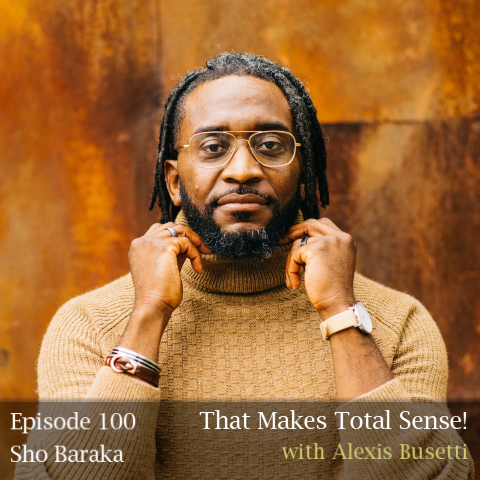
Speaker 0 00:00:07 Welcome to that makes total sense. A podcast dedicated to exploring God's generosity and justice. I'm Alexis resetting the Christian, aiming to ask good questions and encouraging you to do the same. Every one of us is wired by God to live out generosity and justice, but the house sometimes alludes us. That makes total sense is a way for us to get together. Posture ourselves as learners and challenge one another to practice generosity and justice in a tangible way every day. All right. Well, I am like, I have like layers of excitement today. As I'm sitting across from my guests, the first, I didn't even tell my guests before we got started, we're recording episode 100 right now.
Speaker 0 00:00:56 And this is like, I'm so pumped. This is anyway for something I thought I would never ever do. And now I'm having way too much fun doing it. That we're recording episode 100. This is amazing. So, um, I'll say thank you everyone. Who's listening. Congrats to the podcast. I feel like congrats to me, congrats to my guests. You're here with me on episode 100 and the layers I was listening to the album of our guests this morning, as I was prepping for the podcast, the kids came in and said, what are you doing? I thought you were getting ready for the podcast. I said, I am. I'm interviewing him today. And the him is show Baraka. Hey show.
Speaker 1 00:01:37 Hello. Thank you for having me. Um, I'm excited to have this conversation with you.
Speaker 0 00:01:44 I'm excited too. And we're, I mean, I'm sure we'll talk about the album some, I mean, cause I probably won't be able to not talk about it. It's like constant right now for me and my house. Um, but the book just came out. He saw that it was good. Re-imagining your creative life to repair a broken world show. This book is incredible. Oh wow. Thank you. Thank you.
Speaker 1 00:02:14 I it's still, it's still, it's still all types of people for this book is incredible. I'm still like, I think good line, but
Speaker 0 00:02:24 I'm trying to tell you if you can see my copy in real life right now, I'm like, first of all, it's like a little bit like the pages got wet because I was reading it at the pool. Um, it's like, post-it note the dog ears. I, it was one of those books that it was like, I think it would've been easier to not mark the things, you know, as opposed to marking it all up because, and I've got, you know, some of these really profound notes in the margin, like, and, and whoa and preach and yeah, stars. Sometimes it's just stars sometimes because I'm like, what is this? Yeah, it was an absolutely incredible book. Thank you so
Speaker 1 00:03:07 Much. Yeah.
Speaker 0 00:03:11 I want to know because you're an artist. I see you as an educator as well. You're a writer, you're an activist. And so I understand that part probably throughout the course of your ministry and your career and your, in your art, that in some ways, this probably came naturally, but what was it about this message, this re-imagining our creativity for the purpose of repair? What was it about that that struck you, that you thought I have to get this out to the church?
Speaker 1 00:03:53 I feel part of the struggle was that I knew early in my life that I was a creative or someone who operated outside of the typical nine to five vocation, even if my vocation was to be of the creative nature, I just knew, and I am, I'm just different. Um, and then when that, I guess fleshed itself out and my Christian faith, the one thing that I really knew that I struggled with was that there were most of the godly people that I knew were either in Christian vocation, they were ministers missionaries, um, worked for nonprofit organizations that did some sort of good Christian social good. And I felt two things. I felt one somewhat of a, a junior, I'd just say a junior varsity Christian, because the real, the real work is done in those particular callings, if you will. And the other thing I felt was there was a deficiency in teaching cultivating or discipling people who did exist in the marketplace.
Speaker 1 00:05:06 And that was my attention for an hour. And, um, I just, I didn't have language for it. I didn't have the nomenclature for like what this problem was, but I just knew it was like, I don't want to be a campus minister. I just don't want to, I don't want to do that. And sometimes I felt bad saying it out loud should say this, but I just don't want to work in a church. I was like, I don't want to talk to who holds my secrets for me. Um, but then later as I just began to, uh, mature read more and, uh, listened to different communicators and people who were in the same predicament as me, but much older, I realized that that was a language. That language was really is what we call now like a theology of work. And so I realized there was a deficiency in a theology of work.
Speaker 1 00:06:00 And so for me, I wanted to make it mine. And this was around 2011, 2012. I said, you know what? I want to, for the people who are going to follow me for the people who are like me now, and even some of the older people who just never had language to put to this, I want to encourage them that no matter where they are, that they, um, their work is important that their work will contribute to the flourishing of the detriment of society. And that we have to be really intentional that those folks are missionaries and they're called equally to their place. Just as much as the pastor or missionary is called, as we see in the scriptures with, you know, the Daniels and the Joseph's. And so, um, and calling doesn't always mean necessarily skillset. It just means that the Lord places you there and you to be faithful wherever the Lord places you. And so, yeah, that was my that's. That's the reason why I was like, this book has to be about that in some, in some ways, shape or fashion. Um, we'll touch on different areas on different things that orbit around that call. But this is, this is what this book has to be about.
Speaker 0 00:07:11 Yeah. As I was, as I was reading it, part of actually, what, what came to my mind when you talked about the theology of work is, um, one of my professors at fuller, uh, Matt <inaudible> just wrote a book called work and worship, and the subtitle is reconnecting our labor and liturgy. And it's it's, as you're saying, like, you know, the FL the premise was, was very similar, which is that like, the people in the marketplace are the ministers, right? Like you're ministering to the world, we're ministering to the world in each of our calling. And we, we feel JV. Like you said, we feel JV sometimes because it's, it's secular, you know, kind of in quotes and what are we supposed to do? But, but when you talk about us, like you, you say in the book work can be for provision and it can be for pleasure and it can be for redemptive purpose, or, and that was just so powerful.
Speaker 0 00:08:16 Right. Because I think we can focus a lot of times. I think we do in general as a society, not just as a church, but as a society. I think we focus on the, on the top too. Right. Well, what do you want to do that? That's kind of the question people get, well, if you, if you could do anything and money, wasn't an issue, what would you do right. Working for blusher, right. Or, you know, or you know, that you just have to, you have to put food on the table. So you're willing to do whatever you need to do. And there's nothing wrong with either one of those things. But when we view our work as being part of God's redemptive purpose in the world, man,
Speaker 1 00:08:54 Whole game changer, it changes. I think it's like the moment when you come into the marvelous light of the gospel, it's like this worldview change, but the reality of the Christian faith is that I've experienced. It's not just this one Revolut revelatory moment. Oftentimes there are many of those regulatory moments within coming to understandings of like, oh, like I'm still learning. I'm still. And so this is a new, my work is important. Um, and so, yeah, I've went through, uh, many of those different epiphany moments throughout, um, my Christian walk. And I think when I got a hold of this concept, that it's nothing to be ashamed of to, to desire or to have skillsets or to be called better yet into a place that isn't vocationally Christian. Um, but also to, to be there and to, uh, to use it for the benefit of other people in the surrounding the societies, in which we exist the most. Right.
Speaker 0 00:10:01 And, and also when I was thinking, so when I grew up vocation was about, for me, it was about stability, right? Like it was, you know, I, I kind of had this idea in my head that you just, you get a job, right. You go to school, you figure out what you wanna do. You get a job. And then you work that job till you're 65 or 70, or, you know, whatever it is. But I think what you, you do touch on it in the book, but also just seeing it in your career, right? Like, like there's not a box that says show does this. This is the one thing. But when I was introduced to the idea of this calling and vocation also being, um, a formative process, right? Like the rest of our lives know our spiritual lives or our development, our even our physical development that it will grow and change and move. As you, as you said, as we learn things as our context changes, you know, um, to allow our, our work and our vocation and our, in our, what we're doing to be creative, what we're creating in the world to also shift and change and move and form as we are, that that is a beautiful thing to, um,
Speaker 1 00:11:17 Very beautiful. And for those people who can't pick and choose where they work, they must understand. And the folks who write the great syllabus are syllabis and talk glowingly impacts, then wax poetic about the theology of work. We must understand that the people who don't get to choose where they work and are working at an institution for 60 to 75 years, that work is just as significant as the ones who get to choose where they are and to work, just to provide in the form of worship. Because the activity of working is a form of worship and a, of who God is. And I think we don't talk about that enough. It doesn't have to be tied to some social good for it, to, for it to be meaningful. Um, although I will argue that almost, I mean, any work is tied to a social good or social betterment. Um, and so the beauty of this book is me trying to castigate what ha how people have worked for good, how people have created for good, how people have told stories for good or create a narrative, some good. But then in the inverse of that, how people use stories for detriment, how people worked for detriment and how people use to create life prediction.
Speaker 0 00:12:32 Yeah. And I mean, I just want to, I just want to put a plug out for the book in this way to say you, you upfront pretty clearly, uh, put out there that we are all creative. And so, and so I think that for people like me, I've never seen myself as kind of quote a creative, you know, that's never been in my, in my frame of reference at all. Um, my mother-in-law was an artist. And so in even, especially like comparing myself to her work and the things that she did, and I'm just kind of like, yeah, that's not what I do. You know, like, I'm not a creative, but, but you put it out there at the beginning that, yeah, you are right. Like we all are. And so, and so I would say this book isn't for people who consider themselves to be artists or people who consider themselves to, you know, were poets or something. This book is for all of us, because we are all imaged in image. And we, in that we create and we share and we all create. Um, so I just wanted to throw that
Speaker 1 00:13:39 Out there. Yeah. If there was a better word than creatives, um, our creators, I would've used it. We're all builders. We're all producers, in some sense, no matter who you are, you're producing students, you're producing children, you're producing law, you're producing, um, products to sale. Some of us are producing art films, songs. And the moment you send that cultural product out, it's telling the story of who you believe God to be. Who do you believe your neighbors to be? What do you believe about them? What do you believe about yourself and what do you believe good is? And we reckon with those things, as they, as they leave our, our position on our hands, if you will. And so I want folks to, to sit the passionate themselves in that like, oh, wow. Like I am producing things about what I believe about society, the world myself in God. And if I'm doing that, hopefully you'll think more deeply about what you're creating it than what you're producing.
Speaker 0 00:14:42 Yeah. Can we talk about those two things? Cause right now I feel a little bit like you're reading my notes and so
Speaker 1 00:14:49 It's cool. Alexis, Alexis, Alexis, Alexis, Alexis. Okay. I have a friend. I have a friend who's, uh, who's uh, Lexi I've been pronouncing his name wrong. He was, uh, he was so anyway, uh, uh, and he, you know, people like they'll say their name enough for you around you so that they could let to know that you're mispronouncing it.
Speaker 0 00:15:23 No, because, because I'm the opposite because I still have my dentist, they put down a nickname for me. I thought we were having conversations show. I thought we were having a conversation in the chair. Like the first time I went don't judge me 11 years ago, the first time I went to this dentist, stop it. And she, the hygienist was like, so did you have like a nickname, you know, growing up? And I was like, yeah, it was like, yeah, my parents used to call me this or whatever chick wrote it in my notes. Now it's on all my postcards. Like, and they're trying to say, like, I can't, and I can't do it. Like, it's been so long at this point.
Speaker 0 00:16:09 I can't change it. So, so now it's my parents and my dentist, um, who called me there. It's fine. It's not like Alexis is difficult, but anyway, I'm sorry. Anyway, sorry. Um, anyway, so you're reading my notes, but, um, but I'm hoping you can kind of do talk about these two things that you've, that you've just touched on one, is that, I mean, a heck kind of three, I'm just gonna, I'm just gonna give you, I'm just going to give you permission to do a sermon here. Cause I'm, cause I'm going to ask you about a few things, but so, um, one is the power of narrative, um, that you were talking about. So, you know, what do narratives affect? How do they affect it? And this man, some people are working in there is work to the detriment, right. And there's also work for the redemptive.
Speaker 0 00:17:04 Good. But this overshadowing idea that you introduced early in the book has been coloring. I've been thinking about it before, but I like your language surrounding it. And that is golden shadows. Right. And, and everybody's, if somebody is your hero, he might be somebody else's villain. Right. And, and in, in this complexity of not just our humanity, but the complexity of our work as well. Right. I mean, when you talked about David, I've always struggled with David. I'm just going to be upfront. I've always struggled with David. Um, but when you talk about these, the golden shadows of David and how we view him, but how arise family, right. Would have viewed him. Right. And, um, there's complexity in this, in this narrative and in this work and in this humanity. So I just kind of want to throw that out because all of those things I was wrestling with as I was, as I was reading. And I just want to say, I don't know, go, it's not a question, but I mean, you know, but can you elaborate on those
Speaker 1 00:18:19 Ideas? You just don't have to remind me of the three, because once I get to talking, I'm just going to get
Speaker 0 00:18:25 Narratives and, um, you know, working to the detriment or to the good idea, this complexity of golden shadows.
Speaker 1 00:18:32 Okay, cool. Cool, cool. Um, yeah. So narratives are, um, I think I saw in the book, I talk about this, but I've, I've often in the past, I got this, this, this idea that narratives are stories, shape, identity. And, um, it's just one of those things that gets applause is also one of those things that people like, huh, whatever. Um, but I think about just me as a young man who grew up around a plethora of narratives that were told to me and I it's everything that I love right now, I can trace back to either someone telling me a great story about this or them having the, uh, this passionate language about why it was something that was beautiful and that created an indelible impact on me. Um, or someone complimenting me about something that, that made me feel good about myself, hip hop.
Speaker 1 00:19:35 My brother brought it around me and told me about it. Ma it gave these just this glowing, I guess you can say, um, uh, this presentation about hip hop music. My mom and my father talked about the Harlem Renaissance all the time and poetry. Um, as I talk about in a book, my mom told me that my, that I look really beautiful in the color red or look handsome and the color red. And so even to this day, I love Ray. I love the color red. And so I think about how the stories have impacted me, how even to this day, I just, for some reason, I just love Harlem Renaissance as a movement, as a producer of great literature, music, and thought I love hip hop music. And those things impacted my life. Now imagine growing up in a house that had an aversion to those things, and I meet an individual who grew up with an aversion to hip hop music.
Speaker 1 00:20:33 And instead of the Harlem Renaissance, they read the inklings and know Tolkien and, and, uh, and, and CS Lewis and other folks are, and then they, you know, their favorite color was green and we sit down and I'm having a conversation with them. And we're, we're exchanging different ideas about how we grew up the stories that were given to these individuals. And given to me shape this, it made us who we are, and in some ways was a catalyst of what we pursued in life. Um, now we can go to an extreme, imagine someone growing up in a household where they're told that people of, uh, you know, Mexican descent are lazy and tired rapist and et cetera, et cetera, right. Or grew up in a household with black people are, you know, they're, this they're dangerous, you know, and et cetera, those things take time to either overcome as even into your adult life.
Speaker 1 00:21:31 You know, you, there are stereotypes. And I guess you can say, uh, um, uh, th uh, ideas and narratives about black people that I have that I know are not to be true, but it's just, they've been ingrained in me, um, and let alone other people groups or, you know, so we can't, uh, we can't ignore how stories shape, not only who we are, but also shape the narrative of history. First, I was having a conversation with a friend and, um, everybody in the world, no matter who you are, except for maybe the few obvious, uh, celebratory white supremacists will say that Nazis in Nazi Germany was a terrible movement. And, um, they were a people group who were mentally distorted, mentally ill, their beliefs were tragic and it's sad. Um, and so the world has created a narrative around now, around Nazi Germany that I think is accurate.
Speaker 1 00:22:39 And that is, um, true and honest. However, we can look at American history and we could see some similar aspects of behavior detriment in American history with the natives of this land, with the poor people of this country, no matter their race, also with the African-American community of this. And I'm not even talking about passing, you know, the reconstruction and get into 19 hundreds and was talking about the first 200 something years of this country's existence, um, with its Asian population, with its Irish pop, you know, and so, um, the difference is the difference with those two narratives. And those two stories is that the winner gets to tell a different narrative and because Nazis lost, they have, uh, uh, uh, a posture of, uh, are there's a, there's been a posture taken towards them. That is more honest. Um, however, because even in American history, we know that there has been, uh, trustees.
Speaker 1 00:23:53 The reality is, is that the majority of the people who benefited from those atrocities still control the narrative. And so here we are, as a people who are trying to reckon with this history yet, and still we feel the, the, the, the weight of that. We feel that the tension of that we feel the psychological warfare that is, that is happening with not dealing with our history. And I'm not talking about CRT or critical race theory at all, because I feel like it has its limitations and its in its, uh, its issues. But what I'm talking about, just the general telling of a story, like all we tell them the truth about who we are. And I just to, you know, go back to the book, I talk about Shaka Zulu and how south Africans have dealt with. I have never, ever heard a black person say a negative thing about Shaka Zulu in my life. And then I go to South Africa and I see this tension with south Africans and how they view this hero. And I'm sitting there like, wow, people do definitely have golden shadow. And so therefore that led me to this, my own personal, just tension with the people that I love. Like it's been very important to deal with the complexity that complicated to as, um, some sociologists call the complex subjectivity of the people we love.
Speaker 0 00:25:26 Yeah. I mean, as you were talking, I'm like, and I agree not, not only about critical race theory, but just right now, I think because so many things are being exposed, you know, and have been exposed in, in America in the last year and a half or so there, there was a meme that came out like right after the insurrection at the Capitol January. And it was like a grown woman sitting in a desk, right. Like this is me when they're trying to teach this history to my kids, like this is me sitting in this chair, making sure they get it right. Right. And I think that that event and, and that kind of, uh, sentiment is exposing, is helping to expose in a way, because it's because we're all going, like I w I was watching CNN the debates over it, like I was watching it happen. Right. And then immediately, you know, started texting with my dad. Who's a, who's a journalist in a, in a political science guy. And, and all this, the math stuff just came in.
Speaker 0 00:26:43 Her name is her name is Brunhilda. We actually call her Hilda beast. So that's actually kind of funny. Yeah. Yes. And she just settled behind me. Um, yeah, she's this really convenient, cause this is the only door that doesn't get that little click when it latches. And this is the one where I record. So anyway, um, but I forgot where I was going, but anyway, but you know, but yeah, but you know, I'm watching it, right? Like we're watching it live. America is watching this live as it's happening and, and I'm going, but, but immediately the narratives started coming out differing. Right. Um, and then you go back to, oh, well, let's talk about the history in America. Let's talk about the native Americans. Let's talk, you know, let's talk about what happened with enslaved people. Let's talk about abolition. Let's talk about the lost, cause let's talk about these things because as you say, you know, the winner gets to write it. Um, and that's not to say that it's all one side is all gold and one side is all shadows or vice versa. Like when you're talking about individuals and the complexity of, of the individuals involved in these. And so, I don't know. I think, I think a good story when we read fiction, what we enjoy is a complex narrative. But somehow when we talk about history, we want to make it black and white.
Speaker 1 00:28:23 Yeah. Because it's too much of a reflection of our own sentiments. And therefore, if we come to the conclusion that this, there may be some truth behind what is communicated, we have to deal with our own personal bent, the benefits that we personally achieve through this historical, these like complexity. And so therefore you're telling me that I'm going to have to give up something or we're going to have to repair something or we're going to have to, uh, our, at the end of the day, it's honestly, it's just lose. I have to move something. And, uh, it's, it's oftentimes more puzzling for me to hear the pushback from Christians because the Christian life is all about loss in so many ways. It's not about power. It's not about power. It's not about obtaining things. It's about losing your life.
Speaker 0 00:29:16 You get a Bullhorn and say that, please, because
Speaker 1 00:29:20 I wish I could. I wish I try. Every time I speak it's about positive subtraction. I guess you can say, uh, the, the more we lose, the more righteousness, the more we, uh, look like Christ, the closer we are to God, the Christian life is a story about a man. God who dies on the cross. And that's a victory. Sometimes dying on cross is a win. And so for us, it seems like we come to this Christian faith, acknowledging that life is about losing it in order to gain only to get to this place where we're fearful of losing can make sense for the world to not want to gain, uh, to not want to lose power. I mean, that's, that's what this world's about. What is it about powers? What is about control? And we are the inverse of that that's Genesis, right? Genesis was about the Lord, given us all of these things, this resource, this bountiful resource of the garden, plenty of things to do unlimited fellowship with him.
Speaker 1 00:30:28 I mean like this wonderful perfected with fellowship with him and with our partners and with the land. And then all of a sudden comes this temptation to want to control to, once you take power of things, to be colonizers of the land that God has so greatly given us, and we're just dissatisfied. And that is the, the tension to this day with humanity is that we want to be God, we want power more control and we'll do whatever it takes. We'll manipulate our relationships. We'll never let our identity and will manipulate the land in order to get those things. And so this is the reason why narratives are important, because I think even in the gospel message, if we don't start with that, if we don't start with Genesis, if we don't start with the fact that the gospel is a narrative, that the Bible is a story, then I think automatically we get it wrong because then we treat it like a textbook and it's not a textbook.
Speaker 1 00:31:26 It's not a, it's not a book of theology. It's a book of stories and it's telling us how. And so the problem is, is we'll take a David and we'll build a theology around that, that incident when him and Uriah or whatever. But the reality is this is a story that's teaching us the complexity of humanity. And just as much as we could be pissed off about David, we see that God doesn't give up. What I mean, it's like, okay, like, that's tough. Like I said, that means I have to extend grace to my enemy. That is tough. And so I say this to the people who are the justice fighters, to those who want reparations to those folks who are fighting for the, as some will say, you know, the right side of history. Um, there's a story. And I say story intentionally in the Bible of a prophet who didn't want to see a people reading and his name is Jonah.
Speaker 1 00:32:21 And so he's preaching. And he sees that there's a wicked people in, in history has communicated and told that these folks have been on the wrong side of justice again and again. And so as he preaches and as he stands before them, and he talks about their history, he talks about their present, any, any warns them of their future. They find redemption, they find forgiveness. God has extended his grace to them. And Jonah is Becks and rightfully so in some ways, but I don't want to go free to the people that I know of who abused may manipulated in and been violent for years and are responsible for the violence of Lexia, to what my people, group and family. And you're telling me to preach a gospel of given this to them, what? Nope. And then when they do that, now I can't, I have no more high ground against them anymore. Like you mean to tell me that I can't tell them, like I can't walk around hot righteousness, shine, bright on them for, I don't have to wake them in the morning as if I'm the sun.
Speaker 1 00:33:38 And so now we must consider ourselves brothers and sisters of the same family. That's tough, but that's what makes the gospel beautiful. Very difficult. Even unreal unattainable at times in some people's minds. But that's what makes it, that's what you talked about. The complexity of a good story, a good novel that's the Bible. The Bible is a bumpy legs novel. It just happens to be true. And it happens to have historicity behind it. And this is the apex of that complexity, this man dying for wretched people and us having the record with this truth as we build hospitality once a month, one another.
Speaker 0 00:34:27 But you know, you talk about in the book, you talk about Jesus, because even though there's no shadow in Jesus, he's all gold.
Speaker 2 00:34:38 He
Speaker 0 00:34:39 Is still complex, right? He is a complex character because we want to write, we want to build this theology around David, you know, we're, we're picking on David today, but you know, we want to build the CLG. Well, he was the king, he was a man after God's own heart. He was, you know, all these things. Yeah. And he was, uh, he sexually assaulted and he was a murderer and he was a lazy king at times and not a good parent, you know, and, and all of these things, right. He had all of these things. And so, but we w we want to put him in a position and we, we want to do that. But we also, when you touch on this, we want to do the same thing with Jesus, because he was all gold, but his actions on earth are still perplexing.
Speaker 1 00:35:23 Yes. Amen. There's there's ways in which we can see that complexity does not have to buy, like people. That's what Jesus does. And, um, I don't know if we've learned that lesson or we understand it, check this out complexity. Doesn't violate people, but that doesn't mean other people don't think that they're violent because there there's still people who didn't, who was like, oh no, Jesus, this is a hard you telling me I can't, I can't bury my mother and father. No, no, I'm not. I'm saying that you should not. Um, if you're really about this particular business. Um, so yeah, there are many encounters that Jesus has. Um, there's an encounter of him with the Syrophoenician woman. And we see, we see the racism and the discipleships. I mean, the disciples they're like, you know, you're a dog and Jesus is, you know, he's like, Hey, what do you, how do you feel about this statement? And she spits this wonderful truth that Jesus is like, man, let me tell you, you're a part of the foe. And, um, and that's a learning moment. Not only for the Syrophoenician woman, I think that's the learning moment for the disciples who had this theology. That was, that was violent in a way. And so now guess what y'all are going to be reaching out to people who aren't Jews, like this is a learning moment and so grow compassion,
Speaker 0 00:36:59 Right. Well, and you, and you said it, but that doesn't mean people, even though he didn't violate people, that doesn't mean people didn't believe themselves to be violated, but you'd go to that. You go right back to Jonah. Some people believe themselves to be violated because he wouldn't violate someone else maybe in favor of them. Right. Or why, why are you sharing? Why are you sharing your identity with this
Speaker 1 00:37:21 Woman? And then, um, and just like go out and shadow. I think I have a friend Lisa Fields who, who has this, who has this a ton of stuff about a humble hermaneutic. Um, and I think we are to just have a humble hermaneutic and, and at times believe that we can carry our convictions, but carry them with compassion. Um, and so this is, this is me trying to operate in life today. Uh, I have very strong beliefs about things, but also recognize that I should not hold them in a way, like a, like a weapon that can hurt people or harm people, but also carry them in a way that there's the potential that I may need to lay this thing down because it could be totally wrong. So I think that's the, that's embracing the golden shadow. The, the way that I try to, rather than, yeah, just talk about being centered, being rooted in the truth that teaches you to love people, um, beyond, um, the characters that we often
Speaker 0 00:38:37 There was, uh, uh, one of my professors, it was another one of those things that will, it will stay with me. I hope until I die, he was, he was quoting another professor actually. And he, and he jokingly said, I'm going to quote this guy's famous theologian. He said, and he's wrong about this? And he just kind of lied to in a light-hearted way, said, he's wrong about this? And he said, and listen, you're going to hear me talk during this course. And I'm going to be wrong quite a bit too. He said, here's the thing we're all wrong. About 10% of the time, the problem is we don't know which 10%. And, and I decide if I can carry that with me in that, in that humble hermaneutic in that compassion, you know, to think, cause I'm I'm with you, I've got some, I've got some strong beliefs about some stuff. Um, but I'm also, hopefully I want to hold even those strong things with my hands, open enough that God can form even those right. Um, when necessary
Speaker 1 00:39:45 And even in the 90% that were right still, you know, if you walk a hundred percent of the time, what a humble posture, even the 90% of which you're right. Doesn't, doesn't feel aggressive if you will. Yeah.
Speaker 0 00:40:00 Yeah. Amen. No, that's, that's true. Um,
Speaker 2 00:40:04 Let's go,
Speaker 0 00:40:06 Let's go back to this idea, um, of work and I want to quote, quote you in the book, but then I'm hoping you can talk a little bit about the subsections in between, because it's a, it's an incredible books, you know, spiritual formation and inspiration and all of that from an artist who has snippets of, um, of narratives of in between, in between these chapters. But so I want to get there, but you said work is not agnostic. Calling is spiritual. Every swing of a hammer is informed by an idea. And you showcased that in your book to some degree, because in between some of the chapters, you've got these creative writings, I don't know what to call them. Fictions, I think is what is what you call them
Speaker 1 00:41:11 The different, the different aspects of a picture or creative writing. Yes. Uh, there's some pros. I mean, this is my poems, there's some, uh, short stories. And then there's, uh, I guess you can just say just a wrap and a parable. There's a parable, I guess you can say, um, a fable. Yeah. So it just depends on how fancy you want. Yeah.
Speaker 0 00:41:34 So what, so w w tell me about those. Like, what about the choice to include those about the show, about the choice to create those where they, I don't think they were all created for the book. At least the last one I think is on the narrative. I mean, it's lyrics for, from one of the tracks on the narrative, but can you talk about those? Because I think that's a beautiful incorporation of exactly, you know, that quote, because, because any of those individual pieces is a swing of your hammer and it could be in a different context and some of them have been in a different context, but each of those represents a calling and each of those is a part of that redemptive work that you're doing, and that work that's pleasurable, right. That you're doing in the world. So talk about those for a manipulation.
Speaker 1 00:42:25 Yes. So one is, um, I've, I've always wanted to write a novel. Um, so there's a part of me that was trying to exercise these particular muscles and to test the waters to see, am I good at this? So that's one, um, two, I did not want to talk about creating and creativity without displaying it in the book. Yeah. To do often I've been to conferences or heard lectures about creativity and, and they're done in the least creative way possible. And I'm like, I'll never go to another creative conference. If the only people who are going to speak are pastors and folks who have no creative bone in their body. Um, and so, but also the beautiful thing is to me is that I think, you know, we've, we've, we kind of surprised over it, but, um, I think the stories, creativity in the form of our creation in the form of like fiction music, visual art is able to bring people to the conversation that may be a lecture or, uh, you know, a political, um, you know, tired, uh, statement won't be able to do. And so I want it to, to try to bring home some of these points through fiction in a way that I thought would disarm the reader and get them to see themselves, hopefully. And, um, yeah.
Speaker 0 00:44:13 Do you have a favorite piece?
Speaker 1 00:44:17 Oh, I like collect them all equally. That's a terrible
Speaker 0 00:44:22 Question. That's so unfair.
Speaker 1 00:44:24 I liked them all. You know, it's not terrible question because I do have some ones that I like more than a song. Um, so I will say they all have their moments. Uh it's like the Avengers, if you will. Um, the TV, I don't know if you watched any of the movies, the Marvel movies. Yeah. Oh, you're
Speaker 0 00:44:45 Talking to the wrong person. My husband would be here.
Speaker 1 00:44:50 Let me think of another analogy. It's like a, uh, you can go there.
Speaker 0 00:44:54 I'm not the only one. I mean, I'm the only one. Probably he's not everyone else is everyone else is going
Speaker 1 00:44:57 To be familiar. I know I could come up with better analogy, but I'll just use, I'll just use the, oh, it's like oceans, oceans, 11 or oceans to foil ocean 13. You have these, you have this diversity of characters and each person plays a particular role of need for a particular time. You have the, you know, the, the tech person, you have the, the Scott, he, the person who is the chameleon, who can, you know, you have the, you know, yeah. So you just have the different individuals who at a particular time, right. Your turn, we need you. And I think I tried to write this in a sense, there are right. These different pieces in a way that one, they would bring better complexity and, uh, you know, round the book out if you will. But also if I were to remove them, they could be used for individual glory, if you will, or individual usefulness and utility. And so, you know, yeah.
Speaker 1 00:46:00 The first one, which is, um, oh, gosh, can't even remember the double name. The first one is, uh, the highest divine, the highest divine is the first one, because I feel like it sets up the book in a sense of how do we paint God, like, and, um, what are the, how do we, what do we communicate about what we believe with the work that we are sending out, disseminating out to the world? And it's short, it's a, it's kind of like a poem. So, you know, poem, parable. And so it's, you know, it serves its purpose. Now the next piece, which is where it's fruit it's comes right out the work and goes into a chapter where we're talking about justice and it's longer, and it's a, more of a fable short fiction. So it's, um, that is dealing with how people view their vocation and the things that they create and work and how oftentimes they'll work is done in a, in a way that can be, um, detrimental to the community.
Speaker 1 00:47:09 And so, uh, yeah, and then, you know, I'll just skip to the L one of the last ones, um, like the moon man, the movement is more about racial identity and, uh, that is actually a narrative that is attached to a piece of work that I'm working on. And that is, uh, that is going to be its own narrative. So, yeah. So there's just different, there's different utility, I think, as you read and I put them strategically in places so that when you're coming out of a chapter, reading these pieces and going into a chapter, hopefully it helps inform you on what we're going to be talking about and also giving you some sort of a, um, a commercial, if you will, for what you, what your, where you're orbiting within the book. So they're all placed intentionally in there in these specific areas for reasons. Yeah.
Speaker 0 00:48:04 I liked him. I loved how they, um, how they did what you just said and, and not broke up the material, but it felt almost like a, kind of like a workshop, right? Like, like here's a little, uh, I don't, I don't necessarily get to practice as the reader. Right. But it feels like this is what it looks like in practice, right? Like this is, this is what I'm talking about. This is, this is a practice run. This is, this is what, uh, this is what I'm talking about. This is a practice run, you know, it's kind of, um, see some of these examples, see some of this work in action.
Speaker 1 00:48:36 Um, that's kinda what it felt like I wanted. Yeah. I wanted to write them up. I wanted to write a novel for my first book, but, you know, after much deliberation with agents and publishers, that was probably wise that I did, but I was on board for this stuff.
Speaker 0 00:48:57 This was, this was good. But, but let's talk about that because you do have a section in your book and about where you and your work didn't really fit the mold of the community that it was serving and that you were serving kind of immediately. And I want to talk about that tension because we've talked about how work is redemptive. And I think in that it is, um, implied that it is, uh, for the community, right? It's for the good of the community, but talk about the tension of working for the good of the community, but also not necessarily working for the community, right? Like not letting the community dictate what your work, your calling, your vocation, what you put out, um, looks like. Right. And that, that's not a bad thing, right? I mean, you, I want you to tell as much of your personal story in that as you want to, but I think that that's an important, I think that's an important tension for us to have at the forefront of our minds when we think about our own work and how we're and how we're serving and who we're serving in.
Speaker 0 00:50:19 And also that our freedom in that, um, is, is, uh, is part of that good productivity.
Speaker 1 00:50:28 Yeah. I think we have to understand that, although we're individuals and we have our own interest and desires and passions, you don't operate in an individual world. You operate in communities, you operate. One is in a family. Then in that family, we operate within neighborhood. Then you operate in greater communities, citizens of nation. Then you're a global citizen. And as much as we like to think, well, it's do, as I do is that will, if you will, where you can't always do without will you, you, your actions have repercussions and consequences to those around you. And you have to operate in this interesting tension of being who I am understanding that I can create the things that I want to create, but knowing that there are consequences and repercussions for what I create, who I am in the context of this world. And so that's everything that people have been wrestling with from racial identities, sexual orientation, to, um, you know, just the simple things of like, Hey, I want to work here and I should be able to work here and, and make money or who I vote for what I vote for.
Speaker 1 00:51:47 Like, these are all things that we have self-interests that these things feel real to us as the world says, it's our truth. This is our truth. But the reality is, is that truth has to meet another truth and it has to meet the truth of your neighbor. And so how do we reckon with that in the larger context of the society that has a whole bunch of truths that are trying to win out. And, um, there are times when it operates in charity and it's, there are times when it's civil, when there are times when there's not Goodwill and, um, it's harmful and it's dangerous, and there's actual violence that is perpetuated perpetuated because of it because of our truth that we want to win out. And so in the form of art, I just try to think through what is the greater truth that I think is undeniable about humanity and what are the, what are the sensibilities that I'm wrestling with that I want to talk about in tandem with a greater truth, and how do I make this story compelling in a way, or how do I make this art compelling in a way that people will, will come and visit, come to the visitation of this deliberation that I'm having and walk away, not necessarily feeling like I'm just here to proselytize, but I'm here to have a reasonable conversation with people.
Speaker 1 00:53:15 Um, and oftentimes I don't think we've used art as a way of reasonable conversation. We've used it as a way to just proselytize, to just evangelize, to just win people over. And, um, I don't think the Christian life is about winning. It's about love. It's about grace. And, um, yeah, you talk about the winning of souls, but I think that language is so interesting when we winning like, oh, you love people. We should love souls. We should love people to the, to the point of, uh, uh, reconciliation with Jesus, with ourselves and with the work that they make. And so for me, there's just this constant tension. I think, anytime you, you, this one, we, I don't think we should ever feel like we're comfortable in this world. Like this is we're on earth as it is in heaven. And, um, Jesus, if Jesus has emotional moments where he's unsure about like, should I be doing this am Emma, can you remove this cup from me please?
Speaker 1 00:54:20 Then you, for damn sure we should be in that same place where it's like, should I be doing this? Like, is this right? Like, should I, can you remove this? You can't okay. I guess I got to figure this thing out. And I think too often we're comfortable like, Nope, this is what this means, and this is how you're supposed to execute it. And sometimes that's not the case. And so I create, um, for sure with the con with a conviction, like, man, this is going to be good. I think these are gonna graze a great question. Um, and these are my personal interests, but I'll also recognize that I exist in the context of others. And so how do I create this presentation so that people can feel that they're invited into this conversation? That doesn't mean that I'm always going to surrender my personal fidelity to them or fidelity to something that I believe is true to them in order to make things, but it shouldn't mean that I should hold it with compassion and I, and there's a potential that what I find to be a particular truth can be, can be changed if the gospel, or if the Bible doesn't speak authoritatively about this particular thing.
Speaker 1 00:55:40 And even if it has spoke authoritatively, how has it spoken, spoken about that thing? And is it a cultural sentiment or is it a Christian? Is it a crisis? Is it something that Christ and his followers have clearly articulated and there's no dancing around this? Or is this something that culturally we've adapted? And I even think sometimes tradition holds weight, but I just don't know if it holds weight in the ways in which we wielded it. So I danced all around that question, uh, danced on it a little bit, but hopefully though that was sufficient. No, it's
Speaker 0 00:56:17 It's good. I was, um, yeah, I mean, I was thinking about that in that, in the context of, um, of the narrative getting polled and, um, and I didn't know about it. Um, I, I read about it after I had already been wearing it out and I couldn't figure out, um, I couldn't figure out what I was supposed to be offended about if that made sense.
Speaker 2 00:56:50 Yeah.
Speaker 0 00:56:52 I mean, I didn't go in looking to be offended. Let's be clear. But after, after I, after I thought, oh, gee whiz, there was something terribly offensive in this. And, um, and I was like, oh, and I just, I thought, I, I didn't know. I didn't know. I missed the memo that I was supposed to be, um, offended by that. But, you know, I think that to me is kind of this a, a tangible example of looking and going, this is your work it's being created for community. Much of the community has accepted it and benefiting from it and loving it. And, and it is redemptive. It is doing that. And then some of the community that it was created in an intended for is, um, is not. And, um, and that happens, right. And I think it's not even always that blatant. I mean, you use the example of the sanitation workers and you go, not, not everybody is hugging the next of their sanitation workers.
Speaker 0 00:57:53 My grandfather was a sanitation worker. This is, this, this is not the way he came home saying, this is how people treated him. Right. Um, and so sometimes we're, we're appreciating and loving and thankful for the work that we don't even realize is happening, or we put it on the back burner and sometimes, you know, um, we, sometimes we're not sometimes we're apathetic toward someone's work and sometimes we're hostile, but sometimes we're hostile because we've put it, we, again, I think we've want to, we want to put it in a, in a black and white and we don't appreciate the conversation. Right. Sometimes that work is bringing someone into a conversation. Um, that's how I feel about this work, honestly, to, you know, I'm saying, can we ask questions together? Can we enter into a conversation? Can we, can someone listen to this and enter into a conversation with one of their friends? And, um, and that be good work, you know, can that be, can that be good work, but, um, but anyway, if people want to read more about that, they can read about it in the book, but, um,
Speaker 1 00:59:04 No, no, thank you. Um, yeah, sometimes it is. And it is the times when you have to be deeply content with being ostracized by a particular community of people when it's like, you know what, I've investigated my and investigated my work. I just don't see what the coral is. And I'm cool with being marginalized. It's just, and it won't deter me from getting the work done. I'll still do it because, you know, the reality of it is, is that you're going to be marginalized. All of us are going to be, and I use marginalized, um, um, intentionally because there's a, there's a poem in the book, art by home, but like a little, yeah, just call it a spoken word piece in the, in the book of, on the margins. And oftentimes when people think they're on the margins, they're actually centered. And, um, I never considered myself on the margins.
Speaker 1 01:00:02 I believe that I am centered. I believe that I am centered not because of my personal actions though, because of what I believe in what I believe in. And sometimes that belief moves me in places that aren't favor with particular people. And so you talked about my book being, I mean, my book, my album being pooled, I knew that those actions were done because of the self-interest of, you know, folks who have to protect a particular market. And it was even ridiculous in their attempts because there was nothing offensive about what they claimed I was doing this. So because of that, I was like, you know what, they're they think they're marginalizing me. But at the end of the day, I know that I am centered in a truth that, that hopefully, um, will prove to be, um, right. If you will. So, and once that happens, you know, it was just, you, you, you got to recognize it as, as people who follow a God who who's marginalized, uh, a truth in a movement that has been marginalized, that we are just following in the footsteps of, of a God who was centered, but oftentimes it's seen as the villain and oftentimes marginalized that will happen to us.
Speaker 1 01:01:25 And so, yeah.
Speaker 0 01:01:26 Um, show, I would, I didn't even think I was going to ask you about this, but I'm hoping as we start to round out our time together that, um, can you give us the elevator pitch for the Ann campaign? Because I feel like even what you're talking about right now, you know, like we've, we, when we talk about dancing around the thing, I feel like so much of what we've been talking about, about the golden shadows, about marginalization and centered about, you know, finding the nuance and telling the narrative and the power of story. And you know, all of this, um, even with Christians, especially with Christians in this, in this, you know, time of 20, 20 and 2021, we want to, we want to camp somewhere, or we want people want us to camp somewhere. And, um, and when I found the AAN campaign a couple of years ago, I guess I just, I felt like I had landed. I felt like I had, I felt like it was home to me. Um, and anyways, since, since you were one of the founders and I, and that's good work, you guys are doing good work. Can you just give us like a little elevator pitch? And then I'll link it if people want to learn, um, more about it.
Speaker 1 01:02:35 But yeah, so that the ad campaign is a institution that was exhausted by the polarization of the Christian community and is trying to figure out how to create a nexus for those folks who hold the Bible in high regard, believe in the convictions of the scriptures. But at the same time, do not feel like oftentimes the Christian community has been on the compassionate side of the justice conversation. So if those people who, who believe in what some folks would say the conviction of the right, but the compassionate, the left, and, um, though this is, we are, we are bipartisan if you will. Non-partisan if you would, whatever language you it's not a political party, but we're just trying to create a space for people who can advocate for justice, who can fight for Christian values and principles without feeling like they have to align themselves with a political party. Amen. Yep. That's you guys
Speaker 0 01:03:43 Are, you guys are doing, uh, incredible work and you've got an incredible set of, um, people working there. I've talked with Justin and his book is incredible. Yeah. And, uh, I think even, uh, Vince is on the, what is he executive something advisor maybe.
Speaker 1 01:04:05 Yeah. There's so many people who come through the advisor. I don't know. He may be, I'm not sure to be honest,
Speaker 0 01:04:13 Vince Bantu I'll, I'll link him to, he sees put it in the book, but, um, thank you. Thank you for that. And lastly, show, I mean, we've touched on a lot of stuff, but the book is so rich. What did I miss? What question did I not ask? What do you wish that you could, that you could leave us with? Um, there's a, um,
Speaker 1 01:04:38 There's a chapter chapter five. I'll talk about it's about good or good orphans. I think it's called good, good eggs out, correct me when, uh, correct me if I get it right. Um, but basically I think there's a, I think there's a lot, you know, from what I'm understanding your audience is largely good X out yet. People who are wrestling with this, uh, this tension of what does it mean to be evangelical. Um, and I think there are a lot of decisions that have been made from, you know, whether it SPC to other institutions. And I think institutions, we have to understand that institutions use, get things done. Um, however institutions could be, could be a language in the current ethos of the time communicates problematic. And so understand that as you are operating in institutions, you can either operate as someone who understands you're in the palace.
Speaker 1 01:05:46 And that you're, you've been given this opportunity not to, to grow fat and to serve as your own personal agenda, but you can use the palace very much like Joseph Magnin very much like a, an Ester very much like a Daniel in order to bless other people, to love your God, to abstain from the King's meat and, uh, try to create change from within and use that power for the blessing of all humanity. Or you can leave the institution, you can leave the palace like Moses exiles, who realized that God has given them a different Carlin for land, literally leadership, Liberty, um, legacy, you know, and law. And, and I think for those listening do not exist.
Speaker 1 01:06:43 An apathy exist in a place for purpose and, and wake up every day, understanding that there's a void in which you have an opportunity to worship your God in a way that brings Shange to that particular place. And if you feel like that place for you is socially violent. Um, then you need to be an out, you need to leave and you need to figure out what are we going to construct in light of leaving. And so I think these are good questions to be asking ourselves as, um, the Christian community more so more specifically, the evangelical community is wrestling with some really interesting positions and questions as of late.
Speaker 0 01:07:30 Perfect. Thank you so much. I'm glad you emphasized that. Um, man, when you talked about, um, liberation without a land that intensifies that tension,
Speaker 1 01:07:45 Um,
Speaker 0 01:07:47 That's good show. Where can we, um, where can we find you online?
Speaker 1 01:07:54 You can find me, uh, my social location, as I've heard from you. My social occasions, you can find me on all social media platforms at, um, uh, Michaux Baraka AMI, S H O B a R a K. And, uh, actually, no Facebook is just show Baraka. S H O B a R K and M. My website is Baraka ology. So B a R a K a O L O G y.com and yeah. Um, totally just, you know, you problem me on some, one of those platforms and, uh, you'll hear about some of the things that I have coming up.
Speaker 0 01:08:33 Awesome. Thank you so much. And I'll link all of those, um, the website and all of the social and also willing to book, which is out now, so everybody can get their hands on a copy. Um, if you're listening early on, I think your publisher is going to send me a copy that I can include. We're having a 100 episode giveaway and we've got like tons of stuff. And so I think we're going to include a copy of that. So if you're listening early, like when this drops, um, then you'll be able to get in on that, but we'll put a link to that so that everyone can find it. And also a link to the narrative too, because, uh, this is, this is my favorite album right now.
Speaker 1 01:09:11 Yeah. Well, there'll be some new music coming out, um, pretty soon. So, you know, hopefully it'll yeah, yeah. I'm excited about it. It definitely will not be, it would not be the evangelical edit. Um, but it's still being, oh, there we go. You're here for it. She says, she's here for that.
Speaker 0 01:09:36 I am I'm here. Thank you so much. I appreciate it. Alrighty. You have a wonderful day. Thanks, you too. The links for all the resources mentioned in today's episode can be found in the show notes, music and podcast production by Seth. BCT be sure to give us a review on iTunes and subscribe at your favorite podcast listening app, you can also visit us at that. Makes total sense.com.