Episode Transcript
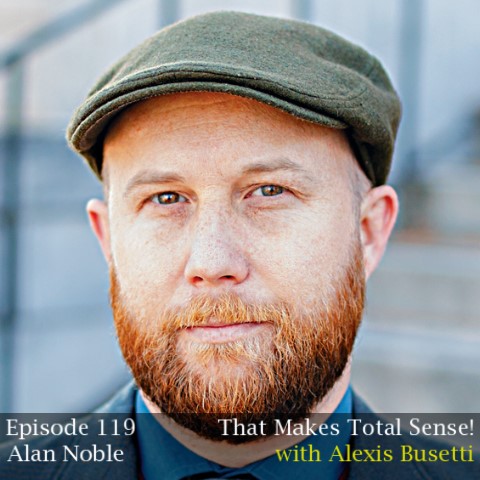
Speaker 1 00:00:07 Welcome to that. Makes total sense. A podcast dedicated to exploring God's generosity and justice. I'm Alexis. We setting the Christian aiming to ask good questions and encouraging you to do the same. Every one of us is wired by God to live out generosity and justice, but the house sometimes alludes us. That makes total sense is a way for us to get together, posture ourselves as learners and challenge one another to practice generosity and justice in a tangible way every day. All right. So, Hey everybody, I'm here today with Dr. Alan Noble, um, at Oklahoma Baptist university who has just written an incredible book called you are not your own belonging to God in an inhuman world. And I think Allen, that this is the first time that that offer has been presented to me of, well, you could just ask me questions about the book. We'll see how I respond.
Speaker 2 00:01:07 That's great. I'm ready.
Speaker 1 00:01:10 I'm not. So I think we'll do it. The traditional
Speaker 2 00:01:13 That's fine.
Speaker 1 00:01:15 Disappointment, disappointment. Here it comes here at gums. No, this is like, um, so you're an English professor, right? And I love reading people who are much more well-read than I am, and it shows in this book, right. I just feel like it's this, um, beautiful composition that, that brings together the wisdom of so many other authors that I, that I haven't read yet. Um, and so, and so, and I just appreciate that perspective of somebody coming at it from someone who has a wide, you know, knowledge and this breadth of literature, write fiction and nonfiction theology, all of this stuff like coming together and bringing these ideas in one place. This was a dense, beautiful book, Alan.
Speaker 2 00:02:14 Oh, thank you. Yeah. That's that's good. I like reading those kinds of books too. Um, so th you know, that's one of the things I want to do in my job in teaching literature, literature. I think one of the most significant things I do is teach students how to love what is lovely. So, you know, I've, I've fallen in love with certain books, and I want them to see that beauty and it, and it often takes work, right? Like it's not just on the surface, it's not automatic for many of us. Uh, it took me a very long time to enjoy poetry, for example, cause it's, it's hard and, um, it's, it's foreign to, most of us poetry is. And, uh, so I definitely intended to write a book like that, but, but it's also interesting hearing you say that because you know, when I look at the book, I think, man, there's so many things that I should have read and the sources and the sources for that book are people who are a lot better read than I am. Um, and so it's, it's almost like there's this scaffold where I'm, I'm pulling from people who are much smarter and much better read and, you know, trying to give it to people who, you know, who haven't read as much, but then it's sort of inviting them to, you know, to get into these other books as well. Um, this is kind of lovely.
Speaker 1 00:03:28 Yeah, it was great. I mean that, that lovely idea, like learning to love what is lovely. I feel like that's going to come up again, right? As we talk about luxury and prodigal and all of those great ideas that you come up with in the book that you share in the book, but first maybe an outline might be helpful. Um, because we're talking about this book about belonging in an inhuman world. And so the way that I read it is you take the first part of the book. I'll tell you what I wanted to get to was the icing at the end. Right. I wanted to get to where, where, where are we going here? What's you know, so what is it? What's the answer, right? But I'm glad you didn't, I'm glad you didn't spoil it. And take me where I wanted to go immediately because you spend the first sections of the book, really, from my perspective, helping us to see the water we swim in, right.
Speaker 1 00:04:27 That we live inside of a society that values and assumes that we belong to our own selves. And that's a difficult concept to grasp, especially I think as believers, because we have always been taught like, will you belong to Christ? Or as you, as you mentioned, your identity is in Christ or, you know, these things. And so I think that we think we're living that way. This is me. I think we think we're living that way. But then I, then I spend the first half of your book and I'm like, oh, Alan's convinced me. I don't actually live that way. And it didn't take much convincing, but you know, it helped me to see kind of the water I swim in culturally. And, and then you answer that, what does it look like to belong in Christ? Like what, you know, to Christ and what does that mean? And why is that important? You know, when you kind of flesh out some of that at the end, but I don't know. Do you think that's fair?
Speaker 2 00:05:20 Yes. Yeah. Yeah. So that definitely the first half I'm trying to make this sort of a dual argument, one that, uh, th that our basic assumption, the basic anthropology that we accept, the way we understand what it means to live as a human being is this idea that we fundamentally belong to ourselves and we are our own, and there are all kinds of ramifications implications that come that come from that. Um, so I'm trying to, to, to, to articulate that idea, but then also talk about the consequences. What are those ramifications? And the argument I'm trying to make is that at least to an inhuman society, because we aren't our own, we belong to Christ. I think one of the, one of the phrases that sticks in my mind a lot, because I still say it to myself often is I just need to get through the day.
Speaker 2 00:06:13 And, uh, um, uh, I still say, I read a book about this, and I'm still saying this to myself constantly. I just need to get through today. I just need to get through today. And it struck me that I've talked to many students and parents and adults and just contemporary people who that's their mantra. That's, that's their default is they're talking about their experience of living in the world. They express it as something to get through. I just need to get through today. Time is something that we suffer through rather than something to be enjoyed. Well, if that's the case, and that's just one of many, many, many signs that I'm trying to point to, that there's some, something inhuman about the way we're living. It seems to me that that's exactly what it's saying. It's stressing, it's announcing to the world. If, if we, if we, every day we're saying to ourselves, I just need to get through the day. That means something's off. Something is deeply off. And if it's not just me saying it, if it's lots of people, then something is at work. And yes. So the first half of the book I'm trying to explore, well, what does it mean to belong to yourself? Why is that so unbearable? What are the implications and how is it that even people in the church can unknowingly adopt this view?
Speaker 1 00:07:27 Yeah, I think, and I think we, I think we do unknowingly adopt the view because it is our culture, it's society, it's, it's inhuman. Um, one of the things that you talk about in that, in those first sections in the first half of the book is so yes, the need to get through, but it was actually something that I felt like it kind of slammed me because for years, you know, I'm, I'm praying for my husband, you know, when he's leaving for work and I'm praying for him to be effective and efficient in his work. Right. And I don't necessarily think as a career, right. There's something necessarily wrong about praying those things, but in your discussion on efficiency and the human condition, I felt like, okay, let, let me evaluate where's this coming from? Right. Like, what's the, what's the real goal that I'm, that I have, even in my mind, right.
Speaker 1 00:08:26 As I'm, as I'm setting that forward. And, and, and what struck me was one of the discussions you had, it was something about, um, essentially, you know, you had lots of examples, but one of the examples is when, when employers, for example, give, you know, encourage self self-care for them, their employees, it's not because of their humanity. Right. It's not necessarily because we value the humanity of the person it's because we want them to be more efficient workers. Right. So can you like, kind of, I mean, it doesn't have to focus entirely on efficiency. That's kind of what you're talking about. This is an example of this like inhuman ness that is surrounding us.
Speaker 2 00:09:01 And, uh, and we lean into it and we are, we sort of veil it behind this, um, you know, uh, you know, benevolence, right? So for example, I recently read an article in the Harvard business review, and it was an article describing a survey of employees asking them what was the one, I think it was like benefit or that they, if they wanted to get in their work, correct. Not, not medical benefit or like a raise, but their working conditions. How could the working conditions be improved? What's the one thing they want. And the number one thing that employees listed was, um, natural lighting, which on the surface is, uh, I thought was, well, yeah, that's true. I mean, when you have natural lighting, it increases your mood and, you know, you feel better. But as I thought about that more, I thought, um, maybe this is a sign of our, our disorder that people even have to ask to see the sun. Like, that's, that's not good. That's not, that's not normal. That's, that's bizarre. Um, but then the followup was even more interesting. So this is Harvard business review. So it's, it's written to employers. The rest of the article goes on to argue why employers should in fact give their employees what they want, natural lighting and what is the reasoning they use? Why should, would they give them lighting? What do you think they argue?
Speaker 1 00:10:24 Uh, well, my guess, based on kind of reading your book and the discussion we're having is because it will make them more efficient in their work,
Speaker 2 00:10:31 Right? Yep. That's it because it's more productive and I thought, because it's more productive, why couldn't you just stop? Why couldn't you just say employees really like sunlight and it's nice to see the sun, so maybe you should have more windows. Um, Nope, Nope. We've got to, to justify it. So I'm working with the ideas of this Christian, uh, French sociologist, uh, Jackie lul, uh, mid century France he's, uh, writes is a fantastic book, um, technological society, where he explores the use of what he calls technique, which, which are our methods for increasing efficiency. And he argues that in the contemporary world technique, overrides everything. And what, what ends up happening is it's not that we want things to be efficient, which is, which is fine, it's that all other values are subsumed by, uh, underneath, uh, efficiency by efficient. So for example, um, the, uh, you know, the health of workers, the joy of workers, their humanity, those sorts of things, those only matter insofar as it increases productivity.
Speaker 2 00:11:42 Um, and once you start thinking through that idea that, uh, we fundamentally, this is in the book. What I argue is it's one of the last shared values. We have, we have a hard time, um, because we believe that we belong to ourselves. We have a hard time sharing, moral values of everybody has their own sort of views on what is ethical and what's unethical, but there are a few things that we can agree on. And one of them tends to be efficiency because efficiency is measurable. So you can say, um, this let's say government policy will reduce the amount of harm caused to citizens in this city. Well, that's the kind of thing we say, well, it's clearly, it's clearly ethical. Um, but it, it has all kinds of ramifications because when you focus on efficiency, you can get to a place where you're actually harming your you're harming people, but it's, it's profitable and faster to, uh, to harm people. So one of the scenarios I warned about in the book is if, if companies only offer services to help their employees, when those services, um, increase productivity, that means if there are situations where it's actually harmful to employees, but the company can still make a profit, like then they're not going to have an incentive to do that. Right. Um, because that is our number one priority. And that's one of the main things I think, contributing to an inhuman society.
Speaker 1 00:13:13 Yeah. I mean, this, this whole discussion I confessed to you before we started recording that, it's going to take me a while to kind of process through this, the information in this book. Not because, um, not because of necessarily one specific reason, but just because it's really hard to see when this is the only thing you've ever known. Right. Um, and, and, you know, growing up in this and this, you know, this liberalist society, right, where that, that is the thing is you can do whatever you want. As long as it doesn't hurt me and I can do whatever I want, as long as it doesn't hurt you. And, and this is kind of just how we've been raised in America to, to think about politics, to think about religion, to think about life, to think about, you know, even, uh, we discussed earlier. So I'm a native Oklahoma, and I live in Texas now.
Speaker 1 00:14:05 And something that shocked, some of my friends was saying, I'm going back to Oklahoma where weed is legal. Now, like in Oklahoma, it's not in Texas. Right? So like, you guys beat us on that, but there's, you know, we saw Colorado before. That's where my husband's from, but there's all of these discussions on this exact thing on, on efficiency and data. And is it harmful? And what about arrests versus, you know, legalization of this or that, and it's all of this, but, but the discussions on, on ethics otherwise are kind of on the margins. And, and I almost feel like on the margins and almost from the, from the things that I've encountered almost kind of mocked, you know, like, why are we discussing the rightness or the wrongness of this situation? Let's talk about the data,
Speaker 2 00:14:54 Right? Yeah. So, uh, let's say a substance is shown to be, uh, physically beneficial and it's shown to not cause in a, let's say psychological disorders and, um, it's ethical to produce this substance. Um, w what, what kind of argument could you make that it's wrong? Right. Because all of those things are matters of efficiency. So I can measure whether something is destroying your body. I can measure whether something is having a negative effect on, on, on your mind now, even there, right. W we can't talk about the spiritual. So if we have a substance, let's say, hypothetically, that enables us to, uh, let's say, dull, our senses, and to evade self reflection to, um, get us through the day. Right. That was the mantra I mentioned earlier, right. I just need to get through the day. Well, what if we have substances that just help us get through the day without ever evaluating whether our days are good without ever evaluating, whether there might be fundamental problems, the way we're going about our days with the way we're living our lives?
Speaker 2 00:16:04 Well, if we're just looking at, or primarily looking at efficiency, then you know what, it's a lot cheaper to legalize marijuana than it is to change society. And, uh, and I talk about this in the book, but, you know, having lived through the legalization of marijuana and in Oklahoma, or at least medical marijuana, which is in effect legalization, it's, it's so easy to get a medical card from what I've been told. I do not have a medical card, not even for research. Um, but one of the remarkable things is just driving down the I 40 and seeing all these billboards that in essence said, is, does your life suck? If so, get high. And, and it just, it just, it, it struck me that, gosh, we're just giving up, right? Like if we could just, if we're just openly saying life is unbearable, smoke some weed that, that surely that's a sign of deep societal dysfunction. Um, but it is more efficient to, to numb us, to get us through, to help us cope with dysfunction than to actually fundamentally change the structures of our society. Um, and so that's where we are.
Speaker 1 00:17:21 So let's talk about more controversial stuff, um, cause you don't shy away from it. And I, I get the feeling that, uh, that that's not kinda your emo is to shy away from controversial subjects, but in a book just like Paul, who was also, you know, didn't shy away from controversy, you use sexuality,
Speaker 2 00:17:42 Right? The comparison, Paul also bald, wasn't he bald too. I
Speaker 1 00:17:48 Seen this, but are you, I don't know. You have a hat on, I can tell
Speaker 2 00:17:52 I'm very bold. Are
Speaker 1 00:17:53 You, well, you have a really great beard. So this is from
Speaker 2 00:17:59 It's distraction. Yeah. It works. It works anyways.
Speaker 1 00:18:03 Totally worked. Um, but no, so, so, so you, you, you reference, um, the verses in, um, where Paul talks about not belonging to ourselves in reference to sexual immorality, but even before you get there in the book you use, um, prostitution and pornography and, and marital sex and just sexuality, you know, kind of in, in general and in, in a way to have this discussion, because it really exemplifies, I think some of the things that are intangible, right? Like you bring those in because in the sexuality discussion, we can all relate to it on some sort of level. And we can imagine those things in our head, right? So the, the legalization potentially of prostitution, or, you know, what pornographic effects have, or even why did Paul use that? Right? Why did Paul say I loved this discussion? Why did Paul say, because you don't belong to yourself is the reason why we should care about sexual immorality.
Speaker 1 00:19:08 He could have used examples. You said relationships, or, you know, effects it has on children or marriage things, or, you know, societal issues, but he doesn't choose to use those reasonings to give us, um, an argument for, for not engaging in sexual immorality. Right. He uses this argument that we belong to Christ. So take that wherever you want to take it, Allen. But I love this thread throughout the book because it helped me kind of ground this discussion in something that I'm familiar with. Right. That I could, that I could kind of make it a little bit more tangible.
Speaker 2 00:19:45 Yeah, yeah. You're yeah, you're right. This, it's fascinating to me to think about how Paul, you know, if a contemporary pastor was to make the same argument, uh, you know, stay faithful in your marriages, uh, what reasons might they give? And I try to go the, into these, into the book, give a list because I can think of lots of them. And they're just like you described there, they're all about harm reduction and they tend to be measurable about, you know, something to do with efficiency. So you could say, well, the fabric of society starts to fall apart when you have, um, you know, uh, children out of, uh, you know, multiple children, uh, you know, out of, out of wedlock. Okay. Um, this historically has been, has been the case. I mean, this is one of the reasons why it's, you know, it's been it's important, um, because you, especially before you had paternity tests, you want to know whose kids are whose.
Speaker 2 00:20:37 And so it's important to, to be faithful. Okay. Uh, well, well, why else? Well, it's damaging to the children's, uh, you know, uh, you know, development if mom and dad are having affairs or, um, you know, it's, uh, you know, um, you could just go th th the threat of venereal diseases, right? You could just go on and on about these measurable things. Um, uh, your, your marriage will be unhealthy because you're having affairs or something, right. Uh, you know, your people who have affairs, uh, lower quality of, uh, of, of, you know, married life or something, but Paul doesn't, he, he talks about, uh, his who we belong to. So it's like our being, where is it that we belong? And that is what defines how we act in the world, which I think is just, it's just fact, it's fascinating because in most of the contemporary conversations about sex and sexuality, we begin from the starting point that we are our own, and we belong to ourselves.
Speaker 2 00:21:39 And sex is probably the most, um, personal and intimate, um, expression, experience, preference that we have such that it's hard for a lot of contemporary people to even imagine somebody coming from the outside and saying, this kind of behavior is immoral and less, unless there's some clear, measurable harm. So like if certain sexual behavior is clearly measurably harming someone else, then we can say, well, well, okay, then it's, you know, that's abusive, but if there's not measurable harm, our default in the contemporary world is to say, well, that's, you know, that's up to you. That's what, what, what, what you're doing. Um, and why do we say it that way? Well, um, in part, because we live in a pluralistic society, but also because we assume that we are our own, and so sexuality is this deeply personal and entirely personal thing. Whereas what I try to explore really throughout the book is that there are all kinds of ways in which, um, you know, that, that belief that we are our own and belong to ourselves, um, creates toxic, harmful, uh, evil situations, uh, in regard to other people.
Speaker 2 00:22:52 So I spend quite a bit of time talking about pornography, you know, um, and how it is based on this assumption that, you know, we don't owe anything to anyone else. Um, and so we can use other people's bodies, images of other people's bodies. Uh, however, we, we like so long as we are not personally hurting them. Um, and, uh, what I try to show is that that entire ideology, the, the, the spirit of pornography ends up leading, leaving people, feeling inadequate, depressed, lonely, it tries to, uh, we, we think porn can solve our loneliness. I'm not saying we is that I'm personally, but, but just one society thinks, you know, that it can solve our loneliness and it never does. It always makes things worse. Um, yeah.
Speaker 1 00:23:51 Yeah, because we don't belong to ourselves. And, and I think that that was something that I was, um, so help me, we, we, we talked a little about before, if we can help me process this a bit. Um, but you know, as believers, I think that it's, it's, it's easier. It's easier for me to buy into the argument that I don't belong to myself. Okay. Paul, I buy that Alan. I buy that. Um, I don't belong to myself. And so, um, and my husband, you know, belongs to Jesus as well. And so I can kind of have this, you know, this mutual respect, I can have this, um, respect for him and, and the fact that he belongs to Jesus, and I can understand that for myself. Um, but then, you know, in the, in the, in the porn discussion, let's say, you've got, you know, cause that's one of the primary arguments is these people who are producing it and performing these acts for sale are doing this of their own free will. Right. They're doing this because they want to because they enjoy it because it's, that pays the bills. Um, they've made a conscious decision and they're grownups, you know, all of that stuff, but they kind of, the question I had in my mind is how to honor the fact that they also do not belong to themselves, even if they don't believe they don't belong to themselves. Does that question make sense?
Speaker 2 00:25:13 No, absolutely. And I think that that idea, uh, there are so many places in life where this is going to be true. Um, it is not uncommon at all. In fact, it's fairly common for people to act in ways in their lives, uh, where they are not treating themselves as made name of God and as belonging to God. And the loving thing to do in those situations is to treat them that way, despite what they think. Right. So let's say, okay, so set aside prostitution, let's say you have a friend who's, um, beating themselves up, right. They're just incredibly negative. They think their life is pointless. Um, you know, that that's wrong. You know, that that's a lie that, that they are made in the image of God and that they have things they can do to love God and honor their neighbor, uh, today and enjoy the gifts that God has given them.
Speaker 2 00:26:10 And so what do you do? You, you treat them as if they belong to God, you treat them and you speak, you speak things to them that are true, even if they don't accept it themselves, even if they get mad at you for saying that, even if they say, no, that's not true. I am worthless, whatever you keep saying it. Why? Because you know the truth. And I think the same thing is true with, with, with, with prostitution, right? Uh, prostitution and pornography. And, um, well, you know, any, even, you know, side, these, you know, ones where the market is involved, even if somebody were to, uh, you know, to, uh, you know, to come onto you or something, you know, part of you, uh, rejecting that and saying, no is acknowledging that, okay, this person might not know it, but they're making a bad mistake.
Speaker 2 00:27:00 They want to make a really bad mistake. And so you're going to love them enough to acknowledge they don't belong to themselves. They don't get to just sleep around with whomever. They belong to God. Um, and I think that's the same thing that we do with, with pornography. Uh, you know, somebody might be able to say, ah, this is my body. I can do whatever I want with it. And our task is to say, uh, it's not just your body. And so because of that, I'm, I'm going to choose not to participate. I'm going to, you might be telling me, please buy this, please view this, but I'm going to tell you no, because I love you enough that I'm not going to participate in that. Um, and there's all kinds. This has all kinds of ramifications about, you know, a gossip, right? So I think about the way, um, I was thinking actually recently of Dante, there's this great passage in the Inferno where Dante is watching these two people in hell, beat each other up and Virgil says to him, um, you know, it's, it's essentially, uh, the desire to hear such baseness is, is, uh, uh, is shameful.
Speaker 2 00:28:01 And, and man that's, how often do we watch shows or read articles about people doing things that are just awful. Uh, and sometimes the people want us to read about it. Like they're, they're publicizing. I did this terrible thing. Um, and they do it for attention, but there's a way in which choosing to look away is the loving thing to do. So, yeah. That's, that's what I would say about that.
Speaker 1 00:28:27 Yeah. Wow. That's um, that's, that's kind of where I'll say largely, that's one of the things, places where, um, I landed at the end of this book. So spoiler alert to people who have not read it, Alan does not give us tips. He does not give us steps. He does not tell us how did you, how to do this? How to, how to like, you know, five, I think, I don't know you say something like, this is not like a five steps to, to act like you belong to Jesus. This is not that that kind of book is not a technique. Thank you. It's not a technique driven book. Right. Um, but because of that, because of the, um, you know, the open-endedness of it, that was one of the things where one of the places where I largely landed was a, how important do I think this really is as a believer, right?
Speaker 1 00:29:24 Like it's, it's easy, especially for me, especially I think in this 20, 20, 20, 21 mindset, we're where the political space is really hot right now. And all of the discussions are very, policy-based, they're very legal based. They're very, you can't tell me what to do or yes, I certainly can based. And it, and it, and it begs to be in print, right. It begs to be in this black and white situation. Yes, you can. No, you can't. And where do I fall on this binary? Yeah. Um, and where I landed was, like I said, it really trying to honestly ask myself how important do I think this concept is that a I live as if I belong to Christ and that be, I treat others as if they belong to Christ. And the second question where I landed is how, what are we know in my life?
Speaker 1 00:30:16 Right. Just thinking about myself, my neighbors, the people I come into contact with, how can I do this? When I know that I'm not in charge of the political climate, when I know I'm not writing policy, or when I know that I may travel to Oklahoma or back and different things are going to be legal in different spaces that affect different kinds of people. And how do I live this way? Right. Treating everyone with the spiritual, biblical truth that they belong to Christ that they belong to God that they made in the image of God. And that I do too, even if we don't recognize it at the time
Speaker 2 00:30:55 And the system itself through and through assumes this false anthropology and you, you can't change that, right. Christ can, I mean, dramatic changes in society and civilizations have happened historically. So it's always, it's always possible, but that can't be our starting point. Our starting point, can't be, we're going to radically change the, uh, the way we do government and the way we do the markets, the way we do education and church and city planning and all these things, but all of those things affect it, right? I mean, so the way we do city planning, the way we, we, we build houses, assumes that we all want to live. These autonomous lives separate from each other, right. The way we do, uh, transportation assumes that we all want to get in a bubble of our car and drive safely to our location and get out of the bubble so that we don't bump into anyone else on the way, uh, for those of us living, not living in, in very big cities with public transportation, at least, um, the, the way our government provides aid.
Speaker 2 00:31:57 Right? Uh, I don't want to say that we should get rid of our social, social safety net. Uh, but, but it is also the case that the federal government is going to treat people inhumanely. The federal government is going to treat people as numbers, as statistics, not as embodied human beings and not leads to all kinds of problems. Um, some of these things we can address some of these things we can push back on. And that's what I think we have a responsibility. So each of us has our own sphere of influence where we can do things. And I think that's where we need to start. I don't think we can be content there. I think we need to strive to go beyond, but we've got to start in own sphere of influence. So if you own a business, when you're making decisions about how to treat your employees and your customers, you can begin by asking the question, what is, what is actually loving to them as human beings, not what is the most efficient way of doing things, right.
Speaker 2 00:32:54 And I think practically that means that Christian employers, um, and business owners, we're not going to be able to advertise and do business in a way that is competitive in the market, or at least not as competitive, because lying is very effective because manipulating people is very effective and that's just going to be a reality. Um, so, and, and with this, I mean, one of the reasons I don't, uh, you know, give five steps is that I'm, I'm hoping that this can help start a conversation that happens, especially in local churches where people think through the ramifications in their own, in their own space. Right. So what does this look like for our school? What does this look like for our neighborhood? Because I think the implications are just, they're just manifold. There's just so many different things that we can do. Um, so for example, uh, you know, you're talking about driving to Oklahoma.
Speaker 2 00:33:53 Well, you know, if you drive to Oklahoma, you're very likely to stop at some fast food place to eat, which I think is fine, you know? Um, but it is also the case that just the way we do fast food as a form of efficiency tends to be bad for our bodies tends to be bad for creation and tends to be bad for employees. Right. I mean, we treat the people who work at these fast food places as avatars for the company, not as real human beings, not as neighbors, but just as, as avatars. And they treat us as, uh, you know, less than fully human because, uh, that's what we've all sort of agreed on that this is, uh, and that, and that's bad for everyone. So what does it look like in a local town to, you know, as we go into a grocery store or a gas station, or a fast food place to try to acknowledge the neighborliness of our neighbors who work there, try to treat them as people who live with us rather than, uh, just as avatars of, uh, of a company.
Speaker 2 00:35:01 And, um, but w one of the reasons I love Jackie lul is that he's, I mean, he's kind of pessimistic like me. Uh, I mean, he's ultimately optimistic because he knows that Christ is coming again. Right. But, but when he looks at society and the power of technology and technique, he thinks I don't, I don't see how this gets stopped. I don't, I don't see how this turns around. And his argument is that, well, then our task is like the ancient Israelites in captivity in Babylon. We just have to be faithful where we are. And, uh, we're not faithful to take back the culture and, and, you know, save everything. But we're faithful because we know that God is faithful. And if God wants to change the culture, he can do that, like in Nineveh. But he, he might not, um, either way we have a task to be faithful in the midst of the city. And to me, I find that greatly comforting because when I, if I'm honest about the, the problems that our society, I don't see, I have no plan and I've never heard a good plan to get out. Uh, you know, I've heard lots of people and I've heard no good plan on how to fix these fundamental problems. Um, but if you tell me that, what I need to do today is to look for how I can be faithful to God. That's something that I can do.
Speaker 1 00:36:18 Yeah. You know, several, several things kind of came to mind while you were, um, while you were talking. And, um, you know, first of which was, was, you know, the system can change right there have there have been times and, and Jesus could change it. Um, but I have a professor right now who often talks about the first chapter of acts, where the disciples say to Jesus before he ascends. So now are you going to take over, is this the time that you're going to be like, like dudes already spent all this time saying this is not my Mo, like, this is not what I'm going to do. In fact, I'm sending someone else. Right. The Spirit's coming, I'm leaving, you know, and they, and they still are saying, okay, but now, right. Like things are all said and done. And so now you're going to come and you're just going to change it.
Speaker 1 00:37:03 You're going to become the king here in Roman. We're going to make it happen. Right. And he's like, bye. Right. Peace out. This is not, this is not the way it works. Right. And, um, and so, and so you're right. You know, that was one of the, one of the things that kept twirling around in my, in my brain is I can do this. And the system is still, you know, the way it is. Um, and it just, and it just will be. Um, and so accepting that, and being faithful in the midst of that is, is, is one thing that we just kind of have to kind of have to figure out what, how to do that. I'm really glad you mentioned the local church, um, because that's another space and, and you're pretty firm about the way that you discuss, you know, um, our belonging kind of in that space as well.
Speaker 1 00:37:55 And I would say, you know, one, yes, I, I, I want that conversation to be happening on the local church level. And B it's an important discussion right now, because I'm not, I'm not saying this in a flippant way, but I'm saying church hurt is trending in that it's people are talking about it more, right. People are talking about the instances that they've had, where real church abuses have happened. You talk about that as well. You don't shy away from that in your book, when you talk about the abuses of authority and things like that. Um, and I'll just, you know, I'll just be honest, you know, that was one of the things when, when we experienced around of church hurt and I was like, whoa, this is actually is really legit. You know, like, not that I think that people were like faking it or being dramatic or something, but it's one of those things that it just doesn't hit home necessarily until you experience it right.
Speaker 1 00:38:46 How deep, how deep the wounding can be. Um, and as I have struggled through that, my conclusion has been, I cannot neglect my participation in the local church and to be faithful to Jesus at the same time. Right. I don't think that's possible like theologically. I don't think that that's possible spiritually in a mysterious kind of way. I don't think that that's possible. And I think that's part of this tension that we feel of this living in a, in a, in a world that says we belong to ourselves. But the reality being that we belong to Christ, even as Christians, we will say things like I've just had enough. I'm not going to do it anymore. I don't need to be a part of that. I will have church on my couch. I will, you know, do whatever and fighting through those feelings and fighting through those experiences and fighting for healing, leans into the truth that we really do belong to Christ and not to ourselves.
Speaker 2 00:39:52 That's not an easy teaching. No, it's hard. And it hurt really hard. Uh, one of the, yeah, so there's two, two difficult things about this, about this book. Um, well maybe more than two,
Speaker 1 00:40:05 I would say that's pretty generous. That's a lot of difficult things. It's so good, Alan, but there's a lot of difficult things.
Speaker 2 00:40:11 So, you know, the, the, the second half of the book was really hard. Um, for two reasons, I'll put it that way. Uh, what is that? I, I, I know people want, and I want, um, direction. I want specific answers. This is what, this is how we fix things, because we are, because we are efficiency oriented. We want to have a plan to fix it. And then everything gets better. The other part of it is that while what I'm arguing, uh, relieves a tremendous burden, the Burt, what I call the burdens of self or the responsibilities of self belonging, which I think are just, they're the reason that we often say to ourselves, I just need to get through the day. So understanding these things lifts those burdens office. It helps us recognize that those are lies that society has taught us, and we don't have to listen to them, but it also means that there are other burdens that are godly burdens that are righteous, that are rightly ordered, that are natural, that God has designed for us, but they're still hard burdens.
Speaker 2 00:41:13 And so, and most of them have to do with commitment. So, you know, I, I want to acknowledge the facts and I do it in the book that, you know, there, there are some marriages that are, you know, there's no intimacy and, you know, uh, sometimes that means just sticking it out and being faithful anyway, even if it's really hard being a parent, you know, it's painful, it's hard, but you don't get to choose your way out when it's not as fulfilling whether your marriage or your, your friends or your children, you don't get to just say, well, you know, this is not fulfilling me anymore. So I'm out. That's not the way it works. And the same thing is true with the local church. Um, the church is going to hurt you. Your spouse is going to hurt you. Your children are going to hurt you in some way.
Speaker 2 00:42:02 And if you are your own, then it's perfectly legitimate to, to cut your ties and run. But if you're not your own, if you belong to Christ, then you have to work through that. And that's not an easy teaching. It's, um, it's hard. And it's painful now that does not mean that you put up with abuse, because if, if you're not your own, then you have no right to put up with abuse. You belong to God. So you it's dishonoring for a hint to him, for you to put up with abuse. So that's, uh, and you know, there is a danger in, in, in, in this teaching that, you know, you're not your own that somebody who wants to abuse power can come along and says, well, you're not your own. And so you need to submit to me. And, and, and again, the key thing there is, well, whatever submission looks like it does not look like, um, you know, dishonoring the image of God.
Speaker 2 00:42:55 It does not look like abuse. So that's not a justification to stay in abusive relationships. Um, but you are going to be in situations where it hurts to stay, or, or, or maybe you have to leave an abusive church, but you still have to find another church where you would rather, like you said, just stay on the couch because it hurts to be with people it's hard. It's not easy, but that's what we're called to. Um, and so, yeah, I think w that's not optional for Christians. Um, and I just want to say that, that, that doesn't make it easy. That doesn't make it easy, but I do think that there's comfort there. And I do think that God can give us the strength to persevere.
Speaker 1 00:43:38 Yeah, I agree. I agree. And, and I'm, I'm thankful for the, for the hard things, um, in this book. And, and I, like I said, I am thankful that there were no five steps. I appreciate the fact that you didn't, that you didn't even try to give us five steps, because as you say, this is a work of non-fiction, um, because it, it helps us really to, to process, um, to process what it looks like. I will say individually, but in communally, what it looks like to make up the body of Christ, what it looks like to be long, um, to him, you know, to really belong, belong to him. And, and he does give us in creation and in our, you know, biology, even ways that we can see, you know, what that looks like and in the family and in the church and in the community, um, and in marriage and in, in, and all of those things, um, you just weeding through what society has defined for those things sometimes versus how God has defined those things. Um, you know, can be a challenge, but, um, but weeding through it's part of the work it's part of the process. Um, gosh, Ellen, there's like so many things we didn't get to, um, affirmation resignation was one of the ones that I, that I wanted to hit on. And I don't know that we'll necessarily have time because I want to ask you, what did we not get to that you wish we would have?
Speaker 2 00:45:05 I know you tried to bail on this, but I'm still curious to ask you questions. Like, what was the, what was the most challenging thing? So you read this, it was, and what was like most upsetting or challenging. What do you think?
Speaker 1 00:45:20 Um, I don't know if it was the most upsetting or challenging, but the section on identity in Christ where you compare our identity to liquid, that we fill into different containers. Right. And the, and the teachings. And part of the reason that this was hard for me is because I specifically remember being like a junior in college and I'm like, I'm going to do my own Bible study, and I'm going to write my own thing and it's going to be on identity in Christ. And I didn't know any thing about that, cause I'm 20, you know, or whatever. And I'm totally immature in my faith, but I'm really zealous. And so, you know, here we go, we're going to do this. And I don't remember what I taught and the truth is I hope none of the other girls remember either because I'm sure it was garbage.
Speaker 1 00:46:10 Like I'm a hundred percent sure it was garbage. And I was a hundred percent sure of that before I read the book, but now I'm even like more sure that it was garbage, but it was, it was kind of that discussion that we just kind of try to fill. Like we try and make the, the, this identity in Christ pieced into another cup that we, you know, we just kind of pour our identity and then it takes this shape, but that that's not even the right metaphor like that. Like that's not even the right way to think about it. The way to think about it is completely other to that discussion. Does that mess me up?
Speaker 2 00:46:48 Yeah. Yeah. And I, it messed me up too, when somebody, cause I, I was, you know, I thought about it. Um, and my friend, Matt Lee Anderson was the first one I'd read, who said, I dunno if this is actually helpful. And then I stopped to think about it. And I was like, wait a minute. Yeah. Cause it w it, it does sound good. And there is a way in which understanding our identity in Christ is absolutely doctrinally true. And it's helpful, but because the definition of identity is so fluid, it's so squishy in our society. If not, it's, it's very often unclear exactly what we're saying. Right. So, um, you know what I used to hear, I think when I was told this in high school and colleges, like when you have your in Christ, I kinda meant that you, your preferences, your tastes and music and clothes and stuff, just aligned with sort of like middle-class white evangelicalism, right? Like that's what that's, my identity is in Christ. And so that's, I'm going to have, so it was a lifestyle, what I was really right.
Speaker 1 00:47:46 So all of my wall hangings are from hobby lobby and I listened to CCM on the radio and yes t-shirts.
Speaker 2 00:47:51 Yeah. And that's, and that's just making Christianity, another lifestyle option, which, you know, if Christian, if we're just talking about lifestyle options, Christianity asks you to die to yourself, which is a pretty bad deal. That's a pretty, it's not, it's not great.
Speaker 1 00:48:08 Don't put that on the ad. Don't put that on the billboard. It's not going on the t-shirt when I die to yourself, try Jesus die every day to my church.
Speaker 2 00:48:18 How about denying your desires? Give it a try. So,
Speaker 1 00:48:22 Um, no, one's buying that. I'm glad you didn't title the book that yeah. That's buying it.
Speaker 2 00:48:28 So, um, yeah, so I did, I did want to address that. Cause it, it, it also gets used flippantly, you know, I think I've used it in the past and flip it way. Right. Where you just, well, you know, you, you say to somebody who's, who's struggling and they're just unsure who they are. And you're like, yeah, we'll just find your identity in Christ. And right. If you're on the receiving end of that, that kind of just feels like when you're depressed and stuff, it's like, why don't you feel better? And you're like, oh, that's a great, that's a great idea. I should have thought of that before done. Thank you. You should be a counselor. Um, I'll have my identity in Christ. Okay. My crisis is over. All right. Check. What does that, what does that mean? How does it change things? And so, yeah, that's good. That's good. So it was helpful, but it was, uh, unexpected. You weren't, that was, um, different.
Speaker 1 00:49:13 Well, it was, yeah, but it was, it was helpful. It was, it was different, but it, but it made me think about the phrasing. Right. It made me really think, what do we actually mean when we say this? Right. Like we say it, and it's really trite. And like I said, I stinking titled the Bible study that like, you know, 20 years ago. But, but, but do we actually know what it means? What are we asking people to do? Because I think that's often what it is. Right. We see, we hear sermons, or like you said, we were talking to your friend. And so we say, I feel like that's the thing for me is I won't say we I'll say me. I will say I, without actually knowing what I mean, we'll say to someone in an effort to help them along their journey, I'm just going to pray. You find your identity in Christ or, you know, why don't you look, why don't you look at this? You know, because, because the scripture says we find our identity in him, you know, but, but I don't really know what that means. And, and it kind of made me stop and pause and say, what are you asking people to do? You know, when you, when you give them that suggestion, what does that mean?
Speaker 2 00:50:18 The action. What is the, what, what do you, yeah, that's a good point. I like that.
Speaker 1 00:50:22 What do you do? You know? Yeah. So, so that was
Speaker 2 00:50:27 Perfect. Good. That's good. That's good. What was the w what was something you've you you most disagree with? Well, that one's wrong.
Speaker 1 00:50:36 Hm. Let me think. See, I don't normally write those down when I talk to them. I know. Right. Um, there were, I would say, I can't think of one in particular, but there were a few times when I was reading it and I just thought, I think I would have framed that differently. You know, like it's not necessarily that I disagree with the concept or the idea. And I can't think of any necessarily right. This second, but I did think to myself, yeah. I think I would have framed that differently, or, I mean, I don't know if you, if you're like on the Enneagram numbers or something like that, but my husband is an eight. And so he just kinda, he just kind of says, he says things and sometimes we call it like, he, like, he talks to think, so he just says things out loud, but a lot of times it's like, he's a declarer right. Like he says this thing and that's the way it is. And there were a few places where I thought, I think he's declaring this right now, but I might try to declare it a different way. Right. Like, I think I might try to frame it as well.
Speaker 2 00:51:36 I took a test and I'm allegedly a one, so that can't pass. Oh,
Speaker 1 00:51:39 That can't possibly be it. Yeah.
Speaker 2 00:51:41 I don't believe in Bananagrams, but, um,
Speaker 1 00:51:46 Yeah. Now I'm like flipping through and like, can I find one of those places, like real quick, but generally it was like stars and, you know, highlights and like, oh my goodness, what is this? And, um, yeah. Yeah.
Speaker 2 00:52:00 Oh, good. What about, what about, okay, last one. What about something you're reading it? And you're like, oh, I have felt that. Or like this really hits or I feel seen there's the, there's the phrase like I feel seen. Did you have any, I feel seen moments.
Speaker 1 00:52:15 Okay. Here's the truth I felt, I felt seen in the first sentence. I actually meant to open
Speaker 2 00:52:24 The,
Speaker 1 00:52:25 The first, I all read it because I have it here. I meant to, I'm actually meant to open the discussion with this because I thought this isn't a spoiler. If someone's flipping through this at barns, like they'll, you know, it's, it's the opening sentence to the introduction. So, you know, no harm, no foul. Um, it says a defining feature of life in the modern west is our awareness of societies in humanity. And our inability to imagine a way out of it. Now I will say that hit me. And I felt seen sure in that space, um, because I, I enjoy discussions on social justice, right. This was my first master's was, had a focus on that. Um, I'm just kind of generally like, believe in altruism and empathy right. In these kinds of things. But when you say the, to imagine a way out of that in humanity, like that hurts because I feel like, and probably many of us kind of spend a lot of our day imagining ways out of it, potential ways out of it.
Speaker 1 00:53:41 Right. Like you said, you've never seen a good plan. Really. There's, there's not one, but it doesn't keep us from imagining what it might be, what it might be like. Right. Um, if, if such and such were to change or if we could just adjust this or something, but then we're getting into the discussion we had earlier, which is like what we're kind of really imagining, or at least what I am is like, if systems were to change and things like that, which probably doesn't even really affect what the discussion is, which is that societaly were inhumane to one another. And we live in an inhuman way many times. Um, and, and I think, I would say kind of spiritually and almost, you know, theologically for me. So I'm in, I'm currently in seminary. And so I'm like, I'm just like, that's all I'm doing right.
Speaker 1 00:54:30 Is, is reading. Right. You know, thinking and writing. Right. That's all, that's all I'm doing besides like parents and wiping and stuff. But, um, but you know, but one of the things that I've been trying to meditate on of lay, you know, the past couple of years is Jesus' humanity. You know, like what did that really mean? What did it really look like? And this idea, this kind of theological idea that he came in part, like one of the reasons, right. Was to show us and teach us what being human really looks like and feels like, like in its, in its perfection, this is what, you know, because I think I grew up in kind of a tradition that, that kind of disembodied, um, ourselves from our spirits or, you know, really focused on, um, Christ's sacrifice and, and, and this, the, the sin and the atonement and all of that stuff, which is great and valid.
Speaker 1 00:55:24 But in that it kind of, it kind of made humanity inhumane, right? Like it's a bad thing to be a person because we're fallen or we're sinful, or, you know, these kinds of ideas. But then Jesus came and was one of us, like he took on personhood, he took on humanity and doing that, wasn't this disgusting based thing. Like it was this actually beautiful incarnation in which when God created humanity in the beginning and said that we were very good. We, we, it wasn't, he didn't make us because we were disgusting. Right. Like he made us because we were beautiful. And even as you, as you say, in the book, this like prodigal creation of God, like it was just completely inefficient and beautiful and luxurious that he would create us. And so that Jesus would come and embody us, like embody humanity. He, he taught us and he showed us what it looks to be human, not coming in this disposable canister of a body, but to really help us to envision, um, what living fully human looks like.
Speaker 1 00:56:34 Right. Um, and so anyway, so kind of that imagination, um, it just reinforced, I guess kind of the, I don't know the phrasing that, that we're using it. It's it's the now and the not yet. Right? Jesus isn't he didn't his disciples begged him and he didn't say, yep, now's the time we're going to do it. This is it. You know, it didn't happen. And so living this way, but imagining, um, I think there's nothing wrong with that spiritual imagination. And it's, you know, I, you, you talk about it in, in terms of, in terms of hope and Elliot talks about, um, I've heard it complex Oprah, what was this one that it, the phrasing that Elliot used? Um, I don't know, to not, to not have hope or something. What was
Speaker 2 00:57:17 The phrase? It without
Speaker 1 00:57:18 Hope. Wait without hope. Yeah. Yeah. So I just, yeah, so that was the first you had me at the first sentence in other words. Right.
Speaker 2 00:57:26 Excellent. Thank you. Good. Well, this has been lovely. Thanks for coming on my podcast.
Speaker 1 00:57:32 Hey, anytime, anytime I welcome it. Um, Alan, I have been following you on Twitter for a while. Is that where you mostly hang out online or if people are interested, if people have ordered one copy and gotten to have this book, like where, um, where can they see your real face and, uh, and interact with the online?
Speaker 2 00:57:52 Yeah. Yeah. Twitter is the best. Um, the it's not, I mean, it's not the best, but that's the best place to reach me. Uh, the Alan Noble on Twitter. Um, yeah. And then, oh, Allen noble.com. If you want a website, I don't know why you'd want a website if you did. That's where I'm at.
Speaker 1 00:58:11 Awesome. Thanks so much. Do you have any, you have any closing remarks for us?
Speaker 2 00:58:15 No, this has just been a lovely time. Great conversation. Thank
Speaker 1 00:58:20 You. Awesome. Thanks so much. All right. The links for all the resources mentioned in today's episode can be found in the show notes, music and podcast production by Seth B city. Be sure to give us a review on iTunes and subscribe at your favorite podcast listening app, you can also visit us at that. Makes total sense.com