Episode Transcript
Speaker 1 00:00:06 Welcome to That Makes Total Sense, a podcast dedicated to exploring God's generosity and justice. I'm Alexis bti, a Christian aiming to ask good questions and encouraging you to do the same. Every one of us is wired by God to live out generosity and justice. But the how sometimes eludes us that makes total sense is a way for us to get together, posture ourselves as learners, and challenge one another, to practice generosity and justice in a tangible way every day.
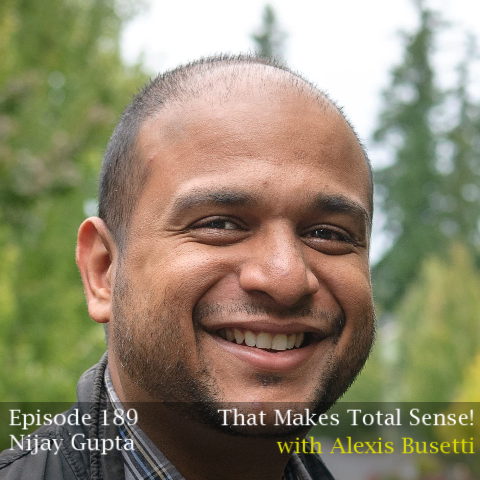
Speaker 2 00:00:42 Okay. So I can just confess that I have teared up already, but I looked up my guests in the face and said, I think I'm finished with that. But in the event that I'm not, this is kind of, um, this is a really personal topic for me. So today I'm talking to Nija Gupta, who is a scholar, a professor, and the author of a lot of books, <laugh>. But today we're gonna talk about his, um, most recent book that is written, I would say, for laypeople more than for the Academy. Mm-hmm. <affirmative>, um, it's called Tell Her Story, how Women Led, taught and Ministered in the Early Church. Thanks so much for joining me.
Speaker 3 00:01:22 Glad to be with you.
Speaker 2 00:01:24 I am super excited. I, uh, Nijay is wearing a shirt with some of the, uh, names that of the women in this book who are just all stars, that we, as you point out in the, in the beginning of your book, that we haven't given much thought to <laugh> these women over the centuries. And that's really kind of what this book is focused on, is these women kind of in the, um, uh, in the same realm as kind of the hidden figures for those of us who have read that or maybe seen that film, um, that women who were, who were active, who were influential in the early church, but we just didn't know their names really until now. Or maybe more accurately we knew their names and that was maybe about it. Yeah. So, Nijay where like, I just kinda wanna know like, where did this book come from, especially given your context as a scholar and as a professor and someone who writes on the New Testament, like, why, why this, this? So what, why do we care <laugh> about this?
Speaker 3 00:02:29 Yeah, good question. Um, you know, the, the background of the book, it comes from a lot of different places. A lot of, a lot of influences and things coming together at once. But I'll, I'll just start us off with one, um, kind of motivation. And it's this, um, it's a line that comes from a philosopher scientist who, who made a famous statement. The map is not the territory. And what that means is we're used to using maps like Google Maps. I'm an Apple Maps person, and, uh, we use them so much, we can start to confuse the map with the actual place. But the map is a simplification for a very specific thing for you to see like a road. Um, and then it, the map isn't gonna show, let's say, trees or elevation. Um, and so it can, we can get to a point, like when we look at a globe or when we look at, you know, kind of an at, uh, atlas, uh, we can get to a place where we start to think of the land as the map and not understand there's a whole lot more.
Speaker 3 00:03:31 And even maybe the map's leading us wrong. I feel like that's happened with many of us, including myself, where we've been taught a map of the Bible that goes from man to man. It goes from Adam to the patriarchs, to Moses, to Joshua, to the kings, to the, you know, and then to Jesus, to the male disciples, to the male apostles and so forth. And, uh, in that way that some of us have constructed and used a map. You think that's the whole territory. And what I've learned through my work as a biblical scholar writing books about Philippians and stuff on Romans and Galatians and other, you know, other parts of the New Testament Colossians, uh, what I noticed was I found so many things that weren't on the map that I was taught. So let's just talk a little bit about John MacArthur just briefly.
Speaker 3 00:04:23 Um, you know, he made this statement a handful of years ago where he was asked to speak two words that came to mind when he thought about Beth Moore. This was when Beth Moore was still a part of the Southern Baptist Convention. And he said, go home. And, uh, essentially he's, uh, saying, this is where women belong, not out teaching or preaching or, um, you know, inspiring people, doctrinally or any, they should be, there's a place for women. And what MacArthur was doing was validating a particular map. And what I've noticed in my work, looking very, very closely at texts like Roman 16 or Philippians four or Colossians four, is, uh, women, uh, are at home sometimes, but quite often they are out in quote unquote all the wrong places. They're off the map or they're on the map in places we don't expect. And they're doing the things that sometimes we've been told only men should do. They're in places that we've been told only men should be. And that's the whole point of the book is we've failed to see and to hear the stories about these women. And so I wanted to make that the focus of the book.
Speaker 2 00:05:43 Thank you. Yes. I loved that analogy that had my mind going in a million places when I, when I read that of the, the difference between the map and the territory. Um, I told you before we started recording that as I was reading this, there was a part of me that really wanted to make this an apologetic for a defense for women's place in ministry. Right? Like, I really, like, I really wanted to, to make your book into that. And I knew as I was reading, this is not the point, <laugh>, this is not what he was, what he was attempting to do here. You did, I think exactly what you were attempting to do. And but, but still, um, I was kind of trying to, to make it into that a a lot of times the, the one of the threads and kind of the, the phrasing that you use, uh, that you repeat in the book is, um, you know, but they did.
Speaker 2 00:06:39 Right. Well, what <laugh> like we try to say women can't do this, or they shouldn't do that, or they couldn't do this, but they did. Right. You got it. So <laugh> So, but Deborah's doing the thing, right? Yes. And, and Deborah was a favorite one. I love that you start the book with Deborah. Deborah was a favorite one in my SVC upbringing, and you addressed it right from the beginning because this, but they did. And then they would come back, I say theys the, the, the, the John MacArthurs of the s BBC and other traditions who followed this, um, theological reasoning would come back and say, but she only did because yeah, there were no other men right there. Right? So Deborah is the exception to the rule. Deborah is kind of on her own. She, yeah, she might be righteous, but she's really there because all of the men were losers at the point, at that point in time.
Speaker 2 00:07:34 Yeah. And so Deborah, so, you know, like, goodness, somebody had to step up and I mean, in this place, you know, heaven forbid it happened to be a woman, it could have, you know, whatever. Right. Um, and, and I, I kinda wanna, I kind of wanna hang out maybe in that spot for a minute because I find this to be an interesting kind of, I don't know, maybe church phenomenon, social phenomenon of this. Like, they say they couldn't, but they did. But, but all of these women, there are some who might argue, some who haven't read your book, I'm saying, but maybe some who might argue the, all of these women were the exceptions and they, they don't prove any sort of rule, um, because the standard still was this men to men map that you're talking about. So Yeah, I've heard that. So, yeah. So what about, I mean, what about Deborah or these women maybe can encourage us to, to think about the map changing? And, and, and I'll ask you that question, but I'll, I I wanted to start here because you, at the, in the conclusion you say this, and it was so powerful for me. And I really, this is kind of my prayer. I think you were talking about Roman 16 and, and you, you said that these named women reshaped your mental image of the early church communities.
Speaker 3 00:08:55 Absolutely.
Speaker 2 00:08:56 And I, I realized in that moment, for me, I kind of believe the apologetic in the defense that women can be ministers, kind of this, but they did. But I realized for me, my mental image hasn't been reshaped.
Speaker 3 00:09:14 Yeah,
Speaker 2 00:09:16 Yeah, yeah.
Speaker 3 00:09:17 So talk that goes back to map and territory. But let's talk, let's talk about, um, let's talk about Deborah. Yeah. You know, I do hear that line. Oh, you know, she stepped up cuz there's no righteous man. Well, if you actually look at the whole, uh, Avengers team of judges in the book of judges, uh, they weren't raised up as judges because they were holy or righteous. Look at Sampson. Um, the narrator goes out of his way to point out just how unrighteous Sampson was. He had a nazare vow, which means there are certain things that he shouldn't do. He should never cut his hair. Uh, he should never, uh, touch a dead body and he should never have alcohol. And he manages throughout his time to break all three of those. Um, so the narrator is pretty clear in the book of judges that these people aren't chosen because they're righteous.
Speaker 3 00:10:08 So there wasn't, it wasn't like God was saying, oh, okay, you know, we ran out of righteous people. So let's choose this woman. Uh, actually among the group of judges, Deborah's the only one where nothing, uh, uh, is obvious in terms of, uh, unrighteous behavior. Um, and she's the only one that has a song in her honor. But to actually, to answer that question, uh, it's, it's, it must be a blind spot to people. But you say there were no other men. Well, judges were basically warriors, Sampson, Gideon. And guess what we have in the story of judges? We have Barack, who is a warrior. So, uh, he actually follows the textbook of who you would choose. Now he has some flaws, but so do the other judges <laugh>. Right? He, he shows maybe some hesitation, but, but Gideon shows it 10 times more than that.
Speaker 3 00:11:05 Um, so I think Barack's, you know, going like this, you know, put me in the game. Um, but here's the interesting thing. If you're wondering about Debra, oh, is she kind of a second category? She's actually higher than the others cuz she's the only one that's a prophet. And a prophet means that she's a spokesperson for God. She speaks with divine revelation. Add on top of that, technically the word judge means someone who judges. She's the only one that actually does that. And that shows that God entrusted Torah, which is the most important thing to Israel into her hands. So those who make this argument, oh, she's not a spiritual leader, or she was, uh, an exception to the rule. Um, they're not reading judges on its own terms. They're reading judges through the lens of a different text of the scripture. Um, and I actually say in my book, you might remember this, I wonder how many, how many people wrote <laugh> left notes in the collection plate, <laugh> for Deborah.
Speaker 3 00:12:08 How dare this woman? What did she have to deal with? Right? Where's her husband? But God made her a prophet. And the song, you know, I part of the title of the chapter is, you know, she's a Mother in Israel. There's the Song of Deborah that proclaims her as a mother of Israel, meaning she was a faithful guardian of the people. Sh she did good in God's eyes. So if you're wondering, how should we interpret Deborah? We actually, she's the only judge that we have an entire chapter that tells us how to look at her.
Speaker 2 00:12:40 Wow. Yeah. Thank you for that. Um, I know this is like, this is like kind of a awkward segue, but when you said Mother of Israel, I'm like, nijay, you, you have to at some point. It can be now it can be later. We have to talk about Mary Mm. Yeah. Mother of Jesus. I, the your section on her was so honoring, impactful for me. I think as Protestants, she gets lost. Yes. So often I think muted maybe is a, is a good term of, of my experience of Mary. And especially thinking about, you know, I think as I've gone back in, in seminary now and, and kind of reread some of these, um, new Testament scriptures, specifically acts, I'm like, dude, Mary is there, man, like Mary's, she's there everywhere. Yeah. And Mary is there after the fact. Like she, she is there. And, and I am just floored by, um, what kind of, what this means for, for women. You know, how, um, I don't know maybe how, um, God really does view women. You know, when you say that, that he entrusted these things to Deborah, like the, the <laugh>, what he entrusted to marry
Speaker 3 00:14:09 Absolutely.
Speaker 2 00:14:10 Was, uh, in incredible, was just absolutely incredible. And we do see Joseph and then we just don't mm-hmm. <affirmative> for a while, which is even, you know, I, I want I want you to talk about that a little bit, just even culturally, you know, kind of what that even would look like for their relationship. Um, you know, and, and the, and really I would say the leadership that Mary had in the life of Jesus and maybe even some of his, some of his friends. So, yeah. What about Mary?
Speaker 3 00:14:41 Right. You know, Mary gets, um, I think she gets neglected by Protestants because they're often af you know, they're often afraid of, you know, going where they think Catholics go. I have a lot of Catholic friends. They don't worship Mary as a God. Uh, you know, your traditional Catholics revere Mary, um, and they have a particular category to put Mary in. Um, but I think we've overcompensated, um, as Protestants to say, okay, she opened up her body to the savior and that's it, you know, <laugh>, right? Um, I, I've, I've been to, uh, Italy before and visited the Paass, which is this huge statue of Mary holding the dead body of her son. And it's, you know, it's this very, um, gritty, um, sorrowful scene of her, you know, holding this dead body. Um, and, and that reminds us that Mary was there to the end and beyond.
Speaker 3 00:15:40 Um, you know, culturally you're saying, you know, last time we see Joseph is around Jesus's, you know, he's around 12 years old, um, and Joseph's there, and then as you said, he's not there. And let's say Jesus starts his ministry around, you know, age 30. Um, then for, let's say 15 plus years, uh, you would normally expect culturally that a, a male relative would step in as a kind of father figure, surrogate father, uh, an uncle, cousin, brother, uh, distant relative, maybe just a, a leader in the community. Um, it wouldn't be unusual for Mary to remarry. Um, that's, you know, would be expected that she needs to be taken care of. And that doesn't happen. And you can just assume, and we don't have to assume because we have things like the wedding in Cana that Mary and Jesus are very close. Right? I don't know if you're watching the Chosen, I really like the show.
Speaker 3 00:16:39 Uh, people have mixed feelings about it, but Mary's there, right? She's there and she's, um, she's not hanging around with all the disciples all the time, but she's there at meals and she's, um, active and she's speaking. I think that's realistic. And, um, she's there strategically throughout. She's there at the end of his life. And I just wonder, since we have the Magnificat, which is Mary's Song of Praise, Luke chapter one, she just belts out this glorious, beautiful hymn. Um, and, uh, it's so theologically sophisticated along the lines of the song of Deborah, along the lines of Hannah's prayer, uh, from the Old Testament. Um, it's, it's given us almost a key to unlock the gospel of Matthew. It gives us a preview what lies ahead. So I wonder, we don't know really verbally anything about the theology of Joseph, but we get a good taste of the theology of Mary.
Speaker 3 00:17:35 She is razor sharp, and if Jesus is processing what he should be preaching when he starts his ministry, right? There are enough similarities between the teaching of Mary and the teaching, teaching of Jesus. She has to be one of his teachers because that would be a normal parental role. Deuteronomy six to Shama talk about these things when you're lying down, when you get up when you're walking. Well, she's, he's walking around with Mary, right? Um, and then just like you said, not only is she there at the end, but she's there at Pentecost. And I came across these paintings, and I get this from a scholar named Mike Parsons, uh, and his wife, who's an art historian. Um, there's, uh, there's all these paintings from the Baroque period and the medieval period, uh, and the Reformation period that have images of Pentecost. And normally they have the disciples, you know, there.
Speaker 3 00:18:27 And then they have the, you know, the flames of fire, the tongues of fire of the head. And in many of these paintings, they have Mary at the center. Um, why I think a few reasons. One is the Book of Act says she was there. So art is reminding us of what's in scripture two. Uh, it's meant to parallel Luke chapter one that says, the Spirit will overshadow you in order for Jesus to be born. And now the Spirit again is overshadowing the church with the birth of the church. And three, she's kind of Jesus' rep, <laugh>. She's kind of representing Jesus there. Jesus ascended. And she is, um, kind of a vestige of his bloodline. I mean, that's amazing to think about that she's there as, uh, a family member of Jesus, like, and a very key family member of Jesus. We don't know what happens to her.
Speaker 3 00:19:20 But, uh, but, but I can't help but peop think that people would treat her as royalty <laugh>. I know I would. Um, and so she's, she's a big deal to to to be a wo a single woman in a man's world and have that burden to carry, um, of, of people asking you constantly about your dead son that's risen, you know, that became God, or is God and rose from the dead and ascended. Um, she's an amazing figure. We have words from her. We know what she thinks. We know what she says. Um, we have four gospels that talk about her. So we need to Protestants like myself and yourself need to talk about her more.
Speaker 2 00:20:03 Yeah, yeah. Yeah. No, that's, so that's, that's so good. And that she would, to think about him as a, to think about Mary as a teacher of Jesus, just like opens up all these other questions and all of these other, you know, worlds mm-hmm. <affirmative>, you know, I mean, especially, I mean, just even thinking about some of us have, you know, kind of been discipled into a Christology that just isn't very deep, maybe mm-hmm. <affirmative> or, um, is maybe a little bit one-sided as far as the divinity of Jesus. And sometimes we forget, um, the humanity, you know, like, and thinking about that Mary didn't just teach him to walk <laugh> or Right. Or talk, but that, you know, that she was actually one of his theological teachers is, is a beautiful thing to think about. And again, how much she was trusted by Yahweh to do that, you know, to be in the home and do that. Um,
Speaker 3 00:21:00 Let me, lemme just say one more thing real quick too. Yeah. Um, whenever I think of Mary, I always think of a young girl because of, you know, Christmas time and, you know, we don't know exactly what age she was, but, you know, probably thinking teens, uh, when, when Jesus is born. So then fast forward to the ministry and death of Jesus. She's in her late forties, you know, um, around, she's around my age, maybe a little bit older than me. And what's interesting is life expectancy at that time was really low. You know, uh, a lot of people died in their twenties and thirties because of disease. Um, so a 40 year old would be an old person. <laugh>, a 40 year old would be a senior, a senior citizen. And let's say she's 50 50 would be, you know, a, a very small percentage of people.
Speaker 3 00:21:52 There were people that lived in their sixties, seventies, eighties, but it'd be a very small percentage. Just like the people today, there are a hundred. Um, so by the time Jesus dies and, and Pentecost happens, she is considered, uh, kind of a respected elder and senior. Uh, I have trouble getting outta my mind the 18 year old Mary and try and, and the chosen helps because you see, she's an older woman in that. But I'm, you know, I'm around 45. Uh, she's not that much older than me, but she would've been considered an elder, an elderly woman by then. That's, yeah. Crazy to think about. So, so people attributing to her gravitas and respect isn't unusual given that she's lived as long as she has.
Speaker 2 00:22:39 Right? Yeah. That's crazy. Um, okay, now I kind of wanna go to places. So this will be pick your own adventure, <laugh> <laugh>, because at first I started thinking about Mary, and you know, you've seen the, I can't remember her name. I can never remember the sister's name, who, who drew the, the painting of, um, Mary and Eve, where
Speaker 3 00:23:00 Oh, yeah, I know what you're talking about.
Speaker 2 00:23:01 Think, right? Yeah. So I, I have an interpretation of that in my office. So I'm thinking, oh dear, do we go to Genesis? Maybe? And then you said Elder. And I feel like, okay, maybe we have to go there. Because one of the things that you do in the bonus sections of the book mm-hmm. <affirmative>, is you say the, but what about, yeah, but what about the prohibition texts? And what about the household codes? And what about, you know, and this is, this is prior to that, but I feel like, I mean, you know, this, this in, in this section is, is prior to that when you talk about, um, uh, ministry leaders and, um, and, and elders. But, but there is all of this jumbling of like, even even saying, well, maybe Mary was an elder, and then I'll, I'll say this. Like, perhaps she was considered an elder in the church, right?
Speaker 2 00:23:50 She was as, as kind of as you described them. I think that's not, wouldn't be unreasonable to say. Um, you know, she'd been there literally since the beginning of Jesus' life. She had a lot of wisdom and life experience and all of these things, but also inside of the church, she would've been revered and respected. Um, so then there's, so then there's that conversation. So, so kind of a choose your own adventure. We wanna go with creation story, <laugh>, Genesis, that kind of thing. Or ministry leaders, elders, you know, and maybe we'll get to the other one leader.
Speaker 3 00:24:23 Yeah. We could talk about ministry leaders. Good. A good connection to, um, you know, the term elder. Um, you know, I mean, we could spend hours talking about this cause there's a lot to talk about, but I, on the subject of elder, um, I get this question a lot. I've been engaging with churches on their positions. In terms of elders, it's helpful to know that three terms are used, um, very clearly in Paul's letters. We have a lot of Paul's letters compared to Peter or James or John. Um, so Paul tends to be the focus. And there are three terms that come up repeatedly that have been in the center of the discussion on church leadership. There's, uh, DIAAS, which is sometimes transited Deacon I transit ministry provider. And these are the people that are carrying out the ministries of the church of leadership and Care.
Speaker 3 00:25:12 Uh, there's EPIs CAPAs, which, uh, is often translated bishop, but I think a more basic translation would be overseer or supervisor. Supervisor would just make the most sense to us today. And it is a pretty good translation of the word Episcopal. And then you have the term elder presbyter. And the interesting thing about the word elder is, the other two words are verbs. They're actions, right? Service dias and oversight Episcopal. But elder literally just means old person <laugh>. And it, it, it is a nod to a status of maturity that comes with age. Um, not everybody's mature when they're older, but it's assuming that if someone is older, and it assumes that older people have gained wisdom and, and character through time. And it's really about, it goes back to kind of tribal days of Israel where, you know, let's say you have a small tribe, uh, of Israel, and you know, someone falls in a river, a child, right?
Speaker 3 00:26:17 And you say, help, help, help. Right? Who's gonna run out and help? It's gonna be the elders because they are the grandparents, the parents of the community that feel responsible for the people in the community. And so you don't have to say Billy or Janet, you just say help. And then those people, you know, come out and help because they, um, they're older, wiser, mature, and, and want to, to pitch in. And so in those kind, in that kind of antique usage of the term, it, it probably wasn't super formal. Um, the Old Testament talks about Moses and the elders, or Joshua and the elders, and they're almost like this chorus, like in a musical where they don't have individual names. They're just the elders. Um, I think that carries on into the synagogues, which we see in the New Testament and then into the church.
Speaker 3 00:27:09 Now there is a little more formalization of the elders. Um, they must be appointed because I think, you know, they should have some training, you know, to make sure they understand the gospel, that sort of thing. But, you know, asking the question, you know, could women be elders? Um, there's nothing actually in Paul's letters that forbid it. We kind of connect dots using First Timothy two, which we can talk about later. But, um, you know, a good question is, did women serve in those kinds of capacities in the Old Testament or in the ancient world? To me, I mean, I go back to the patriarchs and you talk about people like Abraham and Sarah, and you see how they interact and you see that Abraham takes seriously what Sarah says. You know, think about the incident with Hagar and, and, uh, you know, kicking Hagar out.
Speaker 3 00:27:56 And Sarah has agency invoicing in that. She's instrumental in that. And God actually confirms what she says. Um, so we see these relationships where Abraham does some terrible things in his life, but Sarah has voice. She has agency. I wouldn't say it's equality in cuz it's ancient patriarchal world, but, uh, we could look to that in terms of them being older, having some partnership in their marriage, you know, and then we carry it forward. And let's, you know, when we look at the New Testament, my argument in my book, and I make a case for this, is that, um, actually all the Christian leaders, uh, were elders in the sense that, um, if you're a wise and mature Christian, you know, you could be appointed as an elder. It wasn't, it wasn't like this really, really narrow thing, but when they had a specific action title, they would go by that title.
Speaker 3 00:28:52 So my take is, uh, an apostle is also an elder because elder isn't a job, it's a status. It's not associated with a particular set of actions, even though sometimes the elders will do this or that. Uh, it's, it's, it's really are you wise and mature enough to, you know, have care over the people. How can we make that argument? Well, the New Testament will talk about, uh, the gospels for example, the chief priests and the elders, or the Book of Axle. Talk about the apostles and the elders. Now, what are the chances that Paul doesn't qualify as an elder <laugh>? There's no chance that Paul doesn't qualify as an elder. He's someone that everybody respects. And he actually says in Phi Lehman, I'm an old man now who's probably my age. I'm an an old man now. Um, so my argument is if women have served in leadership positions and demonstrated themselves, uh, wise and mature, then they were elders.
Speaker 3 00:29:53 So, for example, Phoebe, who's referred to as a Dias of Ken, which means ministry provider, deacon doesn't always send the right message to people cuz deacons play different roles in different churches, church traditions. You can also translate deacon minister because that actually comes from the Latin word minister, which is corresponds diaas. So she was a minister in Kenia. To me, she would qualify as an elder. Paul respects her enough to send her with this letter of the Romans to Rome. So we can follow up there, but I, I think women did serve in those roles. They're not named as elders because nobody was named as an elder. We don't have anyone named Elder Luke, uh, elder Frank, because it's a status. So I, I like to tell my students I have achieved, Alexis, you don't know this. I've achieved elite one world status through Alaska Airlines, but I don't go around telling people that. But Alaska Airlines knows that I deserve to go on the plane first because I have elite status. Um, that's just a joke. I do have elite status, but, uh, elder status is a status. It's not a job title, even though the elders take care of the church. So follow up there as you will.
Speaker 2 00:31:10 Okay, I will. That was a lot. Um, <laugh>. No, but it's, but it's, but it's good because it is one of these kind of major questions that circulates, even if you just say, I'm not gonna touch those, uh, texts at all. I'm just gonna tell you the stories of these women. And then, and then that's kind of how we've, the, the culture in which we are. How many of us have, um, have experienced, um, teaching in these areas? Those are the first questions that come to our minds is how, how can you say these women were ministry leaders or, or elders or what have you. And so my curiosity is, is really kind of what you do say when you, when you visit churches and you have these conversations. I'll say that because, um, this morning, here's the deal, I should know better than to look at Twitter <laugh> because just like the other social media platforms, I'm not on social media much.
Speaker 2 00:32:01 And I, I never tweet. I just sometimes go and just see if like things, anything interesting, you know, it's happening, you know? Um, and sometimes you see things that you don't, don't wanna see. Meaning like, these aren't people I follow or whatever. They just come through my timeline. Right? So this morning I, um, happened to see a tweet that at first was very encouraging and I thought, oh, this is great. This kind of goes along with the book I'm reading, I'm nice, I'm joining my coffee, and it's this, uh, a blue check pastor, you know, on Twitter that I had. I didn't know his name. And, and so anyways, so it's like women, you know, in scripture, all of these things. And I'm like, yeah, preach. Right? I mean, you know, they <laugh> they were, you know, they were, they were valued by God. They were revered.
Speaker 2 00:32:47 They ministered this and, and it's like these really, really specific examples. There's probably, you know, 10 or 20 right? All with scripture references. And I was like, alright, this is great. And then don't ever look at the replies, right? No. And so, and so someone had apparently replied and then hidden it, but then the pastor came back and responded in a very really kind and cordial, very kind of non-social media way. He was totally respectful and basically just said, um, you know, this tweet does not really mean what you, what you, what the responder thought it meant regarding his theology. Mm-hmm. <affirmative>. So just to clarify for the responder, this pastor was only listing these things as positive attributes or that are seen of women in scripture as far as he is concerned. Two things specifically, women should not serve as elders in the church, and the man is still the head of his household at home.
Speaker 2 00:33:47 Right? And so, just to clarify, um, you know, he listed these things, but they were basically just a list because in his words, inside of Complementarianism, sometimes there is a negative focus on women and scripture. And he was bringing to light some of these positive, um, you know, things that women, that the scripture has to say about women. But just so that we're clear, it really, really, his theology really still stands that women cannot be elders and Right. That men are the heads of their own household. So it kind of goes back, you know, the beginning of the conversation of like, well, they can't, but they did, but they shouldn't. Right. <laugh>,
Speaker 3 00:34:24 Right? <laugh>, yeah. You know, I, I, I, that's the whole reason that I added those chapters in my book. So, you know, I'd, I'd written this book and then I'd interspersed a couple chapters. One on the household codes would say women should be submissive. And the other on First Timothy, you get getting into that question about does Paul say do not permit a woman to, um, teach or have authority? Um, and, uh, actually my editor and I credit this to him. I had two editors, a woman editor, and he, she ended up moving to a different publisher, noth not related to my book. Uh, and then another editor named John came in after. And, and, and he was the one that actually ended up, um, giving me my feedback on the book. And he said, let's pull out those, what about chapters and put them at the end.
Speaker 3 00:35:09 Um, so they're almost like post credit <laugh> movie scenes where, you know, the movie's over. Um, and you can wrap that up, but they're gonna be lingering questions. Um, so I wanted to address those things. The feedback I've gotten on those, Alexis, is the people who are settled in their own mind, uh, won't find those convincing. Uh, it's really my way of saying, I've done the homework on this, I have answers. They're not gonna convince you if you've already settled in your mind, but just know I'm not ignoring them. I'm not sweeping them under the rug. Um, we have to talk about them. But, um, you know, people are, you know, uh, they, they live and die by the, those two or three texts. I have some responses to them. I don't think they've been interpreted correctly. But the whole point of my book is to say, if women are doing, um, front lines dangerous ministry like Junior who goes to prison like Yodi and Centi, who Paul says struggle side by side in the gospel, whose names are written in the book of life, meaning they are heroes and champions.
Speaker 3 00:36:23 Um, it, you know, if we have these women, then we have to start questioning our interpretations of these texts because, and I think here's, here's where we can spend some more time in order to make those statements that God has forbidden women from teaching, uh, in the church, from being elders, uh, uh, from being, you know, co-heads of household. Then we have to say that God believes there's some deficiency in women. I don't think you can get around that. Um, and some people go there and some people don't. Some people wanna say, yeah, women are more gullible, or women, uh, are two emotional, you know, they'll come up with some things. Those were popular arguments in the 20th century until the civil rights movements. Uh, and then tho there's been kind of a nose dive of those arguments because it just comes across as, uh, counter to people's experiences with women.
Speaker 3 00:37:20 We have women CEOs and women senators and, you know, women scientists who are winning all these awards and all of that. It, it's, it's just too hard to, to really stand by the claim that men are inherently better leaders, uh, than women are. Somehow that's got, you know, God has made it that way. I don't know why God would do that. <laugh>. I don't know why he would say, Adam, you're created, we need a helper, but let's, let's, let's kick her down a notch. Um, makes no sense to me that that would be the case. So now we tend to have the discussion about gender roles. And gender roles I think feels kind of evasive because it's saying, we're not gonna talk about intelligence or capability. We're just gonna say women belong here and not there. But I feel like often these, uh, people make their argument are still dodging the issue.
Speaker 3 00:38:09 What will happen to your church if you had a woman, woman elder? Cuz I can tell you a lot of positive things that'll happen. You'll understand your church better, you'll make better decisions, you'll allow these women to use their gifts. Um, my wife is a pastor. She is incredibly competent. She has a master of divinity. She studied Greek and Hebrew. She has a master of arts in counseling. She's PTA president. Um, she's uber, uber capable. She's one of the best quick decision long decision makers, uh, I've ever met. And I can't think of a single downside of having her sit on an elder committee. Um, so I feel like you have to ignore so many women in scripture in order to make first Timothy the center of your theology. That, that, that troubles me.
Speaker 2 00:39:05 Well, it troubles me too. And, um, but I just wanna say it's been, it has been my experience that even though, even though I think you are correct, that's to a degree three maybe that claim of like, um, kind of an ontological or inherent deficiency in women has taken a nose dive. Um, it's been my experience that the role conversation is the ontological deficiency conversation made over, um, I don't know, is it lipstick on a pig? I don't know. I kind of feel like maybe it is a little bit, um, and the reason I say that is because many times this role situation comes back down to this Timothy text of women teaching men. Yeah. And, um, you know, I'm a seminary student and I have the privilege of being taught by lots of brilliant scholars, many of whom are women. Mm-hmm. <affirmative>. And, you know, it kind of blows my mind that a large segment of the church I'm in, I'm in Texas.
Speaker 2 00:40:20 So I'd say especially kind of in this Bible belt south kind of <laugh>, you know, MidCountry and, and, and, and kind of in kind of southern more conservative kind of areas and stuff like that. This is a real, um, this is, this is real life. You know. Um, uh, I I I walked into a room of ministry leaders a couple of years ago at, at an invitation of, of this speaker, and it was a small room, I don't know, maybe 30, 40 people. And I was one of maybe four women, um, in the entire room. And, and, and, and I mean, and the majority were white men. We could go there if we <laugh>, we really wanted to, um, majority were white men. Um, you know, and, and I had some, I was telling someone about that experience and, and he said, well, you need to get another room.
Speaker 2 00:41:11 And I'm like, well, it's kind of sometimes kind of hard to get another room, right? I mean, all, a lot of rooms still look like this. But I think, you know, come back to the teaching situation. I'm like, there, there are lots of folks who would still claim, um, that a, that a that a man can't be taught by a woman. And we might be talking about a college age man with a very minimal amount of education mm-hmm. <affirmative> in a church service, I would say. Because, because that's where the role thing kinda gets real tricky with this conversation. It's like, maybe it's okay at school, but it's not okay at church. So we can't have a woman with a PhD in the pulpit if there are 25 year old men out there with bachelor's degrees in engineering, right. Because she can't possibly teach him, which I'm like, this makes no sense.
Speaker 2 00:41:57 She has a PhD in theology. She, she, she could be teaching anyone, um, but not a, but not a man because it's not her role. Right? And, and so I think that the role discussion for me as I've experienced it really just kind of covers up that ontological or inherent you, you know, inherent deficiency kind of conversation. I think, at least in my, in, in my church experiences, I think in the wider culture, we recognize that there is still a very big disparity, whether you're inside the church or not, whether you're in the secular workplace or not. Um, but I think that in inside the church, we still, we, we use the role thing. We kinda use the role thing as a cover. Yeah.
Speaker 3 00:42:42 Yeah. I, I, I think you're right. Um, and, uh, what I find nonsensical is when, um, you know, men say, uh, women can't teach men because they might, um, lead them into heresy or whatever, be dece, but they can teach women and children. And, uh, to me that doesn't mean any sense because presuming that theology men can actually know better and correct the woman, whereas according to their theology, women couldn't. Um, so it would, I I would say if, if your theology is true, that women are, you know, more gullible, more, uh, given to false teaching, you shouldn't let them teach anybody. Just have the men teach everybody. You must say, oh, there's feminine things. Fine, let them do that. Well, why, why let them teach children? Why let them teach Sunday school? Um, and then, oh, that's going too far. But I, I just don't think they're able to give a consistent logic there.
Speaker 3 00:43:45 Um, what I think is happening in first Timothy is there's a false teaching, which we know for sure is happening. The false teaching is targeting women, which we also know is happening, uh, Ephesus, where Paul's writing has a female cult of Artemis that, uh, has historically tried to, uh, empower women over and against men. And that's precisely what Paul is talking about in this letter. And he's saying, I can't have women who have given into false teaching try to reteach men theology. And Paul's telling Timothy, no, no, no, you have to stop, stop that behavior. Um, I think, uh, Alexis, some of this has to do with how the text is translated. I'm not one of those people that I'm telling people not to trust their English bibles. Uh, I actually serve on a translation committee for the New Living translation. I take Bible translation very seriously, and I trust our translations for the majority, 99.9% of the Bible. But there are a couple of places in the New Testament where scholars are genuinely in disagreement about how something is translated. And I think, uh, it should be transited. I don't allow a woman to teach or domineer with power over men. And I think Paul would say, I don't want men to dominee or other women, neither one should domineer over the other.
Speaker 2 00:45:02 Right. That just happens to not be the particular issue they're dealing with in sis
Speaker 3 00:45:06 At the time. Exactly. And if you're wondering, oh, nija, are you just giving in to culture? Are you just trying to throw everything you can at this subject? Actually, the idea of of of the power being manipulative, coercive, or dominating is the historical translation throughout time. That was actually only changed, uh, in the middle of the 20th century. So go back to the King James. It says, usurp authority. If you go even go back to the Latin vulgate from the fifth century, fourth century, it says, domineer uses do, which means domineer. So that is actually the, that translation of the translation with the longer history.
Speaker 2 00:45:44 So I, I wasn't going to necessarily get in the weeds here, but, but, but since you're starting down that path, I, I'm gonna go here because I actually will say, I actually found in that same, um, section in your book, I actually found your explanation of like, because, because this has been the part that bothers me, and I feel like I can't even talk to people. Like, why does he bring Adam and even to this <laugh> like, oh, Paul, you're just making this so difficult, you know? And, and because I feel like, what, what, again, what the way I've been instructed kind of in some of these circles for, for my upbringing is like, basically this is the proof of this ontological issue right here, right? Like, this is the proof. Because if Paul, Paul has taken this all the way back to creation to kind of prove his point that even from the beginning, Eve messed up, she was the one who messed up.
Speaker 2 00:46:40 And therefore just like we're all sinners because of Adam, all women in particular, or kind of a certain kind of sinner because of Eve, and this makes us incapable of teaching. This makes us incapable of, of, of giving instruction or acting in a leadership role or doing any of these things because our Mother Eve has messed up. And, and I would, if, if you don't mind, could you just kind of share how, what you just, what you just shared about the false teaching, how, how you see that that kind of, uh, Paul's words about Ebony kind of weave in there, because that, honestly, it's the best explanation I've heard <laugh> to date on this passage.
Speaker 3 00:47:21 Yeah. You know, I want to just validate what pretty much everyone argues, which is Paul, uh, when he appeals to creation text, it is a kind of Trump card. But the question is, what exactly is he trying to say there, right? And is it a universal statement about all women and men everywhere? Or is he saying something authoritative and specific using the genesis text as and agreed upon, uh, foundational text of authority? Um, you know, so what he specifically says there is Adam was created first, not Eve, and Eve was deceived, who came transer. Now, Adam, what it appears on the surface level is he's saying, uh, uh, women can be blamed for causing problems. Uh, I think that's clear enough. But if we carry his logic through, is he saying that Adam is coming out, uh, you know, with a sterling reputation? No. So Paul actually leaves a lot out that he does know, because in Romans and First Corinthians, he's quick to blame Adam, right?
Speaker 3 00:48:25 And Jewish texts throughout time, uh, in the ancient world have blamed Adam for what happened. And they don't say it's Eve's fault, but Adam accepted the blame. It says, Adam did this to us. So I think Paul is actually focusing in on humbling women in a situation where they were showing hubris and, um, you know, unteachable. Uh, but, um, you know, if we carry that out to its logical end, are we saying that, um, uh, God, you know, created women inferior and then blame them for being inferior? Um, to me, that that doesn't make any sense. What I think the point of this passage is, and it you have to read my chapter, those who are listening to get the full argument, is, um, Paul is using the creation story to challenge a kind of origin story that Ephesians would have heard from when they were young, which is actually a story of, uh, the Greek God, Artemis and her brother Apollo.
Speaker 3 00:49:33 So every city in the ancient world had like a patron deity, kinda like we have our local sports, and they, people were very passionate about their local gods. And, uh, even in the, from the Book of Acts, we know that great is Artemis of the Ephesians, they latched onto to Artemis. And the Artemis story is, uh, her pregnant mother was nearby to Ephesus and, uh, gave birth to twins. Uh, Artemis came out first and then grew full, grown immediately, and then, uh, brought out, uh, her brother a Apollos. And this gave Artemis bragging rights. She was, uh, the older sibling of the twins. She was unmarried, which was unusual, uh, even for Dees at the time, she was a huntress, which means that she was associated with violence and warfare. Um, and add to that, Ephesus had a second origin story that they were founded by the Amazonian women who were independent warriors.
Speaker 3 00:50:34 And actually in the temple of Artemis, which was one of like the seven wonders of the world at the time, people from all over the world would make pilgrimage to that temple. Uh, you actually had statues of Amazonian women, uh, in, in the temple. Uh, so if there could be any city in the entire Greco-Roman world that could claim to have some sort of female superiority, uh, image, it would be Ephesus. And I think what Paul's doing is this false teaching has connected, has kind of latched on to this wave of feminine power, combined it with this, you know, whatever false teaching it is, and created a kind of space or, or a vacuum for women to kind of, uh, vent their, their, uh, frustration with men. And Paul is using this to, not to put women down, but to, to humble women from feeling in some sense that they want a domineer usurp.
Speaker 3 00:51:30 You know? And so he's using the creation story that way. Uh, he, he is saying, Hey, we of the Jewish tradition have a different story that you need to know. He's not doing that to kick them down, but to make sure that they're not trying to, to go all out war against men. Now, that might sound for farfetched, but if we turn to First Corinthians, Paul is doing the same thing there with women and first Corinthians 11 with, I don't understand all the headship stuff, <laugh>, it even confuses me. But, but he's basically trying to say to women, women and men, you have to stop going at war against each other. And you need to understand, you need each other. You are knit together. Uh, you know, woman comes from man in the creation story. A man comes from woman in birth. He says that in First Corinthians. I think he's trying to do something similar. The problem is when we extrapolate that universally and try to say, Hey, this is about who's above and who's below,
Speaker 2 00:52:26 Right? Maybe I, i help me if I misunderstood this, um, particular part. Um, but part of what I kind of latched onto was this. Yeah. So, so you, so you say this, this sentence, Adam, um, oh, wait a minute. No, I did, I did misunderstand part of it. So I'm glad that we <laugh>, I'm glad that you Yeah. That you re uh, connected it. But anyhow, with all, with all of that, with the domineering, with all of this, this was still still one of the best, um, still one of the best, um, explanations of this. I had, I have, uh, I have heard on it, yeah. Humbling the arrogant women and teachers, uh, in emphasis by reminding them that their Foremother Eve was duped. And this is not to say, yeah, this is not to say, oh, Eve was duped, therefore you're doomed. This was to say, yeah, we also have our, as you said, we also have our story. And basically, none of us are above this, right? Mm-hmm. <affirmative>. So none of us in the church, none of us are above this. None of us are above this false teaching or these outside influences that could be detrimental to ourselves. And when we try and pass those on as discipleship, right? Mm-hmm. <affirmative>, this is, um, yeah, this is really, really, uh, problematic.
Speaker 3 00:53:50 One, one challenge that, uh, I feel like people need to accept is if you start with first Timothy two, according to the traditional reading, then you can't make sense of Deborah and you can't make sense of Mary as the sole caretaker of Jesus. And you can't make sense of all these independent women that are ministry leaders like Phoebe and like nifa, uh, and, um, and you can't make sense of what seems like equal couple ministry like Priscilla Aquila. So you have all these examples where, um, you know, you would, uh, if, if first Timothy meant you were taking a huge risk by having an independent woman leader of a community like Lydia, um, then you just wouldn't have a Debra, it wouldn't make any sense. You would, you would put all your chips in Barack's, uh, pile because he has the better chance of leading the nation than Deborah. So people say, oh, you wrote this whole book, but you just ignored First Timothy. I'll say, you point to first Timothy, and then you've accused God of making sloppy decisions with some of the women le solo women leaders that he actually raises up and backs.
Speaker 2 00:55:06 Yeah. Yeah. Okay. So as we start to wrap up, because you're a professor mm-hmm. <affirmative>, and I love engaging with professors. Um, I often ask my, uh, guests, podcast guests this, but I really, really love asking professors because sometimes I feel like when you're in a classroom setting, and I've seen this kind of look on my professor's faces and, and they say, oh, they're like waiting for someone to ask something <laugh> so they can, so they can kind of go into what they really wanted to say. So, so that's what I'm gonna ask you. It's like, what's the question that I didn't ask? If, if we were in a lecture setting right now, and people are kind of, and, you know, raising their hands and they're asking all of these things I've already asked like, what in this context are you like, yeah, but if you had just asked this, I would finish. I I would, I would say this. So what's, what's the question I didn't ask? And then would you please answer it?
Speaker 3 00:56:03 I mean, uh, I love, uh, talking about how we can support, uh, women then and now. Um, you know, part of that is telling the story, but today, you know, I had a great conversation with a group of church leaders yesterday, uh, who said, you know, what benefit can the book my book be to people in complimentarian circles where they're not gonna change their mind, they have a set doctrine. Um, is the book just not for them? Um, is it a holdout until they change their mind? And I actually see that there can be a lot of different responses from different communities. Like, I don't expect the entire Catholic church <laugh> to change because of my book. That would be kind of cool, but I don't expect it to happen. Um, but, you know, if you're in a complimentarian circle, um, I I I hope that you'll walk away from the book, um, with a desire to make sure women's voices are heard in the same way that they're herd in scripture.
Speaker 3 00:57:03 And to recognize the work of God in women in leadership, even if that leadership is, um, you know, put into particular contexts. Uh, I get the question a lot from people, which I like to answer. Um, what is the drawback when you don't have women leaders? What's, you know, what, what, what's missing? And I actually get the, some of this answer from my, my friend Amy Peeler, who wrote a really good book, women and the Gender of God. Uh, it is inevitable as church people that we will start to imagine and hear God's voice in the image of our preachers. It's inevitable because they're spiritual leaders and because our God is invisible and we hunger for imagining God, we're gonna start to see and hear God in the image of our preachers. And if it's, you know, a middle-aged white male that preaches every Sunday, um, it's hard not, let me put it that way.
Speaker 3 00:58:03 It's hard not to start to associate that persona with who God is. I mean, it's taken me so much work to not imagine God as an old, you know, white guy. Um, I gotta start thinking about him with a particular accent, <laugh>, you know what I mean? Uh, you know, I, I love in some movies about, you know, the Bible, they'll use multiple different voices at the same time speaking for God so that we're not stuck into one voice. So when we don't have women, uh, and, and some people don't allow women teachers, but what if they're prophets? You know what I mean? Uh, even giving testimonies, even even MCing, although that is a minor role, but even giving MCing, you know, shows the diverse nature of who God is. Um, I, I think there can be a lot of transformation that can happen by just seeing women, uh, hearing women because we've set up a stage audience system in our churches.
Speaker 3 00:59:01 I don't think that's healthy, but we have, and for better or for worse, the stage tells us what God is like. And if that stage is filled with, uh, homogeneity, especially, uh, all men, then you're going to implicitly or explicitly send the message to my daughters, uh, that they, uh, they're outsiders to who get who God is. They're, they're, you know, they're in the court of the Gentiles, so to speak. Um, and, and in, even in complimentary circles, you can make change in ways that may still fit within your doctrine. But see women, hear women admire, women, recognize women of faith, recognize women in scripture. Um, some of those changes can be made and, and can be transformative for men and women in your church.
Speaker 2 00:59:54 Oh, that's phenomenal. Thank you for that. I really appreciate it. Mm-hmm. <affirmative> and thank you for this conversation and for this book and for the work that you're continuing to do. And, um, I haven't met your wife, but tell her thank you for her work <laugh> as well. I will. Um, yeah, to see women pastors serving continues to be an inspiration, just as you stated. So, um, the book again is Tell Her Story, how Women led, taught and Ministered in the Early Church. And a link to this will be in the show notes of this episode. Thanks so much, Nijay. Appreciate
Speaker 3 01:00:29 It. My pleasure. Thank you.
Speaker 1 01:00:32 The links for all the resources mentioned in today's episode can be found in the show notes, music and podcast production by Seth Bueti. Be sure to give us a review on iTunes and subscribe at your favorite podcast listening app. You can also visit us at. That makes total sense.com.