Episode Transcript
Speaker 1 00:00:06 Welcome to That Makes Total Sense, a podcast dedicated to exploring God's generosity and justice. I'm Alexis bti, a Christian aiming to ask good questions and encouraging you to do the same. Every one of us is wired by God to live out generosity and justice. But the how sometimes eludes us that makes total sense is a way for us to get together, posture ourselves as learners, and challenge one another, to practice generosity and justice in a tangible way every day.
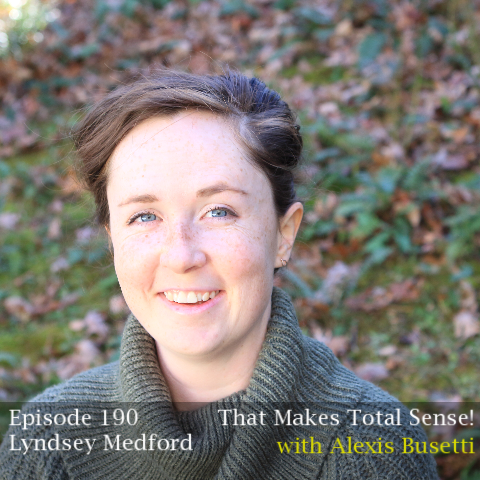
Speaker 2 00:00:41 Hey, everybody. I'm here today with Lindsay Medford, and she's written a really incredible book that I finished, oh, less than an hour ago, probably. Um, but it, it didn't, it didn't take long, Lindsay, and this is part of, part of what scared me is I'm like, I think this is so deep, and this is so <laugh>. The breadth of this is so much, I know, I know that I've missed something, but I say, I say that to say, I, I know that these ideas will be ones that stick with me, that they'll continue to encourage me. Many of them, they'll continue to challenge me, many of them, um, you know, as I, as I just continue to walk in this world as we, um, you know, after I finished your book. So thank you so much for joining me.
Speaker 3 00:01:28 Thank you for having me. This was exciting.
Speaker 2 00:01:30 I am, I'm really excited about it. So the book, oh my goodness, has a beautiful cover. It's called My Body and Other Crumbling Empires, lessons for Healing in a World That Is Sick, and it's got a heart and like an actual heart, like an organ. Mm-hmm. <affirmative>, a friend with plants growing out of it. So, Lindsay, first I just, I'm gonna ask you the most bizarre starting question, but first I wa I want you to tell us what this book and therefore this conversation, and I feel like kind of your mo, but what is this book? Not
Speaker 3 00:02:09 <laugh>. Oh, I, I, this book is not about how to fix your autoimmune disease.
Speaker 2 00:02:18 <laugh>, thank you. <laugh>
Speaker 3 00:02:18 Think has surprised a few people <laugh> somehow. Um, it's, and it's not about how to fix the world either. Um, which, uh, so many of the things I've read about social justice have, you know, they've been so insightful and so helpful and true, and they also sometimes come away. I, we, every podcast like interview, interview situation, you listen to, if there's a q and a at the end and people are talking about a big problem, then someone's question is, well, what do we do? And they want like a checklist. And, uh, this book does not give the checklist. Like, so many of my favorite speakers and authors who kind of, who get that question and they're like, well, we, we live our lives and we, you know, there's, there's a lot of things that we do and none of them are gonna be done tomorrow.
Speaker 2 00:03:18 So, yeah, no, I, I was reading Thank you for that. It's a bizarre way to start. I know, but I kept, I reading, I was reading it, and I kept telling my husband, I don't know what to tell you. It's not a handbook. Like, it's not a handbook, it's not a manual. Um, yeah, that, that, that question, I mean, I would say that question does get answered in a roundabout way, but it is definitely not, there is no checklist. Um, and so I just kind of wanna say that upfront and say that what struck me about this as, um, as I have read, and I don't know if I would necessarily put it in this category, but as I have begun to read other, like, theologies of disability, um, in the last few years, they have just begun to really challenge, I would say, my theology in general.
Speaker 2 00:04:08 Um, but then all of these little, all of these little, um, parts of my theology, you know, like what do I actually believe about the body? What do I actually believe about wholeness? What do I actually believe about, um, you know, what is good? Like what is Tove Mayo, you know, and, and Genesis, like what do I actually believe about Shalom and, and these, you know, interconnectedness and all of these things. Um, you know, we, I was reading, um, or my, one of my kids, they were, we had this little devotional in the car that we read sometimes when we remember on the way to school. And, um, the author was giving his take on what do our bodies look like after resurrection, right? I mean, like, no one knows. Yeah. And he admits no one knows, right? But, you know, his take was kind of like this stereo, I would say I'm a Bible belt kind of evangelical, grew up S B C, and it was right in line with all of that, right? Mm-hmm. <affirmative>. And, and I've just began to even question those kinds of things, you know, like, what if God and his creativity won't? What if him making all things new doesn't really look like what we envision? It will. And even in the New Kingdom, you know? So anyway, so I would say your book has kind of in my, in my library added to those things and I, I come up with maybe more questions than answers. <laugh>
Speaker 3 00:05:26 <laugh>. Yeah. Which is great.
Speaker 2 00:05:29 Yeah. Um, so, so I've, okay, so I've asked you what it's not, so tell us in your words maybe what it is and, and who did you write it for? Cuz I'll just go ahead and say, spoiler alert, it's not only for people who have autoimmune diseases. <laugh>,
Speaker 3 00:05:44 Right. <laugh>, um, what it is. I mean, it's part mem I call it a researched memoir. So, um, I am trying to tell this story, but also bring in <laugh> bring, bring in more other voices and other spheres of knowledge even. Um, and so it, it definitely goes back and forth and then intertwines those a little bit. Um, I wrote it, I say that I write about spirituality and social justice for tired people, because I don't wanna just say like, we, I'm in a chronically ill people corner and we talk about chronic illness all the time. <laugh>, I wanna say what people with chronic illness and disability have to like, have to offer to everyone else who is, we're really tired, but like, so is everyone else. Um, <laugh>, I know, uh, I know tons and tons of, uh, pastors, especially women pastors. I know a lot of therapists and social workers, and they were very much on my mind as well the entire time.
Speaker 3 00:06:57 Uh, community organizers and political people. Um, really on my mind this entire time where I hear people, I go in these, in this like into activism spaces or social justice spaces, and people who are just like talking between themselves, be non-disabled, people are like, how do we live when in the world if we, like, if we were to accept that this is not all gonna get fixed in our lifetimes, like, how are we even gonna live in this situation forever? Or I hear people saying like, how are we gonna do this work in a more sustainable way without burning each other out, even though we're all really passionate and we care a lot and these things are truly urgent. Um, people are saying like, how, how do we make things more inclusive? How do we, how do we work together when we share interests, but we like, also our experiences are really different.
Speaker 3 00:07:57 And all of these are questions that I think disabled people are living every day. Right? Um, and those are, that was like a broad range of questions too, but, um, I <laugh> that was where, that was also who I was writing for, was anybody asking these questions? And it's like, well, I also, I don't know that I have all the answers, but I can tell you what's working for me to live with these questions, right. Um, inside my body. And then doing my very best to make connections about how we also do that together and in other systems and other situations.
Speaker 2 00:08:38 Yeah. One, one of the threads that, um, I was trying to follow, and it was, and it was really challenging for me, a along those lines of, of those of those questions that we're asking is, you, you phrased it a couple of different ways in the book, but it's like, what if, and I would say, I, I don't, I mean this saying this in kind of a loose way, but I would say what some people would say like, is self-care or maybe like mm-hmm. <affirmative>, um, you know, like, uh, intentional community or something like that. You can kind of put that in a category and, and you say of those things like, what if that is the work mm-hmm. <affirmative> not just this auxiliary, you know, something on the side that we do and we try to fit in, or, or what if this is foundational instead of, I think you say like the cherries on top, right?
Speaker 2 00:09:32 Um, yeah. And, and you, and you give examples in your, in your own life of, of living with chronic illness and how those things, I mean, along with your faith and spirituality and, you know, all of these kind of things, kinds of things are, are what is healthy and sustaining and meaningful and all of this for you as you're living your life. And I think, you know, the people that you're talking about, we're asking these other questions are kind of like, oh, if I get home from, you know, if I get home from work, then maybe I can, I'll have a chance to text my friend, you know, or whatever. And yeah. You know, and it's like, whoa, whoa, whoa. Like, but what if you're texting your friend was the work, right? Or what if mm-hmm. <affirmative>, you know, getting, getting that acupuncture or whatever.
Speaker 2 00:10:09 Like, what if that was the work or senior therapist? What if that was the work, you know, instead of like, crap, I can't, I can't fit my therapist in until, you know, two Mondays from, you know, next. It's like, ah, like we're, we've got this kind of like, it should be the reciprocal <laugh>. We've got this kinda inverted in some ways. So like, talk about that for a bit, because it was one of those things where I was like, okay, Lindsay, I think I feel you. And I'm also like, I have no idea how to <laugh> I had to navigate that.
Speaker 3 00:10:39 Um, yeah, that's a really great question. So we'll see where we go. Um, I think what, so to speak about my personal experience first, like to go from the small to the large. I, um, before I got sick, you read things that are like, if you don't sleep eight hours a night, you are hurting yourself. Like, or you read things like, uh, it stress, we know that whether you consciously or physically feel it or not, like constant stress that you don't learn to deal with wears down your body very predictably. Or we know that, um, we know from a scientific perspective that we need to live in community and we, we believe from a faith perspective or a hu human perspective that we want to live in community and invest in that. But we, that's not on if you, if you have five things to do every day, those aren't the things.
Speaker 3 00:11:48 Uh, and we, we kind of put them in a bucket of extracurriculars and try to cram them in. Like, that's what you're saying. When I got sick, uh, it did, that was my to-do list all of a sudden mm-hmm. <affirmative>, but, and it felt really, um, like disorienting and almost, I'm trying to think of another word, but I can't, so it's sort of like shameful to me to spend all my time, you know, making sure I went to sleep, making sure I ate vegetables, um, be, but then like those also became over a long period of time the things that enabled me to show up in these other spaces that I once believed were my primary responsibilities. Right. Um, and not only that, but they enabled me to show up from a place of health and, and connectedness with myself in a different way than like, the way I used to be, sort of like running around all the time.
Speaker 3 00:13:11 I wa I was doing these things that I thought I should be doing, but not paying very much attention to the way that I showed up to them, or even trying to, but just like the material thoughts of my day to day did not allow me to. Um, and so from that experience of living with my body <laugh> and trying to understand how the system of my life, once I admit that it has to include the system of my body, <laugh>, how does this system function well and, and how do I fulfill all of my callings within it? Um, I started looking around at churches I was in, or, um, the ways people around me talked about activism and realizing that we have the same struggle there, the the same struggle to pay attention to how we are showing up to the things that we say we're supposed to do.
Speaker 3 00:14:16 Uh, even going back to the list, the s a q, what do we do now? I think so often the question is really like, how do we go about our lives in a more intentional way from here? Um, and I think that can sound like a really broad question, but, um, in some ways also we know the answer, like you're saying, like we are, we know that we wanna prioritize community, but we think that we have to like have a program for it or demonstrate a certain amount of results from it in a certain amount of time. Like in a, in a church or an organization. Like show me the numbers. Um, or we don't, or we don't have like, all the frameworks that we need for what community is because we are coming from one certain perspective and struggling to pay attention to the many creative and interesting possibilities and the many people around us who are doing community in different ways already.
Speaker 3 00:15:37 Um, and so it feels it is really slow often to do that. What I'm saying about paying attention to the people around us, or imagining creative ways to know our neighbors or care for our friends or be, make our organization more, um, human more relational. Those things are slow and they don't feel like doing something. And if we think that we get up every day to accomplish something, we're going to, we might even embark upon those projects and kind of accidentally abandon them because they feel uncomfortable to, to be in the process of being in relationship or be in the process of doing something creative without a clear end result. And I think disabled people and lots of other different people, if only because we have no other choice, but to not make the results, you know, sort of the, the measure of our lives. Um, we have a lot of practice in a lot of, um, gifts, giftings for helping each other stay in the space of like, this is emerging. This is, if we are trying to do something different from what we've done before, it's gonna feel weird. Um, and it maybe it's gonna go in a, on really twisty path and maybe it's gonna pretty much fail sometimes, but we are gonna wake up again tomorrow and try something again, and we're gonna trust that something is actually emerging here. It because we are acting on what we say they
Speaker 2 00:17:39 Leave. Yeah. Yeah. I mean, as you were talking, I was thinking about how kind of shifting our mindset in some of those things, even if we're, um, I'd say if we're able-bodied and then I would say, but as you point out, we're able-bodied for a time most of us <laugh>. Right? Um, and, and it does, you know, shifting that mindset, however we end up doing it, one of the consequences of that, and I think it's one of the, one of the more powerful consequences is just that we end up valuing each other and ourselves so much more. So, um, when I was in middle school, my aunt had, uh, and something like an aneurysm, it wasn't technically that, but that's how they explained it to us. It was something like an aneurysm burst in her brainstem. And she was in her early forties and she became permanently disabled after that.
Speaker 2 00:18:34 And we lived in, uh, at the, my, my hometown is a little small town in Oklahoma where basically all of my family still lives. Um, and my family is from O K C. Oh, really? That's my sister lives there, and then everyone else, she and I are gone and everyone else is, is there. So we're about a hundred miles south of Oklahoma City in a little Okay. Yeah. In a little town called Ardmore. Anyway, um, yes. But yeah, right on I 35. So anyway, my, my whole family still lives there and my aunt, so we were about, I don't, I don't know, a couple of miles from my grandparents' house. Anyhow, my grandparents ended up, um, my aunt ended up moving in with my grandparents after a long process of, you know, brain surgeries and skilled nursing and, you know, all of this stuff. And she ended up living for about 20 years after, um, this incident.
Speaker 2 00:19:23 But she was mm-hmm. <affirmative>, um, but she was very severely disabled. And I, what our family looks like before and after that medical event was dramatic, right? Because we basically, everyone in the family stopped <laugh> what they were doing, and we just tended to her, right? Mm-hmm. <affirmative>, we tended to her and we tended to each other, and it was very formative for me. This was happening as I was a teenager, right? Mm-hmm. <affirmative>. And so I was, um, you know, learning how to drive, and I was driving to my grandparents' house so that I could help, you know, be a caregiver for my aunt, um mm-hmm. <affirmative>, but it, it, it, it changed us. But then it also, you know, we grieved, um, you know, who she was before she, uh, aspects of her personality changed, and we also grieved some of the things she could no longer do with her body, you know, like paint and, and decorate cakes.
Speaker 2 00:20:24 And she was, she was a very creative, artistic person. Um, and at the same time we had this intense love and value for who she was now. Hmm. You know, like we couldn't, we did every, we couldn't fathom living without her, even though she had changed, even though she was not the, the woman that we had known. And some of people in my family had known her for 40 years and me it was just, you know, 13 or something. Um, and, and I don't know, it's, it's very difficult to describe how that kind of changed how I viewed, I don't know our lives, right? Mm-hmm. <affirmative> our bodies, our abilities, right. And just this Yeah. Kind of living with that tenderness that for any one of us at any moment, our lives, our bodies, our situations, our health, our medical conditions could change on a dime. Mm-hmm. <affirmative> and, and what that would look like if you had support, if you didn't have support, if you, you know, what systems were in place Right. To, to help. Yeah. You know, care for, for her. And don't get me started on like disability and <laugh>
Speaker 3 00:21:35 Right. You
Speaker 2 00:21:35 Know, all that kinda, we, we don't have to go there. Um, you know, but, but really, and then, and then what we value, you know, societally, you know, she could no longer technically contribute economically. Right. Vocationally, um, yeah. But was she still a valued member of our family? A hundred percent. Like no one questioned that, right. No one, no one in our circle was questioning her value, her worth the love that we have for her, and she had for us. Um, but in some ways, some of these other systems, I wouldn't, they, the, the value changed is that, is that too hard to say? Right? Like it for these other systems, her value did change in their
Speaker 3 00:22:22 No, yeah.
Speaker 2 00:22:22 Institutions, right. In those, in those organizations.
Speaker 3 00:22:26 I was, I was preaching this Sunday, and I, I, I also hesitated to say this, but then I just went ahead and said it because I, I, I've never heard a disabled person say, oh, that really hurt, at least someone who had accepted that they were disabled. Um, I said, in our society, disabled people don't quite count. Right. Uh, like in a literal sense. Like we stopped counting them sort of. Um, and I do, I do like to at least mention that the disability system as you were alluding to, is actually really horrible <laugh>. Um, just because people don't know, right. People kind of, I, and I do think people even assume for themselves, like, if I got in a car accident and would not do my job anymore, there's, there's something out there that's supposed to take care of me. Right? And like, that thing is like a really minimal check that you have to fight for years and years to receive.
Speaker 3 00:23:29 And then like, if there's all sorts of other limitations that will keep you from receiving it or have to give it back if it's really confusing and difficult and it, it's basically requires people to live in enforced poverty. Yes, absolutely. Um, so there is that <laugh>, and I'm really grateful that you had a family system that was able to kind of absorb the, I the, the point is not to argue that it's like not difficult to care for each other, um, and that some of us don't, don't require a lot of those around us. And we just hope that those around us is a large enough group that they can also care for each other, that they can spread, spread out their resources required to where we don't have to feel like a burden. Um, but yeah, we, we have really specific ways that we learned and measure each other in our society.
Speaker 3 00:24:37 And, and therefore, um, so much of the book is about how that gives us to measure ourselves. And, and we are, we end up being driven by what's gonna make us count, uh, to these things that don't actually care about us <laugh>. And, um, so I really appreciate you sharing that story. And, and it made me think of some other people in my life who the, um, and there are, there's, um, political conversations happening every day about what disabled people's lives are worth. And people will stand up and say, pretty, pretty explicitly, these people are drains on society, <laugh>. Cause we know and those who love us know. Um, at the very least, if we are receiving enough, enough care to, to value ourselves, we know that's true, that we have a lot to offer. So,
Speaker 2 00:25:38 No, that's right. That's right. So anyway, thank you. I, for kind of Yeah. Just for listening to that, I think. Sure. Like I said, I'm still just processing, so, um, anyway, I'm probably not as organized in my thoughts as I wish I was, but I do when
Speaker 3 00:25:51 It's not an organized book,
Speaker 2 00:25:53 <laugh>.
Speaker 3 00:25:54 No, that's great.
Speaker 2 00:25:57 I thought it was great. Um, but, um, you know, on kind of along those lines, one of the things that really struck me that I think it I'm gonna live with for a while is you say, so we're, we're gonna shift to Jesus here because this, this Jesus talk in this book was, was real, um, <laugh>. And I really appreciated it as, uh, someone who is in love with Jesus, but also as a theology student. Um, but you say Jesus was not, and I would say is not right. We can, we can say right now too, but, but also, but when he was in incarnate walking face of earth, Jesus was not in the business <laugh> of making people more tidy or productive or Correct. I think you even said <laugh> and I, I I just absolutely loved that statement and that idea. And then, and then you elaborate on it.
Speaker 2 00:27:01 I don't remember if it was in that section or, or other sections, but basically even saying like, when Jesus did heal, like he healed a man who was blind, he healed people who were lame or with skin diseases and all of that, that that instantaneous was not the be all end all of of their situation, but also of what Jesus was coming to do in their lives and in their communities. That I think, if I'm not mistaken, you, you kind of gather around this idea of, of this healing gives kind of a, like a little thumbnail, kind of a preview of this, you know, these miracles, um, you know, offer us kind of a glimpse of the, the miraculous and the supernatural. And, and they're, and they're an encouragement, right? And they're beautiful for people who receive them. And they're also, um, you know, the beginning or a catalyst perhaps to a continued work of healing that will, that will take place after that, within that person and also with their surrounding communities. So if I butchered that, correct me, and if I'm kind of on the right line, then maybe just elaborate on that idea a little bit.
Speaker 3 00:28:14 Yeah. I think that's really central to, to the book and, and to what I, what I'm continuing to bring forward, um, from, from this work and from this book. Um, I, there's a, the line, I don't remember which gospel, even. There's the one that says, this is just a few of the stories. And if we, if we kept telling all the stories that would, we would never stop and I would fill all the books in the world or whatever it says. And I, that's given me a lot of like, freedom to perhaps even license to imagine a lot about Jesus. And, and I wonder if some of the healings can't, were couldn't really be told very well because they were healings of people's spirits or healings of people's wounds tr like emotional or family wounds. Um, and I, I really, I kind of have to believe that.
Speaker 3 00:29:14 And, and because I, I believe there's been miraculous healings in my life that were invisible and, and the same, the same way. Um, and so yeah, I, I really struggled with this question, and I'm still trying to figure out how to articulate it sometimes, but I really don't believe, well, for one thing Jesus has con the people are constantly saying to Jesus, give us a sign. And then Jesus says, you're not ready for a sign. And in, in my also similar evangelical background, it was, we talked about belief so much that all, the only way we had to interpret that was like the people weren't ready to believe that somehow they would see these signs and not believe, and that made them bad <laugh>. Um, but I wonder if they weren't ready to like, absorb the implications of what it means to be healed, I wonder if they weren't ready to, to deal with, in some ways, healing has its own consequences that feel difficult to deal with sometimes, right?
Speaker 3 00:30:26 Like healing means moving into a new way of being in the world. Healing means changing these relationships change that are, that are been so formed around an experience of wounding or sickness, right? And, um, that's true for individuals, and that's true for families, and that's true for communities. Um, that one, one person's healing creates, creates decision moments for everyone around them. Uh, am I going to accept that this is real? Am I going to accept that this person is moving forward in any way? Am I going to, um, celebrate them or am I going to be resentful or jealous? Or do I somehow depend upon them to be like the, the sick person in my life? And if that goes away, then I have to figure out my own junk, right? Like, I, I would rather deal with this person's illnesses than my own, right?
Speaker 3 00:31:30 And so I have to imagine that all of these people had these stories. E well, I was preaching about the blind man or one of the blind men this, this Sunday. And the, it causes this kerfuffle in the whole neighborhood, and then they bring in his parents and into the temple to sort of interrogate them. And his parents don't really like vindicate themselves or quit themselves very valiantly. And you, you're seeing this happen in real time, like for one person to be healed creates a crisis for everyone around them. And, and, um, I'm thinking of crisis. Glennon Doyle points out that crisis means to sift a crisis is an inflection point. A crisis is a, can be an opportunity to move into our own healing and, and into celebration and into cel celebration and acceptance of what is new or a crisis can be the excuse we were looking for to fall apart and abandon each other, right?
Speaker 3 00:32:35 Um, and so I really, the longer I ponder this and the more disabled people I meet, and the more I look at the context of what Jesus was doing in the rest of his ministry, I really think that each of these people, Jesus healed, was not just a sign of in a very, like, literal way of God's power, um, but also of what could be possible for the community and a, an inflection point and a, a sign of like, this is the kingdom of God. What are we actually, what do we really gonna do about it? <laugh>? And, um, that also feels like a much more satisfying explanation of, of why all these people rejected this ministry, right? Or, or refused to believe in it, um, because it upends healing, upends our normal ways of going about things and asks us a lot of uncomfortable questions. And, um, Jesus, and often when he heals people, the text will also say, and then he gave them back to their family. Or we see them participating in their neighborhood and their community in a new way. And so that's just one of the ways that it says in the Bible that this healing already starts to ripple out. It's not just the person's body looks nicer to the people around them, <laugh>. It's like the person has these new ways of relating to everyone around them and, um, is escaping from oppression and exclusion usually.
Speaker 2 00:34:34 Yeah. And, you know, I don't, I don't know really Yeah, kind of how to articulate this question, but point, one of the things that's been swimming in, in my mind, um, that your book fed into, it's, it's, it's been kind of swimming in my mind for a while, is, um, is kind of the, so, so I'll, I'll, I'll take what what you said, but like, there's expectation after healing, um, from yourself and from your community, and some of those are healthy and some of those are not. Right? Right. So like, um, you know, like, to, to use like a really kind of stupid example, it's like, so, so I also have an autoimmune disease. It it requires me to change my diet, or I get very sick, and what if, what if God just changed that, right? He's like, okay, this, this autoimmune disease is gone.
Speaker 2 00:35:17 Like, okay, stupid example. I would not be able to slam dunk. Like still, like I'm five foot three, right? I have zero basketball skills at all. Like, I, like, if I could get a few dribbles out, that'd be great, you know, but like, there are, like, my body would not all of a sudden turn into something that it wasn't designed to be because this ailment of mine was healed, right? I wouldn't be an Olympic swimmer, I wouldn't be a PhD chemist, right? Like some of these things, you know, as kind of silly examples. But, but I think, you know, we can kind of pull back from that and say, but this does, I think can apply to some of what you're talking about, like this kind of upending of healing. Because I think some expectations that we might have our, of ourselves and when we experience healing, or that our community might have of us when we experience healing or vice versa, um, are going to be really healthy things.
Speaker 2 00:36:19 You know, um, people with skin diseases who could know, who couldn't be part of their communities and societies and, and in worship services in certain ways could now join in, in some of those places, right? But maybe some of those guys who like were jerks are still gonna be jerks. They're just jerks with like, out of skin condition, right? Yes, yes. Or, you know, and that's a continued process of like, but maybe just like the rest of us, if we have jerky aspects about us when we're with community that's really kind and they're forming us and we're forming, you know, like those things continue, um, to happen. So, so when you said they, they go back to their families or that Jesus didn't come to, to make people more tidy or productive or correct, but to kind of begin some of this healing work that is, that is still going on inside of them, um, and, and around them.
Speaker 2 00:37:08 I just find that to be really powerful and also to help us, um, appreciate who we are in, in like who God made us to be inside of our diversity and inside of our limitations, um, that we have just as, you know, just as people. And, you know, I can't slam dunk, but LeBron James can slam dunk, and that's fantastic, but I can also fit in more doorways than he can, right? <laugh>. So that's, there's like, you know, some differences and some diversities and some limitations, you know, um, that, you know, that we each have as people and, and sometimes disabilities can, um, highlight those in ways that, um, you know, they, they can be helpful and they can also, I don't know, highlight them in maybe kind of a way that's not kind of as helpful. So, um, I don't know.
Speaker 3 00:38:07 <laugh>, yeah. Um, oh, the first thing you said,
Speaker 2 00:38:15 <laugh>, sorry. If God were to heal me of my autoimmune disease, I still couldn't. Yeah.
Speaker 3 00:38:19 Will you? You couldn't slam dunk. You wouldn't, um, and you would still be a different person for having had the experience
Speaker 2 00:38:29 True
Speaker 3 00:38:30 Of, um, of the illness itself and of the ways that you have learned to live with it. And even though some of your actions might change, but they, who you are is already different. And sometimes, uh, healing, when we talk about healing, we're really talking about a fantasy of something that doesn't exist, of putting things back to the way they were when they're never going to go back to the way they were. Um, I find that to be very, extremely super true when we get into conversations about justice and equity and liberation, um, that there's either, you know, like a fantastical, well, in Christian world, we like to talk about Eden because we can kind of pretend that it's like anything that we want and we're like, or the acts church, the church in Acts is like, if only we could get back to there. Like, I don't think so. I don't know that it was any better or worse, right? But anyway, um, we, we make a mythical paths where, well, before the industrial revolution, everything was fine, or like, when every, everybody was a farmer, we made things right. <laugh>, um,
Speaker 2 00:39:51 Back when the live expectancy was 22 things were <laugh>.
Speaker 3 00:39:55 Yeah. Like, first of all, that's not true. But second of all, if that mythical land once existed, right? It cannot be, we cannot pay it back.
Speaker 2 00:40:08 Right?
Speaker 3 00:40:09 We can, even if we had the tools and everyone agreed that we should, we could, we couldn't do it. Um, and that's just, that's true of so many different things that we talk about where we, it feels somehow comforting to think that there was just this one moment where we went off course. And if everyone can recognize that that was bad, we can undo it all and it'll, we'll get it back to where it was supposed quote unquote supposed to be, and then it'll stay that way forever. <laugh>. Um, the world is constantly unfolding. Our bodies and our stories are constantly unfolding. And it seems, uh, pretty clear to me that God made it that way. I, and that Jesus was perfectly accepting of, of that reality of in his own life, in his own society. And, um, so when we talk about healing, we are talking about something very different from putting, putting everything back the way that makes the people around us comfortable or felt nice in the past.
Speaker 2 00:41:23 Yeah. Yeah. Um, let's stay on Jesus for a minute. Mm-hmm. <affirmative> Sure. Because I, um, <laugh> because they're, um, gosh, I would say Jesus was so misunderstood. I still misunderstand Jesus. Like, like mm-hmm. <affirmative> kind of a lot. Um, but Jesus, Jesus, I, I've thought about this recently where this idea that Jesus was a man of sorrows and he partied too. Mm-hmm. <affirmative> like har, yeah. Like, like so hard that people were hacked, um, that he was <laugh>, that he was partying. And you have this, um, this beautiful section in your, in your book. And I want, can I just read this little italicized, I almost never ever do this of course, but, um, there's this beautiful part where you're talking about, um, Jesus being at Matthew's house, at Levi's house who is, uh, you know, the, the tax collector who's working for the Empire g Whiz.
Speaker 2 00:42:29 And he's, because of his work for the empire, he's freaking rich and he's not well loved <laugh> among his peers, <laugh> <laugh>, um, yeah, he's not well loved among his peers. And Jesus is partying at Matthew's house at the invitation of Matthew after he's been called. And, um, and you, you kind of paraphrase this of when, when they're asking, because he says the, the, this, I didn't come like the sick people are the ones who need a doctor. It's not the well people. And, um, and you say that they're, they're mortified and they're talking, of course, this is when they are talking about John the Baptist, like his disciples are fasting. Like, isn't that kind of the spiritual thing to do? Okay, that's my paraphrase. But then you say, Jesus is still patient, we're celebrating. He says something new is taking place. We grieve when it is time to grieve and we party when it is time to party.
Speaker 2 00:43:26 I think between the lines, he is also saying this was it. No one was ever shamed and excluded into the loving just ways of God's kingdom. And we have just as much to learn from our joy and desire as we do from our pain. And what does it feel like for us not to need your permission? And do you know, you are invited to. Yeah. And this is just like no one was ever shamed or excluded into this kingdom work. And not only that, the people who are fussing about it are invited, <laugh> <laugh> into this, right? And so I do think like there can be a lot of focus on, um, yeah, on, on, rightfully so, right on, on pain and injustice and all these things when we're talking about chronic illness and disability and injustice system, unjust systems and all of these things.
Speaker 2 00:44:30 Um, and, and we, and we can live there. And I think that it's right too <laugh> in a lot of seasons and in a lot of senses, and even in some parts of our day, right? We're gonna feel that very, very heavily. Um, and it is also right to live into the joy and the beauty and, and all of those things that, that Jesus came, I think, to point out and to express his own. You know, he, he ex expressed joy. So, I mean, what is that like, like I read that and someone's like, that's in a book on disability and autoimmune and chronic, but like connect, connect those dots with what Jesus is doing there with, with this kind of larger story that you're telling.
Speaker 3 00:45:19 Well, lemme to be, to connect them in the very concrete again, I, as at first when I was trying to heal from, from autoimmune disease, uh, which again, healing a very complicated word in, in the context of what I'm saying, but, um, at first it was my, it was my pain. That was the signal that, that things needed to change and that there was a better way for me, right? Um, and the more i, it took me a long time to learn to attend to my pain, um, in where I had been taught or just found it more convenient to ignore it, right? And, um, very in very specific ways, you know, like if I ate certain things, my, I would get like these growth ulcers in my mouth, <laugh>, if I didn't sleep enough, my joints would hurt. Like, and over time I learned to recognize these connections, right?
Speaker 3 00:46:31 But I also like, as time continued to unfold, this same skill of paying attention started to, started to just like pay some dividends, right? Like we, we actually do really struggle to notice when we feel pleasure, we struggle to notice when we feel connected or satisfied. And we, as much as we struggle to even feel those things fully, we struggle even more to, to connect and to value what, what brings about these feelings in our lives, right? Um, and for the, for a lot of the same reasons we've been talking about that we struggle to value, um, what we like, theoretically believe is good <laugh>. Um, and I, I, I really do think that like ability to pay attention to how it makes us feel is a really important missing piece to where, where how we actually shift into truly valuing our values, <laugh>. Um, and so I, you know, I used to do yoga cuz I thought I should, and now I do yoga because I like crave the feeling of movement and breathing, or I go on a walk because I love it outside and <laugh>.
Speaker 3 00:48:04 Um, and I prioritize that walk rather than trying to cram it in at the end of the day when I'm actually too tired to, to really do it or enjoy it, right? Um, and so I really how af having this experience and thinking a lot about what does it actually mean for Jesus to be embodied, um, I and to be like fully human and fully alive and in his body and having the same experiences as us and try and showing us how to do this human thing, right? I really think that he knew how to enjoy what he enjoyed. Um, and I think, you know, I've been, I've been wondering lately where I lost like the, the word liberation because we talk about, I, I, I think justice and liberation are very different and they're like super tied together. Uh, we can't have either one without the other, but, um, we get really focused on, on a justice that's writing wrongs, and we forget to invite each other into the liberation that moves beyond that.
Speaker 3 00:49:24 Um, that where we are all invited to the party, where the world that we imagine can be true, where, where it is the truest world already, if that makes sense. Um, and where we can embody it now, but only if we are willing to, and it can feel scary. And there's, you know, there's a whole other psychological and sociological conversation about why it feels scary to lean into pleasure and joy. Um, and why that's hard. It's <laugh>, but I, to, to bring it like all the way around, I've come to realize that that's how I have stayed in sort of spaces of doing justice is remaining open to what? To every like of beauty and love and connection and satisfaction that I encounter in these spaces or in people in situations that are really unfamiliar and uncomfortable or, and asking, constantly asking like, what, what way of being is this potentially inviting me into that maybe wasn't available to me before?
Speaker 3 00:50:59 I'm thinking of being in community with people that like white, middle class, professional, educated women aren't supposed to be, um, in community with. And how I think a lot of people, it's really easy and it's been easy for me to get uncomfortable and be like, well, I don't have to be here <laugh> and I don't understand this. And people made me promises about liberation that aren't like, aren't true, we're, we're not immediately obvious to me. And I'm going back to where it was safe and where, where like the pleasures are accessible even if they're small.
Speaker 3 00:51:48 And I think the other, the other option available to us is to stay curious and to be like, what if, if someone promised me that there was liberation in this strange place and wisdom in these people that I don't understand, and um, like a gift available for me here that I don't actually deserve <laugh>. If I believed that, where would I find those gifts? Where would I find those, that wisdom and those those pleasures? What, what am I missing that makes it hard for me to see that? Um, and I think, I don't know quite how I got here, but I just, I think that Jesus loved people so thoroughly and saw what was good and beautiful in them so easily, um, that that move into like just being delighted by things, whether he understood them or not being, uh, willing to experience joys that, that were kind of not allowed in some ways in sometimes by his religion and not renowned by the political empire around him. Um, there, I think there's a real determination to experience joy in, in the way that Jesus encounters every single person with this sense of compassion, love, but also delight.
Speaker 2 00:53:28 Well, and our liberation is, it is liberation is tied to justice, but you know, as you were speaking earlier, I was thinking, but our liberation is also very, very much tied to each other. And so if, if right in our privilege we try to leave some of those spaces that are uncomfortable, um, I think we do that either intentionally or maybe out of an ignorance or a misunderstanding that my liberation is tied up with the liberation and freedom of the people that I might be tempted to leave.
Speaker 3 00:54:02 Exactly. And I think that's one of those, and that's exactly what I'm getting at, where that's easy to say and, but also once you experience it, like you're, there's, you're not going back from that because <laugh>, you're, you're not, it's so profound and so wonderful <laugh> to realize the truth of our connectedness. And, um, I think that's also what I'm saying about defining justice and liberation is that, um, it's easy to pretend to fall at liberation when we all, when everyone gets the chance to live like a rich white man could, like we, we imagine liberation as some sort of place where we all like can consume a lot of stuff and, um, not have to ever rely on anyone else for anything. And that's, that's a, you could, there's a lot of ways you could call that a material form of justice, but that's not liberation. And and I don't want that <laugh> and that's not what I wanna invite rich white men into or anybody else.
Speaker 2 00:55:27 Yeah. We've missed the boat if we're, if that's where we think the dot on the map is. Um, yeah. Okay. Lindsay, as we, as we start to wrap up, um, because I, like I said, I've been, I'm, I'm processing, so I haven't been as organized in my, as my, in my thoughts as I want it to be. So I'm gonna kick it over to you because that's, that's what I'll do when I, when I'm not feeling as organized as I want, I'm gonna punt, um, kind of No, I, I often end with this question. What question did I not ask today? Like what, like what if you were like, oh, if she would've, if she would've said this man, I would've, I would've totally gone there. Or what would you like to leave us with as we kind of continue to ponder some of these ideas?
Speaker 3 00:56:19 Hmm. I was just, I think this is not that you didn't ask this, it's just to sort of wrap up what we've been talking about this whole time. I was thinking a lot like this morning, really pondering how few words we have for the systems that we participated, uh, and they used the word systems a lot in the book. The working title for the book was systemic, um, to try to allude to like my, my systemic body issues and then the systemic problems and things in the world system. Um, and I really, what I'm trying to do here is help us to reimagine these things that we have been taught up, taught to regard as machines, whether it's our bodies or like the justice system. Like if we could just tweak, tweak this and this, it would run better, right? Um, to imagining what, what it would be like and how we would live if we understood these things as ecosystems.
Speaker 3 00:57:48 Um, just kind of unfathomably complex, but all the more beautiful for that. And if, if we cannot ever fathom or comprehend them, how do we, do we just like lay down on the floor and refuse to participate? Or do we, are we humbled by that enough to just do our part in our place, learn what we can be amazed by what we can, uh, accept what mistakes come of the unexpected and, and expect the unexpected, right? Um, what if that is the way that God created this world and created us and our, our churches and communities, these like really, that are really complex systems in and of themselves. Um, what if there was a lot of, again, peace and joy and liberation and what if, what if reconceiving these systems in that way may actually makes us more effective to, to come around to some other ways? We've alluded to, like what is, we can still have goals <laugh>, we should, we should still strive for justice and maybe the way we're trying to, there like deeply constrained by our metaphors and our habits and maybe there's just a more beautiful way and the more beautiful way feels more beautiful because it is more true.
Speaker 2 00:59:38 Yeah. Thanks Lindsay. I appreciate it. Yeah, I appreciate it. Um, yeah, so the working title was systemic. The actual title on the book is My Body and Other Crumbling Empires, lessons for Healing in a World That Is Sick. And I will put the link to this in the show notes for this episode. Thanks so much for coming on and like being willing to just kind of go back and forth with me as I, you know, process some of these ideas. Um, yeah, that's my favorite. Really appreciate it,
Speaker 3 01:00:10 <laugh>. Thanks for having me.
Speaker 2 01:00:11 I really appreciate it. All right, thank you.
Speaker 1 01:00:14 The links for all the resources mentioned in today's episode can be found in the show notes, music and podcast production by Seth Boetti. Be sure to give us a review on iTunes and subscribe at your favorite podcast listening app. You can also visit us at, that makes total sense.com.