Episode Transcript
Speaker 1 00:00:06 Welcome to That Makes Total Sense, a podcast dedicated to exploring God's generosity and justice. I'm Alexis bti, a Christian aiming to ask good questions and encouraging you to do the same. Every one of us is wired by God to live out generosity and justice. But the how sometimes eludes us that makes total sense is a way for us to get together, posture ourselves as learners, and challenge one another, to practice generosity and justice in a tangible way every day.
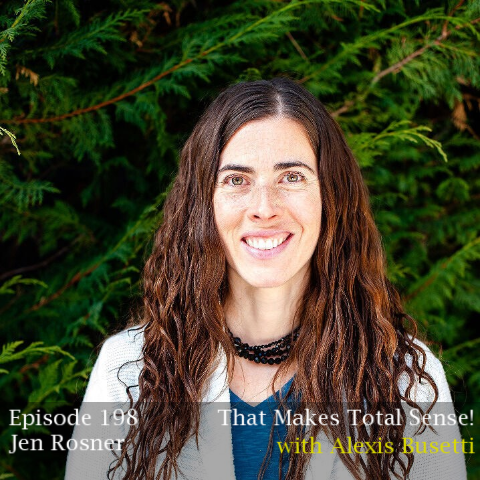
Speaker 1 00:00:41 Hey, everybody, I, I feel like I always get to say, I just finished this book, this one I didn't finish this morning because I had other homework, so I finished it yesterday, <laugh>, even though I've had it for a while. Um, but I'm sitting here with Jen Rosner, who was a professor of mine at Fuller. So I just wanna say thank you. The class was amazing, and, um, she wrote a book that came out about this time last year, so this is like slightly unusual, um, for the podcast, but I will tell you, I can just say it, it's great. A year later, Jen <laugh>, I'm sure it's as great now as it was when it released, but it's called, um, finding Messiah, a journey into the Jewishness of the Gospel. So, welcome Jen. Thanks for coming on.
Speaker 2 00:01:25 Thank you so much. It's so great to be here.
Speaker 1 00:01:28 Yeah, it's good to see you. It's kind of funny because I feel like the lectures that I've seen of you, like, it's a similar box. It's a similar space, but I'm getting to like, talk back and forth now, which is pretty cool. Yeah, it feel, it feels a little surreal though.
Speaker 2 00:01:42 It's a little better when it's interactive, isn't it?
Speaker 1 00:01:46 That's right, that's right. Yeah. It's just, I'm like, oh, it's the same shape. I'm like, did I pull the wrong lecture? No, it's not. It's just Jen, we're here. Mm-hmm. <affirmative>. So this is totally fantastic. And I wanna, first of all, I wanna ask you, you're in California mm-hmm. <affirmative>, is that right? Mm-hmm. <affirmative>, yes. Okay. So we're gonna get to this other part of Jen's story where she has come back to California after, um, after living life in another part of the world. Mm-hmm. <affirmative>. But if I can just say a little bit about your book first before, um, before I let you dive in, I'm just gonna let you take over, essentially. Mm-hmm. <affirmative>. Um, so this book, which has a beautiful cover, actually has something on the cover that may be unfamiliar to many of the folks who are listening. I would say, just because of my background, it is not unfamiliar to me. We have this, uh, Tali in our closet right now. Mm-hmm. <affirmative>, my husband owns one. Um, but this is probably a little bit unusual for most folks because mm-hmm. <affirmative> you and even the title Finding Messiah, like, we know that Jesus, Yeshua Christ mm-hmm. <affirmative> is the Messiah, but we don't even normally refer to him as that. But you are a believer in Yeshua or Jesus, I would say Jen and I may go back and forth with that. Mm-hmm. <affirmative>, um, and you are also Jewish.
Speaker 2 00:03:13 Hmm mm-hmm.
Speaker 1 00:03:14 <affirmative>, and this isn't like something that should be like super shocking for us right now, but we're gonna go into how this has been, like your identity has been a scandal.
Speaker 2 00:03:27 Mm-hmm. <affirmative> mm-hmm. <affirmative> mm-hmm.
Speaker 1 00:03:29 <affirmative> for centuries. And so I just wanna kinda lay that groundwork and say that your identity and the identity of folks who look like you has been a scandal for centuries and centuries. Um, not just inside of the church, but um, inside the Jewish community as well. Mm-hmm. <affirmative>. Mm-hmm. <affirmative>. So, um, yeah, I don't know. That felt a little like, but anyway, um, and this is your story, so I'm so grateful that you came on to share it. So maybe if you could just like, kind of introduce yourself and then we'll get into, um, yeah. I wanna, I wanna, I wanna kind of start with after you introduce yourself, if you could just start with like how you found Messiah. Mm. Like we might say, if we were in a church setting, tell, tell us your testimony, Jen mm-hmm. <affirmative> of when you found Jesus.
Speaker 2 00:04:15 Yeah, yeah, sure. Um, yeah, I mean, it's a, it's kind of a winding story, maybe, maybe like a lot of people's. And, uh, as you said, I, I currently identify as a Messianic Jew, which is also a very kind of controversial, controversial allegiance to have both in the Christian world and in the Jewish world for very good reasons I might add. Um, and it's taken me a long time to be comfortable with that, um, you know, with that label and with that identity. Uh, so I was raised in a Jewish home in Northern California. Both of my parents are Jewish. They both grew up in the Jewish community in Los Angeles, and then they got married and moved to Lake Tahoe, which is where I, myself and my brother were born and raised. Um, and we weren't really part of a Jewish community growing up.
Speaker 2 00:05:06 There wasn't much to speak of in our town, but we had pretty strong, uh, I had a pretty strong sense of Jewish identity in the home, and we celebrated, you know, Passover and Hanukkah, not all of the Jewish holidays, and we weren't, you know, very strict about them. But it was something that, um, that in some ways kind of anchored my identity as a child, but it also felt very, um, it wasn't something that my friends could relate to because we just didn't have a Jewish community. So it was sort of something that was like, existed in our home, and that was it. Um, and, and, and sort of, I, I should also say that, you know, my mom was raised, uh, in the reform Jewish community in Los Angeles. And for her, Jewish identity was kind of a cultural, um, it was very meaningful to her.
Speaker 2 00:05:56 Like she was a camp counselor at the Jewish camps, and she was very involved in different Jewish events, but for her, it wasn't as much theological or religious, it was more sort of cultural. And that was, um, that was an important identity marker for her. But it wasn't necessarily connected to like, faith in God or obedience to God or covenant with God. And my dad was a little bit the opposite. He became jaded towards organized religion pretty early on. And, uh, you know, the la Jewish community is very interesting because there are those in Los Angeles who take Judaism very seriously. But then it's also almost like a cultural, almost like a status thing in, in certain communities in Los Angeles. And my dad just had like, no patience for that. He thought it was hypocritical. He thought it was shallow. He thought it was superficial.
Speaker 2 00:06:39 And so my dad was kind of searching for a deeper, um, kind of meaning and purpose and connection. And so he started following these different sort of religious spiritual leaders, some of whom were Jewish, some who were not in the seventies. So it's, it was interesting, uh, being raised in my home because for my mom, Judaism was really important, but that was kind of separate from faith in God. And for my dad, faith in God was really important. And it was kind of separate from Judaism for him. So I, I refer to it as this sort of non contextual monotheism that of course had Jewish trappings, whether or not he realized it. Um, so I was raised in this home where we, you know, celebrated Jewish holidays. I was aware that I was Jewish. My dad was very concerned with instilling a Jewish ide, I mean a, uh, like a, a faith, um, foundation in my brother and I.
Speaker 2 00:07:26 And so that's how I was raised. My best friend in high school was Catholic, and I remember going to like mass with her, which I guess my parents were fine with. I don't think they were particularly threatened by that. But I never like, heard the gospel until I was in college, which is remarkable to me, given that I had like a handful of like, real Christian friends in high school. I never knew like who the person of Jesus was, um, until I went to college. So I went to, um, I did my bachelor's at a large public state school in California called Cal Poly. And I was a political science major. I was planning to go to law school. And it was just this really interesting set of circumstances whereby all of my friends and roommates were Christians at this large public state school. Like it was just kind of a crazy thing.
Speaker 2 00:08:12 And yet, uh, God was sort of on the move at that time at this particular university. So one example was, um, the Campus Crusade, which is now called Crew, went from 30 people to 500 people in a five year period. And I w that's when I was there. So it was like this major sort of like, you know, something was going on. And, and, and, and both my brother and I got kind of caught up in that. And so my undergraduate years became a real time of searching. Um, I started eventually going to church on Sundays just because I didn't like being the only kid in my dorm who wasn't, who was there on a Sunday morning. Like everybody went to church. Um, and I started going to Campus Crusade meetings and just really sort of wrestling with, um, and I wouldn't even say that it was like, I don't remember like one moment where I like heard the gospel for the first time, but I was sort of learning slowly about the New Testament in this person called Jesus.
Speaker 2 00:09:08 Um, and I, I was a political sci science major as I mentioned, but I, all of my electives, I took religion classes cuz I was just really like hungry for this. And again, through an interesting and powerful set of circumstances my last year as an undergrad, um, it's, it's hard to even describe it, but I think I just came to a place where I knew that this was true and I had to figure out what to do with that. Um, and so I like came to faith and, uh, you know, sort of knew that this was gonna change who I was and what my life was gonna look like. And what that meant for me was that I scrapped the plans to go to law school because I was just kind of hooked. Like I was just hooked on religion and theology and church history and these sort of important discussions that had, um, you know, that that that sort of composed this new factor of who, of who I was and how I was understanding myself in the world and God.
Speaker 2 00:10:02 And, um, so I scrapped the law school plan. I went to Yale Divinity School, uh, for, to do an MDiv. And I was like a kid in a candy shop. Like I just loved, like Biblical Greek and biblical Hebrew, and like all of these classes, systematic theology. Like, I just thought it was the funnest thing in the whole world. And yet internally, I was still really struggling to be honest, because I did not know how to put the pieces together of this like Jewish upbringing that I had had. And this newfound faith in Messiah that I had. Um, I didn't know how to fit those together. I didn't know, I didn't even know there was such a thing as Messianic Judaism. I certainly didn't know any other Jewish followers of Jesus at the time. And so I just kind of went into the church world and put my Jewish identity on the shelf for a number of years.
Speaker 2 00:10:48 And I kind of bounced around in terms of denominations. Like I became a believer in the context of a vineyard church. And to this day, vineyard theology has been very influential in my own, you know, personal theology. Um, I spent a couple of, uh, years during my MDiv at Yale at an Episcopal church that also became very meaningful for me. And I feel like it's only in retrospect that I look back and realize why I never found like a church home, even like a denominational home, you know? Um, because I don't think that the church was my home and, and, and won't be my home in the same way that I think it is for many Christians, especially Gentile Christians. So it was the last year of my MDiv where again, through a, you know, certainly God ordained set of circumstances, the Jewish piece of my identity began to sort of clamor for attention again.
Speaker 2 00:11:38 And I realized that I had, um, kind of given up something really fundamental in following Jesus and just sort of going into the gentile church world. And then, so I finished my MDiv, came back to California, began my PhD at Fuller Seminary, and that season really became the season to sort of like, figure it all out. And my doctoral advisor, Howard Lowen at Fuller was just an incredible, um, mentor for me. He was the first person who told me like, Janet really matters that you're Jewish, like in terms of how you do Christian theology, your Jewishness matters. And I was like, what? Really? It does. And so my doctoral dissertation, which became published as my first book called Healing the Schism, was really just a structured way for me to work out these really deep, really complex questions of identity that I was struggling with, of like, what does it mean, uh, to be Jewish and to follow Jesus as the Messiah?
Speaker 2 00:12:37 Because as you sort of alluded to, that's a, that's a, it's a tricky thing to do, which is strange because that's what everybody in the New Testament was doing basically. But, you know, the subsequent history, which, which hopefully we'll talk a little bit about, uh, made that very difficult, has made that very difficult to do. So my doctoral program became, um, really the, the sort of, uh, season of my life of intentionally sort of parsing through these pieces. At the, during my doctoral program, I was introduced to Mark Kinser, who's probably the world's leading Messianic Jewish theologian, and became pretty quickly a very significant friend and mentor to me. Um, I've worked on a lot of projects with him since then. Uh, and, and, and so it was sort of by the end of that time that I, to my very much to my own surprise was like, I think I'm a Messianic Jew.
Speaker 2 00:13:27 Like, I think that's where I belong. I think this is sort of my people. Um, and it's a messy world. Like, I'll be honest, the Messianic Jewish movement has a lot that it's, um, kind of figuring out, you know, continually. Uh, and so that's, that's sort of the, the, the beginning of the story, which, you know, much of that comes out in finding Messiah. Um, it doesn't quite lead us up to today, but that's, that's a start anyway in terms of my, um, coming to faith in Messiah and coming to, um, in, in, in sort of always new ways, figure out what that means as a Jew.
Speaker 1 00:14:02 Yeah. Thanks so much for sharing that. Jen. Um, as you were talking, I just thought, okay, like this seems, I mean, I, as you know, I'm almost finished with my MDiv and I'm like starting to have these like panic moments of like, oh my goodness, this is the most fun thing I get to do. So now what? You know, like I'm, you know, because I, because I, I relate, like, I feel like a, a kid in a candy store, but, so I would say that feels very natural to me. But then I'm hearing your story and I'm going, but wait a minute, because I have friends who have stories similar to yours, and for them it didn't look like, oh, sure, this happens. Like, I become a Christian, I get baptized, I become a member of a church, I change my entire educational path, and then I'm looking thinking, okay, but like, what about this family that you just described?
Speaker 1 00:14:55 Mm-hmm. <affirmative>, you know, this, this mom who's raised in this reformed tradition mm-hmm. <affirmative> this dad who really wanted to instill these faith foundations, uh, you know, in you, but mm-hmm. <affirmative> was not a follower of Jesus. Mm-hmm. You know? Mm-hmm. <affirmative>, like, I, you know, I'm like, what, what did those, as much as you are willing to share, like just, you know, what did those connections look like during that, during that time? Because I, I, I would say, I, I wanna say this because I would say my experience has been with my friends who have walked this has been mm-hmm. <affirmative> that in, in that, in the church, at least like, righton now, I would say in the church, it's not that it's necessarily a non-issue, it's just that it's like, it's like something that can't even be seen really. Mm-hmm. <affirmative>, you know?
Speaker 1 00:15:42 Mm-hmm. So like, if, if you have a, if you have a Jewish believer who walks into an Episcopal church or a Lutheran church or a Baptist church mm-hmm. <affirmative> mm-hmm. <affirmative>, that might be like a question. There might be one or two follow ups, but then it's gonna be like, come sit down, let's find a spot. Right? Mm-hmm. <affirmative>, I mean, like, that's kind of been the experience that I've, that I've, you know, that been told, but it's not that way. Mm-hmm. Mm-hmm. <affirmative> as much for, you know, with the families and the connections and the religious community maybe, and you, I know you said know, you said you didn't have much of a religious community in that space, but that they, that aren't kind of have grown up with you mm-hmm. <affirmative>. So like, maybe being welcomed on this side, it feels a little bit easier than like, yeah. But what about, what about Mama <laugh>? Yeah. You know, what, what did that look like for you? If you're willing to share some of that?
Speaker 2 00:16:22 Yeah, no, it's such a great question cuz I didn't touch on that at all. And, and it's so interesting the way that you described that because in some ways the church's like welcome has been, um, part of the problem of assimilation for Jewish believers in Jesus, right? Because, and, and again, there's, there's a lot of different ways that the church has gone historically in, currently in terms of Jews in its midst. Um, but the welcome tends to be sort of like a, um, uh, it, it has, it has been a, a sort of snuffing out of Jewish identity, right? Because it's not, it, it's, it's maybe it's just one little like, oh, you're Jewish. That's interesting. It's like, you know, oh, you're Korean, that's great, let's go sit down. Um, I think because, and again, we can talk about the history behind this, but because that hasn't been more of a significant, um, part of church life, it just, you know, this is why Jewish believers in Jesus, you know, many of whom still, I, I, I heard, I recently heard a statistic that something like there are 20, 20 times as many Jewish believers in Jesus in churches as there are who like self-identify as messianic Jews.
Speaker 2 00:17:31 And some of them don't see it as anything significant to preserve Jewish identity. In fact, there's this kind of like, I was Jewish and now I'm Christian, this sort of conversion mentality. So anyway, that's, that's a sort of a different topic, but the way that you described that is very apt in that in one sense, at least now, not always, the church has been a very, um, in some ways a very hospitable place, uh, where Jewish followers of Jesus can, can sort of fit in, but it's also been, uh, too hospitable and that it has, uh, sort of forgotten that there, there might be something significant about Jewish followers of Jesus in terms of, you know, God's redemptive plan in the world to put it, you know, very grandiose. Uh, and so, but that's also a great question about my family. So my story, and it's really important to say my story is not, I would say it's not typical in this regard, because I also have friends that, you know, who are Jewish followers of Jesus, who, um, it just has led to some serious fallout in their families of origin with their parents.
Speaker 2 00:18:32 You know, Jews like say Codish when somebody dies, and I have friends whose parents like, said codish over them when they became a follower of Jesus, like, is really, really, really intense. Um, and I feel so fortunate that that has not been my story. So kind of interestingly, and I I, I sort of alluded to this earlier that my brother and I were at the same college, um, and we both were influenced by this kind of similar, um, crowd, but also just what was ki what was kind of in the era of like Christians everywhere and like really passionate like Christians who, who, who their faith meant everything to them. And, and so my brother and I had, you know, these similar experiences in college. And so he and I actually became followers of Jesus right around the same time, which, which was really significant for both of us, I think.
Speaker 2 00:19:20 And I remember when we sat down at a dinner with my parents and like had to tell them that now, like, we believe in Jesus, you know, and at least we sort of had this like camaraderie between us that, you know, you never really know how that's gonna go. And I think my dad, because he had never had such a strong sense of Jewish identity, and I would say to this day, that's not a huge identity marker for him. He was really open to it and he was really interested in it. Um, and, and what he said was, he said, I always knew it was my job to give you a spiritual foundation, and I didn't know how you would build on that. And so there was this kind of interest and curiosity on his part. Um, and, uh, my mom was more alarmed, just kind of, I, I think it triggered in her all of these, um, thoughts of like, I didn't do a good job, like raising my kids Jewish.
Speaker 2 00:20:14 Like what did I do wrong? That they've kind of like strayed off the path, you know, that, uh, so I think she felt a lot of guilt around that and a lot of confusion. Um, and I think my mom maybe had a bit more negative perception of Christians, which is very common for Jews who, you know, associate things like the Holocaust as a Christian phenomenon, which I think for Christians is sort of very shocking to hear. Uh, but for Jews that's not, you know, I mean, Hitler had very, very overtly religious rhetoric, like twisted, um, like, uh, you know, perverted Christian rhetoric that was part and parcel of his, you know, of his whole program. Um, and so I remember that she actually, because we didn't have a Jewish community in Lake Tahoe where I was born and raised, she actually reached out to her rabbi from her childhood in Los Angeles.
Speaker 2 00:21:04 And I remember going, I, I mean, maybe we were on a family trip or something right around this time, and I remember she like, wanted me, my brother was not there. Like, where was he in the hard moments, you know, <laugh>, she wanted me to like sit down and meet with her rabbi. Like, I think she, number one, wanted to see what the rabbi thought about all of this. But number two was kind of hoping that the rabbi would like, convince me that this was all like a terrible mistake. And so I remember like sitting there in the rabbi's office at the synagogue with like, my New Testament on my lap, you know? Um, and so, uh, that's a little bit how my parents responded. What's interesting is that, again, through a really, really remarkable set of events, um, sort of just to cut to the chase here, both of my parents ended up becoming followers of Jesus as well, which is just totally not the typical story for people like myself.
Speaker 2 00:21:54 Um, and that's looked different for both of them. I think my mom has been a little bit more frustrated in church settings, which is the only thing that there is in there in, in, you know, lake Tahoe where we live. There's no mess community, there's no congregations. Um, I think my mom's found that a little bit more frustrating for a number of reasons. And she feels kind of like a fish out of water. Uh, you know, even in just small ways. Like my mom is a deep thinker. She's an academic, she's an intellectual, she has questions. And so she was like a part of a women's Bible study, and they were kind of like, don't ask so many questions, just like, believe. And she was like, no, no, but like what, like, she, like, you know, some of the New Testament, if you're sitting down, especially as a Jew for the first time, like it's pretty jarring.
Speaker 2 00:22:35 I think sometimes Christians don't realize how jarring some of the things in the New Testament are. I think it was a, I wanna say it was a Bible study on the gospel of John of all things, which is really tricky in terms of like portrayal of the Jews, et cetera. And they just couldn't be bothered with her questions. Like they just wanted to get through their little, like, you know, Bible study curriculum. And that was really frustrating for her. Whereas I think my dad, who a again, who never was tied to Judaism or Jewish identity in the same way, like, he just loves the church that they've been a part of for 20 years now. Um, and, and I don't think he sees much missing for the fact that it's just this, you know, very lovely, like evangelical church. Um, I don't think that's sort of his metric for how to assess his own spirituality, and I don't think it really ever has been. So he's quite happy in this church. My mom's had a harder time, but the point is that they both, we now have this incredible bond in our family that, that, as I said, is very, very uncommon.
Speaker 1 00:23:36 You know, I wanna, I kind of wanna latch on to a little bit of your mom's experience for a minute, because I think, you know, I mean, I, I grew up in the Bible belt and in some ways I kind of jokingly, my, my grandmother passed away a co few years ago, and I, I kind of like feel like I'm like, uh, in a lot of ways following her footsteps of just kind of being like an old church lady, you know? Like I just feel, I just feel a little bit like I, I'll just bring the casserole, you know, and the, I'm gonna lead the Bible studies and this is what we do, and this is just, you know, um, but, but on that, I mean, I say like, I've been in and led more women's Bible studies than I even want to, um, think about, um, in that kind of setting.
Speaker 1 00:24:16 And I would say a couple of things. I think the, the first, the first thing on that is kind of like, ugh, I just kind of hate that. That's o often the experience <laugh>, you know mm-hmm. <affirmative> mm-hmm. Kinda those settings is like, just believe, you know mm-hmm. <affirmative>. But then I would also say that we are just largely illiterate mm-hmm. <affirmative> when it comes to the history of a, the Jewish roots of our faith as Christians mm-hmm. <affirmative> and be the anti-Jewish that has been present in the church. Mm-hmm. <affirmative> mm-hmm. <affirmative>. Mm-hmm. <affirmative> almost the beginning. Mm-hmm. I mean, not the beginning, but mm-hmm. <affirmative> almost the beginning and mm-hmm. <affirmative>. I mean, you talk, you, you, you weave this throughout the book, which is, which is great. But you know, even, even just now I'm in a different, uh, class, a New Testament Bible, uh, class right now, and we're reading Paul, right?
Speaker 1 00:25:12 Mm-hmm. <affirmative>, and it's like mm-hmm. <affirmative>, you know, that you've got these things we're like, well, it's Paul clearly says da, dah, dah, dah. And you're like, okay, okay. We're, we're, you know, but this has been, this has created a culture, right? Mm-hmm. <affirmative>, um, and, and it's, and it's significant that we kind of have these quick answers. We kind of have these short answers mm-hmm. <affirmative>, we kind of have these easy answers, and a lot of us have these, and we're like possessors of these answers without actually being aware of mm-hmm. <affirmative> where they have come from, because they didn't come out of nowhere. We didn't just like, you know, your Sunday school teacher didn't just pull these out of the air. These have been, um, and I'm, I'm gonna say some stuff that I think if, if someone is hearing this for the first time, they were like, okay, Alexis, I think you're kind of crazy.
Speaker 1 00:25:55 But it's like, these have been like organizationally, systematically, like intentionally mm-hmm. <affirmative> put in place mm-hmm. <affirmative> for centuries mm-hmm. <affirmative> mm-hmm. <affirmative> before any of us were here before mm-hmm. <affirmative> before Christianity had made it to where many of us are listening from right now mm-hmm. <affirmative> like this, this is, this has been a part of our Faith's history. And I I say our, our faith, like in the, in the plural possessive mm-hmm. <affirmative>, this has been part of our faith's, um, history is Christianity's very intentional attempt to sever mm-hmm. <affirmative> its ties mm-hmm. <affirmative> with mm-hmm. <affirmative>, its Jewish roots. Mm-hmm. <affirmative>, it's Jewish neighbors, it's Jewish brothers and sisters. Mm-hmm. <affirmative> believers or not mm-hmm. <affirmative>. Um, I, I, I mean, I, I almost wanna say like everything about the text mm-hmm. <affirmative>, we'll just take, we'll keep the text <laugh> mm-hmm.
Speaker 2 00:26:56 And,
Speaker 1 00:26:57 And just trash everything else. Mm-hmm. <affirmative>. And, um, I don't know, I may have made some people uncomfortable right now, but this is part of your mm-hmm. <affirmative> mo as a teacher. And I just wanna say that as a, having been a student of yours, I really appreciate it. Hmm. But I would love it if you could go into some of the background of this and just tell us even like how far back we talking <affirmative> when, when I say history, we're not talking like mm-hmm. Oh, it was the 18 hundreds, like mm-hmm. <affirmative>, how far back are we talking mm-hmm. That, that this sever and it has a, and it has a name like an official mm-hmm. You know, theological name. Mm-hmm. Tell us about that. How far back are we talking that this mm-hmm. <affirmative> severing has, has, um, been attempted mm-hmm. <affirmative>
Speaker 2 00:27:37 Mm-hmm. <affirmative>. Mm-hmm. <affirmative>. Yeah. No, it's such an important question. I feel like we're sort of dancing around that in this whole conversation so far. And so I think it's really important that we dive in. I do wanna say at the outset, and maybe I'll circle back to this at the end, um, you know, I'm not totally sure what you meant by like, trash everything else, but I do think that because of this very problematic history, there is a tendency of Christians to then want to distance themselves from every single aspect of church history. And I personally, I'm, I know there's a lot of different perspectives on this, but I actually, you know, my belief is that in this complex history, God has actually been faithfully guiding these two communities that are in schism from one another. And so I, um, I don't think we can trash it.
Speaker 2 00:28:24 I think we need to care, be, be, um, sufficiently critical of it while still holding onto the Holy Spirit's guidance of, and presence within the Christian community throughout the century. So I think that's part of the tension. And when I teach on these things, I try to be really careful because I don't want to like tear down the entire reality of my Christian students, you know? And I don't want them to think, well now, you know, this whole house is burning down. I gotta leave. You know, I, I, I don't wanna create that much of a crisis. What I want to create is an awareness of something that I feel like is not often enough talked about in Christian circles. So, um, and to answer your question, we're going back pretty far here. I mean, some people would say, and again, I think this is a direct product of history, that people would say, well, it goes back to the New Testament.
Speaker 2 00:29:14 Like, you know, Jesus came to do away with Judaism and found something new called Christianity, or if not Jesus, and certainly Paul, Paul was done with all that Judaism stuff. And I mean, we do live in a really interesting time where we're seeing remarkable new, um, sort of, uh, threads in New Testament scholarship where, um, you have all of these readings of Paul that are saying, no, no, no, that's not at all what Paul was doing. And so I think that while we can see seeds of hostility and tension, uh, and contention in the New Testament, I mean, obviously there's some tension going on between Jesus and the Jesus leading community and the Jewish leaders at the time. Like we can all just sort of say, yes, there was tension. I think what's different, and I mentioned the gospel of John earlier, is that it's easy for us to look back and say that was like the Jews versus the Christians in the gospel of John, which is actually not at all the case.
Speaker 2 00:30:06 It was like the Jews versus the Jews. Like it was Jews who believed in Jesus fighting with Jews, who were trying to stomp out this Jesus believing movement. And it's very different when it's sort of an intra jish polemic as opposed to Christians versus Jews, which is what it would become, but was not yet in the New Testament. So in the early centuries following the New Testament, you have a couple of significant events. I mean, first of all, Paul's mission to the Gentiles is very successful. And so you have pretty quickly, uh, kind of what a, a, a sort of flipping of the reality that we see in the New Testament. In the New Testament. All of Jesus' followers are Jewish pretty much, I mean, it's shocking to people like Peter in the Book of Acts that this thing is also about Gentiles. Like what, like Peter's vision and Acts 10, and the subsequent explanations he gives of that vision, he did not see it going that way.
Speaker 2 00:31:00 Like he did not think this was gonna be about Gentiles being included in this covenantal relationship with God through the Jewish Messiah named Yeshua. So you have this very, um, very strong Jewish Jesus following community in the New Testament that begins to shift with the missions, with, with the mission of Paul. We see this in the Book of Acts, and we see the way in which this kind of new Gentile Jesus believing contingent is trying to figure out how to live in the midst of this Jewish Jesus believing contingent when they, you know, acts 15 is sort of a classic text on, like, they don't have exactly the same models for what we would call discipleship, right? Jews are still living as Jews, Gentles are not called to live as Jews. What does all of that look like in the body? Messiah? These are the central questions in the New Testament.
Speaker 2 00:31:48 When we get past the New Testament, we see that the Gentile contingent continues to grow, and you increasingly have this minority Jewish, Jesus believing community that's centered in Jerusalem under the leadership of James. Uh, and, and you're, and I think, uh, also you have the Roman Empire at this time, and the Jewish community more broadly has this series of revolts against the Roman Empire, which makes it increasingly a hos a, a a liability for Gentile followers of Jesus to associate themselves with Judaism. So you start to see these seeds of kind of this crumbling of this relationship between Jewish believers of Jesus and Gentile believers of Jesus and you, and then you start to have these sort of institutional realities, for lack of a better word, of what becomes the Gentile Christian Church, which is largely institutionalized through the work of Constantine and the agenda of Constantine in the fourth century.
Speaker 2 00:32:45 Constantine is this the first Roman empire emperor who becomes, in some sense, right, I would say very politically so, uh, a Christian, and he begins to Christianize the Roman Empire. And with that comes for the first time ever, the coupling of Christianity in Empire. Uh, we get the, the Council of NAIA in 3 25, which, which ultimately will yield the, the Nain creed, which becomes the sort of central text in terms of Christian orthodoxy ever since. But, but notice it says nothing about the God of the God of Israel, the God of Abraham, Isaac, and Jacob, Jacob. It says nothing about Jesus being the Jewish Messiah. And so we should be tipped off by this point that there's something else going on here rather than just the hammering out of Christian Orthodoxy. And if you read the Church Fathers, for example, it's very blatant that like now the goal is to completely dissociate this thing called Christianity from this old, tired, heavy yolk called Judaism.
Speaker 2 00:33:43 Like that is so clear in the writings of the Church fathers, which gets kind of canonized in the Niacine creed. Uh, and then this just sort of becomes the way that church history goes. And you have, it's important to say, I think you have the Jewish community doing the same thing, right? The Jewish community is increasingly defining itself over against, uh, the person of Jesus and the, and the reality of Christian, you know, existence and, and theology. So you have this kind of mutually exclusive self-definition that increasingly takes place between Jews and Christians and the Jewish community more broadly. And the Gentile Christian community more broadly. People like Constantine, I think are really key figures, not in that he created it, but he had the power to institutionalize these things. And it really, um, just sort of grows wider and wider through then. I mean, we can read the Church father's, uh, Augustine is a very interesting figure on these questions.
Speaker 2 00:34:36 Uh, but we could also skip up through the Middle Ages. We could go to the, to the Protestant Reformation. Look at the writings of Martin Luther, who, you know, for good reason is kind of this hero of Protestant Christianity. And he said some very legitimate critiques of the Catholic church at his time, but he did so by, um, comparing the Catholic church of his time to Judaism of Paul's time. Right? So Paul, so, so Martin Luther kind of reads himself into Paul's story, assuming that Paul had this radical break with Judaism and, and Martin Luther's sort of having this radical break with Catholicism. Uh, and, and really he bequeaths to us a legacy of how Paul gets read for the next 450 years as the founder of Christianity. Right? Uh, and, and, and if we look at some of Luther's other writings, uh, which get more extreme throughout his life, he's really wildly anti-Semitic, such that at the end of his life, he writes a trek tape called On the Jews and Their Lies, which is just horrendous.
Speaker 2 00:35:34 I have my students read it, or at least read sections of it. And it's like, I think for some of my students, they just cannot fathom that this is the same Martin Luther that they've sort of like, that's been this hero to them for their entire Christian faith. You know, most of my students are Protestants. Um, and we could then draw a straight line. I mean, really, and I think this is very drawing for Christians to hear, we could sort of draw a straight line from Martin Luther to Adolf Hitler, who intentionally drew upon the legacy and the thought and the reputation and the theology of Martin Luther, um, in very twisted ways. So, do I think Hitler was a Christian? Absolutely not. But do I think that he was able to convince Christians in Germany to get on board with what he was doing because he was sort of playing on these anti-Semitic, anti-Jewish tropes that had sort of been in the water for centuries?
Speaker 2 00:36:22 Uh, so this is the history that I think doesn't get talked about very often. And as you said, I don't think most Christians today have any sort of bone to pick with Jews. They might, um, you know, feel sorry for Jews. They might, they might have this sense of like, oh, those poor Jews who think they have to do all these laws and they don't know freedom in Christ. Like, there's probably a lot of different Christian attitudes towards Jews. But the very fact that we talk about Christians and Jews as kind of these like, separate categories, and this is why, you know, the subtitle of my book Finding Messiah is a journey into the Jewishness of the Gospel. Because one of the things that has always bothered me is the way in which the Christian gospel so often gets preached with no mention of the people of Israel or God's covenant with the people of Israel.
Speaker 2 00:37:06 Like, that just really doesn't have anything to do with the Christian gospel that we hear so often day after day in Christian churches all over the world. And that is a problem, and it's a direct result of this history that we're talking about. This history has taught Christians that your Christianity really has nothing to do with Judaism. Like maybe Jesus was Jewish, but like, it doesn't really matter in terms of how we understand Christianity, or worse yet, that's kind of what Jesus come to, came to do away with. Like, that's sort of out with the old in with the new, um, which is called Christian Supersessionism, which manifests itself in all of these different ways, which basically says like God's coming with Israel has, has, you know, to put it very bluntly, has been revoked for whatever reason they didn't accept Jesus, or they weren't faithful, or, you know, whatever. And the church is the new chosen people of God. And even if Christians don't quite articulate it that way, it's just in the air that we breathe. And it's in the text of Christian theology over the centuries, again, probably beginning in the second century and certainly continuing up until today. So that's, that's sort of a long-winded explanation of this really complex history that very much informs the categories that we tend to employ today.
Speaker 1 00:38:20 Yeah. But I appreciate that, and I, and I wanna name, I wanna kind of pull out a couple of things that you, that you said that I think are important, um, for, for this conversation, for reading your book, for thinking about this. I mean, this is one of those things that, you know what, I was a student who took your class, and I, I actually, so I'm, I'm gonna say what I wanna pull out in a moment, but I debriefed with my husband, probably maybe halfway through your class, and I said, if I had not mm-hmm. <affirmative> had exposure, <laugh> mm-hmm. <affirmative>, the, some of the exposure that he and I have had over the last 20 years, if I had not had that exposure already mm-hmm. <affirmative>, I would've gone into this class and I would leave, and I would say, this lady's nuts, you know?
Speaker 1 00:39:03 Mm-hmm. <affirmative>, and, and I mean, you have us read primary text, you have a show, you know, I mean, like, you're not nuts mm-hmm. <affirmative>, but it's, it's a lot, right? It's drinking mm-hmm. From a fire hose. And, and it's a lot because of what you mentioned with Luther, and then I'll kind of go back, it's like this hero of the Protestant faith, and then we read these things that he's written and you go way, I'm sorry, what? Like, it doesn't, it doesn't seem to fit. And, and I had, I had read, um, show Baracka wrote a great book, and this image that he gave in the book continues with me. And I'm not saying that this is, uh, the same thing as Luther, but he talks about King David, who is, who is honestly a, a, a biblical character that I've had a, like a kind of a big problem with for a long time.
Speaker 1 00:39:48 Like a lot, like a long time. I just have a really love-hate relationship with David mm-hmm. <affirmative> mm-hmm. <affirmative>. And it even took me a long time to admit that because, you know, anyway, certain conservative religious circles, like, you don't like King David, I'm sorry, I don't have issues with King David. It's not that I don't like him, but he said he was talking about it in the terms of humanity and, and this author show was saying that we all have gold and shadows in our lives, you know? Mm-hmm. Hmm. And, and he said, we can read these things that the Bible quotes about King David, that he's a man after God's done heart and all these things, and he's the psalmist and he's the king, and he's all this, and then he kind of says, but how do you think Uriah's family would mm-hmm.
Speaker 1 00:40:29 <affirmative> have experienced David, right? Mm-hmm. <affirmative>, would they have experienced David in this same way mm-hmm. <affirmative>, and we have to say absolutely not, right? Mm-hmm. <affirmative>, I mean, they saw him as a rapist and a murderer, an adulterer, and, you know, all of these things. And they didn't experience David as this man after God's heart that God names him to be mm-hmm. <affirmative>. And so I'm not saying Luther is David, but I'm just saying, like, as you said, there's this tension here, and I, I think that you, you, you, you, you stated it here and you stated it again in our, in our coursework together, that, um, that we, you know, we can't say, oh, there's nothing good that came from this because of these horrible things that came from the same mm-hmm. <affirmative>, you know, the same, the same setting. And then, you know, earlier when you were talking, um, said something about these, um, you know, these that God has basically just kind of sustained, maybe I'm, you know mm-hmm.
Speaker 1 00:41:16 <affirmative> and, and you know, these two people groups, right? As we kind of walk these paths together, or not, not together really largely mm-hmm. <affirmative>, but these two people groups. And I just wanna, you know, in, in the book and in this conversation, I think the tension is what we need to name mm-hmm. <affirmative>, there's mm-hmm. <affirmative>, there's, there's not really a point that we can come in this conversation that feels very clean to me. Mm-hmm. <affirmative>, right? Mm-hmm. <affirmative>, I mean, we've got these two people groups who really, we can look back and we say, well, if, well, if I had to do it over again, like, they shouldn't have been separated, right? Mm-hmm. <affirmative>, but they are mm-hmm. Mm-hmm. <affirmative>, right? So then what do you do with this tension, right? Then you've got things like Luther, well, what do you do with this tension?
Speaker 1 00:41:50 You know? Then you have this like hospitality that we named earlier, right? That's like welcoming of Jewish believers and kind of snuffing out to use your words. Mm-hmm. At the same time, like <affirmative>, that's attention here. You know, like we've got all of these places, like everywhere we turn, there's not a lot of mm-hmm. <affirmative> just kind of clean where we can look at this and say, yeah, that's the thing, right? Mm-hmm. <affirmative>, it's like mm-hmm. <affirmative> that all of this is filled with, all of these points are filled with tension. And um, gosh, that can be really hard. It can be really uncomfortable. It can be tiring. I mean, goodness, I think it can be tiring. And we know when, when you, when you mention that quote earlier about, um, uh, Jewish folks who believe in Jesus, like most of them are in the church, like by and large, I'm like, mm-hmm. Yeah. And you know, who can blame 'em? <laugh>. Yep. You know? Cause you think Yep. In, in a sense it's like it's, you know, it's, it's, maybe I'm not saying this is the way mm-hmm. But I'm like, in some ways it probably is easier just to be in this kind of setting and not have to mm-hmm. <affirmative>, you know, this tension isn't quite as front and center in your everyday life mm-hmm. <affirmative>, you know mm-hmm. <affirmative>, um, because this is really dealing with tension. It just requires a lot
Speaker 2 00:43:01 Mm-hmm. <affirmative> mm-hmm. <affirmative>. Mm-hmm. <affirmative>. No, it does. And I would say that you're honing in on something really key here. And, and I think, um, you know, if I were to have like a life motto, it would be like embracing the tensions. And it's interesting because finding Messiah, uh, is sort of like half memoir and half kind of biblical historical theological reflection. And I really think that in my life and in my journey, those two are very closely connected. And I think for me, the way that I have not been able to avoid tension in my own self-definition, self-understanding, my identity as this Jewish believer of Jesus, which, you know, maybe for some makes more sense now, why that would be so difficult than it did 15 minutes ago. Um, because of us kind of unpacking this history here, I just have learned, and there's been this really significant quote, and I don't have it in front of me, but it's in the book somewhere, uh, by this Jewish feminist, uh, woman named Blue Greenberg who said, like, I don't see the tension as a sign of my unhealth.
Speaker 2 00:44:04 I see it as a sign of the richness of my life. Like, and that has just, that quote has been really central for me over the years. I probably just botched it. But this idea that like, it doesn't mean there's something wrong, that there are these tensions, right? And I think this is where it's interesting that Christian theology and, and we see this going back to the creeds, right? Christian theology because of this kind of Greek influence. Like we want things to be parsed out in like these really neat, clear cut black and white identifiable categories. And that's exactly what the creeds are trying to do. And I'm not knocking the creeds like I think the creeds are really, really important actually. Um, but that's what, that's what, that's what Christian doctrine has done. Like that's what it's all about. Like we want to hammer down, um, exactly like Jesus's nature as both human and divine.
Speaker 2 00:44:51 Like we have to like, get the right words and we have to use the right metaphors and we have to use the right concepts. And Jewish thought and theology over the years is much more comfortable with tension with each kind of like, seeming contradictions. And so if you read rabbinic texts like the Talmud for example, you get these extended arguments between different rabbis that oftentimes are like never resolved. Like they just kind of move on, they get into this argument and this rabbi sees it this way. And so you have these different schools, right? So even in the New Testament, we have this sort of school of Shami in the school of Halel. And you do have the same thing, um, in Christianity where you have like different streams of Christianity and different denominations of Christianity, but in Judaism there's a much stronger sense of what's called amist Rael.
Speaker 2 00:45:33 Like we are all part of the people of Israel, and we have these squabbles. And this, again, this is the lens that I think we need to read the gospel of John through, for example, there's this very strong sense of peoplehood and unity within that, um, that is the container for d debate and disagreement that is the lifeblood of Judaism. And this is where, I mean, you know, job is like such a classically Jewish figure. And, and, and I think for some Christians, you know, going back to my mom's experience, for example, um, it's, it's so tenuous to be a question asker and a wrestler in certain Christian circles and in Judaism, like, that's just how we roll. Like, we argue, we debate with each other with God, you know, the very word Israel, like he like wrestling with God is at the very core of what it means to be Jewish.
Speaker 2 00:46:28 And so I think there's a lot more comfort with the discomfort and with the tension. And I think, I mean, you know, if you read like post-Holocaust Jewish thinkers, it's just unbelievable, uh, the kind of crisis obviously that the Holocaust causes for, for the Jewish world. And I would argue the world more the the world, you know, all over. Um, but the way that Jewish thinkers wrestle with faith in God after the Holocaust is so moving to me. Someone like Ellie Weisel, for example. Um, because the, it it, this is the history of the Jewish people, you know, this has always been the history of the Jewish people. And so tension is like nothing new. Whereas I think Christians are so threatened by things not being nailed down. And like, your doctrine is different than my doctrine and like orthodoxy and these concepts that make it really difficult to acknowledge that like Martin Luther was a revolutionary in a great way.
Speaker 2 00:47:25 And he was like this total blind sinner and so was King David. And so I think there's more of a comfort in Judaism with being able to kind of press into both sides of that. And so that's what I was saying earlier, like, I really want my students to walk away not thinking that like, and now I will never respect Martin Luther again. Like, I don't think that's actually the conclusion that we need to draw. I think we need to look at yes, human sinfulness, absolutely, but also like what were the influences of Martin Luther? Like why was he so vehemently and violently opposed to the Jewish people? And, and so I think if we go back and we sort of get curious about Martin Luther's anti Judaism and anti-Semitism, um, there's a lot to be unpacked there. And so my goal is for Christians to be aware of this history and aware of the way in which it has forever impacted the relationship between Christians and Jews.
Speaker 2 00:48:21 And for people like myself, what it means to sort of be standing in the middle of these two, kind of like feuding communities. I think what I'm going for is awareness, not, um, like divorcing oneself from that history as a Christian. And so I, I, I go to great lengths, or at least I try to, and I hope it succeeds to encourage Christians. Like, no, you're, um, the Christian Church is a beautiful thing. And, and, and, and for no other reason than the fact that the Christian Church is the only place where the gospel of Jesus Christ has been proclaimed and preserved first centuries, nowhere else. Nowhere else. I mean, if we ditch the Christian Church, we're kind of lost, really. And so even, and this is a tension, right? Even in the midst of its, um, you know, apostacy in some ways I would call it that with regard to the Jewish people, the Christian Church has preserved the gospel of Jesus Christ.
Speaker 2 00:49:12 And I might argue that it's a slightly distorted gospel because it's been divorced from God's covenant with the people of Israel, but that core of truth has always been preserved. And I can only attribute that to the Holy Spirit like being present in this tradition. And this is why I think it's such a remarkable time that we're living in now where we're beginning to see kind of this reassessment of Judaism from a Christian perspective and of Christianity from a Jewish perspective. We see the birth of the Messianic Jewish movement in the last 50, 60 years. I mean, I think this is all remarkable things. And so again, I hope it's coming clear that I don't think we need to trash Christian history. I think we need to be honest about it.
Speaker 1 00:49:52 Yeah, yeah, yeah, for sure. And that, yeah, I wasn't, I wasn't gonna go back to this and I wasn't clear earlier when I said take, keep the text and trash everything else I said I was meaning, I think that often Christians have done something similar with Judaism, right? We're gonna keep your text. Oh, we'll
Speaker 2 00:50:08 Keep,
Speaker 1 00:50:08 We'll keep the Hebrew scriptures, we'll keep the Old Testament, but just kinda trash everything else like traditions and whatever, like mm-hmm. <affirmative>, uh, who cares, you know, but we'll just, but we'll keep that, right? Yes. Yes. Because, because, you know, the, the, even even the early, uh, even the early, what would be fathers who wanted to trash the text, no one was interested in that, right? Mm-hmm. <affirmative>, no, they didn't get very far. Mm-hmm. <affirmative>. So it's like we, we want the, the Old Testament, as we call it. We want the scriptures, we want the to knock. Yes. But then it's like, oh, everything else. We'll, kinda like, we'll trash and feed you. Well forget it, you know, whatever. Mm-hmm. <affirmative>, it's, that stuff isn't really important. Just give us your, give us your words, right? Mm-hmm. Give us your sacred text. Mm-hmm. Mm-hmm. <affirmative>, and we'll keep that, because there's something about it, right.
Speaker 1 00:50:46 That must be important, you know, I don't know what it is. And then We'll, and then we'll keep that. Yeah. So, yeah. So, yeah. So that's what I meant when I said trust the other stuff, but yes. But I think, I think with the history, I think we're just not aware of it, you know? Mm-hmm. <affirmative>, I think that, and, and most of like people I know, my husband is the exception of people that I actually know in real life who will just sit down and read a church history book for fun. Mm-hmm. <affirmative>, like, I don't know anyone. I was not that person. And so, like, I had, even in your class, like I had awareness of a lot of the stuff that we talked about mm-hmm. <affirmative>, but the primary texts I read for you mm-hmm. <laugh> had not read those prior because it just didn't, you know, it just didn't really interest me.
Speaker 1 00:51:25 Mm-hmm. <affirmative>. Mm-hmm. <affirmative>. I wanna go, I wanna go to Jesus for a moment mm-hmm. <affirmative> and kind of on this tension that you were talking about, this am Israel, this, we are one people, and the Jewish people tend to culturally just be more comfortable with the tension. Mm-hmm. <affirmative>, because it hit me for a moment, and I don't normally, like on the podcast, like, I don't know if we can, if we can kind of, you know, change the way someone might read the Bible. I know that is not really think about, but, but at the same time, let's go back to your mom's, you know, Bible study in John. You know, let's go back to Jesus, because one of the things that I have become aware of really since I've been in seminary, has been the most, um, explicitly stated mm-hmm. <affirmative> is, is what you alluded to earlier, that these were in-house debates mm-hmm.
Speaker 1 00:52:13 <affirmative> with Jesus and his followers, and then Jewish folks who were kind of not interested in this mm-hmm. <affirmative>, <laugh> Jesus movement continuing because it was really disruptive to the culture and to the community. Um, and, and I'm wondering if you can, you know, I'm thinking of, you know, folks that have edited stuff like Amy Gill Levine, I'm thinking of Paula Frederickson. I'm thinking of some of these people who have really kind of dived into this mm-hmm. <affirmative> and talked a lot about how we might read mm-hmm. <affirmative>, those places where we see these, what we have been taught, I would say I grew up in the Bible belt, right? So what, what culturally we have been taught it was Jesus versus quote the Jews, right? Mm-hmm. <affirmative>. And, and I'm gonna say it like the Pharisees are bad guys. Mm-hmm. Right? Mm-hmm. <affirmative>, I mean, it's like every time you, you, you, that's even like a, like a kitschy thing to say or whatever, you know?
Speaker 1 00:53:08 Mm-hmm. <affirmative>, like, don't be a Pharisee, you know, kind of thing. Mm-hmm. <affirmative>. And it's like, ah, like all of this is here. Mm-hmm. <affirmative>, because, because this are, these are these, this is the rift, right? Mm-hmm. <affirmative>, these are the things that we've been taught all of this, but if we could shift mm-hmm. <affirmative>, the way we actually read the biblical text and just had a few things in mind in this setting, it really makes a difference. Mm-hmm. <affirmative> and I think how we see Jesus, how we see the Jewish people, how we see the setting, how we see tension mm-hmm. <affirmative>, how we might welcome tension mm-hmm. <affirmative>. So, um, yeah. So there's not like a super specific question there, but like, what would you speak mm-hmm. <affirmative> to that if, you know, if someone came and your, you know, someone like your mom and is like, I don't get this mm-hmm. <affirmative>, maybe they're not Jewish, right? There's a gen child believer and they're like, I don't get this. It seems like mm-hmm. <affirmative>, you know, the Jews, the Jews, the Jews especially in, in, in John's gospel is really hard mm-hmm. <affirmative> mm-hmm. <affirmative> to read, I mean, yeah. If you had some time with them mm-hmm. What might you say to kind of encourage them and what might have really been going on in that setting mm-hmm. <affirmative> that might encourage them to read it a little bit differently.
Speaker 2 00:54:07 Yeah. It's a really important question, and this is what I mentioned earlier that I think we're living in remarkable times in so many ways, but one of them, and I, I sort of said, you have these new paradigms for how to read and understand the New Testament. And one of the things that I think is the most remarkable is that we have this entire school of Jewish New Testament scholars. Like that just wasn't a thing for like a long time. Um, and they're
Speaker 1 00:54:31 Fascinating too, right? Yes.
Speaker 2 00:54:32 Yes. It's incredible. I mean, it's incredible because you basically had gentile Christians reading the New Testament for 18, 1900 years, uh, with maybe like a, you know, a Jew here or there who who maybe has some interesting ideas. And then you start to see like this sort of, anyway, the, the history of the Messianic Jews movement, movement is very interesting in that regard as well, and the sort of the predecessors of contemporary Messianic Jews. But what we are seeing in our day is scholars, like you mentioned, Paula Fredericks, Frederickson, Amy, Joe Levine, mark Nanos, um, these, these Jewish scholars who do not believe in Jesus, by the way, Mo many of them that I'm talking about right now, who are kind of like teaching Christians how to read the Bible. And, and, and, and for some of that, Amy Gill Levine, actually also Paula Frederickson, they're, they're also teaching Christians about the problematic ways in which the text has tended to be understood.
Speaker 2 00:55:21 So I, um, and Amy Gill Levine is just like a fireball. Like she's, you know, there's a lot of ways you can listen to her speak as well. Um, but her books are just so piercing in terms of kind of naming some of this history, naming the biblical hermeneutics that have informed Christian thought over the centuries. And so, I just feel so fortunate that we have these Jewish New Testament scholars, you know, um, who are really breaking a mold of what was like, sort of never done and not really okay to do. I mean, you know, Amy J. Levine tells a story about how she decided to like, get a PhD in New Testament in her very Jewish family. And one of her relatives said like, why would you wanna read that, like, horrible anti-Semitic terrible book? And she said, well, have you ever read it? And the relative said, no, why would I read such a horrible, terrible anti-Semitic book?
Speaker 2 00:56:10 So, so you're getting a little window into Jewish perceptions of Christianity, right? Um, and so Amy Gill is just sort of like blowing these categories wide open. And yet I think what's interesting and, and for some problematic is that not for everybody, but people will say, well, she doesn't believe in Jesus. So, like, how can I learn about Jesus from this Jewish scholar who doesn't believe in Jesus? And I would say, like, we take truth wherever it comes from, right? First of all. But I also think, um, this is where the work of Messianic Jewish New Testament scholars, I think is also very significant. Because here you have followers of Jesus, and I, I am not a biblical scholar by any stretch of the imagination, but, you know, people like Mark Kinser, David Rudolph, uh, there's, there's kind of this growing group of Messianic Jewish New Testament scholars who have remarkable things to say as followers of Jesus, who are also reading the New Testament from this Jewish lens.
Speaker 2 00:57:07 So, I mean, all of that to say, I think there's just so much out there now in our day, um, resources. I mean, David Rudolph, who's a very good friend and colleague of mine, new Testament, professor Messianic Jew, he's editing a series a, a New Testament commentary series that is like, I, I forget exactly what the title's called, but it's, it's like, you know, reading the New Testament after Supersessionism. So Supersessionism, as we said, is this whole sort of history of, um, you know, problematic Christian theology towards the Jewish people in God's covenant with Israel. And so there's like a, they, they will have a commentary on every book of the New Testament from this perspective of like, after Supersessionism, how do we understand these texts if we're doing away with this problematic, like Christian versus Jews law versus Grace out with the old in with the new, like, then how do we understand Paul?
Speaker 2 00:57:56 And there's so much out there, it's almost overwhelming, to be honest. Like, it's almost hard to keep up because there are so many new just incredible books. And it's not just Jews or Messianic Jews. I mean, I think of people like Matt Tesson, Matthew Tesson, who's a Christian, uh, new Testament scholar, um, who just has just done amazing work on helping us to understand the text better. So, uh, his, he, he's just now coming out with a book on Paul, um, but he also wrote a book called Jesus in the Forces of Death, which is on issues of ritual impurity in the gospels. And I, I literally read his book and then had to add a chapter in Finding Messiah to talk about ritual purity, because I think it's such a central lens through which to read the gospels that for the history of Christian, you know, textual interpretation, like just didn't have much to say about that, and didn't think that was a real significant category.
Speaker 2 00:58:47 And Matthewson's work has just completely reoriented my reading of the gospels in this regard, understanding that Jesus is very, and this comes back to this sort of intra Jewish debate. Jesus is not ditching Judaism far from it. Jesus is operating within Judaism at the same time as doing something radically new, which by the way, was foretold in the, in the prophets and all throughout the TaNaK or the Old Testament. But understand this category, ritual purity, like has, has given me an entire new lens to see what ge what what the life and work and mission of Jesus was all about. So all of that to say, there's so much out there, um, that we're so fortunate, right? We're so fortunate to have this whole growing library of resources to help us come to the text with new eyes in light of this whole history and, and our own day that we're talking about.
Speaker 1 00:59:40 Yeah, no, it is, it's been, it has been quite incredible and quite helpful. And, and Amy Gill Levine is a complete fireball, as you mentioned. And she, I would, I would like, I would kind of point people, you know, like, not that she's definitely an academic, right? Mm-hmm. <affirmative>, but folks who are like, probably not gonna dig into, you know, like a 400 page book by Paula mm-hmm. <affirmative> might, um, you know, watch a YouTube video from Amy or something <laugh> mm-hmm. <affirmative>. Yeah. But, um, yeah, because, you know, it, it, it is just, I would say when, when I, I, I've shared this story a couple of times, I haven't shared in a really, really long time, but what I, what I wanna comment, because I have, I have felt, again, the tension of, you know, especially more in the past, I would say before my seminary career started, I've, I've felt a little bit more of that tension that you named of like, well, how can we learn, you know, from these guys, because like, they don't believe in Jesus.
Speaker 1 01:00:36 And what about inspiration or what about Holy Spirit, or what, you know mm-hmm. These kind of things, and you just kinda feel like, you know, oh, I don't know. Um, but when we, my, my husband and I have been to Israel like a lot of times, and, um, on his first trip he went the year before I went, um, he went, um, with a different group of friends, and he came back, <laugh>, and we were all in, we were young adults, college grad, school age. Mm. And he was sharing about his experience mm-hmm. <affirmative>. And he said in this testimony time, you know, at our, at our little campus ministry, he said, um, you know, it's like whenever you are dating someone, um, or even just a, you're a good friend and you go home with them, you know mm-hmm. <affirmative> for the weekend or for Thanksgiving mm-hmm.
Speaker 1 01:01:27 <affirmative> or something like that mm-hmm. <affirmative> mm-hmm. <affirmative>. And you feel like you know that person better, you know, like at a different level because you've met their family mm-hmm. <affirmative>, and you, and you see this kind of context and you know, all of this. And he said, you know, that going to Israel, he felt that way mm-hmm. <affirmative>, and, and it was, but it wasn't a land issue for him as much as it was a people issue. And he went and he came back and he said, I met Jesus family, right? Like, I met his family, you know mm-hmm. <affirmative>, um, when, when I was there. And, and I kind of feel a little bit that way with this, with these scholars, right? Mm-hmm. These, these folks are family to a degree, right? And we can learn from Jesus family in this, right. Reading this through a Jewish lens, you know, looking at this and you're going, this is a really, it's remarkable mm-hmm.
Speaker 1 01:02:17 <affirmative>, but it's really cool, right? Mm-hmm. <affirmative> that we have these, these people to help us mm-hmm. <affirmative> to, to learn. And they're doing this in obviously a very, a very wonderful scholarly learned academic, you know, all of the things mm-hmm. <affirmative> mm-hmm. <affirmative>. But the fact that they are Jewish is something that is, is an asset, right? Mm-hmm. In this mm-hmm. Um, in this setting. Mm-hmm. And so I just kinda wanna name that for myself, that as I continue to read more and have more exposure, I'm really grateful. Mm. I sit in the tension still a little, but I, but I'm really grateful for it as well. So
Speaker 2 01:02:52 That's such an interesting way. I love that. I love that way of kind of framing that, of like, this is Jesus' people, this is his family. Like sure, we have something to learn from them, even though that does not erase the tension. Like, I'm never in favor of erasing the tensions, like, we need to embrace the tensions. But I think that's a really important kind of perspective to name.
Speaker 1 01:03:12 Yeah. Um, as we start, well, as we wrap up, really, um, I just wanna ask you, like, I just wanna say I have, I had a, I told you I had less notes on this one than normal, just because I had spent some time with you, and then I, I, I love memoirs, and so I thought I could go lots of places, but even with less notes, we only hit about half of what <laugh> of what I had. So rather than me steering this anywhere in our last couple of minutes, I just wanna ask you like, how would you like to wrap us up? Is there something that you would say in these conversations, this thing tends to come up, or this is really important, are you feeling like, for this conversation in particular, you'd like to leave us with something mm-hmm. <affirmative>, um, you know, with something that you feel like is meaningful or special to this conversation. Just, I just wanna give you opportunity mm-hmm. <affirmative> to say what you wanna say in, in the context of this conversation, because it is a big one. Mm-hmm. <affirmative>, and I'll put a link to your book into everything that we've, you know, mentioned here mm-hmm. <affirmative>, so that folks can go and dig around on their, on their own. But as we close out our time, kind of what, what w last words would you leave us with? Mm-hmm.
Speaker 2 01:04:22 <affirmative>. Yeah. Thank you for that. I mean, yeah, I have like 17 things that I wanna say, but, um, but you know, I actually wanna come back to the comment that you made, and then maybe I understood in one way and you clarified it another way by saying, sort of take the Tex and trash everything else like that. I, for some reason, that, um, is really sticking with me both in the way that you intended it and in the way that I, I actually sort of misunderstood it, I think, and I think there's something there, because I think in one hand, if I'm understanding you correctly this time around, like you're saying, that's what Christians and Christian history has done. We've taken the texts of the Jewish people, uh, in, in the form of TaNaK or the Old Testament, and we've sort of trashed everything else.
Speaker 2 01:05:04 Like we don't, that's right. We don't care about how you've interpreted these texts. We don't care about what these texts have meant to you. We don't care about, you know, how you think about or organize these texts. Like, we're just gonna sort of take them and we're gonna like do our Christian thing with them. And I think that's very problematic. I think that that is, you know, in a nutshell, that's Christian supersessionism right there. And, and, and to some extent it sort of veers off into all these different directions of like, appropriation, right? Like, we're gonna take your Jewish holiday and we're gonna sort of make it into this other thing, which has been very offensive to the Jewish people over the years. Like, Christians, you just do your thing and just like, let, leave us alone basically. Um, and so I, so I, I think if I'm understanding you right this time around, I think that's what you're saying, and I think that has very much happened, but I also think that it, it's interesting to me the way that I like took your comment, which is that, um, what we need to do with regard to Christian history is keep the text i e the Bible and trash the rest of Christian history.
Speaker 2 01:05:58 And so it's interesting to me that that's the, that's how I heard you, because I've seen people say that that's the solution, right. And I think because, you know, we've sort of alluded to the Messianic Jewish movement is this very complex sociological space for lots of reasons. But one of the things that you see in the Messianic Jewish movement is Christians, non-Jews, Gentile Christians, who have basically come to the conclusion that Christian, that Christian history has been aberrant, that it's been off course, that it's, that it's been an apostacy, and that therefore what we need to do is like, scrap all that. Like, we can't trust the church fathers, we can't trust the creeds. We can't trust, um, you know, this, this pagan, uh, this, this sort of christianizing of pagan holidays like Easter and Christmas. Like we need to be done with that. And it becomes this very interesting draw for Christians to move toward Messianic Judaism, which is this whole other thing that we have like, exactly no time to unpack, but I just think that's really interesting how you meant that comment, which I think is a very legitimate problem.
Speaker 2 01:07:01 And how I heard that comment, which is another problem, isn't it? And so I think where, um, I think maybe where it would make sense to end is just to say, to sort of explicitly name the different ways in which these kinds of issues land for Christians, because they're difficult issues, like you said about my class. Like if you were hearing all of this for the first time, it's like a crisis, you know, like it can be very unsettling and, and sort of derailing in terms of Christian self-understanding and identity. And that's where I try, like, my goal is not to make people like lose their faith in, um, certainly not in Jesus, but also in, again, just like God's sustaining, providing, um, guidance of these two traditions. I think that's where that's, that's maybe like the, the overarching tension for me is like the Jewish people first centuries have rejected Jesus, like by and large, you know, like, and, and we could make all kinds of, we could draw all kinds of probably unwarranted theological conclusions about that.
Speaker 2 01:08:05 And the Christian Church for centuries has divorced itself from the Jewish people and God's, you know, seeing any significance in God's covenant with the people of Israel. And so what do we do with that? And, and I think that's a very tricky question and, and sort of for like a teaser, uh, this is actually exactly what I hope to unpack in my next book is like, what, because I've had Christians who, um, say students and readers of mine and otherwise, who kind of come to that conclusion like, she's crazy. Like she's off her rocker. Like, none of this is true. I'm going back to like, you know, where, how I thought before I ever took like this crazy class from Jen Rosner, but I've also had Christians who've said, if we buy into this, if we agree with everything that you're saying, like now what? Like, what does that mean?
Speaker 2 01:08:49 Do we start celebrating Saturday Sabbath? Do we start having Passover seders? Do we distance ourself from, you know, Christian practices or holidays with questionable origins? Like, what do we do now? And so I think, um, I just wanna sort of honor that question because I understand that these issues can be unsettling for Christians. Uh, and I want to sort of honor the complexity of what it actually means for Christians to come to terms and to just sort of sit with and wrestle with these very difficult issues that are, you know, strewn throughout Christian history, Christian theology, the Christian Church today. Um, and so I, I think I would encourage listeners, like for Christian listeners, like, um, don't think that the answer to what to do with these tensions is immediately obvious, because I don't think that it is, I think that there's, um, so much depth and complexity in what it means for Christians to come to terms with all of this. And so it might not mean what you think it means, you know, for, for, for certain Christian listeners or for certain Christians who are encountering the thought of Amy Gill Levine or Mark Kinser or myself, um, like, uh, proceed with care and intentionality and patience with what it means in this historical moment that we're in for us to be grappling with all of these questions.
Speaker 1 01:10:15 Wow. That's so good. I just, I mean, it it is, and I, and I would, you know, just on a a little side note, my, my husband and I happened to have exposure to some of these things, you know, 20 years ago, and I can say 20 years later, um, we're still grappling mm-hmm. <affirmative> with those questions mm-hmm. <affirmative>. Um, and I don't know that that will end, you know, I mean, we're mm-hmm. <affirmative>, we're, we might be smarter than we were 20 years ago, maybe in some, in some spaces. Um, but I don't, I don't, I don't see that ending. And, and I think, I don't know, I just kinda wanna thank you for that comment mm-hmm. <affirmative>, because I feel like there were parts of these last 20 years that would've looked different for me. Mm-hmm. <affirmative> had I had someone really significant in my life, say what you just said. And so I just wanna like, affirm that that feels, that feels really valuable to me. Mm-hmm. <affirmative>
Speaker 2 01:11:10 Good. I hope. I hope so. Like, I think it's too easy to draw conclusions when we encounter things, you know? And, and I think, um, I think sometimes we shouldn't right away.
Speaker 1 01:11:19 Yeah. Yeah. No, that's, that's super great. And I, again, I think about like, let's just, we're gonna take, you know, we Gentile Christians can take a cue from our Jewish brothers and sisters and say, the tension isn't a bad thing. <laugh>.
Speaker 2 01:11:34 Mm-hmm. <affirmative>. Mm-hmm. <affirmative>.
Speaker 1 01:11:36 Mm-hmm. <affirmative>. We can, we can take that. It's amazing. Um, again, the book, which, you know, I've got a list of other, uh, links that I'll put in the show notes as well, but this one will be at the top. This is Jen Rovner's book, finding Messiah, A Journey into the Jewishness of the Gospel. I'm just so incredibly grateful that you came on. Thank you so much. Yeah.
Speaker 2 01:11:55 Thank you. What a, what a rich conversation.
Speaker 1 01:11:59 The links for all the resources mentioned in today's episode can be found in the show notes, music and podcast production by Seth Bueti. Be sure to give us a review on iTunes and subscribe at your favorite podcast listening app. You can also visit us at, that makes total sense com.