[00:00:05] Speaker A: Welcome to that Makes Total Sense, a podcast dedicated to exploring God's generosity and justice. I'm Alexis Busetti, a Christian, aiming to ask good questions and encouraging you to do the same.
Every one of us is wired by God to live out generosity and justice, but the how sometimes eludes us. That makes total sense is a way for us to get together, posture ourselves as learners, and challenge one another to practice, practice generosity and justice in a tangible way every day.
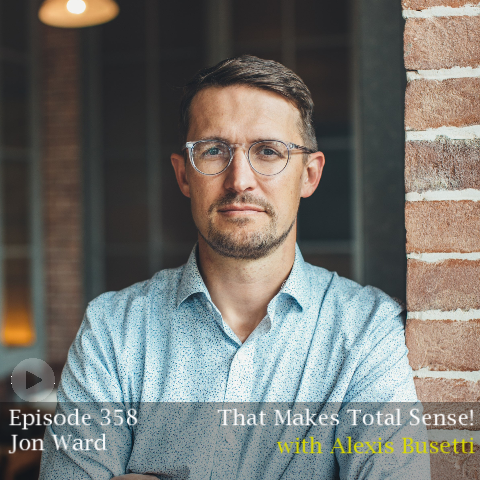
Well, I'm not sure, John, what it's like in your neck of the woods, but I am kind of crossing my fingers that the technology stays because we have had lightning here in Houston for like the last 12 hours. Feels like it's been the last 12 days. It feels like a tropics rainy season here. So fingers crossed, we're going to continue this. We're going to do this interview today. And I'm really, really, really pumped about it. So, folks, I have John Ward with me who has written, I would say, one of the most phenomenally well written memoirs that I've read in a long time called Testimony Inside the Evangelical Movement that Failed a Generation.
Thanks so much for coming on, John.
[00:01:26] Speaker B: Thank you for having me. It's very kind. I appreciate that.
[00:01:30] Speaker A: So I want to start by saying that you are a journalist, and I think this is part of it. When I was debriefing the book after I finished it last night and I told my husband, I just find that I really love books written by journalists.
I named, you know, I don't know, maybe a half a dozen off the top of my head, books that were written by journalists, whether they were memoirs like this or something about a specific event in history, biographies, you know, things like that. And here's what I think I can name about, is that you deal in honesty.
And, and I, by that, I don't mean that other people don't or that there's something inherently dishonest.
It's just that the presentation of the, the facts is, I don't know, maybe it's situated in such a way, it's presented in such a way that it is something that I can receive even when it is hard.
Because I think that you're trained in, in understanding what's going on and communicating it to people, even when maybe it's what they don't necessarily want to hear.
And I felt a real honesty in your book. And I will say this just as we get started, I also felt that way with you in the book, meaning I felt a real honesty about your experiences, which for me, as A reader felt, I felt very grateful. I felt like there was a very generous way for you to share yourself and to be genuine with yourself. But it also invited me into that with my experiences, because even though our experiences are different, I have very much grown up in this evangelical movement and very much have been failed by it and very much have failed others with my part in it. And it invited me to reflect on those things in my own life. So I just kind of want to start by setting maybe that foundation for how I read it and say that I'm grateful for that and maybe give you an opportunity to respond to, you know, how. How do you. How do you receive that? How do you feel when I say that?
[00:04:01] Speaker B: I was walking our dog this morning around the block. I went for about a 30 minute walk and I turned on a podcast called Know youw Enemy, which is done by a couple guys, one of whom is a former conservative named Matt Sitman, who's now pretty progressive.
And there was an episode about Bob Dylan, and they were talking about how. And I'm a pretty big Bob Dylan fan. There are two Dylan quotes at the beginning of the book, actually.
And they were talking about how Dylan has been such a chameleon and has really, you know, tried to. Tried to conceal himself as much as possible.
Like, for example, there's a.
A Scorsese documentary. I think he's done two on Dylan. And this first one was no, no Direction Home, maybe. Second one was, I think, the Rolling Thunder Review.
And in that one there are. I don't want to spoil it for people, but if you watch it, you know, go watch it, it's great. And then. And then read about it afterwards and you will see that there are just things that are not what they appear at all in the film. To the point where you're like, wondering, like, was this guy just, like, trying to make a fool of me? Like, what is behind that?
But anyway, I. I found myself listening to this this morning, just going like, did I make a mistake? Did I was, you know, should I be more like Dylan? Should I, Should I just not? Like, why was I so transparent in this book? I hope I haven't, you know, shot myself. So that's just sort of the type of thing that anybody goes through. And there's no real meaning to that story other than that's just the process of, you know, coming out the other side. I think when you talk about books by journalists, what came to mind there, there was that there's two holes that I think I'm trying to Stay between. One would be the, you know, this is what I feel. This is my experience without a whole lot of a, you know, attempt to kind of check it against, I don't know, the, the broader world, broader trends, a sense of rigor.
And, you know, I don't, you know, I don't want to over extrapolate or over, over exaggerate the importance of, of my experience. And the other thing I talk about in the book is that in church, you know, you'll hear. You would hear people share a testimony during a service, and it would be really dramatic, and you would just kind of wonder, like, did that really happen?
I mean, did. Was it all. Did it all happen? It just sounds a little too good to be true.
And in journalism, there is a phrase called a story that's too good to check where it's so good that you want it to be true. Well, journalism does train you to have some skepticism and to check into whether those, all the facts are true. And then the other poll is sort of the academic or too heavily researched kind of book. And, you know, Rick Perlstein's books, Nixon Land and, and others have been huge sellers. So. And he's been very successful. But when I wrote my first book on Ted Kennedy and Jimmy Carter, I, I just felt like I didn't want to write a book that was so densely detailed that it was hard to get through, you know, and I tried to keep that book pretty heavily researched, but moving at a pace that people could, you know, feel like it was fun to read. And, and so that's, that's kind of the other, you know, side of that is that you want to. You want to be rigorous, you want to be accurate.
And, but you also, you know, you don't need to throw your whole notebook in there. You want to be efficient.
[00:08:17] Speaker A: Yeah. Yeah, I think. And when we're, in my world, when we're writing sermons, we say there's lots of research that just ends up on the cutting room floor. Right. Like it's. It doesn't. Not everything makes the sermon right. But it's. But it makes a better sermon. It makes a better book. When you have all of that back there, even the, the whole notebook, that doesn't make it. Right. The parts that don't make it still make for.
[00:08:40] Speaker B: Yeah.
[00:08:40] Speaker A: A better a book. A better book, a better sermon. And I think, I think I noticed. I may be incorrect in this, but I think, I think I noticed that you're. The footnotes increased as the page numbers got higher.
Right. So the third Part of the book felt like the. The research, the footnotes, the, you know, where you were citing came, came later. And I felt like that was really appropriate in the book because the last part was, you know, you're really talking about current events, you know, citing things that have been happening in movements, you know, Black Lives Matter, Trumpism, you know, the COVID pandemic, you know, all of these things. And I felt myself, you know, I looked at the footnotes, right? Not because I didn't believe it, but it's just like, wow. Some of these things, even though I've seen it, still kind of feel unbelievable, right? And so to check those and see that side and go, yes, like this. This is reality.
[00:09:39] Speaker B: Yeah.
[00:09:40] Speaker A: This is the truth. These are the facts. It's crazy.
[00:09:43] Speaker B: And that I think I talk a lot about, really this phrase I could be wrong, which to me is so fundamental to a lot of just living a good life. And.
And I've applied it to my faith in a way that I think is really has been very healthy for me.
But I think it starts with journalism, because if you're approaching a set of basic facts about a very specific story with the statement, I could be wrong, that compels you to go out and double, triple check things.
And this actually came up when an editor at Crossway Books wrote a review of my book for Christianity Today, where I think he just, like, sort of misread some parts. I mean, there was a lot of things going on in his review, but it was not hard to write a response because he just got some basic stuff wrong in part because he just was maybe reading too fast, and I don't know what was going on. But, you know, when. When we have biases and we all.
I think that's what often leads us to interpret a text or a situation in a way that misses key details.
And what came to mind as I read about, as I kind of thought about that review, was when I did that to Tucker Carlson about a year and a Half ago, early 2022, I was writing a piece about his Patriot Purge thing where he was saying basically to his viewers, the government's going to throw you in Gitmo, a conservative.
And towards the end, he says, they're pushing you to be violent.
And the first time I heard him say that, I was so shocked at that he had said that, that I missed what he said right after that, which was, but don't let them. Basically, I literally didn't hear it. And so the first time I reached, we had a text exchange and I've written about all this. It's all on the Internet.
The first time we, we kind of texted about this, you know, I, I left out that part that he had said, don't let them.
And, and he kind of didn't show his cards all at once and. But he clearly, like there was something off in his response. So I went back and listened to it again or watched it again and I caught that and I went back to him and I said, I missed this.
That's a key part of context. I will include that.
And so I still felt like the special was.
I mean, I wrote that it was highly inaccurate and made claims that he couldn't back up with facts.
But, you know, the fact that I went back and checked that key detail meant that, you know, you can't.
It changed the meaning of that statement. Even though I think it was still. Personally, I feel like it was still irresponsible to say that he had deniability. And so you have to factor that in to the way that you write about it.
[00:13:14] Speaker A: Yeah, that's. Thanks for sharing that example.
I want to come back to Tucker Carlson, actually, because that was one of the.
I, I have like a lot of annotations in this book, but that the, the chapter that begins with Tucker Carlson's name I just wrote. I don't know if you, you have, you have kids similarly age to mine. So I'm thinking of Zootopia, I think, is one of the, one of the characters like O m. Goodness.
That was my annotation on the top of that page.
When you talk about working, I mean, spoiler alert. We talk about working for Tucker.
And I was like, oh my goodness. Like, I, I don't, I kind of like don't even know what to do with this at this point. But again, it was one of those places where your experience and you sharing that invited me to think about ways in which I have, for me, ways in which I have participated in this movement that has failed, you know, so many of us. So I, I wanna, I wanna come.
[00:14:23] Speaker B: Yeah.
[00:14:23] Speaker A: Back to that.
It's in my notion.
[00:14:26] Speaker B: I don't be clear. The exchange that I just described with Tucker came, you know, close to 10 years. After 10 years.
[00:14:34] Speaker A: Right, that's right, that's right, that's right. Yep, that's right.
Yeah. Because that was in what, 0, 9 and 10, I guess that you.
[00:14:41] Speaker B: Yes, that's right. And into early 11, maybe.
[00:14:44] Speaker A: But. Yeah, yeah, but I want to start a little earlier than that in your life.
So you're. We're Roughly the same age. I think you're. You're about the same age as my husband.
And so our. Our kind of growing up in this movement has had.
It's. It's. It's mirrored one another's experience in a lot of ways. I often say, like, I wasn't. My house didn't look like this. I've done other interviews with folks who have kind of written about this kind of thing, say my house didn't look like this, but my youth group did. And so I wasn't necessarily parented in this way, but I was kind of youth grouped in this way, which I think is, you know, super influential. Obviously, I.
I want to start back where you have a father, maybe your mom too, but who were. Became believers in the Jesus movement.
So, like, I think a lot of times we toss around that phrase, like, everyone knows what it is, but I don't want to, like, get too much in the weeds. But if you could come, maybe kind of start there. Because all of these, like, a lot of these Jesus movement parents ended up, you know, creating and parenting and kind of this similar culture for folks who are our age.
And so what. What did. What does that mean when someone says that they were saved in the Jesus movement or they came to know God in the Jesus movement? And then what did. Kind of stereotypically. I'll use that to phrase. What did that stereotypically mean for the families that they ended up raising?
[00:16:18] Speaker B: Yeah, so I think the Asbury revival is a good touch point for some people.
You know, that. That took place in Kentucky at that college, the Christian University, earlier this year. And there were people who had church services for, like, two weeks or three weeks, and they were, you know, singing and. And praying for around the clock. And it was that kind of fervor that was. Became a national phenomenon in, I would say, the early 70s, before the Internet, which it's really fascinating to me to think about that.
Like, I think the Internet both accelerated the rate of knowledge about Asbury and also accelerated its decline because it became a spectacle very quickly.
And when that happens, like, they made the absolute, like, right call to, like, shut it down.
It's very. I mean, you could write a whole book about that. That's really interesting.
But, you know, this was. This was like the formative spiritual experience for millions of evangelicals in America. Started out in California, spread east, and was a reaction against what they perceived as dead religion in mainline denominations and Catholicism, and also was kind of a reaction against the darkness or the excesses of the late 60s. Early 60s, late 60s. I mean, the 60s were a whole thing. You know, they started out with all the optimism and free love and, and by the end of the decade, you have, you know, not just JFK shot and killed in 63, but you have MLK and Bobby Kennedy shot and killed in 68, Woodstock in 69.
If you ever go back and read like newspaper clips about racially driven violence in big cities in the late 60s, it's pretty shocking how much of it there was. And not just after MLK's assassination, which set off massive unrest in major cities. I mean, there were two major thoroughfares in Washington D.C. u Street and H Street that both were burned pretty extensively during the 68 riots and took decades to come back.
And they're now pretty thriving in a lot of ways again, but it took a very long time for them to come back.
So, you know, the early 70s roll around, there's a lot of just pessimism and darkness and, and worry in the country. And so my parents, like a lot of people were of that hippies sort of milieu and, and, and we're looking for meaning and, and they found it in the Jesus movement. And so it was just, they were going to Bible studies and church meetings run by people their own age. And there was, you know, good music and just so much hunger for goodness and meaning and, you know, spirituality and for God and for community and, and that's kind of what bursts this, this movement, which then kind of grew in the late 70s and early 80s into a lot of non denominational churches. And I grew up in one of those churches where my parents helped start it. And they didn't really have any denominational oversight. They just kind of like did it on their own.
And it was mostly young people running the show and they had this incredibly powerful experience that was powering and, and fueling their, their drive to go forward. And they felt like they were on top of the world and they were unstoppable. And, and I, and I, I think that was part of why things kind of ultimately went sideways is because there, it led to a sort of a hubris about, you know, having too much of a purchase on the Right Answers.
[00:20:45] Speaker A: Yeah, yeah, thank you for that background. And I think, you know, again, that that Right Answers part has been one of the, one of the parts of my faith that I have had to like deconstruct that, that part. Right. Because that, that was the thing. I grew up in the Bible Belt and a Southern Baptist community, Southern Baptist congregation.
And it really felt like it was all about making sure we had the right answers to everything, which is obviously, like, not possible. Right. But.
But it, but it cause. Causes a lot of hubris and a lot of anxiety, I think, you know, in, in people my age, at least, it did in me.
But you, you. You touch on it several times when you, you talk about the congregation that you grew up in, the school that came out of that congregation, the children, the. The students who were coming, kind of being raised in that, and that they were taught what to think. So along those lines of having the right answers, they were taught what to think, that, that they weren't being taught how to think.
And, and that. And that talk about your experience inside of that and kind of when you were realizing that that's what was happening with the students, but also that this was like your, you know, this was, this was your environment where you had grown up.
[00:22:29] Speaker B: Yeah, I didn't really begin to realize this probably until I was teaching at the school. High school, at the church's high school, just out of college.
You know, maybe I would have sensed it before that. I don't know. But that's when I probably first articulated it to myself.
And I guess what's coming back to me is, you know, school assemblies in elementary school. Went to a school run by our church, and it was.
Yeah, I mean, there's a lot of those. I'm in the Lord's Army. Remember that song?
[00:23:05] Speaker A: Oh, yeah, for sure.
I Can do the Motions.
[00:23:08] Speaker B: Yeah.
You know, a lot of it's just like, you know, they're just. These are just adults trying to get through the day and using the equipment they have, you know, at their disposal. But the, the environment was. Was really shaped and baked by that formative experience in the 70s where there wasn't much of a need to kind of say, hey, let's slow down, let's push pause, let's really question things. You know, it was just, wow, this is so great, and we love Jesus.
[00:23:53] Speaker A: And.
[00:23:55] Speaker B: And then it was from there it was like, let's, let's like, push out, you know, what we understand the Bible to be as far into every cranny of life as possible.
And, you know, none of that is a bad instinct. But again, I think it was this fundamental view that the traditions and history of his of, like, older generations and historic faith practices and denominations were kind of viewed with a lot of suspicion or even contempt.
And so everything was kind of.
It was kind of some ageism, maybe is the right word.
Chronological snobbery maybe is a term there But I think that was a big reason why we just kind of kept moving forward with a set of answers.
And once you get locked into a system where there are budgets and money and reputations and careers staked on that, it gets harder and harder to unroll it and to start, you know, you've got a system in place and at a certain, at a certain point, it becomes locked in to a certain degree. And it's a way of viewing knowledge in some respects. It's a, it's an epistemology or an epistemological approach.
And we just, we just didn't have a lot of guardrails early on and that, and that continued.
[00:25:44] Speaker A: What I latched onto there was what. We forget exactly the way you phrased it, but basically kind of pushing what we, what we understood the Bible to be.
[00:25:57] Speaker B: Yeah.
[00:25:57] Speaker A: Into all of these places. Right.
I haven't, I haven't read him much. I've watched one or two videos that have been required of me in my own schooling. But you name Wayne Grudem in the book. And I think maybe his, his figure is maybe kind of a good type for what many in the systems that we grew up in, like this, this, this influence of like what we understand the Bible to be, came from guys like him and kind of guys in that, you know, kind of, in that general.
Kind of in that general arena. So I guess my question is what, what's your understanding? What's your, what's your feeling kind of what's your take on inside of this movement? What did we, and I'm using we intentionally, but like, what did we understand the Bible to be? Like what, what is being pushed into those crevices? That, as you emphasized, is not a bad instinct. Right. This is like our sacred text. So it's not a bad instinct to push the sacred text as far as it will go. Right. Like, we want to see the ripple effects of this, but what, what did we understand the Bible to be when we were doing this?
[00:27:23] Speaker B: A couple things come to mind. One would be that the hermeneutic or the approach to interpretation was incredibly literal.
And you know, there's a lot of scholarship on what created that way of reading the Bible and, and where it has been most dominant.
Evangelicalism has a pretty long history, I think, of. Of treating the Bible that way, but that was one stream.
Another would be that I think it was sort of a revelation to me where maybe it wasn't to other people, but when I heard probably six years ago, just this idea that there are two books, one being the, the holy text of the scriptures and one being just sort of creation and you know, the, the world as we experience it and see it and touch it.
And so I, I definitely think that not only was the Bible treated hyper literally, but it was also treated as over and above the physical world, which created this sort of almost gnostic approach to faith.
And then the third was in my mind a minute ago, but it's now blanked out. But those are, those are two of the, the major ways that we use the Bible.
And another thing that's become sort of another thing that's, that's hit me pretty hard over the last several years is just that this, I mean you can read it in Mark Knoll, you can read it elsewhere, but this way of reading the Bible is not the way that Christians read the Bible for most of Christianity.
And I think that really gets at this idea that the way that evangelicals that I grew up around and that I still encounter think of their view of the Bible is as if it was as if Jesus sort of ascended into heaven. And then every Christian since that moment has read the Bible the way they read it.
Of course that's, you know, not literally the way they think about it, because if you ask them, they would say, well, there was this period of the books being written and then assembled and all that, which raises a whole nother set of questions, of course, but that is kind of the way that they approach their view of the text.
And you know, the printing press and the Enlightenment were huge developments in democratizing the Bible. And probably for most of the time since then there's been a literalist reading of it. But I think it's incumbent on all, all Christians to really grapple with the fact that for three quarters of Christian history, like people could not literally do what they do with the Bible or what some people do with the Bible, which is sort of take particular verses and apply it in such a sort of dogmatic or totalizing way.
[00:30:43] Speaker A: Yeah, yeah, no, I, yeah, thanks for speaking to that.
My husband is a, is an Earth scientist. He has a PhD in geology and we've been married for almost 20 years. And I can't tell you growing up and kind of we lived in this Bible Belt area for all of our marriage and how wild it is to many people inside of evangelicalism that he is actually a Christian because you know, when you talk about the literal, like that's kind of like the, the low hanging fruit example is like six day creation kind of thing. And it's like, well, how can he, how can he possibly believe in Jesus and like have his job at the same time?
[00:31:30] Speaker B: So can I ask about that?
[00:31:32] Speaker A: Yeah, sure.
[00:31:33] Speaker B: What are people, what is the, what is the thing that your husband, I'm assuming your husband believes something about this that your people are, are reacting to. They're saying, oh, you don't believe in six day creation, so therefore you must, you can't be a Christian.
[00:31:46] Speaker A: Right? Right. Right. Yeah. Yeah, right. Yeah. And so, yeah, so even, even, even if he hasn't explicitly had that conversation with people, because people kind of, you know, they, they maybe took like geology for non majors or they've had an earth science, physical science class in high school or something like that and know that scientists date parts of the Earth, right. You know, of billions of years and things like this and that. Because, because they've read billions of years in a textbook and then hear that he's in geology without even explicitly asking him his perspective on that. Assume that it's that these things can't possibly go together.
Yeah, so, so it is, it's like, but, but that's how this understanding of the Bible and that's just again one kind of low hanging fruit example. But the, the literalism, the, you know, these things, this dogmatic kind of way really has been, it's been pushed into these crevices. I like that word picture. But it's really formative. You know, it's, it's shaped so many of us. Right. And even though there are maybe certain parts that some of us might say, oh yeah, well I don't, I don't know about that.
I could speak for my, from my own experience and say because of my relationship with my husband, I can maybe have a less dogmatic view on creation. But that didn't necessarily affect for a very, very long time how I understood the rest of the Bible to be, to exist as a text.
That certainly was true in, in my life. And so anyway, it's just a very powerful cultural aspect of, of our faith.
[00:33:33] Speaker B: I have tried at times to bring up the way that religious conservatives read the Bible inside my news organization as something we should pay closer attention to.
And I, I don't think people get it at all. I don't think they understand how powerful of force of. What's the term from like Star Trek or death War. Death or Star wars where the, the tractor, it's like this tractor beam, you know, that just like has this amazing gravitational polar force on people.
That's, I'm gonna stop the metaphor there because I don't know where it would head after that.
But it is, it is extremely powerful. Yeah.
[00:34:24] Speaker A: Okay. That just brought me to a place and I want to, I want to skip like way, way ahead from Jesus movement to, to a real example that you write about in the book that I, I kind of want you to elaborate because from my perspective and I think that you would track with me based on what I read.
A. I think you're right to bring attention to that because it's not just formative in people's lives. It's really powerful societally.
And I think that a major example that we saw of that was in the January 6th insurrection. Right. So we're seeing.
And the, you mentioned the Jericho march too. Right? So, like, all of this, like this, this how this religious conservatives, as you name, are reading the Bible isn't just something that stays with their coffee at the dining room table in a, in a, in a quiet time is kind of what we called it and you know, scenario. And I think I would even argue as, as a, a theologian in training that I wouldn't want it to, I wouldn't want how we read our sacred text to stay in that space.
But we can see how influential and powerful it is, how we read it and how we understand it by what happens as we go out. So some other examples that we've seen that we probably don't need to talk about, but you mentioned in the book are the pro life, anti abortion movement. You could see that coming out societally.
There's the purity movement. We could see that coming out societally, maybe on a smaller scale.
But then with the insurrection and the Jericho march, I'm like, people, this is, this is very biblical to the participants. They are not pulling this out of what they believe to be thin air. This is very foundational for the people who are participating in this. We're seeing signs with Jesus's name on election signs. We are seeing people march around with shofars.
As you mentioned, Alex Jones is like talking about Jesus being king. Like, can you like talk, talk about that from your perspective? Like, what did you see when you saw those things taking place?
[00:36:45] Speaker B: I'm really, I'm really glad we talked about the Bible and hermeneutic hermeneutics just now, because people will often say that evangelicals are anti institutional and distrust mainstream media and institutions in general.
But what I think empowers or lies underneath that anti institutionalism is this view of the Bible and the way that people treat it. And I think this is really underneath probably almost everything as almost like A bedrock sort of sort of thing for evangelicals because it goes back to the, to the two books.
If, if the Bible is the only book of revelation and the created world is not held at the same level of reverence, then it allows people to slip into a belief structure where they can look at things in the real world and dismiss them and insist that the things they believe are right because they have been somehow extrapolated out of this text.
And 2020 was kind of like a peak moment of that with the election denialism and the, a lot of the things around Covid and, and I, and I think you could probably talk at some length about the ways that
[00:38:31] Speaker A: the
[00:38:31] Speaker B: racial justice movement was, has been sort of gone through this process of let's distract by talking about sex trafficking, which I want to just be clear. Huge problem, grievous, terrible issue.
But Nothing changed in 2020 in terms of the scope or the severity of the problem. And yet all of a sudden people stopped talking about racial justice and started talking about that, which I think was somehow, I don't, can't prove this, but it seems non coincidental.
And then the racial justice movement after that sort of initial, there's been a huge backlash to it. So, yeah, I think that that view of the Bible as over and above the created world is kind of at the root of this anti institutionalism, which leads to parallel institutions, which leads to a parallel universe, which allows people to look at plain facts or reality and say that doesn't exist.
That's what I see happening in 2020. And I don't know if I, I don't know if I said it that clearly in the book, but, but it seems, it seems pretty clear
[00:39:58] Speaker A: in the book. One of the things that you named that was really helpful for me and it, and it goes along with what you're saying about being able to, like it's anti institutionalism, but also being able to look at the facts and just ignore them.
And, and I'll, I'll say one of the other notes I wrote in that section of the book was it's my dad, because my dad has a political science background and is a journalist, and it is a journalist.
And what you named in the book was that the, the people. Your observation, as I understood it, was that the people that you encountered who knew the most about how our government was founded and actually functions were the ones to kind of raise the loudest voice and the biggest flags of warning when Trump came on the scene.
And I'm like, it's my dad.
To the point that I thought, he's lost it. Like, I wasn't a Trump supporter ever, but I didn't understand the gravity that he was communicating to me about what might happen. Right. And to read your take on it, I thought, oh, my goodness, they collaborated. John collaborated with my dad, and I didn't even know it. Right, because this is like the same version verbiage, the same, you know, the same wording. All this, because you all saw the same thing. Pete Wehner saw the same thing. There were lots of guys, right? The ones who signed, you didn't mention in the book, but the ones who signed, you know, the initial thing, all these conservatives, they, they, they all saw it because they understood the most about how our country was founded and how it, the government actually functions.
And what was helpful for me was, was that part. But then to also juxtapose that with some of these folks that have been election deniers who were, you know, supportive of January 6th, you know, this kind of thing, who you're interviewing and understanding, coming to understand, these guys don't actually have a clue about what was going on at the founding or how our government actually functions. And, and yet there's something that's making them, there's, there's some kind of pull that's, that's, that's, that's drawing them in this other direction.
So I don't know. I'm wondering if you can keep that in mind. But talk about the, the influence around that. This might be a good time to bring up, you know, I'm thinking Trump, obviously, like some of the, the paragraph you have in there about how many lies and how they increased over his, over his presidency. But also, I mean, we've, we've just, this might be a good time to bring up Tucker Carlson again. I mean, we've just seen that he has been dismissed from his position at Fox News, but no one is denying his influence among this group of people and inside of this culture.
So I don't know, can you just. There's not a true question in there, but can you just kind of talk around that?
[00:43:13] Speaker B: First of all, loving this conversation. It's great.
And I want to come back to the influence thing in a minute because when you talked about your dad and, and the way he and I saw Trump similarly in 2016, it brought to mind two things. One, it made me really, really sad that.
Yeah, it made me sad that we, because it just brought to mind, like, how sad I've been, you know, six, seven years trying to warn people.
I think a really maybe helpful metaphor here when talking about the way that journalists, historians, political scientists see politics is to use the metaphor of sports.
So let's take maybe like an NFL draft room scenario where you have people who have been watching football, coaching football, playing football for two decades in this room, and they're watching tape of different plays and different players, and as the ball is snapped, they look at the formations, and they look at where all the players on the field are, and they look at the personnel, and they look at the coaches, and they look at the weather.
And as the players begin to move, they can see where things are going, and they can see where the ball is going to go and how the play is going to develop.
It's a way of saying they see around the corner. And that in any field, in any industry, when people are enmeshed for a very long time in practicing, observing, competing, they develop that skill. And that is the way that people who are enmeshed in politics and history and government see politics.
And that is why just about everybody who's in that world in 2016 either was publicly sounding the alarm or privately complaining that we hate this guy, but we can't do anything about it.
Like, I did not talk to one person, and I talked to a lot of people, and I did not read one person, and I read a lot of people.
Who contravenes that.
So when it comes to influence, why don't. Why don't you pull in that thread a little bit more? Because I want to kind of get what you're going for here.
[00:46:02] Speaker A: Well, I think it comes for. For me, I. I think. Oh, can I. Yeah.
[00:46:08] Speaker B: The end to that metaphor is that you have people come into the draft room in the NFL franchise who have been football fans for a year. They know a little bit. They've watched a few. They've watched some games they've never played.
They've never actually, like, talk to other general managers or players, but they know a little bit, and they're listening to these other people who are like them or who are just cynical, and they're saying, no, we gotta draft this person or we gotta run this play.
And that's, I would say, is comparable to what's happened politically.
[00:46:49] Speaker A: Yeah, no, thanks for that analogy. I was. Yeah, I was tracking with you. Thank you.
I think on the influence and maybe maybe go back a little bit in the conversation to the story. That's too good to check, because I feel like when I watched in my own life, in some relationships where I ended up being dumbfounded because I thought we were kind of tracking together in some ways, and then the 2020 election happened, and I thought, oh, oh, my goodness, where does she go? Like, you know, like, what, what happened here?
And, and in one situation, like, I'm sending a text and I'm like, oh, my goodness, like, what's, what's up with this? What's up with Georgia? And it was like, I got ghosted. And then I see the tweet thread and I'm like, oh, snap. Like, it's, it's, it's really bad. And, and this person had gone, like, off of the election, election denier thing, like, really hardcore.
And, but, but we could see, like, as you said, like, like, I'm a big NPR listener, right? So when I'm listening to NPR during that period of time, like, the thing that they kept saying on air was, again, there is no evidence of this, right? This is what so and so is saying. But again, there is no evidence of this. And, you know, and it, like, that phrase got really old to hear that over and over and over again. In other words, this isn't where the facts are. Like, it's just, it's just not there.
But we see the influence of Trump, the influence of guys like Tucker Carlson, the influence of peers, even, or just maybe feelings or even you. You name in the book. I mean, I'll just come, like, some of the charismatic kind of prophetic folks out there who were, you know, on, on this train, too. And all of this is influencing the, the, the people who in, in many ways would, like we've just talked about, would latch on to the Bible as their foundational, you know, truth. But then, I don't know, is it because of this influence? Like, what's, what's the deal, right? Like, what, you know, kind of like what's happening here where, where this is somehow overriding, you know, what, what, what Tucker says on. I remember listening to a, an, an episode of the Focus on the Family podcast where the host quoted Tucker Carlson, and I was dumbfounded. And this was later. I mean, this was, this was probably in, in 2020, probably not 2021, but maybe 2020 later in the year.
And I just thought, I thought at this point, like, we kind of all knew that this guy was, you know, kind of up to no good. And yet one of the most influential ministries in evangelicalism with one of the most influential people, the president, a Focus on the Family, is actually quoting his show from the night before as if this is something that we can rest our, our, our faith on.
[00:50:06] Speaker B: And it's in daily doing.
[00:50:08] Speaker A: Yeah, yeah, yeah, yeah. It was, it was, it was shocking to me.
But, you know, so, so I'm just kind of like, I'm kind of seeing like there's influence. But this influence, when even when it's contrary to the facts, is still incredibly powerful.
[00:50:30] Speaker B: The influence is not what people think. It's not from these leaders to their audience. It's the other way around.
[00:50:36] Speaker A: Okay, say that, Say more.
[00:50:39] Speaker B: You know, I interviewed Jim Daly in 2016, and he was no Trump fan, he was no MAGA type, he was no Tucker Carlson fan.
There's been a revolution over the last half century or so and how influence works.
And it's largely the audience telling leaders where to go more than it is leaders telling the audience where to go.
And so in an age of instant feedback over the Internet, more and more precise data analytics, measuring what people like, what they're watching, what they're clicking on, et cetera, all of that is monetizable and attention is currency.
And so whatever people in each tribe want the most of, because again, we're all siloed into Fox News or MSNBC or cnn.
These echo chambers, the people at the top, especially who are responsible for making the money in the business suite, are looking at these metrics and saying, this plays, this doesn't. And that applies to the big tech companies as well.
And what plays is what makes us angry or what makes us fearful.
And so that's what we get more of.
So, you know, Tucker is, has always been something of a chameleon and was willing to become, he's a smart guy, quite brilliant, but was able to become and, and, and be to his audience what they wanted. I mean, this, this is played out clear as day in the Dominion lawsuit against Fox, where they are saying over and over again in text messages and emails, if we go too far in calling out Trump's lies about the election, our audience will leave us.
That is exactly what I'm talking about. And it's true, I'm quite sure, of Jim Daly at Focus on the Family as well.
And it's quite true in many churches across this country where pastors feel like they have to trim their sails or just be really aggressively culture worry because that's what their congregation wants.
We have become so democratic that we've lost real democracy in a lot of ways because real democracy preserves the rights of everyone and, and solves problems.
And we've become so sort of mob driven that, you know, we can't work together.
The, the, the, the loudest group in the room runs roughshod over other constituencies in each group, including the countries or the country.
[00:54:03] Speaker A: Okay, I'm just gonna have to, I'm gonna be sitting with that like for the rest of the week.
[00:54:08] Speaker B: I mean, it's, it kind of, it's, it's kind of amazing to me that people, that this isn't more widely grasped. I mean, people love to talk about the establishment and conspiracy theories, but sure, there are conspiracies out there, but I think mostly the conspiracy is just people trying to make as much money as possible off of giving people whatever they want to hear.
[00:54:38] Speaker A: And now I'm feeling like, did I miss this? Did you actually name this? With Al Mohler and his.
And his turn from 2016 to 2020,
[00:54:48] Speaker B: I mean, I got at some of this. And to some degree, politicians have always moved to where popular demand is. That's just part of politics. But in politics and in media and in many realms of life, the ability for large institutions such as political parties or TV networks to set the agenda has largely disappeared.
And a lot of that is due to technology and changes in technology.
[00:55:27] Speaker A: I think the reason that it's, that it's hitting me hard and I'm, you know, using Jim Daly as an example here, you know, because I told you I was youth grouped into this. I'm trying to tell you my girls are 13 years old and from even before they were born, but even when they were babies, I, that used to be part of my routine during the witching hour, I would drive them around and listen to Focus on the Family. Right? Because at that time it was, it was on radio. I could catch it on the radio. I didn't have a podcast app, you know, back then. It was, I was not an early adopter on any of that kind of stuff. But.
And so I think that part of what's, part of what is, is, is killing me about this is I expect that kind of thing from people like Trump. I expect that kind of thing from people like Tucker, but I don't expect that kind of thing from people like Jim Daley. And I don't want to expect that kind of thing from, from pastors and, and faith leaders. Right? That, that either, you know, either that they would speak with integrity, what they actually believe with the understanding of kind of the, sorry, Kind of the kind of the James esque, like teachers should be held kind of responsible for things that they're, that they're speaking and that, you know, that would just be part of the integrity of Christians in general. Even if we don't have a pulpit or a platform.
But that, that there would be an incongruency there is as disappointing to me as the idea that they would actually believe what they were selling.
[00:57:04] Speaker B: Well, I mean, there's gradations here. I don't want to paint with too broad a brush, I think.
[00:57:07] Speaker A: Sure, sure, sure. Yeah. I'm sorry. I'm just like, conceptually, I'm processing kind of out loud. Yeah.
[00:57:13] Speaker B: All institutions and all leaders are under this extreme duress and pressure from the bottom up of, of the agenda being set by the loudest voices in, in the room.
And I think that, you know, we can sort of hold people accountable for the most egregious dishonesties or manipulations.
I don't, I, I haven't looked. I want. Maybe I'm focusing too much on Jim Daly. I haven't looked closely at him. But the, the draw, the name dropping of Tucker Carlson strikes me as something that is clearly like a signal to sort of the, the real hard. Right.
I don't know what else he's doing. It could just be that he's doing a great job. I have no idea. And then he's just dropping stuff like that in there to pacify.
But it speaks to that pressure. I think, again, this is just the nature of institutional leadership that you're going to respond to the incentives. And it's why incentive structures are so important.
It's why when we look at big problems, we've got to look at the way that these problems occur systemically and how the systems that are set up and the incentive structures that are, that are, that have come into being are driving decision making, which is far more complex than this leader did a bad thing.
And it's much easier to demonize a leader. And sometimes they need to be held accountable for. I mean, always leadership should be accountable.
And sometimes there are egregious abuses of power or just malfeasance. And absolutely, that should be. There should be consequences for that. But in terms of finding the solution, it's more often going to be found in thinking about things from a systems perspective.
Leadership is important, too.
I shouldn't discount that.
I think it's Michael Ware, a good friend of mine who's at the center for Christianity and Public Life, who's really, you know, emphasizing this. It might be Joel Searby at the Forward Party who's emphasizing this. So I don't want to downplay the importance of leadership with integrity and, and vision. But, you know, over the last decade, I've. I've Become much more focused on thinking about things from a systems perspective.
[00:59:45] Speaker A: Yeah.
John, if we could kind of start to wrap up. I'm gonna ask one. One last question, then I'm gonna give you an opportunity to kind of end it where you want.
Correct me if I've miscategorized what I've read of your story, but this is what I. One of the things that I. I understood and I gained is that when it comes to politics and, well, politics in general, but politics and faith, you in essence, have learned literally on the job as you've been a journalist and as you've had a chance to make a career of studying these kinds of things, and you're a Christian, and as I understood your story, your personal convictions of our interaction with politics, including the systems and the leaders around us, has evolved over your career in journalism, especially being as intermixed with politics as you have been.
What is your current conviction that you would share?
If you had a Christian college student who was coming to you saying, gosh, this is going to be my first upcoming major election, I've been kind of confused about politics. I don't really know how to interact.
What's your current conviction? Like, what would you tell them? I don't know. Advice.
Your understanding of it. Kind of where you see yourself and your role right now, not necessarily as a journalist, but as a believer that someone. That you might share that with someone else.
[01:01:39] Speaker B: Well, I haven't really said this before or thought it through, but the thing that comes to mind is find 10 people maybe in your neighborhood or. Or that you are kind of in your daily orbit, who think differently from you and.
And have a conversation, one conversation with them about it, and then try to have an ongoing conversation with a few of those people and just try to learn from them.
That would be the first thing that comes to mind. Because I think the more we can get away from the politics of the Internet, the healthier our politics will become.
It has to be tied to tangible needs and problems. And so much of politics on the Internet is about just nonsense and stuff that doesn't lead anywhere productive.
So it's why local news is really important. It's why our community is important, because we can actually make an impact there.
So find out what's important to your neighbors and talk to them about that and see if there are connections to national politics from there.
But I guess what I would say as an addendum there is.
I wouldn't advise people to go to 10 people that they know and start talking about critical race Theory or transgenderism.
I would go to them and say, what things do you care about the most in your community?
And then start maybe asking them, how does that motivate you to vote?
And, and if they try to go into some Internet thing or, or something that they heard about that happened down the street, try to bring it back to what things in your life that are impacting your everyday life do you care about? That you think politics should be solving those problems.
That, to me, is where we have to get to, to be in a healthier place, I think.
[01:03:50] Speaker A: I, I often interview professors on the podcast, and I don't know if I've ever maybe once or twice interviewed a journalist, but I, I often like to end with this question, and this will be a particularly pertinent, I feel, because of your line of work. What's the question? I didn't ask you if you were conducting this interview, if it were swapped around. What, what's, what's the kind of thing that you, that you want to say? If, if only she had asked this, then I could have, I could have shared this part that I find particularly helpful or valuable to this discussion.
[01:04:29] Speaker B: No, nothing comes to mind. Honestly.
I, I don't, I don't approach when I go on tv, especially if like a three to five minute, you know, appearance.
I definitely feel the need to have a couple clear talking points because if you go on TV and you're just like, blah, blah, blah, yada, yada, yada, you really lose your opportunity.
So I really don't come into these longer conversations on podcasts with any real agenda about what I want to get across. I'm more interested in what you're interested in and responding to that. And at times that's probably like something of a weakness in me, maybe. I don't know. But, yeah, no, that's. I thought this conversation was.
I don't know if it was.
I think it was a mix of, like, timing, your attitude and spirit, the way you ask the questions, but there was a mix of spontaneity and creativity and, and like, clarity in the way I was able to talk about the book in this interview. That I think, I mean, also this gets to the idea of apprenticeship and experience and practice. I think this is like interview. I don't know, it's. I'm getting up to close to 40 interviews about the book.
So I've, I've had a decent amount of practice.
So all of that comes together. And yeah, I don't, I. There's no question that comes to mind that I wish you had asked me at all.
[01:06:11] Speaker A: Well, I want to say I wish we had another hour because there's tons more that I would have, that I would have asked you. But, but I'm, I'm, I'm happy to,
[01:06:22] Speaker B: happy to come back another time.
[01:06:23] Speaker A: Oh, that would be just incredible. I'm super, I'm super pleased with what we were able to discuss right now, even if it's only for my benefit and edification. Like I said, I'll be processing some of these things that we chatted about for a while.
Gosh, I'm just so appreciative and, and I want to just, just commend the book to listeners. It is phenomenally well written. It is, it is warm, it's inviting. It's truthful.
Like I said, it gave me invitations to examine parts of my own life and faith. And yeah, it was just, it was an incredible gift to be able to read this and spend this time with you. So, again, it's Testimony Inside the Evangelical Movement that Failed a Generation by John Ward. And I will for sure put a link to where folks can purchase that in the Show Notes for this episode. So thanks for coming on.
The links for all the resources mentioned in today's episode can be found in the Show Notes music and podcast production by Seth Buscetti. Be sure to give us a review on itunes and subscribe at your favorite podcast listening app. You can also Visit
[email protected].
[01:07:48] Speaker B: Sam.