[00:00:07] Speaker A: Welcome to that Makes Total Sense, a podcast dedicated to exploring God's generosity and justice. I'm Alexis Buscetti, a Christian, aiming to ask good questions and encouraging you to do the same.
Every one of us is wired by God to live out generosity and justice, but the how sometimes eludes us. That makes Total Sense is a way for us to get together, posture ourselves as Lear, and challenge one another to practice generosity and justice in a tangible way every day.
Hey, Ketter, how are you?
[00:00:49] Speaker B: Hello. I'm doing well. Doing well.
[00:00:52] Speaker A: I was going to tell you all of these things pre record, and then I forgot, and so I'm going to tell you all of them right now. Okay.
First one that I did say prerecord is, this book is so good.
Like, so good.
[00:01:07] Speaker B: That's like a. Two full stops. So good. Thank you. Thank you.
[00:01:10] Speaker A: And in my head, they're in all caps and they have periods after each. This book is so good. I read parts of it aloud to my family, including teenagers.
[00:01:19] Speaker B: Wow.
[00:01:20] Speaker A: Right?
[00:01:21] Speaker B: Wow. Yeah. Yeah.
No one's told me that before. This is. This is wonderful.
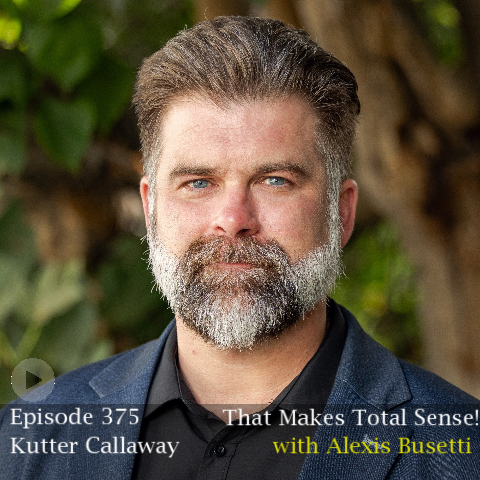
[00:01:26] Speaker A: No, it's great. Okay, I'm going to say. I'm going to say the title at the top, and then we'll get down to it. It's called Be Afraid what Horror Reveals About Facing the Darkness by my guest, Cutter Calloway.
It's so good. But here's what I want to tell you that I didn't tell you before. Pre record.
I've, you know, you were one of my early listeners to the podcast because we've known each other for several years, and we took. I took a class with you. I don't remember if it was just one class, but anyway, I took a class with you. It was fantastic. I mean, just really formative and all of the things.
Um, and so I saw this book come through from the publicist, and I was like, oh, Kutter has a new book out. That's fun.
And then I saw what it was about, and I was like, that's not fun.
And then the next thing I did was email the publicist, and I was like, can we. Can you ask, can we get Cutter on the podcast? I will tell you this. I've done over 300 interviews or so with this podcast.
Almost never. Is that the case where I ask for an interview, like, sight unseen? Like, I had not opened the book. I didn't have a copy. I had no digital copy, nothing. Here's why.
One. I was like, well, it's going to be Cutters. It'll be A fun conversation. That's first.
Second, I was like, it's about horror. I hate horror.
Everything about horror, I hate it. But I was confident for. From knowing you in the capacity that I know you, that if I had pushback, that you would be great with that.
So.
And then, spoiler alert, I have no pushback.
[00:03:07] Speaker B: Oh, no. I was like, oh, no. Okay, we. I'm ready now for the pushback. Okay.
[00:03:11] Speaker A: No, it was great. No, it was great. Um, I can't wait to talk to you about it. I just wanted to let you know that I was. I was really excited and also nervous about it because I hate horror. I hate everything about the drama genre. I don't. I don't read it, I don't watch it. I don't listen to it. Like, there's nothing about it that I like. And now I know we'll get into this. This is probably a crazy first question, but it's like, so I hate it. You love it.
Why do you love it?
[00:03:48] Speaker B: Well, it's an interesting question because I don't even know if I would say I love it and the story about it's. It being a book at all. So what? I would finally convince me to write the book because I made a podcast of the same name.
And I got.
I don't want to blame my mom for everything, but I have in my mind my mom, who, you know, she's uncritical, fan of everything I do. You know, she's a great mom and reads and listen. Like, anything I make or do, she will do it, even if she doesn't care at all about the topic or something. But. And so she was trying to listen to the podcast, and she's like, cut her. I'm so sorry, I can't do it.
And the podcast, we really did a lot of sound design to make it scary. Like it.
[00:04:43] Speaker A: And.
[00:04:44] Speaker B: And. And then some. We didn't even have to try. We're just, like, showing or. I'm sorry, what do you call it? Displaying.
Resounding. What's the word we use in podcast world? Anyway, Some really scary material. And I was like, oh, yeah. And. And so she said it. And I had that in the back of my mind. But then I would get a few people that would listen to the podcast, and then they would email and say, man, by episode four, I can't. I just can't listen to it. But I'm really interested and what you do with it. Like, I'm interested in where it goes. And. And they would ask, do you have, like, notes written up or something on this. And I was like.
And so I got enough of that where people were really interested in the topic. But like you, it's like, I just, I can't do it. Not even watching the movie, but just listening to it. And so I said, okay, well, if there is a justification of translating a podcast into a book, this would be it. And so I, I call it a patio book.
And, and it all started with that podcast started because a few overlapping things, like I was not a horror fan at all and most of my life and, and, and avoided it. I mean, I, I saw like tons of movies, I researched movies, teach about movies and stuff. So like, I pretty much watch anything and everything to a fault.
But early on, when horror would come up and I watch it, it just messed with me. Like, I couldn't.
It disturbed me on multiple levels, stuck with me and not in a good way.
And so over time I was just like, it's just not for me.
And a couple things that, that, that changed about that that led up to the podcast. And now this book is one I'm in, based in L. A. And so you throw a rock and you hit 30 people that are in the entertainment industry, right? And so I've just gotten to know a number of people that work in film and television, and they are Christians. A number of them are Christians. I mean, a number aren't, but more narrowly the people who are Christians. And a number of those Christians are making, producing, acting in horror films. And I'm like, that's interesting. And a lot of them are really articulate about why they do it as a person of Christian faith. And I was like, well, that's interesting too, you know, and, and, and you know, we're trying to not convince me to like, be all in on horror, but I was like, okay, I can understand that philosophically, right?
But I still am like, I'm not going to go watch it. Well, then a couple things changed in Covid. One is, after Covid, if people remember, the actual theater chains were almost all going to go out of business because we could. They couldn't get people to gather back together. All the movies had gone, you know, streaming almost immediately. So it's like, why show up? And then people were still nervous, all that stuff.
Well, they were about to go out of business, and it was really like two or three horror films that got people to go back to movies, right? And I'm going, well, that's interesting. And you know why people are unwilling to gather together with others to watch a Biopic Christopher Nolan's actually tenet came out right about that time when they were reopening after Covid. But it box office failure for a Christopher Nolan film.
But there's something about being scared together that people were like, I need. And interestingly, after a collective trauma that like the entire globe had just gone through, that was interesting too. And we can talk a bit about that in some of the.
The mental health outcomes of people who consume horror fiction.
And the third thing. So there was the friends that I made that I know that make the this genre. Then there was this odd moment in our shared psyche that we went through and the theaters are saved by horror.
And then finally, since then, the, the total share of box office receipts for horrors every single year gets bigger and bigger to where now it's like 15% or something of all movies are horror movies.
And as a academic and as a expert, quote unquote, in contemporary popular culture in North America, I realized I'm basically going to lose my expert card if I just say I'm sorry. This entire chunk of what I claim to be an expert in is just, I'm not interested. I'm not going to do that. So I, I said, okay, well, the only thing I can do is what any reasonable researcher, scholar would do in that situation, and that is exposure therapy. And so I really went into it going like, I don't know why people like it, I don't know why it messes with me so much, but not other people. But I'm going to give it a shot and I got to do a deep dive and I'm going to treat it like an anthropologist and just see what I see. And that's, that's how I got into it. And I've come to deeply appreciate it in ways that I didn't before.
Whether or not I love it, though, is still an open question. There's still times where I'm like, I'll. Instead of watching it like in a, on a big screen in a dark theater, I'll be like, I think I should watch this on my iPhone while I'm on my, you know, peloton or something, because I need to be able to, you know, interact with the content. But I don't know if I can handle the, the fully immersive experience.
[00:10:05] Speaker A: I mean, I, I do get that and I, I appreciate it. I will say I, I'm not, I'm not committing myself to this, so don't ask me about it like the next time we pass each other. But there were a couple of films that I, like, circled or made a mental note of. And I was like, I. I think maybe I could handle that.
There was one. Now, I can't remember the name, but it's the one that. The HBO series that you talk about later, that came from the book Love.
[00:10:36] Speaker B: Oh, Lovecraft Country.
[00:10:38] Speaker A: Lovecraft country, right. And I thought maybe I could read that. You know, I thought maybe, you know, that kind of thing.
Again, I'm not committing to it, but after I got into the content of the book and it started to.
Something kind of started to unfold for me. Then I was like, okay. I actually was like, maybe this could.
This could, like, be of some benefit. Maybe the genre itself isn't quite so scary to me in that, you know, in that way.
Maybe I could, you know, I could see exploring, you know, some of it. I. I'm. I. We haven't watched it yet, but I mentioned to my husband. You mentioned it in the book.
Sinners, I've been told is like, one, like, a place where I could start, you know, with like, kind of engaging in this. But I will say this. I will say this about myself, and then I want to ask you about what was important about this to explore in the book for you, because I, like, this is. You know, I've. I've shared this in other places and. But it's like, you talk about people's earliest memories of being really, really afraid, and I'm like, I was just one of those kids. Like, I was a real anxious kid. I'm like, I don't have an earliest memory of being afraid because I was just always afraid. Like, I was just. I was afraid of everything. My parents tell stories on me. My grandparents, when they were alive, used to just laugh and laugh at some of the ridiculous things that I was afraid of.
And I learned early on that I just don't like it.
Like, I just don't like that feeling. Like, I. I couldn't put words to it then necessarily, but now I'm like, I. I recognize what that does in my body, what that does for me, like, in my mentality, and I just don't like it. And I look around and I'm like, it feels like some people kind of like being afraid, but. And when I talk to my kids about it, you know, they're like, I was sharing with them, like, I said some of the things about, ooh, that sounds cool, or, ooh, that sounds creepy, but, like, in a real fun way. And I'm like, you guys are so sick. Like, you guys are just Sick. But I'm, but I'm interested because as, I mean as you explore throughout the book, fear is something that we all experience.
We have different experiences with fear even in different contexts and different times throughout our lives. But you really come in and ask a lot of people to share their experiences of like the first time they remember being really, really afraid. And I'm asking you as a, like someone who has a PhD in psychology but also in theology, like, why was that an important thing to explore for you?
[00:13:27] Speaker B: Oh well, as they say, you know, all research is me search. So one maybe thought and it's interesting because I, I don't think I'd thought about it in this way in a lot of ways.
Like if I'm producing something that I'm interviewing or talking to people or researching, I like to have some sort of just common hook throughout it. And so I'll take the individual down whatever route they go. But then I'm going, what's something I can have in common between these.
And to be honest, I don't remember why that was the thing that I was like. Oh, other than maybe it was just my own like kind of as I was going through fear and especially horror films, you know, in particular that had, you know, bothered me. I, I think it probably is just my own sort of autobiography of going, I, I do remember, I, I feel like so like you, I was a scared kid, but I personally remember like a time before that I, I didn't have all the fears and anxieties and this could just be what it means to grow up like you. You, you are naive and ignorant of all of what's out there in the world. And then sometime you wake up and you're like, oh wait, stuff can happen and am I actually safe? And you know, that sort of stuff.
So maybe that's just how everyone does it. But I do very distinctly remember this moment in my life where it's like I woke up to fear and, and then I was like you, a pretty fearful, anxious kid and person. And so I'm guessing that's probably maybe non consciously what I was getting at with others of like, okay, here's my story. Like is that crazy or is that something that other people, you know?
And, and it was interesting because then also it turned out that I was just really surprised how frequently this was a common story in people's lives where it not only could they say, here's when I remember first being afraid, but it was rooted in we were with a bunch of friends in the basement of our Parents, house, and nobody was watching us. And we stumble upon the Exorcist. And I'm like, you know, didn't sleep for three weeks, you know, and I'm like, wow. And the amount of times that that story kept coming up, just, you know, and so that's where I'm going. I don't want to pretend like I was super strategic from the beginning. It could have also been that over time I kept hearing it. And so then I introduced it and started asking, because I'm going, wow, there's a common thread here.
And that to me, just was really fascinating.
Especially, you know, people, let's say under 60 or something. All, you know, growing up in a sort of mass media environment, we're exposed to these things. So was that your question? I feel like I went on a tangent of why did I ask that question? Or why was it important to me? Right, that was your question.
But then, you know, on the psychology side of it, I was interested in sort of the development of our fears and then what they're good for. Right? And right now, in the sort of broader, therapizing language that everyone has taken over there, there really is a, this idea that we've got to get rid of all of these, what we might call negative emotions. Anxiety is another one.
And the, the problem with that is that actually our emotions, even the quote unquote, negative ones, are very important.
They're very helpful.
They help us survive. They, they signal to us very important things that we need to pay attention to.
And so anxiety, yes, we, we, we don't want to be overly anxious. We don't want to be driven by our anxiety. And if you have, you know, clinical levels of anxiety that are getting, that's one thing. But anxiety itself is actually something that tells you something about my environment and my body is responding to that I need to pay attention to. If every. And fear would be the same thing, a fear response is your body saying, like a number of things. Could be. One could be something like, I'm in danger, right? Like I have to respond to this sort of danger, whether real, imagined, or in the future.
It also is historical, right? Like I've experienced something like this before and I need to respond accordingly. If I don't, you know, bad things can happen.
Then same thing with like, anger, right?
Usually anger is rooted in some sense of like an injustice that you encounter. And so you get fear and anger and anxiety and all these things kind of mixed up together. And for me, asking people where they started and then how have you processed that, over time, says a lot about what we think fear is for, why we think it's bad for you. I'm not going to psychoanalyze you. You're not my client. And I'm also not a clinician. I'm an experimentalist.
The question really would be to be curious about that, right? Like, knowing I'm a fearful person, as you said, you know, I'm a fearful person, and I'm really uneasy with feeling that way. I don't like it, which is understandable.
But why? Why, like, be curious about why you hate it so much, why you want to avoid it, what you're doing by avoiding it or not, you know? And that, to me, is what is the interesting part of all of this and how I kind of approached even my exposure therapy, right? Like, really trying to go, why does I. It's all fake, right? These movies are made up. I know they're not real.
What is happening here and why, you know, it's not a failure on my part. It's a curiosity about why I'm responding in that way, right?
[00:19:23] Speaker A: So I have. So I have a couple of things on that I want to. I want to table some of this for later, which is the. So help me remember, part of what the genre does is makes the familiar strange and the strange familiar. So this came up while you're talking, but when you say, I know it's all fake. So a million years ago, my nephew, who's now like a Ron Big man, was watching. I think it was Pirates of the Caribbean, which I had never seen.
Love Johnny Depp. But I'm like, he is creepy in this movie. Just the scenes I've seen. I'm like.
And he was watching it at. You know, I didn't have kids at the time. And so for me, I'm like, oh, my gosh, she's so young, you know, so young to be watching this movie. And I said something to him about it. I'm like, does this. Doesn't this make you afraid? Like, don't you feel afraid? And he just looks at me, this little self. He looks up at me, goes, aunt Lexi, it is just costumes and makeup.
I was like, bro, you're doing better than I am. Right? Like, but it's like, it's just like you said, it's like, I know it's fake. I know it's just costumes and makeup.
But I think something that what you bring out in this book helped me with as I was like, okay, maybe. Maybe I will. Maybe. Maybe I can look at Some of this stuff is.
I think the way that the genre has always felt to me is like because you say, you know, you're asking those questions, those like those inner. Those inner questions. But I think the way the genre has felt to me is I'm just piling on. Like I'm bringing something, like I'm introducing something into my life that I don't really need to. Like, why would I want to feel afraid? As if maybe not Pirates of the Caribbean, but you know, the Exorcist or you know, some of these other movies that you name in the book. Like, why would I want to do that? Why would I want to bring something into my life, my house, my whatever that would make me feel afraid?
But the, but the twist that you bring out in that is the question of is that what horrors doing.
Is it introducing us to fear? Is it bringing fear to us? Or is it something more like revealing the fears that we already have.
[00:21:37] Speaker B: Yeah.
[00:21:38] Speaker A: In such a way that we encounter it. Or we're force. Forcing ourselves to engage with them in a different way than maybe what we have, you know, engaged with them before. And to think about that of like. And I know you had, you know, I think it was.
I can't remember who you talked to. Another. Another. Oh, Brad. I think about like, it's not like this isn't like your therapy. Like you need someone to talk back to you, but there is an amount of processing that can happen when you engage horror in that way of like a revealing fear medium rather than like an introduction or like a pylon media.
[00:22:23] Speaker B: So probably the caveat I always give. I can't remember if I put in the book or not, which is like, I'm actually not actively trying to get people to go watch horror films.
[00:22:33] Speaker A: Right.
[00:22:33] Speaker B: And. And I'm also saying there's a bunch that aren't worth your while like that. It's just like this is.
I can't make a good argument for certain things. Like anybody should watch, you know, so.
And I really do make a distinction between what I would call the best of horror.
And I would say the same thing with any genre actually. And that's where I think wrong. I was wrong earlier to dismiss the entire genre because of the bad examples and realize like, oh, there's actually a lot of really good stuff. It's still disturbing.
And so something like, why would we go watch a rom com that's just introducing to us, piling onto the messaging we have about romance and relationship and all this other stuff. Why would we go and Introduce that into our lives. That's a really good question. Like, we should ask that.
Is it helpful? Is it not?
Why are you doing it? And are you in conversation with people about it after, you know, so forth and so on? So I think it's the right question in terms of any of our media diets, if you will.
And then when it gets to horror, I also think that there's a certain people that have certain jobs or certain experiences every day. It's just like, I don't need it. Like, that's not, you know, no, thank you. Right. And it's exactly your point. It's just like I. I see. I mean, a lot of. Not a lot. A number of the therapists. I know, it's just like, man, I'm sitting with people's trauma all day, every day, and I just, it's. I can't go there. I need a break, you know? Totally understand. That makes a lot of sense to me.
But for me, thinking about how it functions in some people's lives, not everyone, because again, not everyone's a horror fan, but a lot of these people that love it and that are attracted to it and pursue it, I don't want to pathologize that and say, like, you're just, you know, there's something wrong with you or whatever. And I go, oh, there's so many people that really aren't like your nephew. It's like they're not terrorized by it in the way that some are. It's not adding, but they're pursuing it to do something. What is it that they're doing there? And then how could I learn from that? Right?
And. And that's when I can go, okay, at certain points in life, certain films, whatever, it really is just introducing something that that's no good for me or for you.
But in other moments, it could be actually exactly as you described. It's revealing something to me that I didn't fully realize, and it still is super disturbing. And I think for your listeners and sort of your podcast one for me, the. The like, I guess, aha. Moments in this exposure therapy process of mine that then became this book, really.
And I can't underscore this enough, and it's hard. Like you say sinners or something else. Yes. I think get out is a watchable movie for people who aren't horror, you know, buffs.
So there's a few that you can kind of like dip your toe in. But if you were, I think what would be worthwhile is, is the films that I'm seeing now made by marginalized artists and voices, women, people of color.
And I find it really interesting that these artists are now drawing upon the horror genre to tell stories. And they're horrific and they're scary and all those sort of things.
But generally speaking, a person like me and viewers cannot see me. I'm a white straight male in the world, and I can just. I can just walk around. I mean, I'm looking outside right now, my office building. It's like I. There's not a moment where I go out and I'm scared to be on the street, to be out and about.
And I can sort of like, rationally understand how a woman who's walking around a highly densely populated area like la, a person of color, a black man, for example, walking around a predominantly white space. Like, I can.
I can rationally understand why and how they might feel different than me. But until I watch get out or until I watch Sinners, until I watch the Babadook, I don't feel it.
And. And for me, going like, oh, wow. Like, I was like, those two hours shook me to my core.
And that, I think, is exactly what it feels like to be in your body. Every single moment of every single day to me was a back to your point of. Of a revelation. Like, it's revelatory to me in a way that I. I couldn't access if I'm just thinking about it. And that's me even actively trying to say, like, how could I empathize with someone who inhabits a different body than me?
It's. I can do my best, but the horizont's really interesting. And art, I think art in general, my sort of theory of art is artists are producing this thing because none of us. It's so hard, the whole walk a mile in somebody's shoes. It's just literally impossible because, like, what you experience every day, you can tell me about it, we can talk about it, but the closest analogy to Cutter being inside of the world that you inhabit would be if you produced as sort of like a visceral aesthetic experience.
And that's what art does. It's an empathy machine because it allows us to feel the world in the way that other people do. And so if you're going to try it, and if I was going to encourage someone who's hesitant, I would say even start with those that allow you to do that so that you walk away not just like, I was scared of, you know, ghosts, but I was terrorized for a reason.
And that reason is I can now walk away feeling a little more empathy for. For people who inhabit the world differently than me.
[00:29:00] Speaker A: Yeah.
Gosh. That hits on a couple of things that I was thinking about from the book. One is the genre experienced communally.
You know, I had this moment earlier. You talk about. You often bring up some of the similarities between comedy and horror. And I had this experience earlier this week where I was driving home, like, I'm not usually out on the road as long as I was. And I put on a podcast. I put on Good Hang with Amy Puller, which is one of my favorites right now. And it was this episode with Will Ferrell. And I am like, if I were not in my car, I would have been, like, doubled over laughing, the tears are coming, you know, and listen to that one.
[00:29:44] Speaker B: Those are two. Those are two brilliant tacticians in terms of comedy.
[00:29:48] Speaker A: He was just talking about how, you know, like, he kind of came into comedy. But I betting I'm picturing what he's saying, of course, like, my imagination, which you also talk about in the book. But anyway, I'm just laughing so hard, and I all of a sudden become aware of myself alone in my vehicle on the highway. Not that anyone's paying attention, but that I recognize that socially this is an odd thing to be just kind of that, like, enthusiastically, you know, expressive at something like that when no one else is around. Like, I'm not in a comedy club. I'm not at home watching the movie with my family, like, whatever. It's just me. And it's not even me, like, in private. It's me, like, on the highway.
And so I was like, oh, my gosh. And then. But it kind of got me to thinking, like, why did I feel weird about that? Or, you know, but it's because a lot of these things are meant, you know, really experienced kind of most richly when they're experienced communally. So that's. That's one thing I thought of when he. When he said that. The other part, I think it was kind of near the. The back half of the book where you talk about.
About horror and bodies and how the genre.
What I took. One of the things I took away from that section was how the genre really helps us appreciate the bodily form of humanity, that what happens to bodies matters that were not just kind of. I forget how you phrase it, but just kind of these hunks of flesh that, you know, just walk around.
But even in some of these, I would say maybe in some of these, like, well done, thoughtful, maybe even. Even if they fit into the slasher category are thought provoking because they. The victims in the film matters like their flesh matters.
So I'm wondering if you could talk about that part a little bit.
[00:32:03] Speaker B: Yeah, absolutely. Do you want me to say anything about the communal side or whatever you. Okay, maybe we'll come back to communal after that.
So, interestingly enough, that chapter I wrote more after one of my editors, who herself is a woman who is a horror fan.
And so she was offering feed. So she wasn't the primary editor, but was offering feedback on it and got to that, to the chapter on slashers. So I kind of. It's not all about slashers, but it's sort of like the. The springboard. And she's like, okay, look, you know, every other chapter and every other sort of sub genre, it seems like you're doing your best to give some sort of, like, charitable something, you know, like, even if you go, ah, you know, there's some bad examples, you tend to then find something of good to say. And she's like, but not here. Like, what? What's up? And then she's like, is it totally an unredeemable sub genre? Like, what? And I was like, huh? And so, and, and. And I think she even had a couple thoughts herself about how you might do it. And so pushed me to go, like, think a little bit more in this. I'm like, all right.
So it was really interesting and helpful because I just. For anyone who reads it, Cutter's first take was, I kind of get to the end and I'm like, I don't see much good. Like, I can't.
And so the more I thought I was like, okay, well, why would in particular a woman fan of horror encourage me to do this? Because so many of the slasher films depict violence against women. Like, it's predominantly women. And the critiques, especially past horror franchise and stuff that is a feminist critique in film of how bodies are depicted and. And fetishized and then treated violently.
And I am the dad of three daughters. And I'm like, I agree. I'm like, no, thank you. Nope.
And so I was like, all right, well, let me, you know, again, be a credible scholar who's, you know, being consistent with all these things.
And I did think through, like, okay, well, what is it? Back to like me searches, research. Like, why do I find it so offensive? Like, what is it that as a dad of daughters, I want to reject?
And why it disturbs me to even the idea of it, much less the depiction of it? And.
And that is Kind of where I stumbled upon. I was like, well, I go, oh, well, because I think it's not just degrading, but it's defaming. It's. It's rendering. It's violating something that I hold to be sacred. And I was like, oh, wait a minute.
But it knows that I was like that. That's the whole point. Like, oh. So it sort of is me, like, and maybe it's obvious to everybody, but I'm like, oh, this is interesting as a genre, the. The entire thing, actually, for it to work as something that's scary or, Or. Or affecting or disturbing, it requires you, the viewer, to hold that same view of human life and human bodies in particular.
So that it's scary and it's disturbing. Because I think. And this is sort of my read of it, you know, spoiler alert if you're going to read the book, because whether you're religious or not, whether you, you know, whatever. Whatever you make of bodies, or if you go into a horror film and it. Or slash film in particular, or any horror film that violates bodies and you're affected by it, I think that means intuitively you actually do hold human bodies to be a sacred thing that ought not to be violated.
And I was like, huh. Now, so that is where I. I'm thinking, like, that's a really interesting way to talk about it, to interact with it.
Again, as with anything, any sort of media, whatever.
Is. Is the filmmaker consciously doing that? I don't think so. Is. Does everyone that goes in, you know, and watches slasher movie come out going, like, I hold deeper respect for the. You know, I don't think so. But in terms of, like, media criticism or how we can, like, think in our own lives or kind of understanding the. The impulses and desires of others as a point of, like, connecting and empathizing, that is something that I think is. Is a value. I will also say, because again, like any genre, it can go.
It can go south. So you could take a, you know, a really deeply, wonderfully romantic film that has depictions of sexuality that you'd go, okay, artistically, story wise, this holds up. Yeah, I can support it.
There is some time, some place where it becomes pornographic, and it actually is really hard to know when, but that it's. There's some classic.
Back in the day, I think that the congress had like, a FCC hearing and they were talking about, like.
And I think it's like early days of the Internet and stuff of, like, how to do content moderation and things like this. And it's like, well, is this pornography? Is this not? And one of the congress persons, I don't know if it was a man or woman, said something like, well, I, I don't. I can't tell you what is pornography, but I can tell you when I see it, you know, and so it's
[00:37:24] Speaker A: like, right, you know something. Yeah, that's right.
[00:37:25] Speaker B: And so as pornography, I think that shifts into this. It's no longer actually celebrating or exploring embodied sexual life. It's. It's, it's violating it. Actually. It's, It's a, It's a fake sort of illusion that distorts our understanding. And now we see that right in, in all of the sort of, like, effects that all of the pornographic images that are so readily available now, how it's affecting, especially, like, young people in terms of their relationship. Okay, I'm going somewhere with this the same way. In terms of, like, violence and horror, that too can happen. And there are plenty of examples where now it's not actually violence that I would say, okay, yeah, there's something redeemable. It can actually shift into where it's a.
It's torture porn is actually why we use that term, because now it's not actually a thoughtful exploration of what happens when violence occurs to the body. It's. I'm exploiting the sort of visceral shock and horror really, to sell tickets.
And, and, and the worst case, I keep, you know, I need to find a better example. But there's a series called the Terrifier series, and it's just. No one needs to watch that like, it just at all. I did it for you, so you don't have to worry about it.
And. But it is certainly what I would call like a pornographic horror in terms of its violence and violence towards women.
And it's just pure nihilism. And I'm like, I can't. There's just.
I don't feel any compulsion to say anyone should ever watch that. And so that's, that's my caveat. And I. You can even hear me still, like, I want to say, okay, yes, I went through the process of finding something that we, you know, but still on that front, it. That is one of the places I think the genre is susceptible to going wrong in a unique way. Just like other subjects or genres of film and storytelling have their own sort of unique ways of getting distorted.
That's, I think, the thing for horror where it can go wrong.
[00:39:44] Speaker A: So that made me think of a place that it feels like the I'm talking to think. So give me a sec. Where.
Where the reverse of that is almost true and I can't remember which chapter it's in again.
Like, the vast majority of the films that you name in this, I have not seen. Yeah. Because obviously I don't like the genre I have seen. I'm gonna throw them out. I have seen Scream. I've seen Home Alone.
[00:40:11] Speaker B: Oh, nice. Excellent.
[00:40:12] Speaker A: I've seen the Pixar ones that you mentioned.
[00:40:13] Speaker B: Yes, yes, very good.
[00:40:14] Speaker A: All of those.
[00:40:15] Speaker B: And see, I'm trying to make it accessible for everyone, of course.
[00:40:17] Speaker A: And multiple renditions of Christmas Carol. Okay, so that's it that you know the extent of this. But of course, I grew up. You know, I'm a child of the 80s and 90s. And so these cultural characters I'm familiar with.
So you have a section. So. So the connection I was seeing in this is, as you're saying, like, there's. There can be something redeemable. There's something that reminds us of humanity. There's something in this kind of. Until it's not.
And then what was really interesting to me is it feels like that kind of idea gets turned on its head a little bit. When you talk about.
I think it's the Halloween franchise because it's like, what makes the killer or what makes this movie, this franchise scary is not actually that the bad guy has some sort of traumatic backstory or there's not necessarily like a humanizing is what I read. There's not really. I didn't. I haven't seen the movies. There's not like a really, like a humanizing part to him. What makes the fear factor wild for audiences is the random nature of the violence. And I thought of that again, connecting these things there. We last year moved to a new city, and there's a suburb not far from us where they. I just like, randomly came up on my Twitter feed. Cutter. I'm not even on Twitter anymore. But I still. I guess I let it give me notifications. So I had seen this, like, real life recent murder in this Texas suburb. But it was this. But I could feel it in myself. And I was reminded of it as I was reading this because even though you don't really want to admit it, it was like it was the random nature of that crime that had everybody freaked out. It should freak us out when someone gets murdered, even if it's not quote unquote random. Like. Yeah, it should.
But at the same time, there was this recognition, you know, like, this guy's in a park in the daytime, they don't know each other, you know, all this kind of stuff. And.
And he gets violently murdered. And.
And what freaks us out more than the murder itself was the violent nature of the murderer. And so, again, I feel like that's almost there. It almost turns it around because you kind of want this, the killer in some of these places to have. You want there to be a reason. You want there to be, you know, like something that you can kind of rationalize.
But at the same time, there. There's addition. There's places where that addition, I think, is helpful and enriches and stuff like that. But there are also places where the effect of not having that ends up being more impactful for an audience.
[00:43:18] Speaker B: Yeah, to me, I mean, the. The way I end up reading film or anything like that is to. As best as we can to kind of, like, let it set the terms of the conversation, right? Like, so that we're doing justice to the thing itself and not kind of like, importing all of what we think on this. And, like, that's not even recognizable there.
So it. You have to take a case by case, every film on its own terms and then every franchise on its own terms. And so, yeah, you're referring to the Halloween franchise. And so the specifics there would be would and are different than, say, Friday 13th or Nightmare on Elm Street.
So you could maybe approach them similarly and kind of work it out. But like, those three sort of classic, you know, if you're doing 80s, 90s, don't. Or I guess late 70s, they're different. And so then you go, okay, well, what's Halloween doing? And in. In the book, that's where I go, the horror was this.
There is no. It's just. It is just brutal, raw, random violence. What do you. What do you do in response to that? Like, what. How do you think about it? And.
And my sort of analysis of then the franchise at times is that then it went, you know, a number of the others, it became all about, like, what is the backstory? How did it. How did it happen? And again, there's nothing wrong with that. But as a film critic, I'm going to. The story has sort of lost its power because now it's all about getting in the mind of this killer, which. Okay, I mean, that could be interesting. But that's different than just the mask, right?
And how do we respond to that?
And then my analysis is then Jamie Lee Curtis comes back in some of the more recent ones, and they kind of reboot in terms of kind of Establishing that as the mythology or the story world again. And so. And the reason I get at that is because your point is really a good one of we are prone. One of the ways we are prone to navigate especially chaos and randomness and especially violence that is chaotic and random is we go and search for an explanation. We search for cause and effect.
And that's not like wrong. Like we do want to go what?
[00:45:42] Speaker A: But.
[00:45:42] Speaker B: But the reason I think psychologically is because it's really difficult for us to handle the idea that there are some things that do not have an explanation.
And it's also interesting to me that that search for a cause, and this is actually maybe the larger point of the whole book is we are so often in most of our lives when it comes to fear, we are afraid of all of the wrong things.
And that tendency is exploited by people who benefit from us continuing to be afraid of all the wrong things. And so if you think about, and I don't know the details of the story in your area, but any stories like that, immediately it gets picked up and everyone, all the hot takes are now explaining like, oh, well, okay, oh, you know this person, oh, he's an immigrant, or, oh, he was here illegally, or, you know, he.
And all of a sudden what isn't actually even true sometimes it's just random chaos.
A. A person who is mentally unwell or, you know what.
And then another person who's in the wrong place at the wrong time, like this just happens now, becomes an opportunity for these other forces to steer our fears in a way that they ought not to be steered. And they then give us the cause. They give us the explanation that is convenient for this narrative to make us actually not to quell our fears, but to make us more afraid of the people they want us to be afraid of, or the things. Or the things. And so that's sort of the. In a nutshell, kind of the argument of the whole book is part of what horror genre can do, is help us sit.
If we're talking just about, you know, this, this particular franchise, the Halloween franchise, it can help us sit and really think through why. Back to the curiosity. Why am I so uneasy with things that I can't explain, with violence? I can't explain what. What do I do with that? And then where do I direct that energy once I've acknowledged it?
And are there moments in my life where I'm going, oh, I am, I am prone to.
When I hear an answer that aligns with everything I already think and feel, I buy in and that's the answer, right? So again, you don't have to go watch horror films to get there.
But I find because the horror genre makes it explicit, like, that's what it's all about, sometimes it's easier to see that in yourself than if you're. If you never encounter fictionalized stuff that is in that sort of space.
Actually, I was talking to a guy, it was earlier this week or last week, also on a podcast. And he.
He's really like a fitness guy, right? Big fitness buff. And he, he was saying, he's like, yeah, but it was more on the body side that we were talking about earlier.
And I hadn't thought about this, but.
And, and that chapter actually is the one that most people are the most interested in. So I really have to thank my editors at ivp because they put it, wouldn't have existed without them.
And so, but he said, you know, I do a lot of, like, health and fitness and weight training. I think he was even a personal trainer for a while. And, you know, I think has a bachelor's degree in that, so a big part of his life. And he said, but in, like, the social media space, the influencer space, it can get, like, really distorted. Like how you, how you imagine bodies and what, what. What is good, what is right, what is beautiful, what's healthy.
[00:49:21] Speaker A: And.
[00:49:21] Speaker B: But the problem is it's hard to see when that distortion happens. It's hard to like it. And so it's hard to have that conversation. And he's like, what? I. And he, like you, is not a big horror fan, but he's, he's like, what I saw over here in Horrors, you can't ignore it. Like, it's clearly a distortion, it's clearly a violation.
And that actually is a. And not easier. But it allows you to have that conversation about how bodies are distorted or how we interact with chaotic, violent events in a way that if it's not really in your face, it's. We can kind of just go, oh, well, yeah, it's pleasant. And so, you know, and that really struck me when he said that. I'm like, oh, I think that that is part of why I find these things valuable is you just can't.
You can't ignore it. It's just right there. Undeniably. Here's evil, here's chaos, here's violence. What are you going to do with it?
And that's the question that it asks us.
[00:50:20] Speaker A: Yeah, I.
It's interesting that you, when you bring that up. So, so first I, Thinking back To this story. Not to. To overdo it, but that's exactly what happened. So I see the news things and it was, you know, because it's like, oh, this guy was arrested for this, the. The alleged murder. You know, he was, excuse me, arrested for this, arrested for that.
And it was, it was just interesting because as I was reflecting on it, I was like, yeah, but if I was in the position to make a decision about whether or not this guy should have been incarcerated or should, you know, like what you tried to convince me with like these list of previous charges. I'm like, there was nothing in there that made me think, you know, would make me think if I saw this rap sheet on paper. There's nothing. As I was reading it, you know, I was like, there's nothing here that would make me ever think this would be the future. This would be the trajectory of. Of, you know, this person. But again, but yes, there was. There's a scapegoat there where we have to be afraid of, you know, this thing.
Along those lines, when you talk about horror, I would say one thing that it has done for me, one of the ways that it's like starting to like even just reading this is like, oh, it's helping me kind of rethink some things, is I'm starting to ask myself if I have these moments of anxiety or if I have these moments where I'm fearing something or, you know, I go. I asked. Try to ask myself that question behind the question of like, is this what you're actually afraid of? Or step back from this a second and say, what is it in this that's causing the fear? Because it may not be the thing up front that you. That you think it is. It may be something behind it. And, and that's helpful.
So thanks for that.
I'm looking at the time and I'm like really irritated with myself because I have a lot of notes, but I want to do.
[00:52:09] Speaker B: It's my fault. I. My qu. I, like, will answer for 17 minutes with like a two minute prompt.
[00:52:16] Speaker A: It's a great conversation, I think.
But I will ask two more. I'm gonna ask two more questions. One of them is, I'll give you a choice.
[00:52:27] Speaker B: Oh, nice.
[00:52:28] Speaker A: And you can do you remember those choose your own adventures?
[00:52:30] Speaker B: Oh, yes. Oh, yeah.
[00:52:31] Speaker A: Is this one you go to page 36 features this when you go to page 74. And then you read starting from there.
So the first one will be a. Choose your own adventure.
And then the second one I often like to have when I have Professors on the podcast. Which is.
Which I will. That will be your opportunity to close. So sometimes I will ask, what's the question? I didn't ask, like, what's the thing that you were kind of, like, hoping the class would bring up? But we really didn't. So you didn't really get to discuss it, even though the rest of the stuff might have been okay, but you were kind of like, you know, kind of had an inkling for this. So that'll be the last one. So just to put that out there right now.
So the choose your own adventure is this. Because these two things were really impactful for me. Again, some of the things I brought up with my family.
The first was from Alien, so this was actually something my husband had brought up.
I preached last week, and I was in the middle of also editing a paper. And so I was kind of in this space where I was like. I was realizing that I was more like writing a paper than a sermon manuscript. And I was going to have to, like, adjust that, you know, like, make my. Make my brain go into a different place.
But it was, of course, a place from the Gospels where Jesus brings up some really hard things. Imagine that. And I was like, I don't want to beat people over the head with this idea. Like, I think it's important that we bring it up. I think it's important that we name it up front. But I was finding myself as I was going through my manuscript, like, how many times do we have to say that? Like, control F. And I'm like, it should be.
Not 20. It should be like five, you know?
And my husband brings up Alien in a similar way to what you did and saying, you don't have to have it in all the time for it to be a presence. That's important. So that's one thing is tell us about Alien and the unseen parts of horror and what they do for us.
The second is Stranger Things.
Your footnote did hold kind of. I don't know how you felt about the last season.
We had a lot of people booing the last in our house, but what. What I. So.
[00:54:35] Speaker B: And have you watched Stranger Things?
[00:54:37] Speaker A: Yes. Oh, great.
[00:54:38] Speaker B: I did.
[00:54:38] Speaker A: So I guess that kind of counts.
My daughters, like, they convinced me in a way that only teenage daughters can convince us to do things that we don't want to do and that we actually ended up. It was the. One of the joys of my lives. I mean, don't tell them this, right? Because, you know, we'll never have this experience again. No, just Kidding. But they joined us. My husband and I watched the first two seasons, I think alone.
And then by season three, one of my daughters was like, we have to. You know. And then. And then a couple of episodes in, I had both of my daughters, they're twins, so it's like we're all watching. The four of us are watching this together. And. And then I think I had taken a trip and they were like, mom, you can you watch this while you're gone? Like, we want to watch it with dad. Can you watch it so that we'll all be caught up? And so, yes, so we watched the end of it, but the Stranger Things, and it wasn't too bad for me. I will say that I didn't like. I don't remember nightmares or anything, but the thing about that you bring about Stranger Things is that world without us, that in the Upside Down. Down.
It's not necessarily that the universe is out to get us, it's just that it doesn't care about us. Yeah, that was very disheartening.
[00:55:55] Speaker B: Yes. Yes.
[00:55:56] Speaker A: So there's your choose your own adventure. We have Alien with the unseen. And then we have the world without us.
[00:56:03] Speaker B: Yeah. It's funny is I need to go reread my book before I do, like. Oh, yeah, I did say that. Oh, that's okay.
[00:56:11] Speaker A: It was great.
So.
[00:56:13] Speaker B: So thank you for telling me what I said because I. I'm not. I'm not sure I would have remembered and. Or how it played out through the end. So first I'm. I'm pretty much a chronic appreciator, so it's hard for me to like, really say this is bad. Right. You know, and on a series like that, it's kind of like with Lost, like, everyone was so disappointed in the finale of Lost, and I was like, well, what.
What did you. Like, what did you want? Like, you wanted them to explain. Like, the whole thing was an inexplicable thing and, you know, and so, like, wrap it up. So Stranger Things, there's some similarities there. It's like, what. Like, what would be it? So I personally actually found it pretty good as a fan, even the like. And it was clearly, to me, it didn't. The finale did not need to be two hours or however long it was.
[00:57:05] Speaker A: Right, right, right.
[00:57:06] Speaker B: But that the basically like the epilogue, there's like an hour long epilogue that, you know, I.
As like a storytelling device. I don't think it works. But.
But I appreciated it because you. You get at least kind of, you know, a nod to like, all of these people's lives that you've lived, you've walked with for however many years or days or, you know, whether you binged it or not.
And because of the age of those characters, when it started and ended, it really was like a literal coming of age story. And so I actually found that pretty satisfying. Okay.
[00:57:44] Speaker A: Oh, I have to ask you though, I wasn't going to. This is completely off the point. Do you think 11 lived?
[00:57:49] Speaker B: Oh, oh, I would, yes.
[00:57:55] Speaker A: Me too.
[00:57:56] Speaker B: By the way, it's interesting. So a friend just this morning posted a few weeks ago, I wrote a review of Christopher Nolan's Odyssey and have a whole take on it, blah, blah, blah, blah. And at the end I'm saying essentially there's something beyond the horizon that calls. I don't know if you've seen the movie, but in Nolan's version, and basically my title for the film is Christopher Nolan's Odysseus is an Atheist. And that's what makes his film a deeply Christian film.
And it. And it's essentially the hope that is unseen that is sort of like pulling the entire narrative forward.
But you never see it and it's always to be realized thing that even the characters don't actually wouldn't even be able to articulate in the story anyway. And this friend of mine, he's like, oh, I just watched the second time. He's like, I think your whole take is even. I'm more convinced of it now, seeing it a second time. He said, except for your pitch at the very ending. And at the very ending he's going, I don't actually. I'm not sure I see it actually as hopeful. I see it more sort of the Nietzsche route of, of despair and nihilism. I'm like, so I just this morning think about like, okay, what am I, in a sense, I am at? Well, not a sense. I am a person of Christian faith. And in a sense my read. I can't separate my read of Stranger Things or the Odyssey from what.
What we might say is that, that, that we are people that are imprisoned by hope.
I, I have a tendency or a need, a conviction that this, it does not have the final word, that, that it isn't the end.
And there is something on the other side of the horizon beyond which we cannot see that pulls all of this forward. And so there's a chance me going, I'm landing on She's Alive is that it's not necessarily what's there in the, in the show or whatever, but I also think it gives us that possibility, right, that, that it, it is a hope that is in something unseen and unknown, you know, and that too is a pretty cool thing. I'd never talked about it about that in those terms until just now. But that is a very sort of Christian move to like leave that as a possibility. So even if, and this is where again you get this collection, this group, this ragtag really family now, who, who are, I mean, that's a, I don't see Christ figures. And like you're pushing me into this space now. I'm saying like 11 is a Christ figure or something. But, but there is a sense in that like any figure that does essentially give up their life in some sort of way that that is, it's riffing on this really well known story that in, at least in Western literature continues to make itself known. Like it's a really compelling story. But anyway, so that's, that's that. But now I can't remember your initial question about Stranger Things. No, it's fine. It's a good question.
[01:01:15] Speaker A: I also think 11 lived because I'm hopeful. So that's, that's the, that's the world that, that little footnote, the, the Upside Down.
[01:01:22] Speaker B: Oh, yeah, yeah, yeah, yeah. So I, I, there's maybe two ways to answer it. One is, I do think, I think it does hold up in terms of how it played out because in a couple seasons it does get very sort of like supernaturally and almost more horror even than, than some of the early stuff. So it's kind of full fledged horror at some point. So congratulations on making it through all for all for the kids.
I too really enjoyed watching it because my oldest teenager, she's, or the oldest one, she's 16, kind of. She didn't start watching it when it first came out, I did. But then it was just this last year that she binged the whole thing and we watched the finale video, so it was great.
And so the idea is that here's this world, the story world that has like an inverted place from which monsters are birthed and they really do terrorize people. It really is the thing. But my read of Stranger Things is that the horror of that is not that it's out to get us. The horror of it is really, it just literally has no care or concern for us. And that, that, that idea, it's kind of back to the sacredness of bodies. The reason it's terrifying is that that terrifies us. That is a deeply unsettling thing for all of us. Whether you're A person of religious faith or not. So religious traditions go, oh, no, no, no, there is a God, and that God has something to say about the universe, the world as it is. And. And you, depending upon which religious you humans are actually kind of the center of. Of all of that, right? So it's not even just that we are of a concern. It's like we are of supreme importance in some. Some faiths, and that makes us feel comfortable. So that again, back to explanation. Then all the craziness and chaos that we encounter, okay, it's explicable, we locate it somehow in this. This sort of larger metaphysical framework. But the idea that actually what horror traffic's in is. No, it just doesn't. Aliens. Another good example, right? Like, you're just out space, nobody can hear you scream it. Just like you are a blip. You're not even a blip on a radar of the grand thing happening. And that is deeply troubling. And in many ways, right now with the sort of question of, like, science, the scientific revolution, whatnot, it hasn't happened in the way that most people predicted in terms of, like, secularity going up and religion going down. In fact, religion is more pervasive now than ever. It's just like spread out into all these forms that nobody predicted. And I think the reason is because that idea that we're just all hurtling toward infinity just because. Is really troubling to the human for some reason. And so horror sheds light on that. And then the. The thing. And this is back to what are we actually afraid of? The reason that I think that's important both in Stranger Things and then for us as people watching it and then talking about it, is that we so often get terrified of the demigorgon, right? That's. And we need to. He's scary, right? Like that or he or she, it. Whatever it is, killing people, right? Like, that's important. We got to address it. But if we become consumed with that, we fail to realize. And this is, you know, spoiler alert. If you watch Stranger Things every. Those monsters didn't just arise from the natural order. They were produced by the systems and structures and powers of our world here that have everything to gain by exploiting our fears and keeping us terrorized, all in a quest for increasing amounts of power. And in Stranger Things, it's the scientific community, it's the technological community, it's commercial capital communities, it's schools, it's parents, it's every. With these young kids, every sort of institutional structure around them is in a Quest to amass more and more power at the expense of the kids. And that is literally what produces the monsters that then inflict the violence that then the powers of be say, ah, well, only we can address the violence that we created. You know, like, and it's this just self perpetuated thing. And so back to. I think Stranger Things is great because the kids basically reject that and go, we're, we're going to do an alternative. And really interestingly, their alternative is a beloved community.
And that, that's why I also appreciate that epilogue at the end because it's kind of a celebration of.
Of they aren't. Some are biologically related, but they establish this new kind of family to live into. And then after this sort of world that was created for them.
And I don't want to make too much of Stranger Things, but that is, I think, a really compelling vision in terms of how do we.
What is it that we're afraid of? And then how do we actually do something in the world not to answer all the problems, or there's some things that are outside of our control, but there are things that we can do that actually are effective in processing, navigating, producing some sort of life or growth on the other side of all of that horror. And it's not only a great story and fun, but accessible to people who might be a little hesitant to watch other types of horror.
[01:07:07] Speaker A: Like me.
Yeah, no, I thought it, I thought it was great. But that, yeah, that concept is one that will kind of hang out with me for a while, I think.
Okay, Cutter, what's the question that I didn't ask?
What did we not get to talk about that you'd like to bring up before we close?
[01:07:28] Speaker B: And that's a good question.
I don't know, I. I mean, we kind of said it, I guess. What, for me?
Well, I said I'll just say it a little bit differently that I. It's to reiterate that whole we're afraid of all the wrong things thing, but the title of the book is Be Afraid, which is actually an inversion of what most people think. You know, there's this apocryphal saying that like fear not is said like 365 times. It's not actually said that many times, but that is frequently fear not.
But the actual times that those are said almost every time, and don't quote me on this exactly, but pretty much every time it's in the mouth of a person or a being or a thing that is terrifying. And so it, it the Command isn't you. You know, Mary, you know, mother of Jesus, you ought not to have fear. It's in this moment. I'm not here to hurt you, right? It's like I come in peace.
And I realize I have to say this because I realize I'm a terrifying presence, you know, for some reason.
So it actually often isn't a command to not have fear. And my sort of journey went from. I started this exposure therapy with this passage of perfect love, casts out fear. And that I thought what would happen maybe is I would, like, build up the capacity to no longer be afraid, that I would eliminate fear from my life. And this is going to be the sort of spiritual practice that would allow me to do that. And that had not happened.
I still, for good now, I did get. There are some things where it's like, I can see it coming better, you know, I. Some of the tropes are a little bit more worn out, and that's true. But the effective ones, the ones that are really get me. They still are terrorizing, just like a. A drama still makes me weep, right? Like, it's not like I'm done weeping. Like, well, that's crazy.
But that's what I was thinking. And then I realized somewhere along the way that actually a common refrain is that the fear of the Lord is the beginning of wisdom. And that is actually what shifted the whole process. My approach to it. And then ultimately the book and why it's called Be Afraid is because I realized I'm like, oh, well, maybe it's not that fear is the problem. It's misdirected fear. It's manipulated, exploited fear, that we start fearing all these things that we shouldn't fear. And so maybe the goal isn't to eliminate fear, but it's actually to fear rightly.
And what does it look like to actually fear rightly and to fear the things that lead us in a way that doesn't terrorize us, but instead transforms us. And I think that's.
We talked around it, but that, to me, is kind of the story arc for Cutter in terms of how the book came out.
[01:10:29] Speaker A: I appreciate it and noted that you said in the podcast you're not trying to get anyone to watch horror. But I will say I was compelled to experiment and kind of, you know, see, oh, could I go on. Could I go on my own journey of this? Could I. Could I pick a few of these things out and see what happens? Good news is I always have the remote, so I can just turn it off.
[01:10:55] Speaker B: That's True. You can always turn it off. And you should watch it in community with some people. That's also important. Well, I should use you as a testimonial then, because I'd not. I never imagined, like, oh, you're gonna. Mom is going to read aloud to her kids and like, the passage of the book. So the. Actually the audiobook just came out. They sent me. So they sent me like five or ten free copies.
So I'll look at how to do it. I can send you one if you're an audiobook person.
[01:11:23] Speaker A: That'd be amazing. Are you the voice voice in the audio?
[01:11:25] Speaker B: No. So for however it gets picked up. I know.
I thought I would, but they. I understand most authors aren't also podcasters, so.
But I do find this strange irony of like, it started as an audio thing, then became a book so that you didn't have to listen, and now they have an audio version. So I haven't actually listened to it yet. It just literally, like yesterday they sent me the stuff. So.
[01:11:49] Speaker A: Well, what I didn't say at the beginning when I was saying, hey, I knew I could push back or whatever because we. We've known each other for a few years. But I will say that was actually one of the things when I caught myself kind of smiling or chuckling. I also didn't say this. I annotate. So I was really grateful that IVP sent me like a. Like a real copy. But I don't remember if I've ever annotated anything with words like I did in this one, like, and yuck and, you know, things like that. But also when I found myself kind of smiling or chuckling, it was because I could hear. And this. This has happened with. With people who I know or maybe in podcast guests before or whatever, is that I can hear their voice reading it to me. And so I probably read it more slowly than I would have otherwise because I'm. In my head, I was listening to Cutter read it to me. So. So anyway, so I love that, but I appreciate it so much. I appreciate you being here. I'm going to say the title again and that it's part of a series on discovering God in pop culture. So the forward was actually. Or the intro or whatever it was was actually really great too. That helped me, you know, kind of set the stage as I read it, but it's called Be what Horror Reveals About Facing the Darkness with my guest today, Cutter Calloway. Thanks again so much, Cutter, for being with me.
[01:13:05] Speaker B: Thanks. It was a great time.
[01:13:14] Speaker A: The links for all the resources mentioned in today's episode can be found in the show Notes, music and podcast production by Seth Buscetti. Be sure to give us a review on itunes and subscribe at your favorite podcast listening app. You can also Visit
[email protected].
Sam.