Episode Transcript
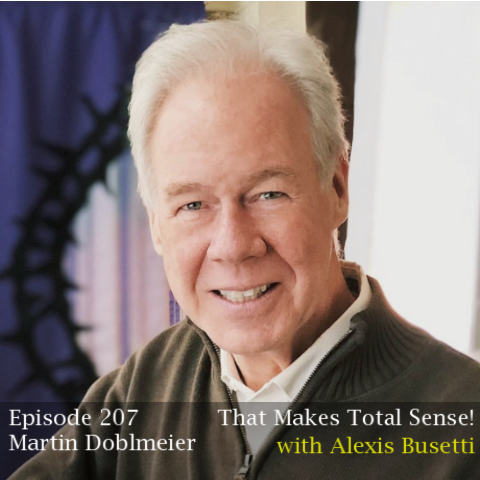
Speaker 1 00:00:06 Welcome to That Makes Total Sense, a podcast dedicated to exploring God's generosity and justice. I'm Alexis Busi, a Christian aiming to ask good questions and encouraging you to do the same. Every one of us is wired by God to live out generosity and justice. But the how sometimes eludes us that makes total sense is a way for us to get together, posture ourselves as learners, and challenge one another, to practice generosity and justice in a tangible way every day. Hey everybody. I'm sitting here with my guest, and Martin, I did not tell you this before we started recording, but it just popped into my head. I think now I'm gonna have to go back. I think you may be the first filmmaker that I've ever had on the podcast.
Speaker 2 00:01:00 Puts a lot of responsibility on me now. Thanks, <laugh>.
Speaker 1 00:01:04 Just a little bit. I'm so excited though. It was really different, like watching a film instead of, you know, reading a book or exploring, exploring some other sort of artifact before I chatted with my guest. But I'm sitting here with Martin Doble Meyer today, who has made lots of films. Now, my streaming weekend list is getting longer and longer the more I research and the more we chat. But this one that we're gonna chat about today, mostly, I just finished. It's fantastic. And it is just called Sabbath. So thank you so much, Martin, for coming on and chatting with us about this film.
Speaker 2 00:01:40 No, it's a pleasure. I've been looking forward to it. Alexis, thank you for having me.
Speaker 1 00:01:44 Oh yeah, absolutely. Um, I'm, I feel like, oh my goodness, where should we start? Because it's so rich and the, the images from this film are still just dancing around my head, and it was so, it was delightful. There were so many just delightful parts in this film. But I want to ask you, because the name says it all, but I wanna ask you, this is such an ancient concept, so a what got you interested thinking? This is, this is the next film project. Um, so what was it about Sabbath for you, and then like, why now? Hmm.
Speaker 2 00:02:22 No, it's a good question. Well, well, I think, um, the, all the films that I do are intended for a national public audience, a public television audience, and that includes people who have a sense of religion and lots of people who don't. And, and so I have to be very aware of the fact that I have a broad, diverse main street audience that I'm, I'm creating my films, but my subject matter is always about religion, faith, and spirituality, and how can I tell that story? So that's the first rubric that I was working with. Uh, the second one was, the last film I had just completed was on the great prophetic voice of the 20th century, rabbi Abraham Joshua Heschel. Just a remarkable, dramatic story. But Heschel, who was a prolific writer, uh, one of his most famous books is called The Sabbath. And I had read it earlier, and then I read it again as a result of doing the production.
Speaker 2 00:03:14 And that became, uh, you know, that that took its place in the back of my mind as I'm thinking about films that I wanna go forward and do. But then the third thing, frankly, was the pandemic. I mean, that was absolutely, here I am, like everybody else, uh, in a blink of an eye, we're all, you know, no more church, no more gathering together, no more anything. Uh, and how are these congregations gonna survive? What's gonna happen here? Uh, what are we missing as a result of the pandemic and, and, and church talk? And that sort of solidified for me the fact that maybe it's time to do this kind of a film. Now, I, I would never recommend to anybody that you do a film like this during a pandemic, but that's, that's, that's ultimately what we did. I mean, it was towards the end that we actually got started with the production.
Speaker 2 00:04:00 We actually began, I did all the research at the end of 21, 20, 21, and then we were actually on out on location, uh, from much of 2022 during the filming. People were just beginning to come back into the churches. Uh, if you look at the film, there's a lot of pe, a lot of situations where people are wearing masks. So in some way it does become a, uh, sort of a, a capsule of time, uh, that we'll, we'll be remembering. But it raised so many questions from me, what we had lost during the pandemic as church communities, uh, who were the ones that were going to survive, you know, many, many did not, frankly. Uh, and what did that mean? And what's gonna happen going forward? And fundamentally, what did Sabbath mean to all these people? What, how do you think of Sabbath in terms of the, the gathering place, whether you're a Christian or Jewish, however you respond to it.
Speaker 2 00:04:50 It's, it's the, it's a central idea. And then when I began doing all the research and the study, the whole notion of Sabbath just sort of opened up. I felt like a kid in a cave. Every, every new corner just started to open up. And I had paths that I wanted to go down. And I, I honestly loved the people that we had the privilege to engage with, uh, and meet, uh, I, I, you know, I had a chance to read books and meet new people that I had not known about in the past. And so it, it became a, both a lot of fun, but also really an education for me. And I've been doing these films now for 40 years, but I I, it was just a great experience.
Speaker 1 00:05:27 Yeah. I mean, thinking about the people that you were able to meet and who contributed to the film, one of those people was, um, Abraham Hassel's daughter. And I was thinking, as you were talking about, um, one of the quotes from the book that she brings out that, that probably most people know, even if they haven't read him, which is that the Sabbath is like a cathedral in time. And she elaborated on that a bit in the film. And of course, as she's speaking about this, of course, the things that you just mentioned are also going through my head, you know, and how the Sabbath is, I think one of the things that the Jewish religion and culture has always understood much better is the communal aspect of it. So while I would say, while many Christians may, may not many do, but many don't necessarily think of like church going as a Sabbath activity, um, you know, there was one pastor, he said he'd, he'd kind of never not given much thought to it.
Speaker 1 00:06:38 Um, there was a communal aspect to that Sabbath activity that was lost in the pandemic and has had to be recovered a bit. And that was one of the main things that stood out to me in the film. Um, several of the interviewees talked about the communal aspect of Sabbath. I think one of the, maybe it was the Princeton theologian who had just in a, in kind of in passing in one of the scenes, says, um, you never see God in the Bible giving the Sabbath to an individual. He's always giving this in a communal way.
Speaker 2 00:07:17 Yeah. And I think that's at the heart of what the message is all about. I mean, ultimately, uh, I mean, we are all in this together. I mean, there's a, there's an image I think, in America that we're all the lone rangers. Uh, but the truth of the matter is that works pretty well for television. But in reality, we all have a, we all have each other's burdens to share. And, and I think that's, uh, one of the, one of the most important aspects of, of, uh, of Sabbath. And, and here, anecdotally, here's, uh, um, here's a practical, uh, point to that because, uh, one of the stories that we did was in Los Angeles, California, uh, LA Placea, uh, the official name of the church is our Lady, queen of Angels, uh, Catholic church in right in downtown Los Angeles. But it's right in the urban, the tough urban section of Los Angeles.
Speaker 2 00:08:04 But it's across the street from the plaza, and that's why it's become La plAsa, the Little Plaza. And most of the people who attend the church are Hispanic. Most of them who come, um, are either new immigrants, just haven't recently arrived or almost recently arrived. Many of them work in, uh, in the hospitality industry. These are the workers that keep America going. And, um, what I, you know, you know, I think one of the things that really touched me, the, the pastor says, you know, you can look, when, when they receive communion and put out their hands, you can see these are worker hands. These are people who are really carrying the burden of our nation in the day-to-day operation of this country, this country. And yet, when they come on Sunday for their Sabbath, um, many of them being, you know, undocumented workers, many of them who have trouble finding jobs, um, but when they come to that Sabbath event, they're with people who share the same burdens, many of them who share the same burdens.
Speaker 2 00:09:04 And that Alexis becomes a form of rest. That becomes a way that you can have your soul at a sense at peace. So for me, one of the great understandings is that, you know, the idea of rest is not simply taking a nap on a Sunday afternoon after all the busyness is done, but it's actually finding ways and places and, and collection of people like you, you said, who actually help me find a sense of rhythm and a sense of rest. Uh, so that was, that was really nice. And just finally on that, uh, we were there for a week. We filmed there in Los Angeles with them for a week. And at the end of it, the pastor comes up to me and he says to me, Martin, thank you for everything. And I said, well, no, thank you. It's been a pleasure to be with you.
Speaker 2 00:09:47 And he said, no, I, I really mean this. I really wanted to say thank you, because I've been a priest for 30 years, and I think I've never really thought deeply about Sabbath. I show up every Sunday and do my job, and I do what I have to do. But I hadn't really thought about it. And I think that's in part what we're trying to do with the film, just to say, look, uh, a lot of people who live in the world of religion, they're doing this on a regular basis, sort of programmed to do what they do, but have you thought about it? And here's an opportunity to not only look at how you should, could be thinking about it, but how others are thinking about it as well. So that's, that's what I think is, uh, I hope is the gift of the film.
Speaker 1 00:10:30 Yeah. One of the places where that stood out for me, actually, kind of even going back to your initial comments about, uh, kind of a main street audience for this, uh, film, for, for all of your films. Um, I have, I have thought about this in the Christian context that I grew up in. Um, I spent a, a long time in a, you know, with, uh, Jewish community members and even in, uh, Jewish spaces where people were believers in Jesus, but, but still celebrating and observing, uh, a Saturday Sabbath, which is really beautiful. Um, so, so a lot of the Jewish customs were not unfamiliar to me, but one of the places that really struck me was this kind of non-religious or secular sabbath that came out, um, you know, with, with the, with the blue laws and that that was in, um, in New Jersey, right? I'm trying to think of the, uh, Paramus Paramus, yeah,
Speaker 2 00:11:31 Paramus part of Bergen County, New Jersey. It's a countywide. Yeah, yeah, yeah,
Speaker 1 00:11:36 Yeah, yeah. Can you talk about that a bit more? Because as you mentioned, it was like to, to just to get people to think about it and that it's, you know, community and thinking about it in a different way, but this is in a non-religious context where this comes up and it, and it stuck around.
Speaker 2 00:11:51 Yeah. I think one of the things we were really conscious of is this notion of, you know, touching, touching elements that were not particularly religious in this film on Sabbath. And so, uh, there is a, there is an outlier in America today. It's called Bergen County. Bergen County, New Jersey, uh, just across from, uh, New York City. It's one of the largest and most densely populated communities in the nation. Uh, and they had blue laws on the books going back for centuries. That closed shops closed commerce on Sunday. And of course, that was what blue laws were intended. You close the shops, gives people the opportunity to go to church, hopefully gather with their family, do what you're supposed to have done decades ago, uh, on a, on a day off on Sunday. And they decided that despite the fact that the rest of the country had basically abandoned the notion of blue laws, that they were seen as arcane, they were, you know, sort of like an old remnant of the Puritan image that we want to get rid of that stuff, you know?
Speaker 2 00:12:51 And as we have in the film, one of the guys says, well, ultimately this proves that commercialism trumps moral values. Commercialism is number one. But Bergen County said, no, we're gonna hold onto these laws. And they had votes on it. They voted again and again and again. They decided the population really wants this. And so they've been able to prove that they can make as much money commercially in six days as they can. If they open up all seven, the, the, the, the, the, the shop owners agree with this and are comfortable with it, plus they're getting good workers who say that they know now that they can come into this community, live here, work here, and they, they're assured of having a day off rather than being put on a seven day a week cycle kind of system. And they, they like that. So they are, like I said, they are an outlier.
Speaker 2 00:13:39 They are different. We have really gone to 24 7 commercialism. But I think I, I, I felt as though that was kind of a, a, a way to say, you know, it's religion. But there's other aspects to this idea too. And, and you mentioned it too. We, we actually came across this whole notion of a tech Sabbath. There are people who are, who, who consider themselves to be a religious, or they're nuns, meaning that they're spiritual, but they're not religious, they don't belong, they don't wanna identify to any particular group, and they're voluntarily on their own admission, taking a Tech Sabbath, meaning that they're, for one day a week, they're putting down the cell phones, putting down the laptops, putting that walking away from the desktop. Uh, and they're doing that. But the thing that I find really interesting is that they call it a Tech Sabbath.
Speaker 2 00:14:27 They, they could have called it, you know, a tech day off a tech break or some other kind of language, but they wanted to call it a Tech Sabbath. And I think in some ways that sort of highlights the notion of, gee, can we just go back to the idea that one day a week something can be sacred, even if sacred is with a small ss, can we just have something sacred le like, let me have my peace for a day. And they call it a Tech Sabbath, but it's very popular people all across the country that are doing this. And they may not be identified as religious or wanna be identified as religious, but they're still a applying the same notion that calling it a tech Sabbath.
Speaker 1 00:15:03 Yeah. I mean, that's so great. One of, one of your guests on the documentary mentioned that the un the unplugging, um, and that some, and that sometimes it's done individually, and sometimes, you know, what, what could be kind of, if it were done, you know, communally, right? That you're thinking, I'm, I'm unplugging, but you're not sure if your neighbor or your coworker or, you know, someone else is unplugging. There can be a little bit of tension there, but I think it's really great that people are just starting to even yeah, just kind of exploring, exploring those things on their own. Even people who, yeah, obviously don't consider themselves to be religious, but would still refer to it as a Sabbath is quite, is quite intriguing. Um, I, I wonder, um, as we're talking about these relationships, one of the things that you highlight in the film is not just this community that we've been talking about either, you know, with God if people consider themselves to be religious or with one another, but there's a huge aspect of Sabbath, both, um, in the Christian community and in the Jewish community that is related to creation, if we can say it that big, right?
Speaker 1 00:16:18 Like this agrarian, um, side of the Sabbath. I'm wondering if you can talk a little bit about the, about the farms that you featured in the documentary and how Sabbath is influencing their work and their rest and their communal times.
Speaker 2 00:16:38 Yeah, no, that's a good question. And there's a logical connection to all of this. Uh, obviously, you know, you know, if you go back to the, the Genesis account, God creates the world over the seven days, the, the beginning, it's the creation of o land and ocean, and then the, the plants and animals. And, and then the last day, of course, is the creation of, uh, the sixth day is creation of human being. And on the seventh day he rests. So that whole creation story really brings us to an awareness that the whole notion of Sabbath is really calling us to remind us of a reverence for the earth that we all inherit. And so one of the things that I became fascinated with, uh, was how there are people out there, and we actually profiled two different farming situations who are, who are farming in a Sabbath mindset.
Speaker 2 00:17:26 Uh, they're really applying the notion of Sabbath to the farm work that they're doing. One is in Penn is in New Jersey, in Princeton, New Jersey. Uh, and they actually have a kind of a quirky name for it, but it works for me. Uh, they call it the seminary. So it's a combination of the notion of a farm and a seminary. So what this, uh, what this professor is doing at, uh, Princeton Theological Seminary is he's training the next generation of pastors and church leaders, uh, by giving them the pr practical experience of working on a farm for some of their classes. So the classes are actually held in a barn just off the campus. They're, they're taking responsibility for 21 acres and growing fruits and vegetables rather successfully, frankly. And the, and the, and the, they're, they're, um, raising the, the, the, the, the fruits and vegetables.
Speaker 2 00:18:21 They're giving some of it to the local community, uh, hunger programs. They're selling it in some ways to try and get some self-sufficiency for the program itself. But they're, these young people are getting, not only are they learning about Carl Bard in theology, but they're digging their hands into the earth. They're planting the seeds with their, with their hands down on their hands and knees. And so, uh, and he's teaching them to have responsibility and care for the soil, and that we have exhausted the earth that we live on. And, uh, all of these fundamental principles, and I, I, and I think they're gonna go into the next round of their lives into the congregations that they will then lead, uh, with a real different appreciation for the notions of where food comes from, how we come up with food. I mean, one of the comments that comes outta the film is that we do live in a, in a commercialized society, uh, where we literally, I know I go to the grocery store, uh, if you had asked a genera, if you asked two generations ago, how many of you live on a farm?
Speaker 2 00:19:20 A lot of people would've said yes or no. People who live on a farm, they would've said yes. Uh, one generation ago, not so much. Today, the vast majority of us come nowhere near a farm. We don't live near a farm, and we literally get our food by going to the grocery store, picking out what we want. And as it's said in the film, we don't have, we don't sense any obligation to that film. We bought it, we own it, it's ours. Uh, and so for us, I mean, the opportunity to sort of reconnect and point to that in the film to say, look, uh, the truth of the matter is the earth was given to us. The earth is bountiful. How are we, how are we caring for? That was a real Sabbath theme. Uh, that was on one farm in, uh, in Princeton, New Jersey.
Speaker 2 00:20:01 The other farm that we went to was up in Massachusetts. Uh, and so where, uh, the one in Princeton was associated with a Christian theology center, uh, Princeton Theological Seminary. The other one was a farm that was an extension of a synagogue, uh, up in, up in Massachusetts. And I really wanted to go there for a, a really different reason. Um, they were practicing the idea, the Jewish idea of Mita, uh, that Sabbath is not just about one day a week, but every seven years. The earth needs a break. We need to stop extracting everything that we do and, and, and, and give the earth its due. And there were so many sub-themes, Alexis, that came out of that, because I kept saying that, you know, the, the whole idea of Sabbath is not just about me taking a rest. We need to give, we need to take time to give the earth that we live on.
Speaker 2 00:20:58 It's rest, stop interfering, stop micromanaging everything, let the earth have a rest. But in order to do that, you have to work the other six years in order to have that one year where you're not harvesting off the land. And so that creates a whole cycle of thinking out in advance, how are you going to do this? And I, I, I thought that was a brilliant addition to our film to be able to say, you know, that this is not just about, okay, you know, you run Monday through Saturday, and then Sunday you take a little time off, or you take your one day a week off, but in fact that you have to think about how you're going to program yourself over the course of years so that you can actually afford the privilege of taking, giving the earth a rest and thinking about that. So I, I thought those were two different ways. They, they were two farm stories, but really very different farm stories in, in their very nature.
Speaker 1 00:21:54 Yeah. And that was, that was a really, that was just really intriguing to me because it is, as you mentioned, I mean, it's kind of an, it, it is kind of an obvious connection. But for, I would say for myself, you, you mentioned, and it's true that most of us don't live on farms. I can't even keep like a house plant alive. And so this idea of like, you know, digging my fingers into the soil and stuff like that, like, I'm, like, I just, I wish that that could be a part of who I am. I'm, I'm, I'm not, this is just, this is just not me. But it was really beautiful. I mean, I'm, I'm a seminary student, so I'm watching this one at Princeton going, oh my goodness, this is, this is just so great. Um, and, and the one that you mentioned with in the Jewish form was Smita.
Speaker 1 00:22:37 I, I wanna just point out real briefly that one of the rabbis talked about this concept because as, as, as you focused on in the film and mentioned just now, this is, um, a creative, uh, this is a, this is a break. There's supposed to be a, a time of, I don't know that they would use dormancy, but there's supposed to be a, a rest time for the earth. But then also one of the rabbis in that section brought up this like, really radical idea from the Torah that he, that he claims, and I agree, has always been radical, which is it's during this, this seventh year also, that when we go back to the community that debts are supposed to be forgiven, that people who have been enslaved are supposed to be freed during that time. That is this communal reset. There's a reset for the earth, there's a reset for your farming calendar. I can't speak to that, but, and there's a reset to our communal lives and, and, and how that operates. And so what, what were were some of the things that stood out to you about that, uh, those conversations in the film?
Speaker 2 00:23:49 Yeah, I, I wish, uh, we, we had two hours in the film with two full hours to do. And, uh, and I guess one of the areas if I, if truth be told, that I would've liked to have gone on longer and longer was on this whole notion of debt. Um, it is one of the mandates in the Jewish tradition that is the companion to this notion of the cycles, the seven year cycle. Uh, and on the seventh year, debts are supposed to be forgiven, and in particular absolutely on what they call the jubilee year. So just in a jubilee year within the Jewish tradition, is that there's an every seven year cycle. And then at the end of the seventh cycle of the seven years, uh, the 50th year is the big jubilee. And that's when you better forgive all your debts. That's when you better set your slaves free.
Speaker 2 00:24:36 Um, and that's, that's really the practice. Now, the, the problem is that, you know, you talk to most people, uh, the reality is that if you say to people, oh, the Sabbath gives you the privilege to take a day off, most people say, oh, great. I I like that idea. Take a little rest for yourself. Oh, that's a great idea. And forgive your debts. Forgive those who you who are indebted to you. Now, wait a minute, what does that, what is that supposed to mean? So I, I think ultimately that's sometimes where the religion and the practice, the rubber meets the road. And I think that's one of the areas where I think that you get a lot of resistance. But the truth of the matter is these are, these are the way the laws had been traditionally instilled in us. And people today, as they always have, they'll, they'll take from that what they will, they will decide, I'll, I'll, I'll hold onto this, but I won't accept that.
Speaker 2 00:25:26 I'll practice this, but I won't practice that. And so the whole idea of debt forgiveness, it got some traction. But I oftentimes, I have to say on a very pragmatic way that's, that's often left behind. One of the things that we brought out in the film, and we've had a number of conversations subsequently about this, is imagine that during the period when we, we had slavery in America, the enslaved people were most of the time almost always enslaved by people who, to be Christians, people who profess that they believed in a Sabbath, they would take their Sabbath Sunday. But would they in fact, extend that to their, to their, um, to their enslaved people more often than not? No. I mean, so the hypocrisy runs deep here. I mean, people are continually, it's, it's the, it's the human response to a divine request, and it's not always perfect.
Speaker 2 00:26:19 Uh, and so, um, there, there were probably people who did let their, their slaves stop for the day and enjoy a good life for that one day. But, um, the majority, the majority of the record says is not, uh, not the case. So, um, I, I mean, ultimately this is, you know, the religion practice o oftentimes requires us to think of others before ourselves, you know, know the, and we have one great historian in the film. His name is Thomas Kidd. He says that the prophet, the the prophet motive has been the great enemy of Sabbath over the course of the years. And, and in truth, I think it's the prophet motive that can really be, uh, really be traced back to what causes most of the injustices in the world, the profit motive. So I think this is all tied together. And Sabbath, in some ways is saying, you know, maybe that's the day you shouldn't be profit, you know, profiting from all that's going on, all that's been entrusted to you. So this is, you know, this is a mix of taking care of yourself, taking care of the earth, and taking care of others around you.
Speaker 1 00:27:24 Yeah. I wanna, I wanna see if you can elaborate a bit there and maybe build a little bit of a bridge for me, because, um, I'm really intrigued by, you know, I think sometimes I can, I can live in my little worlds. I live in my seminary world, or I can live in my church world or in my, in my, uh, Christian friends world and things like that. And so these conversations are some that are really fun for me to have, and they're, they're intriguing, and I can talk about them with kind of some shared language. But when you are making films like this one and other films with religious, um, subject matter, but you're making them for people who don't identify as religious, what are some of the things that either you're hoping people will take away, your audiences will take away, or some things that you're hearing that your audiences are taking away? Those, those specifically people who, who aren't religious, what can this sabbath or these kinds of, those motives and this justice that you've just been talking about, um, what is it that makes these things, even though we might think of them as a religious kind of these universal subject matter?
Speaker 2 00:28:43 Yeah, no, that's, uh, that's at the heart of kind of what we're trying to do with this. Um, I, I think one of the, the, we've just released the film, so it's kind of exciting for us. And, you know, you work for the longest time, <laugh> in an edit room, and it's quiet. And you, you think you, certain things, you, you hope and pray that certain things that you've done will actually connect with people, that there'll be an emotional response to what you're doing. But you never know until you actually released the film. But, uh, the, the response that we're getting has been terrific. And a lot of what people are saying is that they really appreciated the diversity. Uh, and, and so in some ways, uh, isn't it true that most of us who profess to be in any way, shape or form religious, uh, usually do that in kind of a siloed way.
Speaker 2 00:29:27 Uh, we have our practices, we have our universe, we have our communities, and God forbid that we would go outside and to experience other, other opportunities and other things that are going on. So I think people have been genuinely positive about the notion of the diversity that we tried to bring to the film. Uh, and that, I think, can help what's going on, because I think ult ultimately, there's, there's times when we all look over the, the news and the headlines and say, oh, no, oh my God, is that, is that person rep is that person representing what their bad behavior is representing my, my beliefs, my church? He goes, one more time that I have to get together with friends and explain why a religious person is behaving badly. And, uh, I have to, I have to defend somebody. And it's just, it's just painful.
Speaker 2 00:30:13 But the truth of the matter is, we, I know from all these years that there's a lot of good people doing a lot of good things out there for, for the right reasons. And I think in some ways we try to celebrate that in the films that we do. We we're not ignorant of what's going on out there, uh, not in denial of it, but it's, the truth of the matter is that, uh, that there's a lot of good, and, and part of what we wanted to do is to celebrate that it's not just good in one religious group, that there are people who are from a lot of different faith traditions who are trying to accomplish the same thing, which is to get a rhythm to their lives, to gather people together, to, to honor God, and to also dovetail that into some kind of communal service to think about and care about other people besides themselves. So, so hopefully the, the film will get that kind of response. I mean, I, you know, I, I I I make the films and after that, I sort of serve it up and offer it up and hope to God, literally hope to God that it's, that it, that it works.
Speaker 1 00:31:10 Oh, I'm so appreciative. One, one of the things I'm, that came to mind as you were speaking is how, um, I, I would say a way in which this film feels timely for me. I think it is timely, as you mentioned with the, with the pandemic and all of these things that are going on and, and, uh, and your, your interviewees mention the same kinds of things about burnout and the need to unplug and things like this. But as, um, one of the ways that it felt timely for me is I think that one of the things I'm seeing more and more, maybe it's just my community, or maybe it's across the board, is this, uh, desire for and embodied faith, um, maybe especially inside of American evangelical Christianity, which has sometimes, you know, kind of fall into this dualistic, you know, the, the body that is, is kind of separated or it's less than, you know, the, the spiritual things.
Speaker 1 00:32:07 But this film showed a very embodied way to live out one's faith. Um, you know, we mentioned having our hands in the, in the ground and gathering together in person, in community. But one of the communities that I just loved that you highlighted were the Seventh Day Adventist community, and how they're, you know, talked about how they had kind of early on in their tradition, uh, focused on health and, you know, and Sabbath and things like that because of, um, because of how important it was, this, there was a significance there for them. So did anything in particular kind of, uh, strike, you're talking about diversity, but with that, uh, with that particular community inside of Sabbath, because they, they kind of are inbetweeners in some ways with, uh, with the, with the kind of Christian and Jewish observance, at least of, of Sabbath.
Speaker 2 00:33:04 Yeah, no, just to sort of put a, a finer point on it, they're, they are Christian and they, they, they honor what they call the seventh day, which is Saturday. So they're, they're Sabbath begins at sunset on, on on Friday and ends at Sunset on Saturday. And I, I, I've been, uh, close to many Adventists now for dozens of, literally dozens of years and admire them for their commitment. I mean, they believed in Sabbath so much, they named their religion after it. It's called the Seventh Day Adventists. And so the religion really does focus. Sabbath is one of the things that they really, that they really treasure and respect and have, and I think really sort of expanded a theological thinking about. So, uh, where other faith traditions, Christian, many Christian faith traditions do it, but don't think about it. Sabbath Day Adventists do think about it.
Speaker 2 00:33:54 But the one thing that I wanted to highlight that is unique about them is that they had, from the outset, uh, made this commit, uh, commitment that, um, they were going to run counter to what a lot of the dualism mentality was over the course of centuries, which is, soul is good, body is bad. And that's what a lot of people, uh, grew up thinking and feeling and expressing. And, and, and they said, no, God, the body is the, also the creation of God. Um, you're given a body. It's the creation of God and you, and you have a responsibility to care for it. So early on Seventh Day Adventist took this seriously. Uh, they have created hospitals and medical centers, not only in the United States, some of the flagship hospitals in the United States, but they've done missionary medical work around the world. Uh, and they, now here's the, here's the real fine point, which is that they have a, a, a strong commitment to Sabbath.
Speaker 2 00:34:48 They really take that day off, and they are some of the healthiest people on the face of the earth. They live on average between eight and 10 years longer than the rest of us. And so, isn't that appealing? So <laugh>, so they, they, they wouldn't necessarily say that Sabbath is the only, obviously, is not the only reason for that. Uh, they're, they, many of them are vegetarian, they don't smoke, they don't drink it. You know, you wouldn't think about, well, if I wanna go to a party, you wouldn't bring a bunch of Adventist to the party <laugh>. So, but, but the truth of the matter is, they have a commitment to being true to what they see as the, as the gospel text. They're very, uh, they're, they are people of the book, and they like to be identified as that, but they take Sabbath seriously, and they, they are living longer than, than most others. And I, I found that a wonderful combination for a film, you know, a component in this film.
Speaker 1 00:35:41 Oh, yeah. So, little piece of trivia. I was actually born in an Adventist hospital. It has since changed. It's now a Catholic run hospital, but it, in my hometown, there were two hospitals right next door to one another, and one of them was a Seventh Day Adventist hospital. And so that's where I was born, and still in my hometown, this little town in Oklahoma, uh, they, there's a Seventh Day Adventist community, and they have a little, it's probably the only, I mean, you think about this kind of central American Bible belt, it's probably the only vegetarian restaurant in the whole <laugh>, probably within 50 miles of where I'm located. But yeah, I mean, it's, it's, it's fantastic. And I just love that you and you featured a even a, a diversity inside of the Seventh Day Adventist community inside of the film, which was, which was really great, I thought. And, and you just brought, it just brought so much richness to, um, the
Speaker 2 00:36:35 Conversation. We always say that if you can't figure, find a vegetarian restaurant, ask an Adventist, because they'll know exactly where to go. But one of the things too, uh, that you mentioned this, is that we did a short story, uh, up in, uh, Northern California about young people, uh, attending the university in, up in Northern California, university of California. Um, and, and they, they admitted they were Adventists raised in a community where raised in a tradition as young people, uh, where they took their Sabbath seriously. And now all of a sudden they're on a university campus in a highly competitive environment. And, you know, here's that example again. Well, are we all gonna do this together? Are we all gonna stop together? Are we all gonna put down the books for the day? Uh, and they, and, and, you know, and you, and you could feel in those young people that they were struggling with this, you know, now they're this practice that they've had since being a young person all of a sudden meets the real competitive world.
Speaker 2 00:37:32 And, uh, they, they, the language that most of them were using, well, I'm gonna try, I'm gonna try and do this, but you could almost see in their eyes the tensions of the world pouring down on them as teenagers trying to make them decide, oh, no, no, no. If you want to keep pace, you better study seven days a week. Get ready for the exam, get ready for the exam. And you could feel the anguish that they were going through with all of that. But, but, uh, others will tell you that they seem to be taking, you know, they, they, they don't study on the, on the Sabbath, and they take their tests and they seem to be doing as well as everybody else, <laugh>. So that, just like that hawkens back to the whole idea of the blue laws in, in Bergen, Bergen County, they're able to make as much money in six days as they are in seven, because they're really focused for those six days, and they take their day off, and they're rested when they come back the next
Speaker 1 00:38:20 Yeah, it's that, that I love that part is, it's a beautiful picture of thinking about this as being both, um, an individual, you know, conviction or desire, or however we want to, to frame that. Um, and also like a communal joy, you know, these, these young people are coming of age and making the decision for themselves of how they want to live their life in that way. And that really affects how they then interact with their community and, and even to some degree, what communities they interact with when, you know. Um, and so that was really great to see them. I, you know, I was so grateful that they shared that struggle, uh, with, with your team and allowed us to, to get that kind of insight as they were moving through that season in their lives.
Speaker 2 00:39:12 Yeah. And I think, uh, in some ways that, that chapter, and I think, you know, in, in, in their own ways, each one of the chapters reinforces one of the, I think the, one of the most important themes in the film, uh, which came up again and again and again, uh, which is not a religious theme per se, but it's the notion of trust. The fundamental notion of trust, uh, that on foundationally and on in Sabbath is this notion of trust. If you decide that you're going to take your Sabbath day and not compete against everybody else, uh, can you trust that the person, your coworker, is not gonna outwork you, sell the property, and, uh, that you were supposed to be selling or make the sale that you, you were scheduled to sell? Uh, will they also honor that? If, if you decide that you're actually going to take the day off and, and do community service, will that, will those people who receive those gifts from you, be grateful.
Speaker 2 00:40:11 You know, there's nothing in the world like giving a gift of your time and effort to somebody who turns out to be totally ungrateful for what it is that you're doing. And, and can you even trust, uh, to give the earth back for one day to the creator of it and say, for one, I I've been doing everything I can to manipulate and control everything around me, including the world around me. And for that one day, I'm gonna give it up and give it back to the person who created it. And the logic is that, you know, God created the world and did fine without me. It take it, can it, you know, God can take care of this thing for 24 hours, I promise you, but do you trust that that's gonna happen? And the, the problem for all of us, I think, and I think what the film really doesn't speak directly to, but implies at its core, is that one of the things we're in short supply of in the American culture today is this notion of trust.
Speaker 2 00:41:01 We have so much lost trust in our governments, our institutions, each other, the media, uh, and that I, I think in an emotional sense, uh, trust is like a muscle unless you exercise it and find out ways that you can use it effectively, uh, it atrophies, uh, and we become more and more insular, and we become more and more distrustful of everything around us. So I think in some ways, one of the great tools that, um, that Sabbath can actually help us continue in our own emotional health is to remember that as human beings, we're called to trust, to have the confidence that we can actually go through this life and trust ourselves, trust others around us, and trust the creation that we've been given.
Speaker 1 00:41:47 Wow, Martin, that feels like that's, that's it right there. <laugh>. <laugh>, that's it.
Speaker 2 00:42:00 Yeah. I'm, I, I, I believe it. I just honestly believe that that's kind of what's really going on here, uh, because you, you know, it's, it, it's, I I think we have thought about Sabbath, especially for all, all, all the exteriors, you know, the laws, the rituals, the visual practices that we create and everything. But the truth of the matter is the real importance that's going on with the term, the idea of Sabbath is what goes on internally, what goes on inside our heart and soul. Did you, you can show up at church on, on Sunday, and you're still thinking about everything going on in the world. You're still running a million miles an hour, and your mind is going off in different, are you at rest? Are, are you really at rest? So I think that, uh, this whole notion of trust and genuine rest, uh, is what this is all about. That's the gift that we're supposed to get out of Sabbath, and, and what we do with it is really up to us.
Speaker 1 00:42:50 Yeah. Wow. Thank you. Thank you so much for that. That is, that's, that's really meaningful. Um, to me personally, I'm kind of, I'm, I'm gonna have to process that offline so that I can get back <laugh>. I can get my,
Speaker 2 00:43:05 Call me, send me email afterwards. Yes, please. We'll do it again.
Speaker 1 00:43:09 <laugh>. Um, yeah, because that's just, it is, it's, it's, it's so meaningful. And I hadn't, I hadn't thought about that, um, as an underlying theme of the, of the film, but certainly of the film and certainly of Sabbath observance in general, this idea of trusting ourselves in trusting each other and creation in the creator and, and, and all of those things that we get to use it as a muscle. Okay. I'm not gonna repeat everything you just said, but it's just, um, yeah, that was really, that was really powerful for me. Um, when we think about, kind of going back, kind of coming full circle here to, to the pandemic being kind of the catalyst for you, uh, wanting to make or one of the catalysts for you wanting to make this film, um, what, what do you feel like you brought away for yourself? What did you learn from this experience, especially doing research and filming as the pandemic was happening? Um, what, what were some of the meaningful things that came out for you that maybe you weren't expecting necessarily to gain from this project?
Speaker 2 00:44:29 Well, I, I go into every film, Alexis, trying to think, uh, if in a selfish way, frankly, you know, uh, what do I feel like I'm being called to do here? What's kind of, what's the invitation all about here? What's, what's the genuine thing that I'm supposed to dig into now? And, and a Sabbath created a whole opportunity across the board for so many different things. I, the privilege of meeting some of the people that we met over the course of the making of the film, uh, that was, that was just a privilege. And I go into now the promotion of the film to, uh, in, in such a way that I feel as though these are, this is a sacred trust. You know, how, how God is lived out and responded to in the lives of these people now is the, is my privilege to interpret and to tell that story.
Speaker 2 00:45:18 So that's a sacred trust. I mean, ultimately, I take it pretty seriously, <laugh>. So I'll be held accountable for how I did it, how, what was, what was my priority, and I have to remove myself from it and see where's God at working, what's going on here, really, what's, what's going on here, really? Um, I also came away with a real appreciation, uh, for how much, um, um, church leaders and the people who stage the events that we go to week in and week out, whether it's the synagogue or the churches, the music and the programming and the show that goes on, and the event and the preaching and everything else like that. Uh, I, I came away saying, you know, uh, they work hard to make sure that I can get my Sabbath experience and, and rest, and they wind up having to take another day for themselves.
Speaker 2 00:46:09 So, you know, all these pastors that we engaged with over the course of the making the film sat Sunday is not a day of rest for them. In fact, they're dead beat by the end of Sunday. Uh, they've gotta figure out Tuesday gonna be there, so-called Sabbath. And, uh, and can they actually hold to that, uh, and not respond to all the other stuff that goes on during a busy work week? So I came away with an enormous appreciation for how, how challenging it is and all that they do to provide an environment for me to have a quiet, calming spiritual experience in an organized communal setting. So that was another thing that, uh, I'm certainly, I'm aware of it, I was keenly aware of it, but at some level, experiencing it with them for the film on Sabbath gave me a different kind of emotional connection to it.
Speaker 2 00:46:58 And I thought, you know, that that's, that's a meaningful thing for me. So I, I, I was very grateful for that. So, you know, and the idea that the Sabbath, I, I love going up to, uh, Massachusetts where we did this, the film, uh, the section with the, the monks, um, at, uh, St. Joseph's Abbey, you know, I, uh, I just, you, you know, they, they were great, first of all. And they kept saying, you know, we're so grateful that you wanted to do this, uh, because it's made us think about Sabbath made us actually think about it. And this is a group of, uh, this is a religious community that prays starting at three 30 in the morning, seven times a day. So what makes Sabbath Sunday any different? And yet, uh, coming back from St. Benedict, going back 1500 years from St. Benedict, 1700 years, St.
Speaker 2 00:47:49 Benedict, they, they, uh, they, they had a prescription for what Sunday was supposed to be. And, and so it, when they thought about it, well, this is a natural subject matter to be in his film, so let's allow this to happen. They're a rather closed group, but they said, no, and come on in. Let's, let's, let's do this. And, uh, and the rituals that are Sunday rituals for them that are different than the, than the course of the week, and how they, how they honor Sabbath. The, and I, and I loved, I, I guess one of the things that I really came away with too, is that gave us the opportunity to really create an interesting musical tapestry. You know, we include in the film, you know, Gregorian chant from the monks, uh, African American spirituals from the congregations in Indiana, uh, um, uh, the, the Mexican music, the mariachi music in Los Angeles, that was a lot of fun to be out in the midst of all that. So the, so the musical component, uh, I think in this film is probably the best we've ever been able to collect of all the 30 plus films that we've done. And so that, that part of it was really exciting, and I, I really appreciated that opportunity to be there and to be able to record all that.
Speaker 1 00:48:58 Yeah, I, I loved it too. In fact, my, uh, daughter, I watched part of the film, I watched the first part last night and the second part this morning. And when I was finishing it this morning, she said, oh, is this the, is this the one with the, with the, uh, Latino church? Is this the one with the music? You know? And I said, well, you know, it was, it was last night and this, and this morning. It was, you know, the Gregorian chance that you mentioned. But in that, um, in that space, what was, so, what was so crazy to me is I think I, I, I appreciated that you highlighted the work that gets done in that space, uh, throughout the week, because I think that my mind, even though I know better, I think still kind of like in the habit of my mind, I'm thinking, oh, these, these are people where Sabbath doesn't look any different because every day is just kind of filled with, with prayer and these kinds of spiritual things, you know, and all this.
Speaker 1 00:49:51 But no, they're like, you know, making jams and farming and doing laundry and doing all of the things that, you know, are required to, uh, sustain their own lives there, but also to make, um, their space self, their space self-sustainable, that, you know, this prayer and work, I think was kind of the, the mantra that they had there. Um, it really does look different on, on Sabbath for, even for that community, that somewhat closed community. The Sabbath is differentiated in that way from the normal everyday work that I, in my mind, had just neglected to even to even consider before I was watching, you know, monks fold laundry and <laugh> and make yeah. And make and make preserves. So I really appreciated that. Yeah.
Speaker 2 00:50:45 And, and I think too, that, uh, the, the mandate that comes down from St. Benedict himself is that you're going to spend Sunday in Alexio Davina, the, the whole notion of studying sacred texts. Um, and that as a result of that, the monks were, were literate from right from the outset. And, uh, as we talk about it in the film, they were the place where people would come in the, in the dark ages and the middle Ages to learn, to learn how to read. And that's ultimately goes back to the whole notion of how do you think of your Sabbath? And you think of your Sabbath as a day, not only to gather in prayer and worship, but also sacred reading. And so, uh, that, that, I thought that was a wonderful connection to the notion of Sabbath, that actually it helped propel the notion of read, uh, becoming more and more literate and to self-education.
Speaker 2 00:51:36 And so for me, that was, that was a, that was, I was, I was, I was reminded of that, and that meant a lot to me, frankly. And I'll also tell you that, uh, I was, I was honored, uh, up at St. Joseph's because, you know, they said officially the brothers are only allowed to watch two movies a year. And they allowed, they, they asked me, they asked me if I would, when I came to do the filming, and we were there for a week, uh, if one of those evenings I would show the film on Abraham Heschel. And I did that, and that took up one of the two films, <laugh> over the year. And I said, well, if you let me come back one more time, I got another film for you. Let's do Dorothy Day, or let's do, let's do Sabbath now, let's do something else. So, um, I, you know, they just, the, I I I, I probably broke the two film rule just two days ago, so <laugh>, so, but they get two films a year that they're allowed to watch.
Speaker 1 00:52:31 Wow. Wow. That actually covered you, you read my mind. I was, I was gonna start wrapping us up, but, but one of the things I was gonna ask, and your answer can change from what it just was, um, for the monks, but at the, at the end of my show notes, I usually include like, you know, if you enjoyed this, this, uh, you know, conversation, you might also enjoy a list, like maybe three others that, um, that folks might, might, might want to listen to. And so, considering your career, the work that you've done, what you've put forth, and the list that I now have of, of films that I'm prepared to watch, what would be your, like top three? Like, folks go, they, they watch Sabbath, and they're really intrigued no matter, no matter where they are on the, on the spectrum, on this diverse, you know, range of audience that you might have, uh, for your films or that you do have for your films. What would be maybe your, like top three, like, if you enjoyed this on Sabbath, you might also enjoy. And then what would you list of your, of the films that you guys have produced?
Speaker 2 00:53:40 Well, I, you know, uh, forgive me, I get asked that a lot. So I would never call one film more of a favorite than another, but in a very objective way. The film that, uh, really sort of brought me and us up another notch, a huge notch, uh, was the film on Dietrich Bonhoeffer. Uh, it was very widely received, and it is been translated into 15 languages. It was, uh, it, at the year they was released in theaters when they were still doing a lot of documentary films in theaters 2003. It was the, uh, largest grossing film, documentary film, uh, for, for that, for that comp. We, we released it through first run features, which was the largest, uh, documentary film, uh, distributor in the country at the time. It was their number one film. And so that, that helped us a lot. That got us a lot of attention.
Speaker 2 00:54:34 I did a film called The Power of Forgiveness, uh, which, uh, was very well received and brought us into a lot of moments and in situations that people have stayed with me throughout the course of, of my life. So it's always hard to say. I mean, I'm, I'm just in contact. I, you, I did years ago, Alexis, I dunno if you know about them, but years ago I did the first film, uh, in the United States about a community known ast, um, the Taze community in France. Uh, I did a film in 1984, uh, was the first film that I did for public television on the community of Taze. And I'm still in touch with them. I, you know, I still still communicate with the brothers over there and, and, uh, hope to get back over there again soon. So, uh, you know, you just, if I keep going, I'll start to think of <laugh>, all the different films and everything.
Speaker 2 00:55:25 But this is, this is, you know, this is the path I chose 40 years ago and, and, uh, we're still going, thank God and, uh, have every intention to keep going as long as we can. So, um, and this, this is, uh, this is a film that, uh, had brought us a lot of joy. It was not easy. I, I, again, I have to tell you that we would cont uh, you know, we would identify congregations and talk to the pastors and they say, well, we hope to be open again, but we're not gonna be open again. We thought we would be, and it's not gonna happen. So the answer is no. So there were a lot of nos that came down, uh, that actually, um, we had 'em keep moving through to actually get the final film that you see. Uh, but, um, I think hopefully what we have is a, is a representation of a lot of people trying to understand for themselves, uh, what the commandment to take your Lord's day, your Sabbath really means. Uh, and, and maybe even expand that notion a little bit. So, so for me, it's just been a, it's been, it's been both a lot of fun and a great blessing. Gosh,
Speaker 1 00:56:23 Gosh, thank you so much. And I think I have the right link here, but why don't you tell us where people can watch the film?
Speaker 2 00:56:34 So, believe it or not, uh, you, well, first of all, you should be able to go to every public television station in America, uh, and type in the name Sabbath, and it should come up and be available to you. Uh, but that failing that everybody can come to our website, which is Journey Films, j o u r n e y f i l m ss.com, and you sign up and you can get the film for free. And the big addition to come to our website is that in addition to the film for free, um, you can actually have access to all the educational material, the suggested additional readings, the biographical material about all the people that appear in the film. So if you like somebody and you wanna know really how were they affiliated, you can go to the site, read about that, that person, and, and then if you happen to like that film, you can see the other, other films that we've done over the course of the years.
Speaker 1 00:57:29 Yes, I did peek around on the Journey Films website today, and it was incredible, all of the resources there. So a plug for, uh, you know, for watching it there for free, where you can, where you can see and have access to all of those things that you just listed. It really is a beautiful film. I was telling Martin before we started recording that, um, I was watching it and ended up, I would say almost like mods to a flame. I ended up, my whole family ended up seeing bits and pieces of this film throughout their, their normal routine of, you know, and I'm, I'm just like, you know, conspicuous, just trying to be inconspicuous, just, you know, me and my computer. But we, um, but everybody ended up seeing at least some parts of it and really enjoying it and being intrigued. And this is all, you know, ages and boys and girls and, and, um, everyone in our household, um, really enjoyed it. And I, and I thoroughly enjoyed it. So I just appreciate your work. I thank you so much for putting it out there and um, yeah. And thanks for talking about it with me today. No,
Speaker 2 00:58:31 Thank, thank you for having me. This has been a pleasure. You did a great job. Thank you.
Speaker 1 00:58:36 The links for all the resources mentioned in today's episode can be found in the show notes, music and podcast production by Seth Busti. Be sure to give us a review on iTunes and subscribe at your favorite podcast listening app. You can also visit us at, that makes total sense.com.