Episode Transcript
[00:00:07] Speaker A: Welcome to that Makes Total Sense, a podcast dedicated to exploring God's generosity and justice. I'm Alexis Busetti, a Christian aiming to ask good questions and encouraging you to do the same.
Every one of us is wired by God to live out generosity and justice. But that the how sometimes Elusa that Makes Total Sense is a way for us to get together, posture ourselves as learners, and challenge one another to practice generosity and justice in a tangible way every day.
So as is kind of par for the course, I finished our guest book this morning and it was wonderful and challenging. I've already told you, Alicia, some of the places where I was like it feels really like, this is bold print right now and I need it to like so it's good. It was challenging, it's super encouraging.
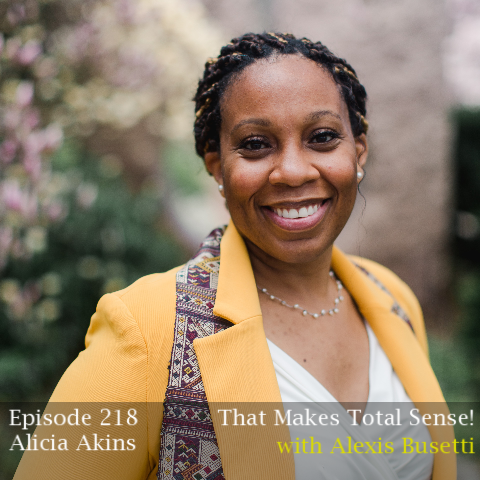
And I feel like my head is going a lot of places this morning, but I'm going to try and let Alicia ground us, give us some of these places that we can turn toward each other and toward Jesus as we explore her book the Gift of the Outsider what Living in the Margins teaches US about Faith. Thanks for coming on again, Alicia.
[00:01:36] Speaker B: Thanks for having me.
[00:01:39] Speaker A: So I'm really excited about this. Remind me the release date this book released september 5. That's right. So it's a brand new baby. As we record, this is really exciting, which means folks, when they click on the link, won't have to preorder, they can just grab it and I'll put the link in the show notes. Absolutely.
But before we dive into some of the places that I was maybe particularly drawn to, places where you don't shy away from topics that are really tough, like justice and power and generosity and dependence interdependence alicia, I didn't even mention that one. I feel like super tough.
I want to start where you started in the book and ask you, let's kind of define some language, maybe so that we're all on the same page as we start to talk about this. Because I think when we see the word outsider, my guess is that lots of folks are like me and their mind kind of maybe goes to maybe a type of person or something that this looks like a particular group or something like that. We may immediately identify with that term, we may immediately not identify with that term. But you have a really broad and really beautiful, I think, description of the outsiders. So can we start there?
[00:03:15] Speaker B: Certainly. I think that is a wonderful place to start.
When I was just getting started on this book, I asked almost everyone I met, can you tell me about a time when you felt like an outsider? Whether they were a black woman, a white male, all combinations, backgrounds of people.
I asked them to tell me about a time where they felt like they were on the outside and there were some people who could answer that question with there has never been a time when I haven't. And there were some people who had to sit and think for a long time. So I think it's really helpful to explain what I mean exactly by this term. So I did want to make this as broad as possible because I think that the ways that we can feel left out and the ways that we can feel like we aren't at the center or that we are on the outside or on the margins of whatever group we're a part of is vast. And so very early in the book I give a definition and I'm just going to read what I wrote and then I can expound on that a little bit more. But an outsider is a person or group of people who differ from those around them in one or more ways that are meaningful either to them or to the prevailing immediate culture. So it could be something that you can visibly see, like a person whose ethnic identity is different. Perhaps you can pick up clues about someone's socioeconomic status or it could be some kind of experience that they've had. Maybe they are dealing with infertility and everyone around them is having kids and that's not necessarily something that you can see, but they feel like they're left out because there's an experience that other people are sharing that they aren't getting to participate in. There are also some kinds of disabilities perhaps that might be visible or not visible or chronic illnesses. And those might prevent people from participating as fully in their communities as they might otherwise like to or in the ways that they would like to. And so those I would also consider under the umbrella of being an outsider, perhaps someone with a stutter who gets by just fine as long as things are done over communication is over email or no one's talking to them, it's fine. They seem like an insider. They open their mouth and they immediately are aware that they are different from those around them.
[00:05:58] Speaker A: Yeah.
The story that you told about your friend who had the stutter in the book was actually one of the places that really it felt really meaningful to me. So could you share like we're kind of getting ahead of ourselves? I know if we jump to that story, but it was in a section where if I'm not mistaken, it was in a section where you speak of if we pay attention to the places where we have felt like outsiders or where we have been outsiders. Even though our circumstances or our situations may not line up with someone else, we can sometimes better empathize if we think about that when we turn to someone else.
Go ahead.
[00:06:48] Speaker B: My old small group co leader was an upper middle class white male who spoke with a stutter.
And I was co leading with him at a time when I was working through some personal distrust, I would say, of white people in general, but I was very intentionally working through it and trying to take people for who they were in the same way that I want to be taken for who I am. And I found that actually, my friendship with him was very healing in many ways.
He could identify with a lot of my experience as a black woman because he was a person who was often self conscious about how he was being perceived in a room around other people.
He was aware of the assumptions people might make about him because of something that he had nothing to do with. I did not create myself as a black woman. He did not create himself as a person with a stutter.
His interactions with me were very much through the lens of someone who knew ways that I might try to overcompensate for being a black woman or the kinds of weight that I might feel entering into new situations where I'm the only person of my kind in that group. And I was very curious about his issue with stuttering, and I tried to learn more about that and the kind of therapy that he was going through for that and attended a Christmas social for people who speak with a stutter.
And he came to some things with me that were primarily for people of color, but I really appreciated the freedom that he gave me to just be me and not have to try to overcompensate or work too hard. He was like, Alicia, you don't have to do all of that.
I understand. You don't have to prove anything to me. And he didn't have to prove anything to me either.
[00:09:20] Speaker A: When I read that, his comments to you, that felt really freeing, but it felt really freeing to me, like, kind of reading that as someone who had had experiences where he felt the same way. I think sometimes when I hear those comments, if they're directed toward me, my immediate thing was like, well, that's easy for you to say, but to slow me down and say, yeah, he was really willing to share with you the places where he had been an outsider and felt like he had to overcompensate and all of those things. But even if someone may not be as willing to share, that really could be coming from a place of real sincerity, honesty, and experience on their part, too. I think sometimes, as you mentioned, we don't see the places immediately where other people may be on the margins or may be othered by their groups.
[00:10:24] Speaker B: Yeah, exactly.
[00:10:27] Speaker A: So when we talk about this broad kind of spectrum of being outsiders, I think one of the things that we I think especially, like, there's a culture, and I think it's a good aspect of our culture right now that is really talking about inclusion or diversity. Equity and inclusion. Right. We're working to make places where everyone feels welcome. We're working to make places where everyone has a seat at the table. All of these things which I think is really valid at the same time, this isn't necessarily the main focus of your book, correct? Yeah.
So hit us where even though those things are really good and you mentioned them and they exist, what would you focus our attention on when we're having this conversation about the outsider? Where would you like us to kind of fix our gaze, maybe instead of that that we might be accustomed to.
[00:11:38] Speaker B: Yeah. So in One Corinthians Twelve, Paul talks about how the parts of the body are put together and this is really the inspiration for the book.
And he says that the parts that seem weaker are really indispensable. He doesn't say the parts that seem weaker should get a better welcome. He doesn't say make sure that the parts that are weaker feel at home. And I think that those, as you said, are great things to do. But the parts that are weaker have an important role to play that the whole body needs and not just optionally, but they're indispensable. And so I really wanted to look at what value these parts that seem weaker are bringing.
And if we minimize them or overlook them, what are we missing out on?
How do they help the other parts that don't seem weaker to function as they're supposed to?
And so I would focus on the I don't know how to make this word a noun. Indispensableness of the parts that seem weaker and really thinking about what am I missing from my experience of God and of community? And of the body of Christ when I don't hear or see or interact or learn from humbly these people and what they may have to teach me. Because they aren't just auxiliary elements of the body that are objects of our generosity or charity, but they are parts of the body that help us do and see and know God and his church in a more right and proper manner.
[00:13:49] Speaker A: Yeah. Thank you.
I want to touch on one of the chapters that you speak to of your own experience and that is the gift of singleness part of the reason I bring that up is because I think my husband and I have had these conversations over the last several years of a lot of times, when we talk about folks who are marginalized, we realize and this is like kind of a duh moment, but when you're living it and you're like, oh, this really is that way. But it's like we really want to educate ourselves and be aware and all this but until we have really these meaningful relationships with people who fit into the groups that are being marginalized it doesn't really click in the way that it does when you read a book or see a news story or things like that.
My husband and I have been married for like 100 years, and we were infants when we got married. And so it's like as adults, we haven't really known what it is like personally to be single inside the church. I'm specifically using that because you're writing to Christians, but to be single inside the church is a whole thing.
[00:15:18] Speaker B: Yeah.
[00:15:19] Speaker A: And I will just say this anecdote for a while, these couple of friends or seasons of life have changed some, but we often have single friends who we just love having our friends over for dinner, and we love having people sit at our table and we cook for them and they cook for us, and it's wonderful. And we had for a while a couple of friends of ours who were each single, and we all hung out together and we all heard a sermon, I'll just say it. We all heard a sermon where we're kind of like looking at each other going, wait a minute, did that person just say what I think that person just said? And you're smiling. People can't see you smiling, but you're smiling because and I will say, Alicia, I hate that. I really want you to tell me this is not generally experiences, this is not generally what is preached, but there really was this not just a statement, but just this kind of overarching theme in this one little kind of point of this sermon that single folks really are just not complete until they're married. Right? There's something and my stomach hurt, right, because I'm thinking, I don't want my friends for a moment to believe this about their lives, and I don't want them to have to hear this from someone, even if it's a misspeak. I don't want them to even have to hear this. I don't want them to be subjected to this kind of language. And it pained me. We were able to kind of laugh it off later, but we did talk about it with our friends, and that opened up a discussion of even if this person was kind of whatever, maybe he misspoke that day, they really did say hey. But in the culture, in the Christian culture, they often have been made to feel, yeah, absolutely less than.
[00:17:47] Speaker B: I definitely wanted to include that chapter in the book as I was thinking about how to organize my thoughts. And I think my thoughts on singleness in the church have changed a little even as I've aged. I mean, I've always been single, but I've also almost always lived in urban areas where it wasn't unusual to be single. And so I know that the experience of single people in a suburban or rural church is going to be quite different from the experience of a single person living in a city where there may be more people who are getting married later. But as I approach 40, I feel like my experience might be starting to look more similar to the experience of people who it's been hard much longer for.
I feel like most of my friends are now married or coupled off and starting to have kids and my community has shifted in significant ways and in ways that I'm still kind of adjusting and adapting to. And I think that when you mentioned that quote from the sermon, I thought about all of the incomplete people in the know, so many people and I'm like, wow, if only they had been married. I wonder how different their ministry, our Bible, salvation, all these things would be, how much richer it would be because they had found the person they were supposed to be with. I just don't believe that that's true from a biblical perspective. I don't really understand how you could defend that position either from the text itself or from the people who the text is about.
And anecdotally again, I've never been married and I'm sure that it is also a good from the Lord, but I think that singleness is also a good thing that God has given us. And I've been grateful for the years that I've been single and the years that I will continue to be single.
But yeah, I feel very strongly that churches need to be very thoughtful about how they incorporate single people into their rhythms of worship and church community life.
And even in sermons and my church, for example, one week they were talking about all the events going on and there's like a young adults event for them to do something and there's a men's group and there's a mom's night out and I'm like, where's the 40 and single night out activity?
And so in this sense, yes, it is partially inclusion, but my life also just looks very different because I'm not married. And I think Paul talks about when you are married, you become concerned with the affairs of the world. And I have absolutely seen that to be true of my like, I had read that so many times, and now that I have so many more friends who are married, I'm like, it really is it is completely a true thing. And Paul was saying yeah.
So I think that there are things that I can learn from my married friends. And I don't question that that is true, but I think there are things that my married friends can learn from me and even be reminded about from me because they too were where I am.
And I think that that is something that's questioned the model of Christ in the church. And how we can learn from marriage is assumed to be something you can only learn about from married people, but you can learn about Christ and the church and devotion and things like that from people who are living faithfully single. As.
[00:22:37] Speaker A: You on a side note, when you know, I just don't think we can defend that position from the text. And I say amen to that. And I had interviewed another guest, Kate Boyd, and we were chatting and she was talking about marriage, and she said, yeah, when people say biblical marriage, I just think, what? Like polygamy?
Is this what we're talking?
Like, we have all of these kind of focus on the family kind of ideas and it's like, but yeah, but this isn't really defensible from the biblical models that we have, right, of folks who are doing this. So thank you for including that in the book, first of all, and for just chatting about it. And when I went through that chapter, I'm like, yes, we need everyone who's represented in these congregations to be talking about what are the activities or what are we doing or when are we doing things?
Because all of our lives look so different. And even before, when you were talking about the concerns, even before you and I started recording, I shared with you, I had a family matter that I might have to tend to for folks who live in my house. And I'm like, this is exactly what Ball means, right?
This is a very good and wonderful thing, and it might just zip me away from something else that I'm doing, and those things can all be true at the same time anyway, so thank you for sharing about that and chatting about that. I want to move to the next section, your book in that, and even in discussing the stories about your friend with the Stutter, we've talked a bit about the dependence piece and the interdependence piece, and I want to move to maybe the section of the book that was the hardest for me to read.
[00:24:36] Speaker B: Let me guess, maybe suffering? I don't know. Freedom?
[00:24:41] Speaker A: That's right, freedom. I gave you the spoiler before. Suffering was tough, and we really could do a whole episode on that. And again, on a side note, I actually did a small group for my church, I think it was last year.
The timing is kind of going away from me right now, but we did a six week study on lament. And anyway, it was really hard and really good and really hard, and I need to revisit it actually, in my own life right now. I need to revisit that study. So suffering, yes, but I do want to go to freedom.
So first I want to say I'm just going to be really open about where my mind was, because I dog eared a whole lot in this book. But I dog eared you have the beginning of each section has its own little circle with that. And I dog eared the beginning of the section of the gifts on freedom. Because I think freedom just when I heard that anyway, my mind did not go to the places where you wanted to take me. So I'm going to read this little place that I dog eared the gifts of freedom, power, comfort and possessions can carry risks.
The following chapters look at the gifts of being free of the strings that come with these.
And now I was kind of mad at you when I read that. And I mean, I'm being kind of lighthearted, but I'm kind of not. I'm like with the power of Alicia, let's talk about freedom. Not like, oh, my goodness, let's talk about freedom from power, freedom from possessions, freedom from comfort and privilege and all of these things that frankly, in America we say we work for these things, right? Like, I'm working so that I can have comfort and possessions and power, right? I mean, if I'm just being real. Yeah, but you are correct that those things don't come without very serious strings attached and just all sorts of implications that we have to examine if those are in our lives. And I would argue even that to some degree they are in most of our lives just to different degrees and different areas, but there are implications for those being present. So I would say I don't have any super specific questions because that whole section was tough for me. So I would just say, take us where you want us to go. What even comes to your mind? Maybe when I'm saying this is really hard.
[00:27:41] Speaker B: Earlier in the book, there's a quote that says, prosperity comes with a warning label we rarely ever read. And I feel like that is kind of the crux of this.
I very much understand the desire for possessions because that is something that I struggle with.
Power isn't something that I've ever been particularly interested in. But as I was working on this section of the book and watching what was going on in the world and watching what people who feel the threat of loss of power do and the ways that they compromise and respond and react to that threat, and I thought, this is completely unhealthy. It doesn't always have to be unhealthy, but the potential for it to become unhealthy and for the desire to maintain and increase your level of power and to see that as the only positive outcome for your life and your effort makes people do some really wild things. And I think when we look at, again, the people in the Bible who were powerless and the people in the world and the faith of people in the world who are relatively powerless in their context, you can see that in America we think for our religion to flourish, we have to be in positions of power and in other parts of the world where that will never be the case. And religion is flourishing in spite of power. To me, that is a testament to the fact that power isn't a necessary ingredient in flourishing faith of a community. I'm not necessarily saying that I can hear someone saying, well, do you want to go live in those countries where Christians don't have power?
And I don't know if I would answer that question.
No. I mean, I would be open to moving to those places.
I'm not personally hungry for power, but I see the way that power impacts people and the pursuit of power impacts people and corrupts faith and corrupts institutions, corrupts leadership and all of its corrosive disadvantages to community and things like that. Comfort is another thing that I feel very strongly about that is overrated.
And that was one of my favorite chapters to write. I just feel like people have this oversized desire to be comfortable and that all of American society is built around increasing people's comfort. So the idea that you would make yourself uncomfortable for someone else is just maybe wild to people. Like you were saying, you work to be more comfortable and to have more power.
That is the natural outcome of your efforts not to then have to give that up for someone else. But I think it's such a picture of the gospel and the kind of neighbor elevating Christ Centering Hearts that God wants us to have. That even something I don't want to say it's inconsequential, but even something like comfort can be given up and sacrificed for the good of someone else. And when we are so tethered to our need to be comfortable we lose out on opportunities to help others maybe be more comfortable.
[00:31:58] Speaker A: And I'll just go ahead and call out my own language here because this is also very American and I feel like I'm kind of like the royal we right in America. We not that I am not complicit because I am.
But I'm also saying there's also a recognition when we start opening ourselves up to conversations and concepts and thoughts like these that says, guess what? Lots of folks who experience comfort and power and privilege and all of these things have not necessarily kind of quote worked for it, right? Like we were born into these situations, right?
Yes.
There is kind of that American mentality of this bootstrap, I'm going to do this so that I can have the fruit of my labor, kind of, so to speak.
But there's lots of places where that's really less true and I think that that mentality sometimes can play a big part. Why should I give up my comfort for this person? I earned it. Or why should I give up my comfort for this person? This person has opportunity to gain her own comfort or gain his own comfort, right? Which is like the antithesis of the gospel.
This is the antithesis of the gospel. This is the antithesis of what we see Jesus doing in his ministry.
But it is as you say, it may not be in this section. It may have been another section, but I've heard other folks say it. I've heard a pastor say it. We're not calling each other out in the church on our greed or desire for possession.
No one's coming and confessing our sin of greed and power, hungerness or whatever to the pastor. We're just not doing it partially, I think because it's a part of our culture to expect these things maybe as like a natural consequence of our hard work or something.
[00:34:18] Speaker B: Exactly.
[00:34:20] Speaker A: I don't know. I don't know exactly where I was going with that. Like I said, that whole section got me kind of like oh man, freedom, but freedom from those things. But it is as you say, because there are strings attached. Something that you said that really caught me both in the book and in this conversation is that maybe lots of us are like that where we say I don't want the power, I don't want that, I have no desire. I've seen what it can do to other people, but maybe sometimes it ends up being given to us anyway. And what you said about paying attention because when the threat of losing that comes might be that's where we see a lot of problems is either, yes, people trying to gain it, but also all of a sudden they have it and then it's like oh snap, this is about to be taken away. Or I can feel it being threatened. I'm going to do everything I can to not.
What does that look like? How does that affect outsiders?
[00:35:26] Speaker B: I think think outsiders can also want to be on the inside when it comes to power. There is no guarantee that if you're on the outside and you don't have power that you are striving after. Power might not be just as eager as someone who's on the inside. But I did kind of caveat it with saying like a faithful outsider, someone who doesn't have power and has sort of entrusted themselves and their circumstances to the Lord and is willing to work within whatever power situation that they have without needing to amass more for themselves. I think that looks like being able to make situations that don't being able to make decisions that don't always advantage or prioritize yourself.
Being able to take losses and suffer losses and maybe not even think about them in terms of that, but just being focused on seeking the good of other people.
Even if it means that you have to give up something that you're like. I can give that up in the name of helping these people. It might not be as many people as you think you could help if you were more powerful, but I think that's a consideration that people have to make.
I think that those compromises put people in a situation where they may have to be dishonest or they may have to abandon their principles or resort to for example, this is like power on a very small scale. But a lot of I don't spend very much time on X or Twitter, whatever it is, anymore, but I could see power dynamics and things like that in conversations that people had. And needing to feel like your institution is the most powerful institution and you must defend it at all cost, even if that means being very hateful towards other people in the name of advancing the gospel so that your institution can keep its reputation.
To me, that's a loss of reputation.
You're not serving the gospel by doing that. I think if everyone thinks of the real effects and the real reason for the gospel when they are engaging other people, what should the gospel, what should the truth of the gospel do to me as a person? Why was the gospel needed? And then how should that inform how I interact with other people? Not how can I make sure that I don't lose face, that my organization looks good, that I come out on top at the end of this argument, that I get the last word, that I deliver the slick burn or whatever. I feel like that drives a lot of people.
And I think that ego and power are kind of bedfellows.
They travel together.
[00:39:26] Speaker A: Yeah. I think that's where sometimes where it gets tricky and we'll kind of wrap this little power section up. But when you said there's kind of this idea sometimes that we think if we can have more power, then we can affect more good and more change, and that can be really tricky.
And I think that when we really look back and know, I hope that we're trying to look to see, how did Jesus affect change? It wasn't because he gained more power or because he sought more power. That's what his disciples thought would make more change, right.
Get more power politically, right? And he's like, no, actually, we're going to reject that idea. We're going to reject that concept and we're going to eat with, quote, sinners, and we're going to keep doing what we've been doing and we're going to come to these places in Humility.
And that was just like, that probably did not feel really smart by.
[00:40:44] Speaker B: Like, Jesus's power was his forbearance and his patience and his and not his let's tear down this.
[00:40:56] Speaker A: Yeah. Or build our know, build his own. Right. Which can also be a temptation, for sure. And we saw that in the desert, right? All of these places can be yours, all of these things, right? Because I think there aren't many of us who are kind of above some of those temptations, which is why this is a real gift to be free from those things, as you say.
[00:41:21] Speaker B: Okay.
[00:41:24] Speaker A: Yeah, let's go to suffering.
Yeah, let's go to suffering.
Because again, I think this is a place where I will say this Romney. I'm like, I don't want to suffer. I'll just do anything.
I don't want to be put in positions where there will be suffering. This is not something that I wake up every morning and I'm like, yeah, how can I experience?
It's not it's not fun. No one enjoys it. No one wants to go through it.
And so I guess the obvious question is, how can this be a gift? How can we view this as a gift?
[00:42:24] Speaker B: Yeah. I think similar to some of the other sections, suffering isn't necessarily something that we have to go after.
I feel like this may be more like if you find yourself in a situation where you're suffering, how can you think about those circumstances and how can they be used for good?
I spent a lot of time spent about three years living in China and involved with Christians there, and have been involved with different Christian ministries focused on Chinese believers and have been so encouraged by their undaunted faith despite their persecutions. And I have been helping an organization translate some Chinese prayers into English.
And I will often come across sentences that don't make sense that you wouldn't think that they I must be reading this wrong kind of thing. A couple of weeks ago, I came across this line that was something about it was thanking God for their suffering and tribulations because they proved that they were blessed by God, graced by God and chosen by God. And I was just like, Wait, it just is not something that it's not an American.
It's just outside of our experience, I.
[00:44:45] Speaker A: Feel like like the opposite, really.
[00:44:47] Speaker B: Yeah.
[00:44:48] Speaker A: When you said, I'm thinking of things that I have heard that prove that we're blessed by God and none of those things are on the list.
[00:44:55] Speaker B: Yeah.
[00:44:56] Speaker A: They're actually the things that you said we need freedom from.
[00:44:59] Speaker B: Yeah.
[00:45:00] Speaker A: Possessions and comfort and all of those things that prove that we've been blessed and favored by.
[00:45:07] Speaker B: It'S very different. And I do want to just touch quickly on that. I think it might be the last or second to last chapter about prophets and people who lament over injustice. And I just think about the huge section of scripture that is dedicated to the prophetic word and people calling out injustice and what would be lost to us as a church and what our communities and world would look like if that weren't there. And just thinking it's indispensable. And having people among us who feel like their ability to see injustice and call out injustice is a gift to the church. It is not a hindrance to the church moving forward. It can very well be a tool to help purify the church, in fact. And so rather than thinking of them as like loud gongs or whatever clinging symbols, distractions, people whose only purpose serves to foment division, rather than being like, let's actually work towards having the kind of church that only Christ can create through people who are being sanctified and willing to be purified in the way that they think about these things. So I just very much think that I know people can feel like, well, I don't want to make a big deal about this, or I don't want to make a big deal about that. Or I'm always talking about this, talk about it until the problem goes away, or just keep at it because that's what prophets do. That's their role, that's what they're called to. And I think churches need people who will bring them back to the truth of injustice because the church is meant to address injustice and isn't meant to flourish as a small bubble in the midst of chaos and injustice or even in ways that they contribute to it. So I think that that's really important and that the people who deal with injustice and suffer injustice can play a very important roles in churches.
[00:47:43] Speaker A: Yeah, I agree. In that section on the prophets, I starred and bracketed because I needed that reminder of the role of the biblical prophet.
Let's bring this around, Alicia, full circle, because you started by talking about the inspiration for the book and that we're members of one body. And so what would your your last chapter is? Let's see, I just had it. It's becoming the church of the outsider.
If there are some folks listening who are like, they're like tracking and these things sound really great and all this because you do give some practical ways, what can we do with some of these concepts? And how could we work toward becoming a group of Christ followers that looks more like that of outsiders?
[00:49:03] Speaker B: I think the reason that I ended each of the chapters with reflection questions is because I think that moving towards becoming a church of the outsider will require significant reflection for people who are used to being on the inside.
Thinking about their own past experiences of being an outsider. Thinking about the way the Bible talks about outsiders and Jesus and God's heart for them.
So, like connecting with Scripture, I think growing in discomfort is a really important thing that people can do. And not to say, go out and find yourself the most uncomfortable set of circumstances that you can find and then just stay there. It can be baby steps, you don't have to jump into the deep end. But I think being able to grow in an ability to tolerate discomfort, especially when it helps other people be more comfortable. I think giving elevating voices within churches of people who can call out some of these things. Who? Can read warning labels and let people know, hey, I think we've gone too far in this direction, or we're really missing out in this area. I think is important spending time with people who aren't like you, figuring out how you can get people who are on the outside engaged. Even very practical things like are there ways that your church service or offerings need to change or leadership needs to change so that the voices of other groups of people can be incorporated so that they might be able to participate in ways, things like accessibility issues. If you know that there are people in your congregation or community that have accessibility needs, thinking about how the church cares for people who have illnesses, how do churches talk about couples that don't have kids or how do they handle when there are infertility issues or things like that.
Again, I'm single, but I've had a lot of friends who have had miscarriages. And I talked to the woman who's the head of the family and children ministries at my church and was like, can we do something to connect them? And we had a special night for people who'd experienced miscarriages or were experiencing infertility.
And so that is, in a way, creating a space for people who are on the outside, giving them opportunities to grieve and connect and recognizing that their stories are also a part of the larger story.
And that it's. Not just lots and lots of babies and marriages and wealth and all of those things that God does and enforce people, but that he can bless people in all kind of wherever they are.
Those are some thoughts.
[00:52:30] Speaker A: Yeah. Thank you so much. And again, just kind of thinking about and pondering on the ways that each of us have been outsiders or are currently outsiders, and letting those things connect us and help us relate to one another, I think, is just super powerful. So thank you for that. This book is a gift, and this conversation has been a gift as well.
Again. It's called the gift of the outsider. What living in the margins teaches us about faith. By Alicia Aikens. Thanks so much for joining me. Again, thanks for having me.
The links for all the resources mentioned in today's episode can be found in the Show Notes music and podcast production by Seth Gucetti. Be sure to give us a review on itunes and subscribe at your favorite podcast listening app. You can also visit us atmixtotals.com. Com.