Episode Transcript
[00:00:07] Speaker A: Welcome to that makes total sense, a podcast dedicated to exploring God's generosity and justice. I'm Alexis Busetti, a Christian aiming to ask good questions and encouraging you to do the same.
Every one of us is wired by God to live out generosity and justice. But the how sometimes eludes us that makes total sense is a way for us to get together, posture ourselves as learners, and challenge one another to practice generosity and justice in a tangible way every day.
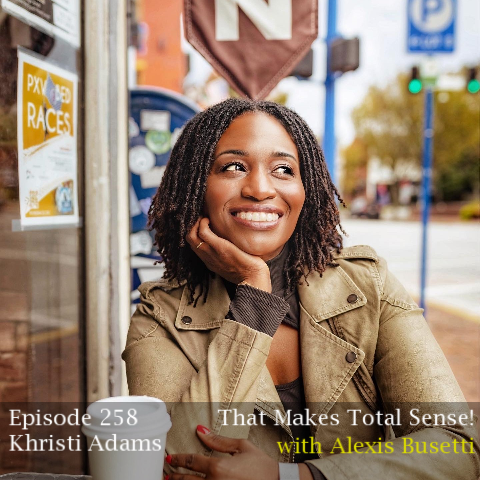
Okay, so this has been one of those mornings so far where I'm, part of me is like, Christy, we should have hit record like five minutes ago, ten minutes ago. But I'm here with Christy Lauren Adams. Her new book, Womanish discovering God through the lens of black girlhood. This has been my companion for the last couple of weeks. I've read a chapter here, a chapter there. I've gotten up early before my kids have been awake and read it with just a little light in my den. It's been to the pool with me and I have loved it. So thank you so much. I can't wait to talk to you about it.
[00:01:26] Speaker B: Oh, my God, I'm so glad. Actually just did the narration.
[00:01:30] Speaker A: You have to do your own narration?
[00:01:32] Speaker B: Yeah, I did the narration. What's today? Thursday? I don't know.
[00:01:36] Speaker A: Like that. Yeah.
[00:01:37] Speaker B: And I did narration Monday and Tuesday. This week in DC. Yeah.
[00:01:42] Speaker A: Amazing. Amazing. This is. Yeah, that's probably. I think in some books it's more appropriate even than others. But so much of this is your story. It's your, I mean, not just your voice, but it's. It's your experiences. So that's super cool.
[00:01:58] Speaker B: Yeah. And I hadn't read it in a while.
[00:02:01] Speaker A: Right.
[00:02:02] Speaker B: That was really part of like, you know, I would like, pause or skip over a word and say, I am so sorry. I haven't read this since I wrote it. So I, I forget that that's, that's.
[00:02:13] Speaker A: Often a, like a pre record conversation that I'll have with guests is like. And you all say, like, where. Where do you want to go? What do you. And they're like, actually, it's been like a year or sometimes longer, you know, since they've actually done it because of the publishing process. So that's great that it's like fresh pressure on your mind this week.
How did the narration go?
[00:02:34] Speaker B: It went really well. It went so well because with the Brazos had set aside Monday, Tuesday, Wednesday, and we finished on Tuesday.
[00:02:42] Speaker A: Wow.
[00:02:43] Speaker B: Engineer was like, would you be interested in voice acting or narration? And I was like, I think that would be fun. And so he's like, do you mind if I get my supervisor? And I was like, no worry. You got a supervisor.
[00:02:54] Speaker A: Supervisor.
[00:02:55] Speaker B: You get a whole conversation about.
[00:02:57] Speaker A: That's hilarious. I love it. I love it. That's amazing.
[00:03:02] Speaker B: It's really hard.
[00:03:03] Speaker A: Oh.
[00:03:04] Speaker B: Like, it's just. I don't know. You start seeing words that aren't on the page. Yeah. You know, you skip over words. You know, your voice gets really dry after an hour, and it's in any little thing they hear. So if your stomach starts growling, they have snacks in there so that, like, we hear your growl.
It's embarrassing.
[00:03:28] Speaker A: That's wild. Well, actually, I was a little bit nervous about that this morning, so I put in some crunchy foods that was not the right choice, but I brought some in, and I just put it on mute. It's early in the morning for folks who are listening. It's early for me. It's earlier for me than it is for you, but. But I'm glad it's summer. Only half my kids are awake, so we'll see how this goes. Anyway, it's a real life here. Um, before we get into the chapters, which is funny. Christy. So, I'm, like, making notes, and I'm like, okay, so, what are the things I really want to hit on today? And I found myself starting with some of the subjects from the chapters, and I end up writing all of them just in a different order. So, anyway, we won't get to everything today, but where I want to start for, just to kind of set the stage. And people just have to forget my theological nerdiness, although I won't call you a nerd outright, but I would say puts you in that category. I know some other M devs from Princeton definitely puts them there, but I want to start with, really, the title and the subtitle. So, there are some keywords and concepts, actually, that I would like for you to elaborate on, because I think that. Because what I don't want to do in my own head, even just because this has been the space where I've lived for so many years, I don't want to just use words that I think people will know what I mean by that, and I don't want it to get jargony, and I could fall into that.
So, I want to start with the title and subtitle and then move from there, if you can, and just by way of introduction, kind of help us with why this is an important contribution and maybe even a little bit. You shared a little bit in your book, but like, your first introductions to, like, theology in the academic space, we're going to talk about first introductions to theology in general in this book, which is what it's about. But there are some differences between how we experience God and the theology that is just in our lives versus how we experience it in the academy. So.
So, like, so, really, if you can, you just break it down for us. Like, let's start with womanish theology. Even those two terms, there's a lot there, and then we'll get into this lens part that I think is really important.
[00:06:09] Speaker B: Yeah, that's why I spend.
I was so intentional about spending time in the introduction and not just diving into chapter one, because people are going to be reading the book that aren't familiar with the terms. Like you said, everybody doesn't have an M. Div. And even if you do have an M. Div, you still may be unfamiliar, because you can go 90 credits, 70 to credits, however much it is, and not be exposed to different forms of liberation theologies in your seminary career.
Um, womanish. Um, and I haven't. I want to read just, like, a little bit, just so that I'm not sort of misquoting Alice Walker. But, um, when I was in seminary, I took a class called feminist womanist theology, and I was afraid of it, actually. Um, because I think in the, uh, when I was growing up, at least, I felt like feminist theology had, like, a bad rap. Feminist anything, you know, in more christian evangelical circles and even probably other circles as well, that were more traditional back then, we just weren't as progressive as far as our thought is today. And so I'm like, I don't want to become too radical, you know?
But when I. When I wound up taking the class, there was feminist theology, which everyone has basic understanding of, but the womanism part of it was centering on black women and black women's experiences as a way through learning more about God, through their experiences in a very sort of, like, basic way. There's so much more nuance to it than that. But Alice Walker coined the word womanist, and in her definition of it, I write it in my intro, and she says, from womanish. So she got the term womanist from womanish, which she says it comes from the black folk expression of mothers to female children saying, you're acting womanish, basically. You're acting grown. You're acting like a grown up, you know? So if, you know, you talk back or, you know, group. A group of women are in a, you know, in a dining room, and you getting into their conversation. It's like, stay out of grown folks business, that type of thing, or just behaving, which, you know, behaving a little bit more sort of outrageous. And I think that phrase has a negative. Has sort of traditionally had a negative connotation around it. Like, you act and grown. You're acting older than you should stay in a child's place.
But there's more to it. Interested in grown up doings, acting grown up, being grown up. And so I sort of. And I'm not the first person to do this, but woman ish is a phrase that sort of was known in our culture and in our community traditionally. And so that's where womanish comes from. But what I tried to do is reclaim it and sort of make it so that it is about girls and girlhood and girls that are engaging. And this is where womanish theology comes from. Girls that are engaging in grown up theological concepts, grown up matters of faith. And so that's where womanish theology comes from. And so the subtitle discovering God through the lens of black girlhood would be.
Almost defines it pretty much if you didn't read the book. That's what it's about. That's what womanish theology is, what it means to discover God through the lens of black at children, black female children, adolescents.
[00:10:20] Speaker A: Yeah. Thank you for that.
I want to talk about the lens part.
When I read, you have just a small little section. I don't remember which chapter it was. It might have been the intro where you talk about your first experiences at Princeton. And I. It reminded me of other BIPOC authors who had had similar experiences in graduate school.
It was similar to my experience at the beginnings of my m. Div. And I think I was one of the theology students who. I think it's a. I think it's a wonderful thing. And I have no people who are going through their experiences, like you said, who haven't had exposure to other liberation theologies.
And that wasn't my experience at all. But at the same time, I still really do feel like maybe I'm being too generalizing, but in the academy, in general, I feel like there's kind of. I've used this, and again, I'm not the first person either to say it like this, but kind of there's like a theology with a capital t, you know? And that is, this is the white, protestant male theology. So, like, that's really how we should be looking at the world, you know, because that's the objective way, that's the historical criticism. That's the, you know, like this. This is really theology. But then you have kind of all of these other, you know, kind of little t theologies on the side. Like we might put womanish theology there, you know, because it's like a little t. Or we're going to put latin american liberation theology there or black liberation theology there, or we're going to put asian american theology over here, or we're going to put first nations theology here. And these are all, like, these are okay. They kind of. But they're like little t.
But part of what that comes from is like, how do we understand, like, epistemologically? Like these, you know, these, this theology as a whole? And, and you mentioned you're at this prestigious seminary, and I'm, you know, like, you're like, yeah, people already knew, like, they could quote Karl Barth. And I'm like, when I started seminary, I had to do a quick Google search. You know what I mean? Because I was like, I don't know who this person is. I'm in the wrong spot. Yeah, because I didn't know. So maybe just like, touch on, like, the academy and kind of like how you've experienced this and not. Maybe not just at Princeton, but like, you know, what about this lens? Why are these.
Why are these kind of lowercase t? And I don't mean that. I know you don't mean that either, but that's kind of how they're presented sometimes. But this theology is really, really important. So, yeah, a little bit about your experiences, maybe, or what you've noticed.
[00:13:35] Speaker B: Yeah, I think these, like, sort of, they were introduced to me in seminary as classical theologians.
And whether it be Karl Barth or Schleiermacher Niebuhr, you know, I can spit off even right now the names just so naturally.
Paul Tillich was one of my favorites at the time, and even he was kind of seen as, like, radical in seminary, which was really interesting. But I remember some of my first classes, and we had these precept groups. We would have, like, the main class of, like, all the students. And then they broke us up into these groups to have these conversations.
And I'd just be sitting in there quiet because I'm like, this is like the first week of school. And they all know. They had this foreknowledge that I was so lost. But I thought it was just me. So I was really quiet about it. You know, I'm like, maybe I'm behind.
You know, I'm like, how is there. Was there something like school before this, like that I'm missing.
[00:14:46] Speaker A: Aren't we supposed to be learning that now? That's exactly how I felt. Like we're here because we don't know this. Right, right.
[00:14:51] Speaker B: And so the whole first year, it was me just playing, like, trying to keep up as opposed to contribute.
And that was really it.
I just wanted to be able to hold a conversation with my peers in class. I just wanted to be able to say something of note, make one comment.
So that's how it was introduced. Systematic theology, New Testament, and intro to New Testament. Intro to Old Testament.
And there wasn't much room around it. That's really why I said I was afraid of those elective classes, like feminist, womanist theology, liberation theology. We had a class called black political thought. Again, they weren't the core classes, and they weren't necessarily introduced in the core classes. I had a professor named Mark Taylor, who's still at Princeton, I believe, and he taught our systematic theology one. And on the syllabus, James cone was on, and a few other people and some of my classmates, the white male class, were pissed. They were very angry, you know, about.
[00:15:59] Speaker A: James cone, of course.
[00:16:01] Speaker B: Right.
And that there was any other types of little theologies on that list. But to mark Taylor, that was systematic theology. And it hard for them to break out of that, that they transfer out of the class to, you know, more sort of traditional teacher or that they complained, you know. But I didn't see anything wrong at the time. I wasn't really sure. My mind had a hard time computing that. So later, I talk about this in the introduction. I was introduced to some of these other theologies and was like, oh, my gosh. Right. Like, this is theology, too. This is also theology. So it's not, you know, core classes. And again, those were introduced as just electives.
They are core classes as well. And that's really what I want to do, or try, I'm seeking to do with this sort of black girlhood theology, is to say, this is theology on that realm as well.
[00:17:12] Speaker A: No, I'm really appreciative of that.
I want to just mention, because in our kind of prerecord, some of the other books that were going through my mind. So as a mixed hispanic woman, when I was reading your book, I was thinking of Abuelita faith. I was thinking of Hermanas, and I was thinking of those books because they also emphasize, and I think Abu elite to faith especially emphasizes, that just because theology isn't taking place in a formal classroom doesn't mean it's not theology.
And even in the intro of your book, you talk about these womanist theologians who look back at formative experiences they had with God as black girls and how that shaped how they look at God, how they continued to experience God. They look at back at memories and experiences they had in their black communities and families and how formative those experiences have been to their theology, to their womanist theology.
In the same with some of these hispanic woman theologians as well.
You know, we talk about, just briefly for folks who aren't familiar with, for example, latin american liberation theology, to say these experiences came from people who were systematically poor and oppressed and saying, how does this fit with our faith? How does this fit with the God that we see in the Bible? You know, black liberation theology or postcolonial theology or some of these other things going, how does our experience fit within this framework? One that's really interesting to me right now is palestinian liberation theology. You know, how does this look, we look at the experience of experiences of Israel, but what about the people groups who were wiped out, you know, when Israel, biblical Israel came into, into existence in the land and things like that? And so I really, I would say we can, it'll probably speckle, it'll season some of the rest of our conversation. But as someone who's been a theology student for the last several years, I was really excited about what you were doing in this.
And the more I read, the more excited I became. And to be truthful, what I wanted to say is, I want more, Christy.
I wanted this book to be like twice as long as it was because I just. Because I want more. Because we all benefit when we choose not to drop the class, right. We all benefit from saying, what does James cone have to say about this? You know what?
Talk to me, feminist theologians. You know, I want to hear about your experiences and how that relates to theology because it benefits all of us. I don't have the experiences of a black girl, and I never will. I don't have the experiences of a First nations man, and I won't. And so I need, I need to be told, you know, I need to hear that. So anyway, so I'm grateful. Like I said, it might season the rest of our conversation, but we might have some of that, I don't know, technical theology talk out of the way for now. But you cover a lot of areas that I think are, that, I mean, obviously are really important when we talk about theology. From, from scripture to the Imago Dei to theodicy was a hard chapter. Soteriology you know, a lot of these things. And then what does this look like through the lens of black girlhood? You also interviewed a lot of black girls and women. So maybe could you talk just a little bit about that part of your process? Because this isn't just the experience of Christy Adams. This is, let's talk to a lot of white black girls and women.
[00:21:33] Speaker B: Yeah. It's so funny. I don't know why in the beginning, I didn't automatically think about talking to women.
I was like, you know, I'll tell my story and then I'll interview black girls. And then I'm like, well, black women were black girls at one point. And I think I quote Katie Cannon in a video that I saw from her from Union seminary on womanism. And she was talking about grappling with theological questions and existential questions as a three year old, like, why? About the color of her skin and justice.
And I'm like, wow. Yeah. Like, duh.
I should be interviewing other black women, too, about their experiences. Yolanda Pierce writes in her book and my grandmother's house, she's talking mostly about her childhood and her adolescence and those experiences then. So it was so fun that I have them have these Zoom recorded conversations, and I'm like, oh, I wish people could see. Just get a. I wish I could just take those and use those. And I probably can actually like clips of those to market the book or, because I wanted people to, like, view or look in or peek in at the conversation that we were having. And it was also fun interviewing, you know, like, women in their fifties and sixties and then girls that were 14 and then hearing, like, similarities, you know, there were a lot of differences, but there's a lot of similarities and overlap there, too. So I thoroughly, I thoroughly, thoroughly enjoyed that. And learning about some of them were my peers, friends, and just watching them reflect on their childhood and me being like, me, too. You had that, too, or not interjecting. I wanted to say me, too the entire conversation, and it was hard for me to hold back. So I'm listening to them and I'm like, I had almost the same experience, or I just wrote about this, and now I'm listening to them reflect on it. It was so fun. And I wish, you know, it's written, you know, but we need more. We need more insight into those types of conversations. But the girls were also interesting, too, because it was also enlightening, seeing how this new generation processes these theological issues and they don't, or theological topics, and they don't know that they're theological, right? Like, that's going back to me sitting in the precept class in seminary thinking, oh, man, I got to play catch up. This is my first time hearing about any of this. And I'm like, later on, I'm like, no, it's not. It wasn't my first time. It was just presented very differently. And it didn't have, like, one girl I interviewed.
She didn't know the term imago dei, but she knew about image of God.
And they don't know the term theodicy, but they are processing and reconciling their faith with the suffering and evil that they see that exists in the world. So I learned so much, and I continue to learn from. I just, like you said, you know, regardless of the fact that we're all of the same ethnicity, there is always something to learn to from other people's experiences and their stories. And that's what I feel like I got.
[00:25:21] Speaker A: Yeah, I want to start with where you start in the book, actually, with scripture and how this the.
I just really like this. The lens of black girlhood. Like, how does black girlhood see scripture? This was a really intense.
There are intense pieces in almost every single chapter. But, yeah, I think so, too.
[00:25:49] Speaker B: When I narrate.
[00:25:51] Speaker A: I think so, too. But, yeah, like, how does black girlhood see scripture?
[00:25:58] Speaker B: Yeah. And I'll start with the girls with basically at the end of the book or end of the book? End of the chapter. I was talking about how, particularly with the LGBTQ community and how that kept coming up with this new Generation Z, I guess we'll call, you know, that I was interviewing, and I don't think it was just.
I don't think it just boiled down to the LGBTQ community. I think it was about justice and their peers being treated and them seeing other people treated, because, honestly, when I wrote this, this was pre. What. What has been happening in Gaza. And I'd be curious, if I was interviewing them now, how much that would come up as well. And so they're paying attention, you know, and they're very sensitive naturally, though, because it's the context that they grew up in. I always tell students that I work with, I'm like, we didn't have active shooter drills growing up. We had fire drills. You know, that was it.
And, you know, when I was 15, I didn't care about the presidential debate. I just was wanting to go to the mall. We were able to be shielded from a lot of what was happening in society, even though we were kind of aware but this group, it's like, because of their access to social media and all that, but they have to be attuned to what's happening in the world in ways that are very different. I think because of that, they're very sensitive to what's happening, and they're probably able to see things from or sort of reconcile the religious or the faith piece with what they're seeing, or they're able to ask those questions in ways that I kind of didn't care about when I was younger. It was just like, relationship with Jesus, and that was it, you know, when I was a teenager and how Jesus would help me through my problems. You know, it was very subjective.
This generation is like, they want to see how the christian community is responding to the war in Gaza. They want to see how the community is responding to their LGBTQ peers or themselves. And so because of that, that's the lens. I think this new generation is much more sensitive to how they see scripture and how they critique scripture or reject it at all or embrace it, because they also. It's not all sort of negative. They also are still being passed. Things are still being passed down to an extent, from. From generations, not from. You know, not everyone necessarily experiences this, but I would say, like, more like the spiritual girls.
So they know how to turn to scripture when times are troubling or, you know, they. They have the memes and, you know, like, they have the. Might have the Bible app or something like that, you know, so they.
There's no escaping what's happening around them in ways that I was able to ignore when I was younger. And then when I got to college and stuff, you know, I couldn't ignore it anymore. Because you're becoming a young adult and an adult, and so you're responsible also for the things, you know, for your community and the world around you. So that's what I. That's what I learned about this sort of modern day black girl and her relationship with scripture.
[00:29:45] Speaker A: So with. Now I'm. Now I'm, like, going literally off book right now because I'm, like. I'm trying to think, did. What do we see anyway? So if it. If it's relevant, you can answer, and if not, we'll skip it. But I'm thinking about the places where you might have encountered a black girl who. Who said.
Or who just said, yeah, like this. This part of the Bible. Yeah, I don't really buy it. Or I'm. You know, there are some circles in which that would be just faith wrecking, and there are other circles where that's not really, you know, it's like, okay, well, yeah, maybe I don't buy this fully, or maybe I see where this is problematic, or maybe they go, well, that was okay for then, but it's not okay for now, or something like that. But did you see any of that where you say, like, how did it like that? I have this view of scripture, and maybe it's different from their, the generations before. Maybe it's different than their grandmother's view of scripture. You know, I'm thinking of maybe just certain passages or certain stories or things like that.
How did that, how did you see that affecting different girls like faith walk? Were some of them able to say, like, yeah, I kind of. I reject this, but I still affirm this about God or about my community or about my faith.
[00:31:18] Speaker B: That was surprising because I think I assumed they throw the whole thing out, and I didn't get that there might have been even the ones that were like, I'm more agnostic now, or, you know, even the ones that didn't really know where they landed, they still weren't like, but throw the whole thing out. They were just like, this is just where I am.
[00:31:48] Speaker A: Not hostile, in other words.
[00:31:49] Speaker B: Right. Maybe I'll get, you know, maybe we'll revisit this later. You know, it's not for me, you know, but it might be for you. It's very similar to. And just going into this, to the suffering, the theodicy chapter, I think I assumed that because these girls either had these experiences personally or witnessed them, that they're like, goodbye, God. And I just. I didn't get that at all.
Not to say that that's not the case with some, but I assume there'd be more of a cynicism and they're able to critique, but not to all out reject.
So when it came to scripture that they had questioned about or didn't like or don't want to hear it, they just push that to the side and move on. They're able to accept other parts of it. Whereas I think growing up, for me, it was like, you need to accept it all, you know?
And if you don't, you're a backslider, you know? Or. And so then when you got there, you're like, well, I'm just gonna get rid of the whole thing because that's what I was taught that, you know, when you.
If you don't embrace the whole thing, if you have, you don't critique it, you don't anything. And if you go in there, then you're a heretic. Whereas the heretical thing doesn't even really cross this generation's mind. You know, it's like, you're not gonna tell me that I'm not a person of faith just because I have a problem with this passage or just because I have a problem with how you, this passage treats this group of people. You know, I still have faith. I still believe in God. I'm still a spiritual person. You know, they just define it for themselves, whereas I think I had, like, a template. This is how it should look. This is how it should go. And if you color outside of this, then you're not this.
I don't think that they have. That they have a little bit more leeway, and they give themselves permission. They're more self aware. You know, they have the resources, the vocabulary, the tools that I don't think that I had growing up and that I had to adopt later in life. So that's what I really loved about, you know, talking to them is that, you know, they knew the Lord is my light. You know, certain group, certain group of kids, I think I wrote a. They were talking about the passage that the parents send them or grandparents. The Lord is the light of my salvation, and they can smile at those.
But then if there is scripture that they have a problem with, they're like, I have a problem with that. And the thing is, it wasn't until I got to seminary that I learned how to critique in a healthy way. It was very uncomfortable for me the first year, and as time went on, I was able to do it, but I was like, can I critique the Israelites? And, you know, they really did that. They really went in and took the people's land. Like, I really had a hard time with that up front and felt like it was very extreme. Whereas this group, if they came in, they're already doing that because they do it with everything else.
[00:35:07] Speaker A: So I'm curious how you think that relates to, like, the strength of the, like, american black Christiane community and maybe how it sounds like there's been, like, you know, some. Some evolution, maybe. And like you're saying, like, you. You kind of thought that this cynic, kind of more cynical part would lead to just like, a. Like a break off. But it's. It's not like when I'm hearing that, and I know it's more nuanced than that, but when I'm hearing that, I'm kind of like, is the faith tradition, the faith what's been instilled just it's just stronger than that cynicism, maybe. It feels like. I don't know if that's, like, if you think that that's communal or how do you. Is it related? How do you think that speaks to the strength of the black church community?
[00:35:59] Speaker B: Yeah, it's interesting because I think it's a mix for this new generation. They're not going to church and necessarily part of the community, the church community, in ways that we were. And I say that because I was talking to a friend yesterday about how when we moved, my family moved from Brooklyn to New Jersey, which I write about in the book, the first thing we did was look for a church home, and that was the community.
That was where our identity was shaped and formed, and, you know, and I'm so, so grateful for that. But that was the outlet. And whether I was doing extracurriculars, it was choir rehearsal. It was those things. And then I may have done basketball and a few things outside of that, elsewhere.
I don't know, actually, I don't think for this generation, it's that level of, like, imperativeness, like, where you have to have the black church for this part of your faith formation and spirituality and all that, and that's it.
I think that that is one area, and they have other areas of where they're able to receive sources of knowledge and information and be taught. So, for me, it was just school and church, and, again, access to being online. I mean, people are like, they're learning everything off of TikTok, you know what I mean? Like, just whether it's true or not, but they're learning things from YouTube and TikTok and TikTok and Instagram and other areas that whether. That they're being sort of exposed to. So I think it's a mix alongside the culture of the black church. And so because of that, their way of processing knowledge, their way of communicating, all of that comes from all of those different avenues and not just this one stream.
[00:38:06] Speaker A: Yeah, let's talk about prayer.
That was a really interesting chapter for me to read, especially when you tell about your own experiences and extended family experiences with prayer.
And I don't really have much to add on this except for, I would say I have observations like, I. It's. It's been interesting to me when my. When I have friends who have prayed with me who are black women, this is the. The one. The one thing that I have observed that's. That is constant. These women don't know one another. They're in different parts of the country. They had different upbringings. They have different experiences. Experiences now.
And consistently, I would say every single time, there is an expression of gratefulness that I don't hear anywhere else. When I get off the phone with these women who are my friends, I am telling you, Christy, I am grateful that I woke up.
I am grateful that I woke up, that my limbs function, that I am breathing like. And it is so. It is like a glass of cold, refreshing water, like, ah, Houston day, where I'm like, I have a problem. Here we are praying because there's something wrong. And if I haven't done anything else, I've forgotten about my problem, because I'm just so grateful that I'm actually breathing to have a problem.
And I'm like, this comes from somewhere.
This has to come from somewhere. So I don't have any other contribution to this.
[00:40:05] Speaker B: That's funny, because, again, I just read it out loud, and there was a part where I was talking about my great aunt Mary and how for a while, she was the matriarch of the family, and we would always gather to pray to. And, you know, I don't know what I read, but it was like, Mary would start off with, I just want to thank you, God. But I was, like, saying it like that in the narration because I can just hear her saying it and everybody's like, thank you. You know, so it's so much a part of our faith culture growing up that I never really thought about it. You know, it's. That is one of those past down, generation to generation ways of praying.
The Thanksgiving part is so, so, so important, and it's gotta be upfront, like, you know what I mean? Like, you're not ending with thanksgiving. You know, you can end with your petitions and. Or, you know, you can end with thanksgiving as you're circling back to thanksgiving. But.
[00:41:14] Speaker A: And I will say the Bible belt, white Christianity that I grew up with because my hispanic side was, like, not even nominally catholic, right? But, like. But it was like, white Bible belt side. This was how this was. There was Thanksgiving at the beginning, but it was usually this. Okay, I'm gonna get in so much trouble, but it's usually this, dear heavenly father, thank you for this day. And then that's it. Like, you know, like, it's like, we can check the box. We said the thing, but I'm like. And so it's. So it's there. But that was the kind of the Thanksgiving that I was most familiar with.
[00:41:49] Speaker B: But this was.
[00:41:50] Speaker A: It was. It wasn't like a third of our prayer, you know what I mean?
[00:41:56] Speaker B: Waking me up. Start, right?
[00:41:58] Speaker A: Yeah, yeah, yeah. But it is interesting how you say, like, you didn't think about it because this is just. This is just how you pray, right?
[00:42:05] Speaker B: It was. It was gratitude, and I didn't really know the term gratitude, but it was. It's that. And it's like, before you say anything else, before you ask God anything, you need to thank them, you know, for, and go down the list of what you're thanking him for. And I do, obviously, that's. That's very cultural. I think, you know, I think in the face of the injustice and the suffering that in America that black people historically experienced, I think our foremothers and forefathers really leaned on gratitude as a source of hope and joy in the midst of all that they were going through. And that was like a spiritual practice for them. It was a discipline, because they could start off with petition. They could start off with complaint, you know, and, like Jeremiah or, you know, or David, and that wasn't the case. It was like, no, we're going to. We're going to hone in here because we believe that God is going to see us out of this. I think that's where it comes from, historically, and it has since just been passed down. So even when I think I talk about, you know, the first time I prayed at choir rehearsal, you know, and I was like, I said, well, thank you, Lord. You know, they're like, thank you, you know, and that's just, that's just what isn't there certain phrases that you adopt, you know, and that just start to come naturally, but that was just the way that we were taught.
[00:43:47] Speaker A: Yeah, but prayer was, I mean, like, integral the way you describe it. This was not, I mean, and with the women and girls you interviewed as well. But even when you talk about your experiences, I'm thinking of that are on the front of my mind. This wasn't kind of like a.
It felt like more than like a habit or like a check the box or, you know, a should in the life of at least of your family, this was really just threaded, it sounded like, throughout, like just. This was part of. Of what you did. This was part of what your family did. I mean, it felt almost like it's as much a part of your family as eating together or.
[00:44:36] Speaker B: Yeah.
[00:44:36] Speaker A: You know?
[00:44:37] Speaker B: Yeah, yeah. I think.
[00:44:38] Speaker A: Not just in church.
[00:44:39] Speaker B: Right, right. Yeah. Very much a part of growing up. And again, I think that's another part of what was passed down. I think, you know, historically, when my ancestors had nobody else they had the Lord that's on their side.
And I think that personal relationship, that one on one, that savior, that friend and companion and protector, it was like, we have each other, but we don't have advocates outside of this, outside of our family unit or our cultural unit.
Everyone else is sort of, like, against.
And so.
But we have God.
And so there was this sense of, no matter where you go, we might be separated from one another.
God is coming with us. God is guiding us. God is directing us. And so there was a real dependency on the. On God. And because of that, it has since been passed down that the Lord saw us through slavery. The Lord saw us through civil rights movement. The Lord saw us through. And we're not going to abandon God now that God has brought us out of these places. We're going to continue to bring God with us throughout generations. And so I think that is what was essential to sort of being passed down. While my grandmother, you know, my parents were just like, no, you're gonna grow up in the ways of the Lord. We're, you know, we're going to. At the end of the day, we may not be around, but the Lord is always going to be around. And you make sure you turn to God. You know, when you are in need or even when you just wake up in the morning, you need to be saying thank you to God.
[00:46:36] Speaker A: So this is reminding me of places where we're not going to go, but I'm going to say it. There are a. In some of the theological spaces that I run in. Let me preface it that way. In some of the theological spaces I run in, there are these questions, because as I'm hearing you, I'm like, yes, this makes sense. This feels familiar to me.
I understand what you're saying, but there are these questions where someone might say, and you've heard these, too. I know. Um, Bob, isn't Christianity a white man's religion?
And the way that you're describing your experiences, you couldn't say yes to that. You would have to say, absolutely not.
[00:47:24] Speaker B: Um.
[00:47:26] Speaker A: But it. I think Christianity looks different depending upon which spaces you're in.
[00:47:36] Speaker B: Yeah.
[00:47:37] Speaker A: And so I want for you to say whatever you want to say about that and then also lead us into this Imago day piece, because part of what's really interesting to me about that chapter in your book is that I would say, as a mixed person, I have my own experiences there. But when I talk to other BIPOC theologians, scholars, pastors, authors, even just friends, they will talk about the differences between being in spaces with their ethnicity and their racial group or experiences of having to navigate predominantly white spaces.
[00:48:23] Speaker B: Yeah.
[00:48:25] Speaker A: And socially, but also specifically faith spaces. So I was talking to an asian american friend the other night, and this friend was talking about navigating predominantly white faith spaces for, like, most of his upbringing. And so that was. That's very different than being in a. In a faith space that was predominantly asian american, and that is very different.
But one of the things that you talk about with the imago de piece is growing up even in a home where the images, the images on the wall, the artwork that what you pictured Jesus to look like were all of this taking space in black spaces, like, the formative parts. Being in black space is very different than someone who might have the experience of, I was the only black child in my kindergarten class, you know, something like that. And so, like I said, I want respond in whatever way and take as much time as you want with this. Like, you know, where I said I didn't want to go, the Christianity, being a white man space, but. But then move us into that imago day piece, and that might be the last place where we get to go, unfortunately, today. But. But I thought that piece was really critical, especially, as you said, this one particular black girl wasn't familiar with that term, but she knew exactly what you meant when you talked about being made in the image of God.
[00:50:00] Speaker B: Yeah, I actually didn't know. So that the idea that Christianity, white man's religion, never, ever crossed my mind. You know what I mean? I didn't know it was a thing.
I feel like I was so shielded and so protected.
But again, that growing up in the nineties, we didn't have access in the ways that. So it was just the community and the newspaper and what you saw on the news, if you watched it, you know, so my spaces were school, church, home.
[00:50:36] Speaker A: But you've heard it since then.
[00:50:38] Speaker B: I've heard it since, yeah, but I mean, later, it wasn't life.
[00:50:42] Speaker A: It wasn't formative.
[00:50:42] Speaker B: Oh, same thing with women in ministry.
Oh, until later and not late, late. Like, I would say, by the time I got to college, you know, I was exposed differently with the Temple university in Philly, and I was exposed differently. So I think the white man's religion piece, even the women in ministry not being a thing, it was when I got to college a little bit.
[00:51:03] Speaker A: Oh, that's my. Okay, so we're not going to talk about that for real. But that's my curiosity, because I thought I read that women were just in ministry.
[00:51:09] Speaker B: They were just in the pulpit and.
[00:51:10] Speaker A: You had no idea we weren't supposed to be there.
[00:51:12] Speaker B: I had no idea. None? Yeah, none.
[00:51:15] Speaker A: Wow. How amazing.
[00:51:16] Speaker B: Rocked my world when I found out, you know, amazing.
[00:51:19] Speaker A: See, I was the flip flop. I didn't know we could be.
[00:51:22] Speaker B: Yeah, a lot. A lot of people have that story. Whereas. And every time they'd share it, I'd be like, did I. No, I mean, I talk in the book about how Reverend Johnson, our executive pastor, one of our associate pastors, actually, at the time, would. We would be singing hymns, and she would replace a he pronoun with she. And, you know, the deacons, you know, because the deacons were still men and they were still a traditional sort of set up here and there. But the deacons would be like, everybody would be looking around and I'd be with my friend, like, why did she do that? It says he. You know, like, I didn't know, but it was really radical of her to do it. That was the type of experiences I had as a kid growing up. But the same thing with the. Whether it's a black Jesus, black whatever. I just. It's not even that. I was like, jesus is black. I didn't really. There wasn't a distinction. The only time I had racial experiences that were negative were in school, but it weren't really religious. So, you know, I would try to process it spiritually, what I was experiencing in school. But as far as, like, religious images, in vacation Bible school, we always had a curriculum. And so in vacation Bible school was so much a part of my life.
Every single summer is just what you did. And we would get our booklets, and our booklets were all brown faces, so I just didn't see anything outside of that. And I think because of that, I was able to focus on the teachings of Jesus. I was able to focus on the. What it meant to grow spiritually. And, you know, those. Those different topics, like, really get to the core, because it wasn't all, oh, because I'm a girl, oh. Cause I'm black, you know, like, it wasn't any of that. But at the same time, our identity and our cultural identity was being affirmed. But I also think I saw, like, other christians. That's what y'all do. Like, I didn't really think, like, you know, white church, a church, you know, it was just like, this is my church, and this is my community, and that's your church and that's your community and you guys like it. I never saw anything as being a problem until it was introduced to me, as a problem.
And that's the same thing that people say about their skin complexion or their ethnicity or cultural. It's. You don't know until someone points it out. And you're like, wait a minute. I'm a problem? You know?
And I think that really helped me as far as, you know, I talk about imago de, an image of God.
You know, a lot of those things began to be reversed the older I got and the more I was exposed to the world around me and exposed to some of those messages. And I'm like, oh. Like, I just said, oh, I'm a problem. You know, I didn't know. So my self confidence, I think, was through the roof for my formative years, you know, because it never was an issue. And I did see myself and some of the girls that I interviewed, one in particular that says, you know, I always thought Jesus was black, whatever. And then the girl, you know, the little girl in the class said to her, jesus, the black Jesus is white. And she's like, wait a minute. You know, and it's not until someone draws it and brings it to our attention that the idea of maggio dei become shattered. Honestly, I really think Imago day, it should just be about existing. Just existing. Like, you should even have to think about it, you know?
I mean, we should just all be living out the Imago day. We should all be treating one another as the Imago day. It should just be as natural as water. But instead, it has to be affirmations after affirmations and analyzing. And I'm the Imago day, too. You know, you're, like, fighting so much with the imangal de. I just lived it out, you know, growing up. So the girls, I'll just sort of end with the girls and how they try to reconcile what messages they get in society about themselves versus the messages that they're wanting to believe in scripture or spiritually about them being made in the image of goddess. I would say that was the similarity that I had, you know, was that I was experiencing so many negative messages about who I was outside and in the church. It was like, no, you are. This is who you are. I was mostly self confident. You are the image of God. And I'm like, well, how did the two, you know, and I think these girls today experience the same thing, but I think there is more affirmation out there. Again, they have more access to messaging that, or messaging. And women are in leadership or people that they see teachers and mentors and things that are designed specifically for them. So that they do have the representation that they need in ways that maybe we didn't have.
But it's an interesting, nuanced topic.
[00:56:41] Speaker A: What were.
Do you remember any of the specifics that the girls struggled with? When you say, I'm hearing this one thing in my faith community, but I'm experiencing or hearing this other thing socially or culturally, like, where were some of the places where specifically where that just didn't line up for them and it was problematic?
[00:57:08] Speaker B: Yeah. Beauty is always, always one. And I hate to be negative, but it feels like it's just gonna be an ongoing, you know what? Cause to be beautiful or traditionally or seen as beautiful is to be accepted.
And to them, if they're not accepted or if they're. If the messaging is that they're not beautiful, that their skin is too dark or their hair is too this, then they're not accepted. And the core of the foundation of the imago de message is about acceptance, too. You know, God sees you. You know, God affirms you. God loves you. You know, God created you. You know, you are gods. And it's like, well, if I'm not accepted by society, if I'm not beautiful, you know, so it's the same hair and skin and body shape that I think is across the board when it comes to young women in general. I think there's a lot of intersection there that isn't just limited to black girls, but black girls needing to affirm themselves.
I think there's just, every summer I teach this at this leadership academy called at the well Girls Leadership Academy, and they're black girls from all over the country. And every summer, when we start talking about this topic and beauty standards, they have the same doesn't matter if they go to all black schools, mixed schools, white schools, you know, it's the same experiences. It's the same people commenting about what they look like or their hair or their this, and it's a constant. And then they're trying to keep up with what they see on instagram and pose a certain, you know, like, have a certain type of look.
But then there's the message of the imago dei is that as you are, you are accepted as is.
You just have to exist. You don't have to make any addendums.
And it's like, that's a singular message, whereas the messaging outside of that is just coming at them from all these different avenues. And I don't know how the church or the christian community is to reconcile that, because it's God sees you as this. And it's like, well, that's just one.
That's just one stream, you know, how do we counter that with all of these onslaught of messaging, of negative messaging? So I wrote about it in parable of brown girl. I mean, it's just an, it is an ongoing, an ongoing issue.
[01:00:08] Speaker A: One last question.
Um, thank you for that.
Going back to where we started for just a minute.
As someone who came out of the academy and you're writing this book, what would be your hope for this text? And I've already, I've already told you, I hope this isn't the last one. Like I said, I wanted it to be about twice as long as this.
But what is your hope for womanish theology? Not just this text, but this concept. Like, what is your hope for that, for the academy and for the faith community at large?
[01:01:00] Speaker B: So I used to get this message after my first book, parable, because every chapter was a different story, anonymous story about a girl's experience.
And I would say, you know, my hope is that, you know, it doesn't end there, that you all would read it and then be curious about other girls stories. It doesn't just, it's not just these seven stories. There are so many young black girls in your communities and in your spaces that we can learn from if you just take the time to hear, to listen. So it's very similar here, but I think it's beyond that, too, that people of marginalized identities have their own perspectives of theological topics.
And I want us to sort of open our eyes to that.
Yes, black girls have theirs, and that's going to be my, that's my pursuit, right? To draw those stories out and to sort of get the theology out of their experiences. But I kind of hope somebody reads it and then maybe looks around their house or whoever is in their community and they're within arm's length and says, I wonder what they think about how they process the odyssey. I wonder how they process salvation. What's the salvation story of the young twelve year old latina girl? Does she have a salvation story? How is she processing evil and suffering? How does she read scripture?
How does the young boy do? How does my neighbor, my elderly neighbor, you know, who is sort of in the last season of their life, prayer looks very differently to them. And gosh, what is that like? You know what I mean?
What kind of conversations could we have with our community of people that are different from us? And it's kind of like you said early, like even the palestinian theology, right? Like, yeah, what does prayer mean, now to this person of this particular background. So I really want it to make us more inquisitive and more curious, you know, about the people around us that don't necessarily come from our particular background or gender or sexuality or whatever, and begin to form these relationships where we're really asking questions. Some of these girls said, nobody's ever asked me these when I was interviewing them. I'm interviewing them as though they're the expert, you know? And so I'm like, I want to learn about the odyssey, you know, like, from the young girl whose mother OD'd. I wrote about her, whose mother OD'd, and, you know, sort of was left alone in the world. And it's like, well, how do you process suffering? What do you think about? Do you think God's abandoned you? And she's like, no, you know, and I'm like, wow. Like, that's amazing, you know? Like, that's strengthening my faith, because I'm like, you could think that, and I would think you were so justified in it, but instead, there's a resilience that is being. Coming out of you that I didn't expect, and that's speaking to me and my faith journey and my spirituality. So that's what I really wanted to do. I wanted to open up our minds and our hearts to just in ways other theologies have done right that we talked about to make us just, like, curious and genuinely. I think that was the thing with interviewing the girls, that it was like, they were like, wow, you really want to know? I'm like, I really want to know. Like, do you pray? You know, like, what's that? Like, you know, and it's so new. It's new, and it's God speaking to us through them. And so that's my hope for womanish theology.
[01:05:45] Speaker A: Thank you so much.
That's my hope, too, for all of us.
This has been amazing. Christy, say the release date would. Yeah.
[01:05:56] Speaker B: So woman ish theology will be released on August 20, 2024. It's my first summer book, Baby. Most of them have been in the winter, and so I'm excited about that.
[01:06:08] Speaker A: And pre order now, though, right?
[01:06:10] Speaker B: Preorder now.
And preorders are so helpful, so that would be great. There's. It's hard copy and hardcover and paperback, and then it'll be available for. Again, I just narrated the. There's an e book, but there'll also be an audiobook as well.
[01:06:29] Speaker A: I love it.
It's, again, womanish theology, discovering God through the lens of black girlhood. By Christy Lauren Adams, and I'll have the link where folks can pre order that in the show notes. Thank you so much for coming on.
The links for all the resources mentioned in today's episode can be found in the show notes, music and podcast production by Seth Buscetti. Be sure to give us a review on iTunes and subscribe at your favorite podcast listening app. You can also visit us at that makestotalsense.com dot.